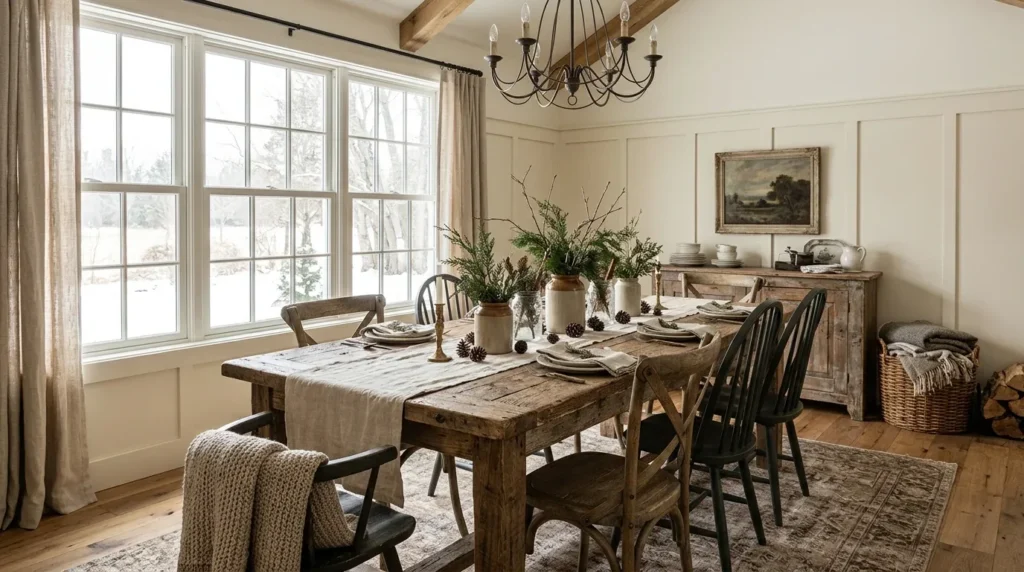
Winter is the perfect season to make your dining room feel warmer, more inviting, and ready for memorable gatherings. Inspired by Joanna Gaines’s signature farmhouse aesthetic, these dining room ideas combine natural materials, vintage-inspired accents, comfortable seating, and timeless colors to create spaces that feel both sophisticated and lived-in. The beauty of this design approach lies in its balance: rustic wood meets soft textiles, antique details complement modern conveniences, and understated decorations make room for meaningful moments around the table.
Whether you are hosting a festive holiday dinner, welcoming friends for a cozy weekend brunch, or enjoying a quiet family meal, thoughtful winter styling can transform your dining space without requiring a complete renovation. From weathered farmhouse tables and layered lighting to evergreen centerpieces and inviting neutral palettes, these Joanna Gaines-inspired dining room ideas offer practical ways to bring seasonal charm into your home. Explore these 17 decorating ideas to create a welcoming atmosphere that feels beautiful, functional, and ready for winter entertaining.
1. Choose a Rustic Farmhouse Dining Table
A substantial farmhouse dining table creates the perfect foundation for a Joanna Gaines-inspired winter dining room. Look for a rectangular table made from solid wood, reclaimed timber, or a convincing distressed finish that highlights natural grain and character. Warm oak, walnut, and weathered brown finishes work particularly well against creamy walls and neutral upholstery. The table should feel sturdy and welcoming rather than overly polished, making it suitable for everything from elegant dinner parties to casual family breakfasts.
For winter entertaining, keep the tabletop relatively uncluttered so guests have enough room for serving dishes. A simple linen runner, a few ceramic candleholders, and a low arrangement of seasonal greenery add warmth without competing with the wood. Choose a size that accommodates your usual guests while leaving comfortable walking space around the table.
2. Layer Warm Neutral Colors
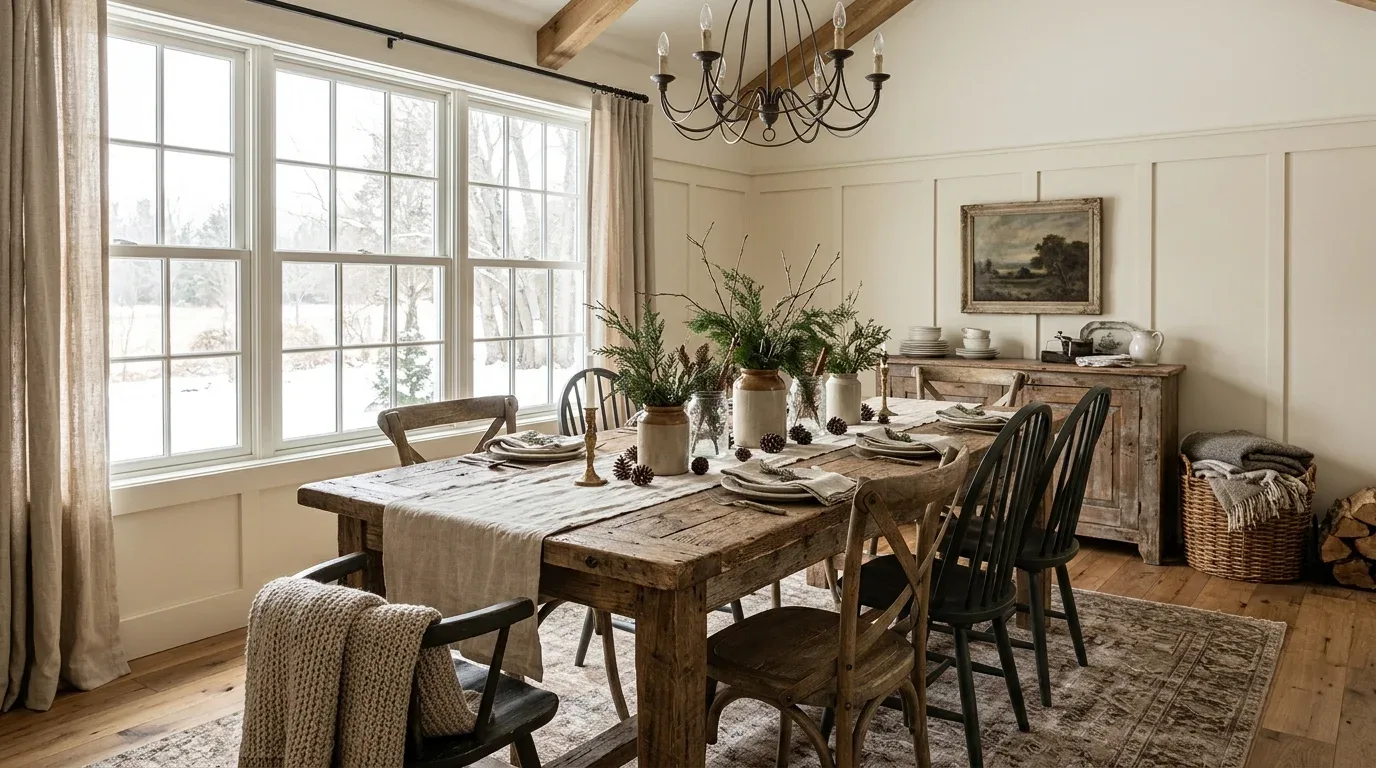
Warm neutrals are a defining feature of relaxed modern farmhouse interiors. Build your winter dining room around shades such as ivory, oatmeal, warm beige, mushroom, and soft taupe. These colors create a peaceful backdrop that feels especially inviting during colder months. Rather than relying on one flat shade, combine several related tones through wall paint, curtains, upholstered chairs, rugs, and table linens.
Introduce depth with darker wood furniture, aged brass details, or black metal accents. These contrasting elements keep the room from feeling washed out while preserving its understated character. If you want a little seasonal color, incorporate muted olive green, rust, or deep burgundy through small accessories. The result is a flexible palette that works for Christmas gatherings and remains attractive throughout the rest of winter.
3. Add a Statement Farmhouse Chandelier
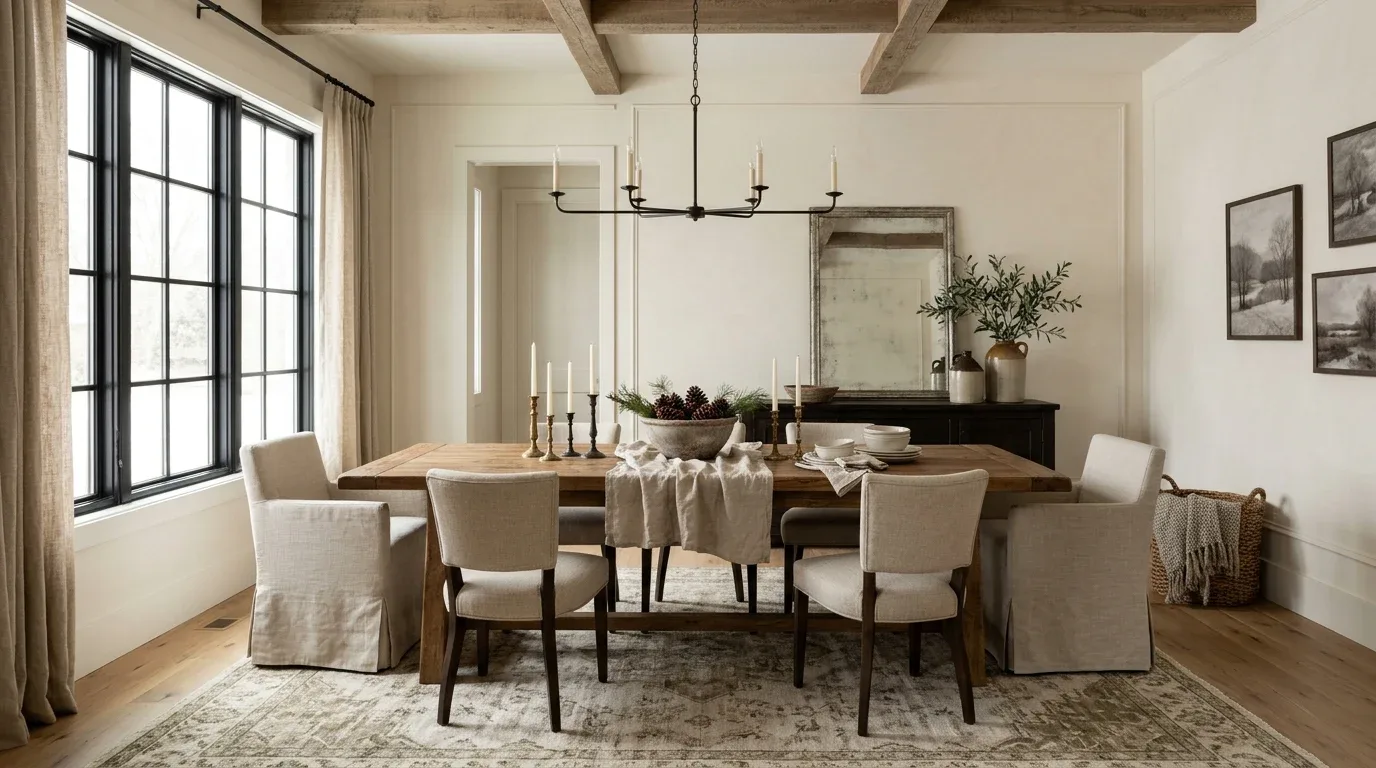
Lighting can dramatically change the atmosphere of a dining room, particularly when winter evenings arrive early. A farmhouse chandelier positioned above the dining table provides a natural focal point while helping the entire room feel more intentional. Consider an open iron fixture, a weathered wood design, or a simple chandelier with aged brass accents. Choose a shape and scale that complement the table without overwhelming the room.
Warm-white bulbs create a softer glow than cool daylight bulbs, making dinner parties feel more intimate. Whenever possible, install a dimmer so you can adjust the brightness for different occasions. Hang the fixture high enough to preserve clear sightlines across the table while keeping it visually connected to the dining area. Pair it with candles or wall sconces for a layered lighting scheme that feels welcoming rather than harsh.
4. Mix Wooden Chairs With Upholstered Seating
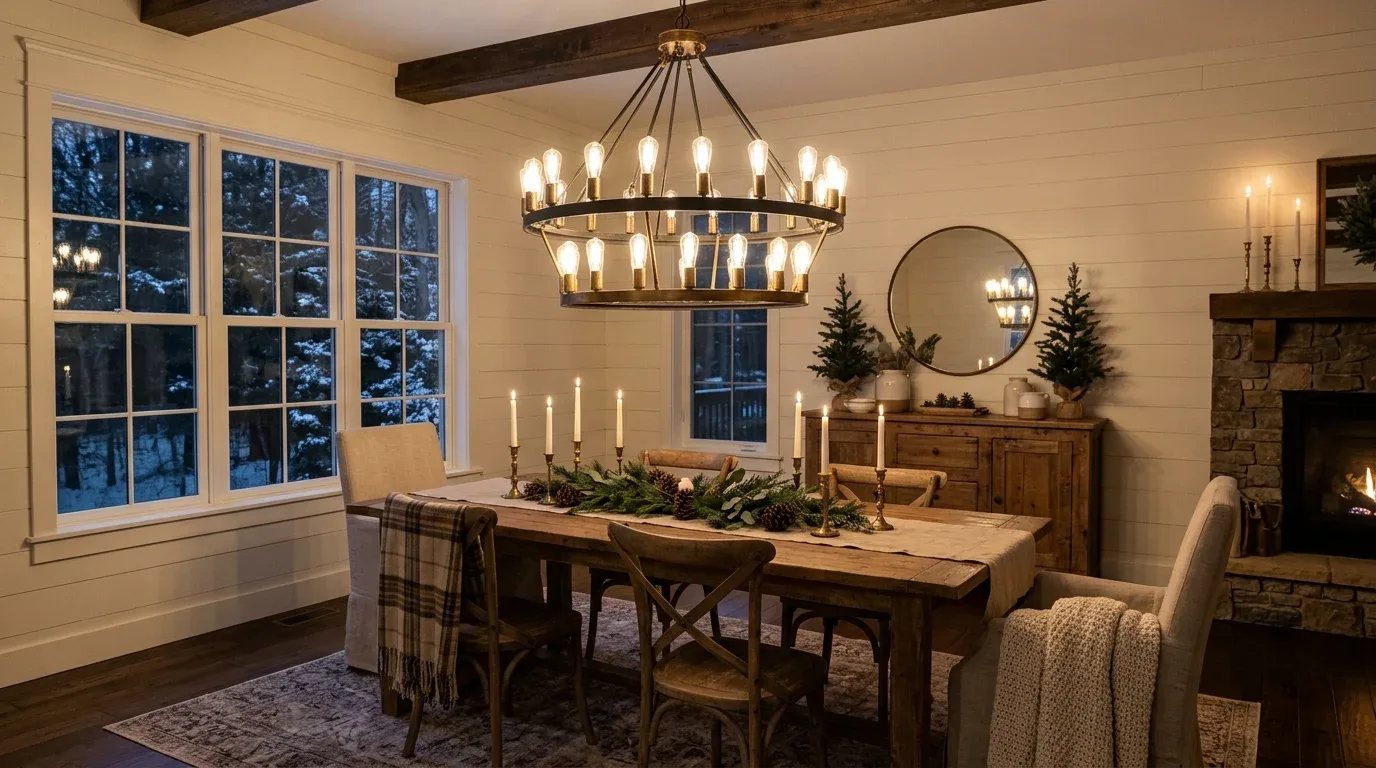
A coordinated dining set can look polished, but mixing seating styles often creates a more collected, personal farmhouse interior. Pair a rustic wooden table with upholstered host chairs, simple spindle-back chairs, or a combination of complementary wood finishes. This approach introduces visual interest while making the room feel as though its furnishings have been gathered over time.
For winter entertaining, prioritize comfort. Upholstered chairs in linen-look fabric, textured cotton, or durable performance material provide a soft contrast to hard wooden surfaces. If your table is long, use matching chairs along the sides and slightly more substantial seats at the ends. Keep the overall palette consistent so the mixture feels intentional. Before guests arrive, check that chairs slide comfortably beneath the table and leave enough space for people to move around freely.
5. Create a Cozy Dining Nook
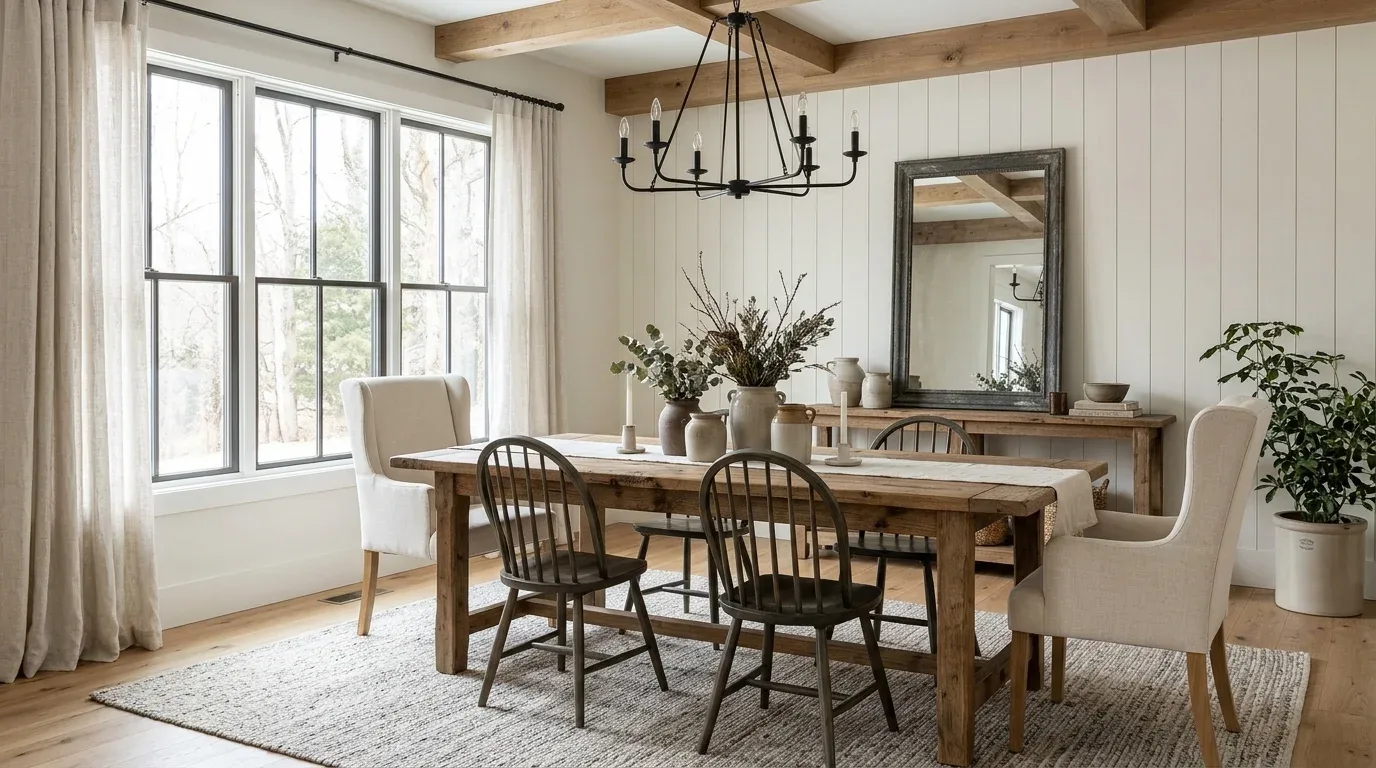
A dining nook can make even a small home feel ready for winter gatherings. Place a compact wooden table beside a window or in an unused kitchen corner, then add a built-in bench or a freestanding banquette with comfortable cushions. Neutral upholstery and natural wood finishes create the relaxed farmhouse atmosphere associated with Joanna Gaines-inspired interiors.
Layer the bench with washable cushions and a few textured pillows in subtle winter shades. A pendant light overhead helps define the nook, while a small vase of evergreen branches brings in seasonal character. This arrangement works especially well for intimate breakfasts, coffee with friends, or casual dinners when a formal dining room feels unnecessary. Measure carefully before choosing furniture, ensuring there is sufficient space to pull out chairs and walk past the table without squeezing through narrow gaps.
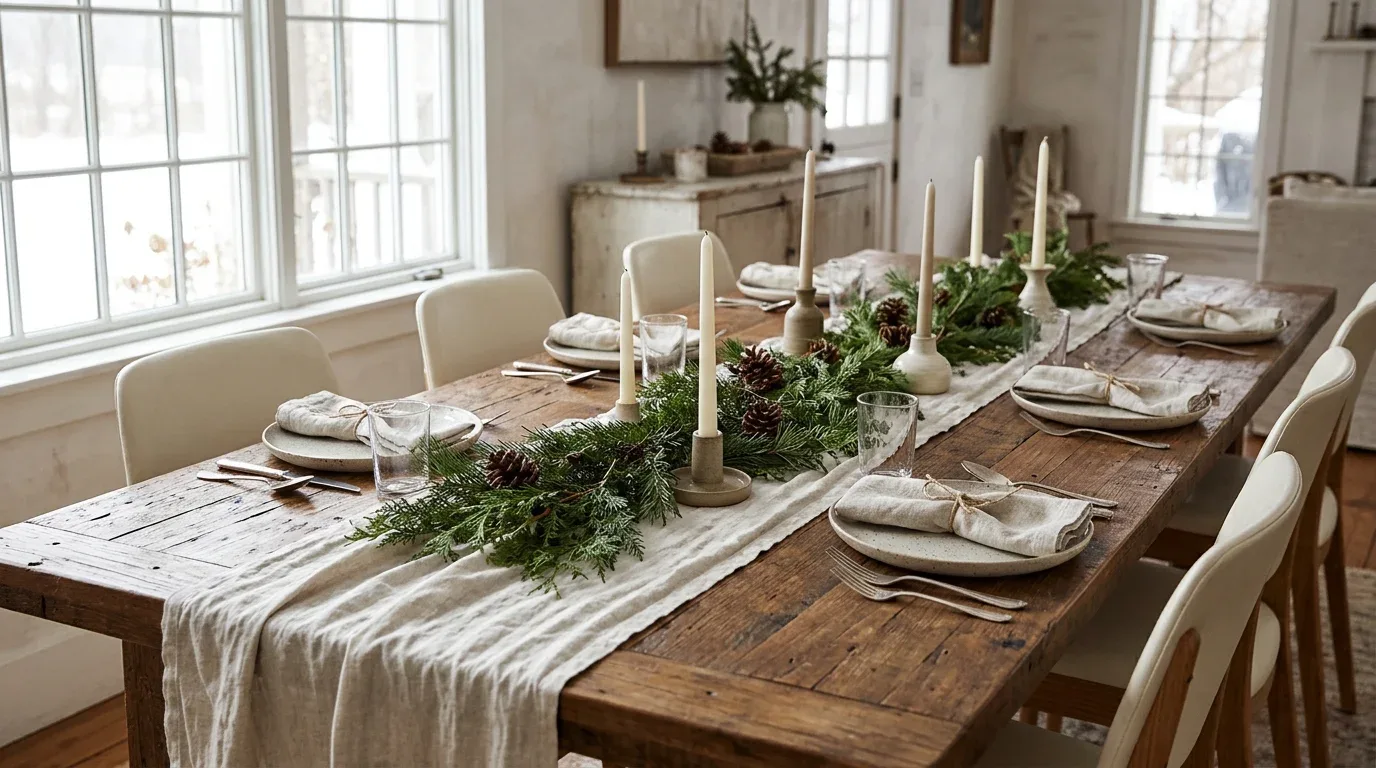
6. Decorate With Fresh Evergreen Branches
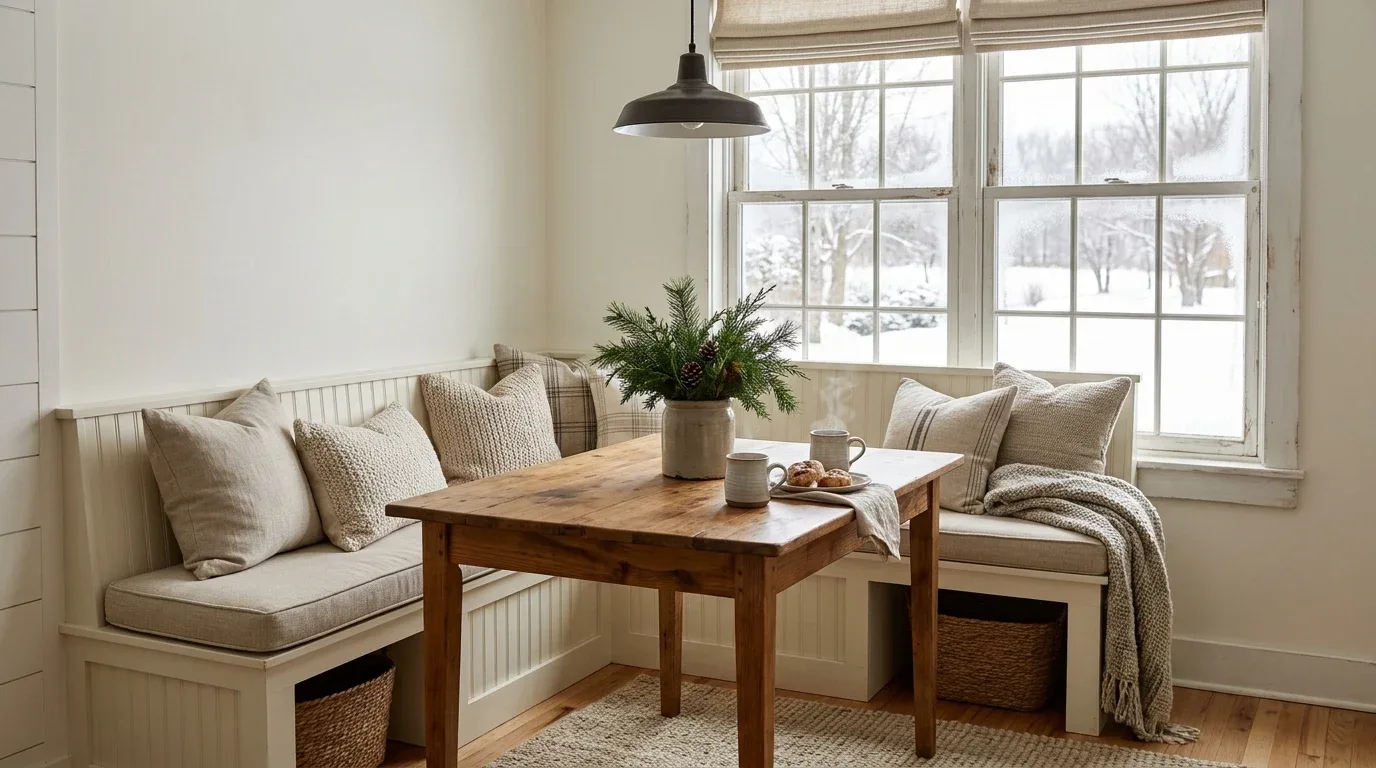
Natural greenery is an easy way to bring winter life into a farmhouse dining room. Arrange cedar, pine, fir, or eucalyptus branches along the center of your table, allowing their natural shapes to create a relaxed, organic centerpiece. Instead of making the arrangement perfectly symmetrical, let a few branches extend naturally for an understated look.
For a practical entertaining setup, keep the greenery low enough that guests can see one another across the table. Place the stems in small water-filled vessels or use floral foam-free arrangements where appropriate to maintain freshness. Add unscented candles, a few pinecones, or simple ceramic accents if you want additional texture. Keep foliage away from open flames, and refresh the water regularly. Once the holidays pass, understated greenery can remain in place as a seasonal decoration without feeling overly festive.
7. Install Open Shelving for Farmhouse Character
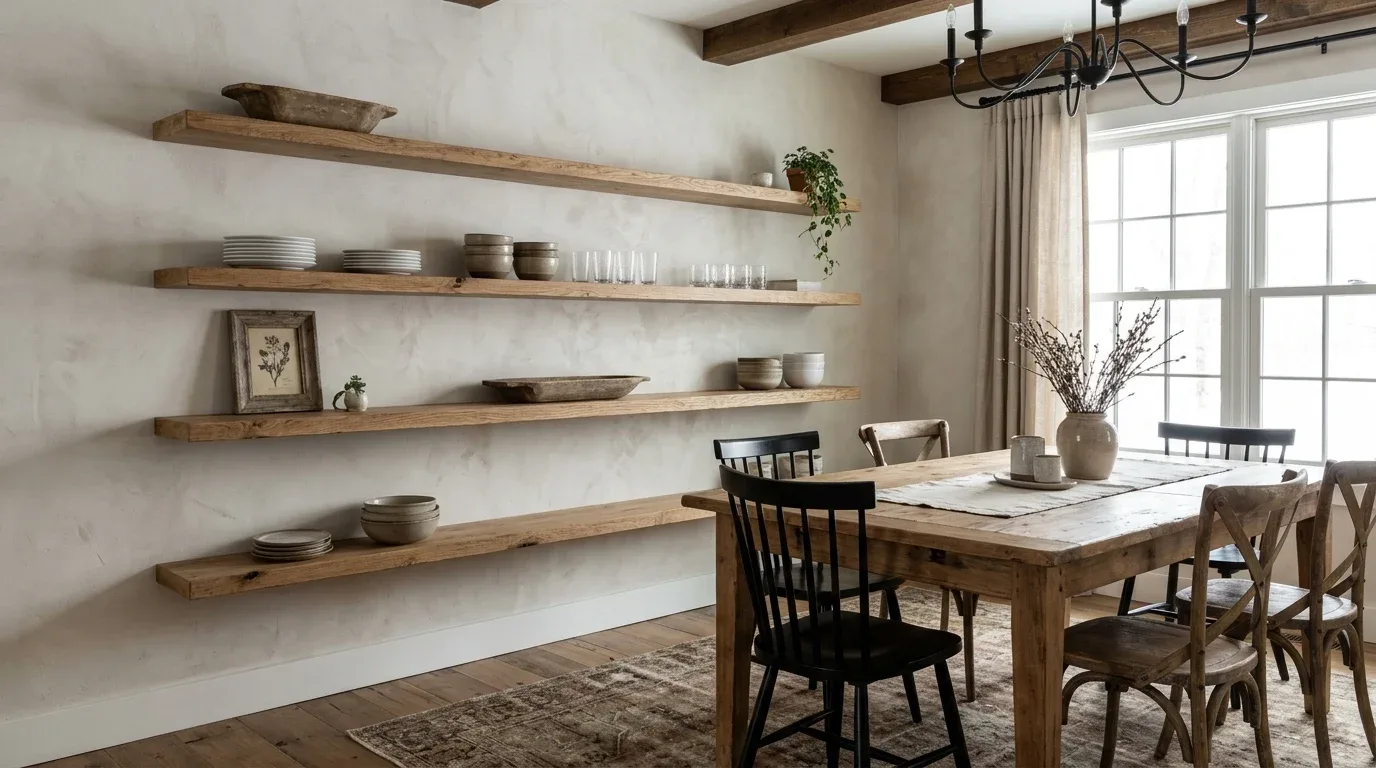
Open shelving offers a stylish way to display everyday dishes while giving your dining room a collected farmhouse feel. Install sturdy wood shelves against a neutral wall or incorporate them into a dining-room hutch. Arrange ceramic plates, serving bowls, glassware, and a few decorative objects in a restrained palette so the display feels cohesive rather than crowded.
Vary the height and shape of your objects to create a natural rhythm. A stack of white plates can sit beside a small framed print, while a textured vase or wooden bowl adds warmth. Leave some empty space between groups to keep the shelves visually calm. Because open shelving collects dust, reserve your most frequently used pieces for easy access and clean display items before entertaining. If the room is small, a narrow shelf can provide character without consuming valuable floor space.
8. Bring in a Vintage-Inspired Sideboard
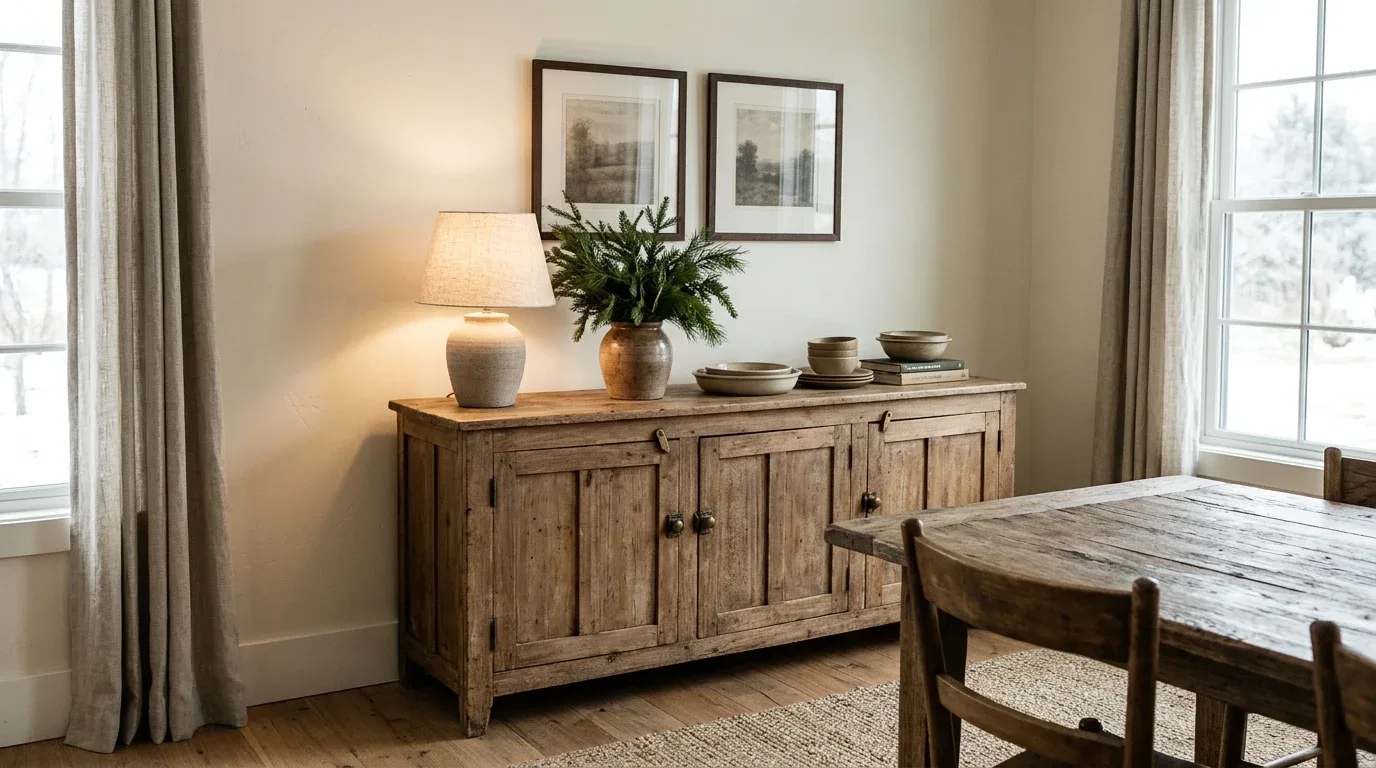
A vintage-inspired sideboard combines farmhouse charm with useful storage, making it an excellent addition to a dining room designed for entertaining. Choose a piece with weathered wood, simple paneling, understated hardware, or a gently distressed finish. Antique furniture and well-made reproductions can both work beautifully when their proportions suit the room.
Use the interior to store table linens, serving platters, extra cutlery, and seasonal accessories. On top, arrange a lamp, a ceramic vase, and a small framed artwork to create a decorative display. During dinner parties, the sideboard becomes a convenient buffet for appetizers, desserts, or drinks, keeping the main table clear. Avoid overcrowding the surface with decorations, and leave enough room to set down serving dishes. This practical furniture piece helps the room feel established while making hosting less stressful.
9. Layer a Natural-Fiber Area Rug
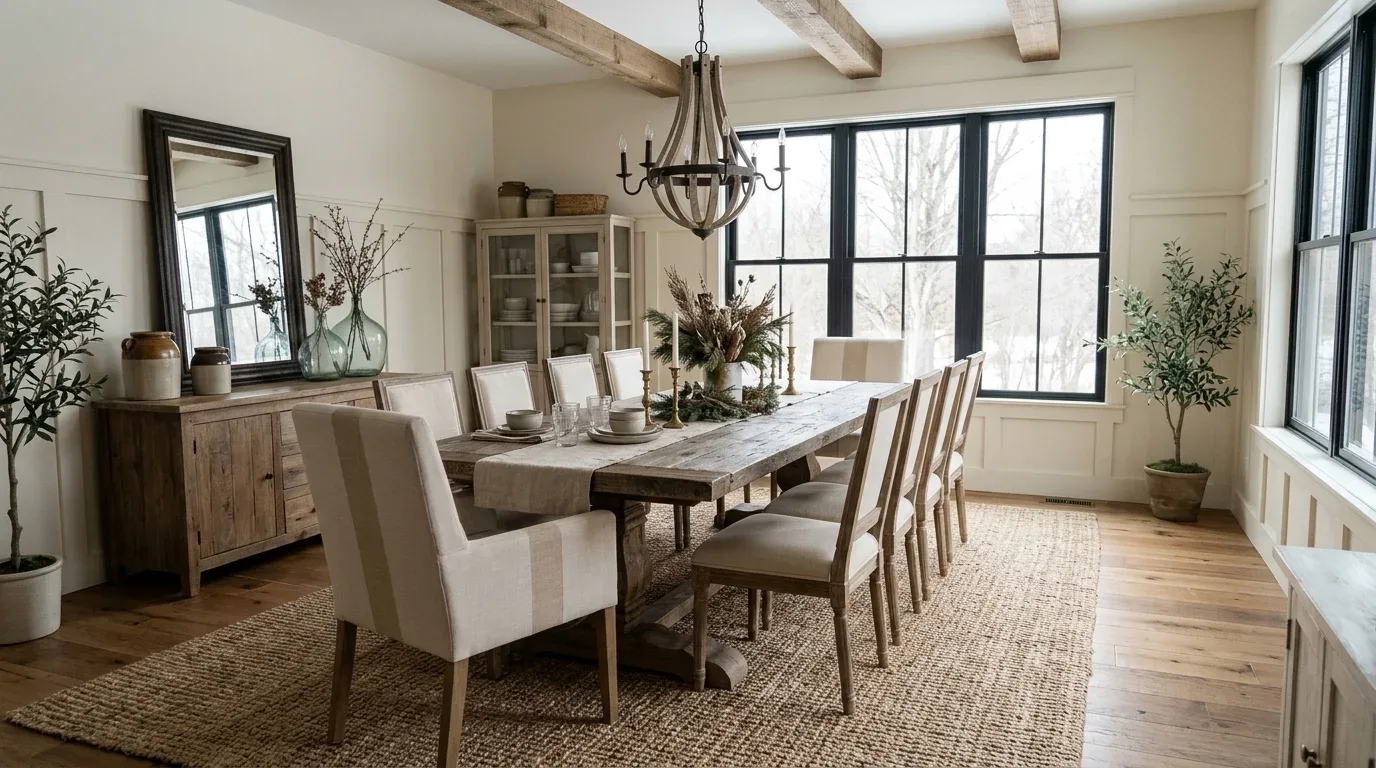
An area rug helps anchor the dining table and adds warmth underfoot during chilly winter months. Jute, sisal, wool, and wool-blend rugs can all complement farmhouse interiors, although each offers different benefits. Natural fibers bring earthy texture, while wool tends to feel softer and may provide more comfort in colder weather.
Choose a rug large enough for dining chairs to remain on its surface when pulled away from the table. This prevents chair legs from catching on the edges and makes seating more comfortable. If you regularly serve food to children or host frequent gatherings, consider a low-pile, easy-to-clean design instead of a delicate, high-texture weave. Neutral patterns, subtle stripes, and muted vintage-inspired motifs add interest without competing with rustic furniture. Use a suitable rug pad to improve stability and protect the floor underneath.
10. Style the Table With Linen and Textured Layers
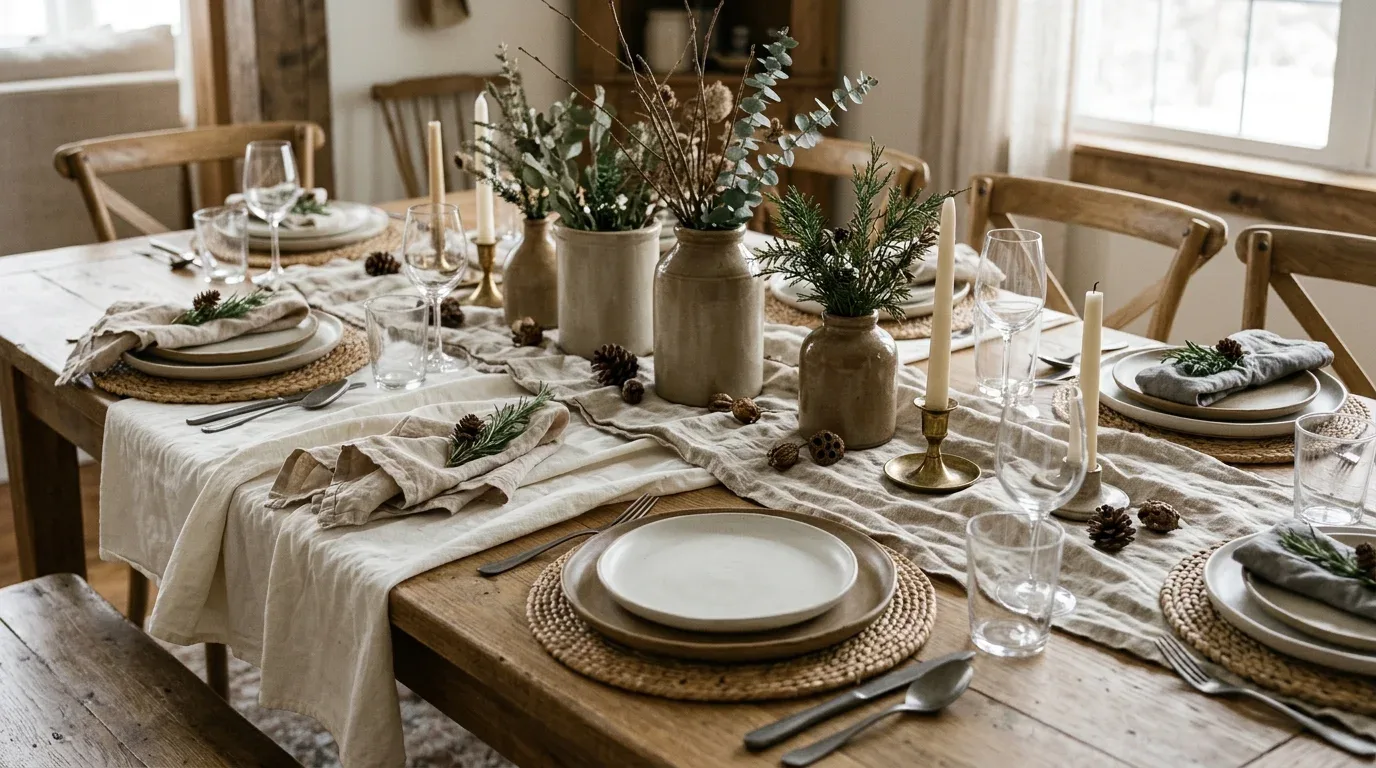
Thoughtful table linens can make a simple farmhouse dining table feel ready for a special winter occasion. Begin with a natural linen runner or a cotton tablecloth in ivory, flax, soft gray, or muted olive. Add woven placemats and cloth napkins to introduce texture without creating a formal, overly coordinated setting.
For a relaxed look, allow the fabric to fall naturally rather than pressing every fold into place. Mix complementary textures, such as smooth ceramic plates, woven chargers, and softly rumpled napkins. A narrow runner works especially well when you want the beauty of a wooden tabletop to remain visible. Choose washable materials that can withstand spills, particularly when serving rich winter dishes. This layered approach makes everyday dinners feel special and allows you to update the room seasonally simply by changing the linens.
11. Incorporate Black Metal Accents
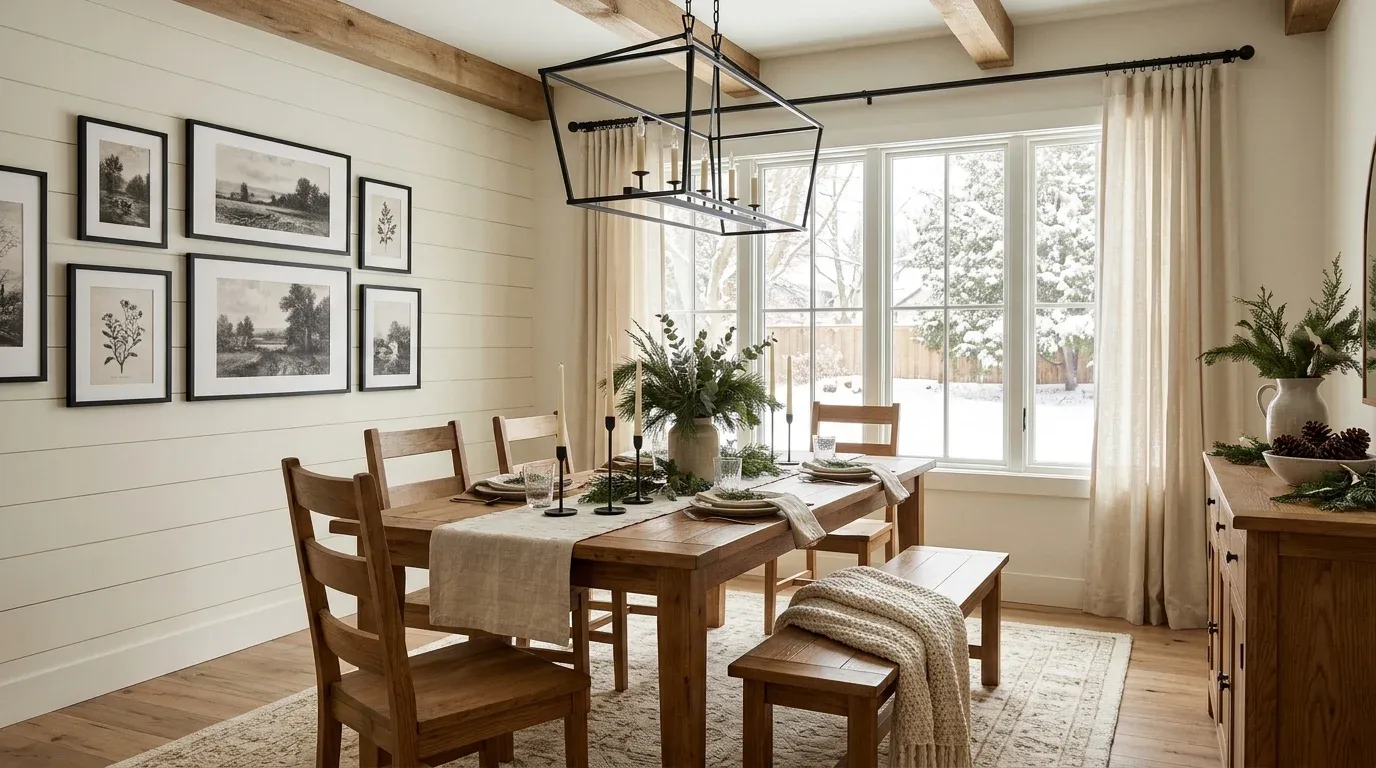
Black metal details provide crisp contrast against the soft colors and natural materials common in modern farmhouse dining rooms. Consider black iron chandelier frames, curtain rods, cabinet pulls, picture frames, or the legs of a simple console table. These small elements introduce definition without requiring bold colors or elaborate decorations.
For winter entertaining, repeat black accents in two or three places so the room feels visually connected. For example, pair a dark chandelier with black-framed artwork and understated candleholders. Balance these details with warm wood, creamy upholstery, and natural greenery to prevent the space from feeling cold or industrial. If your room already has dark furniture, use black sparingly and incorporate lighter textiles to maintain contrast. The goal is a thoughtful mix of rustic softness and clean structure rather than a collection of unrelated metal accessories.
12. Create a Cozy Fireplace Dining Area
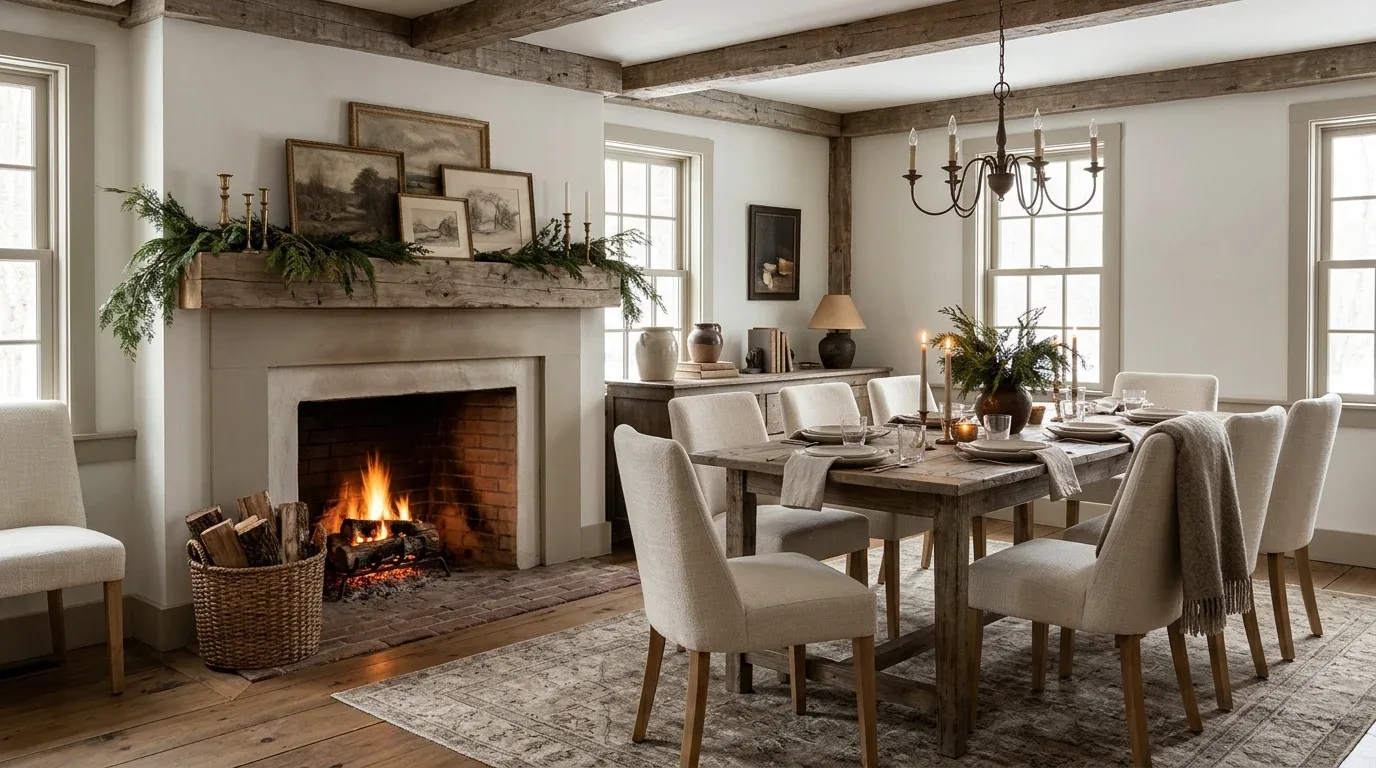
If your home has a fireplace near the dining room, use it to create a naturally welcoming setting for winter meals. Arrange the dining table so guests can enjoy the warmth and visual interest of the fire without blocking walkways or creating an uncomfortable seating layout. A simple mantel decorated with restrained greenery, framed artwork, or a few seasonal objects can complement the farmhouse aesthetic.
When a built-in fireplace is not available, you can achieve a similar sense of warmth through layered lighting, natural textures, and a nearby reading chair or upholstered bench. Avoid adding a freestanding heating appliance close to table linens, curtains, or other combustible materials. Keep decorations clear of heat sources and follow the fireplace manufacturer’s safety guidance. The emphasis should be on creating a comfortable atmosphere that encourages guests to linger over dessert and conversation after the main meal.
13. Use Antique Mirrors to Reflect Winter Light
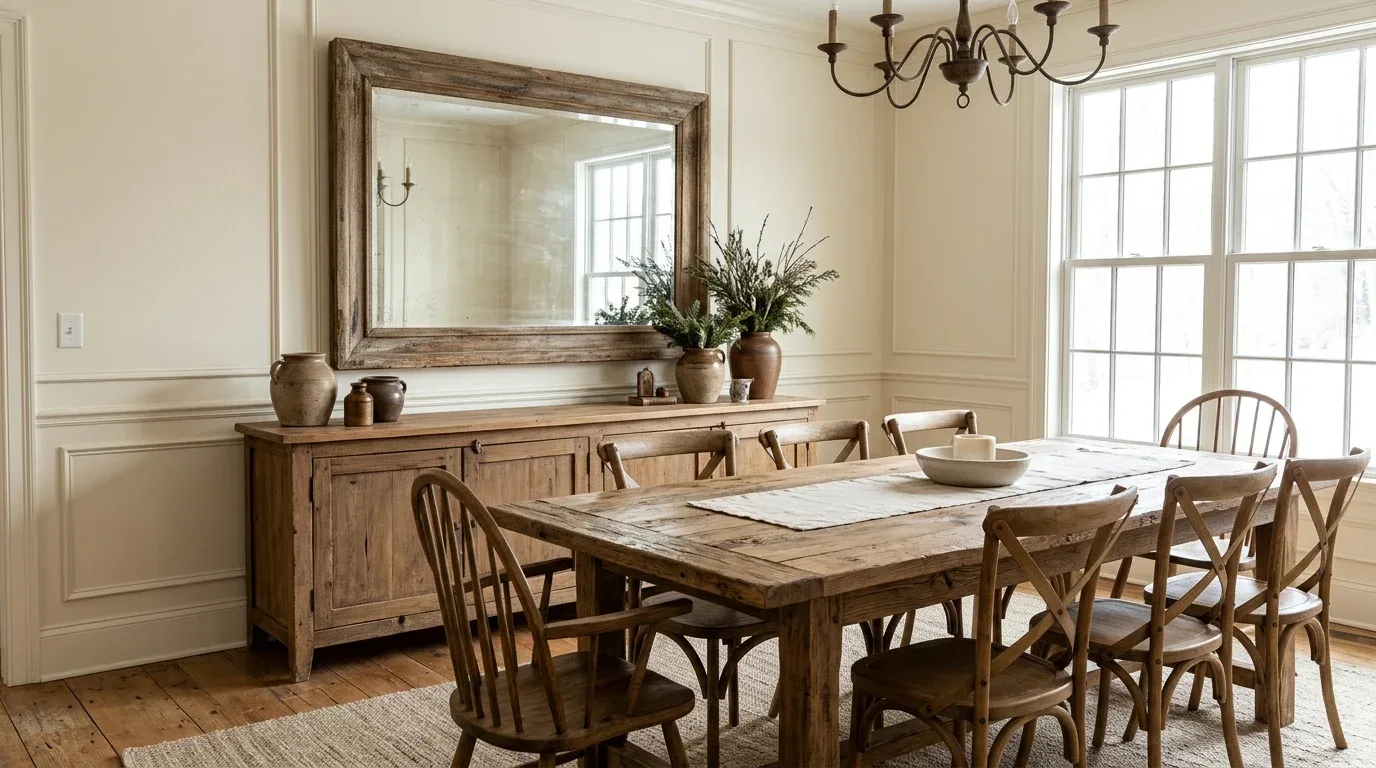
Winter days can feel short and dim, so reflective surfaces are useful for making a dining room appear brighter. An antique-style mirror with a weathered wood, aged brass, or simple black frame adds character while bouncing available light around the space. Hang it above a sideboard or on a wall opposite a window when the layout allows.
A large mirror can make a compact dining room feel more open, while a smaller vintage mirror creates a subtle decorative accent. Check what the mirror will reflect before choosing its position. Ideally, it should capture a window, attractive light fixture, or carefully styled area rather than clutter. Pair it with understated wall decor to keep the room from becoming visually busy. This simple addition works throughout winter and remains useful year-round, especially in rooms with limited natural light or narrow proportions.
14. Decorate With Ceramic Vases and Handmade Pottery
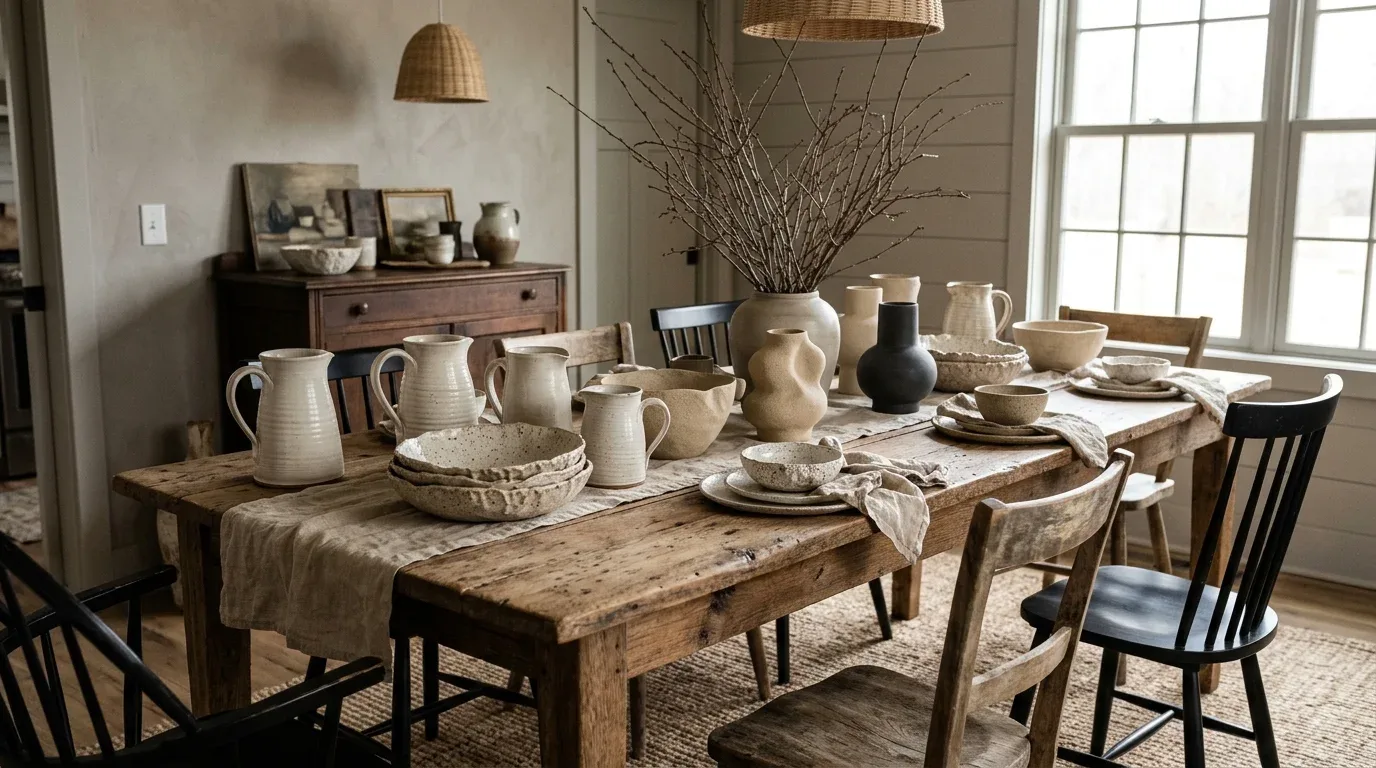
Handmade pottery adds the imperfect beauty that makes farmhouse interiors feel personal. Display ceramic vases, stoneware pitchers, serving bowls, and small sculptural objects in shades of cream, warm gray, sand, and earthy brown. Their subtle variations in shape and glaze create interest without introducing unnecessary visual clutter.
For a winter centerpiece, place a single sculptural vase on the table and fill it with bare branches, dried grasses, or a few evergreen stems. On a sideboard, group two or three pieces of varying heights, leaving room around them so their forms remain visible. Handmade pottery is also practical for entertaining when selected for its intended use; decorative vessels should not automatically be assumed safe for food. Choose durable pieces that complement your existing dishes, and repeat a few finishes throughout the room for a cohesive, collected appearance.
15. Add a Gallery Wall of Meaningful Artwork
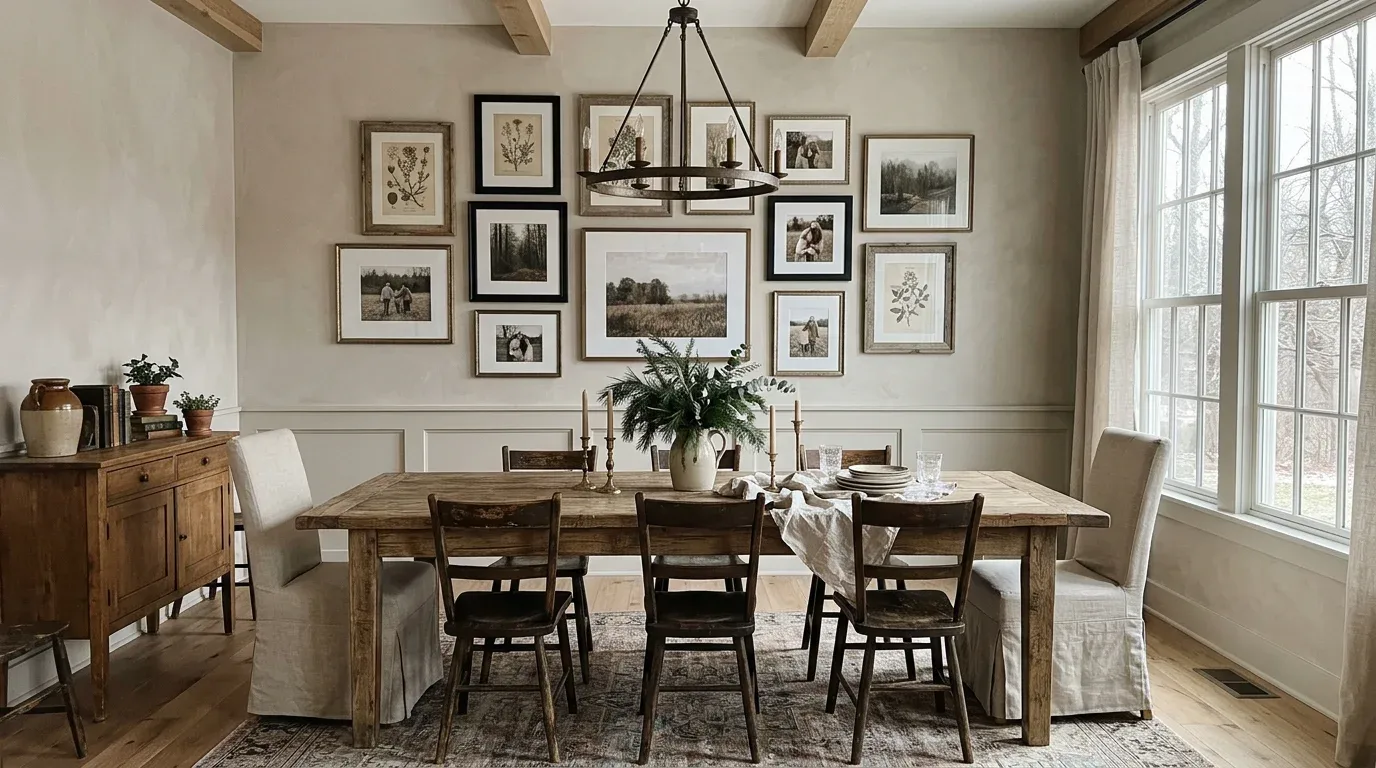
A gallery wall brings personality to a farmhouse dining room and gives guests something interesting to notice between courses. Combine botanical prints, landscape paintings, understated typography, family photographs, or vintage-inspired illustrations in complementary frames. A mixture of frame sizes creates a collected appearance, while a consistent color palette keeps the arrangement visually organized.
For a winter-friendly display, consider muted landscapes, woodland sketches, or artwork featuring earthy greens and warm neutrals. Lay out the frames on the floor before hanging them to experiment with spacing and balance. Position the arrangement at a height that relates comfortably to the dining furniture, and secure every frame with suitable hardware. Avoid filling every available section of wall; leaving some open space allows the gallery to stand out. Meaningful artwork makes the dining room feel like a lived-in home rather than a staged showroom.
16. Use Candles for an Intimate Winter Glow
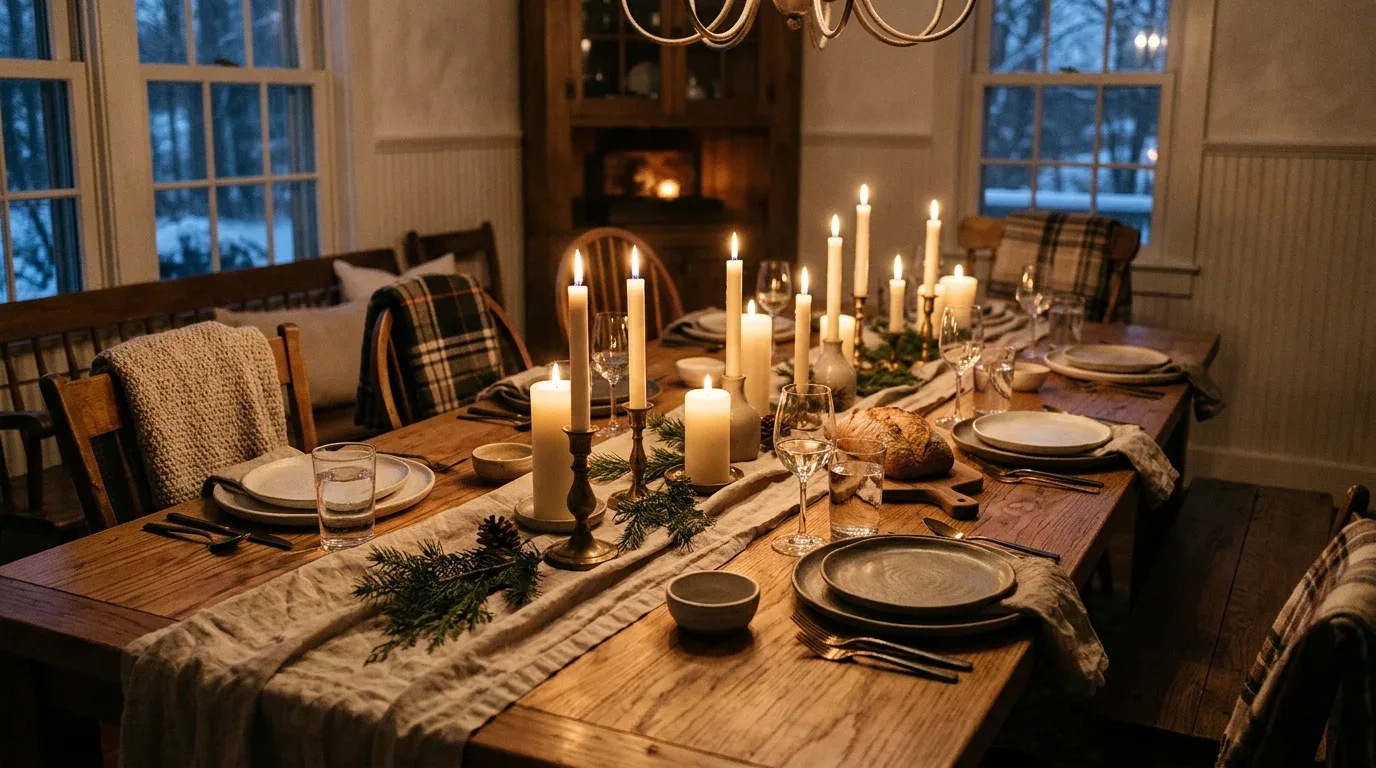
Candles are a simple way to create a welcoming atmosphere for winter dinners. Arrange a few candleholders along the center of the table, mixing heights and finishes while keeping the overall display low enough for conversation. Ceramic, glass, aged brass, and understated iron holders all work well with rustic wood and neutral linens.
Choose unscented candles when serving food, since strong fragrances can compete with the aromas of dinner. LED candles provide a useful alternative for homes with young children, pets, or restrictions on open flames. If you use real candles, keep them away from greenery, loose fabric, and other flammable decorations, and never leave them unattended. Combine candlelight with a dimmed chandelier or soft lamps to create depth rather than relying on one bright overhead fixture. The result feels intimate without requiring elaborate seasonal accessories.
17. Set Up a Practical Winter Entertaining Station
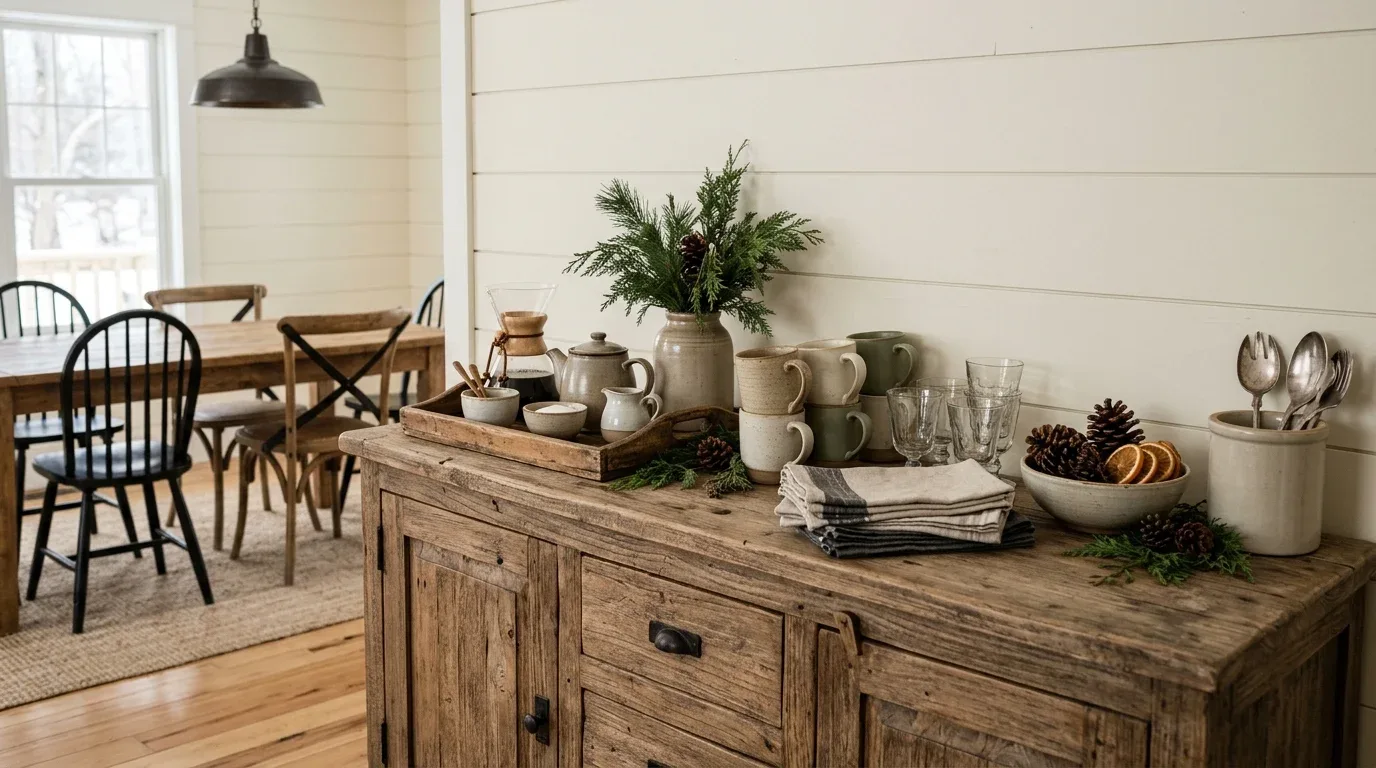
A dedicated entertaining station helps guests feel comfortable while keeping your dining table organized. Use a farmhouse sideboard, console, or sturdy serving cart to arrange drinking glasses, water, napkins, serving utensils, and a few seasonal decorations. During a winter dinner party, the surface can hold a hot-drink station with mugs, tea, coffee, and accompaniments, provided hot equipment is placed safely away from edges and traffic.
Keep the display simple and group related items together so guests can serve themselves without interrupting the meal. A small evergreen arrangement or ceramic bowl can provide decorative interest without taking up too much room. Make sure the station is easy to reach but does not block doorways or create congestion near the dining table. This functional finishing touch combines the practical side of farmhouse design with the relaxed hospitality that makes winter entertaining enjoyable.
Final Thoughts
Creating a Joanna Gaines-inspired dining room for winter entertaining is less about copying a particular room and more about combining timeless materials, comfortable furnishings, thoughtful lighting, and meaningful details. Start with the elements that will make the greatest difference in your home, whether that means choosing a rustic table, introducing softer textiles, or adding warm lighting. Then layer in natural greenery, vintage-inspired accessories, and practical storage to make hosting easier.
Most importantly, let your dining room reflect the way you live. A welcoming space should look beautiful while giving family and friends room to relax, share meals, and enjoy one another’s company. With a few considered changes, your dining room can become a cozy winter gathering place that feels inviting long after the holiday season ends.