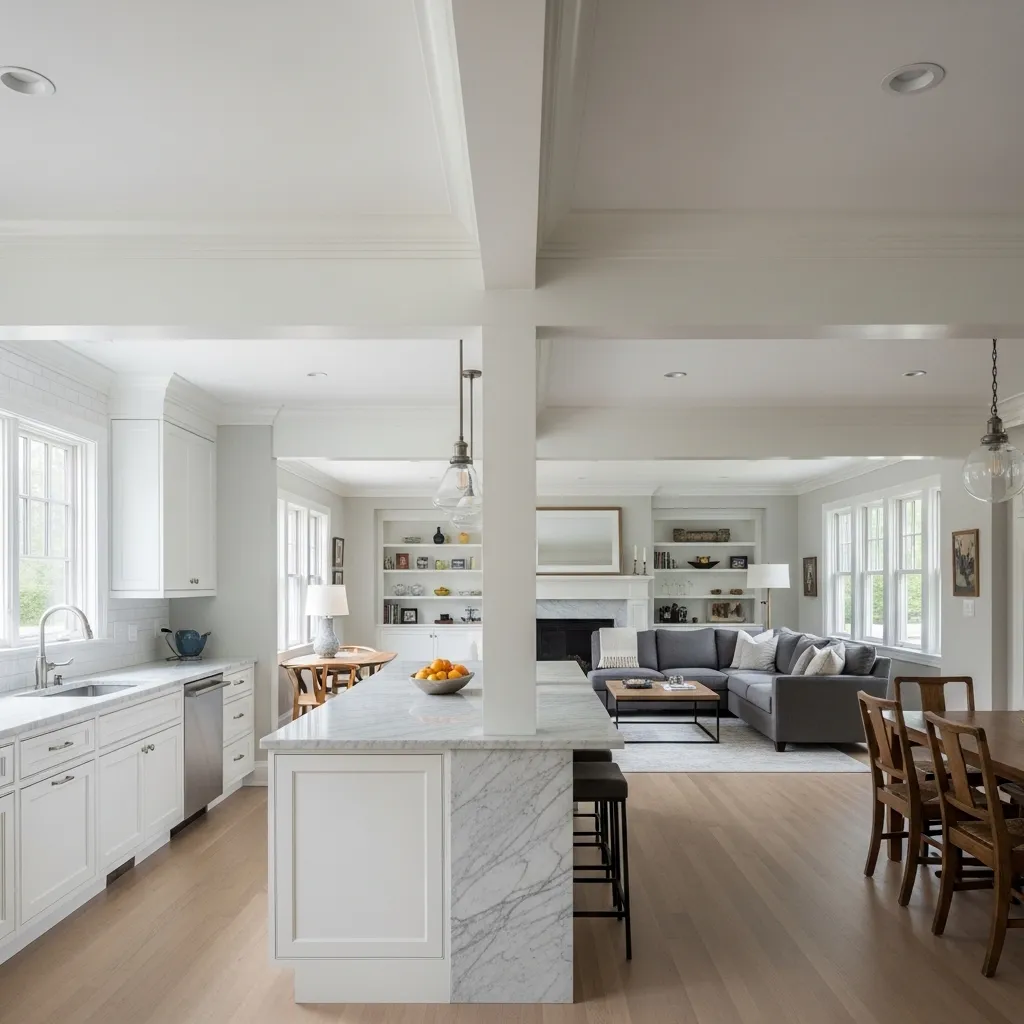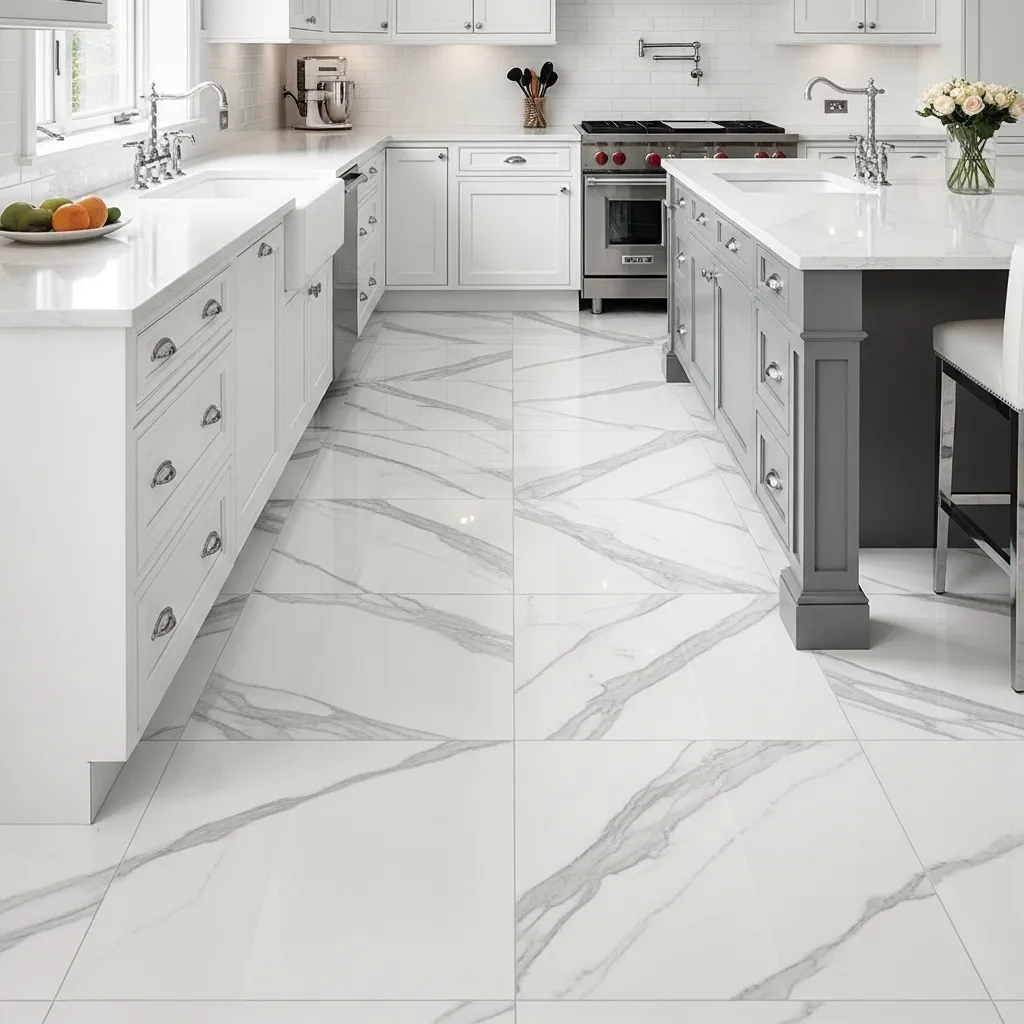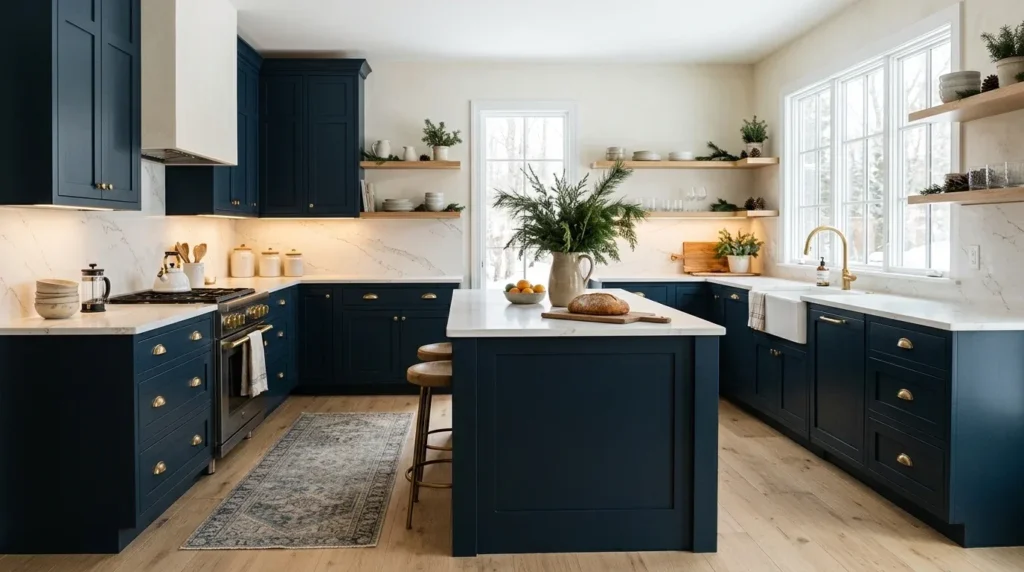
Blue kitchens bring a beautiful balance of calm, character, and sophistication to a home, making them especially appealing during the colder months. From deep navy cabinetry that creates a welcoming, cocoon-like atmosphere to soft powder-blue walls that brighten a compact cooking space, this versatile color works with an impressive range of interior styles. Blue also pairs naturally with warm wood, creamy whites, brushed brass, and textured stone, allowing you to create a kitchen that feels inviting rather than chilly.
Whether you are planning a complete renovation or looking for affordable ways to refresh your existing kitchen, the right shade and combination of materials can make a noticeable difference. These blue kitchen design ideas explore practical layouts, beautiful color combinations, statement islands, stylish backsplashes, and cozy finishing touches. Each approach offers inspiration for creating a kitchen that feels comfortable, functional, and timeless throughout winter and beyond.
1. Deep Navy Blue Kitchen Cabinets
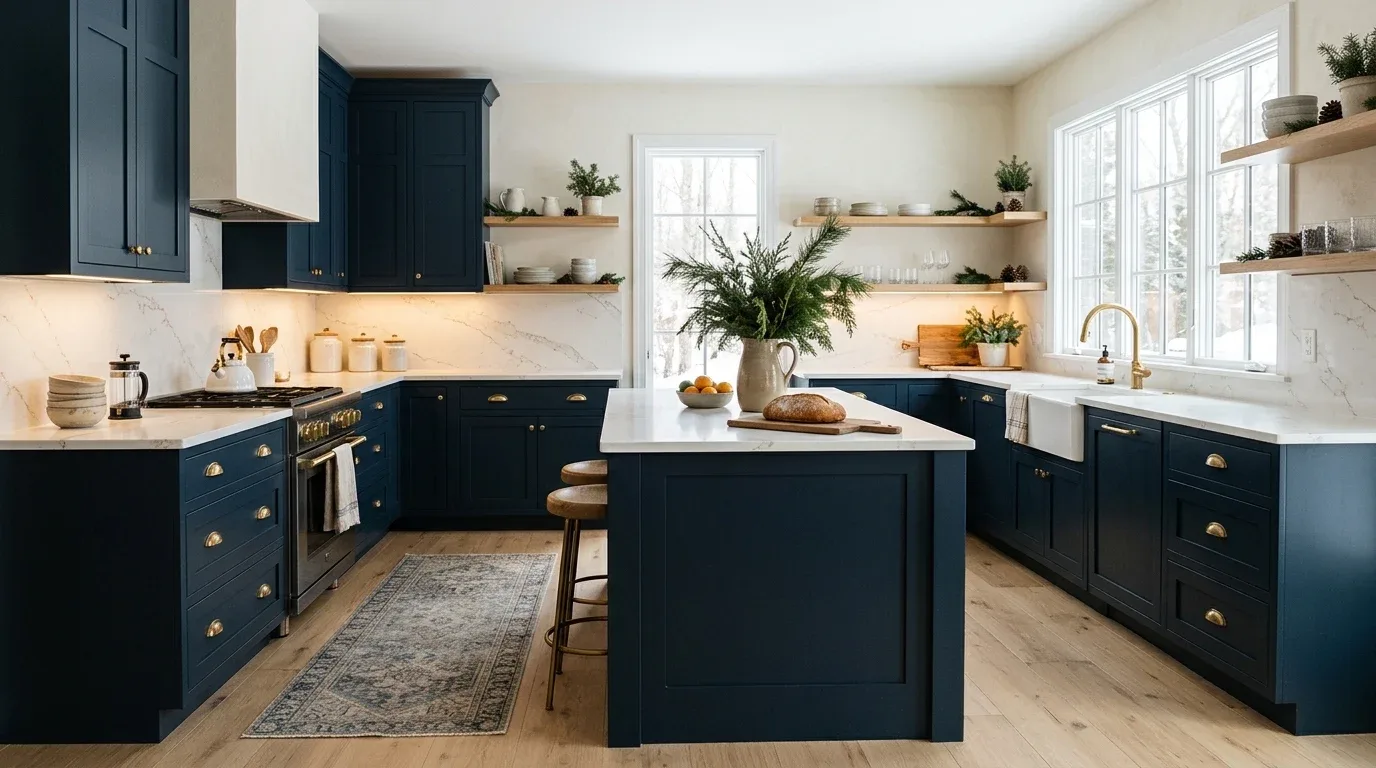
Deep navy cabinets create a sophisticated foundation for a cozy winter kitchen. Their rich color adds depth and visual warmth, especially when paired with creamy walls, natural oak flooring, and soft under-cabinet lighting. Navy works beautifully in both traditional and contemporary kitchens because it feels classic without being predictable. For a polished finish, consider simple Shaker-style doors with brushed brass or warm champagne-metal handles. A white quartz countertop can prevent the darker cabinetry from overwhelming the room, while a pale backsplash keeps the overall design balanced.
If your kitchen receives limited natural light, use navy on the lower cabinets and choose a lighter color for the upper section. This arrangement preserves the dramatic effect while helping the room feel open and welcoming.
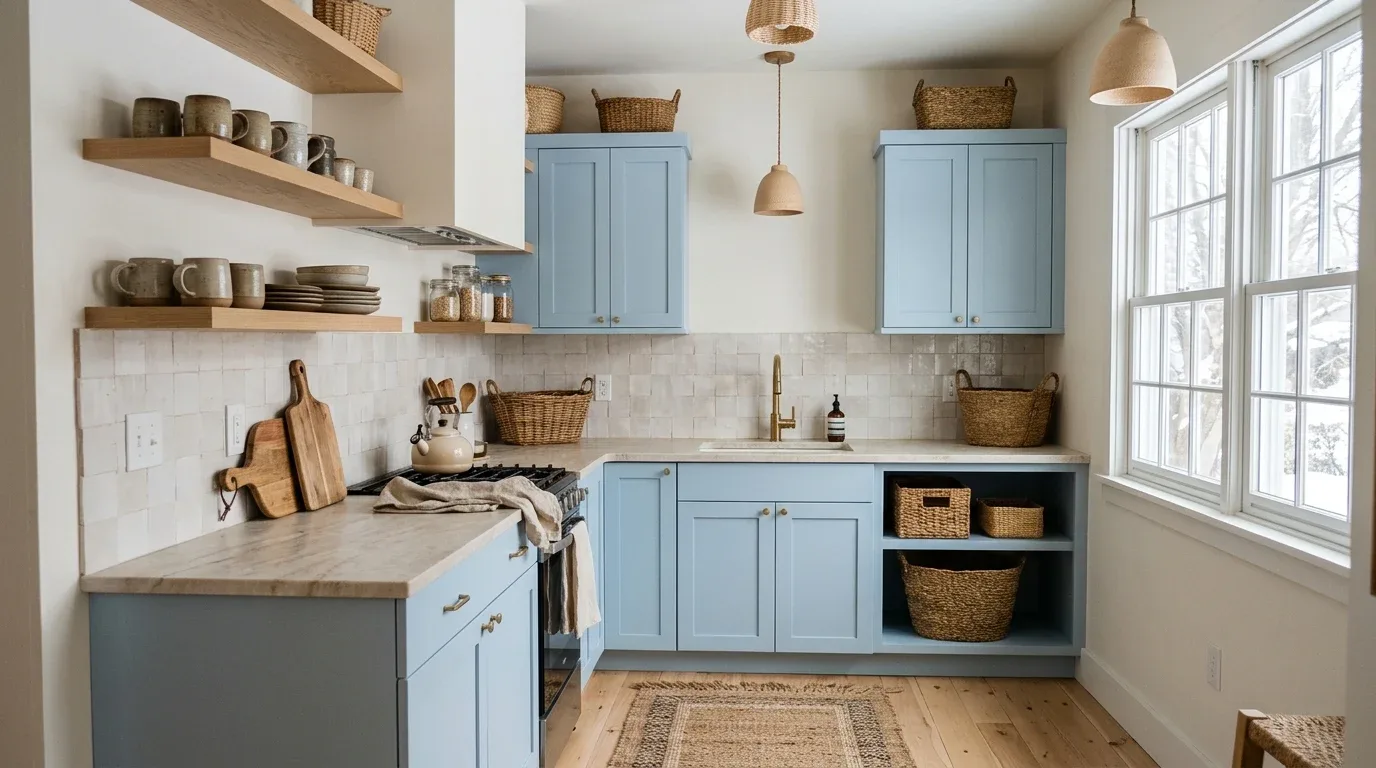
2. Soft Powder Blue Kitchen Cabinets
Powder blue cabinets offer a gentle alternative to dramatic navy, creating a kitchen that feels airy, peaceful, and welcoming. This muted shade is particularly effective in smaller rooms, where darker colors might make the space feel enclosed. Pair powder blue cabinetry with warm white walls, pale stone countertops, and light wood shelving for an understated Scandinavian-inspired look. In winter, the combination feels especially inviting when complemented by woven baskets, linen tea towels, and warm pendant lighting.
To keep the color from appearing too cool, choose a powder blue with subtle gray undertones rather than an icy, highly saturated shade. Brass or antique bronze hardware adds contrast without overpowering the delicate palette. This design works beautifully in cottage kitchens, apartments, and family homes that benefit from a light, timeless aesthetic.
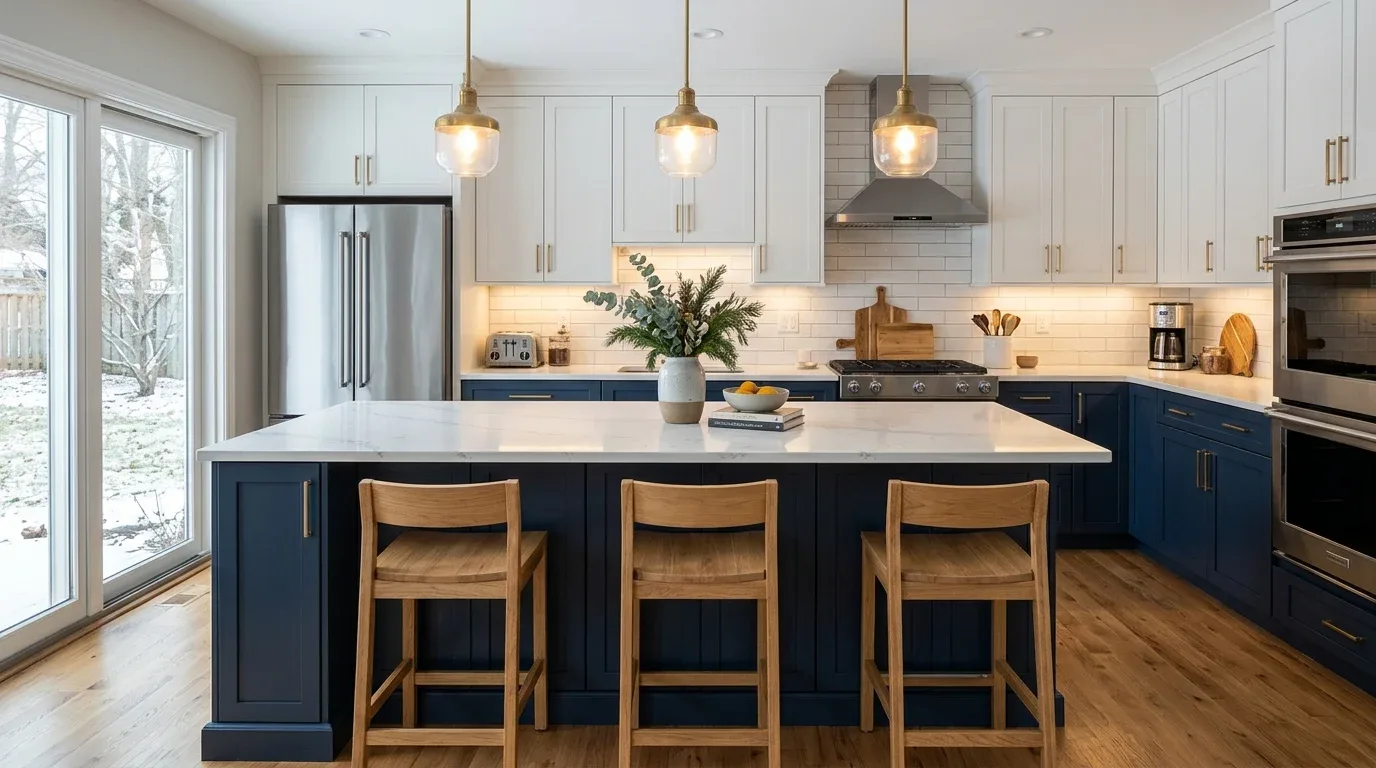
3. Two-Tone Blue and White Kitchen
A two-tone blue and white kitchen provides a simple way to introduce color while preserving a bright, spacious appearance. Try deep blue lower cabinets with white upper cabinets, or reverse the arrangement if you want the darker shade closer to eye level. The contrast creates visual interest and helps define different areas without requiring elaborate decorative details. White quartz countertops, a matching backsplash, and stainless-steel appliances make the combination feel crisp and practical.
For a cozier winter atmosphere, introduce natural wood through bar stools, cutting boards, or open shelves. Warm white lighting will soften the contrast between the two colors, while a textured runner adds comfort underfoot. This versatile design suits open-plan kitchens, narrow galley layouts, and traditional family spaces because it balances personality with an enduring sense of brightness.
4. Blue Kitchen Island as a Statement Feature
A blue kitchen island can become the focal point of the entire room without requiring you to replace every cabinet. Keep the surrounding cabinetry white, beige, or natural wood, then paint the island in navy, denim blue, or muted teal. This creates a deliberate splash of color while allowing the kitchen to retain a light and open appearance. A contrasting countertop in white quartz or softly veined marble can emphasize the island’s shape and make it feel like a piece of custom furniture.
For winter comfort, add upholstered counter stools in a warm neutral fabric and hang pendant lights above the island. The result is a practical gathering place for preparing meals, enjoying breakfast, or sharing hot drinks. Before choosing a dramatic island color, consider how it coordinates with nearby living spaces in an open-plan home.

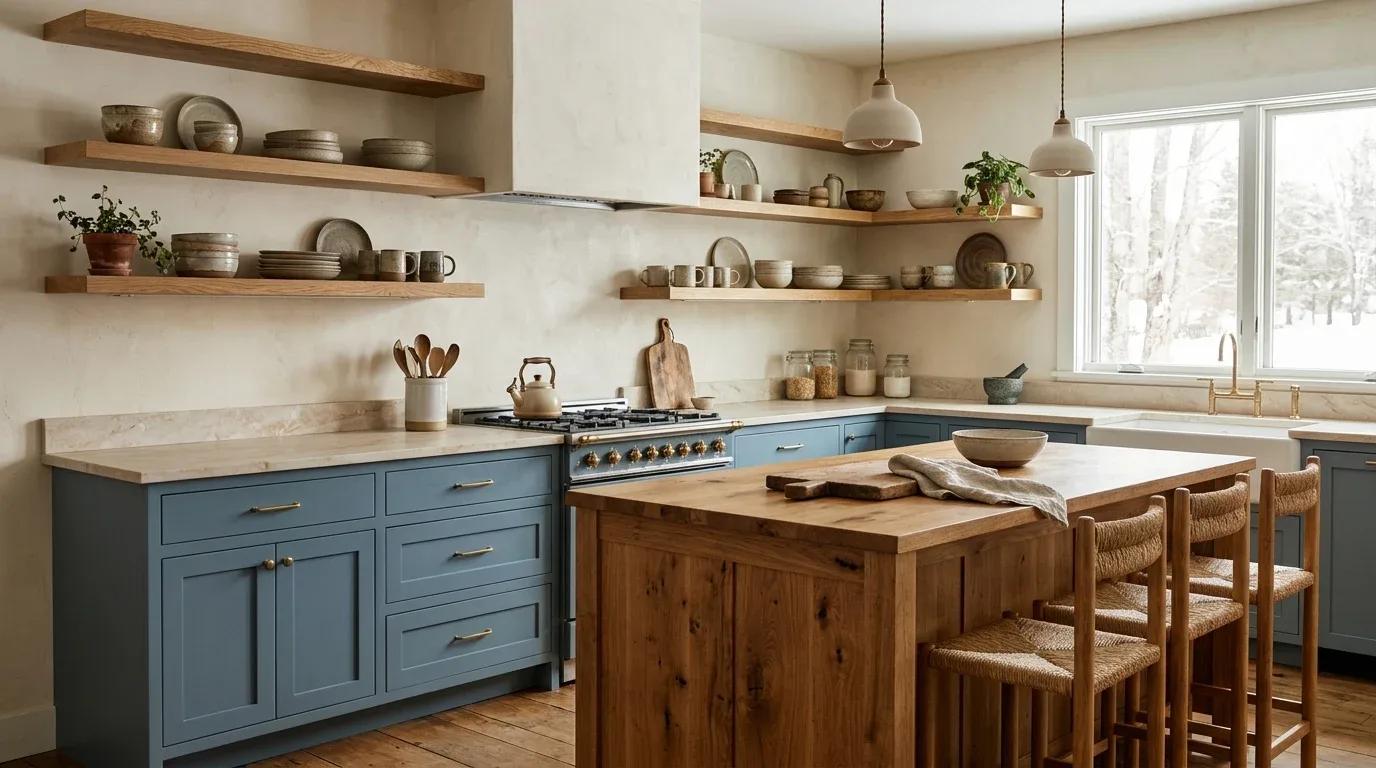
5. Dusty Blue Cabinets with Natural Wood
Dusty blue and natural wood create a relaxed, organic kitchen that feels particularly comforting during winter. The muted blue has enough color to make the cabinetry distinctive without dominating the room, while oak, walnut, or ash introduces warmth and texture. Consider dusty blue lower cabinets with a wood island, floating shelves, or a butcher-block breakfast counter. If you prefer a more streamlined appearance, use wood only for small accents such as stools, drawer pulls, and open shelving.
Finish the look with creamy walls, matte ceramic accessories, and warm task lighting. Avoid using too many competing wood tones; choosing one dominant finish helps the space feel cohesive. This combination is ideal for homeowners who enjoy modern farmhouse, Scandinavian, or contemporary rustic interiors and want a colorful kitchen that remains grounded in natural materials.
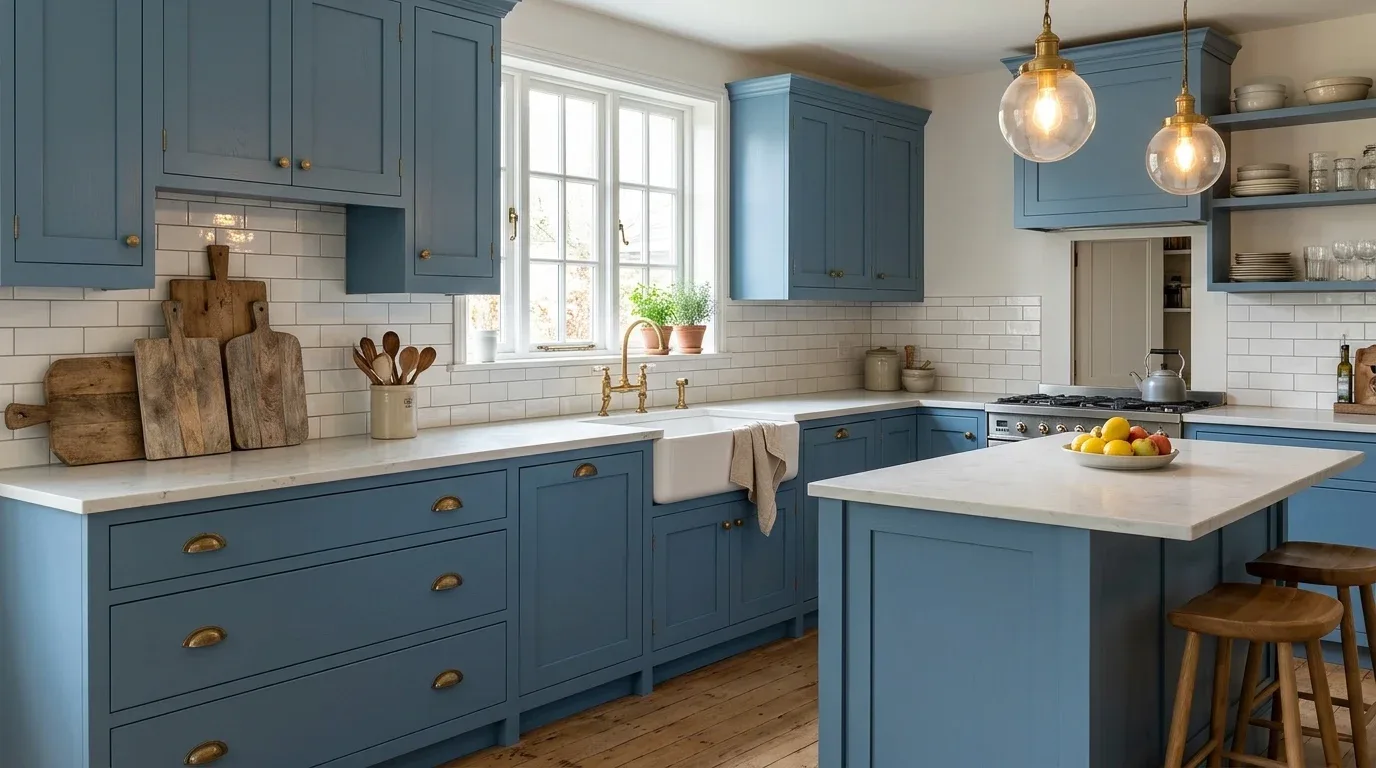
6. Classic Blue Shaker Kitchen
Blue Shaker cabinets bring traditional craftsmanship and modern color together in a design that rarely feels dated. Their simple recessed panels provide enough detail to add character without making the kitchen look overly ornate. Choose a medium blue for a welcoming everyday space or a deeper navy for a more dramatic effect. Pair the cabinets with pale stone countertops, a white subway-tile backsplash, and understated metal handles to maintain a balanced appearance.
In a winter kitchen, small styling choices make this classic design even more inviting. Display wooden chopping boards, ceramic utensil holders, and a bowl of seasonal fruit on the countertop. If you have room, a small pendant light with a warm finish can emphasize the cabinetry’s texture. Shaker cabinets are particularly suitable for family kitchens because their familiar proportions complement both traditional architecture and updated interiors.
7. Blue Cabinets with Brass Hardware
Brass hardware is an effective way to make blue kitchen cabinetry feel warmer and more refined. The golden undertones of brass contrast beautifully with navy, slate blue, and muted teal, adding a subtle glow that works well with winter lighting. Use matching cabinet pulls, knobs, and faucet finishes for a coordinated appearance, or introduce brass through just a few prominent details if you prefer a restrained style.
For the best result, combine the hardware with a countertop and backsplash that complement rather than compete with the blue. Creamy marble-look surfaces, warm white tiles, and pale wood are reliable choices. Brushed or satin brass offers a softer finish than highly polished gold and is often easier to integrate into everyday interiors. Remember that brass finishes can vary in tone, so compare samples together before purchasing all your fixtures.
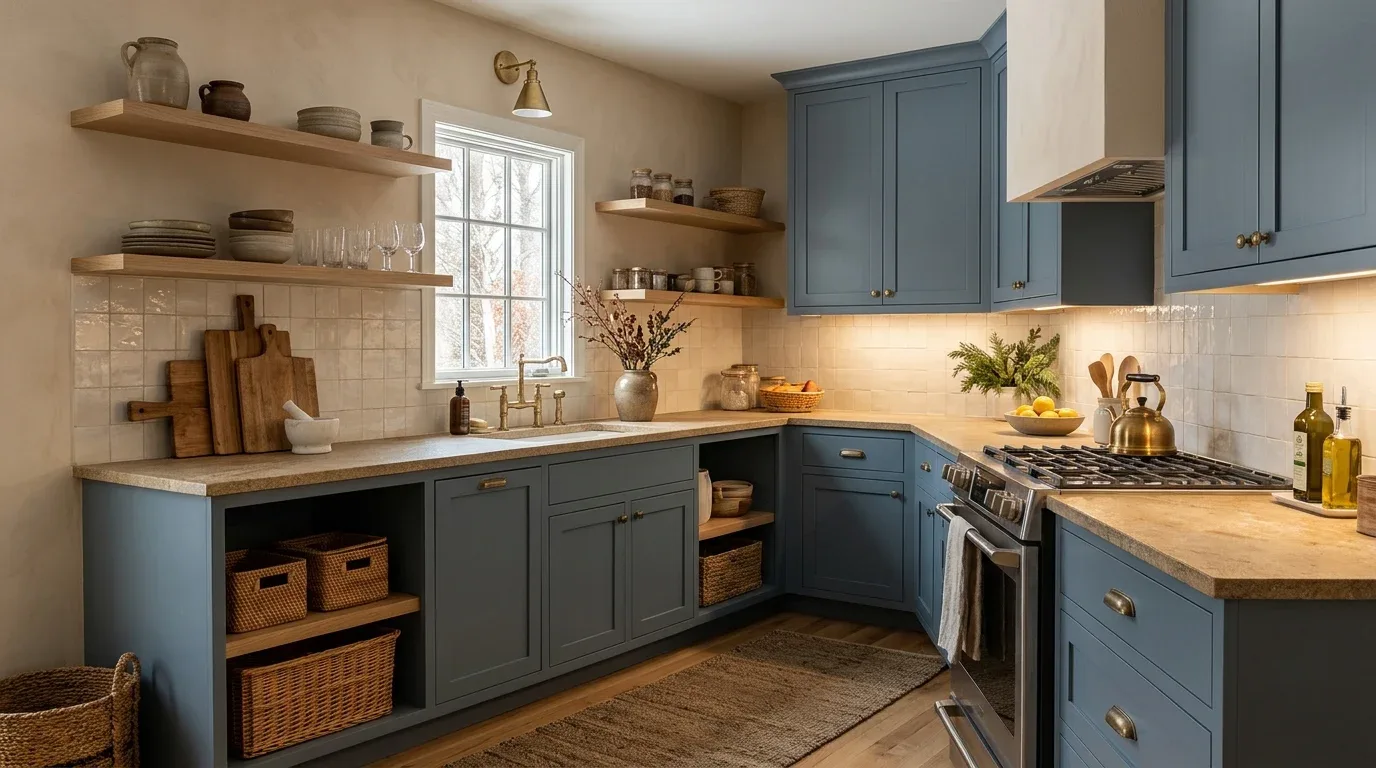
8. Coastal Blue Kitchen with White Accents
A coastal-inspired blue kitchen can feel fresh and peaceful even when the weather outside is cold. Instead of relying on obvious nautical decorations, use soft ocean blue cabinetry, white walls, pale oak details, and natural woven textures to suggest a relaxed seaside atmosphere. A light blue island or a row of blue lower cabinets can provide enough color to establish the theme without making the room feel overly themed.
Choose simple hardware, understated pendant lights, and countertops in white or pale gray. Linen curtains and woven counter stools introduce texture, while ceramic bowls and fresh greenery add a lived-in quality. To keep the kitchen comfortable in winter, favor warm white bulbs and natural materials over excessive cool-gray finishes. This approach works especially well in bright kitchens where you want a light, cheerful aesthetic throughout the year.
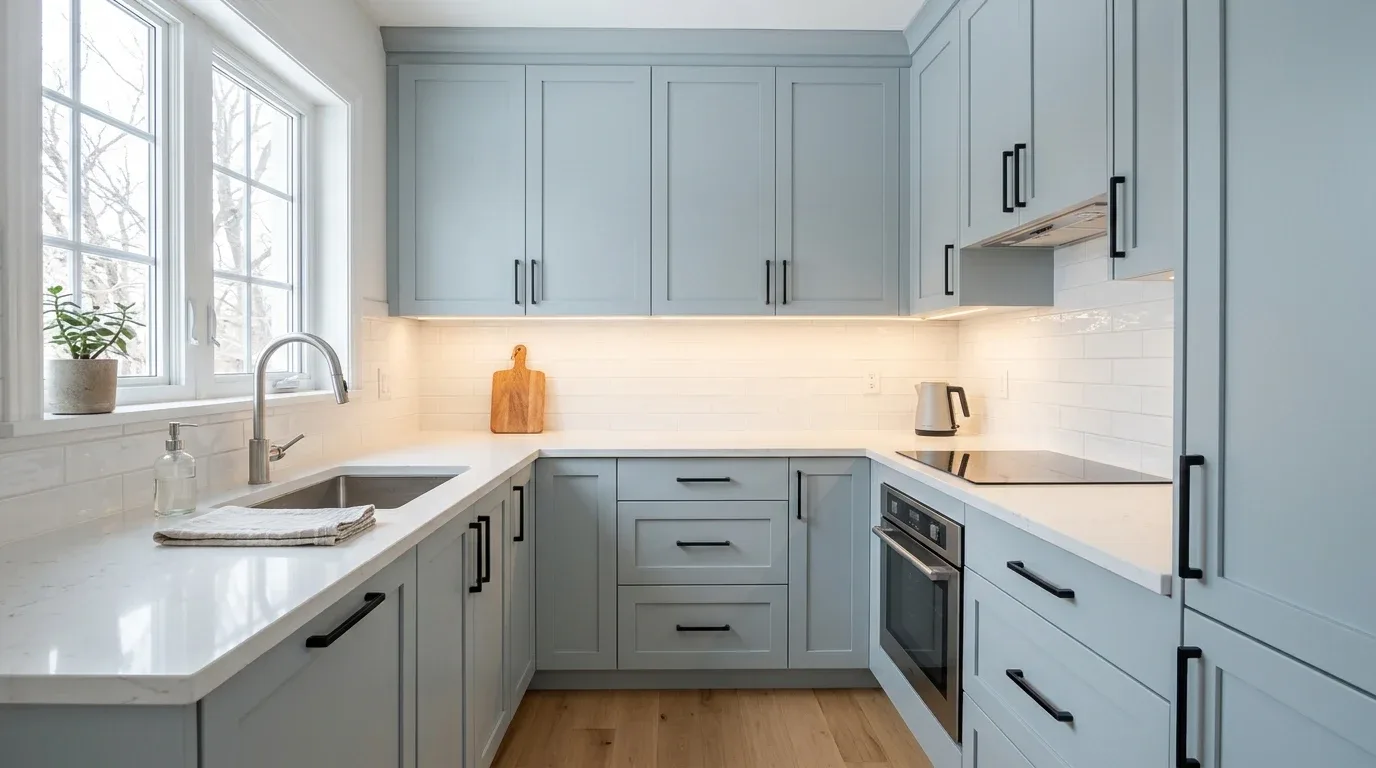
9. Moody Midnight Blue Kitchen
Midnight blue cabinetry creates a dramatic kitchen with a rich, intimate atmosphere. This almost-black shade looks striking with marble-style countertops, dark metal fixtures, and carefully placed lighting. It is especially effective in larger kitchens or spaces with generous windows, where natural light can reveal the color’s depth rather than allowing it to disappear into shadow. For an elegant finish, consider a waterfall island or a full-height backsplash with subtle veining.
Because midnight blue is visually heavy, balance it with lighter elements such as pale flooring, cream walls, or a warm wood dining table. Under-cabinet lighting is essential for practical food preparation and helps highlight the cabinetry after sunset. Use the darkest shade selectively if your kitchen is small. A midnight blue island or lower cabinet run can deliver the same sophisticated effect without overwhelming the room.
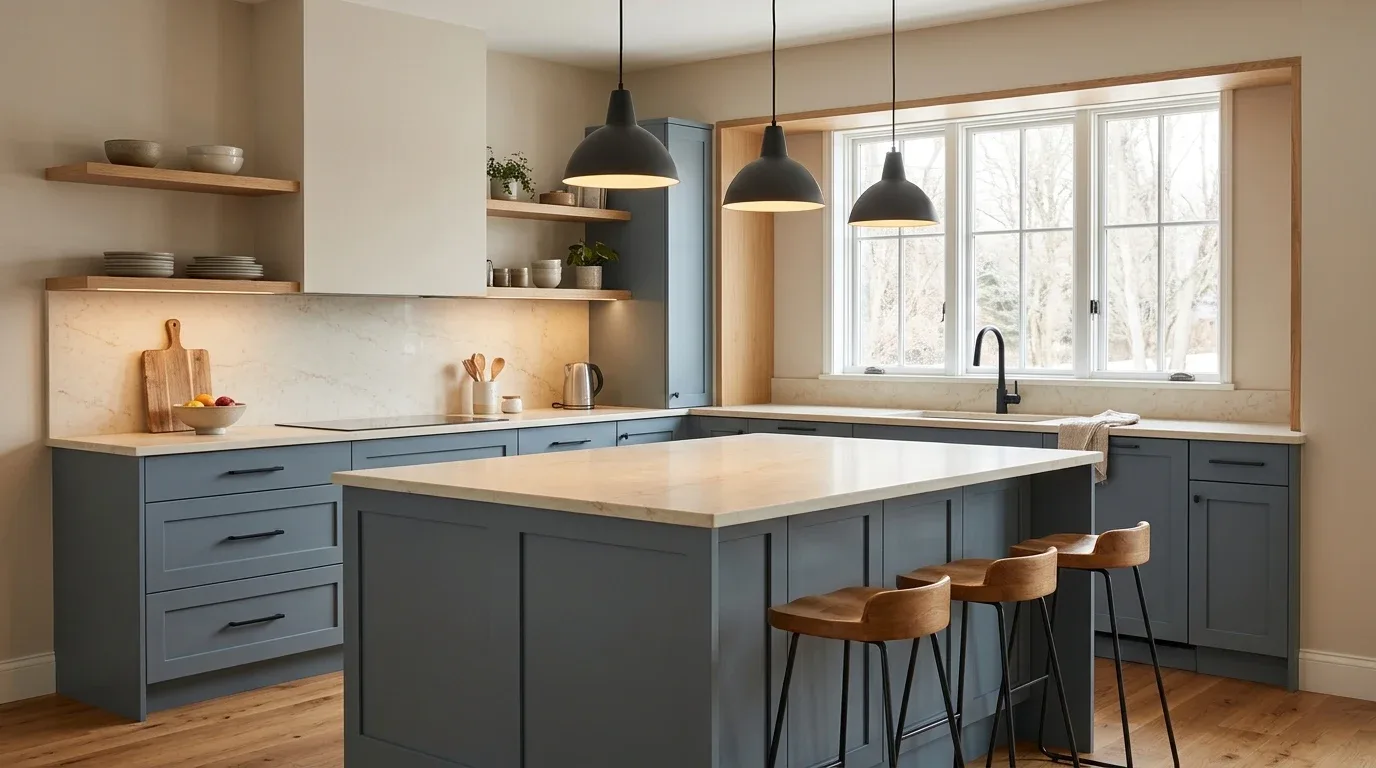
10. Blue Kitchen with Marble Countertops
Marble and marble-look countertops provide a graceful complement to blue kitchen cabinets. Their pale surfaces reflect light and create a visual break against saturated colors, while delicate gray or warm beige veining introduces natural-looking movement. Pair white-veined marble with navy cabinets for a crisp, high-contrast design, or select a warmer stone pattern to soften dusty blue or slate cabinetry. Extending the same material up the backsplash can make the kitchen feel more cohesive and luxurious.
When selecting real marble, remember that it is porous and can etch or stain, so it requires appropriate care. Quartz and other engineered surfaces offer alternatives with similar visual appeal and different maintenance requirements. Keep accessories relatively simple so the stone remains a feature. Warm pendant lights and wooden chopping boards can prevent the combination of blue and pale stone from feeling too formal during winter.
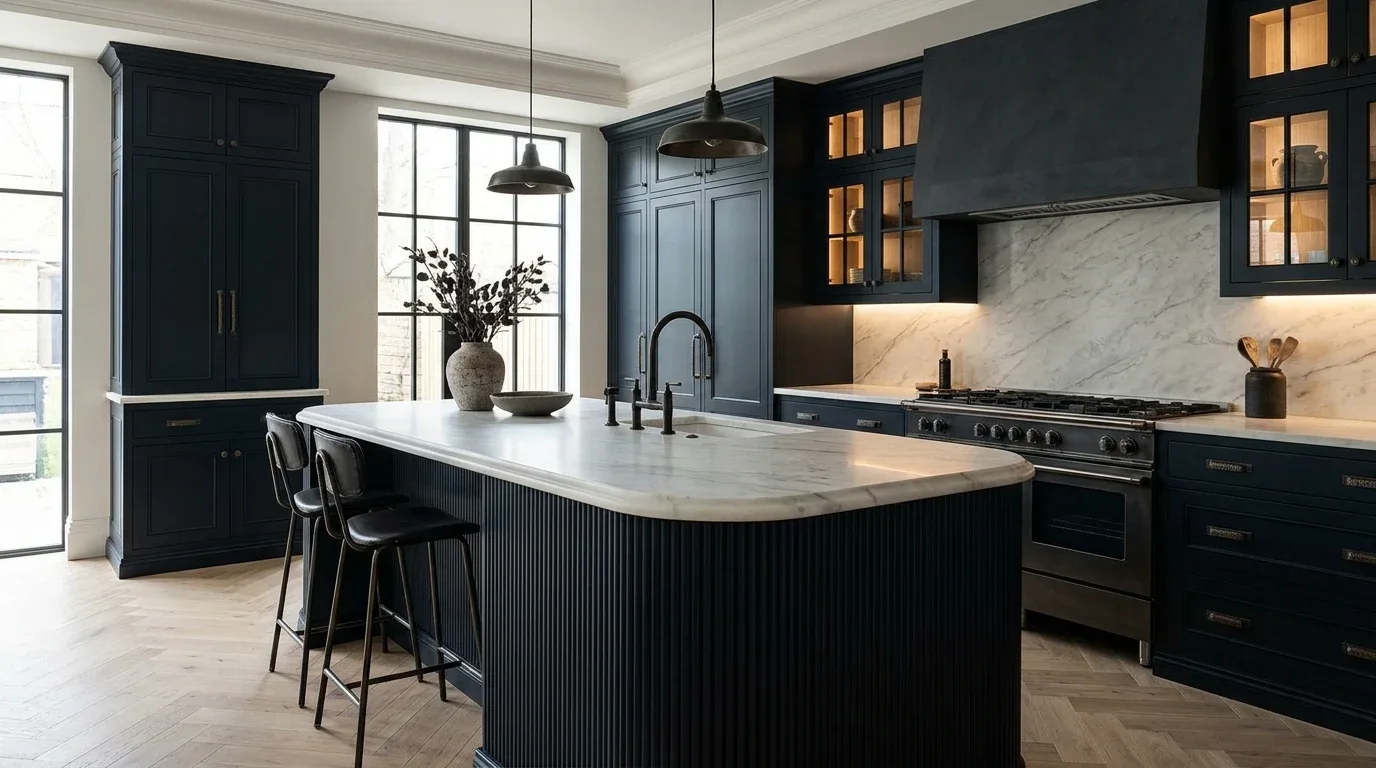
11. Blue and Warm Beige Kitchen
Blue and warm beige form a softer alternative to the familiar blue-and-white palette. Beige walls, sandy stone countertops, or cream-colored backsplash tiles can take the edge off cool blue cabinetry, making the kitchen feel relaxed and comfortable. This combination is especially effective with slate blue, dusty blue, and muted denim shades, which blend naturally with earthy neutrals.
For a balanced design, use blue on the cabinets and beige across larger background surfaces. Add oak shelving, woven storage baskets, and textured fabric accessories to strengthen the natural, welcoming atmosphere. Choose a beige with warm undertones rather than a stark gray-beige if you want the room to feel cozy under winter lighting. The result is an adaptable color scheme that works in modern apartments, traditional homes, and open-plan kitchens connected to neutral living rooms.
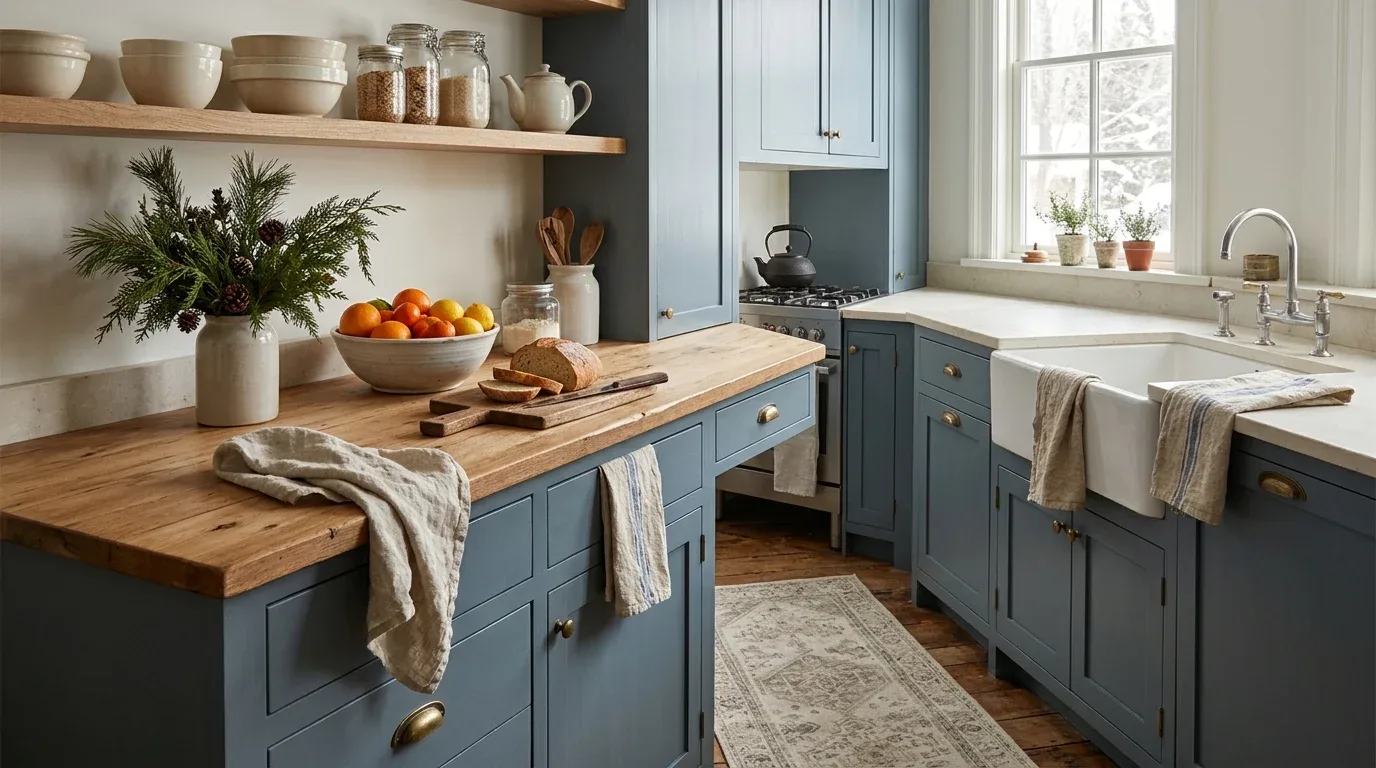
12. Blue Backsplash for a Subtle Color Update
If replacing kitchen cabinets is outside your budget, a blue backsplash offers a practical way to introduce the color. Glossy pale-blue subway tiles reflect light, while handmade-look tiles add subtle variations that make the wall feel more individual. Deep blue tiles can create a striking focal point behind the stove, especially when paired with white cabinetry and light countertops. For a more understated look, choose a muted blue-gray tile with a matte finish.
Consider how grout color affects the overall appearance. White grout emphasizes the pattern of individual tiles, while a coordinated gray creates a quieter, more continuous surface. Make sure the chosen material is suitable for the backsplash location and easy to clean around cooking areas. With warm under-cabinet lighting and a few wooden accessories, even a small tiled section can make the kitchen feel refreshed and inviting during winter.
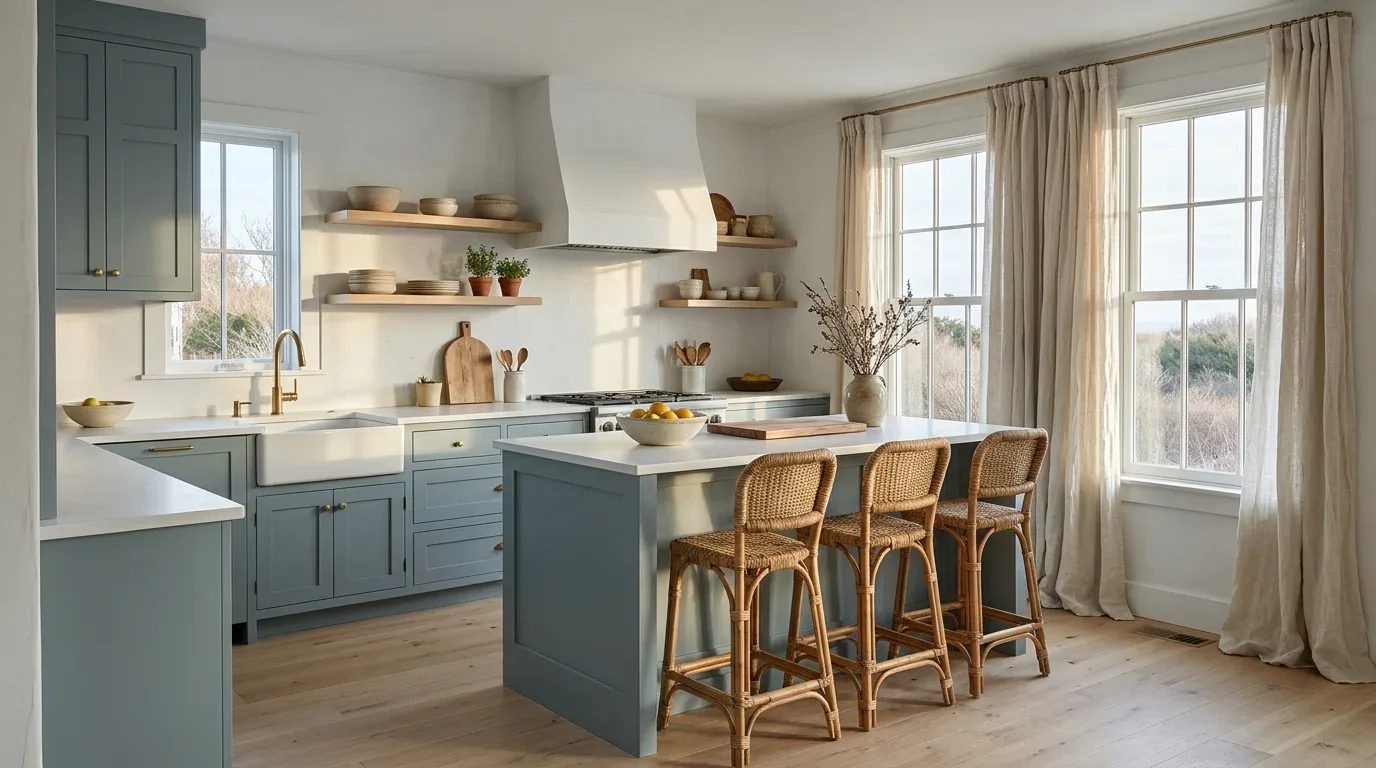
13. Small Kitchen with Light Blue Cabinets
Light blue cabinets can help a small kitchen feel cheerful without sacrificing personality. Shades such as pale denim, misty blue, and soft blue-gray provide more visual interest than plain white while maintaining a bright appearance. Combine them with reflective surfaces, simple cabinet fronts, and unobtrusive hardware to avoid crowding the room with decorative details. White countertops and a light backsplash can create continuity, making the boundaries between surfaces feel less abrupt.
Storage choices are just as important as color. Use vertical shelving where appropriate, organize drawers efficiently, and keep the countertop reserved for frequently used essentials. Under-cabinet lighting brightens food-preparation areas without requiring additional floor space. If the room has a narrow layout, painting the walls a warm off-white can prevent the blue cabinetry from making the space feel enclosed. The goal is a kitchen that feels both visually open and genuinely functional.
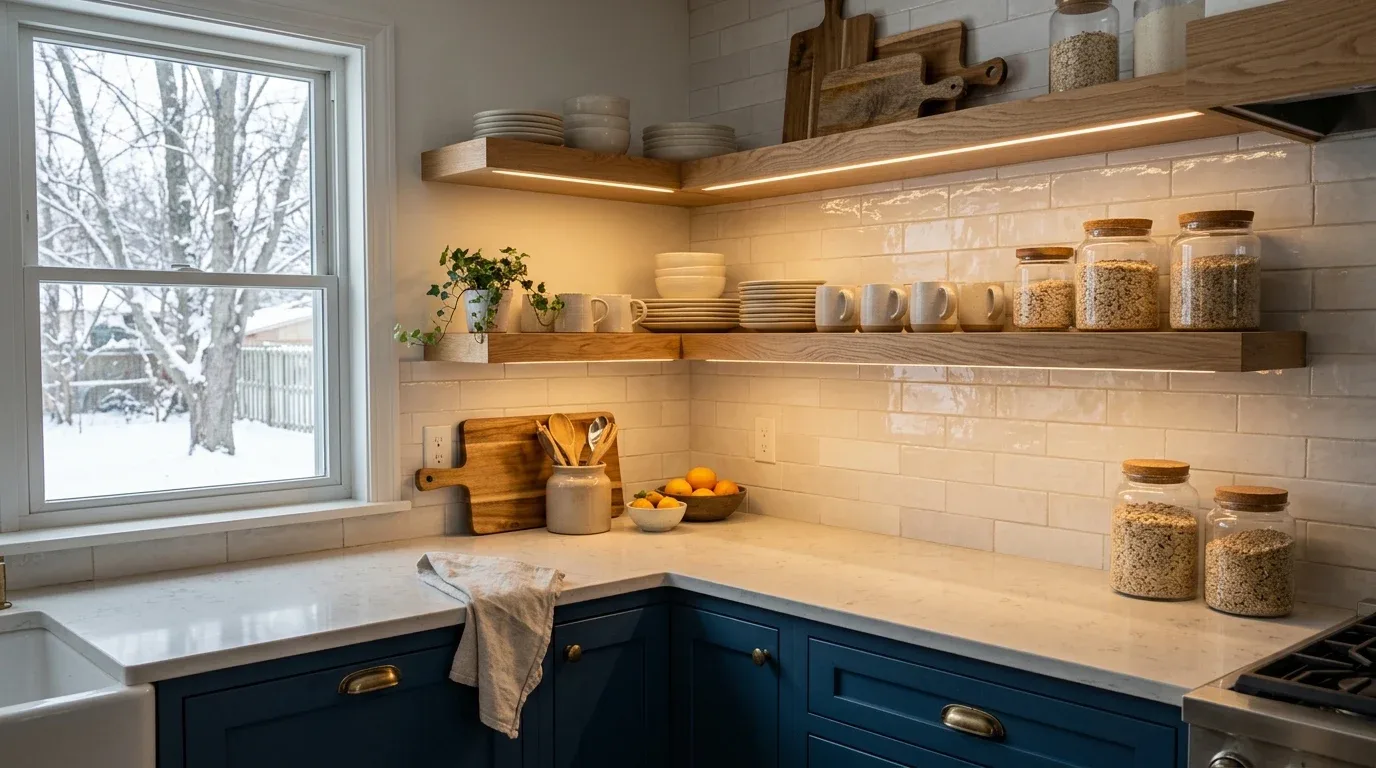
14. Blue Kitchen with Open Wooden Shelving
Open wooden shelves soften blue cabinetry and create opportunities to display useful kitchen items. Against navy or dusty blue cabinets, natural oak shelves introduce warmth and provide an attractive place for everyday plates, mugs, jars, and small decorative pieces. The combination is particularly appealing in winter because wood adds organic texture to a palette that might otherwise feel cool.
Use open shelving selectively rather than removing every upper cabinet. A short shelf beside the cooking area or above a coffee station may provide enough visual interest while preserving concealed storage for less attractive essentials. Arrange items by function and leave some space between objects to prevent the shelves from appearing cluttered. Warm white lighting can highlight the wood grain after dark. For a practical finish, choose sturdy brackets or a properly installed floating-shelf system rated for the intended load.
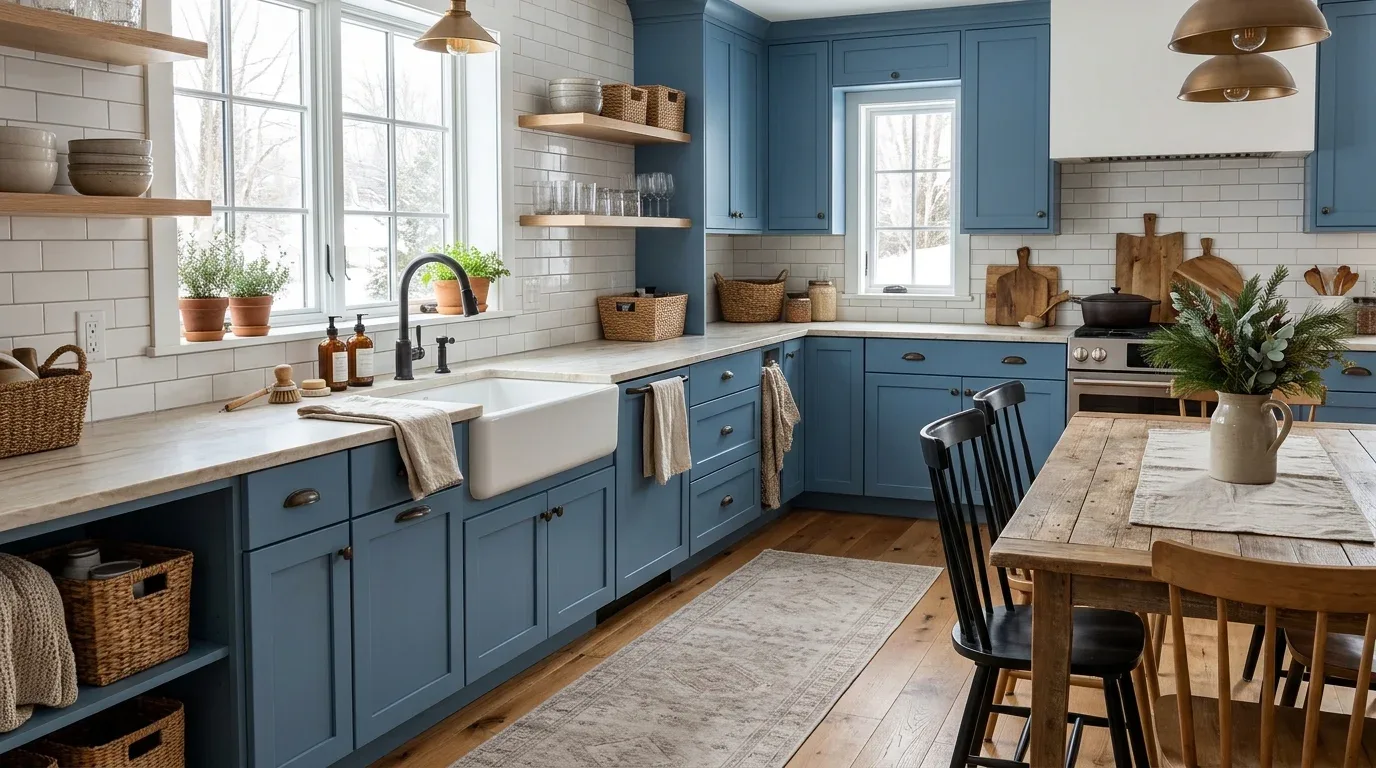
15. Blue Farmhouse Kitchen with Rustic Details
A blue farmhouse kitchen combines the welcoming character of country interiors with a fresh, colorful finish. Medium blue Shaker cabinets, a farmhouse-style sink, and natural wood surfaces establish the look without requiring an abundance of decorative accessories. White subway tiles, simple metal handles, and a wooden dining table help the room feel familiar and practical. If you prefer a more traditional palette, use deep blue on the island and creamy white on the surrounding cabinetry.
For winter, introduce comfortable textures through washable runners, woven baskets, and linen window treatments. A few ceramic pitchers or wooden serving boards can add personality without turning the kitchen into a themed display. Choose durable finishes for frequently used areas, especially around the sink and stove. This style is ideal for busy households because it balances decorative charm with a layout designed for everyday cooking, casual meals, and gathering with family.
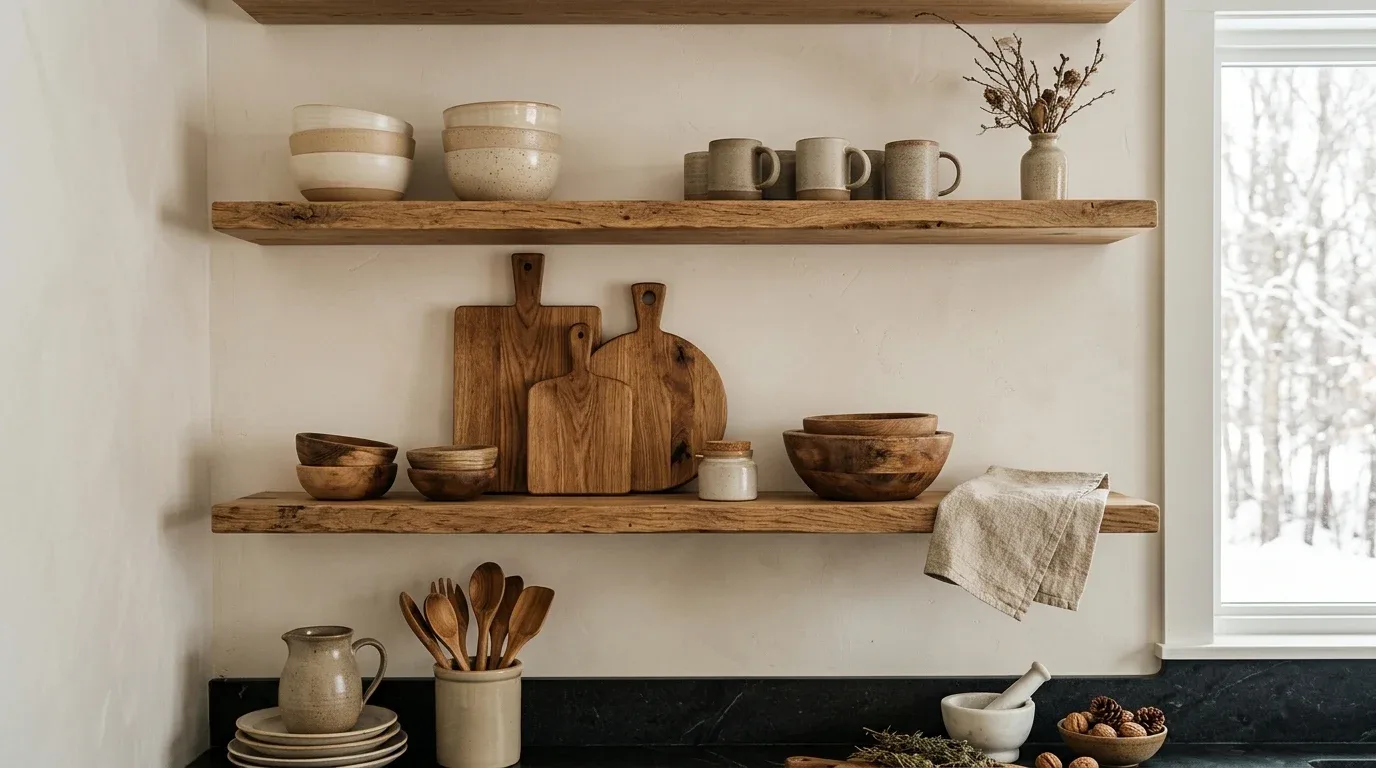
16. Blue Kitchen with Matte Black Accents
Matte black accents bring a modern edge to blue kitchen cabinetry. Black faucets, cabinet pulls, pendant lights, and window frames create crisp outlines that work especially well with navy, denim blue, and slate shades. To keep the combination from feeling too stark in winter, introduce warm wood, creamy countertops, or soft beige walls. These elements soften the contrast while preserving the clean, contemporary character of the design.
Consistency is more important than using black everywhere. Select a few repeated details, such as matching handles and lighting, then allow the blue cabinetry to remain the main attraction. If your kitchen is compact, choose a lighter blue and limit black to small fixtures. In a larger room, a black-framed glass cabinet or dark pendant lights can provide stronger definition. The result is a practical, stylish kitchen that feels current without depending on short-lived decorative trends.
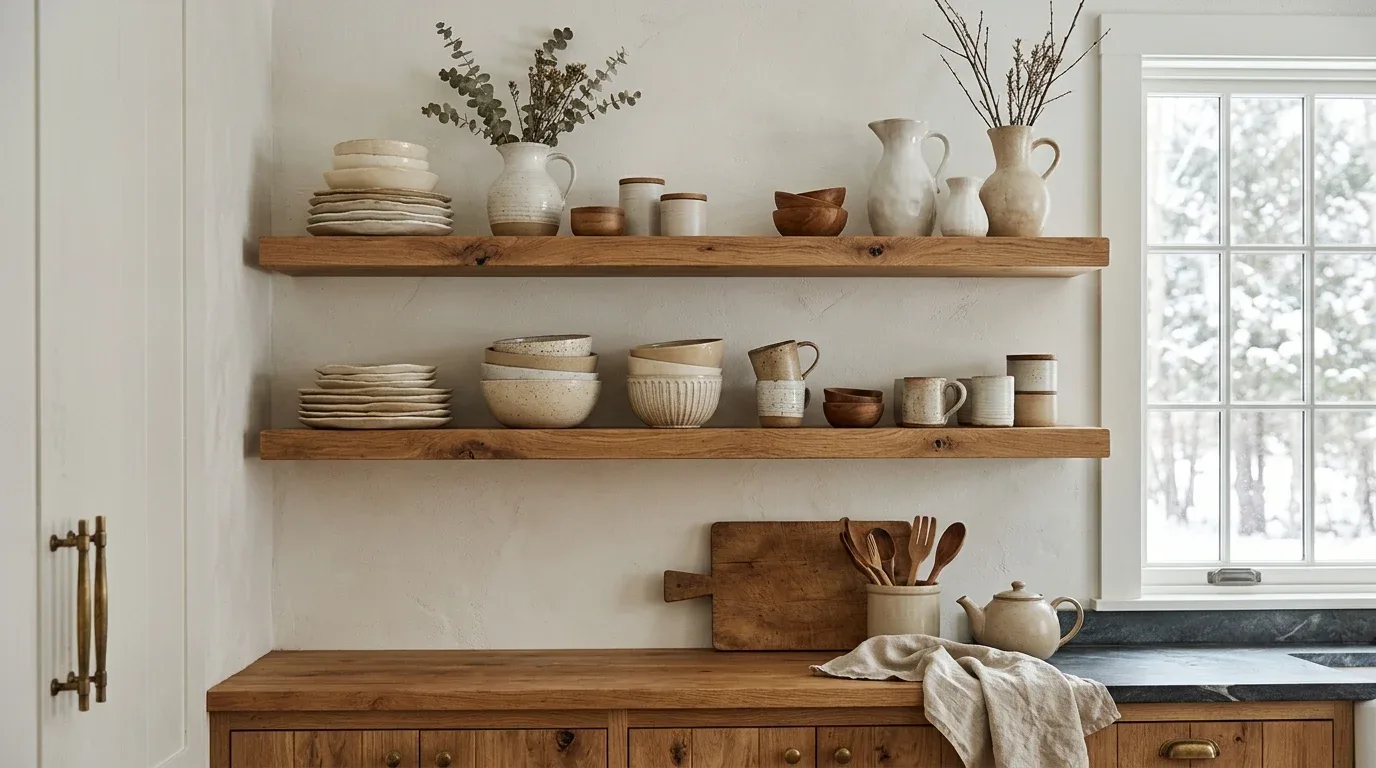
17. Blue Kitchen with Cozy Winter Lighting
Thoughtful lighting can transform a blue kitchen, particularly during the shorter days of winter. Under-cabinet LED strips illuminate countertops, pendant lights define an island, and recessed ceiling fixtures provide even general illumination. For a welcoming atmosphere, look for warm-white bulbs around 2700K to 3000K, adjusting the choice to suit your finishes and personal preference. This warmer light can make navy and slate blue feel richer while helping wood and brass details appear more inviting.
Plan lighting in layers rather than relying on a single overhead fixture. Task lighting should illuminate chopping and cooking areas, while decorative pendants can create a comfortable gathering spot. Dimmers offer flexibility for moving from meal preparation to relaxed evening dining. Make sure fixtures are suitable for their installation locations, especially near sinks or cooking equipment. When combined with pale countertops and reflective backsplash materials, a well-lit blue kitchen can feel bright by day and cozy after sunset.
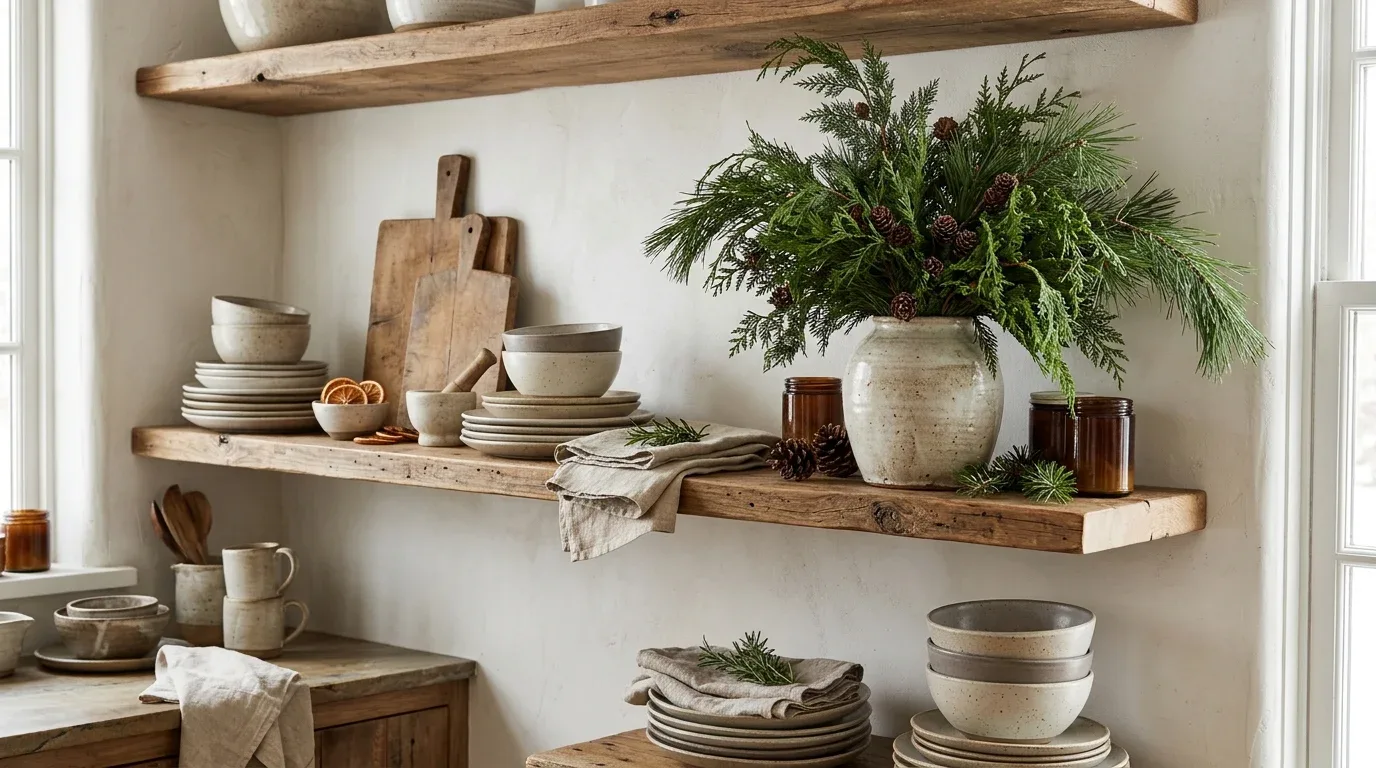
18. Blue Kitchen with Seasonal Natural Decor
Seasonal natural decor is an easy way to make a blue kitchen feel ready for winter without changing its permanent design. Blue cabinetry pairs beautifully with evergreen branches, wooden serving boards, ceramic bowls, and neutral linen textiles. A small arrangement of foliage on the island or a bowl of citrus on the countertop introduces color and texture without competing with the cabinets. For a more understated look, use stoneware in cream, taupe, or soft gray.
Keep decorations away from hot surfaces, open flames, and food-preparation zones, and avoid overcrowding the countertop. A washable runner can add softness to the floor, while woven baskets help organize towels or pantry items. Choose a few meaningful pieces rather than filling every available surface. These simple updates work with navy, powder blue, dusty blue, and nearly any other cabinet shade, allowing the kitchen to feel seasonal while remaining practical for everyday use.
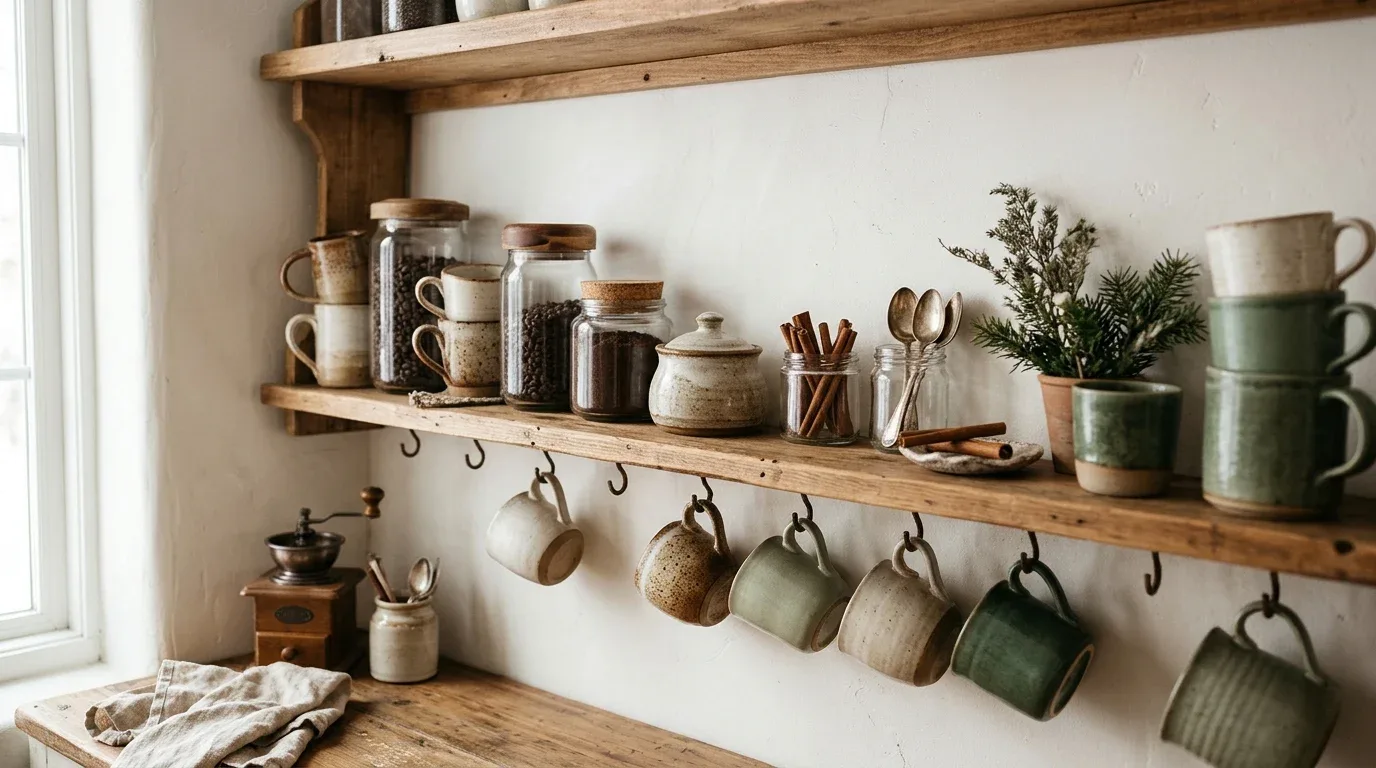
How to Choose the Right Blue for Your Kitchen
Before committing to a shade, consider the amount of natural light your kitchen receives, the size of the room, and the colors already present in adjoining spaces. Dark navy and midnight blue offer depth and sophistication, while powder blue and pale denim can make a smaller room feel brighter. Dusty blue and slate blue provide a middle ground that is colorful without being overly intense.
Test paint or cabinet samples beside your countertop, flooring, backsplash, and hardware. Observe them in morning daylight and under your evening lights, because blue can shift noticeably depending on its surroundings. Also consider maintenance: heavily used cabinets benefit from durable finishes that can be cleaned easily. The best blue kitchen is not simply the most fashionable one; it is a color scheme that complements your home and supports the way you cook, eat, and gather.
Final Thoughts
Blue kitchen designs offer countless ways to create a cozy winter home, from dramatic navy cabinetry and elegant marble surfaces to light blue cabinets, natural wood shelves, and warm seasonal accents. Start with a shade that suits your space, then build a balanced palette using comfortable lighting, practical materials, and complementary finishes. Whether you make a small backsplash update or plan a complete renovation, thoughtful choices can turn your kitchen into a welcoming place to cook, connect, and enjoy the colder months. The most successful design is one that feels beautiful today and remains functional for years to come.