Winter is the perfect season to transform your dining room into a welcoming gathering place where family and friends can enjoy comforting meals, meaningful conversations, and memorable celebrations. Inspired by the warm, timeless interiors associated with Joanna Gaines, these dining room ideas combine farmhouse character, natural materials, understated elegance, and practical styling. Think rustic wooden tables, neutral color palettes, vintage-inspired accessories, soft lighting, and seasonal greenery that feels beautiful without overwhelming the space.
Creating a Joanna Gaines-inspired dining room does not require a complete renovation or an unlimited decorating budget. Thoughtful furniture choices, layered textures, and carefully selected accessories can make an ordinary room feel inviting throughout the colder months. Whether you have a spacious farmhouse dining area, a small open-plan room, or a contemporary home that needs a little rustic warmth, these ideas offer inspiration for winter entertaining. Explore ways to balance comfort and sophistication while creating a dining space that feels personal, functional, and ready for everything from casual Sunday dinners to festive holiday gatherings.
1. Choose a Rustic Wooden Dining Table
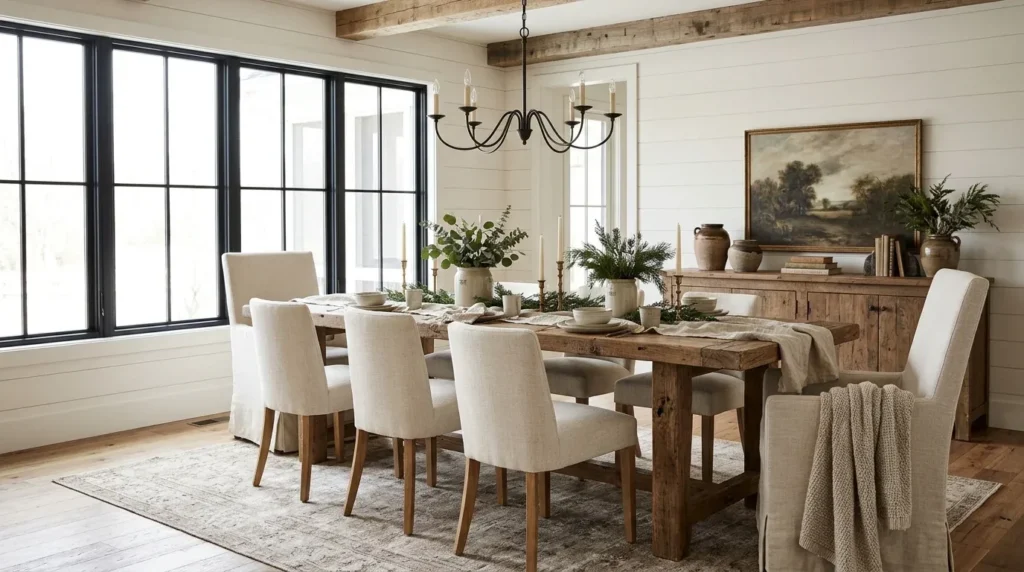
A substantial wooden dining table creates the perfect foundation for a warm, farmhouse-inspired dining room. Look for natural oak, reclaimed timber, or a distressed finish that reveals the wood’s character without making the room feel overly rustic. A rectangular table works beautifully for larger gatherings, while a round pedestal table encourages conversation in smaller spaces. Pair the table with simple upholstered chairs or traditional wooden seating to create a balanced look.
For winter entertaining, style the tabletop with a textured runner, ceramic serving dishes, and a low arrangement of seasonal greenery. Keep the centerpiece understated so guests can see one another comfortably. The beauty of this approach lies in its versatility: the same table can feel festive in December and relaxed throughout the rest of winter.
2. Embrace a Warm Neutral Color Palette
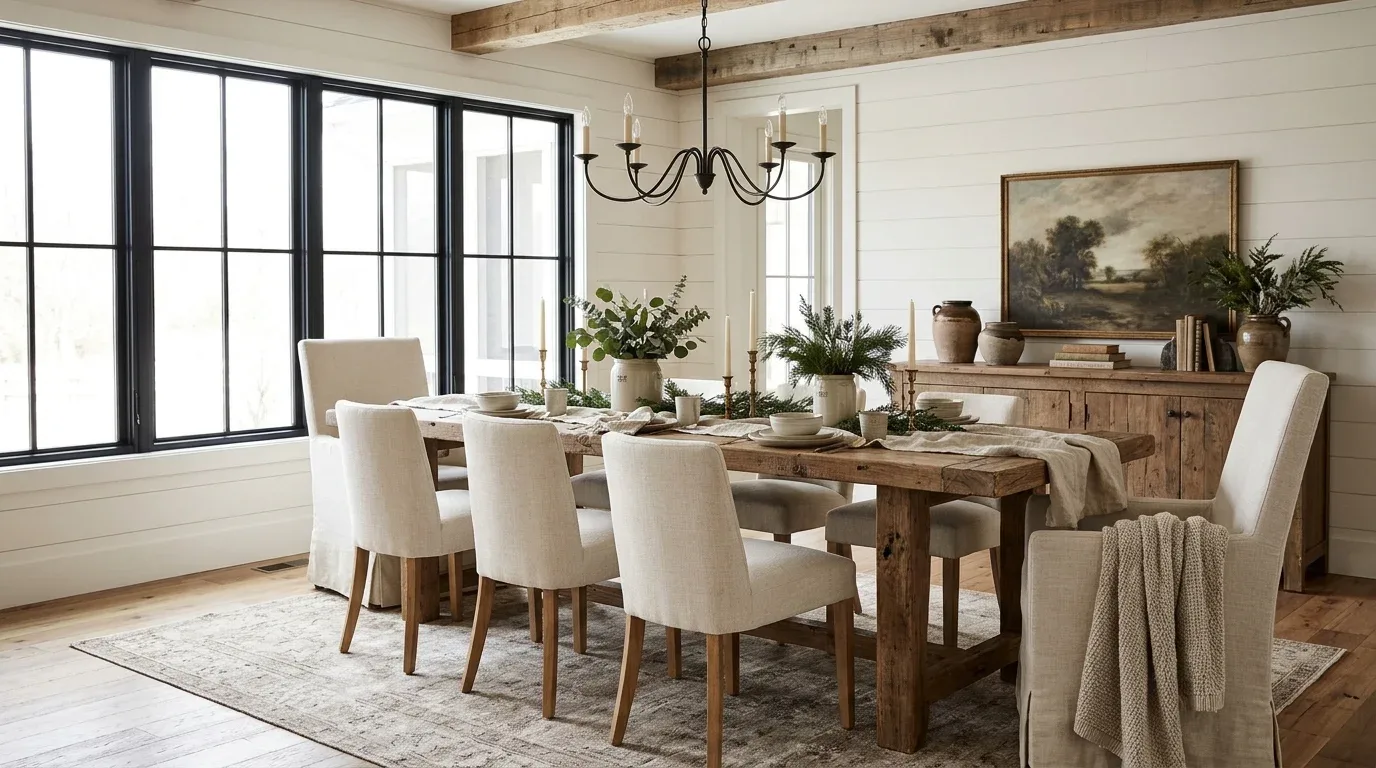
Soft neutrals are an excellent starting point for a dining room inspired by Joanna Gaines’ recognizable design aesthetic. Cream, warm white, beige, taupe, and gentle greige create a peaceful backdrop that complements both traditional farmhouse furniture and modern accessories. Instead of relying on one flat shade, combine several related colors to give the room depth and dimension.
Consider warm white walls, a natural wood table, oatmeal-colored upholstery, and linen curtains. Introduce darker accents through black picture frames, bronze hardware, or a weathered wood cabinet. These small contrasts prevent the space from appearing washed out while preserving its relaxed atmosphere. During winter, add chunky textiles, muted seasonal flowers, and warm candlelight to make the neutral palette feel especially inviting.
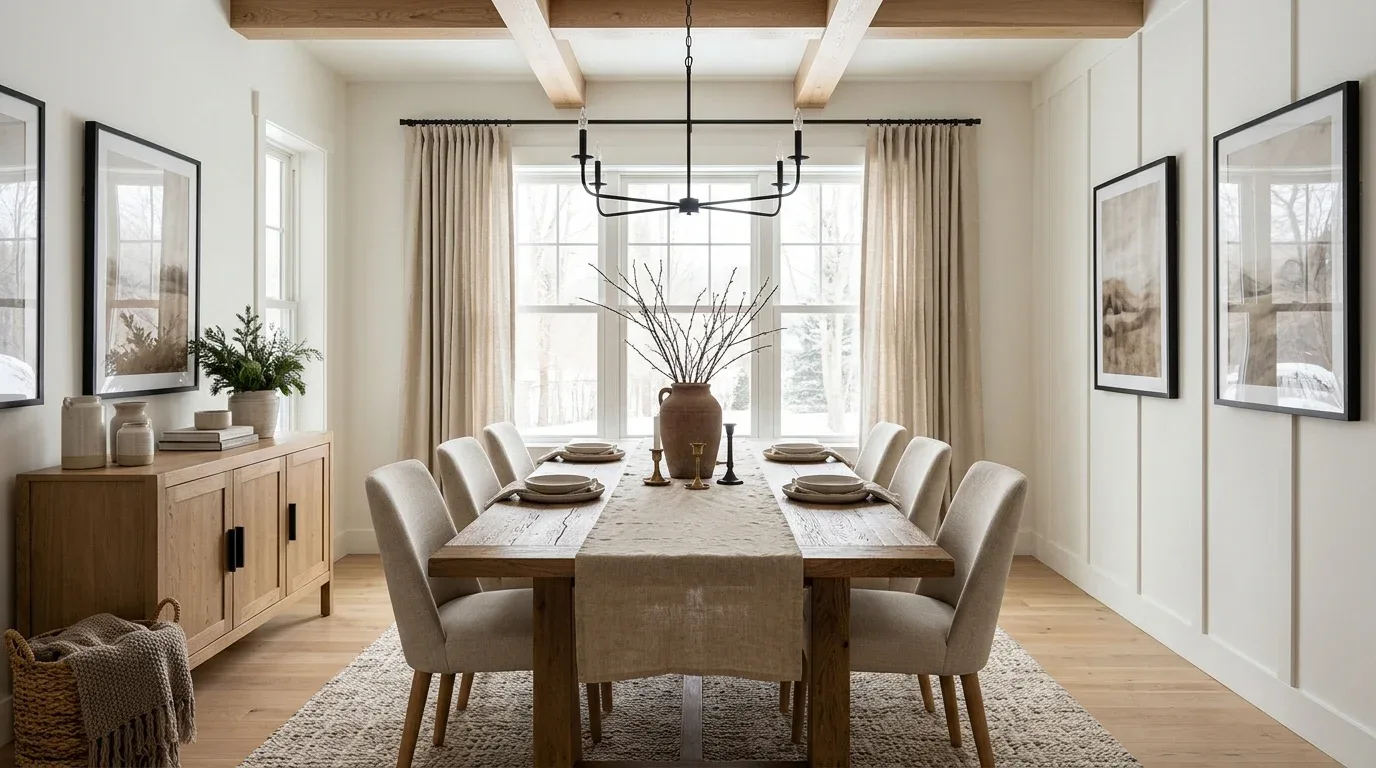
3. Install a Statement Farmhouse Chandelier
Lighting can transform the entire mood of a dining room, particularly during winter when evenings arrive early. A farmhouse chandelier suspended above the dining table provides a natural focal point while reinforcing the room’s rustic character. Consider an iron fixture with clean lines, an aged brass chandelier, or a simple wood-and-metal design that complements the surrounding furniture.
Choose a fixture proportionate to the table and hang it at a comfortable height so it illuminates the dining surface without obstructing sightlines. Warm-white bulbs create a softer atmosphere than harsh, cool lighting. If you regularly entertain, install a dimmer to transition from bright illumination during dinner preparation to a relaxed glow during dessert and conversation. Keep the surrounding decor relatively simple so the chandelier remains a defining feature.
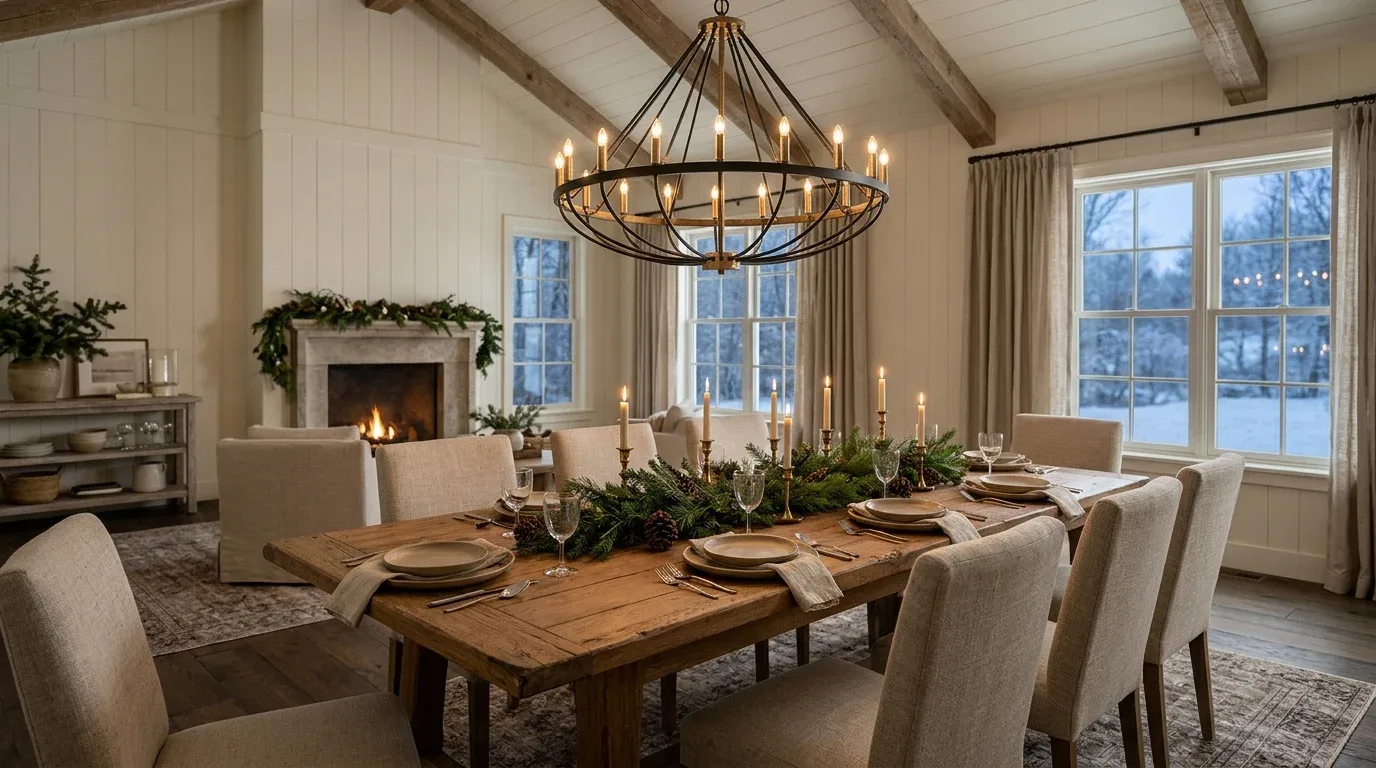
4. Create a Cozy Farmhouse Dining Nook
A dining nook can feel wonderfully intimate during the winter months, especially when it combines comfortable seating with natural materials. Position a small wooden table beside a window or in an unused corner, then add a built-in bench or upholstered banquette to make the most of the available space. Neutral cushions and washable covers provide comfort without sacrificing practicality.
Layer in a soft throw, a compact pendant light, and a vase of evergreen branches for seasonal charm. A bench with hidden storage can hold extra napkins, table linens, or entertaining essentials. This arrangement works particularly well in smaller homes, where a full dining set might overwhelm the room. The result is a versatile spot for breakfast, relaxed family meals, and intimate winter dinners.
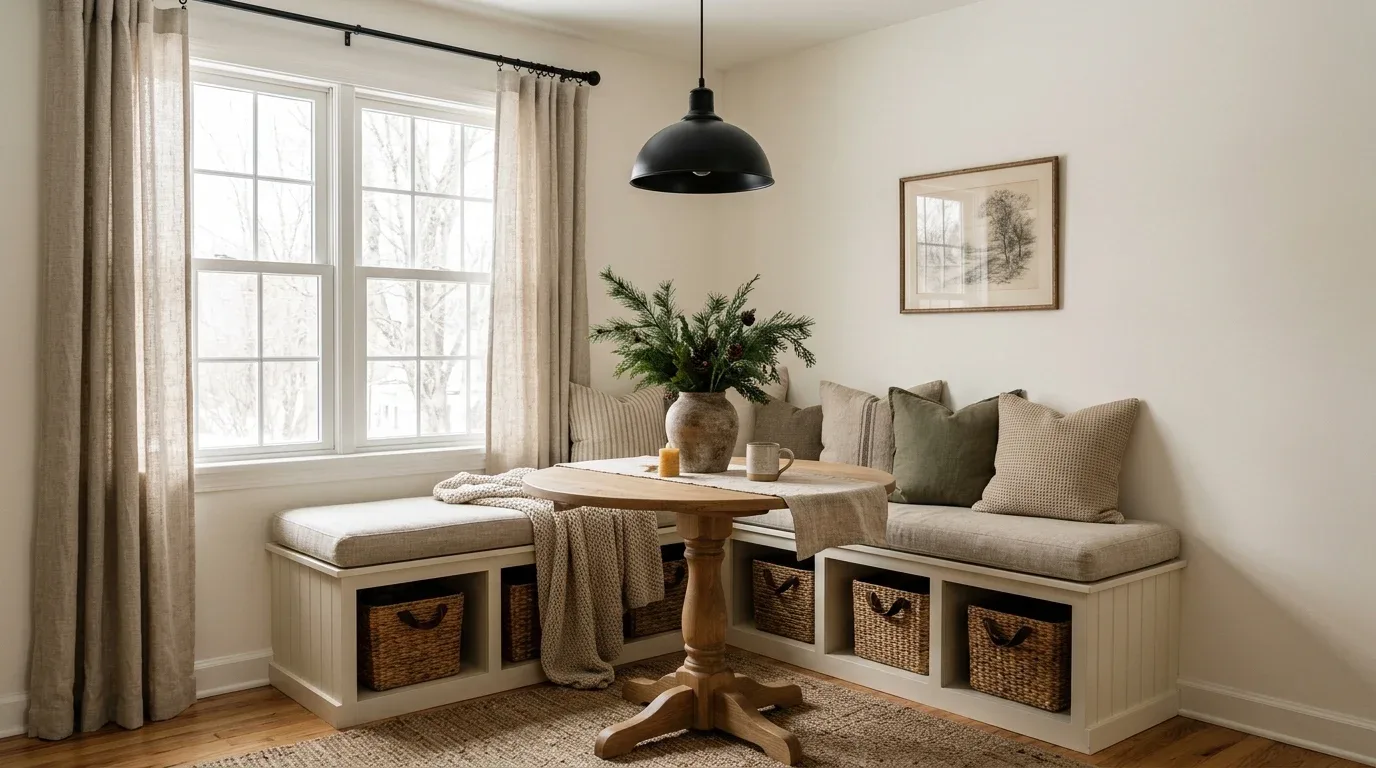
5. Add a Vintage-Inspired China Cabinet
A vintage-inspired china cabinet brings character, storage, and a sense of history to a farmhouse dining room. Look for a weathered wooden hutch, a painted cabinet in a soft neutral shade, or an antique-style piece with glass-front doors. Its finish does not need to match the dining table exactly; a subtle contrast often makes the room feel more collected and authentic.
Inside, arrange everyday plates, ceramic bowls, glassware, and a few decorative objects with enough space between them to keep the display visually calm. Group similar items together and vary their heights for a balanced arrangement. During winter, incorporate a small evergreen arrangement or understated seasonal pottery. The cabinet should remain functional, providing easy access to the dishes and serving pieces you need when hosting guests.
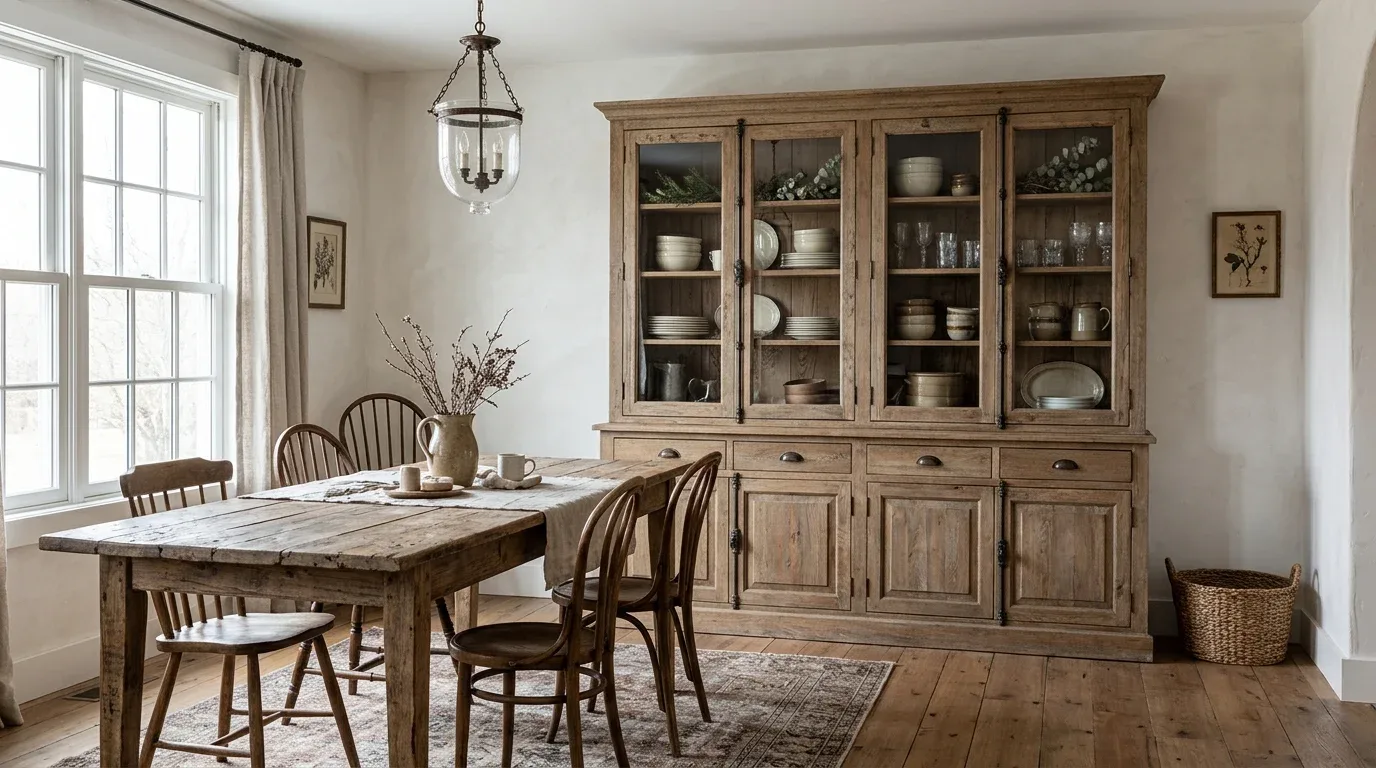
6. Style the Table With Natural Winter Greenery
Fresh greenery introduces color and life to a winter dining room without requiring elaborate floral arrangements. Eucalyptus, cedar, pine, fir, and other seasonal foliage can create a relaxed centerpiece that complements rustic wood and neutral linens. Arrange the branches loosely along the center of the table, or place them in a simple stoneware vase for a more compact display.
Keep the arrangement low enough for guests to converse comfortably across the table. For a longer table, several small vessels can create a cohesive look without feeling too formal. Add natural linen napkins, wooden serving boards, or a few pinecones to reinforce the seasonal theme. If using fresh cut greenery, keep it away from open flames and replace it when it dries. This simple styling approach works for everyday dinners as well as special winter celebrations.
7. Introduce Black Accents for Modern Farmhouse Contrast
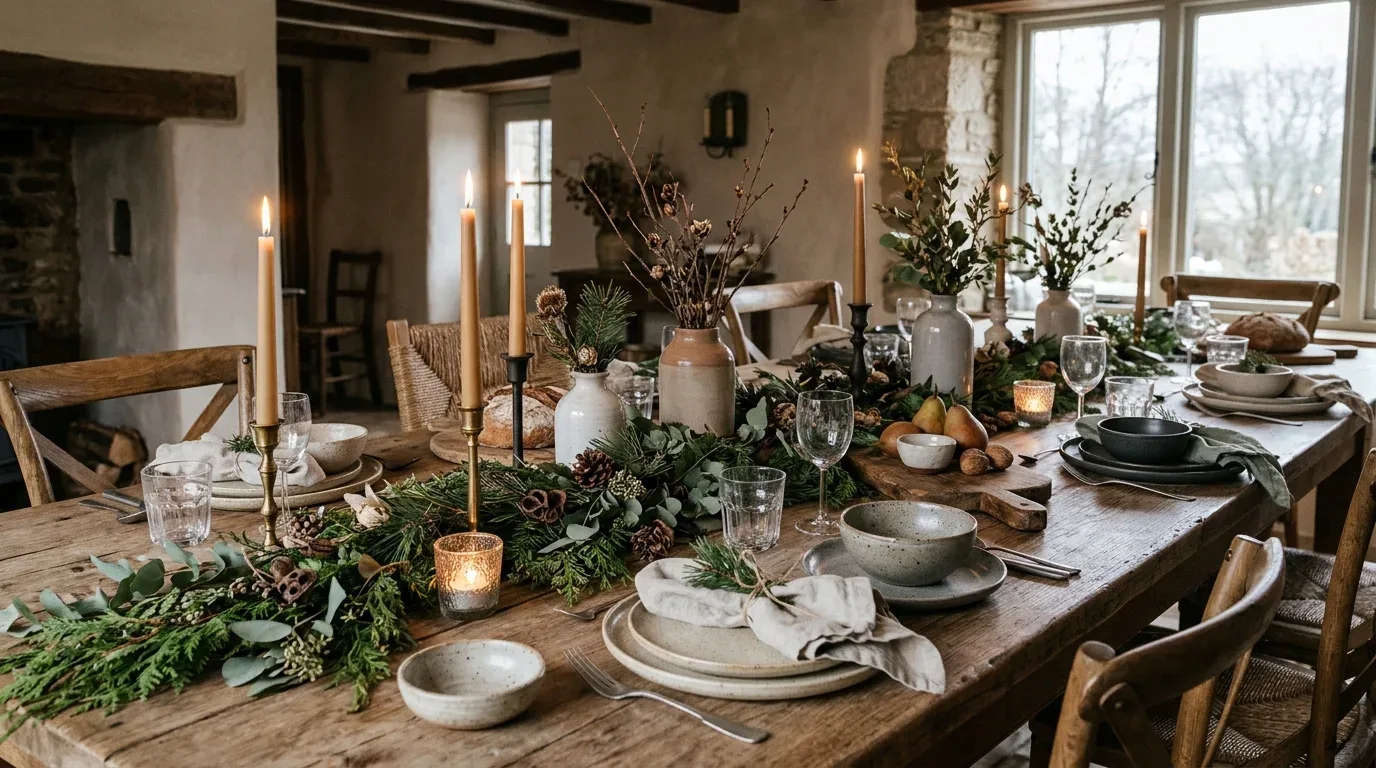
Black accents provide definition and sophistication in a dining room filled with warm neutrals and natural textures. This contrast is a hallmark of many modern farmhouse-inspired interiors because it gives traditional materials a cleaner, more contemporary appearance. Consider black metal dining chairs, a dark-framed mirror, slim curtain rods, or a chandelier with an iron finish.
Use black strategically rather than covering every surface in a dark shade. A few repeated accents can connect separate parts of the room and make the overall design feel intentional. Pair them with creamy walls, honey-toned wood, and soft textiles to maintain warmth during winter. If your dining area is small, slim black furniture frames can create definition without the visual heaviness of bulky dark pieces. The result is a balanced space that feels rustic yet refined.
8. Layer Linen Tablecloths and Textured Runners
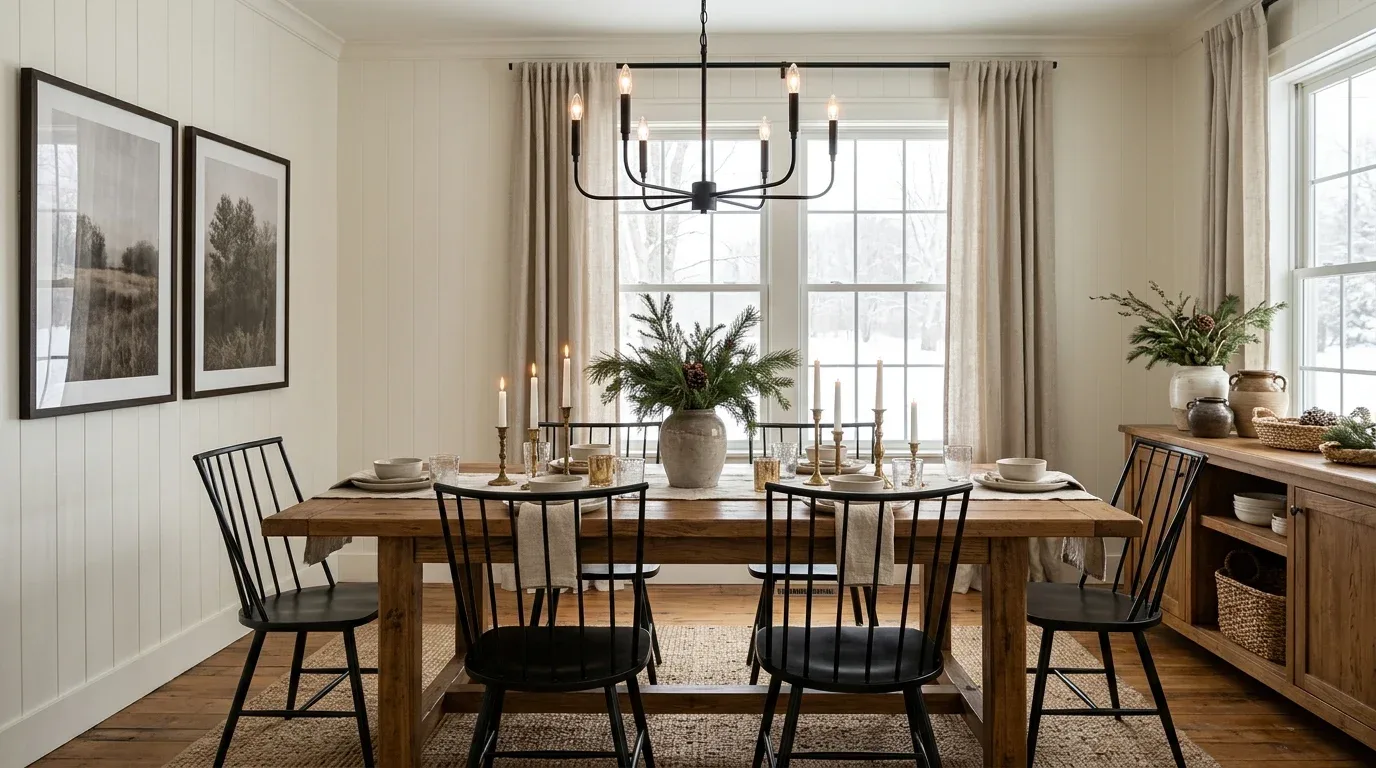
Textiles are an easy way to make a dining room feel softer and more inviting when temperatures drop. A natural linen tablecloth creates a relaxed foundation, while a woven runner adds dimension without hiding the beauty of a wooden tabletop. Choose shades such as ivory, flax, oatmeal, or muted gray for a timeless farmhouse look.
For an informal gathering, let the fabric fall naturally rather than pressing every crease perfectly flat. Pair the runner with stoneware plates, cloth napkins, and simple napkin rings made from wood or brushed metal. You can also layer placemats over the tablecloth to define each place setting. Prioritize washable materials if you frequently entertain, since winter meals often include hearty dishes and warm drinks. These understated layers create a polished table without making the room feel too formal.
9. Design a Beautiful Farmhouse Gallery Wall
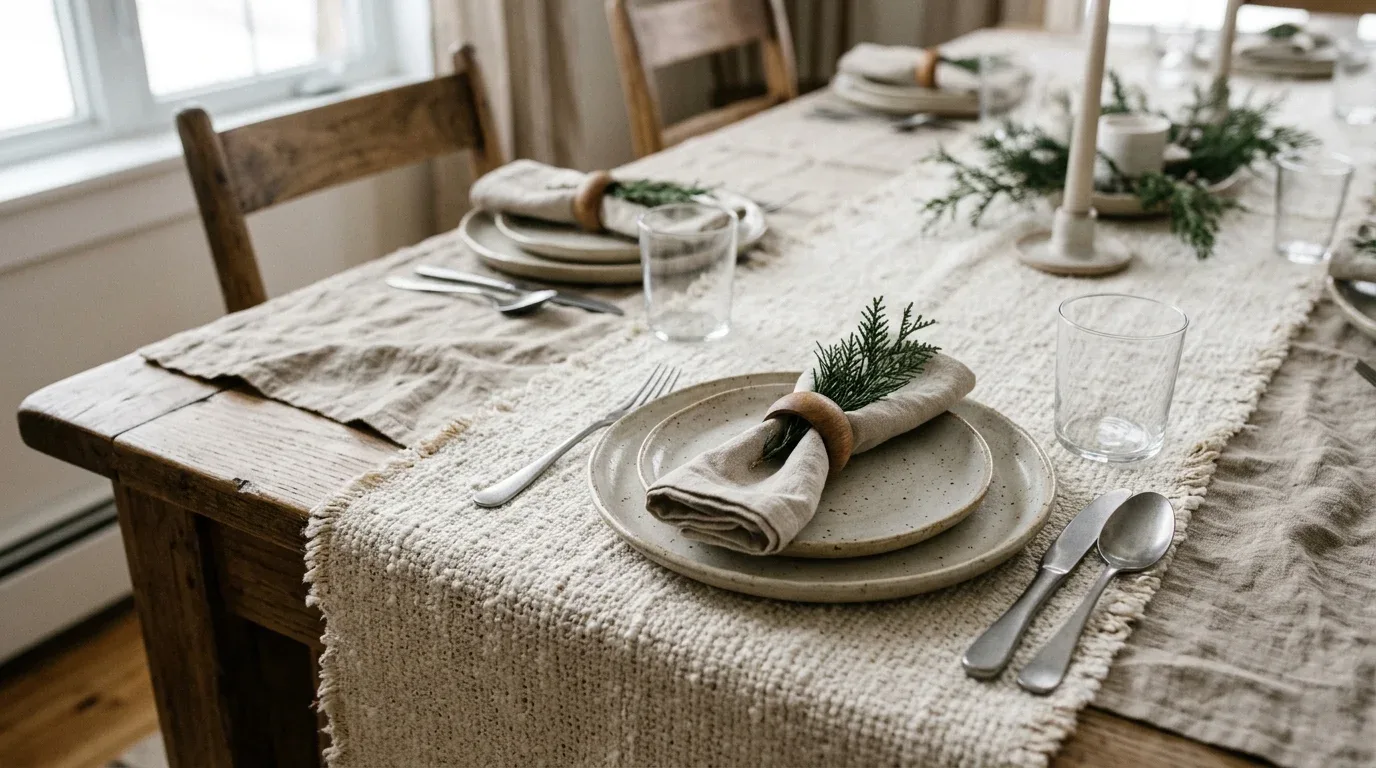
A thoughtfully arranged gallery wall gives a dining room personality while filling an otherwise empty wall with visual interest. For a farmhouse-inspired look, combine vintage botanical prints, landscape artwork, family photographs, and understated typography in complementary frames. Weathered wood and matte black frames work especially well against warm white or pale beige walls.
Before hanging the pieces, arrange them on the floor to experiment with spacing and balance. A consistent outer shape helps the collection feel cohesive even when the individual frames differ. Avoid placing oversized artwork where it competes with a large chandelier or cabinet. During winter, the artwork can remain unchanged while seasonal greenery and candlelight provide temporary decoration. This approach creates a meaningful backdrop for dinner parties without requiring a major investment in new furniture or architectural details.
10. Bring in Upholstered Dining Chairs
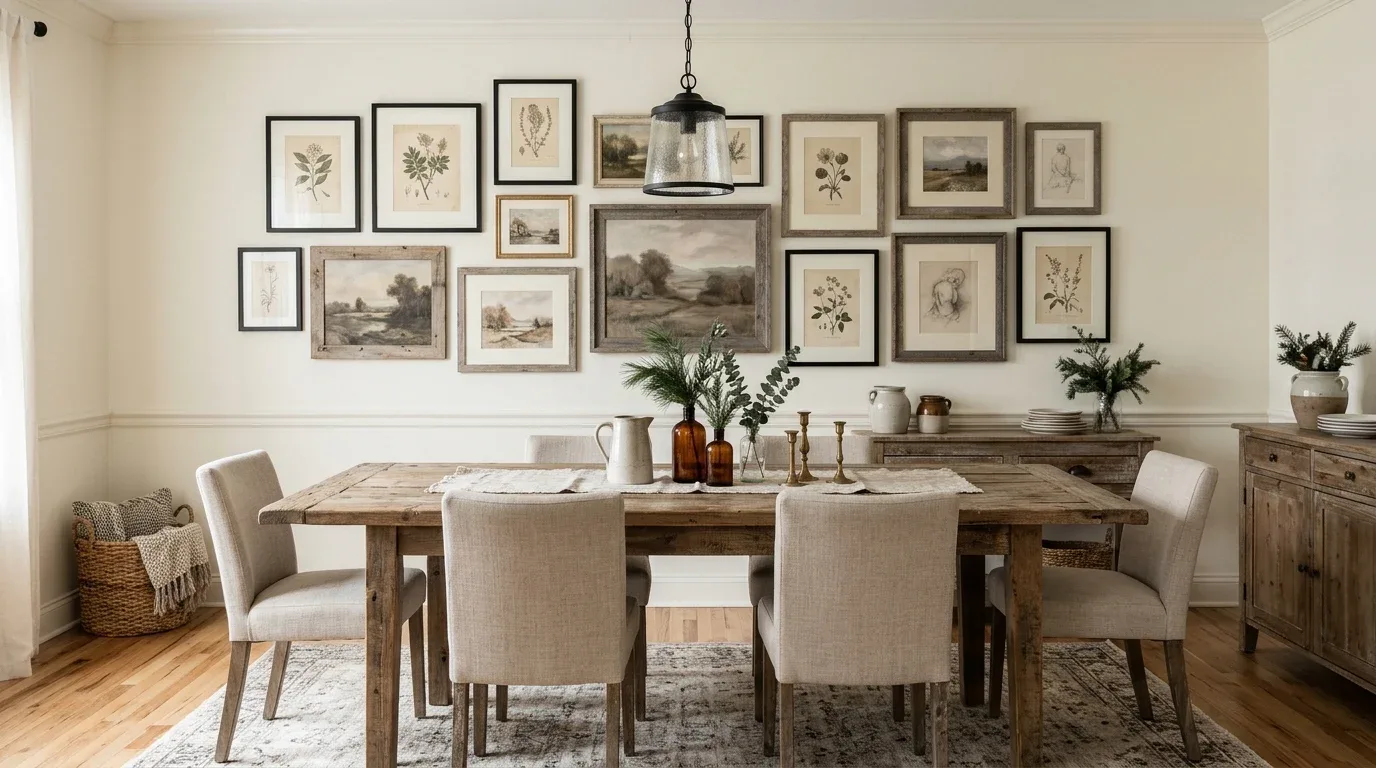
Comfortable seating can make winter gatherings last longer and feel more relaxed. Upholstered dining chairs introduce softness that balances the harder surfaces of wood tables, metal lighting, and stoneware accessories. Choose neutral fabrics such as linen-look upholstery, textured cotton, or durable performance material in cream, taupe, or warm gray.
If you prefer a traditional farmhouse appearance, combine upholstered end chairs with simple wooden or metal chairs along the sides. This mix creates visual interest while giving guests extra comfort at the places where they may sit longest. Consider removable or washable covers if children or frequent entertaining are part of your household routine. Keep the chair silhouettes relatively simple so the room retains its timeless character. The combination of comfortable seating and warm materials makes even a casual winter supper feel considered and welcoming.
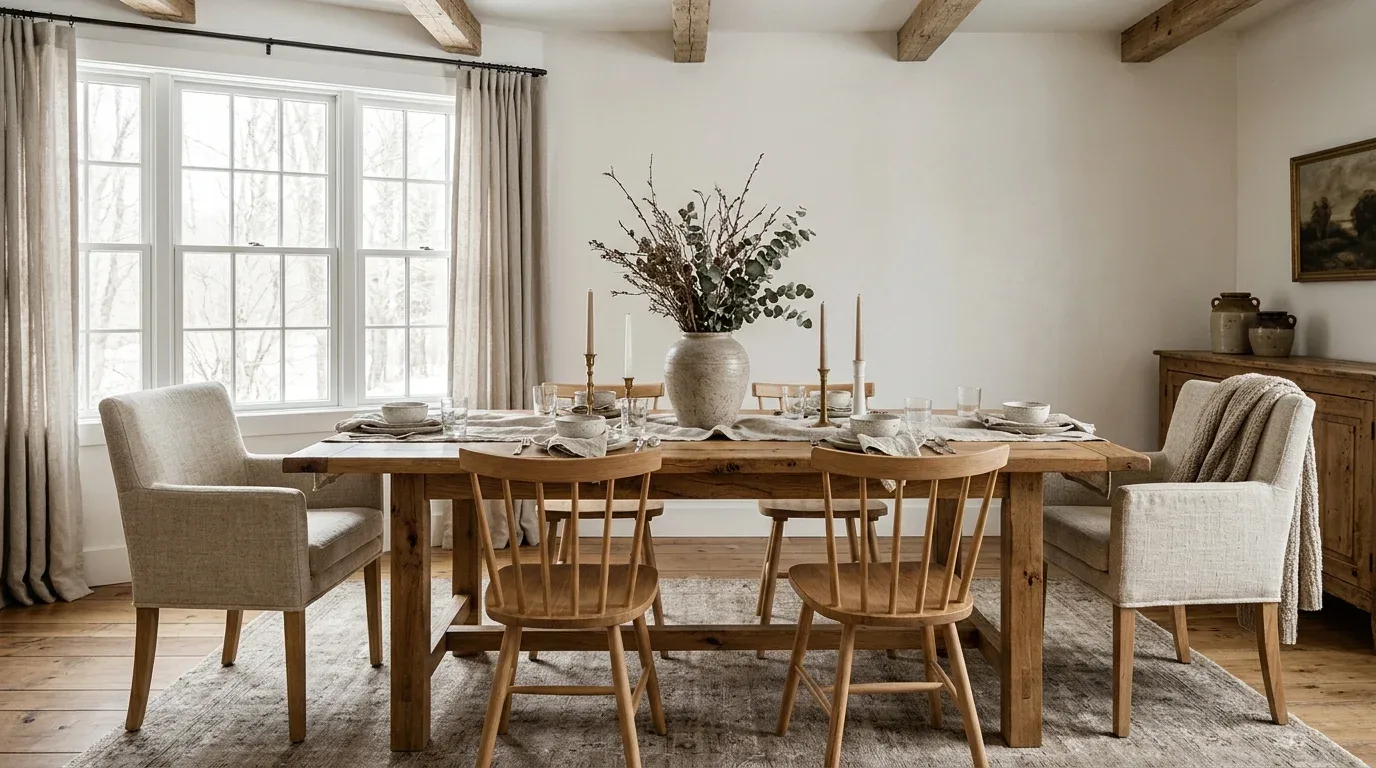
11. Add a Weathered Wood Sideboard
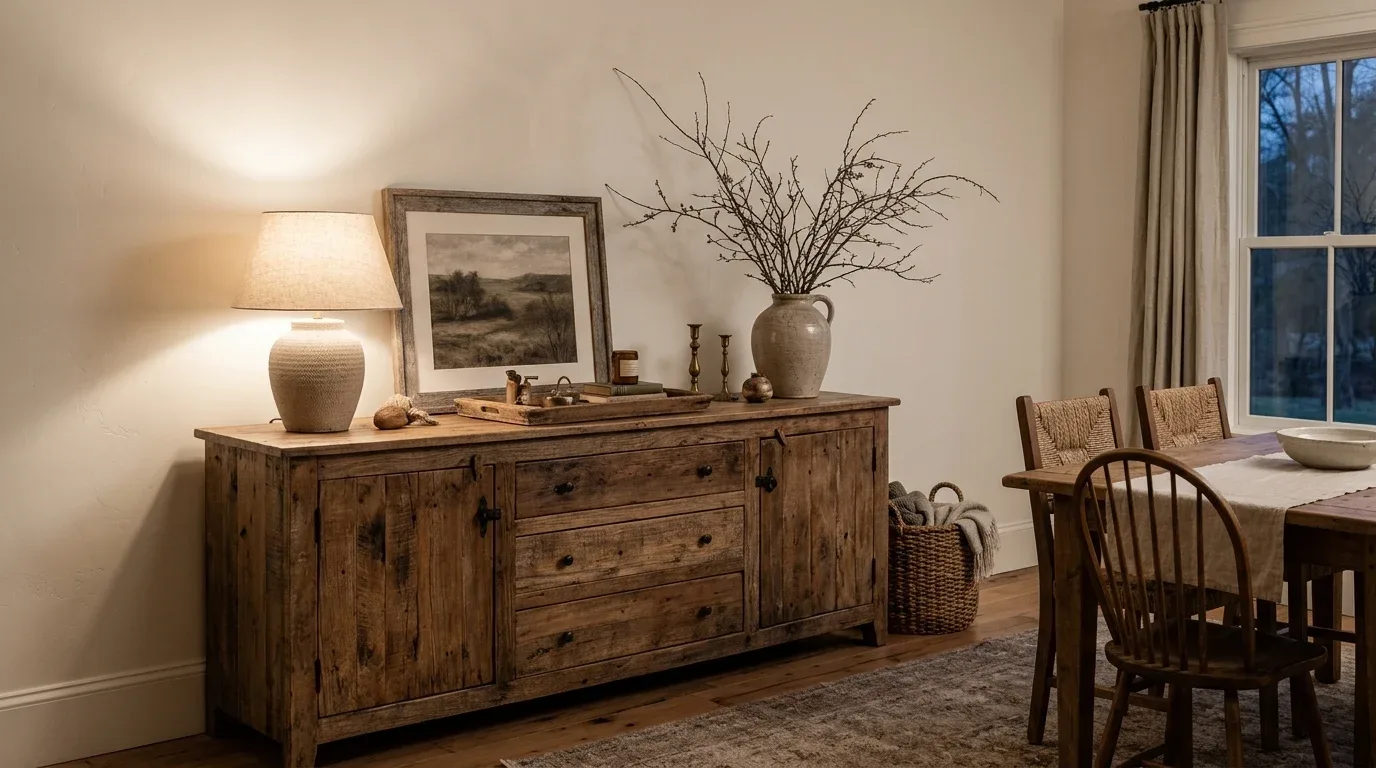
A weathered wood sideboard is both a practical storage solution and a beautiful decorative feature. Place it against an empty dining room wall to hold serving platters, table linens, extra glassware, and entertaining essentials. Reclaimed wood or a gently distressed finish creates the collected, lived-in quality associated with farmhouse interiors.
Style the top with a ceramic lamp, a framed print, a wooden tray, or a vase filled with winter branches. Leave enough clear surface area for setting down drinks or arranging food when guests arrive. If the sideboard sits near the dining table, make sure its drawers and doors can open without obstructing chairs or walkways. A piece with closed storage helps keep everyday clutter out of sight, allowing the dining room to remain calm and prepared for spontaneous gatherings.
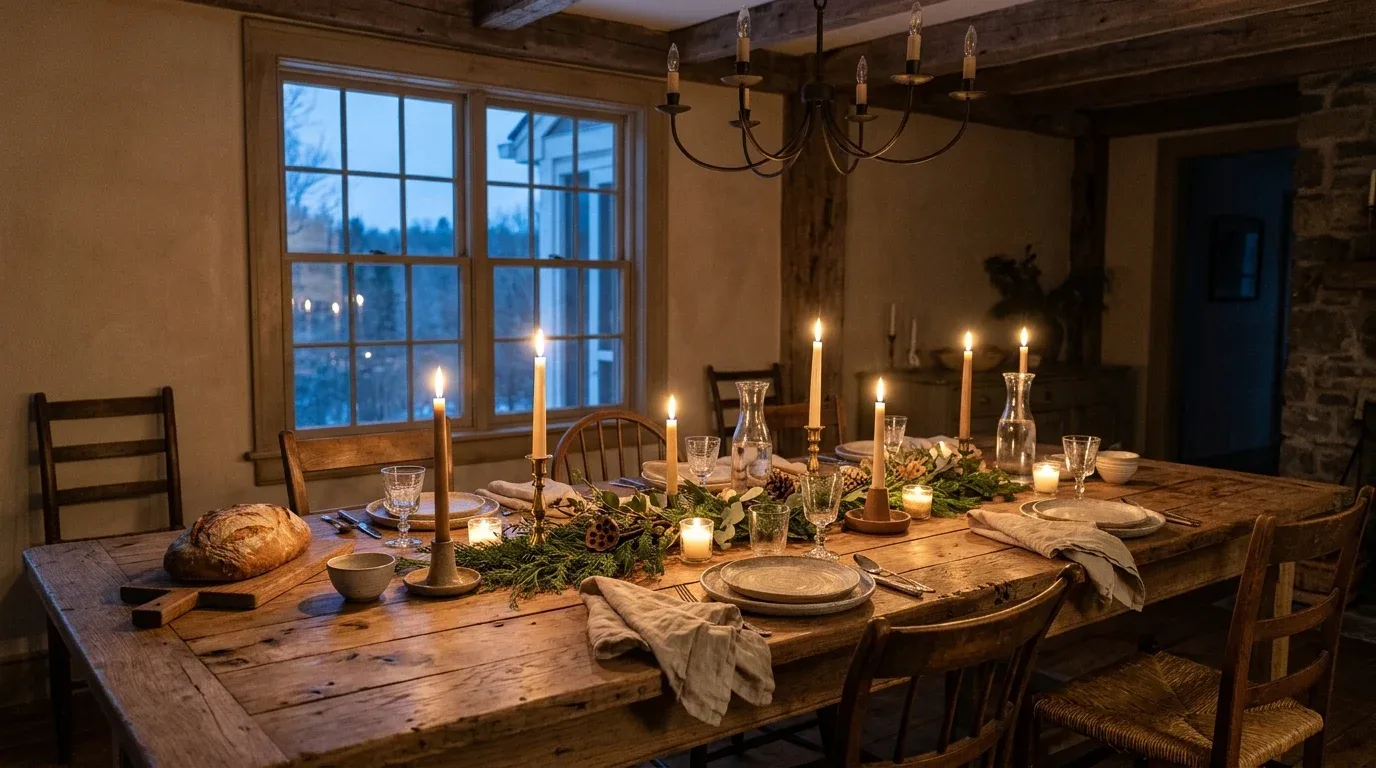
12. Use Candlelight to Create an Intimate Atmosphere
Candlelight adds a gentle glow that makes winter dining feel special without requiring elaborate decorations. Arrange a few candleholders along the center of the table, or place a cluster of flameless candles on a nearby sideboard. Antique brass, black metal, clear glass, and simple ceramic holders all work beautifully with farmhouse-inspired materials.
Vary the heights slightly to create interest, but avoid arrangements that obstruct conversation or crowd serving dishes. Unscented candles are usually the best choice for meals because strong fragrances can compete with the aroma of food. For safety, keep open flames away from curtains, dried greenery, and other combustible materials, and never leave burning candles unattended. Warm, layered lighting from a chandelier and a nearby lamp can complement the candlelight, creating a relaxed atmosphere for long dinners and unhurried conversations.
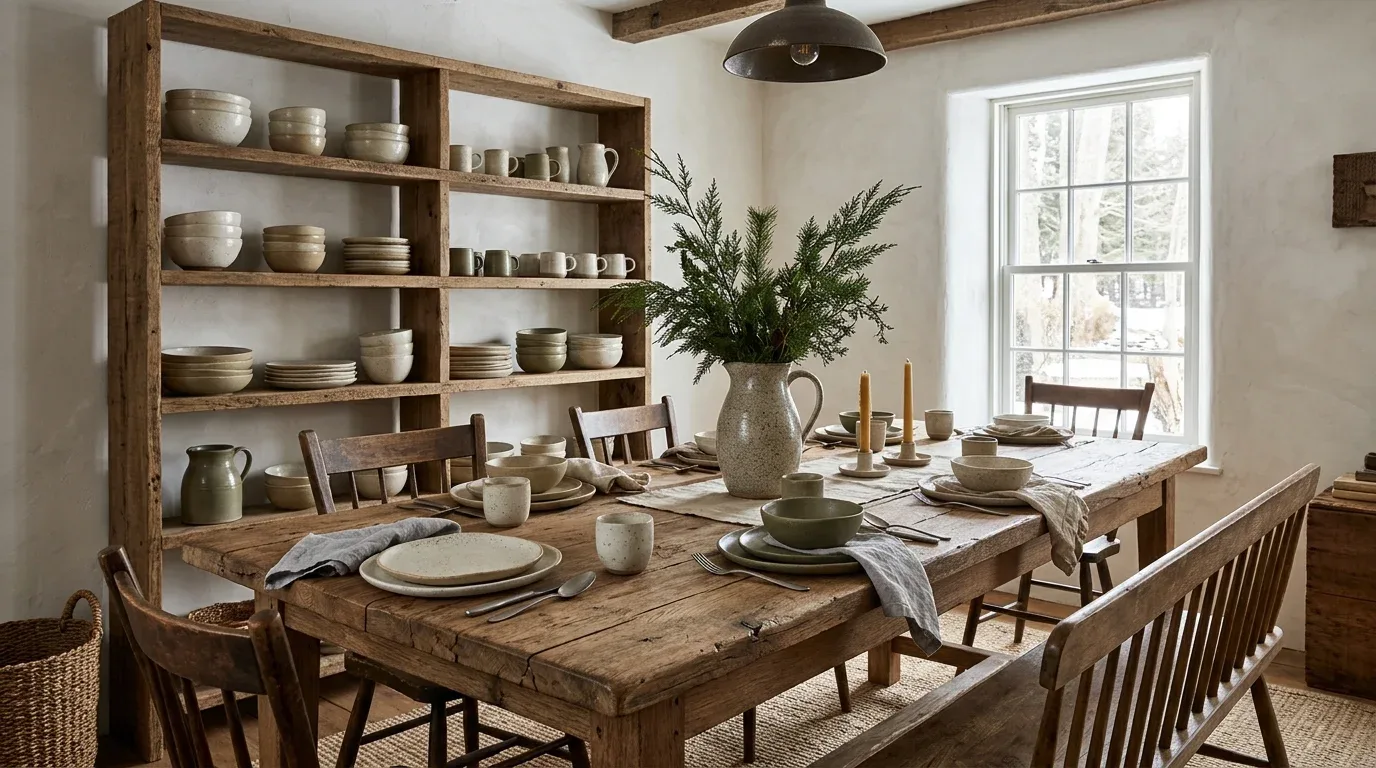
13. Decorate With Simple Stoneware and Ceramic Pieces
Handcrafted-looking ceramics introduce subtle texture and artisanal charm to a Joanna Gaines-inspired dining room. Choose stoneware pitchers, matte ceramic vases, serving bowls, and dinner plates in cream, sand, muted olive, or soft gray. Slight variations in glaze and shape make the collection feel more personal than a perfectly matching display.
Use these pieces both decoratively and practically. A large pitcher can hold winter branches, while a shallow bowl can collect seasonal fruit or serve bread during dinner. On open shelves, combine a few useful dishes with carefully selected decorative objects rather than filling every available space. This restrained approach keeps the room uncluttered and highlights the beauty of the materials. Ceramic pieces also transition easily between seasons, making them a worthwhile investment for a dining room that needs to feel welcoming year-round.
14. Bring Warmth With a Vintage or Distressed Rug
A rug beneath the dining table can anchor the furniture arrangement and soften a room filled with wood, metal, and hard flooring. For a farmhouse-inspired interior, consider a faded vintage-style pattern, a muted Persian-inspired design, or a low-pile rug in earthy neutrals. Soft rust, faded blue, charcoal, and beige can add subtle color without overwhelming the room.
Choose a rug large enough for dining chairs to remain on its surface when pulled away from the table. Low-pile materials are generally easier to clean than thick, shaggy styles, particularly when serving winter meals. A washable rug can be especially useful in busy households. If your dining room already has strong patterns or colorful artwork, select a simpler design to maintain balance. The right rug creates a more finished appearance while helping the dining area feel distinct in an open-plan home.
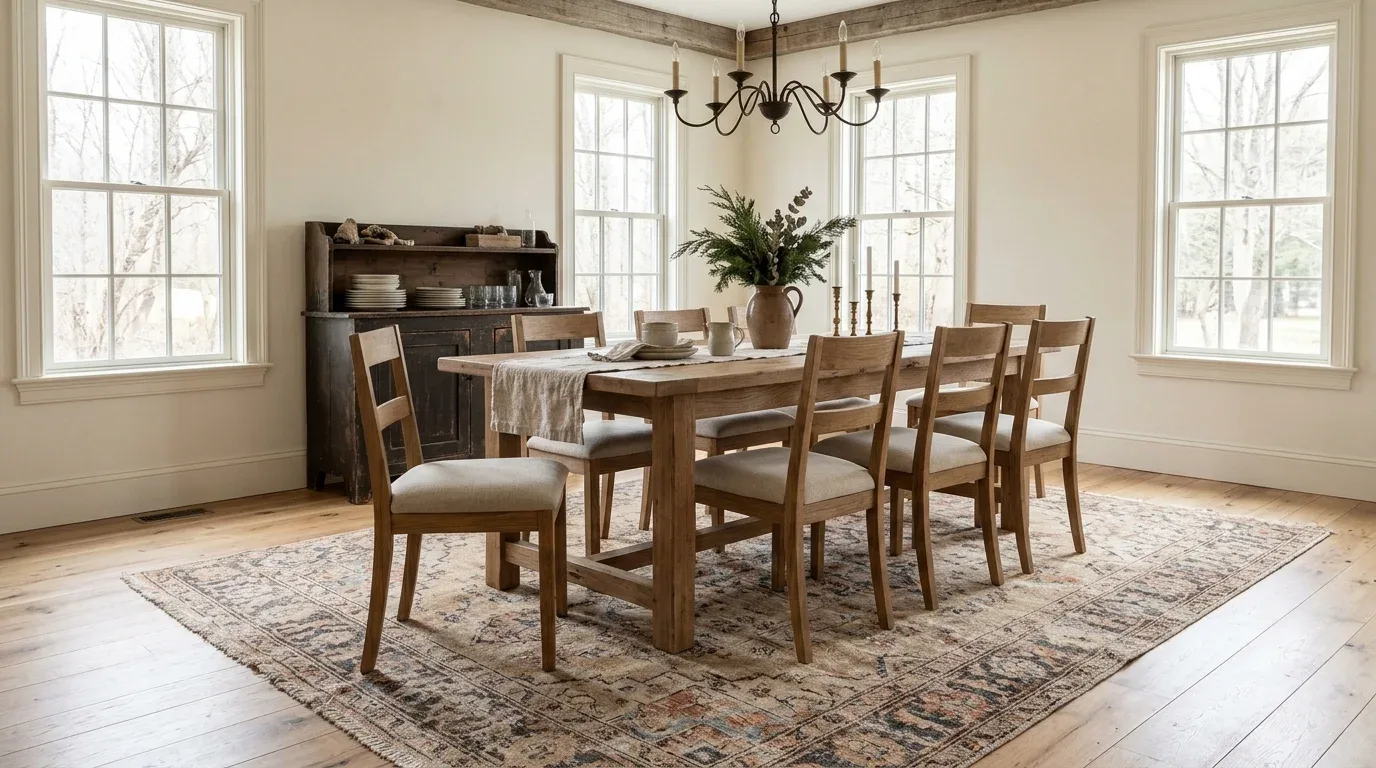
15. Incorporate an Oversized Mirror
An oversized mirror can make a dining room feel brighter and more spacious, particularly during the darker winter months. Choose a design with a substantial weathered wood frame for rustic character, or select a simple black metal frame for a more modern farmhouse appearance. Position it on a wall where it reflects natural light or an attractive part of the room.
A mirror can also amplify the glow of a chandelier and nearby lamps, making evening entertaining feel warmer. Check the reflection before deciding on the final placement; a mirror facing a cluttered storage area may draw attention to things you would rather keep discreet. Hang it securely and ensure it does not interfere with artwork or furniture. Because mirrors are not seasonal accessories, this single addition can improve the dining room’s appearance long after winter has passed.
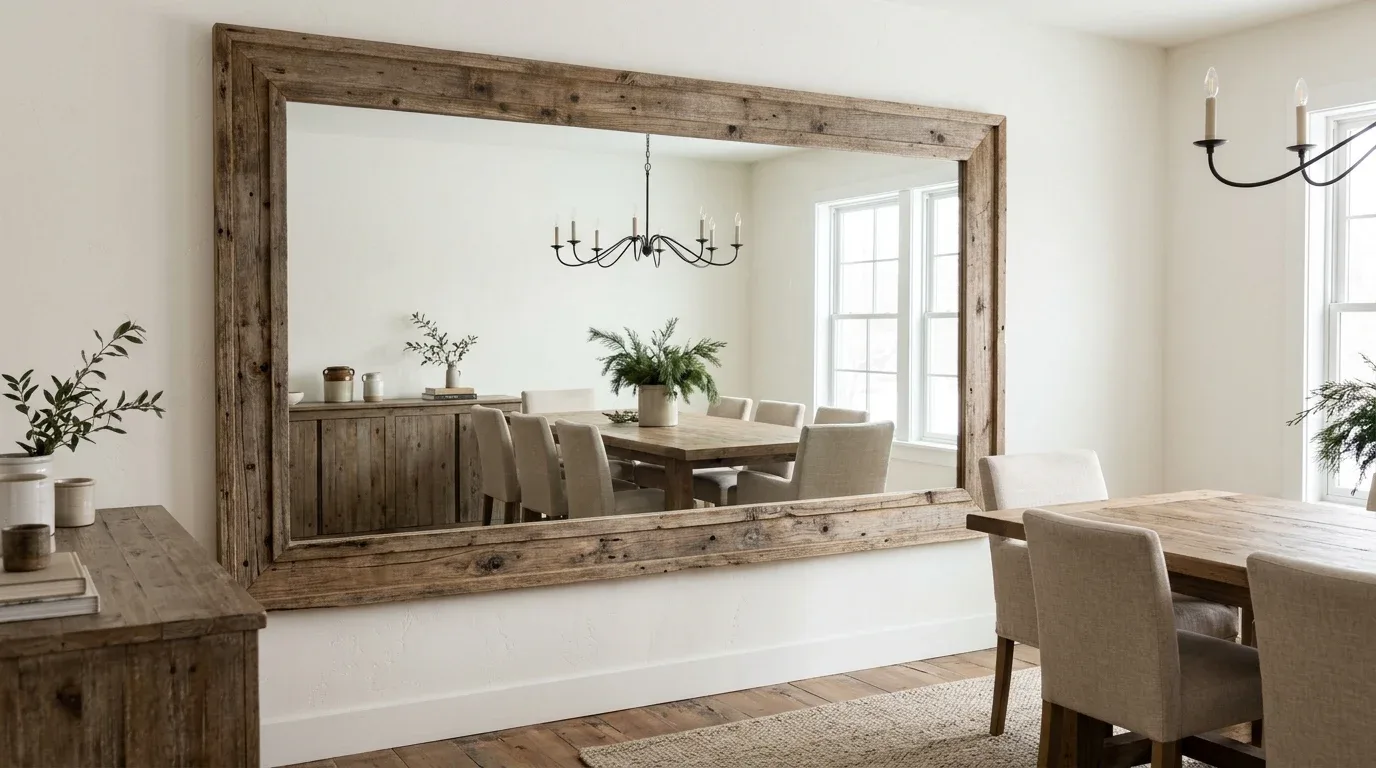
16. Create a Festive Winter Tablescape
A winter tablescape can make an ordinary dinner feel like a thoughtfully planned occasion. Begin with a neutral runner, then layer simple dinnerware, folded cloth napkins, and natural elements such as evergreen sprigs, pinecones, or seasonal fruit. A restrained palette of cream, green, brown, and muted metallic accents feels festive without relying on bright holiday colors.
For individual place settings, tuck a small greenery sprig into each napkin or add a handwritten name card for guests. Keep decorative elements low and leave adequate room for serving bowls and drinks. If you are hosting a larger group, repeat a few simple elements across the table instead of creating elaborate individual arrangements. This makes preparation easier while maintaining a cohesive look. After the event, remove the seasonal greenery and retain the neutral linens and tableware for everyday winter dining.
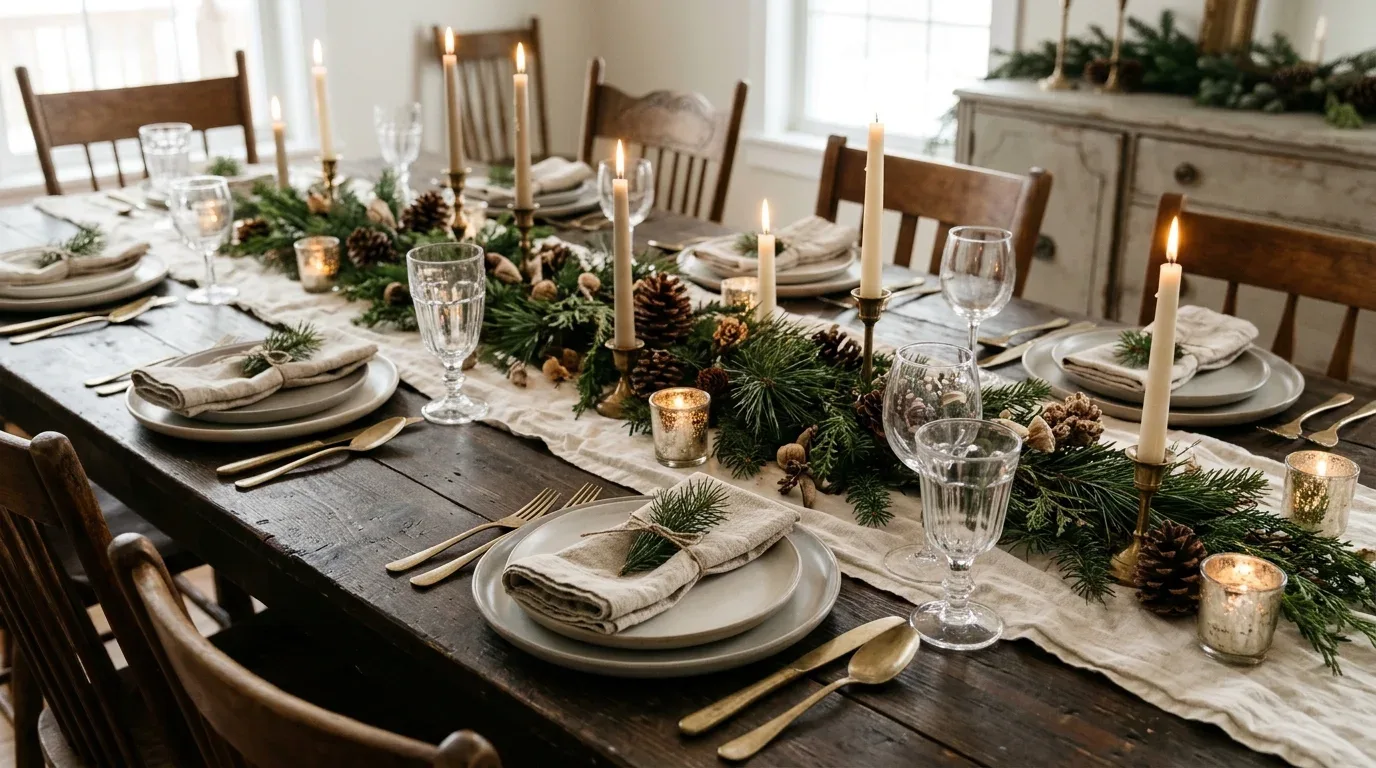
17. Add Open Shelving With Curated Decor
Open shelving can give a dining room an airy, collected appearance while making frequently used dishes easy to reach. Natural wood shelves look especially attractive against light walls, while black brackets introduce a subtle industrial contrast. Use the shelves to display everyday plates, serving bowls, glass jars, and a few decorative pieces that reflect your personal style.
Arrange objects in small groups, alternating stacks of horizontal dishes with upright plates and taller vessels. Leave some empty space so the display feels intentional rather than crowded. A small plant, vintage framed print, or ceramic pitcher can add personality without taking attention away from the dining table. If you choose open shelving, be prepared to dust it regularly and store less attractive items elsewhere. This approach works best when beauty and everyday practicality receive equal attention.
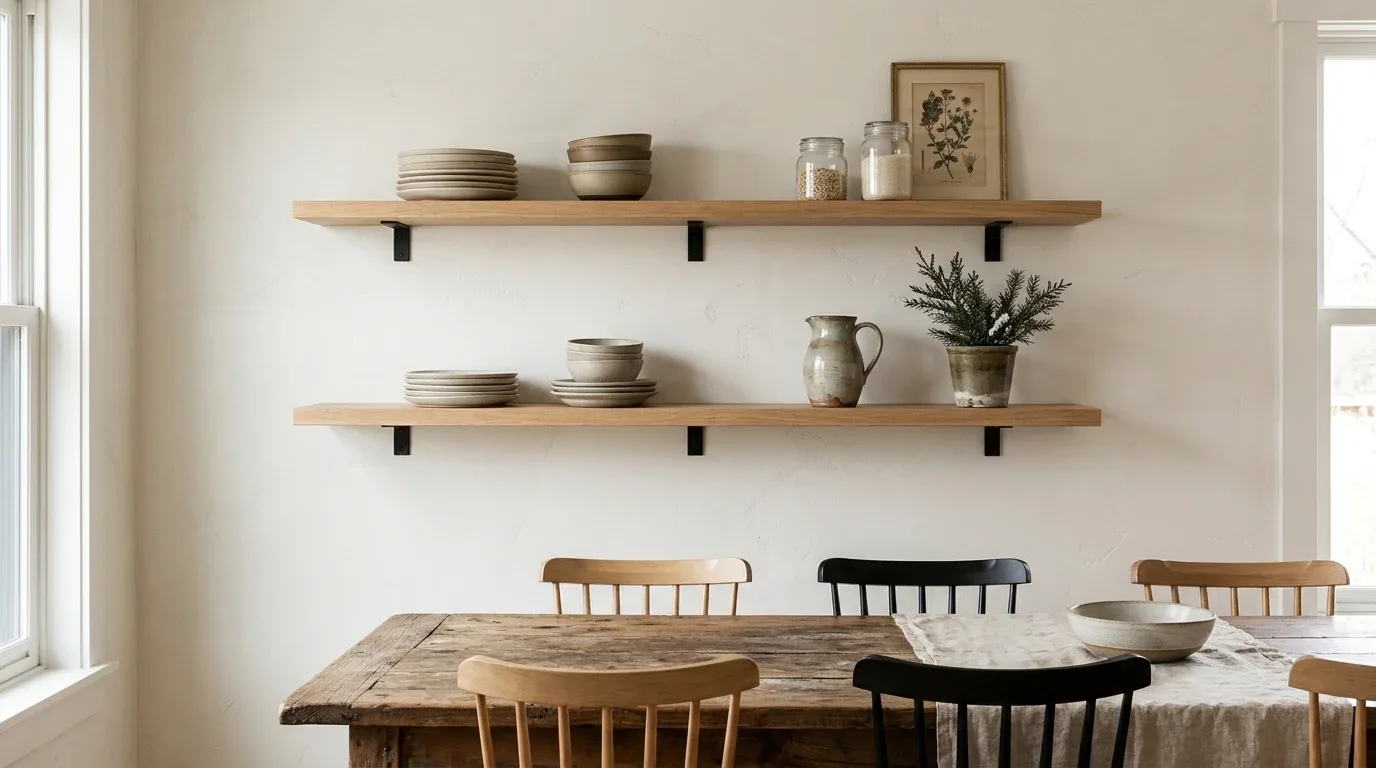
18. Finish With Cozy Textures and Personal Details
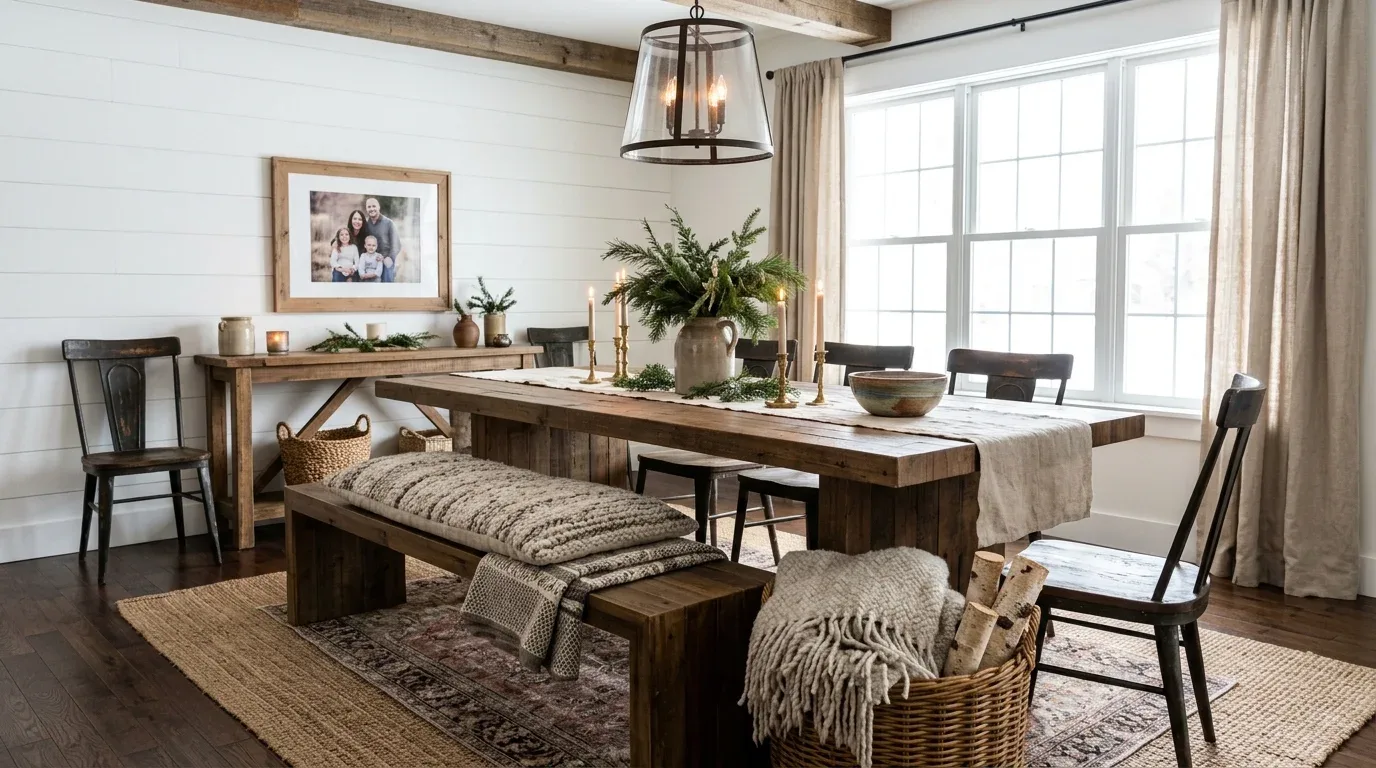
The most inviting farmhouse dining rooms feel personal rather than staged. Finish your winter entertaining space with a few carefully chosen details: a woven basket for spare blankets, a textured cushion on a bench, a framed family photograph, or a handmade bowl inherited from a loved one. These elements introduce warmth and character without requiring a complete redesign.
Combine different materials thoughtfully. Soft wool, natural linen, aged wood, smooth ceramics, and woven fibers create a rich tactile experience while maintaining a calm visual palette. Keep seasonal accessories concentrated in a few areas so the dining room remains easy to clean and comfortable to use. Most importantly, leave room for the things that make gatherings enjoyable, including serving dishes, extra chairs, and clear walking paths. A beautiful dining room should support real life, not simply look attractive in photographs.
Conclusion
Creating a Joanna Gaines-inspired dining room for winter entertaining is about combining timeless farmhouse character with comfort, functionality, and personal style. From rustic wooden tables and vintage cabinets to layered linens, warm lighting, and natural greenery, each design choice can make your space feel more inviting. Start with one or two changes that suit your budget, then build on them gradually as you discover what works best for your home. By balancing practical furniture with thoughtful seasonal details, you can create a dining room that welcomes guests throughout winter and remains beautiful in every season.