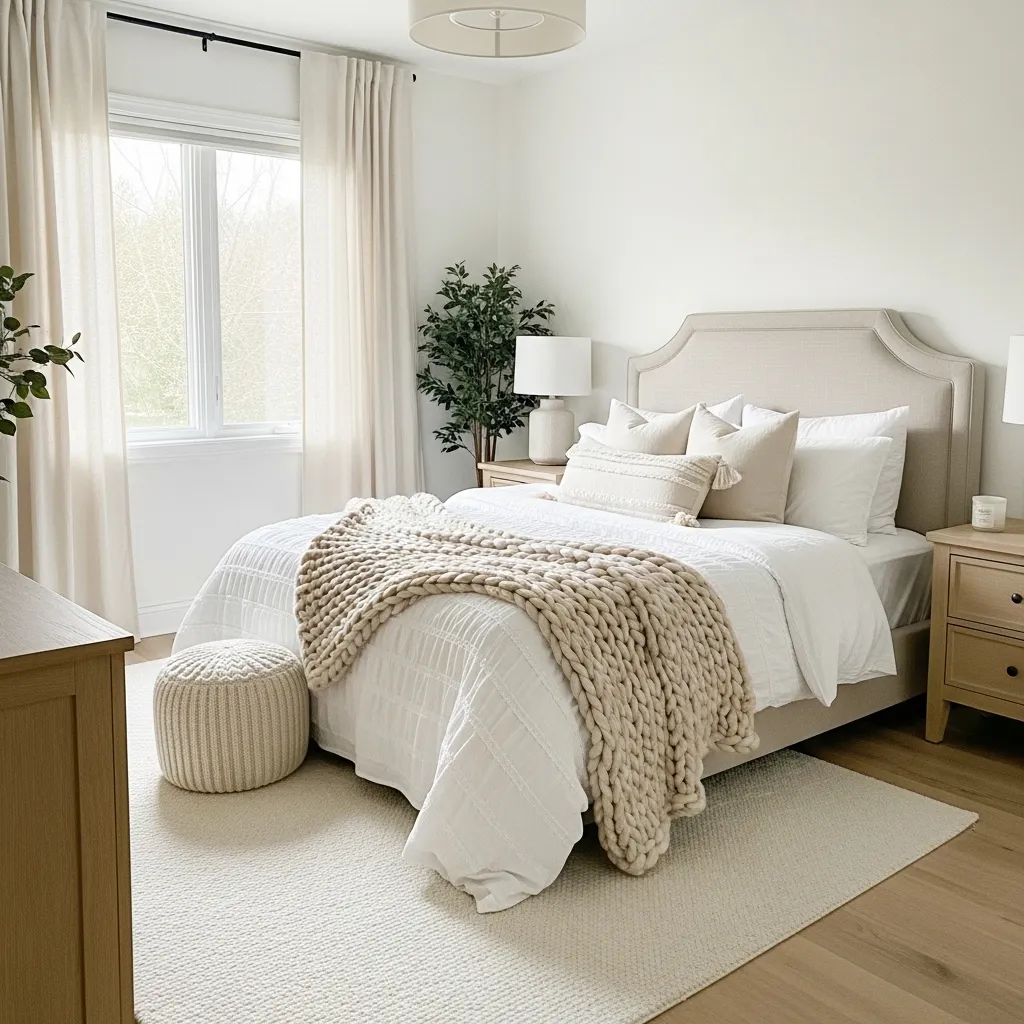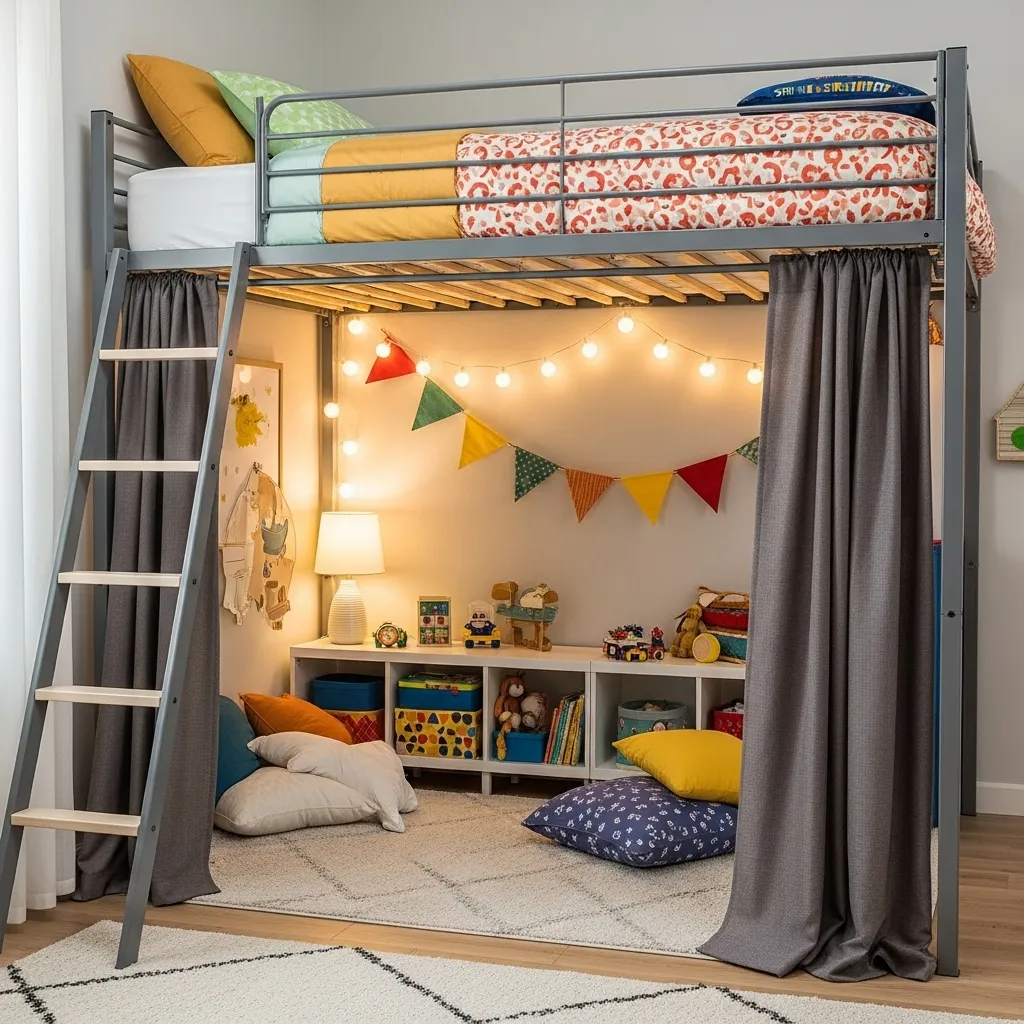
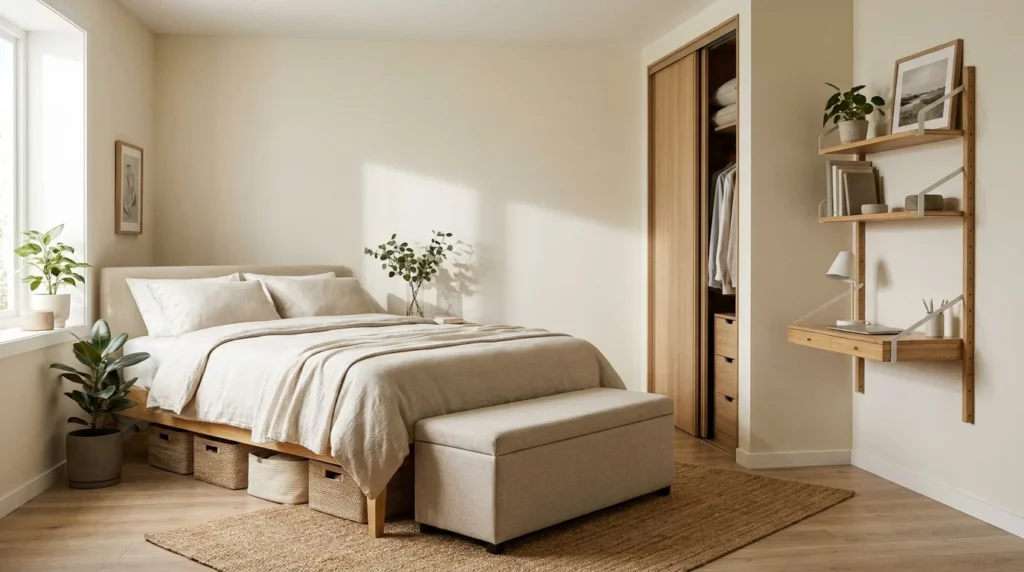
A small bedroom can feel calm, comfortable, and surprisingly functional when every part of the space has a clear purpose. The key is not simply adding more storage, but choosing furniture, layouts, and decorating details that make the room feel open while keeping everyday essentials organized. Smart vertical storage, multifunctional furniture, and a restrained color palette can make a noticeable difference without requiring a major renovation. Whether you are furnishing a compact apartment bedroom, a guest room, or a small primary bedroom, these space-saving ideas can help you use every available inch more effectively. The goal is to create a room that feels restful rather than crowded, with practical storage solutions that blend naturally into the overall design.
1. Choose a Bed With Built-In Storage
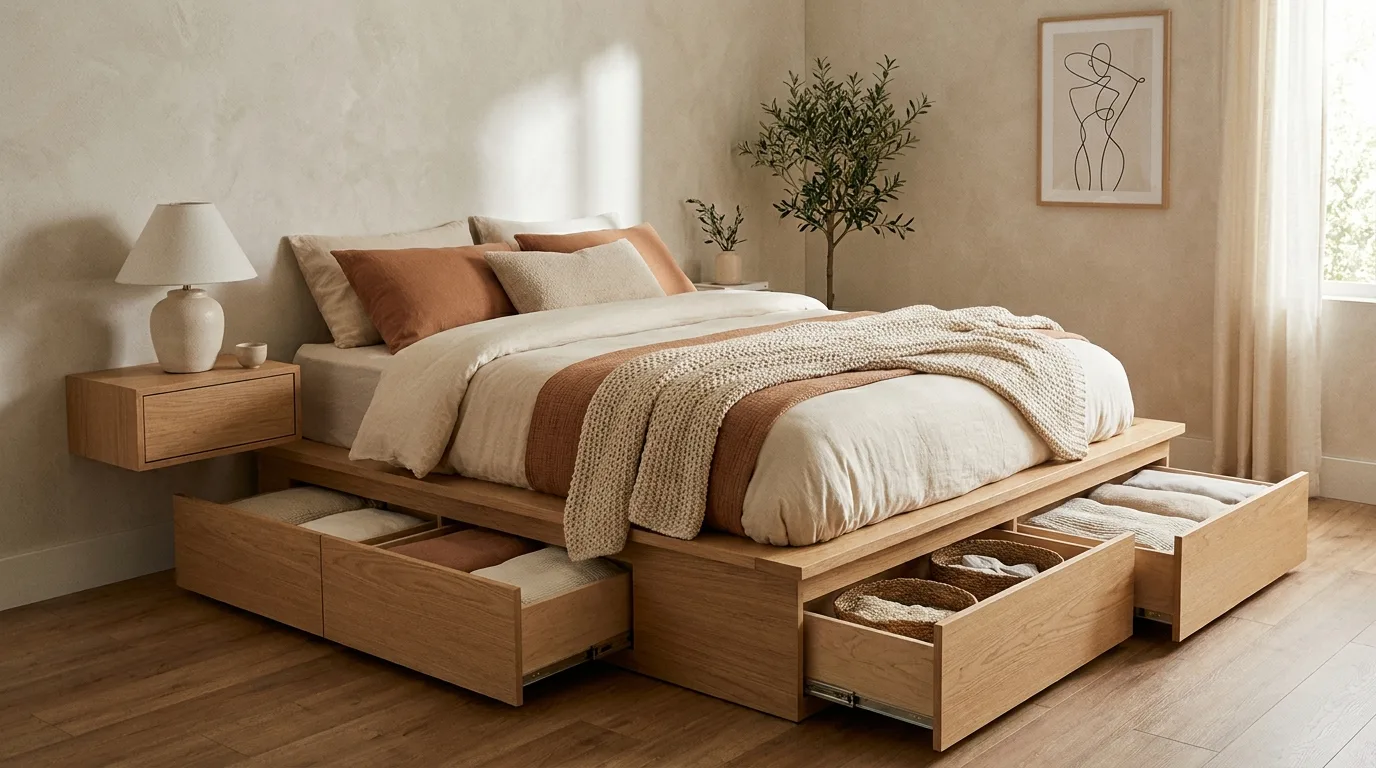
The bed usually takes up more floor space than any other bedroom item, so turning that footprint into storage is one of the most effective ways to save room. Choose a platform bed with drawers underneath or a lift-up base that provides hidden space for bedding, seasonal clothing, shoes, or luggage. Storage beds work especially well when the bedroom has little space for a separate dresser. To keep the room organized, assign different categories to individual drawers instead of treating the entire space as one large storage area. Use fabric bins or dividers for smaller belongings. A streamlined bed frame also keeps the visual appearance simple, helping the bedroom feel less crowded while giving you valuable storage without adding another bulky piece of furniture.
2. Use the Walls for Vertical Storage
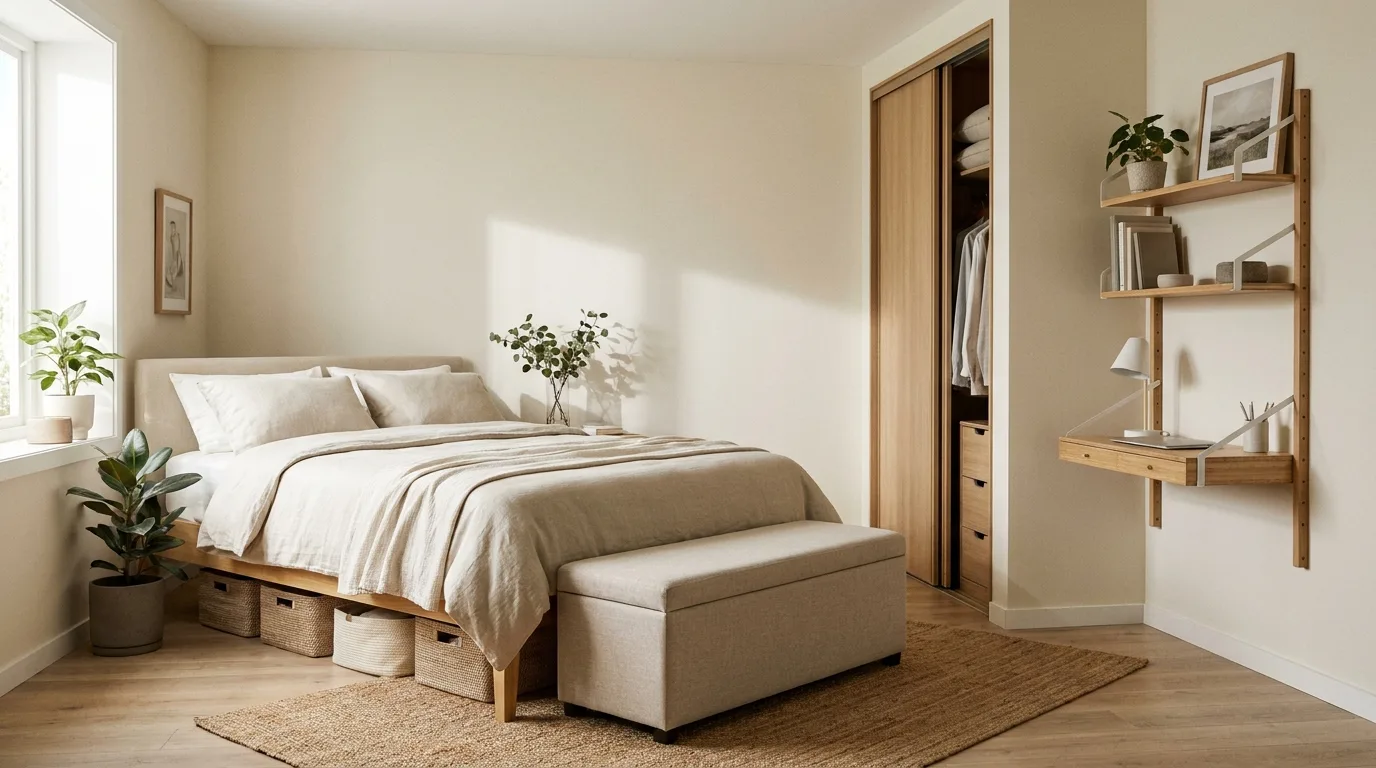
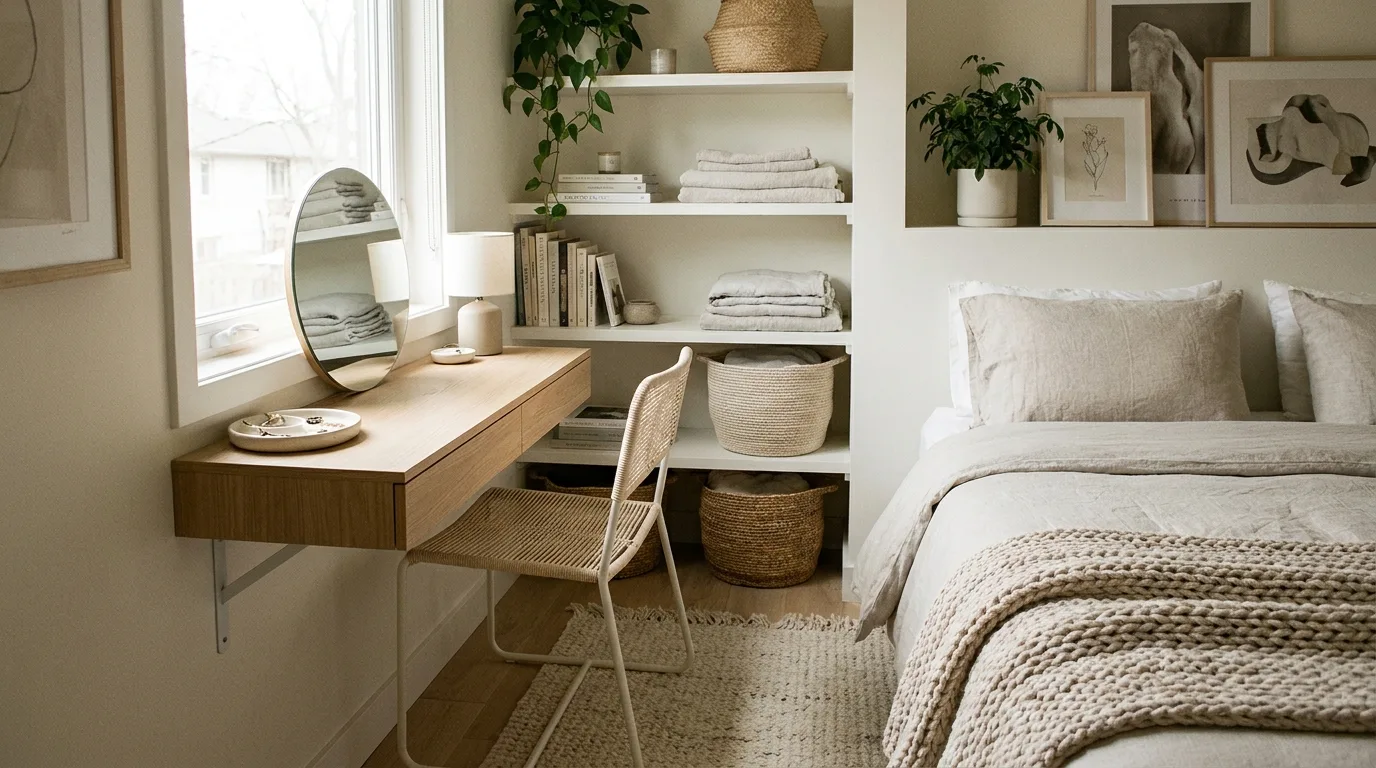
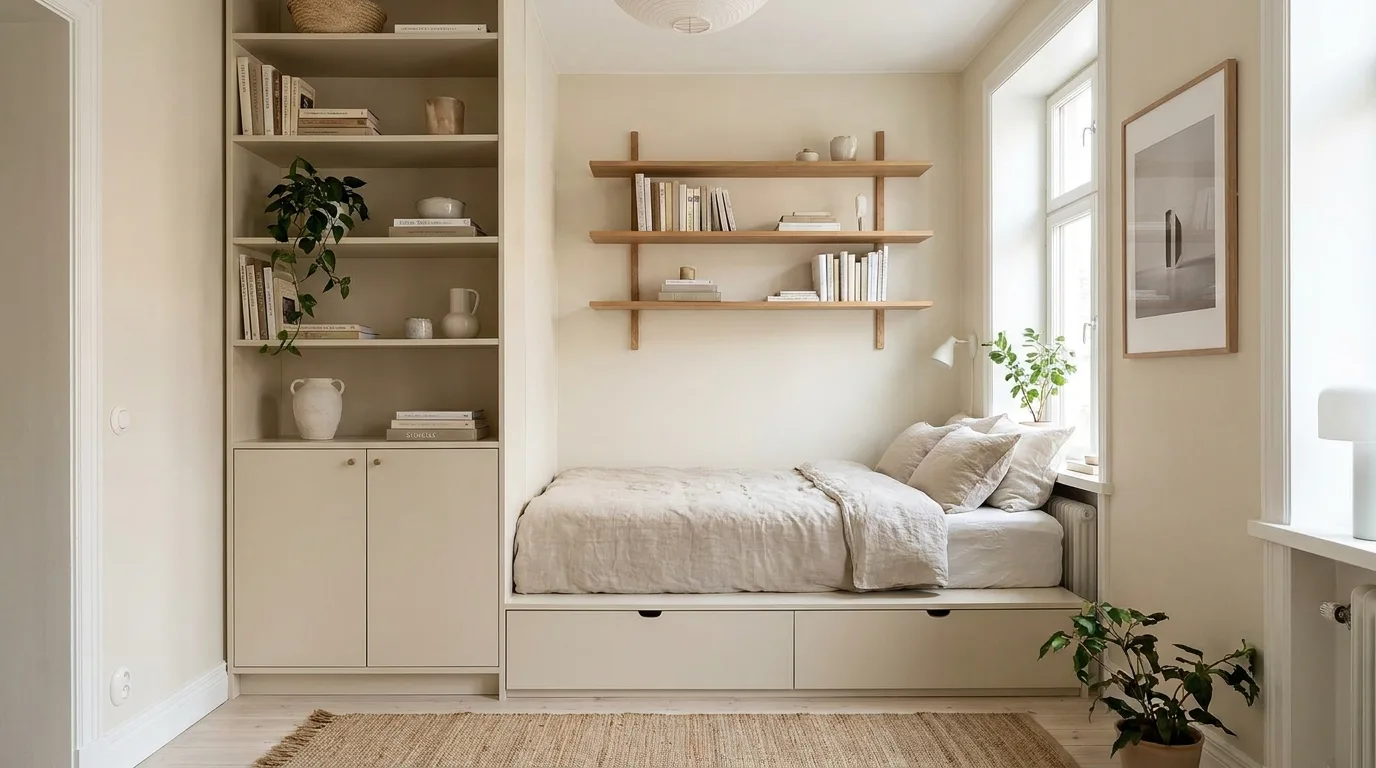
When floor space is limited, look upward. Vertical storage allows you to organize books, accessories, decor, and everyday necessities without taking valuable walking space away from the room. Install narrow floating shelves above a desk, beside the bed, or on an otherwise unused wall. A tall bookcase can provide considerably more storage than a wide, low unit while using a smaller footprint. Wall-mounted cabinets are another useful option when you want belongings hidden from view. Keep frequently used items within easy reach and place less-used possessions higher up. Avoid filling every shelf, because visual clutter can make a small room feel even tighter. A combination of closed storage and a few carefully styled open shelves creates a practical balance between organization and visual calm.
3. Install a Slim Wall-Mounted Nightstand
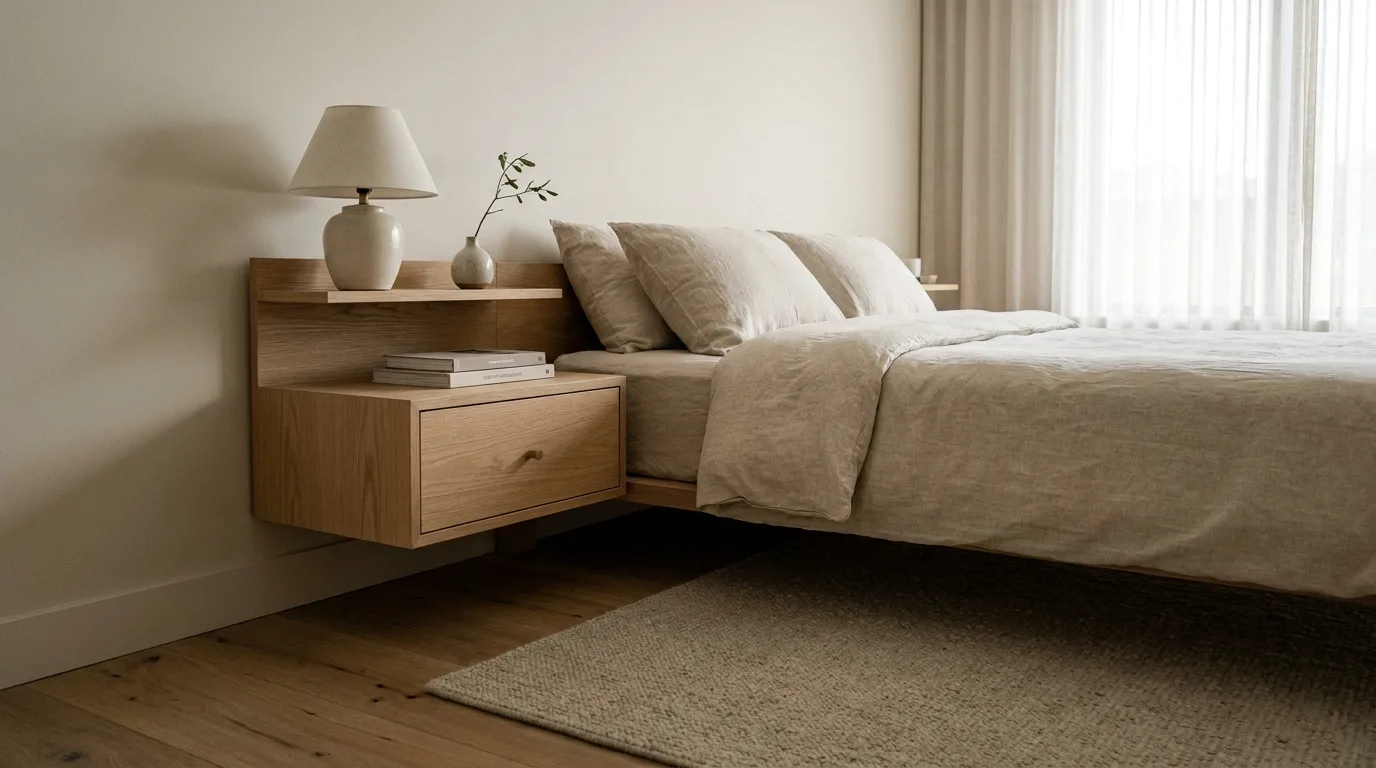
A traditional bedside table can consume more floor space than expected, especially in a narrow bedroom. A compact wall-mounted nightstand provides a useful surface while leaving the floor underneath open, which can make the room appear larger. Look for a design with a small drawer or shelf so you can store essentials such as reading glasses, chargers, books, or personal items out of sight. Floating nightstands are particularly useful beside beds positioned close to a wall because they can be sized to fit the available width. Choose a finish that complements the bed or wall color for a cohesive appearance. Keeping the surface intentionally minimal also helps maintain the peaceful atmosphere that a bedroom should have.
4. Make the Most of the Space Under the Bed
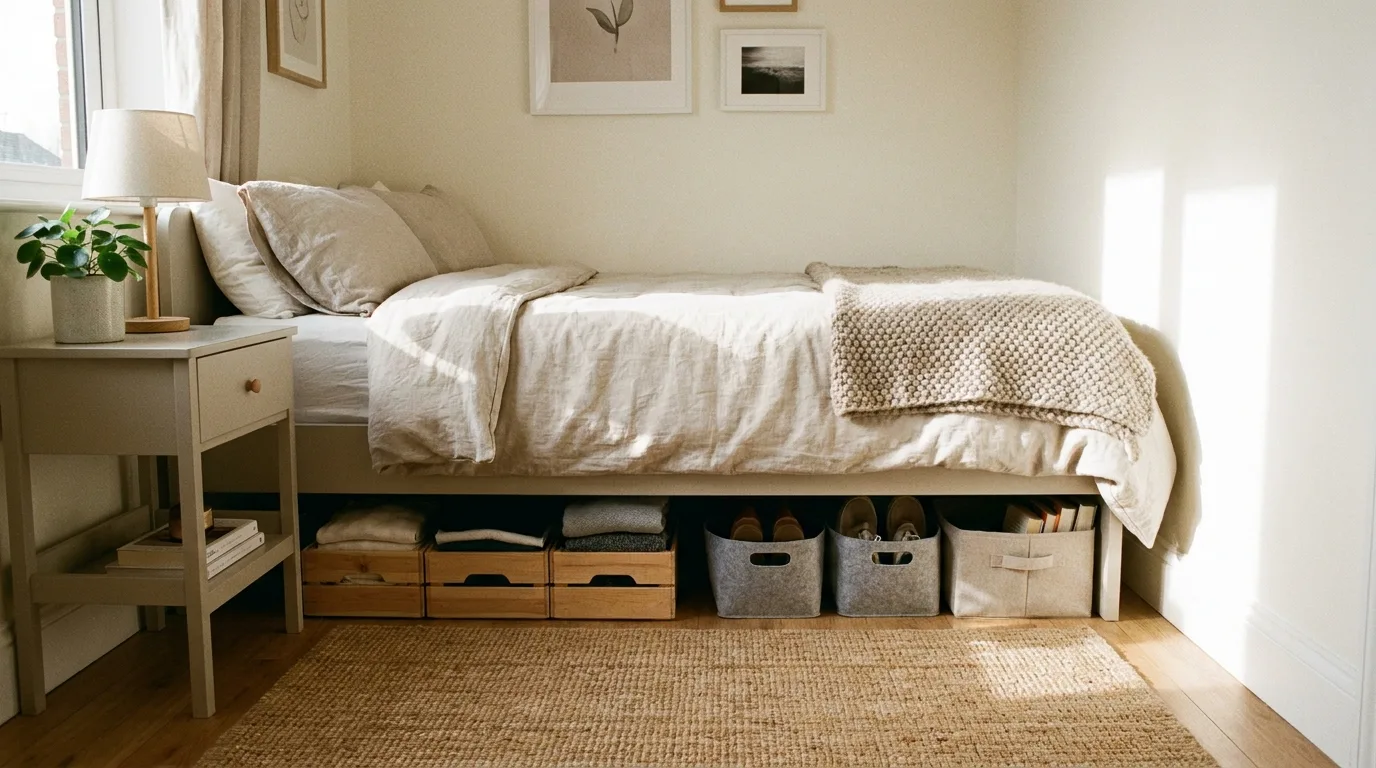
If replacing your bed is not practical, the area underneath it can still become valuable hidden storage. Low-profile storage boxes, rolling containers, and zippered fabric bags can hold items that you do not need every day. This is an especially useful location for winter clothing, spare linens, blankets, or shoes. Measure the available clearance before buying containers so they can slide in and out easily. Choose matching or similarly sized organizers when possible to make the space easier to manage. Label containers clearly so you do not need to pull everything out when searching for one item. Once organized, under-bed storage keeps belongings accessible while preserving the rest of the bedroom for furniture and movement.
5. Add a Full-Length Mirror Strategically
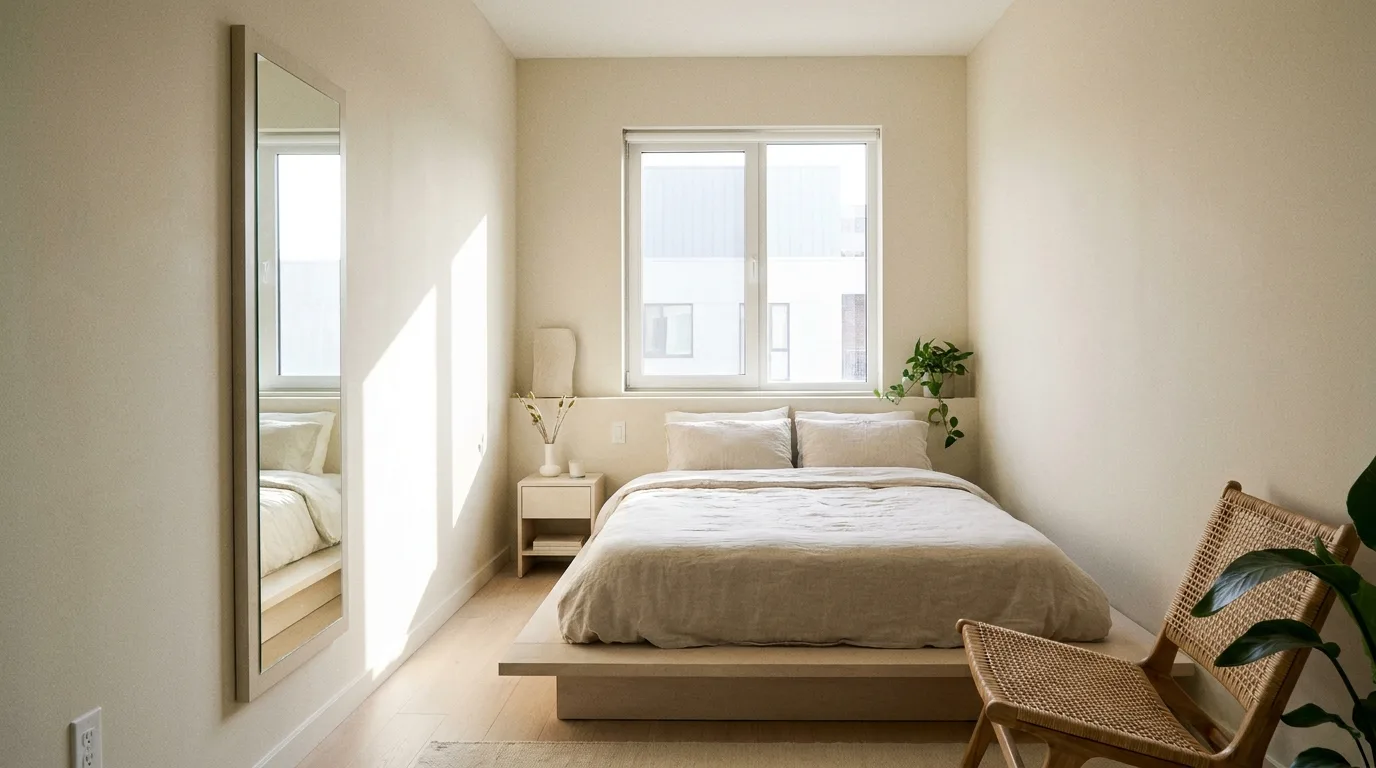
A full-length mirror can serve a practical purpose while helping a small bedroom feel brighter and more spacious. Instead of using a floor-standing mirror that occupies valuable space, consider a slim wall-mounted or over-the-door design. Position the mirror where it can reflect natural light from a window or brighten a darker part of the room. Behind a bedroom door is often an overlooked location that can accommodate a mirror without reducing usable floor area. Choose a simple frame that fits the room rather than a visually heavy style. Mirrors should enhance the space rather than become another decorative focal point. Used thoughtfully, one well-positioned mirror can make a compact bedroom feel more open while giving you a convenient place to check an outfit.
6. Create a Compact Work or Vanity Zone
If your bedroom needs to serve more than one purpose, create a dedicated mini zone instead of adding a large desk or vanity. A narrow wall-mounted desk can provide enough room for a laptop, notebook, or small beauty setup while taking up minimal floor space. Pair it with a lightweight chair that can slide underneath when not in use. Wall-mounted organizers, small drawers, and shelves can keep supplies from spreading across the surface. Choose furniture with clean lines and a finish that blends with the bedroom so the area does not visually dominate the room. When the work or vanity zone is compact and well organized, it becomes easier to switch between productive tasks and relaxation without making the bedroom feel like an office.
7. Use Curtains and Lighting to Save Visual Space
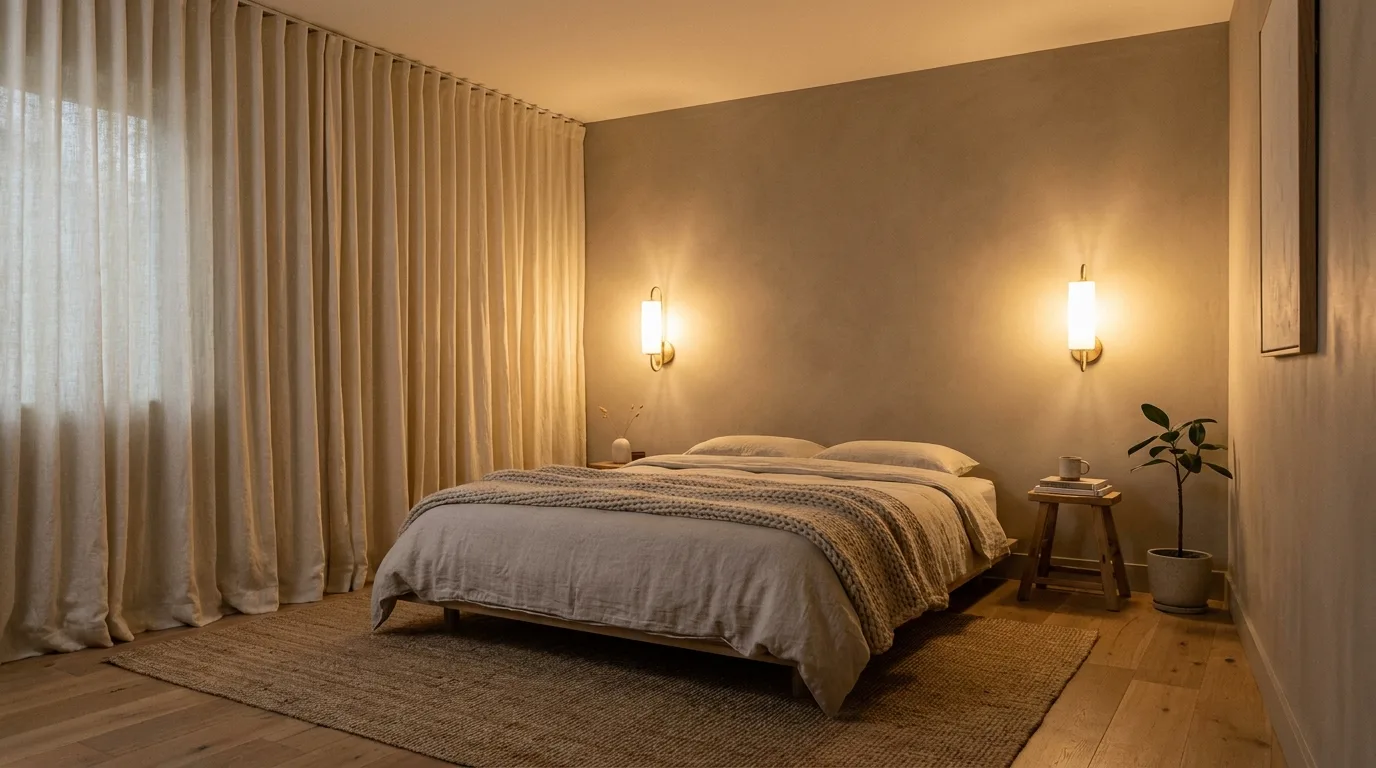
Space-saving design is not only about furniture; visual choices can also influence how large a bedroom feels. Hang curtains close to the ceiling and allow them to fall toward the floor to emphasize the room’s height. Choose lightweight window treatments that let natural light enter rather than heavy fabrics that make the walls feel enclosed. Lighting matters too. Wall sconces or pendant lights can replace bulky bedside lamps and free up space on nightstands. Use warm, layered lighting to create a relaxing atmosphere in the evening. Keeping fixtures streamlined and using a consistent palette across walls, curtains, and major furniture pieces reduces visual interruptions. The result is a bedroom that feels taller, brighter, and more cohesive without requiring additional square footage.
8. Keep Furniture Multi-Functional and Proportional
Every major piece of furniture should earn its place in a small bedroom. Look for pieces that perform two functions, such as an ottoman with hidden storage, a bench that provides seating and blanket storage, or a compact wardrobe with an integrated mirror. Proportion is equally important. Oversized furniture can quickly overwhelm a compact room, even when there are only a few pieces. Measure the room and create clear walking paths before purchasing anything new. Choose furniture with raised legs or open bases when possible because visible floor beneath the pieces creates a lighter visual effect. Finally, resist the temptation to fill empty corners simply because they are available. Leaving some breathing room is one of the simplest ways to make a small bedroom feel organized and peaceful.
Conclusion
A small bedroom does not need to sacrifice comfort or style. By combining hidden storage, vertical organization, multifunctional furniture, and thoughtful lighting, you can create a space that feels both practical and peaceful. Start with the areas that create the most clutter, then introduce solutions that use existing floor space more efficiently rather than adding unnecessary furniture. Even a few carefully chosen changes can make daily routines easier and give the room a more open appearance. The best small-bedroom design is not about fitting as much as possible into the space; it is about keeping only what you need and giving everything a sensible place.