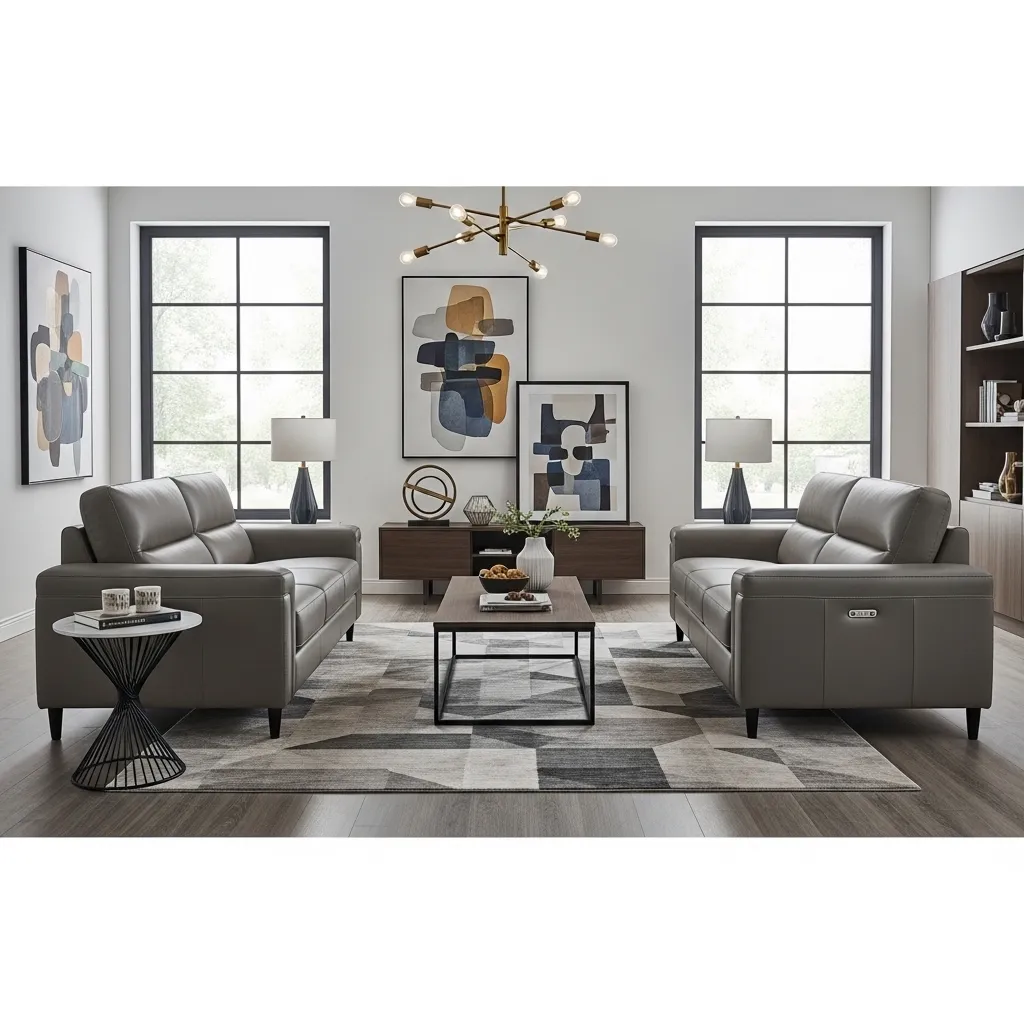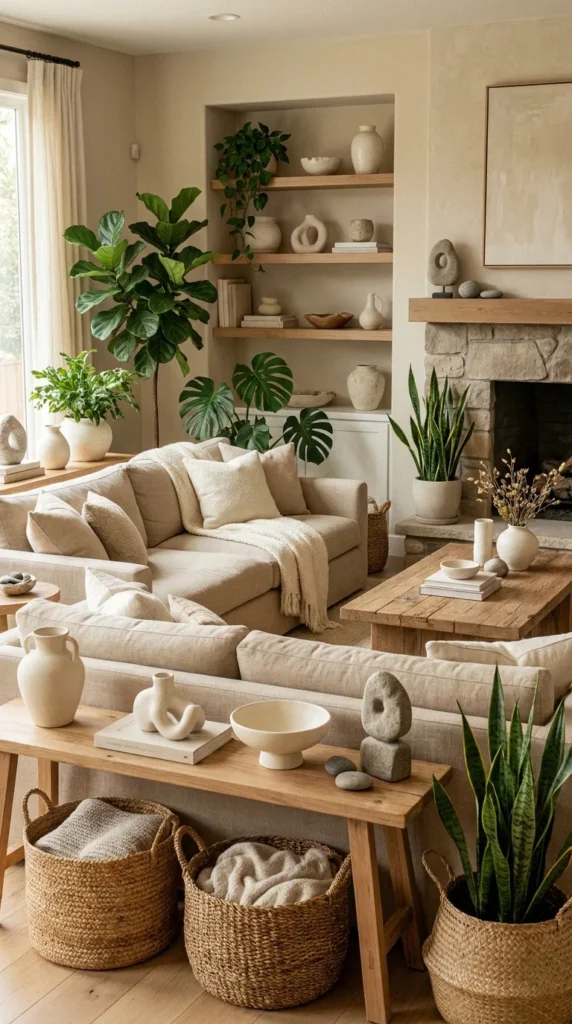
Warm neutral living rooms combine the calm of understated color with the comfort of natural, welcoming materials. Instead of relying on stark white or cool gray, this style layers shades such as cream, beige, taupe, sand, caramel, and soft brown to create a space that feels relaxed without looking dated. The key to making warm neutrals feel modern is variety: mix different textures, silhouettes, finishes, and tonal depths so the room has dimension. Whether you are decorating a small apartment or a spacious open-plan home, thoughtful layering can make neutral furniture and walls feel intentional rather than plain. These warm neutral living room ideas offer practical ways to create a polished, inviting space while keeping the overall look timeless and easy to live with.
1. Layer Cream and Soft Beige
A simple combination of cream and soft beige creates an instantly comfortable foundation for a modern living room. Use a warm ivory on the walls, then introduce beige through the sofa, area rug, or window treatments. Keep the shades slightly different so they do not blend into one flat block of color. A cream boucle chair, linen cushions, and a beige wool rug can add subtle contrast without introducing a busy pattern. For a contemporary finish, choose furniture with clean lines and understated profiles. Light oak or natural wood accents work particularly well because they reinforce the warmth of the palette. This approach is especially useful in rooms with limited natural light, where cooler neutrals can sometimes feel sterile.
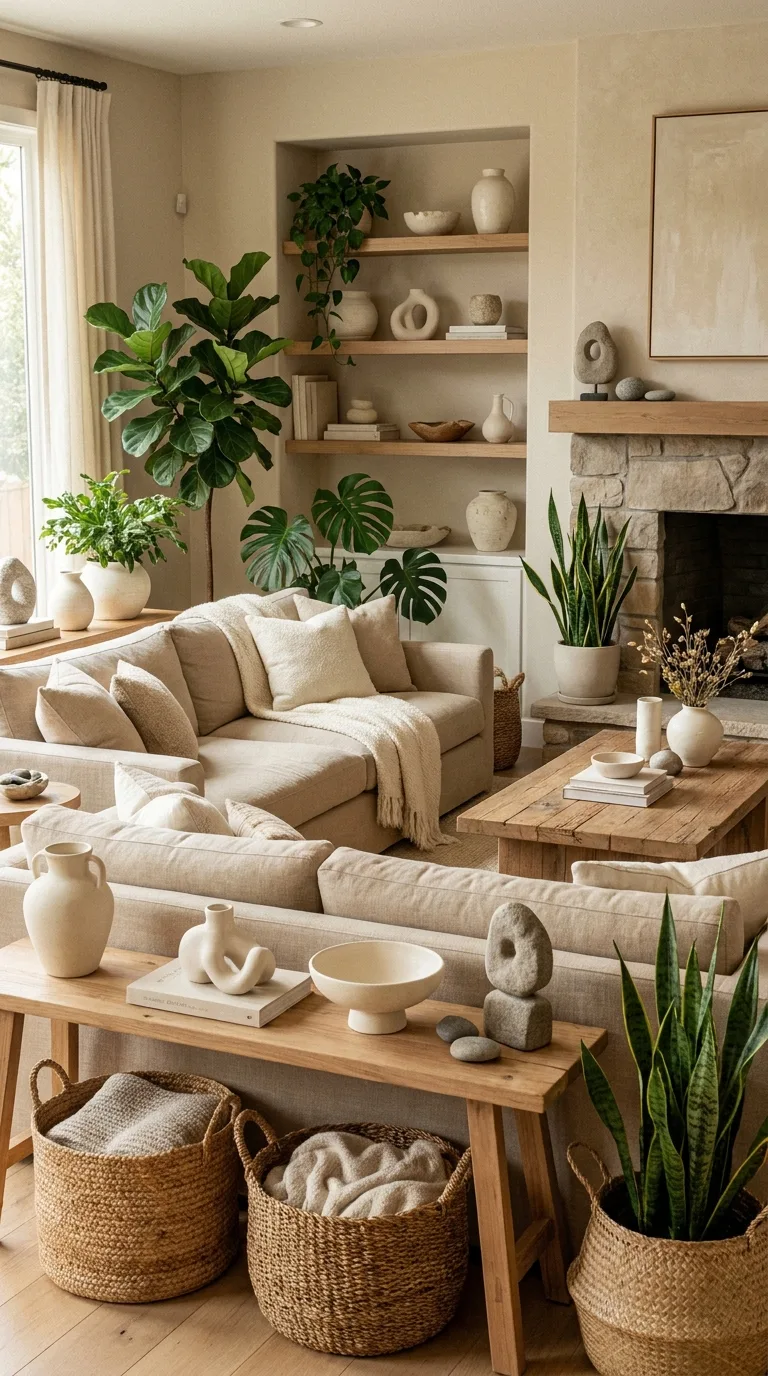
2. Add a Taupe Sofa as the Focal Point
A taupe sofa can anchor a warm neutral living room while providing more visual depth than a pale cream piece. Look for a design with a simple shape, generous cushions, and textured upholstery for a balance of modern style and comfort. Surround it with lighter elements such as an ivory rug, cream curtains, and pale wood furniture to keep the room feeling airy. You can introduce deeper taupe or mushroom tones through cushions and throws for a tonal, sophisticated effect. If the room has strong architectural features, allow the sofa to remain relatively understated so the space does not feel overcrowded. Taupe is also versatile enough to transition with seasonal accents, making it a practical choice for long-term decorating.
3. Use Natural Wood for Warmth
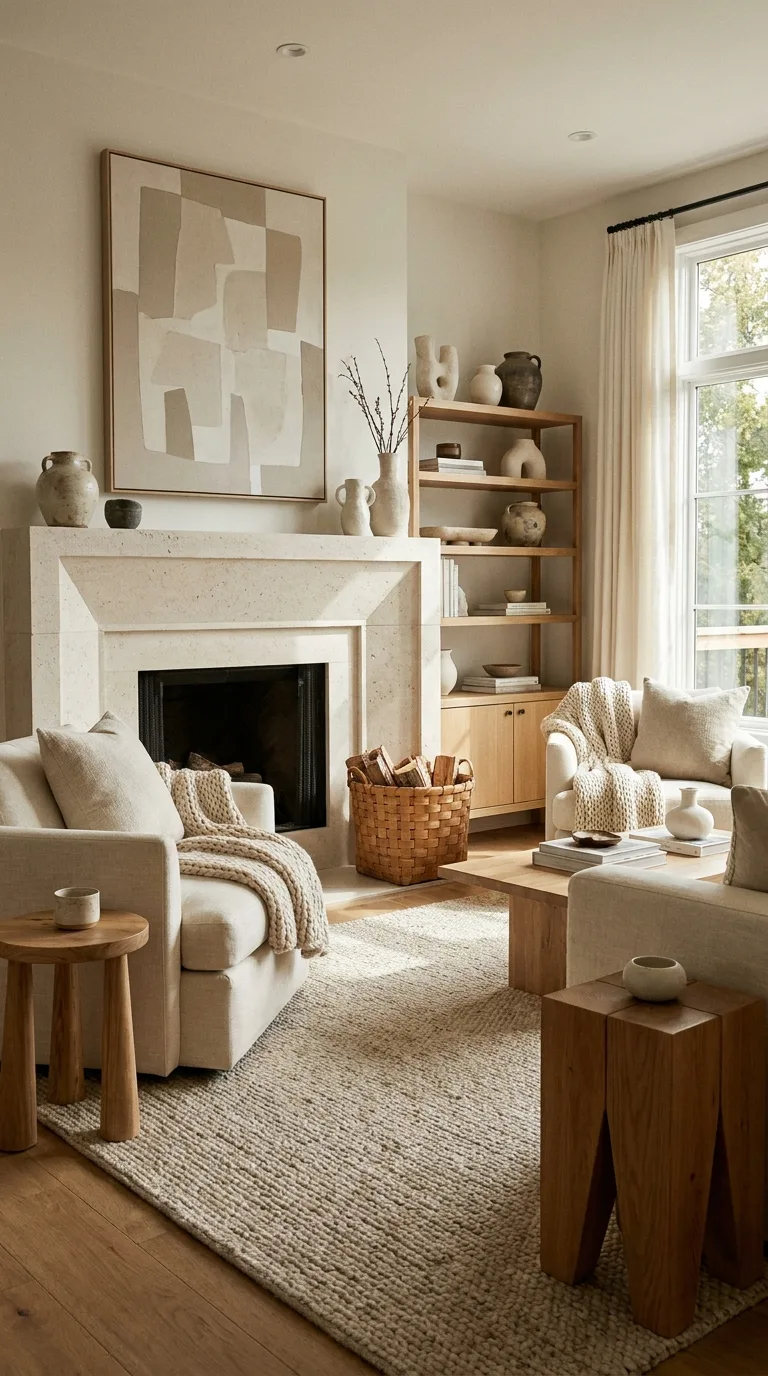
Natural wood prevents a neutral living room from feeling overly soft or visually washed out. Choose one or two wood tones and repeat them thoughtfully throughout the space. A light oak coffee table, wooden sideboard, or exposed timber shelving can introduce organic texture while maintaining a modern aesthetic. Pair smooth wood surfaces with plush upholstery, woven baskets, and soft textiles to create contrast. Medium or honey-toned wood is particularly effective when the room already contains cream and beige because it adds warmth without becoming visually heavy. Avoid matching every wooden piece perfectly; slight variations make the room feel collected and authentic. The result is a neutral interior with enough natural character to feel welcoming rather than overly styled.
4. Create Depth With Tonal Textures
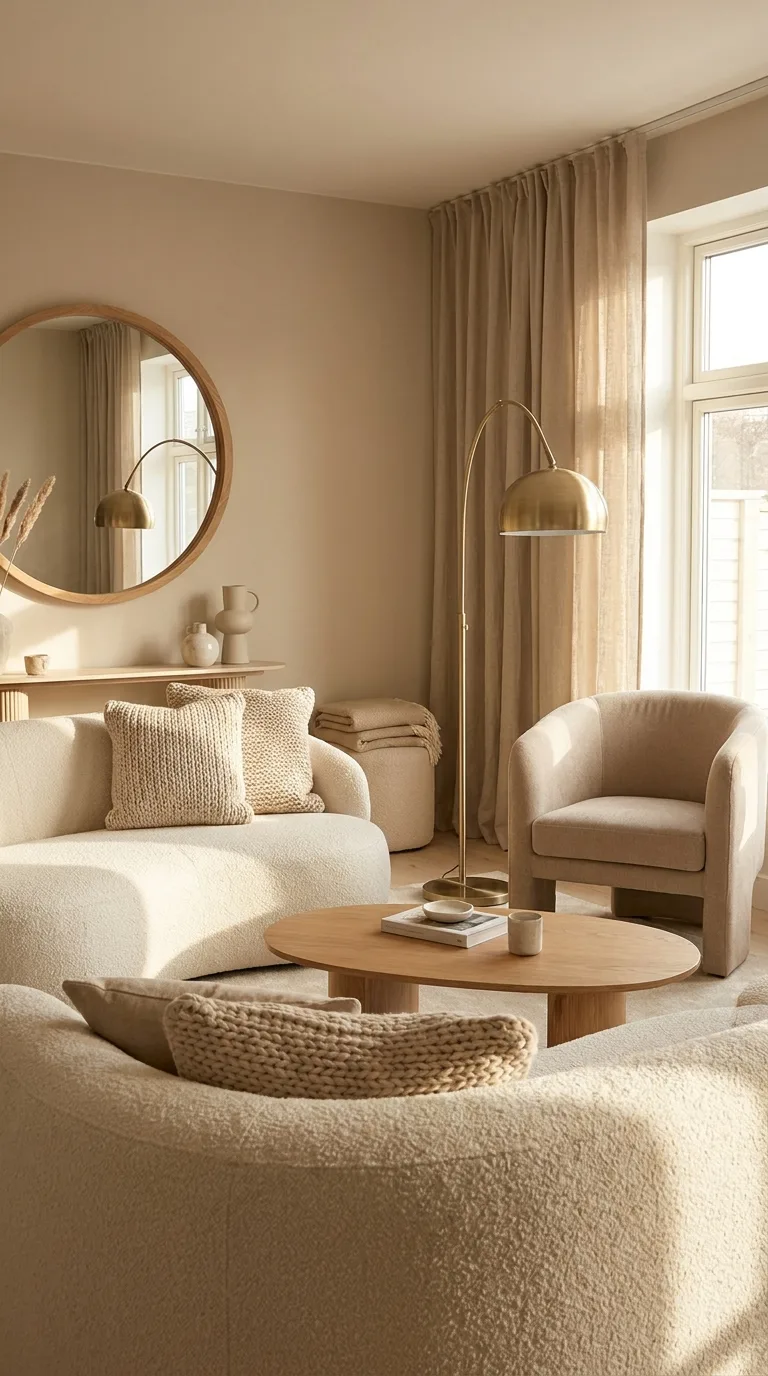
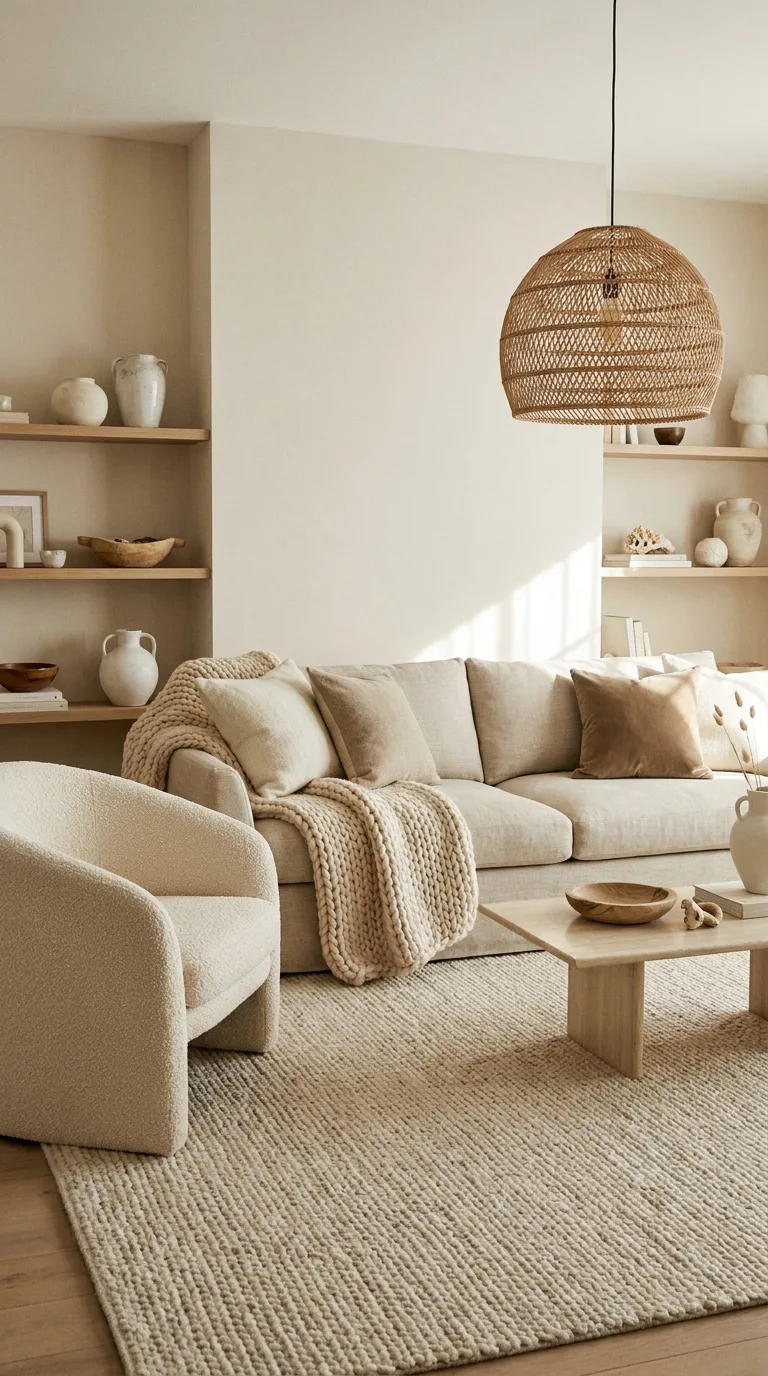
When a living room uses mostly one color family, texture becomes essential. Combine smooth cotton, nubby linen, chunky knits, boucle, wool, leather, and woven materials to give the neutral palette dimension. For example, pair a streamlined beige sofa with a textured ivory rug, linen cushions, and a chunky throw. A woven pendant or rattan accent can add another layer without disrupting the calm color scheme. Keep the colors closely related, but vary the surface finishes so the eye has something to explore. This technique works particularly well in minimalist interiors because it adds richness without relying on excessive decoration. The room remains visually quiet while still feeling warm, layered, and comfortable.
5. Introduce Warm Greige Walls
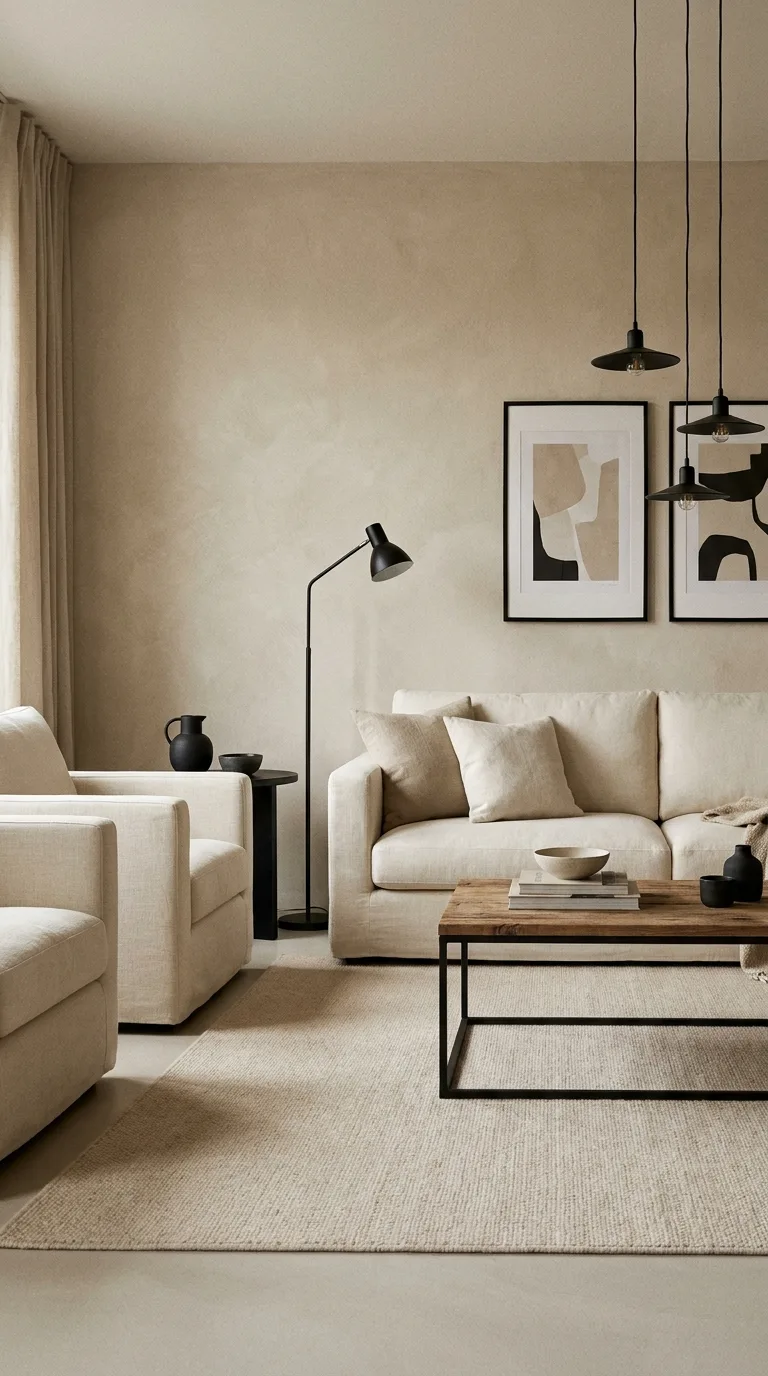
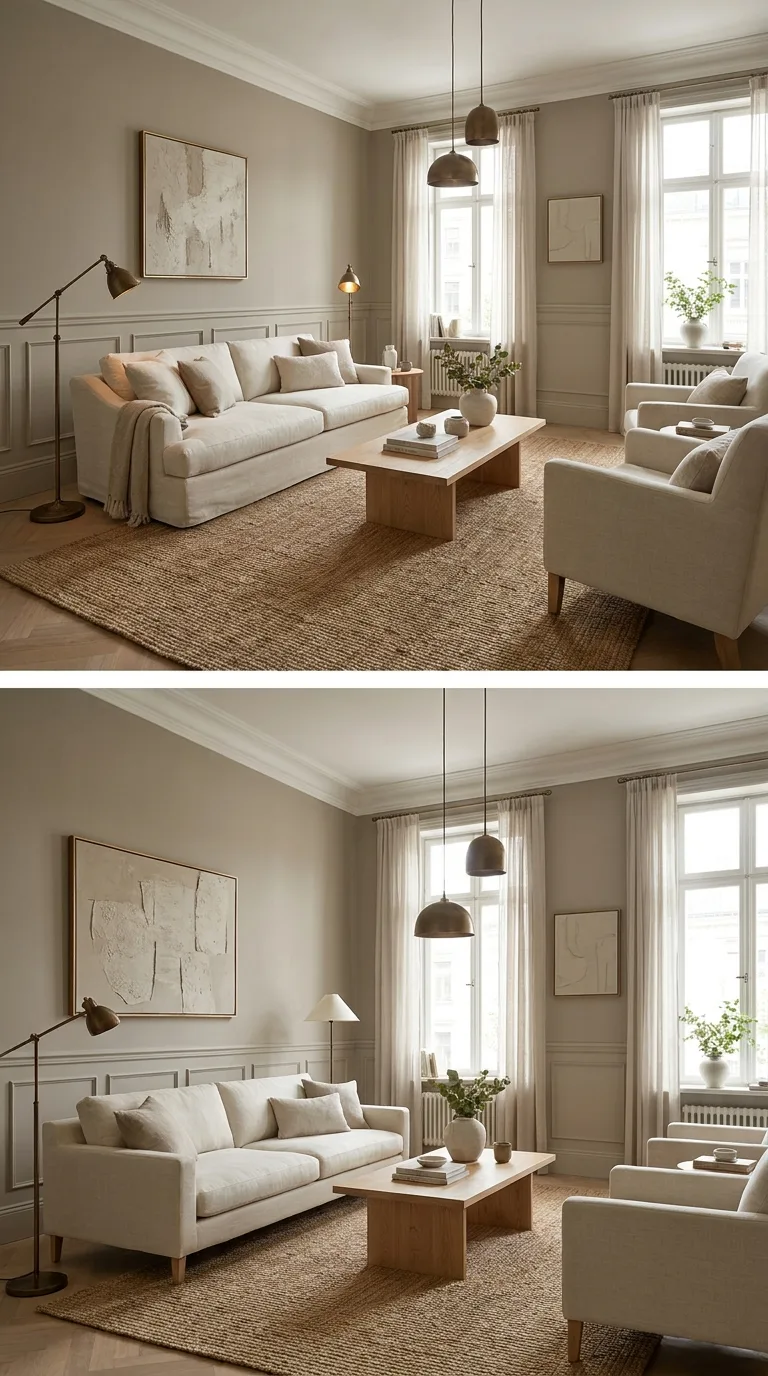
Warm greige offers a modern alternative to traditional beige and can make a living room feel refined without becoming cold. Choose a greige with noticeable beige or brown undertones rather than a blue-based gray. This creates a soft backdrop for cream upholstery, natural wood, and darker accents. Greige walls are particularly effective when paired with white or off-white trim because the subtle contrast highlights the architecture. To keep the room inviting, repeat warm undertones in the rug, cushions, and artwork. Brass or aged bronze lighting can also complement the palette beautifully. Before painting, test samples throughout the room because natural and artificial light can dramatically change how greige appears at different times of day.
6. Mix Modern Furniture With Vintage Accents
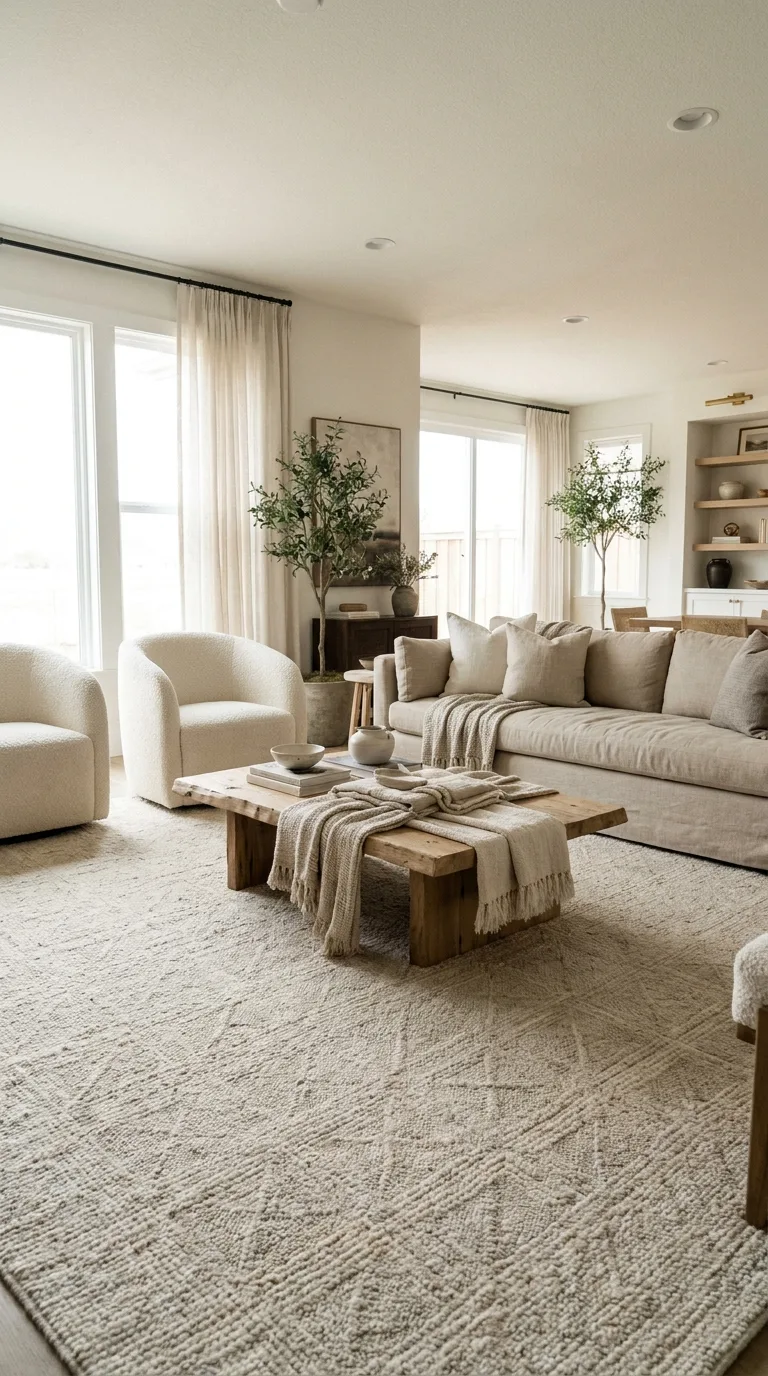
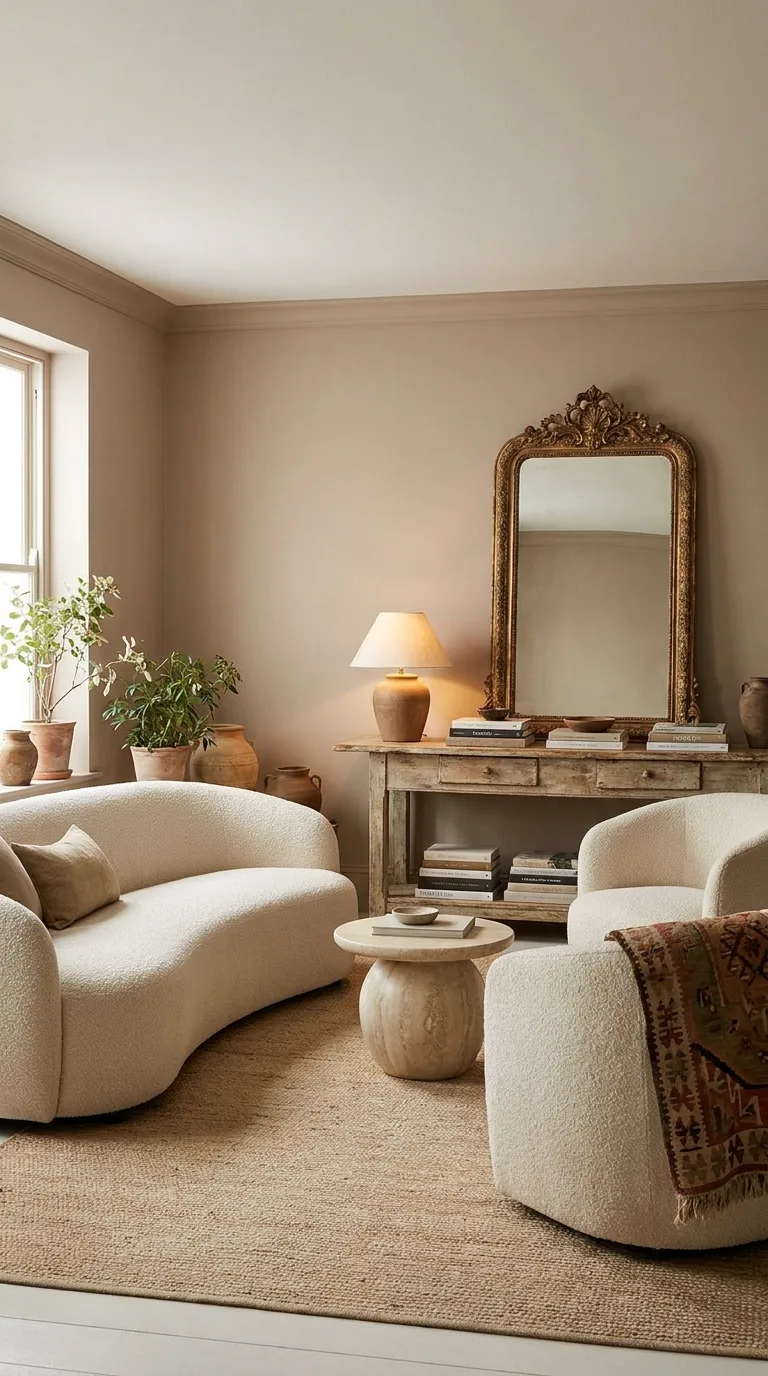
Warm neutrals provide an excellent backdrop for combining contemporary furniture with vintage or antique-inspired pieces. Start with a modern sofa or streamlined armchairs, then introduce character through an aged wood console, vintage-style mirror, or sculptural side table. Keep the color palette consistent so the different eras feel connected. Cream, camel, tan, and warm brown can visually bridge modern and traditional elements without making the room look themed. Choose only a few distinctive pieces rather than filling the space with antiques. A vintage accent should feel like a thoughtful layer rather than the dominant style. This combination creates a living room that feels personal, sophisticated, and lived-in while retaining the clean proportions associated with modern interiors.
7. Bring in Camel Leather
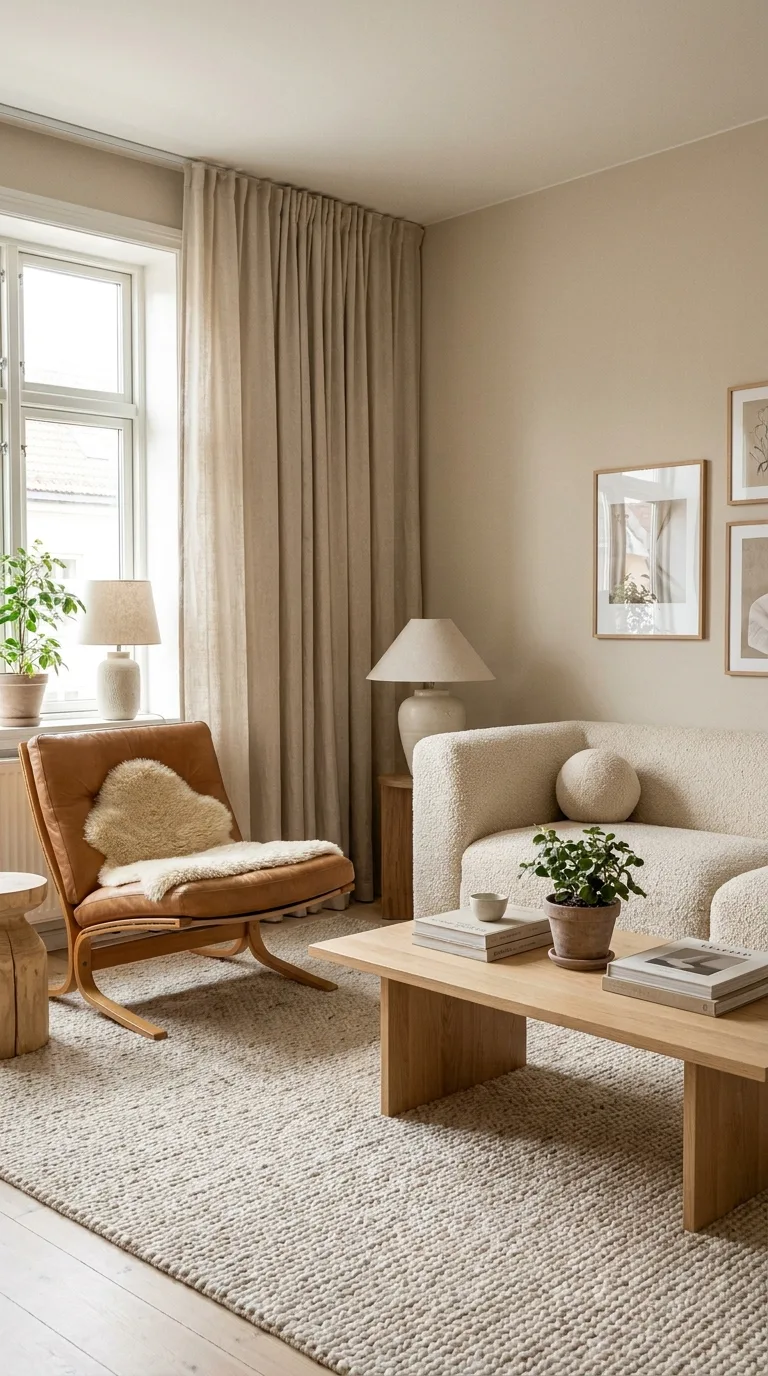
Camel leather adds a rich, warm note to a neutral living room and works especially well with cream, beige, and natural wood. Consider a leather lounge chair, ottoman, accent bench, or pair of smaller chairs rather than covering the entire seating arrangement in leather. The warm brown tone creates contrast while still belonging to the neutral palette. Over time, leather develops a natural patina that can make the room feel more relaxed and authentic. Balance its visual weight with soft fabrics such as linen curtains, wool cushions, and a light-colored rug. For a modern look, select simple silhouettes with minimal ornamentation. Camel leather is particularly useful when a neutral scheme needs a stronger focal point without introducing a bright color.
8. Choose an Oversized Neutral Rug
An oversized rug can visually connect the major pieces of furniture and make a warm neutral living room feel more cohesive. Choose a design in cream, oatmeal, beige, or subtle taupe with a low-contrast pattern or softly varied texture. The rug should be large enough for at least the front legs of the main seating pieces to sit comfortably on it. This helps define the conversation area and prevents furniture from appearing scattered. A subtle geometric pattern can add modern character, while a wool or woven texture creates a softer, more relaxed effect. Because the rug covers a significant portion of the room, keeping its colors restrained allows you to layer cushions, artwork, and accessories without making the overall space feel visually busy.
9. Use Black Accents Sparingly
A small amount of black can sharpen a warm neutral palette and give it a distinctly modern edge. Instead of making black a dominant color, use it in carefully selected details such as a slim coffee table frame, picture frames, lighting fixtures, or a sculptural vase. Against cream and beige, these accents create definition and help architectural lines stand out. The contrast is especially effective in rooms where everything else is pale and soft. Keep the shapes simple and repeat black in two or three locations so the accents feel intentional. If black feels too strong, dark bronze or espresso brown can create a gentler version of the same effect. The goal is contrast, not a dramatic shift away from the neutral scheme.
10. Add Soft Curved Shapes
Curved furniture can make a neutral living room feel more inviting while giving a contemporary space a softer personality. Consider a rounded sofa, curved armchair, oval coffee table, arched floor lamp, or circular mirror. These shapes contrast beautifully with rectangular walls, cabinetry, and rugs. Keep the upholstery within warm neutral shades such as ivory, mushroom, or sandy beige so the silhouette becomes the main visual feature. Curves are also useful for improving flow in smaller rooms because they reduce the hard visual edges created by multiple square furniture pieces. Combine rounded forms with natural materials such as wood, linen, or stone to keep the look grounded. The result is modern but approachable rather than overly formal.
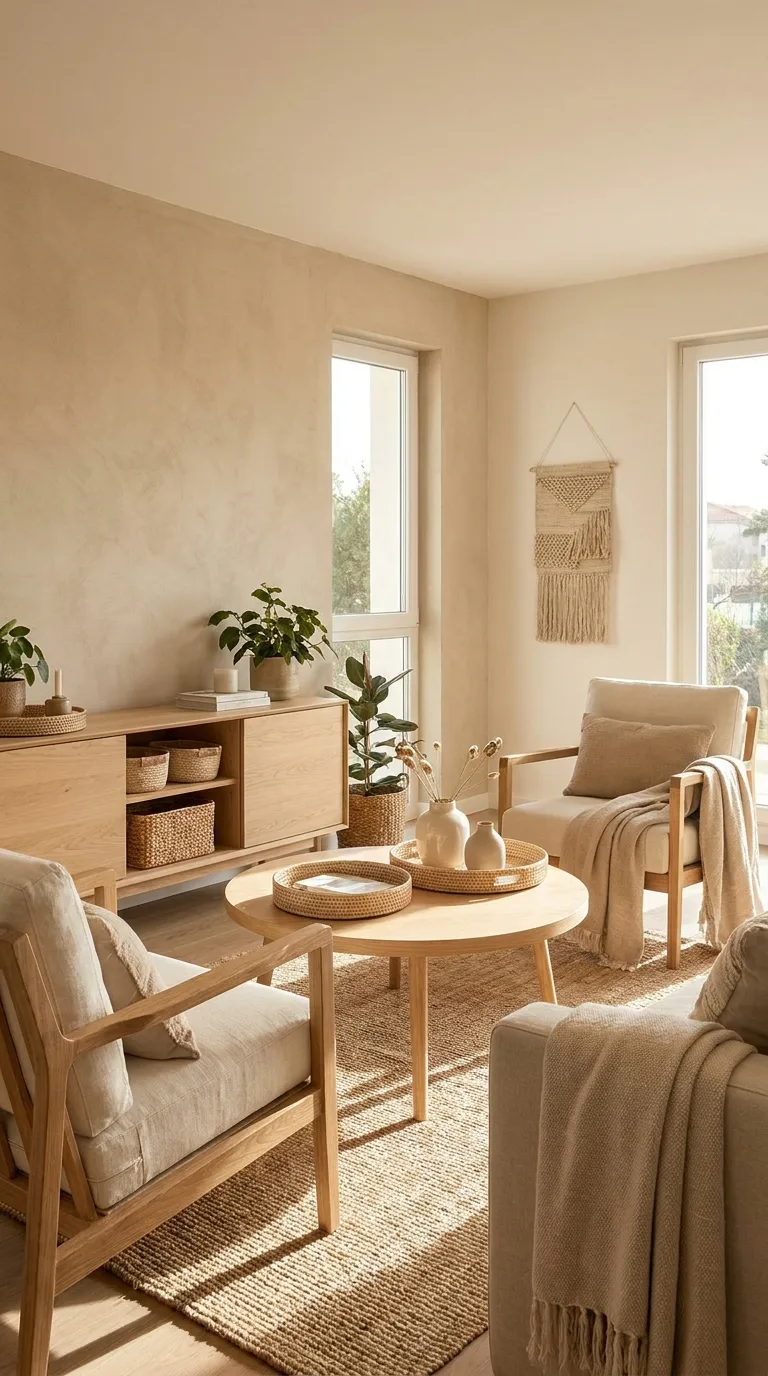
11. Style the Fireplace in Warm Neutrals
If your living room has a fireplace, use it as an opportunity to build a warm neutral focal point. A plaster, limestone, or light stone surround can provide subtle texture while maintaining a calm palette. Style the mantel with a small collection of ceramics, a simple artwork, or a few natural objects rather than filling every inch. A wood basket, woven stool, or stack of neutral-toned books can reinforce the cozy atmosphere around the hearth. For a modern appearance, keep the arrangement asymmetrical and allow some negative space. If the fireplace is already dark, balance it with lighter furniture and textiles nearby. This creates a layered composition in which the fireplace feels architectural, comfortable, and connected to the rest of the room.
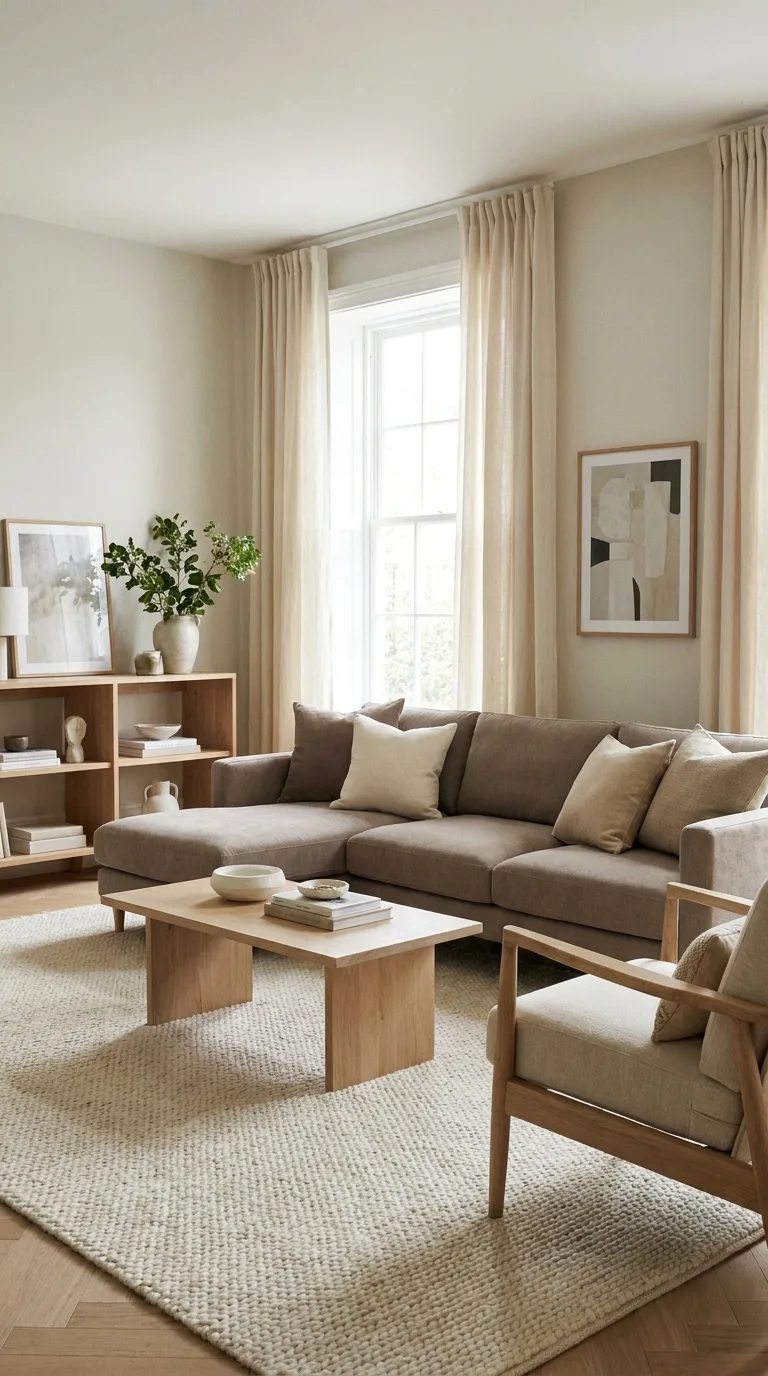
12. Finish With Organic Decor
Organic accessories give warm neutral living rooms the final layer of personality without overwhelming their restrained palette. Use dried branches, leafy plants, handmade ceramics, woven trays, stone objects, or natural fiber baskets to introduce subtle variation. Choose accessories in earthy shades such as clay, sand, cream, walnut, and muted brown. Rather than decorating every surface, create a few intentional groupings with different heights and textures. A large plant beside the sofa, a ceramic bowl on the coffee table, and a woven basket near an armchair may be enough to make the room feel finished. Handmade pieces are especially valuable because small irregularities keep a neutral interior from appearing too perfect. The overall effect should feel collected, tactile, and naturally inviting.
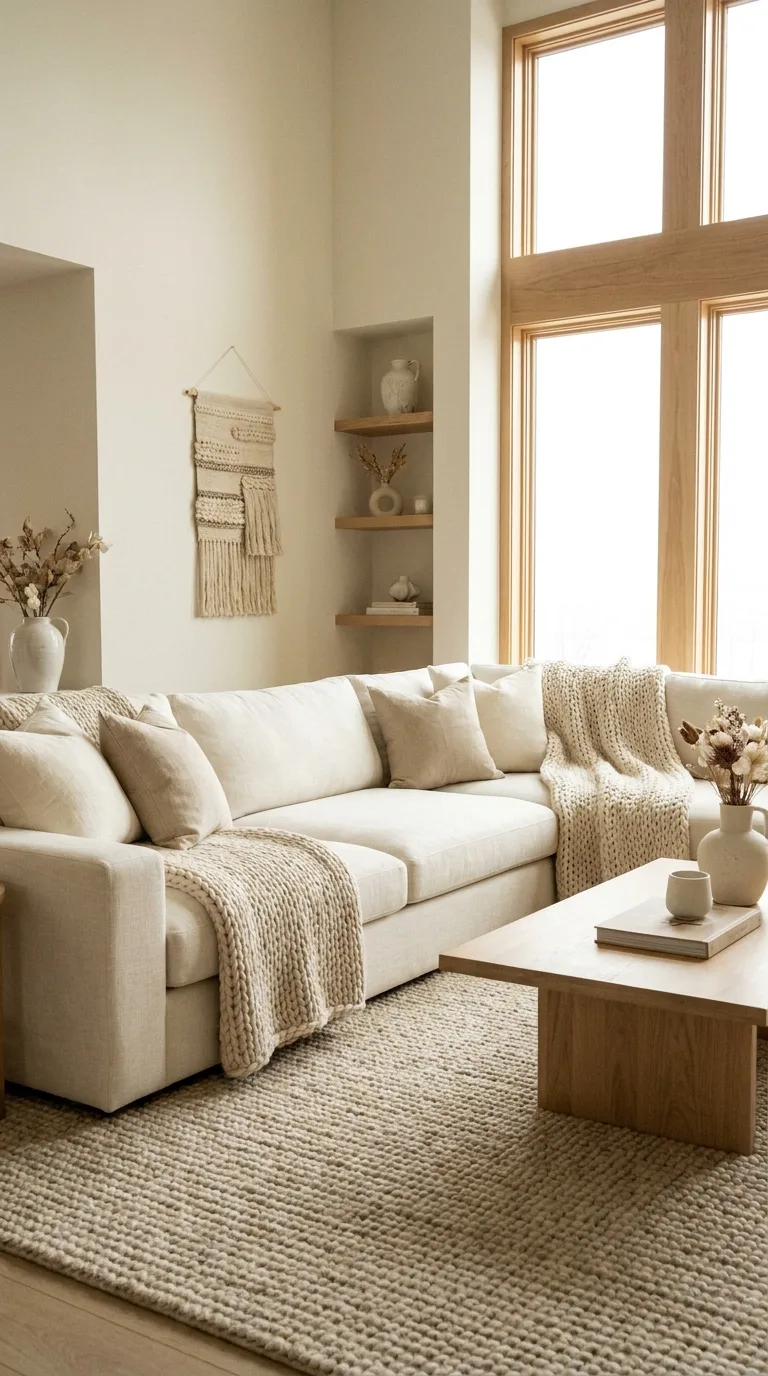
How to Make Warm Neutrals Feel Modern
The most successful warm neutral living rooms rely on contrast within the same color family. Combine pale and medium tones, smooth and rough textures, straight and curved shapes, and contemporary pieces with a few organic or vintage accents. Avoid choosing every item in exactly the same beige because tonal variation is what gives the room depth. Lighting also matters: warm bulbs can enhance cream, taupe, and wood finishes, while layered lamps create a softer atmosphere in the evening. Finally, leave enough negative space for the individual materials and silhouettes to stand out. A modern neutral room does not need to be sparse; it simply needs a clear visual hierarchy.
Conclusion
Warm neutral living room ideas work because they create a flexible foundation that feels both current and timeless. By layering cream, beige, taupe, natural wood, tactile fabrics, organic accessories, and carefully chosen darker accents, you can create a space that feels polished without losing its comfort. Focus on variation rather than adding more decoration, and let texture, shape, and natural materials provide the visual interest. Whether you prefer minimalist, contemporary, rustic, or softly traditional interiors, a thoughtfully layered warm neutral palette can make your living room feel modern, welcoming, and easy to enjoy every day.