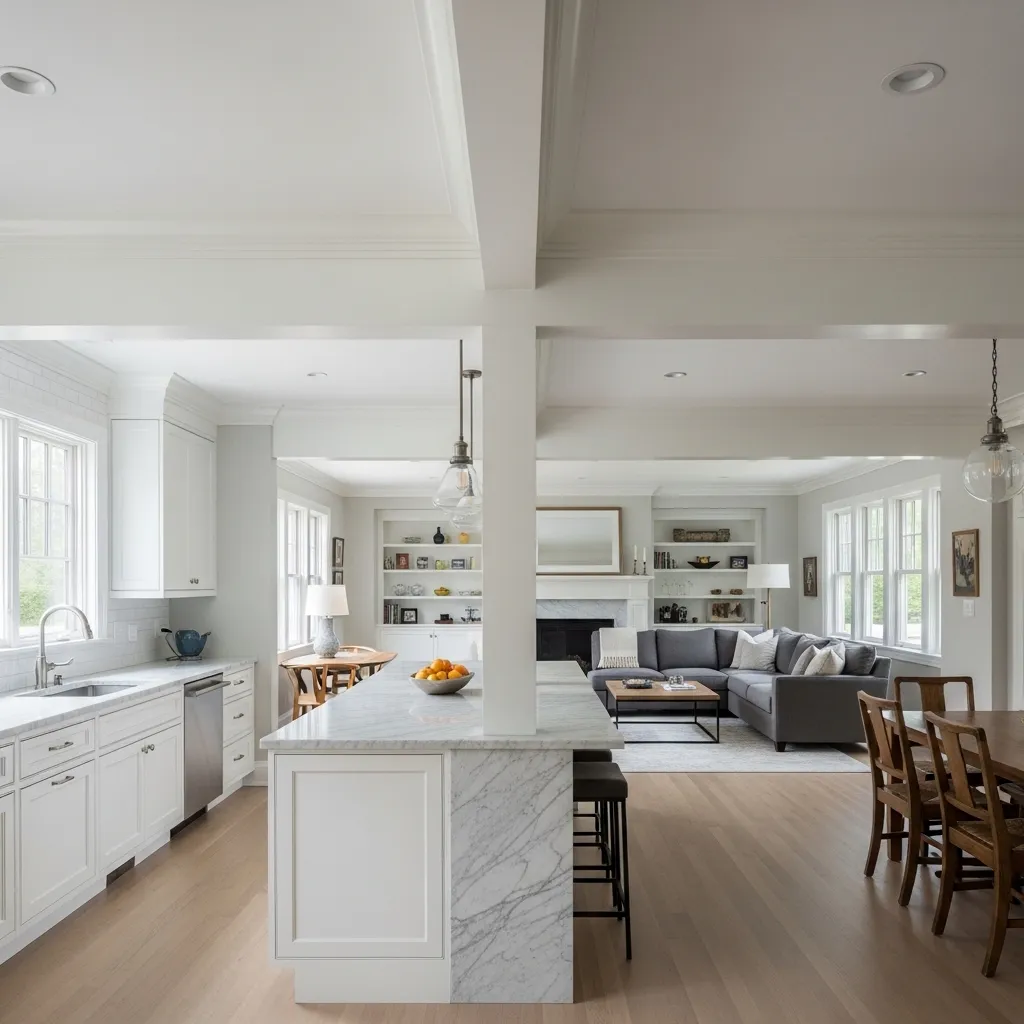
10 Kitchen False Ceiling Design Ideas That Transform the Most Overlooked Surface Into Your Kitchen’s Most Dramatic Feature
If you’ve been renovating or redesigning your kitchen and treating the ceiling as the last decision — the surface you’ll address after the cabinetry, the countertops, the backsplash, the flooring, and the lighting have all been settled, the plane you’ll simply paint white because that’s what kitchens have — this guide is specifically for the cook and the homeowner who has realized, perhaps from standing in a beautifully designed kitchen somewhere and not being quite able to identify what makes it feel so specifically complete and so specifically different from every other kitchen they’ve known, that the ceiling is doing far more work in that room than white paint on drywall would ever manage. The ten ideas here cover every significant direction in kitchen false ceiling design for contemporary residential interiors: from the warm timber batten ceiling that immediately transforms the kitchen’s atmosphere from clinical to specifically warm and architectural, through the coffered ceiling that creates the most formal and most historically grounded expression of designed overhead space, the dramatically dark painted false ceiling that inverts conventional spatial logic to create intimacy rather than openness, the illuminated cove ceiling that creates the most sophisticated ambient lighting available without visible fixtures, the stretch ceiling that creates a seamless architectural surface of extraordinary contemporary precision, the layered soffit design that integrates lighting and ventilation into a designed architectural element, the open-beam false ceiling that brings the warmth of exposed timber to kitchens where genuine structural beams don’t exist, the metallic or reflective panel ceiling that creates a dramatically contemporary surface of maximum visual impact, the integrated smart lighting ceiling that treats the overhead plane as a complete lighting system rather than a fixture location, and the heritage pressed tin ceiling that brings the most historically characterful surface treatment available into a contemporary kitchen context.
I’ve spent a significant amount of time looking at ceiling design in kitchens specifically — not because the ceiling is where most kitchen design attention goes, which is precisely the problem, but because I became convinced, after standing in a kitchen in rural Tuscany where the vaulted stone ceiling was doing as much atmospheric work as the terracotta floor and the ancient cabinetry combined, that the ceiling is the surface most consistently capable of transforming a kitchen’s character in a single architectural decision and most consistently left to do nothing. The kitchen ceiling is the one surface not interrupted by furniture, not covered by cabinetry, not modified by appliances, not obscured by the objects of daily kitchen life — it’s the only surface visible in full from every position in the kitchen, and the only surface that relates simultaneously to every element below it. That complete visibility and that simultaneous relationship to everything in the kitchen is what gives the ceiling its extraordinary design potential and what makes leaving it as a plain white surface such a consistent missed opportunity.
What makes false ceiling design specifically interesting in kitchen contexts — as opposed to living rooms or bedrooms, where false ceilings are also valuable — is the specific functional demands of the kitchen environment that false ceiling design must address simultaneously with its aesthetic ambitions. The kitchen ceiling must accommodate ventilation ducting, task lighting above work surfaces, ambient lighting for the overall space, potentially fire-rated construction near the cooking zone, and the specific moisture and grease resistance requirements of the cooking environment. The best kitchen false ceiling designs don’t treat these functional requirements as constraints to be worked around but as organizing principles to be worked with — they integrate the ventilation, the lighting, and the fire-rated construction into designed architectural elements that contribute to the ceiling’s aesthetic quality rather than compromising it.
1. Warm Timber Batten Ceiling — Acoustic Warmth and Visual Transformation
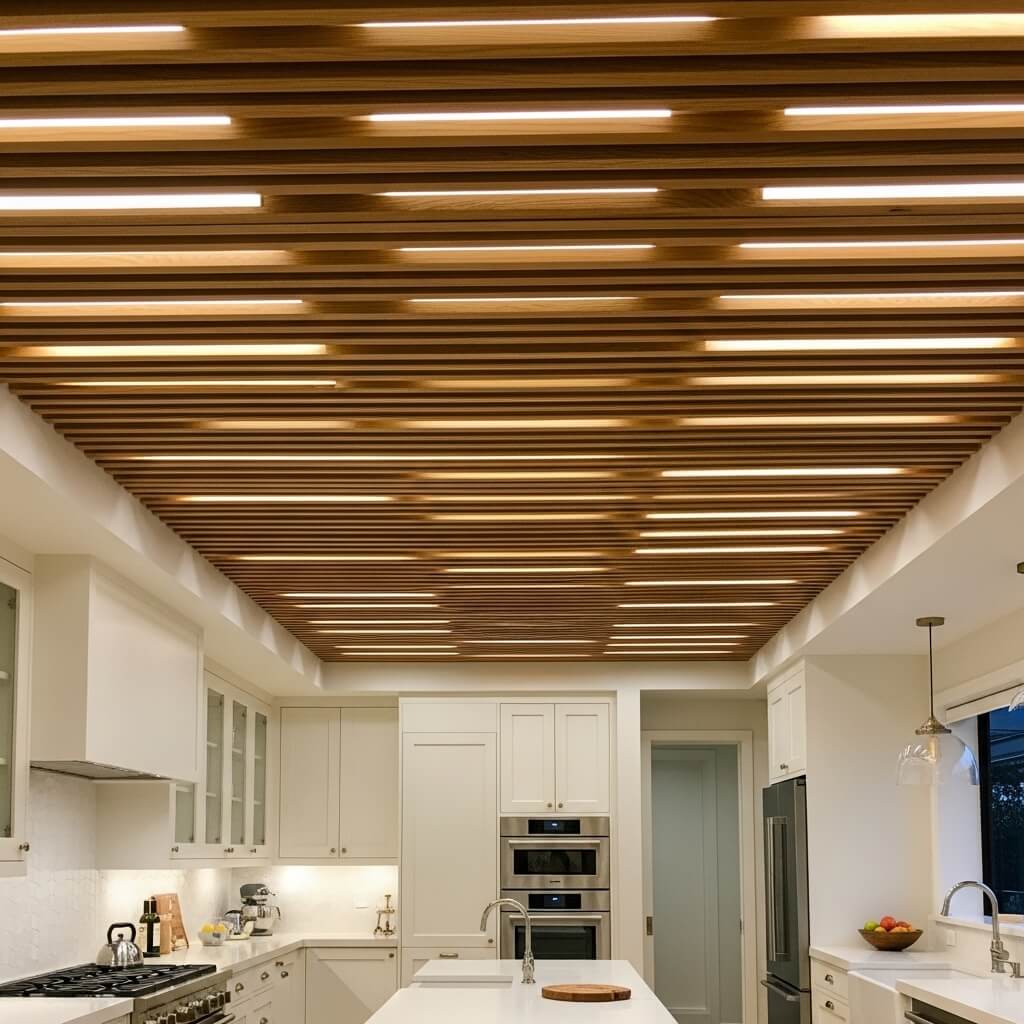
A warm timber batten false ceiling — regularly spaced wood strips of consistent profile creating a rhythmic pattern across the overhead plane — is the kitchen ceiling treatment that creates the greatest warmth and the most immediate atmospheric transformation from the simplest possible construction, because the combination of natural wood grain and the specific rhythm of repetitive form creates a ceiling surface with genuine visual depth and genuine material warmth that any painted surface, however carefully colored, fails to approach. The batten ceiling doesn’t try to disguise the kitchen’s constructed reality; it celebrates it, creating a ceiling that reads as deliberately designed and specifically crafted rather than simply finished.
The specific spacing of the battens is the design decision that most determines the ceiling’s visual character and its acoustic performance — battens spaced tightly (one inch apart) create a nearly continuous wood surface that reads as a wood-paneled ceiling with thin reveals; battens spaced generously (four to six inches apart) create a ceiling where the white substrate reads as prominently as the wood, creating a lighter, more contemporary quality; battens at the intermediate spacing of two to three inches create the most balanced composition where wood and white exist in genuine visual conversation. The intermediate spacing also creates the best acoustic absorption — the irregular surface of alternating wood and void breaks up sound reflections more effectively than either a continuous wood surface or widely spaced battens.
2. Coffered False Ceiling — Classical Formal Architecture Overhead
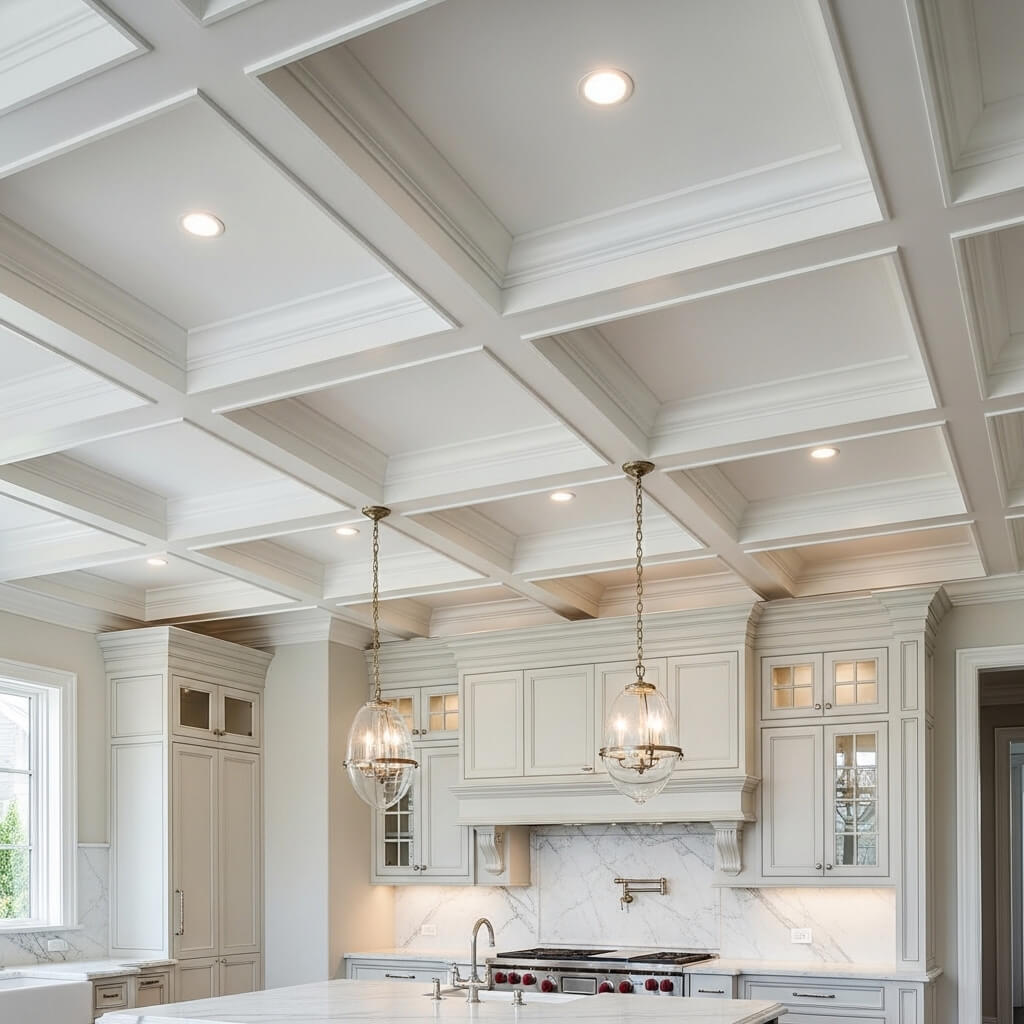
A coffered false ceiling — a grid of recessed rectangular panels created by intersecting beams — is the kitchen ceiling treatment with the deepest historical pedigree and the most formal architectural presence, because the coffered ceiling has been the ceiling of choice in the most significant domestic and civic interiors of the Western architectural tradition for over two thousand years, appearing in the finest Roman villas, Renaissance palazzi, and Georgian English houses as the ceiling treatment that communicates the highest level of architectural ambition and the most serious commitment to interior design as a complete spatial art. Bringing a coffered ceiling to a kitchen — historically the service space where such architectural ambition was not applied — creates a room of deliberately subverted convention that reads as bold and confident rather than appropriate and expected.
The proportion of the individual coffers is the specific design decision that determines whether the coffered ceiling reads as correctly architectural or as awkwardly scaled — coffers that are too small relative to the ceiling’s overall area create a fussy, over-detailed surface; coffers that are too large create a clumsy geometry that lacks the refinement of properly proportioned coffering. The classical proportion for a coffer is approximately one-and-a-half to two times longer than it is wide, and the beam width should be approximately one-fifth to one-sixth of the coffer’s shorter dimension — proportions derived from centuries of architectural practice and specifically calibrated to create the quality of visual balance and repose that makes the coffered ceiling feel correct rather than forced.
3. Dramatically Dark Painted False Ceiling — Intimate Enclosure From Above
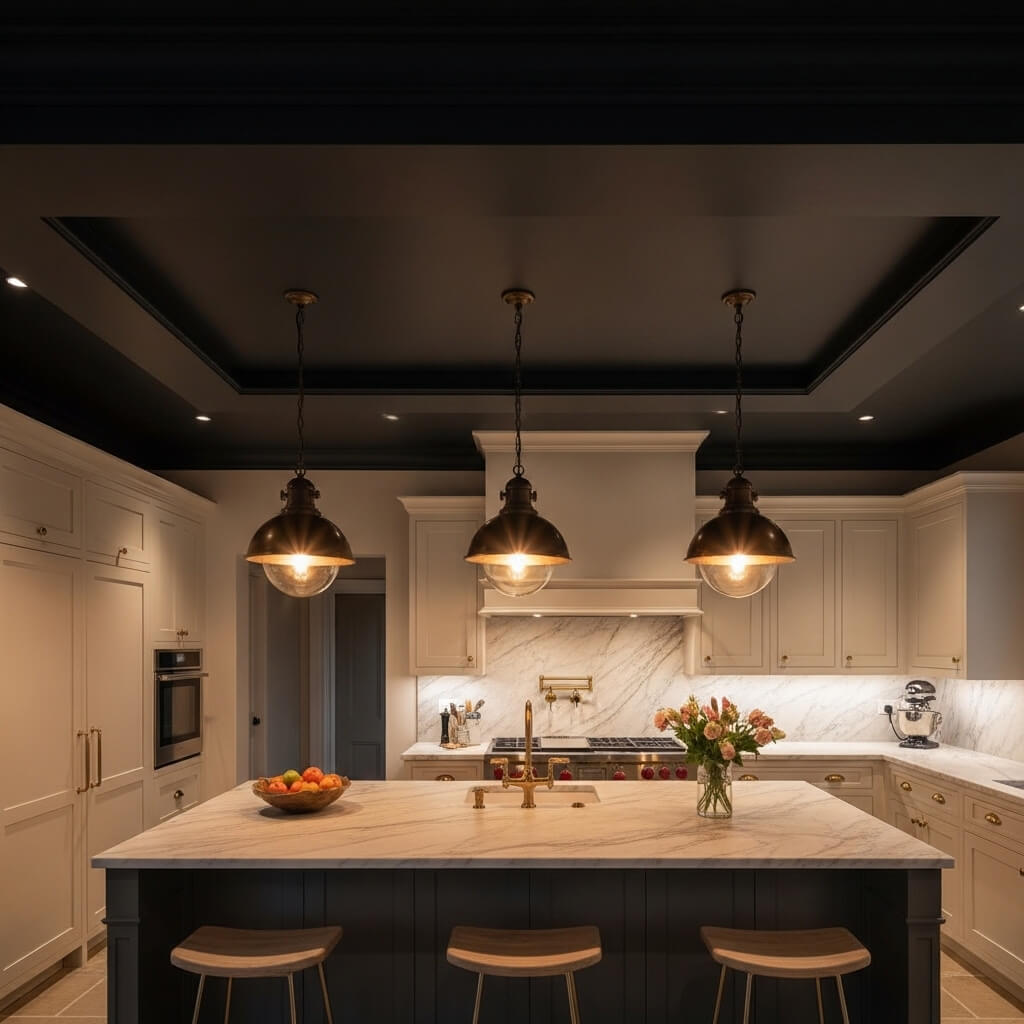
A dramatically dark false ceiling — painted in deep charcoal, midnight navy, or forest green — creates the kitchen ceiling treatment that most powerfully inverts the conventional spatial logic of domestic rooms and in doing so creates a kitchen of extraordinary atmospheric quality and genuine visual drama. The conventional logic says that kitchen ceilings should be white to maximize light reflection and create the sense of openness and hygiene associated with food preparation spaces; the dark ceiling logic says that the kitchen’s ceiling, like the sky above an outdoor evening table, can be dark and intimate and create a quality of enclosure that draws people toward the warmth of the light sources rather than upward toward a reflective white plane.
The specific warmth of the dark ceiling color is the detail that most determines whether the dark ceiling creates a kitchen of atmospheric luxury or a kitchen that simply feels oppressive and underlit — a cool dark grey or cool dark blue creates a ceiling that reads as architecturally severe, potentially cold, and potentially depressing in the kitchen’s morning use; a warm dark charcoal or warm dark navy with brown undertones creates a ceiling that reads as warm and enveloping in any light quality, creating the same quality of intimate overhead enclosure in morning light that it creates in warm evening lamplight. The warm undertone is the non-negotiable specification.
4. Illuminated Cove Ceiling — Invisible Light, Visible Atmosphere
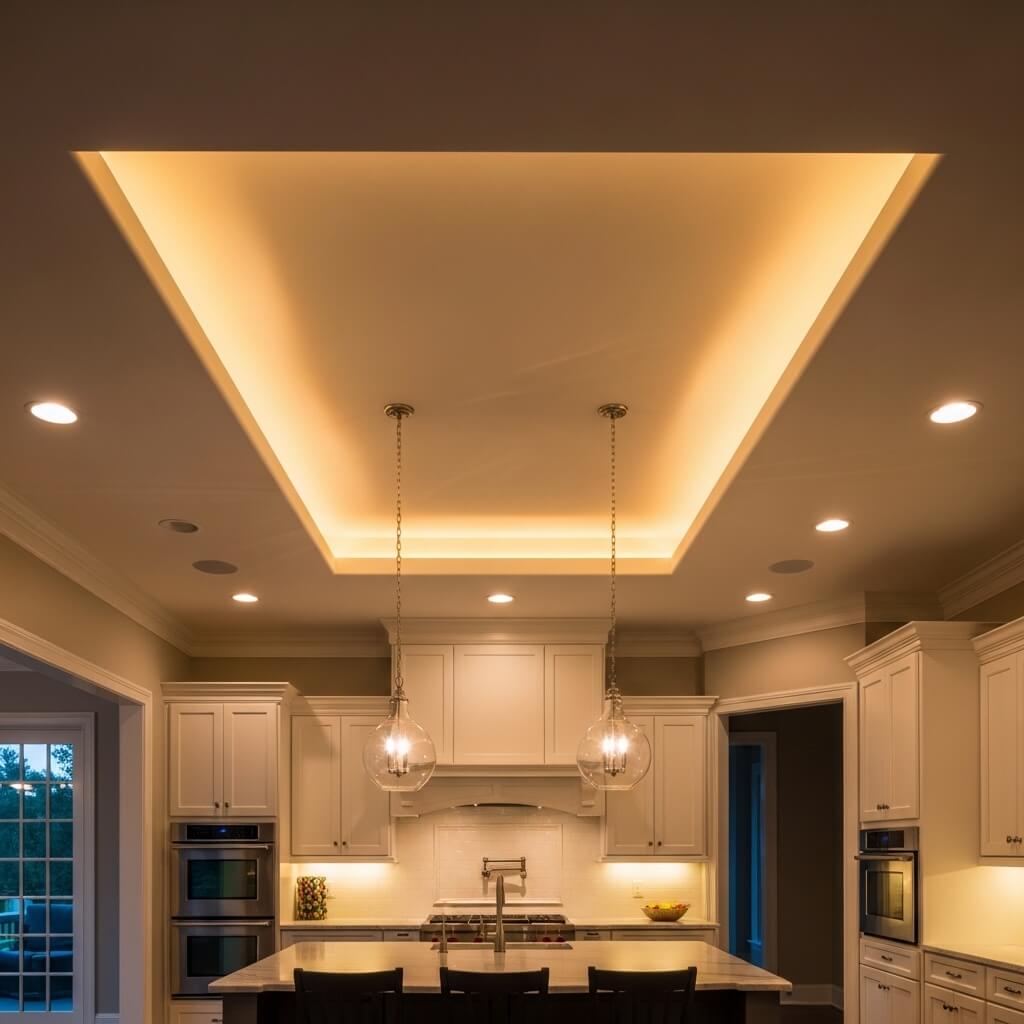
An illuminated cove ceiling — where LED strip lighting concealed within a perimeter recess directs light upward onto the ceiling plane, creating indirect ambient illumination without visible fixtures — is the kitchen lighting and ceiling treatment that creates the most sophisticated and most flattering ambient light available, because indirect ceiling lighting illuminates the room by first illuminating the ceiling and allowing the ceiling to become the light source rather than a fixture being the light source. The perceptual difference between a room illuminated by visible fixtures and a room illuminated by an indirect ceiling wash is immediately felt even when not consciously analyzed — the indirect light creates a quality of ambient warmth that feels natural and enveloping, while visible fixtures create pools of light surrounded by relative darkness that the brain reads as more functional and less atmospheric.
The color temperature of the LED strip lighting within the cove is the specification that most determines the cove’s contribution to the kitchen’s atmosphere — warm white at 2700K creates the amber quality of warm candlelight that makes every material in the kitchen appear warmer and more beautiful, while cool or neutral white at 4000K or above creates a clinical quality of indirect light that defeats the atmospheric purpose of the indirect treatment. The cove’s power as an atmospheric element is entirely dependent on the warmth of the light it contains, and investing in the correct color temperature specification is the most important technical decision in cove ceiling installation.
5. Open Structural Beam False Ceiling — Engineered Warmth From Above
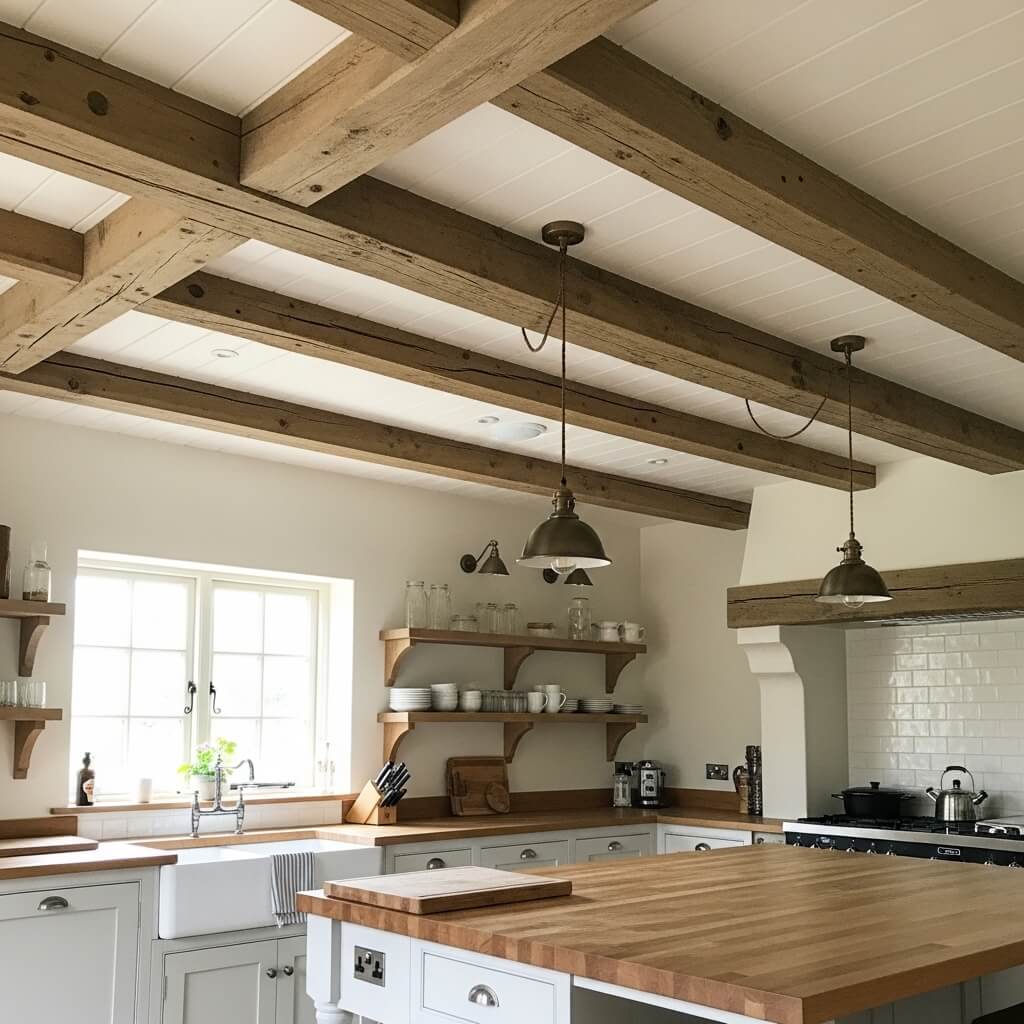
A false structural beam ceiling — beams of genuine visual weight and authentic material character installed as a false ceiling treatment where no structural beams exist — creates the kitchen ceiling treatment with the most powerful connection to the long tradition of the working kitchen in historic domestic architecture, where visible structural timbers were simply the ceiling’s natural condition rather than a designed aesthetic choice. The false beam ceiling brings this quality of honest, material authenticity to contemporary kitchens that lack the structural reality of genuine timber framing, and when executed with genuine attention to material quality and proportion, it creates a ceiling of atmospheric warmth and architectural character that’s indistinguishable from the genuine article.
The material quality of the beam is the specific decision that most determines whether false beams read as genuinely architectural or as obviously decorative — hollow polyurethane beams painted to look like wood read as fake from close inspection despite their convincing appearance at distance; solid timber beams with genuine grain and genuine texture read as authentic at every scale of observation because they are authentic. The investment in genuine reclaimed timber or in high-quality solid wood beams rather than manufactured alternatives is the investment that creates a kitchen ceiling of lasting beauty and genuine material character rather than a kitchen ceiling that requires the distance of photography to appear convincing.
6. Layered Soffit Design — Functional Architecture as Aesthetic Statement
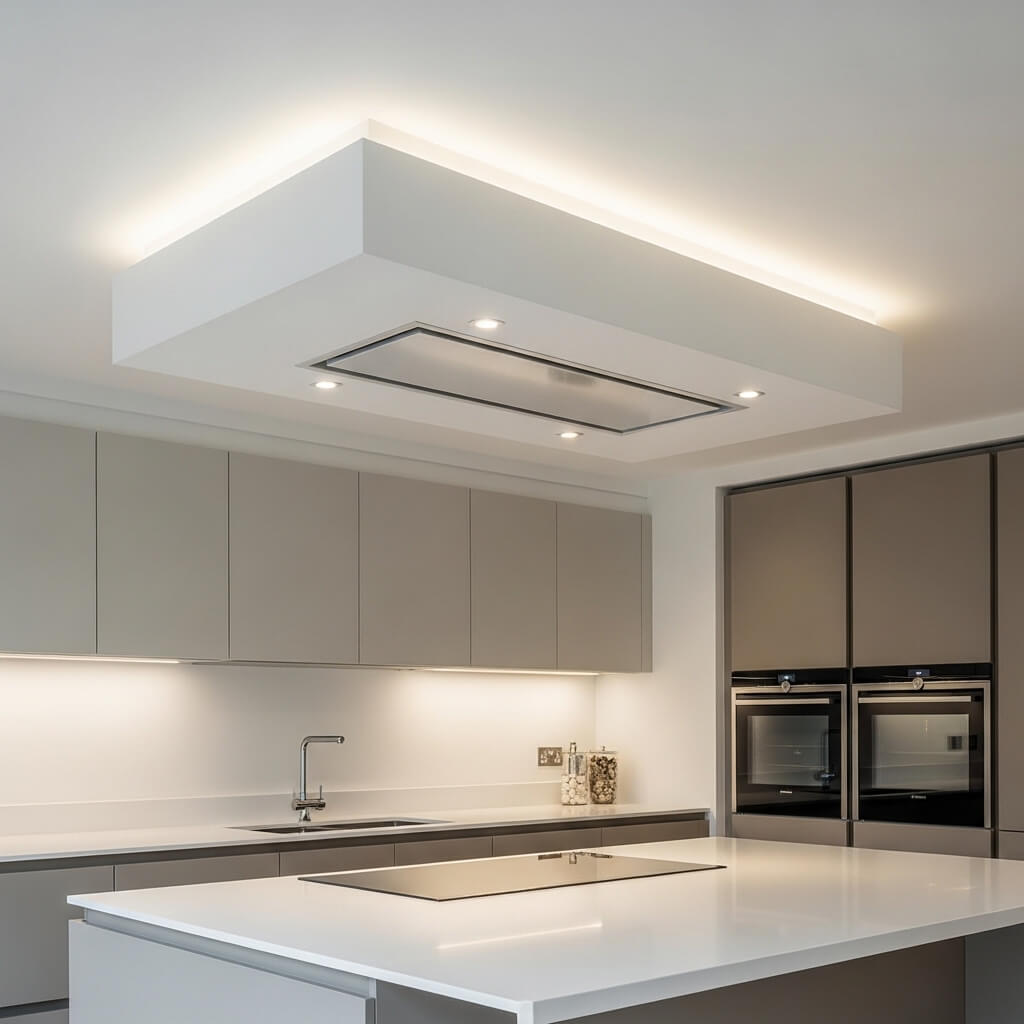
A layered soffit design — where the functional requirements of kitchen ventilation, task lighting, and electrical infrastructure are housed within specifically designed architectural soffit elements rather than concealed in a uniform dropped ceiling — creates the kitchen false ceiling treatment that most completely integrates function and aesthetics by making the functional requirements themselves into designed architectural elements of genuine visual quality. The soffit is not a ceiling box that conceals infrastructure; it’s a designed architectural element that expresses infrastructure in the most honest and most beautiful possible way.
The specific design quality of the soffit face is the detail that most determines whether the layered soffit reads as a designed architectural element or simply as a practical ceiling box — a soffit with a clean, precisely finished face in the same material as the adjacent cabinetry, with sharp, accurate corners and a consistent projection from the wall, reads as architecturally intentional; a soffit with imprecise corners, inconsistent projection, and a differently finished face reads as a construction necessity. The investment in precision at the soffit edges and corners — the specific quality of the transition from soffit face to ceiling plane — is the craftsmanship investment with the highest visual return in kitchen false ceiling construction.
7. Metallic and Reflective Panel Ceiling — Contemporary Drama From Above
A metallic or reflective panel ceiling in a kitchen — brushed stainless steel, copper, brass panels, or mirror-quality reflective material — creates the kitchen ceiling treatment with the most dramatic visual impact and the most specifically contemporary character, because the reflective ceiling simultaneously performs three distinct design functions that no other ceiling treatment achieves simultaneously. It creates a surface of genuine visual interest through the reflections it contains; it multiplies the kitchen’s apparent vertical dimension by creating a reflected version of the room above the actual room; and it responds dynamically to every change in the kitchen’s lighting and activity, creating a ceiling that’s different at every moment of the day rather than the static surface that painted or paneled ceilings provide.
The specific metallic finish selected — brushed versus polished, steel versus copper versus brass — determines both the quality of the reflections and the color temperature of the ceiling’s contribution to the kitchen’s palette. Brushed stainless creates a cool, precise, softly reflective quality that suits contemporary and industrial aesthetics; brushed copper or brass creates a warm, amber-toned reflective quality that suits warmer, more organic kitchen aesthetics; polished stainless creates a mirror-quality reflection that creates the most dramatic spatial effect but also requires the most maintenance to keep free of fingerprints and water spots. For kitchen use where steam and grease are environmental realities, the brushed finish is both the more forgiving maintenance choice and often the more beautiful aesthetic one.
8. Heritage Pressed Tin Ceiling — Historical Character at Maximum Scale
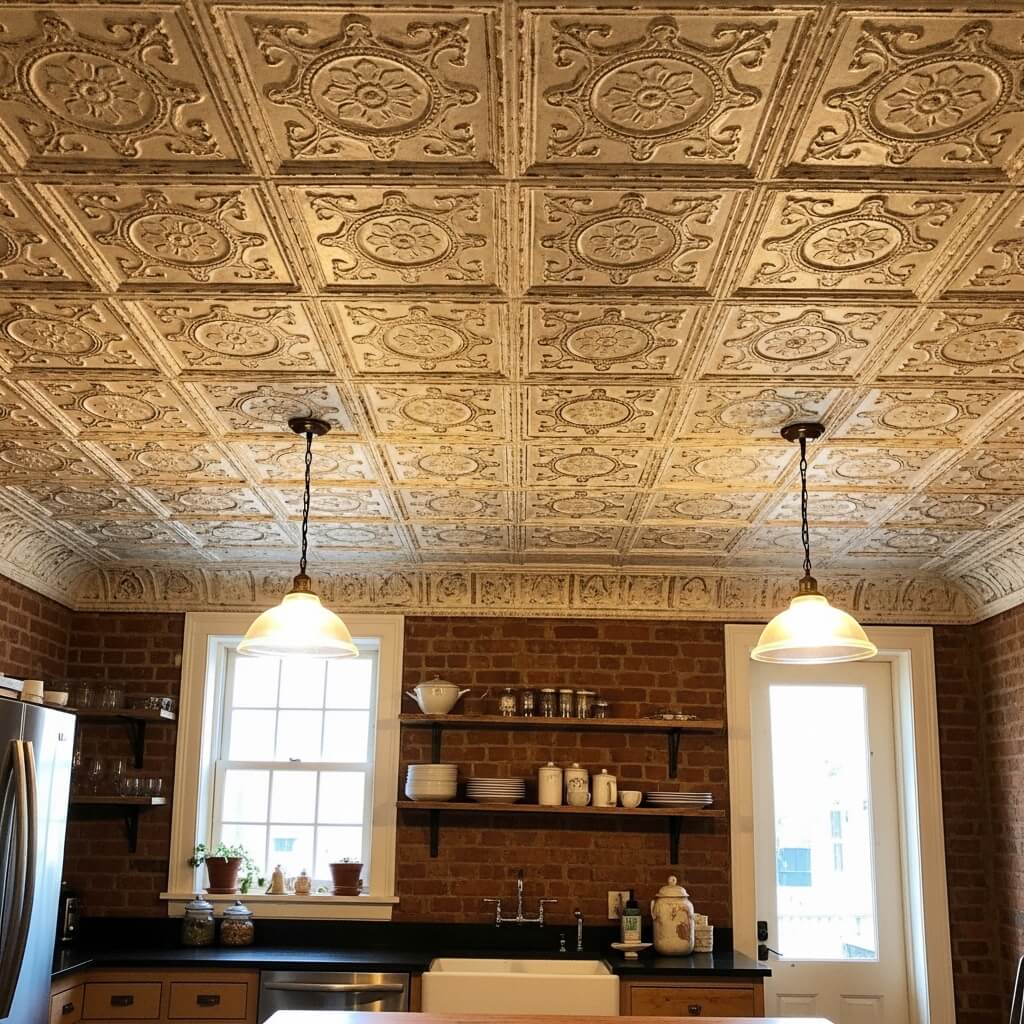
A heritage pressed tin ceiling — the embossed metal ceiling panels that became the defining ceiling treatment of late nineteenth and early twentieth century commercial and domestic American architecture — creates the kitchen ceiling with the most specifically historical character and the most completely authentic connection to a specific architectural tradition, because pressed tin was genuinely used in kitchens, shops, saloons, and domestic spaces across America for nearly a century and carries the specific atmospheric quality of that long use history in its embossed patterns and its aged patina. A pressed tin ceiling in a contemporary kitchen creates the most direct and most materially honest connection to that tradition available.
The installation quality of pressed tin ceiling is the specific technical factor that most determines the ceiling’s final visual quality — pressed tin panels that are installed on a level, properly prepared substrate with consistent joint treatment and appropriate panel sequence create a ceiling of genuine visual order and architectural quality; tin panels installed on an uneven substrate with inconsistent joints and poor panel alignment create a ceiling that emphasizes the constructional difficulty of the treatment rather than its historical beauty. The substrate preparation — ensuring the ceiling plane is perfectly level and true before any panels are installed — is the investment in preparation that determines the quality of the result more than any subsequent installation decision.
9. Integrated Smart Lighting Ceiling — The Complete Overhead System
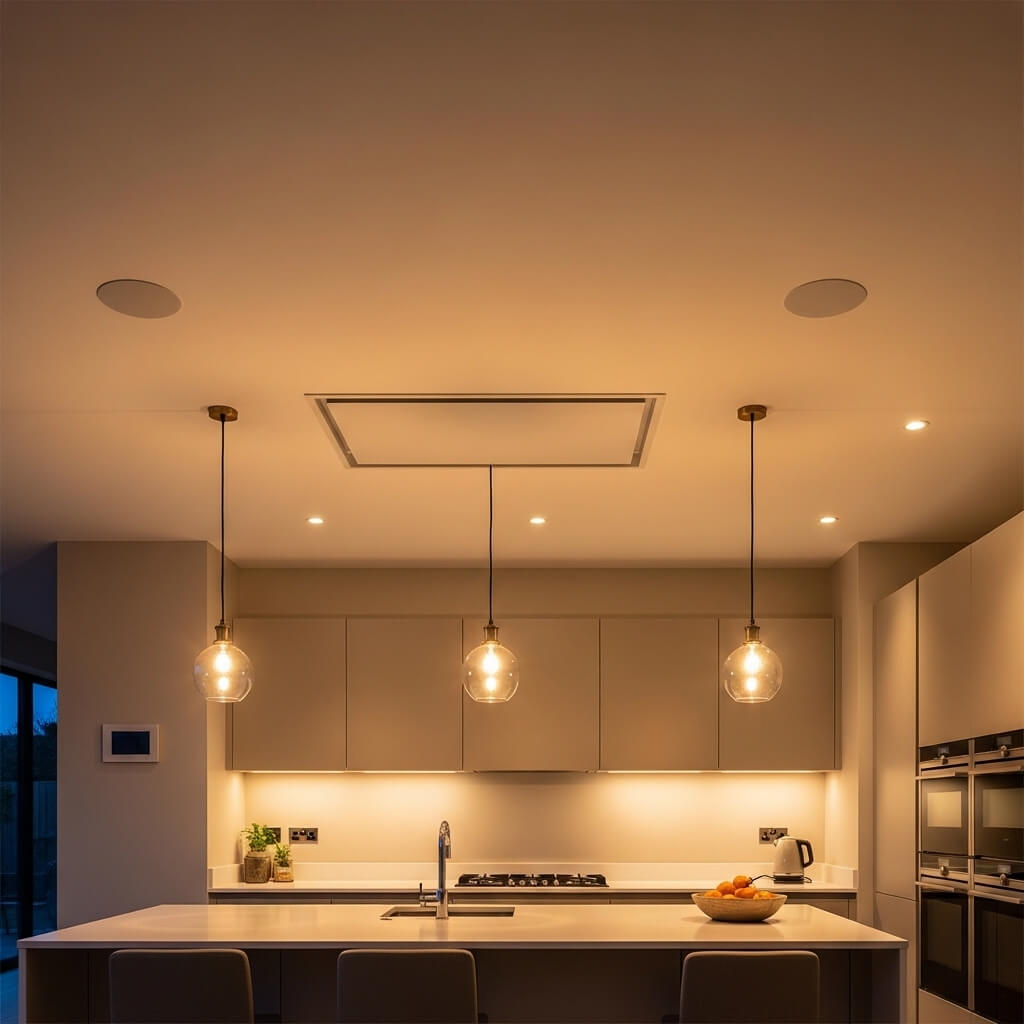
An integrated smart lighting ceiling — where the kitchen’s complete lighting system is designed as a unified overhead element using smart LED fixtures capable of changing intensity, color temperature, beam angle, and distribution in response to different kitchen activities and times of day — creates the kitchen ceiling treatment with the most functional sophistication and the most complete integration of lighting design with ceiling design. The smart lighting ceiling treats the overhead plane not as a location for individual fixtures but as a complete lighting instrument that can be programmed to create different lighting environments for breakfast preparation, afternoon cooking, dinner service, entertaining, and cleaning with the activation of a single scene preset.
The scene programming is the specific investment in a smart ceiling system that most determines its long-term value and its daily functional quality — a smart lighting system without thoughtfully programmed scenes is simply an expensive dimmer; a smart lighting system with carefully developed scene presets for the kitchen’s actual daily activities creates a kitchen that’s better lit for every activity it accommodates throughout the day. The development of scene presets that genuinely serve the kitchen’s specific activities — bright, cool task light for morning prep; warm, slightly dimmer midday ambient for casual use; warm, focused illumination over the island for dinner service — is the design work that transforms a smart lighting installation from a technical achievement into a genuine daily quality-of-life improvement.
10. Stretch Ceiling — The Seamless Contemporary Membrane
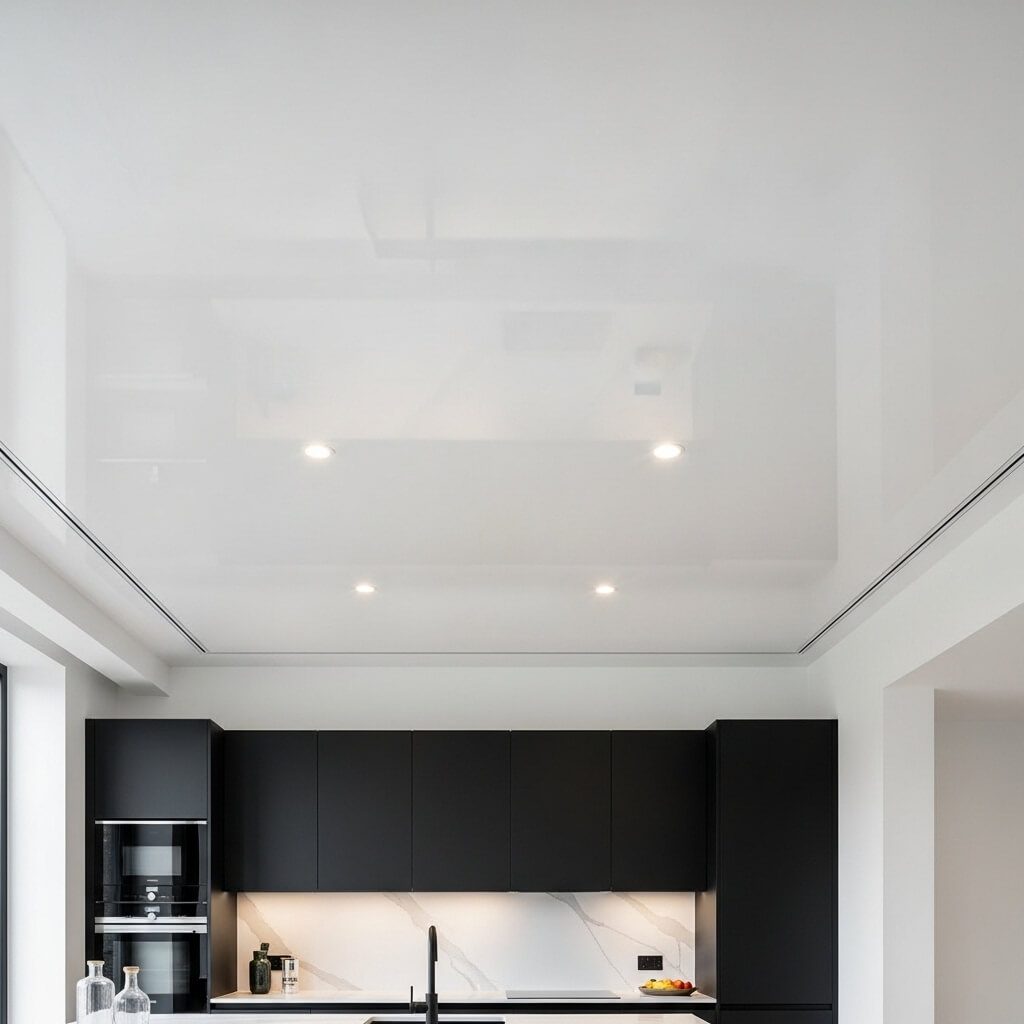
A stretch ceiling — a PVC or polyester membrane stretched taut over an aluminum perimeter track to create a perfectly smooth, perfectly seamless ceiling surface — creates the kitchen ceiling treatment with the most complete visual resolution and the most specifically contemporary architectural character, because the stretch ceiling eliminates every visual interruption — every joint, every texture variation, every fixture frame — that other ceiling treatments necessarily introduce, creating an overhead plane of absolute visual calm that reads as specifically designed and specifically intentional in a way that the inevitable imperfections of conventional plastered or drywall ceilings can never quite achieve.
The specific qualities that make stretch ceilings particularly valuable in kitchen environments — beyond their extraordinary visual cleanliness — are practical rather than purely aesthetic: the membrane is fully waterproof, protecting the structural ceiling above from steam, cooking moisture, and any plumbing failures above; it’s completely wipeable with standard kitchen cleaners, making the ceiling as cleanable as any other kitchen surface; and the perimeter track creates a void between the membrane and the structural ceiling that can house all electrical, mechanical, and ventilation infrastructure invisibly, eliminating the need for soffits or exposed ducting that other kitchen ceiling approaches must accommodate through separate designed elements. The stretch ceiling is the kitchen ceiling solution that solves every practical kitchen ceiling problem simultaneously while creating a surface of extraordinary visual quality.