10 Outdoor Balcony Ideas That Transform the Smallest Outdoor Space Into the Most Used Room in Your Home
If your balcony is currently serving as the place where things that don’t belong inside get moved when you can’t think where else to put them — the storage overflow zone, the unused square footage that your lease technically includes but your life practically doesn’t — or if it’s a space you step onto occasionally to check the weather and then step back inside because there’s nowhere comfortable to sit and nothing specifically inviting about the experience of being out there, this guide covers every significant approach to transforming that outdoor space into somewhere you genuinely want to spend time. The ten ideas here span the complete range of what balcony design can achieve at every scale and every budget: from the classic European bistro configuration that creates the most intimate and most specifically beautiful small balcony experience with the simplest possible setup, through the full outdoor living room with weather-resistant sectional and all the indoor comforts moved outside, the vertical garden wall that turns a bare railing and wall into a lush botanical installation, the Japanese-inspired zen balcony that creates the most meditative and most architecturally precise outdoor room in the smallest footprint, the evening-focused candlelit and lantern-lit balcony that creates its most extraordinary atmosphere after dark, the kitchen garden balcony that turns every square inch of the outdoor space into productive growing space for food and herbs, the privacy-focused balcony room that creates genuine enclosure and intimacy in an exposed urban setting, the bohemian layered textile balcony that creates warmth and personality through accumulated fabric and pattern, the minimalist Scandinavian balcony that creates the most peaceful and most architecturally resolved small outdoor space, and the complete urban outdoor room that addresses every sensory and functional quality of genuinely great outdoor living within the constraints of apartment balcony scale.
I’ve lived in apartments with balconies for long enough to understand intimately the gap between what a balcony is and what it could be — and more specifically, the specific psychological barrier that prevents most people from closing that gap. The barrier isn’t money, though people often frame it that way. The barrier is the conviction that a small outdoor space isn’t worth the investment — that the balcony’s limited square footage, its exposure to neighbors and street noise, its vulnerability to weather, and its distance from the kitchen and the bathroom make it fundamentally less worth designing than any interior room. This conviction is wrong in the most interesting possible way, because balconies occupy a specific spatial category — simultaneously inside and outside, private and urban, enclosed and open — that interior rooms simply cannot replicate, and the specific qualities of that category are precisely what makes a well-designed balcony the most used and most loved space in many apartments. The person who designs their balcony well uses it more than any other room in their apartment during the months when outdoor use is possible, and those months compound over years into an extraordinary quantity of genuinely pleasurable time spent in a space that required far less investment than any interior renovation.
What makes balcony design specifically different from interior room design — and what makes most balcony design fail even when the individual elements are appropriate — is the outdoor room quality, the specific sense that the balcony is a complete room rather than a ledge attached to the apartment. Outdoor room quality in a balcony context comes from the same elements that create room quality in any context: overhead enclosure or the suggestion of it, defined floor treatment that creates a visual ground distinct from the building structure, seating that creates a reason to stay rather than simply a surface to perch on, lighting that creates evening atmosphere, planting that creates the botanical enclosure of a garden, and the specific quality of having been designed rather than simply having been equipped. These qualities, applied to even the smallest balcony, create the outdoor room that changes how the apartment feels from inside — the apartment that has a beautiful balcony feels larger and more generous than its square footage, because the balcony extends the psychological boundary of the living space into the outdoor world.
1. The Classic European Bistro Balcony — Intimate Beauty at the Smallest Scale
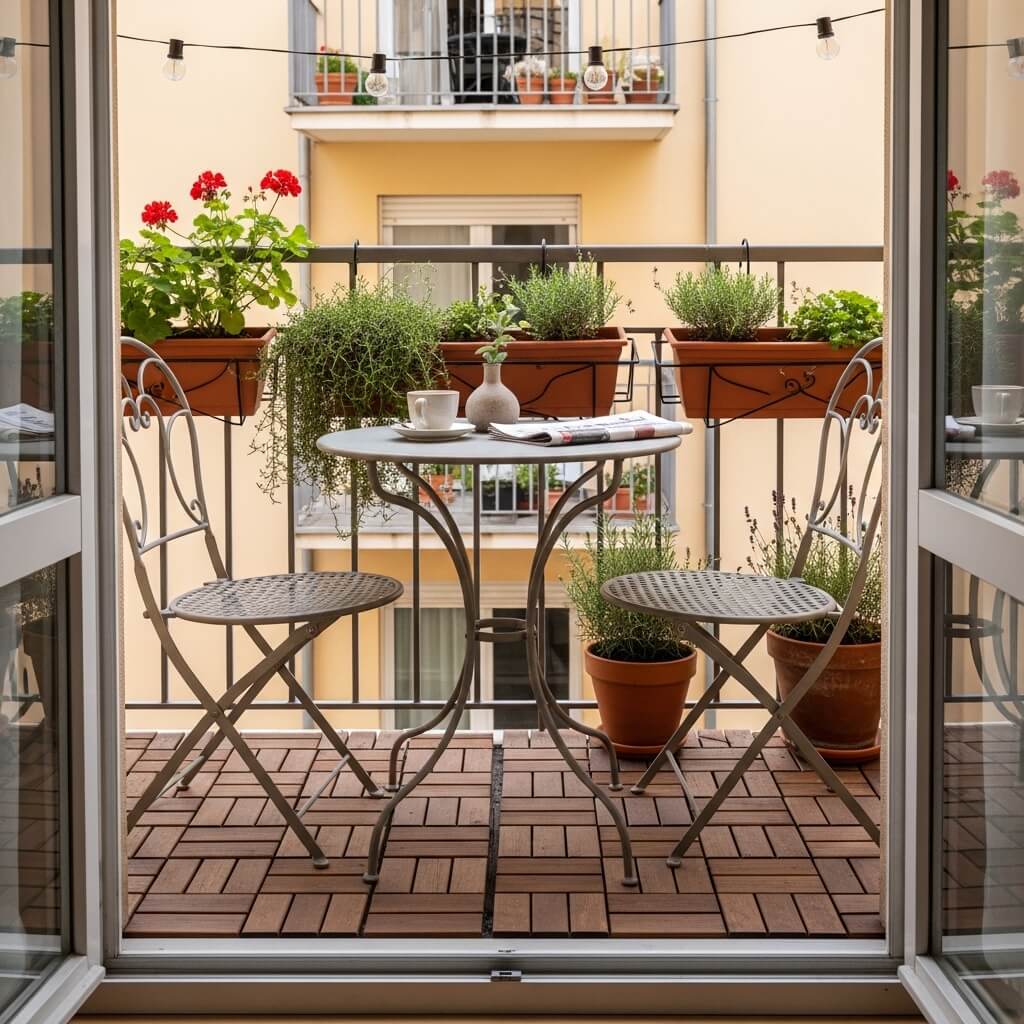
The classic European bistro balcony — a small round metal table and two bistro chairs at the railing, oriented toward the view — is the balcony configuration that creates the most complete and most specifically beautiful outdoor experience in the smallest possible footprint, because it’s a configuration developed over centuries of Parisian and Mediterranean apartment life specifically for the condition of a small urban balcony overlooking a street or courtyard. The bistro configuration works in balconies of twenty-five square feet where no other seating configuration can function at all, and it works beautifully — the specific intimacy of a round table for two at the railing, where the city is the view and the coffee is the occasion, creates one of the most specifically pleasurable experiences available in urban living.
The aged metal finish of the French bistro set is the material quality that most distinguishes a bistro balcony of genuine character from one that merely has small outdoor furniture — the specific warm grey of aged powder-coated steel or the natural patina of genuine iron creates the material connection to the Parisian café tradition that a bright white or clean contemporary bistro table doesn’t provide. The material aging itself is beautiful, the specific grey-brown of weathered metal against geranium red and terracotta being one of the most consistently photographed and most consistently admired color combinations in all of outdoor design.
2. The Full Outdoor Living Room — Indoor Comfort Moved Outside
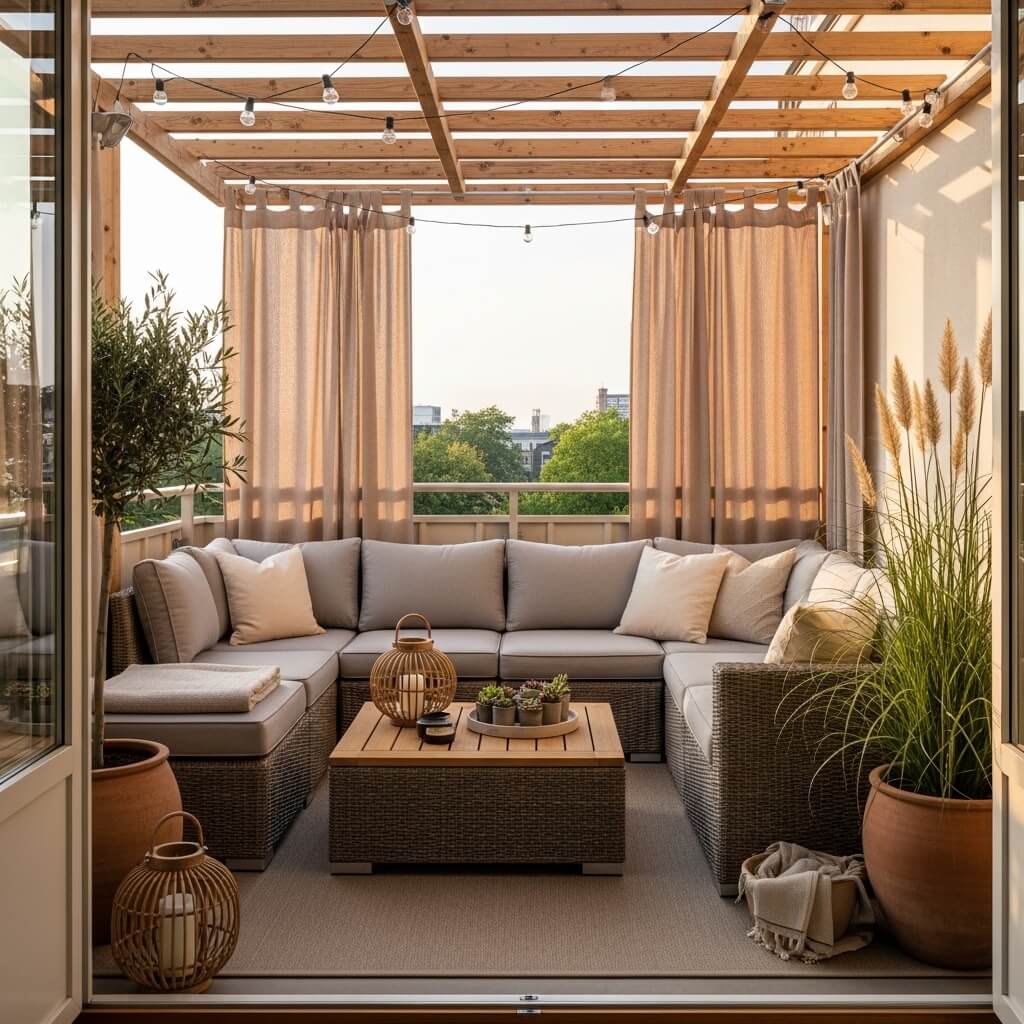
A full outdoor living room balcony — where weather-resistant furniture of genuine scale and genuine indoor-quality comfort creates a seating arrangement that functions as an exterior room rather than an outdoor ledge — creates the balcony experience with the highest daily use and the most consistent lifestyle impact, because the comfort and the completeness of the setup remove every friction between the impulse to go outside and the quality of the experience of being outside. When the seating is genuinely comfortable, when there’s a surface for the coffee and the book, when the lighting creates evening atmosphere, and when the planting creates botanical enclosure, the balcony stops competing with the interior of the apartment and starts competing favorably.
The specific quality of the cushion fabric is the material specification that most determines whether an outdoor living room balcony achieves genuine indoor-quality comfort or simply approximates it — performance fabrics like Sunbrella and its equivalents in their best grades have a hand feel and a visual quality that approaches quality interior upholstery fabric while maintaining complete weatherproofness and UV resistance, while budget outdoor cushion fabrics feel plastic and read as outdoor equipment rather than comfortable seating. The investment in quality performance fabric cushions on a weather-resistant frame creates an outdoor seating arrangement that guests sit in and immediately feel the quality of, rather than accommodating themselves to the limitations of.
3. The Vertical Garden Wall — Botanical Abundance in Zero Floor Space
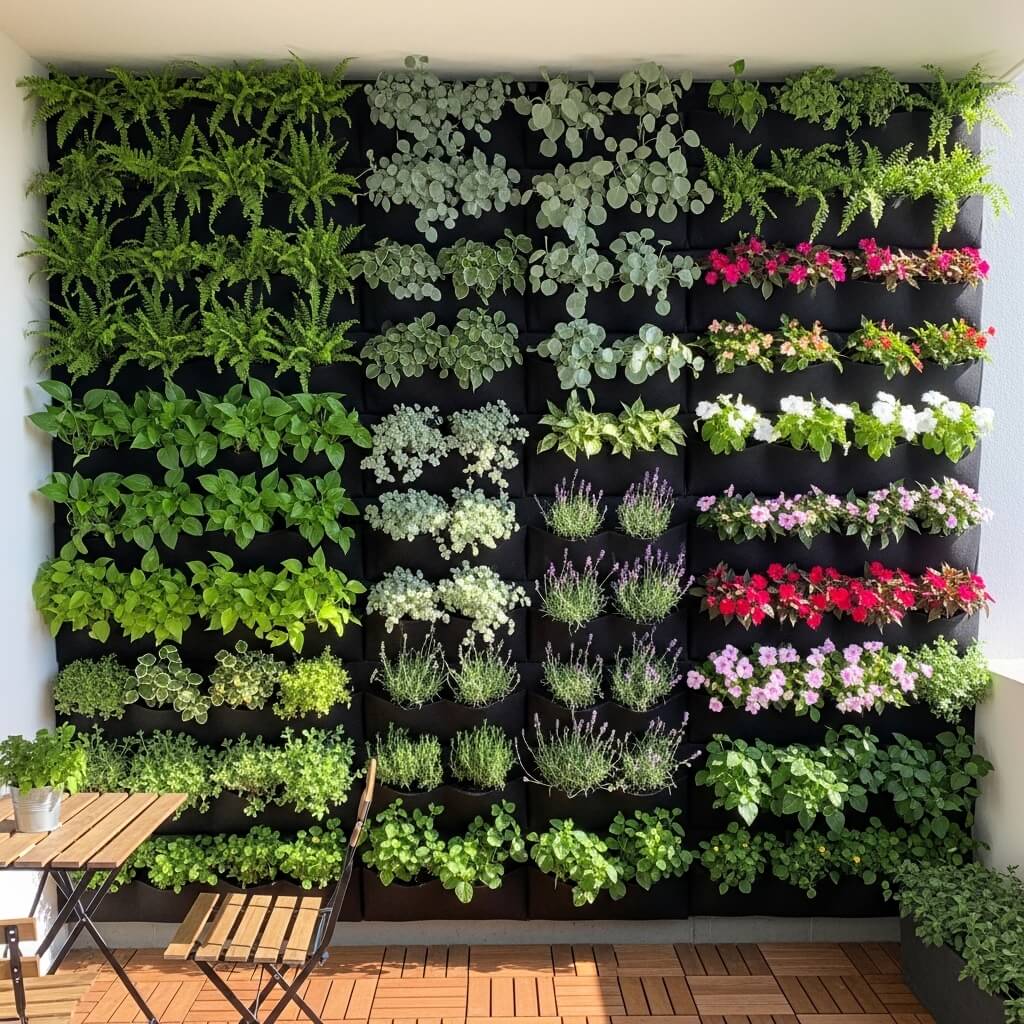
A vertical garden wall — a modular planting system installed on the balcony’s primary wall surface, creating a complete garden in the vertical dimension that uses no floor space — creates the balcony transformation with the most dramatic botanical impact per square foot of balcony floor, because it converts the largest single surface in any balcony into a living, growing, changing ecosystem of genuine beauty and genuine abundance. The balcony with a vertical garden wall has more plant life than most ground-floor gardens, all achieved without occupying a single square inch of the precious floor area that a small balcony has so little of.
The irrigation consideration for a vertical garden wall is the practical specification that most determines whether the installation remains beautiful over time or becomes the source of constant frustration — a vertical garden with individual manual watering of each pocket requires an extraordinary amount of daily attention on hot summer days when the small soil volume in each pocket dries quickly; a vertical garden with a simple drip irrigation system connected to a timer provides the consistent moisture that vertical garden plants require without daily intervention. The investment in even a simple drip system — a timer, a small-diameter supply line, and individual drippers to each pocket level — is the investment that makes the vertical garden a source of ongoing pleasure rather than ongoing obligation.
4. The Japanese Zen Balcony — Meditative Precision in Minimal Space
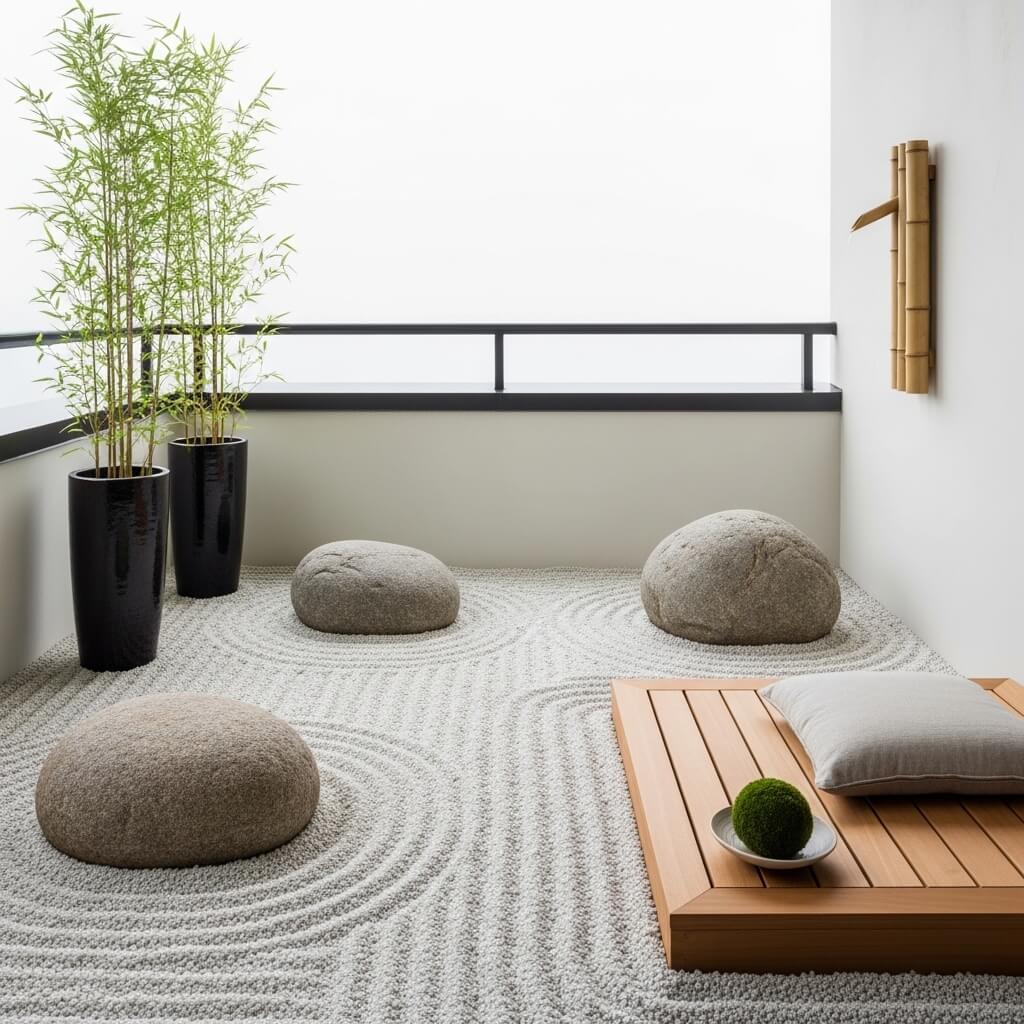
A Japanese zen balcony — designed on the principles of Japanese garden aesthetics, where raked gravel, carefully positioned stones, minimal planting, and the deliberate use of empty space create a meditative outdoor environment — creates the balcony configuration with the most restorative psychological quality and the most specifically designed sense of outdoor peace. The Zen garden principle that emptiness is not the absence of design but the presence of considered space is the specific principle that makes small balcony design most effective — a balcony with one large stone, two bamboo plants, and a raked gravel floor is more beautiful and more usable as a meditative space than the same balcony filled with many smaller objects.
The raked gravel is the material specification that most completely creates the Zen balcony’s specific quality — the gravel’s texture underfoot, the visual pattern of the rake lines, the way light plays across the slightly irregular gravel surface, and the specific meditative act of raking the pattern all contribute to the Zen quality that no other floor treatment creates. Fine white or pale grey granite gravel at approximately half-inch depth creates the best raking surface and the most beautiful appearance; coarser gravel is difficult to rake into clean patterns; pea gravel’s rounded shape creates unstable walking and sitting surfaces.
5. The Evening Balcony — Designed for After Dark
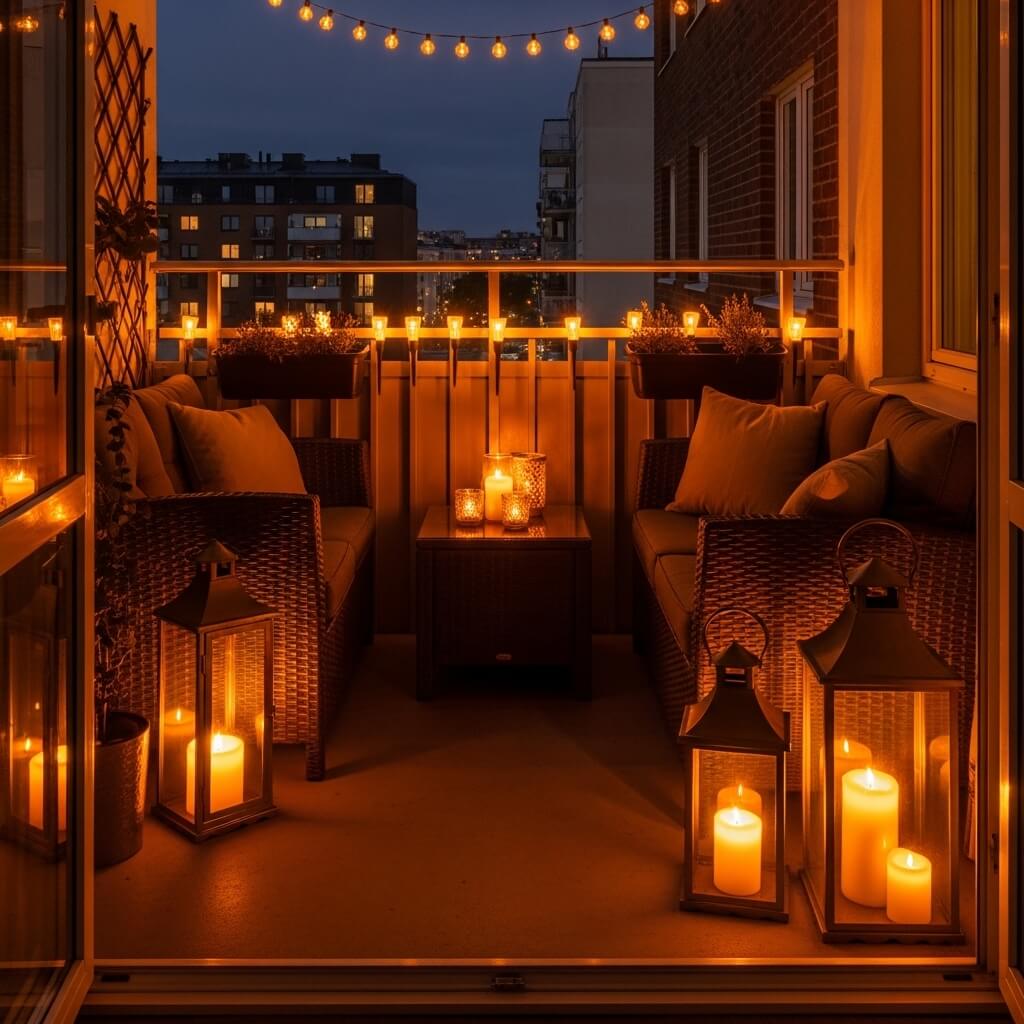
An evening-focused balcony — designed specifically for the experience of being outdoors after dark, where every design decision has been made in service of warm, atmospheric evening light rather than daytime functionality — creates the balcony with the highest quality of daily use in urban apartments where the hours available for balcony use are often the post-work evening hours rather than the daytime hours when most people are working. The evening-focused balcony doesn’t try to be pleasant during the day and also pleasant at night; it commits specifically to the evening experience and creates something genuinely extraordinary rather than generally adequate.
The candlelight and lantern combination is the specific lighting approach that creates the most atmospheric evening balcony — real candle flame in quality outdoor lanterns creates a quality of warm flickering light that no LED approximation replicates, and the movement of the flame in the outdoor air is itself a visual quality specific to outdoor candlelight that indoor candles don’t create with the same consistency. The investment in quality outdoor lanterns large enough to hold substantial pillar candles creates an evening light source of genuine beauty and genuine presence rather than the decorative gesture of small tea light holders.
6. The Kitchen Garden Balcony — Productive Beauty in Compact Form
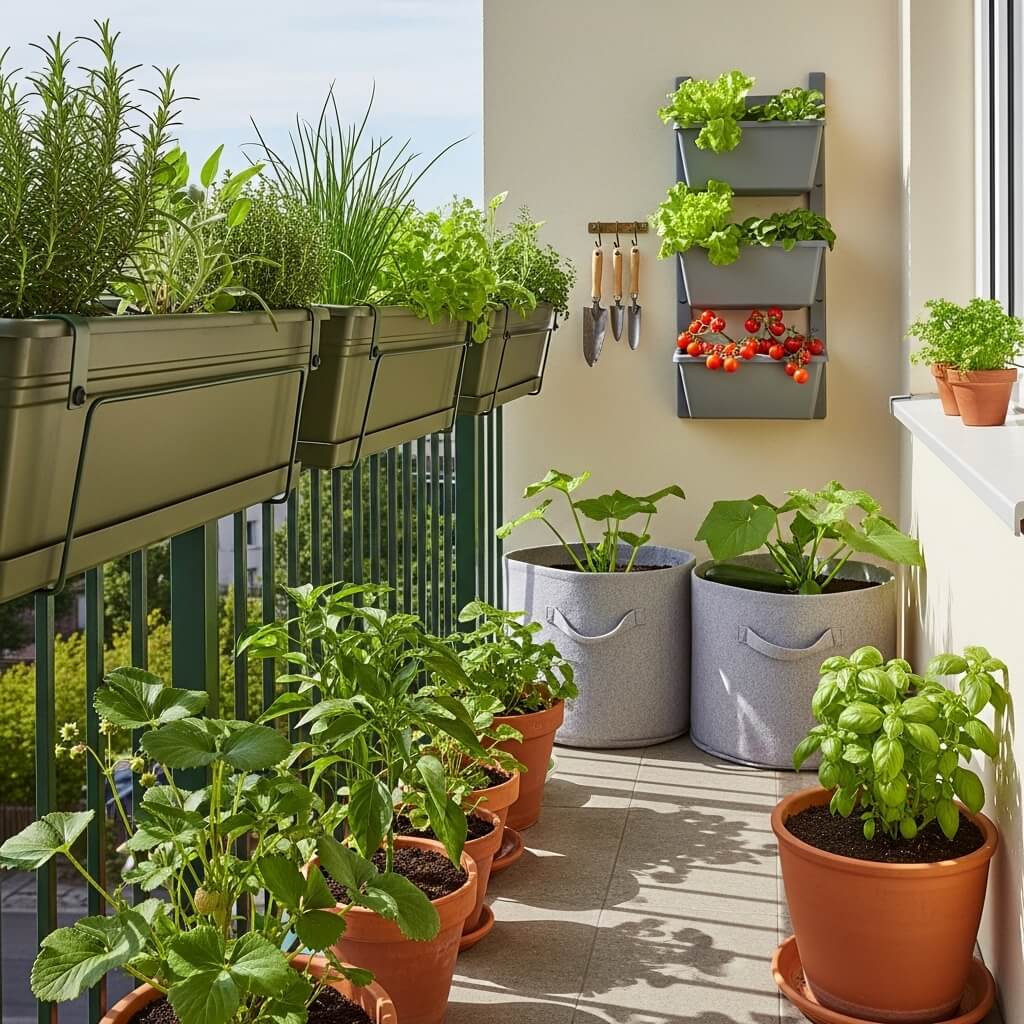
A kitchen garden balcony — where every available inch of growing space is used for food production rather than purely ornamental planting — creates the balcony with the most practical daily value and the most specific connection between the outdoor space and the kitchen it opens onto, because the kitchen garden balcony produces the fresh herbs and vegetables that go from balcony to plate within minutes, creating a quality of cooking freshness and a quality of connection to growing things that no grocery purchase replicates. The kitchen garden balcony is beautiful in the specific way that productive things done well are always beautiful — the beauty of real tomatoes ripening on a real plant, real herbs releasing their fragrance when brushed, real strawberries appearing at exactly the right moment.
The railing planter boxes are the specific installation that creates the most kitchen garden growing space per square foot of balcony floor — by attaching planter boxes to the top of the balcony railing, the growing surface is extended out over the railing rather than occupying the balcony floor, creating growing space in a location that was previously unusable. Good railing planter boxes designed for balcony rail attachment are available in powder-coated steel that weathers beautifully and adds visual quality to the railing line rather than simply sitting on top of it, and they create enough growing volume for substantial herb plantings that provide meaningful harvests throughout the growing season.
7. The Privacy Screen Balcony — Creating Room Quality Through Enclosure
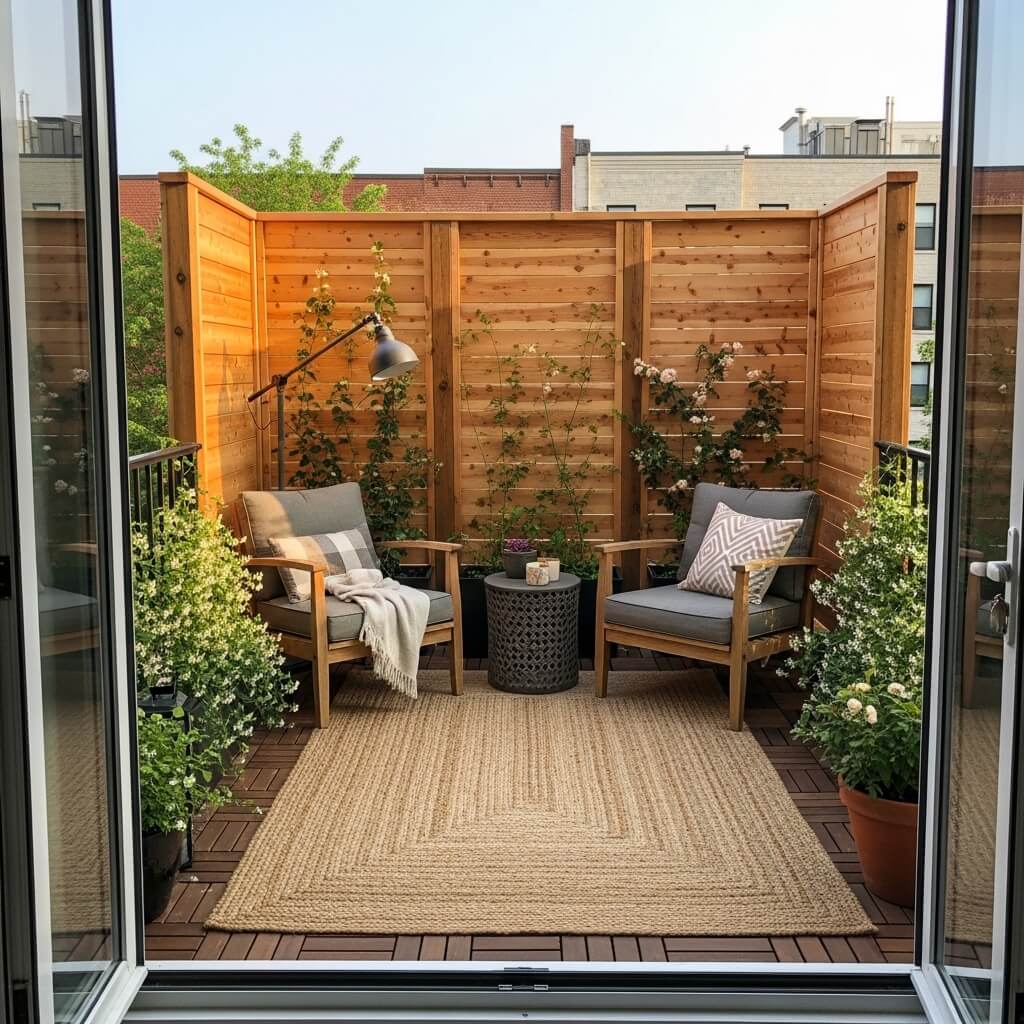
A privacy screen balcony — where cedar or timber screens create a three-sided enclosure around the most exposed sections of the balcony — creates the outdoor room quality that transforms the experience of being on the balcony from being on display in the urban environment to genuinely being in a private outdoor space. The privacy is not just visually valuable — it’s psychologically essential for the specific quality of genuine relaxation that a balcony that is seen by neighbors and passersby can never create. The enclosed balcony allows the specific quality of being outdoor and private simultaneously, which is precisely the quality that backyards provide and that most urban apartment balconies don’t.
The climbing plants established on privacy screens are the long-term investment that transforms the screens from a practical privacy solution into a genuine garden feature — after two or three seasons of establishment, jasmine or climbing roses covering the screen create a living wall of extraordinary fragrance and visual beauty that reads as a specifically designed garden element rather than a fence. The initial cost of three or four climbing plants established at the base of each screen section is minimal, and the annual growth creates progressively more beautiful coverage until the screen disappears entirely behind the plant.
8. The Bohemian Layered Textile Balcony — Warmth Through Accumulated Fabric
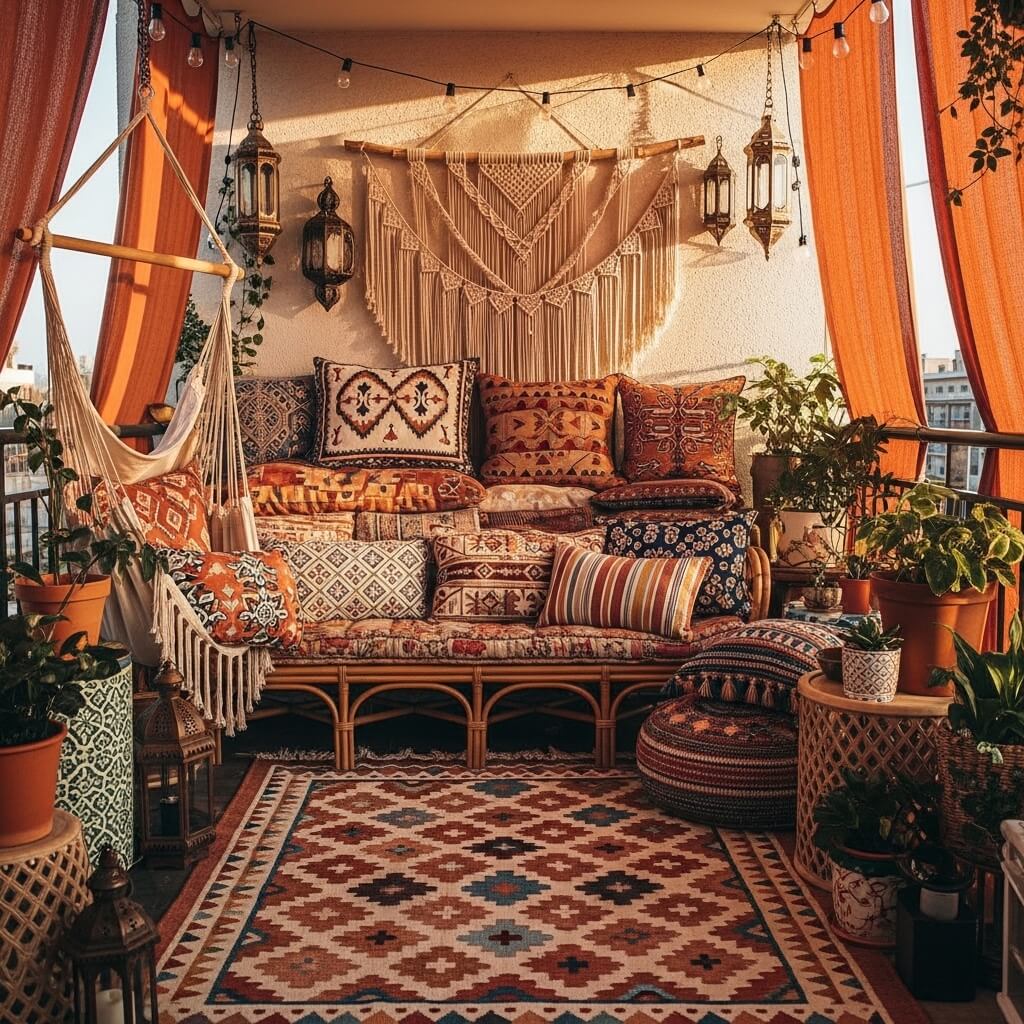
A bohemian layered textile balcony — where the warmth and personality of the space comes from an accumulated abundance of textiles in varied patterns within a cohesive warm palette — creates the balcony with the most immediately inviting and most specifically warm character, because the specific quality of being surrounded by soft, varied, warm-toned fabrics and textiles creates a psychological warmth that the harder materials of conventional balcony furniture (wicker, metal, tile) can approach but not fully achieve. The bohemian textile balcony is also the most renter-friendly and most gradually improvable of all balcony configurations — each cushion, each throw, each macramé piece can be added incrementally as budget and opportunity allow, and the composition improves with each addition rather than requiring a complete setup to be effective.
The palette coherence within the textile variety is the organizing principle that most distinguishes a beautifully bohemian balcony from one that simply has many different fabrics in the same space — all the textiles within a warm terracotta, indigo, cream, and natural palette create a balcony that reads as richly layered and specifically beautiful, while textiles from competing palettes create visual noise rather than visual richness. The palette constraint is the design discipline that allows the abundance to read as curated rather than accumulated.
9. The Minimalist Scandinavian Balcony — Peaceful Clarity at Small Scale
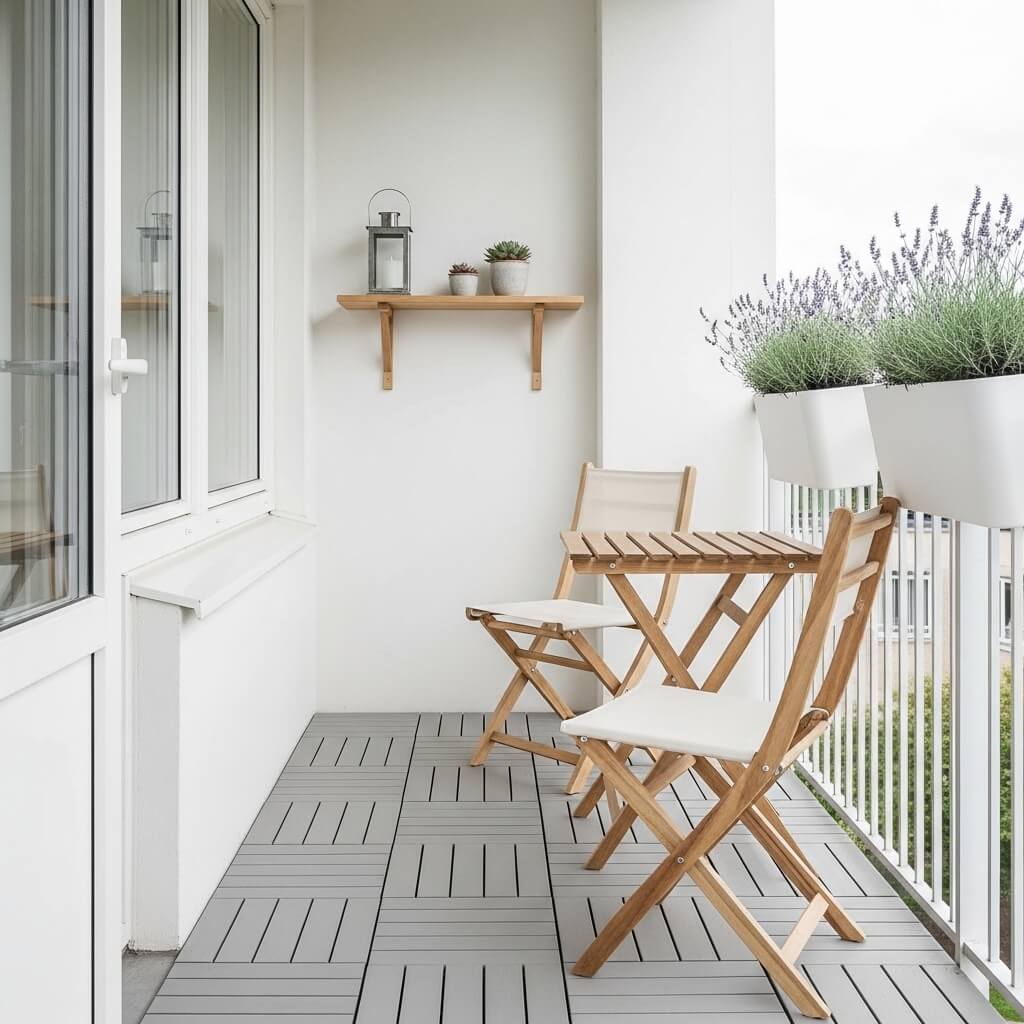
A minimalist Scandinavian balcony — designed on the principles of warm minimalism where every element is chosen for its specific quality and functional necessity, where nothing is added that doesn’t genuinely contribute, and where the beauty comes from the warmth of natural materials and the calm of uncluttered space — creates the balcony with the most peaceful and most consistently pleasant daily quality, because a space of genuine visual calm is more restorative over the full arc of daily use than a space of visual interest or visual abundance. The Scandinavian balcony is the one that creates the best quality of morning coffee experience and the best quality of evening unwinding experience precisely because it demands nothing of the person in it — it simply provides a clean, warm, simple outdoor space.
The quality of the individual pieces is the investment that most matters in a minimalist Scandinavian balcony — because when there are only four or five elements in the space, each element is fully visible and fully evaluated, and a low-quality chair or a poorly made planter is more conspicuous in its inadequacy than the same piece would be in a more abundant composition. The investment in fewer, genuinely better pieces — the quality teak folding chair rather than the budget plastic alternative, the proper lavender planted correctly in the right planter rather than random flowers in a mismatched pot — creates the minimalist balcony of genuine beauty rather than simply the balcony with less stuff in it.
10. The Complete Urban Outdoor Room — Every Sensory Quality Addressed
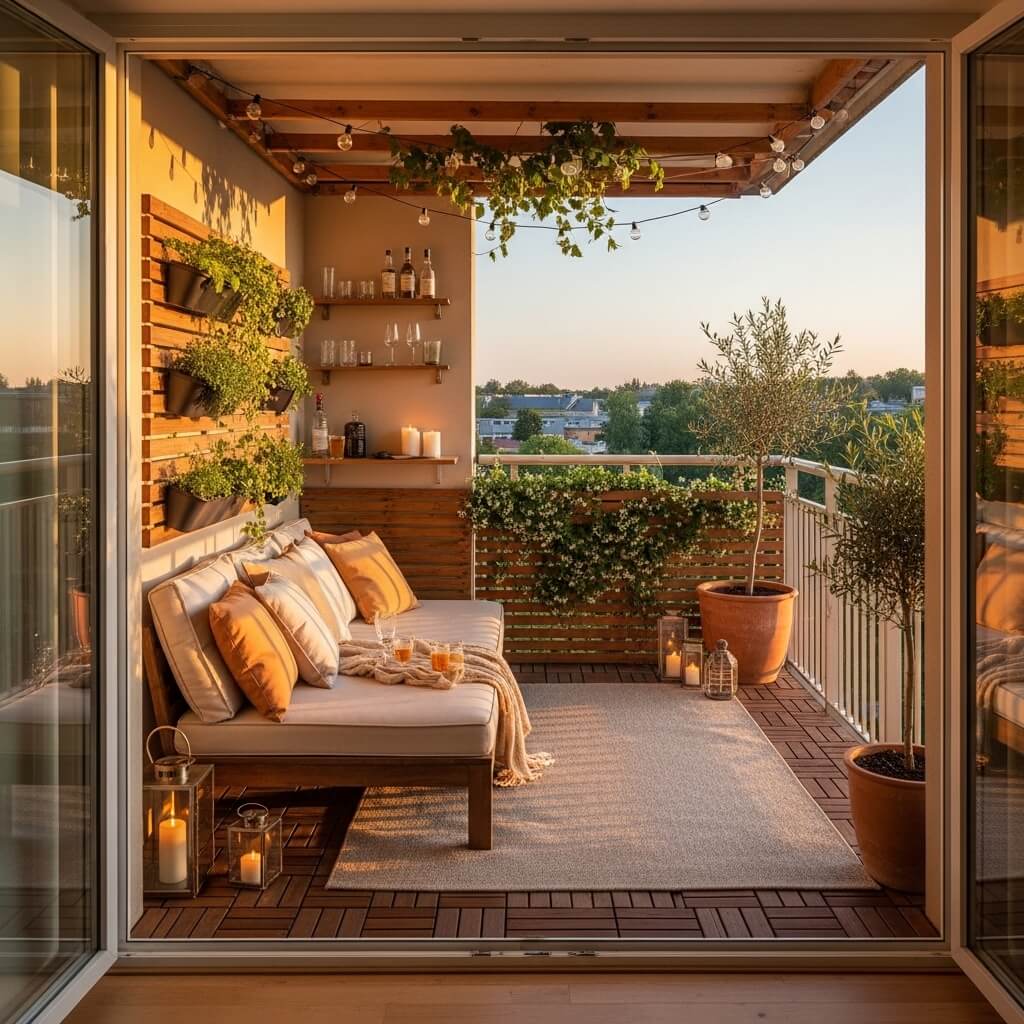
The complete urban outdoor room — where overhead enclosure, floor treatment, comfortable seating, privacy screening, botanical life at multiple levels, layered evening lighting, and a small entertainment setup all exist together in a coherent, mutually reinforcing composition — creates the balcony experience that most completely replaces the need for the private outdoor space that urban apartment living typically eliminates. Every quality that makes a private garden or a terrace house’s outdoor space valuable is present in the complete urban outdoor room: the botanical enclosure, the privacy, the comfortable seating, the evening atmosphere, the productive planting, the sense of having somewhere specifically beautiful and specifically personal to go when the apartment’s interior needs to be left behind.
The specific quality that most distinguishes the complete urban outdoor room from a merely well-furnished balcony is the quality of overhead enclosure — the pergola or the overhead element that creates the psychological sense of being in a room rather than on a ledge. Without overhead enclosure, a balcony remains psychologically a ledge regardless of how well it’s furnished; with overhead enclosure, even a simple pergola structure with string lights, the same space becomes a room. This transformation is the single most significant quality improvement available in balcony design, because it changes the fundamental spatial category of the experience from ledge to room, and that categorical change is what creates the genuine outdoor room that makes the balcony the most used space in the apartment.