Wooden false ceilings bring warmth, texture, and architectural character to a room while offering plenty of scope for creative lighting and layered design. From sleek wood strips to rich panelled finishes, a wooden ceiling can make a modern home feel more inviting without sacrificing a clean, contemporary look. The right design depends on the room’s size, ceiling height, natural light, and overall interior style. Light-toned wood can visually open up smaller spaces, while darker finishes create a sophisticated, intimate atmosphere. Below are ten practical wooden false ceiling design ideas covering living rooms, bedrooms, dining spaces, and more. Each concept can be adapted to suit different budgets and decorative preferences, making it easier to choose a ceiling that looks beautiful and works well with the rest of your interior.
1. Simple Wooden Slat False Ceiling
A wooden slat false ceiling is an excellent choice if you want a contemporary design with strong visual texture but without an overly decorative appearance. Narrow wooden battens can be arranged in parallel lines across part or all of the ceiling, creating a sense of rhythm and direction. The gaps between slats can reveal a darker backing or conceal indirect lighting, adding depth to the installation. This style works particularly well in modern living rooms, lounges, and home offices because its clean geometry complements simple furniture. Choose natural oak, walnut, or warm laminate finishes according to the room’s palette. Keeping the pattern consistent makes the ceiling feel refined, while varying slat widths can introduce a more custom architectural effect.
2. Wooden Ceiling with Recessed Lighting
Combining wood with recessed lighting creates a polished false ceiling that balances warmth with modern functionality. Instead of relying on a large central light, install recessed downlights at carefully planned intervals to provide even illumination. LED strips can also be tucked into selected ceiling recesses for soft ambient lighting that highlights the wood grain after dark. This approach is particularly useful in living rooms and dining areas where different lighting levels are needed for everyday use and entertaining. A medium-toned wood finish often works well because it remains visible under artificial light without making the ceiling feel too heavy. Before installation, plan the electrical points, beam positions, and access requirements so the finished ceiling looks seamless rather than cluttered.
3. Wooden Coffered False Ceiling
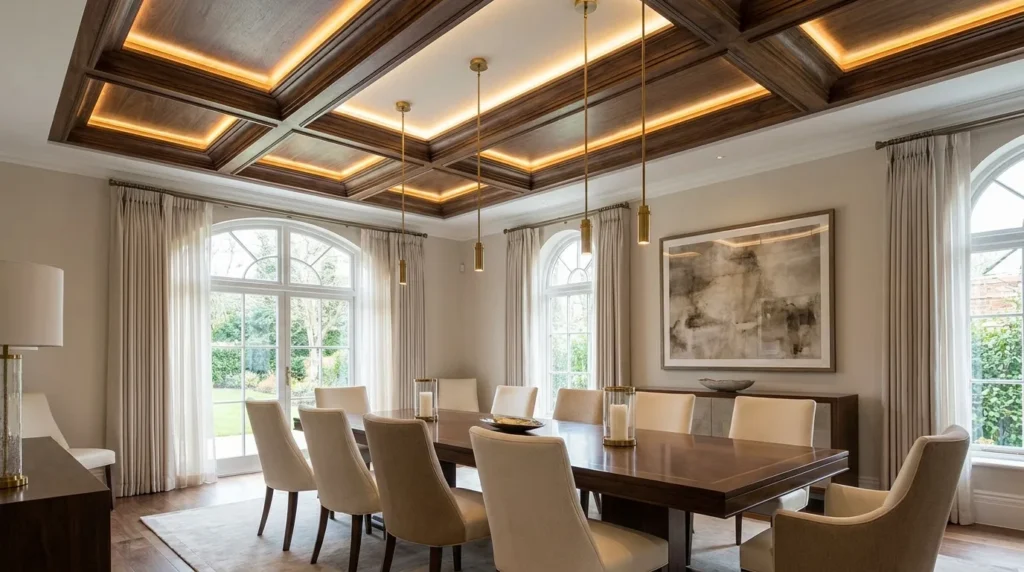
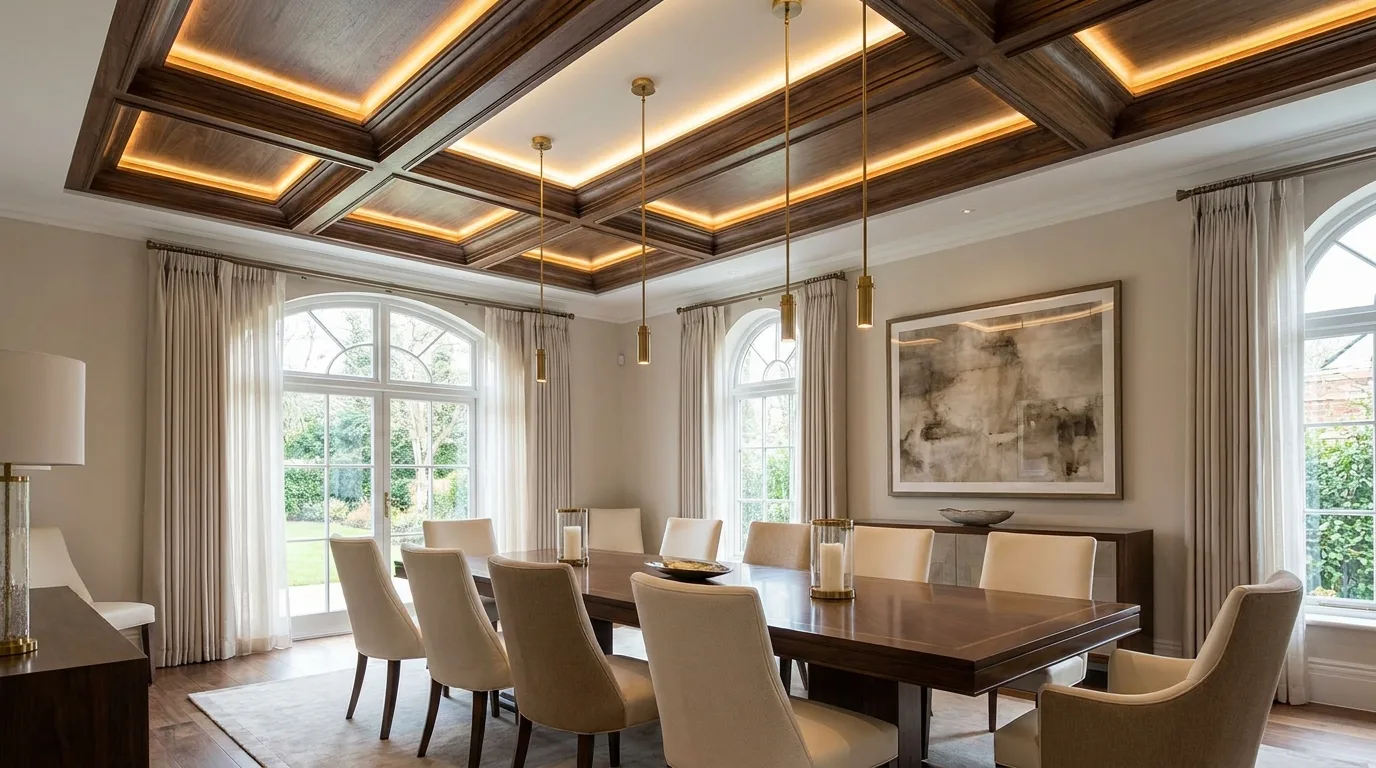
A wooden coffered ceiling introduces a more traditional architectural character through a series of recessed or framed panels. The geometric structure can make a large ceiling feel more detailed and visually balanced, particularly in spacious living rooms, dining rooms, and formal sitting areas. You can use real timber for a premium finish or wood-finish panels for a lighter and more economical installation. Combining the coffers with concealed LED lighting emphasizes the individual sections and creates a layered appearance. Keep the grid relatively simple when the room already contains patterned furniture, artwork, or decorative walls. In a minimalist interior, however, a larger coffer pattern with a natural wood finish can become the main architectural feature without requiring additional ornamentation.
4. Wood and White Ceiling Combination
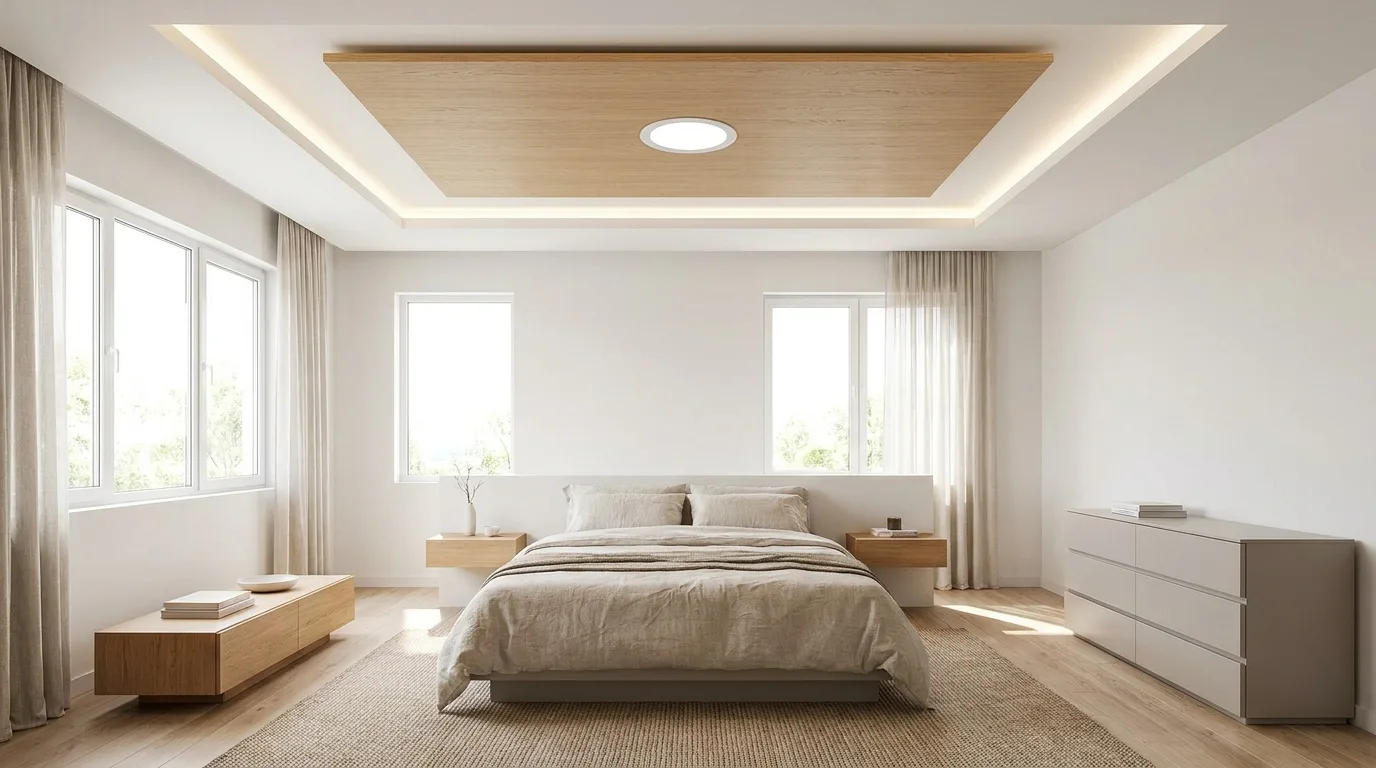
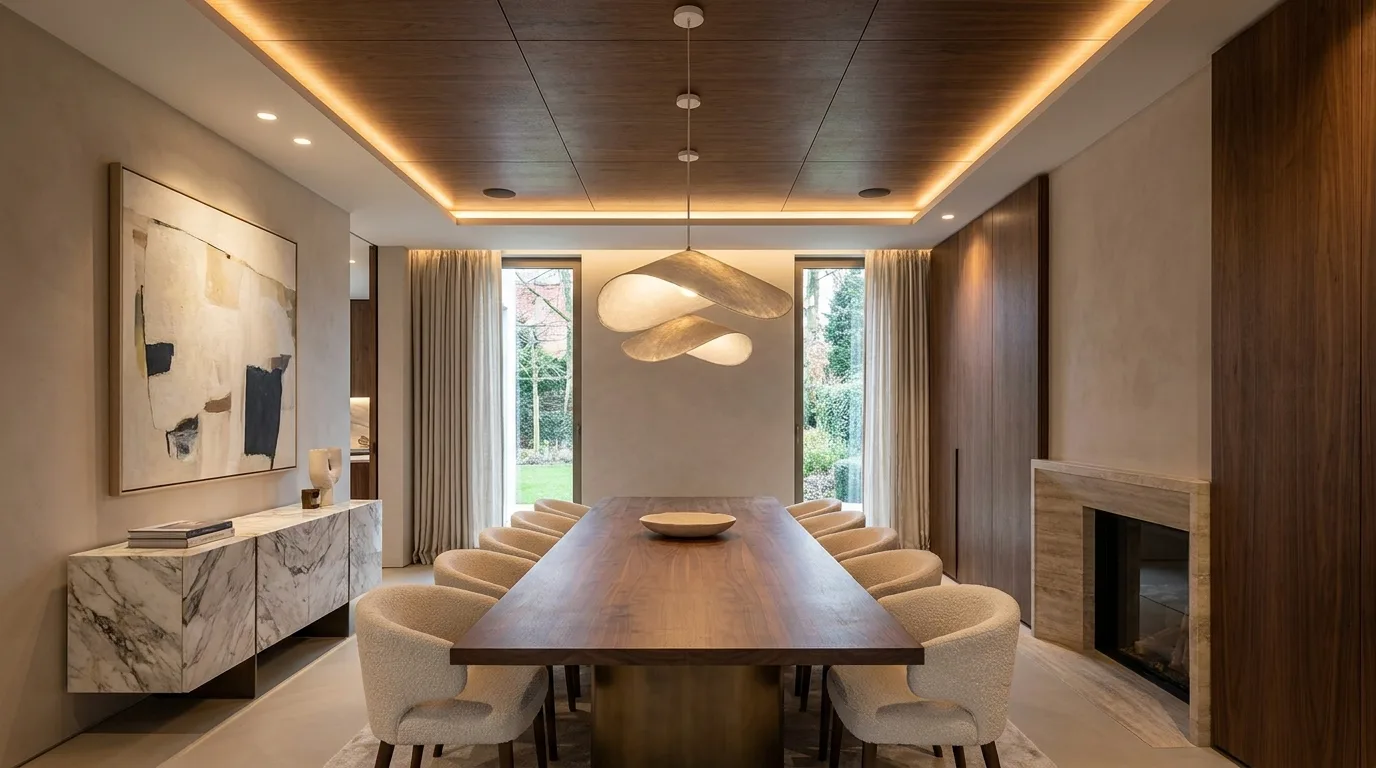
Pairing wooden sections with white ceiling panels is a smart way to introduce warmth while preserving a bright, spacious feeling. The contrast allows the wood to act as an accent instead of visually lowering the entire ceiling. One effective layout is to use wooden strips through the centre of the room and surround them with crisp white panels. Another option is a broad wooden border around a recessed white centre. This design suits bedrooms, contemporary living rooms, and compact apartments where an all-wood ceiling may feel too dominant. Light oak, ash, or pale wood finishes are especially effective with white surfaces. Add discreet spotlights or a slim pendant to emphasize the transition between materials and create a clean, professionally designed appearance.
5. Wooden Tray False Ceiling
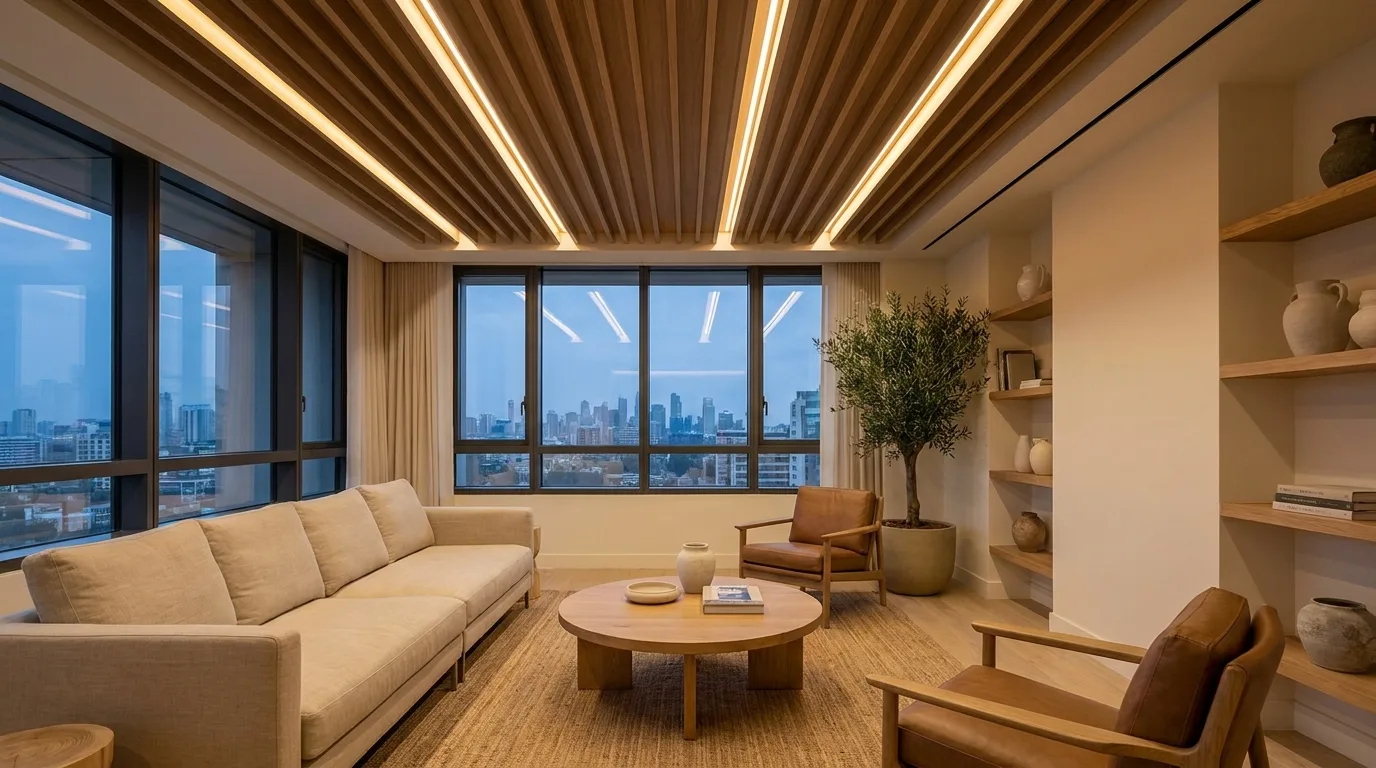
A wooden tray ceiling uses a raised or recessed central portion to create visual depth and a stronger sense of structure. Wood can be applied to the tray itself, its border, or both, depending on the desired effect. In a bedroom, a wooden tray above the bed can define the sleeping zone and provide a natural focal point. In a living room, a wider tray can frame the main seating area without requiring a full ceiling treatment. Concealed LED lighting around the inner edge works particularly well because it highlights the change in level with a soft glow. For rooms with limited height, keep the tray shallow and use lighter wood so the ceiling retains an airy appearance instead of becoming visually compressed.
6. Wood Panel False Ceiling for a Luxury Look
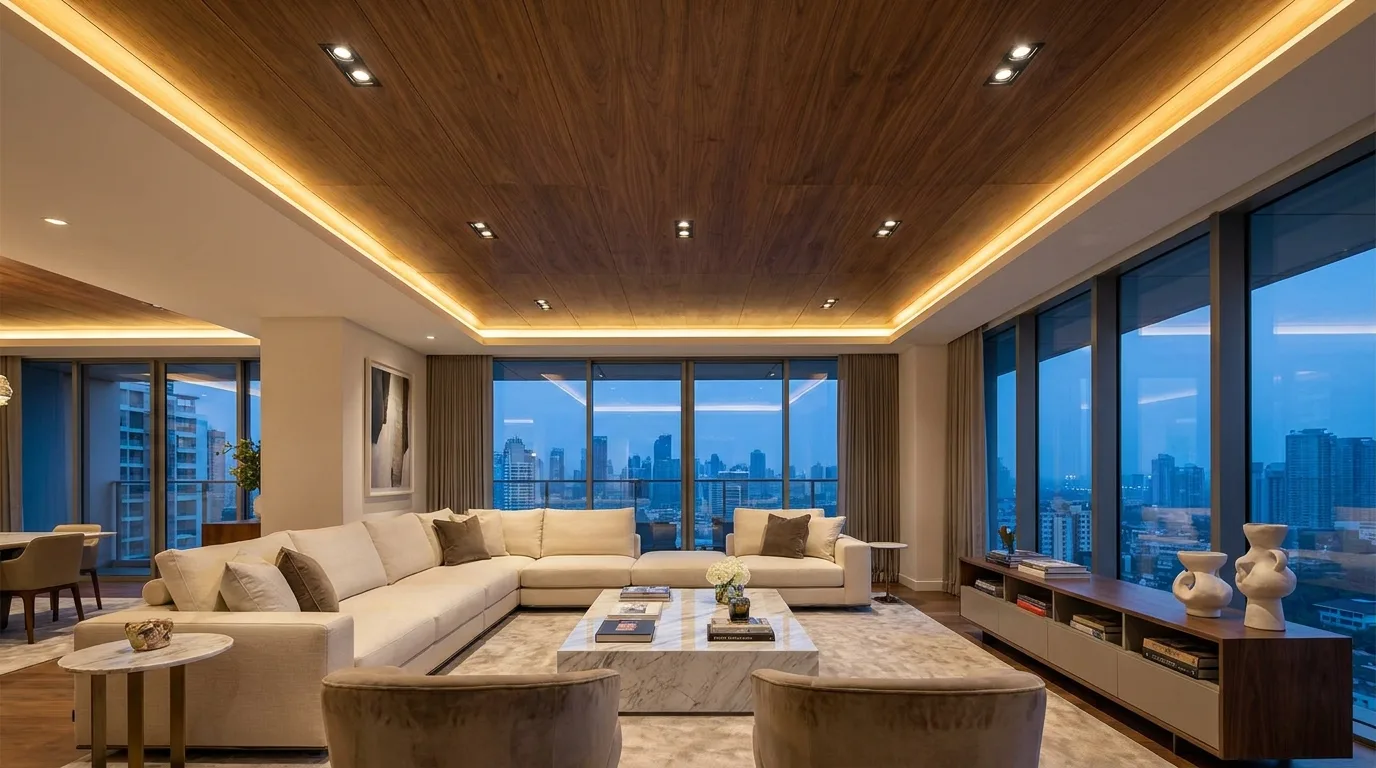
Large wood panels can create a sophisticated ceiling with fewer visible joints and a more substantial architectural presence. This idea works especially well in modern luxury interiors where simplicity and high-quality finishes are more important than intricate patterns. Walnut, teak-look finishes, or deep brown wood tones can give dining rooms and master bedrooms a rich, elegant character. To prevent a dark ceiling from overwhelming the space, balance it with lighter walls, soft furnishings, and carefully positioned lighting. Panel direction also matters: boards running along the room’s longest dimension can visually emphasize length, while a carefully framed central panel can make a square room feel more purposeful. Use concealed wiring and neat edge detailing to keep the final installation exceptionally clean.
7. Floating Wooden Ceiling Design
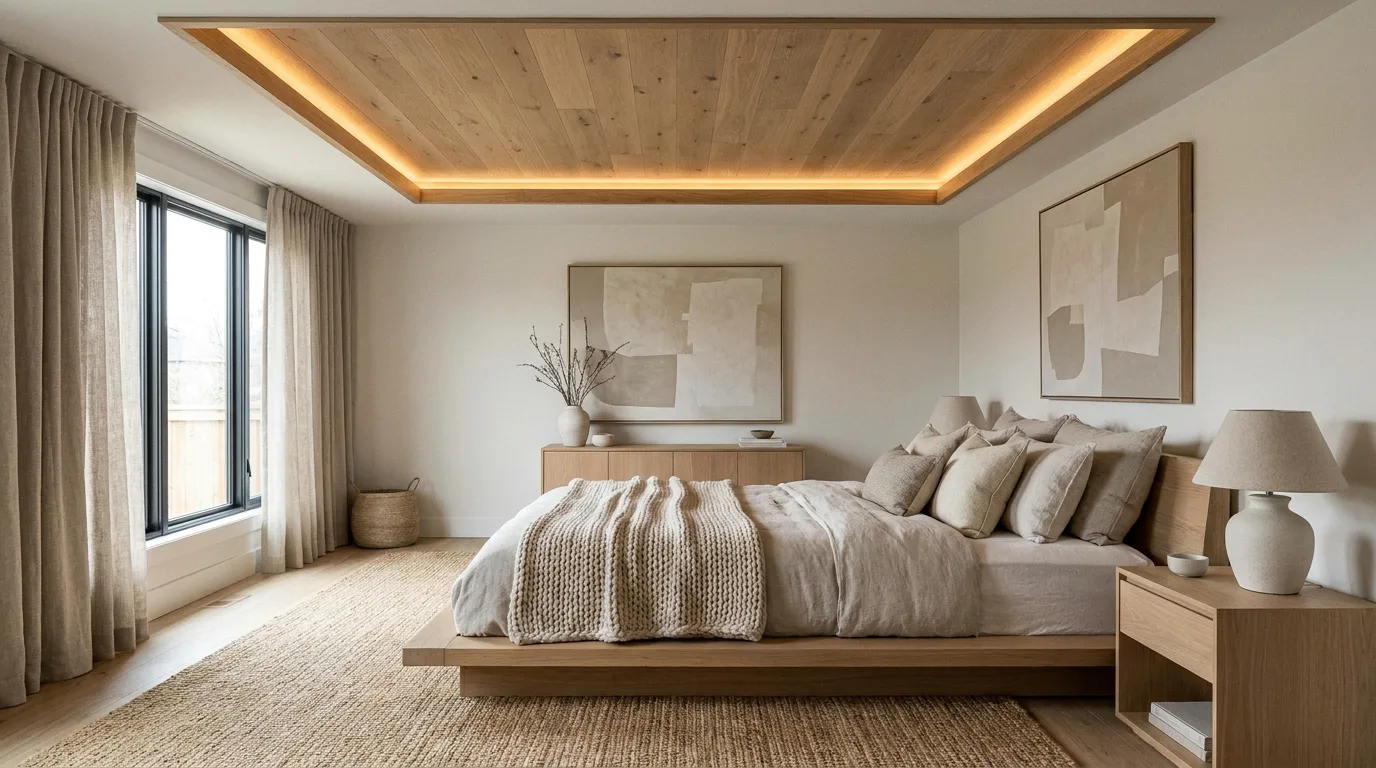
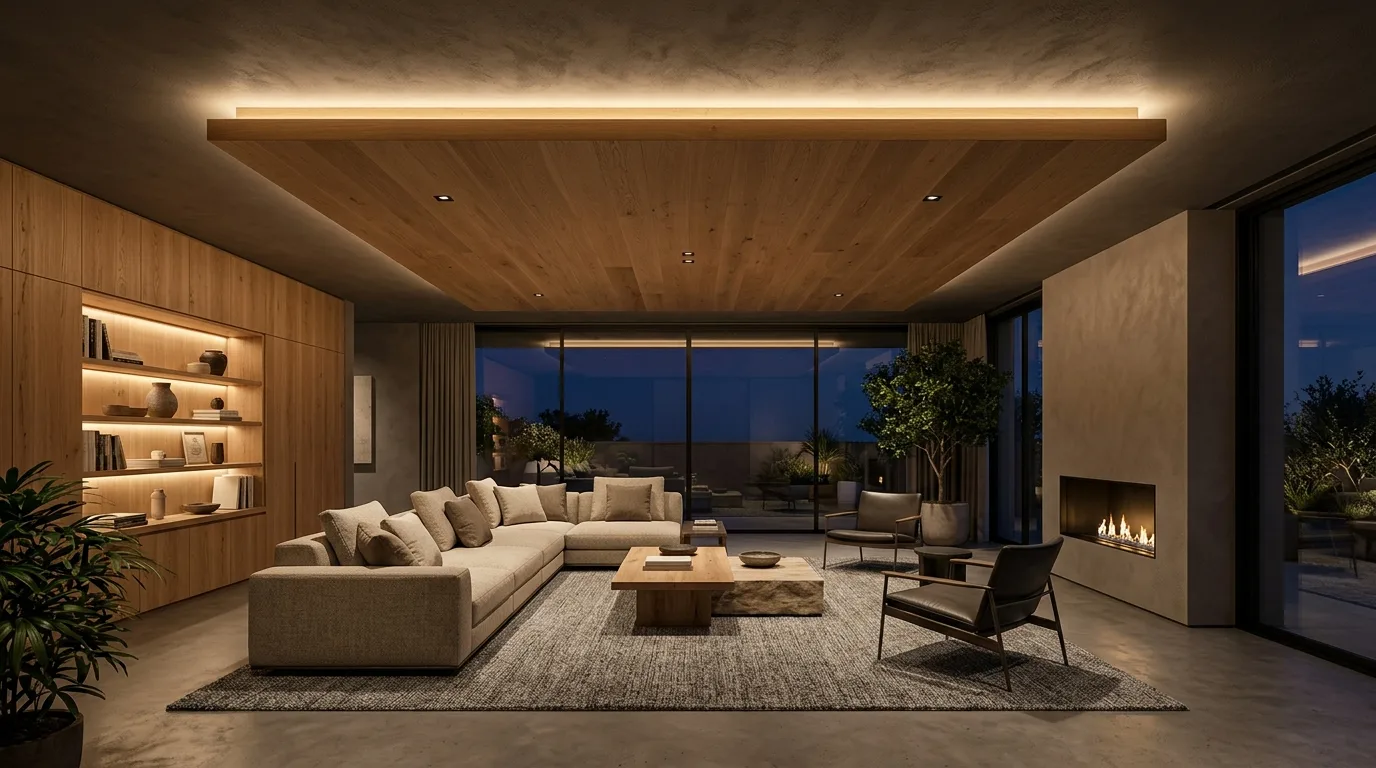
A floating wooden false ceiling creates the impression that a timber feature is suspended slightly below the main slab. The effect is especially attractive when warm LED lighting is concealed around the edges, producing a subtle halo between the wooden element and surrounding ceiling. Rather than covering the entire room, use the floating panel above a seating area, dining table, or bed to establish a visual centre. Rectangular and square forms are easy to integrate into contemporary interiors, while curved edges can create a softer appearance. Because the design depends on negative space and shadow lines, precise installation is important. Keep the surrounding ceiling relatively simple so the floating feature remains the focal point rather than competing with other decorative elements.
8. Wooden Beam-Style False Ceiling
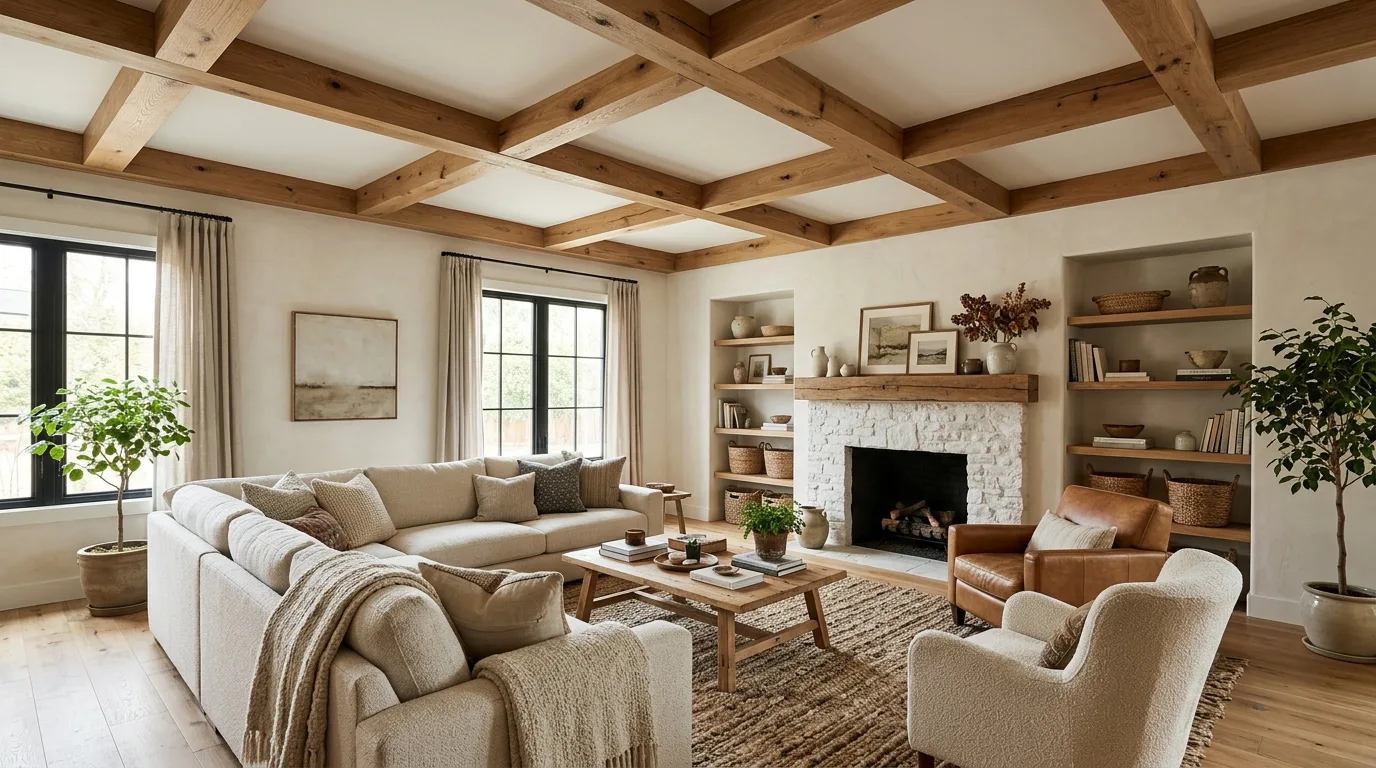
Wooden beam-style ceilings add architectural character by recreating the appearance of exposed structural beams while keeping services and wiring concealed above the false ceiling. The beams can be arranged in a simple parallel pattern, a rectangular grid, or a more decorative layout depending on the room. This idea suits rustic, transitional, industrial, and modern farmhouse interiors particularly well. If authentic timber is too heavy or expensive, lightweight wood-look beams can deliver a similar visual effect. Use beams selectively in rooms with adequate ceiling height because a dense pattern can make low ceilings feel crowded. Pair the design with warm lighting, textured walls, and natural materials such as stone, linen, or leather to create a cohesive and comfortable interior.
9. Geometric Wooden False Ceiling
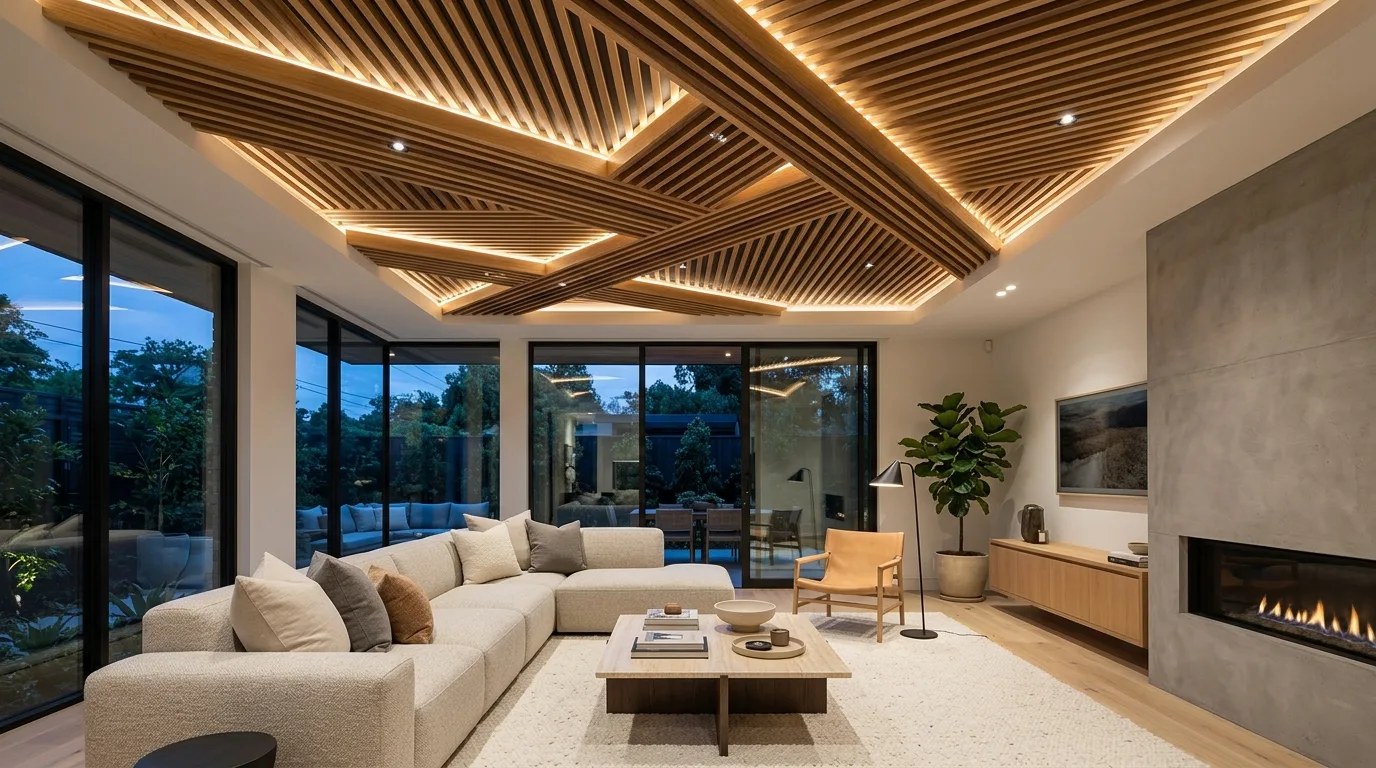
For a more artistic approach, arrange wooden panels or slats into geometric shapes such as rectangles, diagonals, chevrons, or intersecting lines. A geometric wooden false ceiling can transform an otherwise plain room into a distinctive design feature without relying on elaborate decoration elsewhere. The key is to establish a clear pattern and repeat it consistently so the ceiling feels intentional rather than busy. Neutral wood tones are ideal when the geometry is complex, while a stronger finish can be used when the pattern is relatively simple. This design can work beautifully in contemporary living rooms, entertainment areas, and stylish offices. Integrate lighting into selected sections rather than placing fixtures randomly, allowing illumination to reinforce the geometry and enhance the ceiling’s architectural form.
10. Wooden Ceiling with a Central Feature
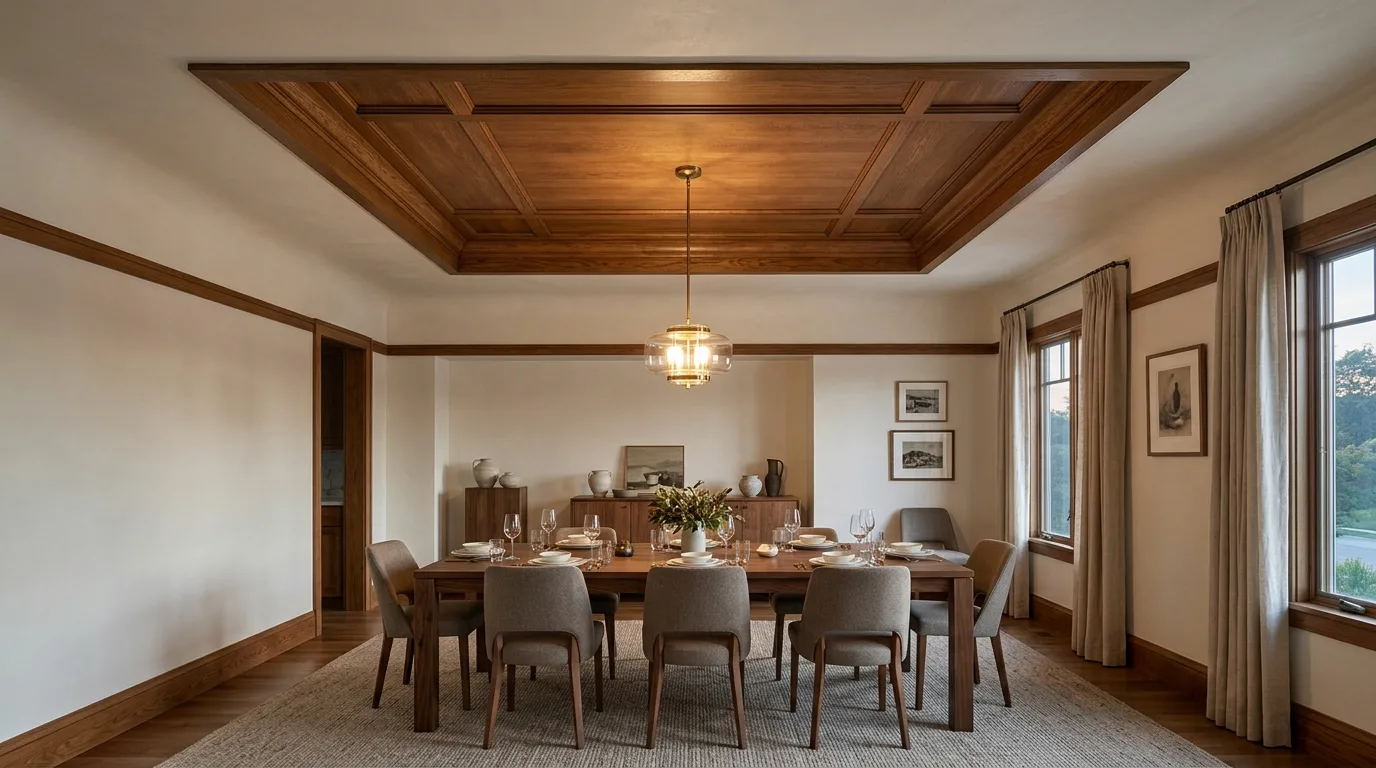
A central wooden ceiling feature offers a practical compromise between a full timber ceiling and a small decorative accent. A framed wooden panel can be positioned above a dining table, coffee table, kitchen island, or bed, creating a clear visual anchor for the room. The surrounding ceiling can remain plain or use a complementary material, which keeps the overall design balanced and usually reduces installation costs. Consider matching the wood tone with furniture, cabinetry, doors, or flooring for a coordinated appearance. A pendant light placed at the centre can make the feature especially effective, while recessed or concealed lighting can provide additional illumination around it. This approach is versatile enough for both compact rooms and larger open-plan spaces where separate zones need subtle visual definition.
How to Choose the Right Wooden False Ceiling
Start by considering the room’s ceiling height, natural lighting, furniture style, and maintenance needs. Dark wood generally creates a richer atmosphere but can make a low ceiling feel heavier, whereas lighter finishes tend to keep interiors visually open. Think about whether the ceiling is primarily decorative or also needs to hide wiring, ducts, lighting, or other services. The wood finish should also coordinate with existing flooring, doors, cabinets, and furniture rather than competing with them. Finally, plan lighting before construction begins. Recessed lights, pendant fixtures, and concealed LED strips require different placement and access arrangements, so integrating them into the ceiling design from the beginning will produce a cleaner result.
Conclusion
Wooden false ceilings can add warmth, depth, and personality to almost any interior when the design is matched carefully to the room. Whether you prefer simple slats, elegant panels, decorative coffers, floating sections, or bold geometric patterns, there is a style for both understated and luxurious spaces. Focus on proportion, wood tone, ceiling height, and lighting to create a result that looks intentional and remains practical for everyday living.