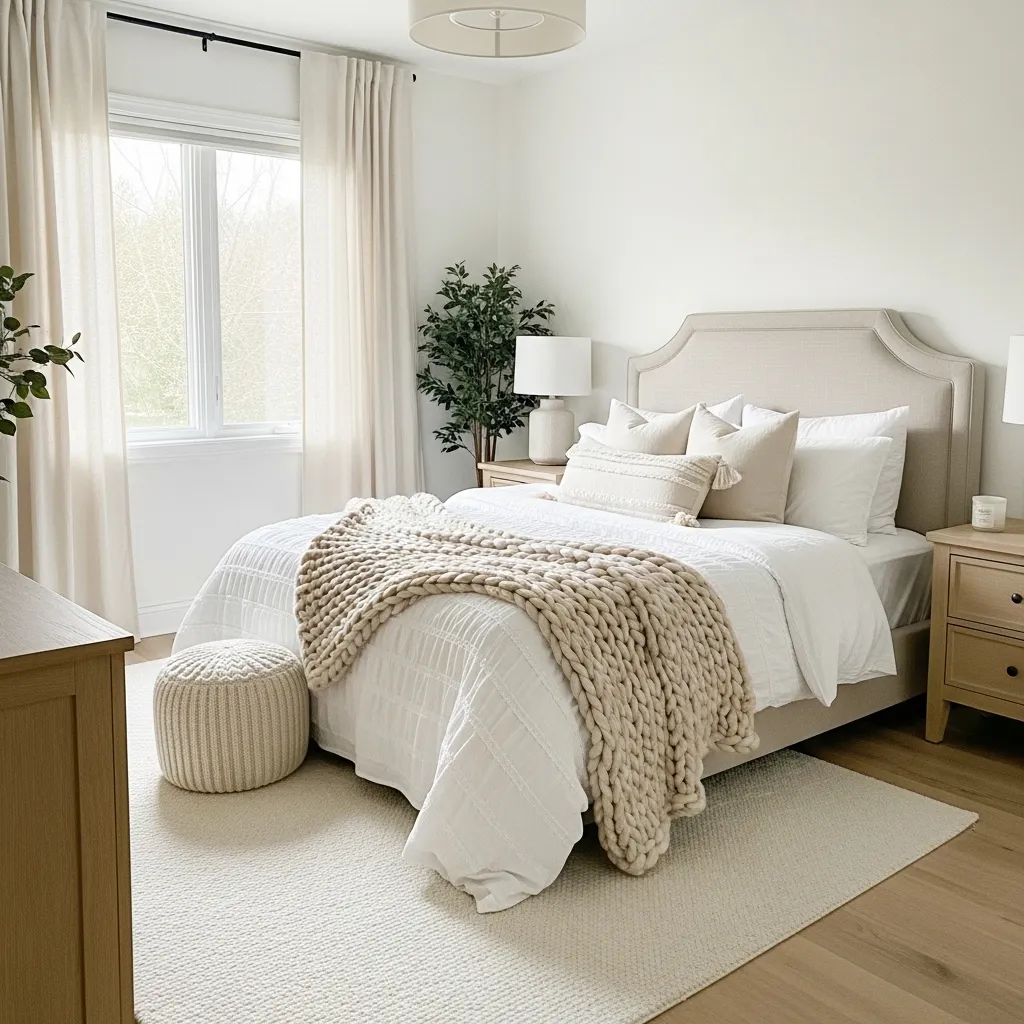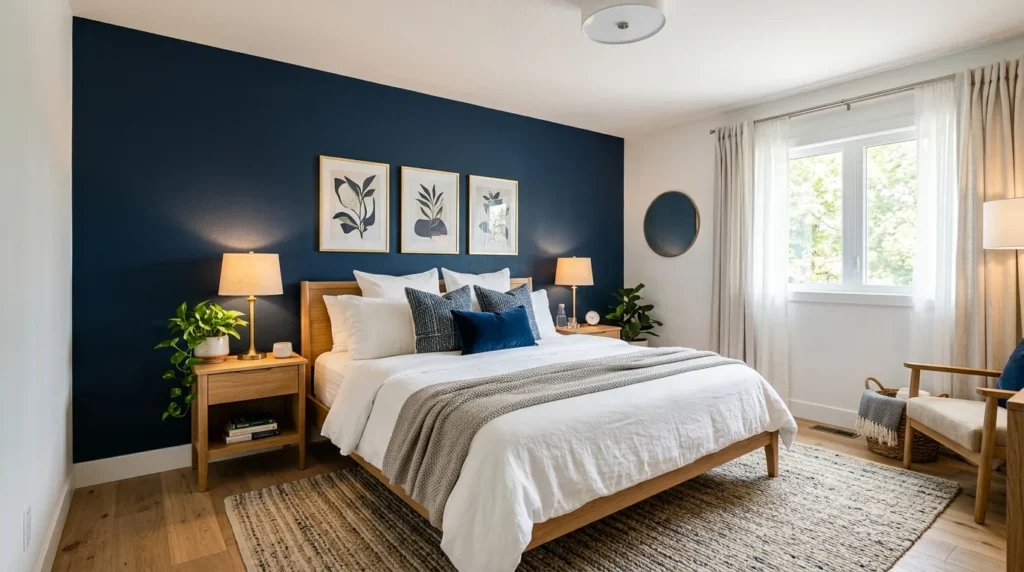
Blue is one of the most versatile colours for a bedroom because it can feel calm, airy, sophisticated, dramatic, or warm depending on the shade you pair with it. The right two-colour combination can also give a room more depth without making the walls feel overly busy. From timeless white and blue to earthy beige, elegant grey, and modern green accents, these ideas can work across different bedroom styles and sizes.
1. Navy Blue and White
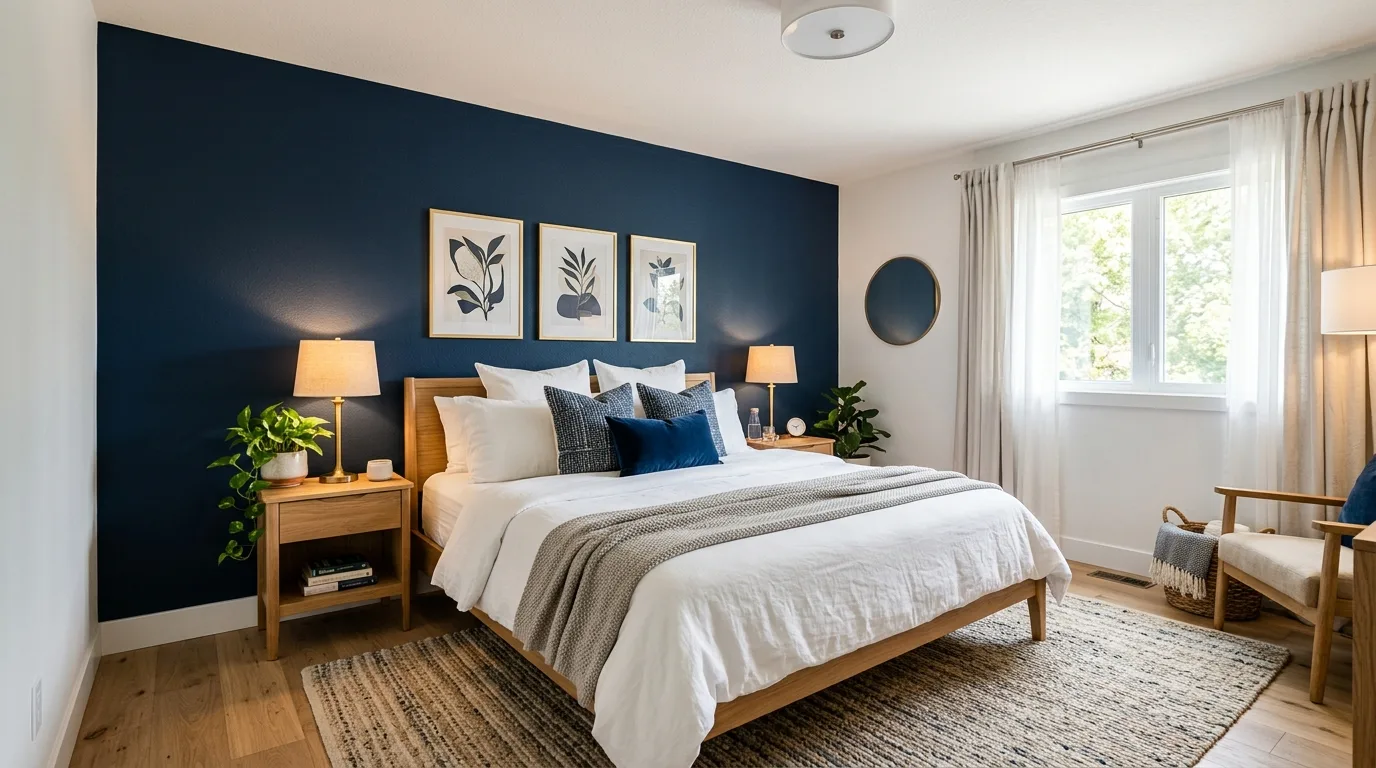
Navy blue with crisp white is a classic bedroom wall combination that works especially well when you want a polished, timeless look. Use navy on the main feature wall and white on the remaining walls to create contrast while keeping the room visually balanced. White bedding, light curtains, and natural wood furniture can reinforce the fresh, sophisticated feel.
For a more contemporary finish, choose a matte navy rather than a glossy paint and introduce warm lighting to soften the contrast.
2. Sky Blue and Soft White
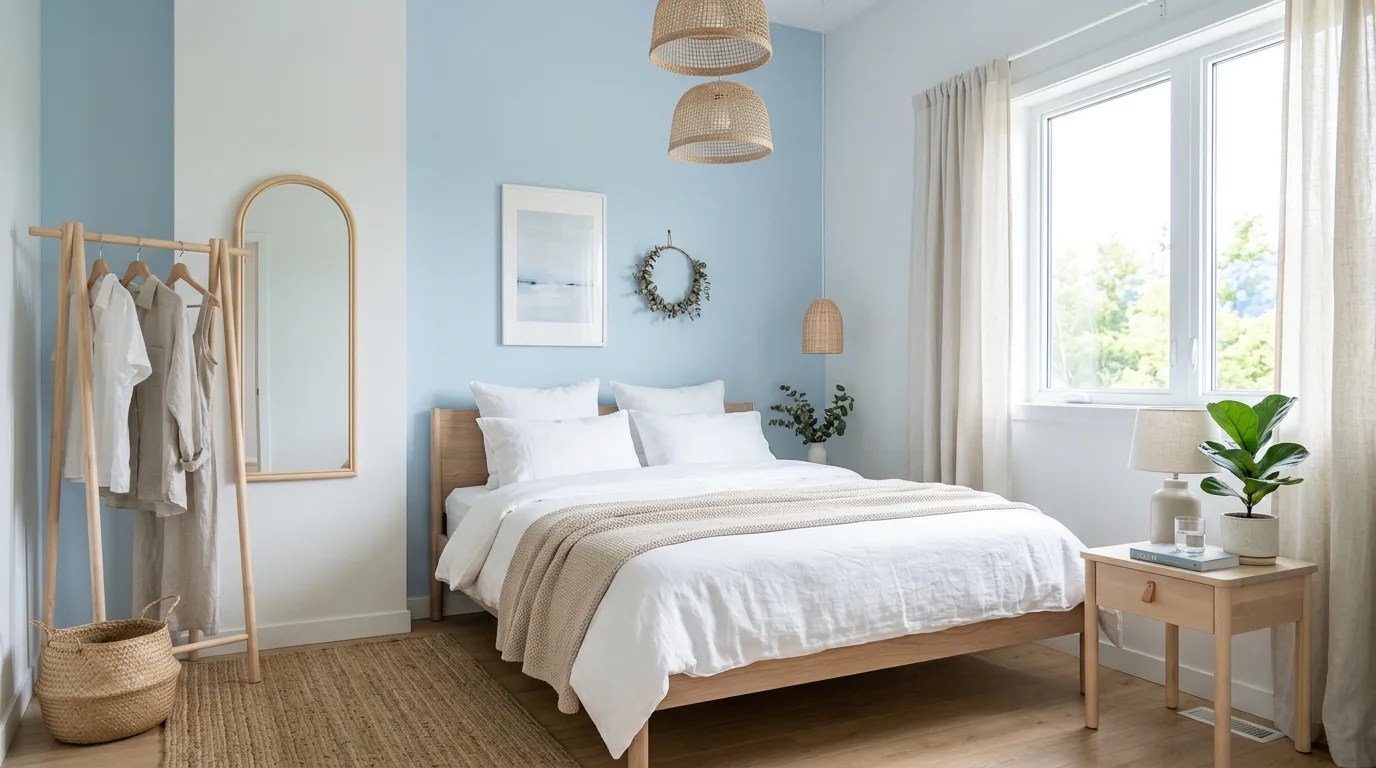
Sky blue and soft white create a light, peaceful bedroom that feels open and refreshing. This pairing is particularly useful in smaller bedrooms because the pale colours reflect light and avoid a heavy appearance. Try sky blue on two walls with warm white on the others for a subtle two-tone effect.
Complete the look with pale wood, white textiles, and simple decorative accessories for a relaxed atmosphere.
3. Teal Blue and Cream
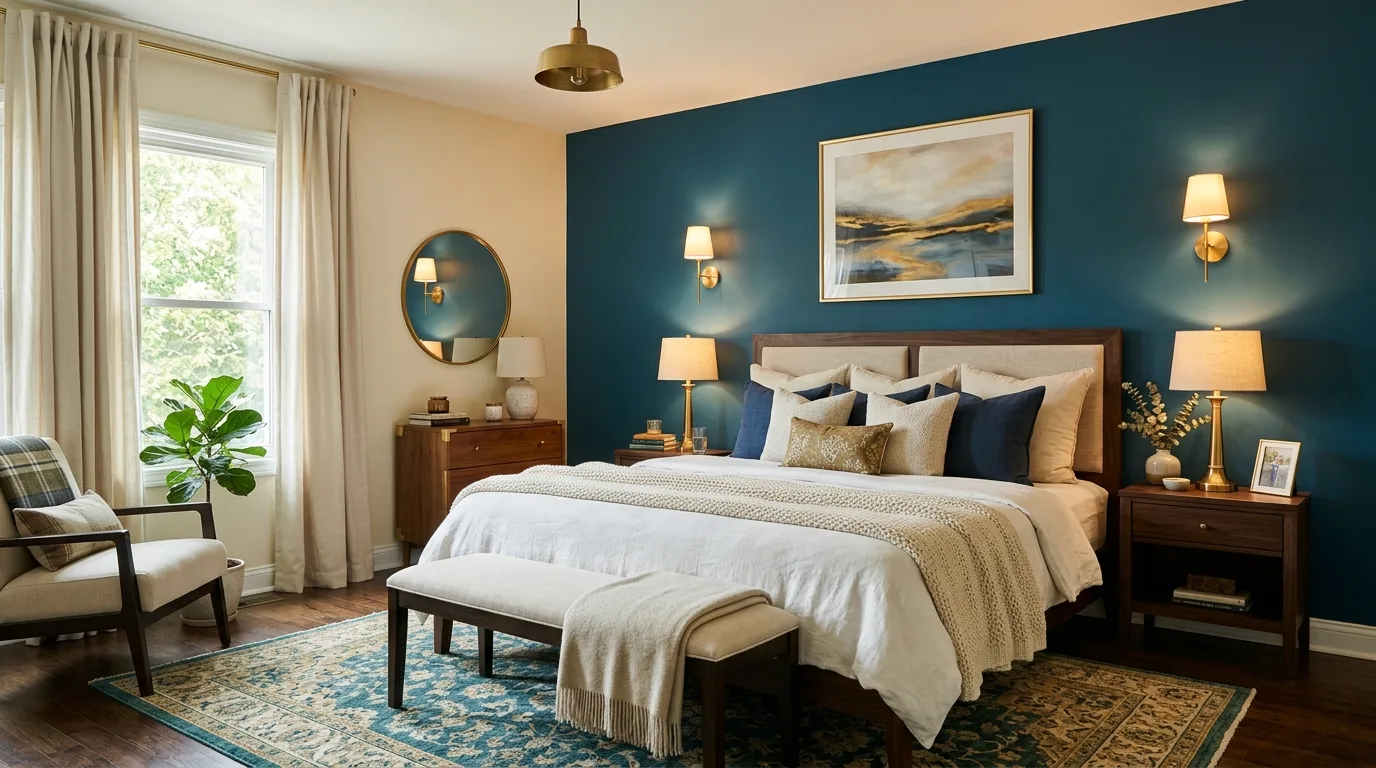
Teal blue paired with cream offers more warmth and personality than a traditional blue-and-white scheme. Cream tones down the intensity of teal while keeping the bedroom elegant and inviting. This combination works beautifully with brass accents, wooden furniture, and textured fabrics.
If the bedroom receives limited natural light, use teal as an accent wall rather than covering every wall in the darker shade.
4. Powder Blue and Blush Pink
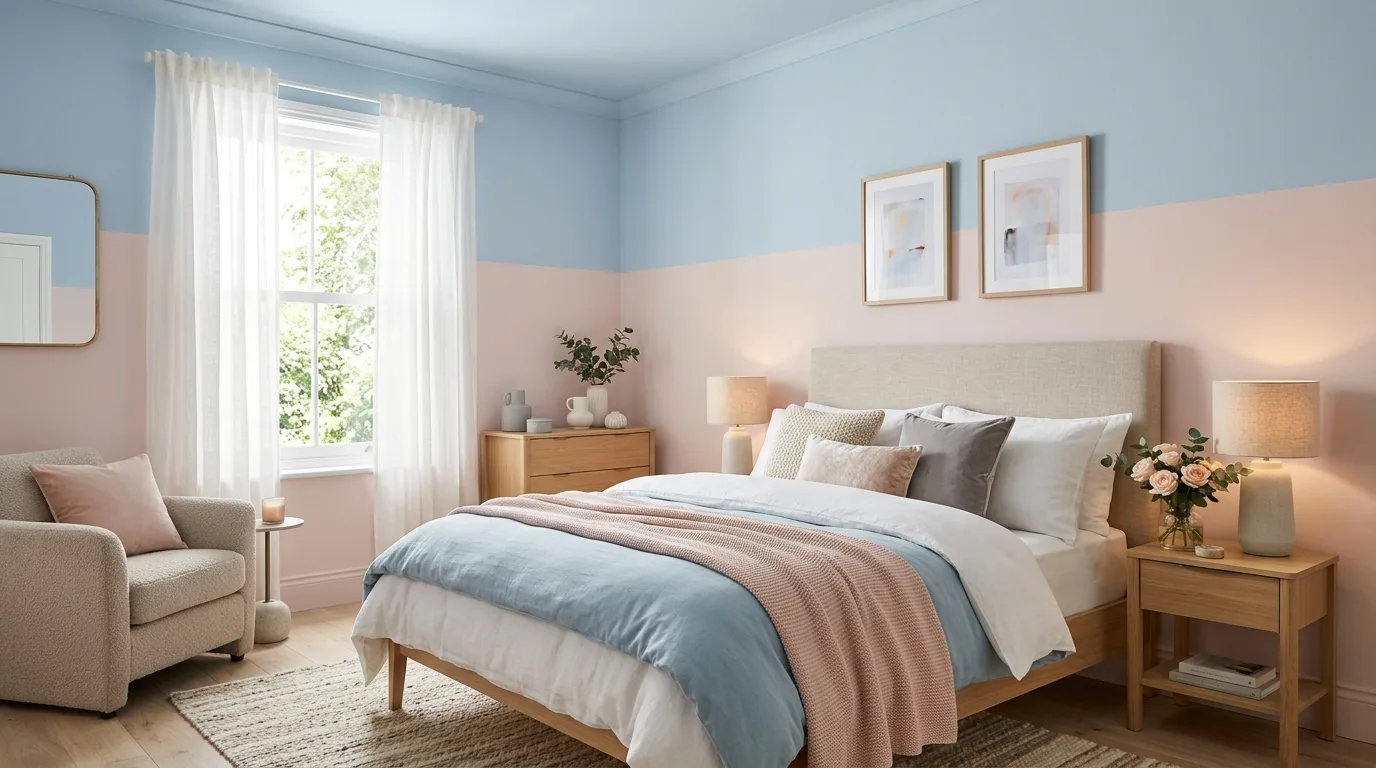
Powder blue and blush pink create a soft, contemporary colour story with a gentle contrast between cool and warm tones. Keep both shades muted for an understated look rather than choosing highly saturated versions. A powder-blue feature wall with blush-pink details can make the room feel cosy without becoming overly colourful.
5. Royal Blue and Light Grey
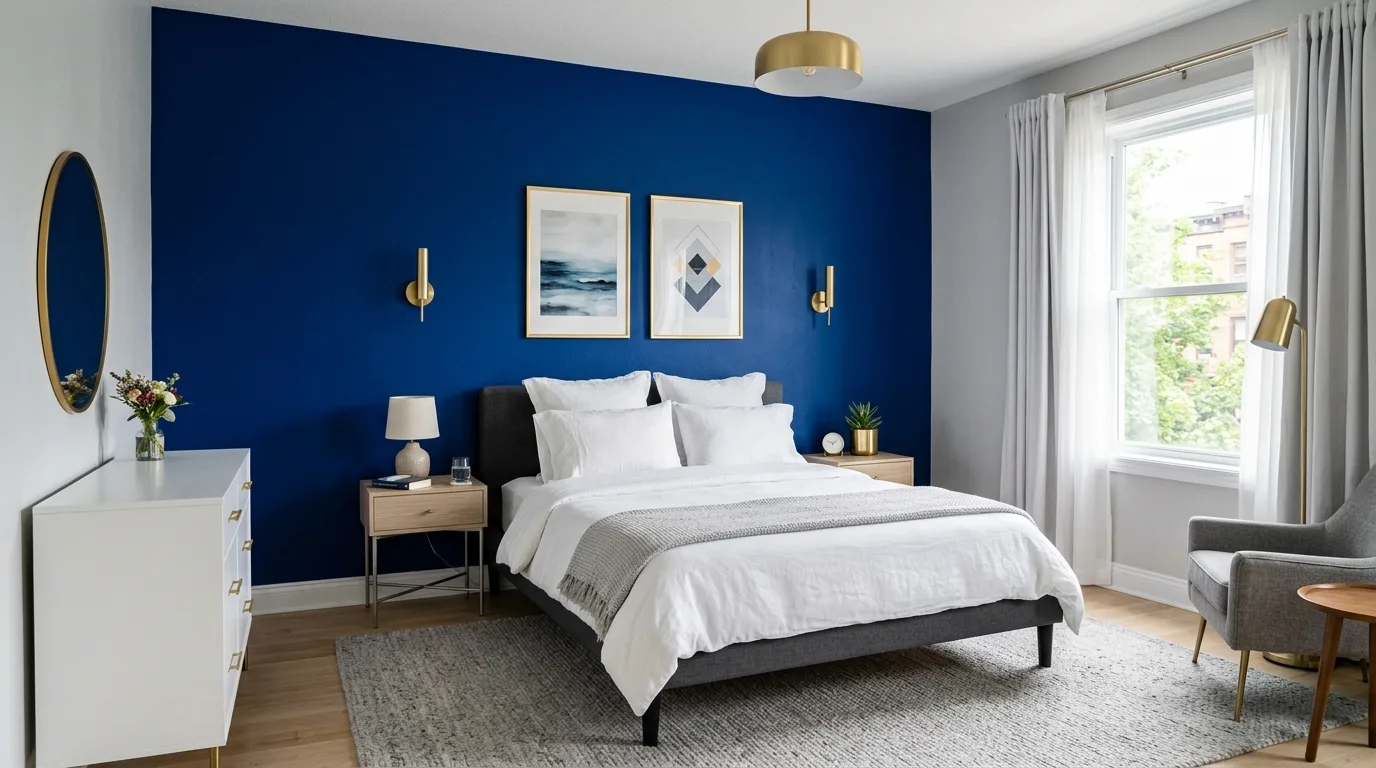
Royal blue can bring energy and richness to a bedroom, while light grey provides a calm neutral backdrop. Use royal blue strategically on one wall, behind the bed, or in a geometric section rather than overwhelming the room. Light grey walls elsewhere will make the blue feel intentional and refined.
Silver, charcoal, white, and natural timber accessories all complement this combination well.
6. Denim Blue and Beige
Denim blue and beige are ideal for a relaxed bedroom with a warm, lived-in character. Beige prevents the blue from feeling too cool, while denim blue adds enough colour to give the walls definition. This pairing is especially effective with rattan, linen, woven textures, and medium-toned wood.
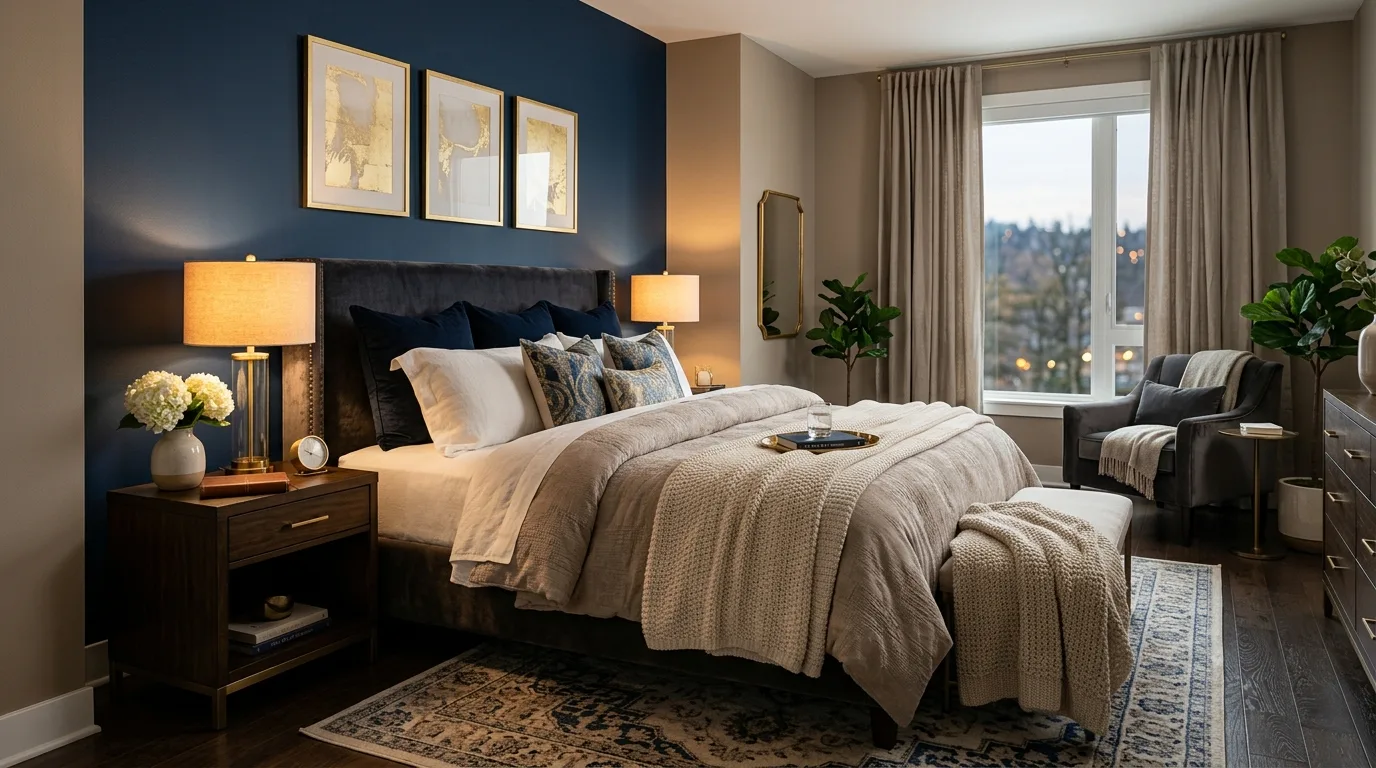
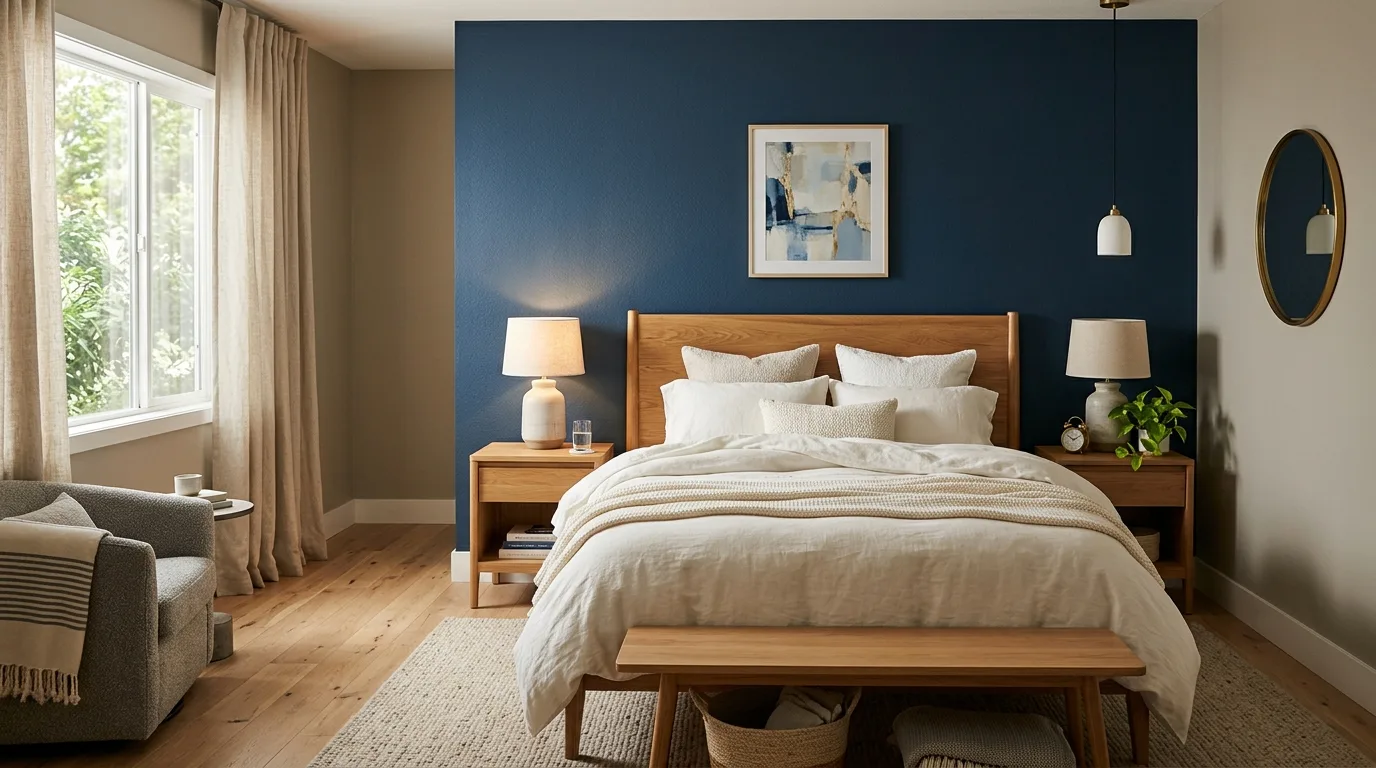
7. Deep Blue and Warm Taupe
Deep blue paired with warm taupe creates a sophisticated bedroom that feels cosy rather than stark. Taupe introduces earthy warmth and helps balance the visual weight of a darker blue. Consider using deep blue behind the headboard and taupe on adjoining walls for a layered, hotel-inspired effect.
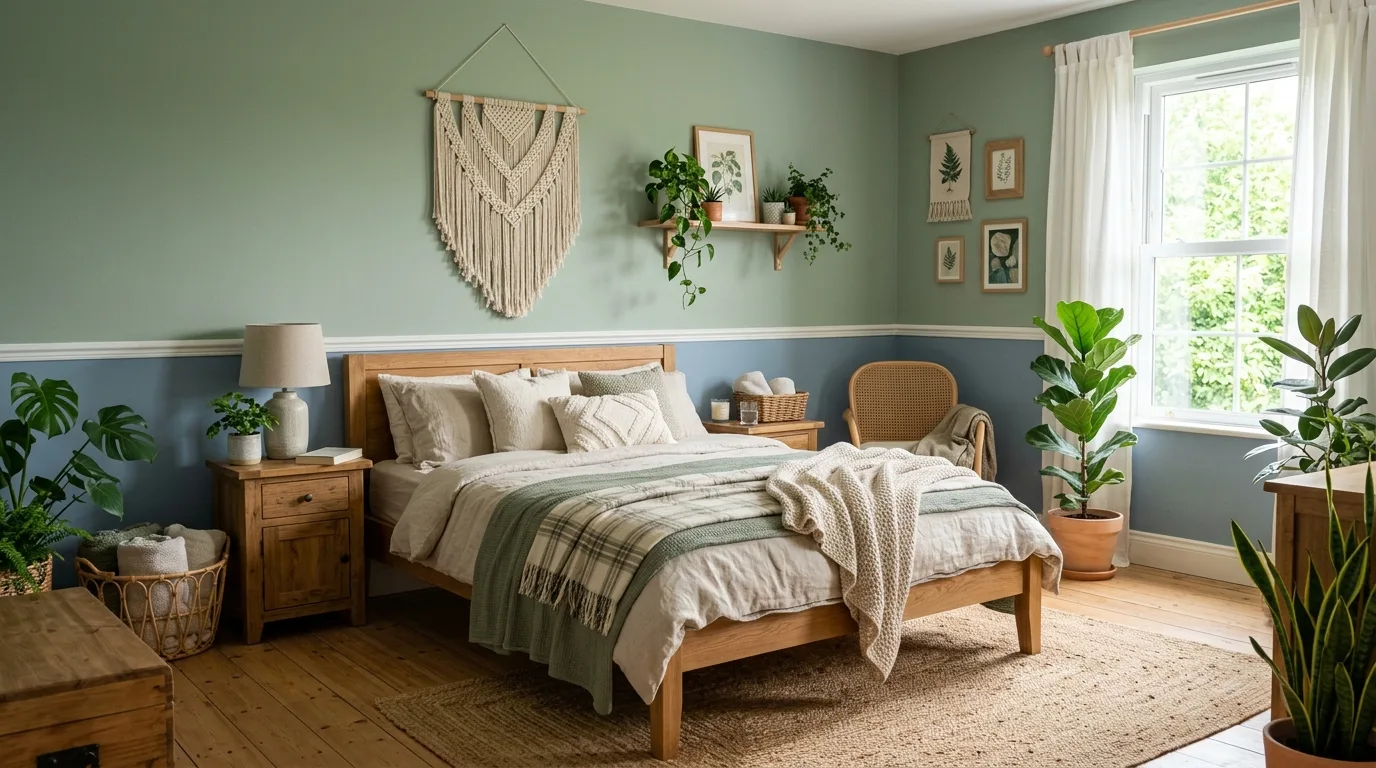
8. Blue and Sage Green
Blue and sage green create a nature-inspired palette that feels calm and contemporary. Choose a muted blue and a soft sage rather than two intense colours. The result works particularly well with natural wood, indoor plants, woven baskets, and neutral bedding.
This is a strong choice if you want a bedroom that feels restful while still having more character than a conventional neutral scheme.
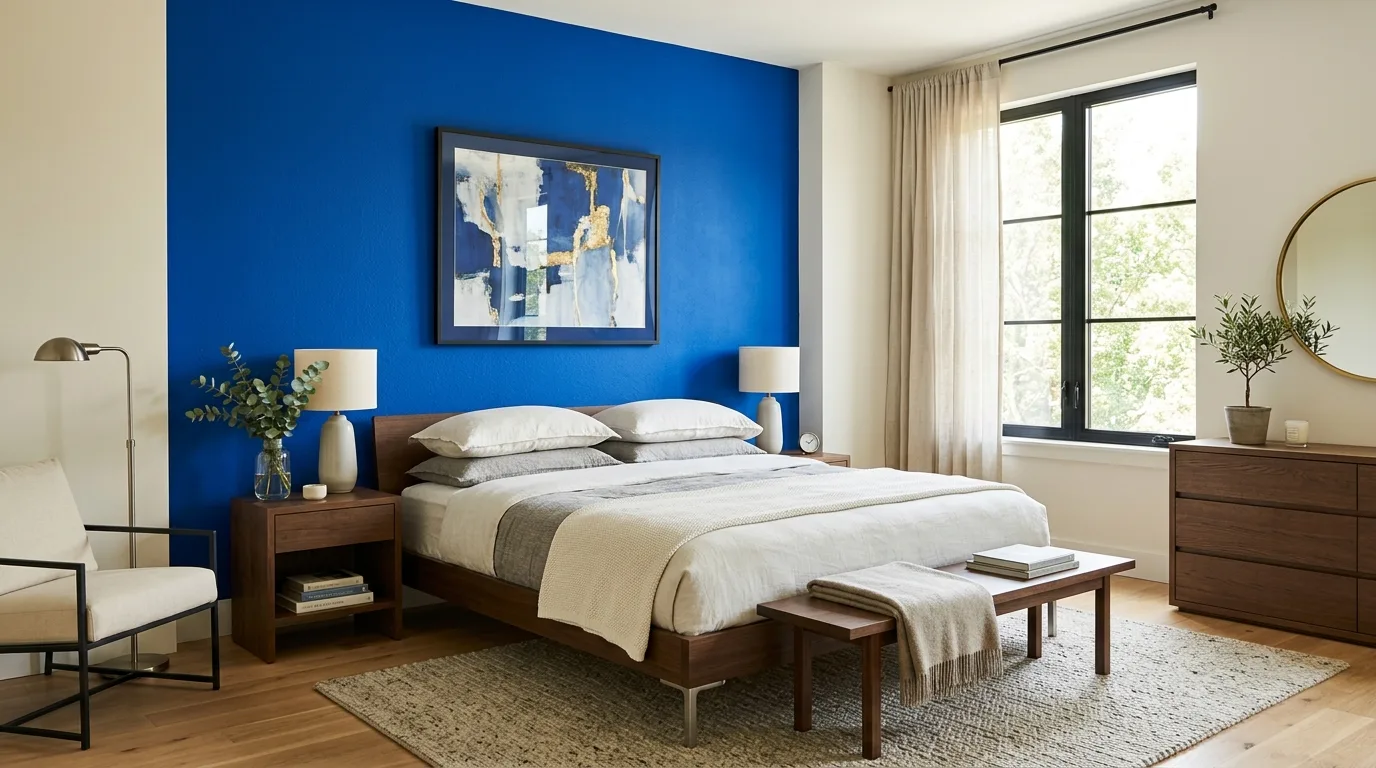
9. Cobalt Blue and Off-White
Cobalt blue makes a confident statement, and off-white gives it enough breathing room to remain stylish. Rather than using cobalt on every wall, consider it for a feature wall, alcove, or painted headboard shape. Off-white on the surrounding walls keeps the room bright and prevents the bold blue from becoming overwhelming.
10. Dusty Blue and Warm White
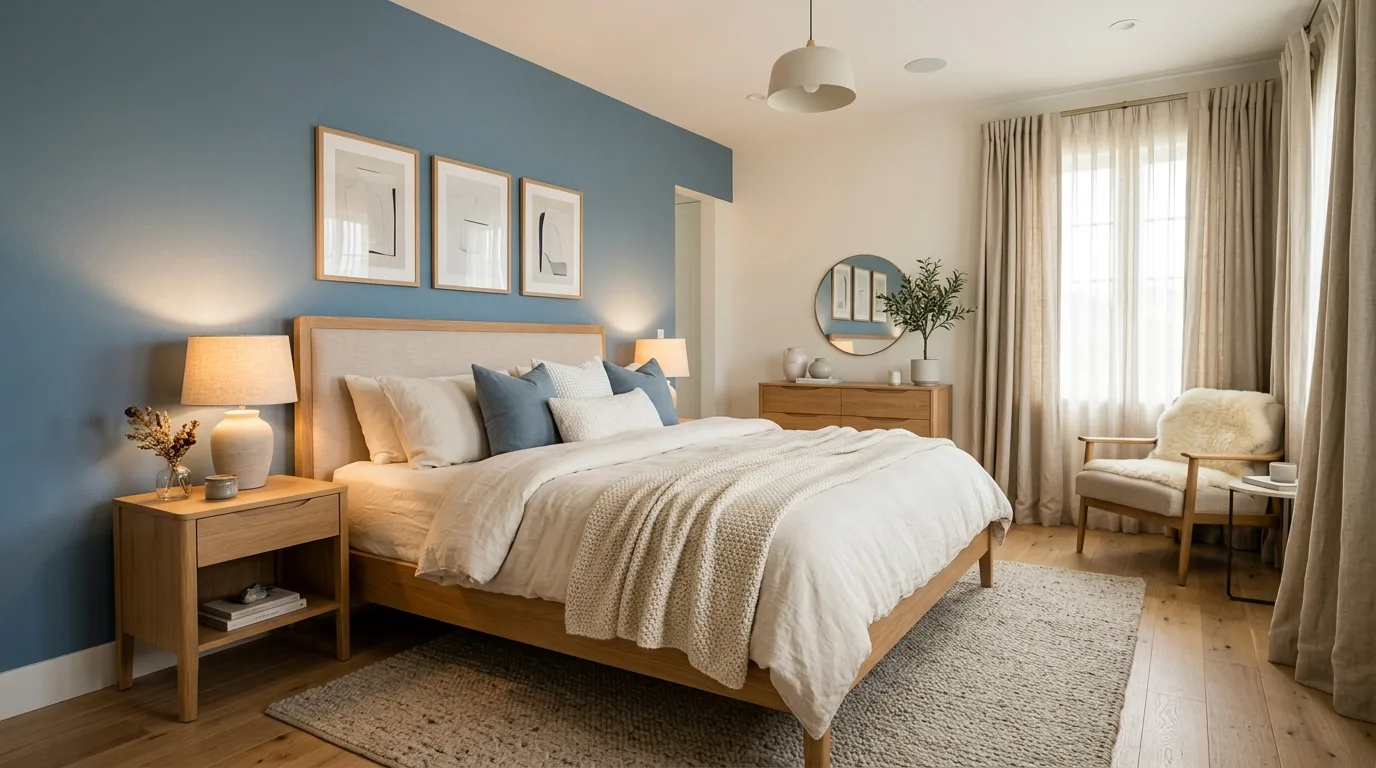
Dusty blue is softer than traditional medium blue and pairs beautifully with warm white. The subtle contrast creates a sophisticated bedroom without feeling formal. This combination is especially versatile because it works with both modern furniture and classic pieces.
For added warmth, introduce cream bedding, light oak furniture, and soft ambient lighting.
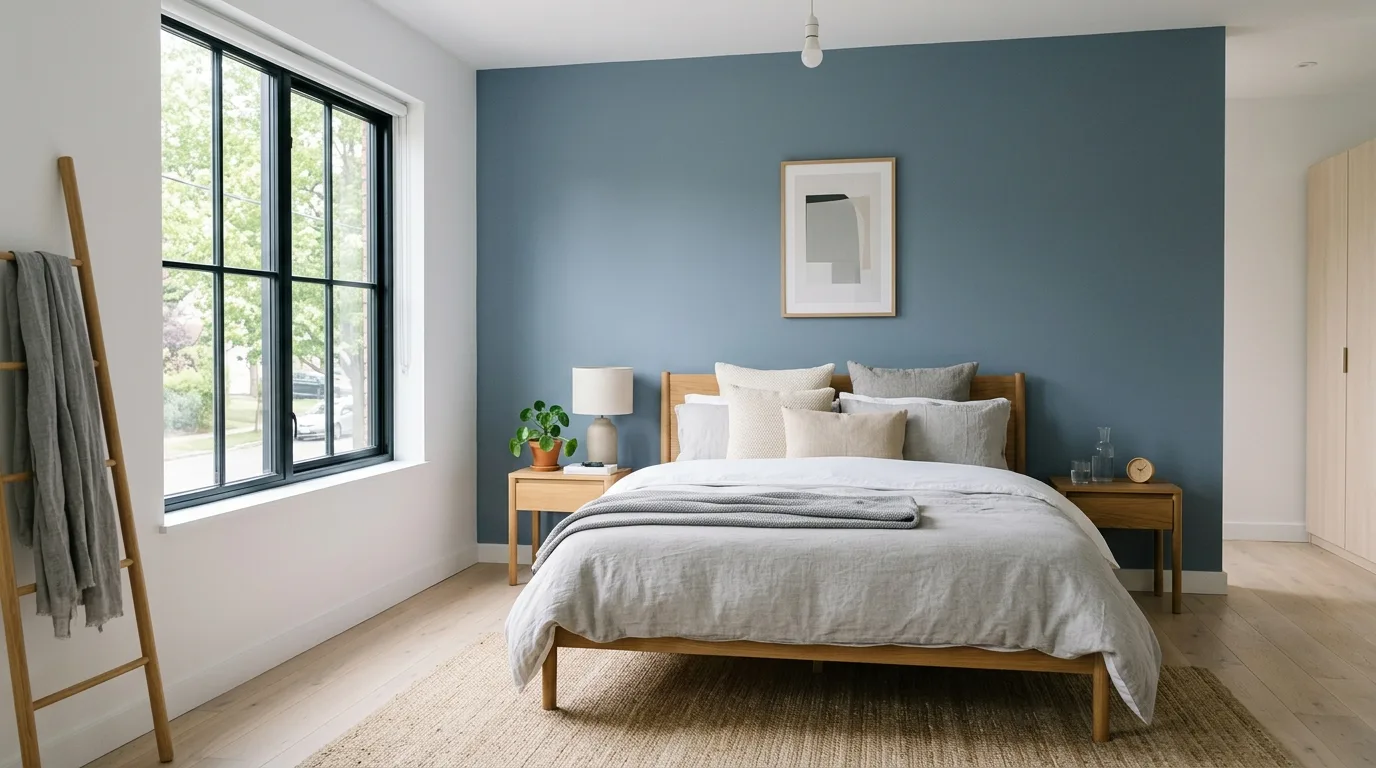
11. Blue-Grey and White
Blue-grey combines the calm character of blue with the understated quality of grey. Pairing it with white produces a clean and elegant bedroom that can adapt to minimalist, Scandinavian, or contemporary interiors. Use blue-grey as the dominant wall colour and white for trim, ceiling, or a contrasting wall.
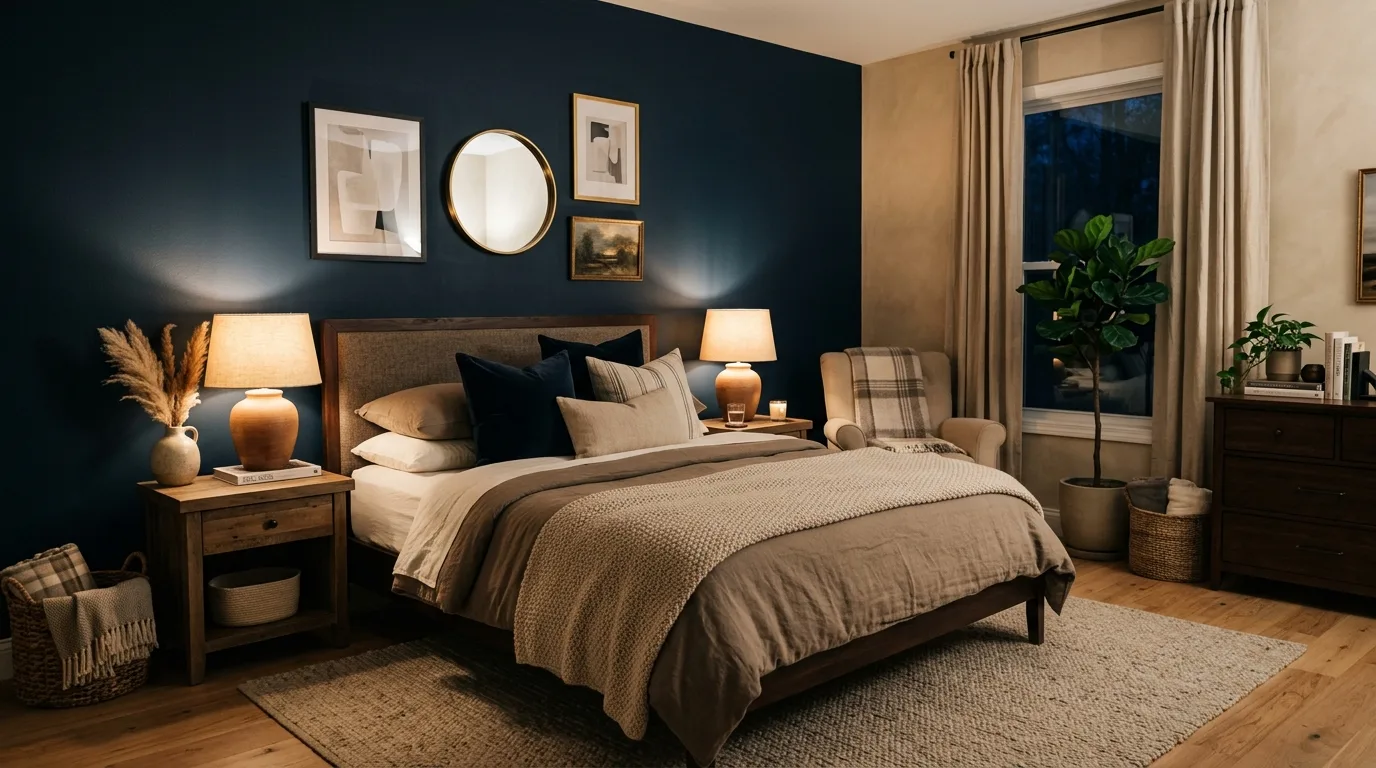
12. Midnight Blue and Beige
Midnight blue can give a bedroom a dramatic, cocooning quality, while beige keeps the overall palette approachable. This combination is particularly attractive in bedrooms with good natural light, where the dark blue can become a striking focal point without making the space feel gloomy.
Use beige upholstery, warm lamps, and natural textures to balance the intensity of midnight blue.
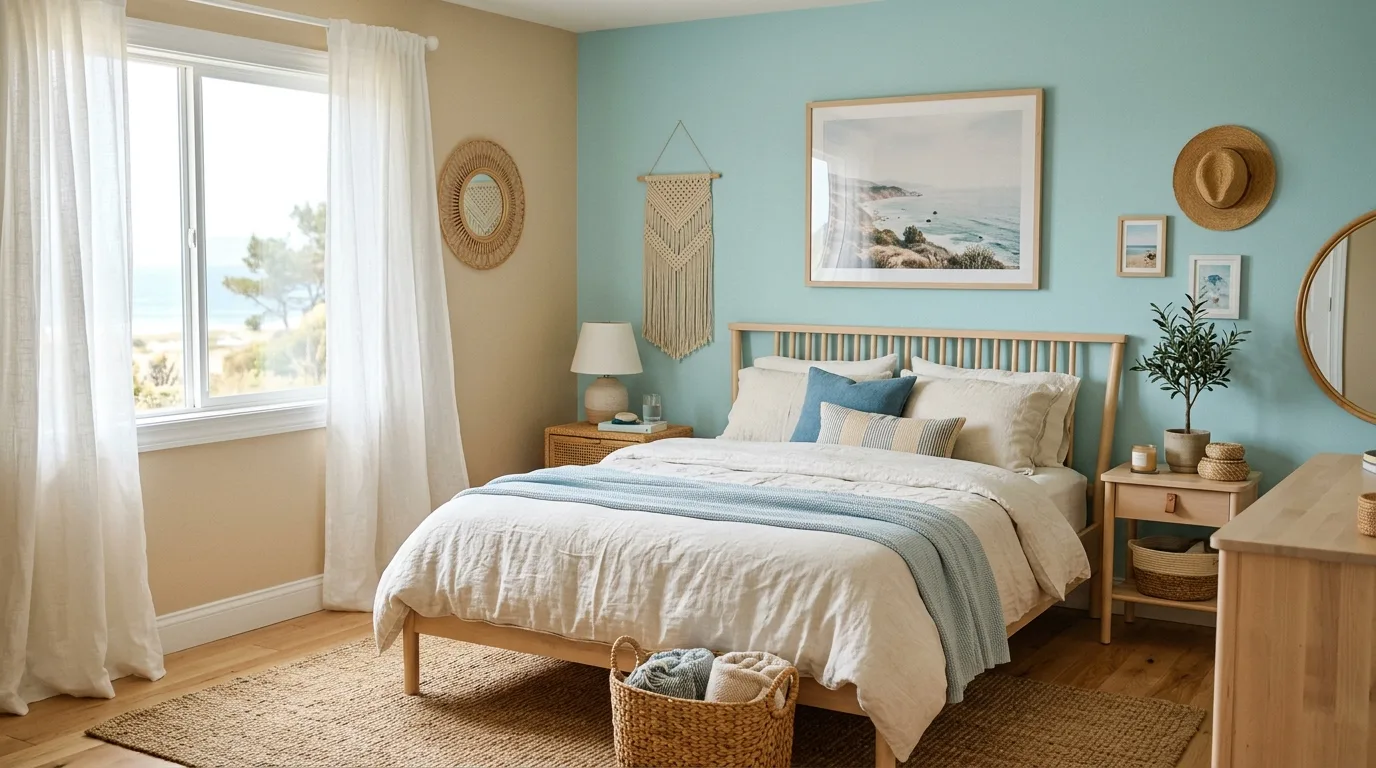
13. Aqua Blue and Sand
Aqua blue and sandy beige create a breezy, coastal-inspired bedroom. The combination feels fresh without relying on an overly themed beach aesthetic. Keep the aqua relatively soft and use sand-coloured paint or textiles to introduce warmth.
Light timber, woven accents, and off-white bedding can complete the relaxed look.
14. Petrol Blue and Pale Grey
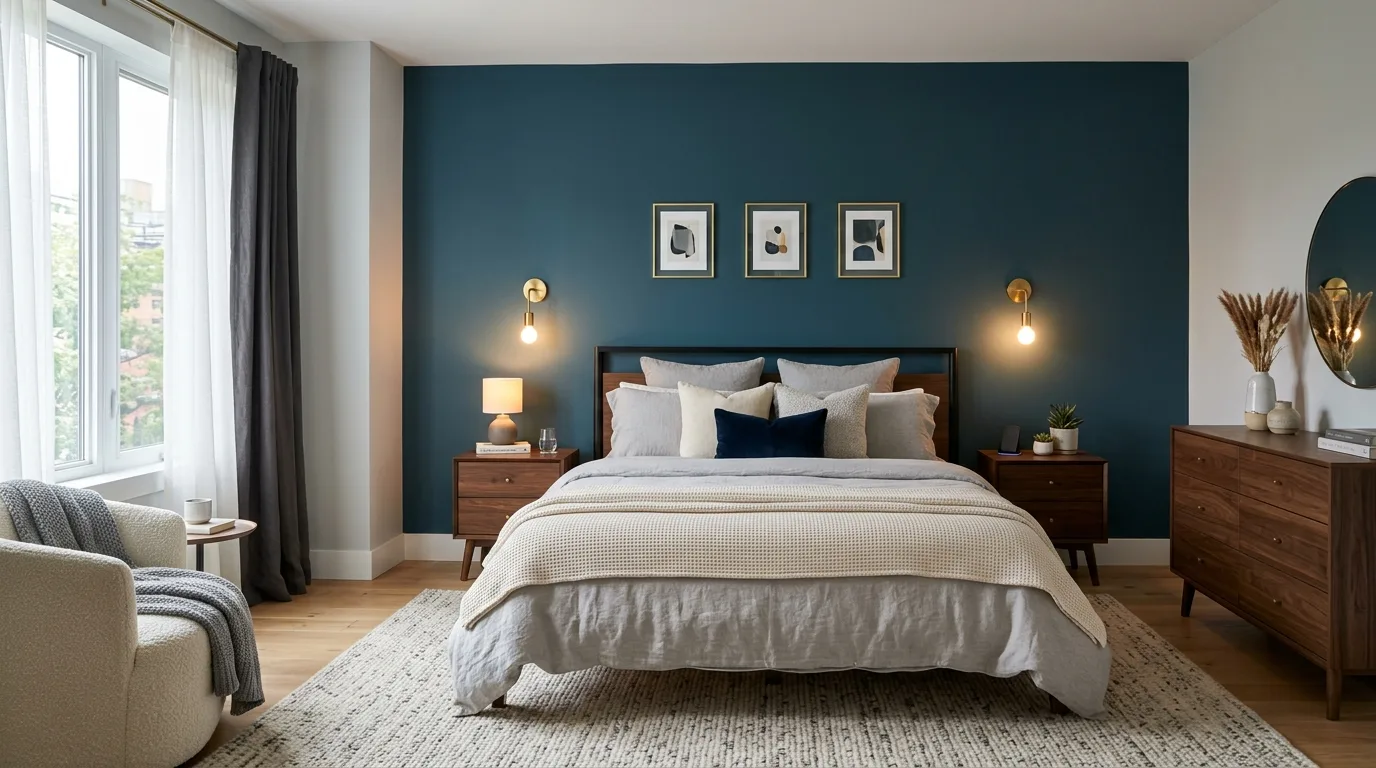
Petrol blue is a sophisticated choice for anyone who wants a deeper colour without committing to an almost-black navy. Combined with pale grey, it creates a refined and modern bedroom palette. A petrol-blue feature wall behind the bed can provide a strong anchor while pale grey walls keep the rest of the room balanced.
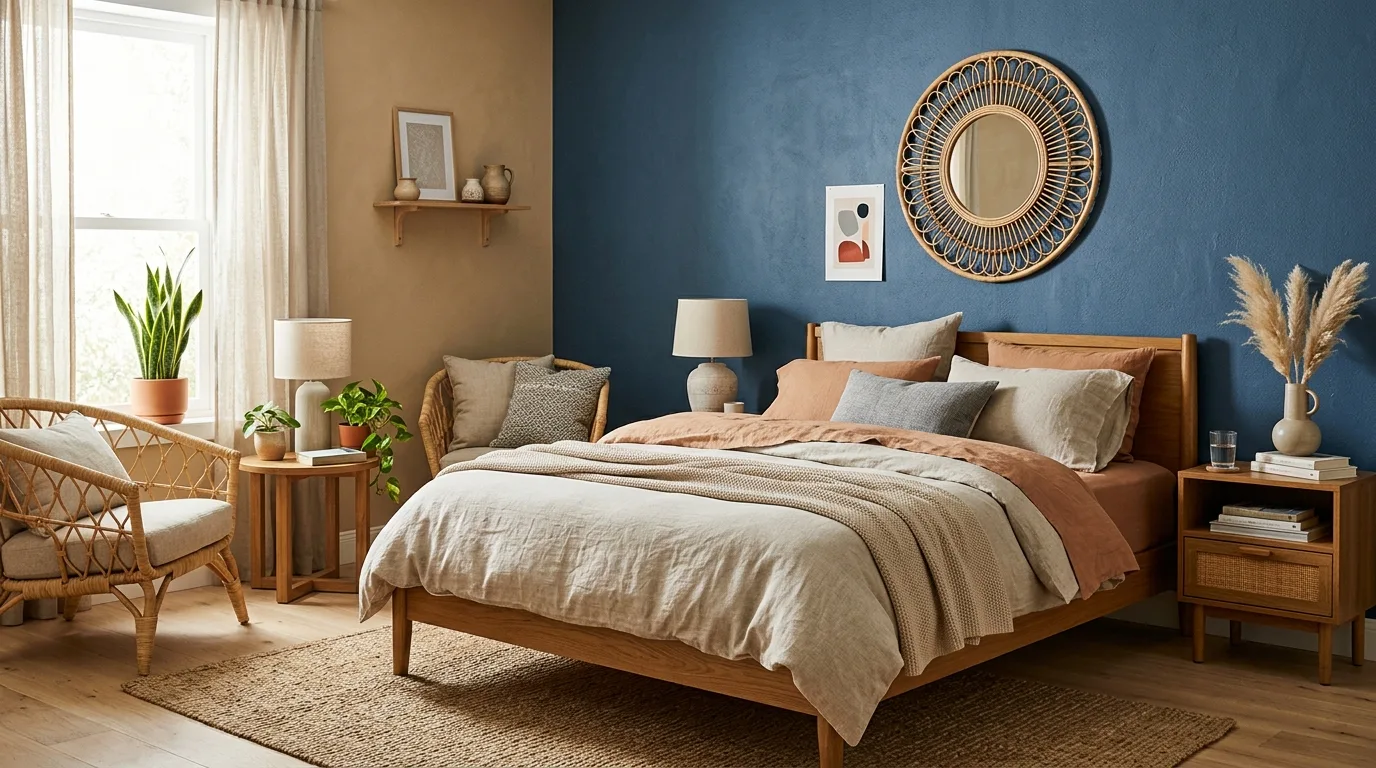
15. Blue and Terracotta
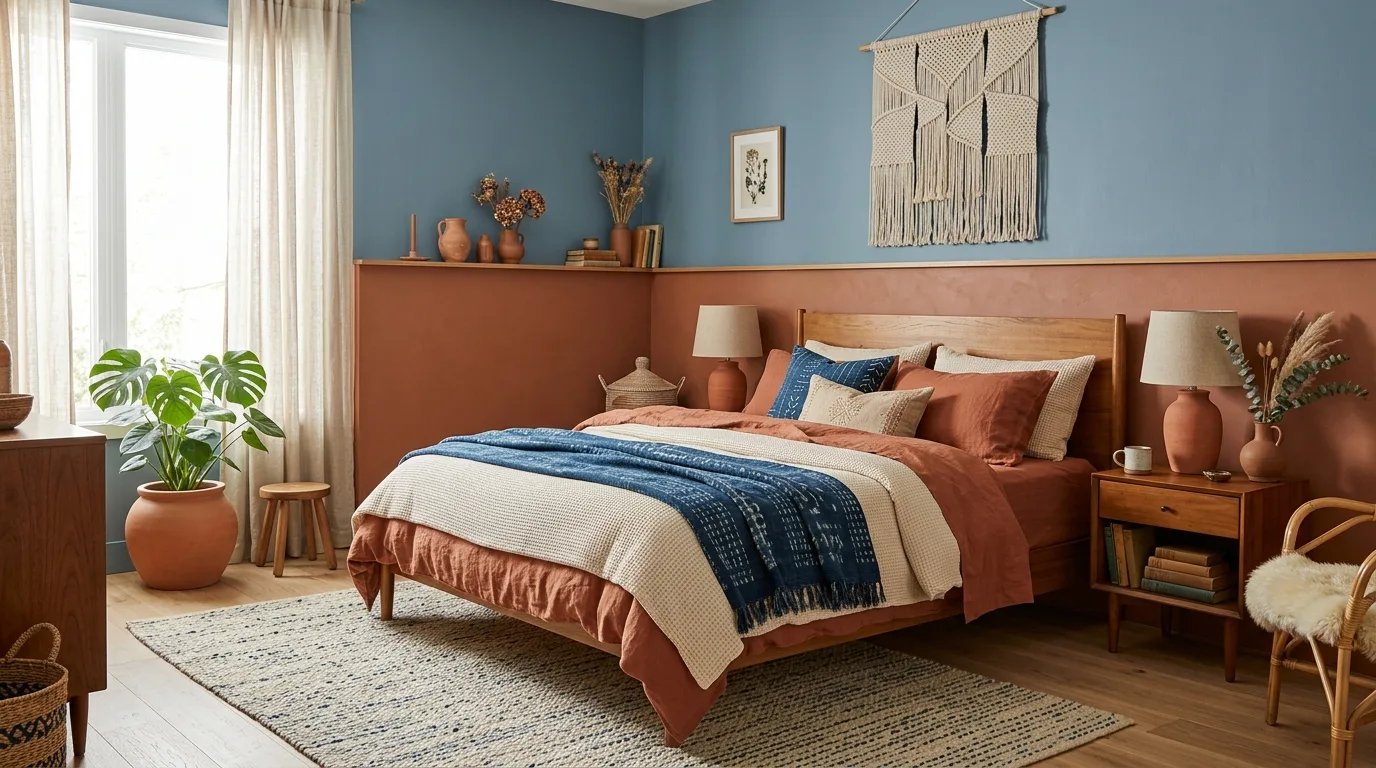
Blue and terracotta offer a striking warm-and-cool contrast. The earthy orange-red character of terracotta brings warmth to blue walls and works particularly well in rooms with wood, leather, clay, or woven finishes. For a controlled look, use terracotta on one smaller wall or as a painted accent alongside a muted blue.
16. Blue and Olive Green
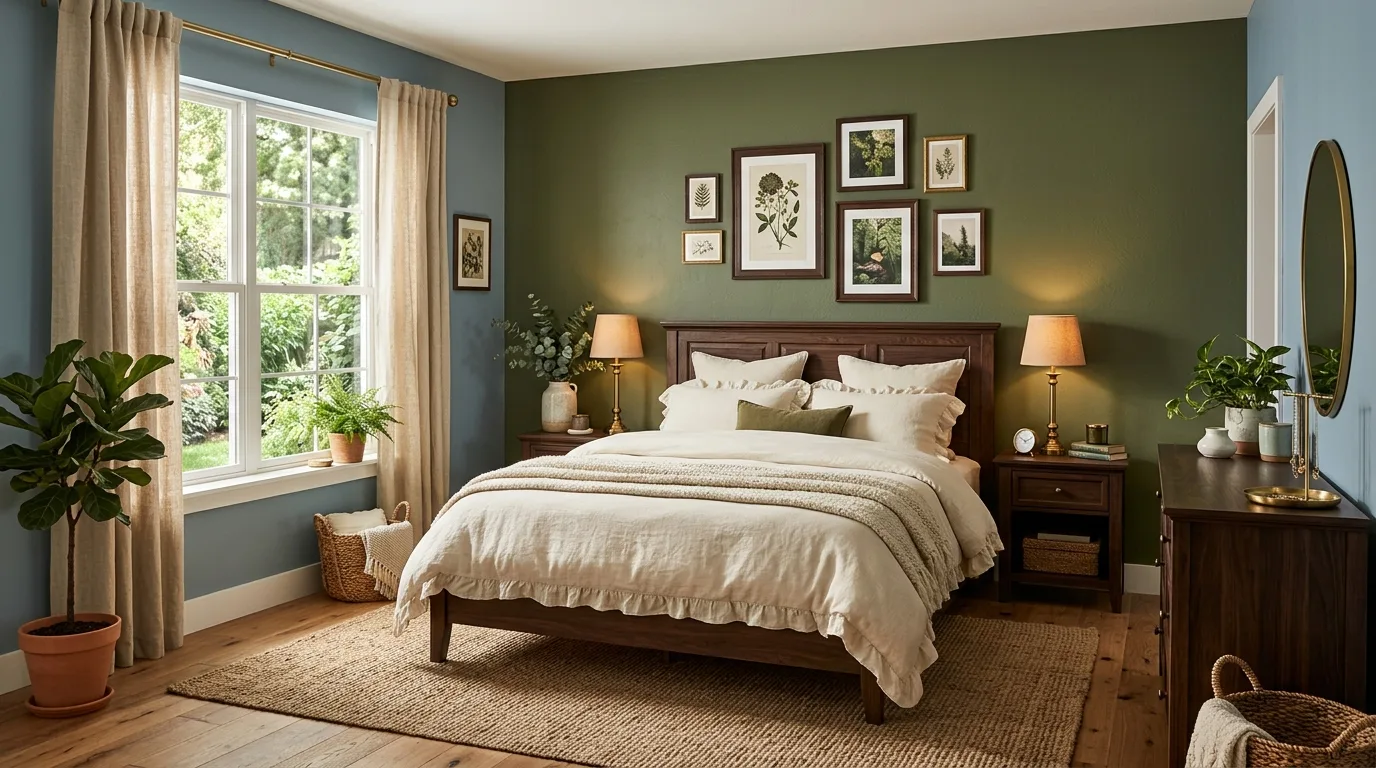
Blue paired with olive green creates a rich, grounded bedroom palette inspired by nature. The combination is best when both colours have slightly muted undertones, allowing them to sit comfortably together. Use blue as the primary wall colour and olive green on a secondary wall or architectural feature.
Brass hardware, cream fabrics, and dark wood can add sophistication without competing with the walls.
17. Cornflower Blue and Lavender
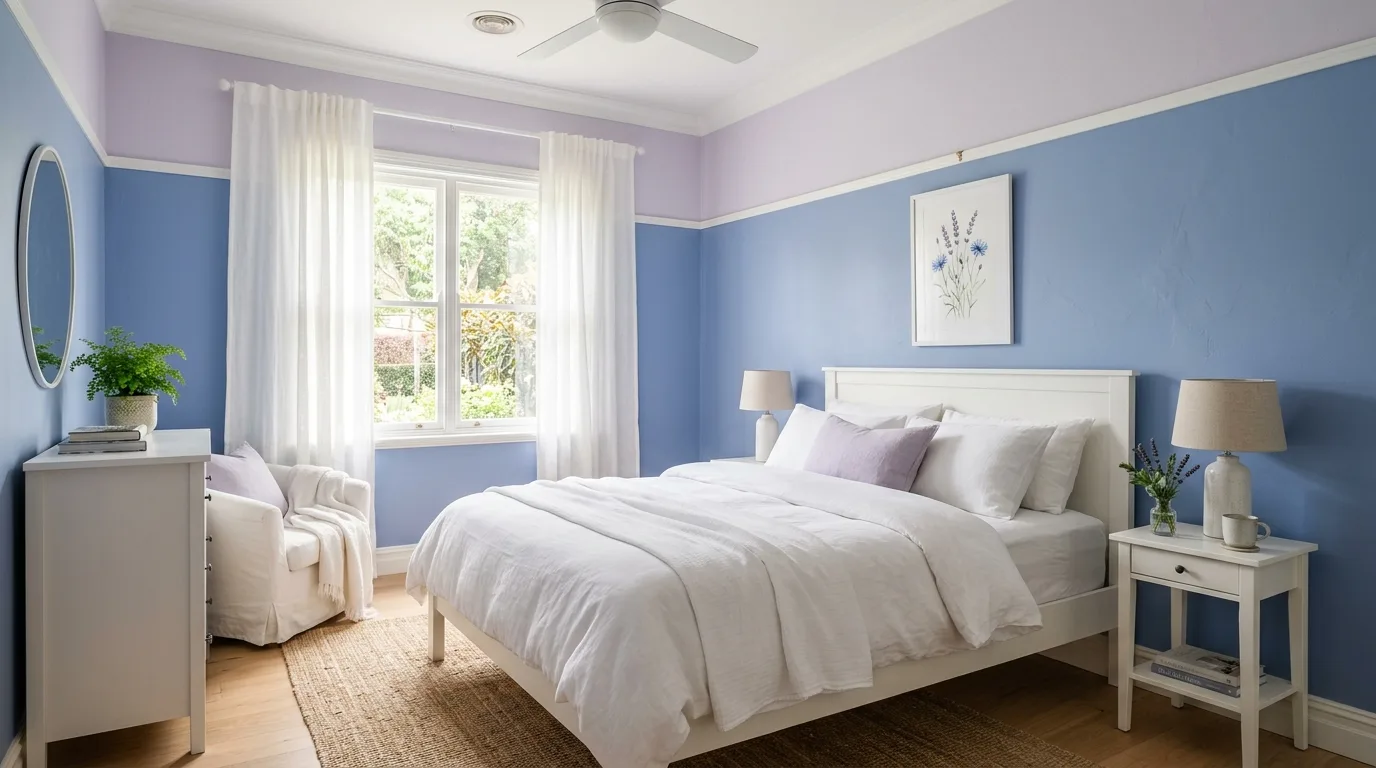
Cornflower blue and lavender make a soft, playful combination that suits bedrooms where you want a gentle touch of colour. Keep the shades light and slightly greyed for a mature finish. White ceilings and simple furniture will help preserve the airy quality of the palette.
18. Blue and Charcoal Grey
Blue and charcoal grey create a bold, modern bedroom with a sophisticated edge. Because both colours can be visually deep, use them thoughtfully and allow plenty of lighter surfaces elsewhere in the room. Blue behind the bed with charcoal on a smaller adjacent wall can create a dramatic layered effect.
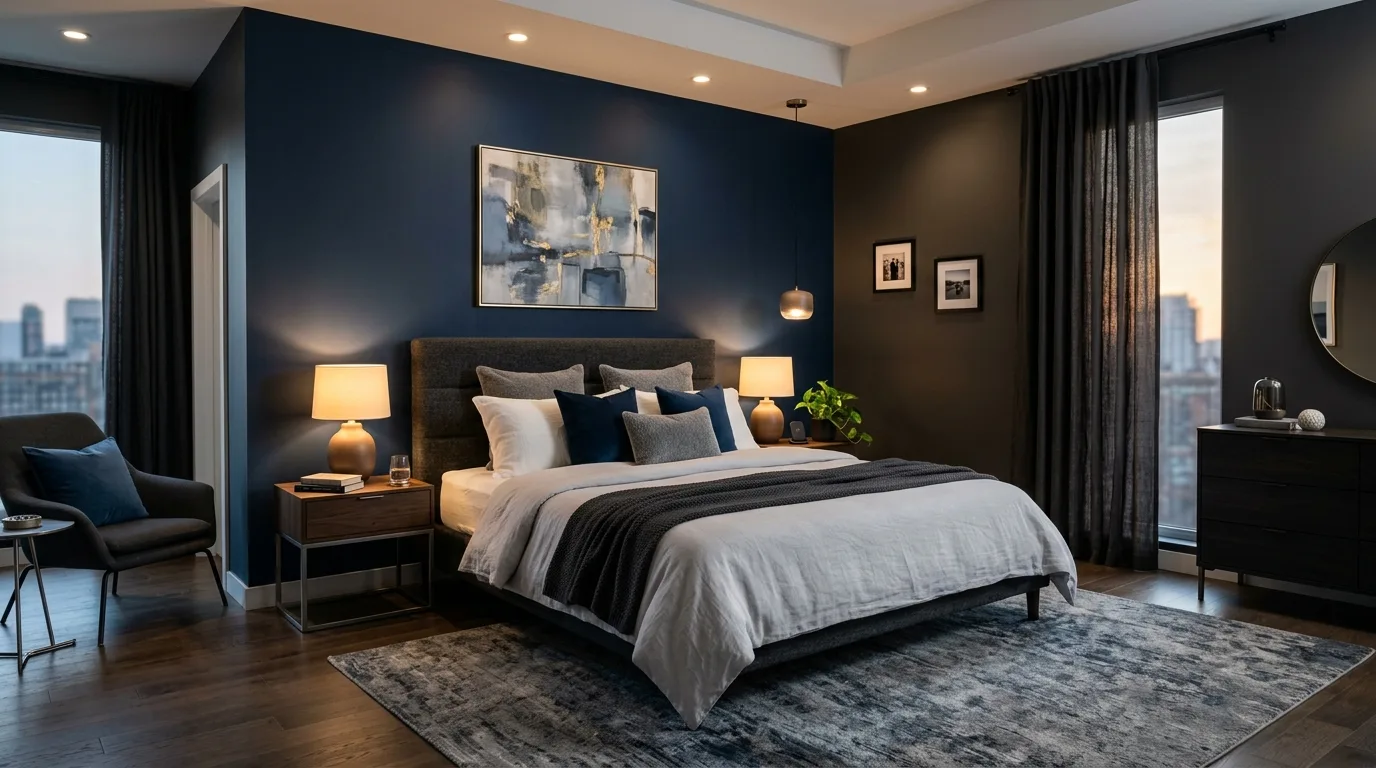
19. Blue and Pale Peach
Pale peach adds warmth to blue without creating the strong contrast of brighter orange or red. The result is welcoming and contemporary, especially when both shades are soft and dusty. Use blue as the dominant wall colour and pale peach for a secondary wall or a painted panel.
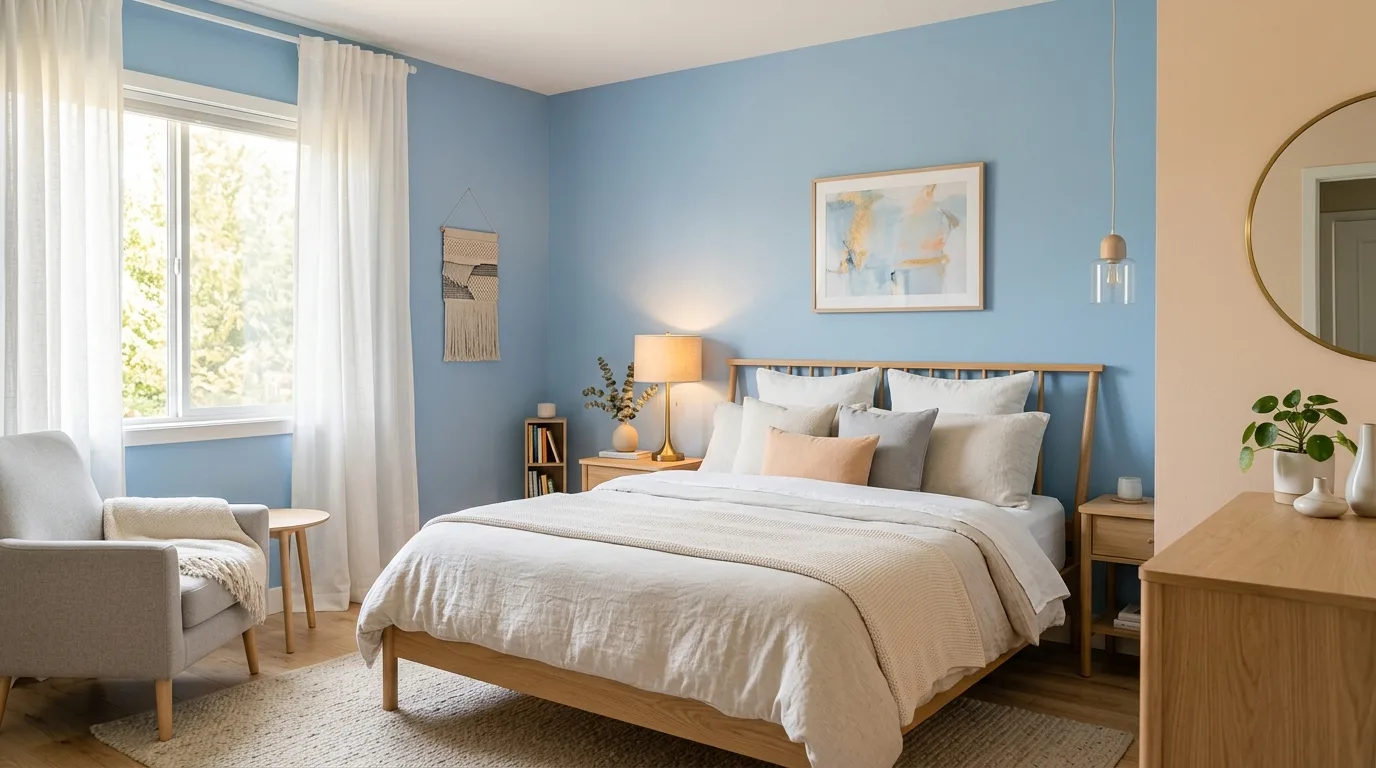
20. Blue and Natural Green
A soft blue paired with a muted natural green can make the bedroom feel fresh, restful, and connected to the outdoors. This combination works best when the colours share a similar level of softness. Natural materials such as wood, linen, cane, and cotton help bring the palette together.
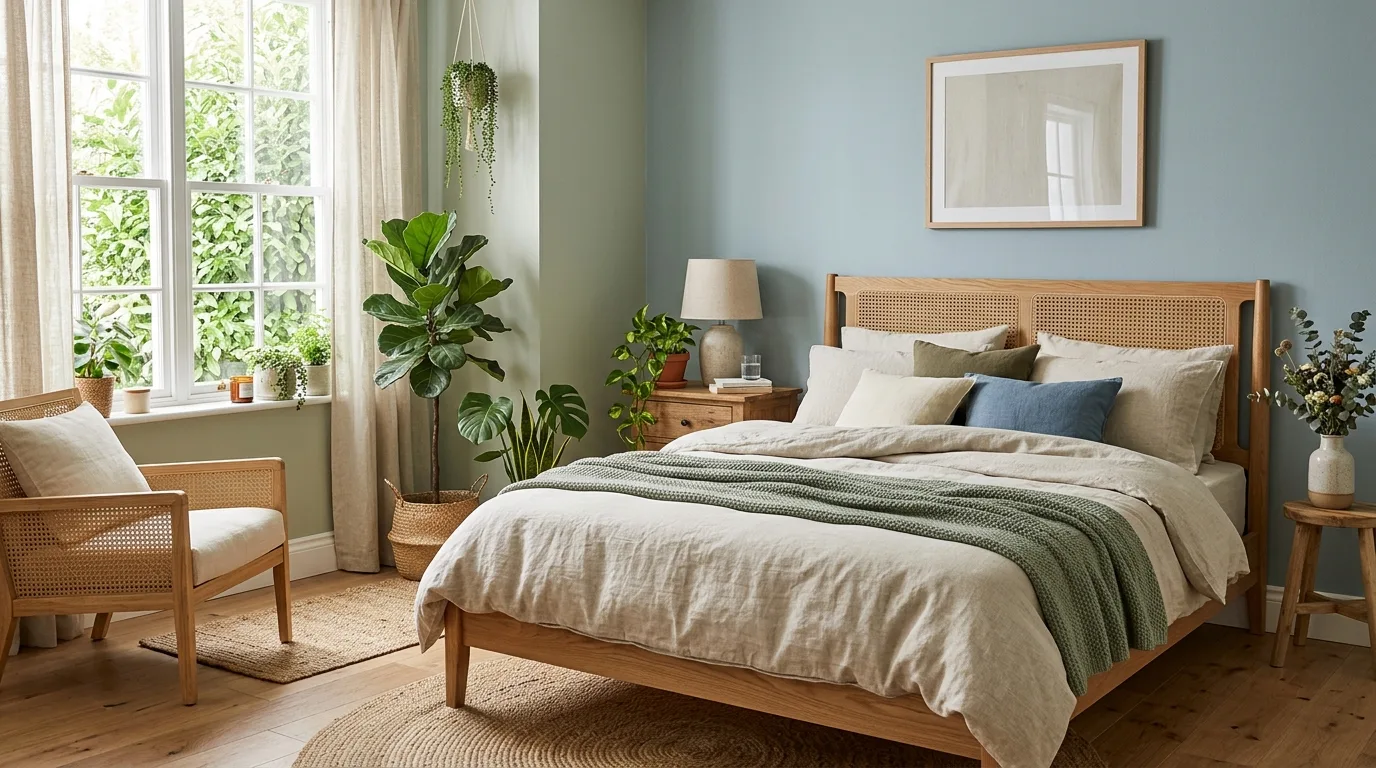
21. Blue and Mustard Yellow
Blue and mustard yellow create an energetic yet sophisticated contrast. Mustard brings warmth and personality to cooler blue walls, making the bedroom feel more vibrant. To avoid visual overload, use a restrained mustard shade on a smaller wall or architectural detail while allowing blue to remain the dominant colour.
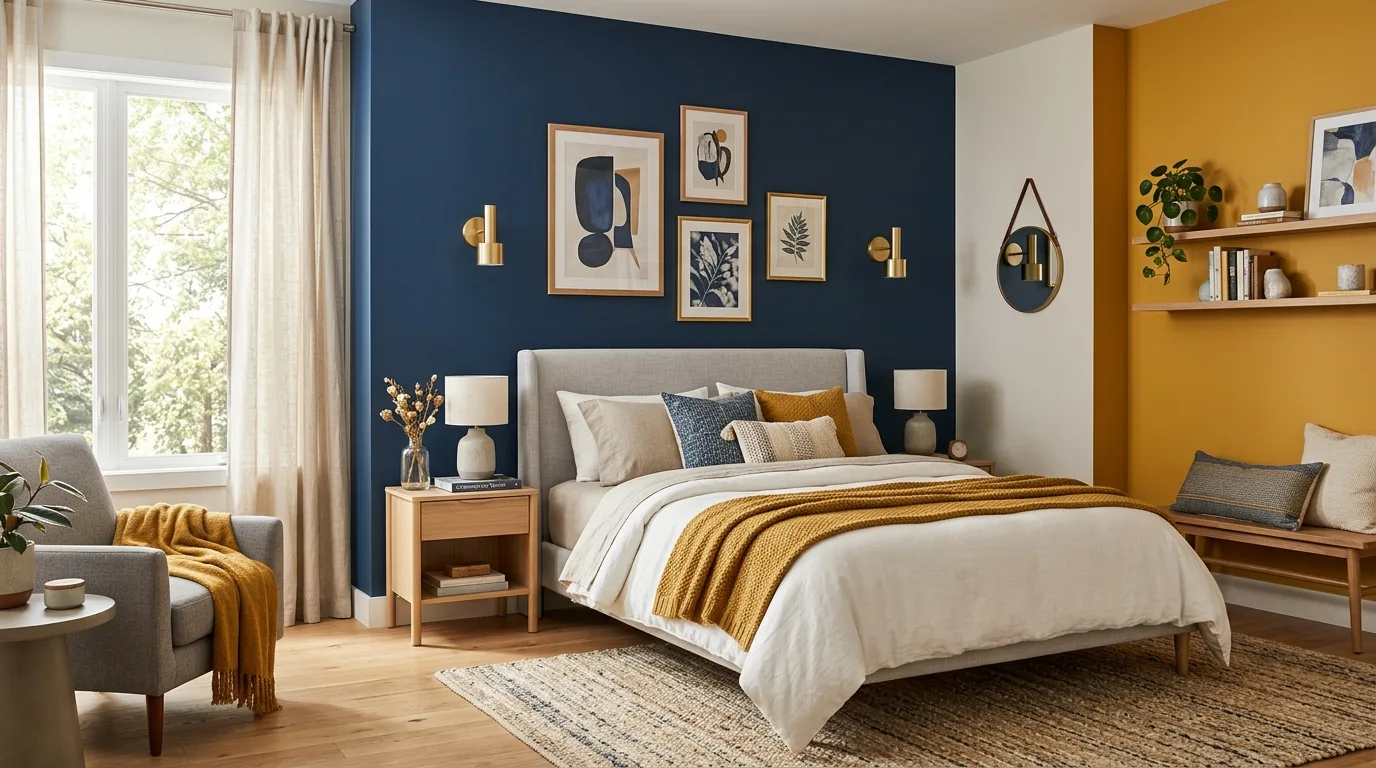
22. Blue and Greige
Blue and greige, a balanced mix of grey and beige, are an excellent choice for a modern bedroom that needs warmth without losing a clean aesthetic. Greige provides a versatile neutral backdrop while blue supplies colour and visual interest. This pairing works with contemporary, transitional, and minimalist interiors.
For a Pinterest-friendly finish, try a blue feature wall behind the bed, greige on the remaining walls, warm white bedding, and one or two natural wood accents.
How to Choose the Right Blue Two-Colour Combination
The best combination depends on the bedroom’s natural light, size, furniture, and the mood you want to create. Dark blues can make a large room feel more intimate, while pale blues can help a smaller room feel brighter. Warm neutrals such as beige, cream, taupe, and greige are useful when a blue palette feels too cool.
- For a small bedroom: choose pale blue with white, warm white, or a light neutral.
- For a cosy bedroom: consider navy, midnight blue, or deep blue with beige or taupe.
- For a modern bedroom: try blue with greige, charcoal, or pale grey.
- For a nature-inspired bedroom: combine blue with sage, olive, or muted green.
- For a warm and cheerful room: use blue with mustard, terracotta, peach, or blush.
Tips for Painting Two Colours on Bedroom Walls
Before committing to a combination, test both colours on the actual wall and observe them during morning, afternoon, and evening light. Paint samples can look noticeably different depending on the direction of the room and the type of artificial lighting.
For the easiest balanced result, make one shade the dominant colour and use the second shade selectively. A feature wall behind the bed, a half-wall treatment, vertical colour blocking, or a painted niche can introduce the second colour without making the room feel fragmented.
Final Thoughts
Blue gives bedroom walls enormous flexibility, but the second colour determines much of the final mood. Pair blue with white or warm neutrals for a timeless look, earthy shades for warmth, greens for a natural feel, or brighter accents for personality. Whichever combination you choose, keep the undertones compatible and let the room’s lighting guide the final decision.