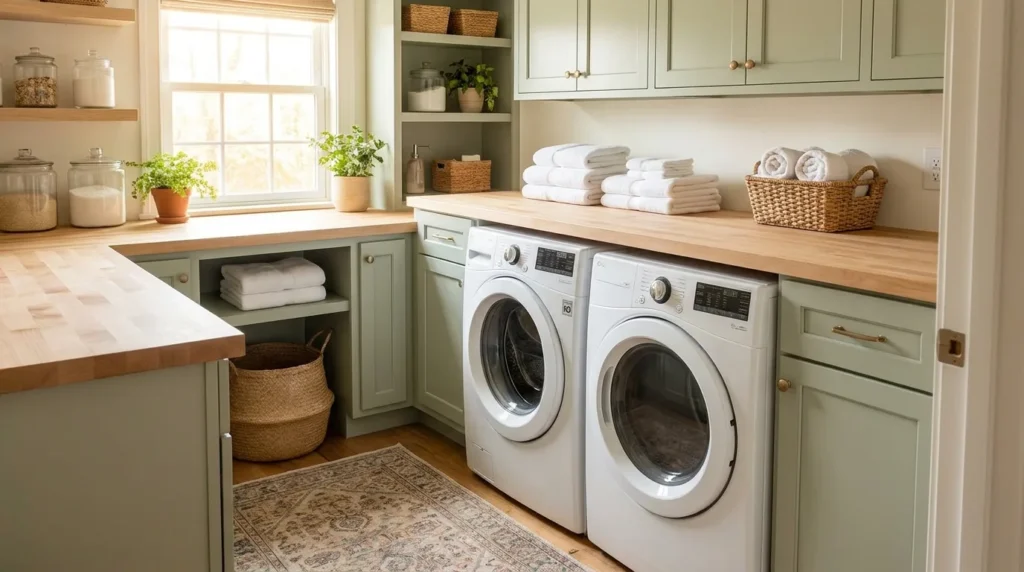
A well-organized laundry room can make one of the most repetitive household chores feel noticeably easier. Whether you have a spacious utility room or a compact laundry closet, smart storage helps keep detergent, cleaning supplies, linens, and everyday laundry essentials within reach without creating visual clutter. The best organization ideas combine practical storage with simple systems that are easy to maintain. Think vertical shelving, labeled containers, hidden hampers, and dedicated spaces for items that otherwise tend to pile up. These laundry room organization tips are designed to work in real homes, with ideas you can adapt to your available space and budget. They also add a polished, Pinterest-worthy look while keeping the room functional. Start with one or two changes, then build a storage system that fits your family’s laundry routine.
1. Install Shelving Above the Washer and Dryer
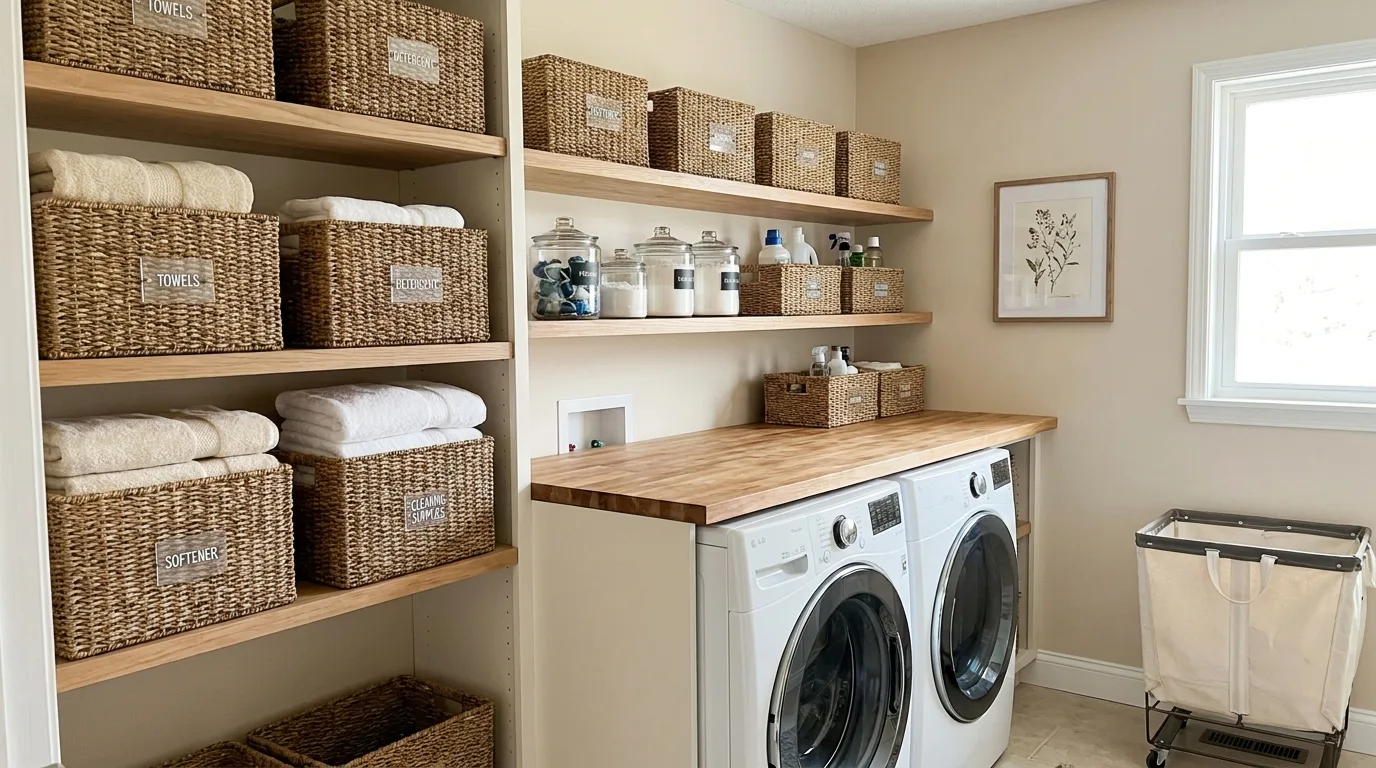
One of the easiest ways to gain useful laundry room storage is to use the wall above your washer and dryer. Floating shelves, sturdy wall-mounted shelves, or a simple built-in unit can turn otherwise wasted vertical space into a convenient storage zone. Keep frequently used detergent, stain remover, dryer sheets, and laundry accessories on the lower shelf where they are easy to reach. Higher shelves can hold extra towels, spare bedding, or less frequently used cleaning products. For a tidy appearance, group small supplies in baskets or matching bins. If your machines are side by side, consider installing shelves across their full width to create a cohesive look. This approach keeps the countertop clear while making everyday laundry supplies visible and accessible.
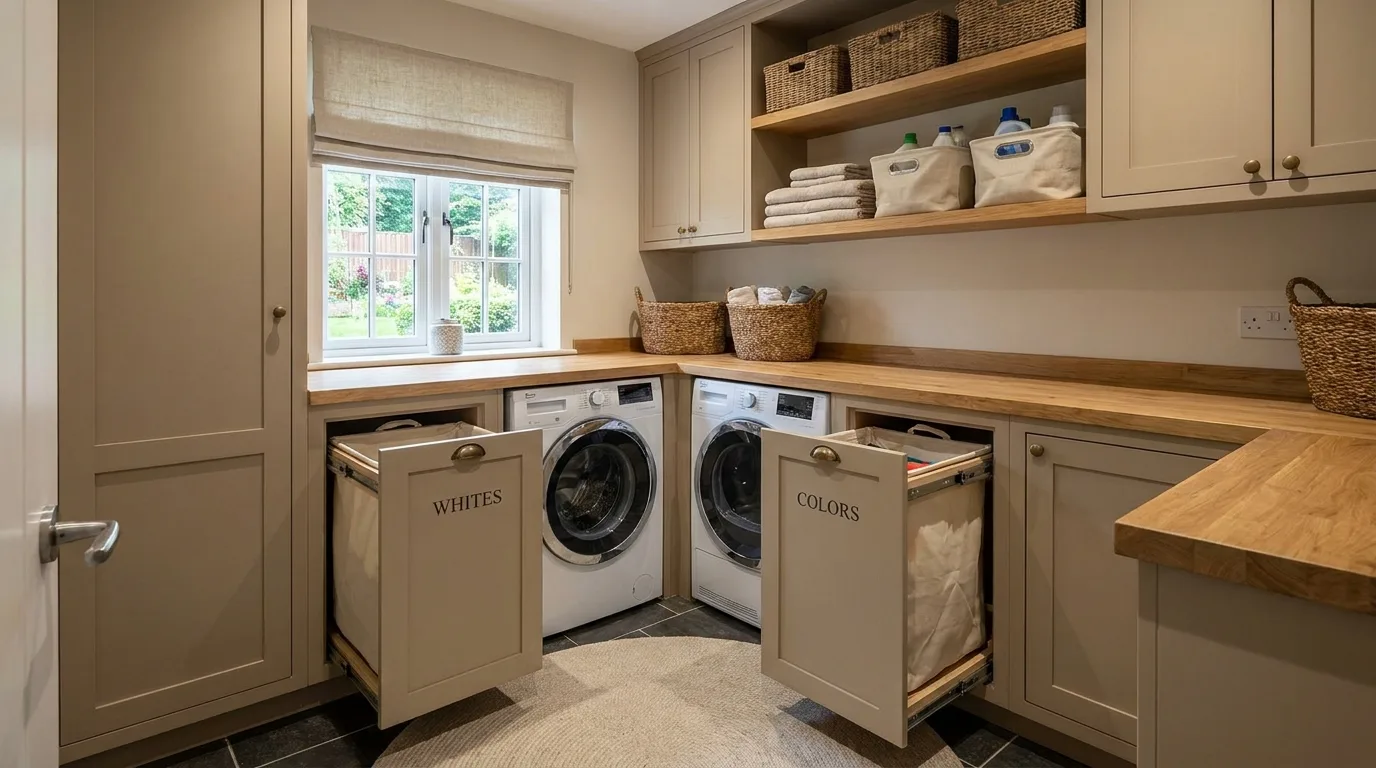
2. Add Pull-Out Bins for Dirty Laundry
Open laundry baskets can quickly make a room look messy, especially when several family members sort clothes differently. Pull-out hampers offer a cleaner alternative by giving each category of laundry its own hidden compartment. Depending on your needs, you might use separate bins for whites, colors, towels, and delicates, or simply designate one bin for everyday clothing and another for linens. Cabinet-style pull-out hampers are particularly useful in small laundry rooms because they conceal clutter without taking up much visual space. Choose ventilated baskets when possible so damp clothing has some airflow. If custom cabinetry is outside your budget, freestanding rolling hampers can provide a similar function and can be moved whenever you need easier access to the machines.
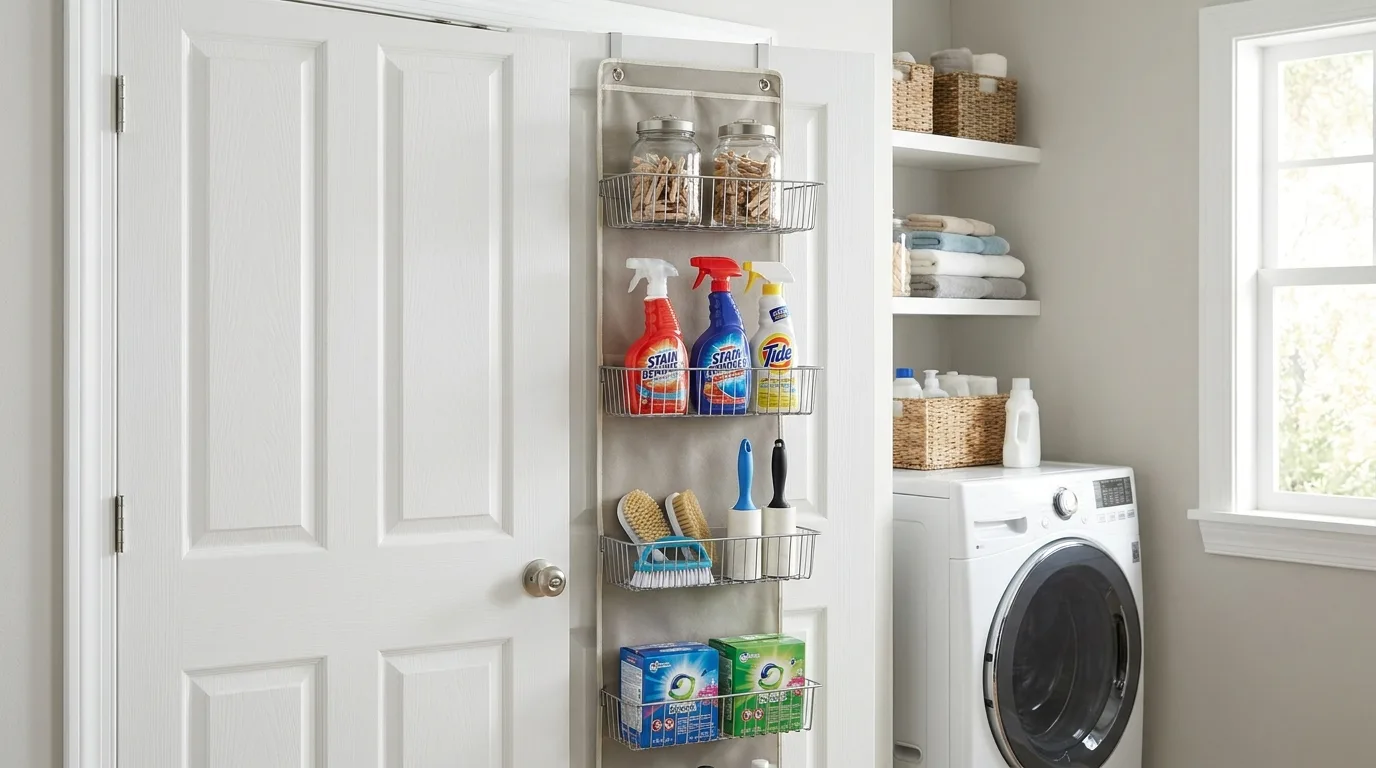
3. Make the Most of the Door
The back of a laundry room door is valuable storage real estate that is often overlooked. An over-the-door organizer can hold stain sticks, fabric-care products, clothespins, brushes, small tools, and other lightweight supplies. For a more built-in appearance, install narrow hooks, rails, or shallow shelves directly onto the door if its construction allows it. A door-mounted drying rack is another practical choice, particularly for apartments and laundry closets where floor space is limited. Keep heavier products off lightweight organizers and check that the door still closes comfortably after everything is installed. By assigning the door to small, frequently misplaced items, you can free up shelves and cabinets for bulkier supplies while keeping useful essentials close at hand.
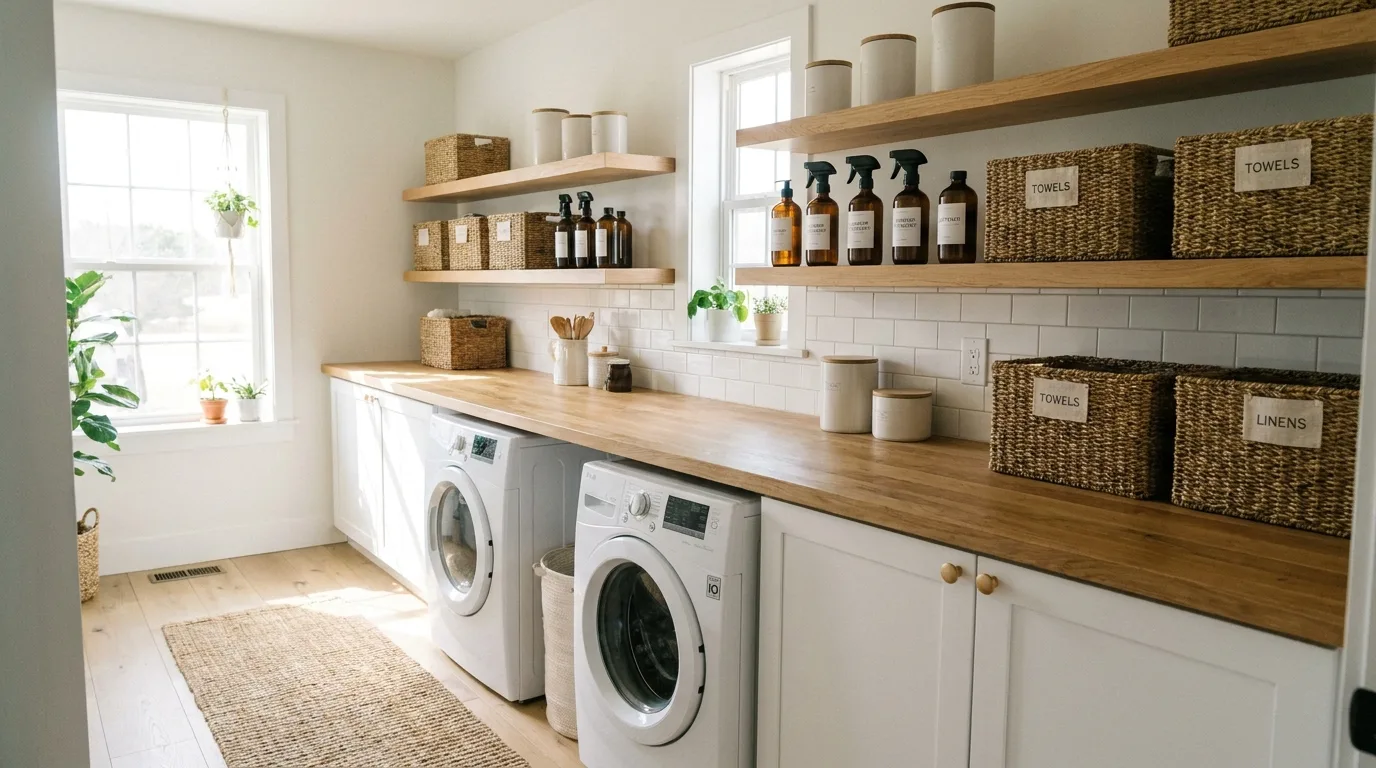
4. Create a Dedicated Folding Station
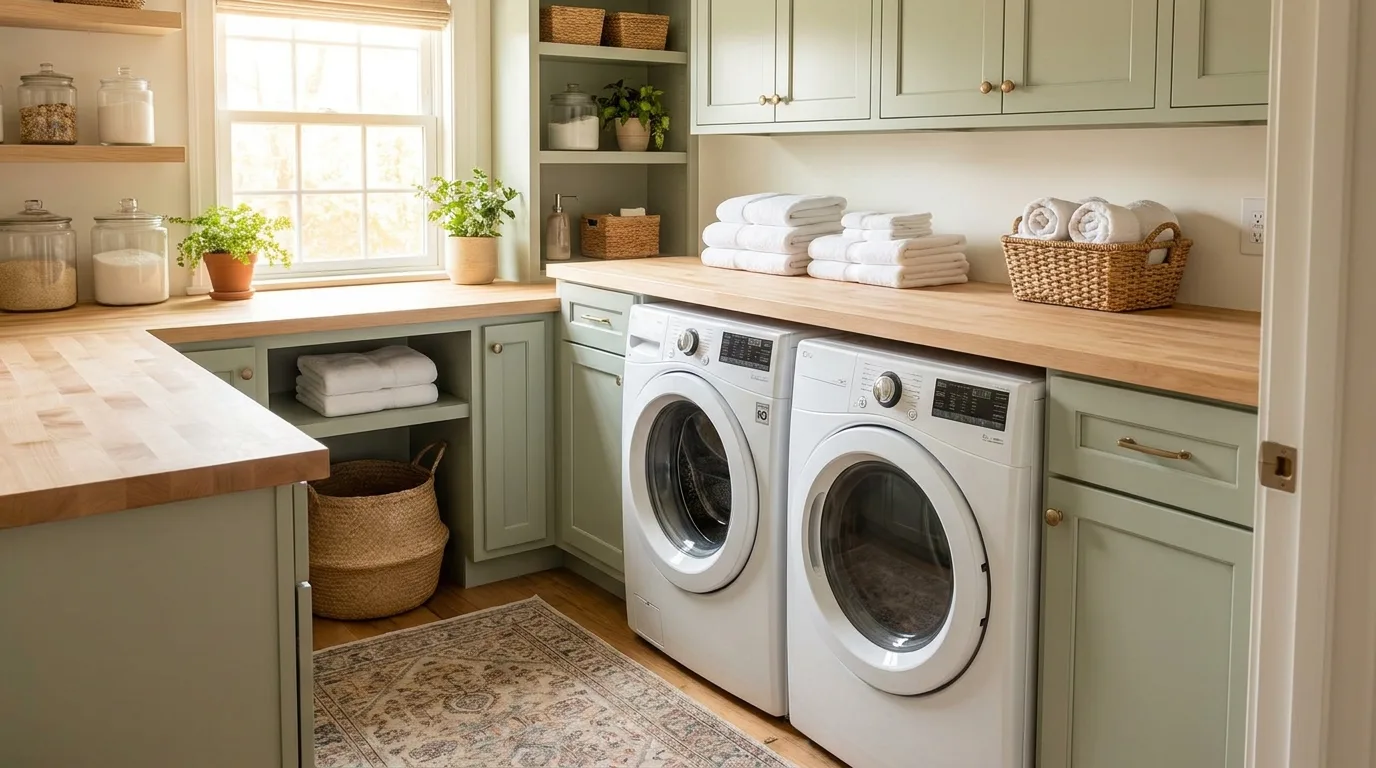
A dedicated folding surface can dramatically improve the workflow of a laundry room. If your washer and dryer are front-loading, a countertop installed above them can create a generous folding station without requiring additional floor space. In a larger room, a narrow table or wall-mounted folding counter can serve the same purpose. Keep the surface mostly clear so freshly dried clothes have somewhere to land. You can place a small basket nearby for socks that need matching or clothes that require repairs. A folding station is also a good reason to move unnecessary items out of the laundry room; every inch should support the process of washing, drying, folding, or putting away clothes. A simple, uncluttered surface can make laundry feel far more manageable.
5. Use Matching Baskets to Control Clutter
Storage baskets are an easy way to make open shelving look intentional while keeping loose laundry supplies contained. Choose baskets that fit the dimensions of your shelves rather than buying them first and hoping they work later. Matching or coordinating baskets create a calmer visual effect, but the system should remain practical above all else. Use one basket for extra detergent, another for cleaning cloths, and another for seasonal laundry supplies. Shallow baskets are useful for small accessories, while deeper baskets can store towels or spare linens. Labels make the system easier for everyone in the household to maintain. Even inexpensive baskets can give a laundry room a more finished appearance while preventing shelves from becoming collections of half-used products.
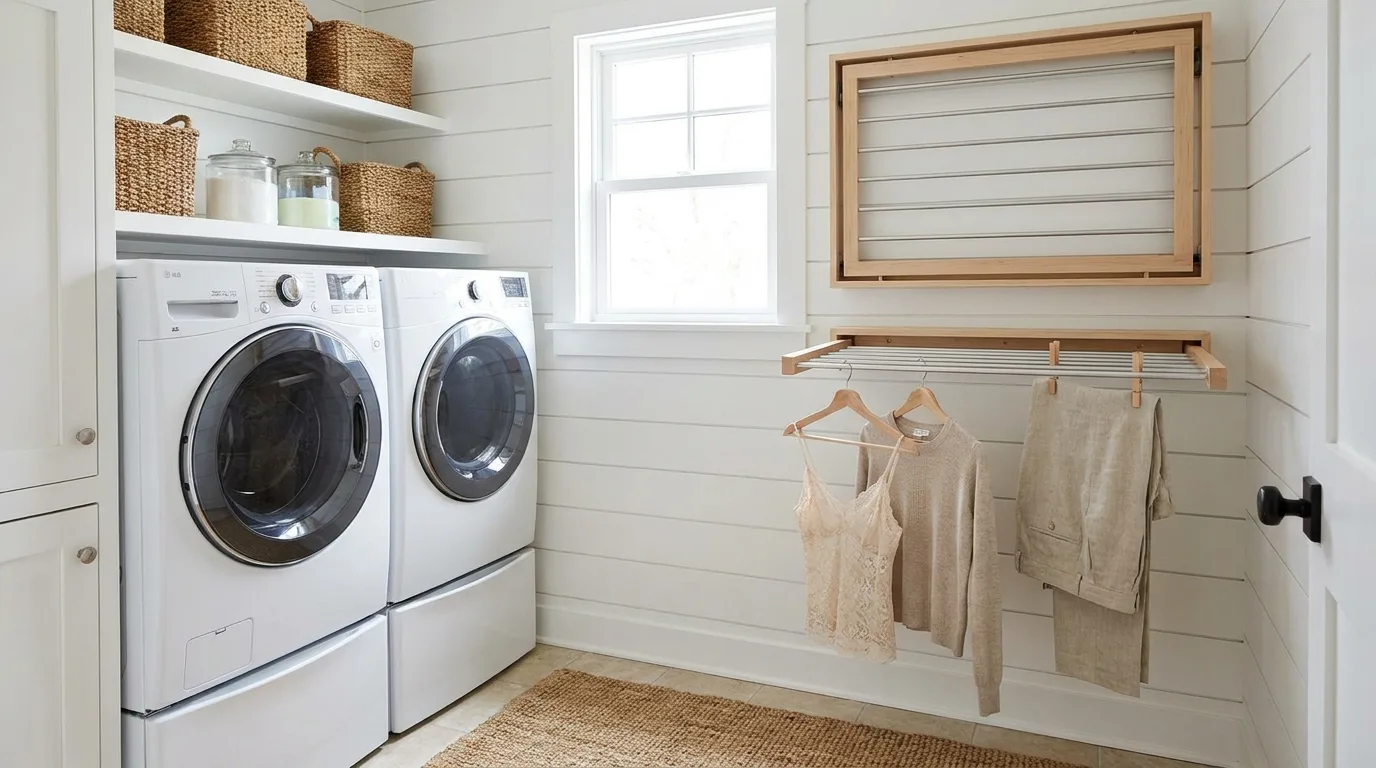
6. Install a Wall-Mounted Drying Rack
Air-drying delicate clothing is much easier when you have a dedicated place to do it. A wall-mounted drying rack can provide that space without permanently occupying valuable floor area. Folding models are particularly effective because they can be opened when needed and tucked flat against the wall afterward. Install the rack near the washer or dryer so transferring delicate items requires minimal effort. If the room has enough wall space, a rack with multiple levels can handle several garments at once. Before installing one, make sure the wall and mounting hardware can support its intended load. This small addition can eliminate the habit of hanging wet clothes over doors, chairs, and cabinet handles, keeping the entire laundry area more orderly.
7. Store Detergent in Easy-to-Use Containers
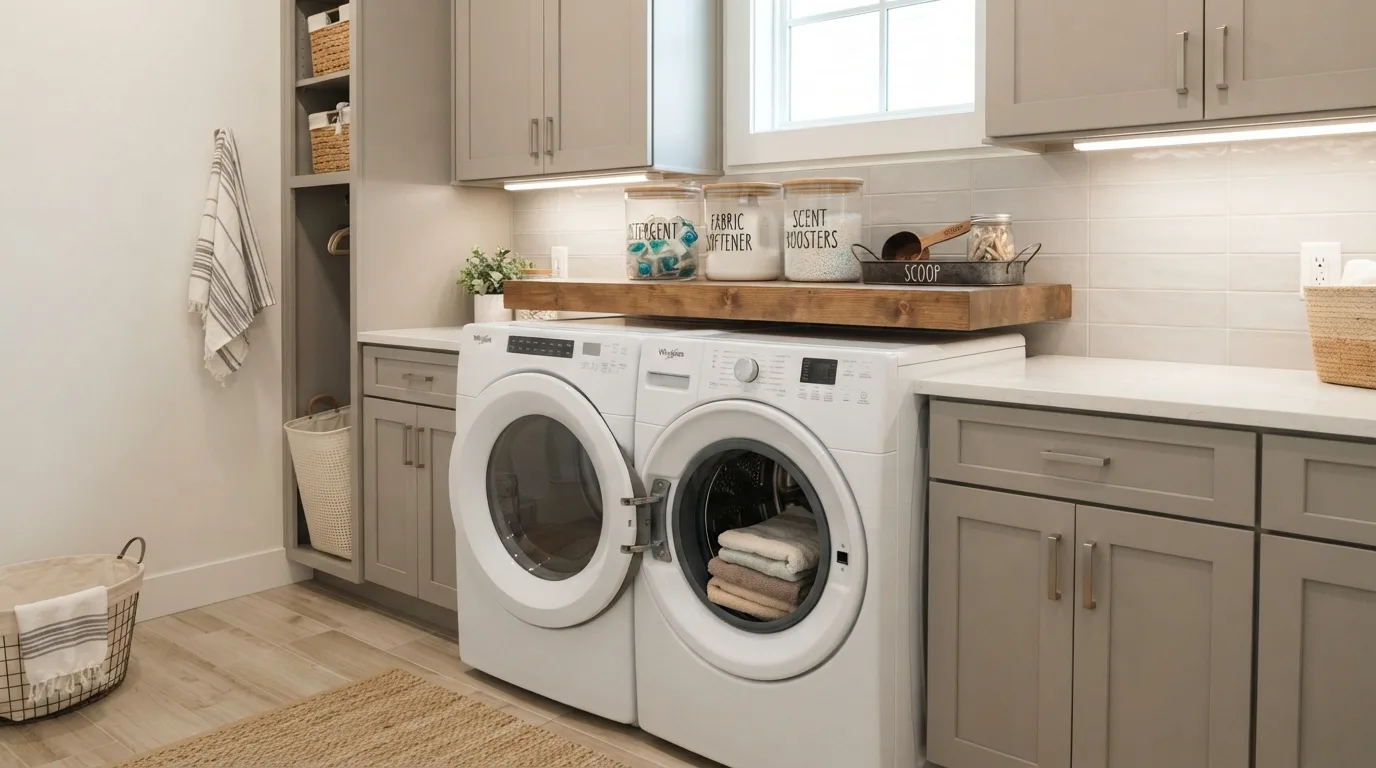
Large detergent bottles can take up considerable shelf space and often create a cluttered appearance. Decanting detergent into clearly labeled, compatible containers can create a more streamlined storage system, provided the original product information and safety instructions remain accessible. Choose containers designed to hold the specific type of detergent you use and make sure they close securely. For powder products, a wide opening can make scooping easier; for liquid detergent, a controlled-pour container may reduce spills. Keep laundry chemicals away from children and pets, and never mix products simply for the sake of storage. The goal is not just aesthetics. A well-planned detergent station should make measuring, refilling, and cleaning up easier while keeping frequently used products organized and easy to identify.
8. Add a Slim Rolling Cart
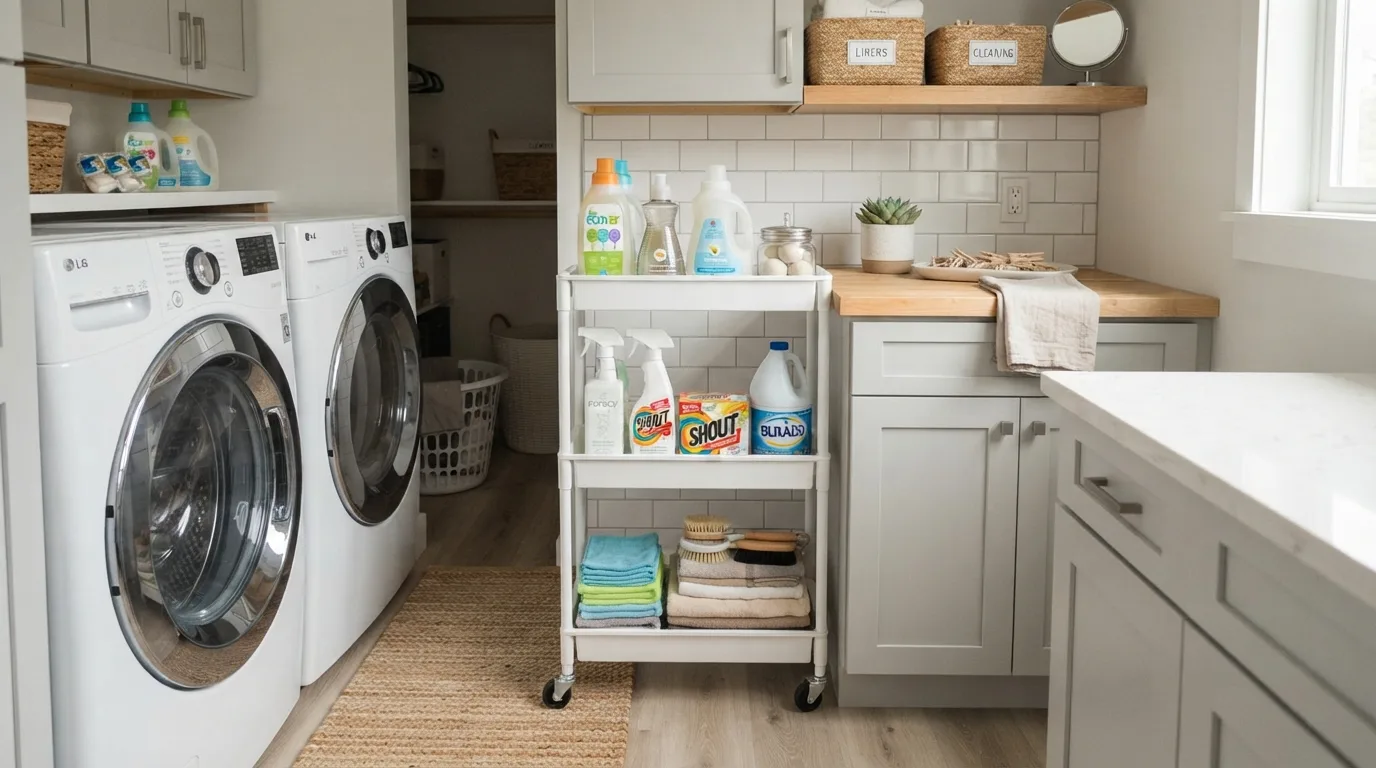
A narrow rolling cart can solve a surprising number of laundry room storage problems. Look for a model slim enough to fit between the washer and dryer, beside a cabinet, or in another unused gap. Its shelves can hold detergent, stain-treatment supplies, cleaning cloths, brushes, and other small essentials. Because the cart rolls out, items stored toward the back remain accessible instead of disappearing into a deep cabinet. It is also useful in rental homes where permanent shelving may not be an option. Choose a cart with raised edges if you plan to store bottles, and avoid overloading it so it remains stable when moved. A rolling cart is especially helpful for small laundry spaces because it adds storage without committing the entire room to another fixed piece of furniture.
9. Create a Small Stain-Treatment Station
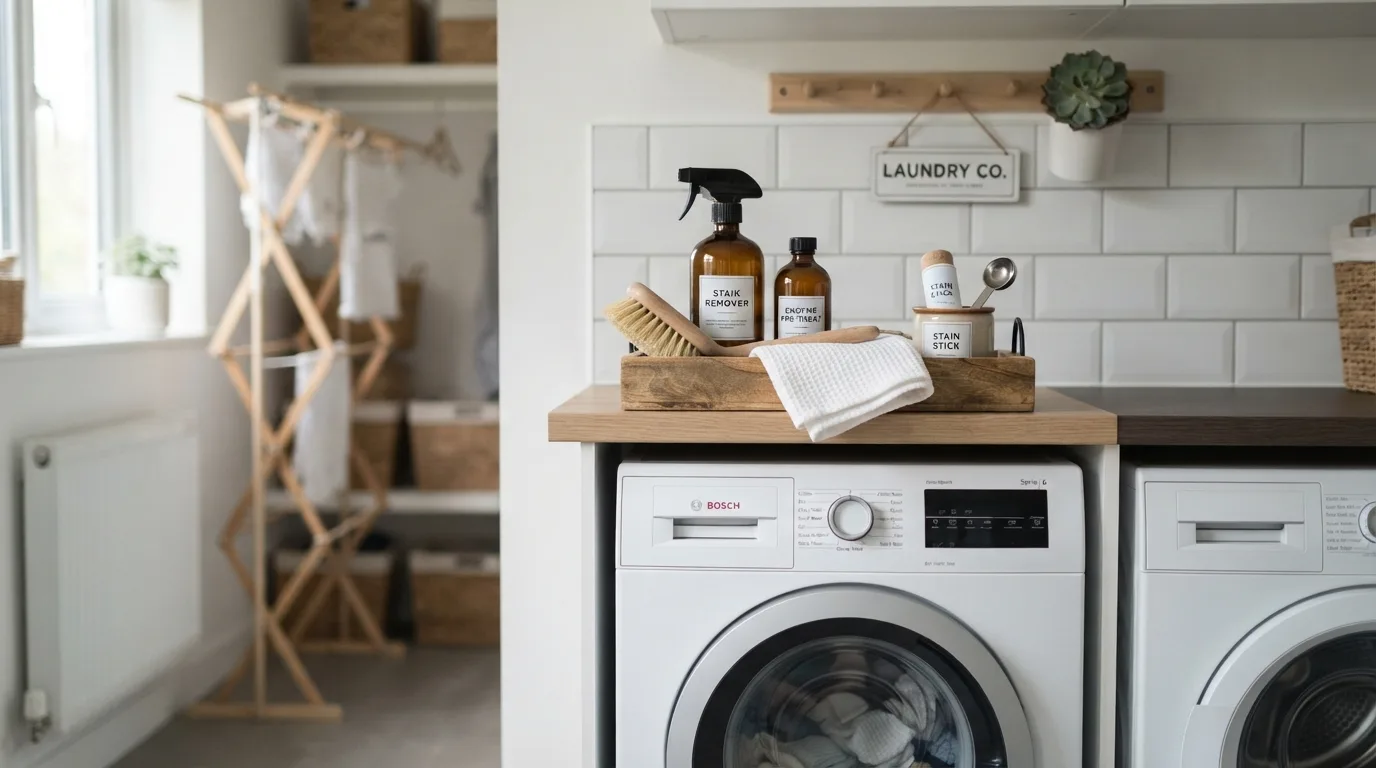
Stain removers are most useful when they are easy to find before a garment goes into the washing machine. Create a compact stain-treatment station using a small tray, basket, or shallow shelf near the washer. Group your stain stick, appropriate remover, soft brush, microfiber cloths, and other fabric-care tools together so you can treat marks immediately. A small waste container can also be helpful for used dryer sheets or packaging. Avoid overcrowding the station with every cleaning product in the house; keep only the items relevant to laundry. You can add a simple reference card with reminders for common stains and fabric-care instructions if that helps your household. Keeping these supplies together turns a scattered collection of products into a useful, repeatable laundry routine.
10. Use Hooks for Everyday Laundry Tools
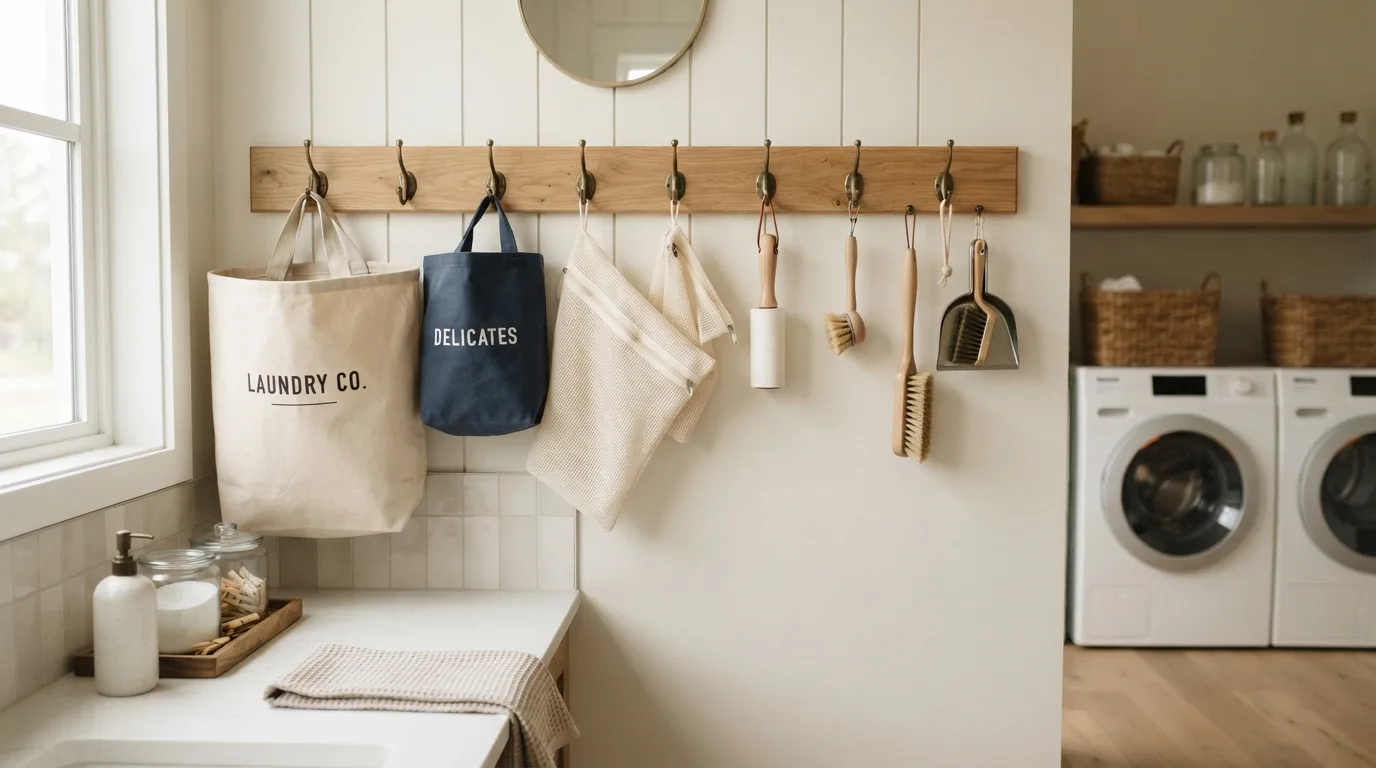
Hooks are inexpensive, versatile, and particularly effective for laundry rooms because many useful items are awkward to store on shelves. Mount a row of hooks on an empty wall for reusable laundry bags, mesh wash bags, lint rollers, cleaning brushes, or small hanging baskets. You can also use hooks to keep a garment steamer cord, ironing accessories, or a small laundry tote off the floor. Place the hooks where they are convenient but away from areas that could interfere with opening appliance doors. Assigning each hook a specific purpose makes the system easier to maintain. If you want a decorative touch, use a simple wood rail with coordinated hooks. The result is functional storage that uses vertical space while keeping frequently handled items visible and ready to grab.
11. Build a Simple Sorting and Folding Workflow
The most effective laundry room organization system is one that follows the way you actually do laundry. Arrange storage so dirty clothes enter the room at one point, washing supplies stay near the machines, clean clothes move toward the folding area, and finished laundry has a clear path out. If several people share laundry duties, use labeled hampers or baskets to make sorting intuitive. Keep frequently used items between waist and eye level, while reserving higher shelves for backups and seasonal supplies. Avoid filling every available space simply because it exists; open space makes the room easier to clean and gives you flexibility when your routine changes. A thoughtful workflow can make a modest laundry room feel efficient, organized, and much larger than it really is.
Conclusion
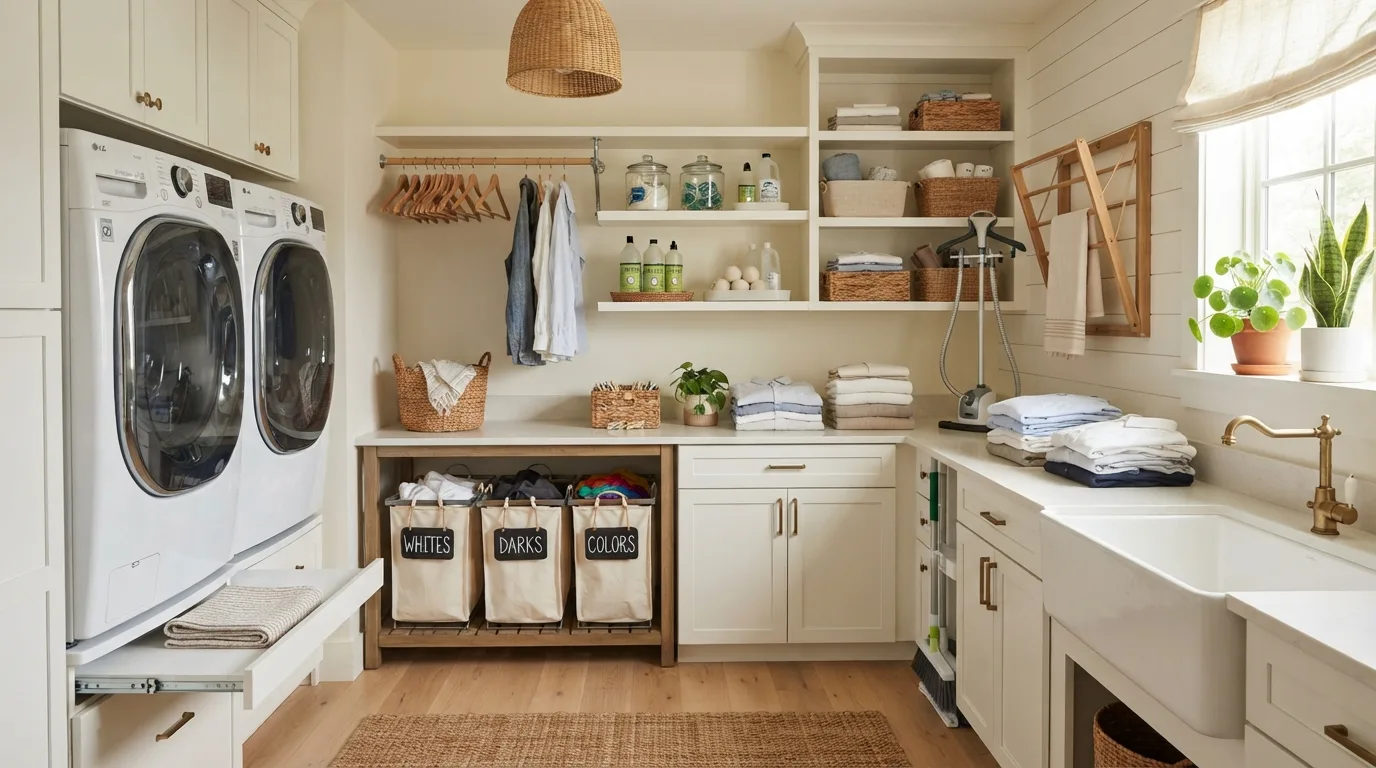
Good laundry room organization is less about having a large space and more about giving every useful item a logical home. Vertical shelving, concealed hampers, rolling carts, hooks, baskets, and dedicated work zones can reduce clutter while making laundry easier to complete. Choose the ideas that match your room, budget, and routine rather than trying to install everything at once. A few well-planned storage upgrades can create a laundry room that looks polished, functions efficiently, and stays easier to maintain.