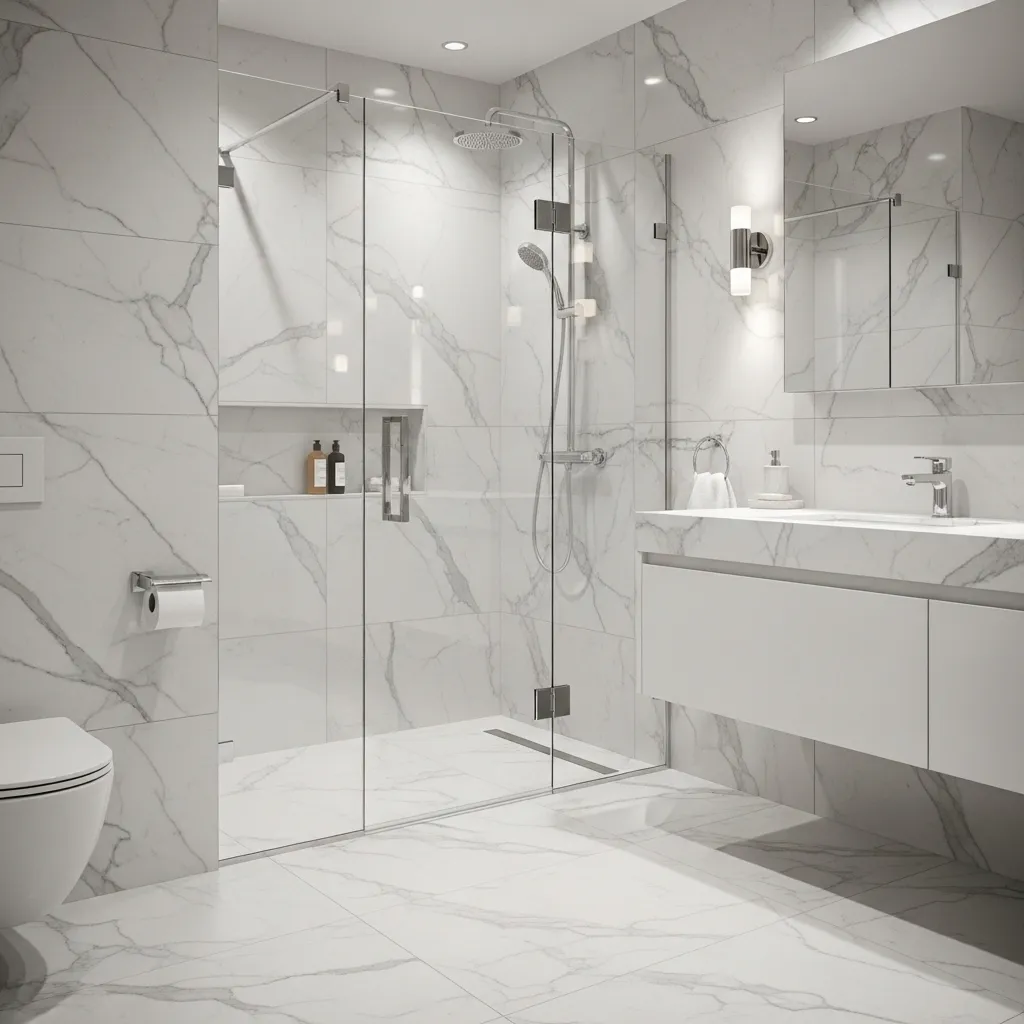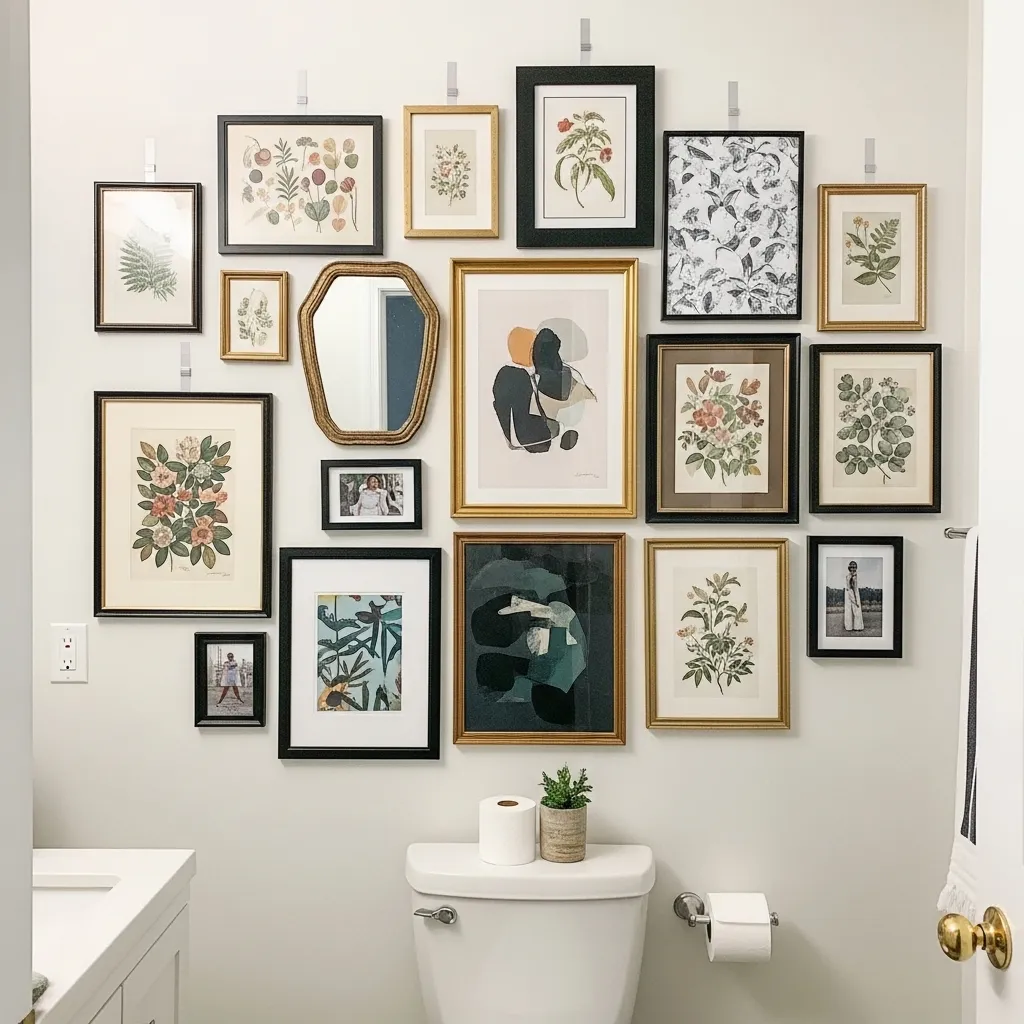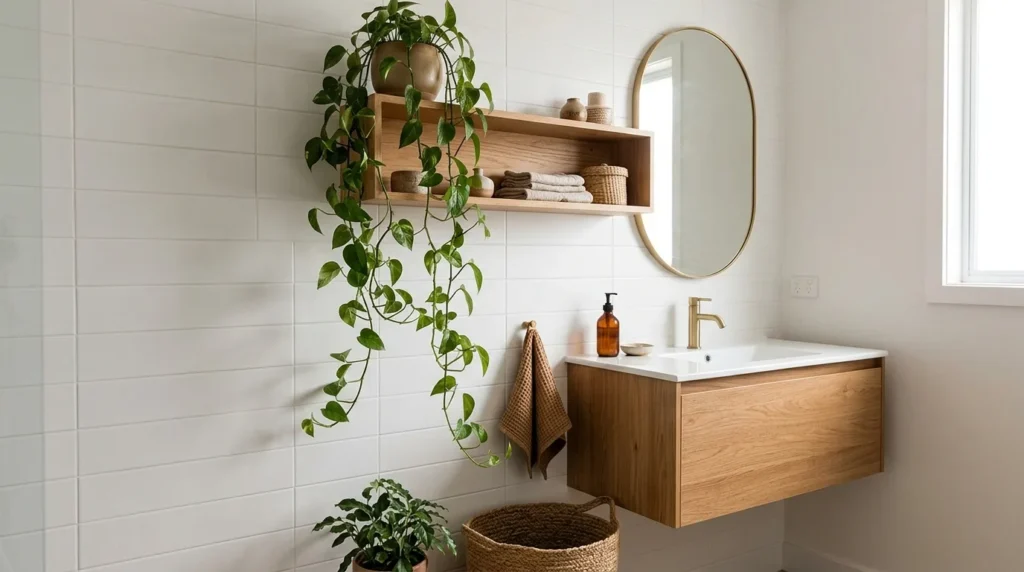
Bathrooms are often overlooked when decorating with greenery, yet they can be surprisingly good spaces for plants. Natural light, humidity, and clean surfaces create an ideal backdrop for leafy plants that make the room feel fresher, calmer, and more inviting. Whether you have a spacious primary bathroom, a compact powder room, or a bathroom with limited daylight, the right plant and placement can add personality without making the space feel crowded. From hanging greenery and elegant floor plants to small shelf arrangements and tropical accents, these bathroom plant decor ideas can work with modern, minimalist, rustic, bohemian, or traditional interiors. The key is to choose plants suited to your bathroom’s light and moisture levels and use attractive pots or planters that complement your existing finishes.
1. Create a Lush Bathroom Corner With a Tall Plant
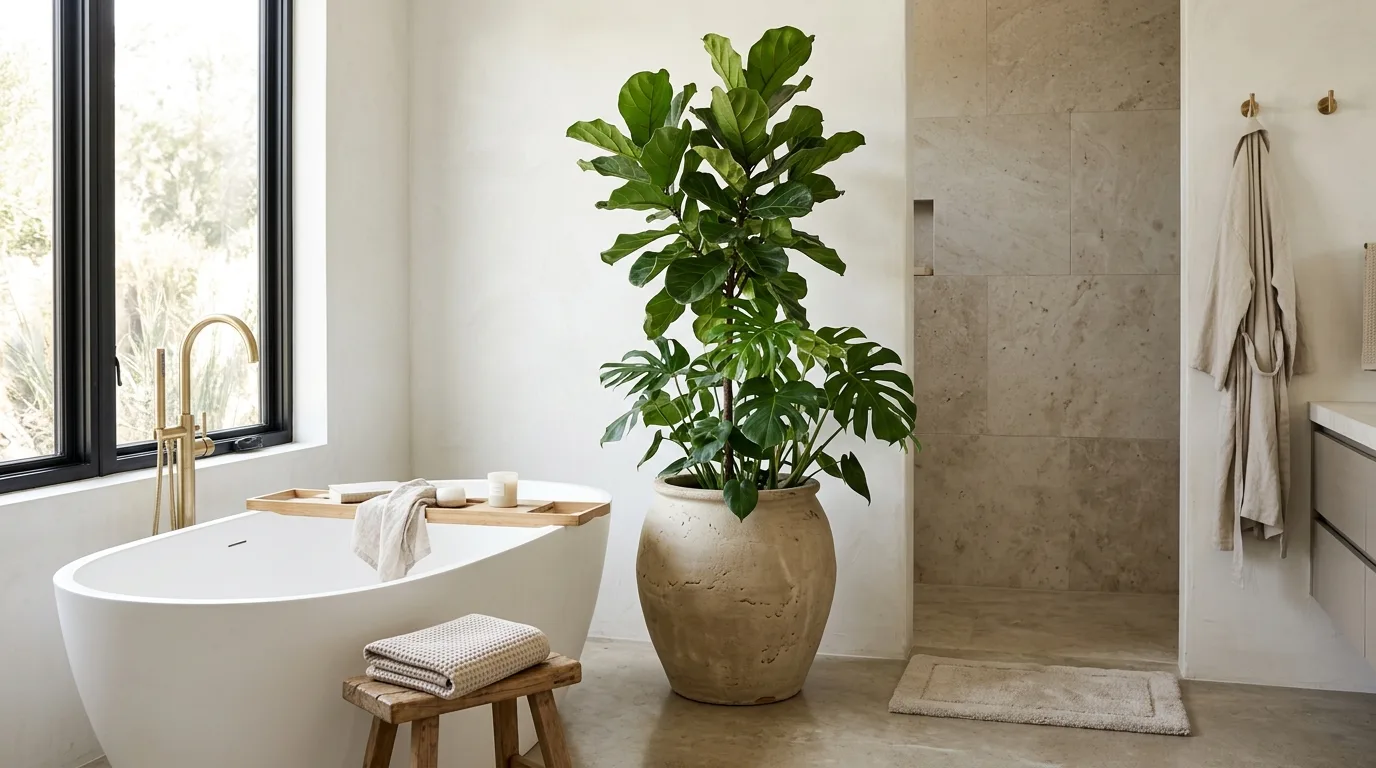
A tall plant can instantly transform an empty bathroom corner into a purposeful decorative feature. Choose a moisture-tolerant option such as a bird of paradise, bamboo palm, or suitable dracaena if the room receives enough indirect light. Place the plant in a large ceramic, woven, or textured planter that coordinates with the bathroom’s tiles and fixtures. A corner beside the bathtub or vanity usually works well because the plant adds height without interfering with everyday movement. Keep enough distance from the shower to prevent constant water exposure and check that the floor remains dry. This approach is especially effective in larger bathrooms where a small plant might look lost. The result is a relaxed, spa-inspired corner with strong visual impact.
2. Hang Pothos From an Open Shelf
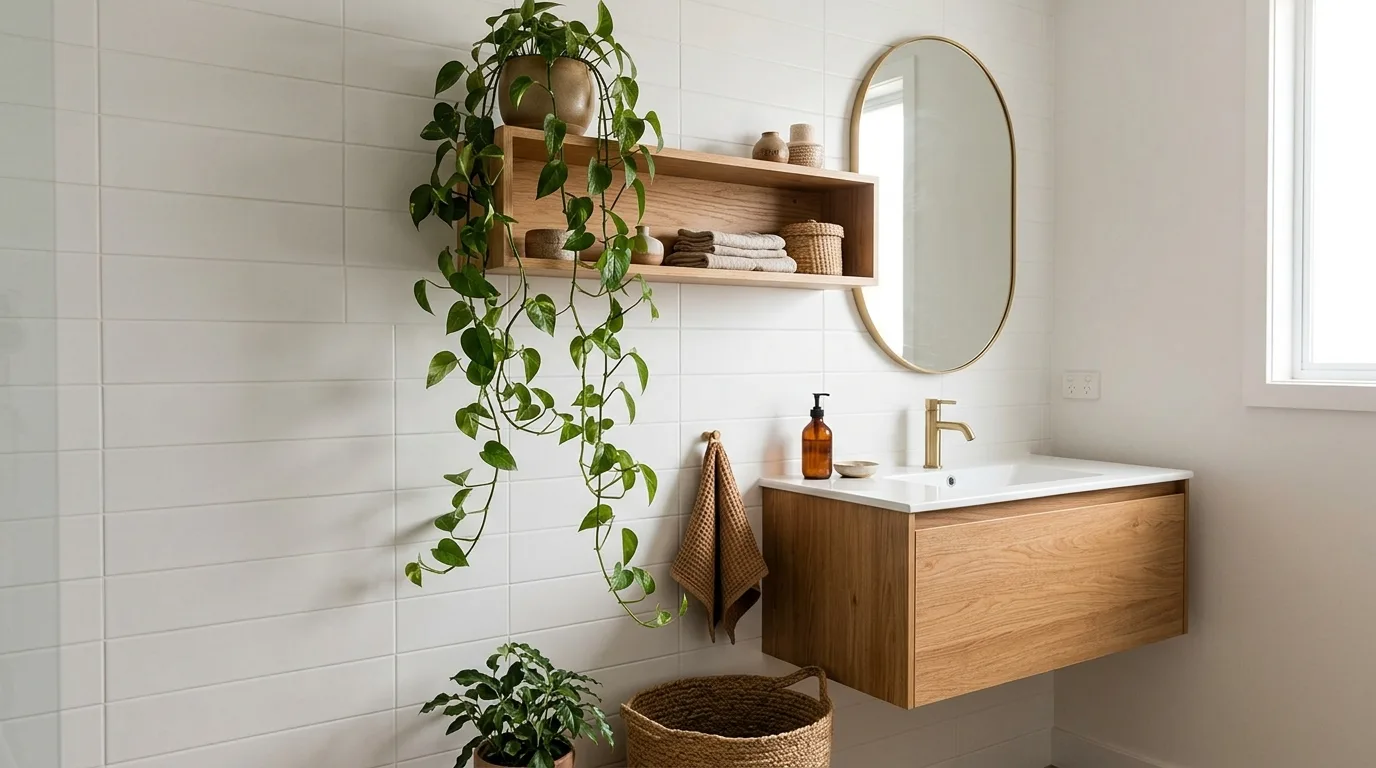
Pothos is a popular choice for bathroom decor because its trailing stems create movement and softness around hard surfaces such as tile, glass, and stone. Place a pothos in a lightweight decorative pot on an open shelf, then allow its vines to cascade naturally toward the vanity or floor. The effect works beautifully in modern and bohemian bathrooms because it introduces greenery without taking up valuable counter space. Pothos generally prefers bright, indirect light, although it can tolerate lower-light conditions better than many other houseplants. Avoid keeping the roots constantly wet simply because the room is humid. A drainage hole is still important. For a polished look, choose a planter in a color that repeats another bathroom detail, such as the vanity, hardware, or towels.
3. Style Small Plants Around the Bathroom Vanity
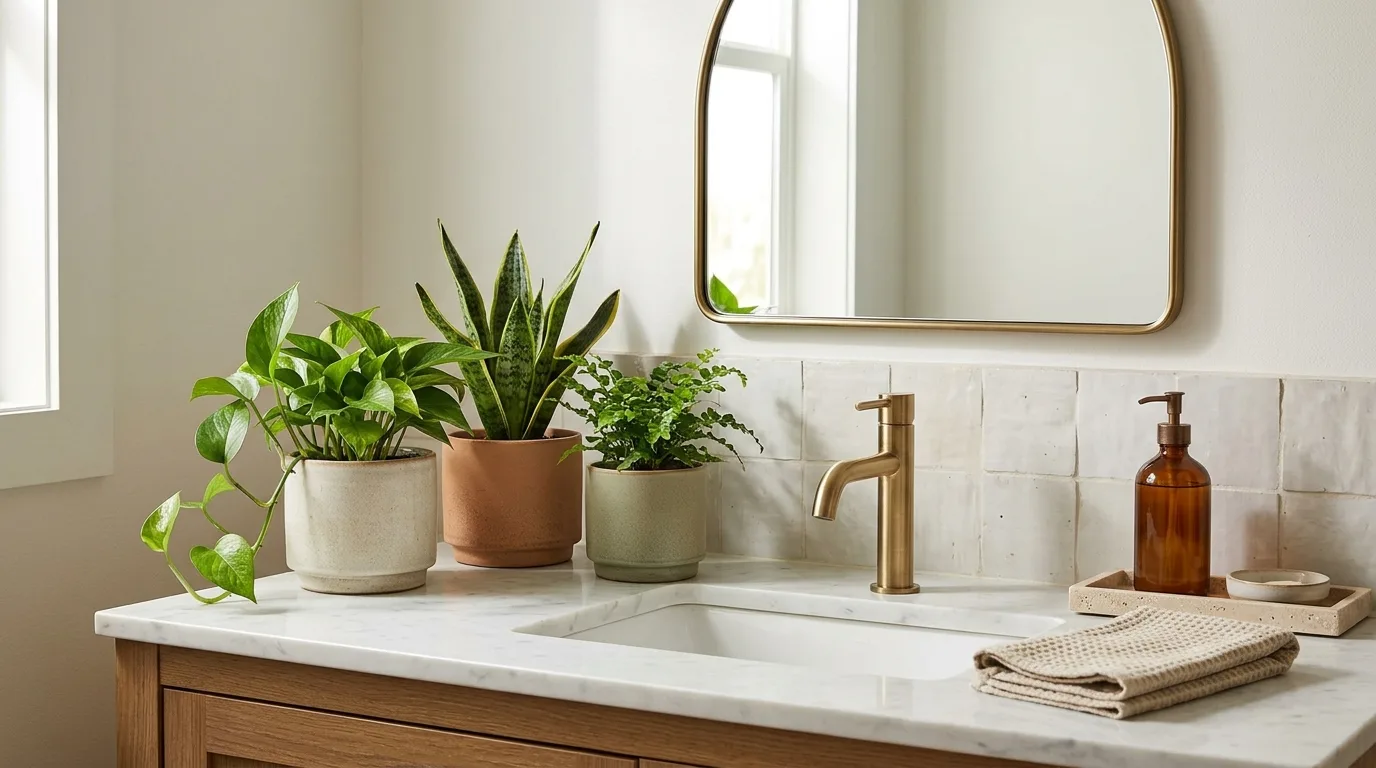
A bathroom vanity provides an easy opportunity to create a small indoor garden without making major changes to the room. Group two or three compact plants of different heights beside the sink, leaving enough clear space for toiletries and daily routines. Small ferns, peperomia, pilea, or suitable tropical plants can provide varied leaf shapes while maintaining a cohesive appearance. Use planters made from ceramic, stone, glass, or another material that suits the vanity finish. Rather than lining plants up evenly, arrange them in a loose cluster for a more natural look. If the vanity receives limited daylight, move the plants periodically to a brighter location when necessary. This simple arrangement is particularly useful for renters because it adds color and texture without requiring permanent installation.
4. Add a Hanging Plant Beside the Bathtub
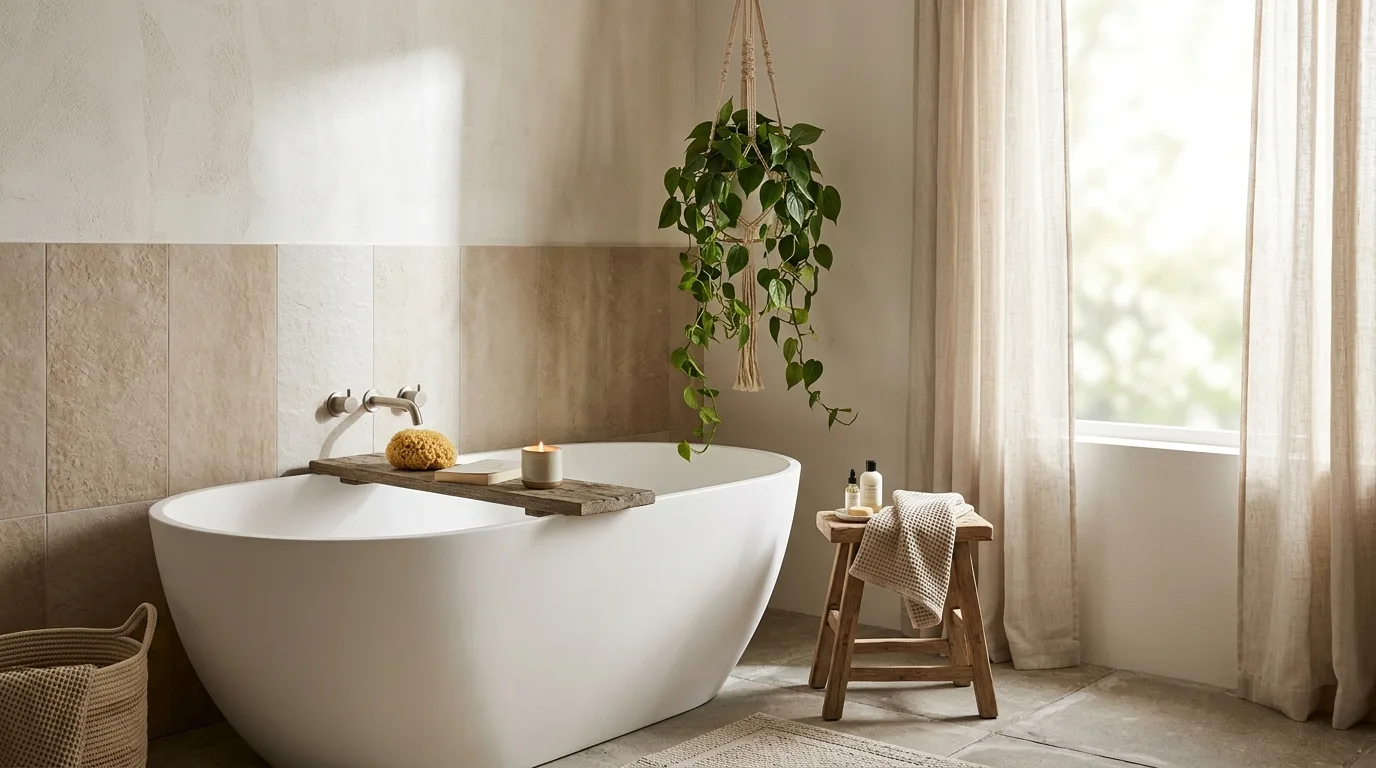
A hanging plant can make a bathtub area feel more relaxing and visually connected to nature. Trailing plants such as spider plants, heartleaf philodendrons, or pothos can work well when they receive appropriate indirect light. Hang the planter from a secure ceiling point or use a strong wall-mounted bracket designed for the surface. Position it away from the faucet and areas where it could be knocked while bathing. A woven macramé holder can enhance a bohemian bathroom, while a simple ceramic or metal planter gives the same idea a more contemporary appearance. Keep the arrangement elevated enough to avoid splashing and inspect the plant regularly for signs of excess moisture. The gentle cascade of foliage creates a spa-like atmosphere without requiring a large floor footprint.
5. Decorate an Open Bathroom Shelf With Greenery
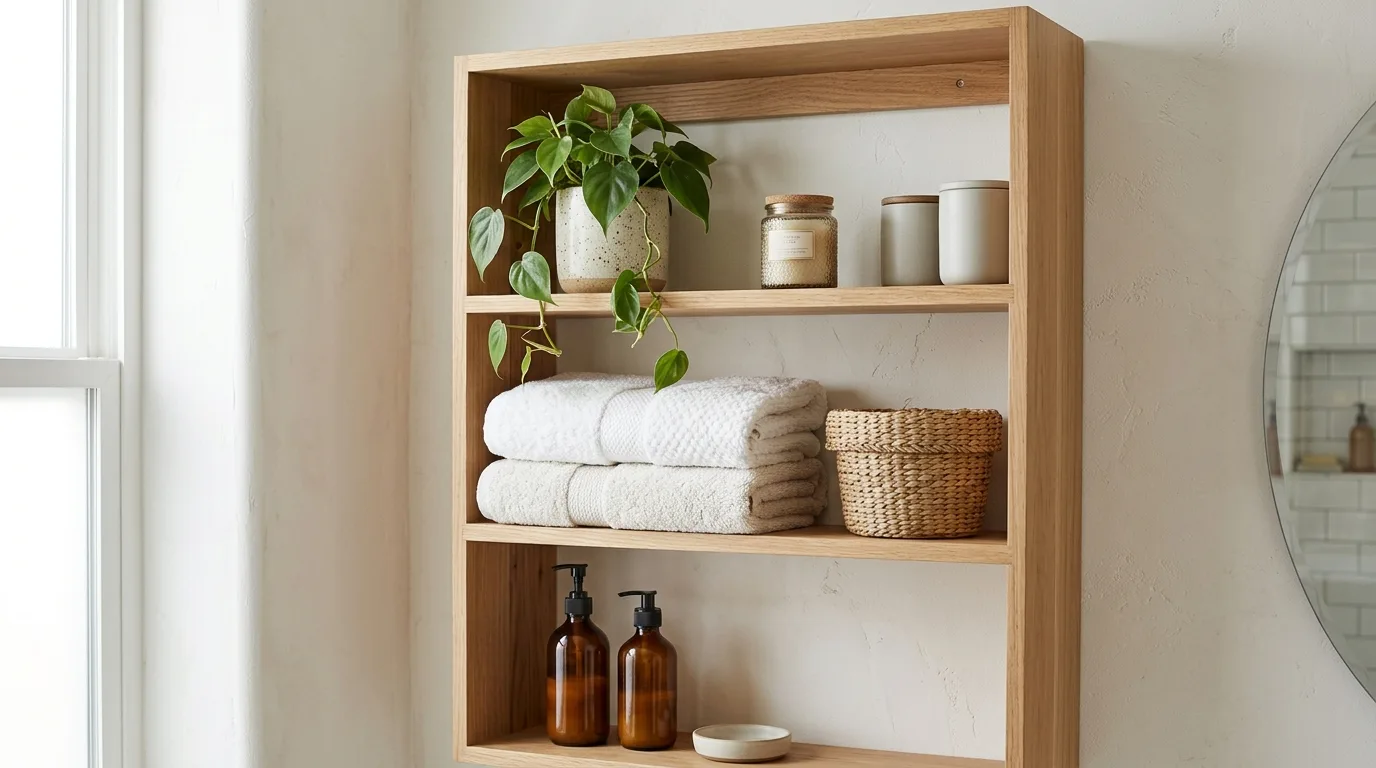
Open shelving is an excellent place to introduce plants while keeping the bathroom organized. Use a narrow shelf above or beside the vanity to combine greenery with folded towels, candles, baskets, and attractive containers. A small fern, trailing pothos, or compact succulent can serve as the living focal point among practical accessories. To prevent the display from looking cluttered, vary the height and shape of the objects rather than filling every available space. Choose plants that match the shelf’s lighting conditions, since an attractive display will only remain successful if the greenery stays healthy. For a minimalist bathroom, one plant in a sculptural planter may be enough. In a warmer, more decorative room, several smaller plants can create a layered botanical display.
6. Use a Snake Plant for Modern Bathroom Style
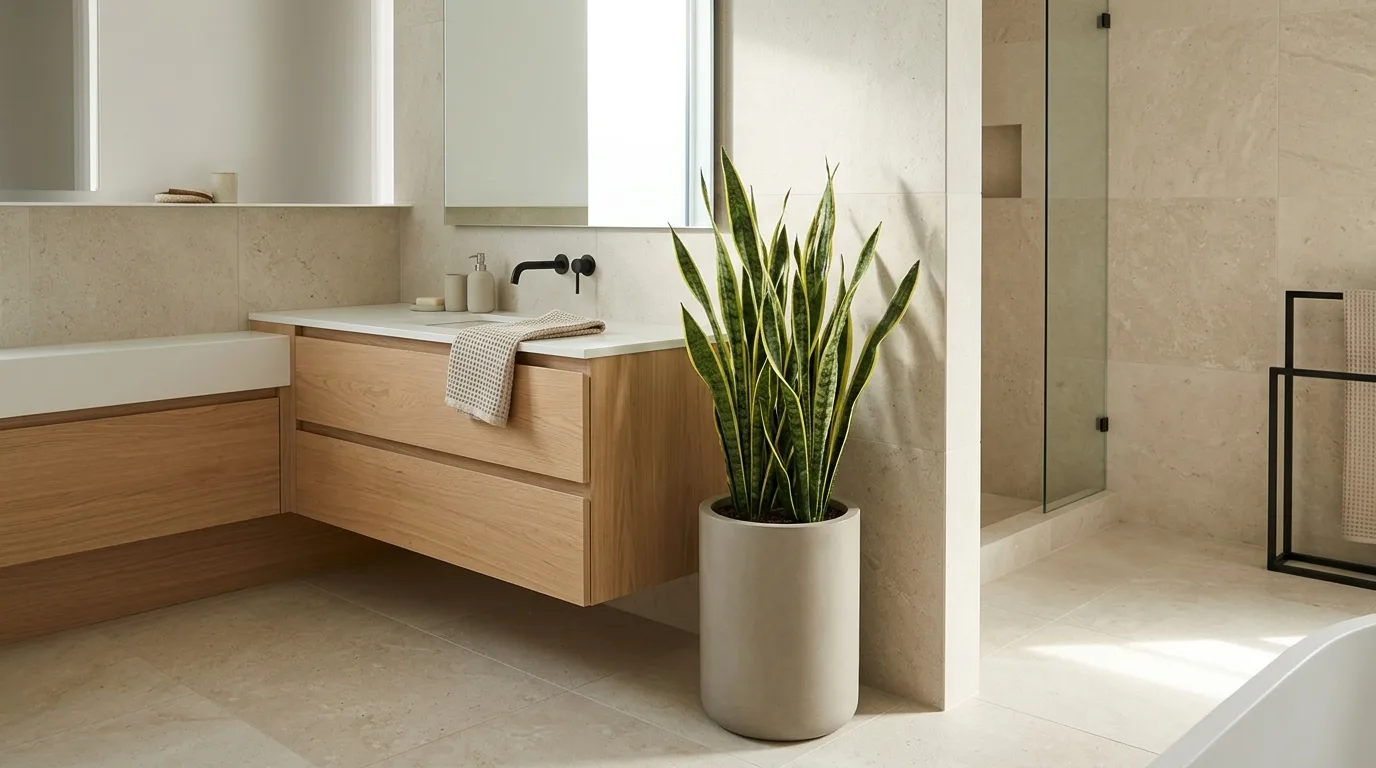
Snake plants are especially useful when you want bathroom greenery with a clean, architectural appearance. Their upright leaves add height and texture without producing the sprawling shape associated with trailing plants. Place a snake plant in a simple planter beside the vanity, near a freestanding bathtub, or in an unused corner. Its structured form complements contemporary bathrooms with straight lines, neutral colors, and sleek fixtures. Snake plants prefer bright, indirect light but can tolerate lower-light conditions, although growth may be slower. More importantly, they do not need frequent watering, so avoid watering simply because the bathroom feels humid. Let the potting mix dry appropriately between waterings and make sure excess water can drain away. This makes the snake plant a practical choice for busy households.
7. Bring Ferns Into a Humid Bathroom
Ferns can be a natural fit for bathrooms because many varieties appreciate humidity and their feathery foliage creates a soft, woodland-inspired atmosphere. A Boston fern can look beautiful on a bathroom shelf, vanity stand, or plant pedestal when the room provides suitable indirect light. Maidenhair ferns can also be attractive but generally demand more consistent moisture and care. Place the plant where it receives filtered daylight rather than harsh direct sun, which can damage delicate foliage. Because bathroom humidity can vary significantly, monitor the soil instead of relying on humidity alone. A decorative planter with a drainage tray helps protect shelves and countertops. The combination of lush fronds, pale tiles, and natural materials can make even a simple bathroom feel like a peaceful indoor retreat.
8. Add a Small Plant to the Toilet Tank Area
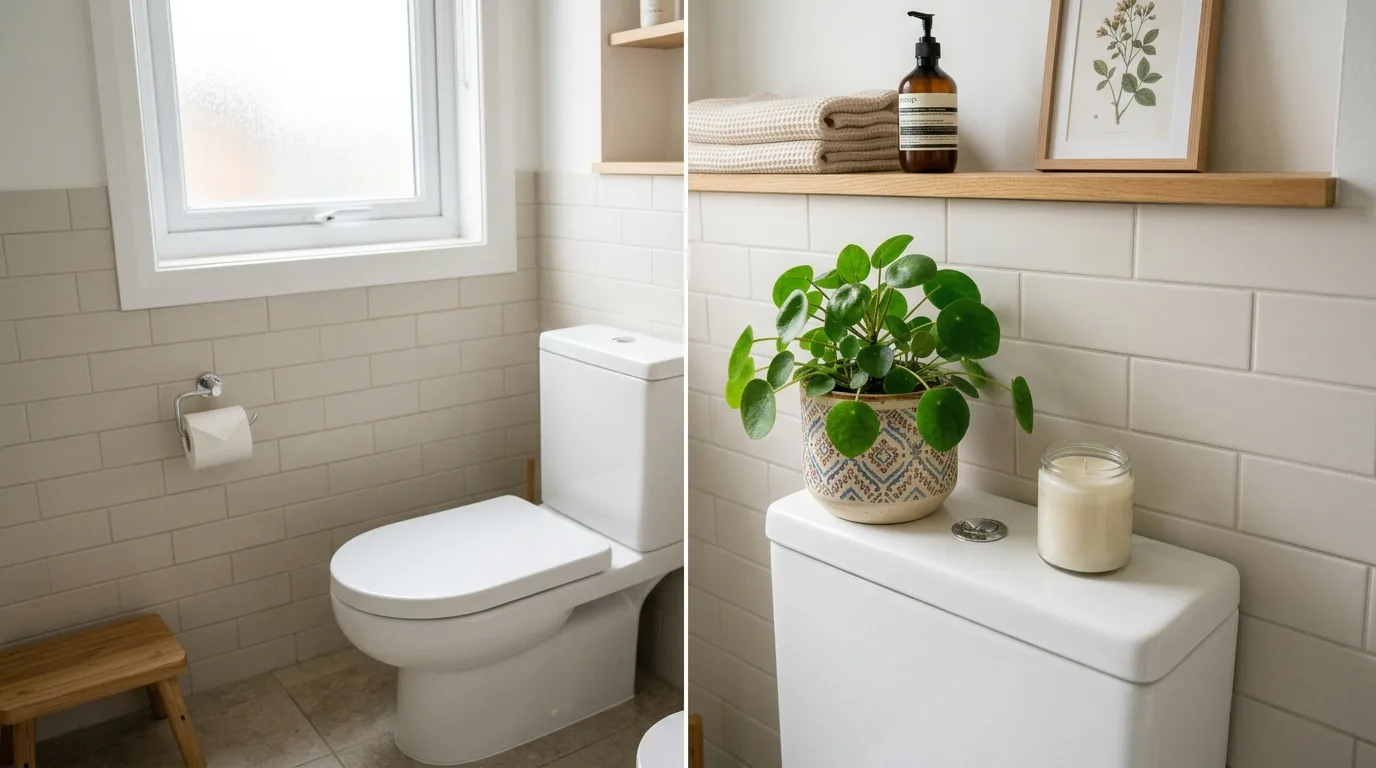
The area around a toilet can sometimes feel purely functional, but a carefully selected small plant can make it more decorative. If the toilet tank has a stable, flat surface and receives adequate indirect light, place a compact plant in a waterproof decorative pot or tray. Small pothos, peperomia, spider plants, or other suitable varieties can add a subtle touch of greenery without overwhelming the room. Keep the plant securely positioned and leave enough space for cleaning and access to the tank. Avoid placing large pots where they could fall or interfere with plumbing. This idea works particularly well in small bathrooms because it uses an otherwise underused surface. Pair the plant with one or two simple accessories, such as a small candle or folded hand towel, for a tidy and intentional display.
9. Build a Tropical Bathroom With Broad-Leaf Plants
For a dramatic bathroom makeover, use broad-leaf tropical plants to create a lush, resort-inspired feeling. Plants such as bird of paradise, monstera, or suitable palms can introduce large-scale foliage that contrasts beautifully with smooth tiles and modern fixtures. This look works best when the bathroom has plenty of natural indirect light and enough floor space to accommodate larger planters. Keep the overall palette controlled by choosing planters in neutral ceramic, natural stone, or warm woven materials. Instead of filling every corner, let one substantial plant become the focal point. The goal is to create an intentional tropical accent rather than a crowded jungle. If the bathroom has limited daylight, consider rotating plants with healthier specimens from brighter areas of the home rather than forcing light-demanding plants to survive in darkness.
10. Use a Window Ledge for Compact Greenery
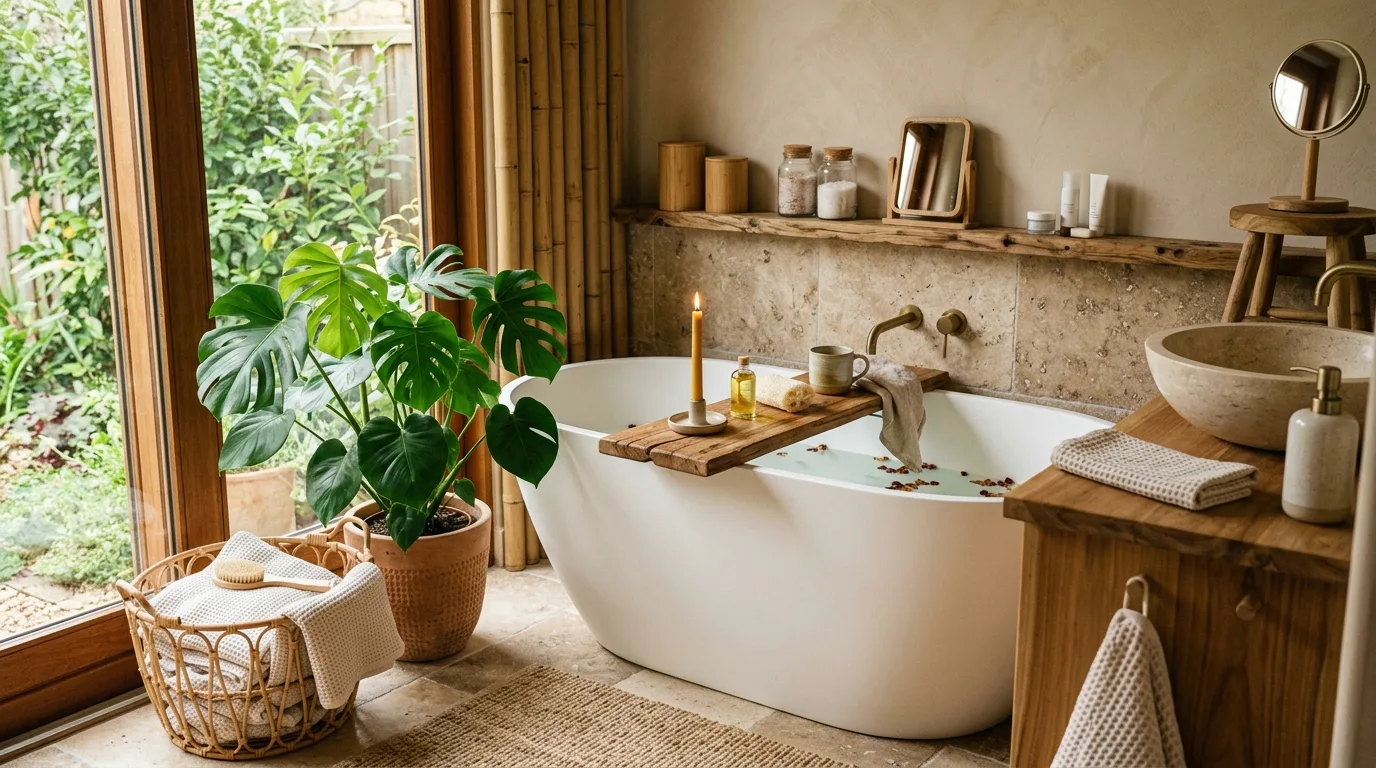
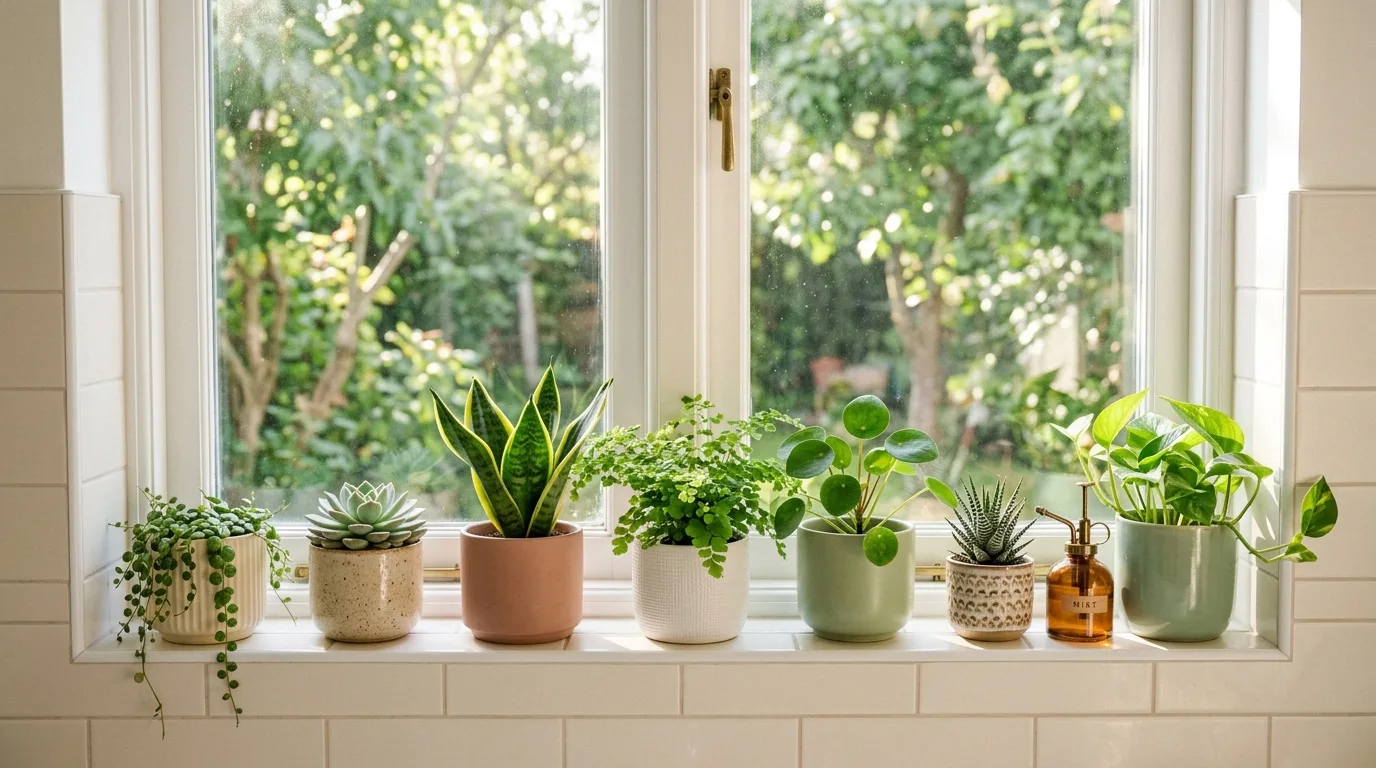
A sunny or softly lit bathroom window ledge can become a natural home for a collection of small plants. Use compact pots to create a simple row of greenery, selecting varieties according to the amount and intensity of light coming through the window. Succulents can work on bright ledges, while humidity-loving foliage plants may be better for windows with indirect light. Be careful with strong afternoon sun because glass can intensify heat and scorch sensitive leaves. Choose pots with drainage and protect the sill from standing water. To keep the arrangement visually appealing, combine different leaf shapes while keeping the containers within a coordinated color family. This approach is particularly useful in small bathrooms because the plants occupy vertical or existing space instead of taking over the floor or vanity.
11. Style a Freestanding Plant Stand
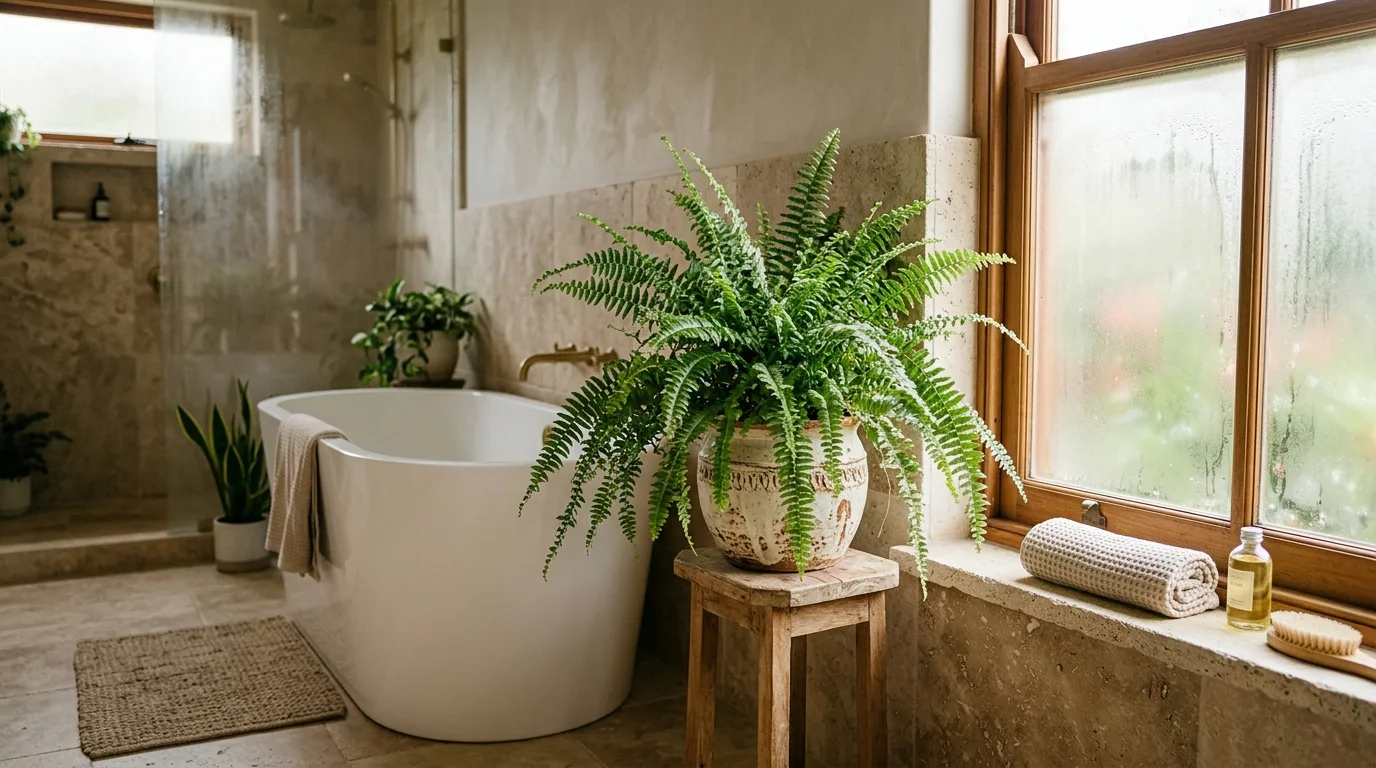
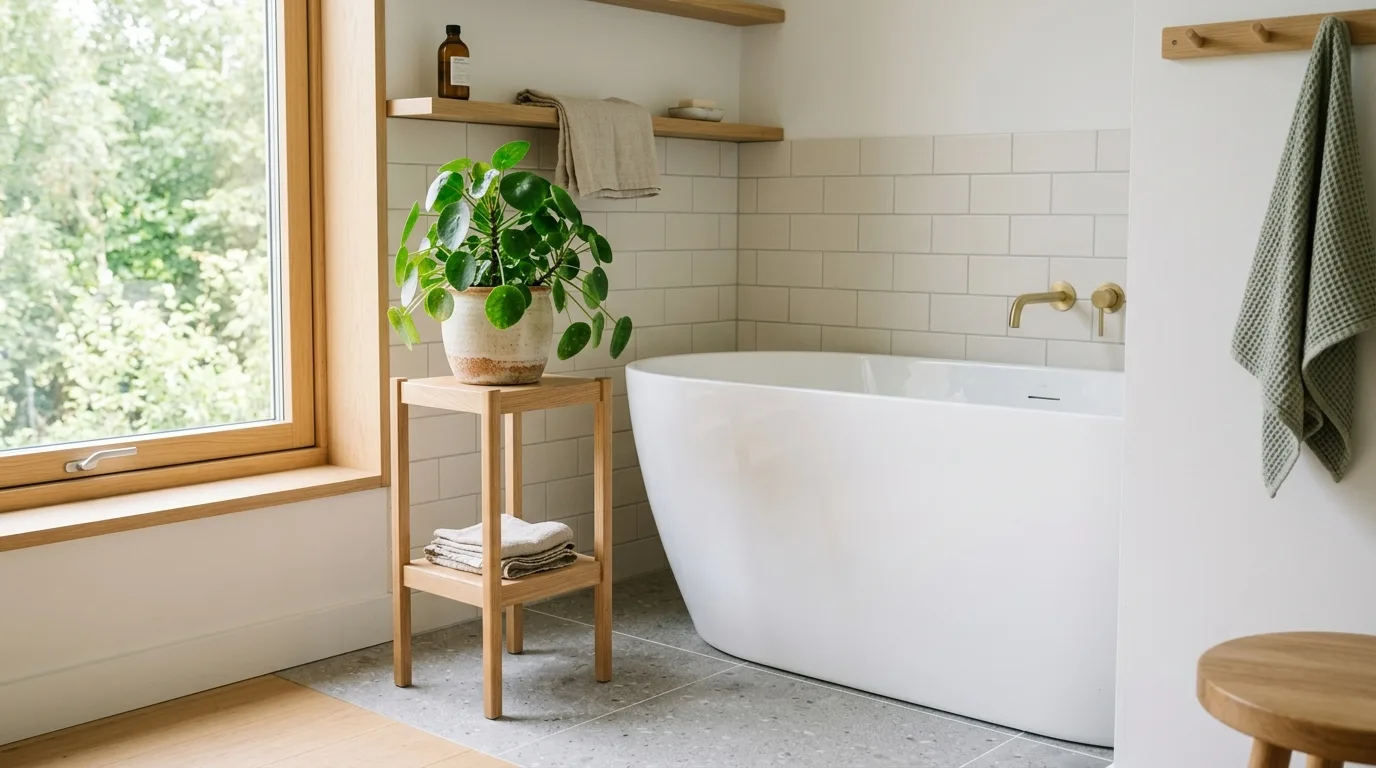
A plant stand gives bathroom greenery a dedicated decorative zone and makes it easier to control the plant’s height. Place a narrow wooden, metal, or stone stand beside the bathtub, near a window, or in an empty corner. A medium-sized leafy plant can sit on top while the open space underneath keeps the arrangement visually light. This is a good option for bathrooms where a large floor planter would feel too heavy. Choose a stand that is stable on potentially damp flooring and use a saucer to protect the surface from water. The style of the stand can also reinforce the room’s design: natural wood suits Scandinavian or rustic interiors, while slim metal works well with contemporary spaces. Keep the surrounding area uncluttered so the plant remains the focal point.
12. Combine Plants With Natural Wood Accessories
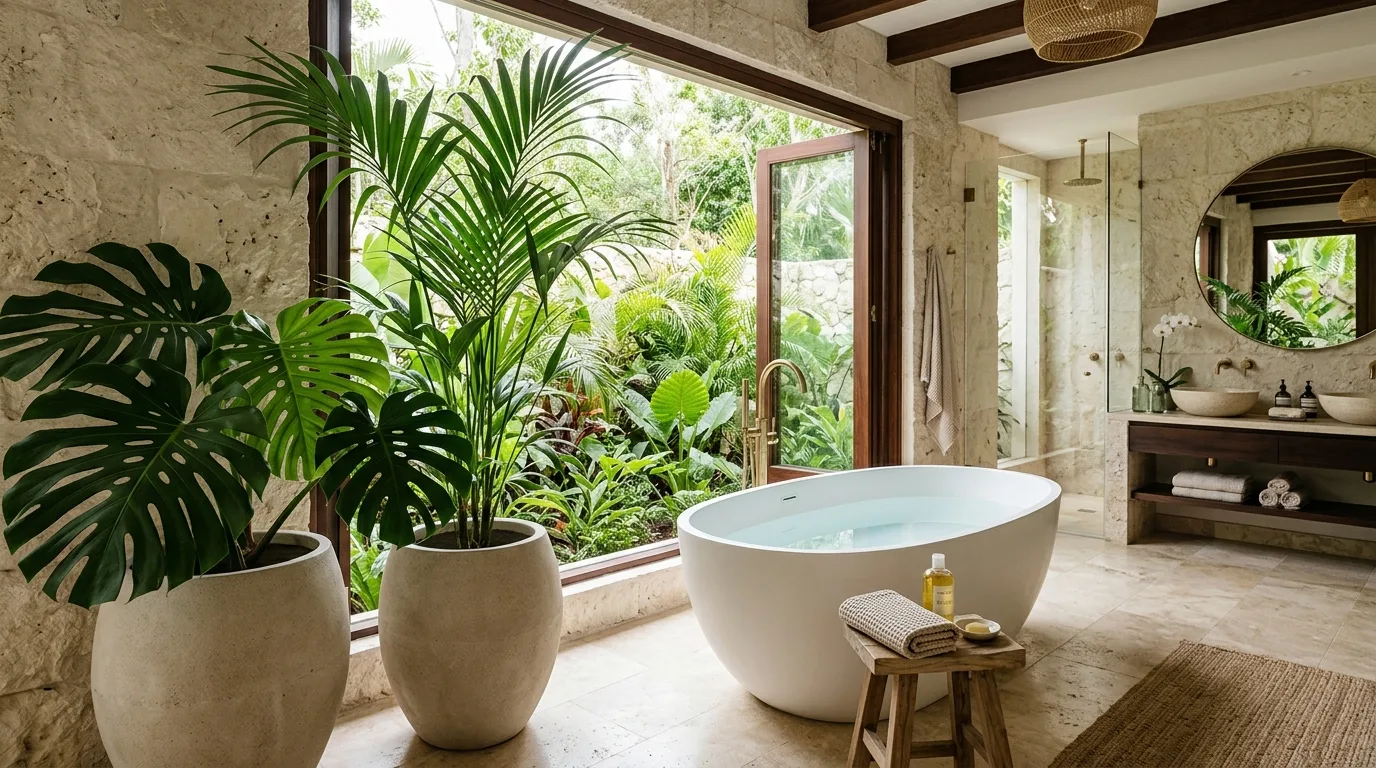
Greenery becomes especially attractive when paired with natural materials such as wood, bamboo, rattan, and stone. In the bathroom, combine a leafy plant with a wooden bath tray, bamboo stool, woven basket, or timber shelf to create a warm organic palette. The contrast between green foliage and natural textures can soften bathrooms dominated by white tile, polished fixtures, or cool gray surfaces. Choose one or two plants rather than adding greenery everywhere, then repeat the natural material in several small accessories for consistency. Make sure wooden pieces are suitable for humid environments and can dry properly between uses. This style works particularly well for spa-inspired bathrooms because it emphasizes calm textures and earthy details. A simple plant in a handmade-looking planter can often provide enough character without additional decoration.
13. Create a Minimalist Plant Display
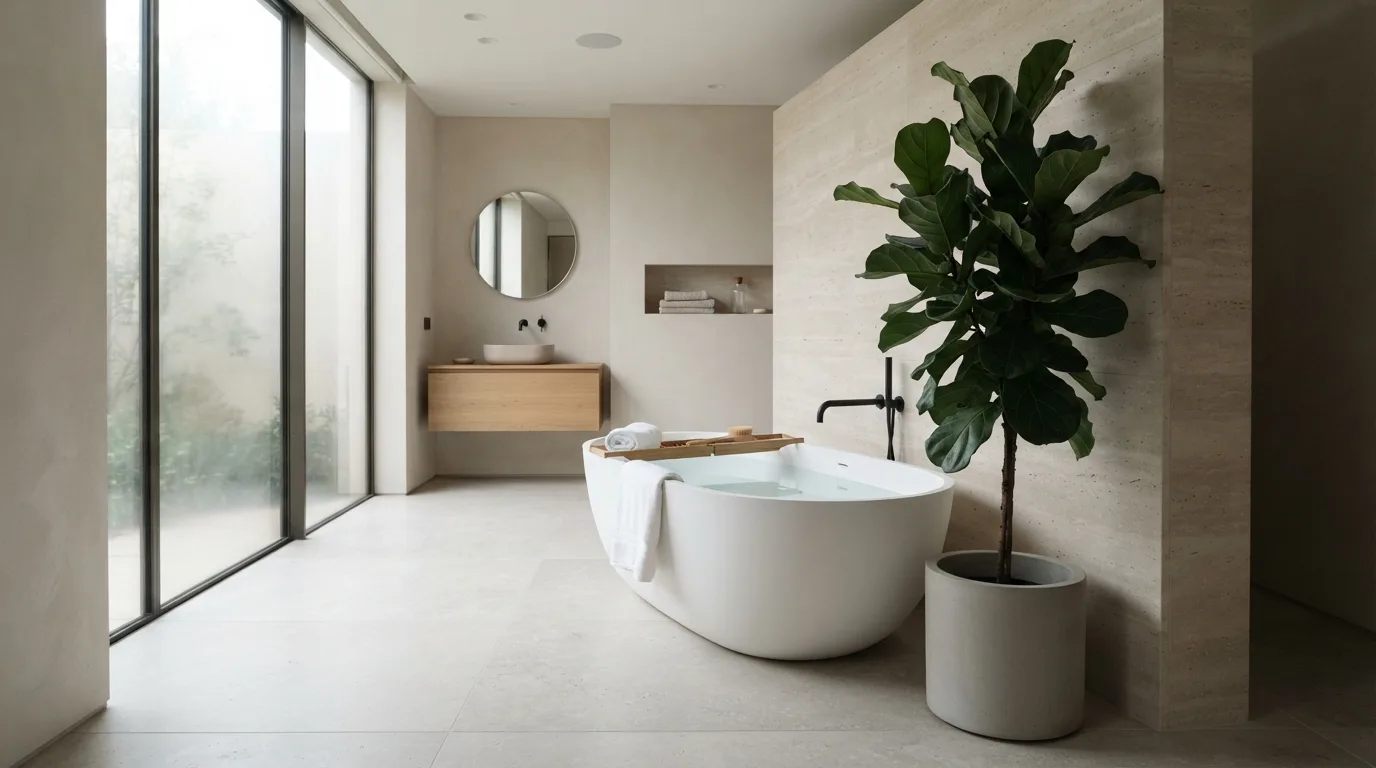
You do not need many plants to make a bathroom feel greener. A minimalist display can be built around one carefully chosen plant, a simple planter, and plenty of surrounding negative space. Select a plant with a distinctive silhouette, such as a snake plant, compact palm, or architectural foliage variety that suits the available light. Place it beside a freestanding tub, on a vanity corner, or against an otherwise empty wall. Keep the planter simple and coordinate it with the bathroom’s dominant finishes. This approach is ideal for contemporary interiors where visual clutter is limited. It also makes plant care easier because you can quickly inspect the leaves, soil, and drainage. The finished look should feel intentional rather than sparse: one healthy plant can become a strong design element when its surroundings are kept clean and balanced.
14. Decorate With a Cluster of Matching Planters
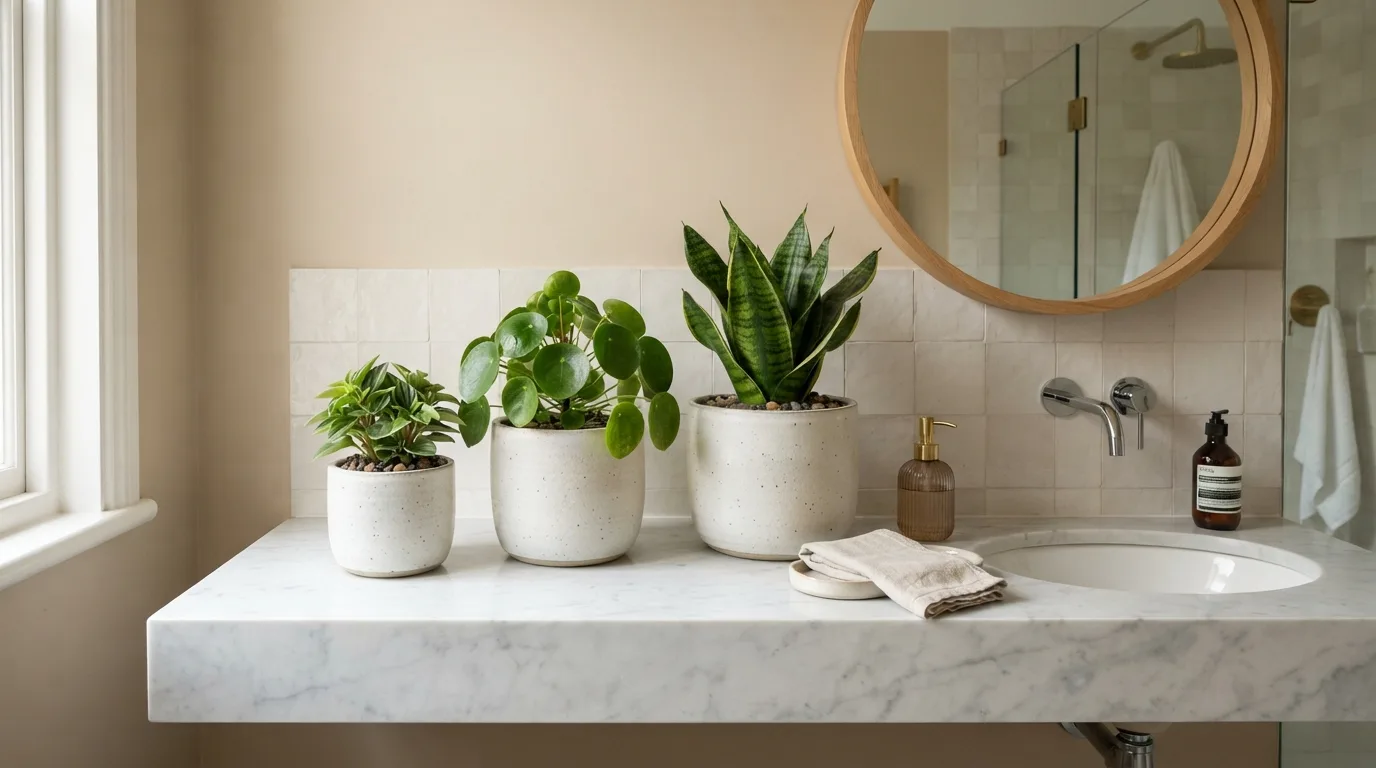
A group of matching planters can give bathroom greenery a polished, collected appearance. Choose three or four pots in the same material or color but vary their sizes and plant shapes. For example, combine a trailing plant with a compact upright plant and a fuller leafy variety. Arrange the group on a wide vanity, shelf, or bathroom console while leaving practical space around sinks and toiletries. Matching containers keep the display cohesive even when the foliage differs. This idea works especially well when you want a decorative statement without relying on bright accessories or elaborate artwork. Make sure every planter has appropriate drainage and use waterproof trays where necessary. If the bathroom is small, use miniature plants and narrow containers so the arrangement adds visual interest without reducing usable counter space.
15. Add Greenery Around a Spa-Inspired Bathtub
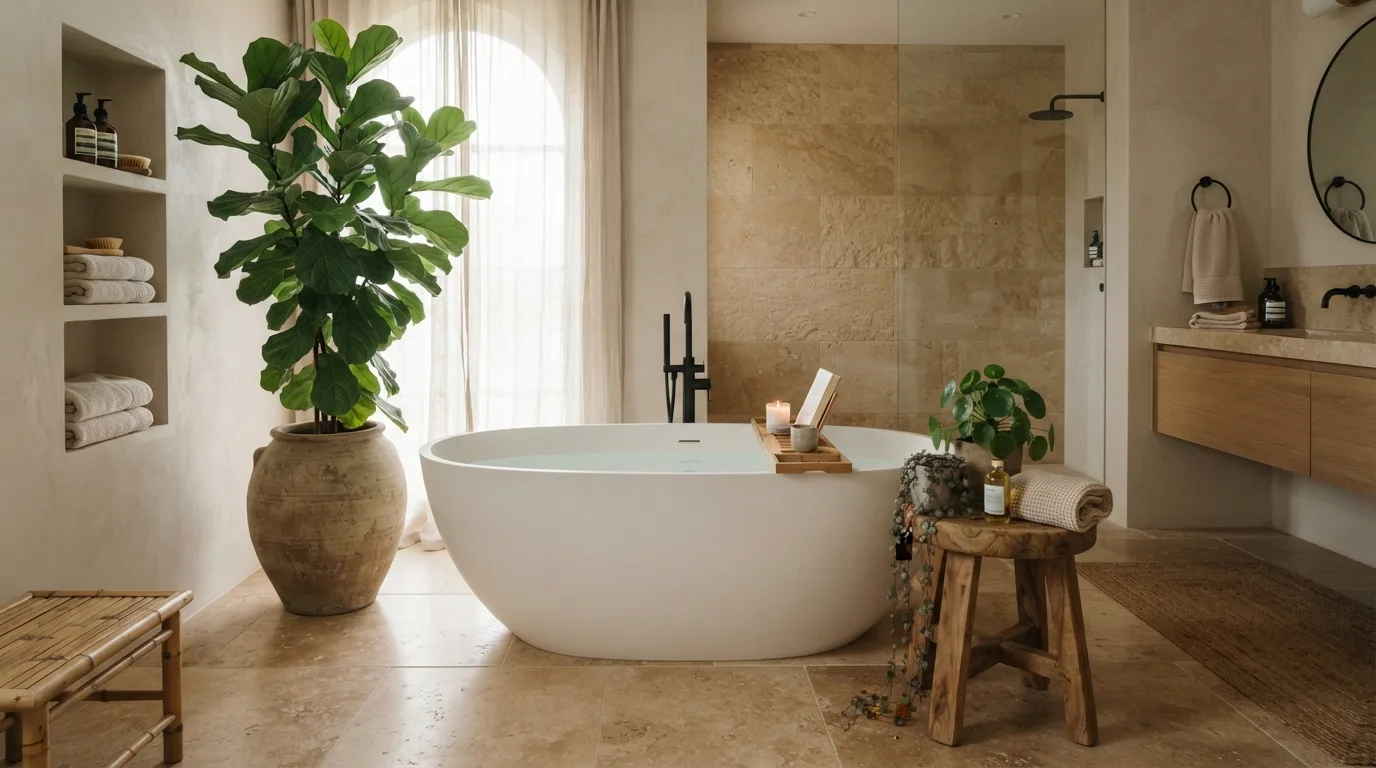
Turn a bathtub into the centerpiece of a calming retreat by surrounding it with carefully selected greenery. One tall floor plant can provide height, while a smaller plant on a nearby stool or shelf adds another layer of texture. Choose species that suit the bathroom’s actual light conditions rather than selecting plants solely for their appearance. Keep foliage away from direct contact with hot water and avoid positioning planters where they could obstruct access to the tub. Natural stone, neutral ceramics, soft towels, and warm wood accessories can complete the spa-inspired effect. The goal is not to create a dense collection of plants but to frame the bathing area with a few well-placed pieces of greenery. With thoughtful spacing, even an ordinary bathtub can become a relaxing focal point that feels fresh and connected to nature.
How to Choose the Best Plants for a Bathroom
Before buying bathroom plants, assess the room’s natural light, ventilation, temperature, and moisture levels. Humidity can benefit many tropical plants, but it does not replace adequate light or good drainage. Bathrooms with bright windows offer far more choices than windowless spaces. If there is little natural light, choose plants known for tolerating lower light or consider rotating plants between the bathroom and brighter rooms. Avoid placing foliage where it receives constant hot shower steam, direct splashes, or extreme temperature changes. Always use containers with drainage holes and empty saucers rather than allowing roots to sit in water. Most importantly, choose plants you can realistically maintain. A healthy, well-positioned plant will always look better than a larger collection struggling with unsuitable conditions.
Tips for Keeping Bathroom Plants Healthy
Bathroom plants still need regular care even when the room naturally feels humid. Check the soil before watering and adjust your routine according to the plant rather than the room’s moisture level. Wipe dusty leaves occasionally so they can photosynthesize efficiently, especially in bathrooms where airborne residue can accumulate. Provide airflow when possible because constantly stagnant, wet conditions can encourage fungal problems. Rotate pots occasionally so plants grow evenly toward available light. Remove yellow or damaged leaves promptly and inspect new growth for pests. If condensation remains heavy for long periods, improve ventilation with an exhaust fan or open window when practical. These small habits keep bathroom greenery looking fresh and also help you notice problems before they become serious. Good plant care is an important part of successful bathroom decor.
Conclusion
Bathroom plants can add color, texture, height, and a relaxing natural atmosphere without requiring a complete renovation. Whether you prefer one sculptural plant, cascading vines, a shelf of compact greenery, or a lush tropical corner, the best arrangement is one that matches your bathroom’s light and your ability to care for it. Use attractive planters, leave enough breathing room, and keep plants away from excessive splashing. With the right choices, even a small bathroom can feel more welcoming, fresh, and spa-like. Start with one healthy plant in the best available location, then build your collection gradually as you learn what thrives in your space.