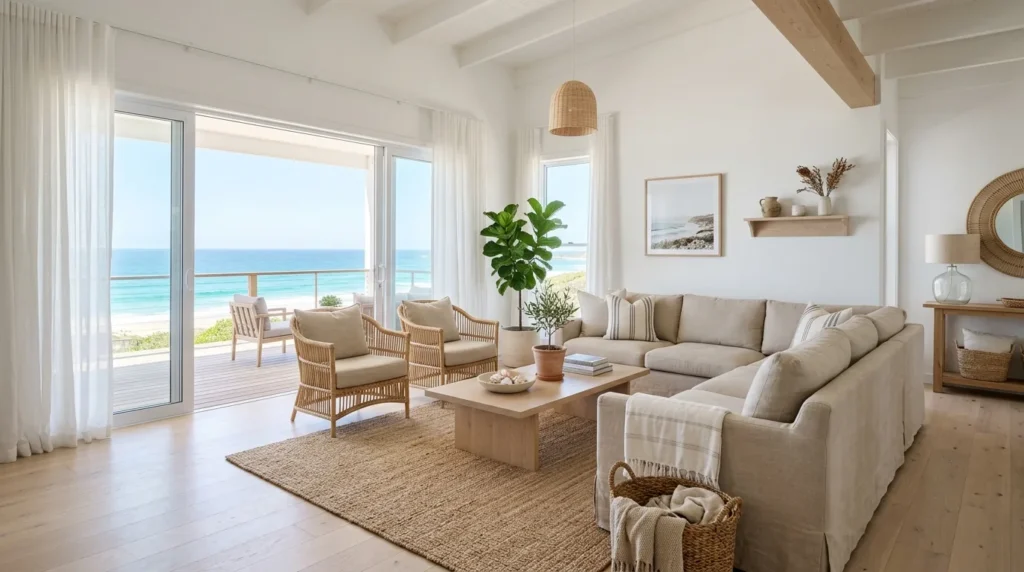
Bring the relaxed beauty of the seaside indoors with a coastal living room that feels bright, breezy, and effortlessly comfortable. The best coastal interiors are not about filling a room with seashells or nautical decorations. Instead, they combine natural textures, soft colors, comfortable furniture, and plenty of light to create a vacation-inspired atmosphere. Whether you love classic beach-house style, modern coastal decor, or a more refined coastal look, these ideas can help you create a living room that feels like an everyday escape.
1. Layer Soft Whites With Sandy Neutrals
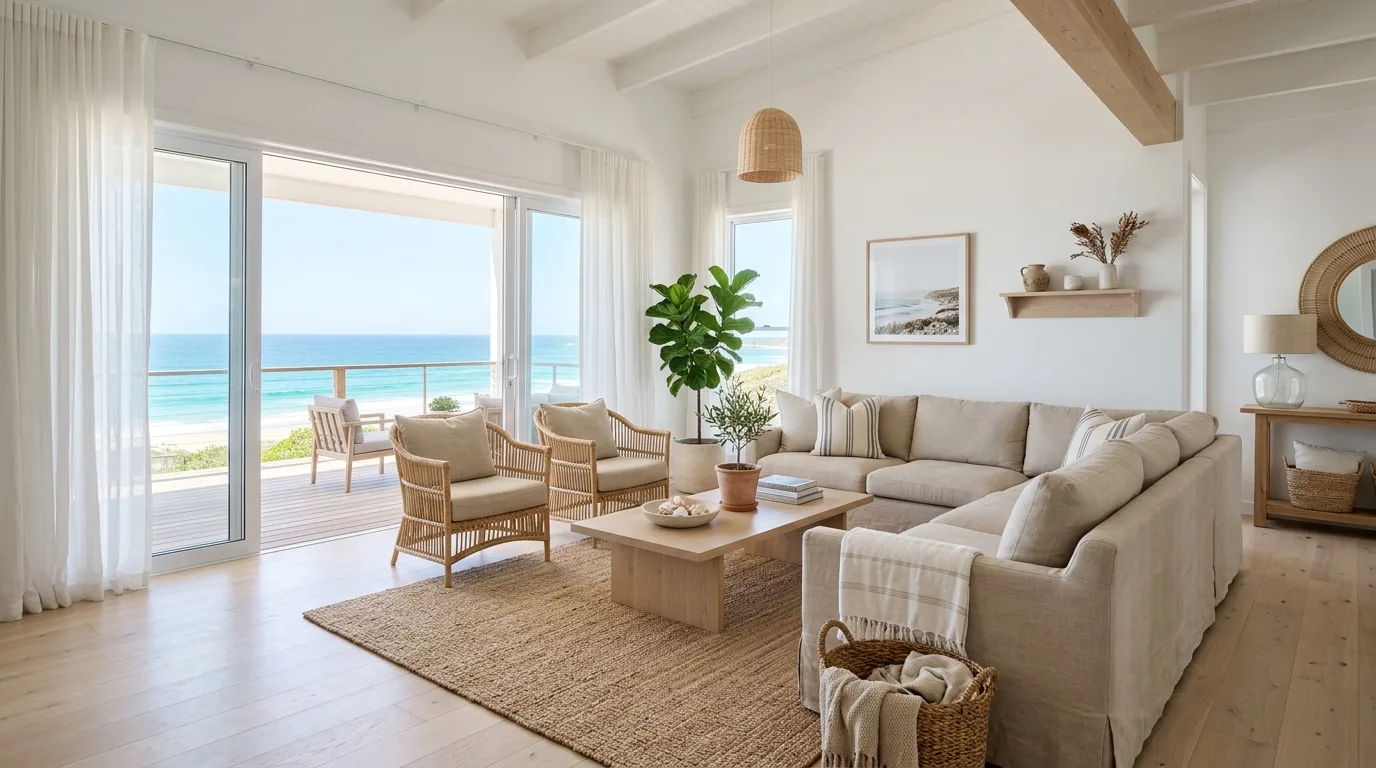
A palette of warm white, ivory, beige, and sandy taupe is one of the easiest ways to give a living room a relaxed coastal feeling. Rather than using stark white throughout the space, combine several slightly different neutral shades so the room feels layered and inviting. Try an ivory sofa with oatmeal-colored curtains, a natural jute rug, and cushions in cream and warm beige. Pale wood furniture can reinforce the connection to the beach without making the room feel overly themed. For extra depth, introduce subtle variations through woven baskets, linen upholstery, and textured throws. This approach works particularly well in small living rooms because light neutrals reflect available daylight and make the space feel open. Keep the walls relatively simple and let texture, rather than strong color, provide visual interest.
2. Add a Breezy Linen Sofa
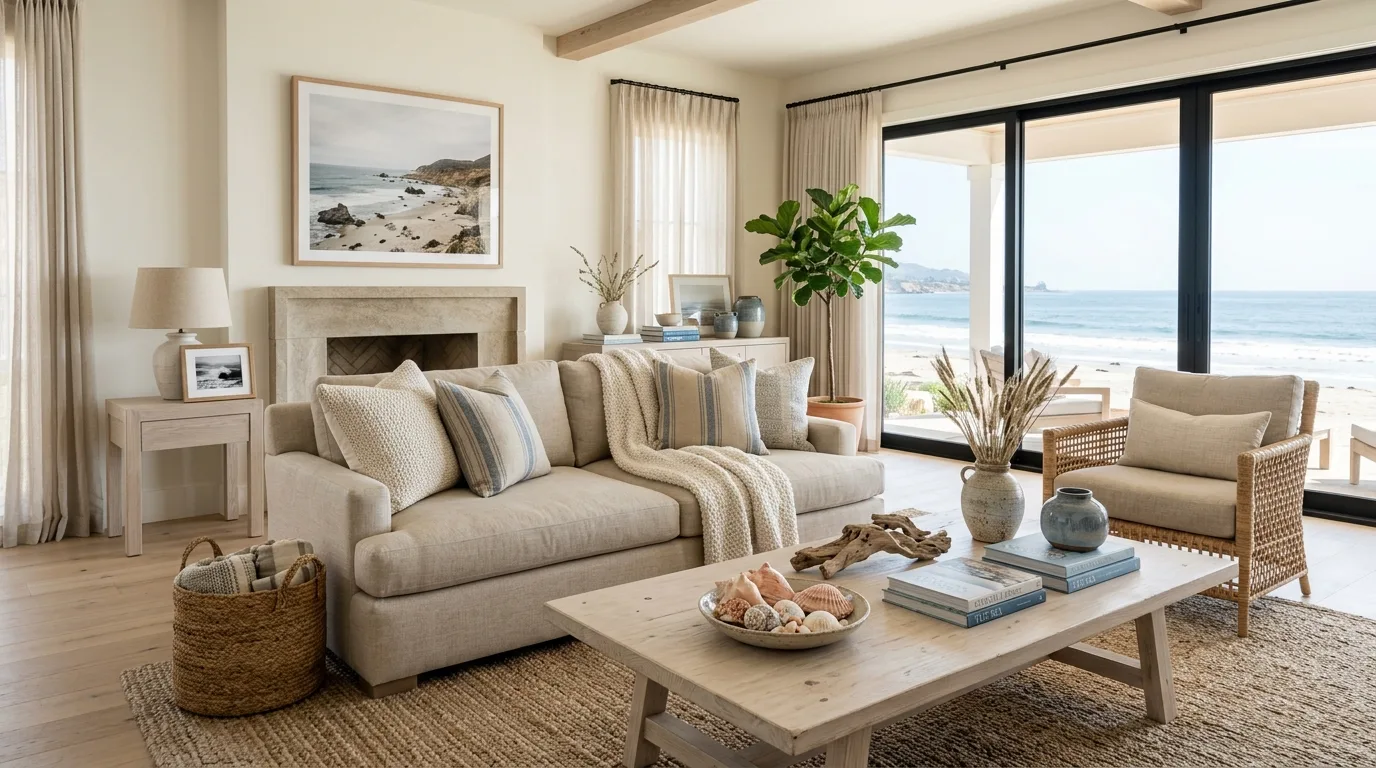
A comfortable linen sofa can instantly establish the laid-back character of a coastal living room. Look for a generously cushioned design with loose or relaxed upholstery rather than something extremely formal. White, cream, flax, and light beige are versatile choices that can work with both traditional and modern coastal interiors. If you are concerned about everyday wear, consider removable, washable covers or a durable performance fabric with a linen-like appearance. Complete the seating area with a few casually arranged cushions in stripes, muted blue, or natural woven fabrics. Avoid making every textile perfectly coordinated; coastal rooms look more authentic when they have a slightly collected, relaxed quality. A large slipcovered sofa is especially effective if you want the room to feel like a vacation rental where everyone can comfortably put their feet up.
3. Bring in Pale Wood Furniture
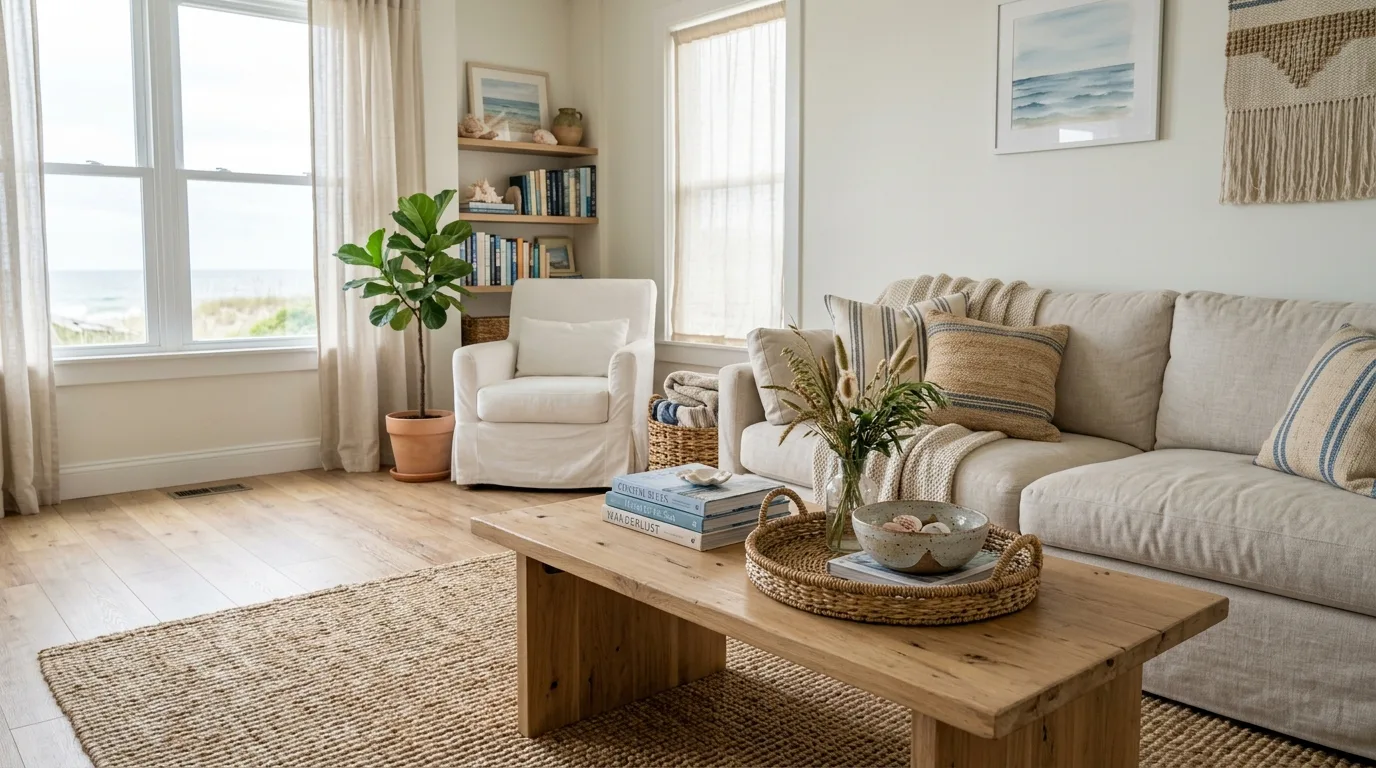
Pale wood adds warmth to a coastal living room while keeping the overall atmosphere light and natural. Choose pieces made from oak, ash, pine, rattan, or similarly soft-toned materials for a relaxed foundation. A simple wood coffee table, open shelving unit, or console can provide enough warmth without overwhelming a neutral room. If the existing furniture is dark, you do not necessarily need to replace everything. Balance heavier pieces with lighter accessories, woven baskets, and pale textiles. For a more contemporary coastal look, select furniture with clean lines and minimal detailing. In a traditional beach-house room, weathered finishes or gently distressed wood can create a more casual character. The goal is to suggest sun-washed materials rather than create a room that looks artificially rustic.
4. Use Ocean-Inspired Blue Accents
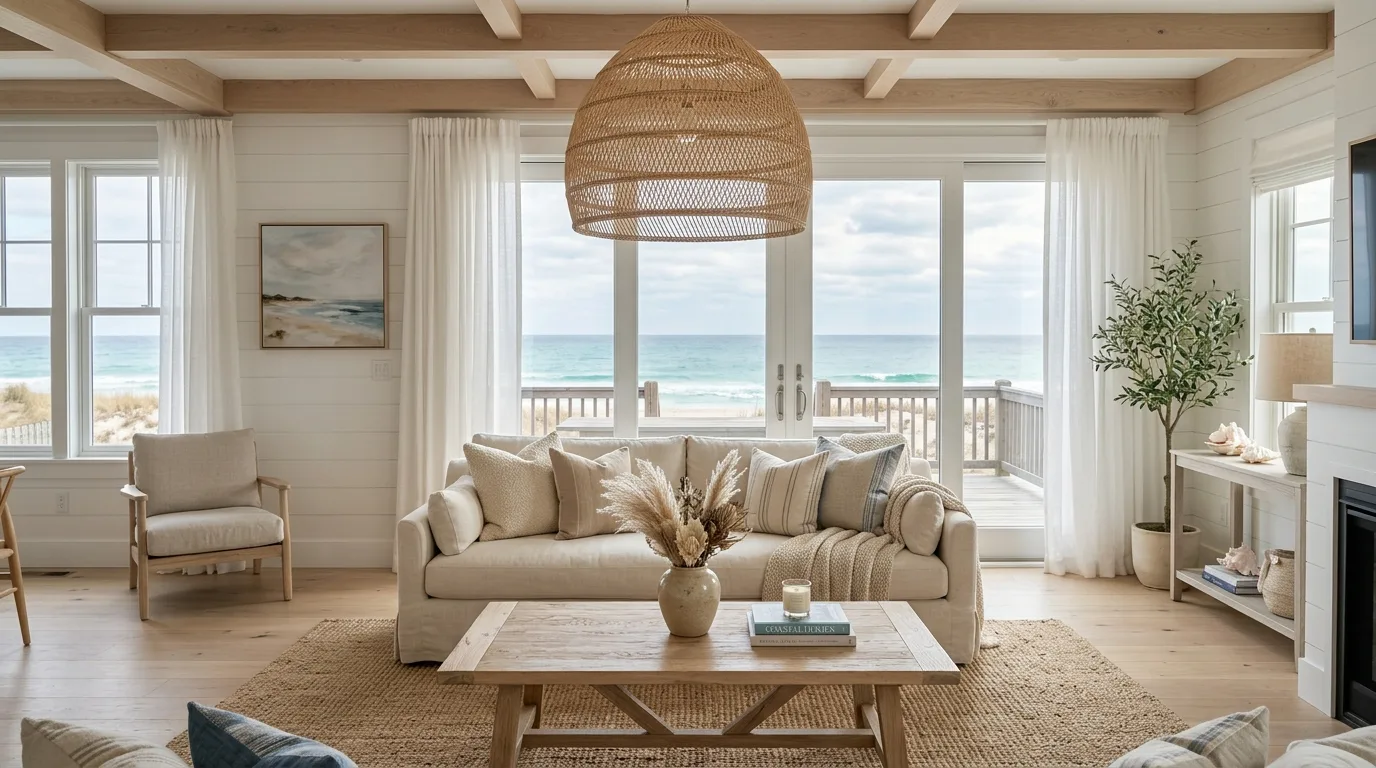
Blue is a natural choice for coastal decor, but it does not have to dominate the room. Introduce ocean-inspired shades through a few carefully selected accents, such as throw pillows, artwork, an occasional chair, or a patterned rug. Soft powder blue and dusty aqua create a calm atmosphere, while navy provides stronger contrast in a classic coastal space. For a sophisticated result, pair blue with ivory, warm beige, and pale wood instead of combining it with many additional colors. You can also layer several blue tones to mimic the changing colors of water and sky. If your living room is small, keep larger furnishings neutral and use blue in easily replaceable accessories. This makes the coastal theme flexible and allows you to refresh the room seasonally without a major redesign.
5. Choose a Natural Jute or Sisal Rug
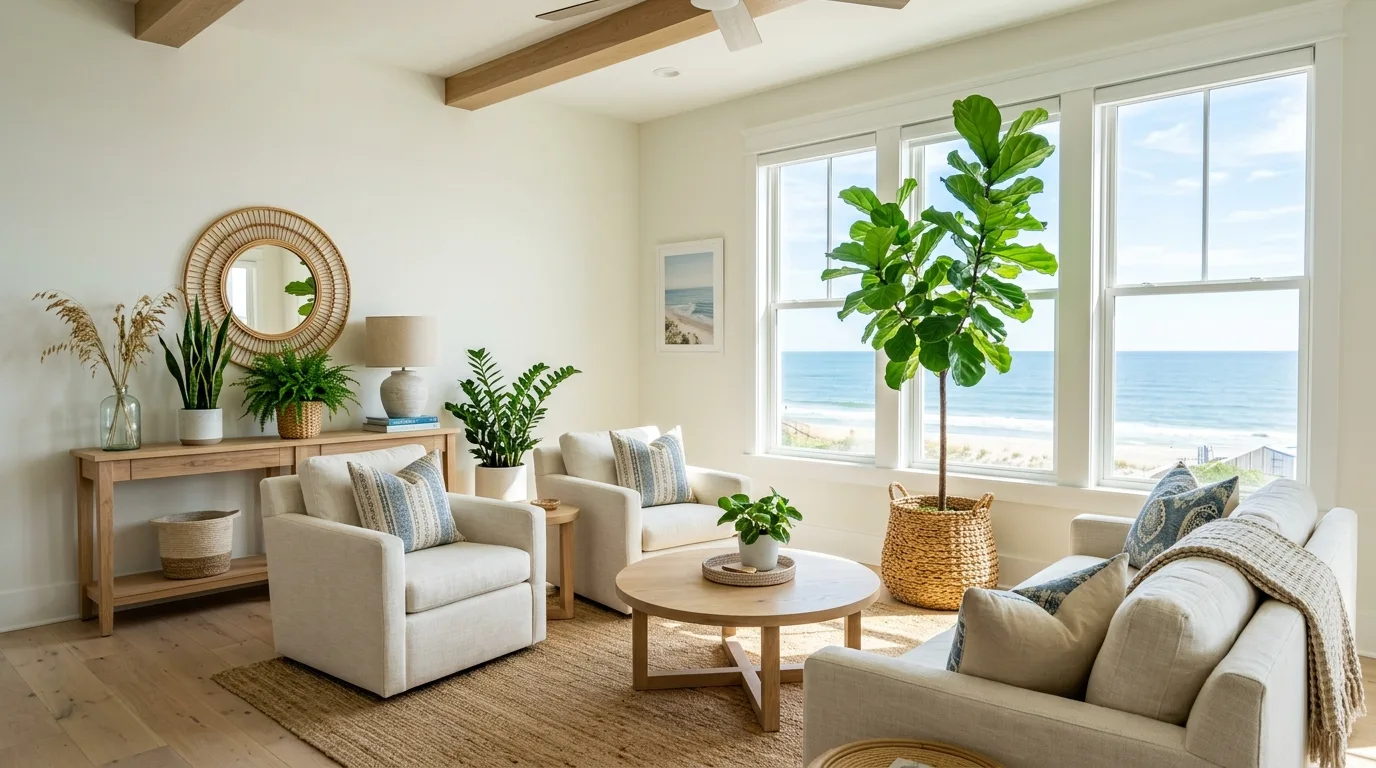
A natural-fiber rug can ground a coastal living room while adding the tactile quality associated with relaxed beach houses. Jute and sisal are particularly useful because their earthy tones complement white upholstery, pale wood, blue accents, and woven decor. Choose a rug large enough to connect the main seating pieces rather than using a small mat that floats in the center of the room. In a larger space, a substantial rectangular rug can help define the conversation area. If natural fibers feel too rough for your needs, consider a soft indoor rug with a woven or jute-inspired pattern. For homes with children or pets, check the care requirements before choosing a natural fiber. A simple, understated texture is usually more versatile than a heavily patterned rug and keeps the room feeling calm.
6. Decorate With Woven Rattan Details
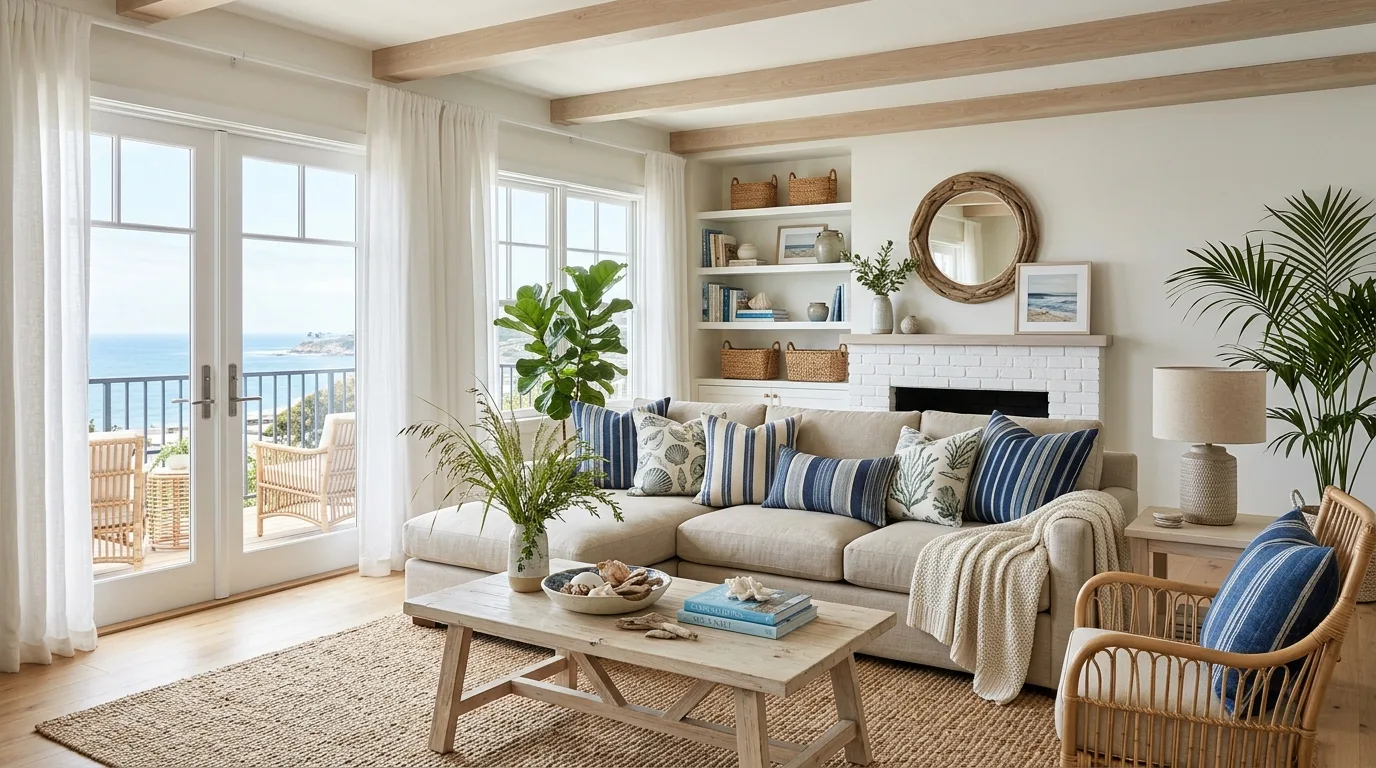
Rattan and wicker bring a casual, handcrafted quality to coastal interiors. Instead of filling the room with matching woven furniture, use a few different pieces to create balance. A rattan accent chair, woven pendant, cane-front cabinet, or basket beside the sofa can introduce texture without turning the room into a theme set. Woven materials look especially appealing when paired with smooth white walls and soft upholstery because the contrast makes their natural texture stand out. If the room already contains several wood pieces, choose one or two smaller rattan accessories rather than adding another large material. Baskets are practical as well as decorative: use them to store blankets, magazines, toys, or extra cushions. This keeps the coastal living room uncluttered while making the relaxed vacation aesthetic feel functional for everyday life.
7. Create a Light-Filled Window Seating Area
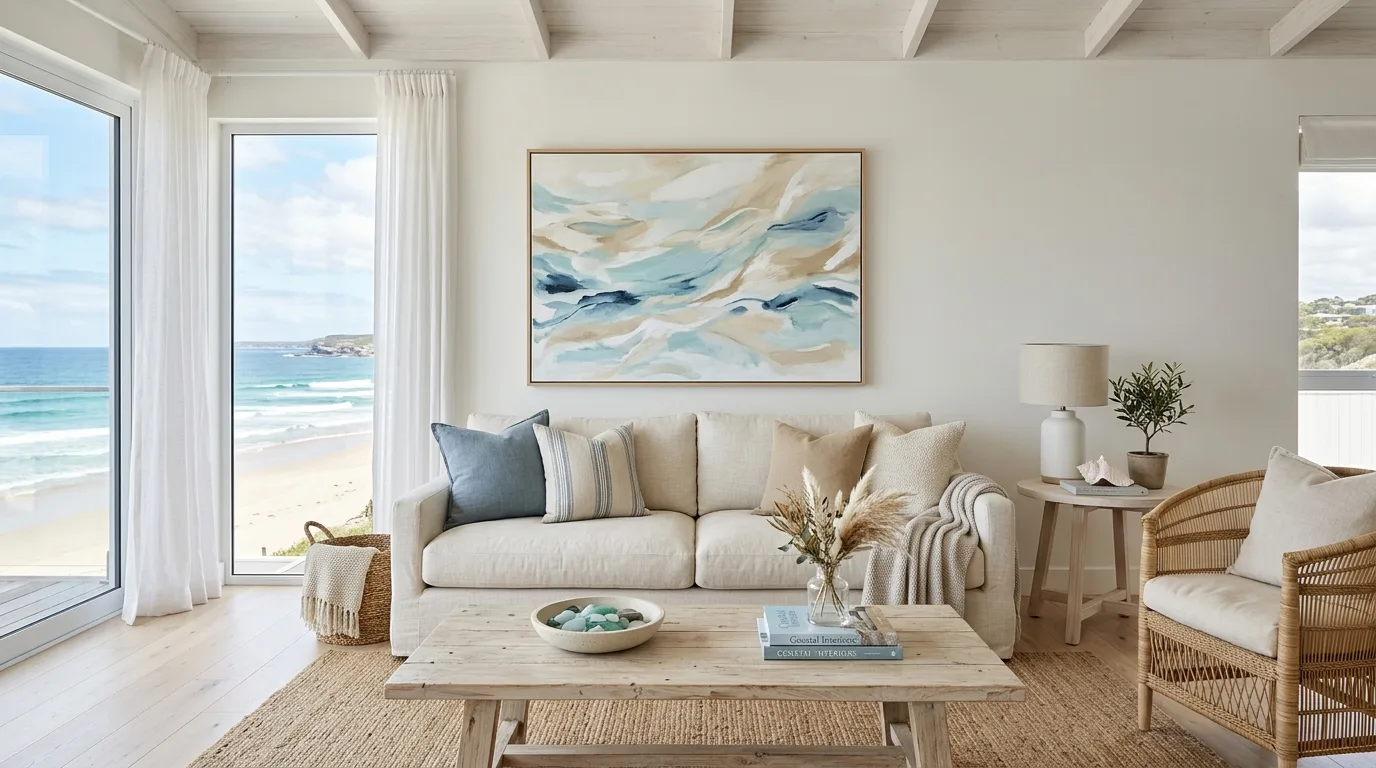
Natural light is one of the most important ingredients in a vacation-inspired coastal living room. If your room has a generous window, arrange the furniture so the area around it feels open rather than blocked by bulky pieces. A compact bench, cushioned window seat, or comfortable accent chair can turn a bright corner into a peaceful reading spot. Choose lightweight linen or cotton curtains that filter daylight without making the room feel dark. For privacy, layer sheer panels with simple blackout shades so you can control the light throughout the day. Keep the window area visually quiet with a small side table and perhaps a woven basket for books or blankets. Even if you do not have an ocean view, emphasizing sunlight and an unobstructed outlook can recreate some of the airy feeling associated with a seaside retreat.
8. Hang Relaxed Coastal Artwork
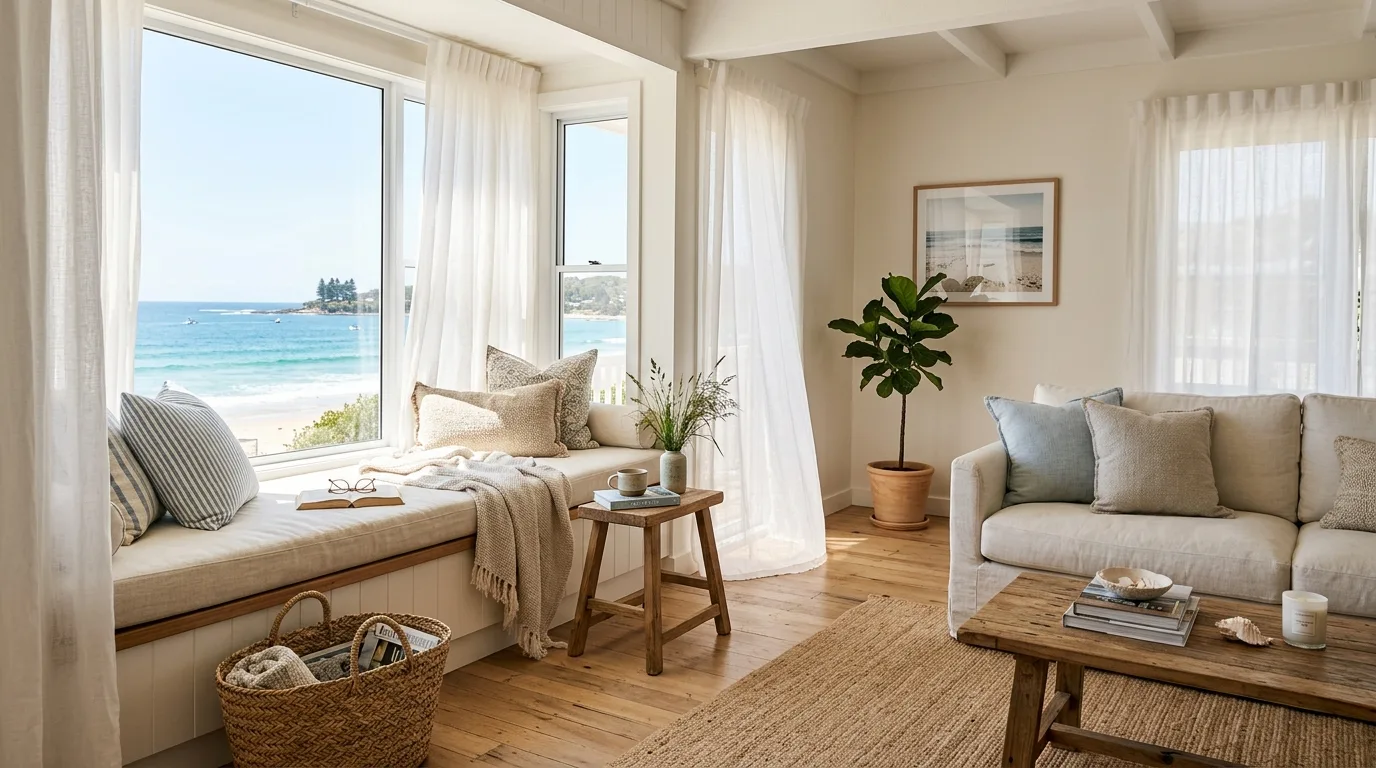
Artwork can establish a coastal mood without relying on obvious nautical symbols. Look for abstract pieces inspired by water, atmospheric landscapes, soft beach photography, botanical prints, or artwork featuring muted shades of blue, cream, sand, and gray. A large statement piece above the sofa can create a focal point while keeping the rest of the room relatively simple. Alternatively, build a small gallery wall with complementary frames and images that share a restrained palette. Choose artwork according to the overall style of the room: abstract coastal paintings suit contemporary spaces, while vintage-inspired marine or landscape prints can complement traditional interiors. Avoid overcrowding the walls. A few well-chosen pieces often feel more sophisticated than a collection of unrelated beach signs and shells. The result should evoke the colors and atmosphere of the coast rather than literally reproduce it.
9. Mix Stripes With Organic Patterns
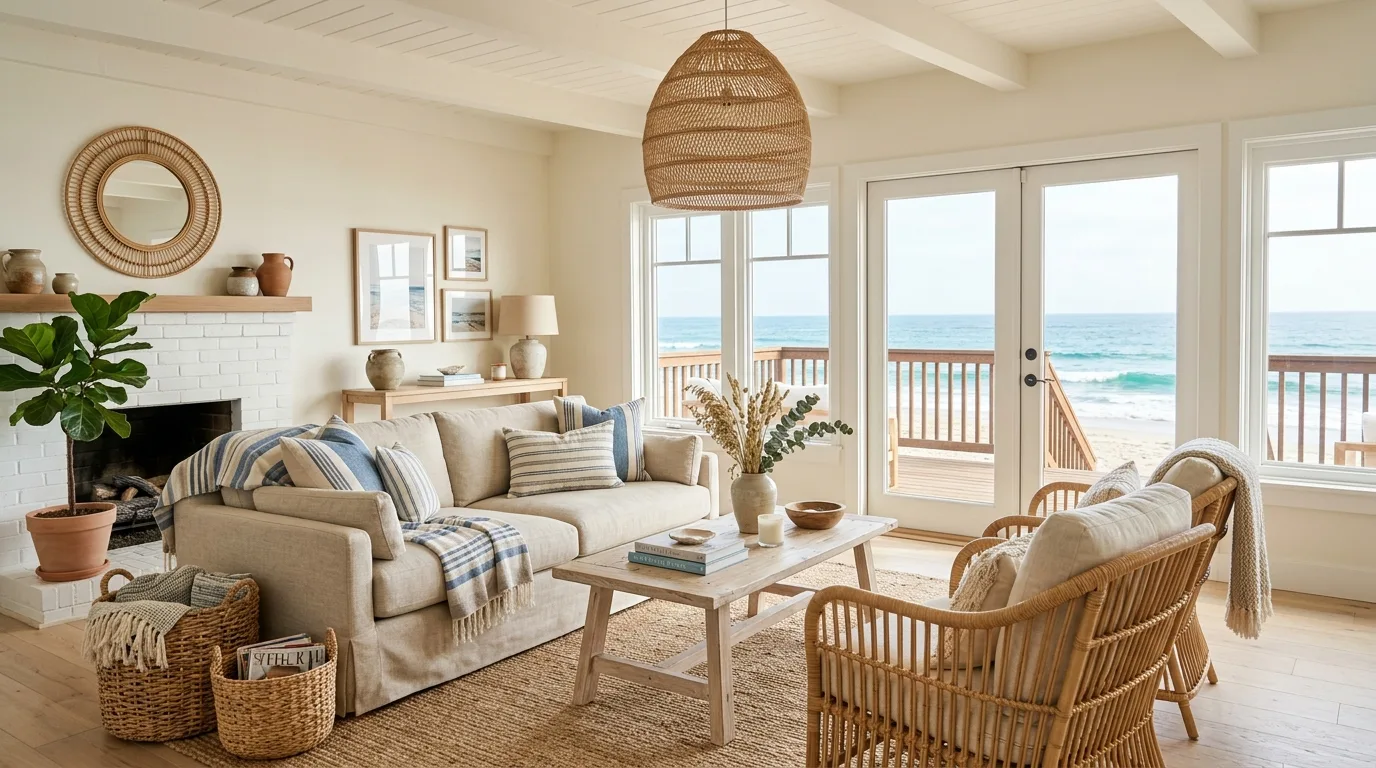
Classic stripes are a simple way to introduce coastal character while maintaining a timeless appearance. Use them on cushions, throws, upholstered chairs, or curtains in colors such as navy and ivory, soft blue and cream, or beige and white. To prevent the room from looking too uniform, combine stripes with organic patterns inspired by leaves, waves, grasses, or subtle geometric textures. Keep the patterns within a related color palette so the space remains peaceful. Varying the scale also helps: pair a narrow stripe with a larger, quieter pattern rather than placing several identical prints together. If you prefer modern coastal decor, choose understated ticking stripes or irregular woven patterns. For a traditional beach-house style, broader navy-and-white stripes can provide a stronger visual anchor. A restrained mix of patterns gives the room personality without sacrificing its calm atmosphere.
10. Add Greenery for a Fresh Coastal Feel
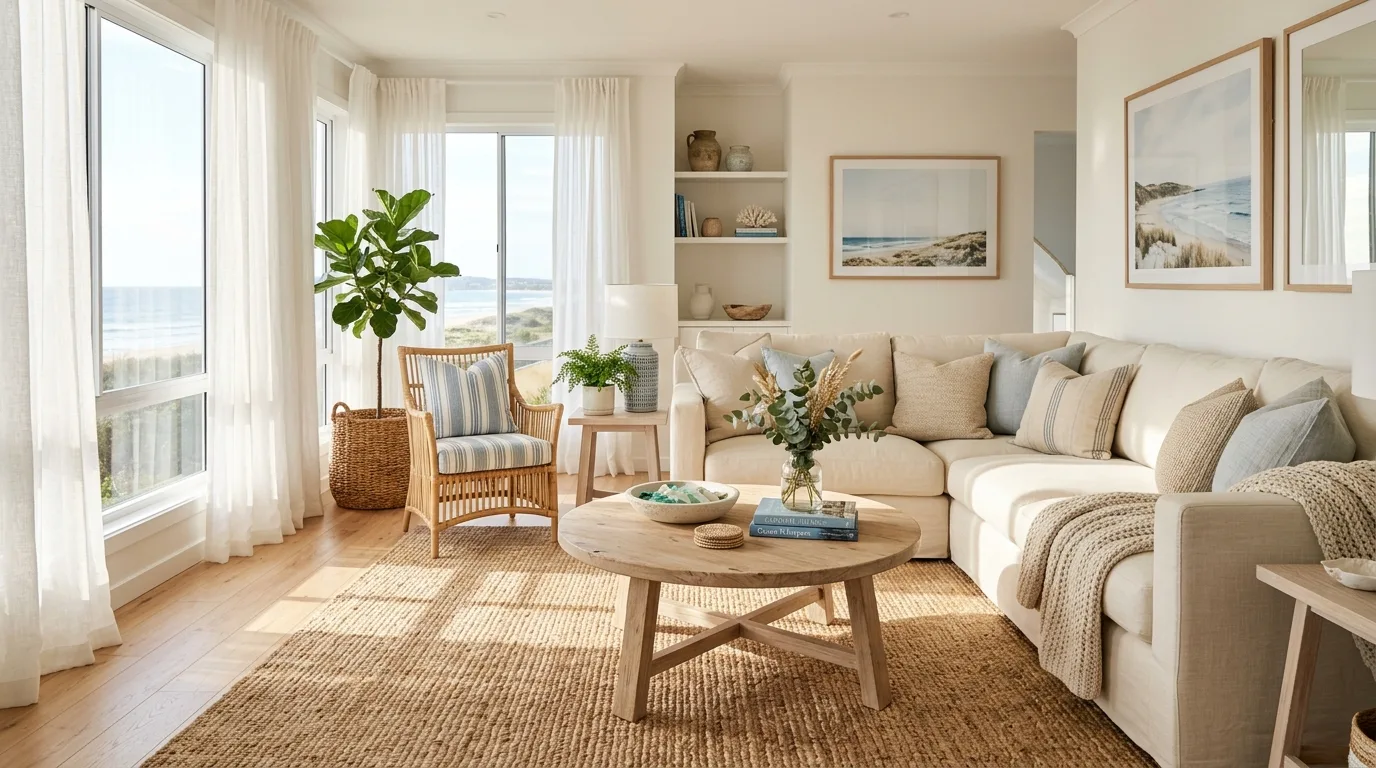
Plants can make a coastal living room feel fresher and more connected to nature. Choose greenery with shapes and textures that suit the bright, relaxed setting, such as palms, olive trees, fiddle-leaf figs, trailing plants, or simple leafy varieties. A larger plant placed near a sunny window can fill an empty vertical corner, while smaller plants can soften shelves and side tables. Use simple ceramic, terracotta, woven, or natural-finish planters instead of highly decorative containers. If your room receives limited sunlight, select plants according to the actual light conditions rather than choosing them solely for appearance. Artificial greenery can also work when natural plants are impractical, provided it looks convincing and is used sparingly. The key is to introduce natural forms without creating a jungle effect. One or two thoughtfully placed plants can make a neutral room feel noticeably more alive.
11. Install a Statement Coastal Pendant
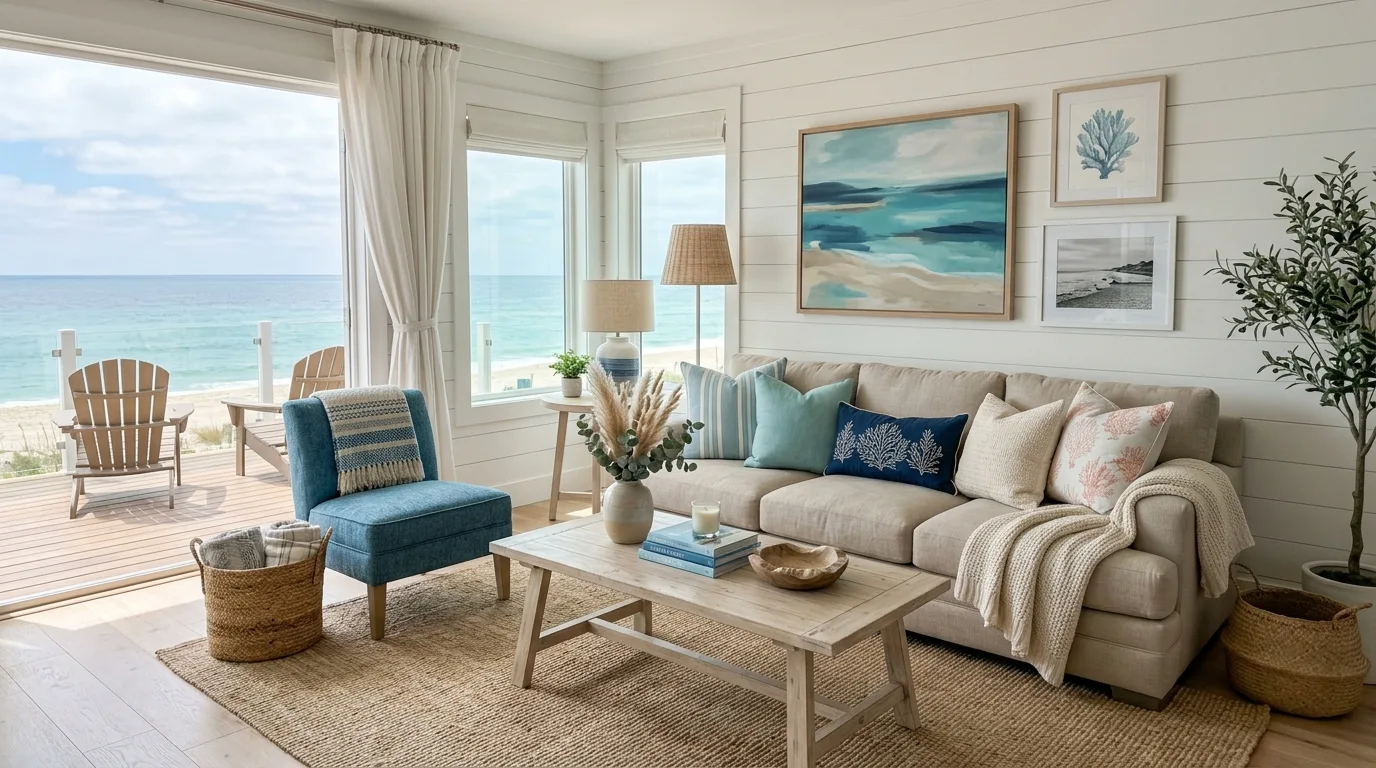
Lighting is an opportunity to add texture while keeping the coastal living room practical after sunset. A woven rattan pendant, rope-inspired fixture, woven paper shade, or simple natural-fiber chandelier can become a subtle focal point. Select a fixture that is appropriately scaled to the room and positioned so it does not visually overpower the seating area. For a more modern coastal style, choose a streamlined fixture with natural materials and minimal detailing. Traditional spaces can handle a more sculptural woven chandelier. Layer the overhead fixture with floor lamps, table lamps, or wall lights so the room does not depend on a single bright source. Warm-toned bulbs generally help create a comfortable evening atmosphere. Because natural textures already add visual interest, the rest of the lighting should remain relatively simple, allowing the pendant to complement rather than compete with the furniture and accessories.
12. Style a Casual, Layered Coffee Table
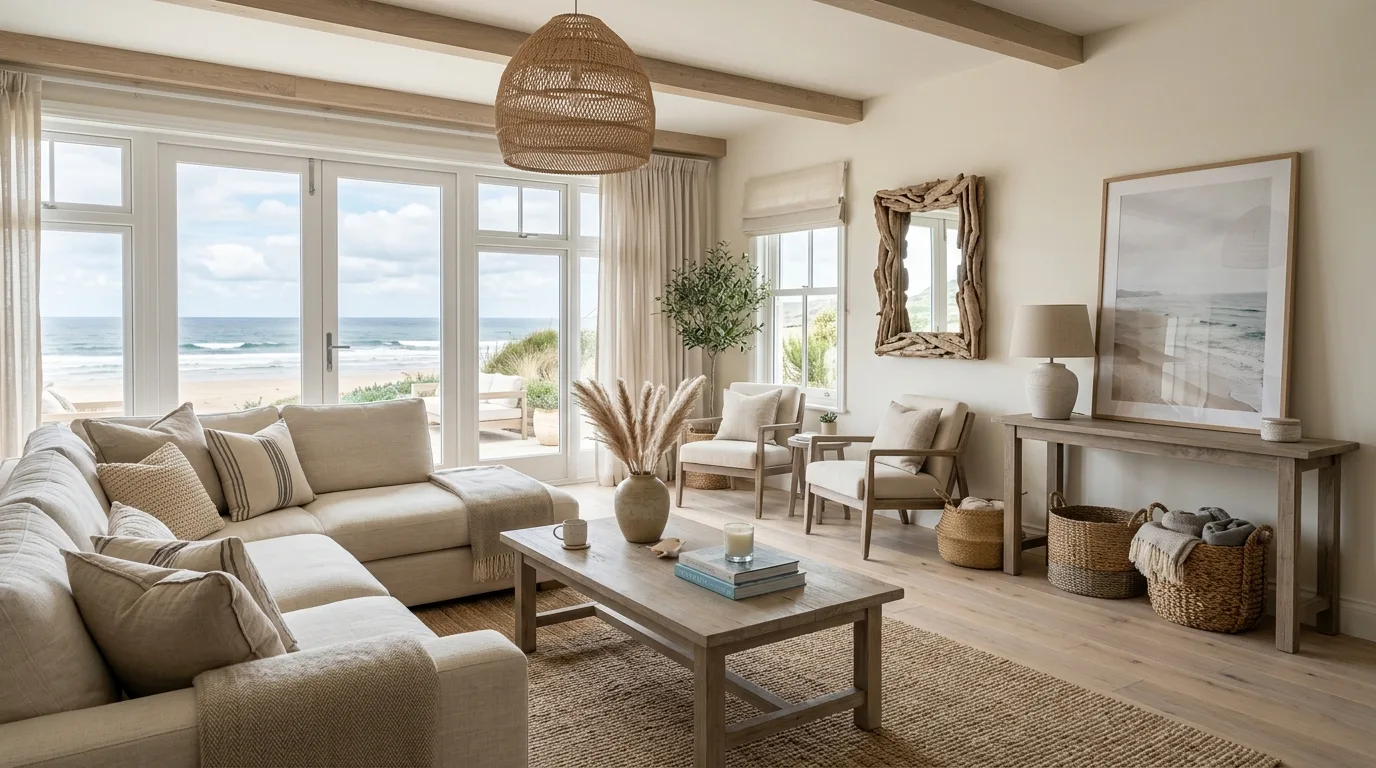
A coastal coffee table should feel useful and relaxed rather than perfectly staged. Start with a tray or shallow basket to visually organize smaller objects, then add a stack of attractive books, a small ceramic bowl, and a simple vase or natural object. Leave enough open space for drinks and everyday use. Materials such as light wood, ceramic, stone, glass, and woven fibers work naturally with the coastal palette. To create dimension, combine objects at different heights without making the arrangement too symmetrical. A round wooden bowl filled with decorative objects can add texture, while a clear glass vase keeps the tabletop visually light. If you have children, replace fragile accessories with durable pieces that can withstand regular use. The most convincing coastal spaces feel lived-in, so do not worry if the coffee table looks slightly different from day to day.
13. Introduce Subtle Seashell and Beach Details
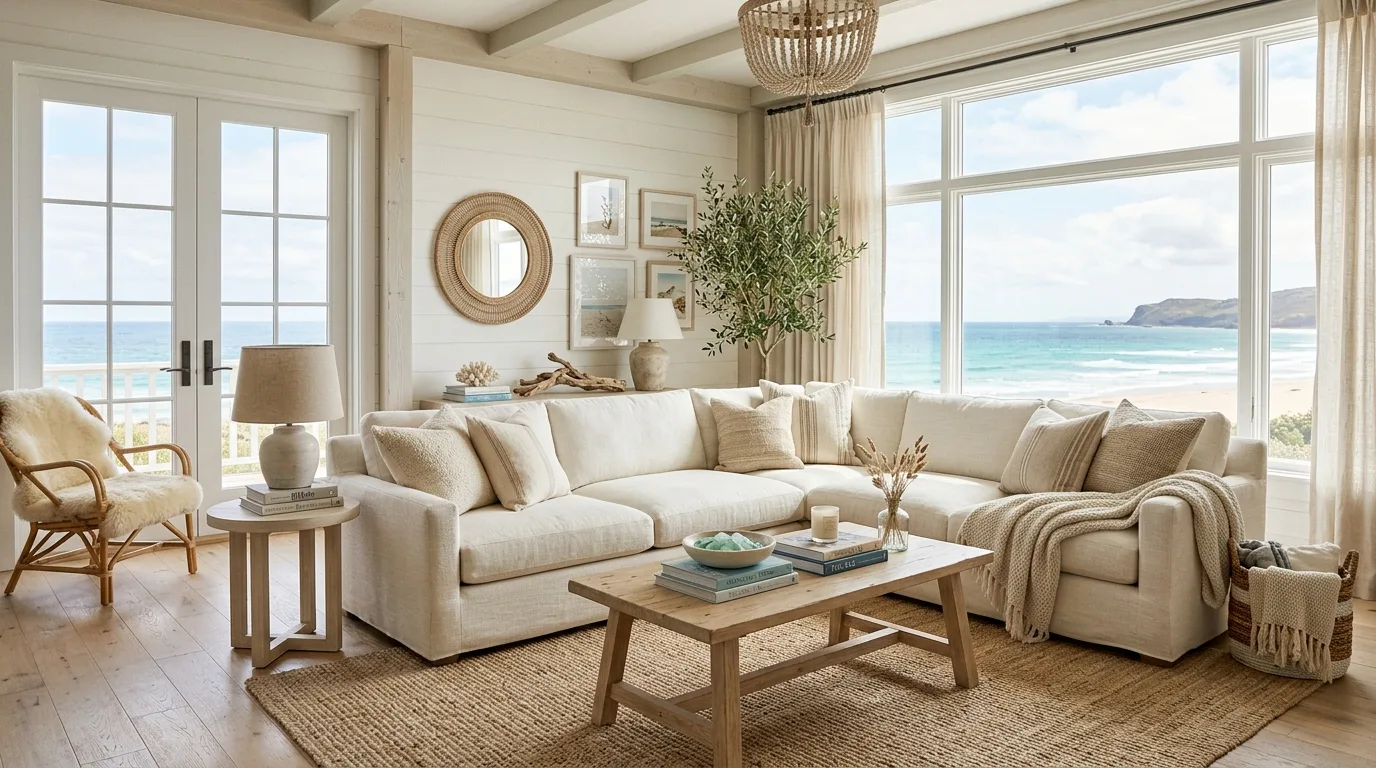
Beach-inspired accessories can reinforce the coastal theme when they are used with restraint. Instead of covering shelves with seashell collections, choose one or two natural elements that have genuine visual appeal. A bowl of shells, a piece of driftwood, a coral-inspired sculpture, or a framed coastal photograph can provide a subtle connection to the sea. Keep these objects grouped thoughtfully rather than scattering them throughout the room. Natural imperfections are part of their charm, so combine them with handmade ceramics, woven materials, and pale woods. Avoid excessive signs, anchors, ropes, or novelty nautical objects if you want the room to feel sophisticated. The best approach is to let beach references appear as small discoveries within a broader natural palette. This keeps the living room vacation-inspired without making it feel like a themed hotel or souvenir shop.
14. Finish With an Airy, Uncluttered Layout
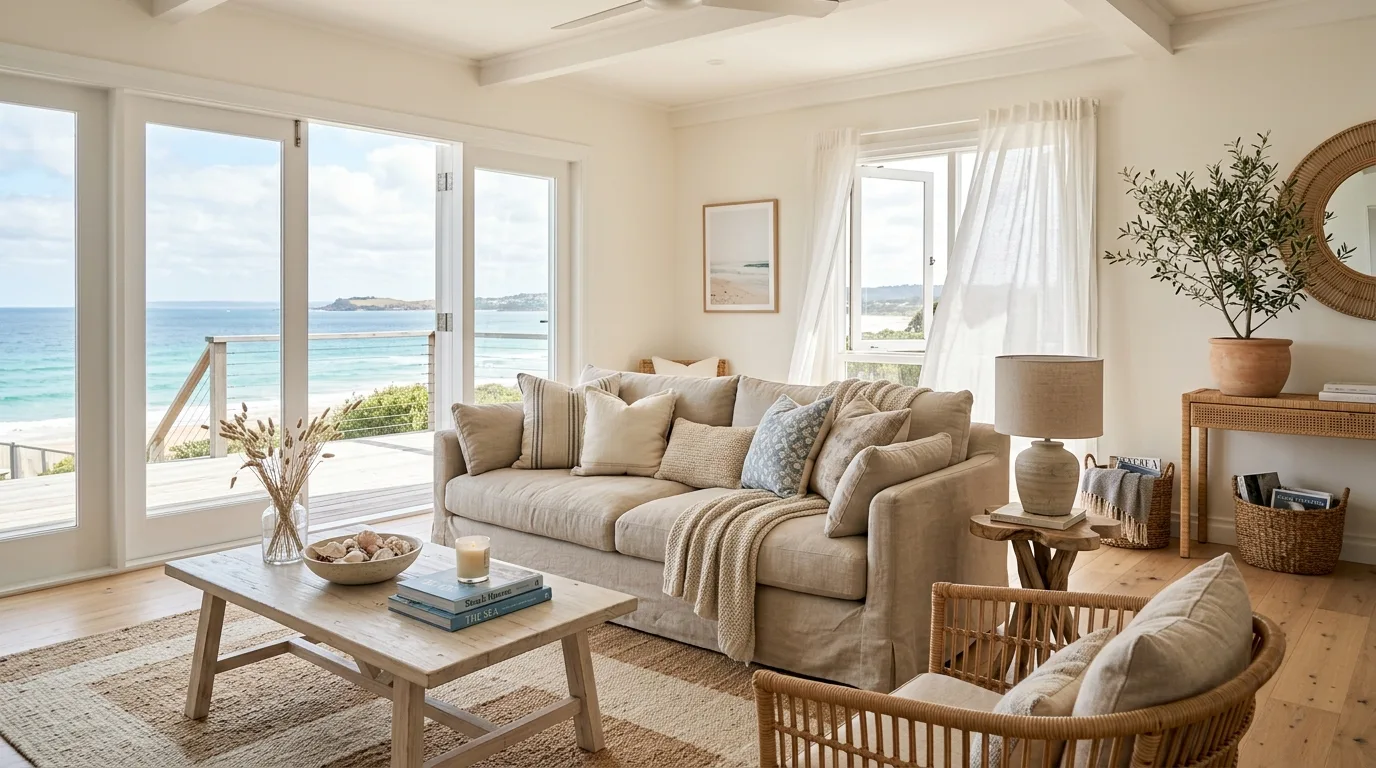
The final ingredient in a dreamy coastal living room is visual breathing space. Even beautiful furniture and accessories can lose their relaxed effect when the room becomes overcrowded. Arrange seating so there are clear walking paths and enough room to move comfortably around the coffee table. Keep surfaces selectively styled, and use baskets, cabinets, and storage ottomans to hide everyday clutter. Choose furniture that suits the proportions of the room rather than filling every available corner. In a larger living room, you can create separate zones for conversation, reading, or relaxing while maintaining a sense of openness between them. In a smaller room, prioritize multifunctional pieces and a limited number of decorative accents. When the palette is light, textures are natural, and the layout is comfortable, the room can capture the effortless feeling of a coastal getaway without sacrificing practicality.