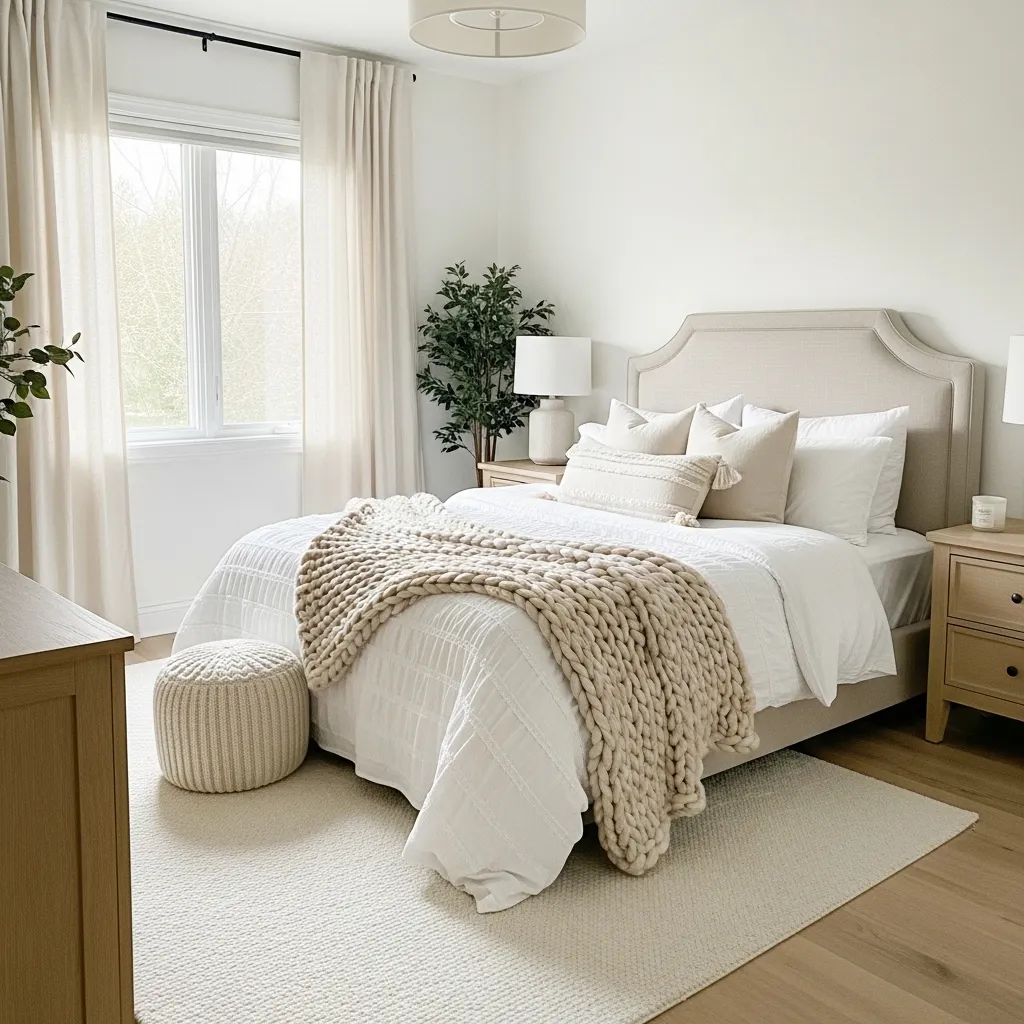
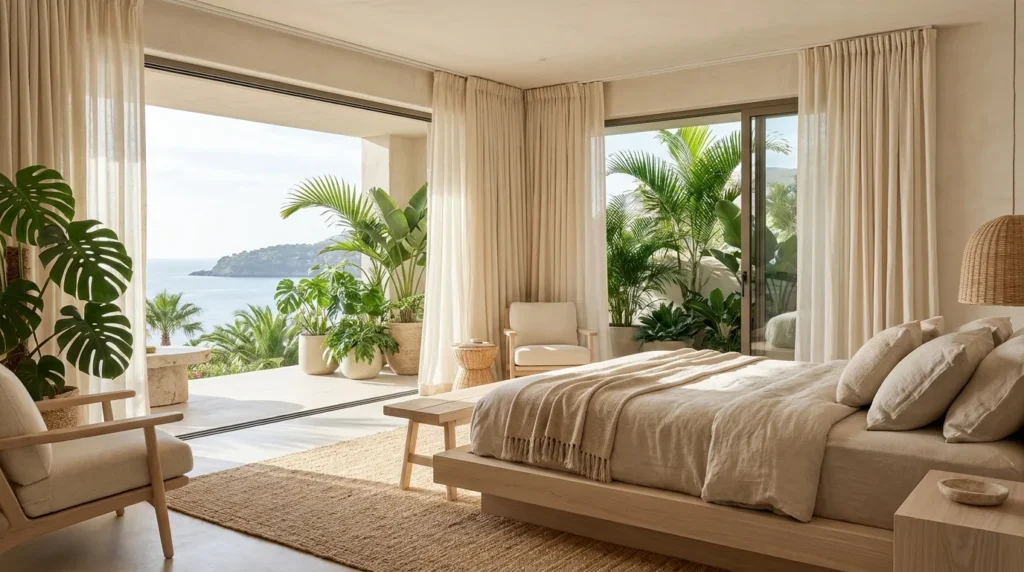
A coastal bedroom can feel like a private retreat without relying on obvious nautical decor. The most inviting spaces combine sun-washed colors, natural textures, relaxed layers, and plenty of greenery to create a calm, lush atmosphere. Whether your room overlooks the ocean or simply needs a more refreshing mood, these coastal bedroom ideas show how to bring that breezy feeling indoors with practical decorating choices.
1. Layer Soft Sandy Neutrals
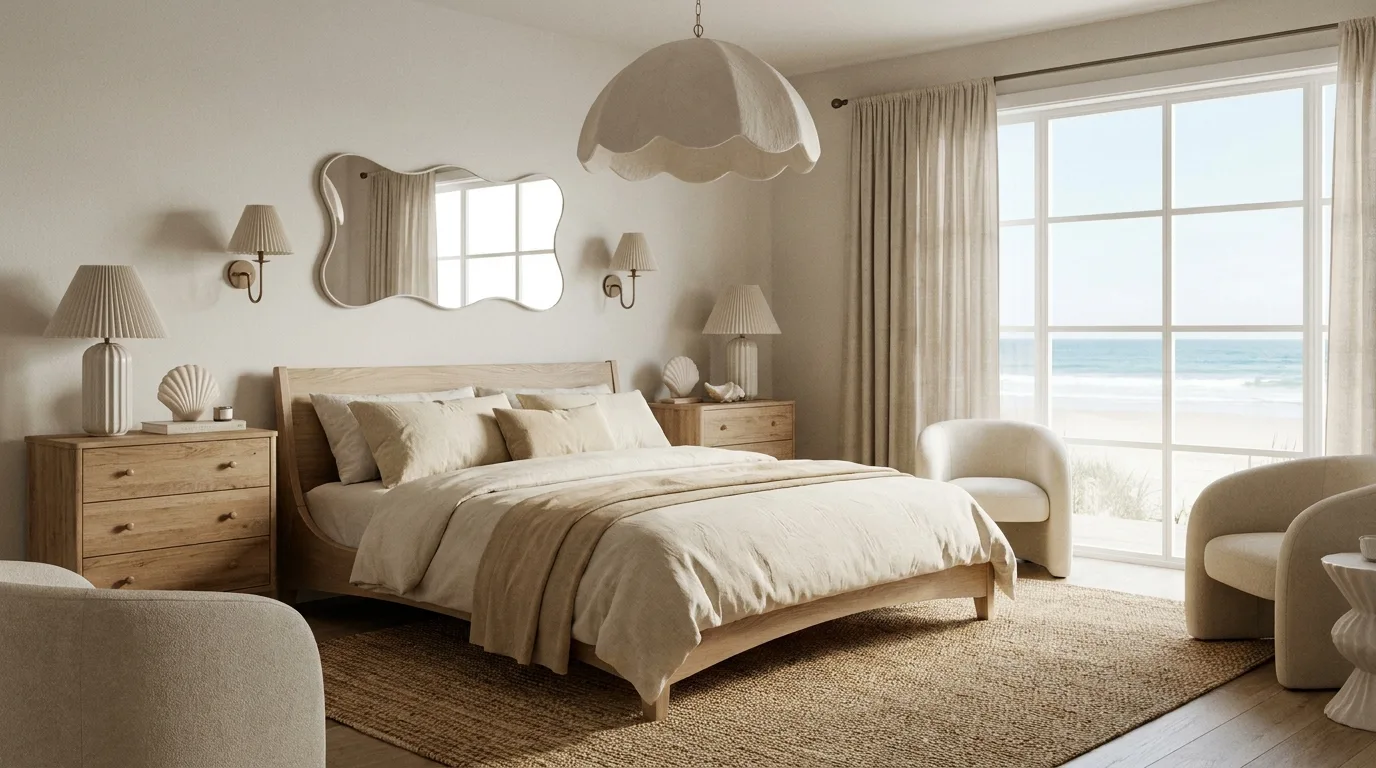
Build a soothing coastal bedroom around warm sandy shades instead of stark white. Think ivory, oatmeal, beige, driftwood, and pale taupe across the walls, bedding, curtains, and upholstery. These colors create the visual softness associated with sunlit beaches while giving the room a warmer, more sophisticated character. Start with an ivory duvet, add a textured beige throw, and introduce slightly darker cushions for depth. Natural wood furniture works especially well against this palette because it reinforces the organic feeling. If the room receives strong sunlight, choose matte fabrics rather than glossy finishes to prevent the space from feeling overly bright. Keep the number of competing neutrals limited so the bedroom feels intentional rather than washed out.
2. Choose Breezy White Bedding
Crisp white bedding is one of the easiest ways to create a coastal bedroom that feels fresh and restful. Look for cotton or linen sheets with a relaxed texture rather than perfectly smooth hotel-style fabrics. A white duvet can serve as the foundation, while lightweight quilts, waffle blankets, and loosely arranged pillows add dimension without making the bed look heavy. For a softer coastal effect, combine several shades of white, such as warm ivory and creamy linen. Avoid covering every surface with decorative pillows; two or three generously sized cushions can feel more effortless. Finish with a casually folded throw at the foot of the bed. The result should suggest a cool, comfortable place to unwind rather than a room staged around a strict beach theme.
3. Add Weathered Wood Furniture
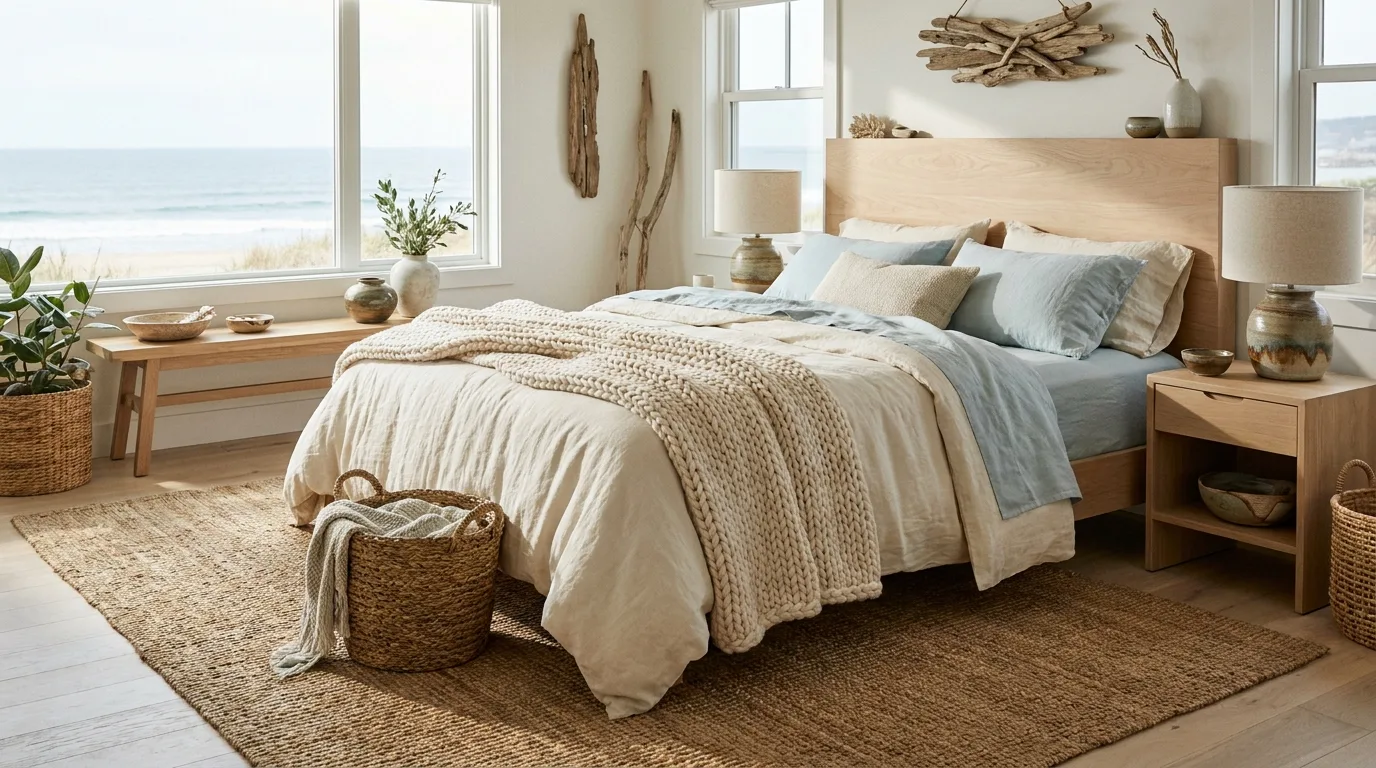
Weathered wood brings the character of a coastal cottage into the bedroom while keeping the atmosphere grounded. Choose a bed frame, nightstand, bench, or dresser with visible grain and a softly aged finish. Pale oak, washed pine, reclaimed wood, and light ash are especially effective because they complement sandy neutrals and blue-green accents. You do not need matching wooden furniture throughout the room. In fact, combining two or three related wood tones can make the space feel more collected and natural. If your existing furniture is dark, consider replacing just one prominent piece or using a pale wood bench to shift the overall balance. Keep silhouettes simple and avoid overly ornate details. The goal is relaxed craftsmanship that looks as though it belongs naturally in a breezy seaside home.
4. Bring in Lush Tropical Plants
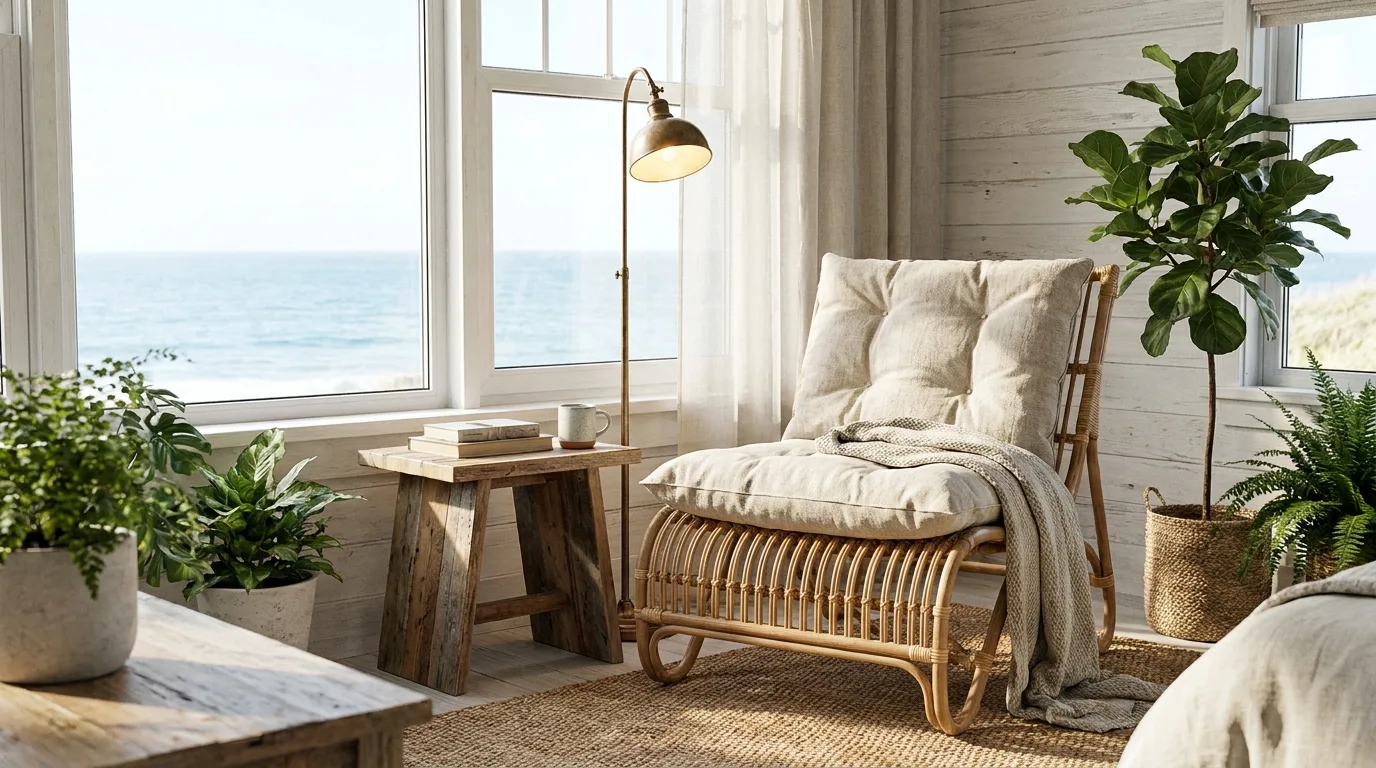
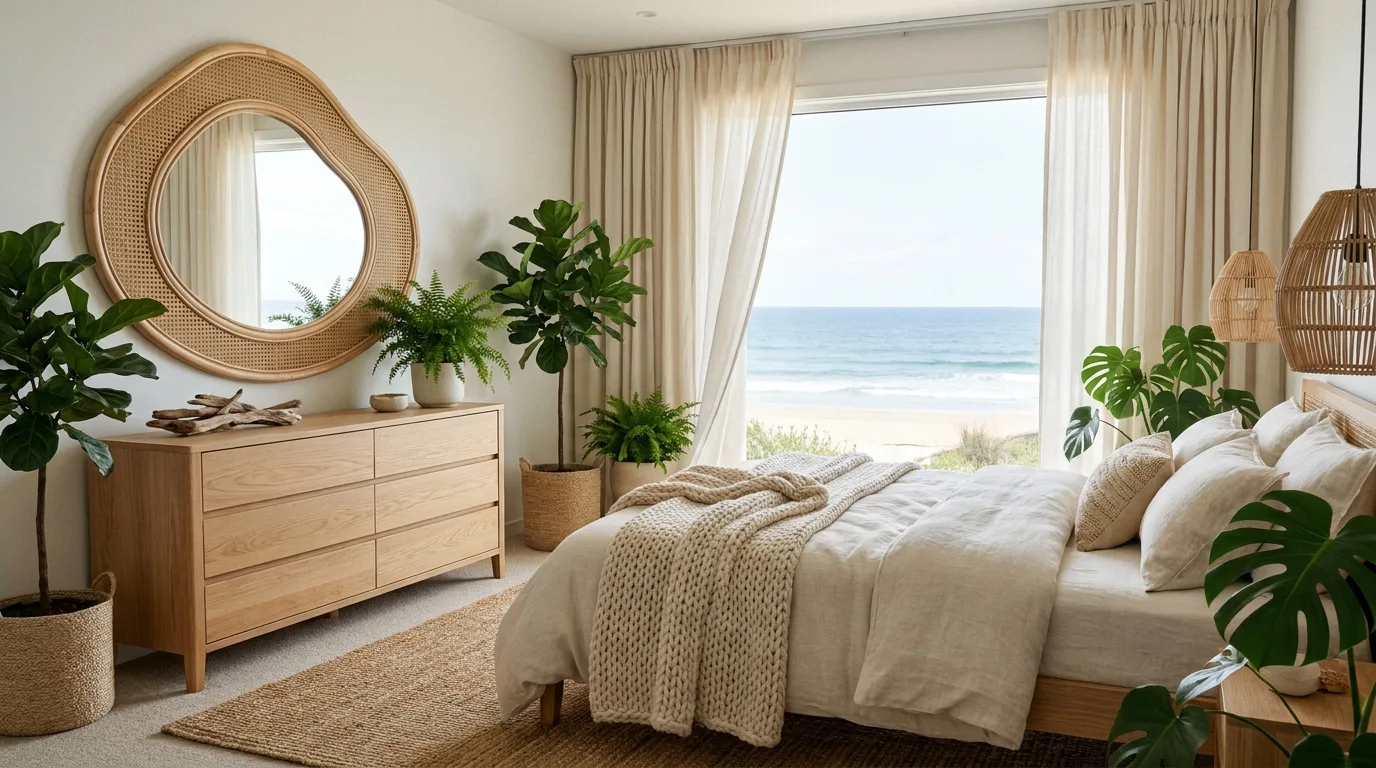
Greenery gives a coastal bedroom a lush escape quality and introduces a refreshing contrast to pale walls and natural materials. Large-leaf plants such as bird of paradise, monstera, or areca palm can create a tropical impression, while smaller plants work beautifully on a dresser or bedside table. Place taller greenery near a window where it can benefit from appropriate natural light, and use woven baskets as planters to connect the plants with the room’s coastal textures. If your bedroom has limited sunlight, select varieties suited to lower-light conditions rather than forcing a tropical plant into an unsuitable spot. Avoid overcrowding the room with greenery. One statement plant plus two smaller arrangements is often enough to make the space feel vibrant without turning the bedroom into a conservatory.
5. Use Muted Ocean Blue Accents
Ocean-inspired blue can bring a distinctly coastal feeling to the bedroom, but muted shades usually create a more restful result than saturated navy or turquoise. Consider dusty blue, sea glass, faded denim, blue-gray, or soft aqua for pillows, a throw, an upholstered bench, or a small accent wall. Keep the largest surfaces relatively neutral so the blue feels like a gentle layer rather than the room’s dominant theme. You can repeat one blue tone in two or three locations to create visual continuity. For example, a blue-gray lumbar pillow can echo artwork on the opposite wall. Pair these colors with cream, pale wood, and woven materials to keep the scheme relaxed. The effect should resemble ocean colors softened by sunlight rather than a literal interpretation of the sea.
6. Install Lightweight Linen Curtains
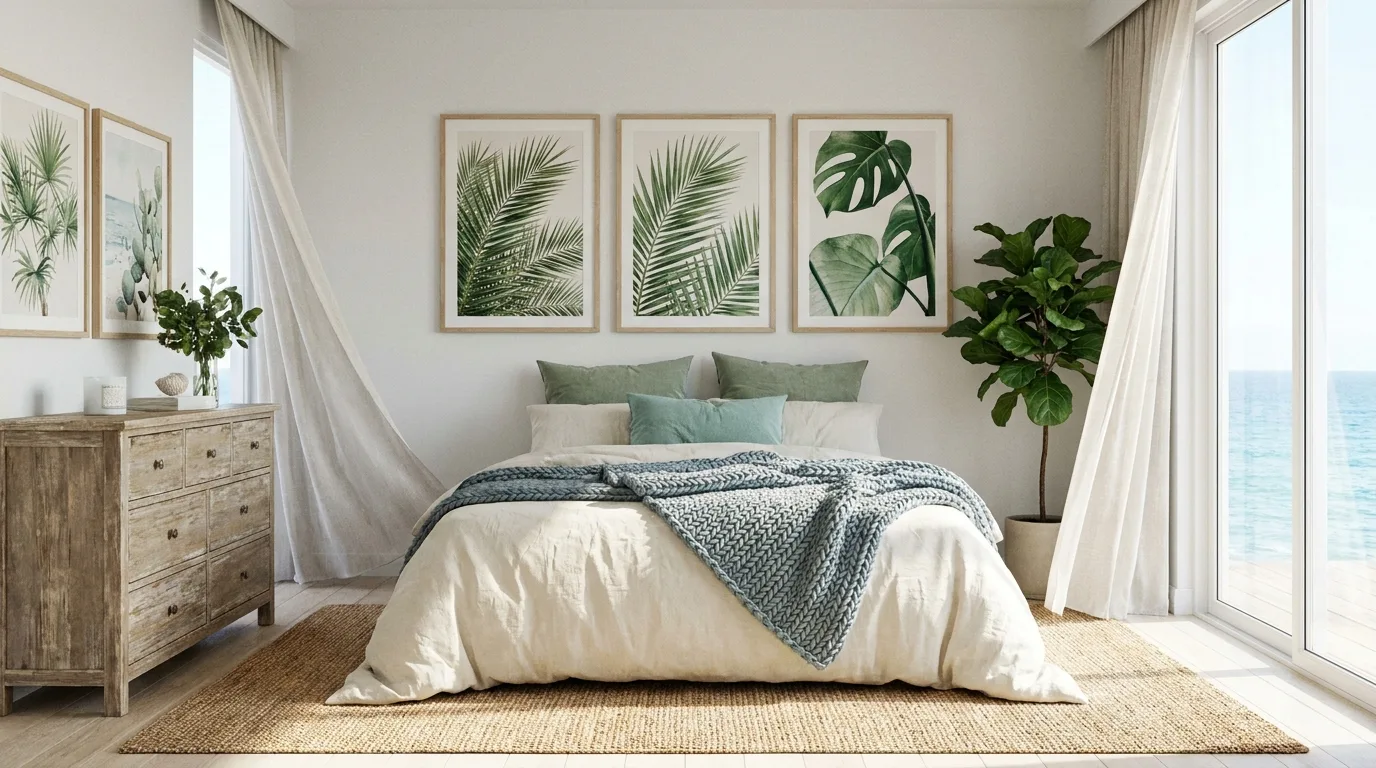
Window treatments have a major influence on whether a bedroom feels airy or enclosed. Lightweight linen or linen-look curtains are ideal for a coastal-inspired space because their natural texture filters daylight beautifully while preserving a relaxed appearance. Hang the curtain rod slightly above the window frame and extend it beyond the sides when possible to make the window appear larger. Choose white, ivory, oatmeal, or very pale beige for an understated look. If privacy allows, sheer panels can provide an especially breezy effect during the day. For bedrooms that receive intense afternoon sun, combine sheers with a discreet blackout layer so the room remains practical for sleeping. Let the curtains fall generously to the floor rather than stopping at the sill. Their movement and softness can make even a compact bedroom feel lighter.
7. Create a Woven Rattan Headboard
A rattan headboard can become the defining feature of a coastal bedroom without overwhelming the rest of the decor. Its open weave introduces texture, warmth, and an unmistakably natural character. Choose a rounded or gently curved design if you want the room to feel softer, or select a clean rectangular shape for a more contemporary interpretation. Keep bedding simple so the woven pattern remains visible. Rattan pairs particularly well with white linen, pale blue accents, warm beige walls, and light wood nightstands. If a new headboard is not practical, introduce the same material through a woven bench, pendant light, mirror, or bedside table. Because rattan already has strong visual texture, limit other heavily patterned pieces. A restrained combination of woven materials can make the room feel layered while still maintaining the calm quality that defines coastal decorating.
8. Add Natural Fiber Rugs
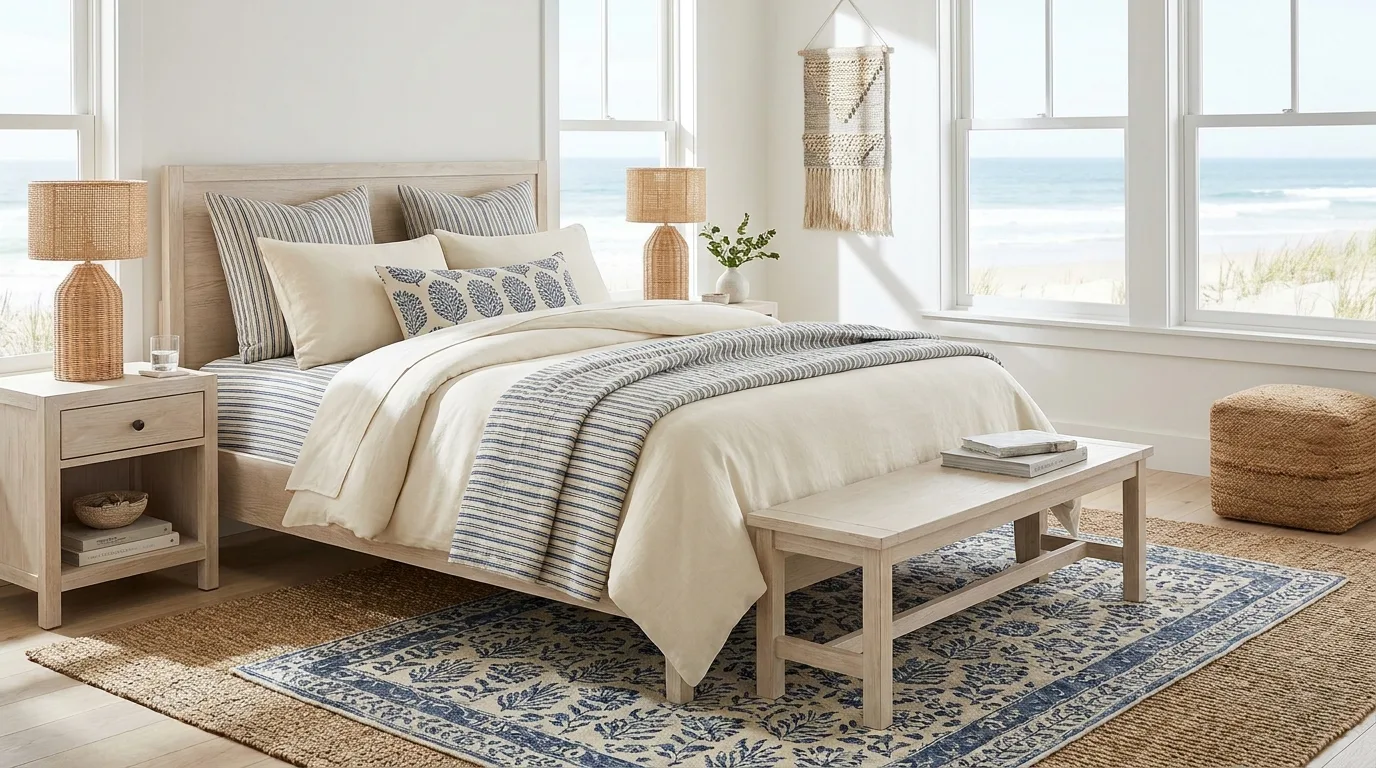
A natural fiber rug can instantly make a coastal bedroom feel warmer and more grounded. Jute, sisal, seagrass, and other woven fibers provide tactile contrast beneath soft bedding and smooth wooden furniture. Choose a rug large enough to extend beyond the sides and foot of the bed so the room feels cohesive rather than visually fragmented. If natural fibers feel too rough underfoot, layer a smaller cotton or wool rug on top where you step out of bed. Look for low-contrast patterns or simple woven borders rather than busy motifs. Natural rugs also work well in rooms with blue or green accents because their neutral color prevents the palette from becoming overly themed. Before buying, check how the rug will respond to humidity, pets, and cleaning needs, especially if your bedroom is in a warm or damp climate.
9. Paint the Walls a Soft Sea-Glass Green
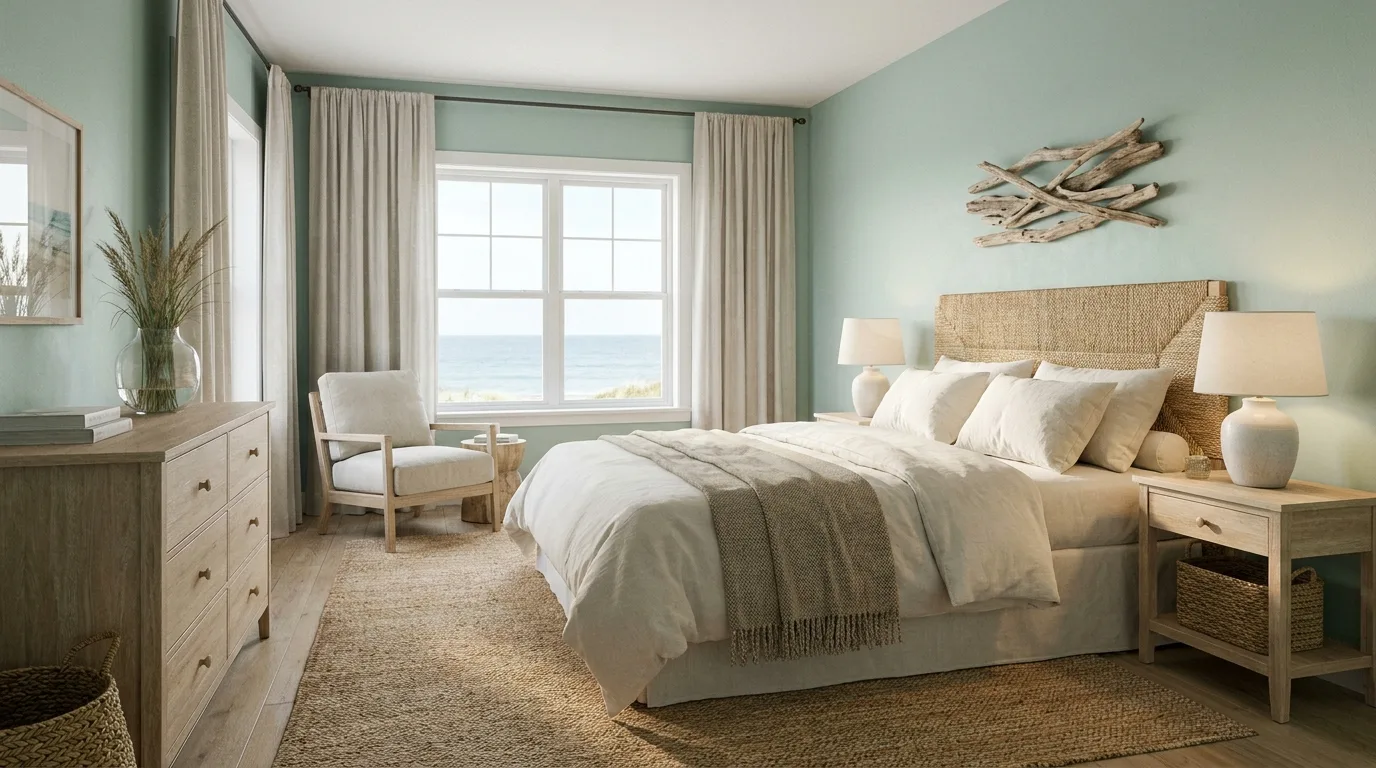
For a more immersive coastal bedroom, consider a pale sea-glass green on the walls. Soft green with gray or blue undertones can suggest coastal vegetation and shallow water while remaining quiet enough for a sleeping space. Test several samples because natural and artificial lighting can dramatically change how green appears throughout the day. Keep the ceiling and trim light to preserve an airy feeling, and balance the wall color with warm white bedding and natural wood. If painting all four walls feels too dramatic, use the color behind the bed as an accent wall. You can also introduce the same hue through artwork or textiles instead. Avoid pairing sea-glass green with too many additional accent colors. Cream, sand, pale wood, and muted blue are enough to create a layered palette without losing the peaceful quality of the room.
10. Decorate With Organic-Shaped Mirrors
An organically shaped mirror can add light and character while reinforcing the natural theme of a coastal bedroom. Look for oval, irregular, arched, or softly rounded frames in rattan, light wood, bamboo, or a simple neutral finish. Position a mirror where it can reflect daylight rather than directly facing a cluttered corner. Above a dresser, it can become a practical focal point; beside a window, it can help distribute natural light through the room. Choose a size that relates to the furniture beneath it rather than automatically selecting the largest available option. A sculptural mirror works particularly well when the rest of the decor is restrained. Its irregular outline introduces visual interest without relying on busy artwork or nautical motifs. Keep the surrounding surface relatively uncluttered so the mirror contributes to the room’s sense of openness.
11. Mix Stripes With Subtle Coastal Patterns
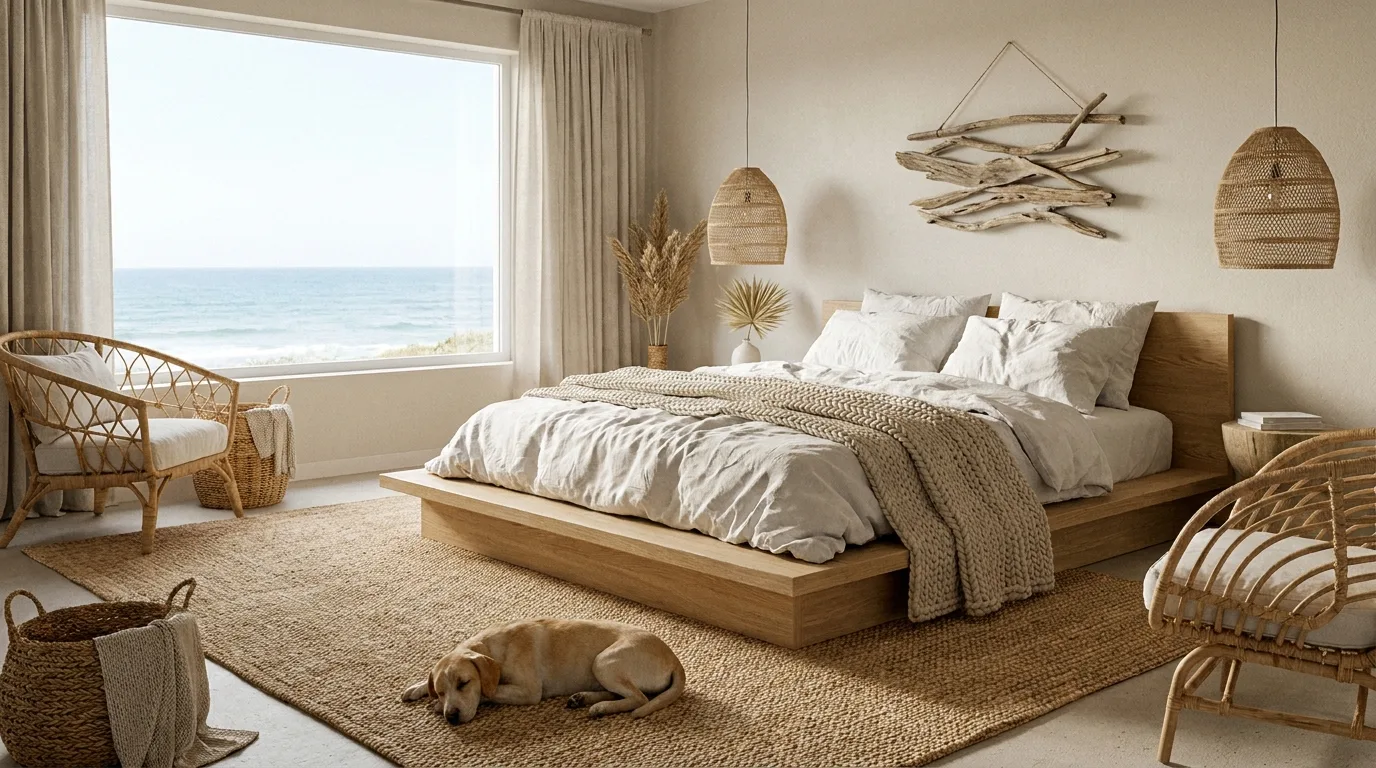
Stripes are a classic coastal pattern, but they look most sophisticated when used selectively. Introduce narrow blue-and-cream stripes through a lumbar pillow, duvet cover, upholstered bench, or small area rug. To prevent the bedroom from looking themed, combine stripes with solid linens and one understated organic pattern, such as a botanical print or abstract wave design. Vary scale rather than adding multiple competing motifs. A broad stripe on a throw can work with a fine stripe on a cushion because the patterns remain related without being identical. Keep the colors muted so the bedding remains restful. If the room already contains strongly textured furniture, one striped accent may be enough. This approach captures the relaxed visual language of coastal interiors while avoiding the predictable combination of anchors, sailboats, and overtly nautical accessories.
12. Use Shell-Inspired Textures
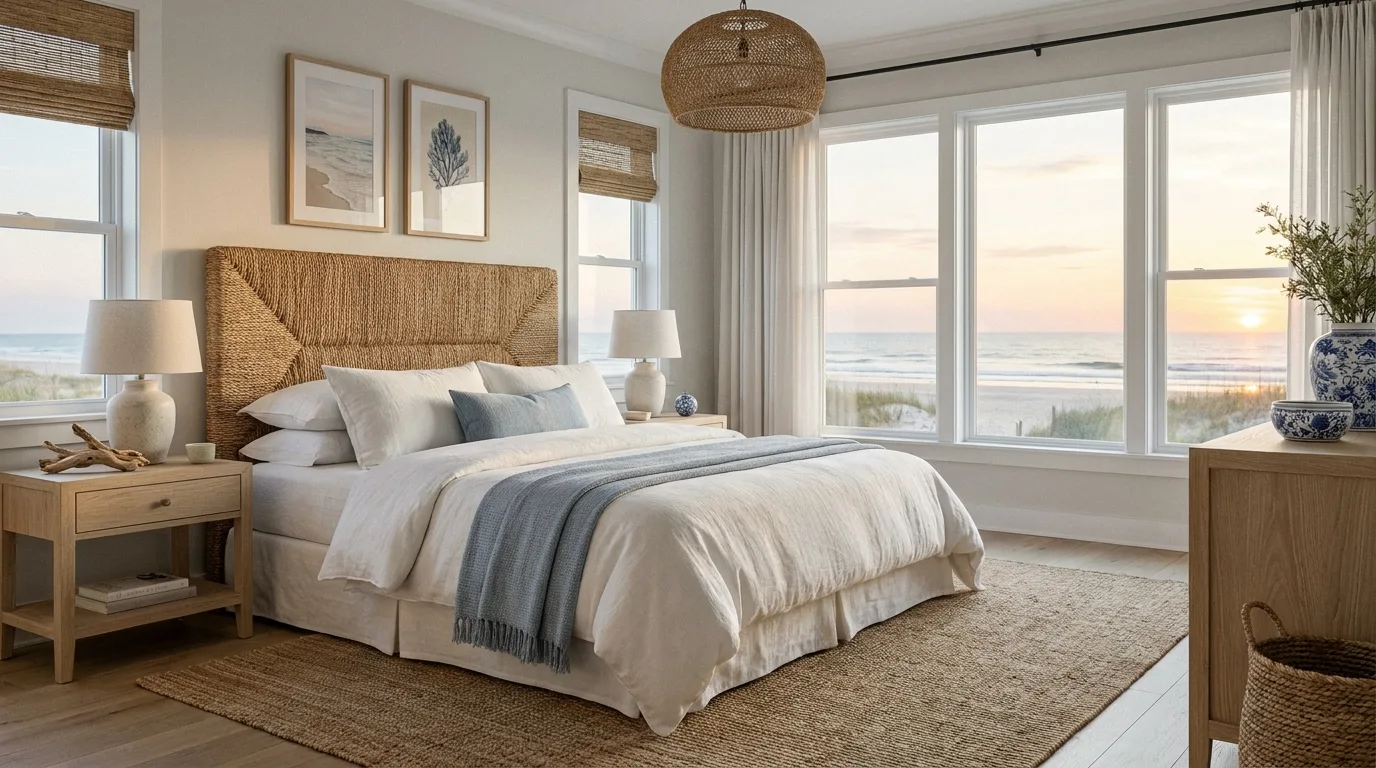
Shell-inspired details can bring subtle coastal character to a bedroom without turning it into a beach souvenir display. Instead of decorating with collections of shells, look for shapes and textures that gently reference them. Scalloped lampshades, curved ceramic vessels, fluted accessories, mother-of-pearl details, and softly ridged textiles can provide the connection. A scalloped bedside lamp or shell-like wall sconce can become a small focal point, while a textured cushion adds another layer at a lower cost. Keep these references restrained and balance them with wood, linen, and woven fibers. Natural imperfections are helpful because they make the room feel organic rather than overly coordinated. If you prefer a modern coastal look, choose one sculptural shell-inspired piece and let the rest of the room rely on color, texture, and natural materials for its seaside character.
13. Hang Botanical Coastal Artwork
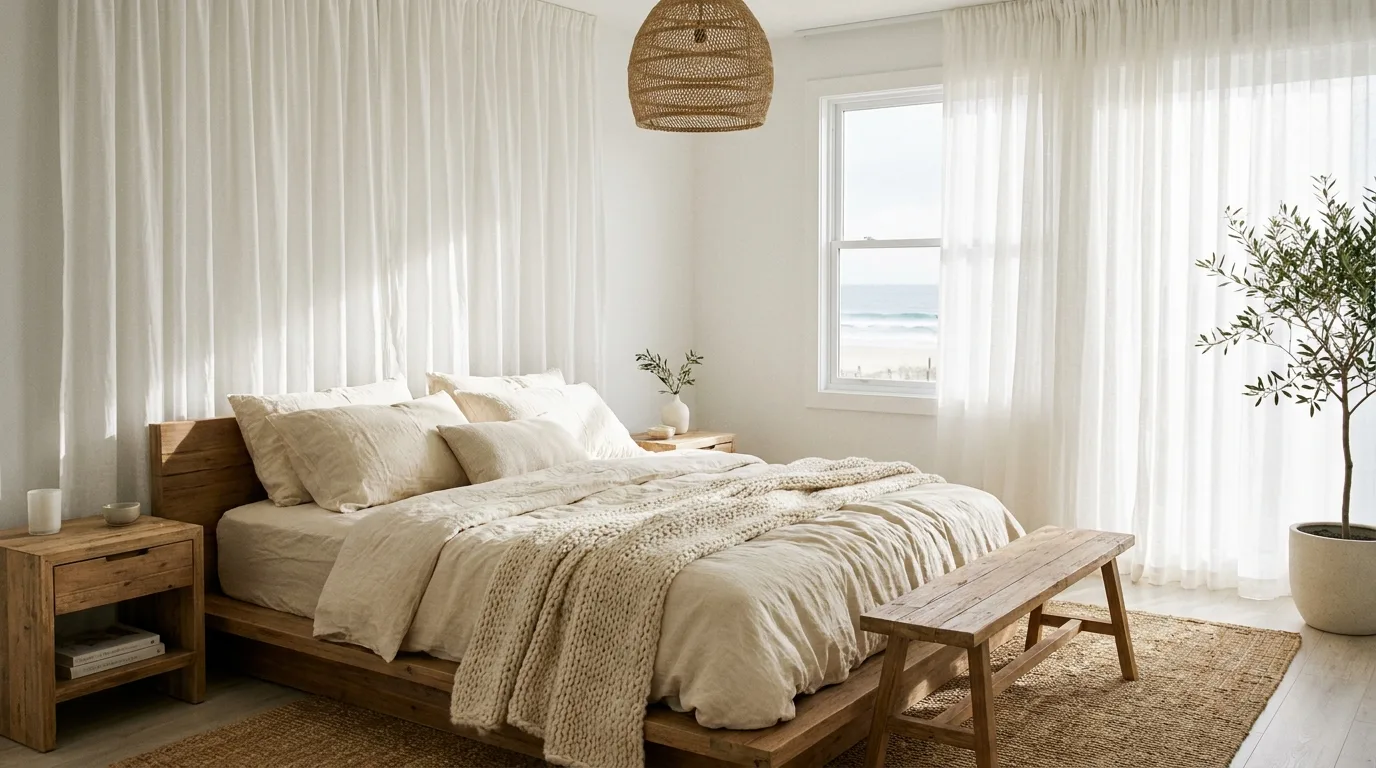
Artwork can reinforce a coastal bedroom’s lush atmosphere without relying on literal ocean scenes. Botanical prints featuring palms, grasses, coastal leaves, or tropical foliage are an easy choice for adding color and personality. Abstract artwork in shades of sand, blue-gray, cream, and green can provide an even subtler interpretation. Hang one larger piece above the bed for a calm focal point, or create a small gallery arrangement with consistent frames. Natural wood and woven frames complement the relaxed material palette particularly well. When selecting art, consider the colors already present in your bedding and curtains so the room feels coordinated. Avoid filling every empty wall simply because space is available. A few thoughtfully placed pieces can make a bedroom feel more personal while preserving visual breathing room and the uncluttered quality that helps a coastal retreat feel restful.
14. Choose a Canopy Bed for Resort Style
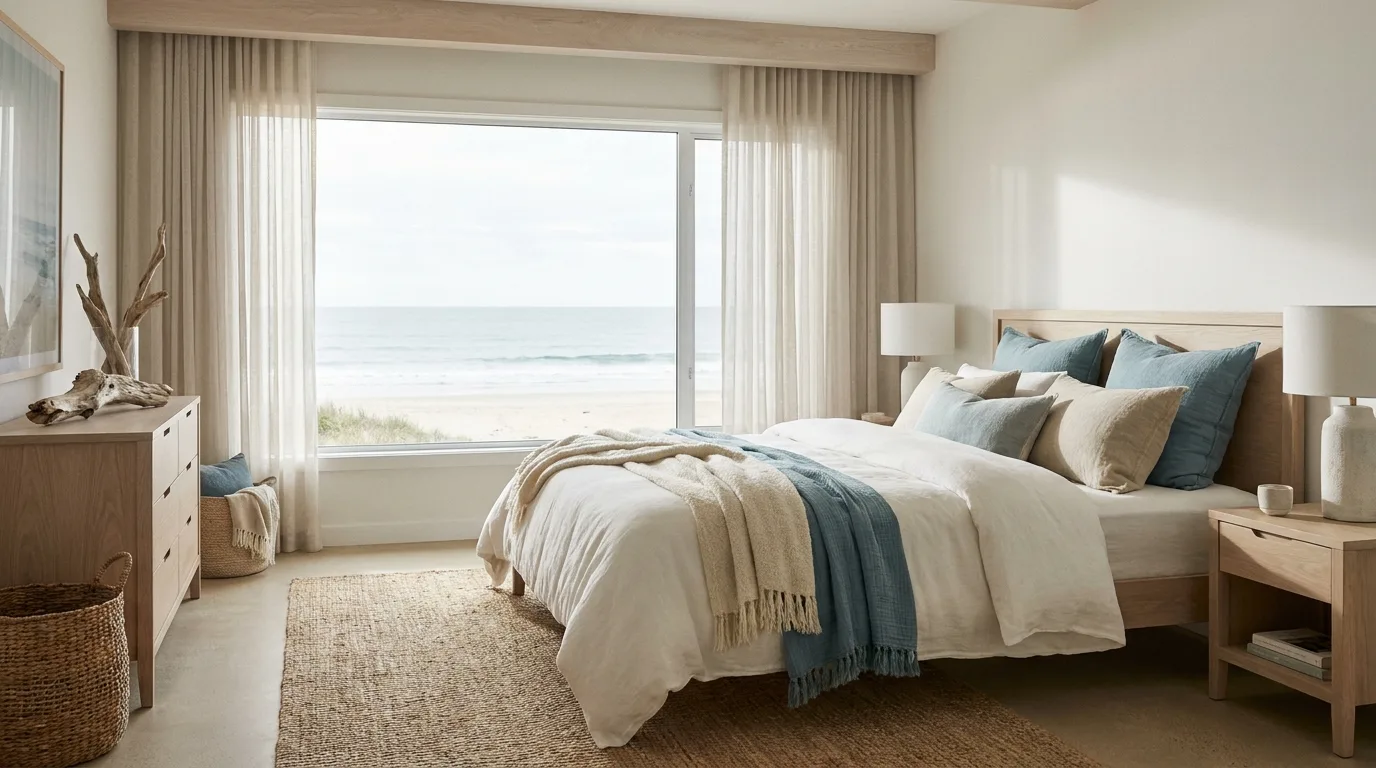
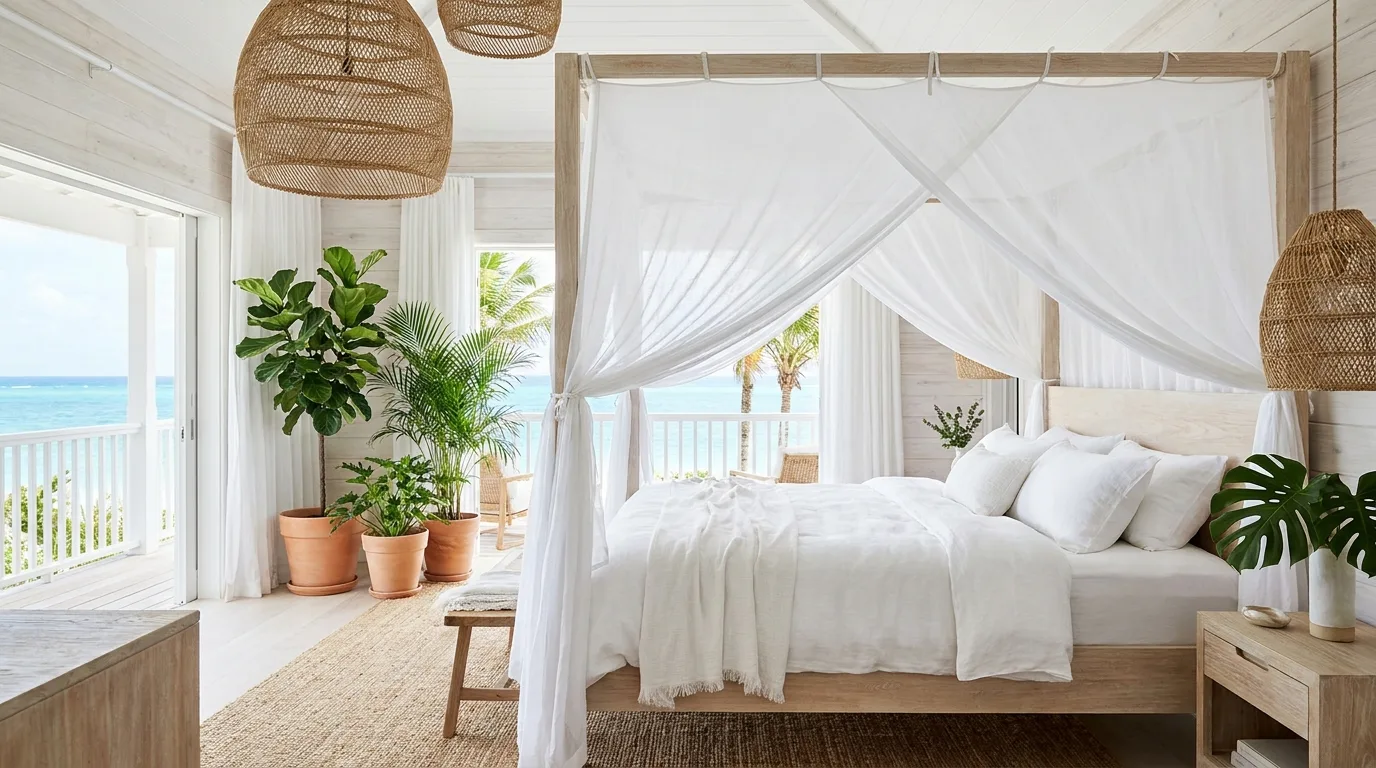
A simple canopy bed can give a coastal bedroom the feeling of a relaxed resort suite. Choose a light wood or slim metal frame with clean lines, then keep the canopy open rather than heavily draped. If you want softness, loosely hang lightweight white or ivory fabric from the upper frame, making sure the material remains well clear of heat sources and does not interfere with ventilation. Pair the structure with crisp bedding and a few natural-texture cushions. The canopy should remain visually light, especially in a smaller bedroom. If a full canopy bed is too substantial, a four-poster frame without fabric can create a similar architectural effect. Add a woven pendant or tropical greenery nearby to complete the resort-inspired atmosphere. The key is restraint: the bed should feel airy and inviting rather than theatrical.
15. Add a Relaxed Reading Corner
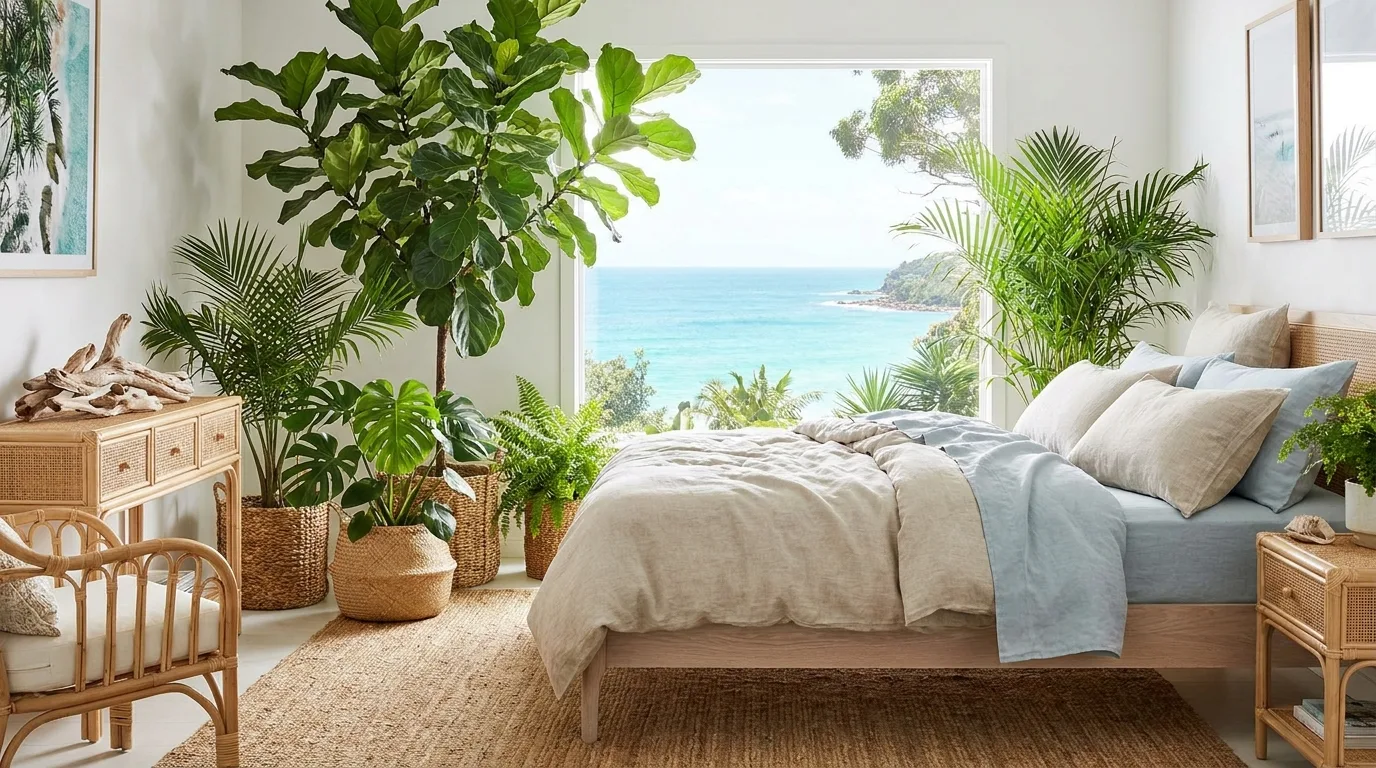
A coastal bedroom becomes more useful when it includes a dedicated place to slow down. Create a small reading corner with a comfortable upholstered chair, woven lounge chair, or compact bench positioned near a window or quiet wall. Add a small side table for books and a glass of water, then use a linen cushion or soft throw to make the seat inviting. A floor lamp with a natural or neutral shade provides focused light for evening reading. Keep the palette connected to the rest of the bedroom through cream, sand, pale wood, or muted blue. You do not need a large room to create this zone; even an unused corner beside a dresser can work. The purpose is to introduce a secondary destination within the bedroom, reinforcing the idea of a private escape rather than simply another sleeping area.
16. Style With Layered Natural Textures
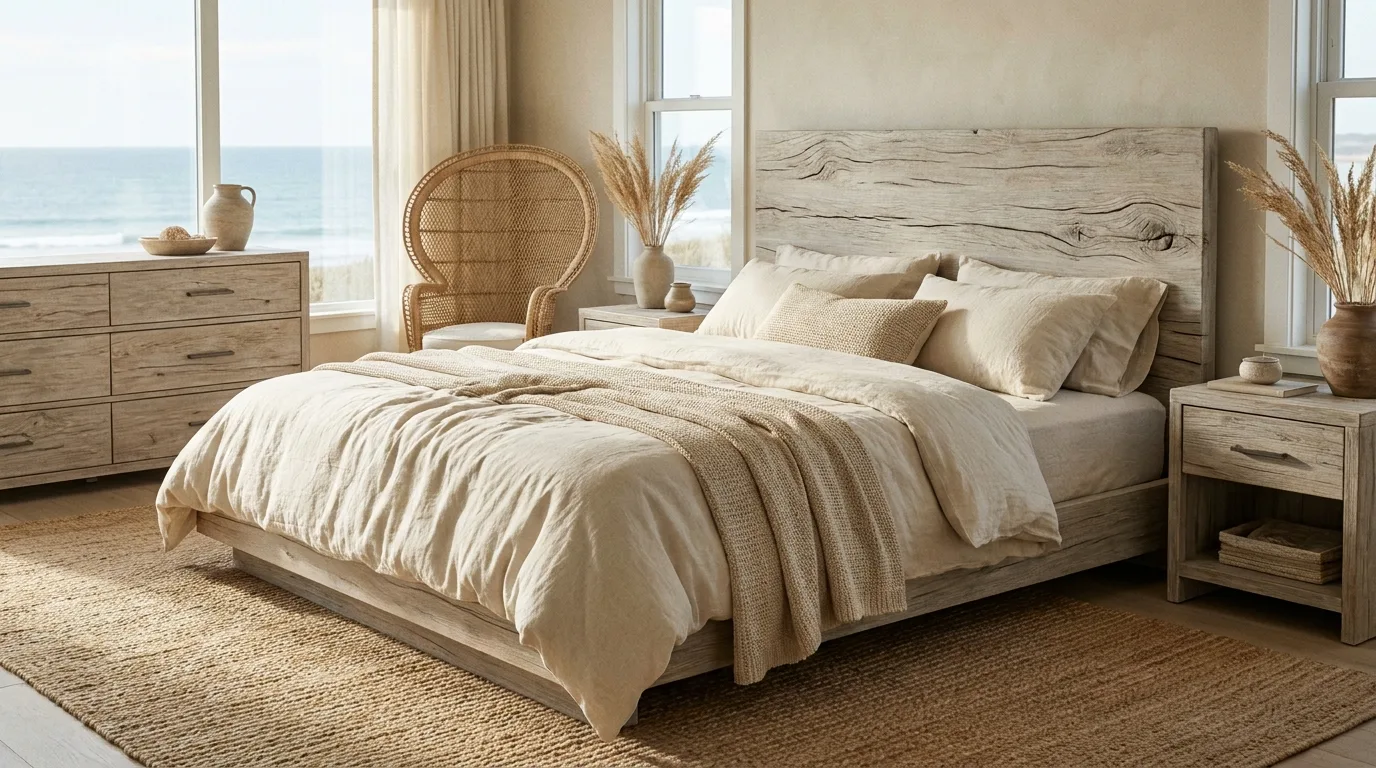
Texture is what prevents a neutral coastal bedroom from feeling flat. Layer linen bedding with a chunky cotton throw, woven baskets, a jute rug, smooth wood, and perhaps a ceramic lamp with a handmade appearance. The important detail is variation: combine rough and smooth, crisp and soft, matte and subtly reflective surfaces. You can create plenty of interest without adding strong colors or patterns. Start with the largest surfaces, such as the rug and bedding, then add smaller textural accents around the room. Keep decorative materials practical enough for a bedroom, especially if you live in a warm climate. Natural fibers generally work well because they contribute to the breezy aesthetic while remaining visually understated. When textures do most of the decorating, the room can stay relatively minimal and still feel rich, comfortable, and thoughtfully designed.
17. Introduce Soft Ambient Lighting
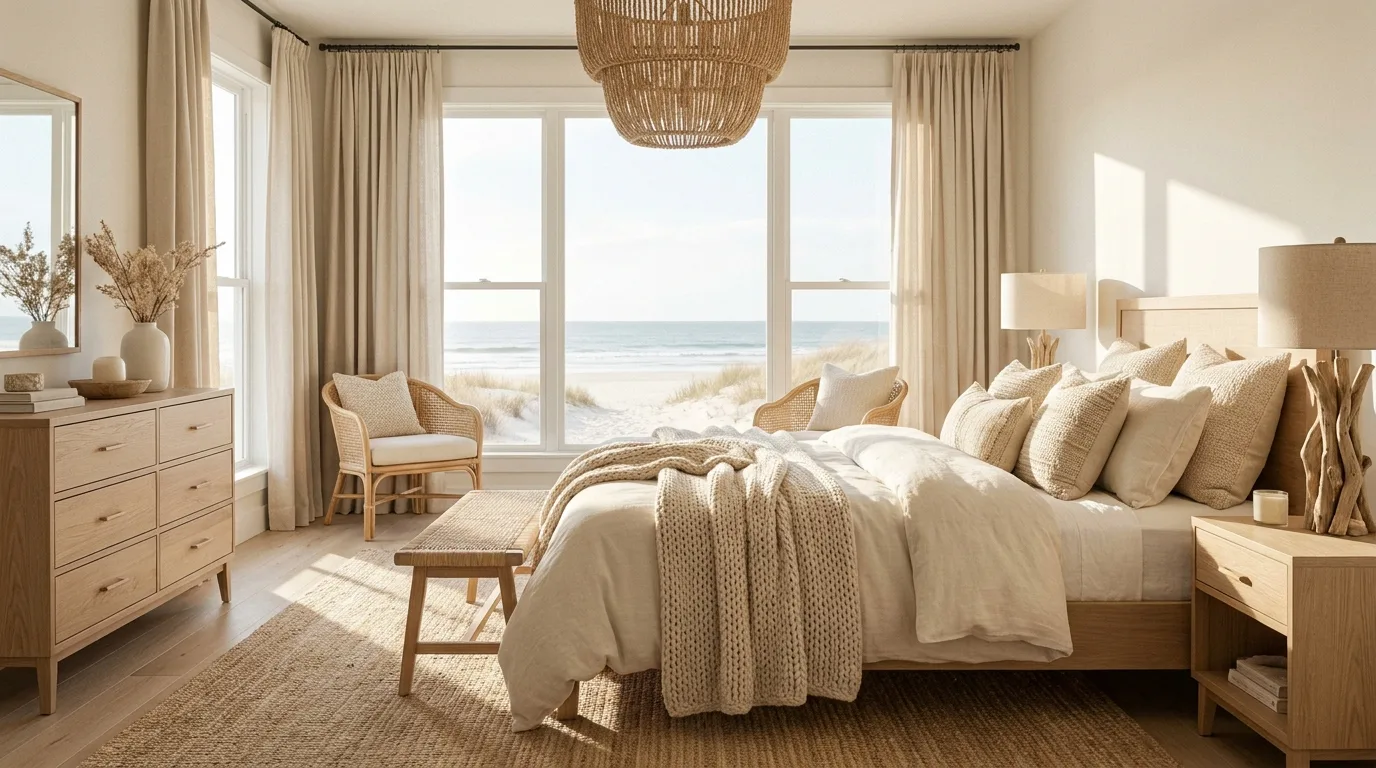
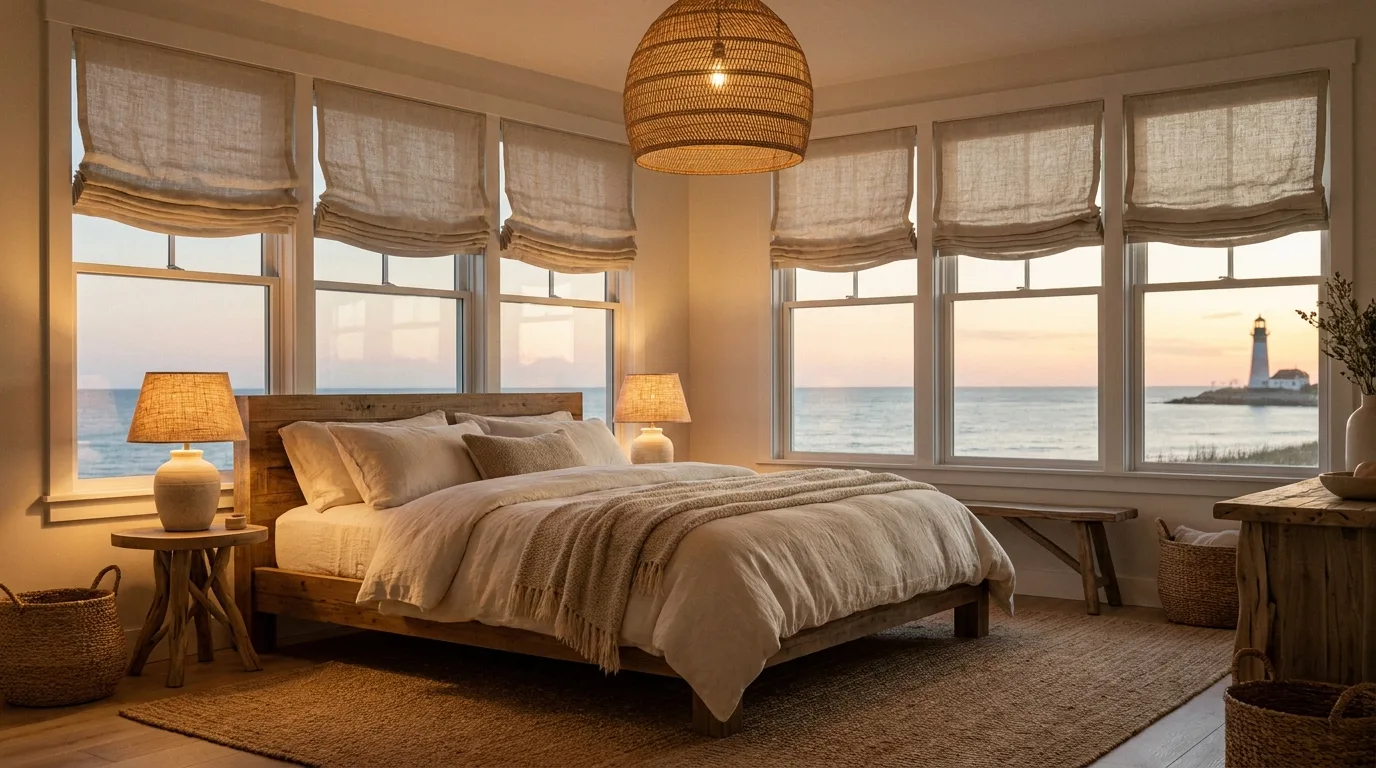
Lighting can transform coastal colors and textures after sunset, so prioritize warmth and softness. Use bedside lamps with linen, woven, ceramic, or frosted shades to diffuse the light rather than exposing bright bulbs. A pendant fixture made from rattan or another natural material can provide a sculptural focal point while supporting the coastal palette. If possible, use multiple light sources instead of relying on a single overhead fixture. Bedside lamps, a floor lamp in a reading corner, and discreet accent lighting create layers that can be adjusted throughout the evening. Choose warm-toned bulbs suited to relaxing spaces and use dimmers where practical. Avoid excessive cool-white lighting because it can make cream textiles and natural wood look harsh. The goal is a gentle evening glow that makes the bedroom feel as calm at night as it does in daylight.
18. Finish With a Lush Indoor-Outdoor Feel
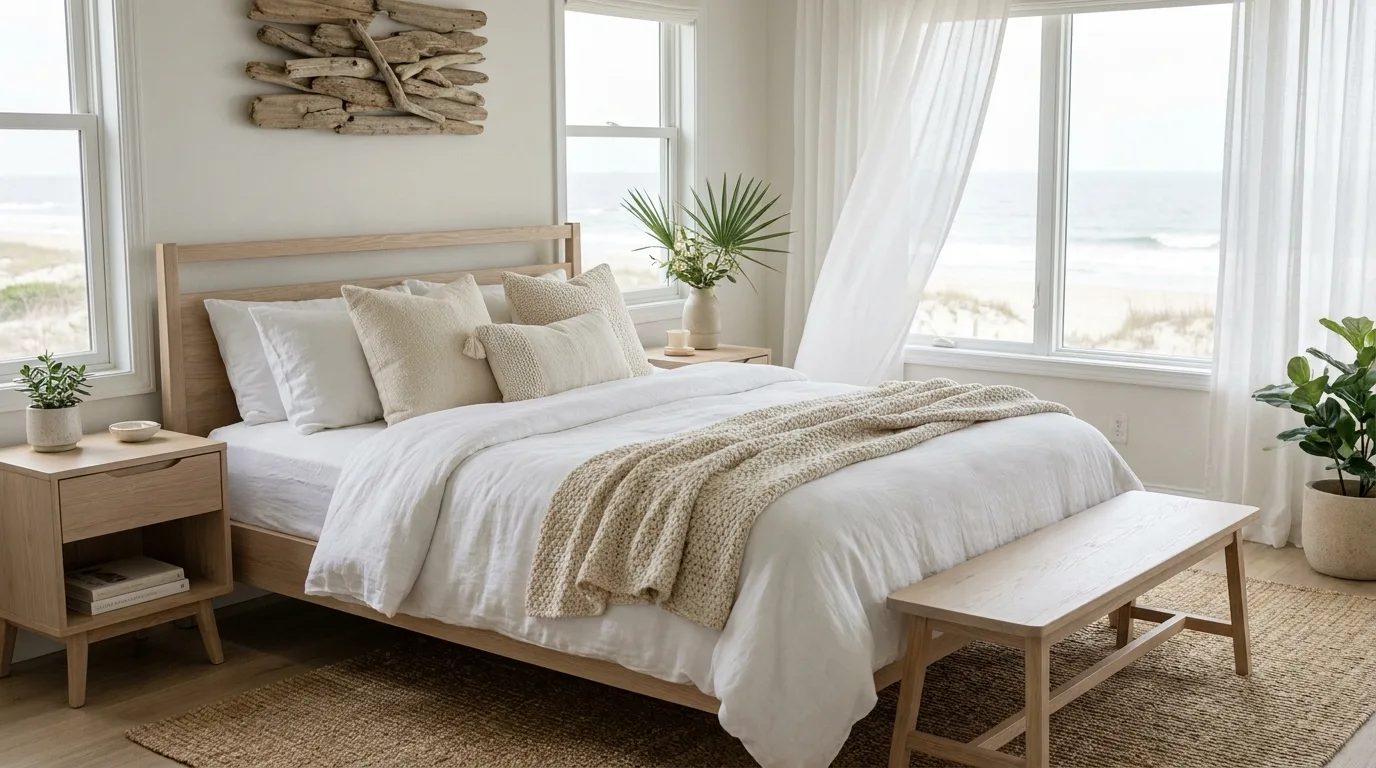
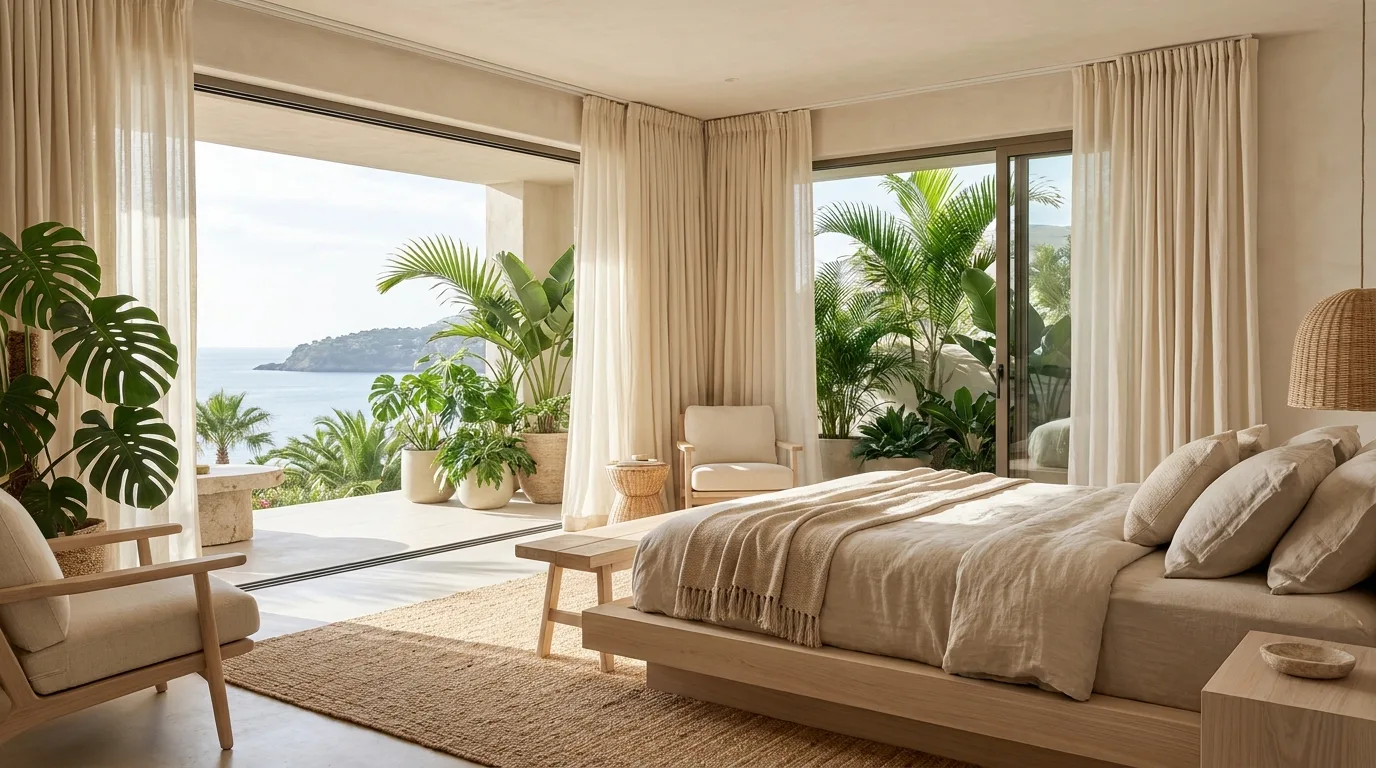
For the ultimate coastal escape, arrange the bedroom so it visually connects with the outdoors. If you have a balcony, terrace, garden, or large window, keep sightlines open and use similar colors and materials inside and outside. Place greenery near the window, choose curtains that frame rather than hide the view, and repeat natural textures with a woven chair or outdoor-inspired accent. Even without a scenic view, you can create the impression through large botanical plants, airy curtains, pale surfaces, and artwork depicting distant landscapes. Keep furniture positioned so the room remains easy to move through and avoid blocking windows with bulky storage. A restrained palette of cream, sand, weathered wood, soft blue, and green can make the transition between interior and exterior feel seamless. The finished bedroom should feel less like a themed room and more like a peaceful retreat inspired by coastal living.