
When winter arrives, a few thoughtful decorating changes can make your home feel warmer, softer, and more inviting. One of the easiest places to begin is with your shelves. Inspired by Joanna Gaines’s signature farmhouse aesthetic, shelf styling combines natural materials, vintage character, meaningful accessories, and a relaxed balance between beauty and practicality. Rather than filling every inch with decorations, this approach celebrates carefully chosen pieces that tell a story and make everyday spaces feel personal.
Whether you have built-in living room shelves, open kitchen shelving, a bedroom bookcase, or a small floating shelf in the hallway, you can create a cozy winter display without completely redecorating. Think weathered wood, creamy ceramics, neutral books, woven baskets, greenery, and subtle seasonal accents. The following Joanna Gaines-inspired shelf styling ideas offer practical ways to bring farmhouse charm into your home while keeping your displays timeless, uncluttered, and comfortable throughout the colder months.
1. Layer Neutral Decor for a Timeless Farmhouse Look
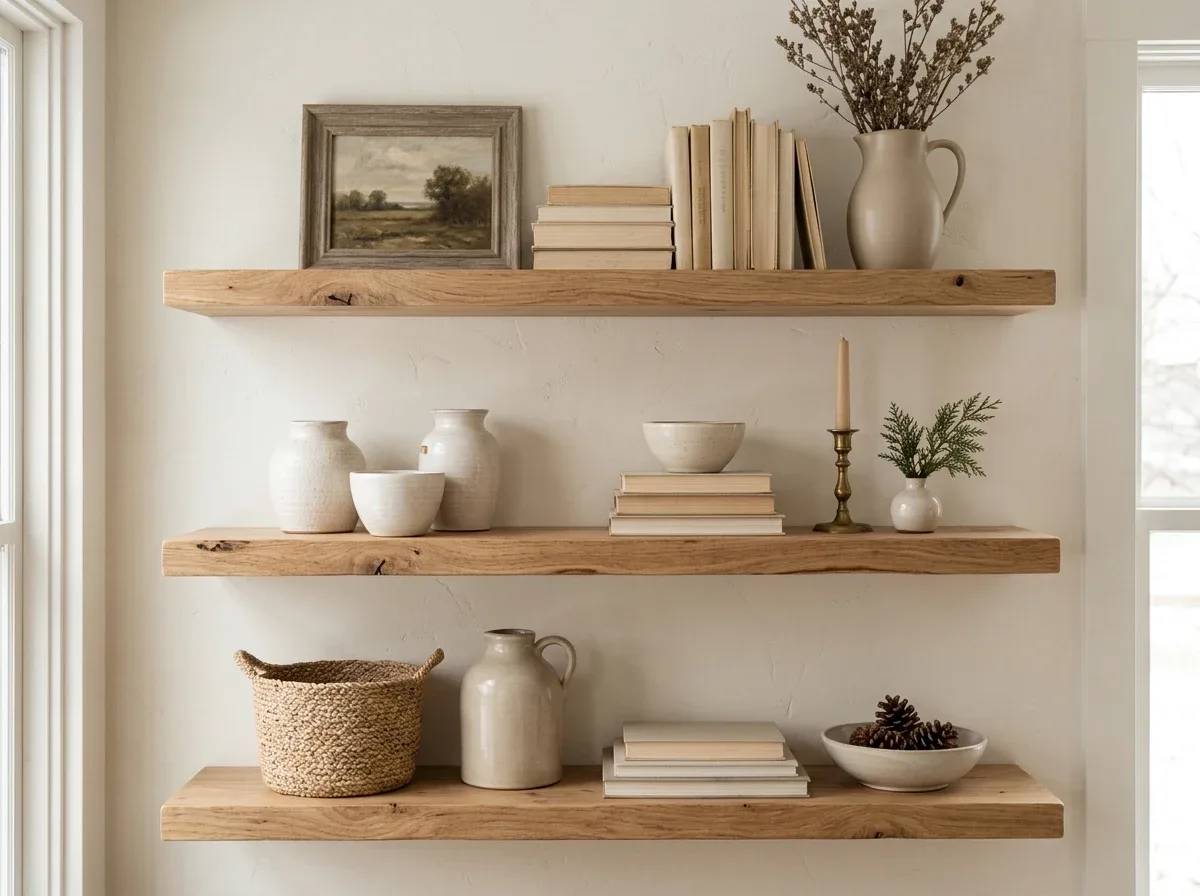
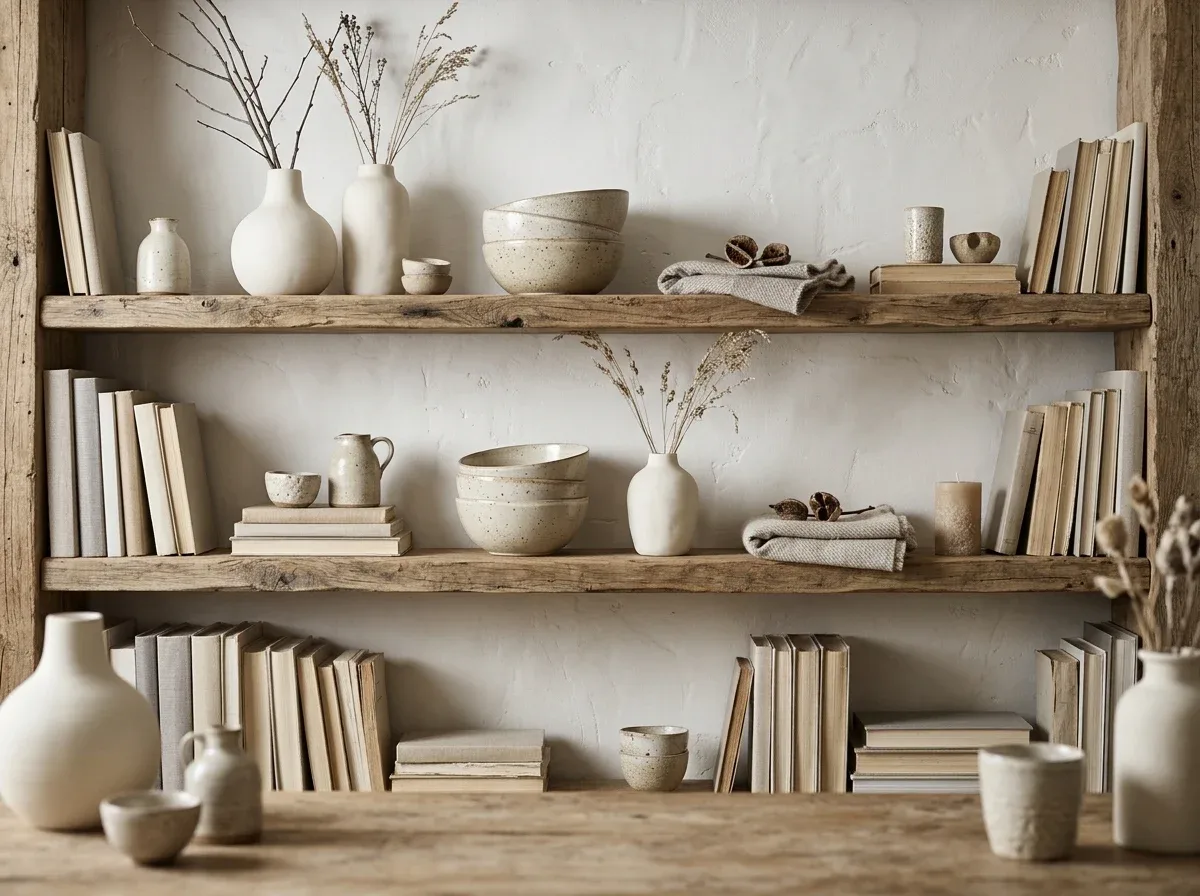
Neutral colors are an excellent starting point for Joanna Gaines-inspired winter shelf styling. Combine warm white, beige, taupe, soft gray, and natural wood to create a display that feels calm without looking plain. Place a larger ceramic vase or framed print toward the back, then layer smaller accessories in front to introduce depth. A stack of cream-colored books can elevate a small bowl, while a weathered wooden object adds contrast to smooth finishes. The key is to vary heights, shapes, and textures instead of relying on identical decorations. Keep a little open space between groupings so every piece has room to stand out. This understated palette also makes it easy to refresh your shelves with seasonal accents later.
2. Style Shelves with Rustic Wooden Accents
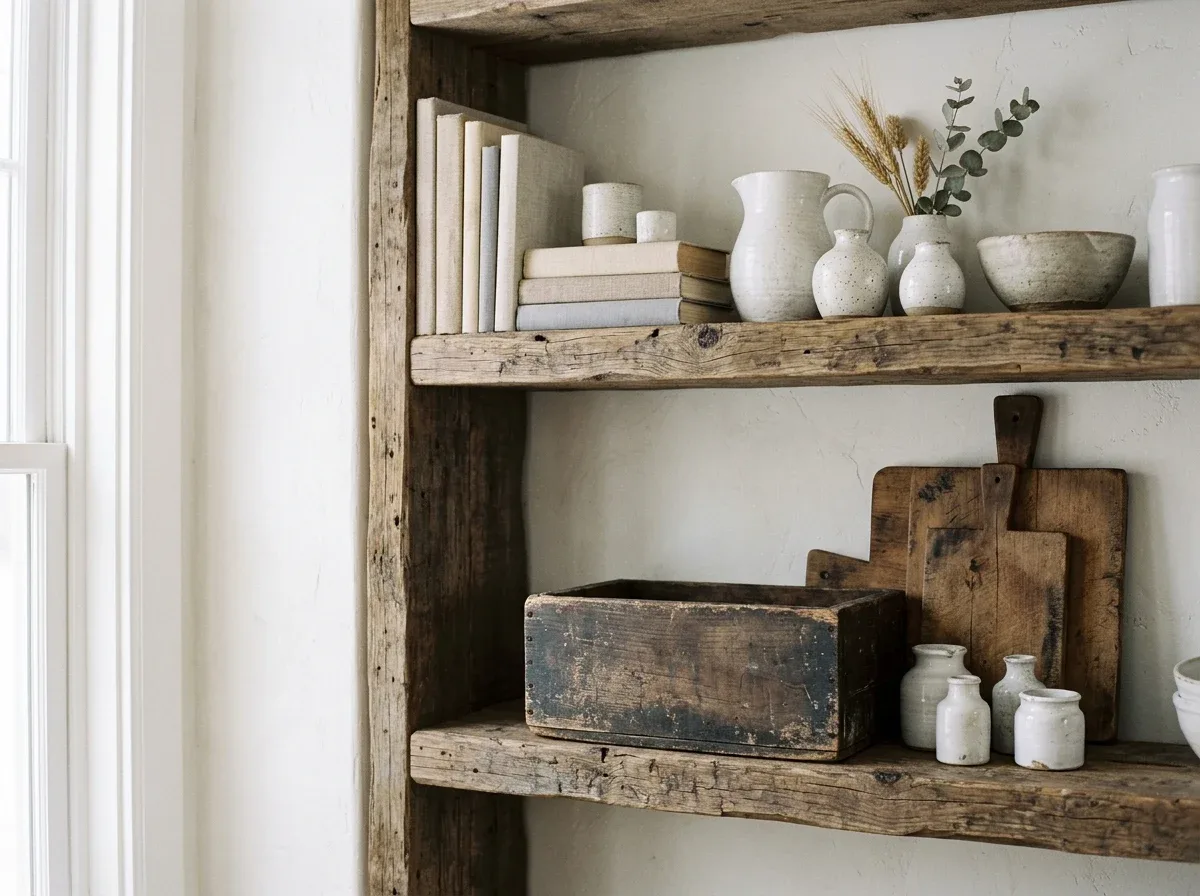
Weathered wood brings the warmth and character associated with modern farmhouse interiors. Incorporate a small reclaimed-wood box, a vintage cutting board, a wooden picture frame, or a sculptural carved object into your shelf arrangement. These pieces work especially well alongside white ceramics, linen-covered books, and soft winter greenery. If your shelves are painted white, wooden accents create contrast and prevent the display from feeling too sterile. For darker wood shelving, choose lighter accessories to keep the arrangement balanced. Avoid using too many distressed pieces together, since excessive rustic finishes can make a display feel dated. A few carefully selected wooden details create a collected-over-time appearance that feels authentic, comfortable, and appropriate for winter.
3. Add Cozy Texture with Woven Baskets
Woven baskets combine decorative appeal with practical storage, making them particularly useful for winter shelf styling. Choose natural seagrass, rattan, wicker, or woven cotton baskets in warm neutral shades. Smaller baskets can hold remote controls, charging cables, spare napkins, or other everyday essentials without creating visual clutter. On open bookcases, use matching baskets along the lower shelves and reserve the upper levels for more decorative objects. Mixing round and rectangular shapes introduces variety while maintaining a cohesive look. If your shelves are narrow, measure the baskets before purchasing to ensure they fit comfortably. Natural woven textures complement wood, greenery, and ceramic accessories, helping a room feel softer and more inviting during cold weather.

4. Create a Display with Vintage Books
Vintage books add history, color, and a sense of personality to farmhouse-style shelves. Look for older hardcovers with muted covers, linen bindings, or gently worn edges that complement your winter palette. Arrange some books vertically and stack others horizontally to create movement across the display. A horizontal stack can serve as a base for a small ceramic vessel or wooden decorative object, while upright books help fill taller spaces. Remove dust jackets when the underlying covers look attractive, but keep books you genuinely enjoy rather than selecting everything solely for appearance. Mix different sizes and thicknesses so the arrangement feels natural. The result is a lived-in display that feels thoughtful and welcoming rather than overly staged.

5. Bring in Winter Greenery
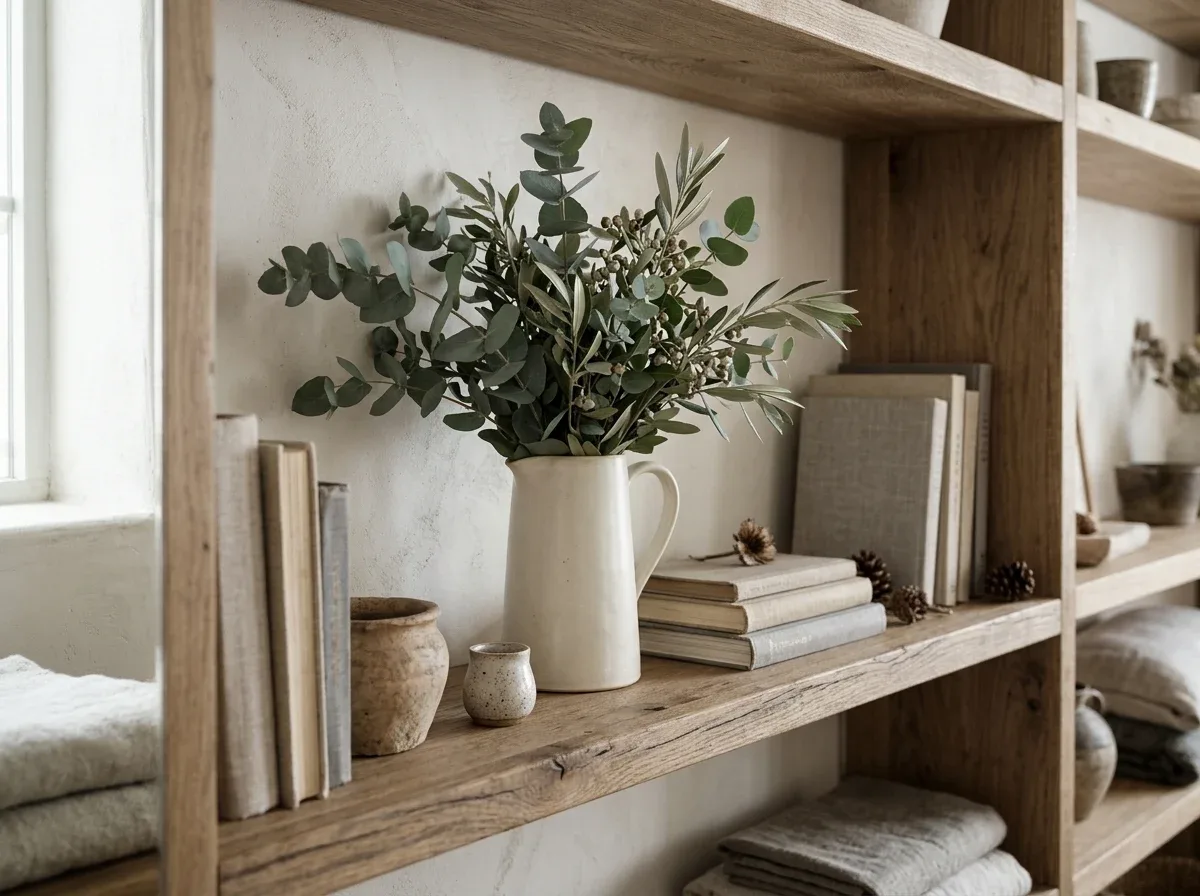
Greenery provides a refreshing contrast to the warm neutrals commonly found in farmhouse interiors. For a winter shelf display, consider eucalyptus stems, olive branches, cedar sprigs, or realistic faux foliage arranged in a simple ceramic pitcher or glass vase. A small trailing plant can soften the hard edges of floating shelves, while a compact evergreen arrangement adds seasonal character to a bookcase. Keep the greenery proportionate to the shelf so it does not obscure artwork or make nearby objects difficult to reach. If you prefer a low-maintenance arrangement, high-quality artificial stems can offer a consistent look throughout the season. Combine greenery with wood and stoneware for a natural composition that feels connected to the outdoors.
6. Display Handmade Ceramic Pottery
Handmade-looking pottery adds subtle irregularity and craftsmanship to a winter shelf. Choose stoneware pitchers, matte ceramic vases, small bowls, or sculptural vessels in ivory, oatmeal, charcoal, and muted brown. Their organic shapes contrast beautifully with straight shelf lines and neatly arranged books. Try grouping two or three pieces of different heights rather than displaying a large collection of similar objects. A taller vase can anchor one end of a shelf, while a smaller bowl fills the space beside a book stack. Unglazed or lightly textured finishes are especially effective for creating a cozy atmosphere. You do not need expensive artisan pieces to achieve this look; affordable pottery with simple silhouettes can create the same understated farmhouse feeling.
7. Incorporate Framed Vintage-Inspired Artwork
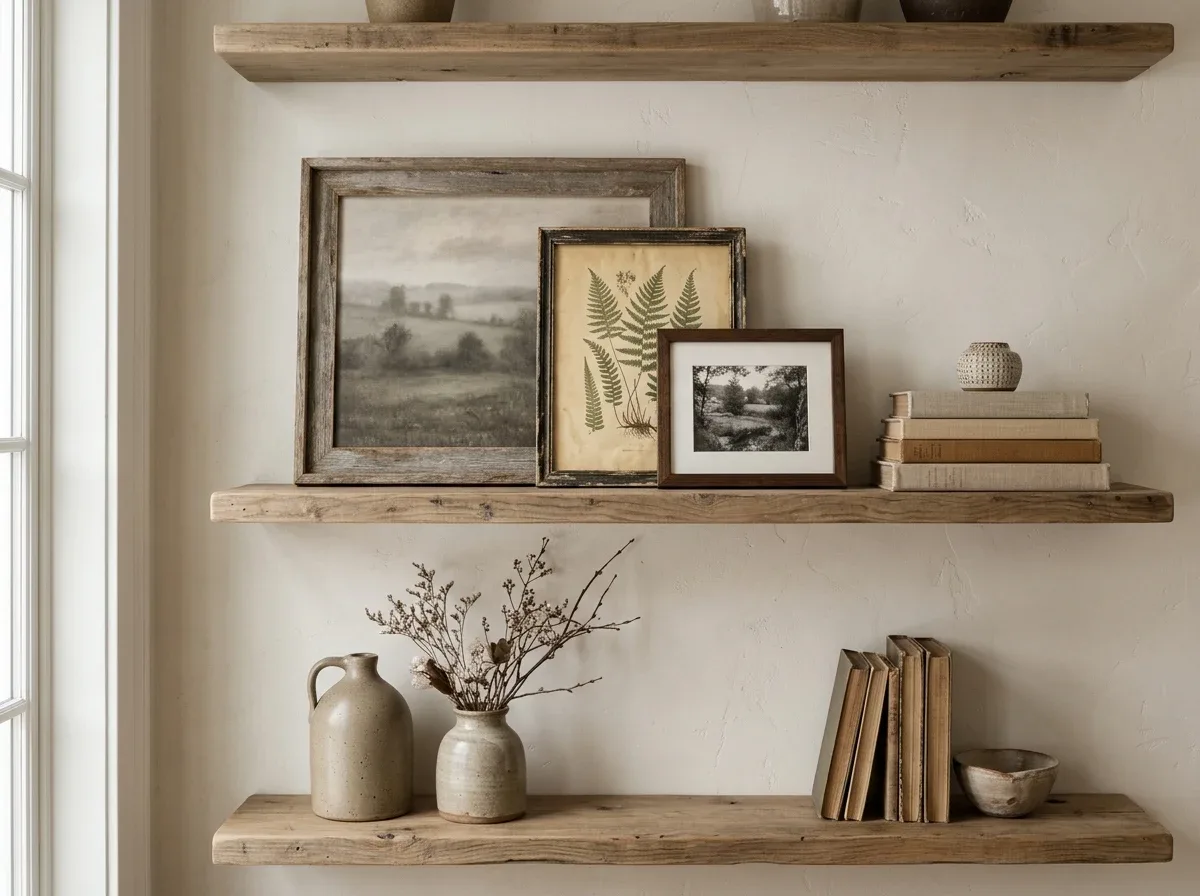
Artwork helps shelves feel personal and gives the eye a focal point. For a Joanna Gaines-inspired arrangement, choose botanical illustrations, understated landscapes, architectural sketches, or black-and-white photographs. Frames in aged wood, antique brass, or simple black finishes work well with neutral decor. Lean a larger frame against the wall at the back of a shelf, then arrange a smaller object or book stack in front. This layered technique creates depth without requiring extra wall space. Avoid using frames of identical size throughout the display; a combination of proportions makes the composition feel more collected. If the shelves are shallow, select lightweight frames and secure them where necessary to prevent slipping. Choose artwork with colors that complement the rest of the room.
8. Use Antique Brass and Aged Metal Details
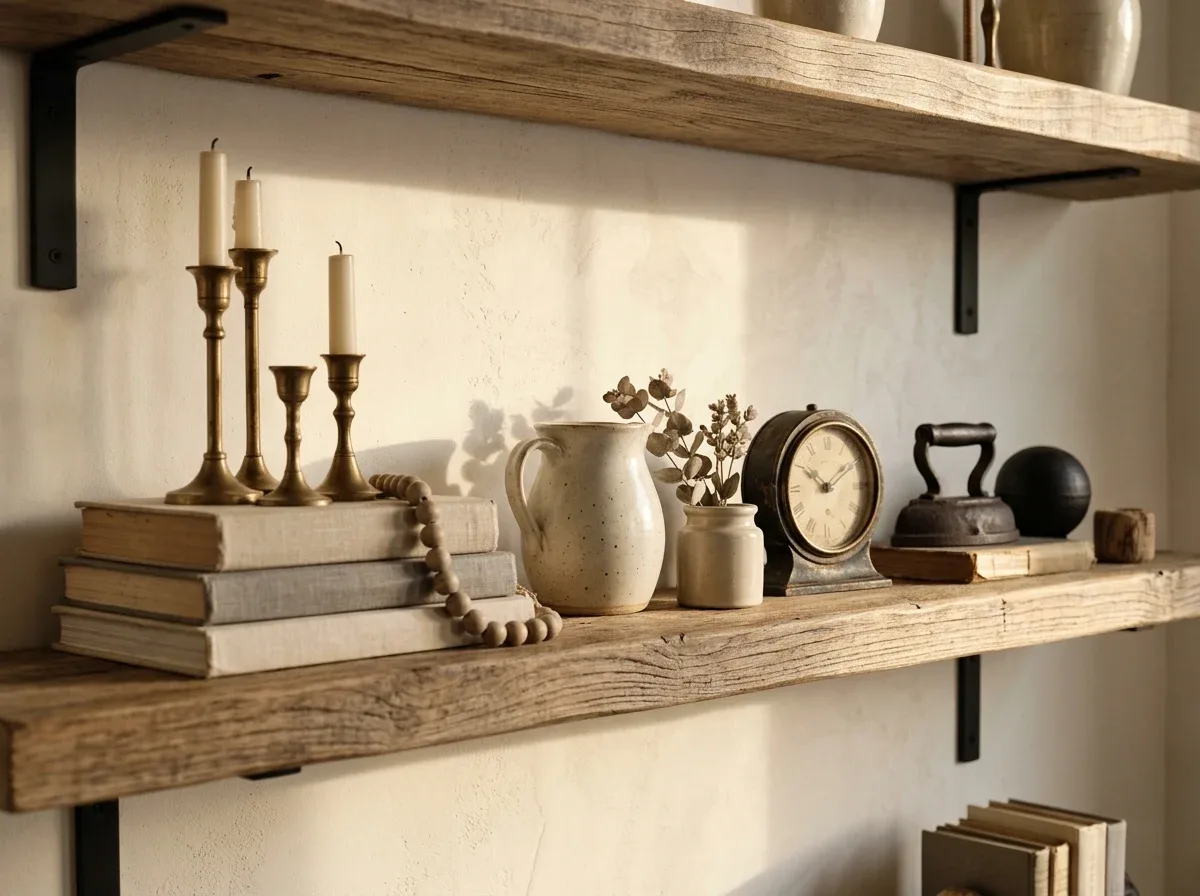
Aged metal accents introduce a little warmth and refinement without sacrificing rustic character. Look for small brass candlesticks, an antique-style clock, a metal-framed photograph, or a weathered iron object. These finishes pair naturally with wood, creamy ceramics, and muted greenery. For winter, a brass accent can catch the light beautifully beside a lamp or candle placed safely on a suitable surface. Keep metal accessories limited to a few points throughout the shelving arrangement so they feel intentional rather than scattered. Mixing warm brass with black iron can also create subtle contrast, especially in rooms with dark hardware or fixtures. The goal is a balanced combination of old and new that adds depth while preserving a relaxed farmhouse atmosphere.
9. Style Open Kitchen Shelves with Everyday Essentials
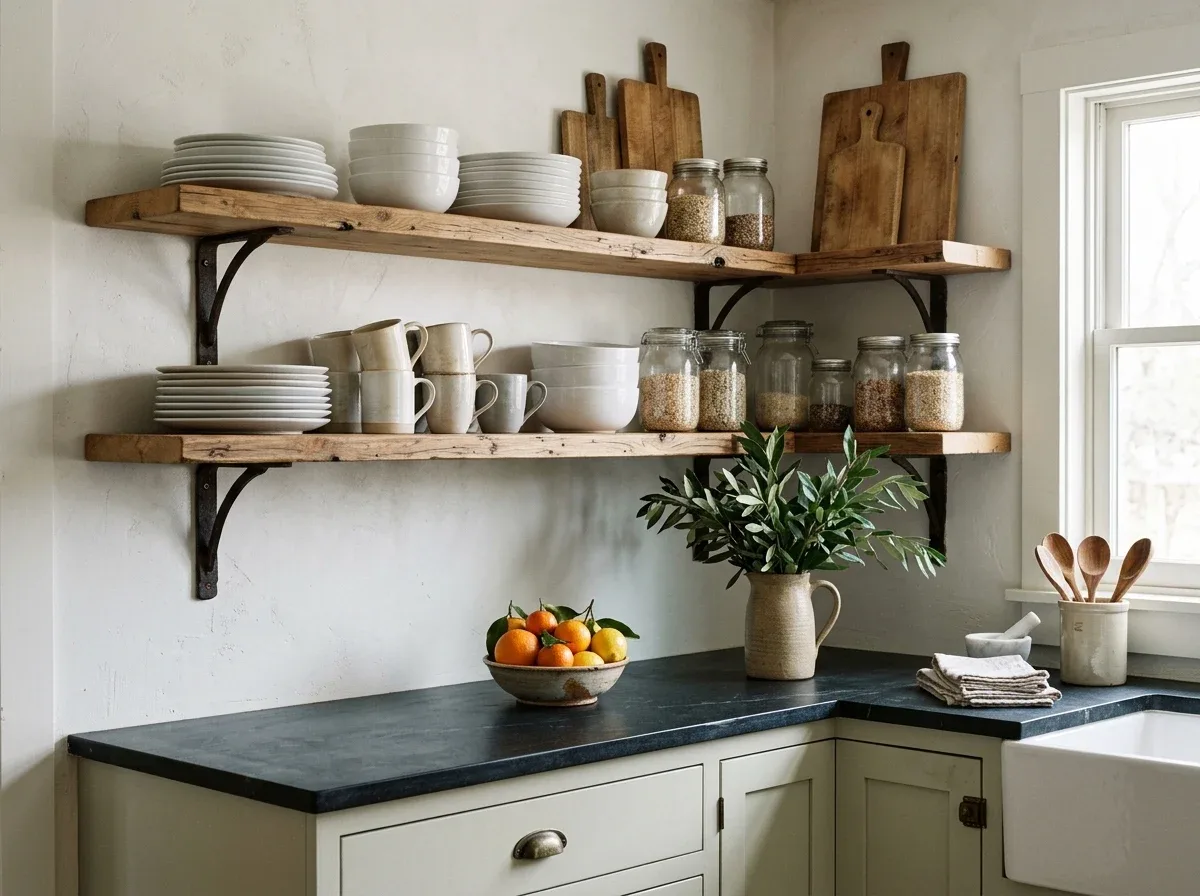
Open kitchen shelving can look beautiful and remain functional when everyday items become part of the display. Arrange white plates, neutral mugs, glass storage jars, and a few wooden serving boards in simple groups. Keep frequently used dishes within easy reach and place decorative pieces higher or farther back. For a cozy winter kitchen, add a small bowl of seasonal citrus or a ceramic pitcher with evergreen branches, provided the arrangement stays away from cooking hazards. Repeat a few materials, such as wood, glass, and stoneware, to create visual consistency. Resist the temptation to display every kitchen item you own. Leaving some open shelf space makes the kitchen easier to maintain and helps practical objects look like an intentional part of the decor.
10. Add Warm Lighting to Built-In Shelves
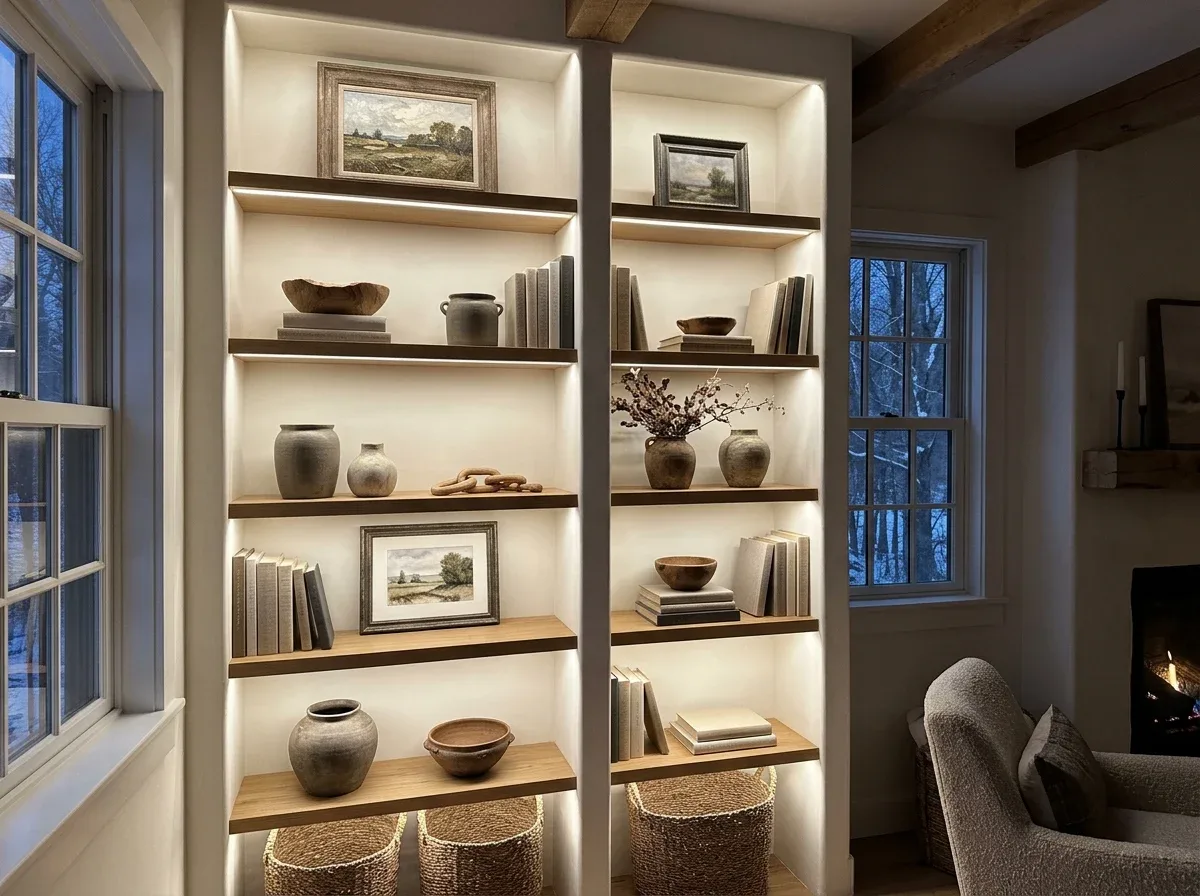
Lighting can transform a shelf display from ordinary storage into a cozy winter focal point. If you have built-in shelves, consider warm-white integrated lighting or small picture lights designed for shelving. Battery-operated accent lights may also work where wiring is impractical, provided they are suitable for the intended location. Position lighting to highlight artwork, textured pottery, or a favorite decorative object rather than illuminating every item equally. Warm light generally creates a softer atmosphere than harsh, cool-toned illumination. Conceal cords neatly and follow the manufacturer’s instructions, especially around books, fabrics, and other combustible materials. Never leave candles burning unattended or place heat-producing lights against delicate objects. Thoughtful lighting adds evening ambiance and helps shelves feel connected to the rest of the room.
11. Mix Old and New Decorative Pieces
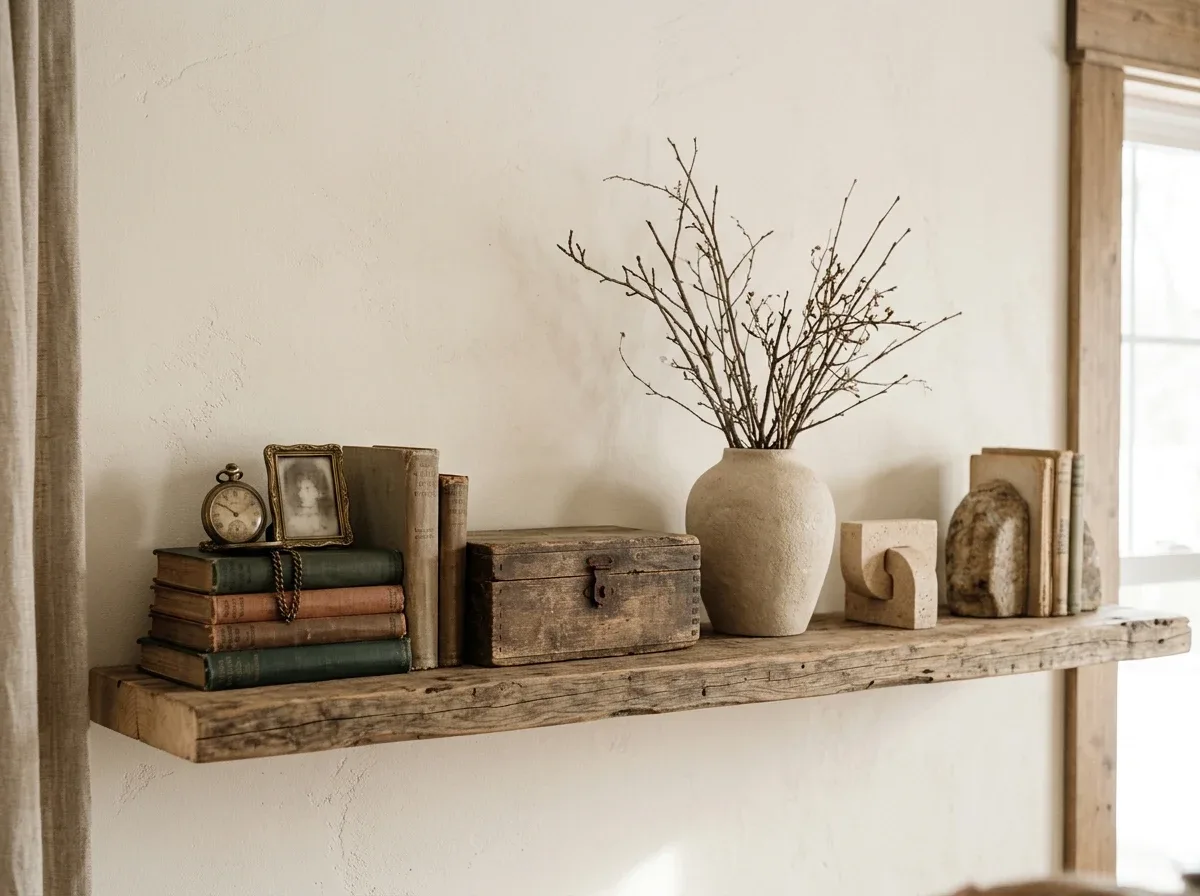
A collected farmhouse look often comes from combining items with different histories and finishes. Pair a vintage wooden box with a contemporary ceramic vase, or place a clean-lined sculpture beside an old hardcover book. This contrast prevents shelves from looking as though every accessory came from the same store. You can incorporate family keepsakes, flea-market finds, travel souvenirs, and a few modern accents to make the arrangement uniquely yours. Keep a common thread running through the display, such as a shared color palette or repeated natural materials. This helps different pieces feel related even when their styles vary. During winter, add one or two seasonal details without replacing everything. The most appealing shelves usually reflect real life rather than a perfectly coordinated catalog.
12. Create a Cozy Reading Nook Shelf
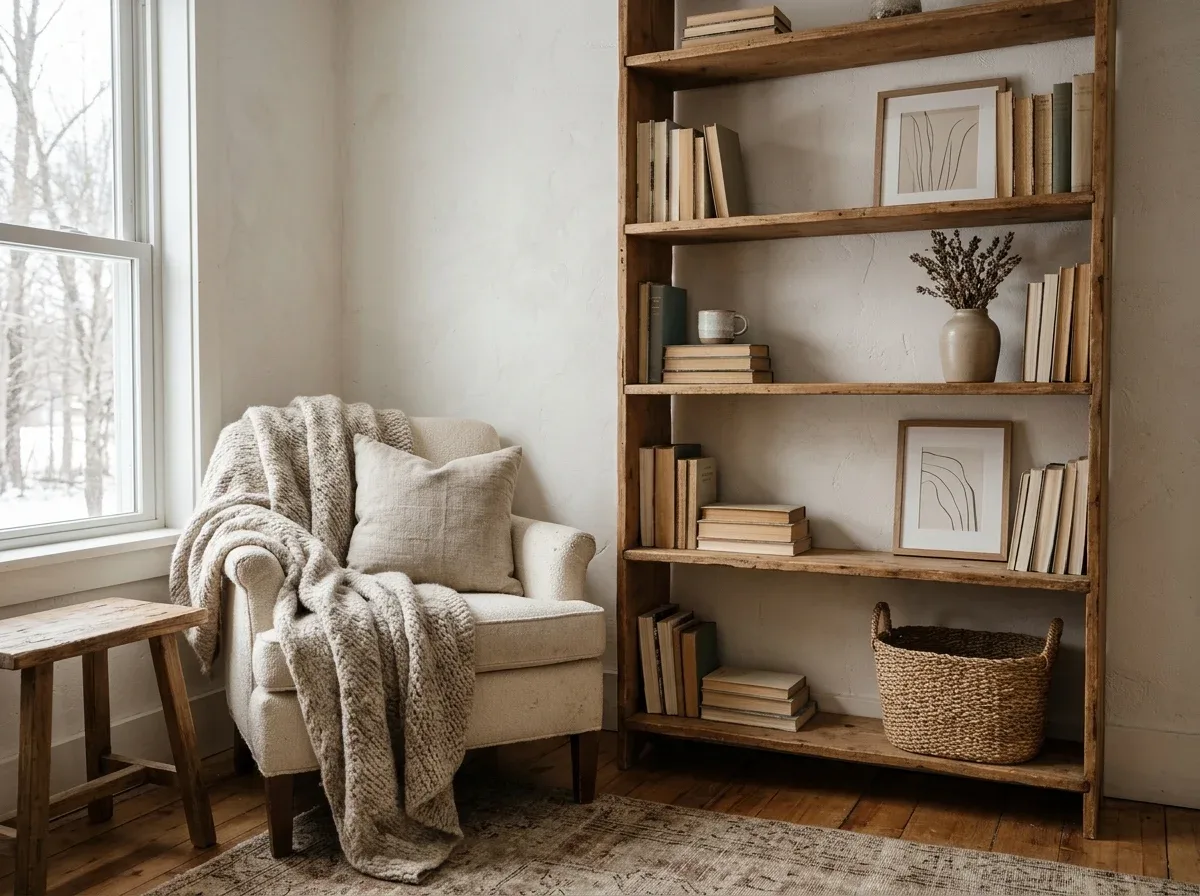
If you have a reading corner, use its shelves to support the feeling of a quiet winter retreat. Arrange favorite novels, poetry collections, and coffee-table books alongside a small ceramic cup, a framed print, or a simple vase. Keep the books you reach for most often at a comfortable height, and use lower shelves for storage baskets or larger volumes. A soft neutral palette helps the nook feel peaceful, while a wooden accessory adds warmth. You might also display a small seasonal object, such as a pinecone in a shallow bowl, to acknowledge winter without overwhelming the arrangement. Avoid crowding the shelf with too many decorative pieces; a reading nook should feel restful and useful, not like a display that cannot be touched.
13. Decorate with Subtle Winter Natural Elements
Natural seasonal details are an easy way to refresh farmhouse shelves without creating a holiday-only display. Gather pinecones, smooth stones, bare branches, or small pieces of driftwood and arrange them in a shallow wooden bowl or simple glass vessel. A few natural elements can introduce interesting shapes and earthy colors without requiring bright seasonal decorations. Combine them with neutral books and textured ceramics for a restrained winter arrangement. If you collect items outdoors, make sure they are clean, dry, and free of insects before bringing them inside. Keep natural materials away from heat sources and open flames. For a polished result, choose one or two elements and repeat them sparingly rather than filling every shelf with seasonal objects.
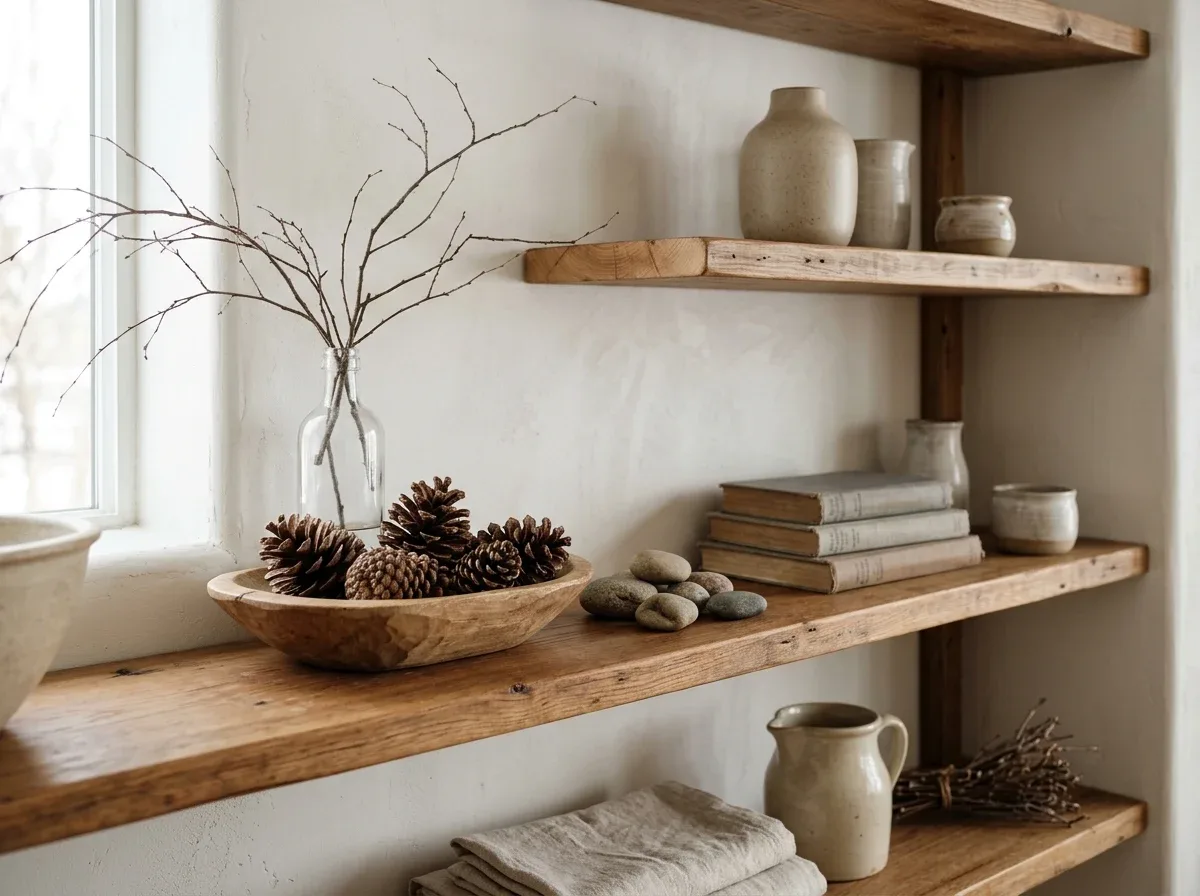
14. Embrace the Beauty of Simple, Uncluttered Shelves
Sometimes the most effective styling decision is removing a few items. A relaxed farmhouse display should have enough open space for individual objects to stand out. Begin by clearing your shelves, then return only the books, artwork, pottery, greenery, and keepsakes that contribute to the overall look. Vary the arrangement between shelves so the display does not become repetitive. One shelf might feature a framed print and a short book stack, while another holds a single vase and a small basket. Keep heavier objects securely positioned and frequently used items accessible. Step back periodically to check the overall balance from across the room. This simple editing process creates a calm, intentional appearance that feels especially welcome during the quieter winter months.

Final Thoughts
Creating cozy winter shelves inspired by Joanna Gaines does not require a complete makeover or an expensive collection of accessories. Focus on natural materials, neutral colors, vintage character, soft lighting, and objects that have meaning or practical value. Mix heights and textures, introduce seasonal greenery, and leave enough breathing room to keep the display from feeling crowded. Most importantly, let your shelves reflect your own home and routines. With a few thoughtful changes, ordinary bookcases, kitchen shelves, and built-ins can become warm focal points that feel welcoming throughout winter and remain beautiful long after the season ends.