Easter is the perfect excuse to get creative with kids, and you do not need a craft-store shopping spree to make it memorable. Many of the best Easter crafts for kids can be made with inexpensive supplies you already have at home, including paper plates, cardboard tubes, paper bags, cotton balls, crayons, and leftover scraps of colored paper. These simple projects are designed for different ages and skill levels, so younger children can focus on decorating while older kids can practice cutting, gluing, folding, and designing. The ideas below are colorful, playful, and easy enough for a relaxed afternoon at home, classroom craft session, or Easter party. Most importantly, they encourage creativity without requiring expensive specialty materials.
1. Paper Plate Easter Bunny
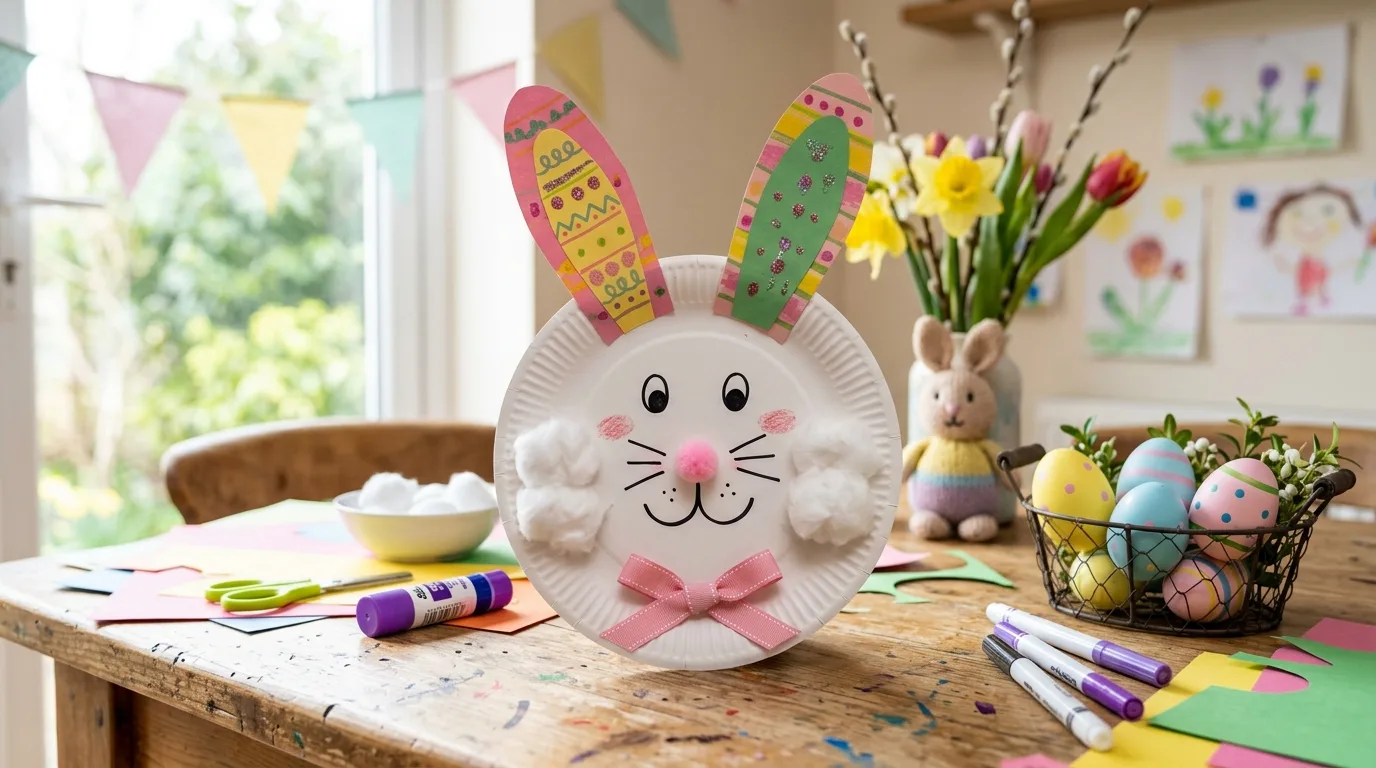
Turn an ordinary paper plate into an adorable Easter bunny with just a few inexpensive supplies. Have children paint or color the plate, then add two long ears cut from construction paper. Cotton balls make a fluffy tail or soft cheeks, while scraps of black paper can become the eyes and whiskers. A small pink paper triangle works perfectly for the nose. For younger kids, prepare the ear shapes ahead of time and let them concentrate on decorating. Older children can draw their own facial expressions or add bows, flowers, and colorful patterns. This project is especially useful when you need a low-cost Easter activity for a group because paper plates and basic craft supplies are inexpensive and easy to find. Display the finished bunnies on a wall, refrigerator, or Easter table.
2. Cardboard Tube Easter Chicks
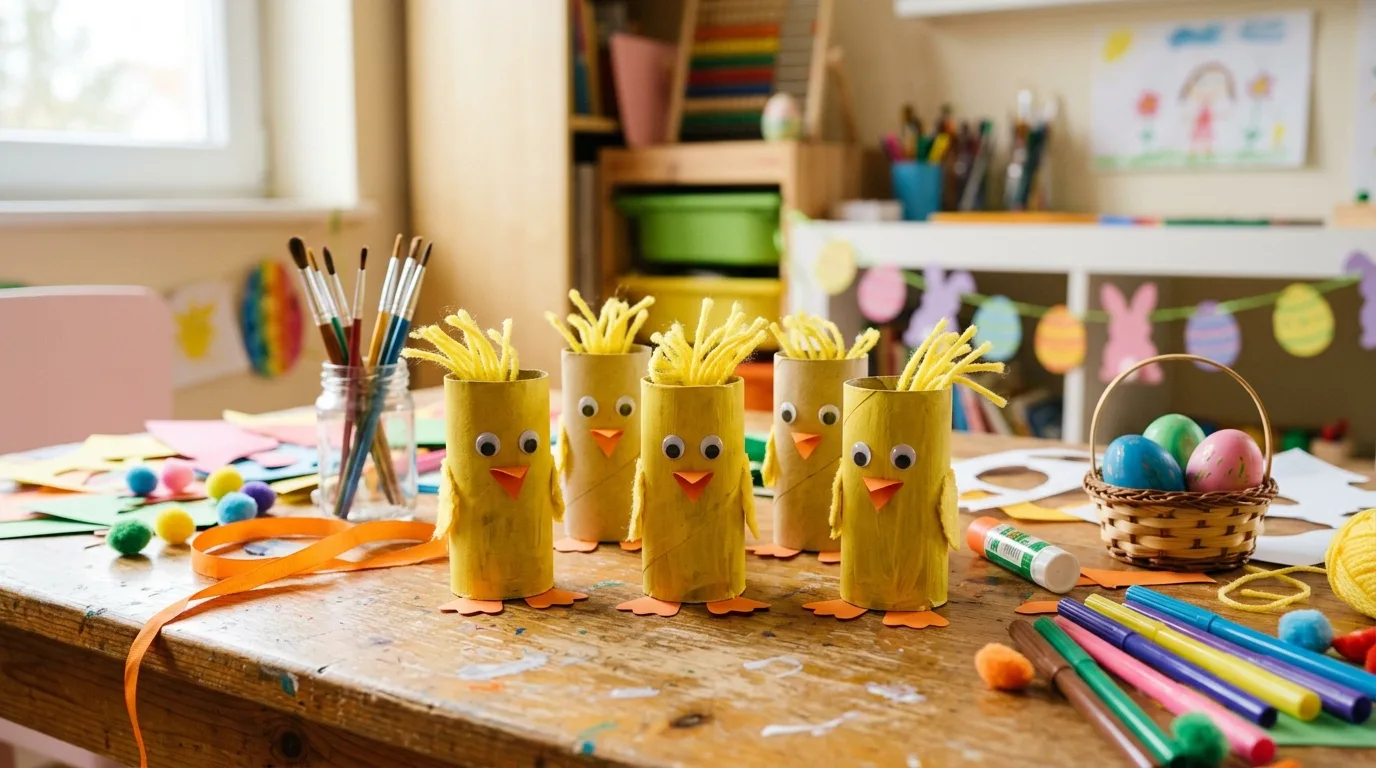
Save empty toilet paper or paper towel tubes and transform them into cheerful Easter chicks. Cover each tube with yellow paper or let children paint it yellow, then add orange paper feet and a small triangular beak. Googly eyes are fun, but drawn eyes work just as well if you want to keep the project completely budget-friendly. Children can personalize their chicks with paper wings, feathers, tiny hats, or colorful bows. These little characters are sturdy enough for imaginative play, making them more than a one-day decoration. To make the activity even easier, cut all paper pieces before the craft session and provide small containers for each child. The project also offers a simple way to teach kids about reusing household materials instead of throwing them away.
3. Cotton Ball Easter Sheep
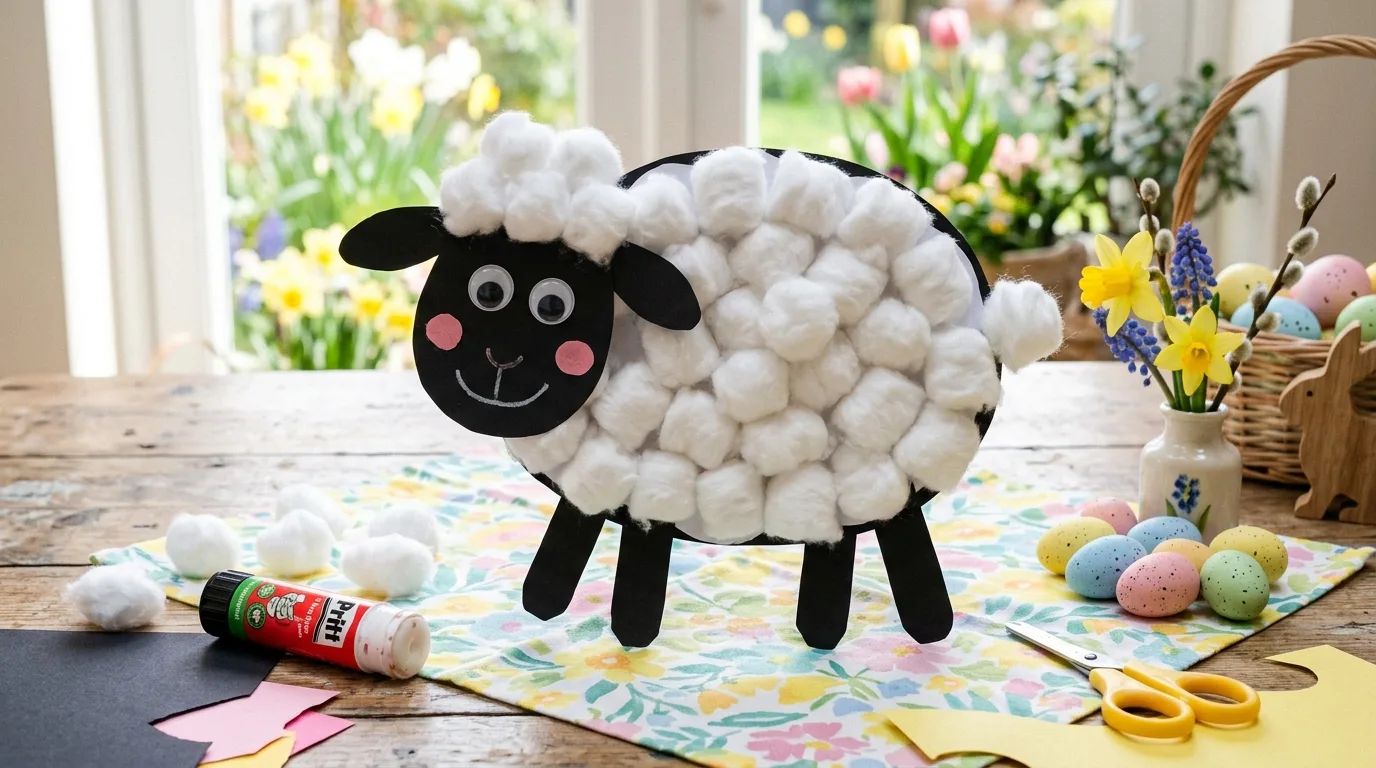
For a soft and tactile Easter craft, make fluffy sheep from cardboard, paper, and cotton balls. Draw a simple sheep outline on white or black construction paper and cut it out, or let older children create their own shapes. Cover the body with cotton balls attached with child-safe glue, leaving the face uncovered. Add paper ears, simple legs, and a cheerful expression. Younger children often enjoy this craft because pressing cotton balls onto the sheep feels more like sensory play than traditional drawing. You can make several sheep and turn them into a springtime farm scene on a large sheet of paper. Cotton balls are inexpensive and often already available at home, while leftover paper scraps can provide everything else needed. Encourage children to experiment with different sheep sizes and facial expressions for a fun Easter display.
4. DIY Easter Egg Suncatchers
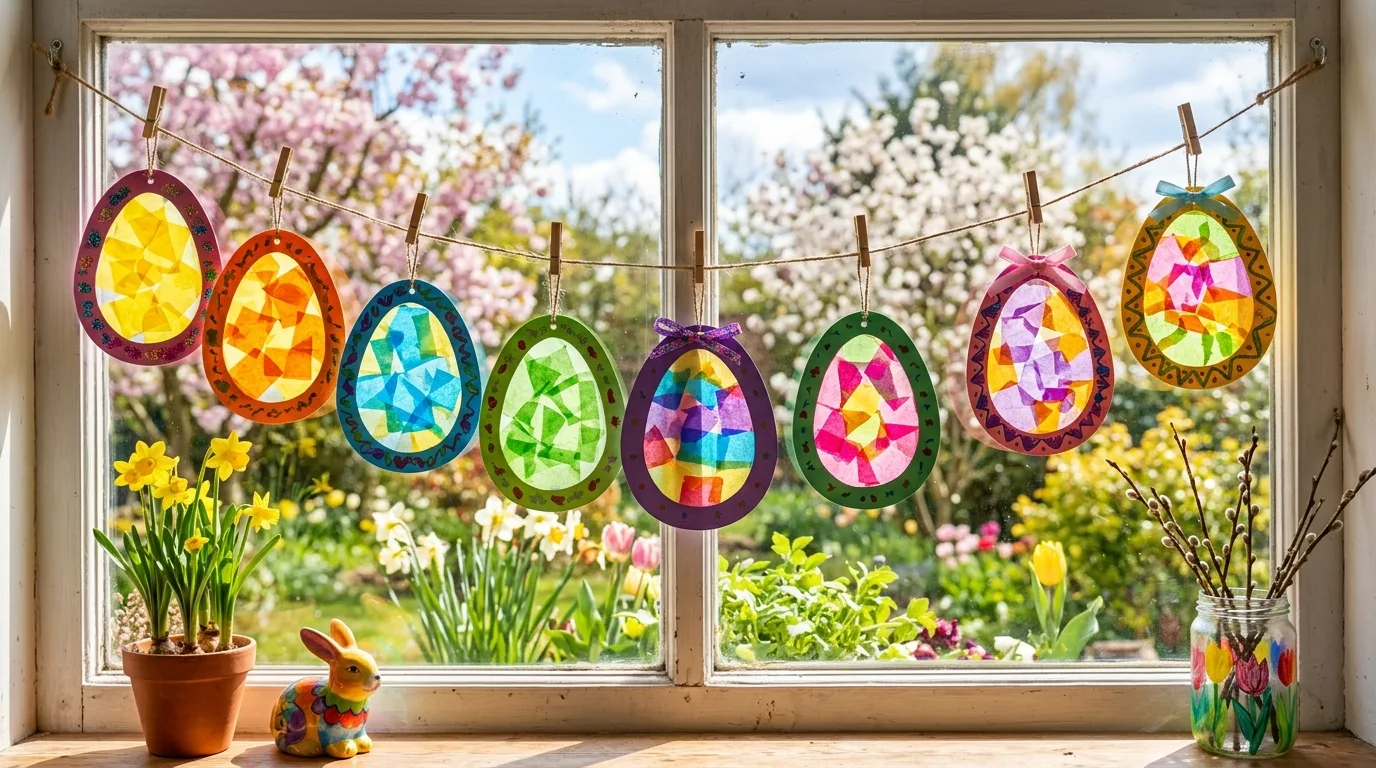
Brighten a window with colorful Easter egg suncatchers made from paper and transparent materials. Start by cutting an egg-shaped outline from cardstock, then create a large opening in the center. Children can fill the opening with small pieces of tissue paper, colored cellophane, or even translucent packaging that would otherwise be discarded. Layering different colors creates a stained-glass effect when sunlight passes through. Tape the finished eggs to a sunny window or hang several together as a spring garland. This project is best for children who can safely handle glue and small paper pieces, while adults can do the cutting for younger kids. It is also an excellent way to use leftover tissue paper from gift wrapping. Keep the designs simple or challenge older children to create stripes, dots, flowers, and geometric patterns.
5. Paper Bag Easter Bunny Puppets
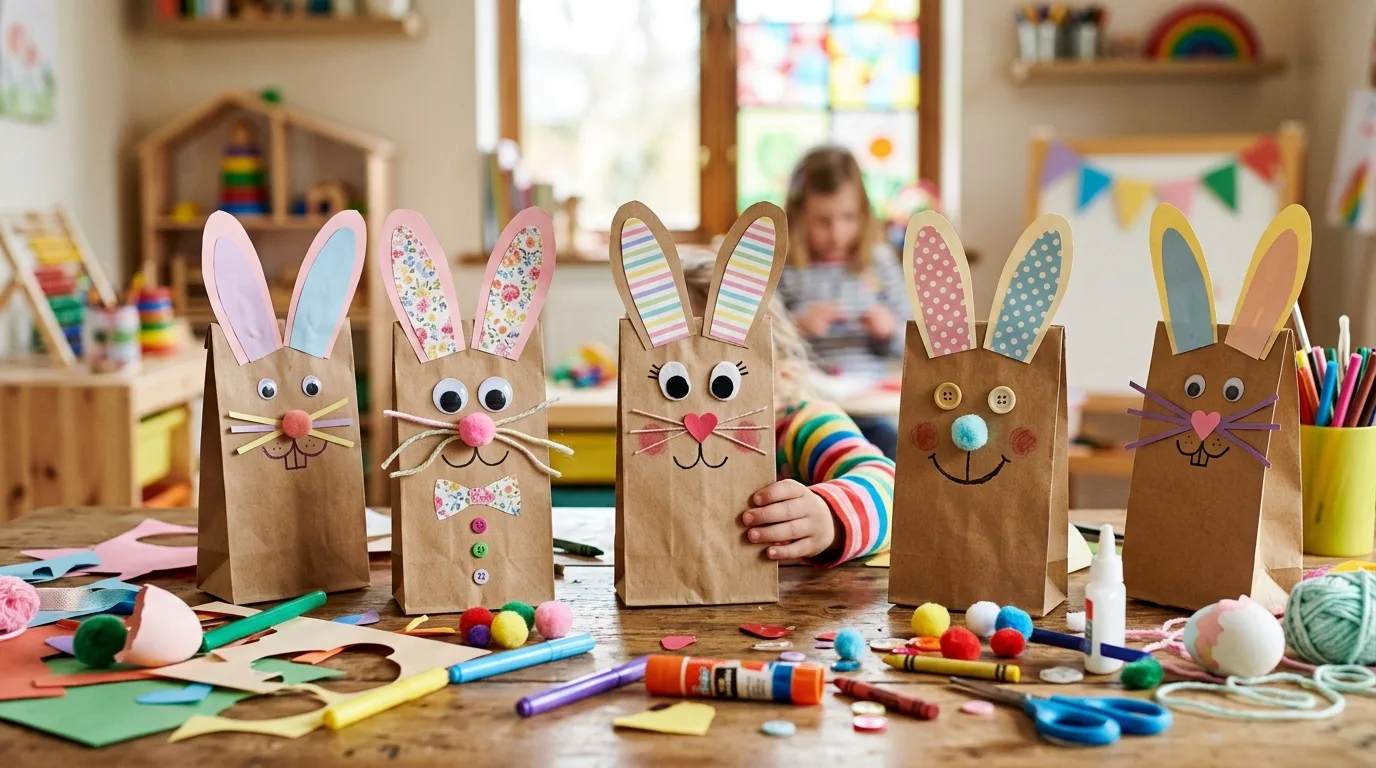
A plain paper lunch bag can become a lovable Easter bunny puppet with surprisingly little effort. Place the bag flat with the bottom flap facing upward, then add paper ears, eyes, a nose, whiskers, and a mouth. Children can draw the features themselves or cut shapes from leftover construction paper. Once the puppets are finished, encourage kids to create short Easter stories and act them out. This turns a simple craft into an imaginative play activity that can keep children entertained long after the gluing is finished. For a classroom or party, provide different paper colors and encourage each child to give their bunny a unique personality. You can also make chick, lamb, or carrot puppets to create an entire Easter cast. Because paper bags are inexpensive and easy to decorate, this is one of the most practical budget Easter crafts for kids.
6. Egg Carton Easter Chicks
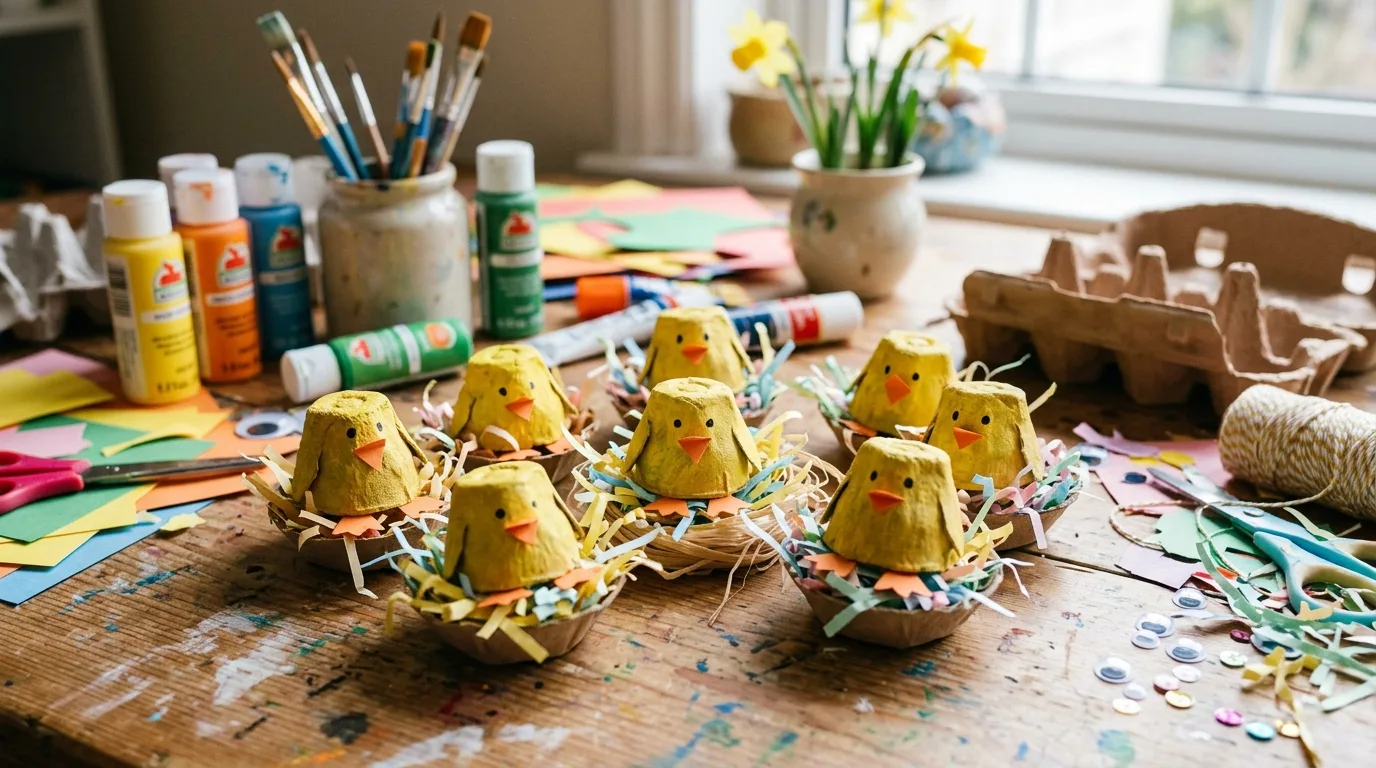
Instead of throwing away an empty egg carton, save it for a cute Easter craft. Cut individual cups from the carton and let children paint them yellow, then add paper beaks, feet, and eyes. Two cups can be joined together to create a little chick container that opens and closes, making it perfect for holding small paper notes or lightweight Easter treats. If painting feels too messy, simply cover the carton pieces with yellow paper. Older kids can create tiny nests from shredded scrap paper and arrange several chicks together for a miniature spring scene. This craft is inexpensive because the main material is something you may already have in the recycling bin. Always supervise younger children when cutting egg cartons, and prepare the pieces in advance if necessary. The finished chicks can become table decorations, toys, or handmade Easter gifts.
7. Handprint Easter Bunny Art
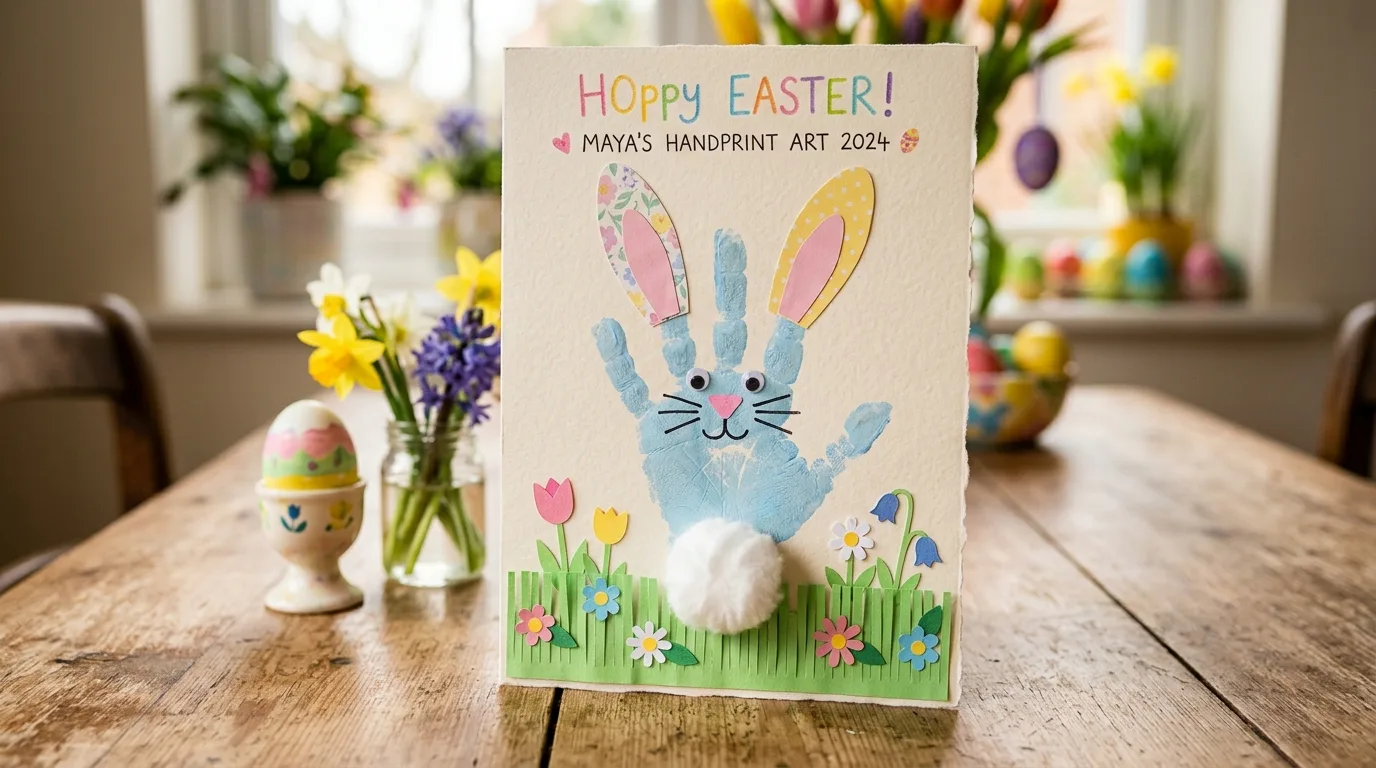
Handprint crafts are a classic choice when you want a keepsake that captures a child’s age and personality. Trace a child’s hand onto paper, cut out the shape, and turn the fingers into bunny ears by arranging the handprint upside down. Add a round paper face, eyes, nose, whiskers, and a small cotton-ball tail. Children can decorate the background with grass, flowers, carrots, butterflies, or Easter eggs. For toddlers and preschoolers, adults can handle the tracing and cutting while the children choose colors and add decorations. Older kids can write a short Easter message or date their artwork so it becomes a memorable keepsake. Use inexpensive construction paper instead of specialty cardstock, and save scraps from previous projects for the decorative details. Framing the finished bunny or attaching it to a homemade card makes the craft feel extra special without adding much cost.
8. Recycled Cardboard Easter Eggs
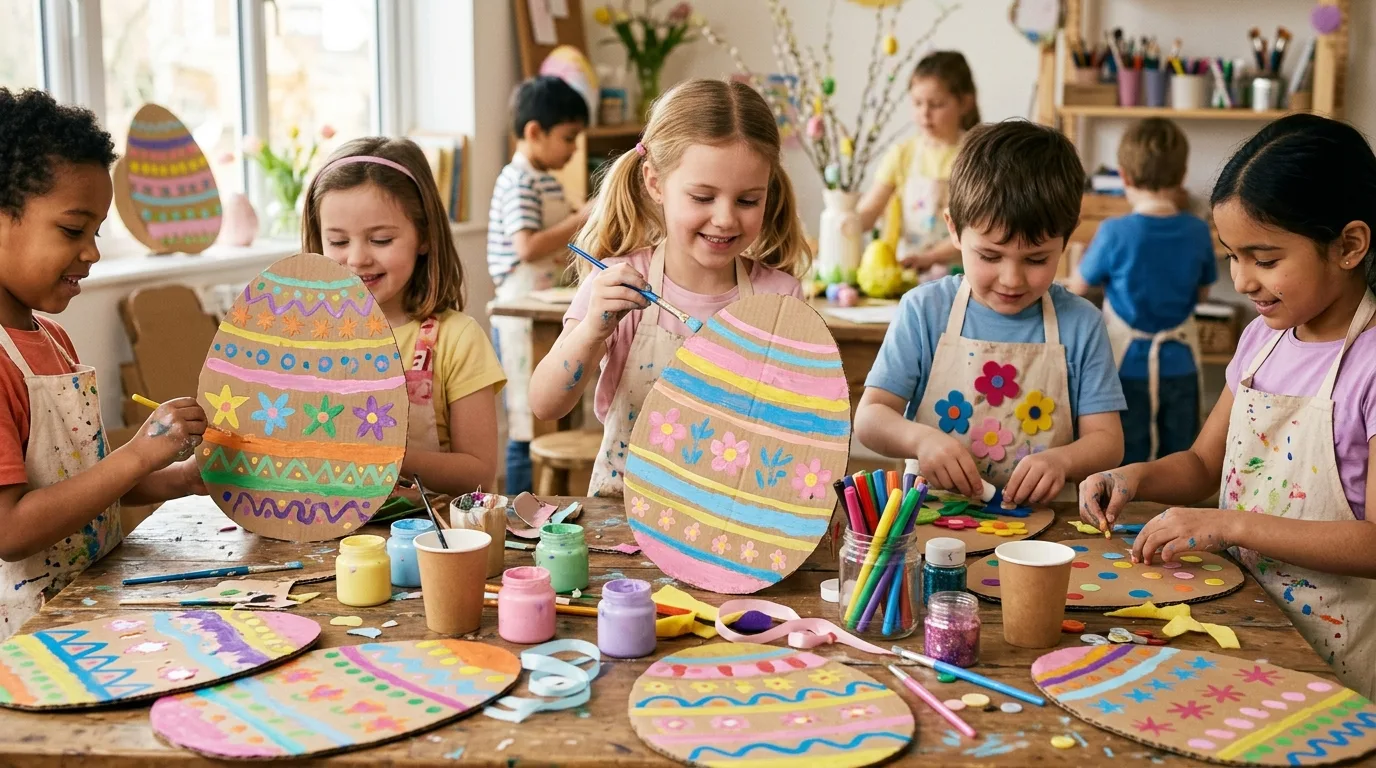
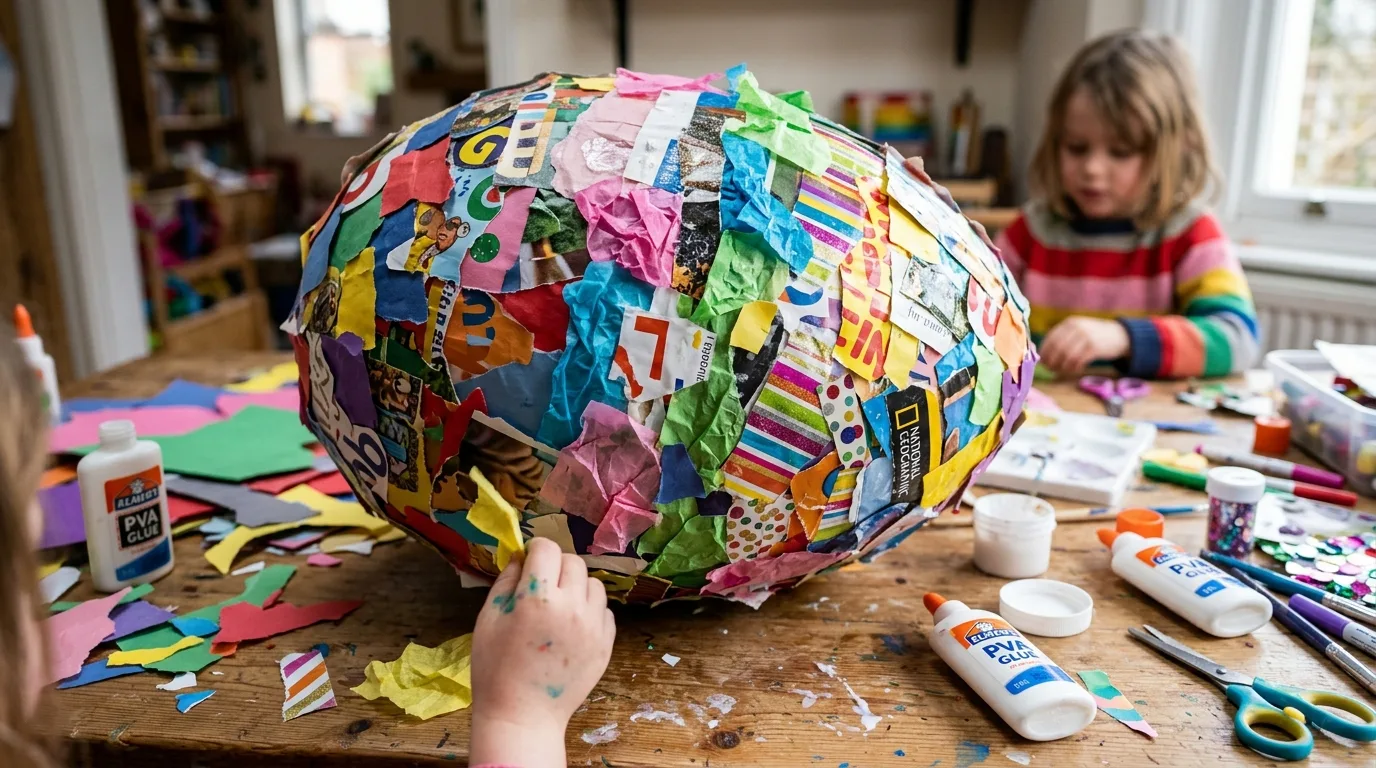
Make oversized Easter eggs from old cereal boxes, shipping boxes, or other clean cardboard. Draw egg shapes on the cardboard and cut them out before letting children decorate. They can cover the eggs with torn paper, paint them with leftover craft paint, or use crayons and markers for a mess-free option. Encourage kids to create patterns using stripes, zigzags, dots, flowers, or simple geometric shapes. Because cardboard is sturdier than ordinary paper, these eggs can be reused as decorations year after year. Punch a small hole at the top and add string to create a hanging ornament, or arrange several eggs across a mantel or classroom bulletin board. This is a particularly useful craft when you want a large decorative project on a tiny budget. It also gives children a chance to see how ordinary packaging can be transformed into something colorful and useful.
9. DIY Easter Carrot Garland
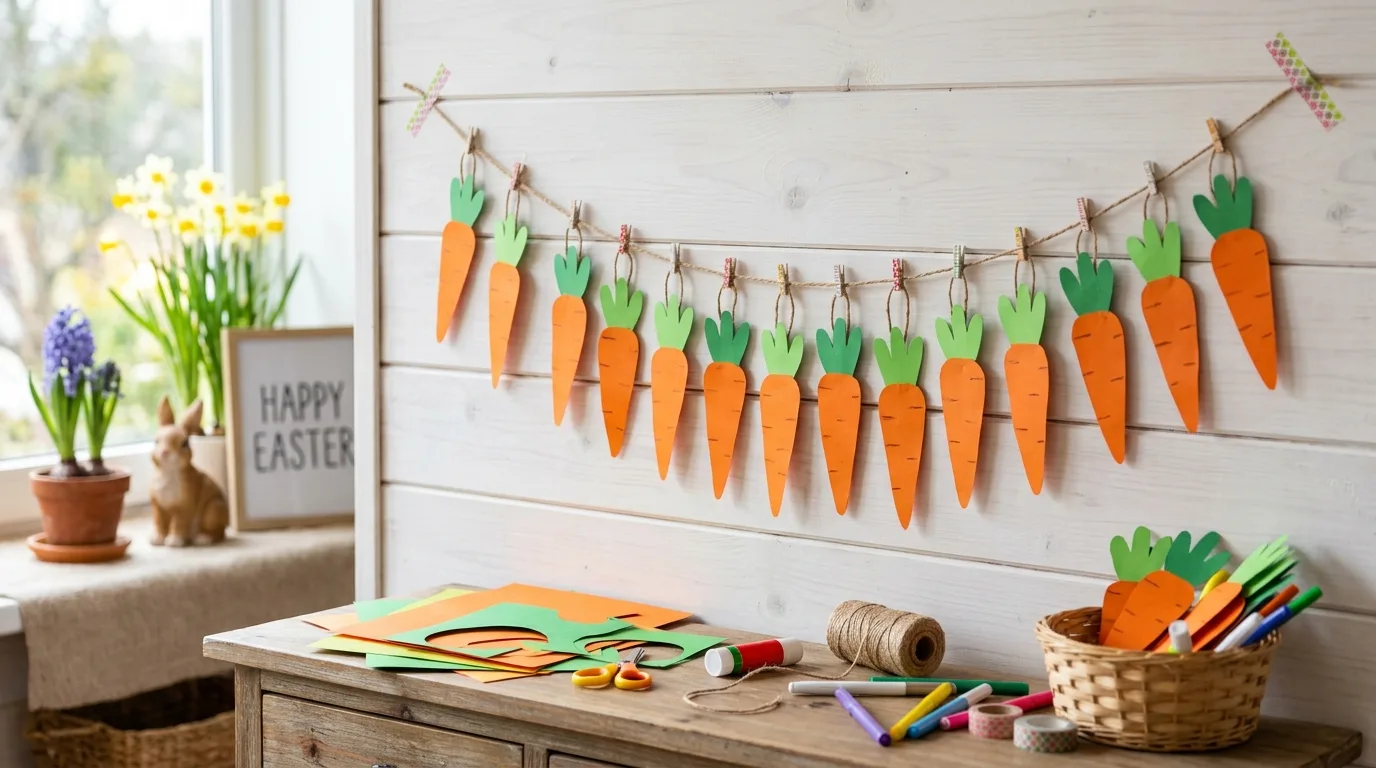
Add a cheerful spring decoration to a wall, shelf, or party table with a handmade carrot garland. Cut simple carrot shapes from orange paper or lightweight cardboard, then add green paper leaves at the top. Children can decorate each carrot with stripes, dots, names, or tiny patterns before the pieces are attached to a length of string or yarn. If you have orange paint or crayons left over from other projects, those work just as well. Younger children can focus on coloring while adults handle any cutting or tying. For extra texture, use scraps of green paper in several shades for the carrot tops. Hang the finished garland across a doorway, window, or craft table. Since the shapes are simple and the materials are inexpensive, you can make a long garland without spending much money, making this a great group Easter activity.
10. Popsicle Stick Easter Baskets
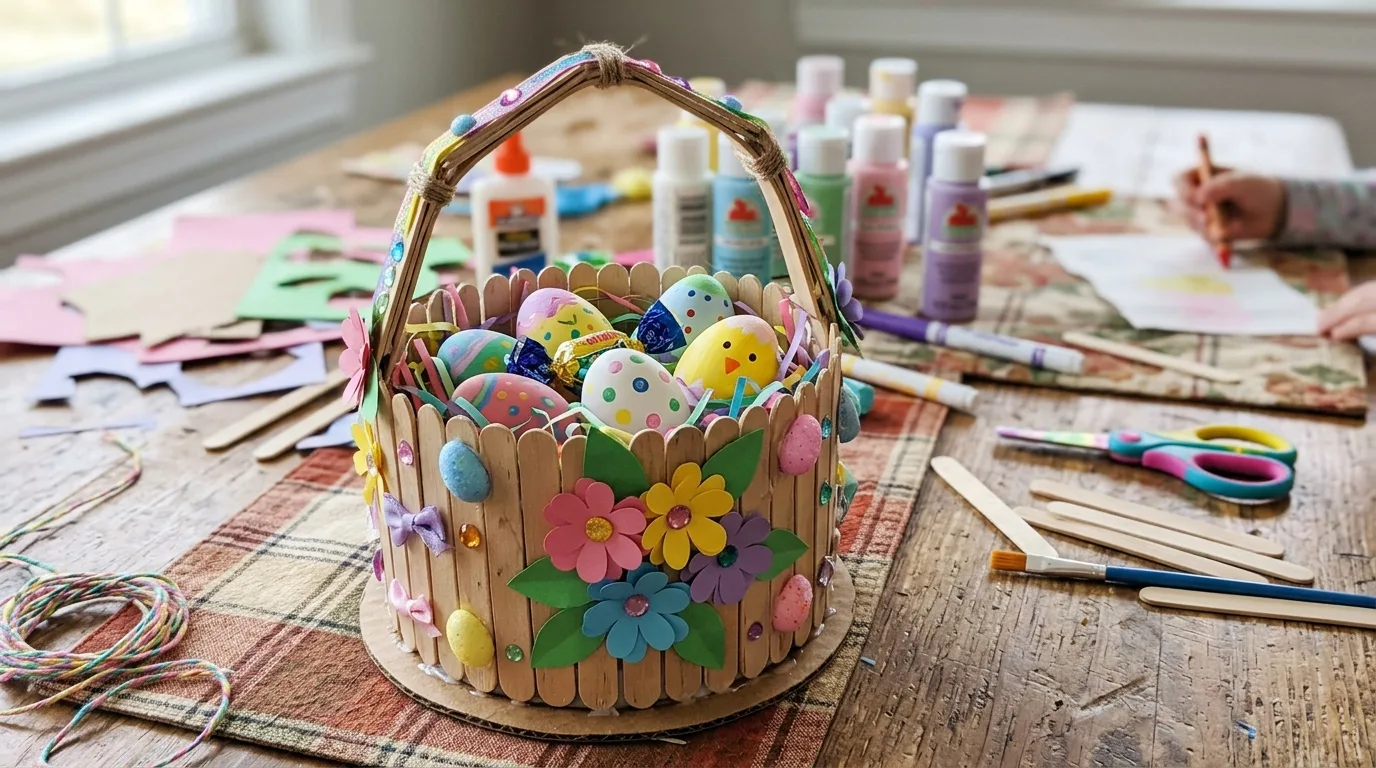
Small Easter baskets made from craft sticks are a fun project for older children who enjoy building as well as decorating. Use inexpensive wooden craft sticks to form the sides of a small basket, attaching them around a simple cardboard base. Add a curved stick or strip of cardboard for the handle, then decorate with paper flowers, ribbon scraps, stickers, or drawn designs. For younger kids, adults can assemble the basic structure while children handle the decorating. These baskets do not need to be large; their small size makes them perfect for holding paper eggs, handmade notes, or a few lightweight treats. If you do not have craft sticks, thick strips of clean cardboard can be used instead. Let children choose a theme such as pastel spring colors, flowers, bunnies, or chicks so every basket feels personal.
11. Easter Egg Potato Stamping
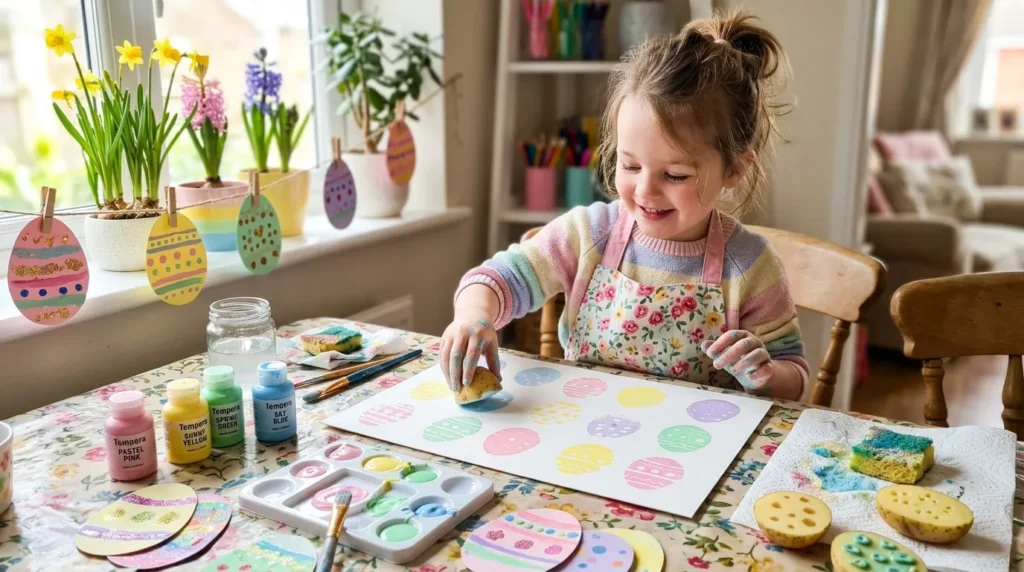
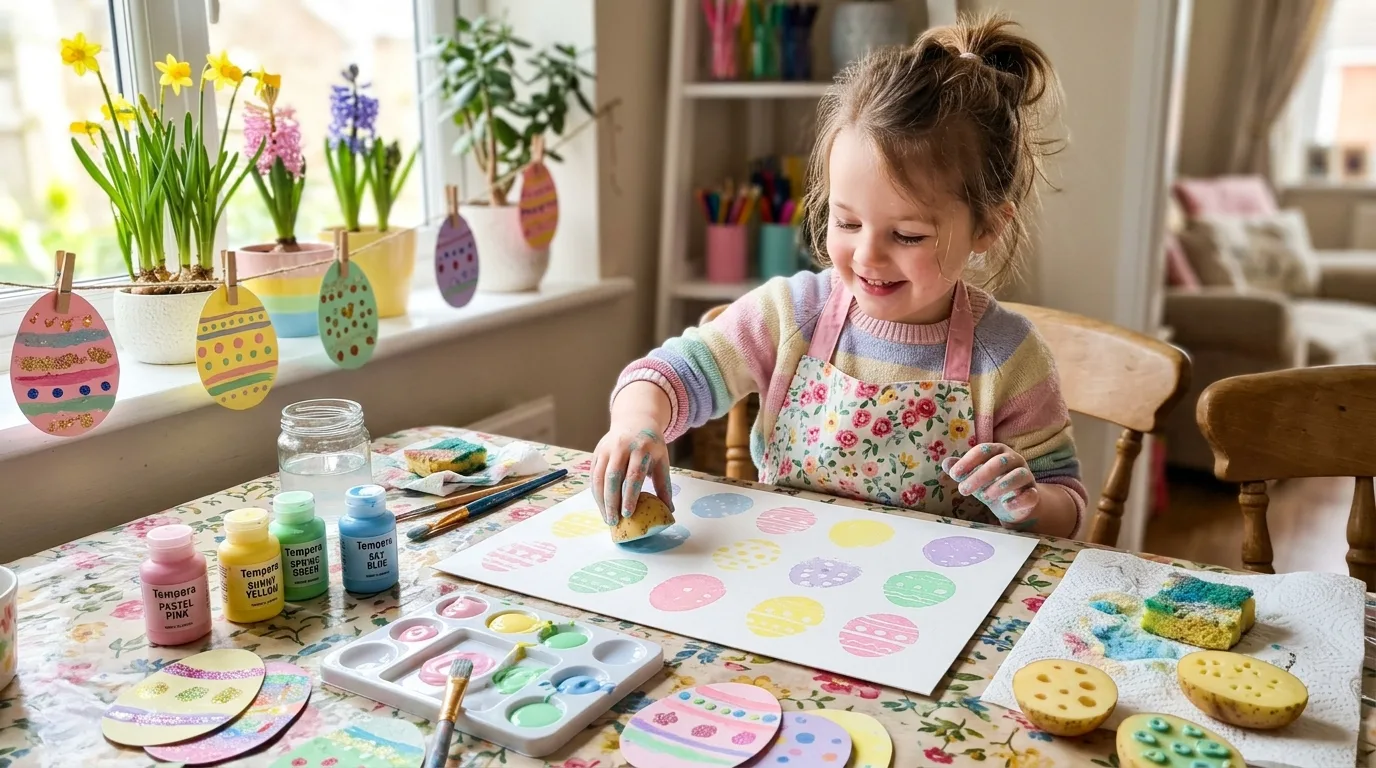
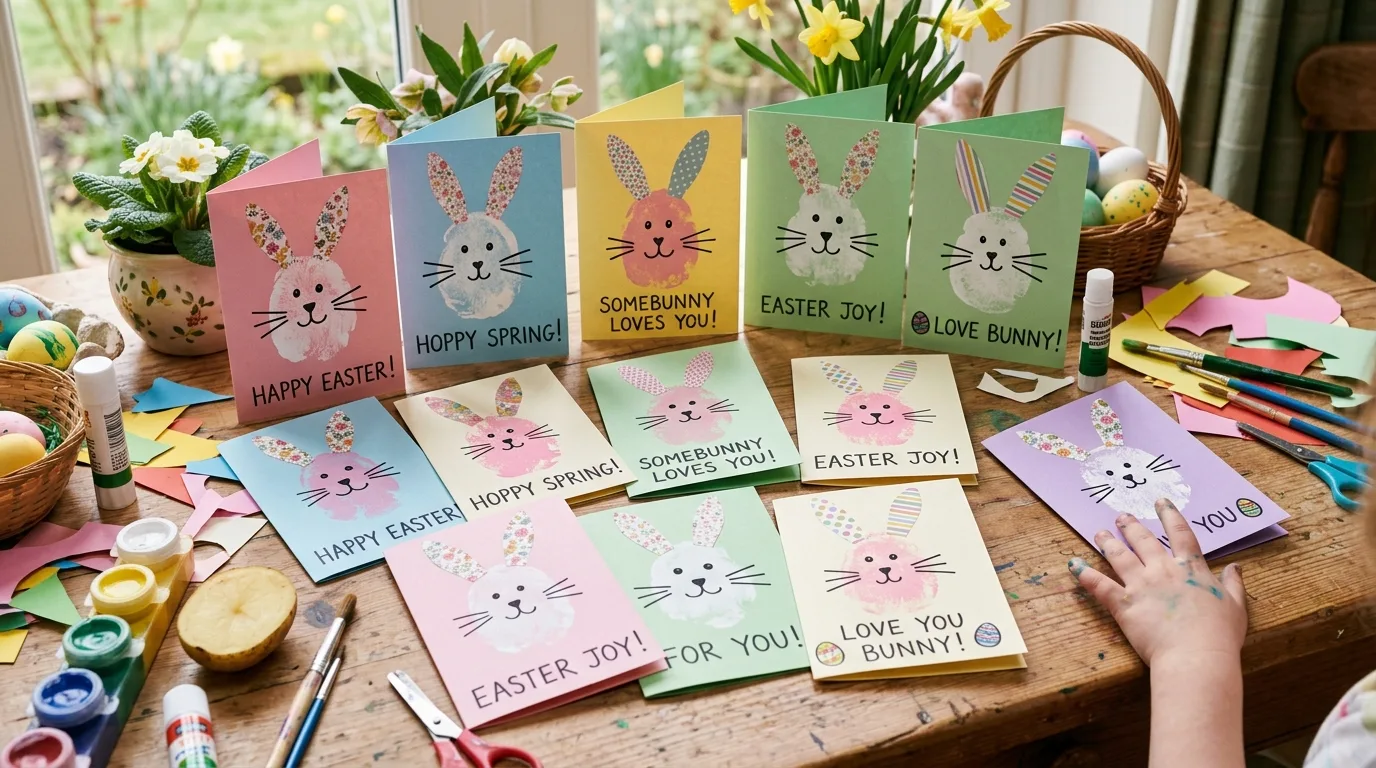
Turn a simple potato into a reusable Easter egg stamp for an inexpensive art activity. An adult can cut a potato in half and create an egg-shaped surface, while children dip it lightly into washable paint and press it onto paper. Once the basic egg shapes are dry, kids can add dots, stripes, flowers, zigzags, and other patterns with markers or cotton swabs. This activity works particularly well for younger children because stamping produces recognizable shapes without requiring precise drawing skills. Place a sheet of newspaper underneath the project to make cleanup easier, and use small amounts of paint so the prints do not become overly wet. You can turn the stamped eggs into cards, wrapping paper, a large Easter poster, or individual decorations. It is a creative way to make plenty of colorful artwork with materials that cost very little.
12. Paper Bunny Headbands
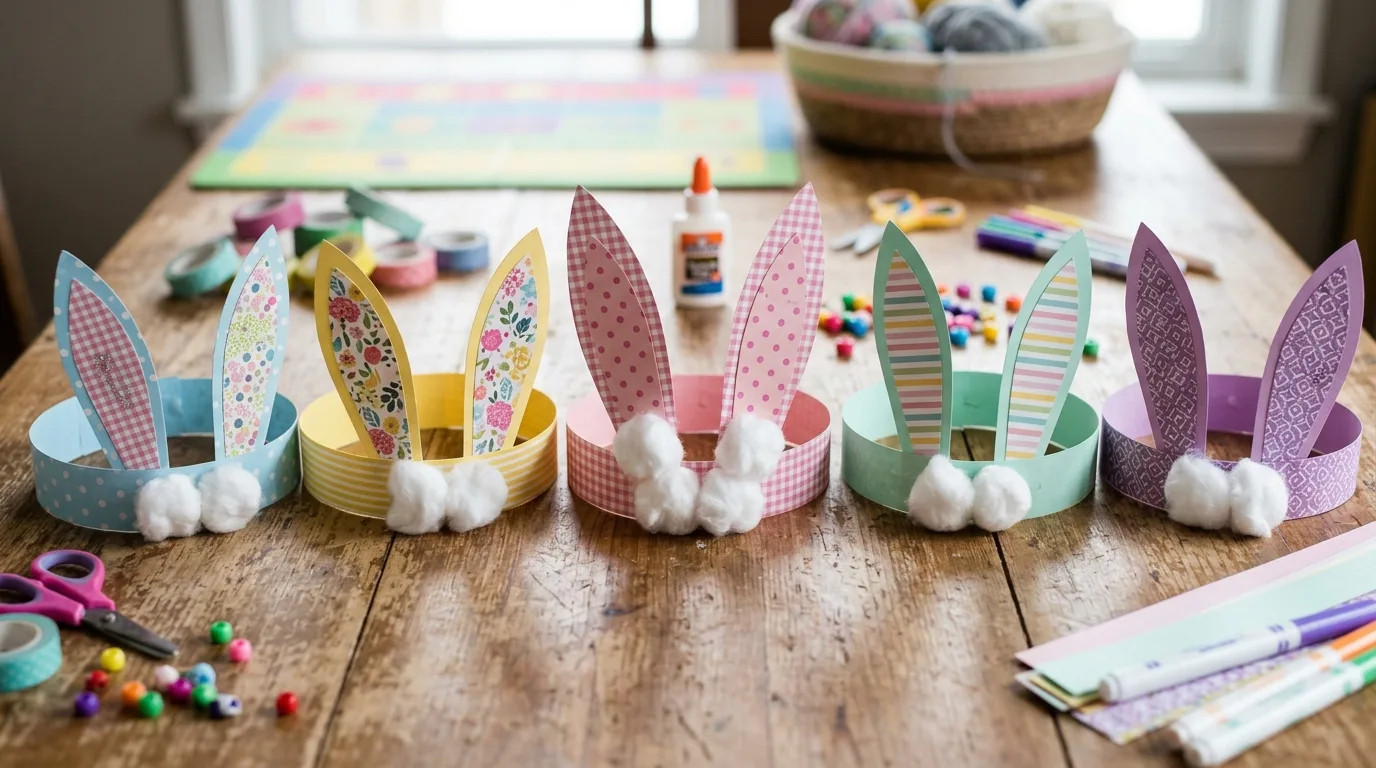
Kids can make their own Easter bunny headbands using strips of paper and a few scraps of cardstock. Measure a strip of paper around the child’s head, leaving enough overlap to tape or staple it securely. Cut two long bunny ears from another piece of paper and attach them to the band. Children can decorate the ears with crayons, markers, pastel paper, cotton balls, or simple floral designs. For a sturdier headband, glue the paper strip onto a narrow piece of recycled cardboard. This craft is especially fun for Easter parties because children can wear their creations immediately. It also doubles as a prop for photographs, pretend play, or a bunny-themed story. Keep decorations lightweight so the headband remains comfortable. With only paper and basic supplies required, this activity is an easy choice when you need an entertaining Easter craft for several children.
13. Easter Egg Potato Bunny Cards
Combine simple stamping with homemade card-making by turning painted potato prints into Easter bunnies. Start with folded paper or recycled cardstock and stamp an oval shape using washable paint. Once the paint dries, add bunny ears, eyes, whiskers, a nose, and tiny feet with markers or paper scraps. Children can write Easter greetings inside for grandparents, teachers, friends, or neighbors. Younger children can dictate their message while an adult writes it down, giving them a meaningful role in creating the card. To keep costs low, use the backs of old paper packaging, unused stationery, or leftover scrapbook paper for the card base. A small amount of paint can create several cards, making this project particularly economical. Encourage children to make every bunny slightly different rather than trying to make perfectly identical cards.
14. Egg-Shaped Paper Collage
A paper collage is one of the easiest Easter crafts to adapt to whatever supplies you already have. Cut a large egg shape from plain paper or cardboard, then let children cover it with scraps of colored paper, newspaper, magazine pieces, tissue paper, fabric remnants, or old wrapping paper. They can tear the materials into small pieces for a relaxed activity or cut specific shapes for a more organized design. Layering different textures makes each egg look unique without requiring expensive decorations. Younger children can practice identifying colors and textures, while older kids can experiment with patterns and balanced compositions. Once finished, display the eggs individually or combine several on a large sheet of paper to create a colorful Easter collage. This project is particularly useful for using up leftover craft materials, so it can cost almost nothing while still producing artwork that feels festive and creative.
15. Mason Jar Lid Easter Bunny Decorations
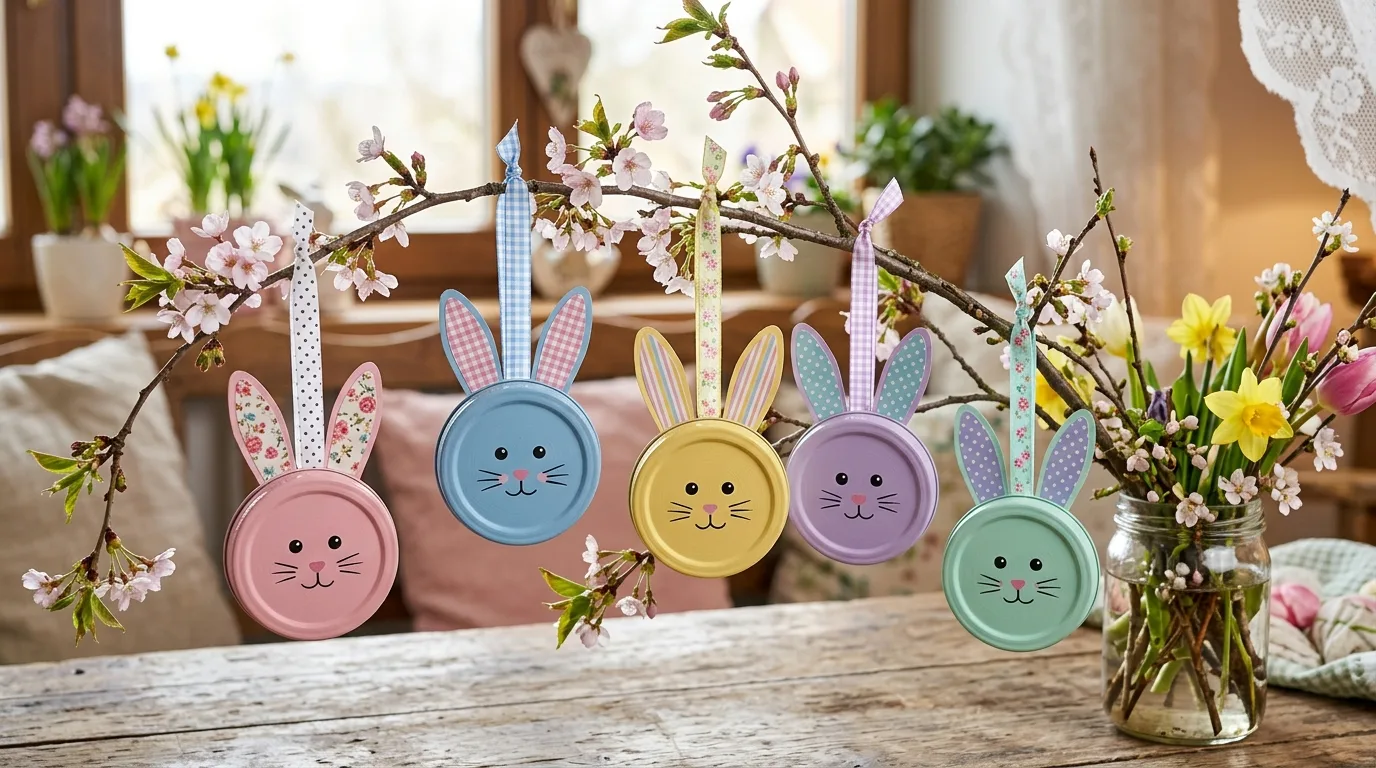
Give spare mason jar lids a second life by turning them into small Easter bunny decorations. Paint the lids white or pastel shades, then add paper ears, simple eyes, a pink nose, and thin paper whiskers. If you do not have paint, cover the lid with paper and glue the decorations directly onto the surface. Attach a ribbon or piece of string to the back so the bunny can hang from a doorknob, Easter tree, wall hook, or branch arrangement. Children can personalize each bunny with tiny flowers, bows, initials, or colorful patterns. Adults should handle any sharp metal edges or cutting, particularly when preparing lids for younger children. This craft works well as a family project because everyone can make a different bunny. Reusing jar lids keeps the cost low while creating decorations that can be brought out again every Easter.