Skylights are often chosen for the natural light they bring indoors, but their benefits can extend beyond making a room feel brighter and more spacious. When designed to open and positioned correctly, skylights can support natural ventilation, encourage air movement, and help reduce the buildup of stale indoor air. Better airflow can make living spaces feel fresher, particularly in kitchens, bathrooms, bedrooms, and rooms that lack conventional windows.
Of course, a skylight is not a substitute for proper ventilation systems, moisture control, or regular cleaning. Its value comes from working alongside these measures. Here are 15 practical ways skylights can contribute to a fresher and more comfortable indoor environment.
1. Encourages Natural Ventilation
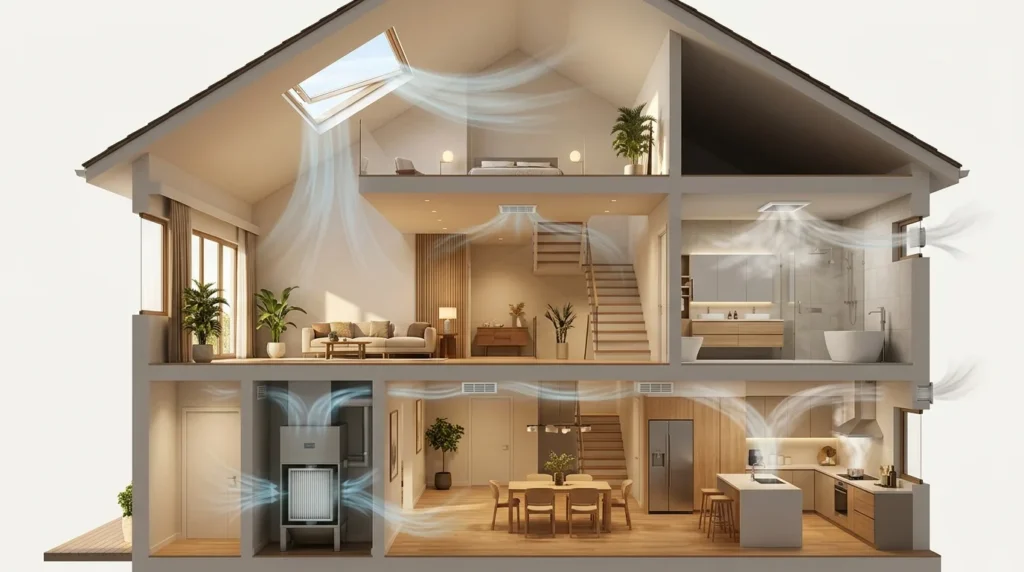
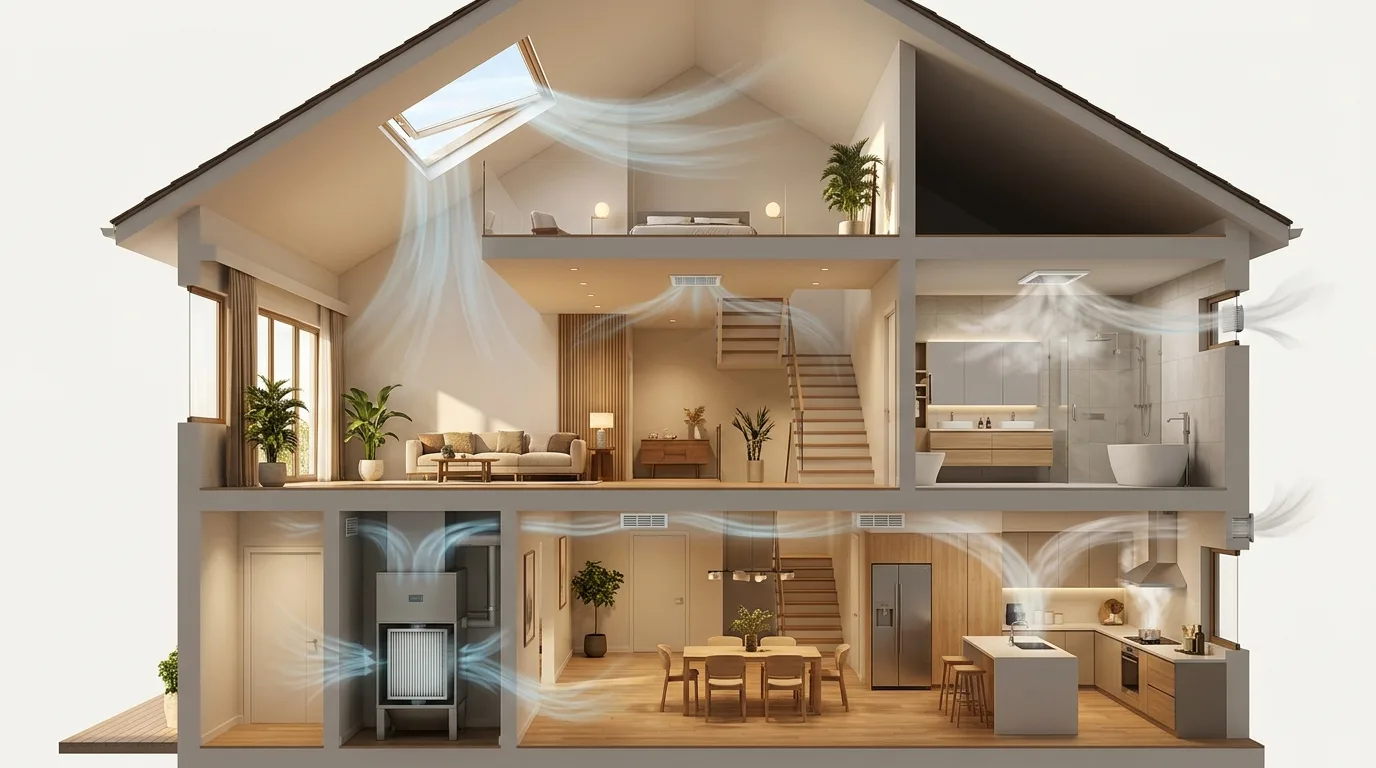
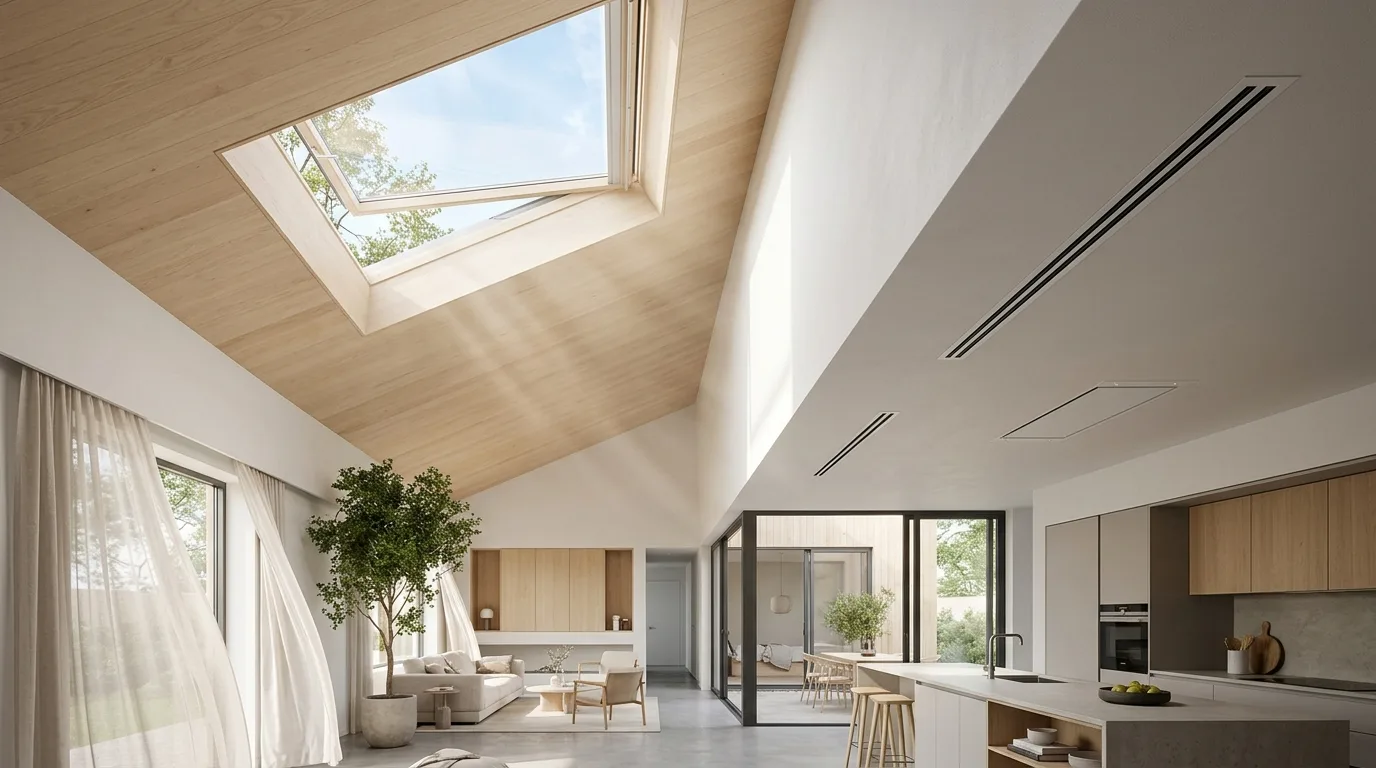
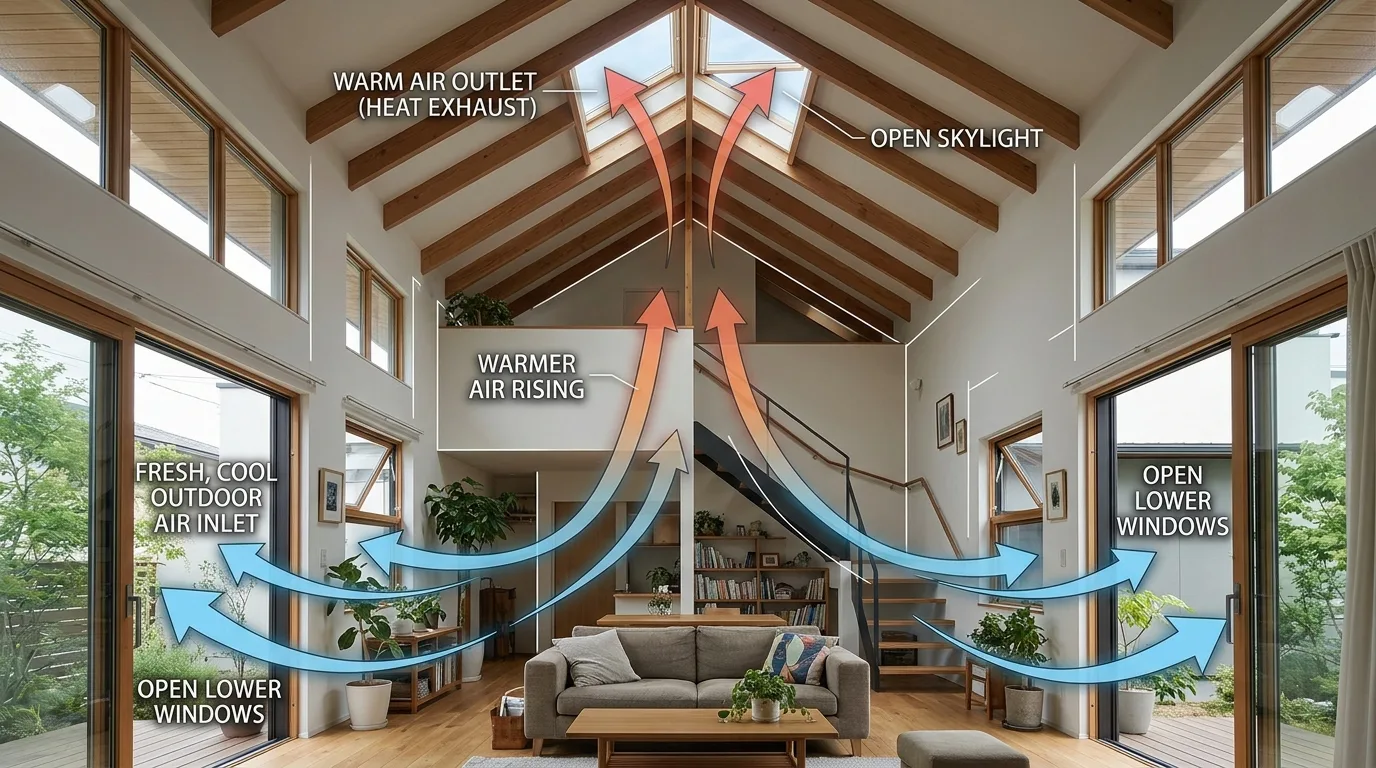
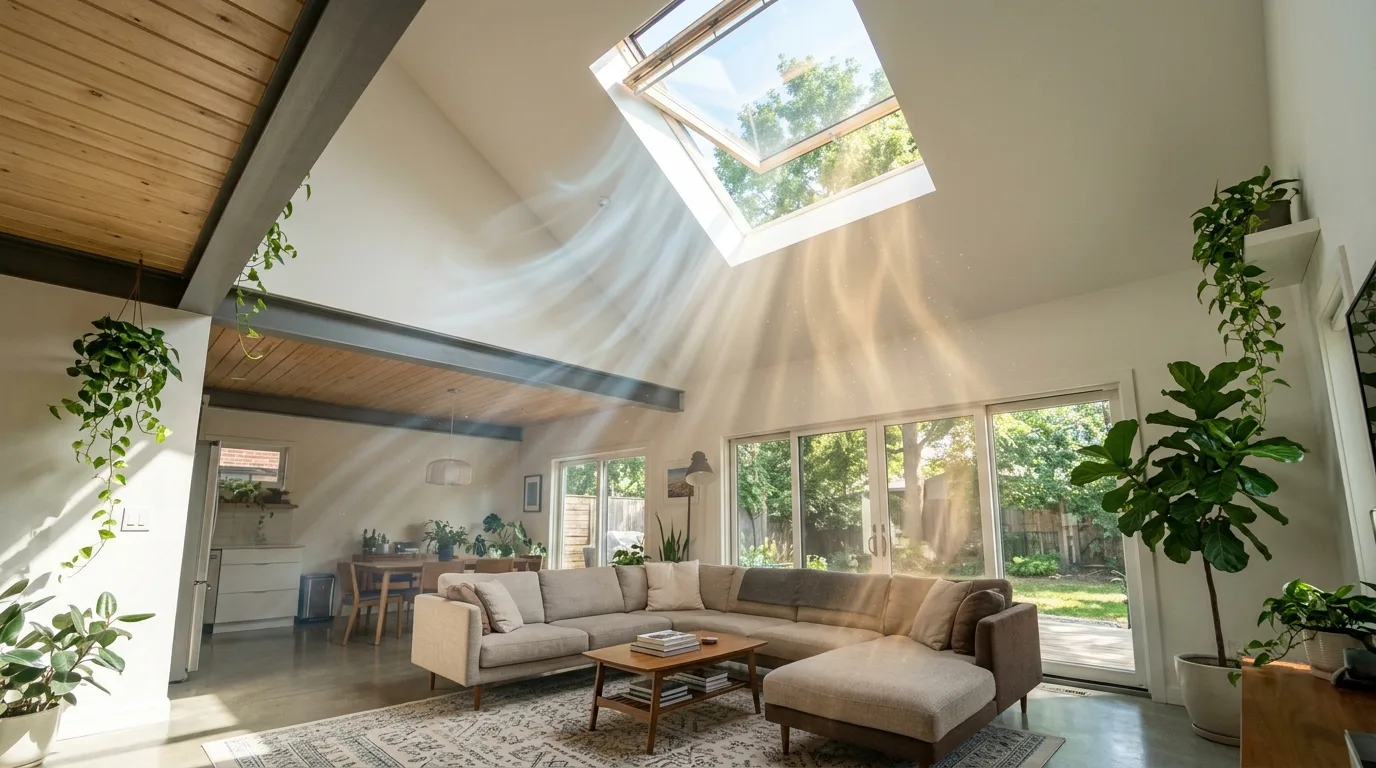
Operable skylights can provide a simple way to introduce fresh outdoor air into your home. When a skylight is opened, warmer indoor air can escape upward while cooler air enters through lower windows, doors, or vents. This creates a natural airflow pattern known as the stack effect. The result can be better air circulation without relying entirely on mechanical ventilation.
For the best results, use skylights together with openings at lower levels of the room or home. Opening them for a short period when outdoor conditions are favorable can help replace stagnant indoor air. Choose models with secure opening mechanisms, insect screens where available, and weather sensors if you want additional convenience.
2. Helps Remove Stale Indoor Air
Indoor air can become stale when a room remains closed for long periods. Cooking, cleaning, sleeping, and everyday activity all introduce particles, odors, moisture, and carbon dioxide into the air. An opening skylight can help these pollutants move outdoors rather than allowing them to linger.
This can be especially useful in rooms with limited wall windows. Opening the skylight while another low-level opening is available creates a pathway for air to move through the space. Even brief ventilation periods can refresh a room. For homes with persistent air-quality problems, however, combine natural ventilation with appropriate exhaust fans, filtration, and source control rather than depending on a skylight alone.
3. Supports Better Airflow in Kitchens
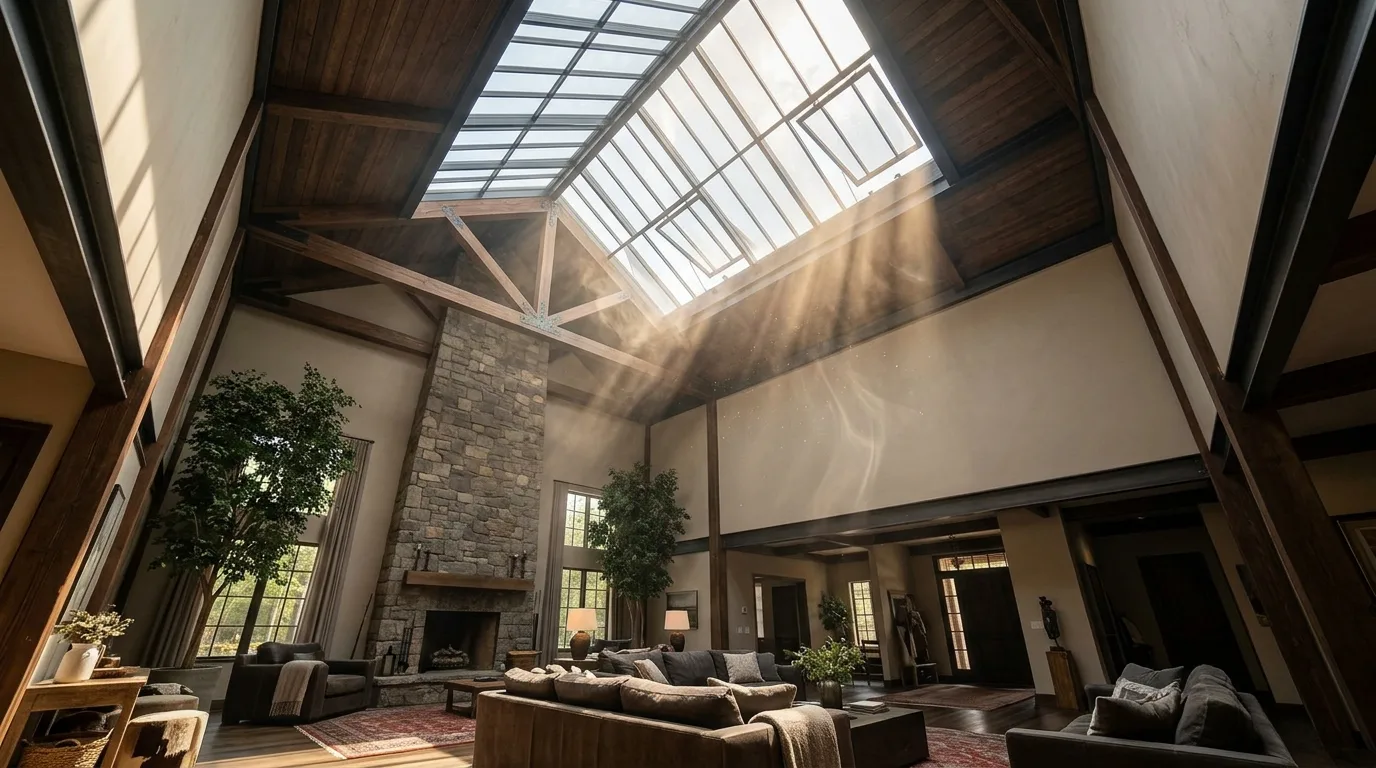
Kitchens generate a significant amount of indoor moisture and airborne particles during cooking. Steam, food odors, and combustion byproducts can accumulate quickly if air is not exchanged effectively. A strategically positioned skylight can complement a range hood by giving warm, rising air another route toward the outdoors.
For practical use, turn on the kitchen exhaust fan while cooking and consider opening the skylight when outdoor weather permits. The combination can improve overall air exchange more effectively than relying on either method by itself. If your kitchen uses gas appliances, proper appliance ventilation and a functioning carbon monoxide detector remain essential because a skylight cannot reliably remove combustion pollutants on its own.
4. Helps Reduce Bathroom Humidity
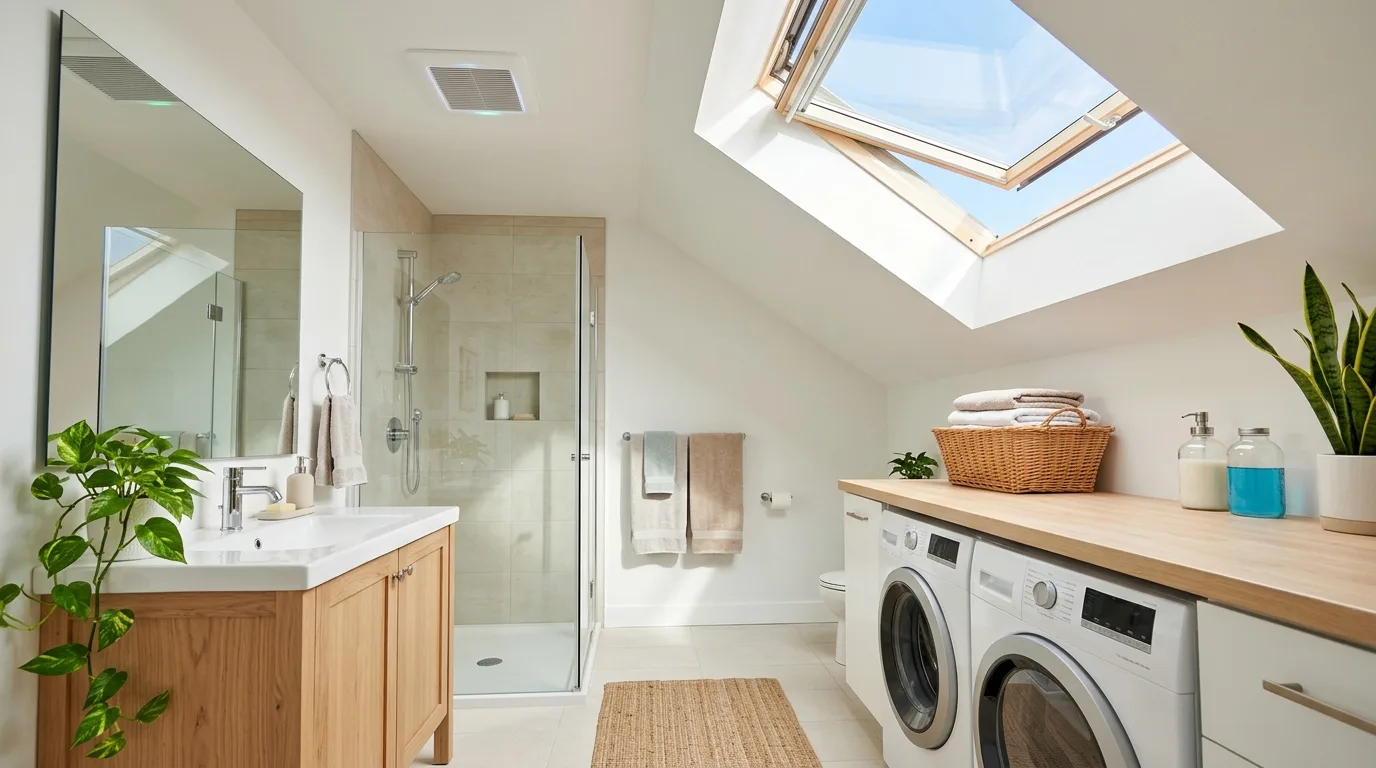
Bathrooms are naturally prone to excess humidity from showers and baths. If moisture remains trapped indoors, it can contribute to condensation, musty odors, and conditions that encourage mold growth. An operable skylight can provide an additional escape route for warm, humid air.
Open the skylight during or shortly after a shower when weather conditions allow, while also running the bathroom exhaust fan. Leave the fan operating long enough to remove lingering moisture, and keep wet surfaces dry whenever possible. A moisture-sensitive skylight or automated venting system can make this process easier. If condensation remains a recurring problem, investigate insulation, leaks, ventilation capacity, and indoor humidity rather than assuming the skylight alone will solve it.
5. Helps Move Warm Air Outdoors
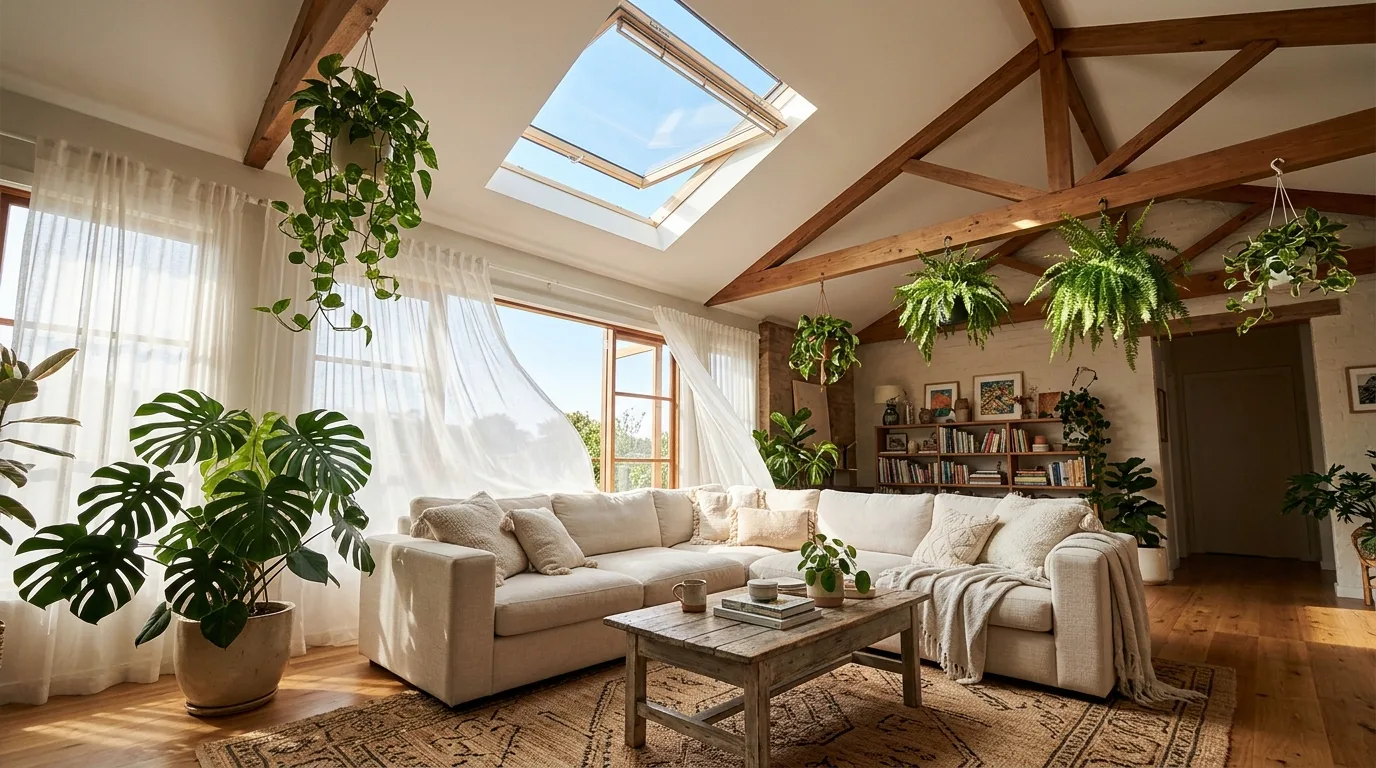
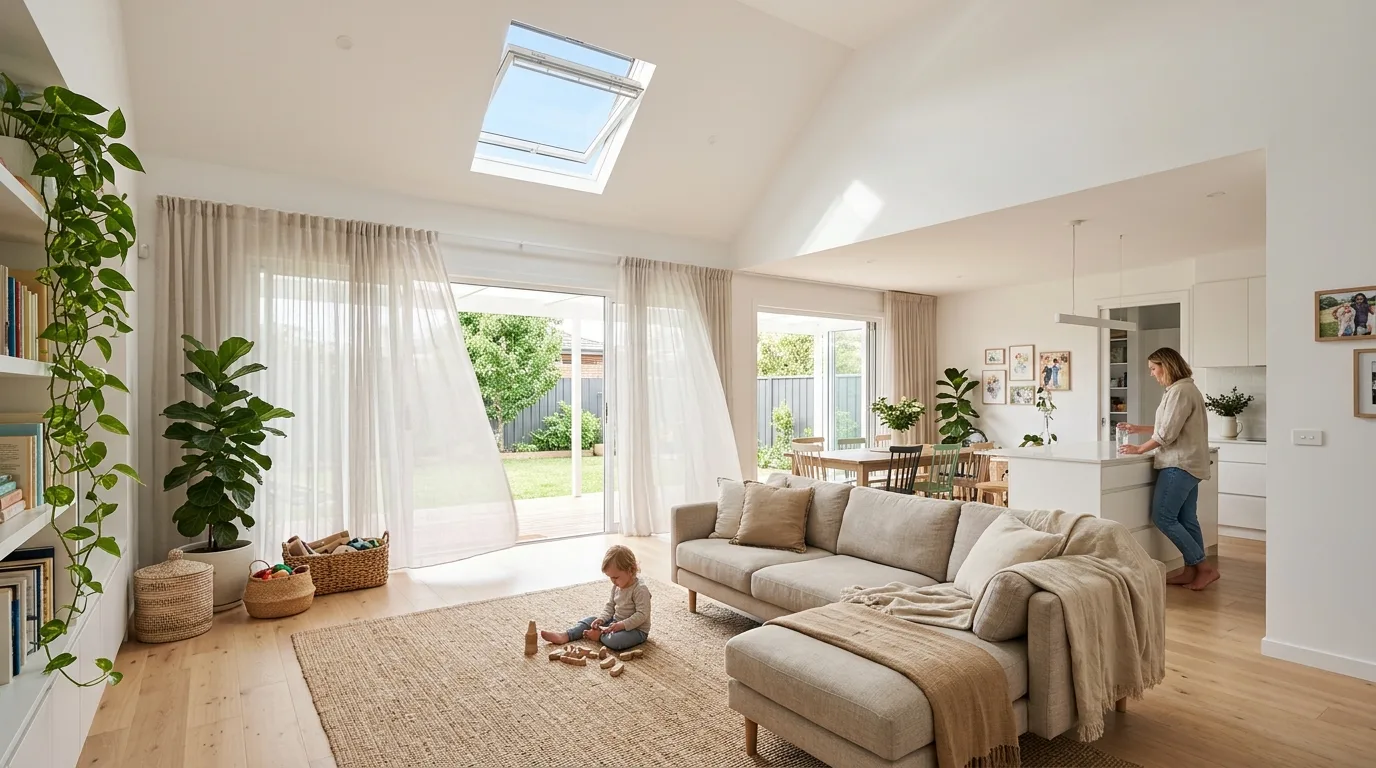
Warm air naturally rises, which makes roof-level openings particularly useful for ventilation. During mild weather, an open skylight can allow accumulated warm air to escape from upper areas of the home. This can improve circulation and make occupied rooms feel less stuffy.
The effect is strongest when cooler replacement air can enter lower in the building. Opening a ground-floor window or another suitable ventilation point can create a continuous pathway from low to high. This passive strategy can be useful during mornings and evenings when outdoor temperatures are comfortable. During very hot, humid, smoky, or polluted weather, keep openings closed and rely on suitable mechanical filtration or air conditioning instead.
6. Can Reduce Lingering Household Odors
Odors from cooking, cleaning products, pets, and other everyday activities can remain suspended in poorly ventilated rooms. A skylight that opens to the outdoors can help increase air exchange and move odor-containing air out of the home.
For the greatest benefit, address the source as well as the air itself. Use kitchen and bathroom exhaust fans, clean fabrics and surfaces regularly, and store strong-smelling products in appropriate containers. Opening a skylight can then provide additional ventilation rather than serving as the sole odor-control method. If odors persist despite ventilation and cleaning, look for hidden moisture, plumbing problems, damp materials, or other sources that may require attention.
7. Helps Control Excess Moisture
Moisture is one of the most important factors affecting indoor environmental quality. Everyday activities such as showering, cooking, drying clothes, and even breathing release water vapor. When that moisture cannot escape, it can settle on cold surfaces and contribute to damp conditions.
An operable skylight can help remove humid air when outdoor conditions are suitable. Use it alongside bathroom and kitchen exhaust fans, particularly after moisture-producing activities. A simple hygrometer can help you monitor indoor relative humidity and determine whether your ventilation routine is effective. Remember that skylights should never be used to ventilate during rain or when outdoor humidity is extremely high, because bringing damp air indoors may make the problem worse.
8. May Help Limit Conditions Favorable to Mold
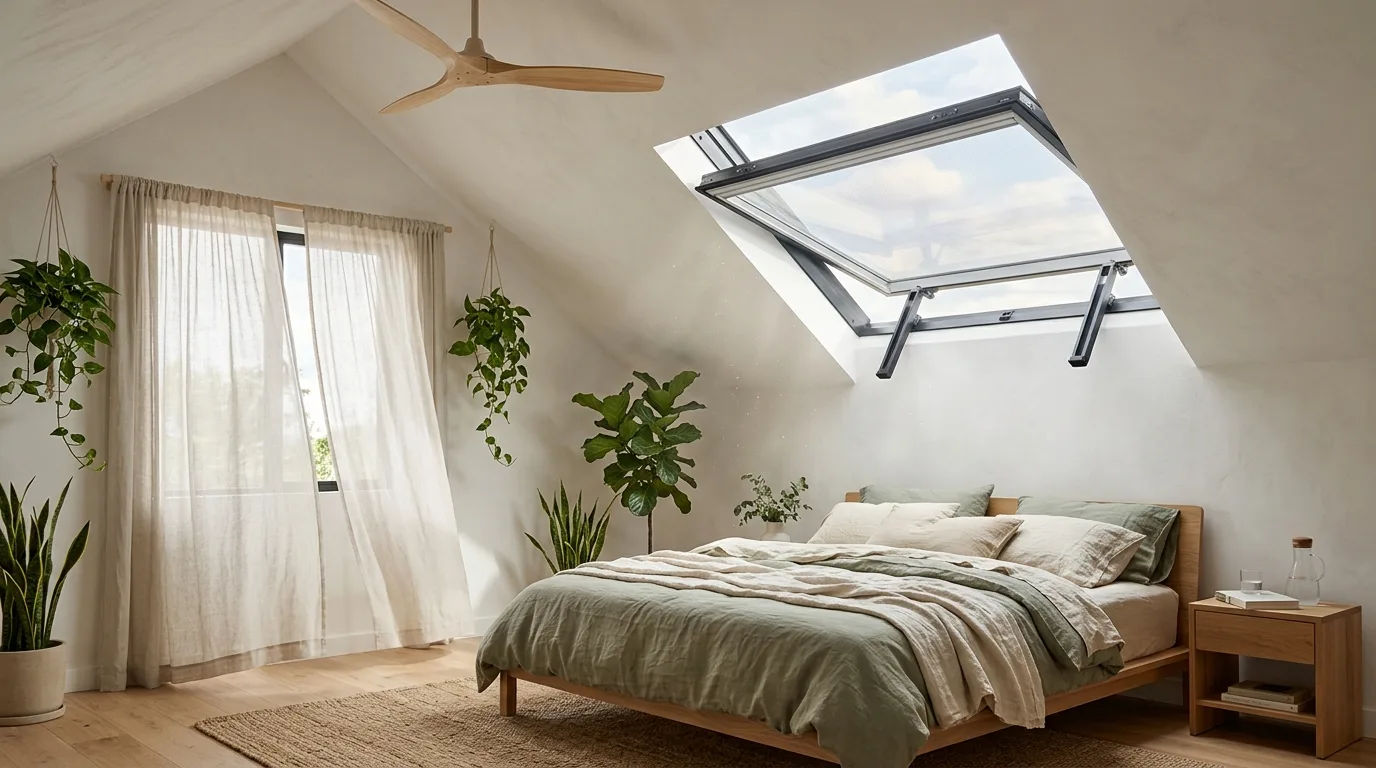
Mold needs moisture and suitable surfaces to grow, so controlling humidity is an important part of prevention. By supporting ventilation and allowing humid air to escape, an operable skylight may help create a drier indoor environment in rooms where moisture regularly accumulates.
The key is consistency. Ventilate bathrooms after showers, control kitchen steam, repair water leaks promptly, and avoid allowing damp materials to remain wet for extended periods. A skylight cannot eliminate existing mold or compensate for a serious moisture problem. If you already see extensive mold growth or have recurring dampness, identify and correct the underlying water source first. Think of skylight ventilation as one part of a broader moisture-management strategy.
9. Improves Air Circulation in Tall Rooms
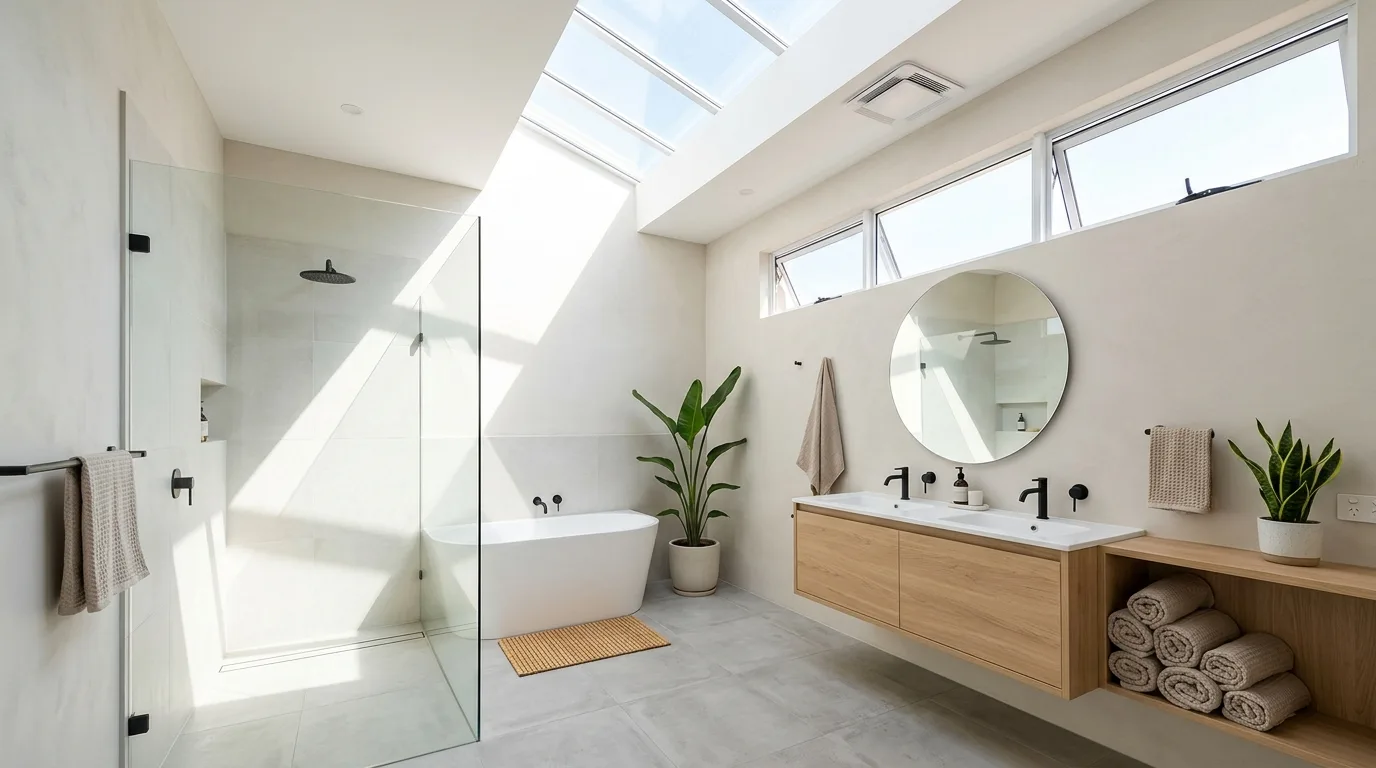
Rooms with high ceilings can sometimes develop noticeable temperature and airflow differences between upper and lower levels. Warm air tends to collect higher in the room, while lower areas may feel comparatively cooler. A roof-level skylight can take advantage of this natural movement by allowing warm air to escape when opened.
This can be particularly useful in vaulted living rooms, lofts, stairwells, and other spaces where conventional windows may not provide enough high-level ventilation. Combining a skylight with lower windows creates a more complete circulation path. Ceiling fans can also help mix the air and distribute temperatures more evenly. During hot weather, however, an unshaded skylight can add solar heat, so choose glazing and shading suited to your climate.

10. Can Refresh Enclosed Bedrooms
Bedrooms can become stuffy overnight because occupants continuously release carbon dioxide and moisture while sleeping. A skylight that can be safely opened may provide useful ventilation, especially in rooms where wall windows are small or absent.
Rather than leaving it open in unsuitable weather, ventilate the room before bedtime or in the morning when outdoor air conditions are favorable. Secure hardware and insect screening can make ventilation more practical. If the bedroom faces heavy outdoor pollution, wildfire smoke, excessive humidity, or other poor air conditions, keep the skylight closed and use filtered mechanical ventilation instead. Good bedroom air quality depends on ventilation, cleanliness, humidity control, and appropriate filtration working together.
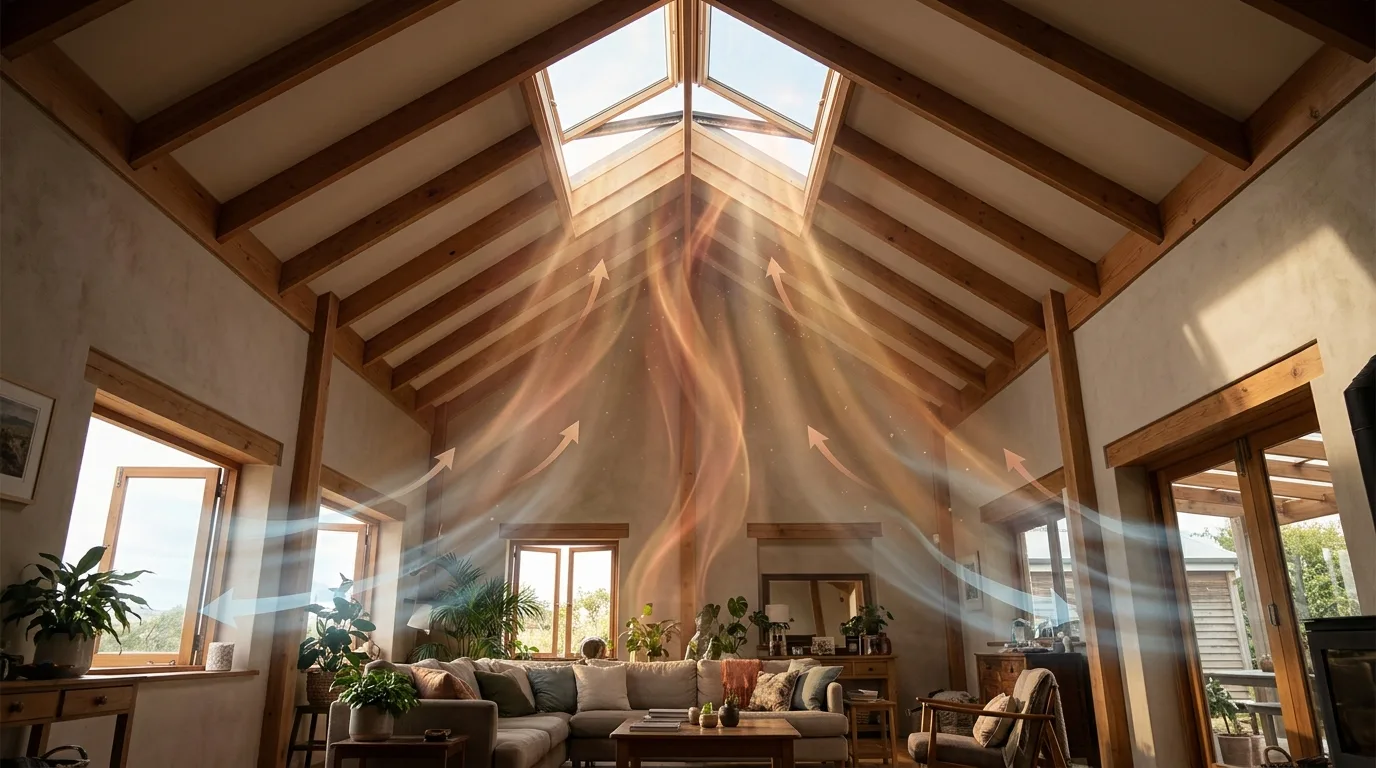
11. Supports Cross-Ventilation Strategies
A skylight can become especially useful when it forms part of a whole-home cross-ventilation plan. Cross-ventilation occurs when air enters through one opening and exits through another, creating a deliberate path across the building. Because skylights are located at roof level, they can serve as effective high-level exhaust points.
For example, a lower window on one side of a room can supply fresh air while an open skylight releases warmer indoor air. Interior doors can be positioned to support airflow between connected spaces when appropriate. The effectiveness of this approach depends on wind direction, building layout, temperature differences, and outdoor air quality. Treat it as a passive ventilation strategy rather than a guaranteed replacement for a designed ventilation system.
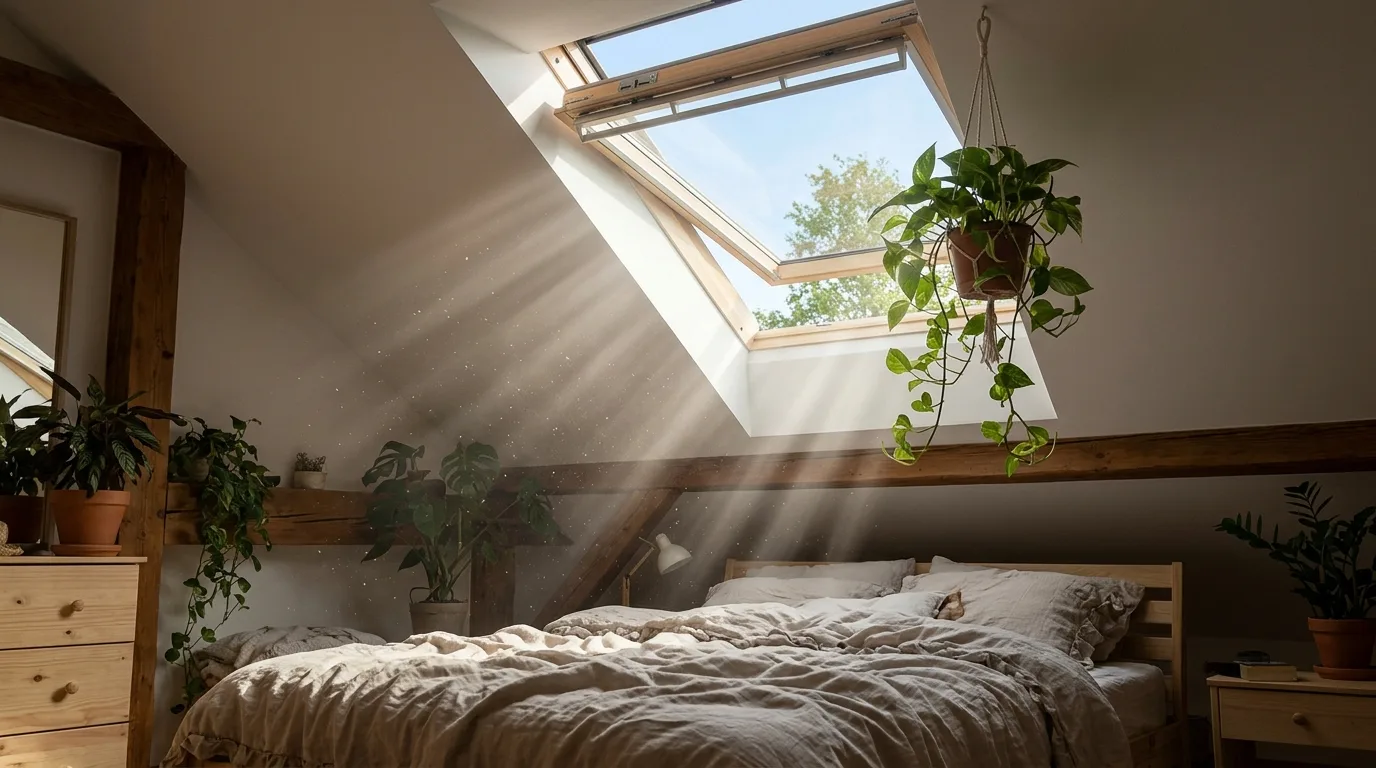
12. Can Complement Mechanical Ventilation
Skylights do not have to compete with mechanical ventilation. In suitable weather, they can complement exhaust fans and other ventilation equipment by providing another route for air exchange. This may be useful when you want to flush out ordinary household odors or accumulated stale air without operating equipment continuously.
A balanced approach is important. Mechanical ventilation offers predictable performance, while natural ventilation depends heavily on outdoor temperature, humidity, wind, and pollution levels. If your home has a heat-recovery or energy-recovery ventilation system, follow its operating recommendations rather than assuming an open skylight is always more effective. Use skylights as an additional option when conditions are favorable and close them when outdoor air quality is poor.
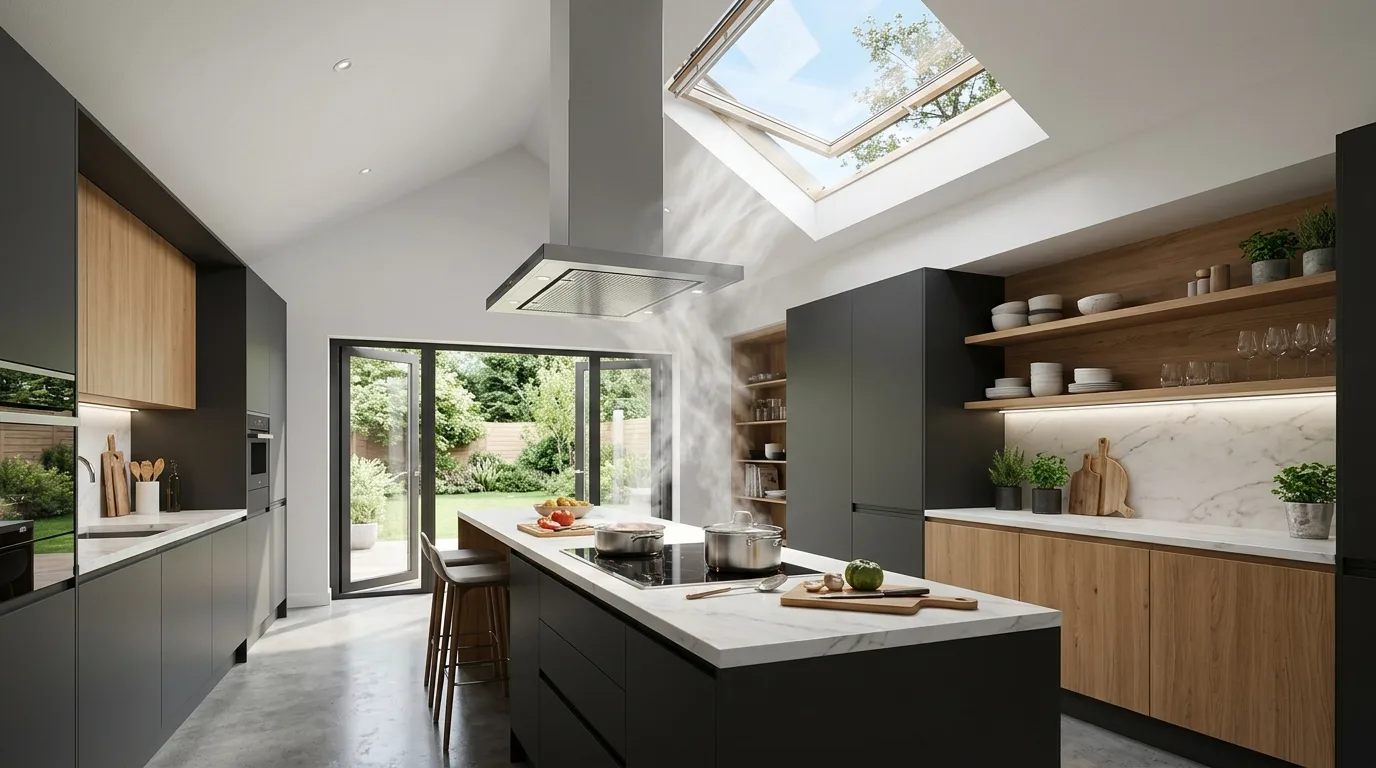
13. Encourages Regular Air-Refreshing Habits
One overlooked advantage of an operable skylight is that it can make natural ventilation easier to incorporate into everyday routines. A convenient roof opening can encourage homeowners to air out bathrooms, kitchens, bedrooms, and other spaces rather than keeping every opening closed year-round.
Creating a simple routine can make the benefit more consistent. After showering, for example, run the exhaust fan and ventilate the bathroom when outdoor conditions permit. After cooking, remove the source of pollutants with the range hood and briefly exchange indoor air. Automated skylights with timers, rain sensors, or smart controls can make these habits easier to maintain. The goal is not to keep the skylight open constantly, but to use it deliberately when ventilation can improve the indoor environment.
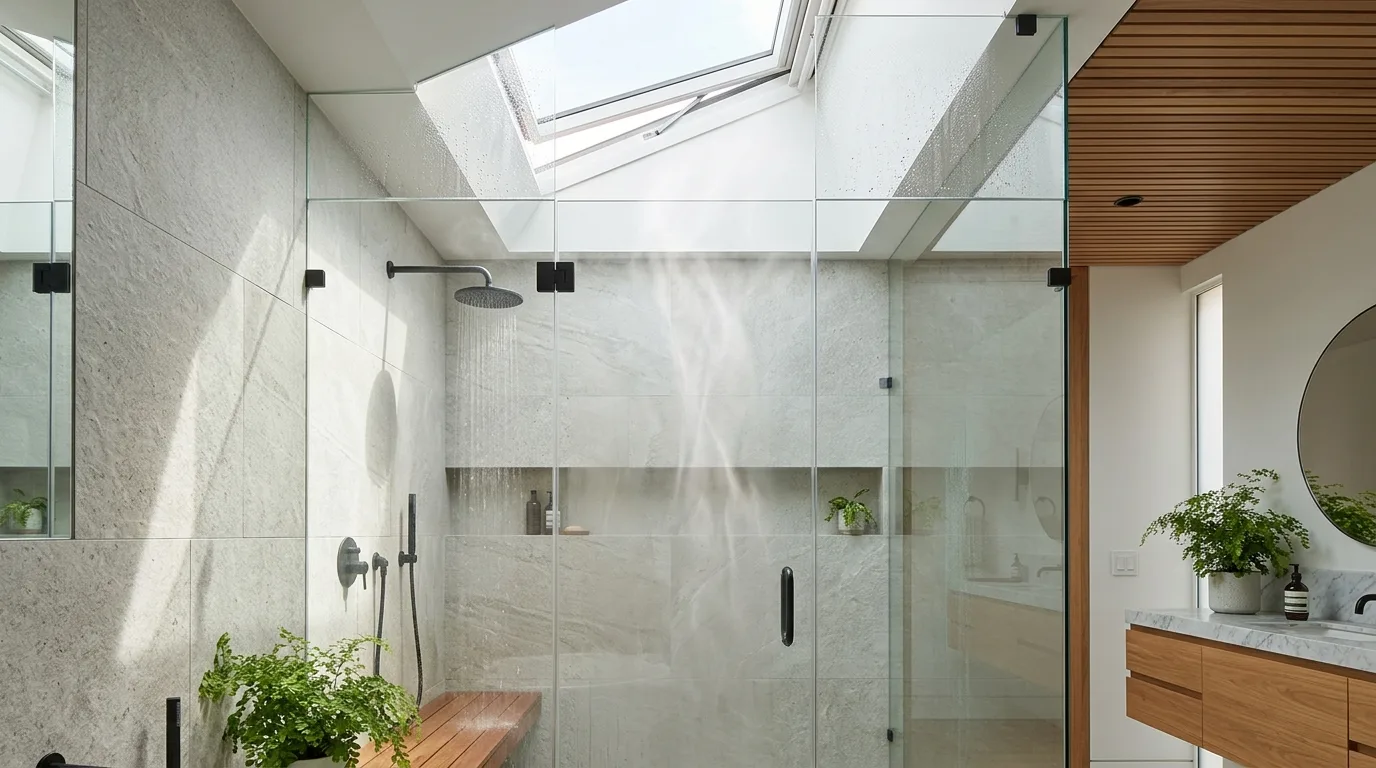
14. Can Help Create a Fresher-Feeling Home
Good indoor air quality is not only about pollutant measurements; occupants also notice stale odors, stuffiness, excessive humidity, and uncomfortable temperatures. By improving air movement when conditions are appropriate, a skylight can contribute to a fresher and more comfortable feeling indoors.
Design matters greatly. A skylight that opens wide enough to provide meaningful airflow, is easy to operate, and is located where warm air naturally collects will generally be more useful for ventilation than a permanently sealed unit. Proper installation is equally important. Flashing, seals, insulation, and drainage must be handled correctly so the skylight does not introduce leaks or moisture problems that could undermine indoor environmental quality.
15. Works as Part of a Whole-Home Air Quality Plan
The biggest benefit comes when skylight ventilation is treated as one component of a broader indoor air-quality strategy. Opening a skylight can increase fresh-air exchange, but it cannot remove every indoor pollutant. Dust, fine particles, allergens, combustion gases, and chemical pollutants may require filtration, source control, exhaust ventilation, or professional assessment.
Use your skylight strategically: ventilate when outdoor air is clean and comfortable, control moisture at its source, keep exhaust fans functioning, maintain HVAC filters, and monitor humidity where needed. Avoid opening skylights during rain or periods of poor outdoor air quality. With thoughtful design and responsible use, an operable skylight can provide a valuable passive-ventilation option while also bringing daylight and a stronger connection to the outdoors.