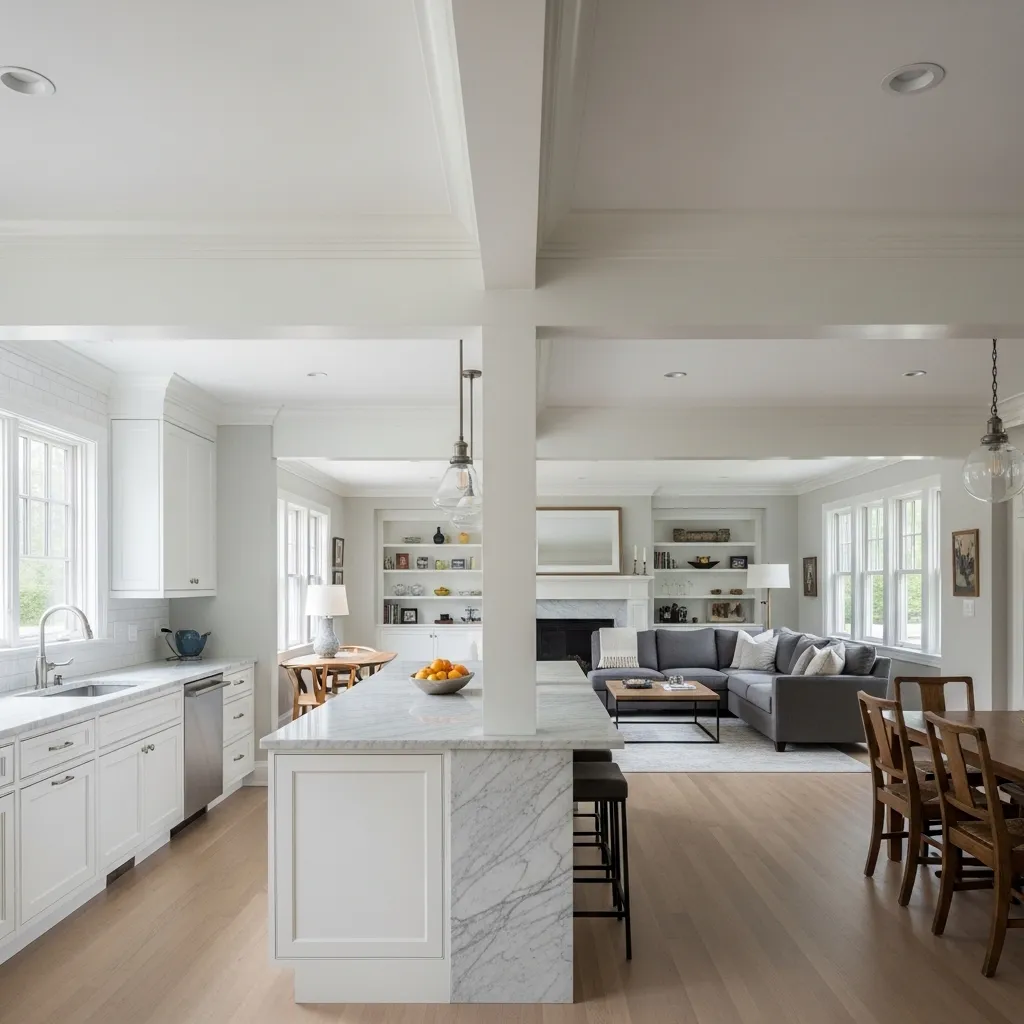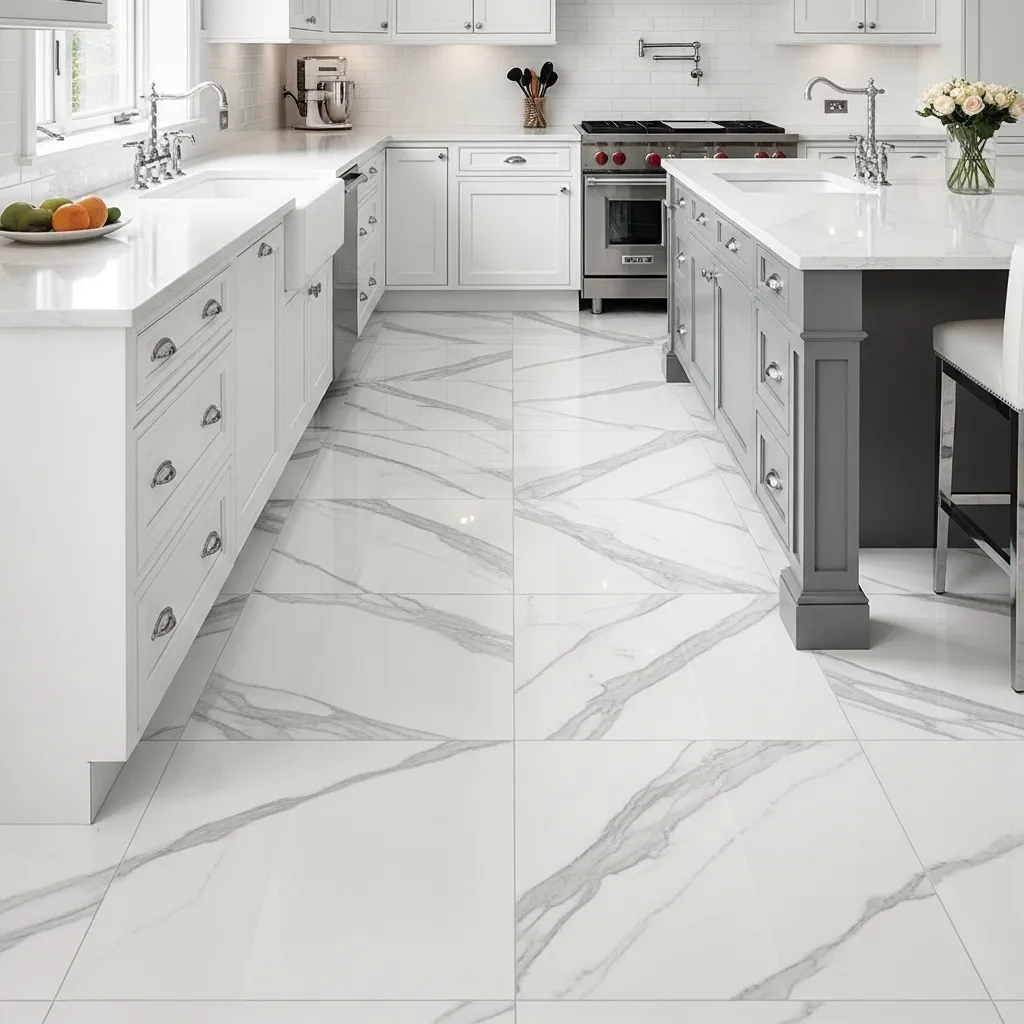
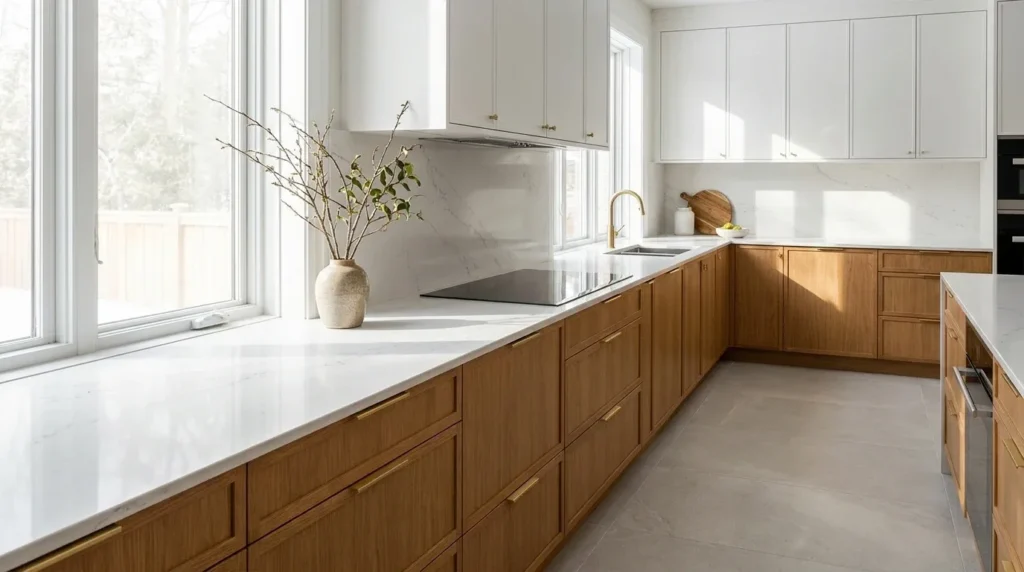
Choosing the best kitchen countertop material can transform your kitchen’s appearance, functionality, and long-term value. From luxurious natural stone to budget-friendly laminate, each option offers different advantages in durability, maintenance, cost, and design flexibility. The right countertop should complement your cabinets, suit your cooking habits, and withstand the everyday demands of a busy kitchen.
Some materials resist scratches and stains exceptionally well, while others provide distinctive natural patterns or a warm, welcoming appearance. Before making a decision, consider your budget, cleaning routine, exposure to heat, and preferred interior style. These 15 kitchen countertop materials will help you compare popular options and find a surface that balances beauty, practicality, and value.
1. Quartz Countertops for a Modern Kitchen
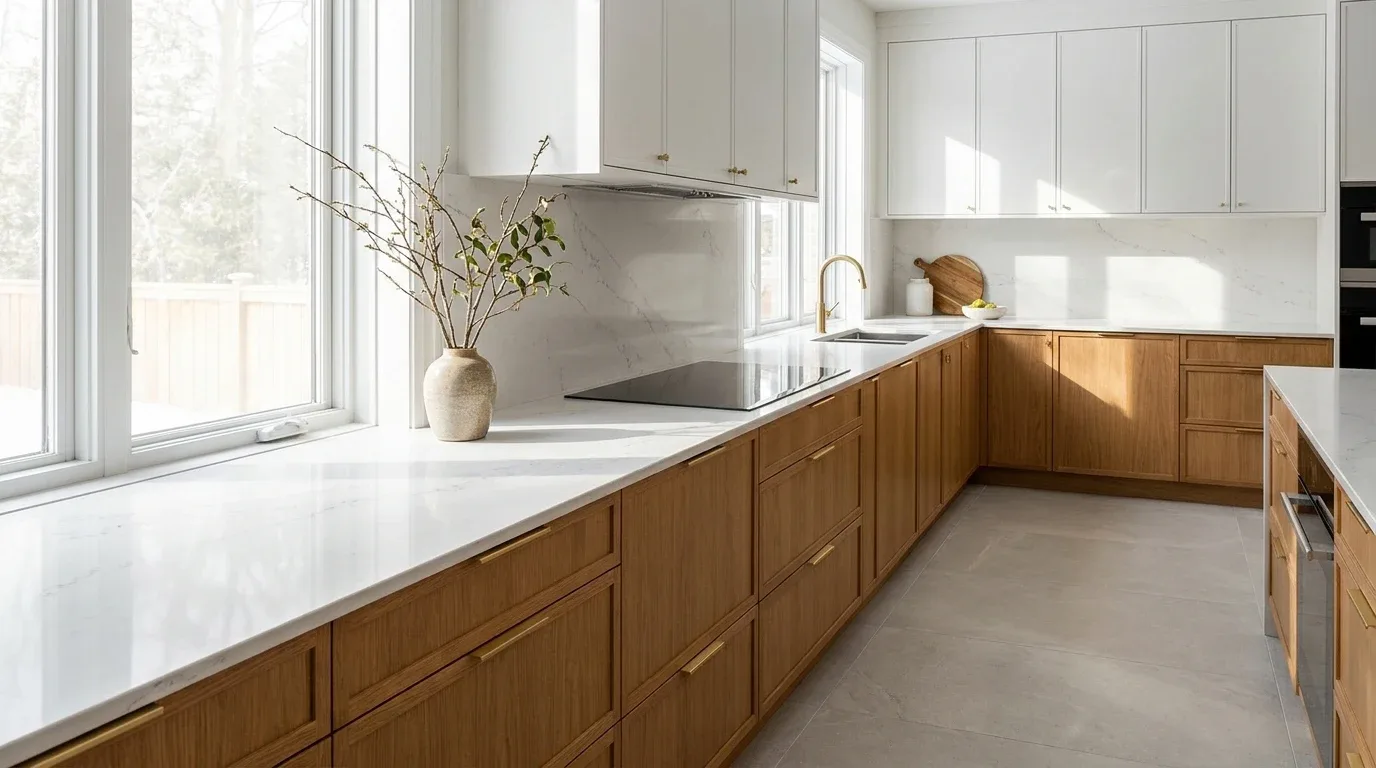
Quartz countertops are a popular choice for homeowners who want an attractive surface without the regular sealing required by many natural stones. Most engineered quartz surfaces combine ground quartz minerals with resins and pigments, creating consistent colors, subtle veining, and designs that resemble marble. Their nonporous construction makes them resistant to everyday stains and easy to clean with mild soap and water.
Quartz works beautifully with white cabinets, warm wood finishes, and contemporary kitchen islands. However, it is not completely scratch-proof or indestructible, and the resin content makes it more sensitive to direct high heat than many homeowners expect. Always use trivets for hot cookware and cutting boards for food preparation. Quartz is ideal for busy households seeking a refined appearance and relatively simple maintenance, although premium patterns can be expensive.
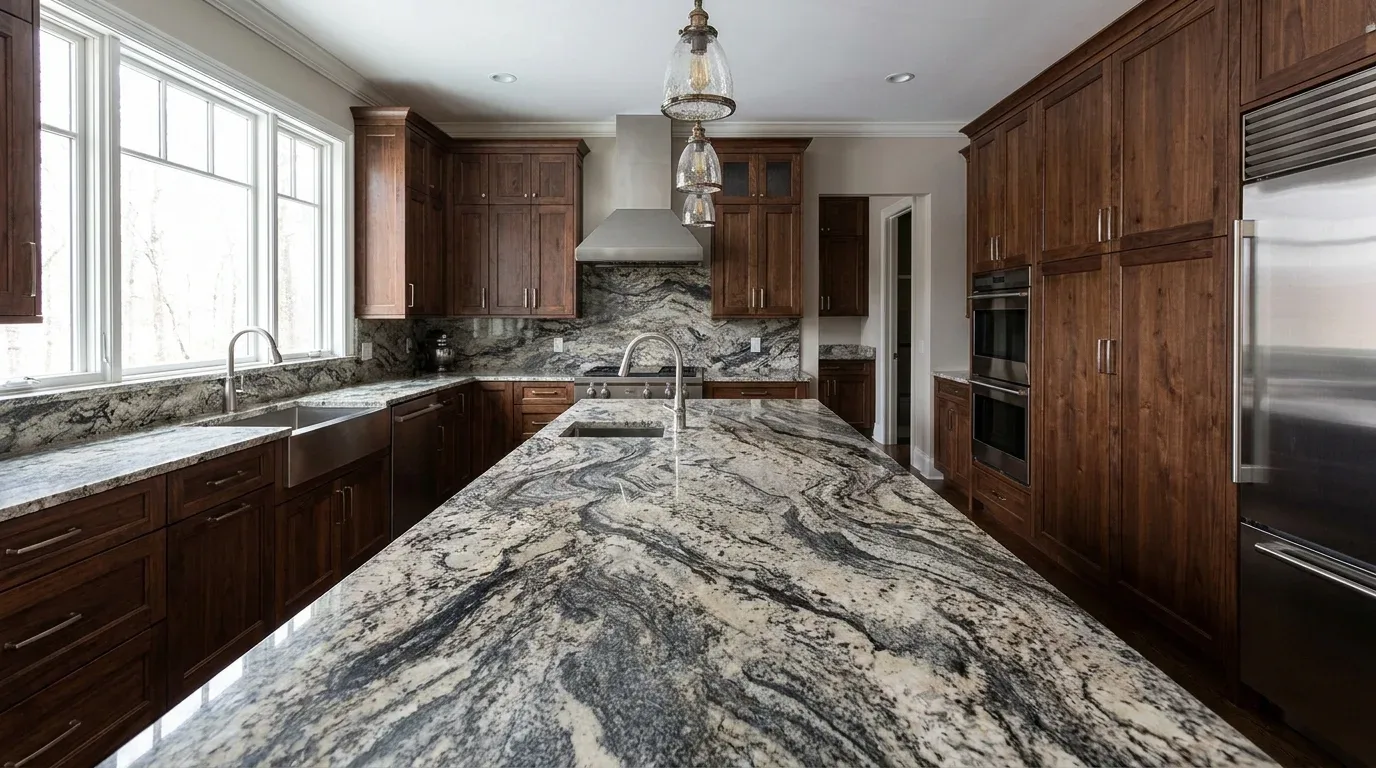
2. Granite Countertops for Natural Durability
Granite is a natural stone known for its distinctive mineral patterns, varied colors, and excellent durability. Each slab has unique markings, allowing homeowners to introduce natural character into traditional, farmhouse, transitional, or modern kitchens. Granite generally handles normal kitchen wear well and tolerates heat better than many engineered surfaces, although sudden temperature changes and direct contact with extremely hot cookware can still cause problems.
Because granite is porous to varying degrees, it may require periodic sealing to reduce staining and make cleaning easier. Wipe up oils, wine, acidic liquids, and other spills promptly, and use a cleaner recommended for natural stone. Before purchasing, inspect the actual slab because color and pattern can vary considerably between pieces. Granite is an excellent option for people who appreciate authentic stone, want a durable work surface, and are comfortable with occasional maintenance.
3. Marble Countertops for Timeless Elegance
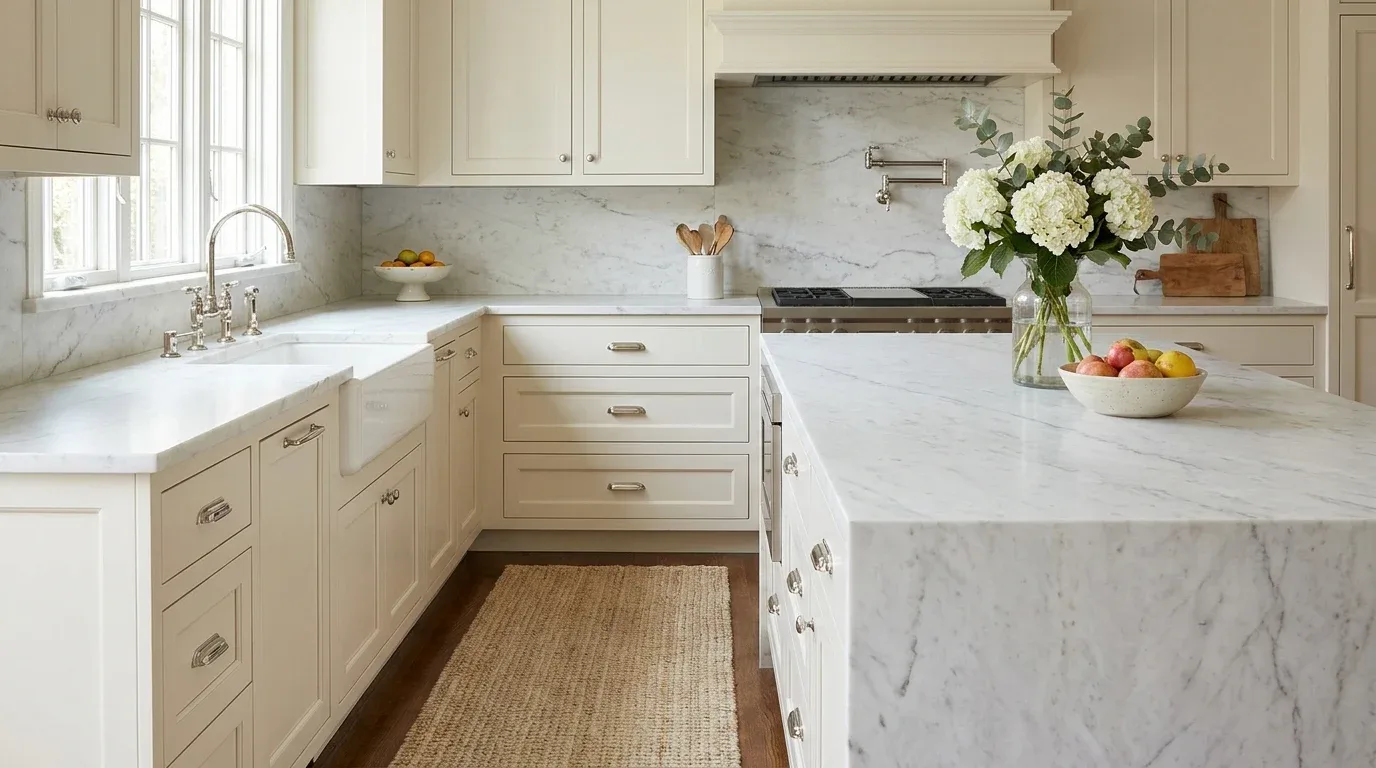
Marble countertops bring an elegant, high-end appearance to kitchens through their soft backgrounds and distinctive veins. White marble with gray veining is especially popular in classic kitchens, while darker varieties create a dramatic focal point. Marble also feels naturally cool, making it useful for baking tasks such as rolling pastry and preparing dough.
However, marble requires more care than many alternatives. Its calcium-based composition reacts with acidic ingredients such as lemon juice, vinegar, and tomato products, potentially creating dull marks called etching. It can also stain or scratch, even when sealed. Choose marble if you value natural beauty and accept that the surface may develop a lived-in patina. For easier upkeep, consider using it on a baking island or a smaller section rather than throughout a heavily used kitchen. Regular cleaning, prompt spill removal, and suitable stone care help preserve its appearance.
4. Butcher Block Countertops for Warmth
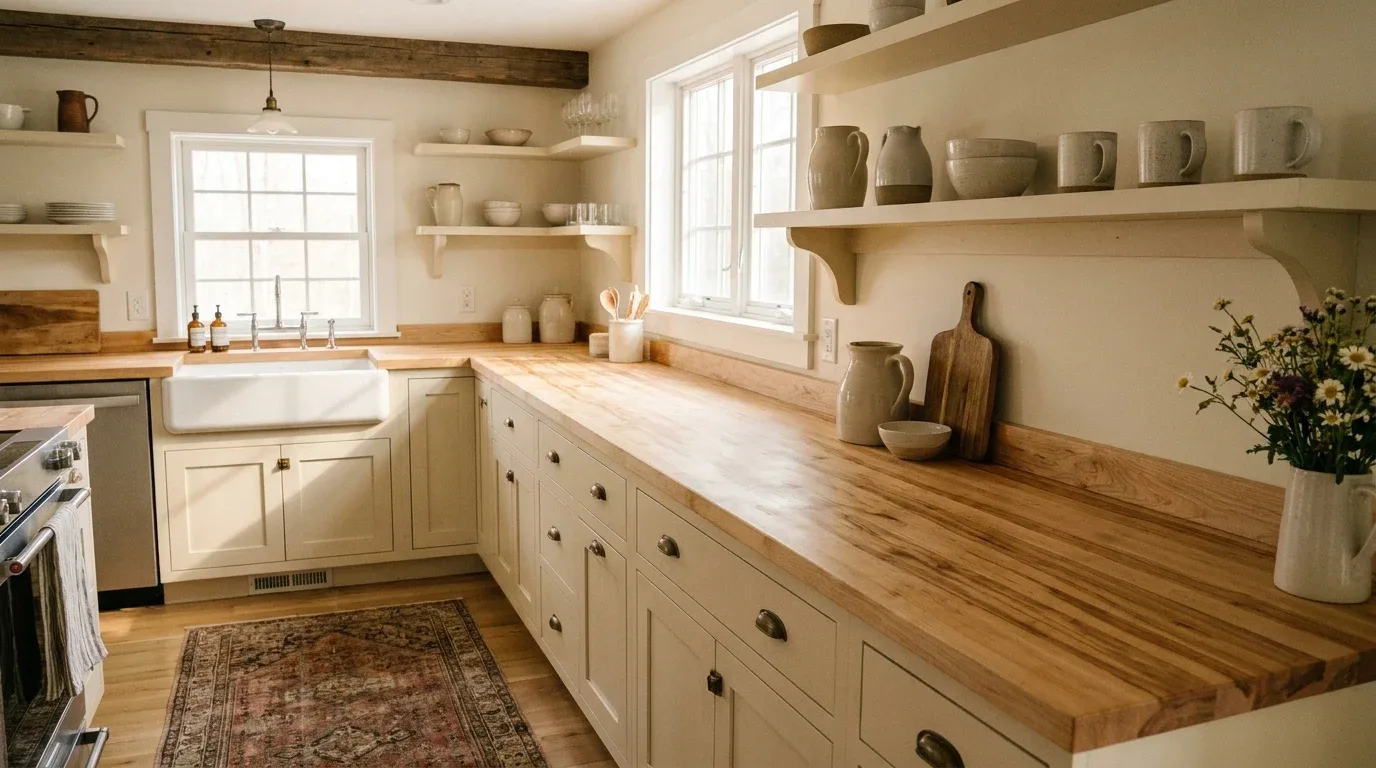
Butcher block countertops introduce the warmth and texture of natural wood, making them a natural match for farmhouse, cottage, Scandinavian, and rustic kitchens. Popular wood species include maple, oak, walnut, and cherry, each offering different grain patterns and colors. Wood also provides a comfortable surface for many food-preparation tasks and can soften the appearance of kitchens filled with stone, metal, and painted cabinetry.
Maintenance is essential because wood can absorb moisture, develop stains, and suffer damage from standing water. Food-safe mineral oil or another manufacturer-approved finish helps protect the surface, while regular cleaning and prompt drying reduce problems around sinks. Do not cut directly on a finished countertop unless it is specifically designed for that use. Butcher block can be sanded and refinished to address minor scratches, which is a major advantage. It is best for homeowners who appreciate natural materials and are willing to maintain them consistently.
5. Laminate Countertops for Budget-Friendly Style
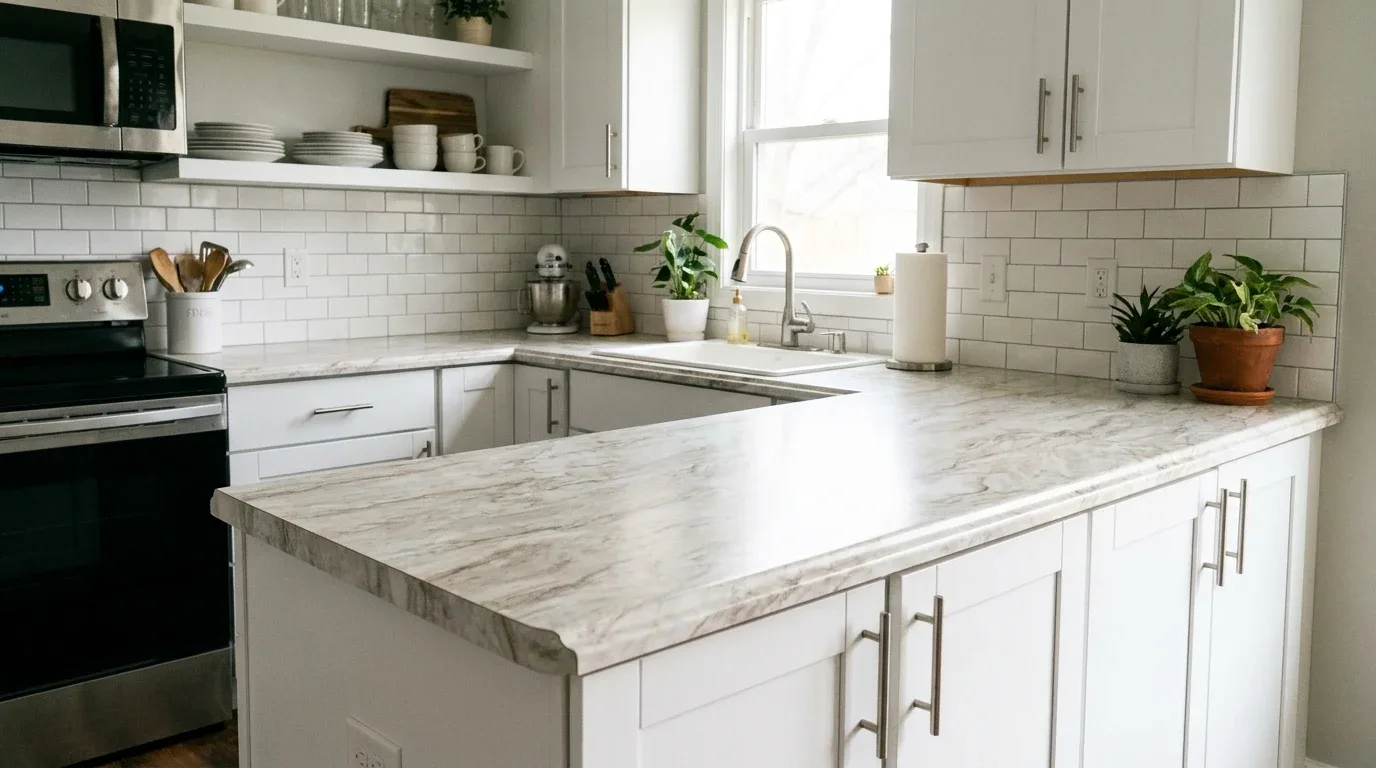
Laminate countertops offer one of the most affordable ways to refresh a kitchen without sacrificing design choices. Made with decorative layers bonded to a substrate, modern laminate can imitate marble, granite, concrete, and wood. It is available in many colors, patterns, and finishes, making it easy to coordinate with existing cabinets or create a striking contrast on a kitchen island.
The main advantages are affordability, easy everyday cleaning, and relatively straightforward installation. Nevertheless, laminate can scratch, chip, or burn, and water may damage the underlying substrate if it penetrates exposed seams or poorly sealed edges. Use cutting boards and heat-resistant trivets, and avoid letting water pool near joints or the sink. Laminate is a practical choice for rental properties, starter homes, and budget-conscious renovations. It can deliver an attractive finished look, although it generally cannot be refinished like solid wood or some natural stones.
6. Solid Surface Countertops for Seamless Design
Solid surface countertops are manufactured from materials such as acrylic resins and mineral fillers. They are available in numerous colors and patterns, from clean solid white to stone-inspired designs. One of their biggest benefits is the ability to create visually seamless installations, including integrated sinks and smooth transitions between countertop sections. This makes them particularly appealing in streamlined contemporary kitchens.
The nonporous surface resists many common stains and is easy to maintain with routine cleaning. Minor scratches and superficial damage can often be repaired or sanded according to the manufacturer’s instructions. However, solid surface materials are less heat-resistant than granite and can be scratched by sharp objects. Avoid placing hot pans directly on the countertop, and use chopping boards during food preparation. Choose solid surface if you value a uniform appearance, convenient cleaning, and repairability more than the natural variation of stone.
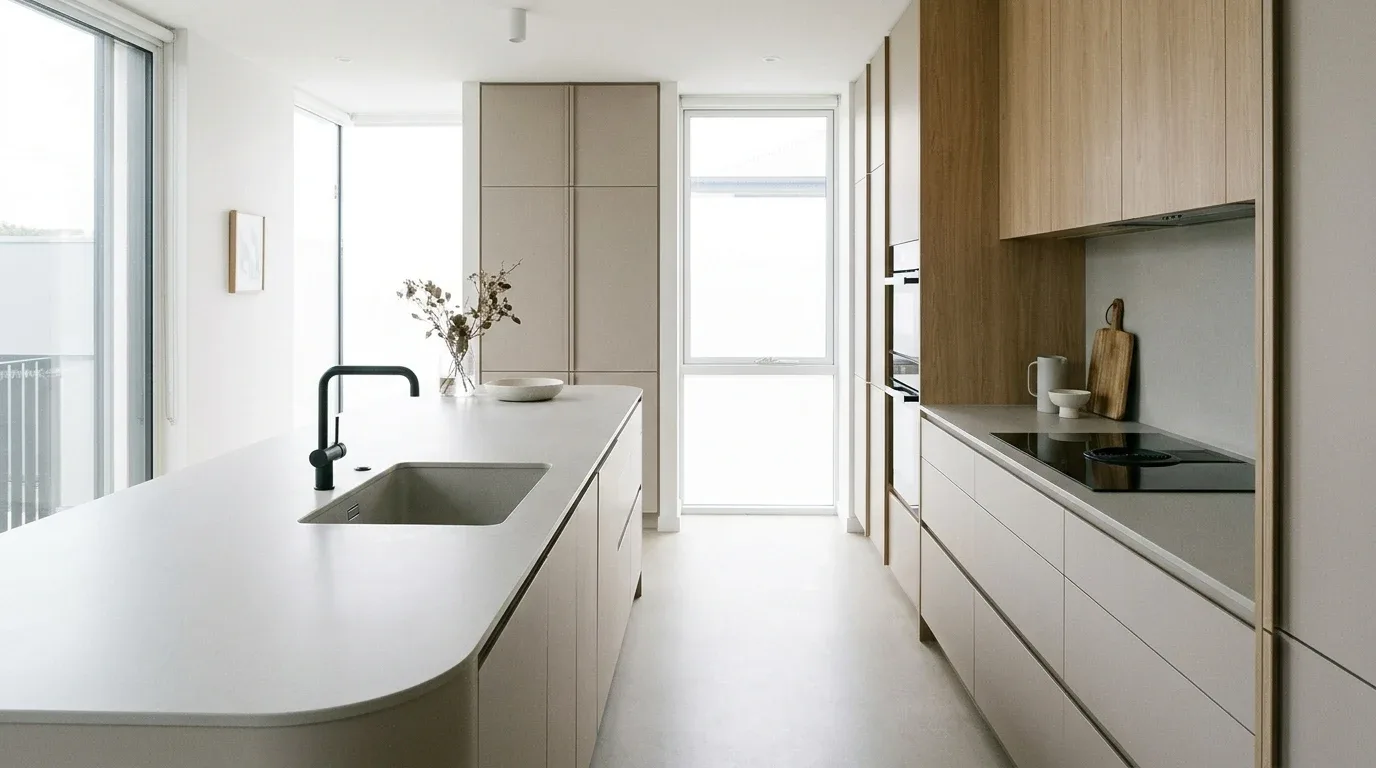
7. Porcelain Slab Countertops for Contemporary Kitchens
Porcelain slab countertops offer a sleek appearance and impressive resistance to stains, ultraviolet light, and everyday moisture. Manufactured at high temperatures, porcelain can imitate marble, concrete, and other natural materials while providing a wide range of colors and finishes. Large slabs can create a sophisticated, continuous look across countertops, backsplashes, and kitchen islands.
Porcelain generally handles heat well and is suitable for many busy kitchens. However, its edges can chip or crack if struck hard, and thin slabs require careful fabrication and properly supported installation. Some finishes may also show scratches from particular utensils or abrasive materials. Cleaning is usually simple, but follow the manufacturer’s guidance to protect the finish and seams. Because installation expertise matters, compare fabricators’ experience with large-format slabs before purchasing. Porcelain is an excellent option for homeowners seeking a modern, low-maintenance surface with strong resistance to common kitchen stains.
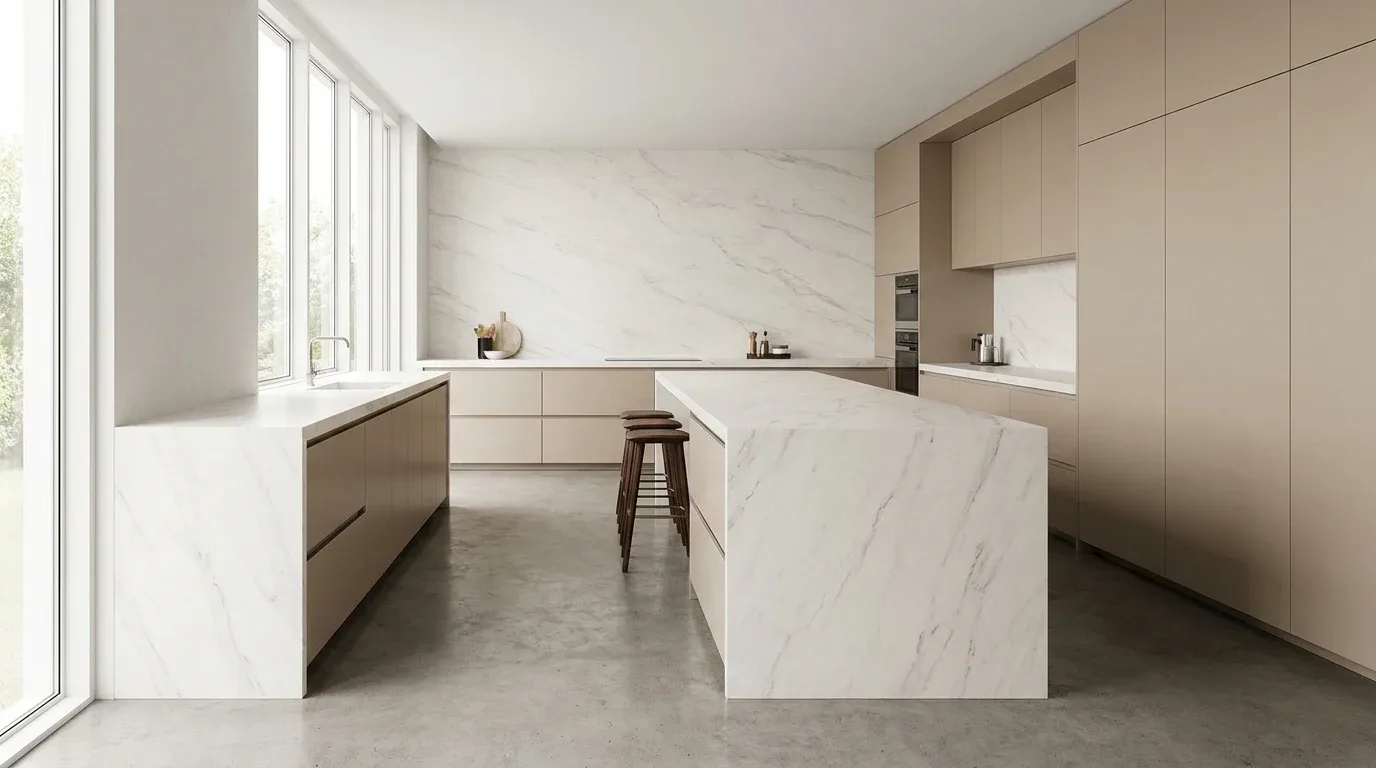
8. Concrete Countertops for Industrial Character
Concrete countertops provide a bold, customizable look that suits industrial, modern, and contemporary farmhouse kitchens. They can be cast in different shapes, tinted in various colors, and finished with subtle textures or polished surfaces. Concrete is especially attractive for custom islands because it can accommodate unusual dimensions and distinctive design details that are difficult to achieve with standard countertop slabs.
Despite its solid appearance, concrete is not maintenance-free. It can develop hairline cracks, and its natural porosity makes an appropriate sealer essential for controlling stains and moisture absorption. Sealers may need periodic renewal, depending on the product and level of use. Concrete is also heavy, so cabinetry and supports must be designed to handle its weight. Choose this material if you want a personalized surface and appreciate its natural variations. Work with an experienced fabricator to discuss reinforcement, edge profiles, sealing, and the realistic possibility of minor cracking over time.
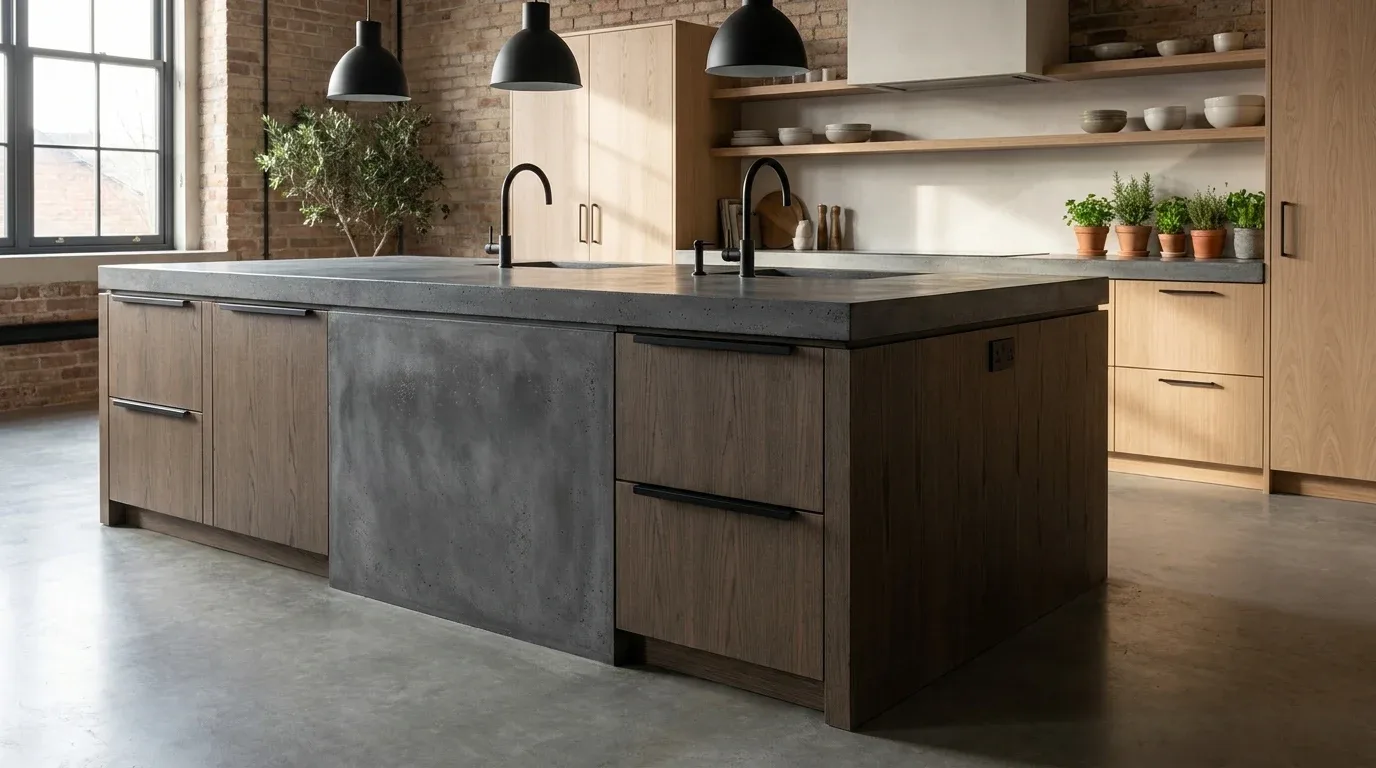
9. Soapstone Countertops for a Soft, Natural Finish
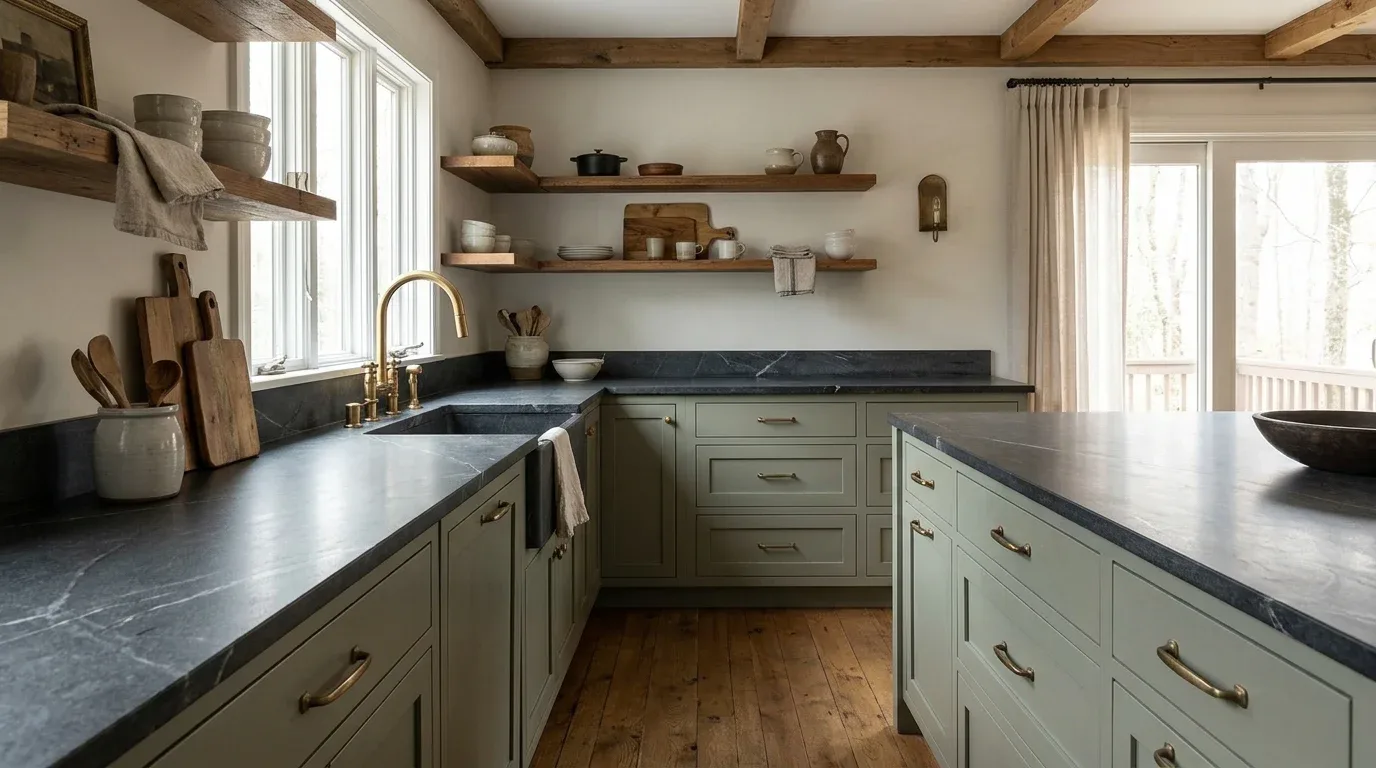
Soapstone is a natural stone often recognized by its smooth, tactile finish and shades of gray, charcoal, and muted green. Some slabs feature subtle white veining, giving them a distinctive appearance without the dramatic patterns found in certain marbles. Soapstone suits traditional kitchens, farmhouse interiors, and modern spaces that benefit from understated natural materials.
Unlike many stones, soapstone is generally nonporous, so it does not usually require sealing to prevent liquid absorption. However, it is softer than granite and can develop scratches or dents with regular use. Minor marks may be sanded, while applying mineral oil can deepen the stone’s color and create a more uniform appearance; oiling is optional and does not make the stone waterproof because it is already relatively nonporous. Soapstone is worth considering if you prefer a low-porosity surface and do not mind a material that develops visible signs of use over time.
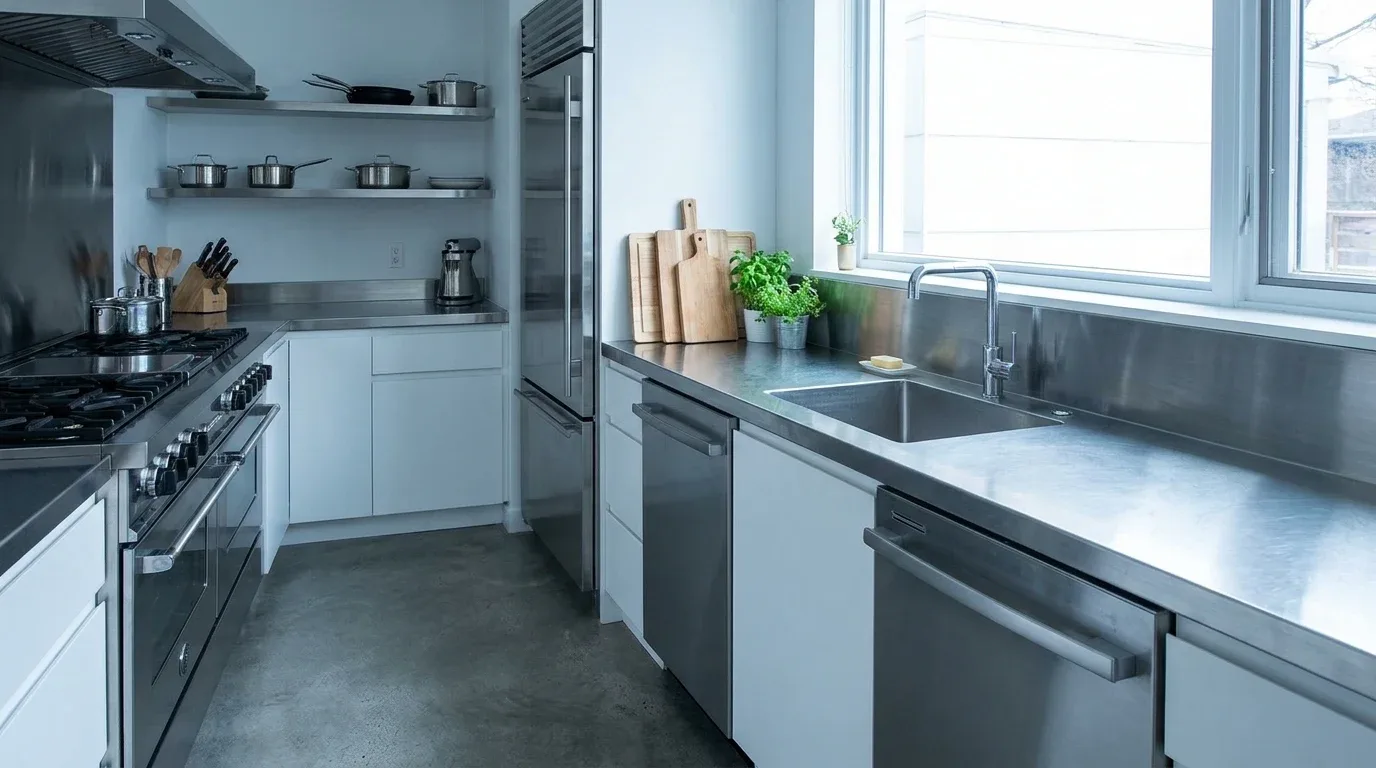
10. Stainless Steel Countertops for Professional Style
Stainless steel countertops bring the clean, practical appearance of a professional kitchen into a residential space. They are especially suitable for contemporary, industrial, and minimalist interiors, pairing naturally with stainless steel appliances, simple cabinetry, and commercial-style fixtures. The material is nonporous, making it easy to clean and useful in kitchens where hygiene is a priority.
Stainless steel resists heat and does not absorb food spills, but it can show fingerprints, water spots, scratches, and dents. Brushed finishes tend to disguise minor marks better than highly polished surfaces. Clean with a suitable mild detergent and a soft cloth, wiping in the direction of the finish when applicable. Avoid abrasive cleaners that can leave unwanted marks. Stainless steel can also create a cooler, more utilitarian appearance than wood or natural stone. It is a strong choice for serious home cooks who prioritize easy sanitation and practical performance over a pristine, scratch-free look.
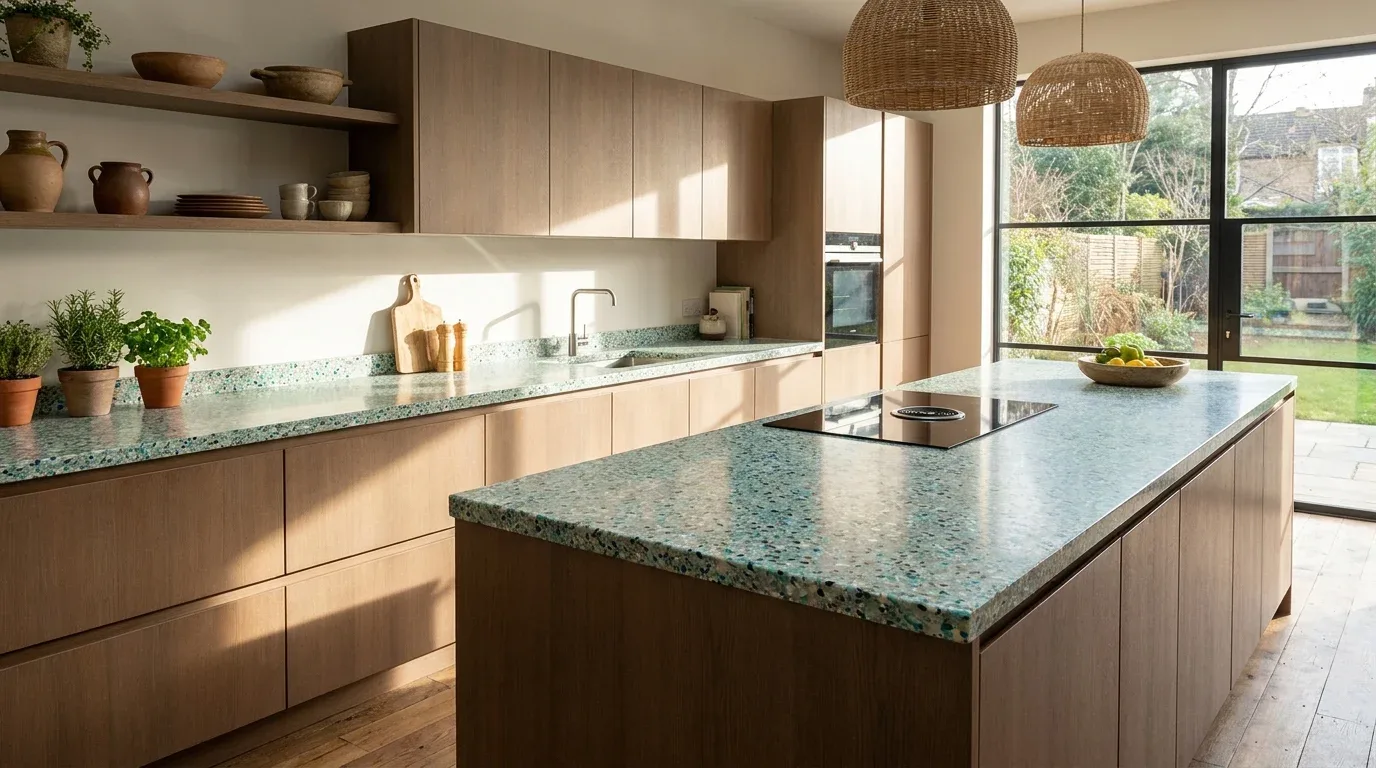
11. Recycled Glass Countertops for Colorful Design
Recycled glass countertops combine glass fragments with a binding material to create a distinctive surface filled with color, sparkle, and texture. Depending on the product, the glass may be embedded in cement, resin, or another matrix. This creates plenty of design opportunities, from subtle neutral surfaces with small glass flecks to bold countertops that become the centerpiece of a contemporary kitchen.
Performance varies according to the manufacturing system and binder. Some products are highly durable, while others may be more vulnerable to scratches, heat, staining, or surface damage. Cement-based versions may require sealing, whereas resin-based products have different heat limitations. Ask the manufacturer for care instructions, repair options, and details about the recycled content before buying. Recycled glass can appeal to homeowners interested in incorporating reclaimed materials into their interiors, but environmental benefits depend on the product’s composition, manufacturing process, and lifespan. Choose a sample and inspect it in your kitchen’s lighting before committing to a full installation.
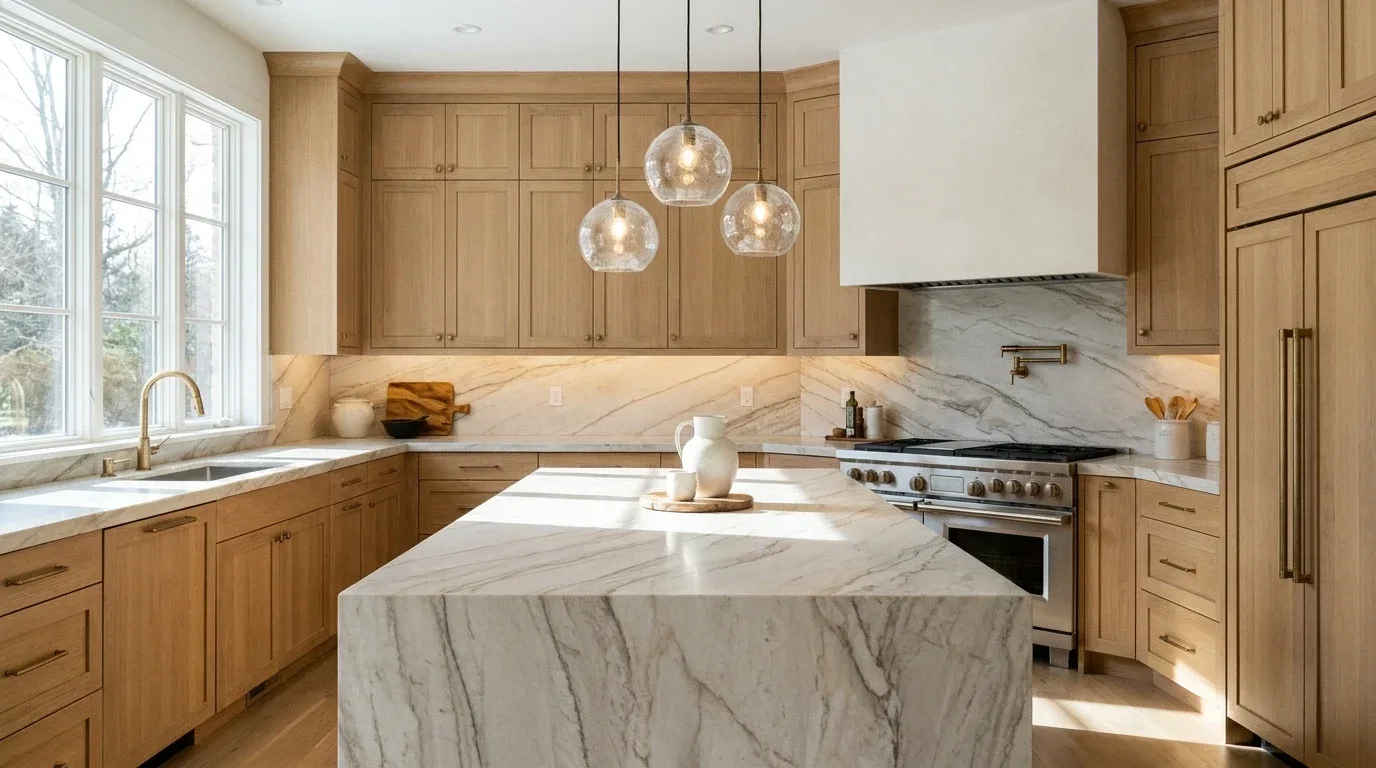
12. Quartzite Countertops for Natural Stone Beauty
Quartzite is a natural stone valued for its elegant veining, pale backgrounds, and resemblance to marble. It can create a luxurious kitchen island or a bright, sophisticated work surface without relying on an engineered material. Genuine quartzite is generally hard and performs well under normal kitchen use, making it attractive to homeowners who want natural beauty alongside substantial durability.
Care requirements depend on the particular slab. Quartzite is often porous enough to benefit from sealing, and acidic substances can affect some stones sold under similar commercial names. Verify that the material is genuine quartzite rather than marble marketed with a misleading label. Request information about its composition, recommended maintenance, and resistance to etching before purchasing. Use cutting boards, wipe spills promptly, and follow the fabricator’s care advice. Quartzite may cost more than some alternatives, but it is worth considering when distinctive natural patterns and long-lasting performance are priorities.
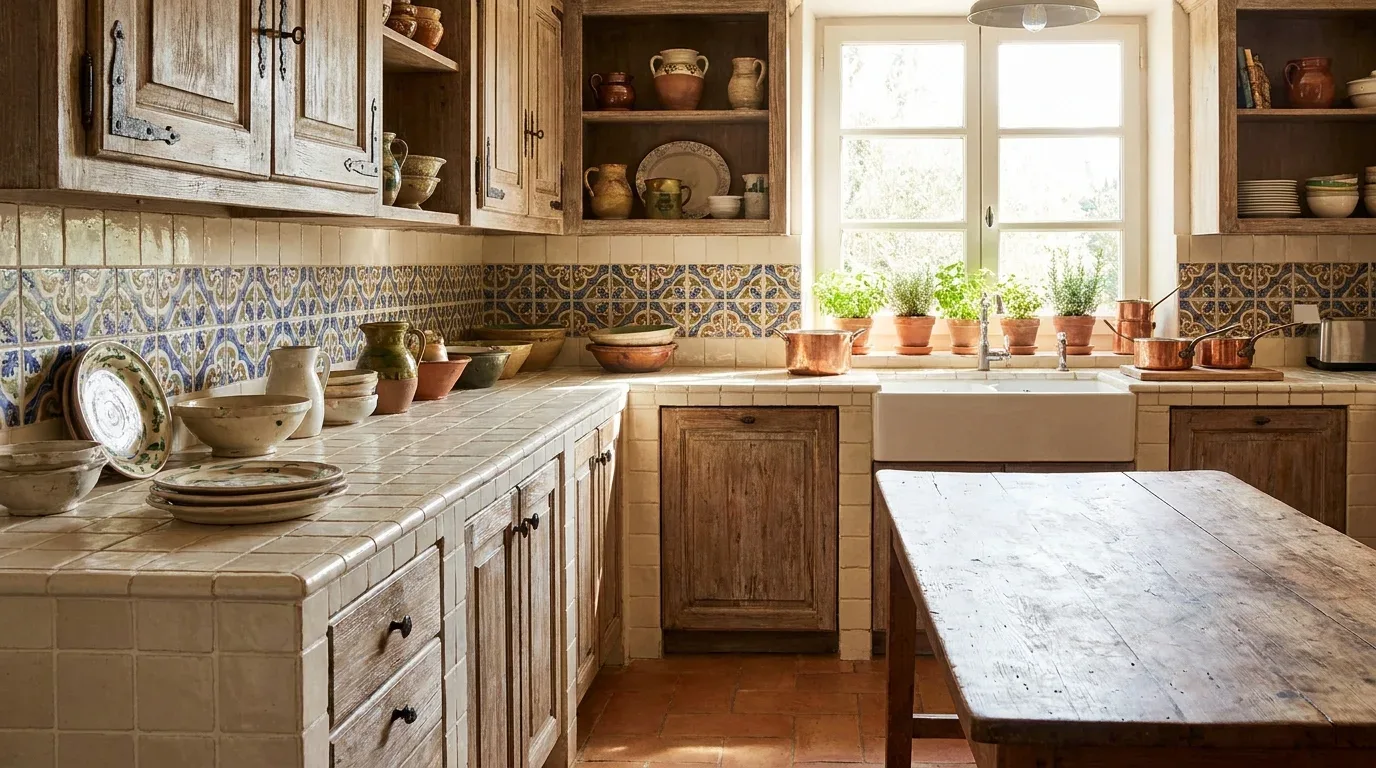
13. Tile Countertops for Customizable Kitchens
Tile countertops provide flexibility in color, pattern, shape, and layout. Ceramic and porcelain tiles are available in everything from understated neutrals to decorative geometric designs, making them useful for Mediterranean, vintage, cottage, and eclectic kitchens. Tile can also be less expensive than large stone slabs, particularly when homeowners select standard sizes and straightforward installation patterns.
The main drawback is the grout between tiles. Grout can collect crumbs, absorb stains if inadequately protected, and require more frequent cleaning than a continuous slab. Tile edges can also chip if struck, and uneven surfaces may make rolling dough or sliding cookware less convenient. Choose durable countertop-rated tiles, use appropriate grout and sealers when required, and plan the layout to minimize awkward cuts. Tile works particularly well in kitchens where decorative character matters and the owner is comfortable maintaining grout lines. It also offers a practical way to introduce pattern without using an expensive full-slab material.
14. Limestone Countertops for Soft, Organic Style
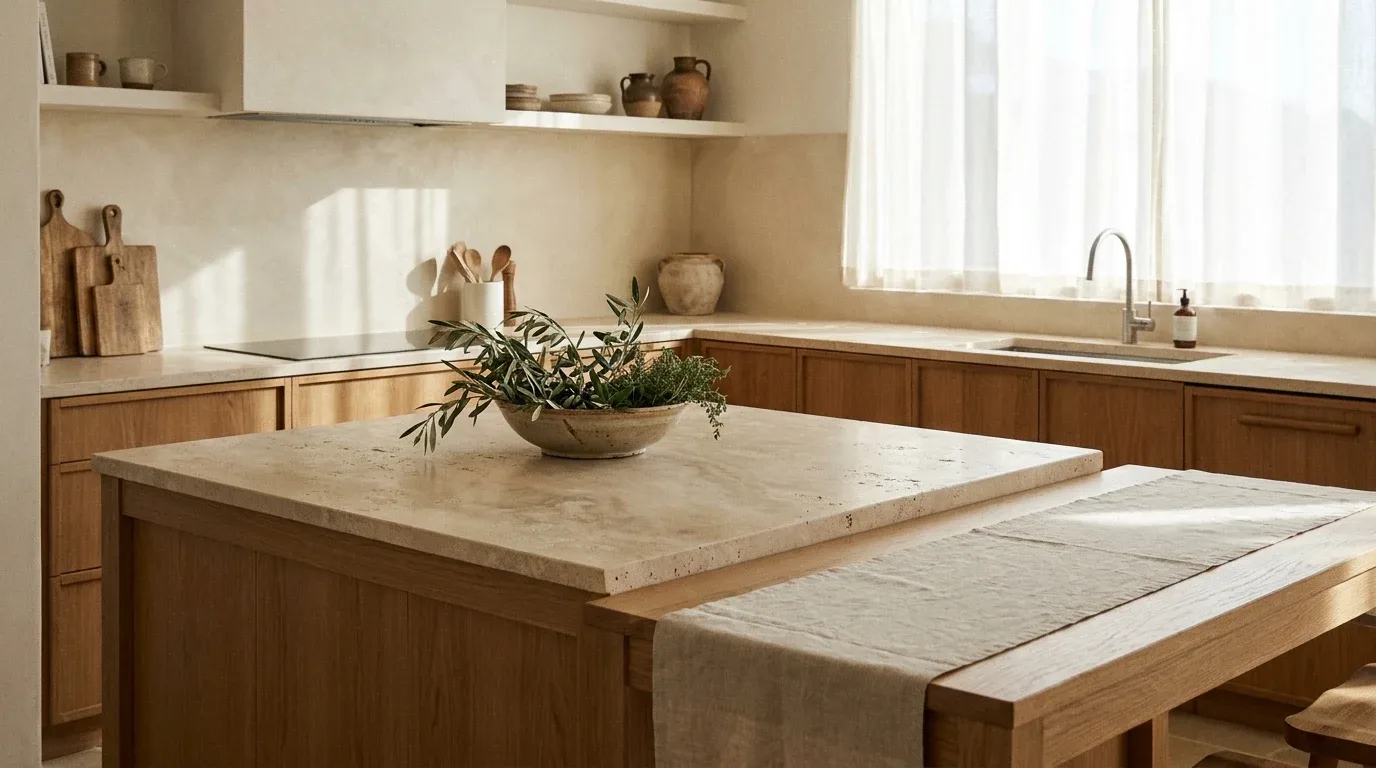
Limestone countertops offer gentle colors, understated patterns, and a naturally textured appearance. Cream, beige, pale gray, and warm sandy tones make limestone a good match for traditional, Mediterranean, coastal, and organic-modern kitchens. Its quiet appearance can balance richly colored cabinets or complement natural wood, creating a calm and welcoming atmosphere.
However, limestone is relatively soft and reacts with acidic substances because it contains calcium carbonate. Lemon juice, vinegar, and other acidic foods can etch the surface, while oils and colored liquids may cause stains. Sealing helps reduce absorption but does not make limestone resistant to acid damage. Regular cleaning with a pH-neutral stone cleaner and prompt spill removal are important. Limestone is best for homeowners who prioritize a subtle, natural appearance and accept a more delicate work surface. If your kitchen sees frequent heavy cooking, compare limestone carefully with harder, less reactive alternatives before making a final decision.
15. Recycled Paper Composite Countertops for Sustainable Style
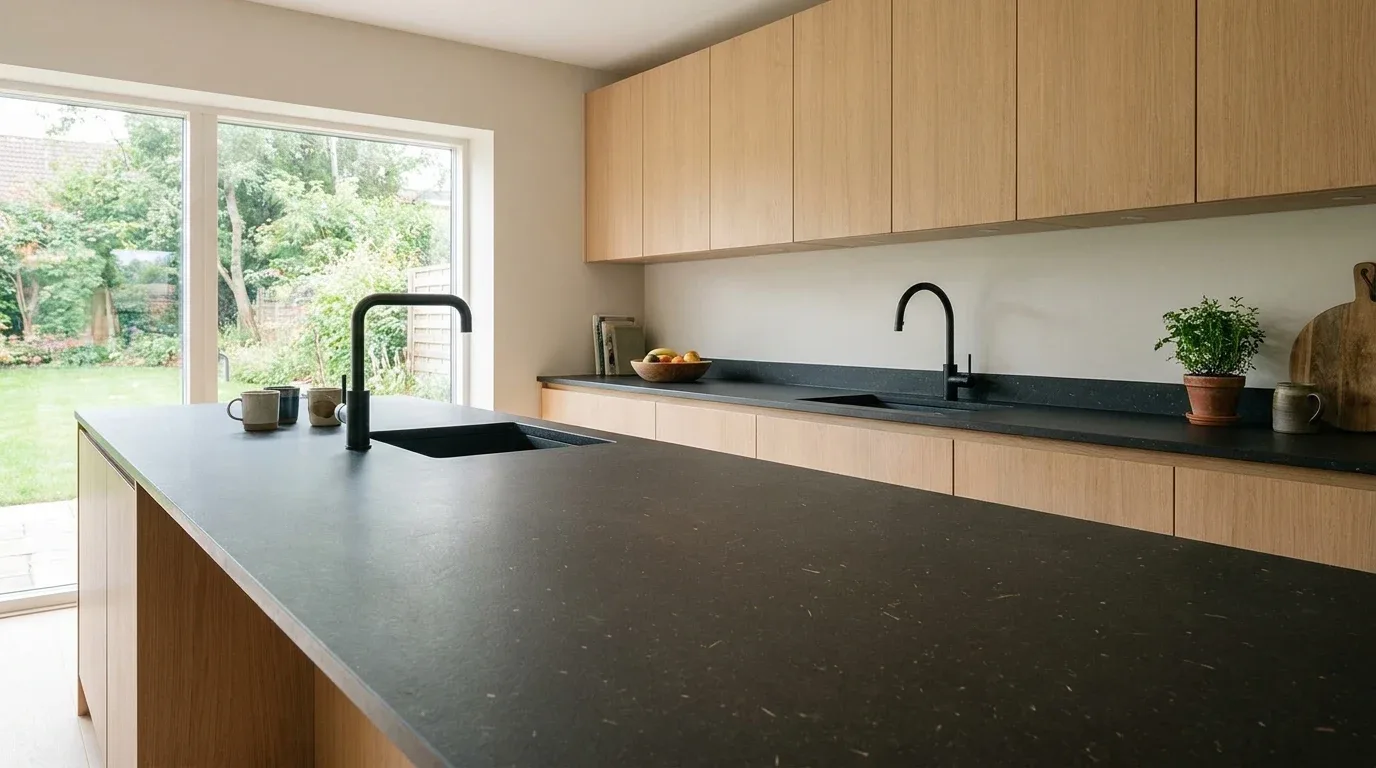
Recycled paper composite countertops are made using layers or fibers of recycled paper combined with resin and other ingredients. The finished material is compressed into a dense surface that can resemble solid stone while offering a distinctive, understated appearance. Depending on the brand, available colors range from deep charcoal and black to warm brown and soft neutral shades. This option appeals to homeowners looking for alternatives to conventional natural stone or plastic laminate.
Performance depends on the manufacturer’s formulation, so check the product’s resistance to heat, stains, scratches, and moisture before installation. Although some paper composites are durable, they should not automatically be treated like granite or porcelain. Use trivets and cutting boards, clean spills promptly, and follow the recommended maintenance routine. Ask about recycled content, binders, repairability, and end-of-life disposal when evaluating environmental claims. Recycled paper composite can be a compelling choice for design-conscious homeowners who value material innovation and want a countertop with a different story from conventional stone surfaces.
How to Choose the Best Kitchen Countertop Material
The best kitchen countertop depends on how you use your space, how much you want to spend, and the amount of maintenance you are willing to handle. Rather than choosing solely by appearance, compare materials across several practical factors.
- Durability: Consider resistance to scratches, impacts, stains, and everyday wear. Quartz, granite, porcelain, and many quartzite slabs are popular choices for busy kitchens, although each has specific limitations.
- Maintenance: Nonporous materials such as many quartz and porcelain surfaces are generally straightforward to clean. Granite, marble, limestone, and some other stones may require sealing or more careful spill management.
- Budget: Laminate and many tile installations can be economical, while premium natural stone, custom concrete, and specialty composites may cost considerably more.
- Appearance: Match the countertop’s color, veining, and finish to your cabinets, backsplash, flooring, and lighting.
- Installation: Include fabrication, edge treatments, sink cutouts, removal of old surfaces, and any cabinet reinforcement in your budget.
Whenever possible, inspect full slabs or large samples in person. Ask the supplier about warranty coverage, cleaning products, heat limitations, and repair options. These details can make a significant difference to long-term satisfaction.
Final Thoughts
The best kitchen countertop material is the one that fits your lifestyle as well as your design preferences. Quartz and porcelain are attractive choices for homeowners who want relatively low-maintenance surfaces, while granite and quartzite deliver distinctive natural patterns. Marble and limestone offer timeless elegance but require extra care, and butcher block brings warmth to kitchens where regular maintenance is acceptable. Laminate and tile can help control renovation costs without eliminating design possibilities.
Compare durability, maintenance, appearance, and total installation costs before making your decision. A well-chosen countertop can improve your daily cooking experience and help your kitchen feel cohesive, comfortable, and beautiful for years to come.