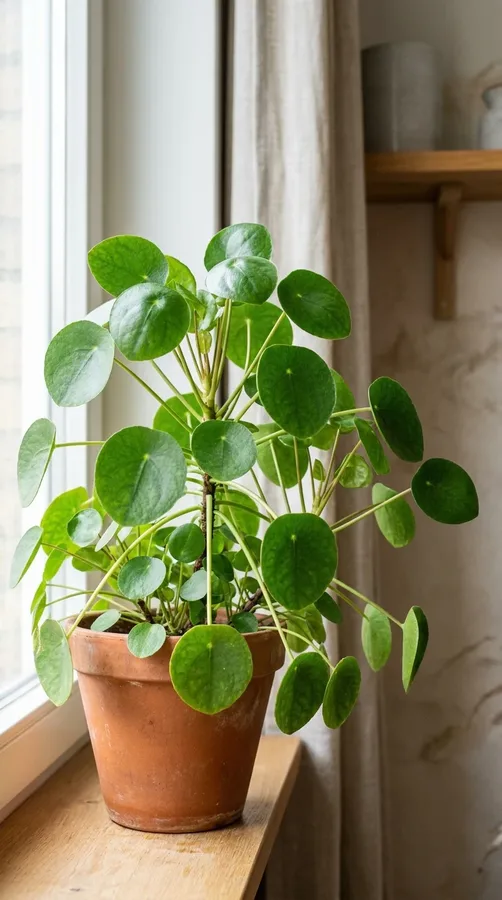
The Chinese money plant (Pilea peperomioides) is a popular houseplant known for its round, coin-shaped leaves, upright stems, and fresh green color. Its attractive appearance makes it a beautiful addition to desks, shelves, windowsills, and indoor plant collections. Fortunately, this easygoing plant is also relatively simple to propagate, making it possible to grow new plants from healthy offshoots without purchasing additional specimens.
Learning how to propagate and care for a Chinese money plant involves understanding its watering needs, choosing the right soil, providing suitable light, and knowing when to separate its baby plants. Whether you are growing your first Pilea or expanding an established collection, these practical tips will help you encourage healthy roots, maintain attractive foliage, and keep your plant thriving throughout the year.
1. Understand the Chinese Money Plant’s Growing Habits
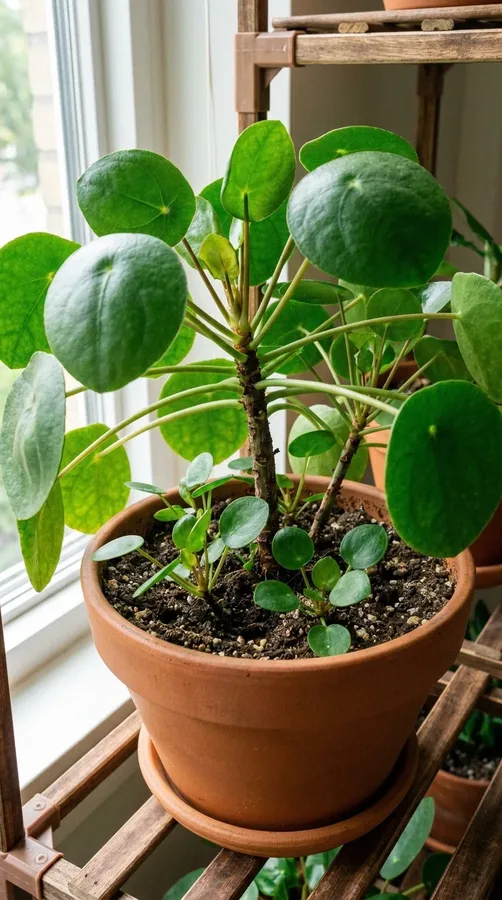
Before propagating your Chinese money plant, take time to understand how it grows. Pilea peperomioides develops a central stem with rounded leaves on long stalks, often producing small plantlets around its base as it matures. These offsets are the easiest and most reliable way to create new plants at home.
The plant generally prefers bright, indirect light, moderate warmth, and soil that drains well. It stores some moisture in its fleshy stems and leaves, but it does not tolerate constantly waterlogged roots. Healthy plants usually have firm stems, evenly colored green leaves, and visible new growth during active growing seasons.
Although it is sometimes called the Chinese money plant, missionary plant, or pancake plant, it is not the same as the jade plant or the money tree. Identifying the correct species helps you follow the right care routine. Give your Pilea enough space for its broad leaves to spread, and avoid making frequent changes to its growing environment.
2. Choose a Healthy Mother Plant
A healthy mother plant gives your new Chinese money plants the best possible start. Look for a mature Pilea with firm stems, several healthy leaves, and no obvious signs of pests or disease. A plant that has been growing steadily is more likely to produce strong offsets that can survive separation.
Check both sides of the leaves for tiny insects, sticky residue, webbing, or unusual spots. Yellowing leaves, mushy stems, and a sour smell from the soil can indicate watering problems or root rot. Address these issues before taking cuttings or removing plantlets.
It is usually best to propagate during spring or early summer, when increasing daylight encourages active growth. Although propagation can succeed at other times, young plants may establish more slowly during colder, darker months. Water a dry mother plant normally before working with it, but do not soak the soil simply to prepare for propagation. A healthy, well-established plant is a better source of new growth than one already struggling with stress.
3. Propagate Chinese Money Plants Using Offsets
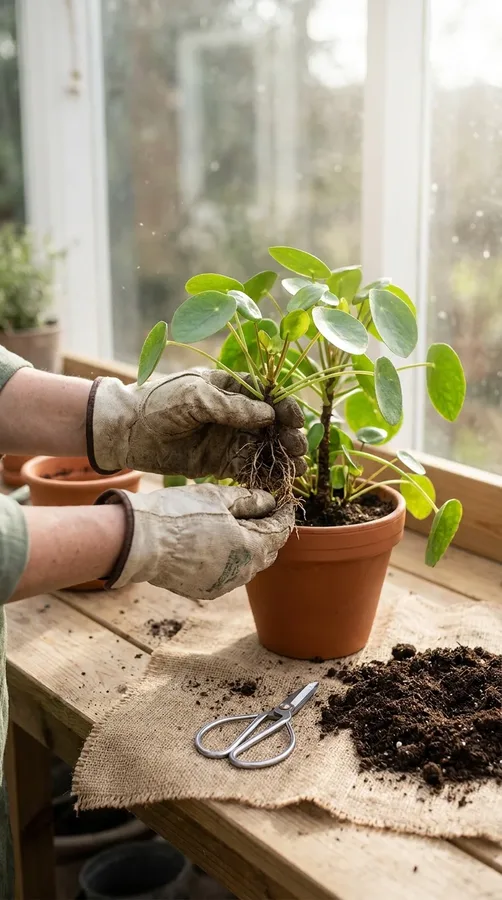
Separating offsets is the easiest method for propagating a Chinese money plant. These small plants emerge near the base of the mother plant and may appear above or below the soil surface. When an offset has several leaves and some of its own roots, it is generally ready to separate.
Remove a little soil around the base to inspect where the baby plant connects to the parent. Use clean, sharp scissors or a small knife to separate it carefully, keeping as many roots as possible. If the offset is already growing independently, gently loosen the surrounding soil and lift it out without disturbing the mother plant unnecessarily.
Place the separated plantlet in a small pot filled with fresh, well-draining potting mix. Position the roots below the surface while keeping the leaves and central growing point uncovered. Water lightly to settle the soil around the roots, then place the new plant in bright, indirect light. Avoid fertilizing immediately, as the young roots need time to adjust before handling additional nutrients.
4. Grow New Plants from Stem Cuttings
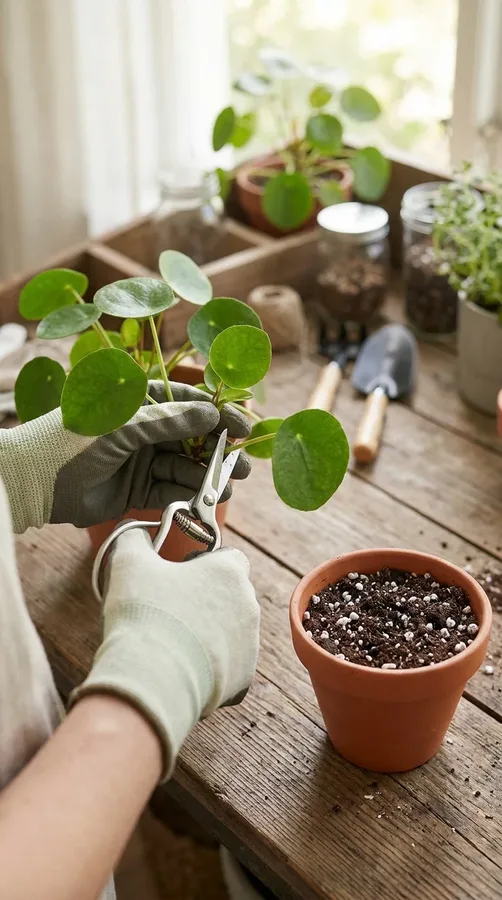
Stem cuttings offer another way to propagate a Chinese money plant, particularly when you have a healthy side shoot with its own growing point. Select a vigorous shoot and use a clean cutting tool to remove it, ideally including a small section of stem that can sit below the soil or in water.
For soil propagation, insert the lower portion of the cutting into a small container of lightly moist, well-draining mix. Firm the soil gently so the cutting remains upright. Keep the container warm and provide bright, indirect light while roots develop.
You can also try rooting a suitable stem cutting in water, provided the stem has a viable growing point and enough tissue to remain stable. Submerge only the lower stem, keeping leaves above the waterline. Change the water regularly to keep it fresh. Once the roots have developed into a small, healthy network, transfer the cutting to potting mix. Not every leaf or detached piece will produce a complete plant, so choose a cutting that includes the necessary stem tissue rather than relying on a leaf alone.
5. Root Offsets in Water
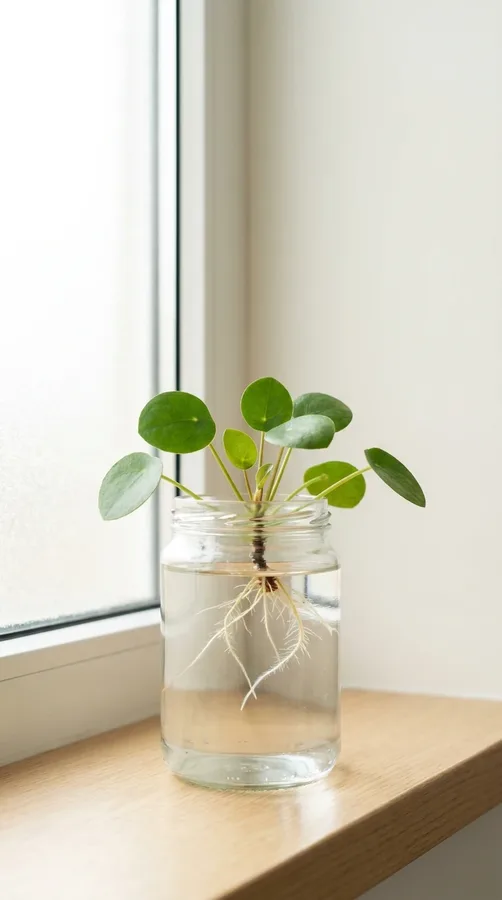
Water propagation allows you to observe root development, making it an enjoyable option for beginners. Carefully remove a small offset with a healthy base and, if possible, a few existing roots. Rinse away loose soil so you can see the roots clearly, taking care not to damage them.
Place the offset in a clean glass or jar with enough room-temperature water to cover its roots or the lower portion of its base. Keep the leaves above the water to reduce the risk of rotting. Position the container somewhere bright but out of harsh direct sunlight, which can heat the water and encourage algae growth.
Replace the water every few days or whenever it becomes cloudy, and check for soft, darkened tissue. When the roots are branching and appear strong enough to support the plant, transfer the offset to a small pot of well-draining soil. Water-grown roots may need an adjustment period after planting, so keep the mix lightly moist initially without allowing it to remain saturated.
6. Select the Right Pot and Potting Mix
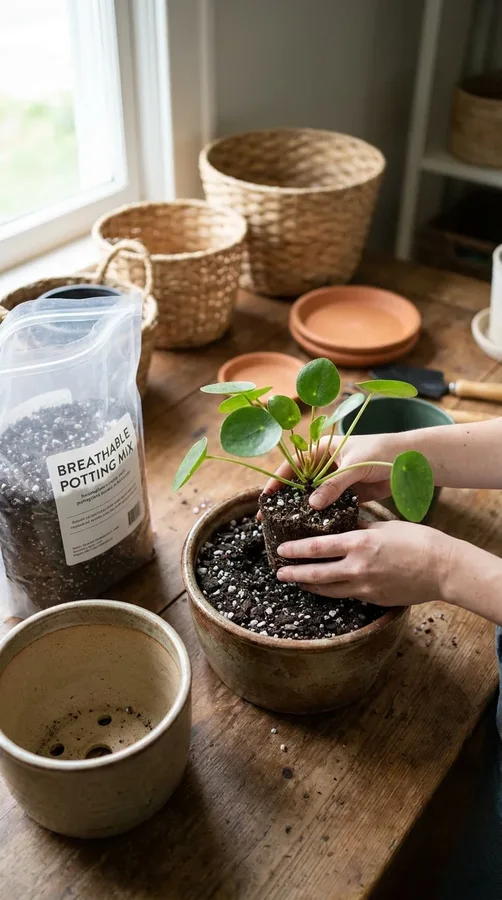
Chinese money plants grow best in containers that allow excess water to escape. Choose a pot with drainage holes and a size appropriate for the root system. An oversized container holds more wet soil than a small plant can use, increasing the risk of root rot. A pot only slightly wider than the root ball is usually a sensible starting point.
Use a quality indoor potting mix that retains some moisture while remaining airy. A standard houseplant mix improved with perlite or pumice can provide a useful balance of drainage and aeration. Avoid heavy garden soil, which can compact in containers and restrict oxygen around the roots.
When potting an offset, spread its roots naturally rather than bending them sharply into a small hole. Add soil around the roots and press gently to eliminate large air pockets. Leave a little space below the pot’s rim to make watering easier. Decorative pots without drainage can serve as outer covers, but place the plant in a separate draining nursery pot inside them and empty any collected water after watering.
7. Provide Bright, Indirect Sunlight
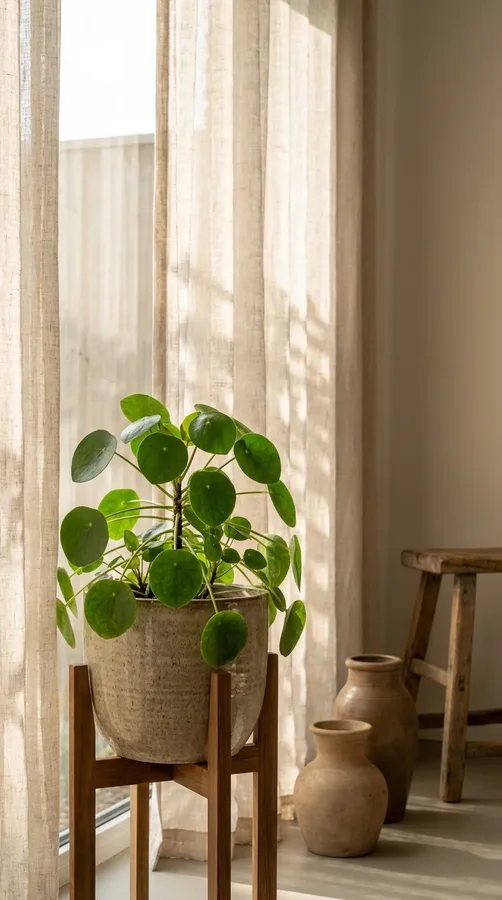
Light plays a major role in the health and shape of a Chinese money plant. Bright, indirect sunlight encourages compact growth, sturdy stems, and attractive green leaves. An east-facing window often works well, while a bright north-facing window may also be suitable depending on local conditions. Near a south- or west-facing window, filtered light or a little distance from the glass can help protect the foliage.
Too little light can cause long, weak stems, smaller leaves, and growth that leans strongly toward a window. Harsh midday sunlight may scorch the leaves, leaving pale or brown patches. If your plant appears stretched, move it gradually to a brighter location rather than exposing it suddenly to intense sun.
Rotate the pot a quarter turn every week or two so different sides receive light more evenly. This simple habit helps maintain a balanced shape. If natural light is limited, a suitable grow light can supplement it. Keep the light at the recommended distance and duration for the fixture, and observe the plant’s response instead of assuming that stronger light is always better.
8. Water Correctly to Prevent Root Rot
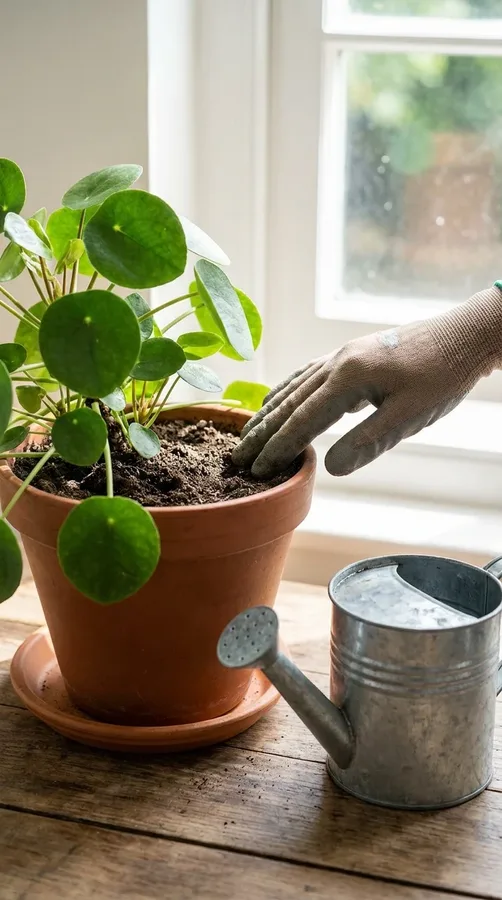
Correct watering is one of the most important parts of Chinese money plant care. Rather than following a rigid calendar, check the soil before watering. Allow the upper portion of the potting mix to dry between waterings, then water thoroughly until excess moisture flows through the drainage holes.
Discard water left in the saucer or decorative outer pot. Roots need access to oxygen, and constantly wet soil can cause them to deteriorate. At the same time, avoid allowing the entire root ball to remain bone-dry for extended periods, especially when the plant is actively growing.
Watering frequency depends on pot size, room temperature, humidity, light levels, and the type of soil used. A plant in a warm, bright room may need water more often than one in a cool, dim space. Yellowing leaves and persistently wet soil can suggest overwatering, while drooping leaves and very dry soil may indicate thirst. Check the soil and roots before deciding what adjustment is needed, because similar symptoms can have different causes.
9. Maintain Comfortable Temperature and Humidity
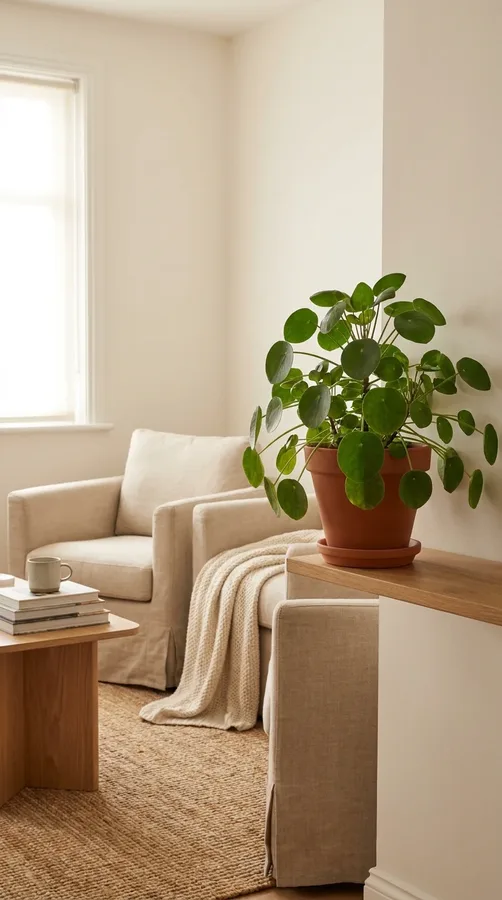
Chinese money plants generally thrive in normal indoor temperatures, making them suitable for most comfortable homes. Aim for a stable environment, away from cold drafts, icy window glass, heating vents, and direct blasts of air conditioning. Sudden temperature changes can stress the plant and interfere with new growth.
Average household humidity is often sufficient. Unlike some tropical houseplants, Pilea peperomioides does not usually require a humidifier or frequent misting to remain healthy. Constantly wet leaves and poor air circulation may encourage fungal problems, so misting should not be treated as a substitute for appropriate watering and light.
If your home becomes especially dry, monitor the leaf edges and overall growth while keeping the plant away from strong heat sources. A room humidifier can help if several houseplants need additional humidity, but good ventilation remains important. Consistent conditions are more useful than trying to create a tropical environment that the plant does not necessarily need.
10. Fertilize During the Growing Season
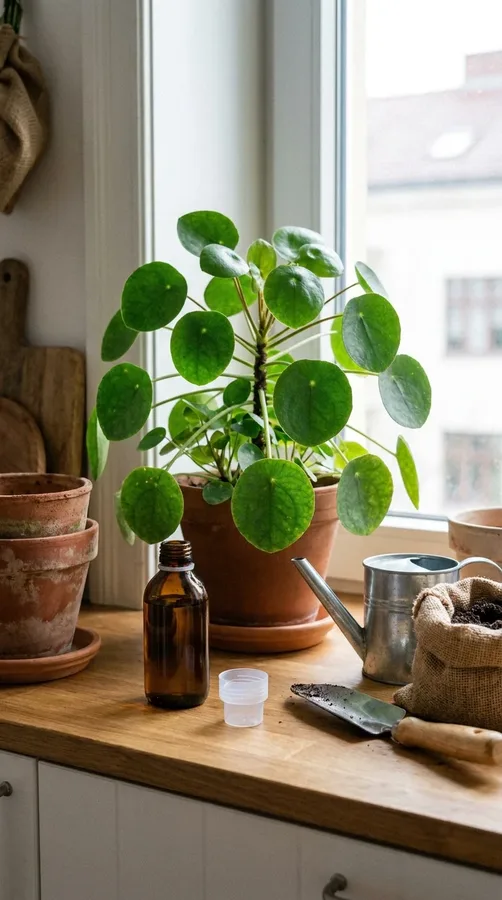
Regular, moderate feeding can support healthy leaves and new offsets, particularly when a Chinese money plant is actively growing. Use a balanced liquid houseplant fertilizer according to its label, often diluted if the product recommends a concentrated application. Apply fertilizer to appropriately moist soil rather than to a completely dry root ball.
Spring and summer are generally the most useful seasons for feeding because light and temperature encourage growth. During winter, growth may slow, so reduce feeding or pause it when the plant is largely inactive. Recently separated offsets should be allowed to establish before receiving fertilizer, and fresh potting mixes may already contain nutrients.
More fertilizer does not mean faster or healthier growth. Excess salts can accumulate in the soil and damage roots, causing brown leaf tips or other stress symptoms. If you suspect overfertilization, stop feeding and assess whether the potting mix needs a thorough flush with water, ensuring it drains freely. Follow the fertilizer instructions and avoid combining multiple products without a clear reason.
11. Repot When the Plant Outgrows Its Container
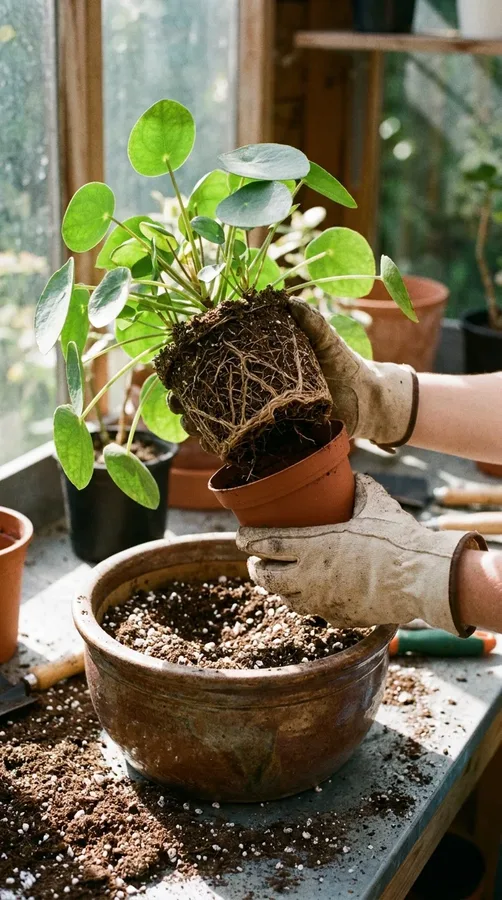
A Chinese money plant does not need frequent repotting, but it may eventually become root-bound or exhaust the structure of its potting mix. Signs include roots emerging through drainage holes, water running through the pot unusually quickly, or the plant drying out much faster than before. Slow growth alone is not proof that a larger pot is necessary.
Choose a container only one size larger than the current one and fill it with fresh, well-draining potting mix. Gently remove the plant, loosen any tightly circling roots, and inspect for soft or damaged sections. Trim unhealthy roots with clean tools if needed, then position the plant at approximately its original soil depth.
Water the newly repotted plant thoroughly and let excess water drain. Keep it in bright, indirect light while it adjusts, and avoid heavy fertilizing immediately after repotting. Spring is often a convenient time for this task because active growth can help the plant recover. If healthy offsets crowd the pot, you can separate some of them during repotting, provided the main plant can be handled without excessive root disturbance.
12. Prune Damaged Leaves and Encourage Balanced Growth
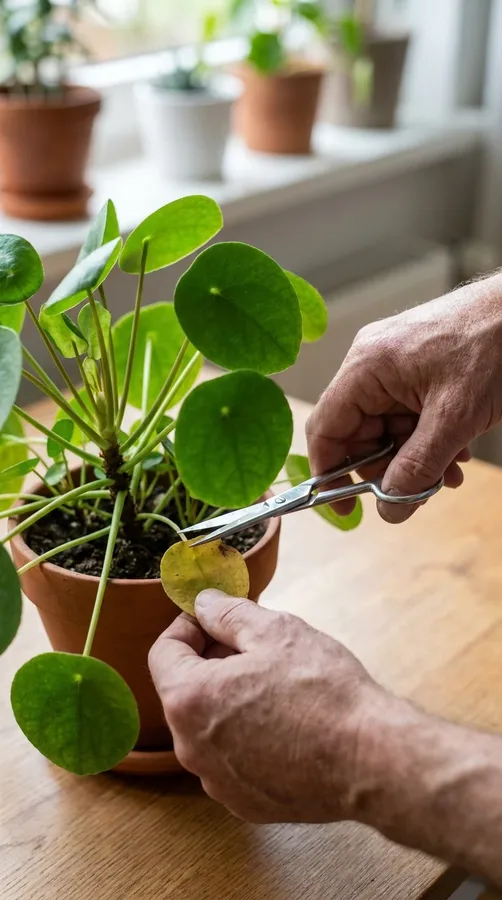
Pruning helps maintain a neat Chinese money plant and allows you to remove foliage that is damaged, yellowing, or diseased. Use clean scissors to cut unwanted leaves near their stalks without cutting into the central growing point. Removing an occasional old leaf is normal, particularly as the plant matures and replaces older foliage with new growth.
If your Pilea leans toward the window, improve its light conditions and rotate the pot regularly. A leaning stem does not always need to be cut back; correcting the light source may help future growth become more balanced. Avoid removing too many healthy leaves at once, since the plant relies on its foliage to produce energy.
Pruning also gives you a chance to inspect stems and leaf undersides for pests. Remove fallen leaves from the soil surface and clean any plant debris from the pot. If you are cutting a healthy side shoot for propagation, make sure the tool is sharp and clean to reduce tissue damage and the possibility of spreading disease.
13. Troubleshoot Yellow, Curled, or Drooping Leaves
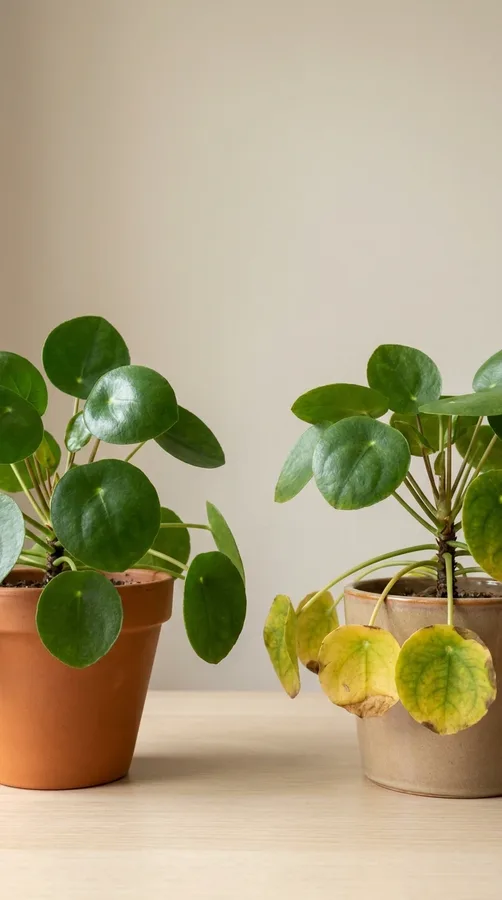
Changes in leaf color or shape often provide clues about Chinese money plant care. Yellow leaves can result from overwatering, poor drainage, insufficient light, or the natural aging of older foliage. If several leaves turn yellow while the soil remains wet, inspect the roots and check whether the container drains correctly before adding more water.
Drooping leaves may indicate dry soil, heat stress, root damage, or a recent change in conditions. Check the soil moisture first and consider the plant’s recent environment. Curled leaves can develop when the plant experiences inconsistent watering, intense light, or temperature stress. Brown, crispy patches may point to excessive direct sunlight or prolonged dryness.
Change one condition at a time whenever possible, and watch for improvement in new growth. Existing damaged leaves may not recover completely, even after care improves. Avoid immediately repotting, pruning, fertilizing, and relocating a stressed plant all at once, because multiple changes make it harder to identify the actual problem.
14. Protect Your Plant from Common Houseplant Pests
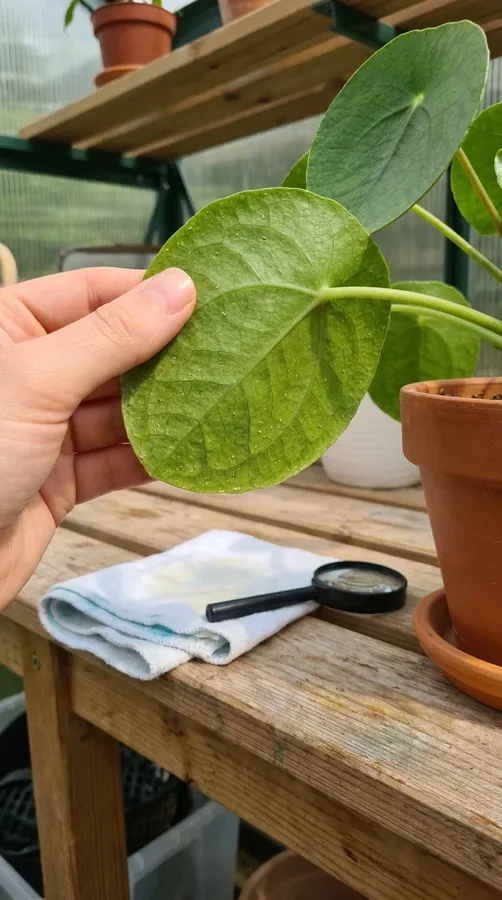
Although Chinese money plants are relatively easy to maintain, they can occasionally attract spider mites, mealybugs, aphids, or scale insects. Inspect the undersides of leaves, along the stems, and around new growth when watering or pruning. Fine webbing, cottony clusters, sticky residue, and tiny moving insects are signs that closer inspection is needed.
Isolate an affected plant from nearby houseplants to reduce the chance of pests spreading. Wipe accessible insects away with a damp cloth or rinse the foliage gently when appropriate. For persistent infestations, use an insecticidal soap or another product labeled for the specific pest and indoor plant, following all instructions and testing a small area first.
Repeat inspections over the following weeks because eggs and newly emerged insects can survive an initial treatment. Keep the leaves clean, remove dead plant material, and avoid overcrowding pots. A healthy plant is not completely immune to pests, but regular observation makes it easier to respond early, before damage becomes extensive.
15. Help Newly Propagated Plants Establish Successfully
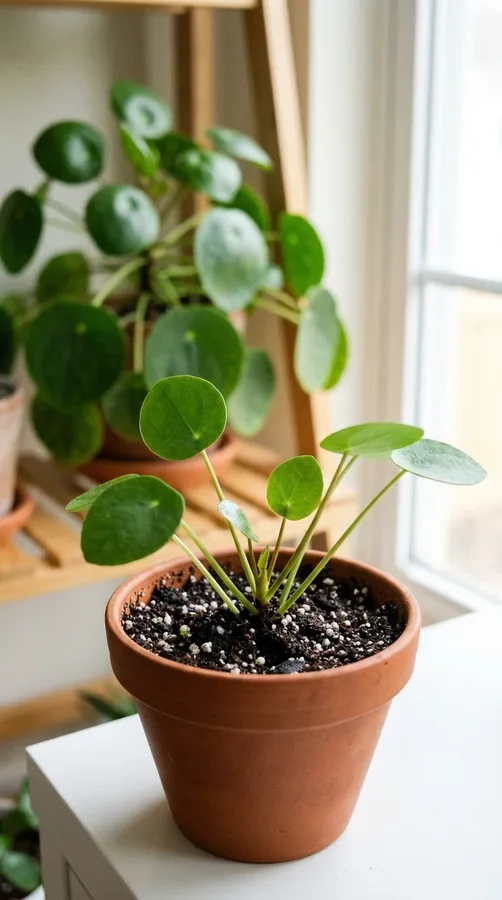
Young Chinese money plants need a little extra attention while their roots become established. After planting an offset or rooted cutting, place it in bright, indirect light and maintain moderate soil moisture. The mix should not become waterlogged, but very young roots can dry out quickly in small containers, so check them more frequently than a mature plant.
Some temporary drooping after separation or transfer from water to soil is normal. Keep the environment stable and avoid repeatedly pulling the plant out to inspect its roots. Gentle resistance when the plant is carefully tested later can indicate anchoring, but new growth and healthy-looking leaves are more useful signs of progress.
Wait until the plant is growing steadily before beginning a regular fertilizer routine. If the leaves become pale or growth stalls, review light, watering, and root condition before assuming the plant needs nutrients. Once the young Pilea produces fresh leaves and holds itself upright, gradually treat it like an established plant while continuing to avoid excessive watering.
16. Understand Seasonal Chinese Money Plant Care
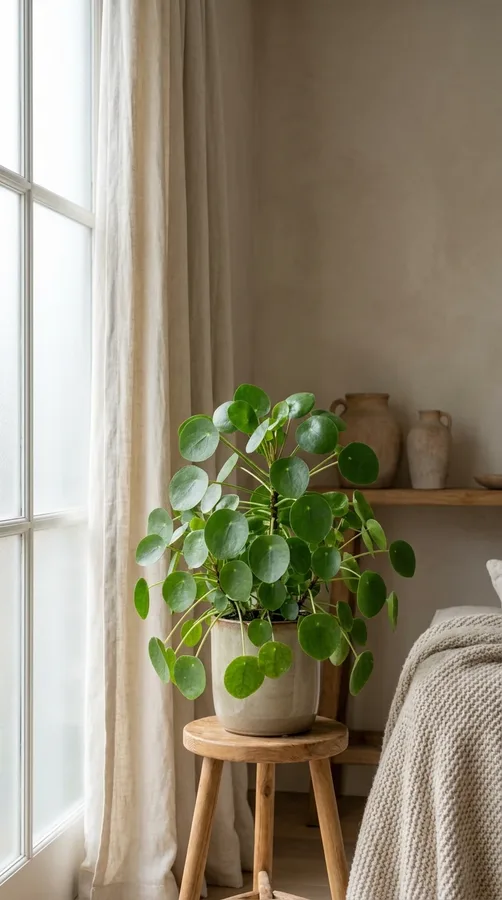
Seasonal adjustments help your Chinese money plant respond to changing light and temperature. In spring and summer, longer days usually encourage fresh leaves and the development of offsets. Check soil moisture more often during warm periods, provide suitable light, and fertilize moderately if the plant is actively growing.
In autumn and winter, indoor growth may slow because of shorter days and cooler conditions. Watering needs can decrease as the potting mix dries more slowly, so check the soil instead of continuing the warm-season schedule. Move the plant away from cold drafts and avoid placing it directly against a chilly window.
Propagation is often easiest during the brighter months, when young plants can establish more quickly. However, a warm indoor environment with sufficient supplemental light can support propagation outside the main growing season. Do not force growth by adding extra fertilizer or keeping the soil wet during a period of low activity. Adjust care to the plant’s actual growth and the conditions in your home.
17. Display and Maintain a Beautiful Chinese Money Plant
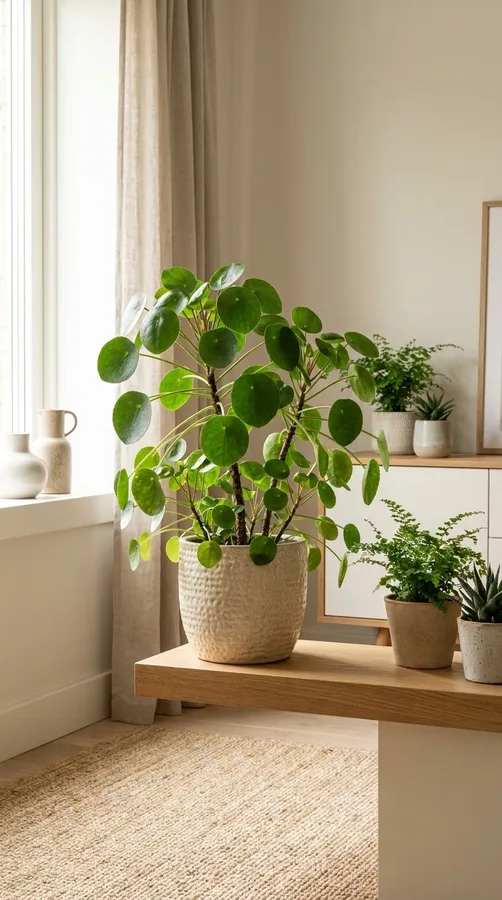
The Chinese money plant’s round leaves look striking in simple ceramic pots, neutral planters, and natural-textured containers. Place it on a bright shelf, side table, or windowsill where the foliage has room to spread without being pressed against walls or neighboring plants. Its sculptural shape makes it an attractive standalone plant as well as part of a larger indoor collection.
For the best appearance, rotate the pot periodically, remove yellowing leaves, and wipe dusty foliage with a soft, damp cloth. Make sure decorative arrangements do not block drainage holes or trap water at the bottom of the container. If you group plants together, leave enough space for air to circulate and for you to inspect each plant for pests.
Chinese money plants are commonly associated with prosperity and good fortune, which makes them popular gifts for housewarmings and other occasions. A propagated plantlet can become a thoughtful, living gift once its roots are established. Include basic care instructions so the recipient understands its preference for bright, indirect light and soil that dries somewhat between waterings. With consistent care, your plant can remain an attractive feature of your home for years.
Conclusion
Propagating and caring for a Chinese money plant is straightforward when you start with healthy growth, choose an appropriate propagation method, and provide the right growing conditions. Separating rooted offsets is usually the simplest approach, while stem cuttings and water propagation offer additional options. Bright, indirect light, well-draining soil, careful watering, and occasional feeding help established plants and new plantlets thrive. By checking your plant regularly and adjusting care to the season, you can enjoy its distinctive round leaves and grow more Chinese money plants to share or display throughout your home.