15 Modular Sofas: A Space-Saving Solution with Endless Design Options
Modular sofas have quietly become one of the smartest furniture investments for anyone dealing with an apartment that might see another move in a few years, a living room layout that changes with the seasons, or simply a household that entertains differently depending on the occasion. Unlike a traditional fixed sectional or sofa, modular pieces let you rearrange, expand, or shrink your seating configuration entirely on your own terms, transforming from a cozy loveseat for a quiet Tuesday night into a sprawling sectional for game day without needing to buy new furniture. Whether you’re working with an awkward layout, a growing family, or just a genuine love of rearranging your space seasonally, these modular options prove that flexibility and style don’t have to be mutually exclusive.
I resisted modular furniture for years, assuming it would look cheap or flimsy compared to a substantial, traditionally built sofa, until a friend showed me how her modular pieces could transform from an L-shaped sectional into two separate loveseats within minutes, no tools required, no structural compromise visible in the finished product. That demonstration completely changed how I thought about furniture flexibility, especially once I started actually living somewhere with a floor plan that genuinely benefited from being able to reconfigure my main seating arrangement depending on whether I was hosting six people or just curling up alone with a book.
What I’ve learned about choosing modular sofas well is that the connection mechanisms and individual piece quality matter enormously more than how many total configurations a system technically offers. The best modular pieces feel just as substantial and comfortable as traditional furniture whether they’re connected into one large sectional or standing alone as individual chairs, and they hold their shape and connection points reliably even after years of actual rearranging rather than loosening or shifting awkwardly over time.
1. Classic L-Shaped Sectional Modules
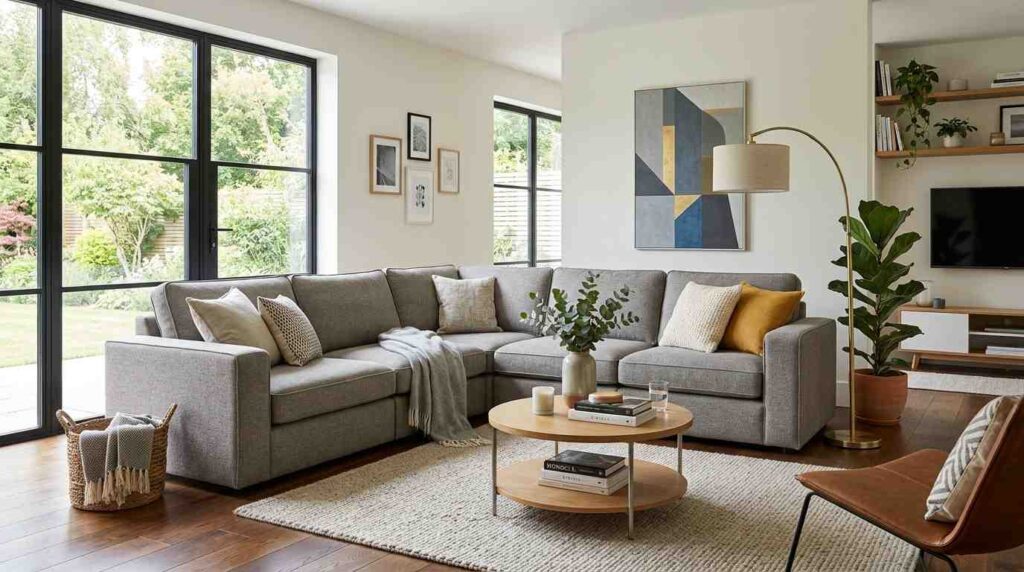
The foundational modular configuration, individual armless and corner pieces that combine into a traditional L-shape, offers the most versatile starting point for anyone new to modular furniture. You can arrange these pieces along any wall configuration, switch the corner orientation from left to right, or eventually separate everything into individual seats if your space needs change entirely.
This configuration works particularly well for open-concept living spaces where the sectional needs to define a seating zone without walls to anchor against. I’ve found that starting with this classic L-shape gives you the clearest sense of how modular pieces connect and separate before investing in more elaborate configurations.
2. U-Shaped Conversation Pit Style
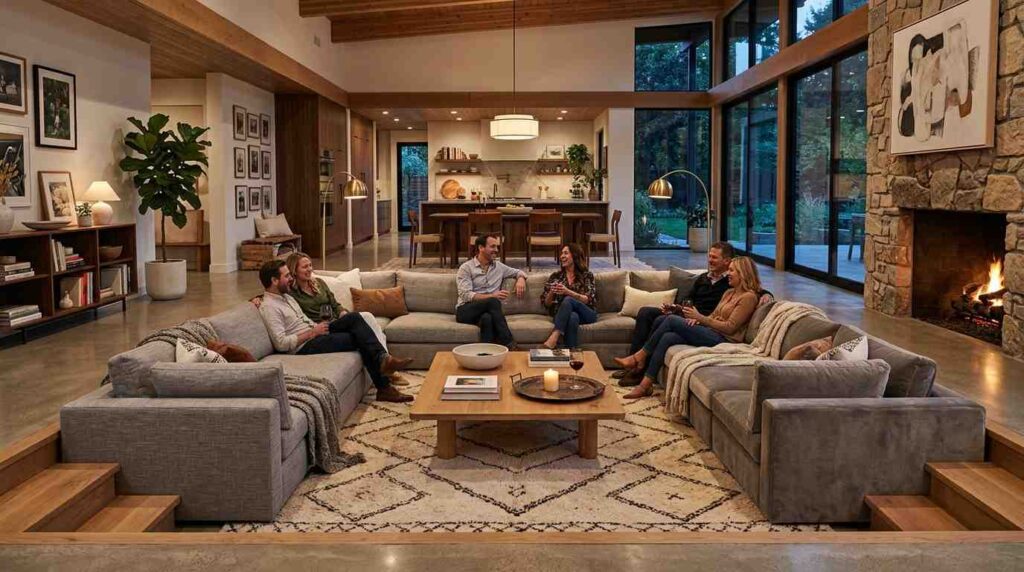
Combining modules to create a full U-shape wraps seating around three sides, creating this intimate, conversation-focused arrangement perfect for households that genuinely prioritize group gathering over television-facing seating. This configuration requires more floor space than simpler arrangements but creates a genuinely social living room centerpiece.
The U-shape works beautifully for larger families or frequent entertainers who need substantial seating capacity without resorting to multiple separate sofas. I’ve found this configuration particularly effective in rooms without an obvious focal point like a fireplace, since the seating arrangement itself becomes the room’s clear organizing feature.
3. Chaise-Ended Sectional with Ottoman
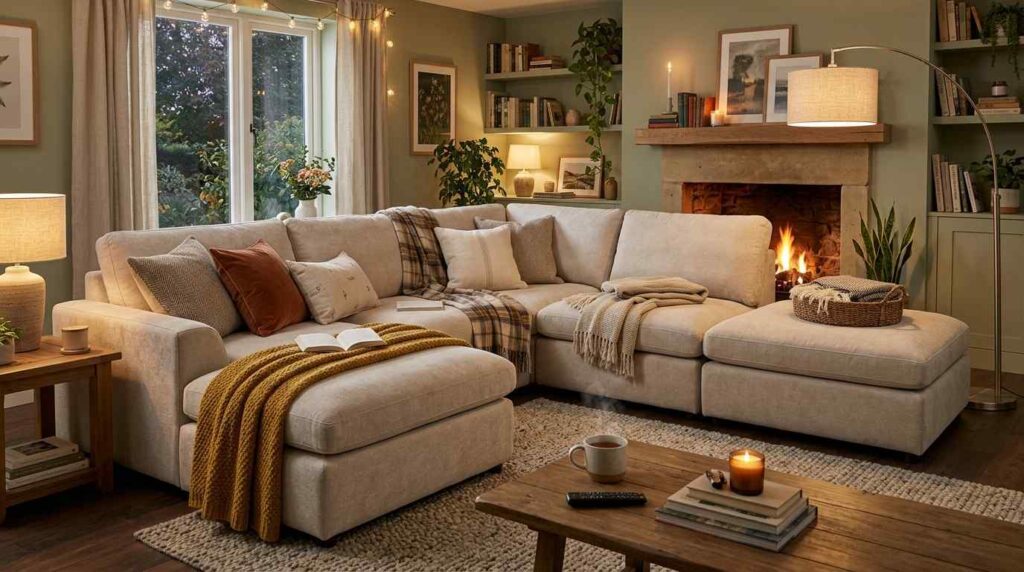
Adding a chaise module to one end of your sectional, then pairing it with a matching ottoman on the opposite side, creates this elongated lounging configuration perfect for stretching out fully. This setup particularly appeals to households where actual napping or extended lounging happens regularly on the main sofa.
The chaise and ottoman combination offers genuine flexibility since the ottoman itself often functions as additional seating when needed, then converts back to a footrest during quieter, more relaxed evenings. I’ve found this configuration especially popular in smaller households where maximizing lounging comfort matters more than accommodating large groups.
4. Curved Modular Sections
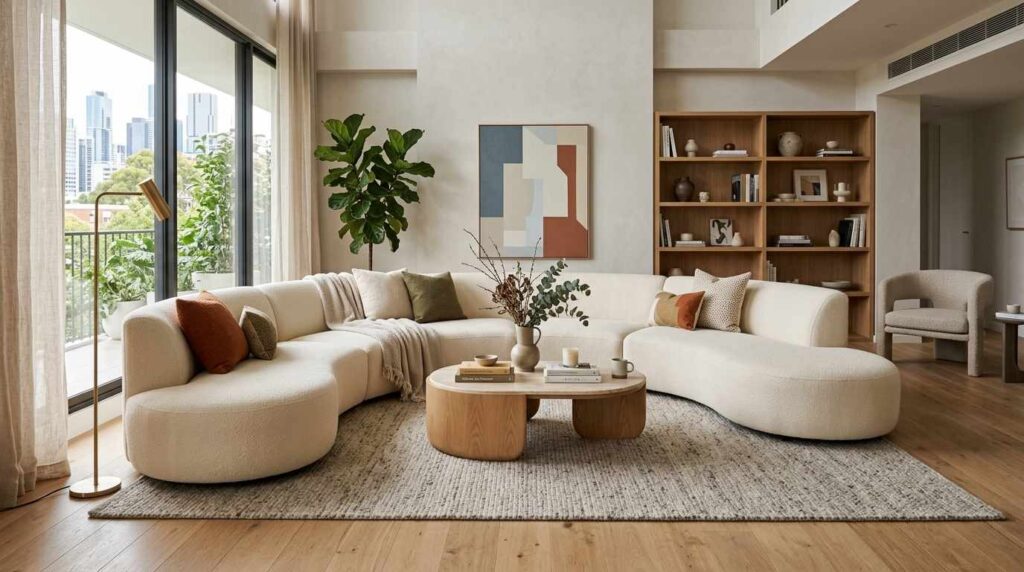
Rather than the more common angular, boxy modules, curved modular pieces create this softer, more organic seating arrangement that feels considerably more sculptural than traditional sectional shapes. These curved sections typically connect to form gentle arcs or full circles, offering a genuinely different aesthetic than standard rectangular modules provide.
This style works particularly well in rooms wanting a softer, less architectural feeling, and the curved shape often photographs more distinctively than standard sectional configurations. I’ve found these pieces require slightly more careful room planning since their organic shapes don’t align with walls the same way traditional rectangular modules would.
5. Daybed Convertible Modules
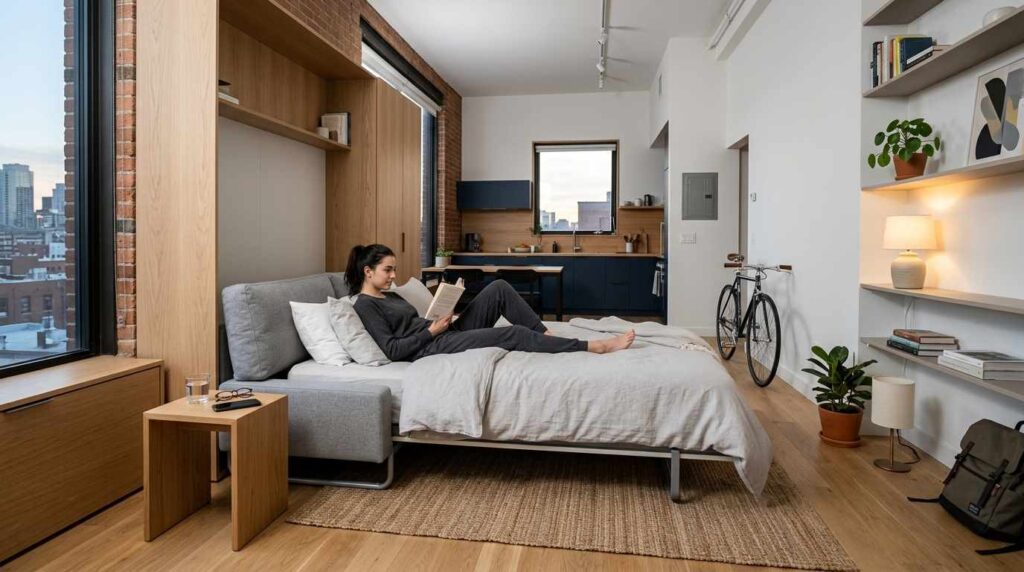
Certain modular systems include specific pieces designed to fold flat or convert into a daybed configuration, essentially doubling your seating as occasional guest sleeping space without needing a separate sofa bed. This dual-purpose functionality particularly benefits smaller homes where dedicating an entire room to guest accommodations isn’t realistic.
The conversion mechanism varies between manufacturers, some simply fold the backrest down flat, while others involve more elaborate transformation processes. I’ve found that testing this conversion mechanism in person before purchasing matters enormously, since some systems execute this transformation far more smoothly and comfortably than others.
6. Bumper Ottoman Corner Fill
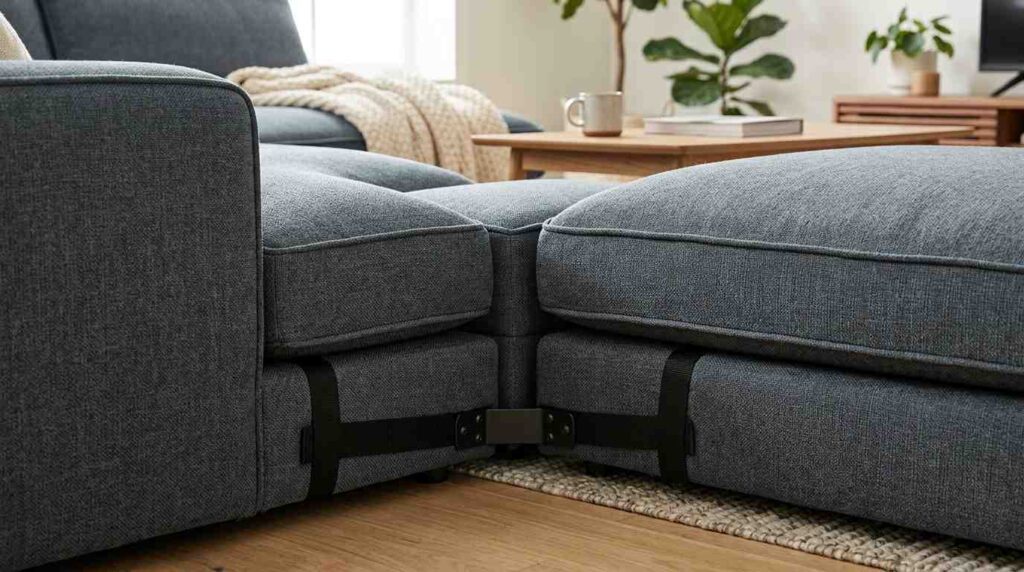
Small, low-profile bumper ottomans designed specifically to fill awkward corner gaps or extend seating depth provide this subtle flexibility that larger modules can’t quite achieve. These smaller pieces let you fine-tune your configuration’s exact proportions rather than being limited to standard-sized modules alone.
This detail matters more than people initially expect, since awkward gaps between standard modules can make an otherwise well-planned sectional feel slightly off. I’ve found that having a couple of these smaller bumper pieces in reserve gives genuine flexibility for adjusting your configuration as you actually live with the furniture and identify where extra support or seating depth would help.
7. Two-Piece Loveseat Configuration

At its simplest, a modular system might include just two connected pieces forming a compact loveseat, ideal for smaller apartments or secondary living spaces that don’t need extensive seating capacity. This minimal configuration still offers the core benefit of modularity, the ability to separate these pieces into individual chairs if your space needs change.
This smaller-scale option proves that modular furniture doesn’t require committing to an elaborate, room-dominating sectional to benefit from this flexible design approach. I’ve found this configuration particularly practical for guest bedrooms or home offices that occasionally need to double as additional seating space.
8. Wraparound Sectional with Multiple Chaises
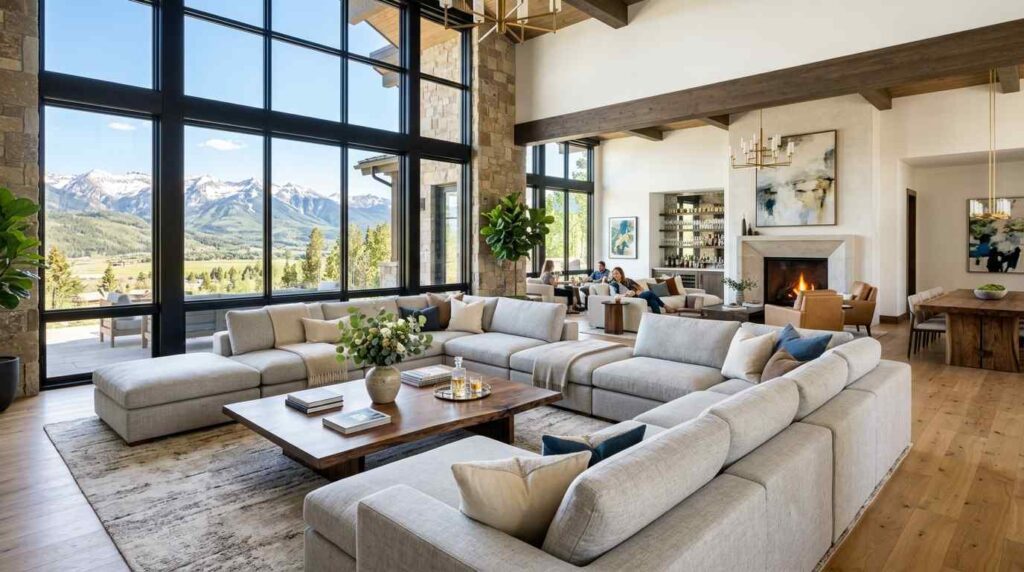
For genuinely spacious living rooms, combining multiple chaise modules with standard seating pieces creates this expansive wraparound configuration offering several distinct lounging zones within one continuous seating arrangement. This setup accommodates large groups while still providing individual stretched-out seating options throughout.
This elaborate configuration requires substantial floor space and investment but creates genuine luxury for households that frequently host movie nights or extended family gatherings. I’ve found that this scale of modular investment makes the most sense for people who know they’ll be using this exact configuration consistently rather than frequently rearranging.
9. Armless Bench-Style Modules
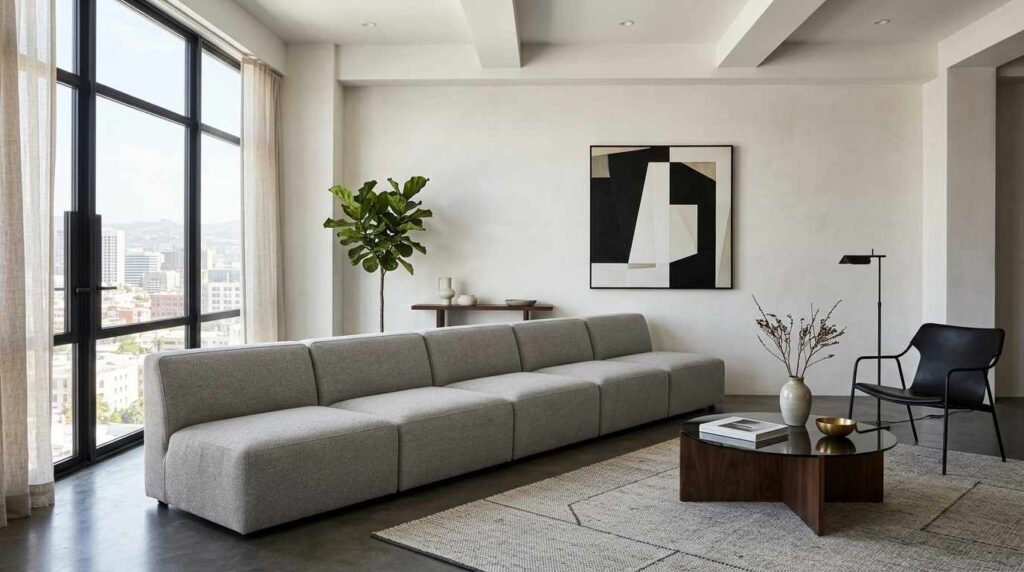
Choosing modules without any arm details creates this clean, bench-like seating silhouette that reads as more contemporary and streamlined than traditional sectional pieces with substantial arms. This style particularly suits modern, minimalist living rooms where visual bulk needs minimizing.
The armless design also technically increases actual seating capacity within the same physical footprint, since you’re not losing space to arm width between each section. I’ve found this style photographs particularly well in smaller spaces, since the lack of arms creates visual continuity that makes the whole seating arrangement feel less bulky than arm-detailed alternatives.
10. Swivel Chair Modular Additions
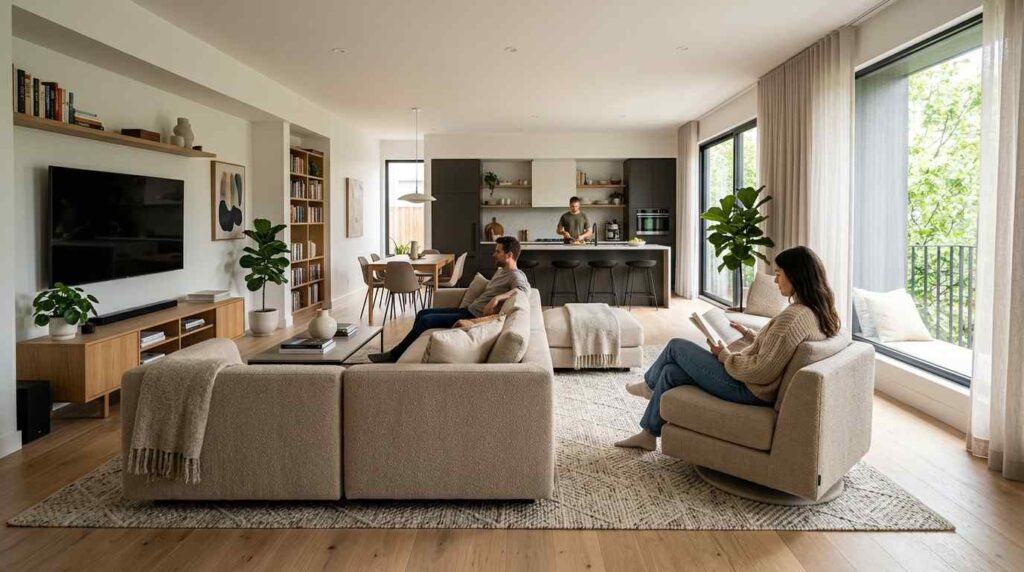
Some modular systems include individual swivel chair modules that can connect to the main sectional or stand completely independently, offering this flexible seating option that can rotate to face different directions depending on the activity. This addition particularly benefits open-concept spaces where seating might need to face a television one moment and a dining area the next.
This swivel functionality adds genuine practical flexibility beyond just physical rearrangement, letting you adjust seating orientation without actually moving furniture at all. I’ve found these swivel additions particularly popular in households with multiple activity zones within one open living space.
11. High-Back Module Sections
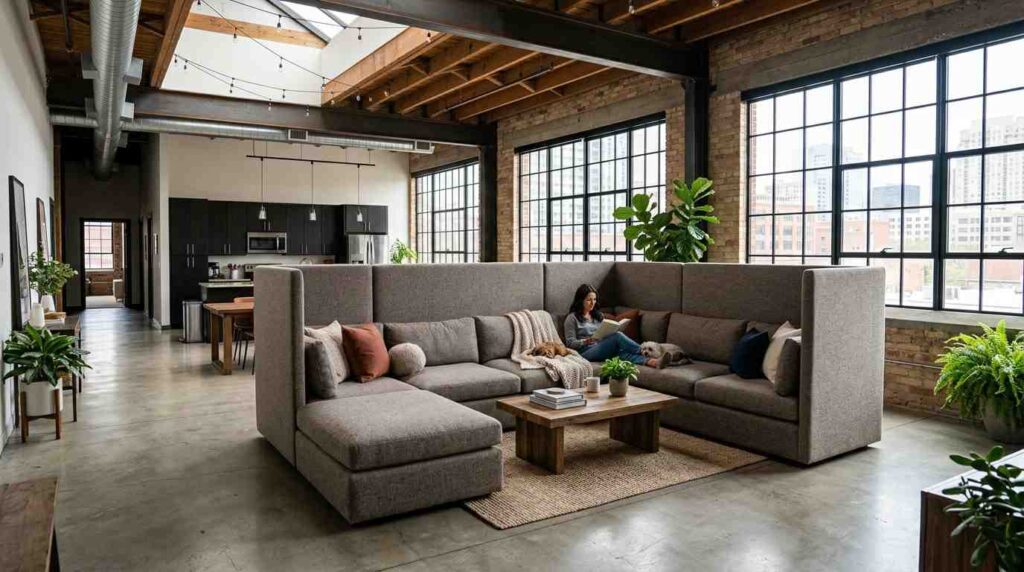
Choosing modules specifically with taller backrests, rather than the more common lower-profile sectional style, creates this cocooning, enclosed feeling that provides genuine privacy and support within open floor plans. These taller sections essentially function as room dividers while still serving their primary seating purpose.
This height variation offers interesting design flexibility, letting you mix high-back and standard modules within the same configuration to create visual interest and functional variation throughout your seating arrangement. I’ve found this style particularly valuable in studio apartments or open-concept homes where the sectional needs to help define separate zones without actual walls.
12. Storage-Integrated Modules
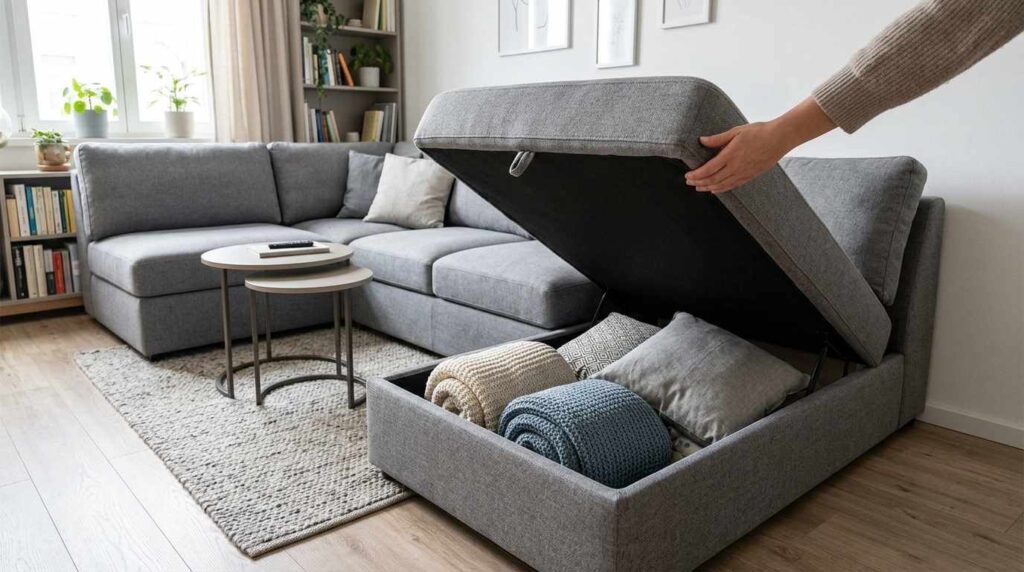
Certain modular pieces include hidden storage compartments accessed by lifting the seat cushion, providing genuine practical function beyond just seating flexibility. This addition particularly benefits smaller homes where every furniture piece needs to work harder, hiding blankets, remote controls, or seasonal items within the sectional itself.
This storage integration adds minimal bulk to the overall module design while providing genuine practical value that purely decorative sectional pieces can’t offer. I’ve found these storage modules particularly useful positioned at the chaise end, where the additional depth provides more substantial storage capacity than standard seating modules would allow.
13. Mix-and-Match Fabric Sections
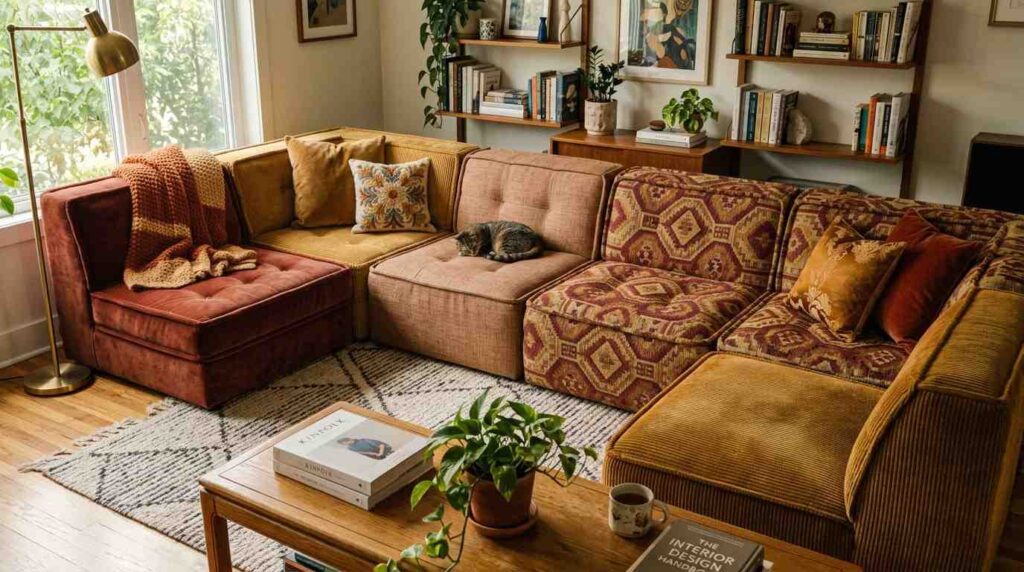
Rather than choosing one uniform fabric throughout your entire modular configuration, some systems allow mixing different colors or textures across individual modules, creating this intentionally eclectic, layered look. This approach requires genuine confidence and a good eye for color coordination, but the resulting configuration feels considerably more personalized than uniform sectional coverage.
This mixing technique works particularly well for households wanting their furniture to feel collected and personal rather than obviously purchased as one matching set. I’ve found this approach most successful when the varying fabrics share some connecting element, similar texture, coordinating color family, rather than combining completely unrelated materials.
14. Petite Modular Sets for Small Spaces
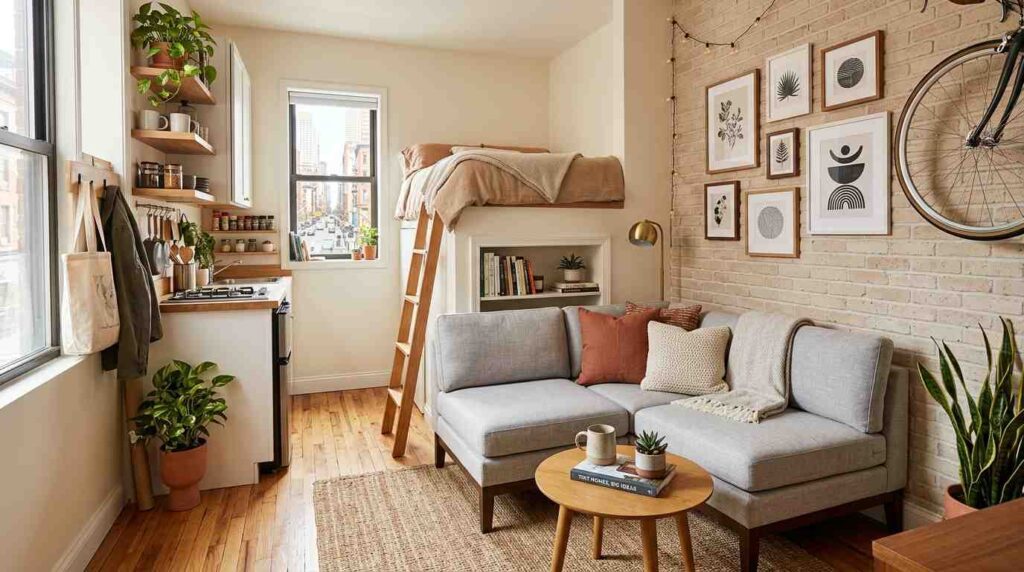
Specifically designed with smaller individual module dimensions, these compact modular systems address the reality that standard sectional pieces often prove too substantial for genuinely small apartments or studio spaces. These scaled-down modules still offer full reconfiguration flexibility while respecting more limited square footage.
This category has become increasingly popular as more people navigate smaller urban living spaces without wanting to sacrifice the genuine functional benefits modular furniture provides. I’ve found these petite systems particularly valuable for anyone who anticipates moving between apartments of varying sizes, since the smaller module dimensions offer more configuration flexibility across different spatial constraints.
15. Outdoor-Rated Modular Seating
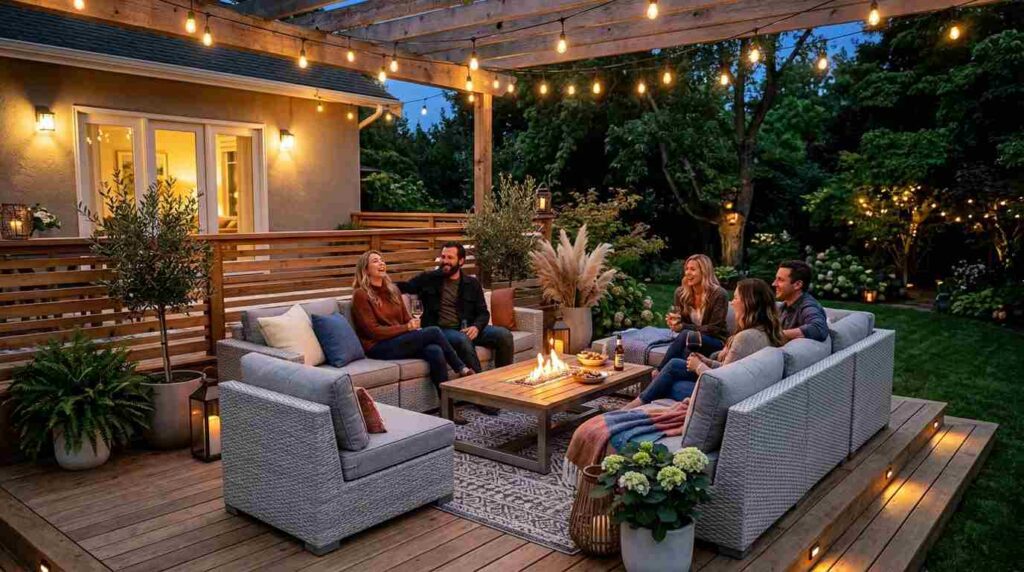
Extending modular flexibility beyond indoor living rooms, weather-resistant modular systems designed specifically for patios and outdoor spaces offer this same reconfiguration benefit for exterior entertaining areas. These outdoor versions use weather-appropriate materials while maintaining the same connection mechanisms that let you rearrange seating based on your specific gathering needs.
This outdoor application proves particularly valuable for entertaining spaces that need to shift between intimate family dinners and larger backyard parties throughout different seasons and occasions. I’ve found that investing in quality outdoor modular pieces, ones genuinely built to withstand actual weather exposure rather than simply water-resistant fabric on indoor-grade frames, makes an enormous difference in how well this furniture holds up across multiple outdoor seasons.