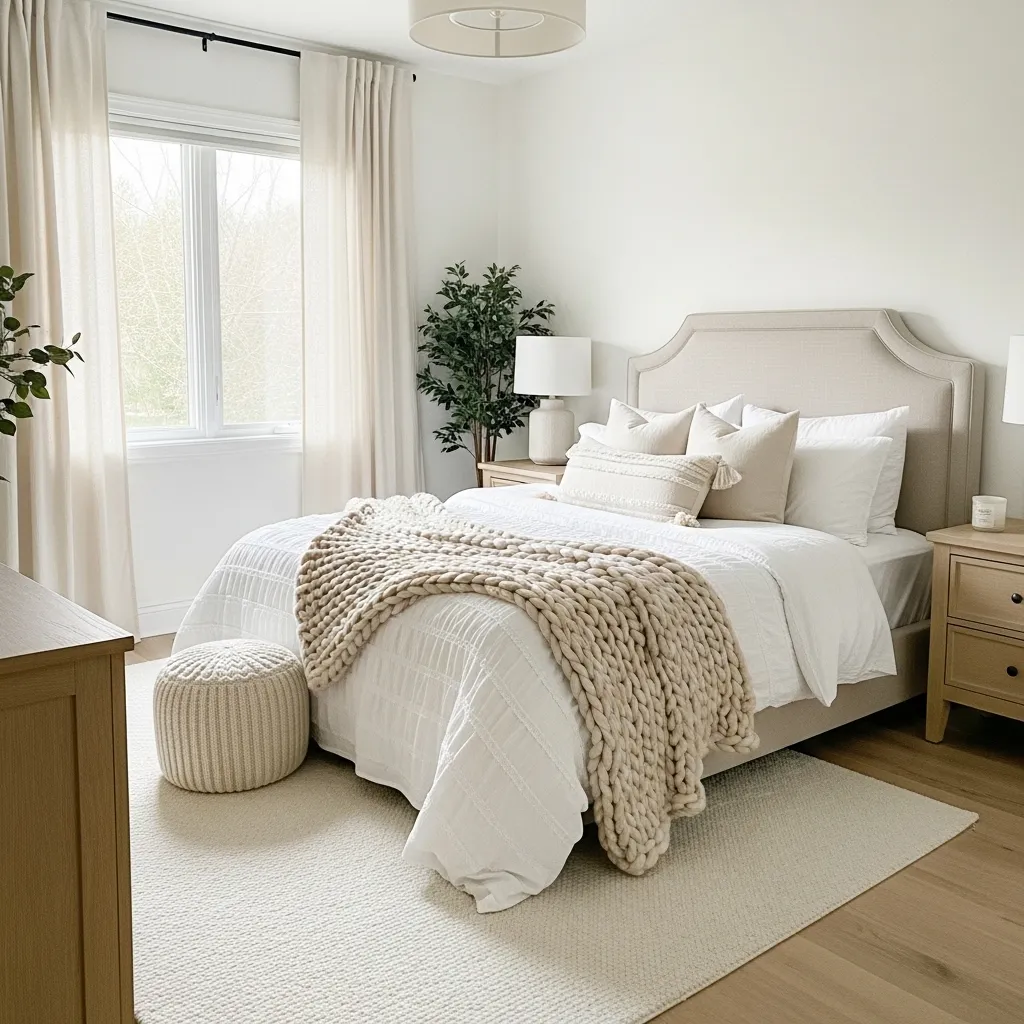
20 Best Scandinavian Bedroom Ideas for Minimalists
Scandinavian bedroom design has this remarkable staying power precisely because it never chases trends, instead focusing on this timeless combination of function, natural light, and genuine simplicity that feels just as relevant now as it did decades ago when the style first gained international recognition. Whether you’re drawn to the classic all-white foundation with a single wood accent, softer variations incorporating muted sage or dusty blue, or more textured approaches leaning into wool and linen layering, this design philosophy succeeds by stripping away anything unnecessary while still creating spaces that feel genuinely warm and livable rather than sterile or cold. From platform beds with clean, unfussy lines to the careful curation of just a few meaningful decorative objects, these ideas prove that minimalist Scandinavian bedrooms achieve their sophistication precisely through what they leave out rather than what they include.
I spent years thinking minimalism meant sacrificing comfort, picturing these stark, empty rooms that looked beautiful in photos but felt genuinely uninviting to actually sleep in, until I started really studying how Scandinavian design specifically approaches this balance. The revelation came when I realized that Nordic countries deal with genuinely long, dark winters, which means their entire design philosophy centers around creating spaces that feel cozy and light-maximizing simultaneously, using natural materials, strategic lighting, and thoughtful texture rather than clutter to achieve that warmth. This completely reframed how I thought about minimalism, understanding it as an intentional editing process rather than simple deprivation.
What I’ve learned about executing genuinely successful Scandinavian minimalist bedrooms is that natural light and material authenticity matter more than almost any other design decision you’ll make in the space. The best examples I’ve studied understand that a few pieces of quality, natural wood furniture, some genuine wool or linen textiles, and abundant unobstructed window light will always outperform a room filled with more furniture pieces or decorative objects competing for attention. This style rewards restraint and patience, waiting to find the right piece rather than filling space just because it’s available, and trusting that negative space itself functions as a genuine design element deserving the same consideration as anything you actually place in the room.
1. All-White Foundation with Single Wood Accent
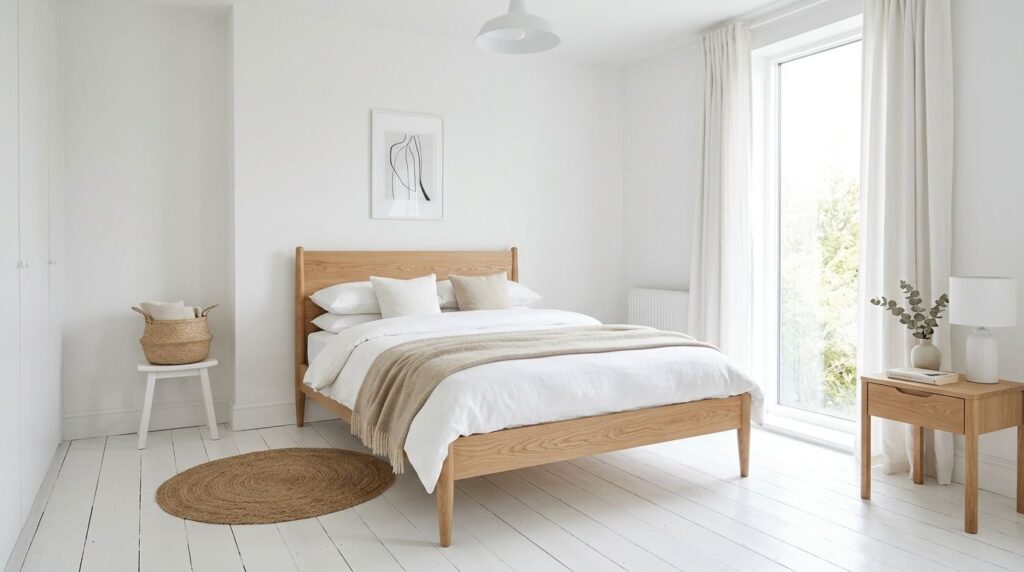
Painting every surface, walls, ceiling, and even the floor if possible, in the same soft white creates this seamless, light-maximizing foundation that Scandinavian design relies on so heavily during those darker winter months. Against this pristine white backdrop, one significant wood element, whether that’s a bed frame, a single nightstand, or simple wall shelving, provides just enough warmth and organic texture to keep the room from feeling cold or clinical.
This approach requires genuine discipline in choosing that one wood piece carefully, since it needs to carry considerable visual weight as essentially the room’s only color variation. I’ve found that light oak or ash tones work particularly well for this single accent, their pale, warm coloring bridging the gap between the white surroundings and something with genuine natural texture.
2. Platform Bed with Minimal Bedding Layers
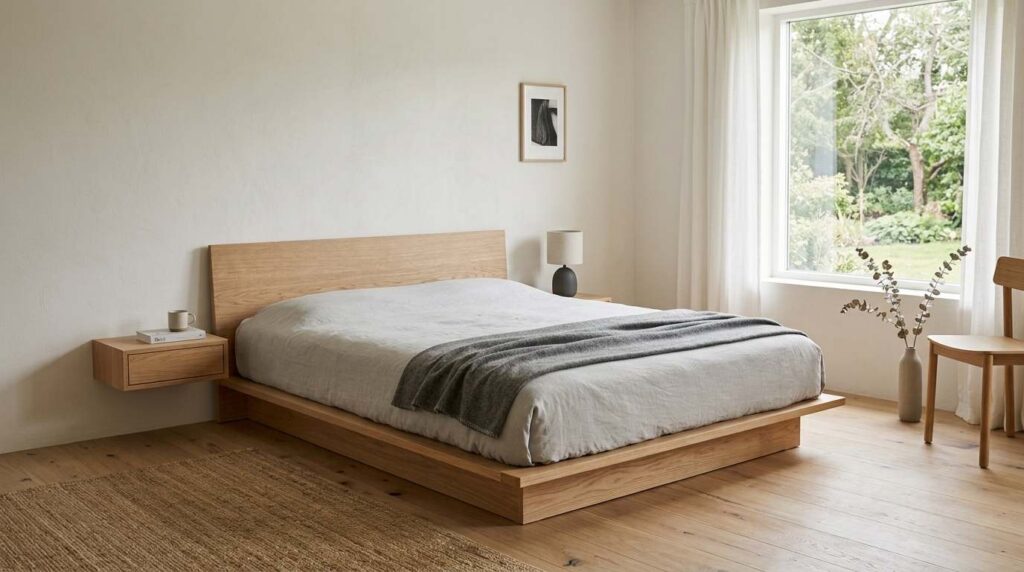
A simple platform bed frame, low to the ground with clean lines and no unnecessary embellishment, embodies that essential Scandinavian principle of function without excess ornamentation. Dressing it with just two or three carefully chosen bedding layers, a fitted sheet, a duvet, maybe one thin throw, rather than an abundance of decorative pillows, keeps the whole composition feeling restful rather than fussy.
This minimal bedding approach also happens to be genuinely practical, since making the bed each morning takes seconds rather than requiring you to arrange multiple throw pillows in some specific decorative configuration. I’ve found that choosing bedding in natural, breathable materials like linen or organic cotton enhances this simple styling with genuine textural interest that patterns or excessive layering would otherwise need to provide.
3. Floor-to-Ceiling Sheer Curtains
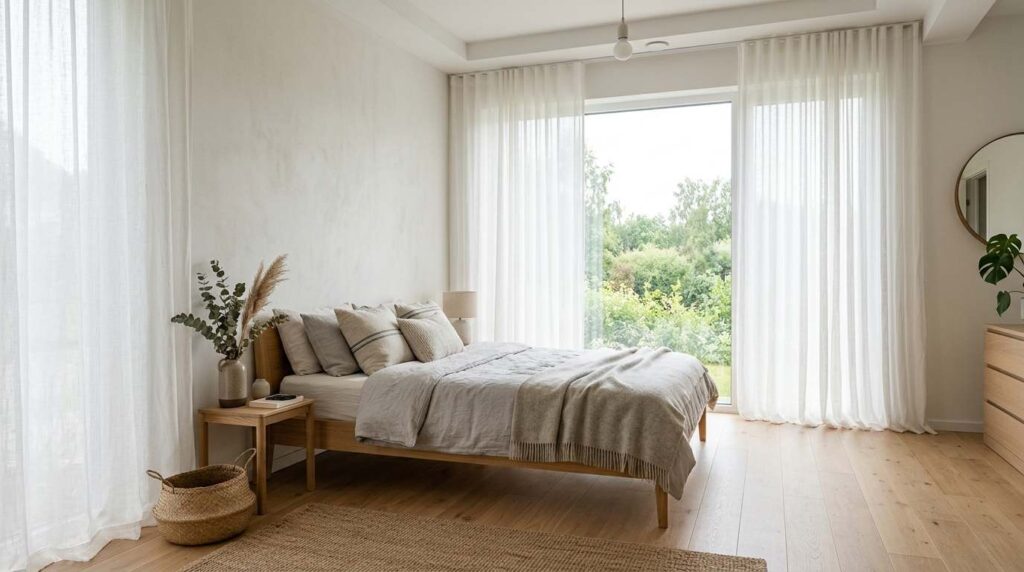
Installing simple, sheer white curtains that run the full height of your window, rather than shorter or heavier alternatives, maximizes natural light penetration while still providing gentle privacy and softness. This approach specifically addresses that Scandinavian priority of capturing every possible bit of daylight, since heavier curtains or dark colors would work directly against the light-maximizing goals central to this design philosophy.
I’ve found that linen sheers specifically offer the perfect balance, letting light diffuse beautifully throughout the room while still providing enough coverage that you’re not feeling completely exposed. The way these curtains move gently with any air circulation adds this subtle sense of life and movement to what’s otherwise a very still, restrained room.
4. Muted Sage Green Accent Wall
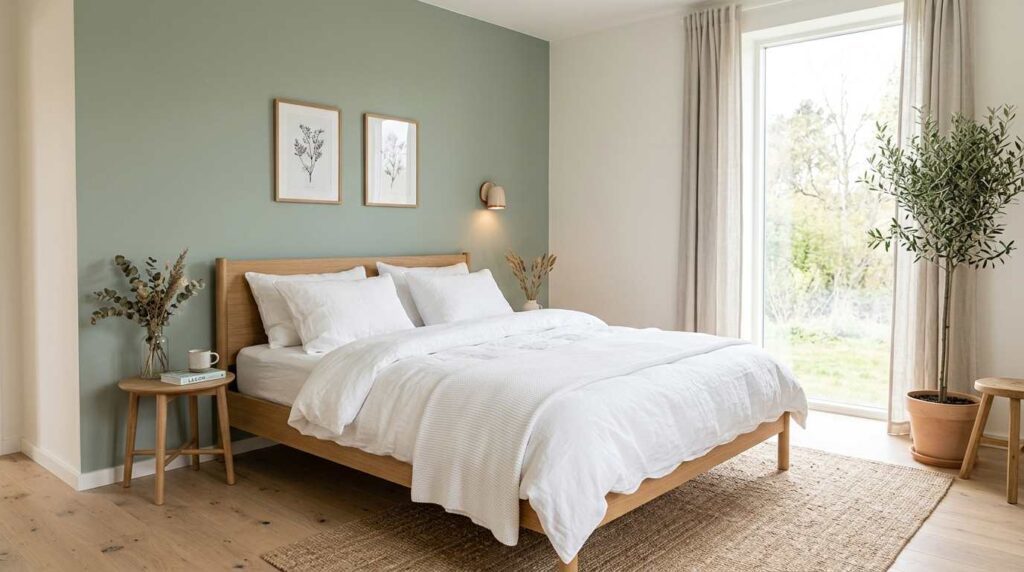
Rather than committing to stark white throughout, painting one wall this soft, muted sage green introduces gentle color while still maintaining that essential Scandinavian restraint and calm. This particular shade works beautifully because it reads as almost neutral in many lighting conditions while revealing more obvious green undertones in others, creating subtle depth without disrupting the room’s overall serenity.
This single accent wall approach lets you experiment with color without fully committing to a more saturated palette throughout the entire room. I’ve found that pairing this sage tone with light wood furniture and white bedding creates this beautiful, nature-inspired quality that still feels unmistakably minimal and Scandinavian in its overall restraint.
5. Exposed Wood Beam Ceiling Detail
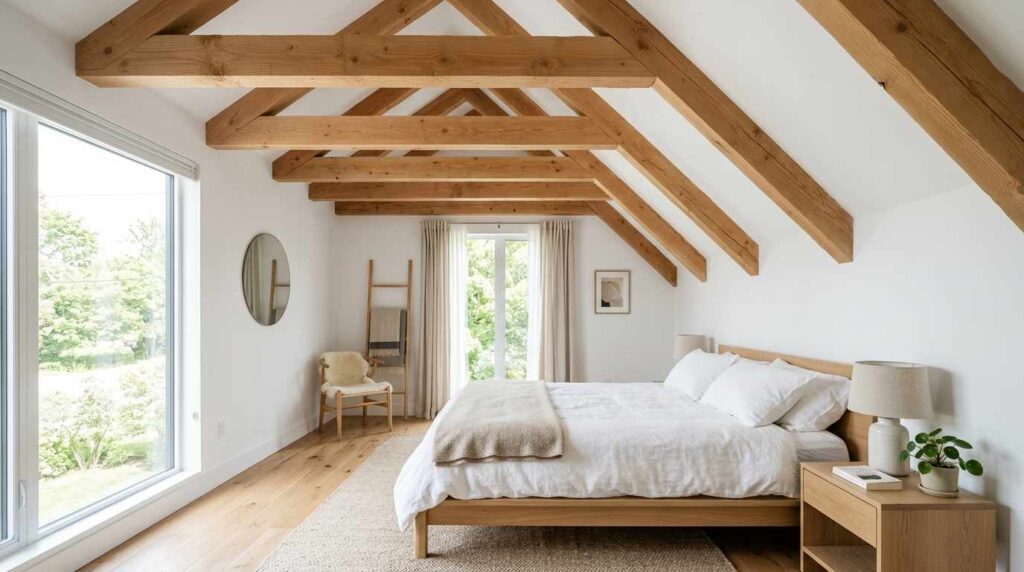
If your home’s architecture allows for it, leaving ceiling beams exposed rather than covering them creates genuine textural interest overhead without requiring any additional decorative elements. This architectural feature references traditional Scandinavian construction methods while adding visual dimension that a flat, uniform ceiling simply couldn’t provide.
Against predominantly white walls and minimal furniture, these exposed beams become this subtle but meaningful design statement, proving that architectural authenticity can carry a room’s visual interest without needing supplementary decoration. I’ve found that leaving the wood in its natural, unstained finish tends to look most authentically Scandinavian, embracing genuine material character over anything artificially treated or overly polished.
6. Single Statement Pendant Light
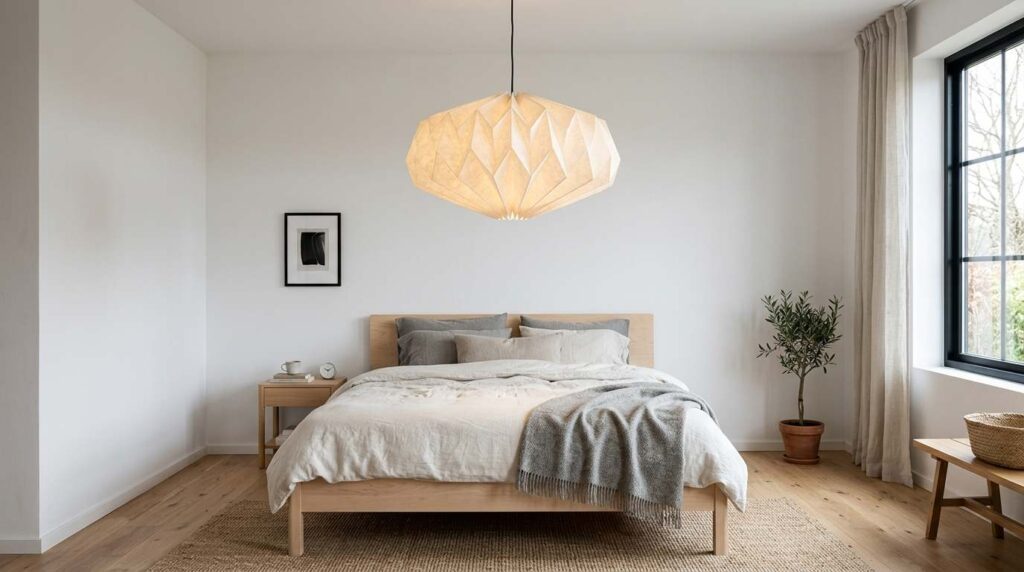
Rather than layering multiple light sources throughout the bedroom, choosing one significant, sculptural pendant light to hang from the ceiling creates genuine visual interest while maintaining that essential minimal restraint. This single fixture needs to be beautiful enough to function almost like art, since it’s carrying the room’s primary decorative statement in addition to its practical lighting function.
I’ve found that simple paper or fabric shade pendants in soft, organic shapes work particularly well for this approach, diffusing light gently while adding just enough visual presence to feel intentional rather than purely functional. This technique proves that sometimes one well-chosen decorative element accomplishes more than scattered smaller accessories throughout the room.
7. Layered Wool Throws for Texture
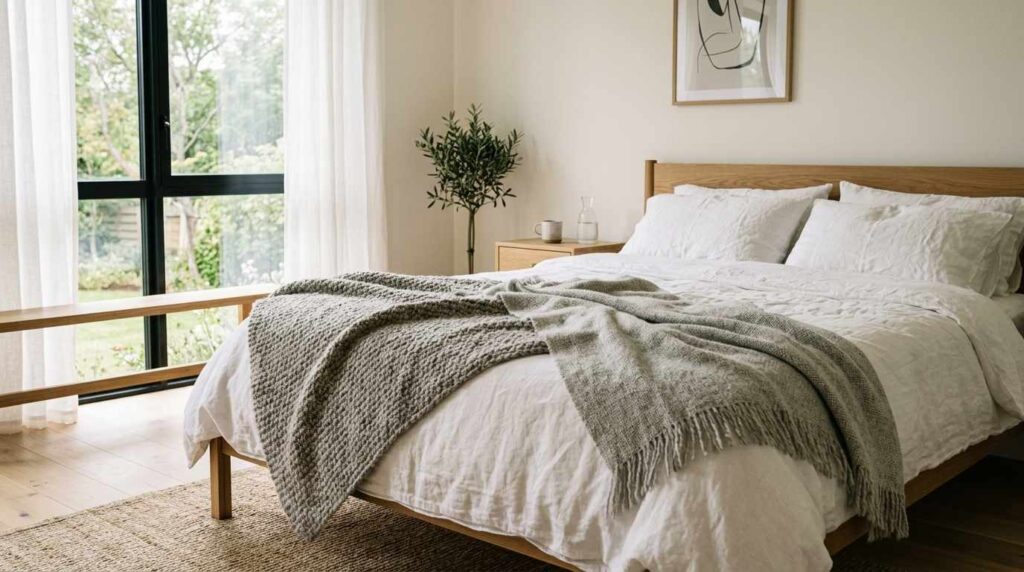
Draping one or two genuine wool throws across the foot of your bed introduces essential tactile warmth and texture without requiring any additional color or pattern that might compromise the room’s overall restraint. The wool’s natural texture provides visual interest through its material quality alone, catching light differently than smooth cotton or linen bedding underneath.
This approach specifically addresses that Scandinavian understanding that minimal doesn’t mean uncomfortable, incorporating genuine coziness through material choice rather than through additional decorative objects. I’ve found that choosing wool in the same neutral tones as your existing bedding maintains cohesion while still adding this important textural dimension that keeps the whole bed from feeling flat or one-dimensional.
8. Simple Woven Rug Underfoot
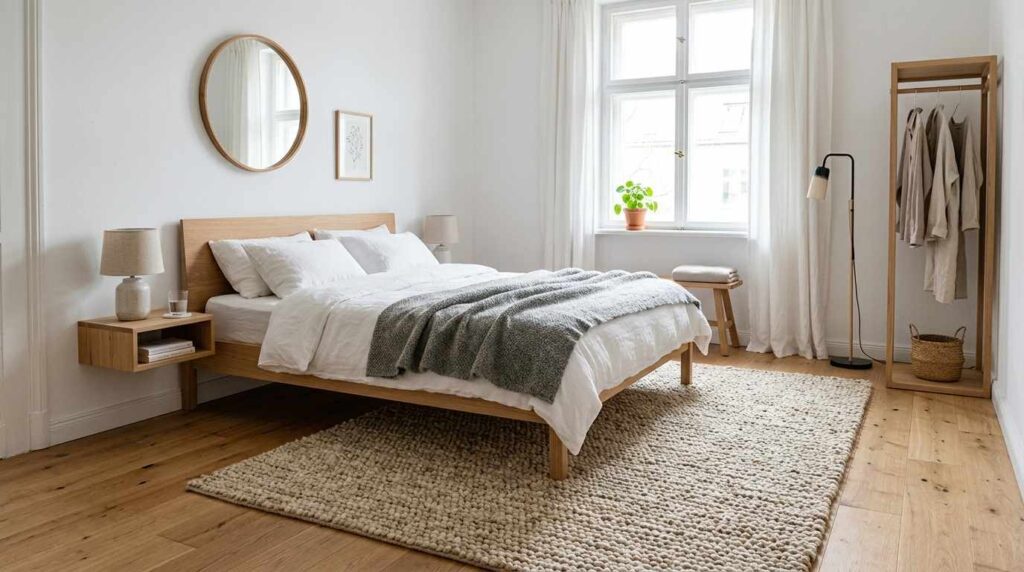
Adding one substantial woven rug in natural, undyed fibers grounds the bedroom while introducing genuine organic texture that complements wood furniture and linen textiles throughout the space. This single textile element provides warmth underfoot, both literally and visually, without requiring any pattern or color that might disrupt the room’s overall calm.
I’ve found that choosing a rug with subtle texture variation, rather than a perfectly flat, uniform weave, adds just enough visual interest to feel intentional rather than purely functional. This approach proves that even flooring choices deserve the same thoughtful consideration as furniture or wall treatments within genuinely successful minimalist design.
9. Floating Nightstand for Visual Lightness
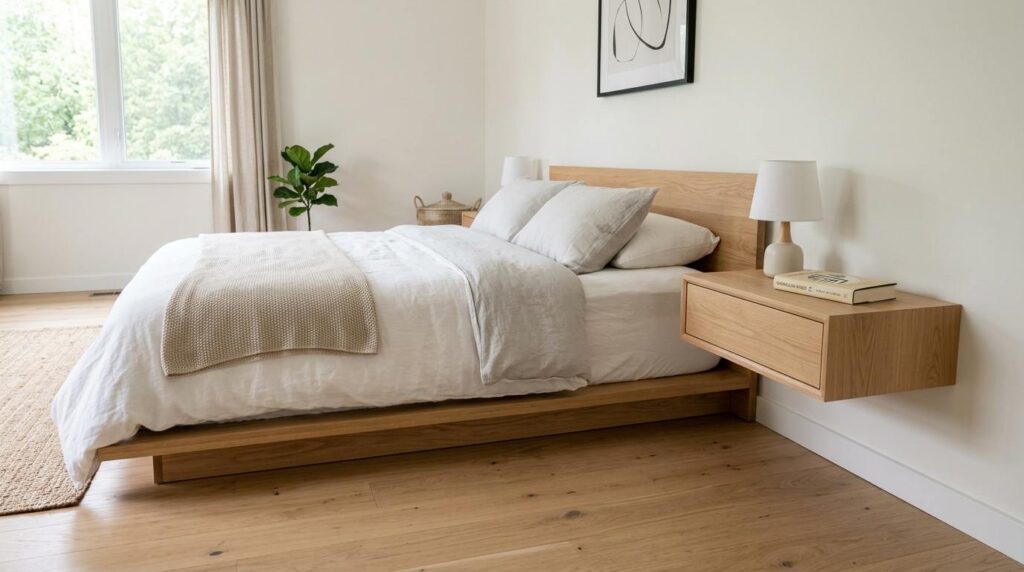
Choosing a simple, wall-mounted floating nightstand instead of a traditional freestanding option keeps the floor space feeling open and uninterrupted, essential for maintaining that airy, spacious quality central to Scandinavian minimalism. This detail lets light and visual space flow beneath the nightstand rather than being blocked by furniture legs or a solid base.
This approach requires slightly more complex installation than simply placing a traditional nightstand beside your bed, but the resulting visual lightness makes a genuine difference in how spacious even a smaller bedroom feels. I’ve found that keeping the surface of this floating nightstand nearly empty, just a small lamp and perhaps one book, reinforces this sense of airiness the mounting technique itself establishes.
10. Botanical Element as Sole Decoration
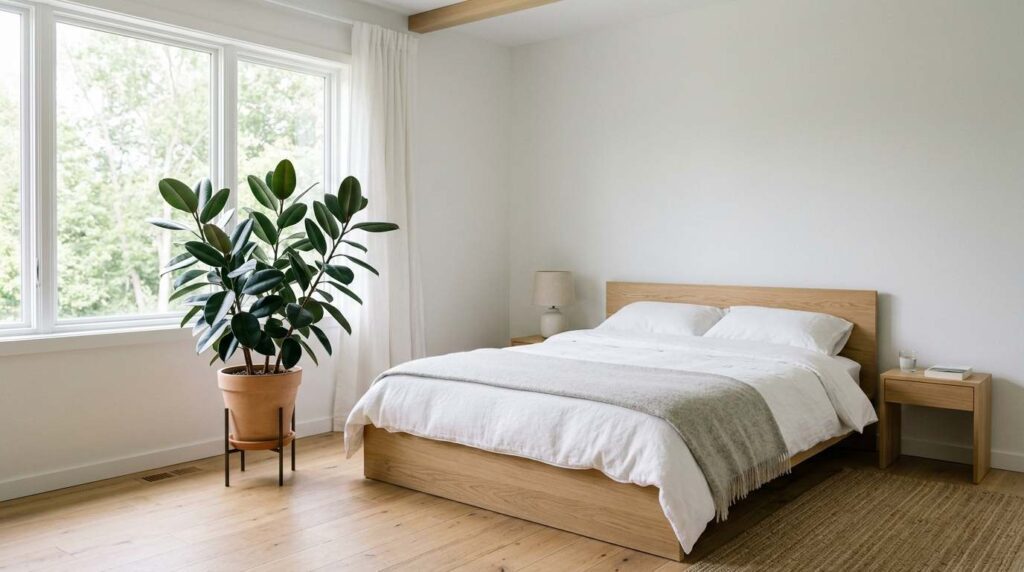
Rather than incorporating multiple decorative objects throughout the room, choosing one significant potted plant, ideally something with substantial presence like a fiddle leaf fig or rubber plant, provides organic life and visual interest as essentially the room’s only true decoration. This single green element brings genuine vitality without requiring any additional decorative clutter.
I’ve found that this approach works particularly well because plants naturally embody that Scandinavian appreciation for organic, living materials while requiring genuine care and attention that static decorative objects never demand. This single botanical statement proves that sometimes one thoughtfully chosen living element accomplishes more visual and emotional impact than an entire shelf of curated objects.
11. Matte Black Accents Against White

Introducing just a few matte black elements, perhaps simple window frames, a black metal light fixture, or minimal black hardware, creates subtle graphic definition against an otherwise all-white room. This restrained use of black provides visual structure and contrast without introducing any pattern or excessive color that would compromise the overall minimal aesthetic.
This technique requires genuine discipline in choosing exactly where black appears, since too much would shift the whole room’s mood considerably, while too little wouldn’t provide enough definition to feel intentional. I’ve found that limiting black to functional elements, window frames, light fixtures, hardware, rather than purely decorative accents, keeps this approach feeling authentically Scandinavian rather than trend-driven.
12. Linen Bedding in Natural Undyed Tones
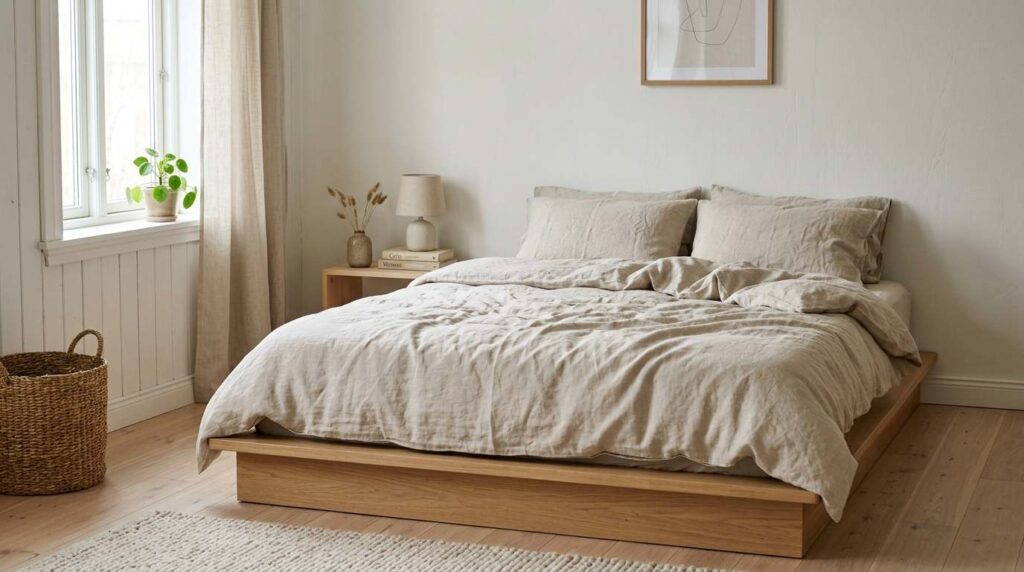
Choosing linen bedding specifically in its natural, undyed color rather than pure white or any other processed shade brings genuine textural authenticity and subtle color variation that manufactured, uniform fabrics simply cannot replicate. This slightly imperfect, organic quality embodies that essential Scandinavian appreciation for honest, natural materials over anything artificially perfected.
I’ve found that linen’s characteristic wrinkles and relaxed drape actually enhance this minimal aesthetic rather than looking unkempt, since that slightly lived-in quality feels more genuine and intentional than stiff, overly pressed bedding might. This material choice proves that sometimes embracing natural imperfection creates more sophisticated results than pursuing artificial perfection throughout your bedroom textiles.
13. Built-In Storage for Visual Calm
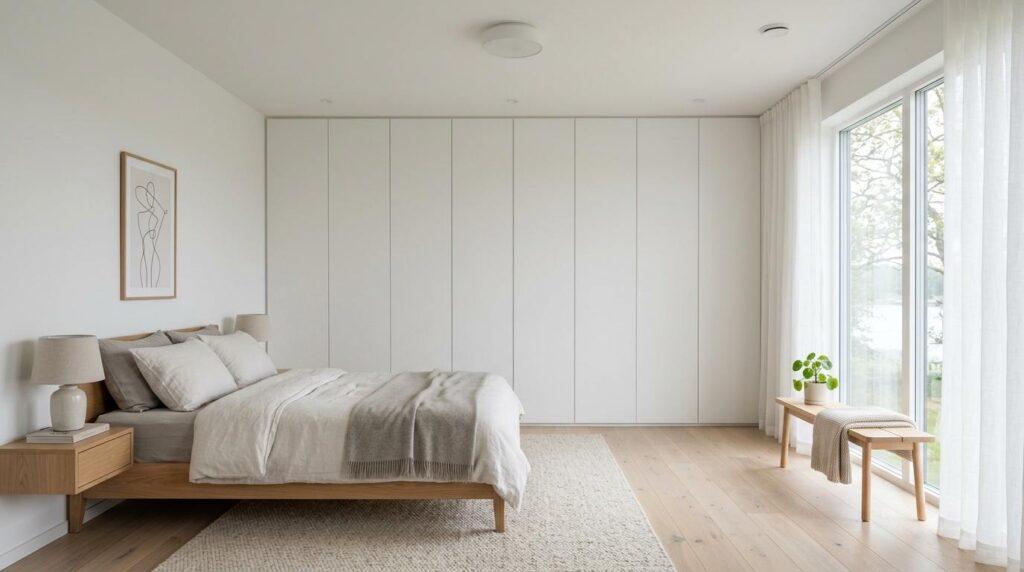
Investing in built-in wardrobe or storage solutions, rather than freestanding furniture pieces, eliminates visual clutter while maximizing the room’s sense of spaciousness and calm. This approach requires greater upfront planning and investment, but the resulting seamless walls, uninterrupted by bulky furniture silhouettes, genuinely transforms how minimal and intentional the whole room feels.
I’ve found that choosing built-ins with simple, flat-panel doors in the same white as surrounding walls creates this nearly invisible storage solution, essentially disappearing into the architecture itself. This technique proves that sometimes achieving genuine minimalism requires addressing practical storage needs through architecture rather than simply avoiding storage furniture altogether.
14. Simple Woven Basket for Blankets
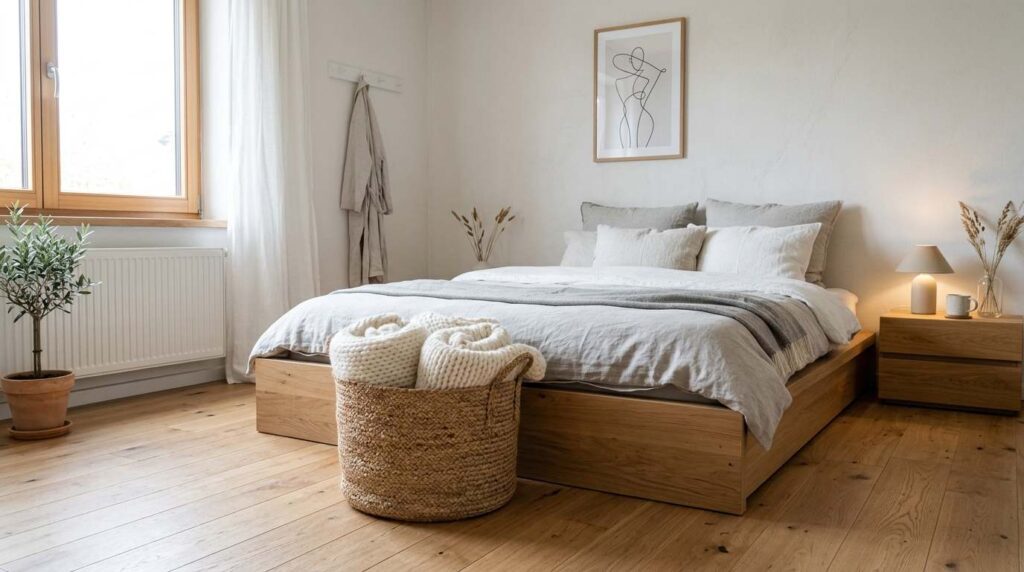
Rather than a bulky storage bench or chest, using one simple, natural fiber woven basket to hold extra blankets provides practical storage while adding genuine organic texture. This humble, functional object embodies that essential Scandinavian principle of choosing items that serve real purpose while still contributing positively to the room’s overall aesthetic.
I’ve found that placing this basket somewhere visible, rather than hiding it in a closet, actually enhances the room’s styling since the woven texture provides visual interest that complements wood furniture and linen textiles throughout. This approach proves that practical, everyday storage solutions can double as genuine decorative elements when chosen thoughtfully.
15. Dusty Blue as a Gentle Color Accent

Introducing dusty, muted blue through one or two elements, perhaps a single throw pillow or a small ceramic vessel, brings gentle color variation without disrupting the room’s overall restraint and calm. This particular shade works beautifully within Scandinavian design because its muted, greyish quality never feels bright or demanding the way more saturated blues might.
I’ve found that limiting this color to just one or two small touches, rather than incorporating it more extensively throughout the room, maintains that essential minimal principle where color serves as gentle accent rather than dominant statement. This restrained approach proves that even subtle color introduction requires the same thoughtful editing that governs every other decision within genuinely successful minimalist design.
16. Unlined Wood Flooring Left Natural
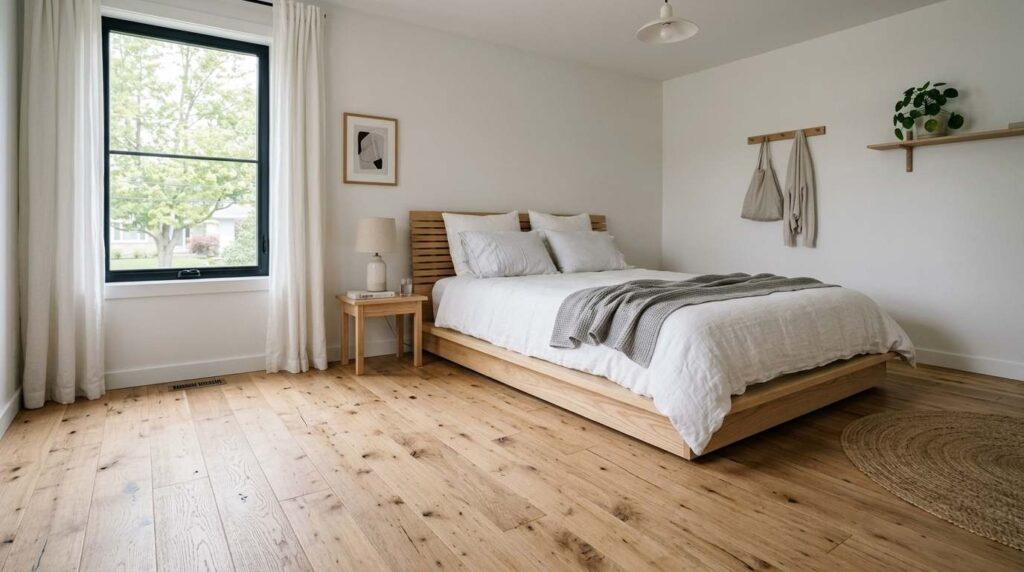
Choosing to leave wood flooring in its natural, unstained state rather than applying any color treatment celebrates the material’s authentic character and grain pattern. This approach requires trusting that genuine wood texture provides sufficient visual interest without needing enhancement through artificial staining or treatment.
I’ve found that this natural flooring approach pairs beautifully with white walls and minimal furniture, creating this authentic, honest material palette throughout the room. This technique proves that sometimes the most sophisticated design choice is simply allowing quality natural materials to exist as they are, without unnecessary intervention or alteration.
17. Ceramic Vessel with Single Dried Stem
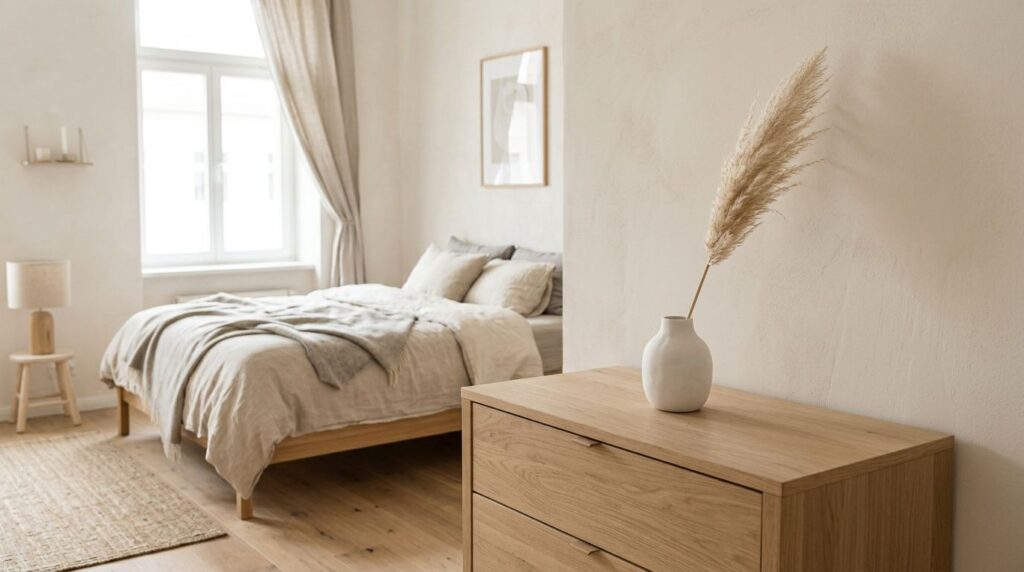
Rather than an elaborate floral arrangement, placing one simple ceramic vessel holding just a single dried botanical stem creates minimal decorative interest without requiring ongoing maintenance or introducing visual clutter. This restrained approach to decoration embodies that essential principle of choosing quality over quantity throughout Scandinavian design.
I’ve found that this single stem, whether it’s dried pampas grass, a simple branch, or preserved eucalyptus, provides genuine visual interest through its organic form and subtle movement, especially when placed near a window where air circulation creates gentle motion. This technique proves that minimal decoration doesn’t mean no decoration, it means choosing exactly the right amount and no more.
18. Matte Ceramic Table Lamp
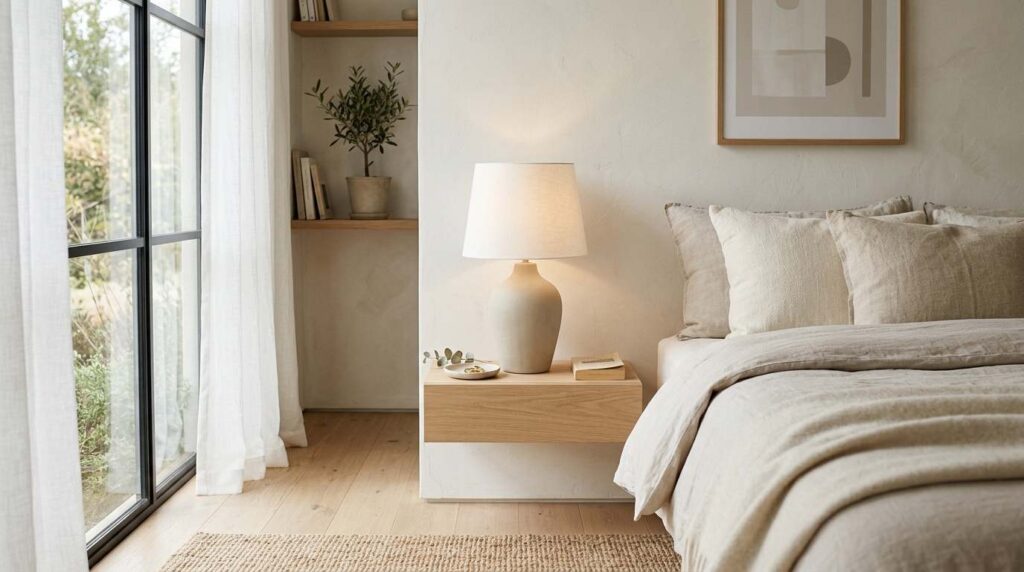
Selecting a simple, matte-finished ceramic table lamp in a soft, neutral tone provides essential task lighting while contributing genuine textural and material interest to your nightstand surface. This single functional object, chosen thoughtfully rather than as an afterthought, embodies that essential Scandinavian principle where everyday items deserve the same design consideration as purely decorative pieces.
I’ve found that choosing lamps with simple, sculptural forms rather than anything overly ornate or decorative maintains cohesion with the room’s overall restrained aesthetic while still providing genuine visual interest through form and material quality. This approach proves that functional necessities can absolutely double as meaningful design elements when selected with appropriate care and intention.
19. Consistent Neutral Palette Throughout
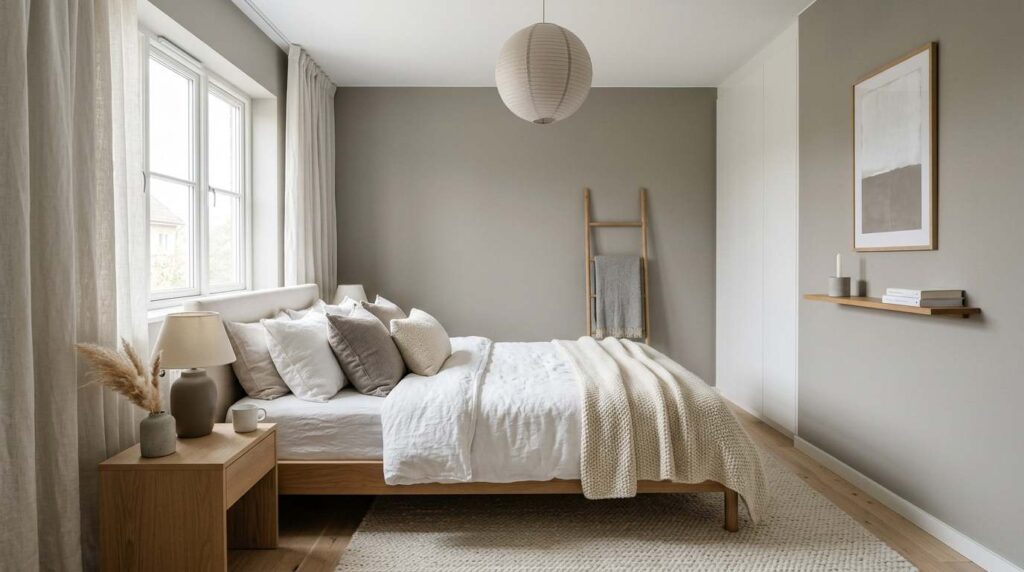
Committing to a genuinely narrow neutral palette, various shades of white, cream, and warm grey, throughout every element in the bedroom creates this calming, cohesive foundation that Scandinavian minimalism relies on so heavily. This approach requires real discipline in evaluating every potential addition against this established palette, resisting anything that might introduce jarring color variation.
I’ve found that this consistency doesn’t mean everything needs to match perfectly, but rather that everything should exist comfortably within the same general tonal family, creating harmony through variation rather than uniformity. This technique proves that sometimes the most sophisticated minimalist rooms achieve their calm through this kind of careful, considered color restraint rather than through the absence of color altogether.
20. Negative Space as Intentional Design Element
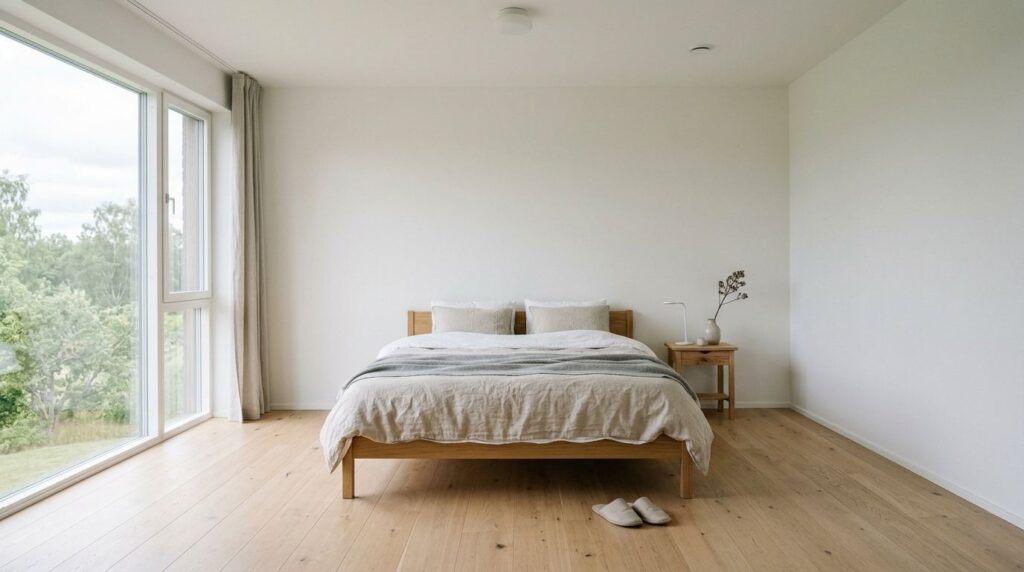
Perhaps the most fundamental principle underlying successful Scandinavian minimalist bedrooms involves genuinely embracing empty space rather than feeling compelled to fill every available surface or corner with furniture and decoration. This requires real confidence and restraint, resisting that common impulse to add more simply because space remains available.
I’ve found that treating negative space with the same intentionality you’d apply to any actual furniture or decorative choice transforms how sophisticated and calm a room ultimately feels. This final principle ties together everything else on this list, proving that genuine Scandinavian minimalism succeeds not through any specific formula of furniture and decor, but through this underlying philosophy of restraint, quality over quantity, and trusting that empty space itself contributes meaningfully to how peaceful and intentional your bedroom ultimately feels.