Fitting two beds into a small room can feel challenging, especially when you want the space to remain comfortable, organized, and attractive. The right layout can make a compact bedroom work surprisingly well without making it feel crowded. Whether you are decorating a shared kids’ bedroom, a guest room, or a multifunctional space, smart bed placement is the key to creating usable floor space while giving each sleeper a comfortable zone.
These two-beds-in-one-small-room ideas combine practical layouts with stylish details, including bunk beds, twin beds, corner arrangements, storage solutions, and visual tricks that make a room appear more spacious. Use the ideas as inspiration, then adapt the arrangement to your room’s dimensions, windows, doors, storage needs, and daily routines.
1. Place Twin Beds Along Opposite Walls
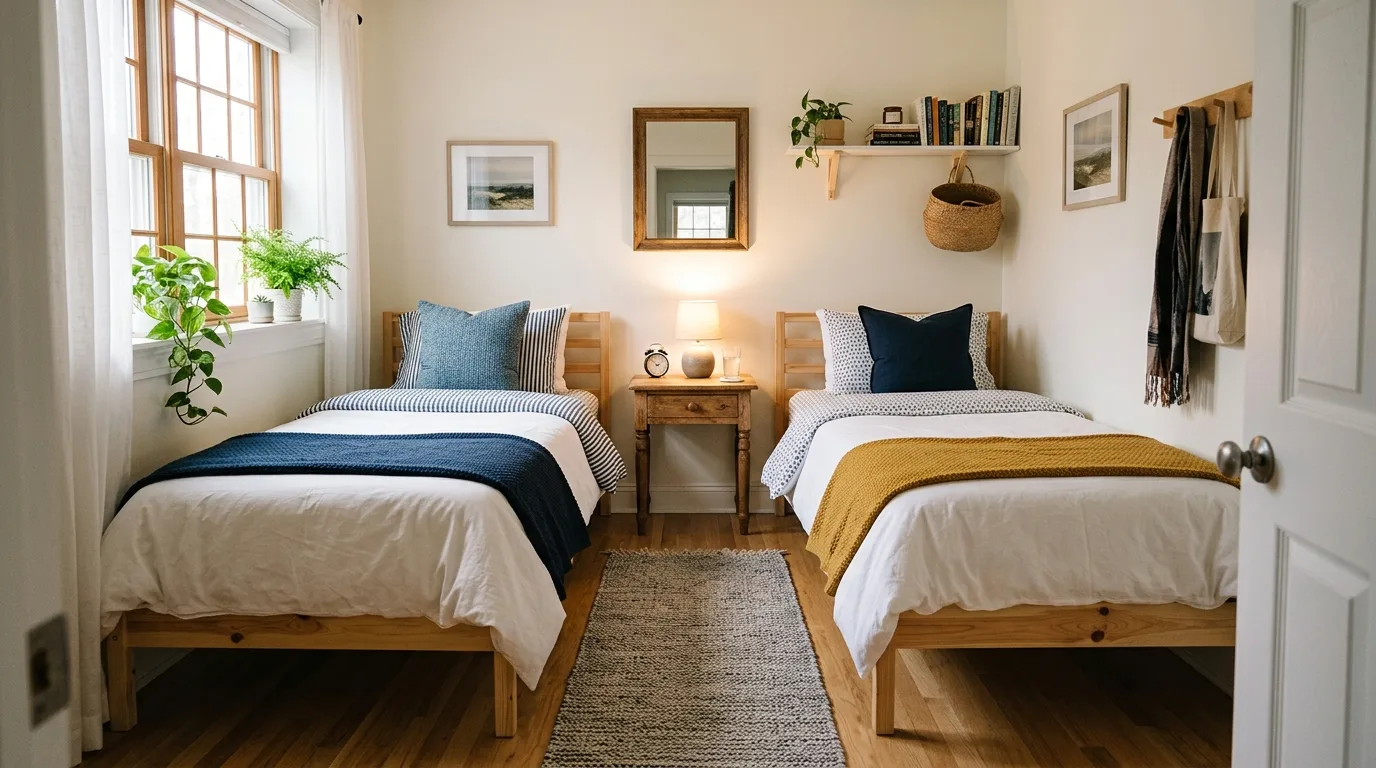
When a small room is wider than it is long, placing two twin beds against opposite walls can create a balanced and symmetrical layout. Leave the central area open so the room does not feel blocked by furniture. Matching or coordinated bedding makes the arrangement look intentional rather than crowded, while slim nightstands or wall-mounted shelves can give each sleeper a convenient surface without consuming valuable floor space.
Keep the beds as close to the walls as practical while preserving comfortable access. If the room has a window between the beds, use similar curtains or shades to reinforce the symmetry. A shared rug placed between the beds can visually connect both sleeping areas and soften the room. Choose light bedding and streamlined furniture when possible, particularly if natural light is limited.
2. Create a Cozy L-Shaped Bed Layout
An L-shaped arrangement is useful when two beds need to share a corner of a compact bedroom. Position one bed along the longer wall and the second perpendicular to it, creating a natural corner arrangement. This layout leaves more open space toward the center and can work particularly well in children’s or siblings’ rooms.
To keep the corner from looking bulky, choose beds with simple frames and use bedding in coordinating colors rather than identical patterns. The empty space beside the beds can become a small reading nook, play area, or storage zone. A narrow shelf above each bed provides space for books and small accessories without using floor area. Make sure doors, drawers, and walking paths remain unobstructed before committing to the layout.
3. Use Bunk Beds to Free the Floor
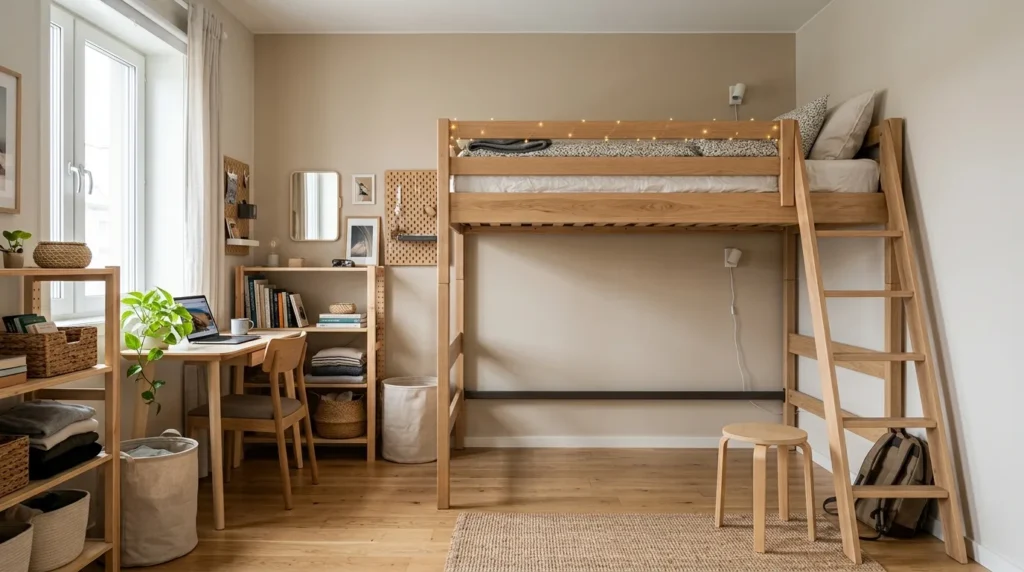
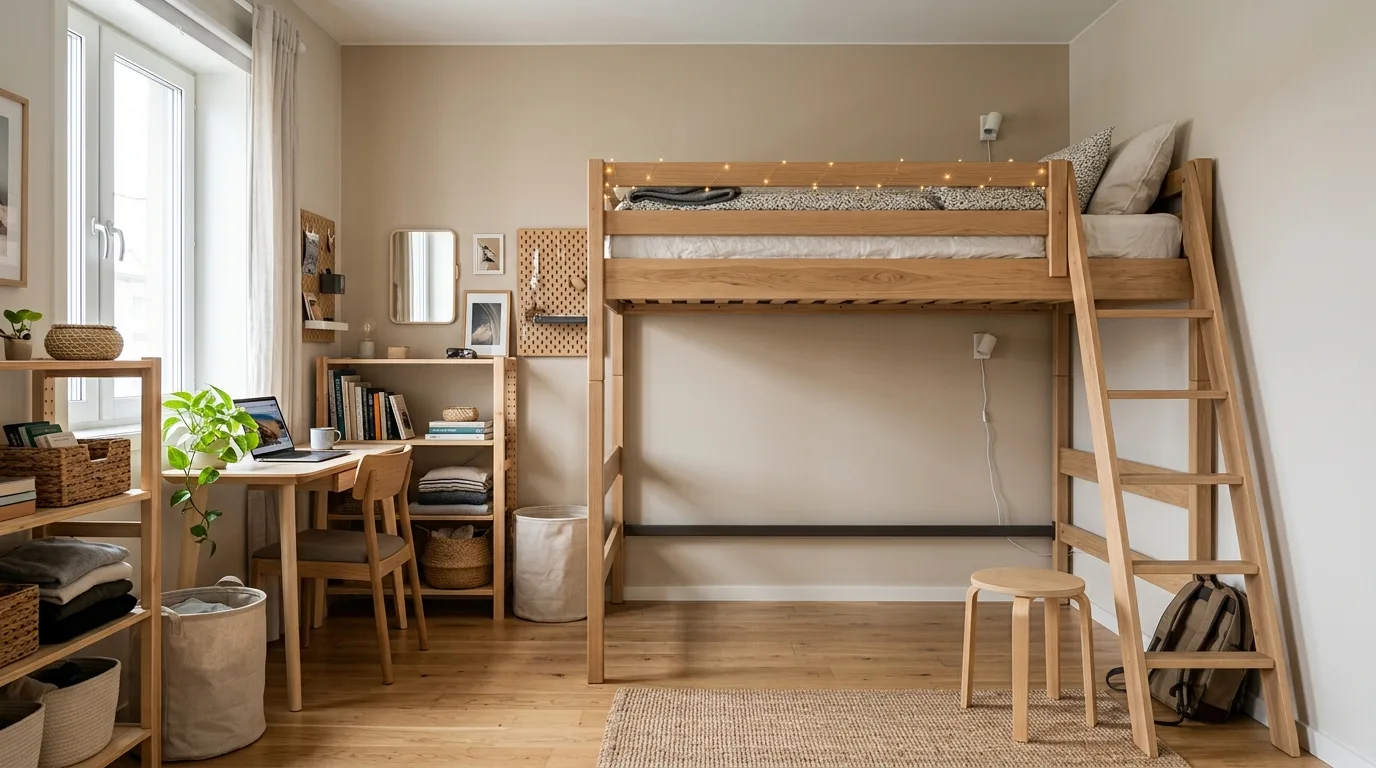
Bunk beds are one of the most effective solutions when two people need to sleep in a genuinely small room. By stacking the beds vertically, you preserve much of the floor area for storage, play, homework, or movement. A simple wooden or metal bunk can suit a variety of decorating styles, from Scandinavian and modern to traditional and playful.
Make the most of the saved floor space by adding a compact dresser, rolling storage bins, or a small desk underneath or beside the bunk. Keep the surrounding walls visually simple so the room does not feel overloaded. If the room has low ceilings, choose a bunk with an appropriately low profile and verify that the upper sleeper has adequate clearance. Follow the manufacturer’s safety requirements for guardrails, ladders, and mattress dimensions.
4. Try a Perpendicular Twin-Bed Arrangement
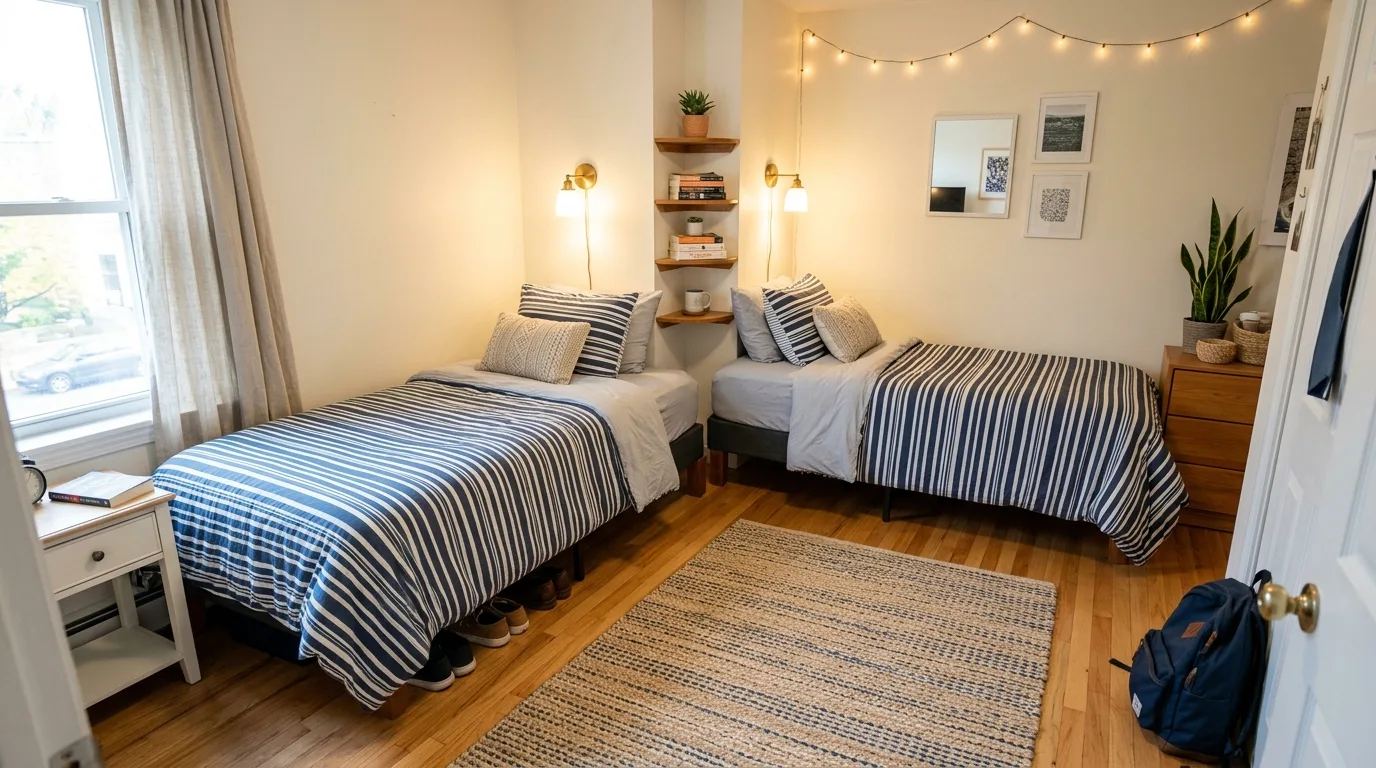
Two beds positioned at a right angle can make an awkward small room feel more structured. Instead of lining both beds along the same wall, place one bed along a wall and the other against an adjacent wall. This is especially useful when a doorway, closet, or window prevents a traditional side-by-side arrangement.
The corner created between the beds can become a useful shared zone. A small round table, narrow pedestal, or wall-mounted shelf can serve as a common bedside surface without adding visual bulk. Use similar linens to connect the two beds while allowing each sleeper to personalize their space with a pillow, throw, or small artwork. Keep the main walking path open so the room remains easy to navigate.
5. Choose Beds With Built-In Storage
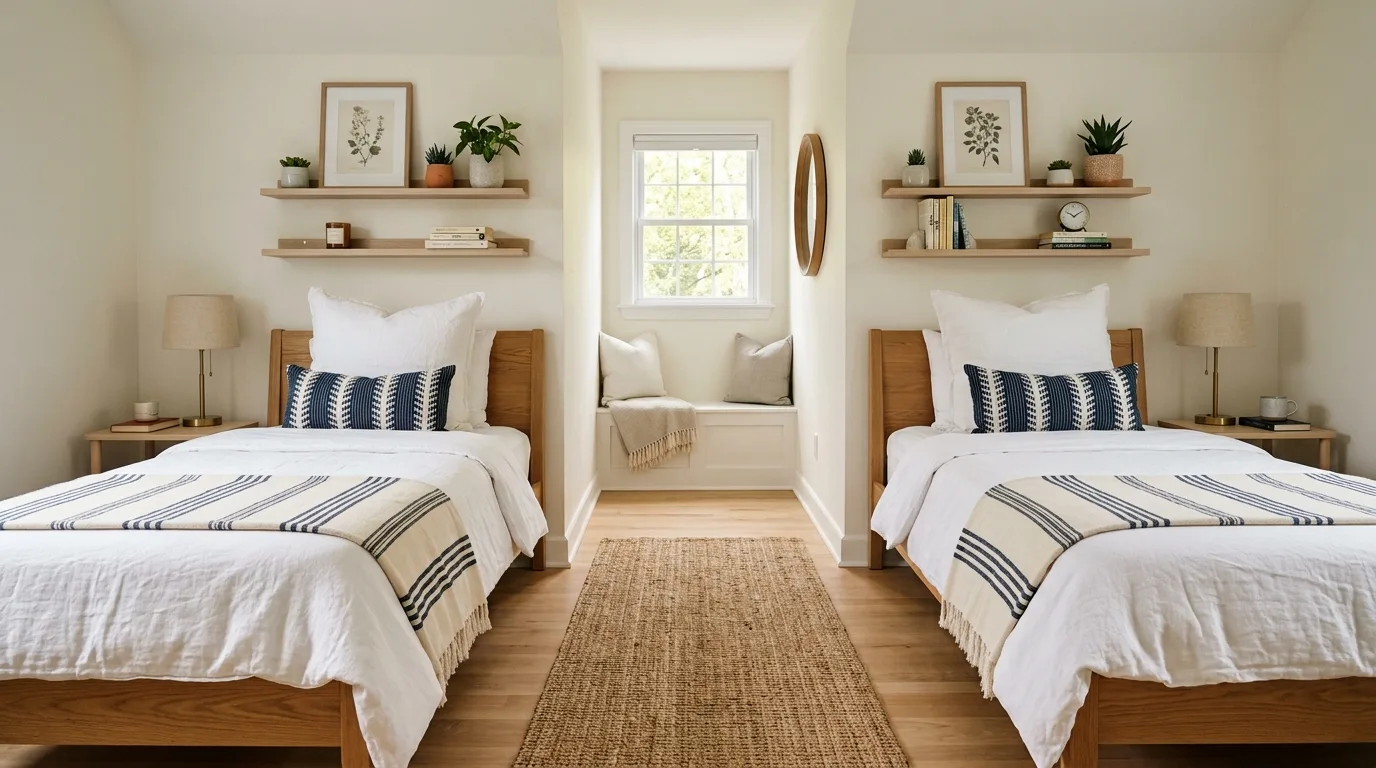
When two beds occupy most of the available floor space, furniture that performs more than one job becomes especially valuable. Storage beds with drawers underneath provide hidden room for clothing, extra bedding, toys, or seasonal belongings. This eliminates the need for a large standalone dresser and can make the entire bedroom feel more open.
For a cohesive look, choose two beds with matching finishes or complementary materials. If you already own standard twin beds, under-bed containers can provide a similar storage benefit. Select containers that slide easily and have secure lids if the room is prone to dust. Keep frequently used items in the easiest-to-reach drawers and reserve harder-to-access storage for occasional-use belongings.
6. Install Wall-Mounted Bedside Shelves
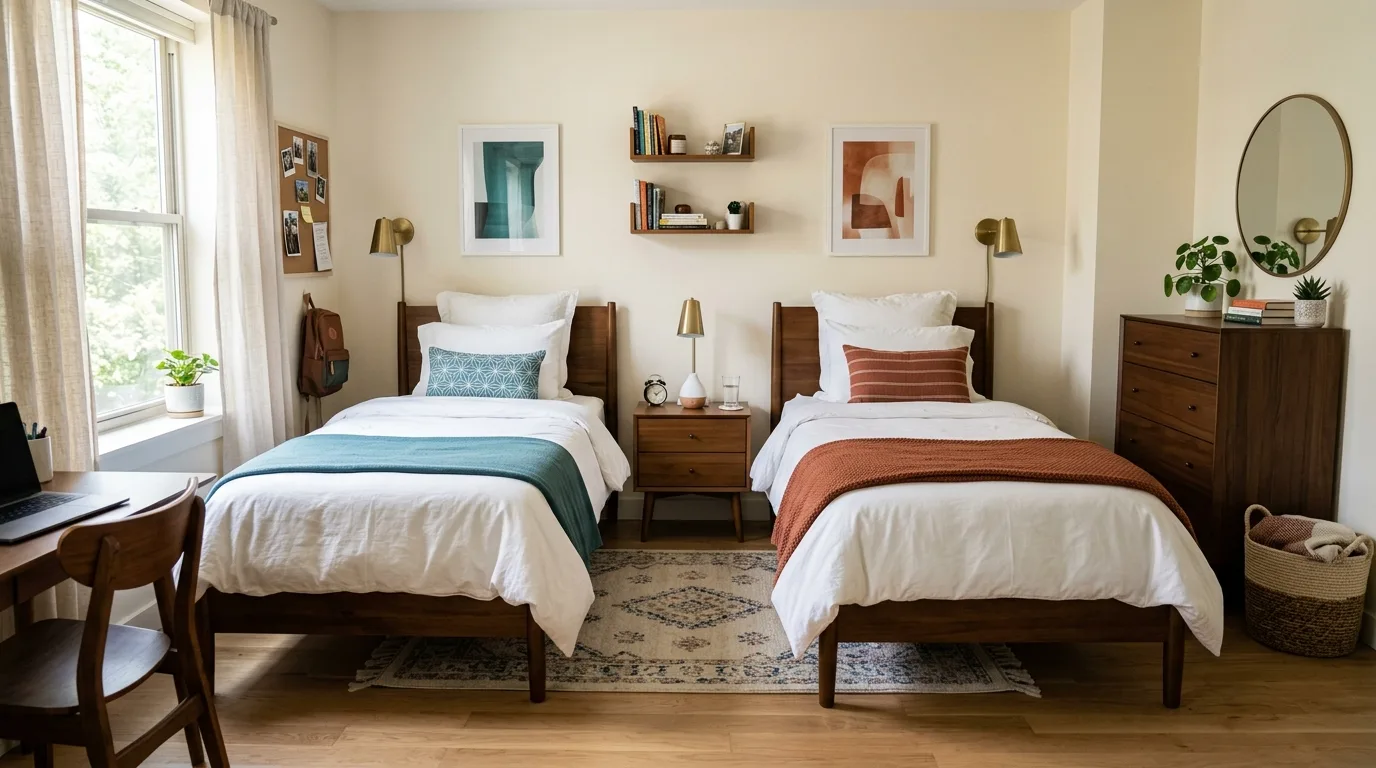
Traditional nightstands can consume more floor space than a small bedroom can comfortably spare. Wall-mounted shelves offer a slimmer alternative while still providing a place for books, lamps, glasses, or decorative accessories. Install one beside each bed so both sleepers have an equivalent personal zone.
Choose shelves with a depth that fits the essentials without protruding too far into the walkway. Wall-mounted reading lights can eliminate the need for table lamps altogether, creating an even cleaner arrangement. Use baskets or small boxes on the shelves to prevent loose items from making the room look cluttered. A consistent shelf finish, such as natural wood or white laminate, can also visually connect the two sides of the room.
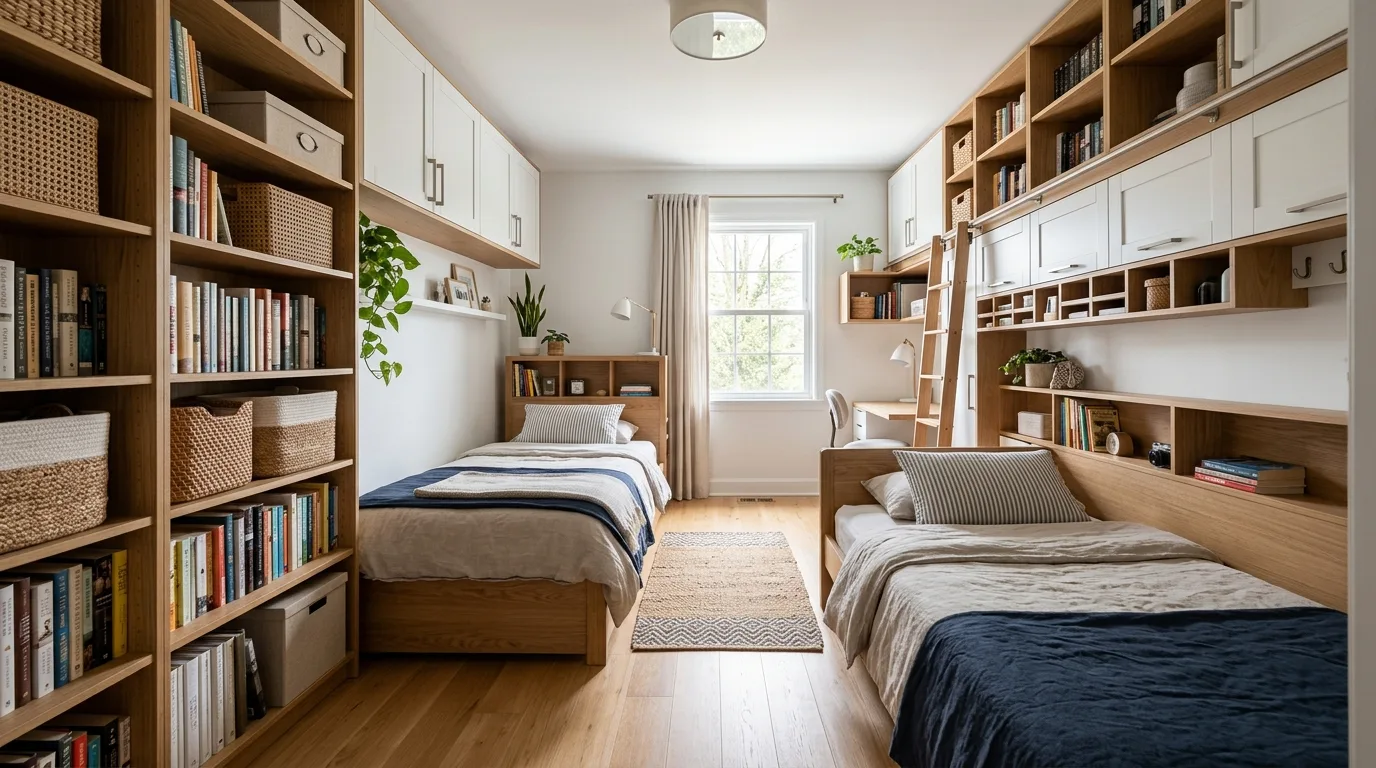
7. Make a Shared Headboard Wall
A shared headboard wall can make two separate beds feel like one carefully designed composition. Place the beds side by side with a small gap between them, then use a continuous visual element behind both sleeping areas. This might be a painted accent wall, wood paneling, wallpaper, or a long upholstered headboard-style treatment.
The technique is particularly effective in small rooms because it reduces visual fragmentation. Rather than giving each bed a completely different decorative treatment, repeat one or two colors throughout the bedding and wall decor. Keep accessories minimal so the shared wall remains the main focal point. If the beds cannot be placed directly beside one another, the same concept can be achieved with matching artwork or evenly spaced wall-mounted shelves.
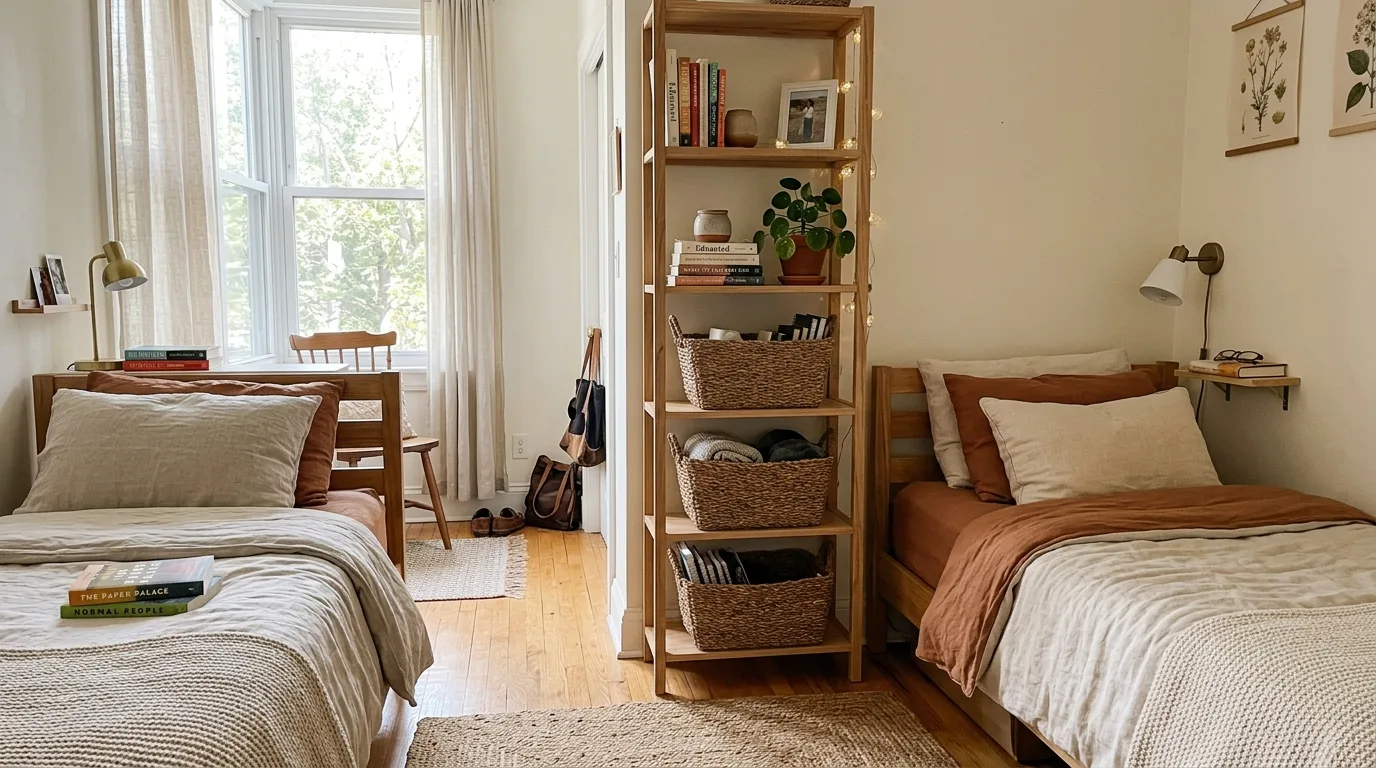
8. Use a Daybed and Trundle Combination
A daybed with a pull-out trundle can provide two sleeping surfaces without requiring two full-size beds to remain visible all day. This is an excellent choice for a compact guest bedroom or a room that needs to function as a lounge or study during the daytime. Push the trundle underneath the main bed when it is not needed, instantly recovering valuable floor space.
Style the upper daybed with cushions and a tailored cover so it resembles a small sofa during the day. Choose bedding for the trundle that coordinates with the main bed without requiring an identical setup. Before purchasing, measure the room carefully to confirm that there is enough open floor space to pull the lower bed completely out. This layout works best when the trundle can be accessed without moving other furniture.
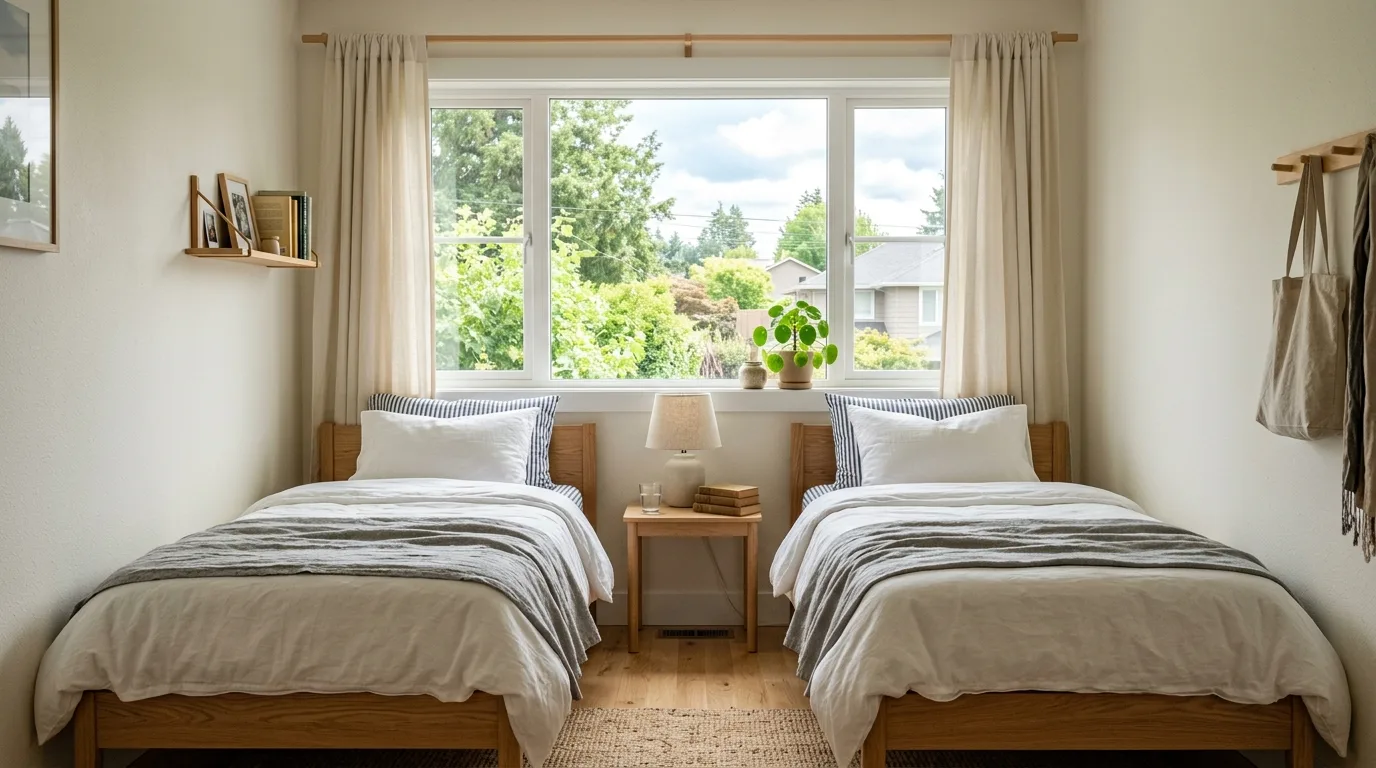
9. Divide the Room With a Narrow Open Shelf
If two sleepers need a greater sense of personal space, a narrow open shelving unit can act as a lightweight divider between beds. Unlike a solid partition, an open shelf allows light to travel through the room and provides useful storage at the same time. Place the beds with their headboards facing opposite directions or use the shelving to separate parallel sleeping zones.
Keep the shelves only partially filled so the divider does not become visually heavy. Baskets can hide smaller belongings, while a few books and decorative objects add personality. Choose a unit that is securely anchored, particularly in a child’s room. The goal is to establish two recognizable zones without creating a cramped corridor or blocking natural light from a window.
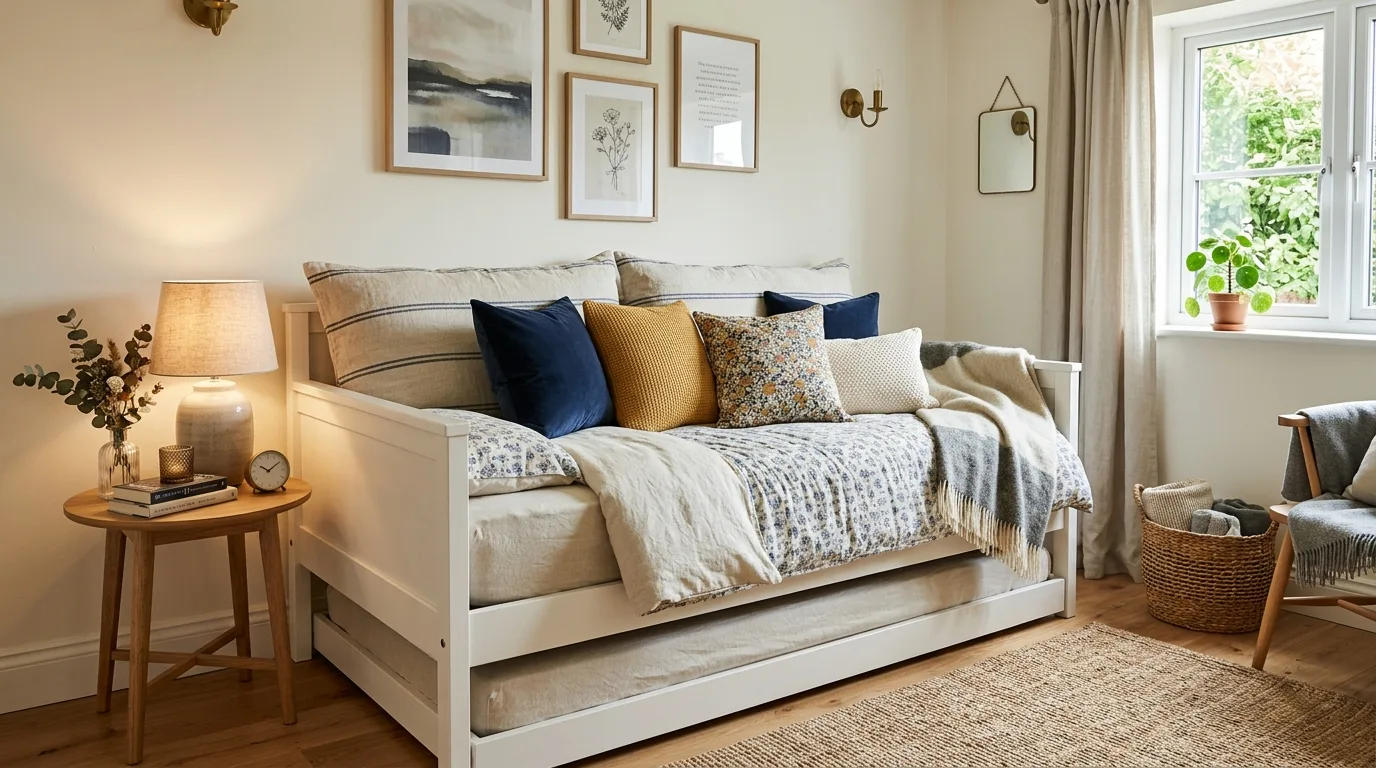
10. Fit Two Beds Beneath a Window
A wide window wall can sometimes provide the best location for two twin beds in a small bedroom. Place the beds parallel beneath the window, leaving enough clearance for curtains, blinds, and ventilation. Low-profile bed frames are especially useful because they preserve sightlines and allow natural light to reach more of the room.
Use matching headboards or identical bedding to create a polished appearance. If a radiator or heating unit is located beneath the window, maintain the required clearance rather than pushing furniture directly against it. Keep window treatments simple, using shades or curtains that can open fully during the day. The resulting arrangement can feel airy because the beds occupy one defined zone while the opposite side remains available for storage or movement.
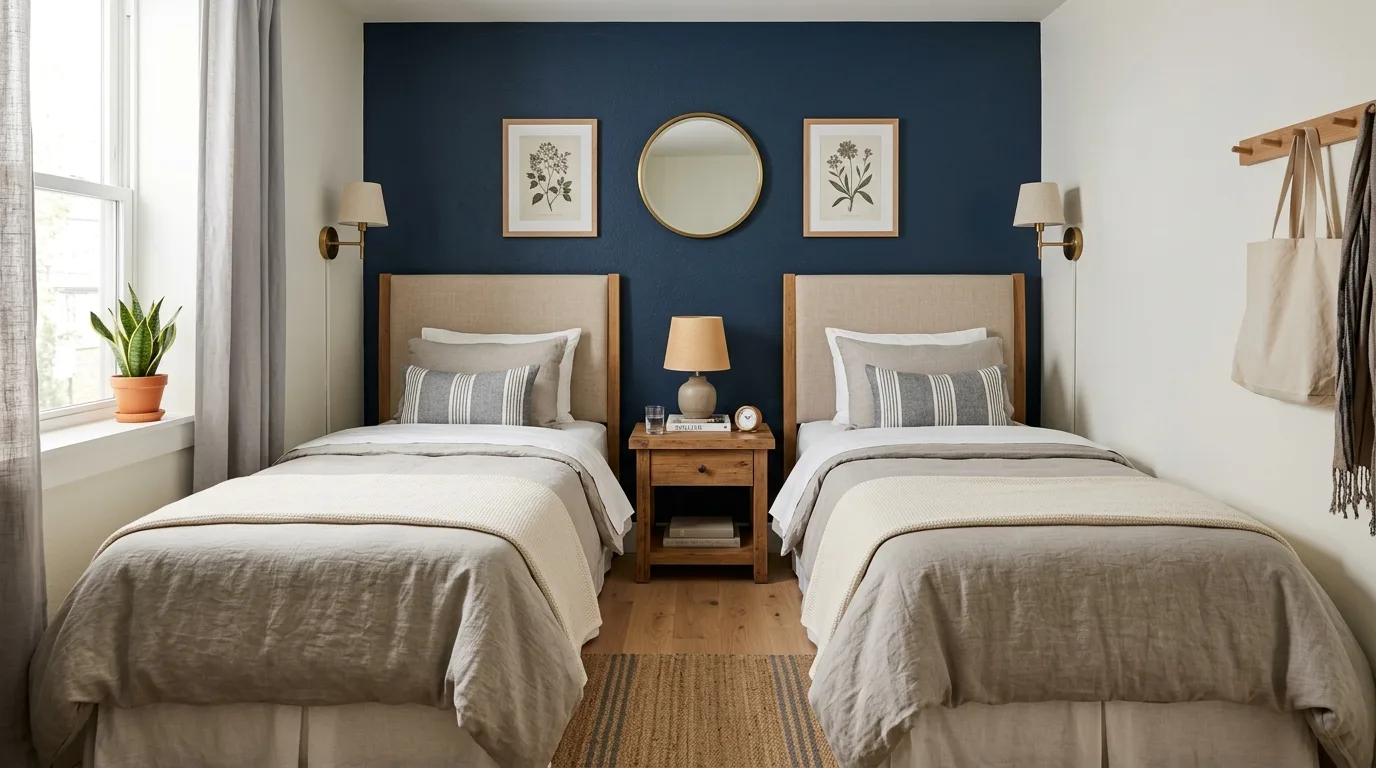
11. Add a Soft Rug Between the Beds
A rug can help two separate beds feel connected while adding warmth and comfort to a compact room. Instead of placing a tiny rug beside each bed, use one appropriately sized rug that extends into the space between them. This creates a shared visual anchor and can make a symmetrical layout look more intentional.
Choose a low-pile rug when doors or drawers need to pass over it, and select a pattern that will not overwhelm the room. Neutral geometric designs, subtle stripes, or softly textured solids can add interest without making the floor feel busy. Position the rug so it does not create a tripping hazard around the main walkway. In a children’s room, a washable option can make everyday maintenance much easier.
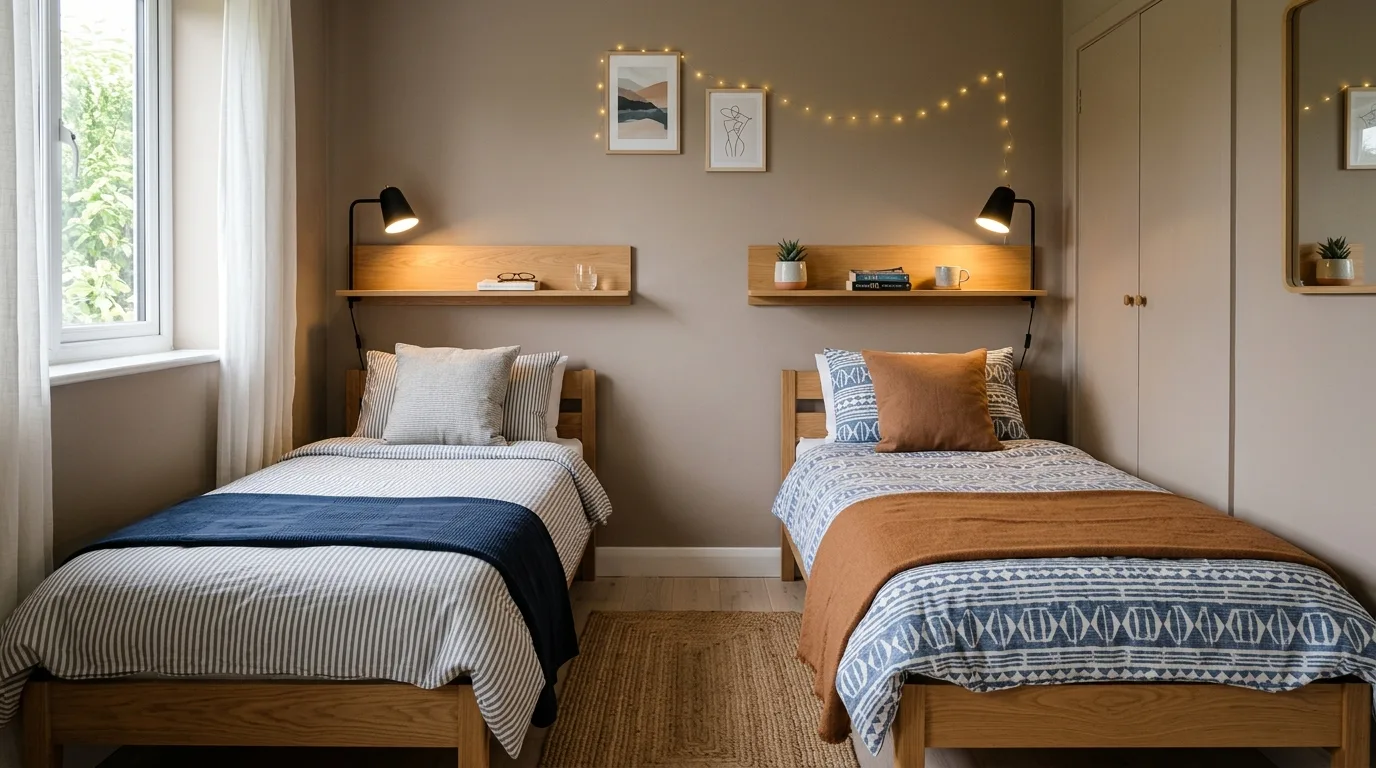
12. Coordinate Bedding Instead of Matching Everything
Two beds do not need completely identical bedding to look cohesive. In fact, using coordinated colors with slightly different patterns can give each sleeper a distinct identity while maintaining a unified design. For example, one bed might use a small geometric print while the other uses stripes in the same color family.
Start with one shared palette of two or three colors, then vary the textures and patterns. Keep larger pieces such as duvets or quilts relatively simple and introduce personality through pillows, throws, or small decorative accents. This approach is especially useful in shared children’s rooms where individual preferences may differ. The room will still look organized because the colors and materials provide visual continuity.
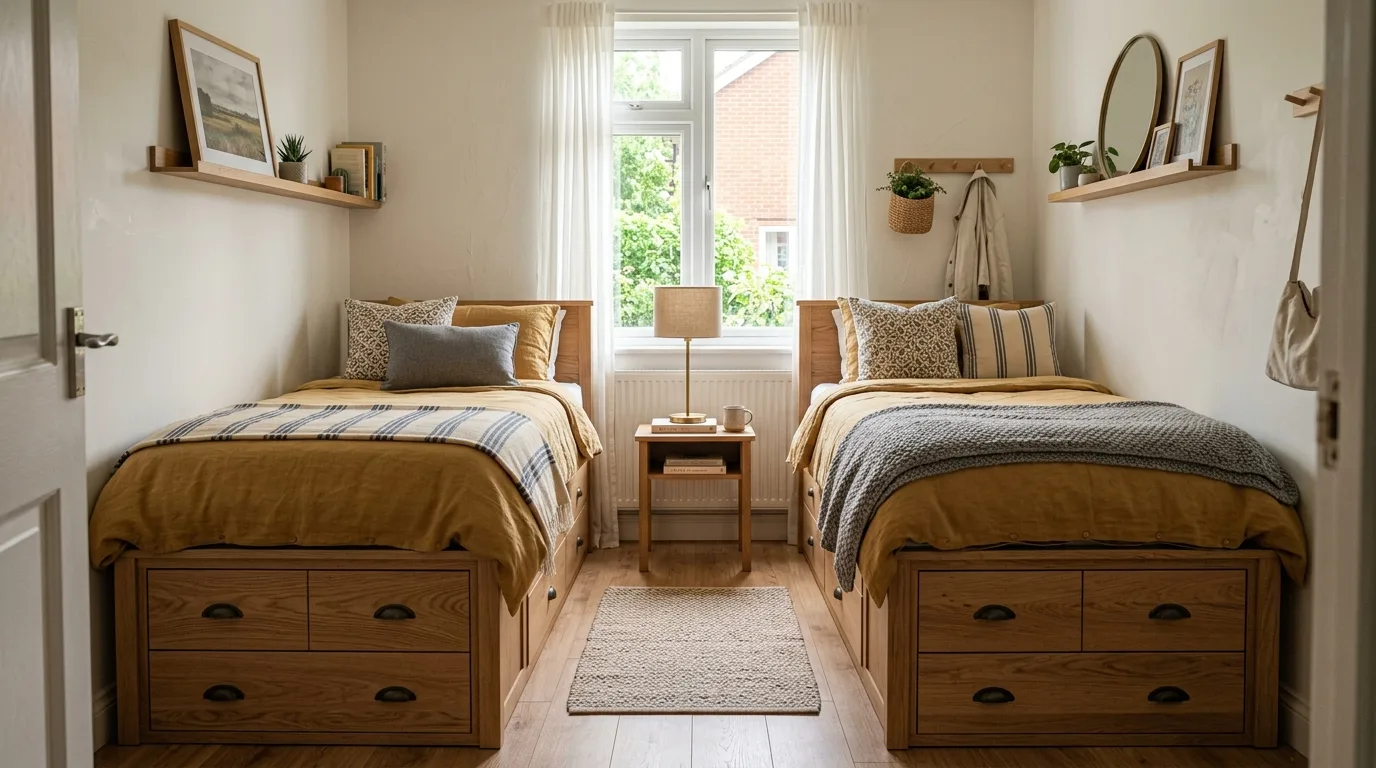
13. Use Vertical Storage Around the Beds
When floor space is limited, look upward. Tall wardrobes, vertical shelving, peg rails, and wall-mounted cabinets can provide substantial storage without taking up as much floor area as wide furniture. Position tall storage where it will not interfere with either bed or the natural walking route between the doorway and other parts of the room.
For a balanced appearance, repeat vertical elements on both sides of the room where practical. Keep frequently used items within easy reach and place less frequently used belongings higher up. Closed cabinets are useful when you want the bedroom to look calm and uncluttered, while open shelves work well for books and attractive baskets. Secure tall furniture properly to the wall, especially in children’s bedrooms.
14. Create Individual Zones With Color
Color can define two sleeping areas without requiring a physical divider. Give each bed a slightly different accent color while keeping the walls, flooring, and larger furniture consistent. One side might use sage green accents while the other uses muted blue, warm terracotta, or another complementary shade.
Repeat each accent color in small, intentional details such as a pillow, blanket, artwork, storage basket, or bedside accessory. Avoid painting the entire room in two sharply contrasting colors, which can make a small space appear fragmented. Instead, let the color zones remain subtle and connected. This approach works particularly well when two children share a bedroom and want their own decorative identity without sacrificing the overall harmony of the room.
15. Keep the Layout Minimal and Bright
Sometimes the most effective two-bed styling idea is simply to remove visual clutter. Choose streamlined bed frames, light-colored bedding, compact storage, and a restrained selection of accessories. A bright palette can help reflect available natural light, while curtains mounted high and close to the ceiling can emphasize the room’s vertical height.
Use furniture with clean lines and avoid filling every available wall with shelves or decorations. Leave some negative space around the beds so the room feels intentional rather than overfurnished. Mirrors can help reflect light when positioned thoughtfully, while wall-mounted lighting keeps bedside areas clear. Before adding another piece of furniture, consider whether it solves a genuine storage or functional need. In a small bedroom, every open area contributes to comfort.
How to Make Two Beds Work in a Small Room
The best layout depends on the room’s exact proportions, the sleepers’ ages, and how much storage is required. Begin by measuring the walls, door swings, windows, closets, and existing furniture. Mark the footprint of each bed on the floor with painter’s tape before moving heavy furniture. This simple step lets you test walking paths and determine whether drawers and doors can open comfortably.
Prioritize circulation, then storage, and finally decoration. If floor space is extremely limited, consider bunk beds or a daybed with a trundle. If the room has enough width, twin beds along opposite walls or beneath a window may provide a more traditional arrangement. Whichever layout you choose, coordinate colors and materials to make the room feel cohesive while leaving each sleeper enough personal space.
Final Styling Tips
Two beds can fit beautifully into a small room when every piece of furniture has a clear purpose. Think vertically, use under-bed storage, keep pathways open, and rely on coordinated colors to create visual unity. Most importantly, avoid forcing a layout simply because it looks good in a photograph. The most successful small-bedroom arrangement is one that allows people to move around comfortably, access their belongings easily, and enjoy a restful place to sleep.