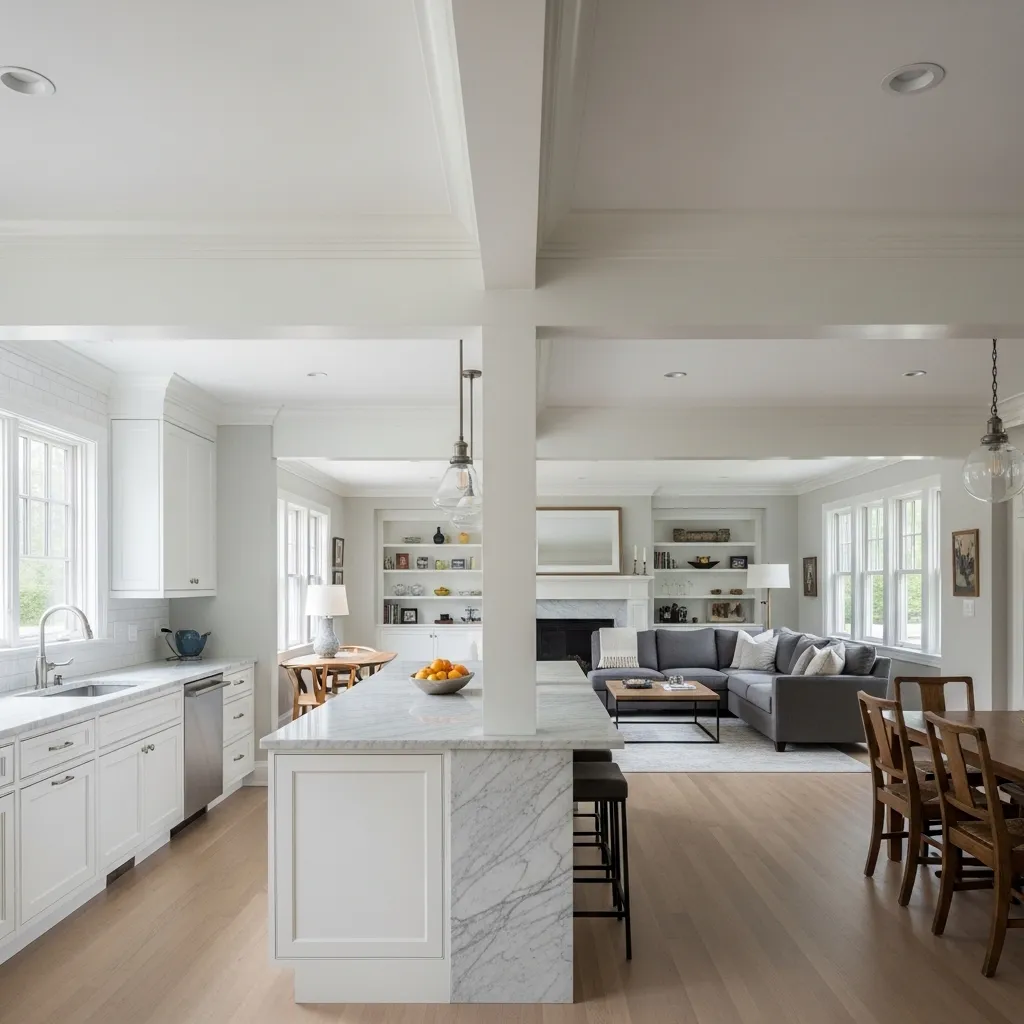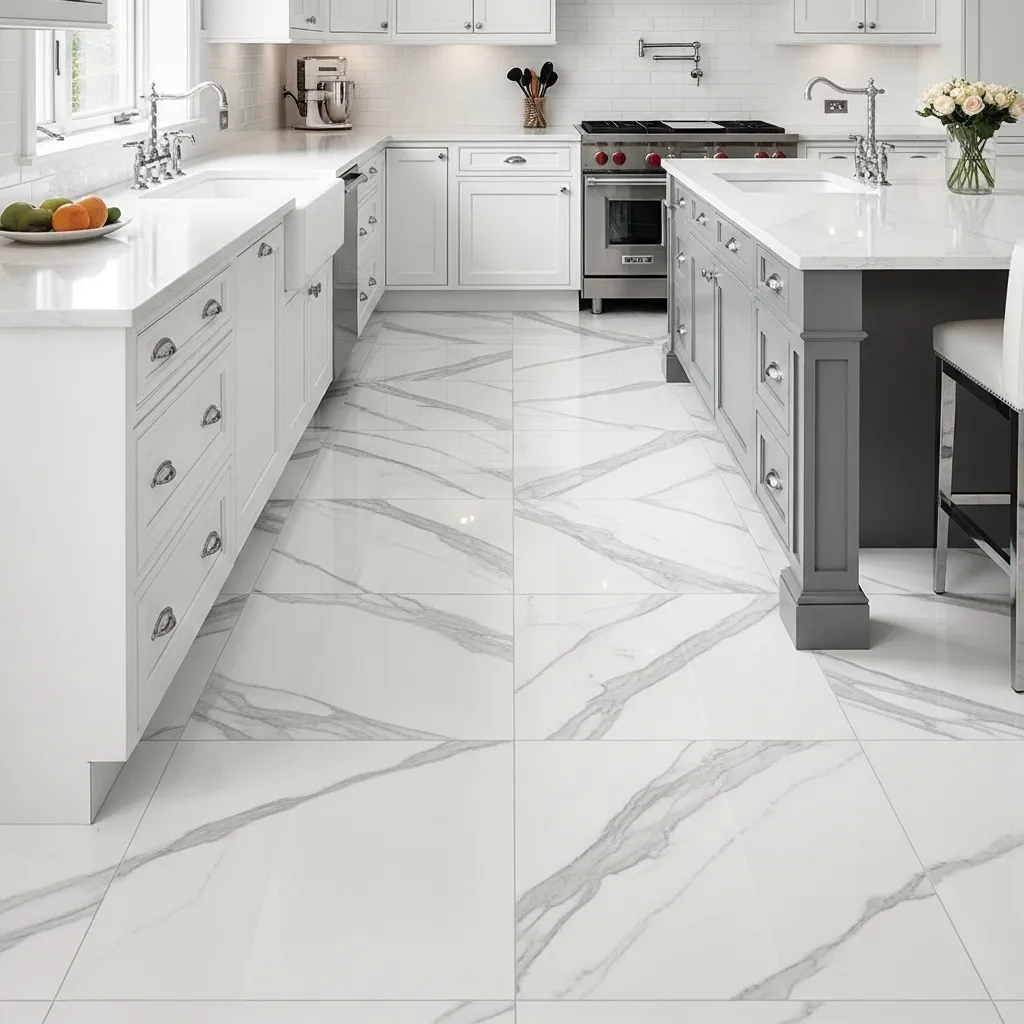
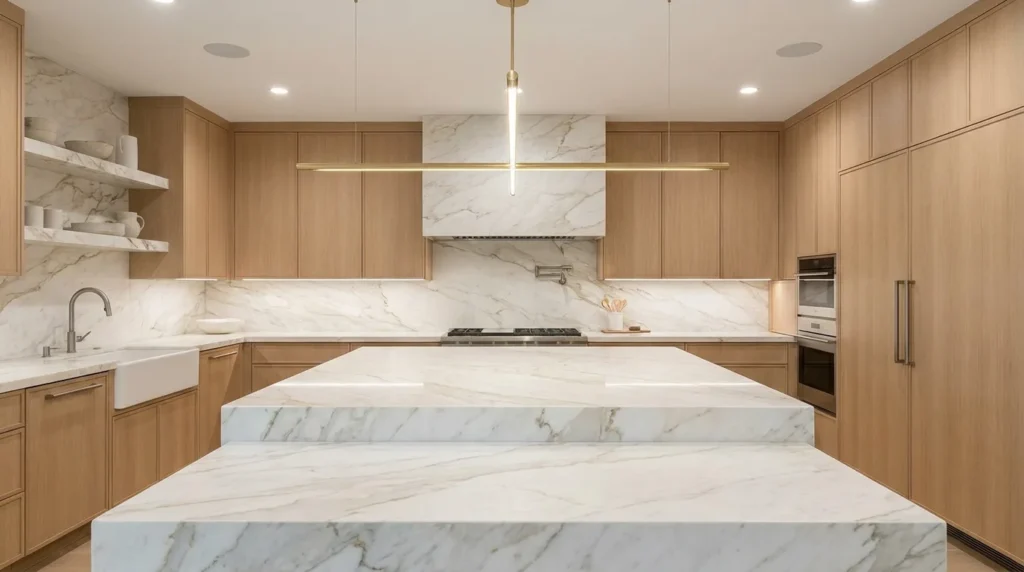
A kitchen slab is more than a practical work surface—it can shape the entire look and feel of your cooking space. The right kitchen slab design can add elegance, improve functionality, make cleaning easier, and create a strong visual connection between cabinets, backsplash, flooring, and appliances. From timeless marble-inspired surfaces to durable quartz, warm wood-look finishes, and bold dark countertops, there are plenty of options for different budgets and decorating styles. Whether you are planning a complete kitchen renovation or simply want to refresh an existing space, choosing the right slab can make a surprisingly noticeable difference. These 17 kitchen slab designs combine attractive finishes with practical ideas to help you create a countertop that looks beautiful and works well for everyday cooking.
1. Classic White Quartz Kitchen Slab
White quartz is one of the most versatile kitchen slab choices because it creates a clean, bright, and contemporary appearance without feeling overly trendy. Its subtle surface works especially well with white, beige, gray, navy, or natural wood cabinetry. A quartz slab with delicate veining can also provide the sophisticated appearance of natural stone while keeping the overall design visually light. For busy kitchens, quartz is particularly appealing because it is non-porous and generally easy to maintain. Pair a white slab with a contrasting backsplash for definition, or continue a similar tone up the backsplash for a seamless look. If your kitchen receives limited natural light, a pale quartz countertop can help reflect available light and make the room feel more spacious.
2. Dramatic Black Granite Slab
A black granite kitchen slab is an excellent choice when you want the countertop to become a strong design feature. Its deep color pairs beautifully with white cabinets, light wood, warm metallic hardware, and neutral walls. Depending on the stone, you can choose a relatively uniform surface or one with natural mineral variations that add character. Black granite is also practical for kitchens that see frequent use because its durable surface can handle everyday preparation when properly cared for. To keep a dark countertop from making the room feel heavy, balance it with lighter cabinetry or a bright backsplash. Under-cabinet lighting is another useful addition because it highlights the texture of the slab while providing better illumination for chopping and cooking.
3. Marble-Look Kitchen Countertop
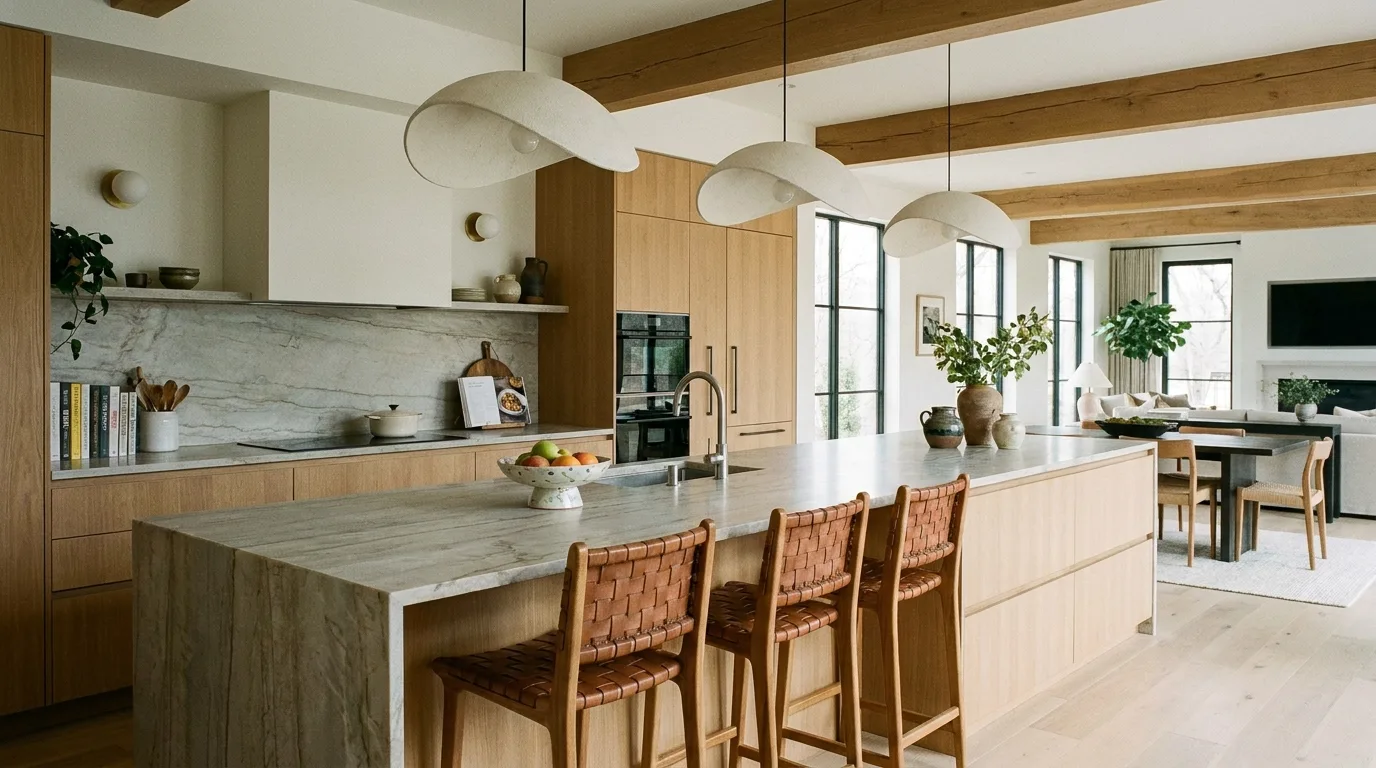
A marble-look slab brings an elegant, luxurious quality to a kitchen without requiring every element to be equally ornate. White surfaces with gray or soft taupe veining are particularly adaptable and work with both classic and modern cabinetry. Consider using a marble-inspired slab on a central island so it becomes the visual focal point of the room. For a coordinated design, repeat the slab’s colors in the backsplash, cabinet handles, or pendant lights. Engineered quartz and other manufactured surfaces can offer marble-like patterns with different maintenance requirements than natural marble, making them worth considering for a hardworking kitchen. If you love dramatic movement, select a slab with larger veins; for a calmer space, choose fine, understated veining.
4. Warm Beige Kitchen Slab
Beige kitchen slabs are ideal for homeowners who want warmth without committing to a strongly colored countertop. A creamy beige or sand-toned surface can soften modern cabinetry and works particularly well with oak, walnut, cream, and muted green finishes. It is also a useful choice for kitchens where pure white feels too stark. To create a cohesive palette, combine the slab with warm white walls, natural wood accents, and brushed brass or bronze hardware. Beige stone can make a compact kitchen feel welcoming while providing enough contrast against pale cabinets to define the work area. If your kitchen already contains several warm materials, choose a slab with restrained patterning so the finished room feels layered rather than visually busy.
5. Gray Quartz Kitchen Slab
Gray quartz provides a sophisticated middle ground between bright white and dramatic black countertops. Its neutral character makes it particularly useful when your kitchen includes several different finishes or colors. Light gray slabs work beautifully with white cabinets, while charcoal gray surfaces can create a stronger contrast against pale cabinetry. If you prefer a modern industrial style, combine a gray slab with matte black fixtures, concrete-inspired walls, or simple flat-panel cabinets. For a softer appearance, pair it with warm wood and cream accessories. Quartz is also a practical countertop material for many households because it offers a consistent appearance and relatively straightforward care. Choose a finish and pattern that complement your cabinet color rather than competing with it.
6. Natural Granite With Bold Movement
If you want your kitchen slab to have a one-of-a-kind appearance, natural granite with dramatic mineral movement can become an impressive focal point. Each stone has its own pattern, so it can introduce depth and personality into an otherwise simple kitchen. Because a highly patterned countertop already attracts attention, keep surrounding elements relatively restrained. Simple cabinet fronts, understated backsplash tiles, and minimal hardware allow the stone to remain the star. Before selecting a dramatic slab, view a large sample or full slab rather than relying only on a small showroom sample. This helps you understand how the veining will appear across the entire counter, especially around sinks, corners, and an island. Proper sealing and routine care can help preserve the stone’s appearance.
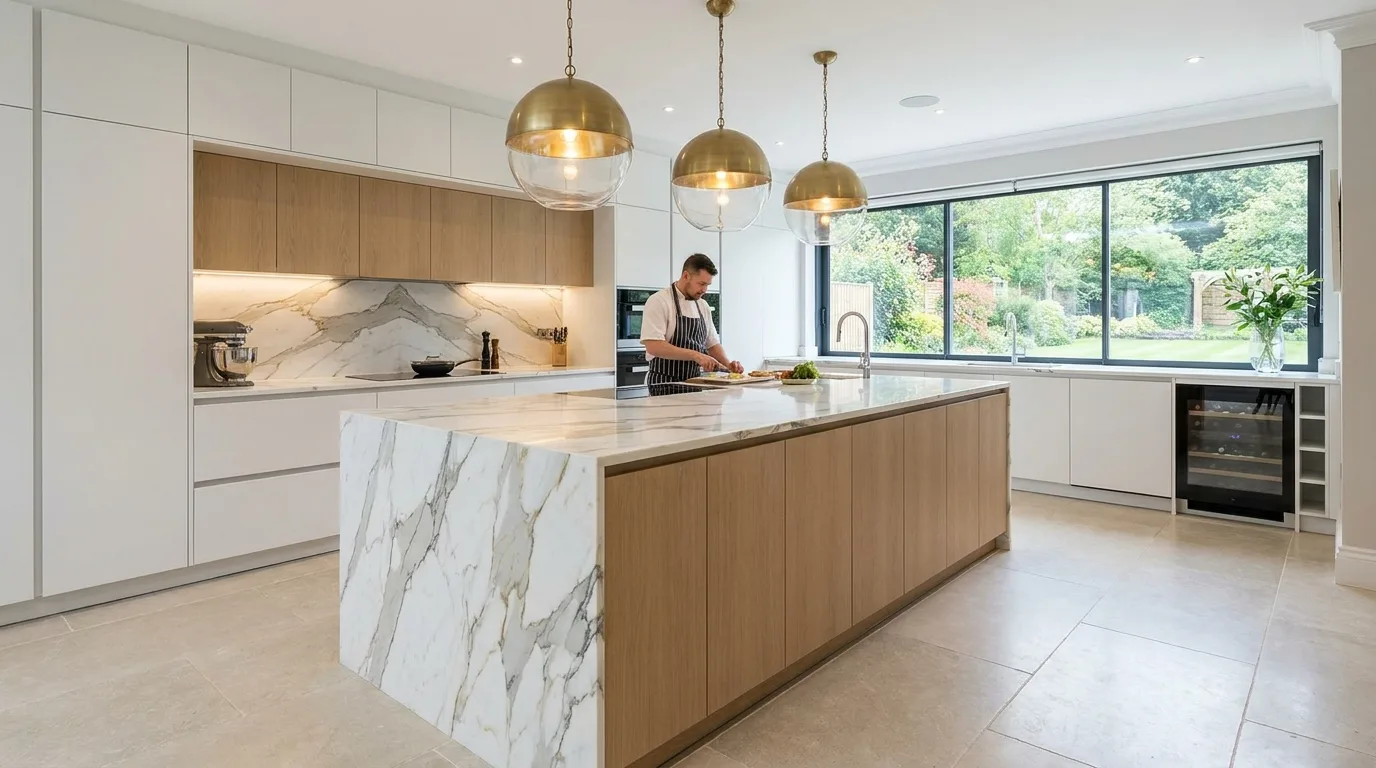
7. Wood-Look Kitchen Slab
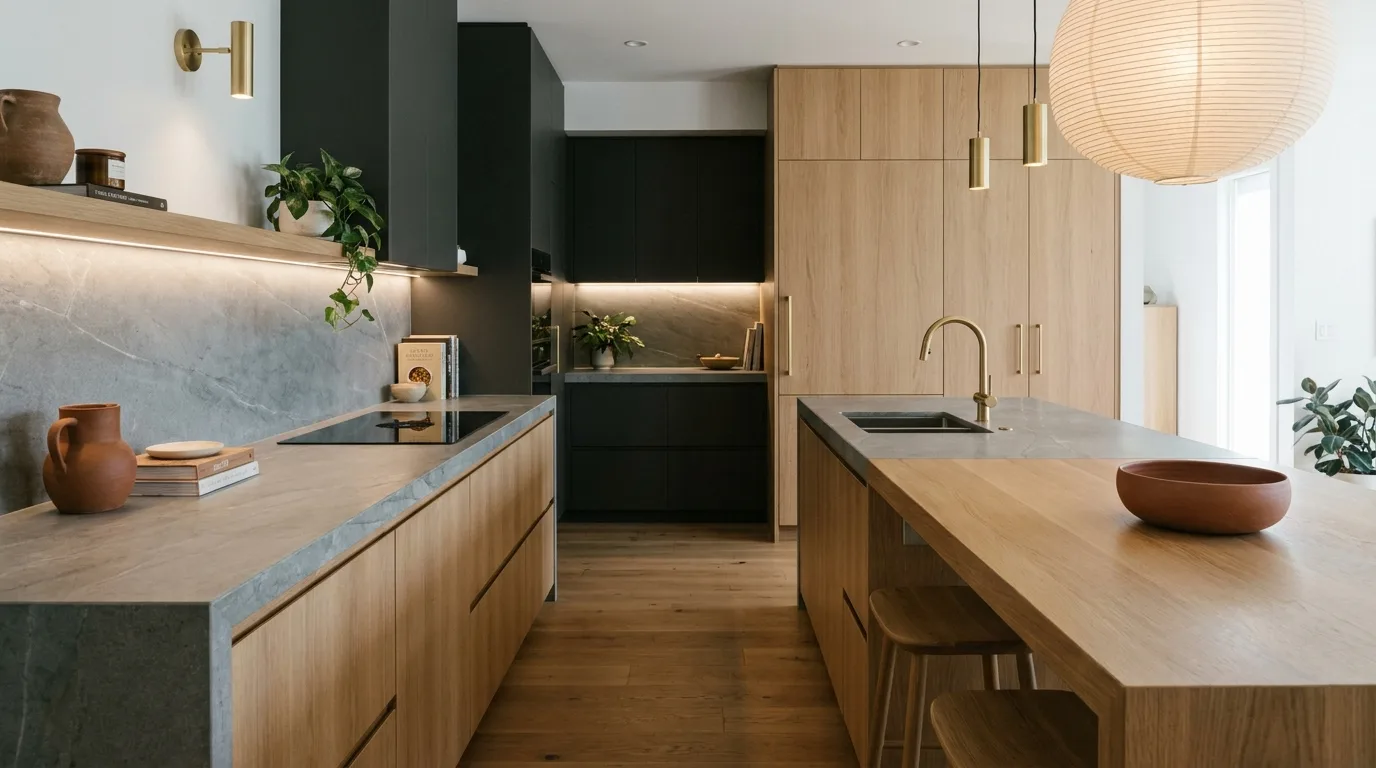
A wood-look kitchen slab introduces warmth and a relaxed, inviting quality that can balance sleek cabinets and modern appliances. It is particularly attractive on an island or breakfast counter where you want to create a distinct zone within an open-plan kitchen. Pair a warm wood surface with white cabinetry for a classic contrast, or use it alongside muted green and beige cabinets for an earthy look. Because real wood requires more attention to moisture and heat than many stone surfaces, consider engineered materials or wood-look alternatives if the counter will experience heavy cooking. A wood-inspired finish can also be used selectively instead of across the entire kitchen. This approach gives you the warmth of timber while retaining a more practical surface in the main preparation areas.
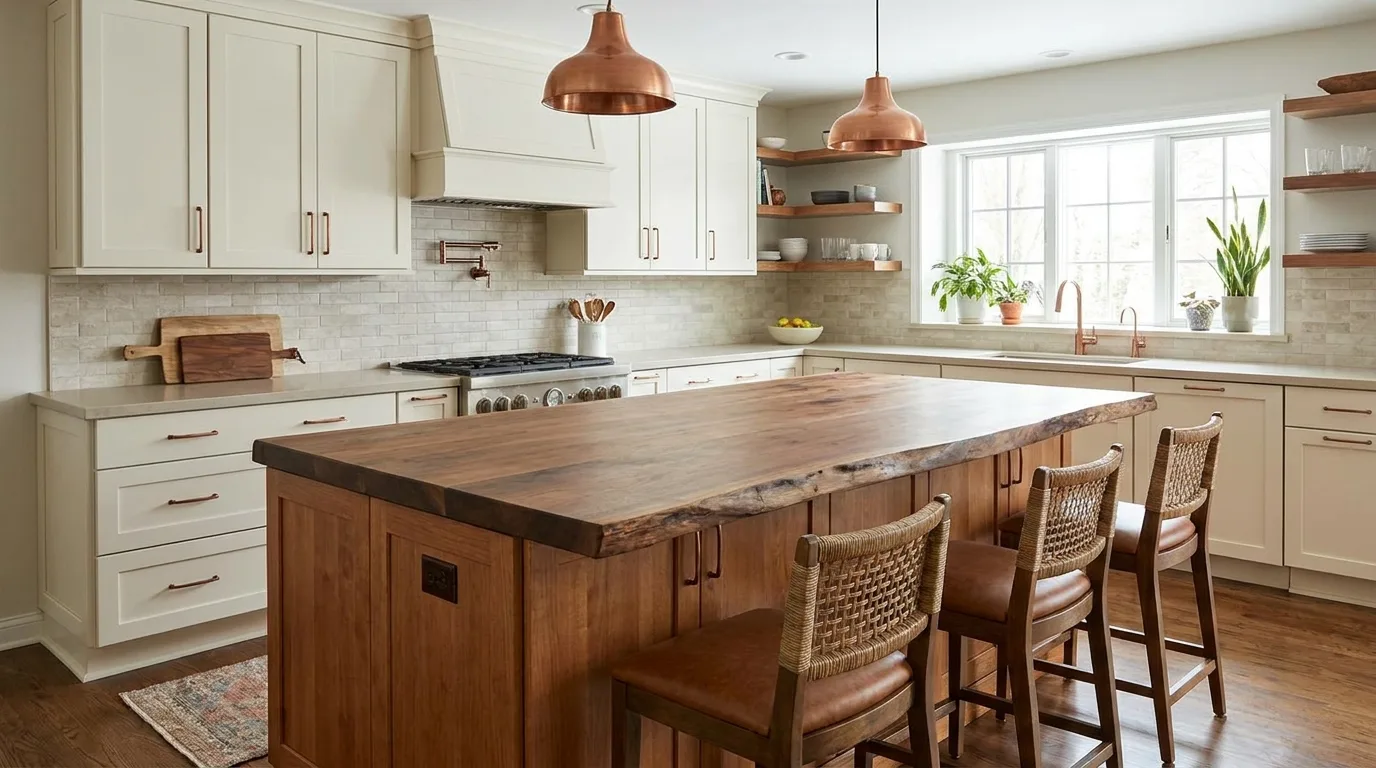
8. Green Stone Kitchen Slab
A green kitchen slab can transform a standard cooking space into a more distinctive and nature-inspired room. Deep forest green works especially well with warm wood, cream cabinetry, and brass details, while softer sage or muted green surfaces create a lighter contemporary atmosphere. Natural green stones can contain beautiful variations, making each installation visually different. If the countertop itself is strongly colored, keep the backsplash simple and let the slab establish the palette. You can also echo its green tones through plants, bar stools, textiles, or decorative ceramics. This design works particularly well when you want a kitchen to feel less clinical than an all-white scheme. Before committing to a colored slab, check it under both daylight and artificial lighting because stone colors can change noticeably throughout the day.
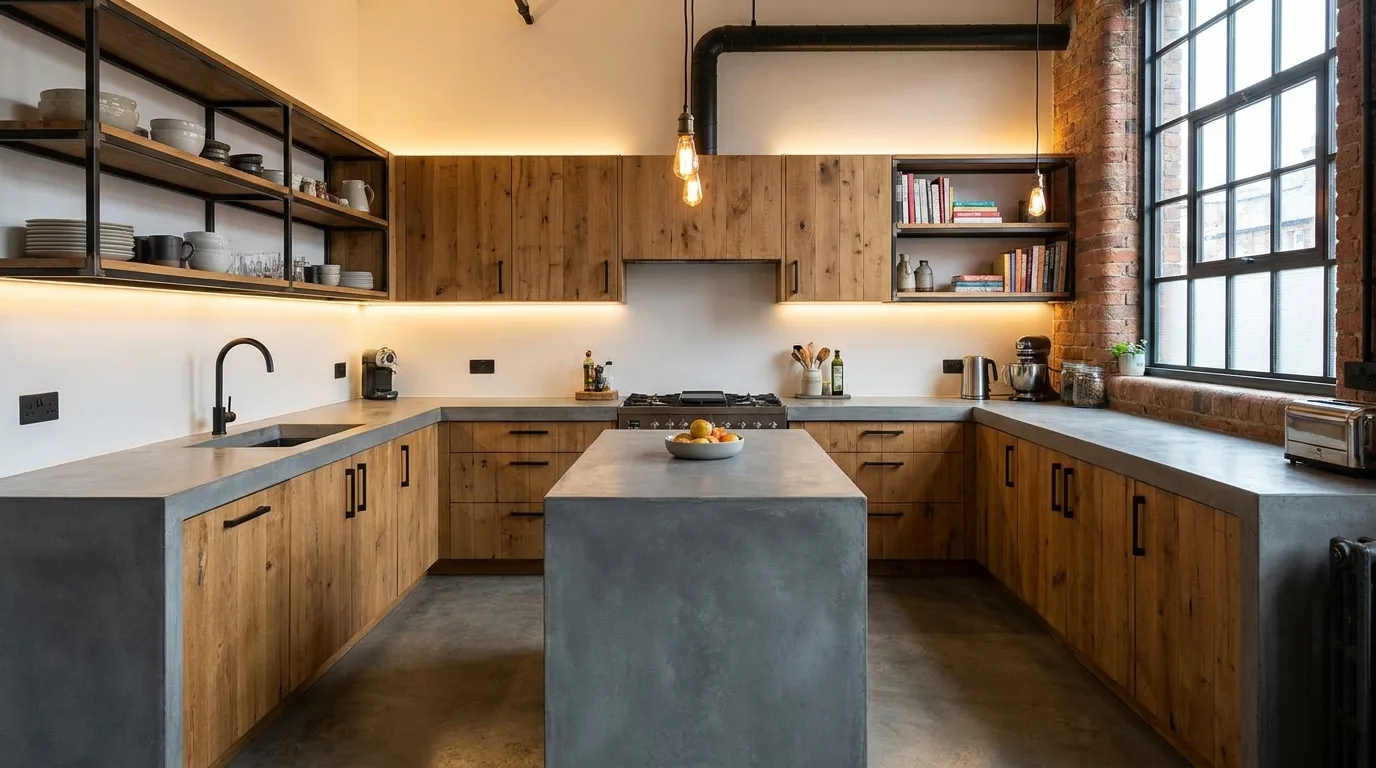
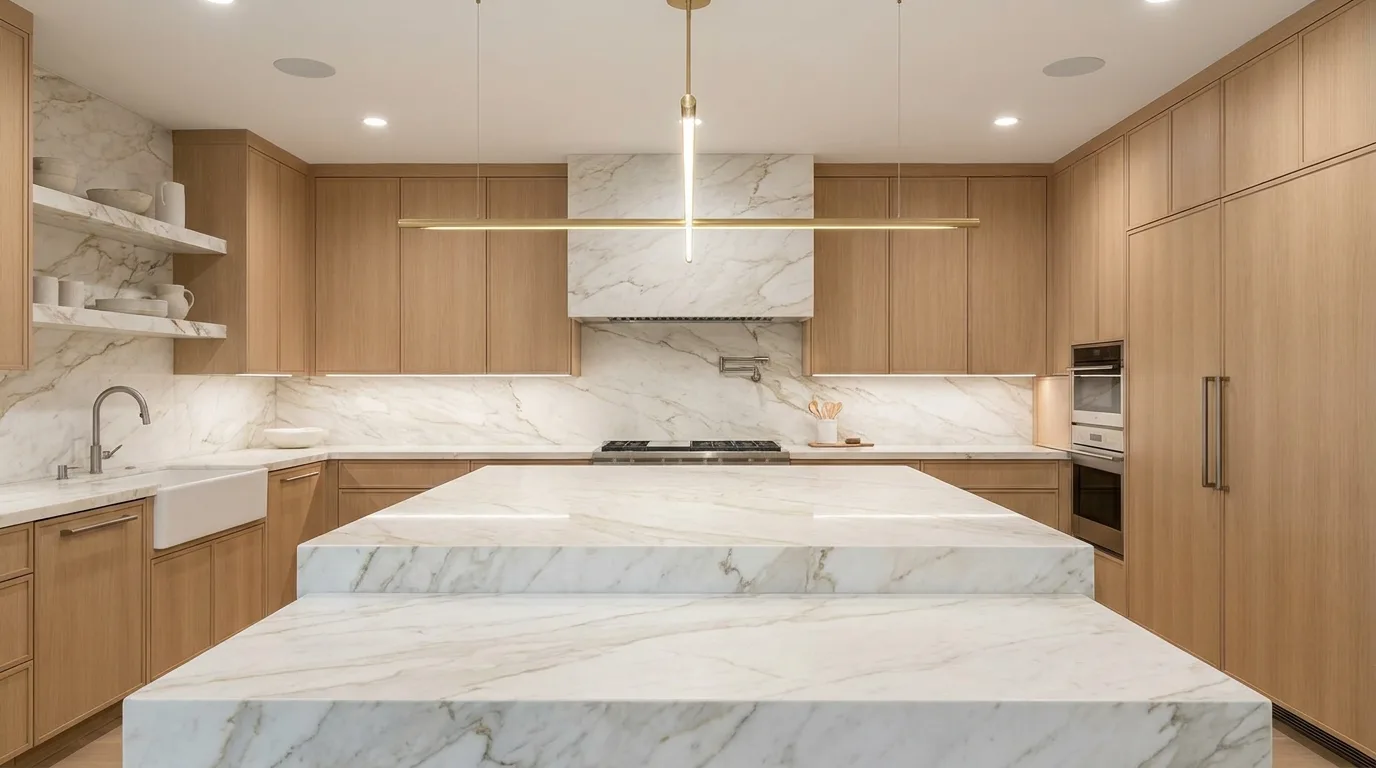
9. Waterfall Edge Kitchen Slab
A waterfall countertop extends the slab vertically down the side of an island, creating a continuous and polished appearance. This detail is especially effective when the island is positioned where its sides are visible from the living or dining area. A waterfall edge can make a simple slab feel much more architectural and intentional. Marble-look quartz, granite, or other large-format surfaces can all work well for this treatment, although the material should be selected with fabrication requirements in mind. For a balanced result, keep the island cabinetry relatively streamlined so the continuous slab remains the main feature. Waterfall edges are particularly striking in contemporary kitchens, but they can also suit transitional spaces when paired with classic cabinetry and understated hardware.
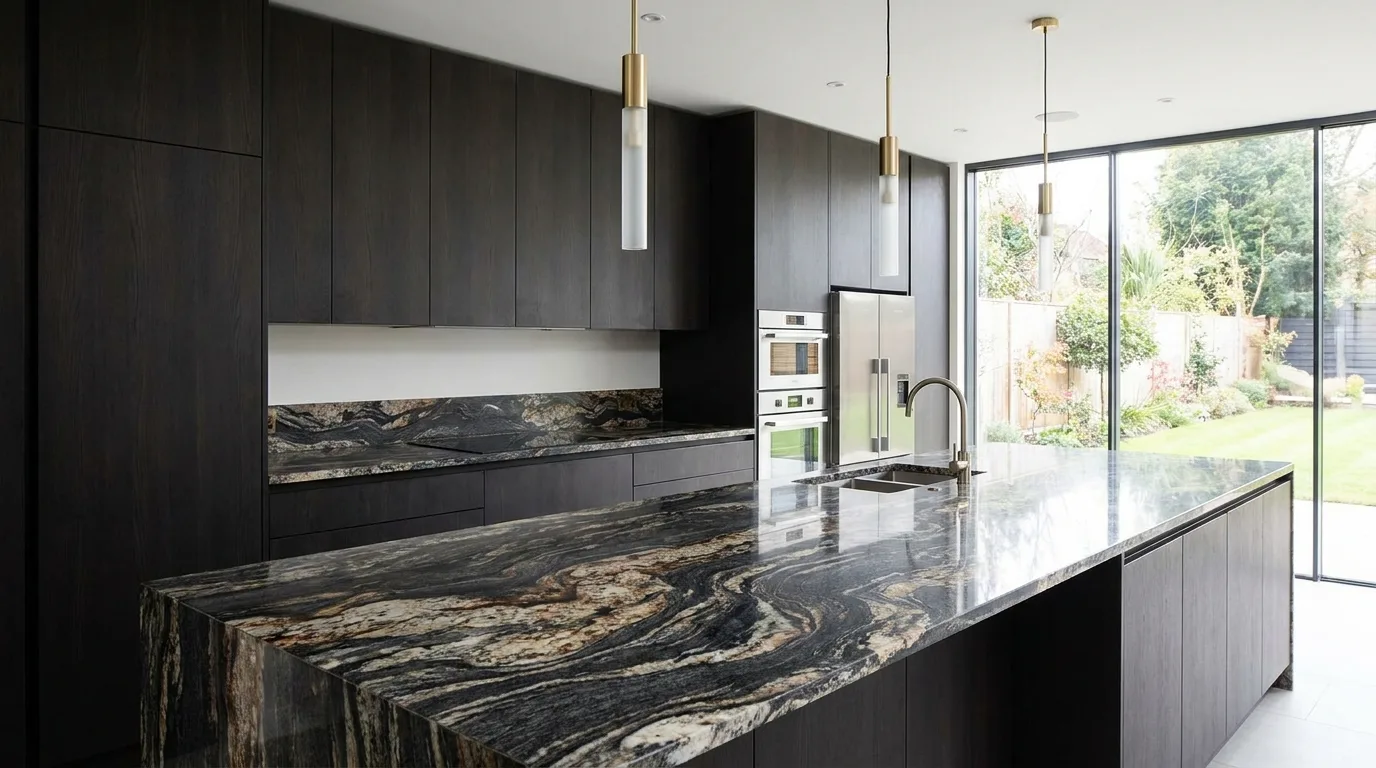
10. Concrete-Style Kitchen Slab
A concrete-style slab is perfect for an industrial, minimalist, or modern kitchen. Its soft gray appearance provides texture and depth without introducing a complicated pattern, making it an effective backdrop for wood cabinetry, black fixtures, and open shelving. Unlike an actual poured concrete counter, concrete-look engineered surfaces can provide a more controlled finish and may be easier to coordinate with standard kitchen construction. To prevent the design from feeling cold, introduce warm elements such as timber, woven stools, plants, or warm lighting. A concrete-inspired countertop is also useful when you want a contemporary kitchen that does not rely on glossy white surfaces. Keep accessories purposeful and avoid excessive decorative items so the clean, architectural quality of the slab remains visible.
11. Two-Tone Kitchen Slab Design
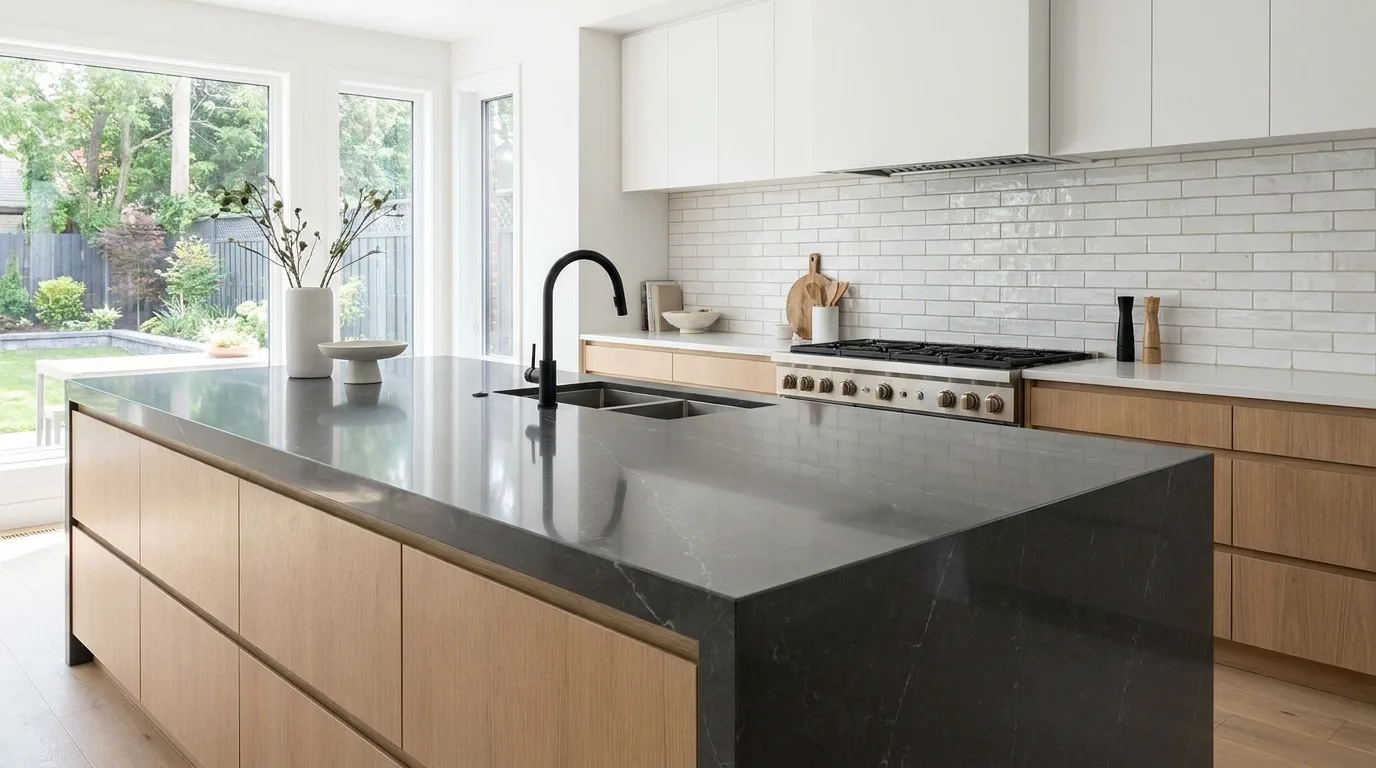
Using two different slab finishes is a clever way to visually divide kitchen zones while adding personality. For example, a durable neutral countertop can cover the main preparation area while a wood-look slab defines a breakfast bar or island. Another option is to combine a light perimeter countertop with a darker island surface. This approach works best when the two materials share an undertone or color connection. If one slab is highly patterned, make the second surface more restrained to avoid visual competition. Two-tone countertops can also help an open-plan kitchen feel more thoughtfully planned because the island becomes a separate furniture-like element. Use the contrast intentionally, particularly around seating areas, sinks, and high-use preparation zones.
12. Calacatta-Inspired Veined Slab
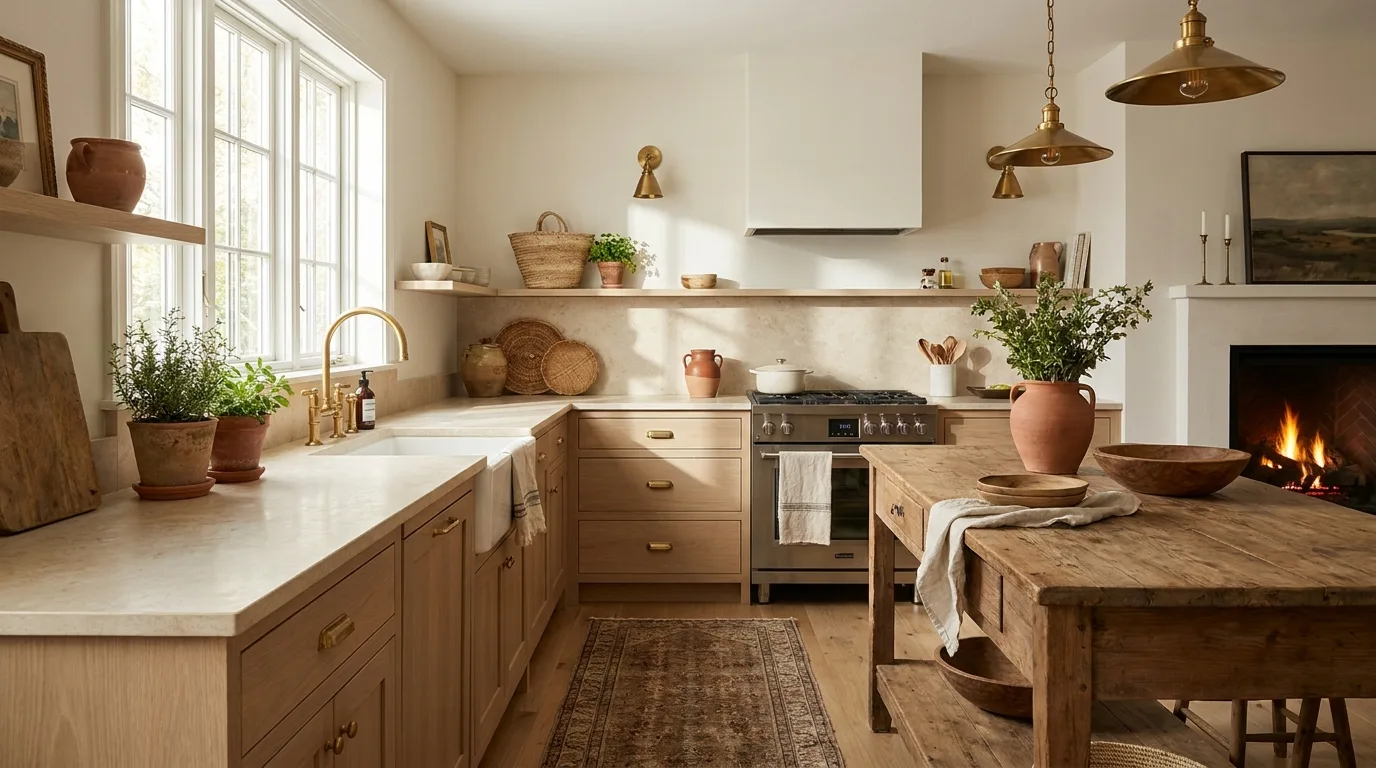
For a high-end kitchen appearance, consider a white slab featuring bold gray or warm-toned veins inspired by Calacatta marble. This style works beautifully when you want the countertop to make a statement while retaining a light overall palette. It looks particularly impressive on large islands because uninterrupted surface area allows the veining to be appreciated. Pair it with simple cabinetry in white, taupe, warm gray, or natural wood so the slab remains the focal point. When selecting a heavily veined surface, ask how the pattern will be matched at seams and along waterfall edges. Thoughtful fabrication can make the finished countertop appear much more cohesive. Keep the backsplash relatively quiet if you want to emphasize the movement of the countertop.
13. Matte Finish Kitchen Slab
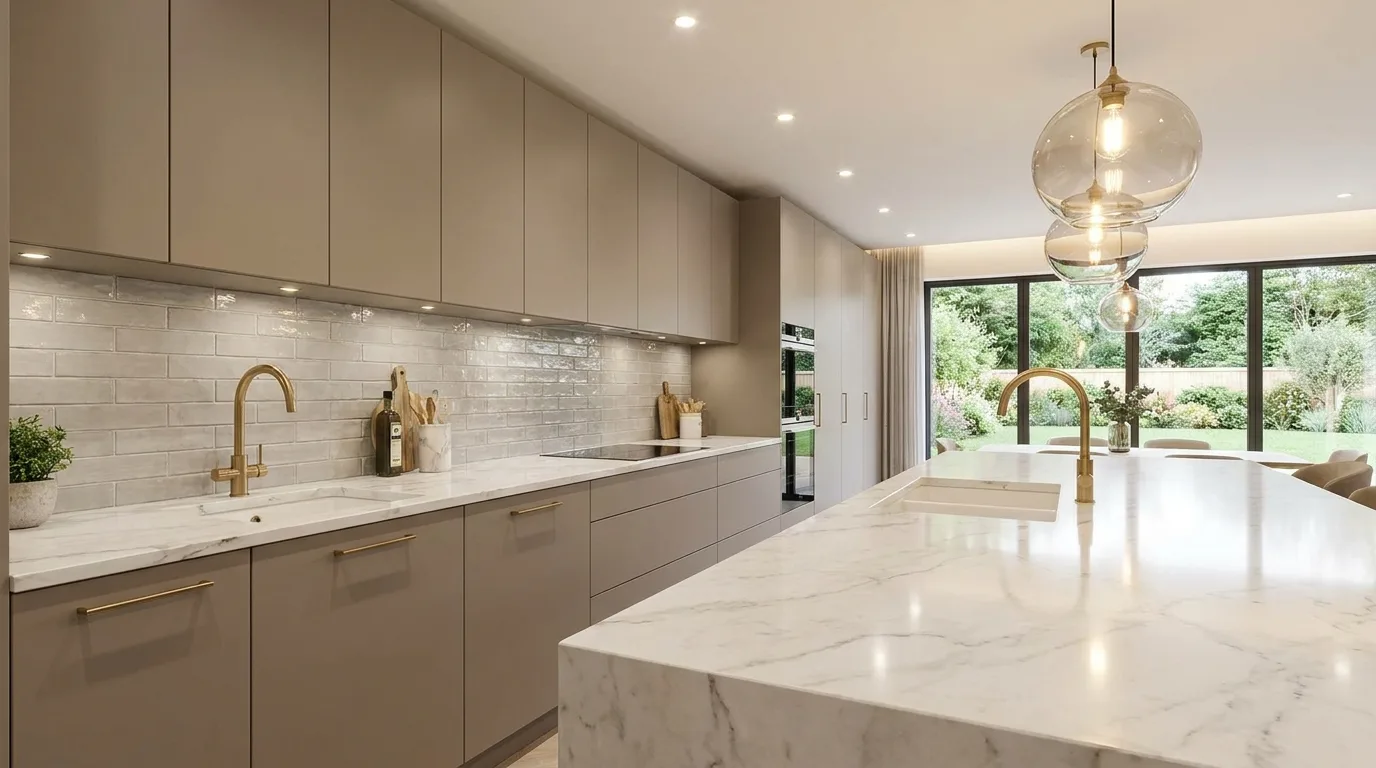
A matte or honed kitchen slab offers a softer alternative to highly polished stone. Its low-sheen surface can create a sophisticated, contemporary look and works particularly well in minimalist kitchens. Matte finishes are excellent for reducing glare from strong lighting, which can make a kitchen feel calmer and more refined. They pair well with flat-panel cabinets, brushed metal hardware, natural wood, and textured backsplashes. However, the maintenance requirements depend on the material, so always check the manufacturer’s care recommendations before choosing a specific finish. A matte surface can also be useful when you want the natural texture or pattern of a stone to remain subtle rather than reflective. For a polished Pinterest-worthy look, combine it with carefully selected lighting that highlights the countertop’s texture.
14. Compact Kitchen With a Slim Slab
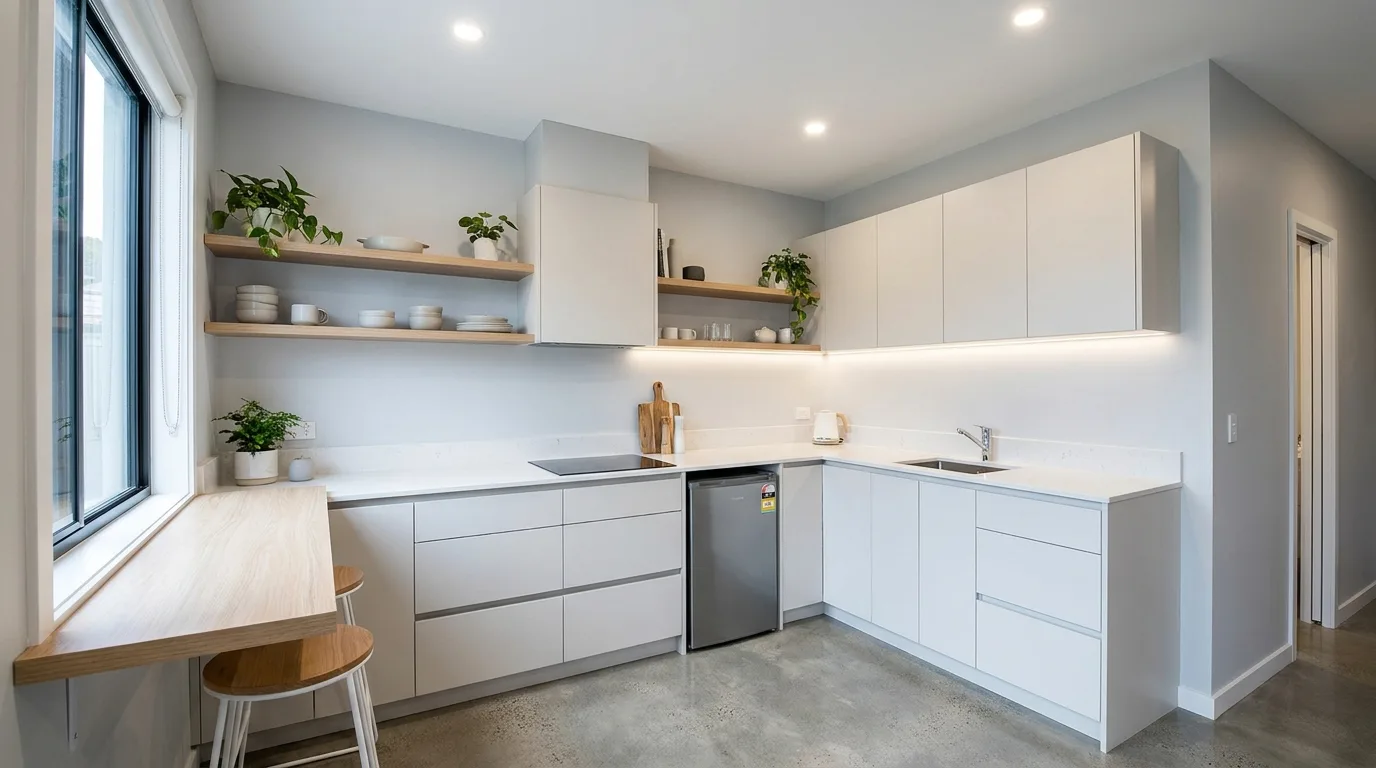
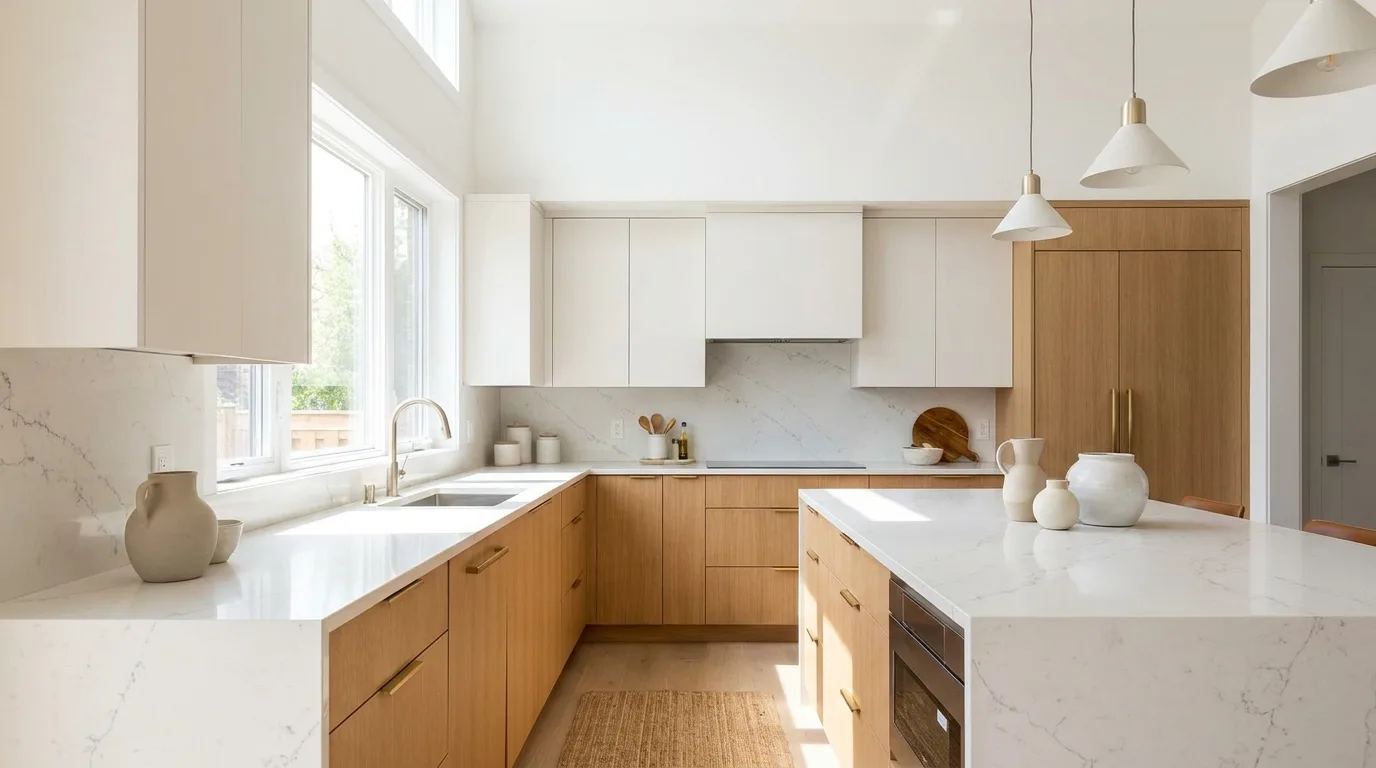
A slim-profile countertop can make a compact kitchen look sleek without visually overwhelming the available space. Thinner edges are particularly effective in small apartments, galley kitchens, and minimalist layouts where every surface needs to feel purposeful. A light-colored slab can further enhance the sense of openness, especially when combined with handleless cabinets and a simple backsplash. For small kitchens, prioritize a material that offers the durability and maintenance characteristics you need rather than selecting a slab solely for its appearance. Consider extending the countertop slightly beyond the cabinets to create a small breakfast ledge if space permits. This can add useful seating without requiring a separate dining area. Good lighting underneath cabinets will also make the work surface feel brighter and more functional.
15. Dark Brown Kitchen Slab
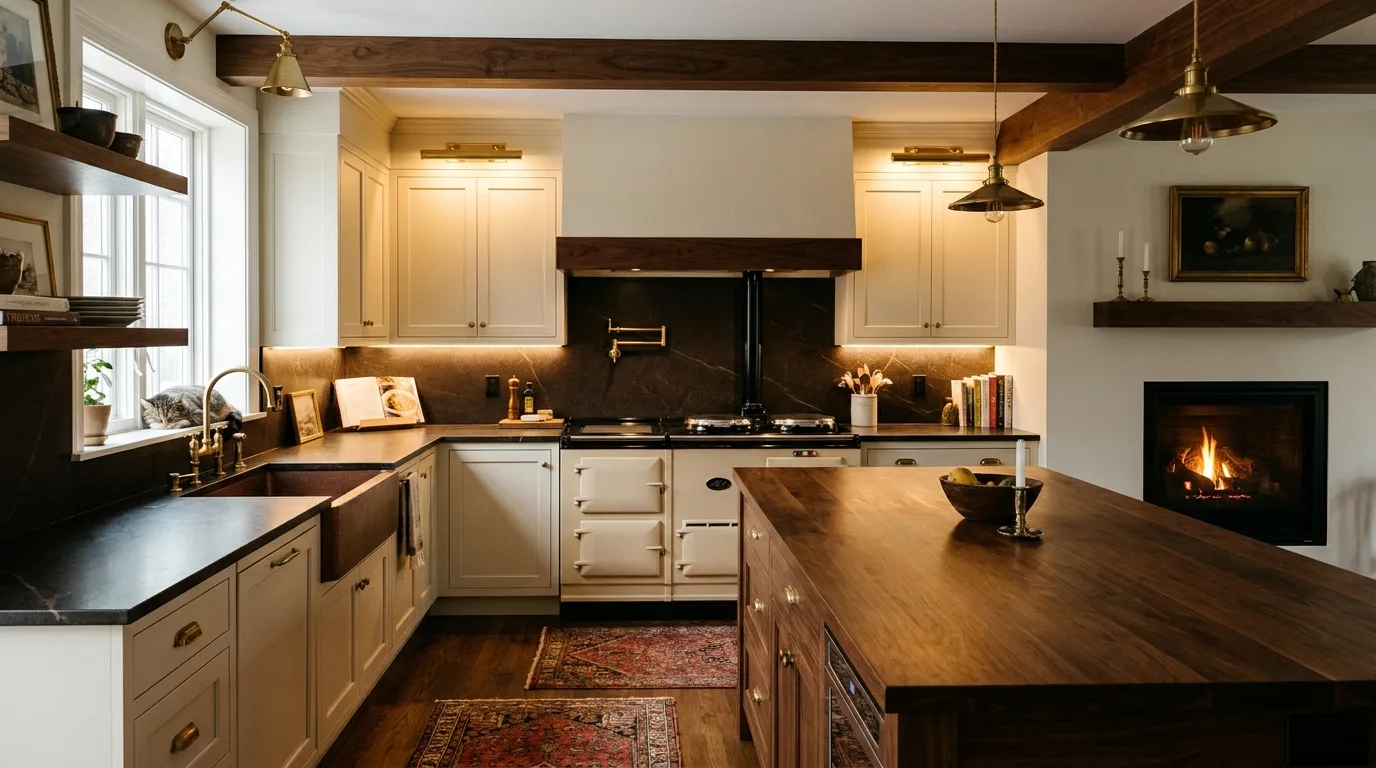
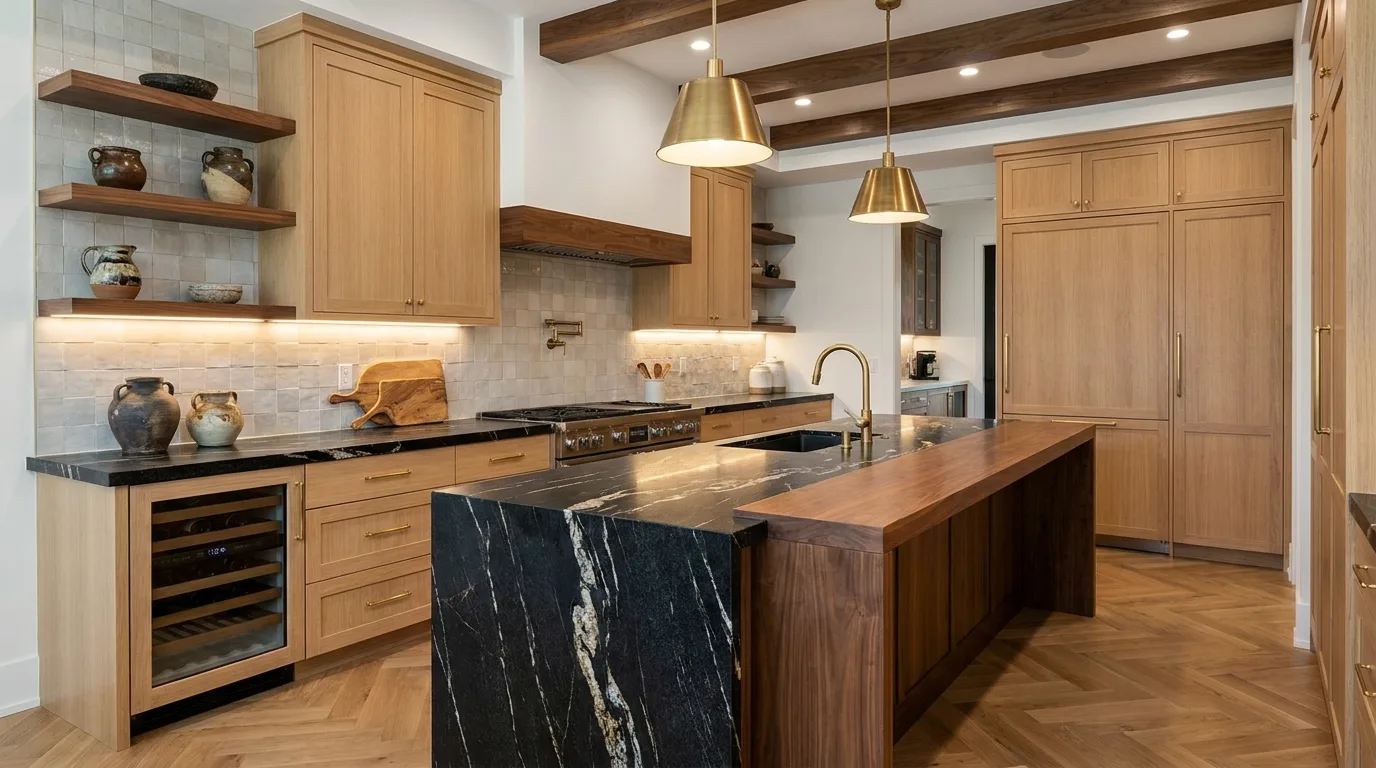
A dark brown slab brings richness and warmth to a kitchen and can be an attractive alternative to black. Chocolate, espresso, and deep walnut-inspired tones work particularly well with cream cabinets, warm wood, terracotta accents, and brass hardware. This combination creates a cozy atmosphere while still looking polished and sophisticated. Dark brown countertops are especially useful in kitchens where you want to introduce depth without creating an overly stark contrast. Balance the darker surface with lighter walls or a bright backsplash so the room does not feel visually compressed. If you use a strongly textured brown stone, keep cabinet colors relatively simple. For a more contemporary result, combine a plain dark brown slab with streamlined cabinetry and modern lighting.
16. Extended Kitchen Slab With Breakfast Bar
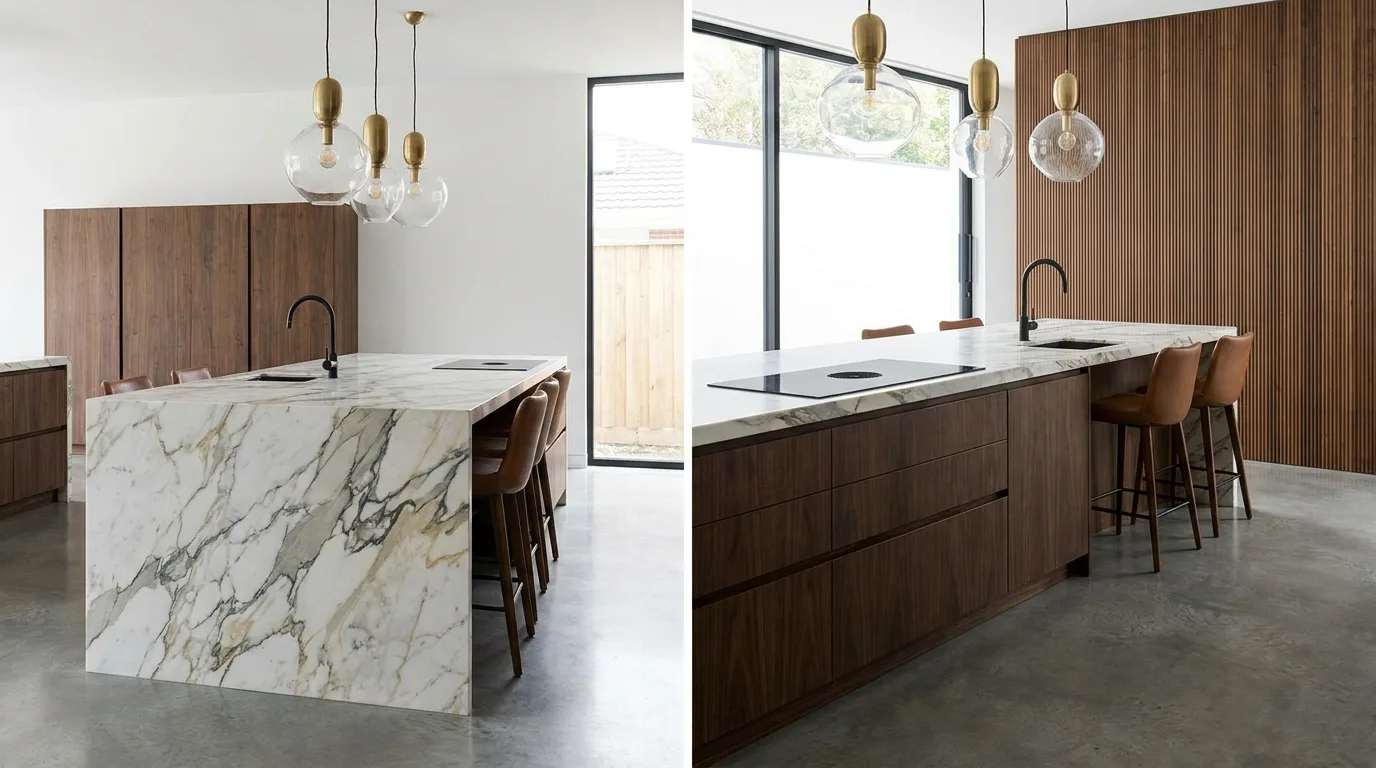
Extending the kitchen slab beyond the base cabinets can turn an ordinary countertop into a practical breakfast bar. This design is ideal for households that want casual seating without adding a full dining table. The overhang should be planned with adequate support and comfortable legroom, particularly if several people will use the area regularly. Choose a slab material that complements the main countertop so the extension feels intentional rather than added as an afterthought. Pair the bar with stools that introduce a contrasting texture, such as wood, woven material, or upholstered seating. In an open-plan home, the breakfast bar can also create a subtle transition between the kitchen and living area. Keep the surrounding counter relatively uncluttered so the extended surface remains visually appealing.
17. Seamless Matching Slab and Backsplash
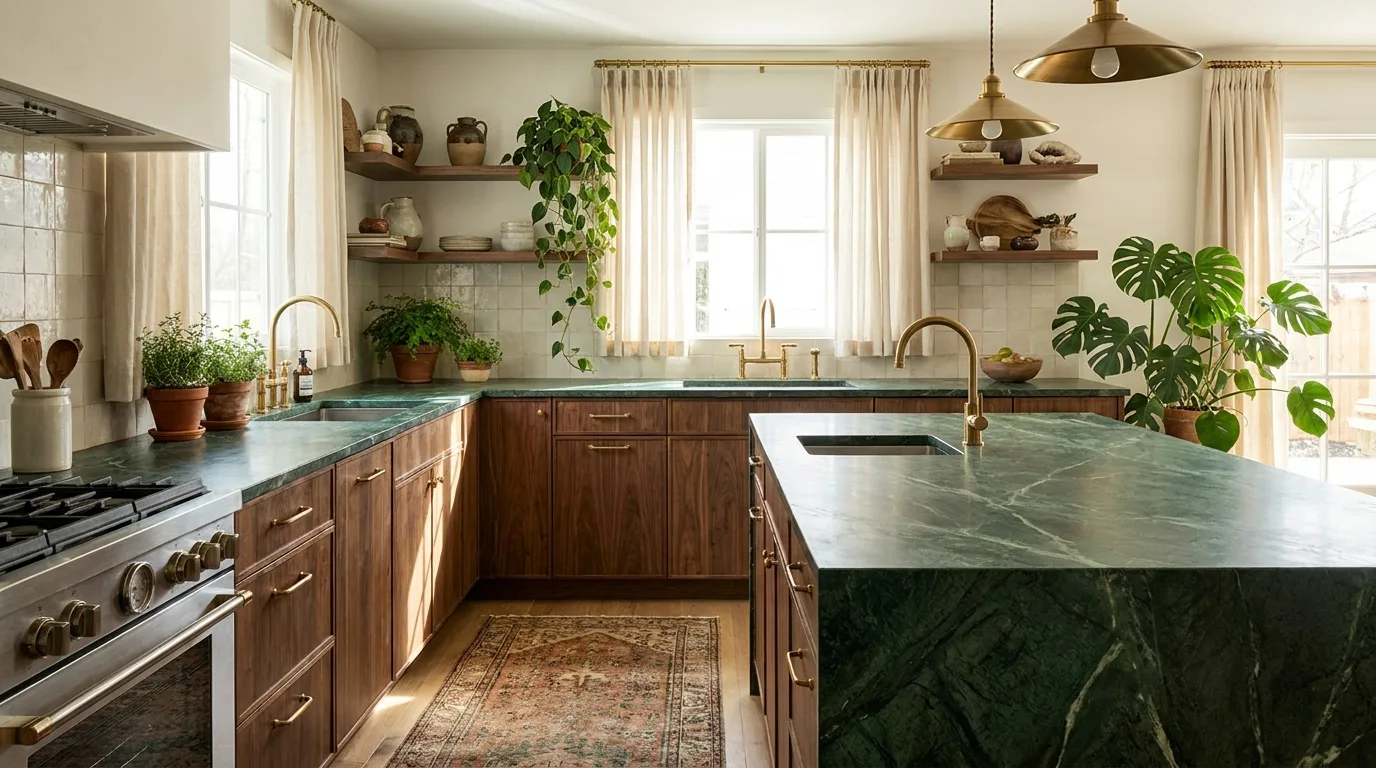
Using the same slab material for the countertop and backsplash creates a streamlined, upscale appearance. This approach reduces visual breaks and can make the kitchen feel more spacious, especially when the surface has subtle veining. It works beautifully with minimalist cabinetry because the continuous material creates a strong architectural backdrop without requiring decorative tile patterns. For a dramatic effect, choose a stone with visible movement and allow its pattern to continue behind the cooktop or sink. For a quieter kitchen, select a softly veined white, cream, or gray slab. Matching surfaces can also make cleaning easier by reducing grout lines in key areas, although installation details and sealing requirements depend on the material. Finish the look with simple lighting and restrained accessories so the continuity remains the main design feature.
How to Choose the Best Kitchen Slab Design
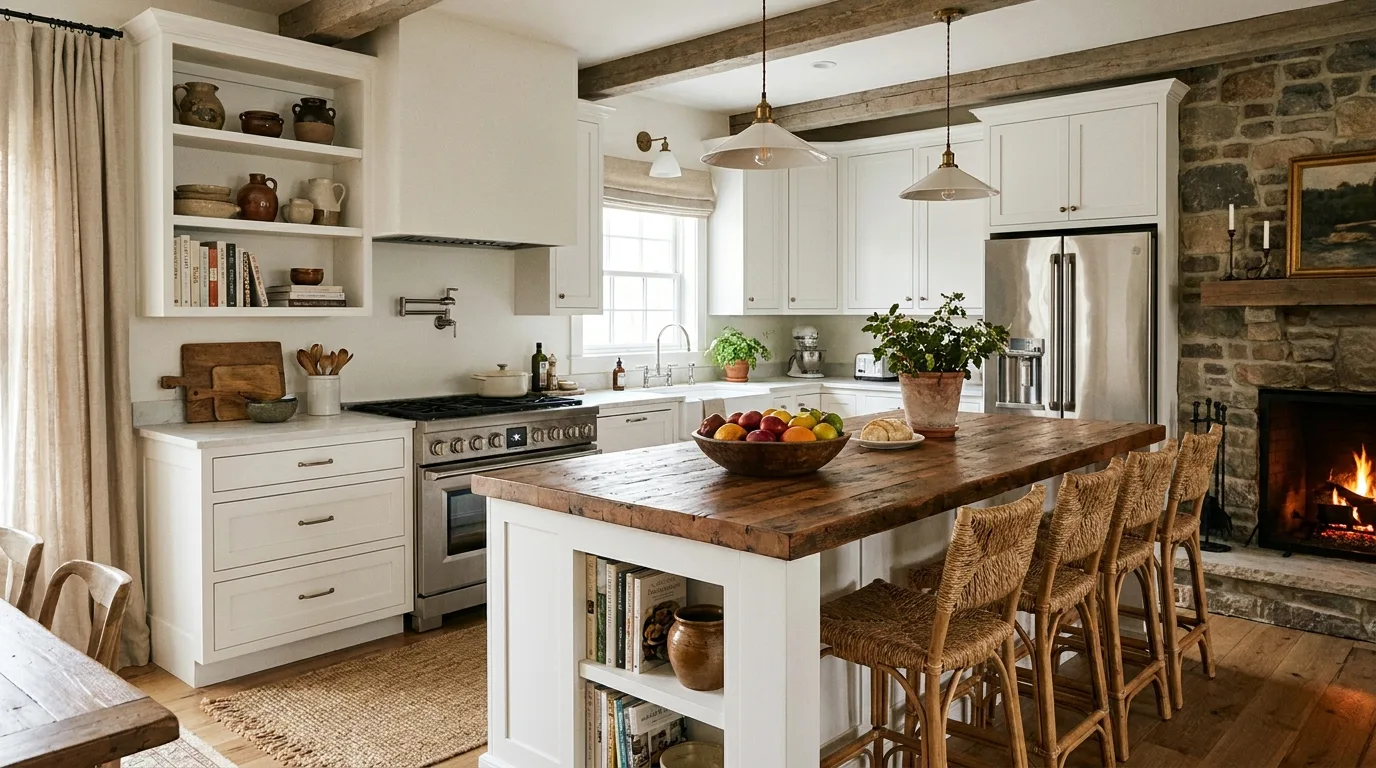
Before choosing a kitchen slab, think beyond color and appearance. Consider how frequently you cook, how much maintenance you are comfortable with, and which areas of the countertop receive the most use. Also look at your cabinet color, backsplash, flooring, lighting, and hardware as one complete palette. A beautiful slab can look out of place if its undertones clash with surrounding finishes.
- Prioritize durability: Choose a material suited to your cooking habits and household.
- Check maintenance needs: Understand sealing, cleaning, stain resistance, and heat limitations.
- View large samples: Veining and color can look very different across a full slab.
- Plan the edges: Profile thickness and waterfall details can dramatically change the final appearance.
- Coordinate finishes: Repeat subtle colors from the slab in cabinets, backsplash, lighting, or accessories.
The best kitchen slab design should combine beauty with everyday practicality. Whether you prefer bright quartz, expressive granite, warm wood tones, dramatic dark surfaces, or a seamless slab-and-backsplash look, the right choice can give your kitchen a polished and personalized finish. Start with your lifestyle and existing color palette, then select a surface that supports both the way you cook and the atmosphere you want to create.