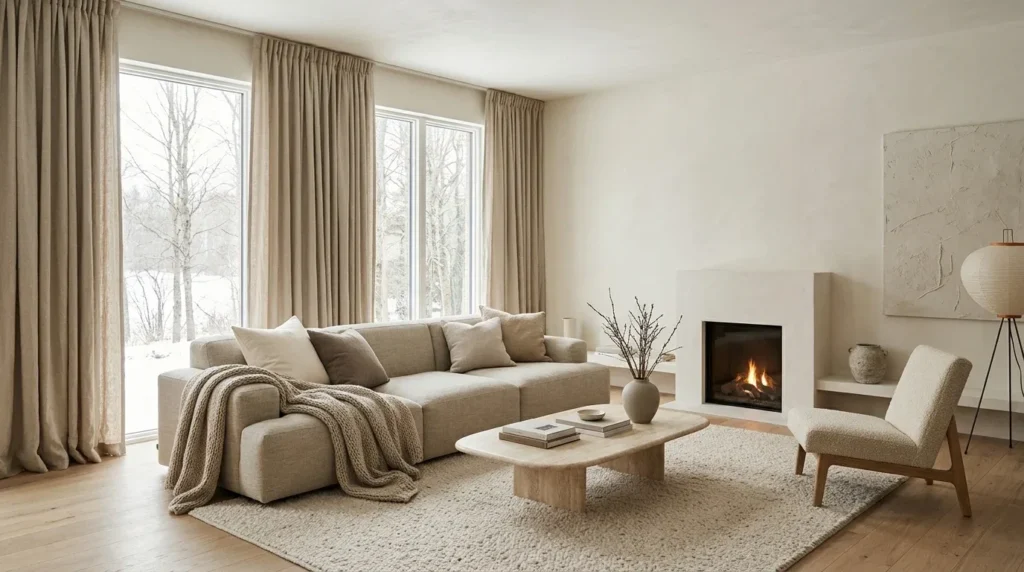
A sophisticated winter living room does not need layers of elaborate decorations, oversized furniture, or a crowded collection of accessories. Minimalist design offers a more thoughtful approach, combining clean lines, natural textures, warm lighting, and carefully chosen furnishings to create a space that feels both elegant and inviting. During the colder months, these details become especially important because a living room should feel comfortable enough for quiet evenings while maintaining a polished, uncluttered appearance.
The secret to successful winter minimalism is balancing simplicity with warmth. Soft wool throws, tactile upholstery, natural wood, muted colors, and subtle seasonal accents can transform even a simple room into a welcoming retreat. Whether you prefer contemporary neutrals, Scandinavian influences, or understated luxury, these minimalist living room ideas will help you create a sophisticated winter home without sacrificing comfort or personality. Explore practical ways to refresh your space, make thoughtful decorating choices, and embrace a calmer atmosphere throughout the season.
1. Embrace a Warm Neutral Color Palette
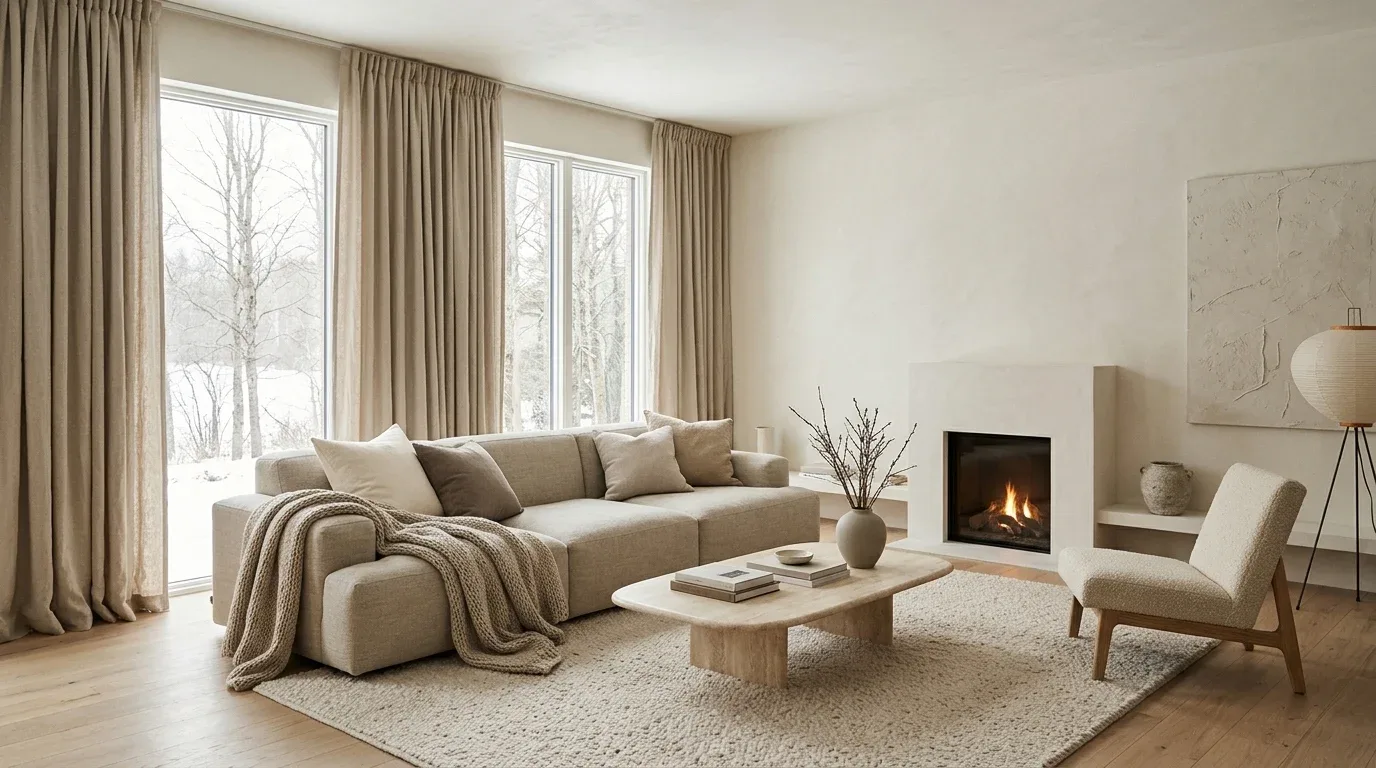
Warm neutrals create an effortless foundation for a minimalist living room that feels sophisticated throughout winter. Instead of relying exclusively on bright white, incorporate shades such as ivory, oatmeal, warm beige, mushroom, and soft greige. These colors reflect available light while introducing a gentle richness that works beautifully during shorter days. Consider painting the walls a creamy white and pairing them with a beige sofa, pale curtains, and a textured natural-fiber rug.
To prevent the room from appearing flat, vary the tones and finishes rather than introducing numerous contrasting colors. A linen cushion, a wool blanket, and a matte ceramic vase can each contribute a slightly different texture. Keep the overall palette consistent, allowing subtle variations to create depth. The result is a calm, cohesive interior that feels timeless rather than overly seasonal.
2. Choose a Streamlined Sofa with Soft Upholstery
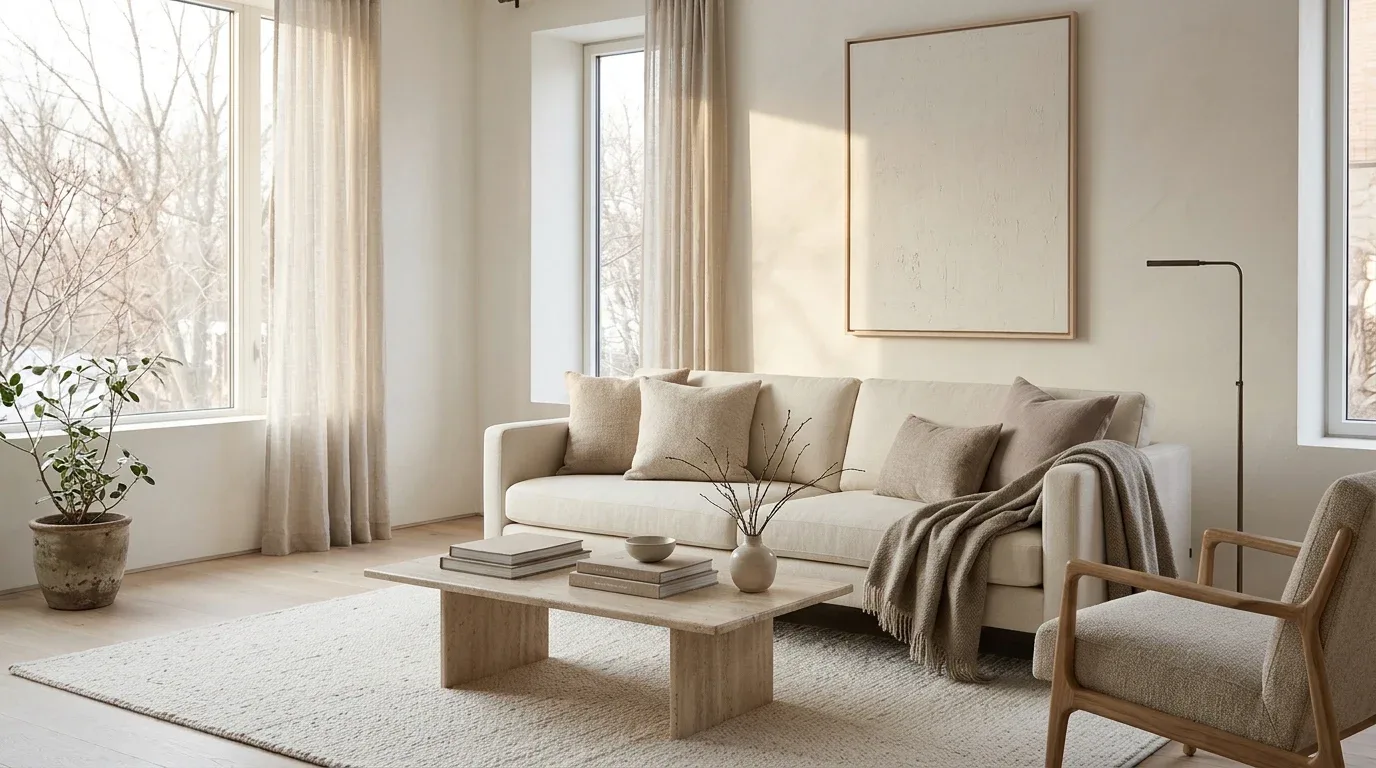
A well-designed sofa can establish the entire character of a minimalist living room. Choose a streamlined silhouette with simple arms, balanced proportions, and understated detailing. Upholstery in cream, taupe, soft gray, or muted brown offers versatility and complements a sophisticated winter palette. For additional comfort, look for tactile materials such as textured linen blends, brushed fabrics, or durable woven upholstery.
The sofa should suit the room rather than overwhelm it. In a compact space, a two- or three-seat model with raised legs can preserve a sense of openness, while a generously proportioned sofa may work well in a larger living area. Add a small number of cushions in complementary shades instead of covering every seat with accessories. A single folded throw provides softness and seasonal warmth without compromising the clean, uncluttered look.
3. Layer Textures Instead of Adding More Colors
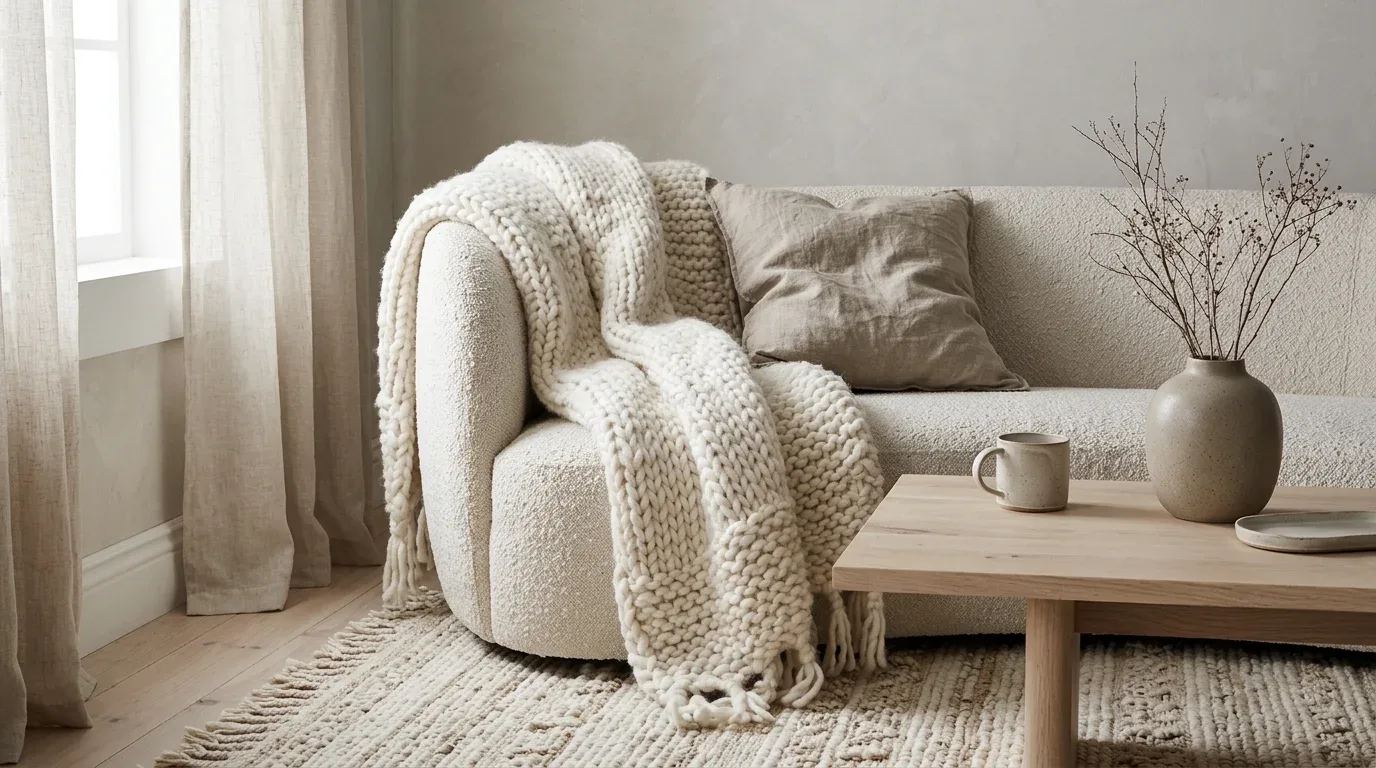
Minimalist interiors can sometimes feel cold when every surface is smooth and every object has the same finish. The solution is to introduce texture rather than decorate with additional colors. Combine a wool throw, a bouclé accent chair, a linen cushion, a wooden coffee table, and a softly woven rug within a restrained palette. These materials create visual interest without making the room feel busy.
For winter, tactile fabrics are especially effective because they suggest warmth and comfort even before you sit down. Keep the number of materials intentional, repeating a few finishes throughout the room to maintain cohesion. For example, natural wood can appear in the coffee table and a small decorative bowl, while wool textures can connect the sofa and rug. This approach creates a layered, welcoming space that remains faithful to minimalist principles.
4. Create a Cozy Reading Corner
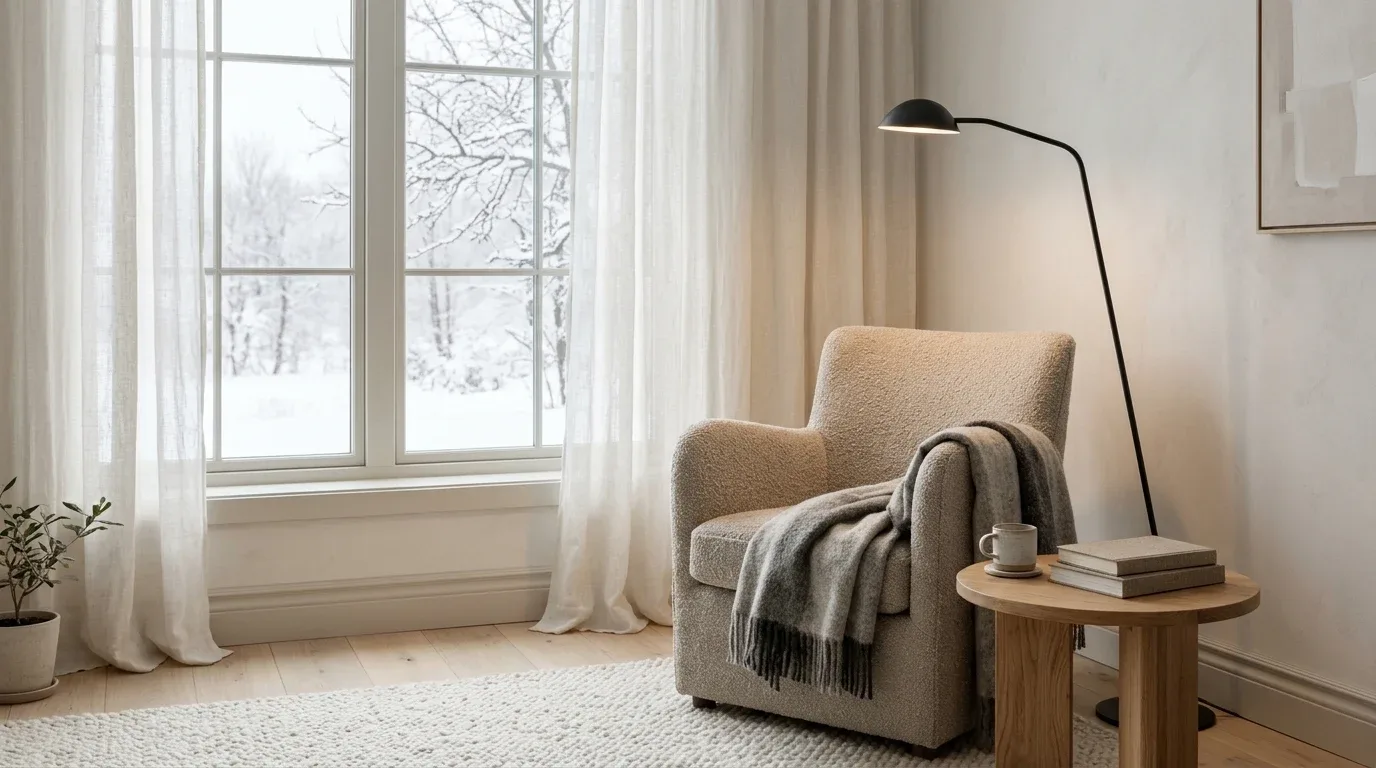
A dedicated reading corner makes a minimalist living room feel more personal without requiring a major redesign. Begin with a comfortable accent chair featuring a simple silhouette, then position it near a window or in a quiet corner with adequate natural light. Add a slim floor lamp, a small side table, and a soft throw in a coordinating neutral shade. The arrangement should feel complete but not crowded.
During winter, this little retreat becomes an ideal place to enjoy a book, a warm drink, or a few quiet moments away from everyday distractions. Choose a lamp with a warm-toned bulb so the corner remains inviting after sunset. If space is limited, a compact chair and wall-mounted reading light can provide the same effect. Keep books and accessories to a manageable collection, allowing the corner to feel restful rather than cluttered.
5. Incorporate Natural Wood Accents
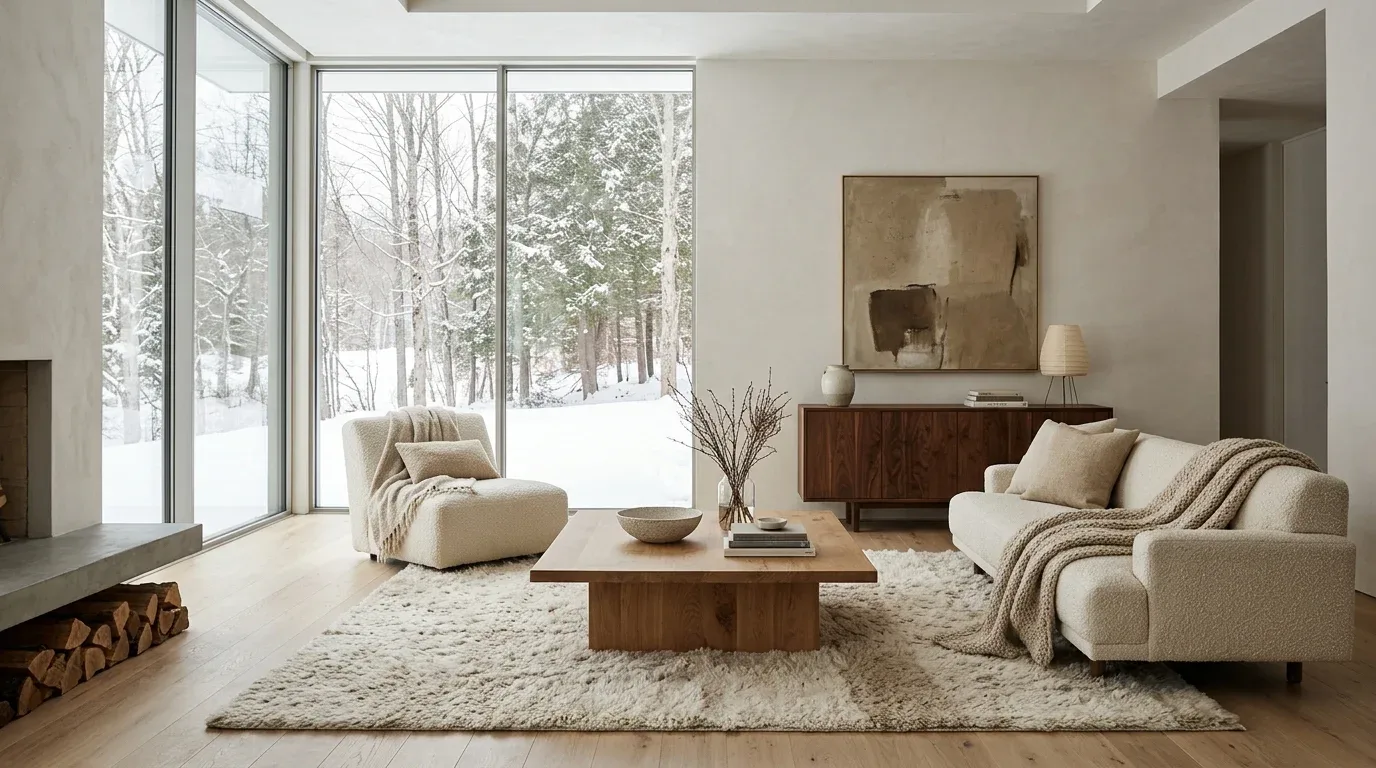
Natural wood brings organic warmth to minimalist living rooms, making it an excellent choice for a winter refresh. A light oak coffee table, walnut sideboard, or simple wooden stool can soften the appearance of neutral walls and streamlined furniture. Choose finishes that complement one another without insisting that every wooden element match perfectly. A little variation in grain and tone helps the space feel authentic.
For a balanced look, allow wood to provide contrast against upholstered furniture and soft textiles. In a bright room, pale oak reinforces an airy Scandinavian aesthetic. Darker walnut introduces depth and understated luxury, particularly when paired with cream upholstery and warm lighting. Avoid filling every available surface with wooden accessories. One or two well-chosen pieces often make a stronger impression than a collection of decorative objects, keeping the overall design simple and intentional.
6. Use a Large, Understated Area Rug
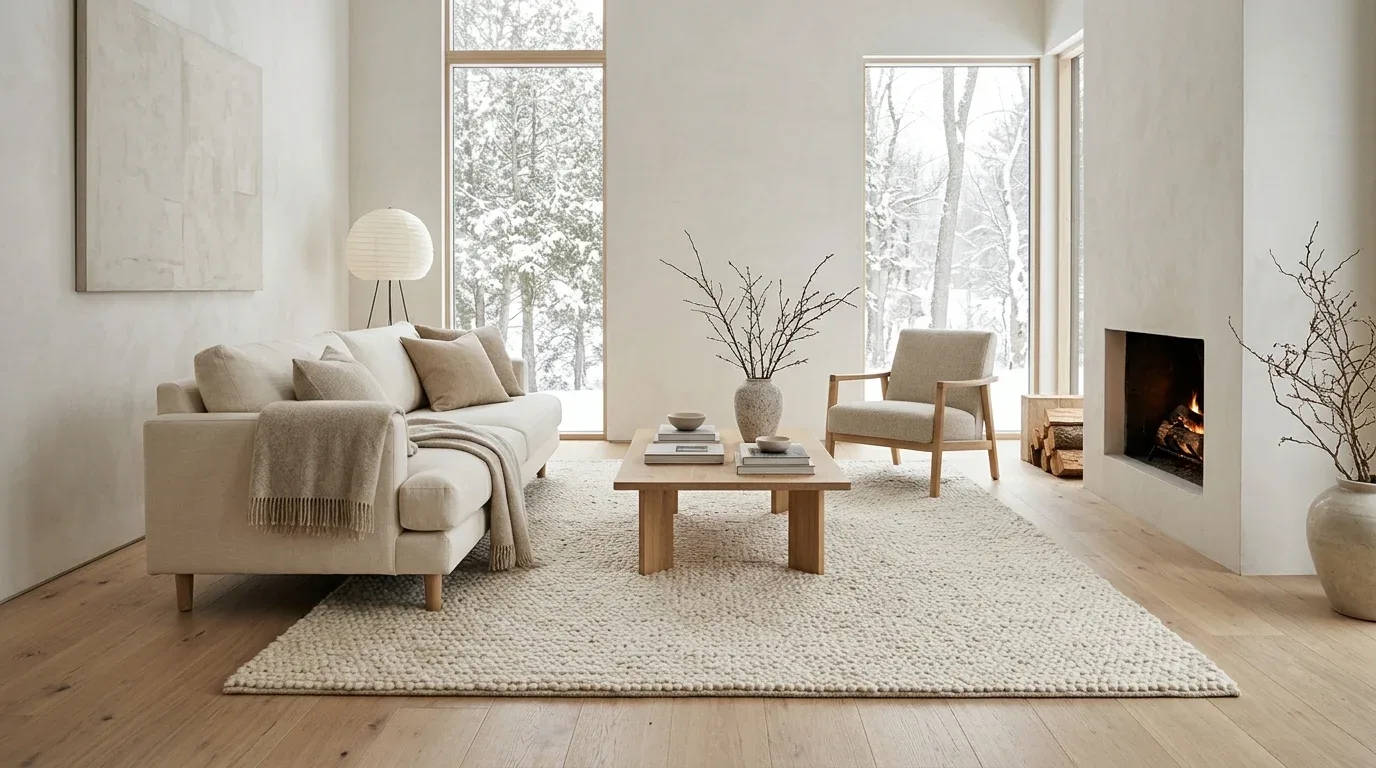
A thoughtfully sized area rug can make a winter living room feel more comfortable while visually connecting the furniture. Choose a low-contrast design in ivory, sand, taupe, or soft gray, preferably with a tactile weave that adds subtle interest. Wool and wool-blend rugs are popular choices for their soft feel and insulating qualities, while durable synthetic alternatives can suit households that need easier maintenance.
Size matters as much as color. Ideally, the rug should extend beneath at least the front legs of the sofa and accompanying chairs, helping the seating arrangement feel cohesive. A rug that is too small can make the room appear fragmented. In an open-plan interior, a generously proportioned rug also defines the living zone without adding physical partitions. Keep patterns restrained and let the texture provide the visual richness that makes the room feel ready for winter.
7. Introduce Warm, Layered Lighting
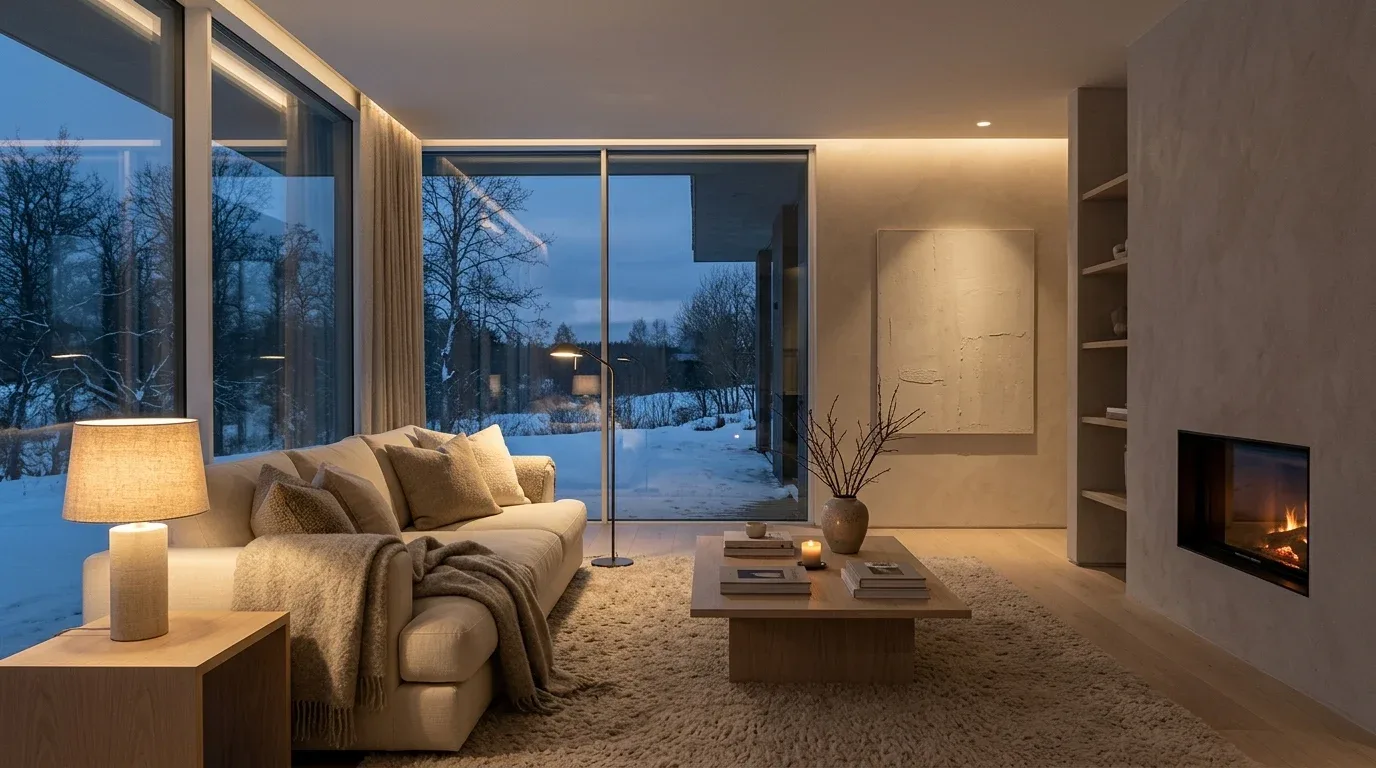
Lighting has a major influence on how a minimalist living room feels during winter. Instead of depending on one bright ceiling fixture, combine several softer sources to create a comfortable atmosphere. A floor lamp beside the sofa, a table lamp on a sideboard, and discreet overhead lighting provide flexibility throughout the day. Choose warm-white bulbs, typically around 2700K, for a relaxed residential feel.
Simple fixtures with linen shades, matte metal finishes, or sculptural forms can contribute to the room’s design without attracting excessive attention. Position lights where they support real activities, such as reading, conversation, or relaxing in the evening. Dimmers are especially useful because they allow you to adjust brightness as natural light fades. Keep cables organized and avoid overcrowding side tables with lamps and accessories. A few well-placed light sources create more atmosphere than a room filled with decorative lighting.
8. Keep the Coffee Table Styling Minimal
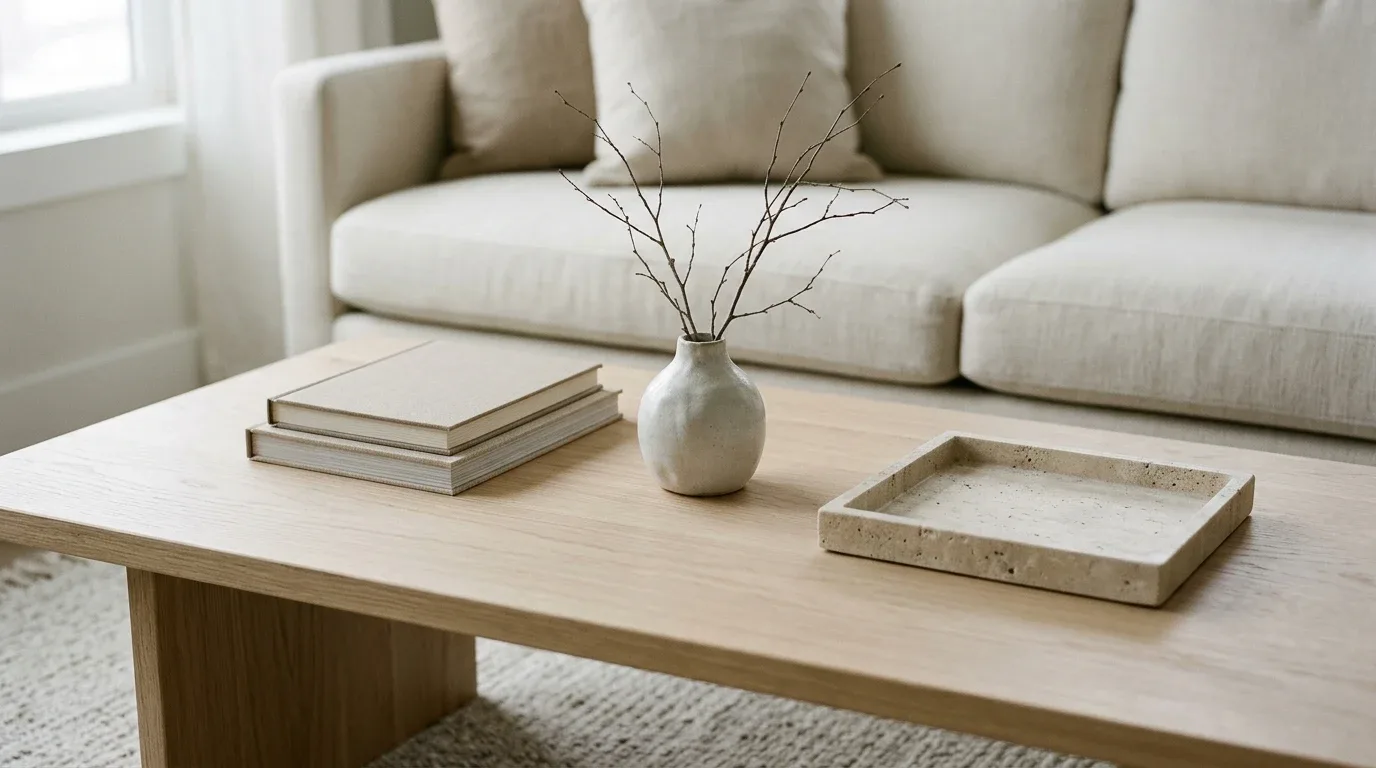
The coffee table is an opportunity to introduce personality while preserving a clean, sophisticated appearance. Start with a simple table in wood, stone, glass, or a combination of materials. Then choose just two or three decorative elements, such as a small stack of books, a handmade ceramic vessel, or a shallow tray. Leave plenty of the tabletop visible so the arrangement feels deliberate rather than crowded.
For winter, a branch in a modest vase or a small bowl of natural decorative objects can provide seasonal character without relying on obvious holiday decorations. Vary the heights of your chosen pieces slightly to create a balanced composition. Make sure the arrangement does not obstruct conversation or interfere with everyday use. If the coffee table also holds remotes, coasters, or other practical items, use a discreet container to keep them organized and accessible.
9. Decorate with Simple Winter Greenery
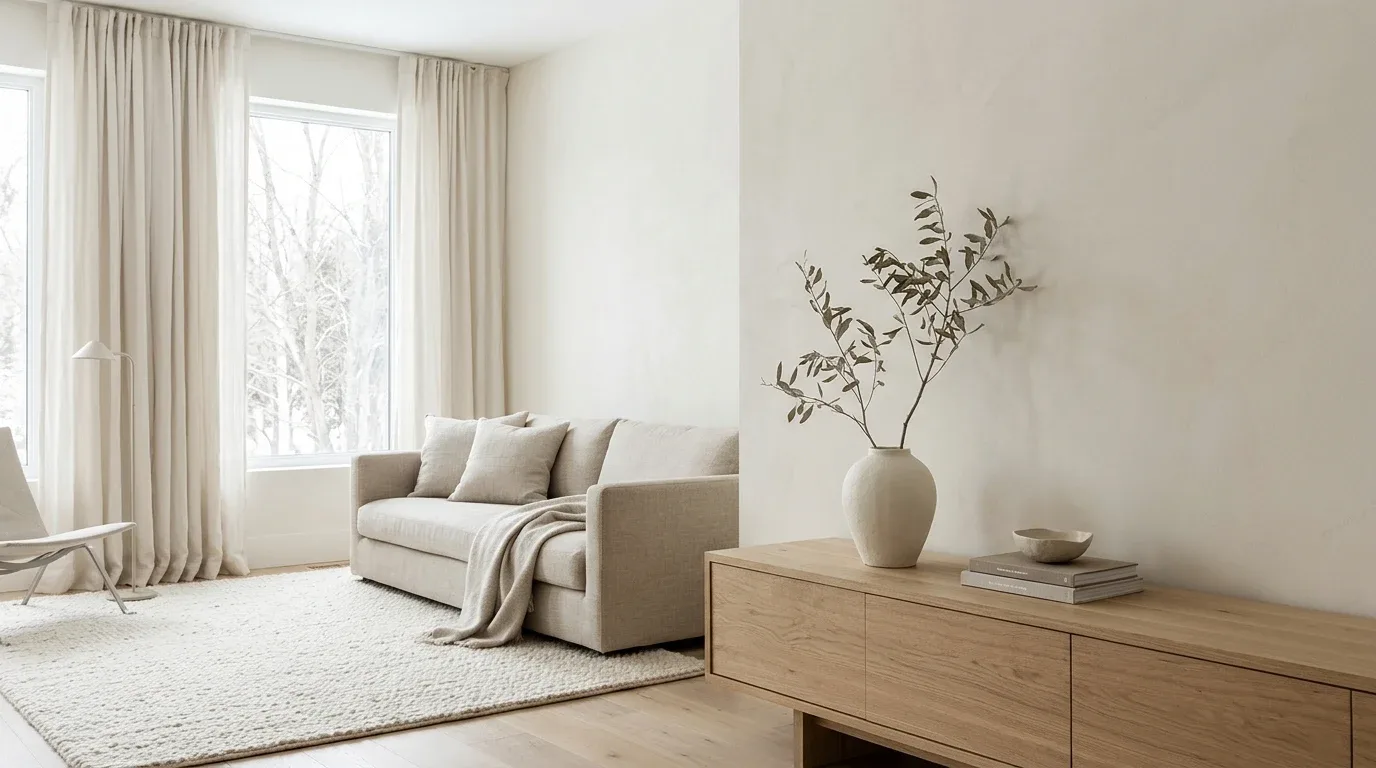
Greenery introduces life and a subtle connection to nature, making it a beautiful addition to a neutral winter living room. A single leafy branch in a ceramic vase, a restrained eucalyptus arrangement, or a small potted plant can bring freshness without overwhelming the space. Choose greenery with a naturally elegant shape and place it where it can be appreciated without interfering with movement.
Minimalist styling works best when the arrangement has room to breathe. Rather than distributing small plants across every shelf and table, choose one or two locations that benefit from a natural accent. A tall branch can create vertical interest beside a sideboard, while a compact plant can soften a bare corner. Consider maintenance needs and available light when selecting living plants. For a seasonal arrangement, use responsibly sourced branches and replace them when they lose their freshness, keeping the display attractive and uncomplicated.
10. Make the Fireplace a Quiet Focal Point
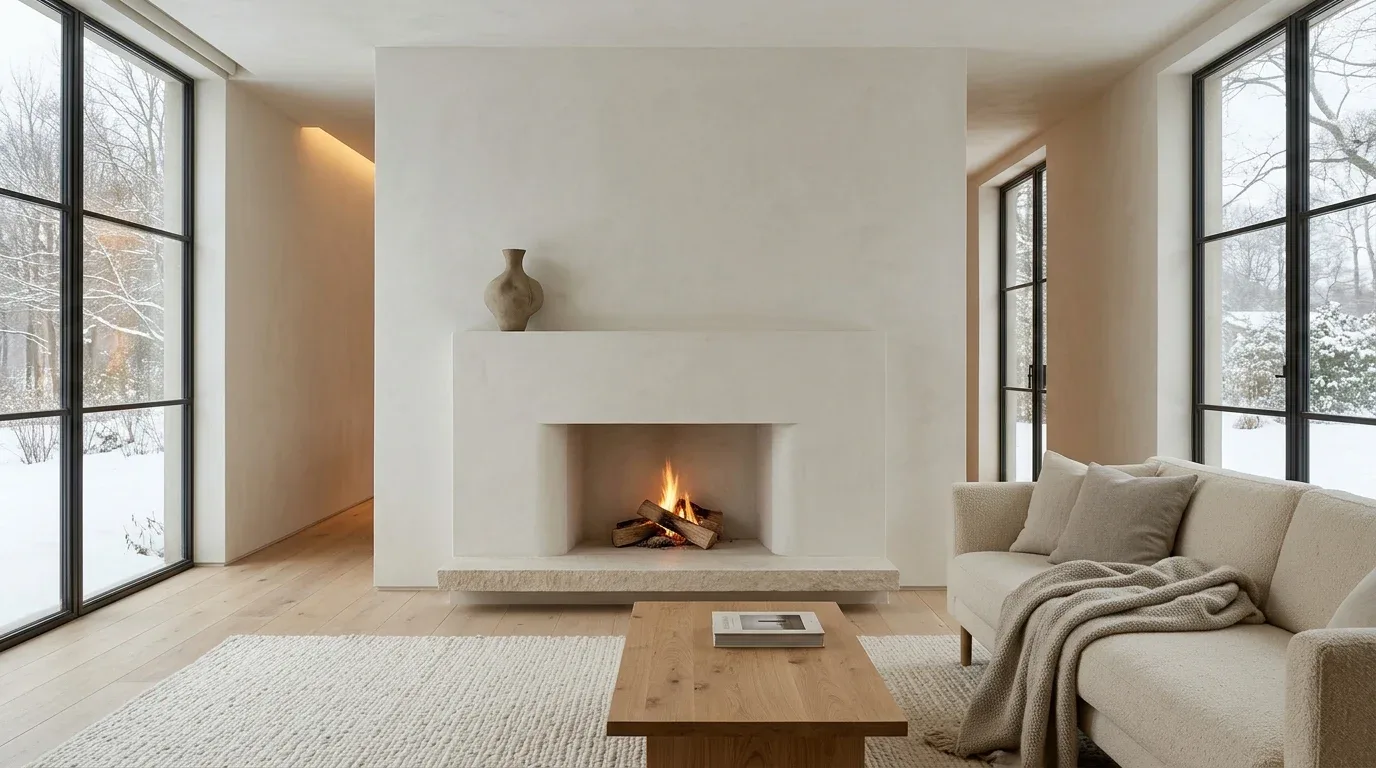
If your living room has a fireplace, let its architecture provide much of the visual interest. A simple mantel, clean surrounding walls, and a restrained arrangement of accessories can create an elegant focal point. Instead of filling the mantel with numerous ornaments, choose a single artwork, a sculptural vase, or a small grouping of candles in complementary finishes. Keep the composition proportional to the fireplace and the wall above it.
Natural stone, plaster finishes, and understated tile can reinforce a minimalist aesthetic while adding subtle texture. If the fireplace is functional, follow the manufacturer’s instructions and local safety guidance when positioning decorations, textiles, or candles nearby. Homes without a traditional fireplace can achieve a similar visual effect with a simple architectural feature, a low console, or a carefully arranged seating area. The goal is to establish one calm focal point that anchors the room without competing with the rest of the interior.
11. Add Linen Curtains for Softness
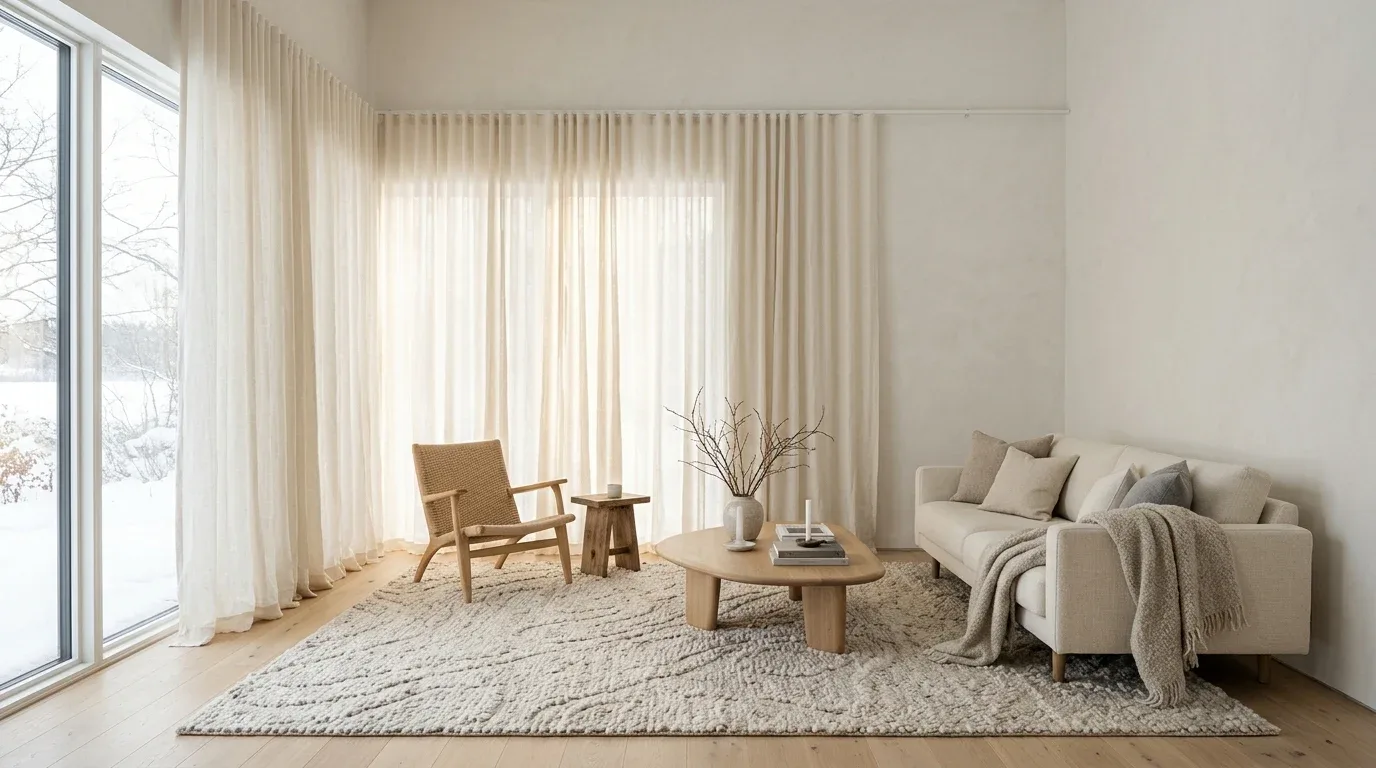
Window treatments can make a significant difference to the atmosphere of a minimalist living room. Linen or linen-blend curtains introduce a relaxed texture while maintaining a light, natural appearance. Choose shades such as warm white, flax, or pale taupe to complement the room’s existing palette. Hanging the curtain rod higher than the window frame and allowing the panels to reach the floor can make the room appear taller and more finished.
In winter, however, appearance should be balanced with comfort. If your windows are drafty, consider lined curtains or a separate insulating layer that helps reduce heat loss. Thermal performance depends on the fabric, construction, fit, and window itself, so select a suitable product rather than relying on appearance alone. Keep the folds simple and avoid elaborate tiebacks or decorative trims. The result is a softer, more polished room that still feels bright and uncluttered during the colder months.
12. Display One Large Piece of Artwork
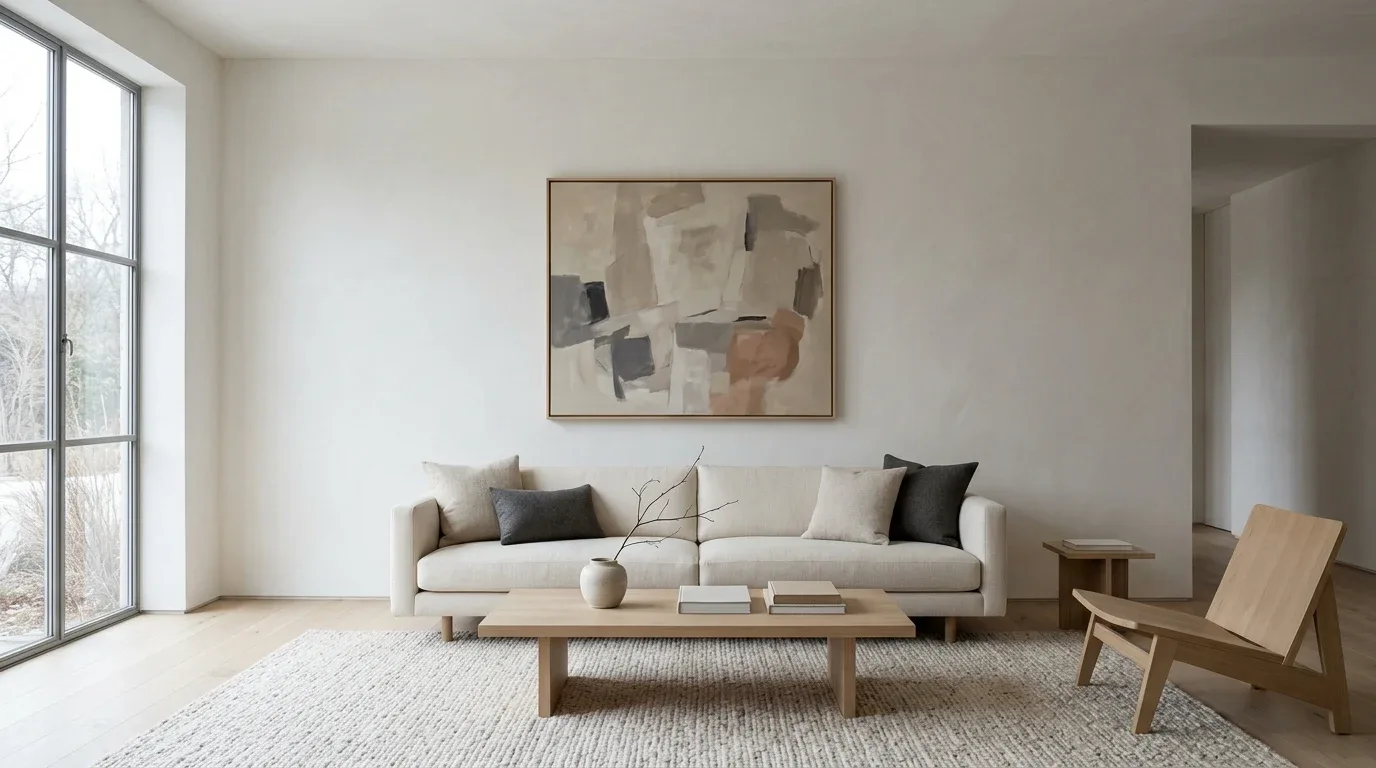
One well-chosen artwork can give a minimalist living room personality without requiring a gallery wall or numerous decorative objects. Consider an abstract composition, a muted landscape, a minimalist line drawing, or a photographic print in a restrained palette. Artwork featuring warm earth tones, soft charcoal, or subtle green can connect naturally with winter-inspired interiors.
Scale and placement are important. A substantial piece centered above the sofa can create a focal point, while a smaller work may look more effective above a compact console or beside a reading chair. Choose a frame that complements the furniture and other finishes, such as natural oak, matte black, or a narrow metallic profile. Leave enough empty wall around the artwork to let it stand out. This deliberate use of negative space makes the piece feel important and helps the room maintain its quiet sophistication.
13. Introduce Subtle Black Accents
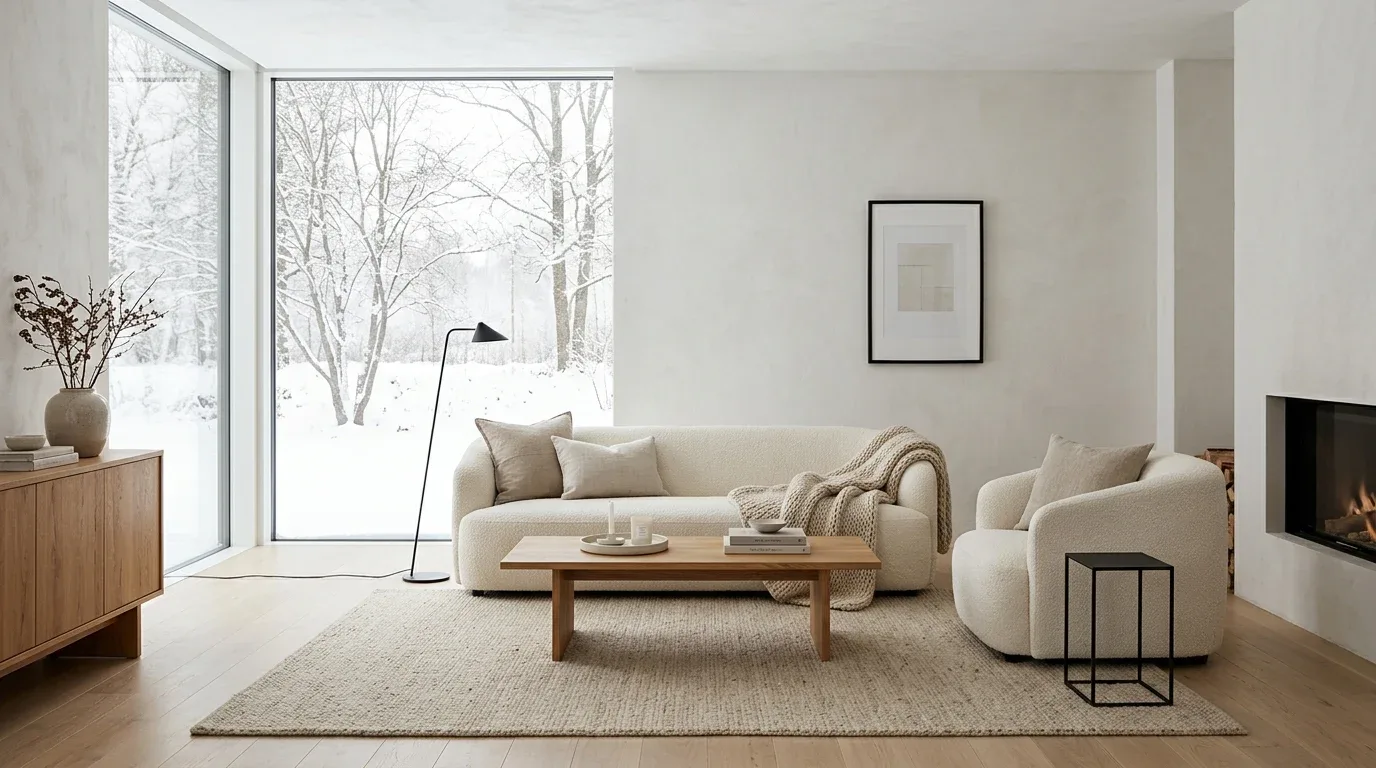
Black accents can give a neutral living room definition and a more contemporary finish. In a predominantly cream or beige space, small touches of black provide contrast that helps furniture shapes and architectural details stand out. Consider a slim floor lamp, a picture frame, a metal side table, or a simple bowl with a matte black finish.
The key is moderation. Too many dark objects can make a small winter living room feel visually heavy, particularly when daylight is limited. Repeat the color in two or three places so the accents feel connected rather than random. Pair black metal with warm wood, soft upholstery, and natural textiles to prevent the overall look from becoming stark. If your room already contains dark window frames or hardware, echoing those details through a few accessories can create a cohesive design with very little additional decoration.
14. Create a Clutter-Free Media Wall
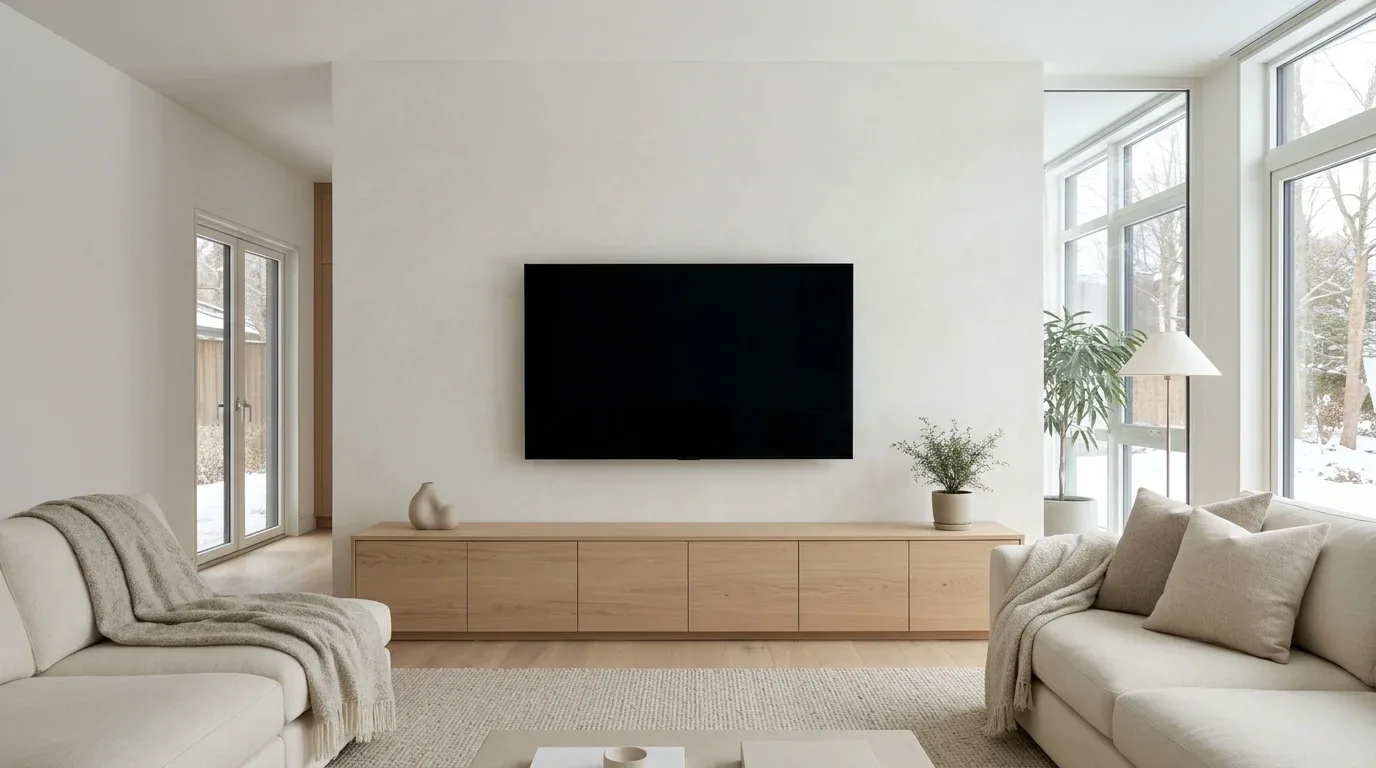
A minimalist media wall helps the living room feel organized, especially when televisions, gaming equipment, speakers, and charging cables are part of everyday life. Choose a low-profile media console with closed storage so remotes, accessories, and small electronics remain accessible without being constantly visible. Wall-mounting the television, where appropriate, can free up surface space and create a streamlined appearance.
Keep surrounding decorations limited. One framed print, a small plant, or a simple sculptural object may be enough to balance the screen without making the wall feel busy. Use cable-management channels or built-in routing to reduce visible wires, and ensure ventilation requirements are met for electronic equipment. In smaller rooms, a console with a shallow depth can preserve walking space. A carefully planned media area allows the room to remain practical for movie nights while maintaining the calm visual order that defines minimalist design.
15. Style Shelves with Intentional Negative Space
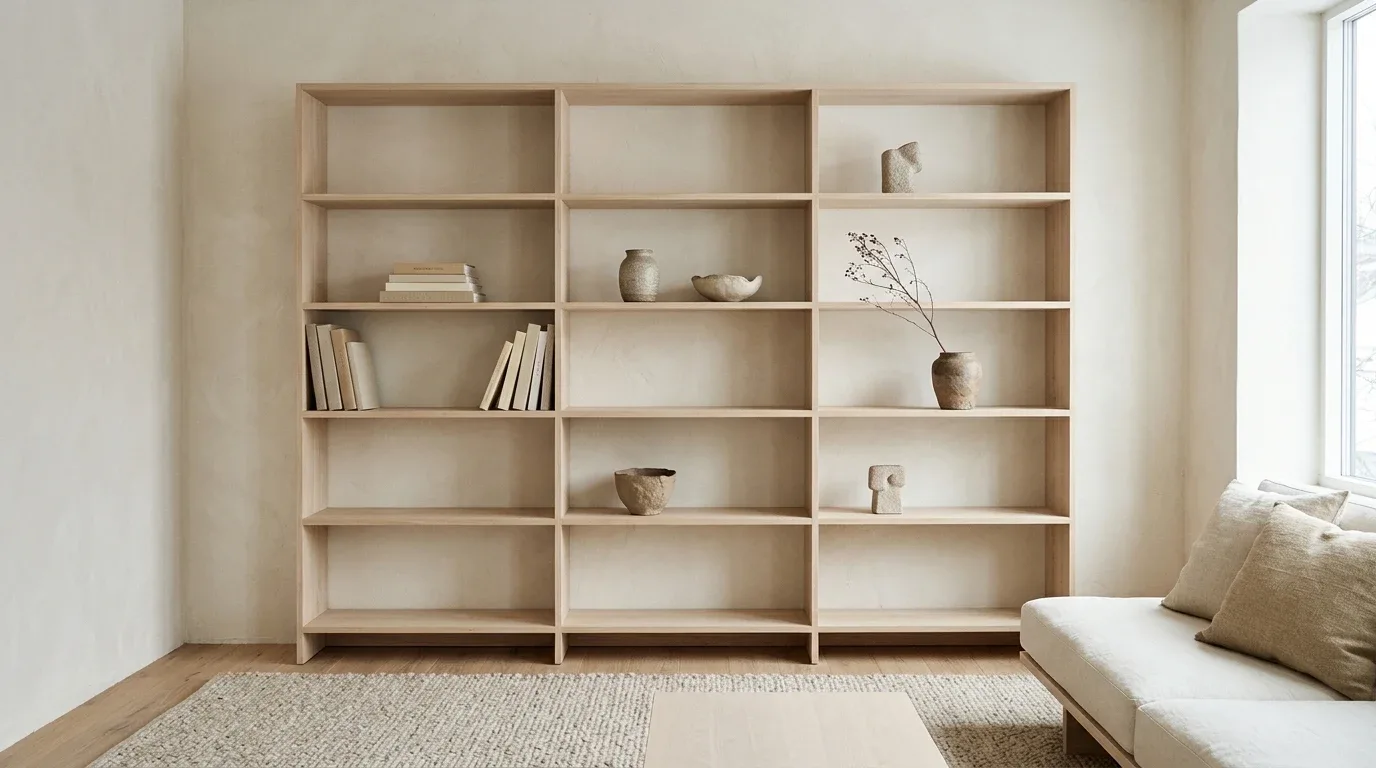
Open shelving can display favorite objects and books, but a crowded arrangement may undermine an otherwise minimalist interior. Begin by removing everything from the shelves and returning only the pieces that are useful, meaningful, or visually appealing. Group a few books horizontally, place a ceramic object nearby, and leave empty sections between arrangements. This negative space is an essential part of the design rather than an area that needs filling.
For a sophisticated winter look, combine natural materials and muted finishes, such as pale wood, cream ceramics, and a small number of dark accents. Vary the heights of objects while keeping the overall composition balanced. If the shelves hold everyday essentials, use attractive storage boxes to conceal smaller items. Edit the display periodically instead of continually adding new accessories. A thoughtfully styled shelf feels personal and complete while remaining easy to dust, maintain, and adapt as your needs change.
16. Finish with a Few Luxurious Winter Details
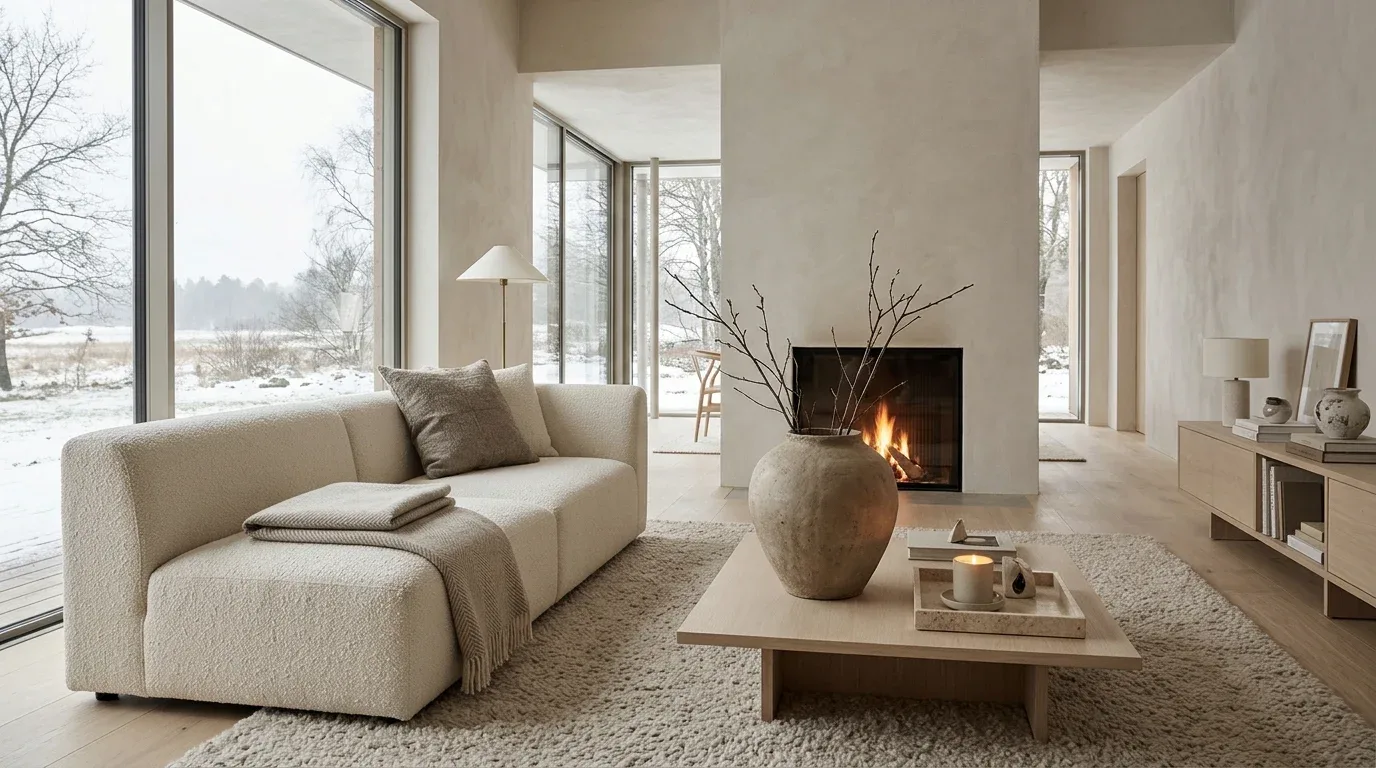
The finishing touches are what make a minimalist living room feel sophisticated rather than unfinished. Introduce a small number of elevated details, such as a soft wool throw, a substantial ceramic vase, a beautifully textured cushion, or a simple tray in natural stone. These pieces should improve comfort or contribute something distinctive to the room instead of merely occupying space.
For a winter-ready atmosphere, favor tactile materials, restrained shapes, and colors that complement the existing palette. A folded blanket over the sofa arm can look inviting while remaining practical, and a cushion in a slightly deeper shade can add dimension without introducing visual noise. If you enjoy seasonal styling, make small changes rather than replacing the entire arrangement. Swap a lightweight throw for a warmer one or introduce a subtle branch arrangement. Thoughtful details create an understated sense of luxury while preserving the simplicity that makes the room timeless.
Conclusion
Creating a sophisticated minimalist living room for winter is about making deliberate choices that balance visual simplicity with everyday comfort. Warm neutrals, natural wood, tactile fabrics, layered lighting, and carefully edited accessories can transform your space without requiring a complete renovation. Start with the changes that will make the greatest difference, whether that means improving the lighting, choosing a more suitable rug, or clearing clutter from the coffee table.
Most importantly, let your living room reflect the way you want to spend the season. With comfortable seating, practical storage, and a few meaningful decorative details, you can create a welcoming winter retreat that feels elegant, functional, and effortlessly calm.