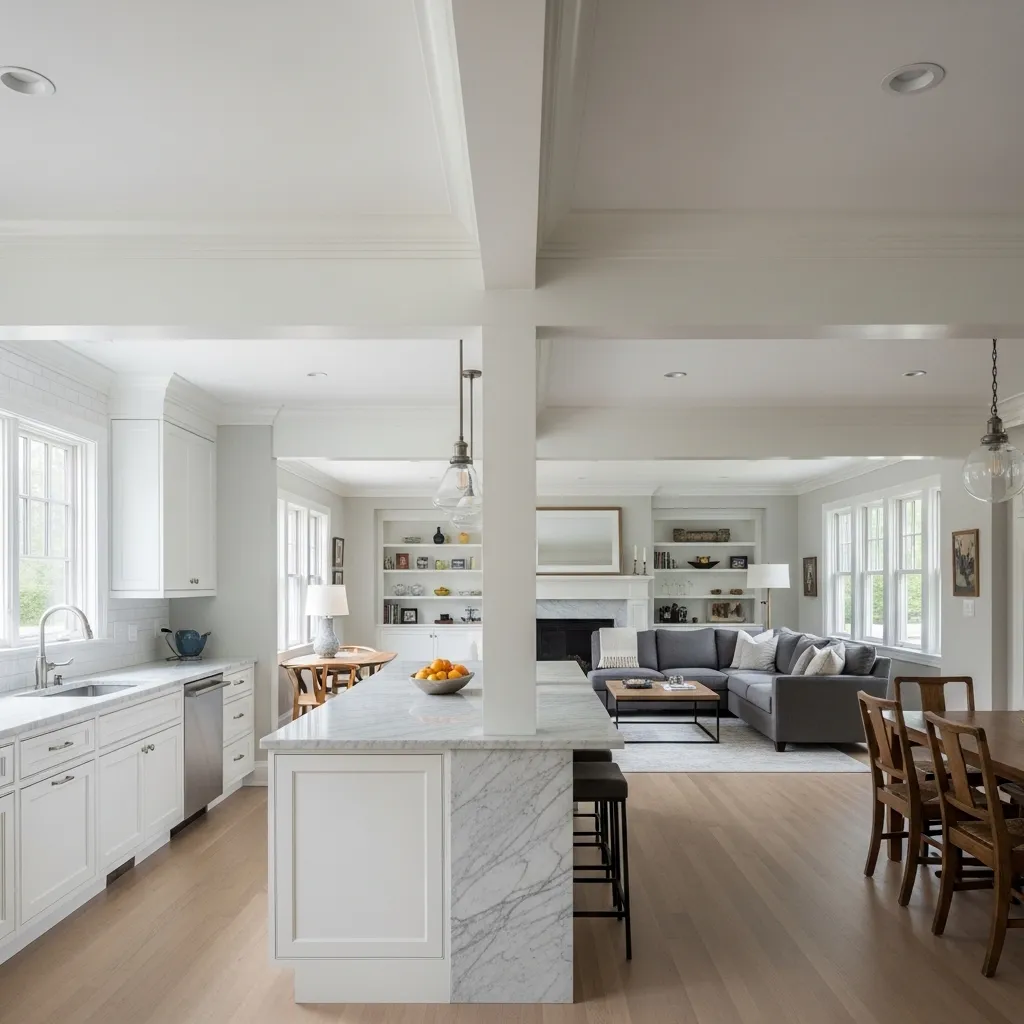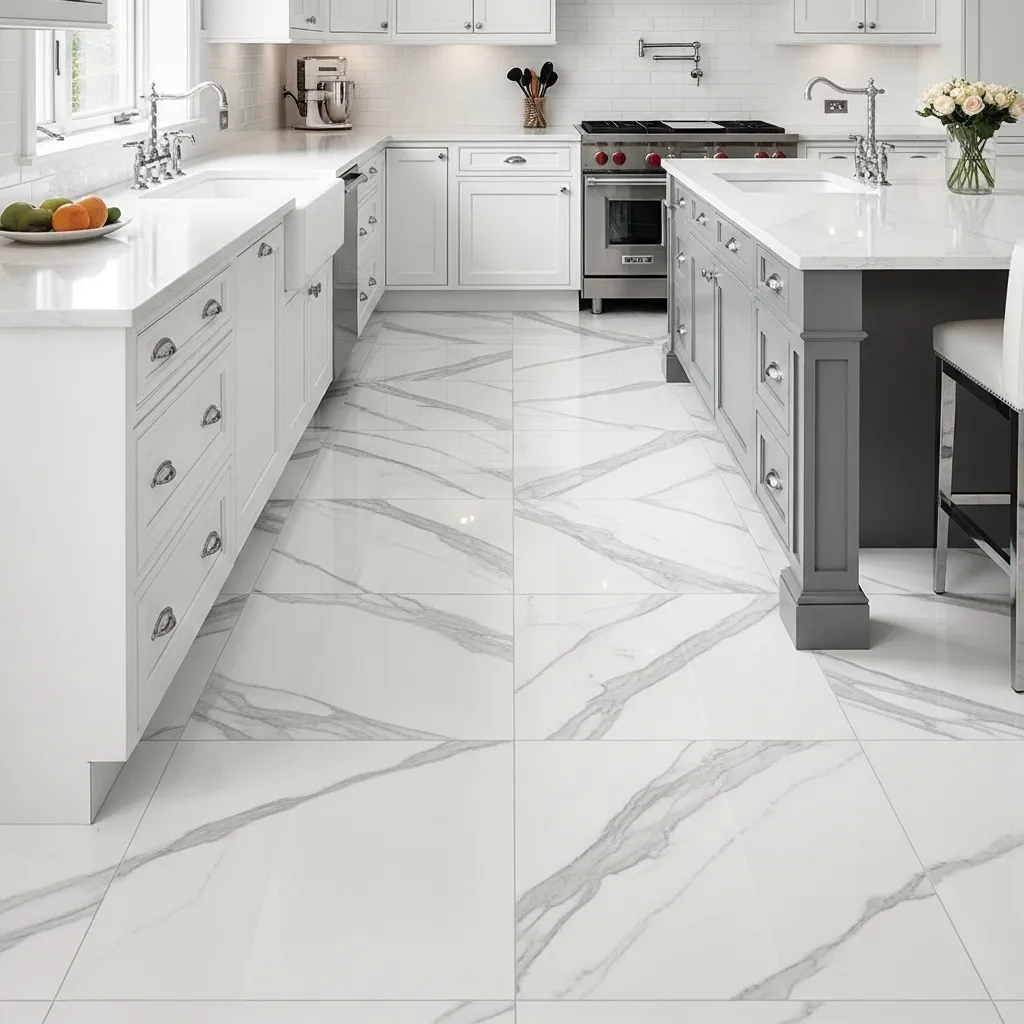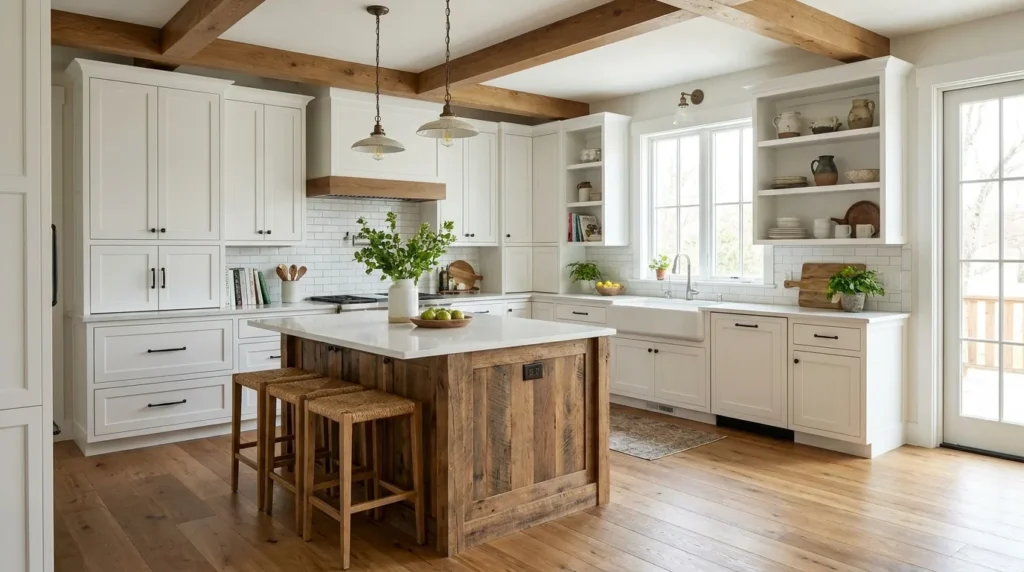
Modern farmhouse kitchens blend the warmth and character of traditional country spaces with the clean lines and practical details of contemporary design. The result is a kitchen that feels welcoming, timeless, and highly functional without looking overly rustic or overly polished. Think natural wood, painted cabinetry, simple hardware, apron-front sinks, warm lighting, open shelving, and durable materials, balanced with streamlined appliances and uncluttered layouts. Whether you are planning a complete kitchen remodel or simply want to refresh your existing space, small design choices can create the farmhouse look without requiring a full renovation. The ideas below cover cabinetry, countertops, backsplashes, lighting, storage, furniture, and finishing touches so you can build a cohesive modern farmhouse kitchen that suits your home’s architecture and your everyday routine.
1. Choose Shaker-Style Kitchen Cabinets
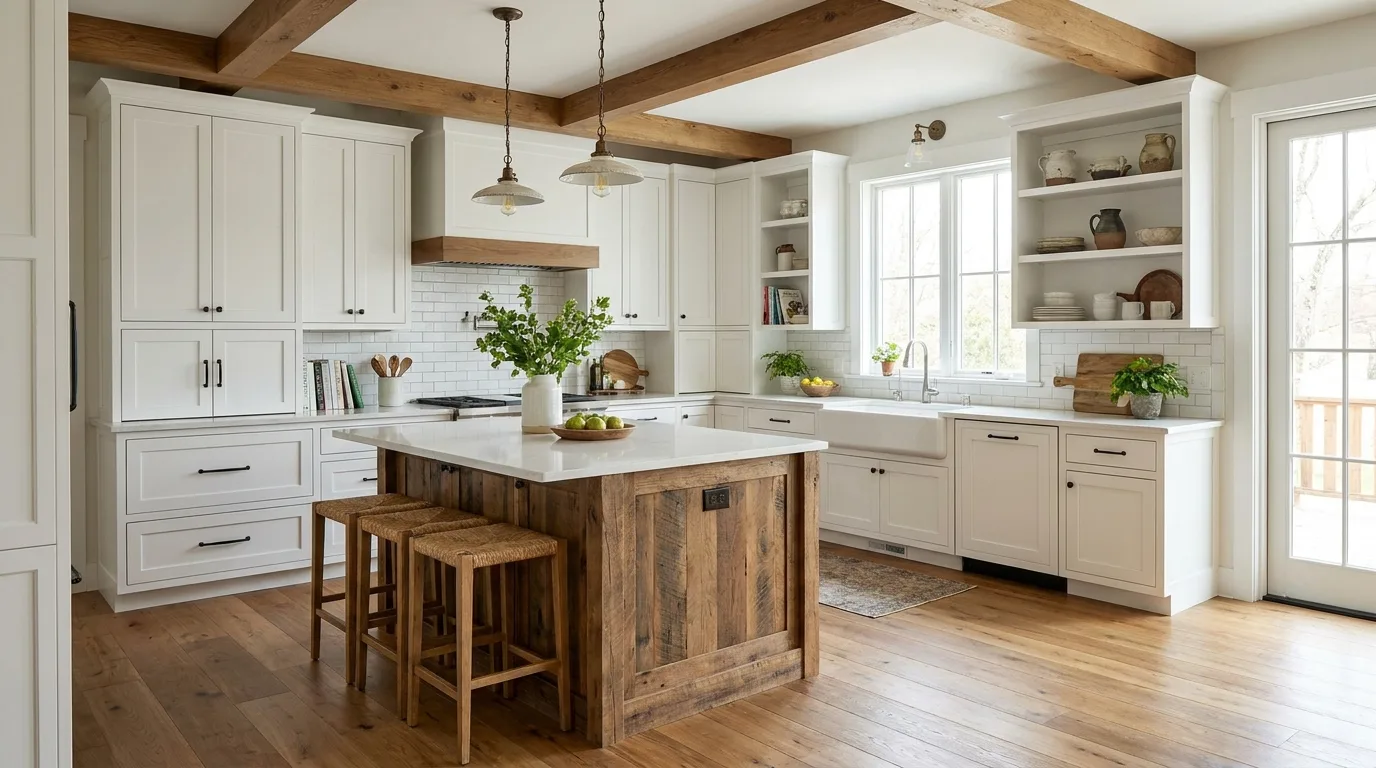
Shaker-style cabinets are one of the easiest ways to establish a modern farmhouse kitchen because their simple recessed panels bridge traditional and contemporary aesthetics. Choose painted cabinets in white, warm cream, soft gray, sage, or muted blue for a classic foundation. If you prefer more visual warmth, combine painted upper cabinets with natural or stained wood lowers. Keep the door profiles straightforward rather than heavily decorative so the kitchen feels current. Flat, streamlined hardware in black, aged brass, or brushed nickel can reinforce the look without overpowering the cabinetry. Shaker cabinets also work well in both large and compact kitchens because their clean geometry makes the space appear organized. For a lasting design, prioritize durable finishes and practical storage over ornate details.
2. Add a Classic Farmhouse Sink
An apron-front farmhouse sink can instantly give a kitchen a strong focal point while remaining highly practical for everyday cooking. Fireclay is a popular choice for its traditional appearance, while stainless steel offers a more contemporary interpretation that can withstand heavy use. Consider the size of your cabinets and available counter space before choosing a deep single-bowl or divided design. A generously sized sink is particularly useful for washing large pans and serving dishes. Pair it with a simple bridge, pull-down, or gooseneck faucet in a finish that complements your cabinet hardware. Although farmhouse sinks are visually distinctive, they do not need to dominate the room. A restrained surrounding palette of Shaker cabinets, natural countertops, and simple lighting keeps the overall kitchen modern.
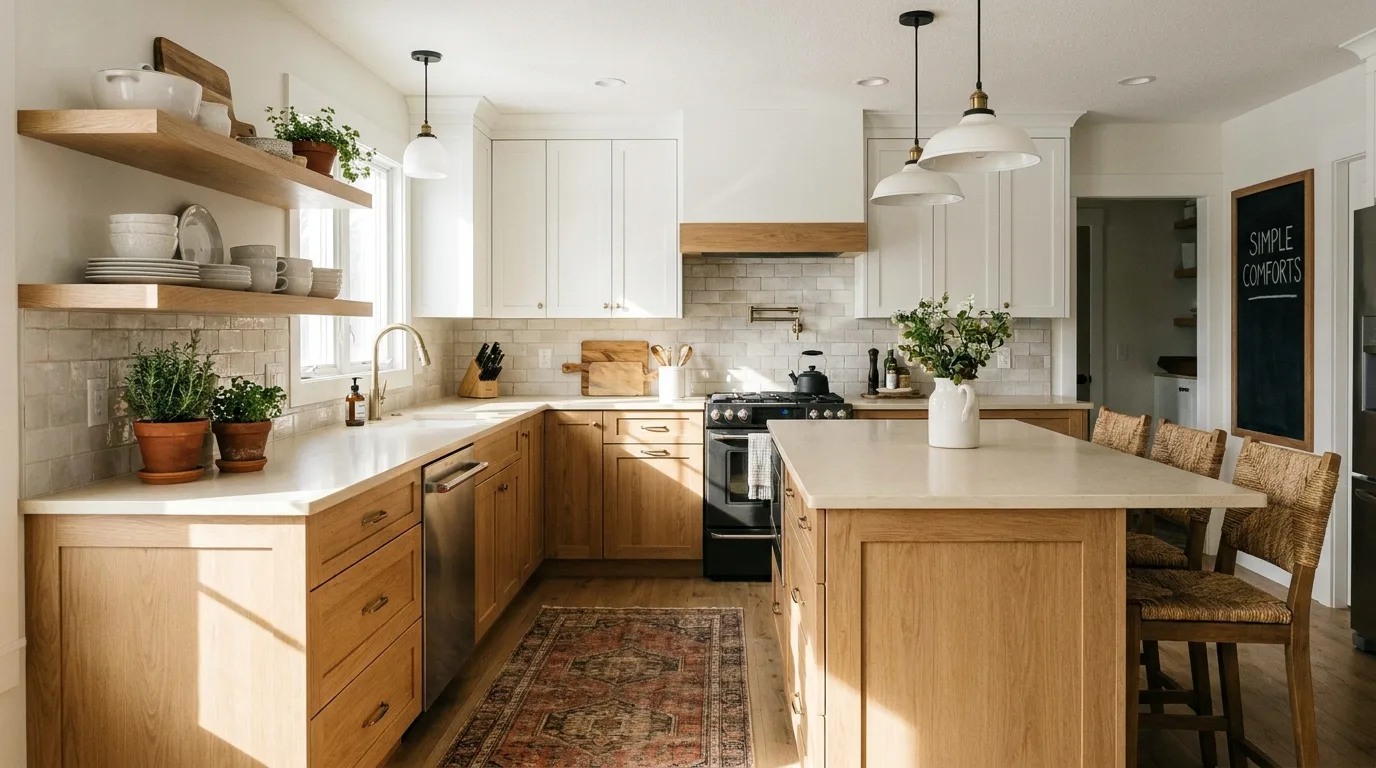
3. Mix White Cabinets With Natural Wood
Combining white cabinetry with natural wood is a reliable way to balance freshness and warmth in a modern farmhouse kitchen. Instead of making every surface white, introduce wood through an island, ceiling beams, open shelves, stools, or a butcher-block worktop. Light oak creates an airy Scandinavian-inspired effect, while walnut or medium-toned timber provides richer contrast. The key is to repeat the wood tone in at least two areas so it feels intentional. White cabinets can then keep the room visually bright while wood prevents the space from appearing cold or sterile. Choose finishes with visible grain rather than overly glossy surfaces for a more authentic farmhouse character. This combination also works beautifully with white subway tile, stone countertops, and aged metal accents.
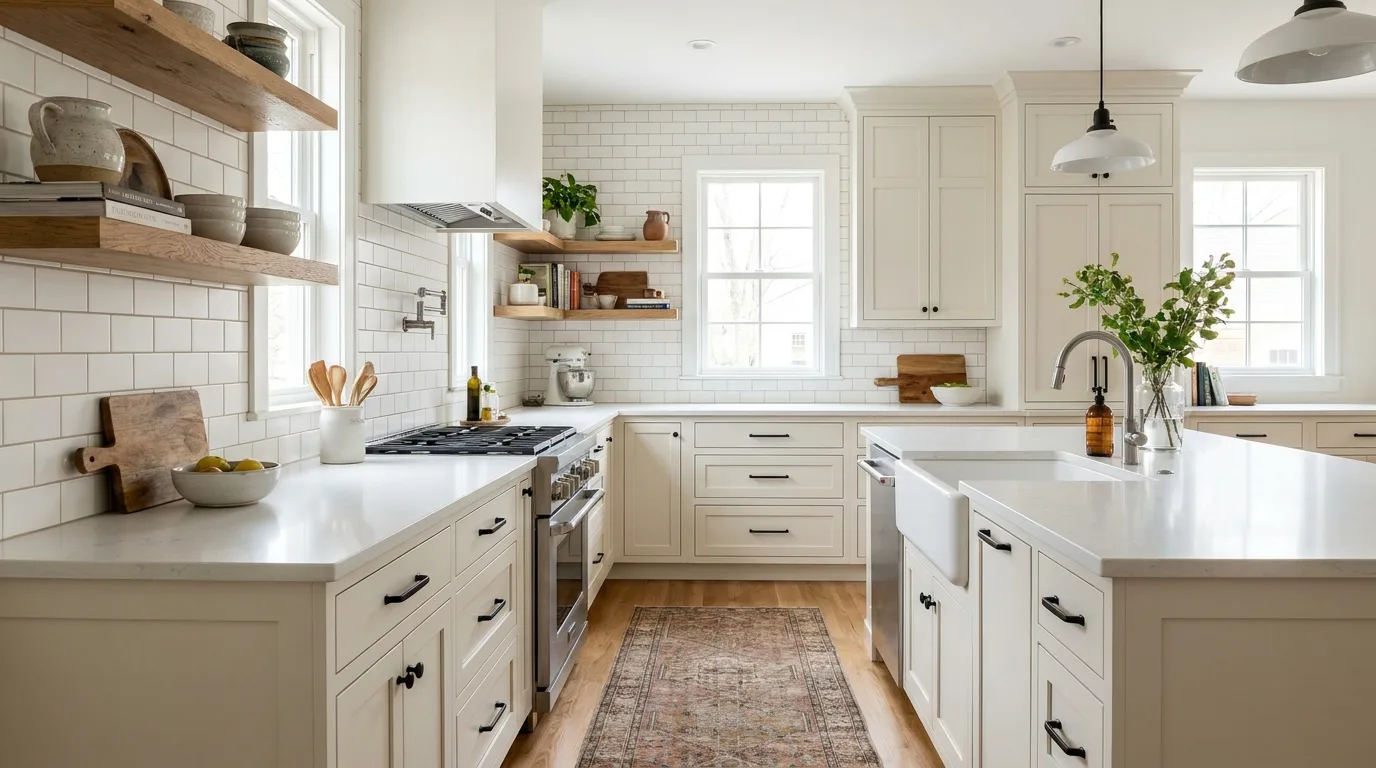
4. Install a Large Functional Kitchen Island
A substantial island can serve as the heart of a modern farmhouse kitchen, providing preparation space, storage, seating, and a gathering point for family and guests. If the room allows, choose an island with generous drawers and deep cabinets rather than sacrificing useful storage for appearance. A contrasting island color can add character without making the kitchen feel busy. Soft sage, charcoal, navy, warm wood, or muted gray are particularly versatile options. Consider an overhang on one side for counter stools, but preserve enough aisle space for comfortable movement around the island. If you are renovating, position the sink, cooktop, or dishwasher according to your workflow rather than simply centering appliances for symmetry. A beautiful island should make cooking easier, not just photograph well.
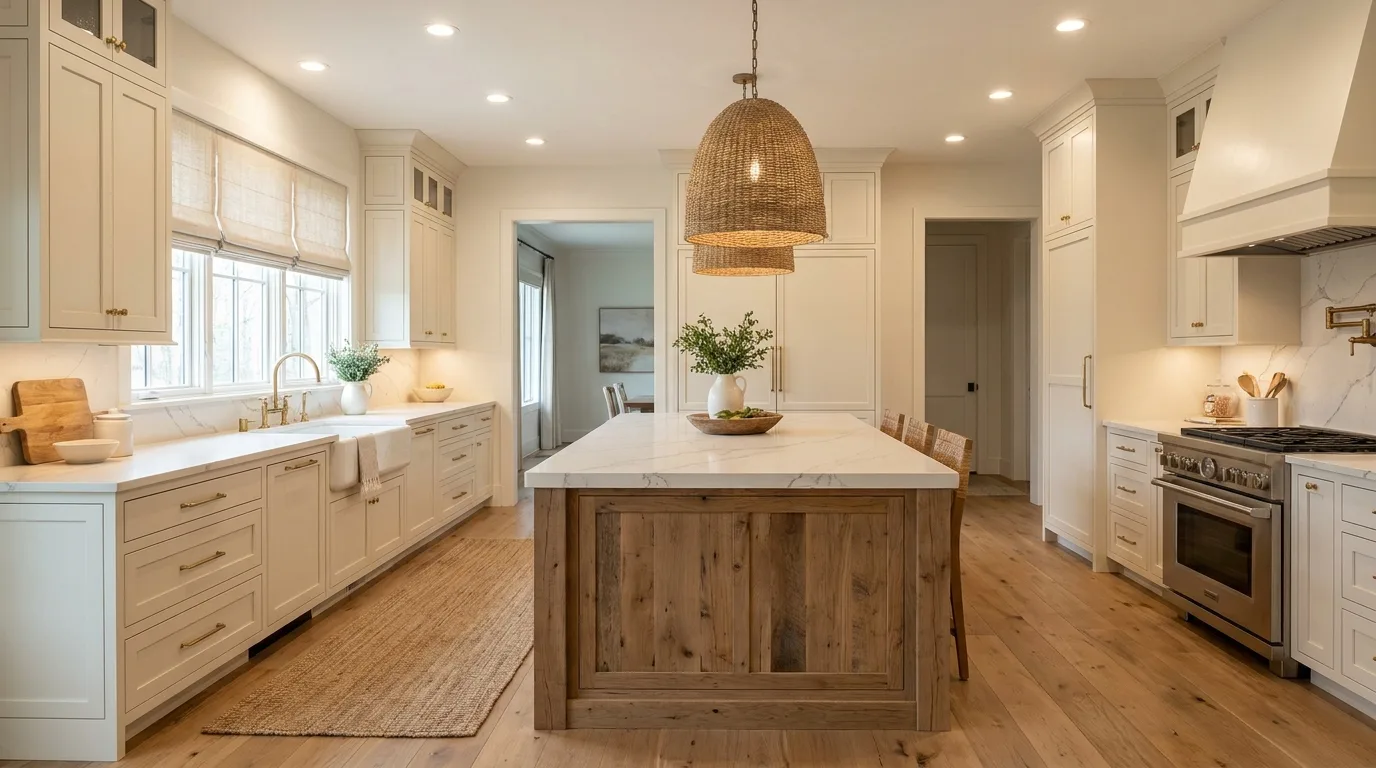
5. Use White Subway Tile for the Backsplash
White subway tile remains a dependable choice for farmhouse kitchens because it provides traditional character while maintaining a clean, modern appearance. For a contemporary update, consider slightly larger tiles, handmade-look surfaces, or a subtle variation in texture instead of perfectly uniform glossy tile. Grout color can also change the effect: matching grout creates a seamless appearance, while contrasting grout emphasizes the classic brick pattern. Extend the backsplash from the countertop to the underside of upper cabinets or range hood for a polished finish. If the kitchen already contains plenty of white, choose an off-white or warm ivory tile to prevent the room from feeling stark. Simple subway tile also provides a quiet background for wood, brass, black hardware, and other farmhouse-inspired details.
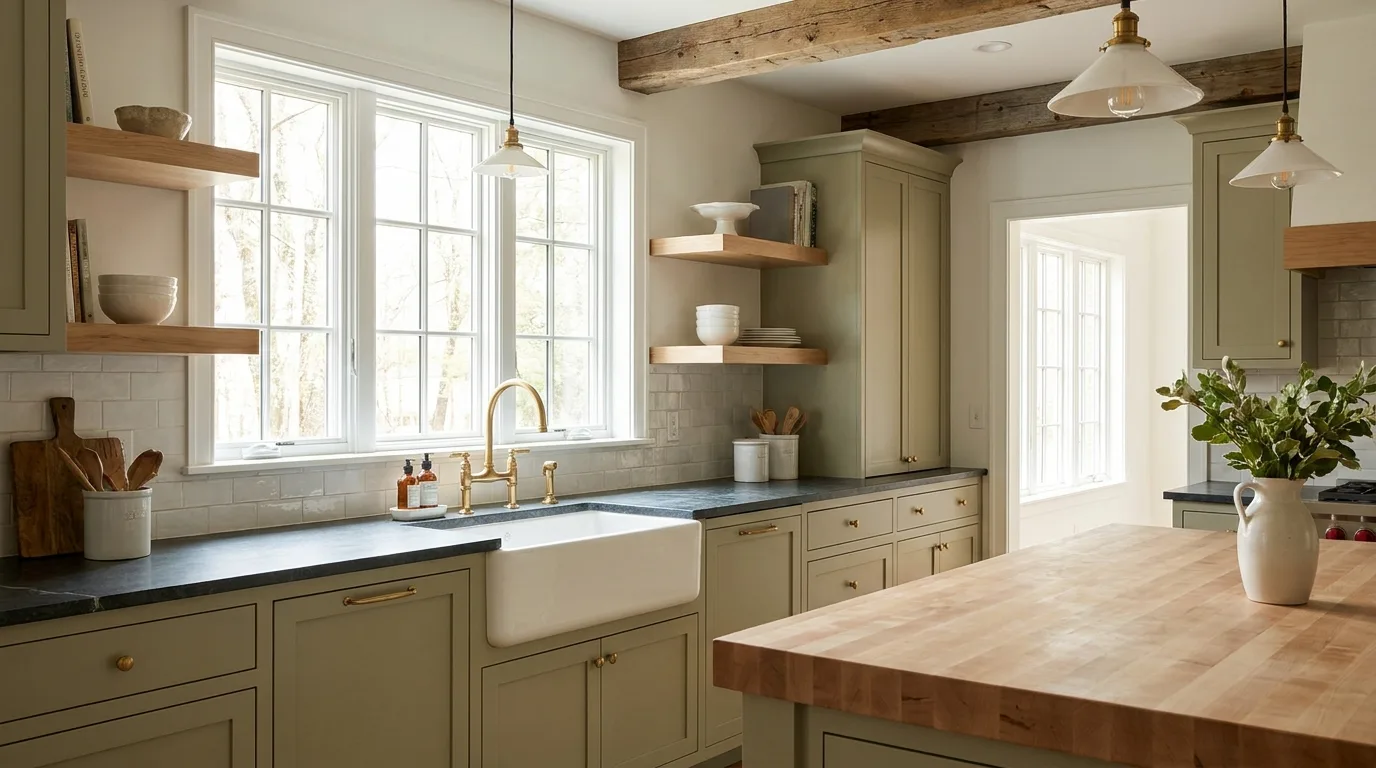
6. Select Warm Stone or Quartz Countertops
Countertops play a major role in making a modern farmhouse kitchen feel natural rather than overly contemporary. Warm white quartz, creamy marble-look surfaces, soapstone-inspired materials, and lightly veined stone can all work well. Quartz is particularly practical for busy households because it offers a durable surface with relatively straightforward maintenance. If you prefer genuine natural stone, choose a pattern that complements rather than competes with the cabinetry and backsplash. Avoid extremely cool gray surfaces if the goal is a welcoming farmhouse atmosphere; warmer undertones generally pair more naturally with timber and cream paint. A subtle countertop allows other features, such as a farmhouse sink, wood island, or statement range hood, to become focal points while keeping the overall design cohesive.
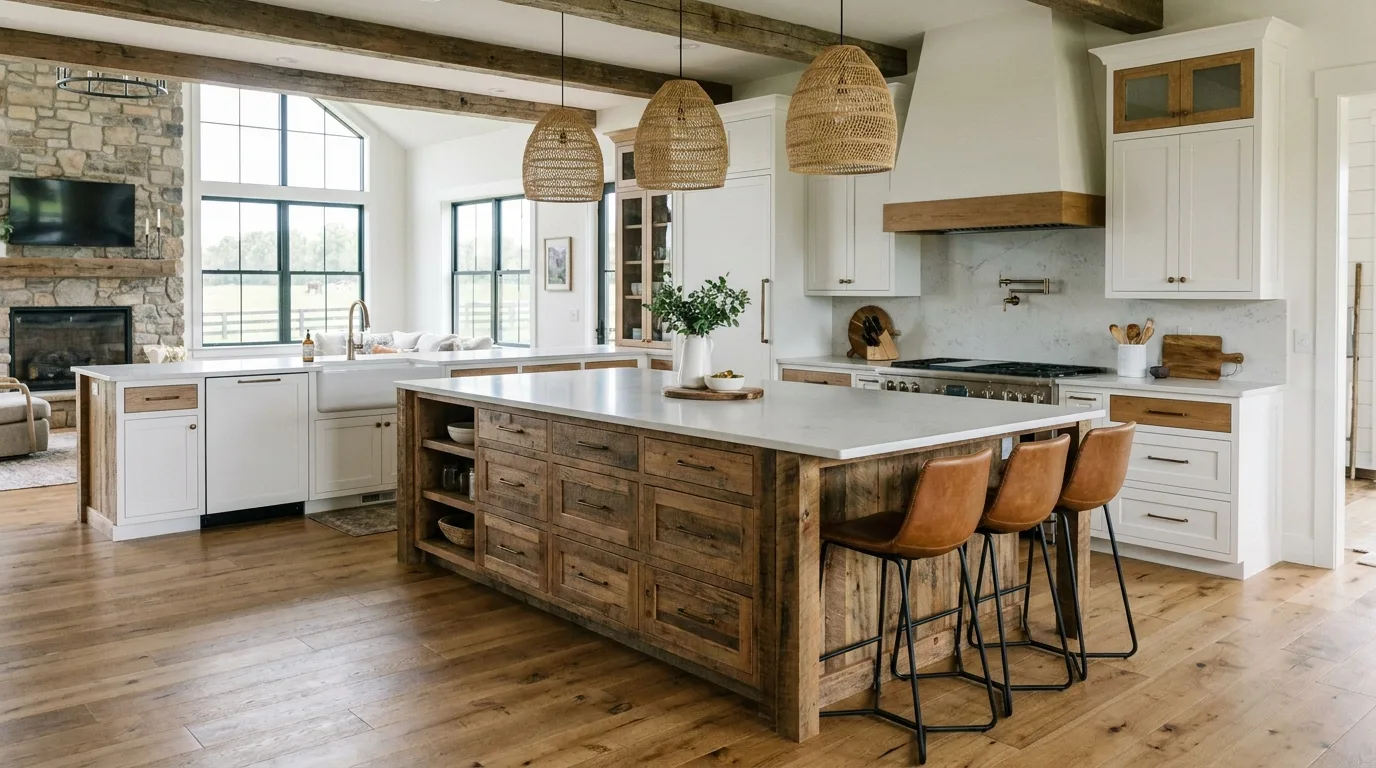
7. Install Statement Pendant Lights
Pendant lights above the island are an excellent opportunity to add personality to a modern farmhouse kitchen. Look for fixtures with simple silhouettes and tactile materials such as aged metal, clear glass, ceramic, linen, or woven fibers. Black metal pendants can sharpen a soft neutral kitchen, while aged brass introduces warmth and a slightly more traditional character. Choose the scale according to the island rather than the room alone, and make sure the fixtures provide useful task lighting without obstructing views across the kitchen. Two or three matching pendants often create a balanced arrangement over a long island. If the rest of the kitchen is understated, lighting can become the decorative focal point. Keep the shape relatively clean to preserve the modern side of the farmhouse aesthetic.
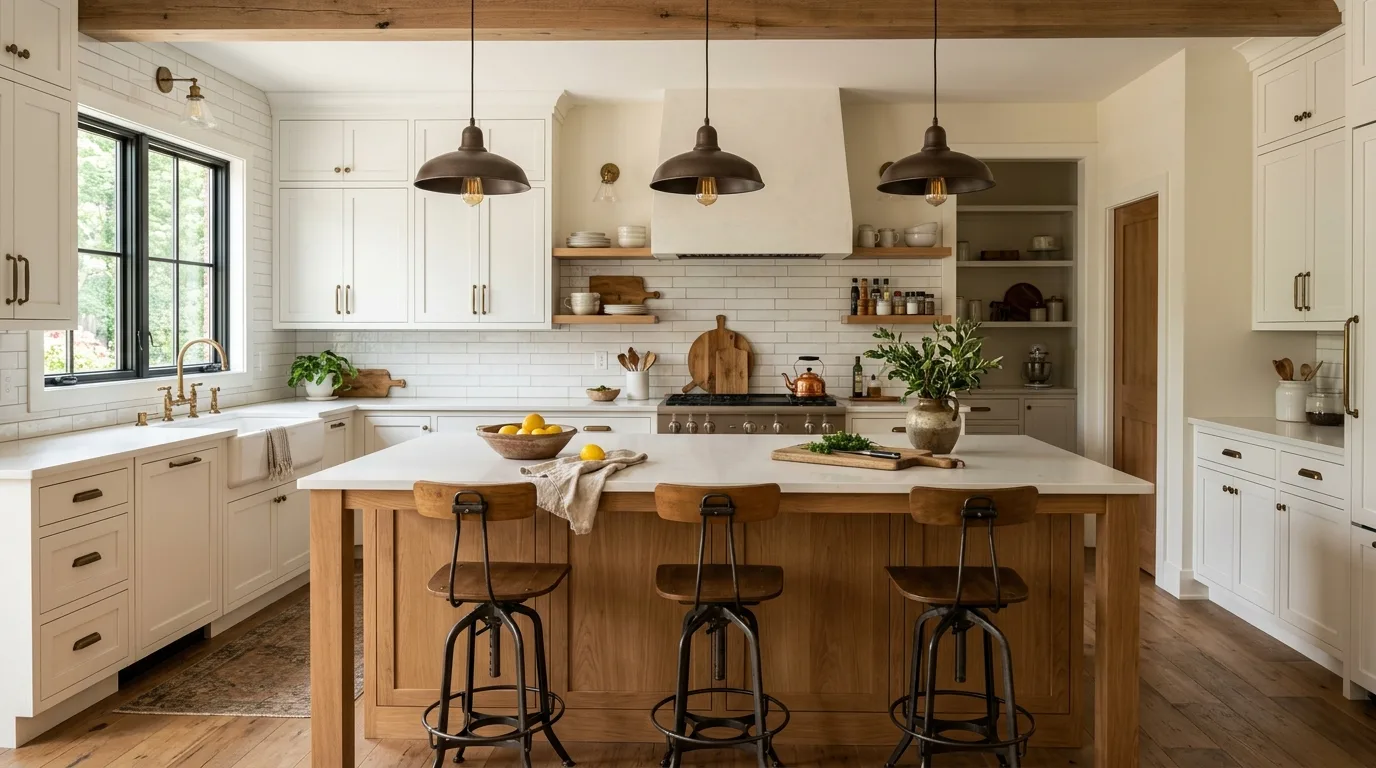
8. Add Open Shelving for Everyday Pieces
Open shelving can make a farmhouse kitchen feel more relaxed while giving frequently used dishes an accessible home. Install one or two shelves in an area that is easy to reach, such as above a counter or beside a range hood. Natural wood shelves create warmth, while painted shelves offer a more seamless look with the cabinets. Display practical pieces such as ceramic plates, mugs, glass jars, cutting boards, and a few small plants rather than filling every inch with decorative objects. Repetition of materials and colors helps open shelving look curated instead of cluttered. Because shelves collect dust more easily than closed cabinets, reserve them for items you use regularly. This approach keeps the display useful and ensures that the farmhouse styling supports everyday kitchen life.
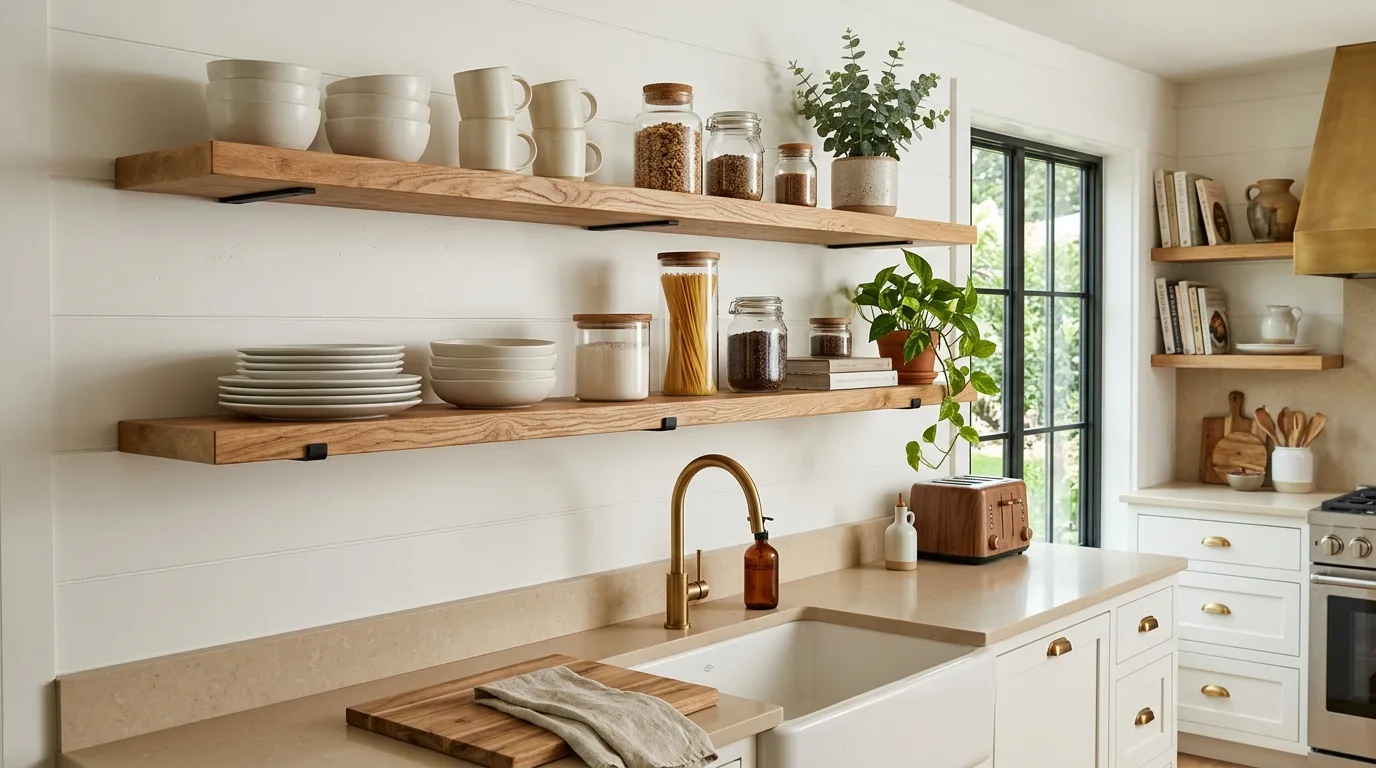
9. Choose a Wood Range Hood
A wood range hood can bring architectural warmth to a modern farmhouse kitchen and create a strong focal point above the cooking area. A simple boxed or tapered hood works especially well because it combines traditional material with a clean contemporary silhouette. Match the wood to other elements such as shelves, beams, flooring, or an island for a cohesive scheme. If natural wood feels too heavy, use a painted hood in the same or a complementary color to the cabinets. The hood should be proportionate to the range and surrounding wall, with sufficient ventilation designed for the cooking equipment. Decorative trim is optional; in many modern farmhouse kitchens, a restrained shape provides enough character on its own while allowing the backsplash and cabinetry to remain visually balanced.
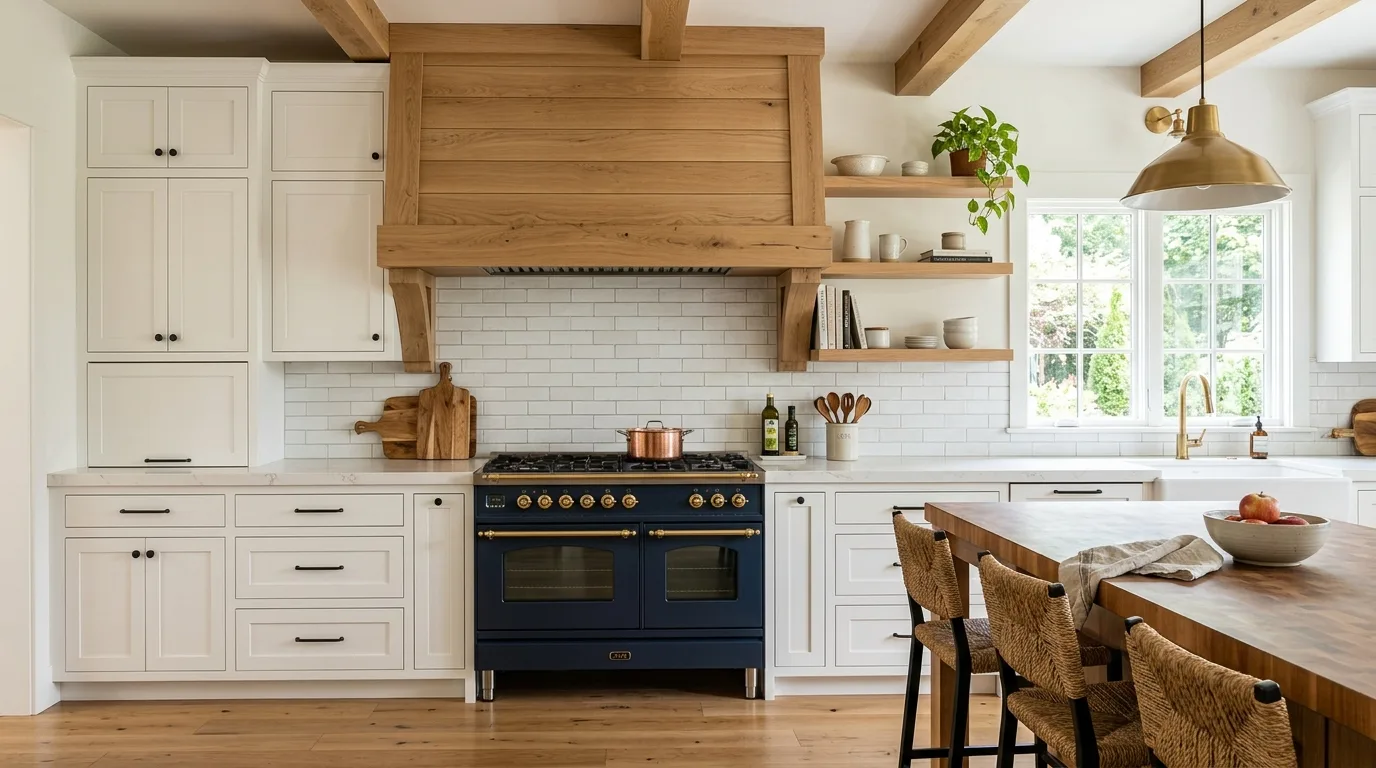
10. Bring in a Farmhouse Kitchen Table
If space permits, a farmhouse-style dining table can add warmth and informality to a kitchen without making the room feel old-fashioned. Look for a solid wood table with a straightforward profile, visible grain, and a finish that complements the kitchen’s other timber elements. Pair it with a mixture of seating styles, such as traditional wooden chairs on one side and a simple bench on the other, for a relaxed appearance. A round table can work well in smaller kitchens, while a long rectangular table suits larger open-plan layouts. Keep the centerpiece uncomplicated with a ceramic vessel, greenery, or seasonal branches. The table should feel like a place for real meals, homework, conversations, and morning coffee rather than a purely decorative feature.
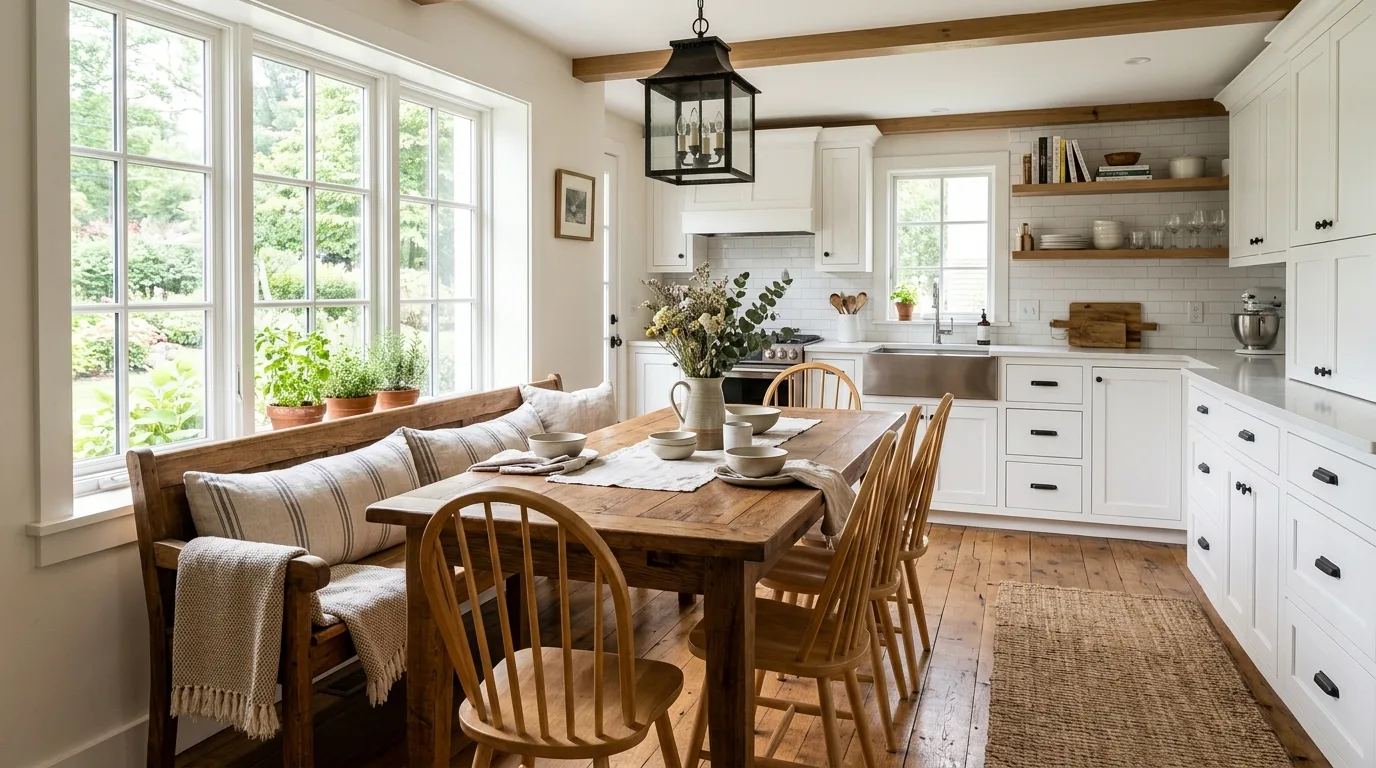
11. Use Black Hardware for Modern Contrast
Black cabinet pulls, knobs, faucets, and light fixtures can give a soft farmhouse kitchen sharper definition. The contrast works particularly well against white, cream, pale gray, and natural wood cabinetry. Choose a consistent finish for the main hardware, but do not feel obligated to make every metal element identical if the overall palette remains balanced. Simple bar pulls, cup pulls, and round knobs all suit the farmhouse style. Matte or low-sheen black tends to look more contemporary than highly polished finishes. Hardware is also one of the easiest kitchen updates because it can change the character of existing cabinets without replacing them. Before purchasing, check the existing hole spacing if you are replacing pulls, and choose shapes that feel comfortable in daily use.
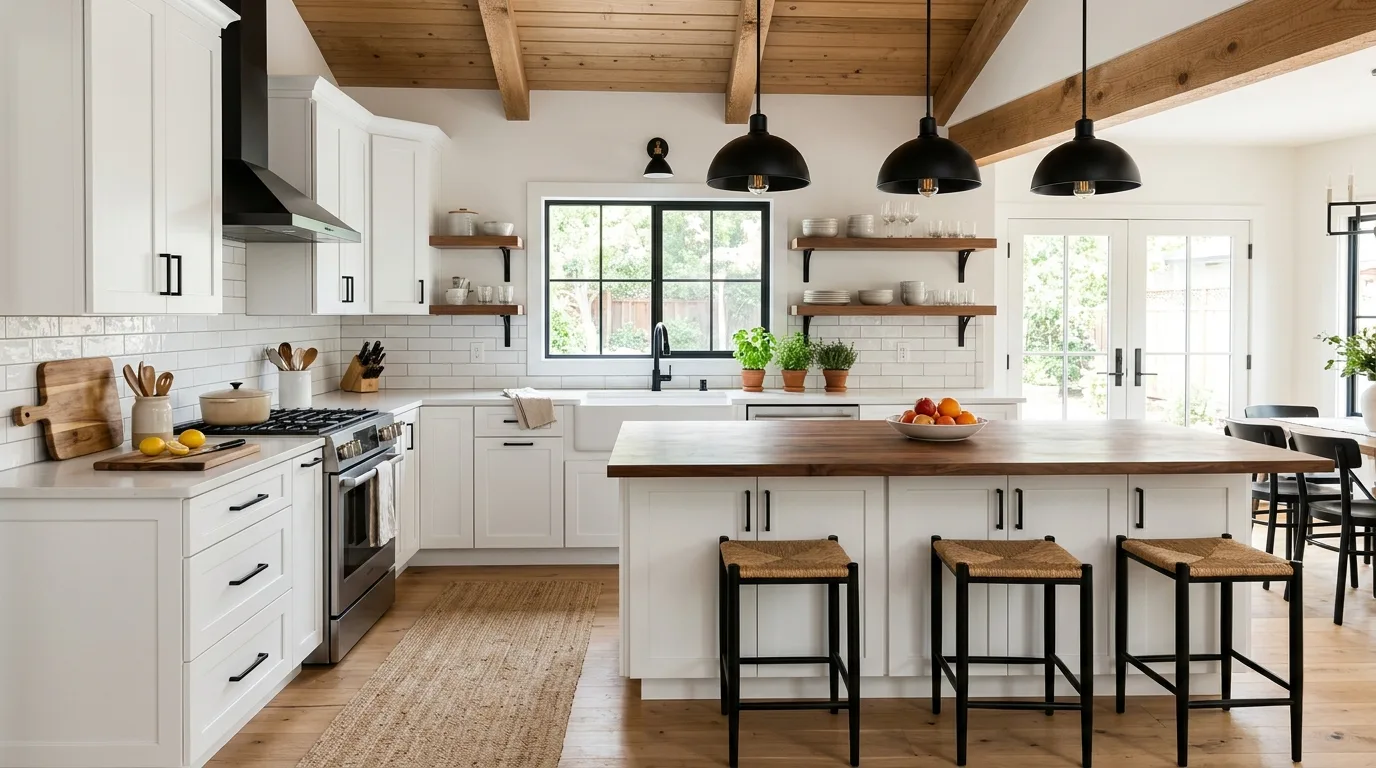
12. Add a Cozy Breakfast Nook
A breakfast nook can make a modern farmhouse kitchen feel more connected and lived-in. A built-in bench along one wall can maximize seating while using otherwise awkward space, especially in a corner near a window. Add a compact table with a simple wood top and comfortable chairs or stools opposite the bench. Keep cushions in durable, washable fabrics if the nook will be used frequently. Natural light is a major advantage, so position the seating near a window whenever possible. For decoration, use a small pendant, framed artwork, or a few plants rather than filling the area with accessories. A breakfast nook does more than provide extra seating: it creates a casual zone for morning coffee, family meals, reading, or working from home.
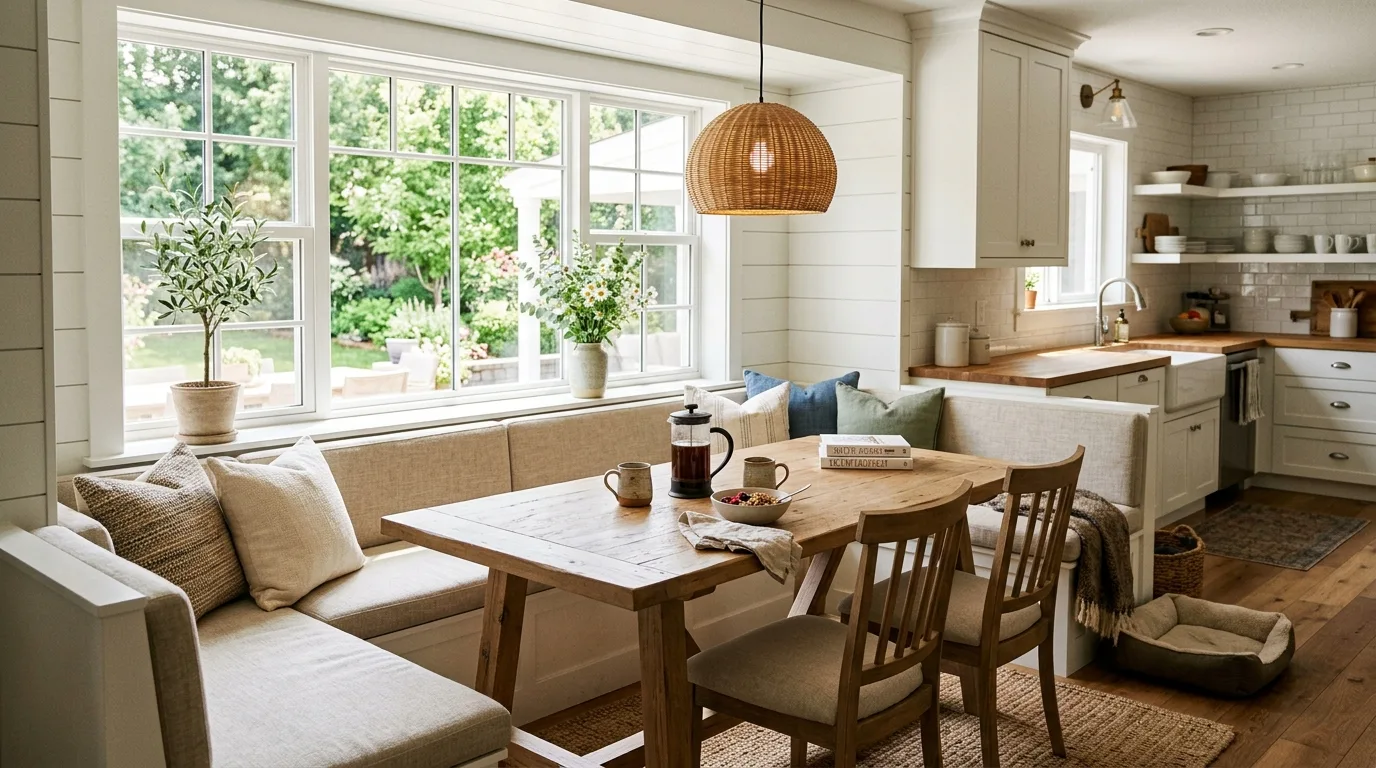
13. Introduce Reclaimed or Rustic Wood Accents
Reclaimed wood can give a modern farmhouse kitchen a sense of history, but it works best when used selectively. Consider reclaimed timber for floating shelves, a ceiling beam, an island panel, a small accent wall, or a dining table. Look for wood with natural variation rather than distressed finishes that appear artificially aged. Because reclaimed timber has a strong visual presence, balance it with smooth painted cabinetry and simple countertops. If authentic reclaimed wood is difficult to source or maintain, quality new timber with a lightly weathered finish can create a similar effect. Avoid using rustic wood on every surface; too much can push the kitchen toward a purely traditional farmhouse style. One or two carefully chosen elements usually provide enough character while preserving a fresh, modern atmosphere.
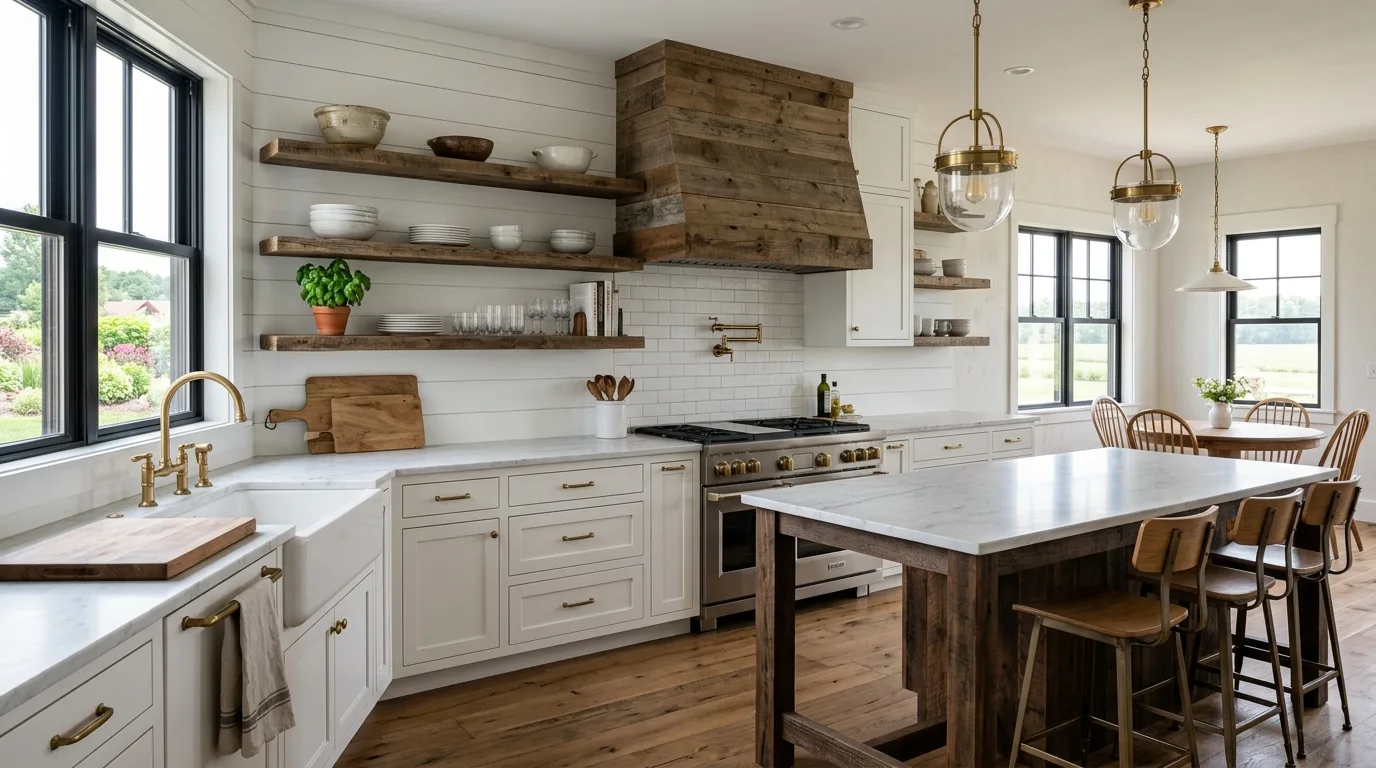
14. Choose a Soft Farmhouse Color Palette
Modern farmhouse kitchens often look best when their color palette feels warm, muted, and easy to live with. Instead of relying entirely on bright white, consider cream, mushroom, taupe, soft gray, dusty blue, sage green, or warm beige. These shades can be used on cabinets, islands, walls, or smaller accents. A neutral foundation makes it easier to introduce natural wood and contrasting hardware without creating visual competition. If you want a stronger color, use it on the island or lower cabinets while keeping upper cabinets lighter. Test paint samples throughout the day because natural and artificial light can significantly change how undertones appear. A carefully selected palette creates a calm backdrop that allows architectural features and practical materials to remain the focus.
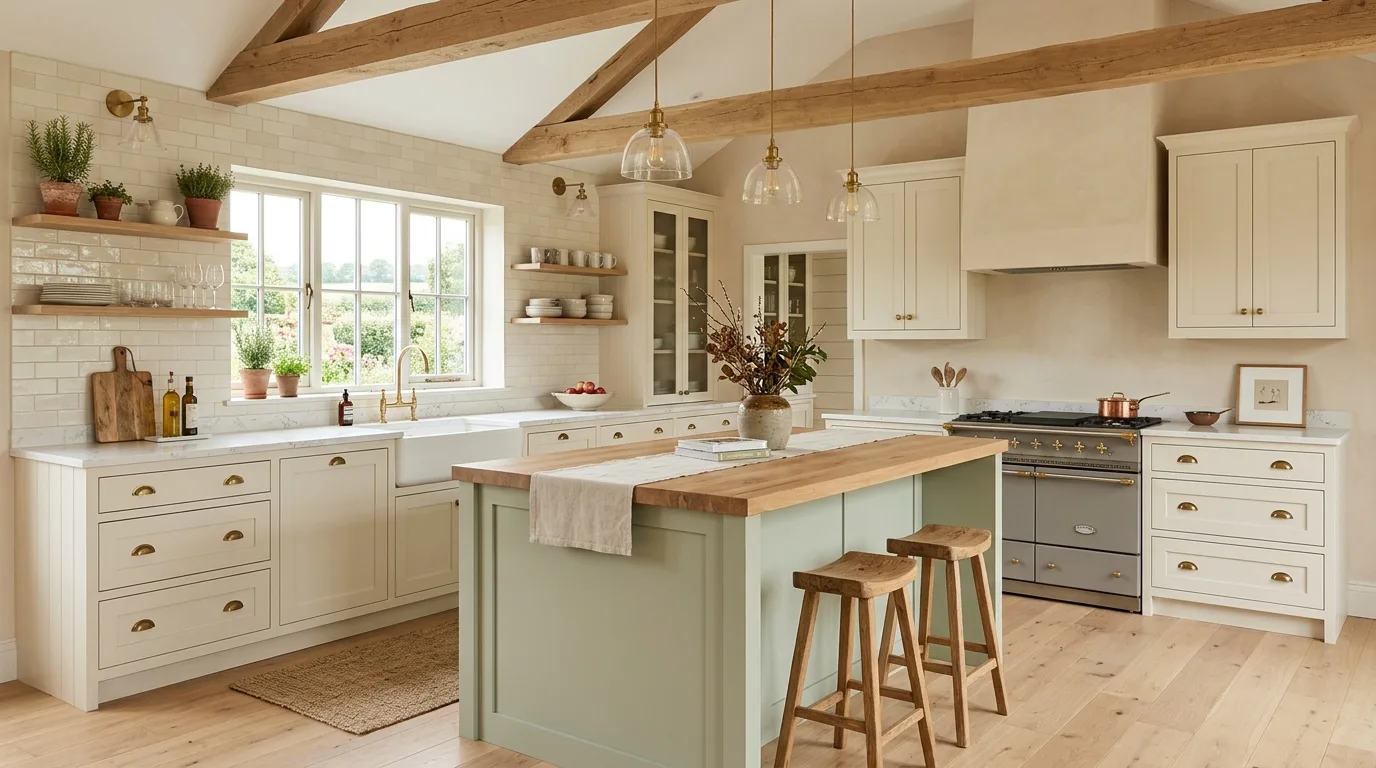
15. Install a Deep Apron-Front Sink Cabinet
For a more integrated farmhouse look, design the cabinetry around the apron-front sink instead of treating the sink as an isolated feature. A sink base with a wide exposed front can become a subtle architectural detail, particularly when surrounded by Shaker doors and simple countertops. Consider the sink’s depth, cabinet dimensions, plumbing requirements, and dishwasher position before installation. If you regularly wash large cookware, a deep basin can be especially useful, but make sure its size suits your counter layout. Pairing a white sink with light cabinetry creates a classic appearance, while a darker or stainless option can provide contemporary contrast. The surrounding cabinetry should remain relatively simple so the sink feels intentional rather than overly decorative.
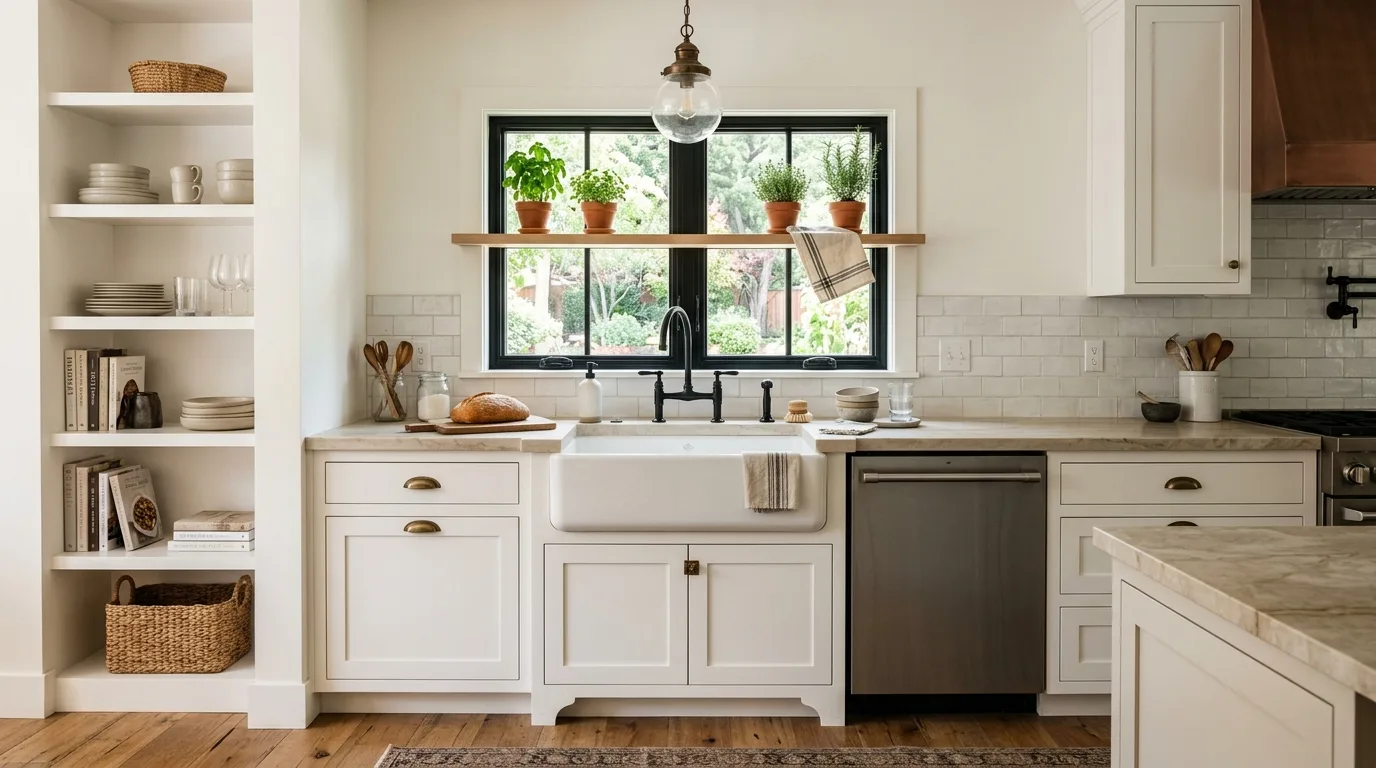
16. Combine Vintage-Inspired Decor With Modern Appliances
The strongest modern farmhouse kitchens often mix old-fashioned visual references with the convenience of modern appliances. You might pair a contemporary induction range with vintage-inspired ceramic canisters, a classic-style faucet, or an old wooden cutting board. The contrast keeps the room from looking like a historical reproduction. Choose appliances with simple profiles and finishes that integrate with the cabinetry rather than dominating the design. Integrated or panel-ready appliances can create a particularly streamlined appearance, while stainless steel works well when repeated through other functional elements. Add only a few vintage-inspired pieces so the kitchen remains uncluttered. The aim is to suggest farmhouse character through materials and accessories while retaining modern performance, efficient storage, and appliances suited to the way you actually cook.
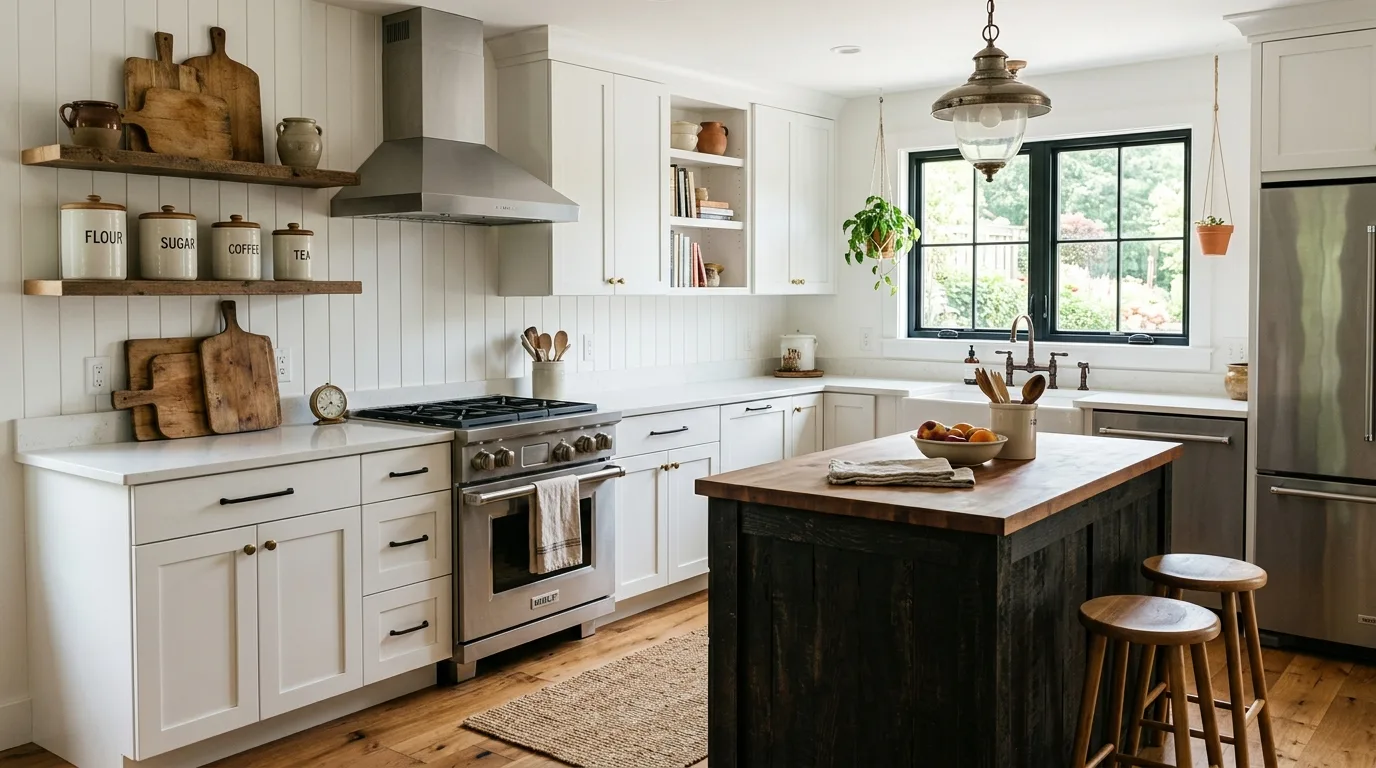
17. Use a Farmhouse-Style Faucet as a Focal Point
A well-chosen kitchen faucet can provide a small but noticeable design statement. Bridge faucets, gooseneck silhouettes, and pull-down models with slightly traditional detailing work especially well in modern farmhouse kitchens. Aged brass adds warmth, black creates contrast, and brushed stainless steel offers a quieter contemporary option. Select the faucet based on sink dimensions and everyday functionality before focusing on appearance. A high-arc design can make washing large pots easier, while a pull-down sprayer improves flexibility during food preparation. If you have a large apron-front sink, make sure the faucet scale feels proportionate rather than undersized. Because the faucet sits in one of the most frequently used areas of the kitchen, combining attractive styling with practical reach and easy operation is essential.
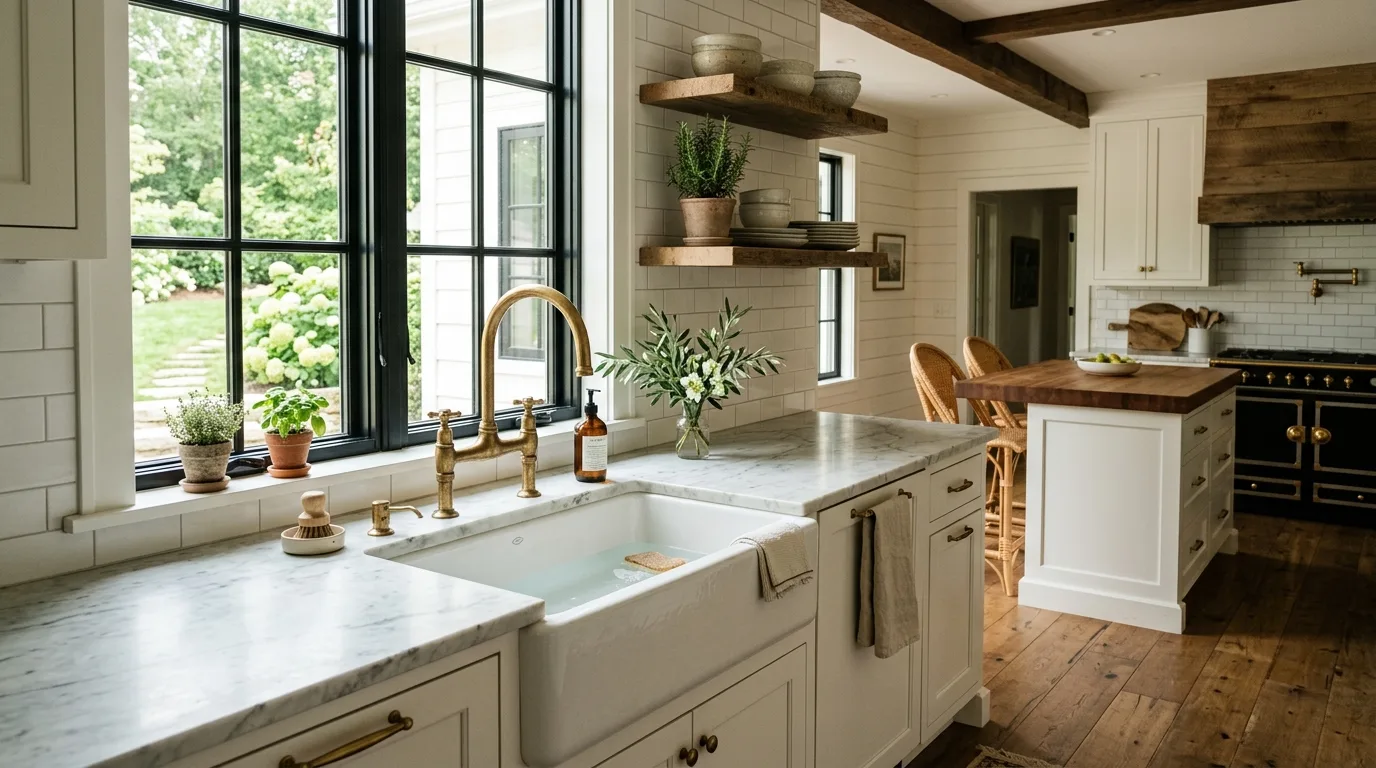
18. Add Glass-Front Cabinet Doors
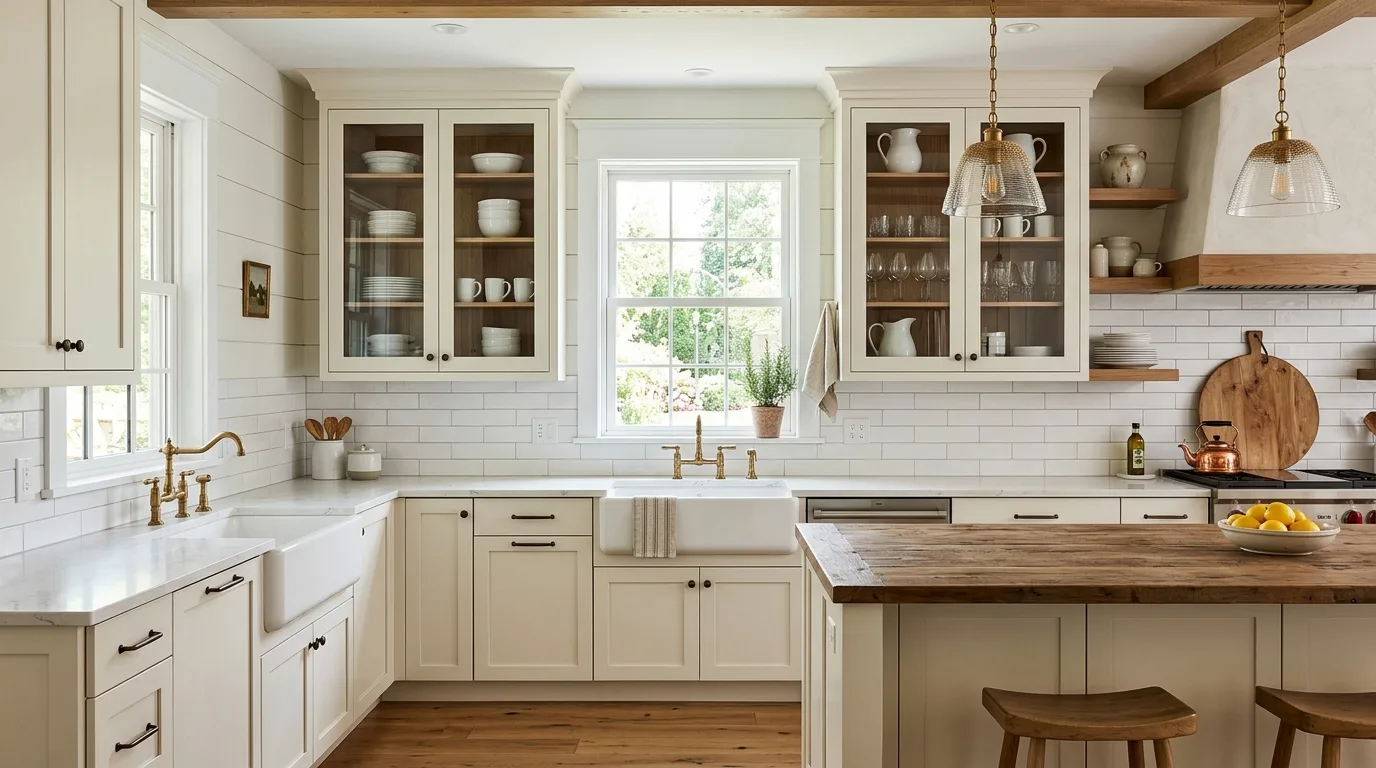
Glass-front cabinet doors can break up a long run of solid cabinetry and introduce a lighter, more furniture-like quality. Use them selectively on upper cabinets or a small cabinet section rather than converting the entire kitchen. Clear glass works well when you want to display attractive everyday dishes, while reeded or textured glass provides visual interest with less need for perfect organization. Keep the contents coordinated by grouping similar ceramics, glassware, or serving pieces. Interior cabinet lighting can make the display especially effective in the evening, but it is not necessary for a simple look. Glass-front doors suit modern farmhouse kitchens because they combine the openness associated with traditional farmhouse storage with the clean, structured lines expected in contemporary interiors.
19. Bring in Greenery and Natural Accessories
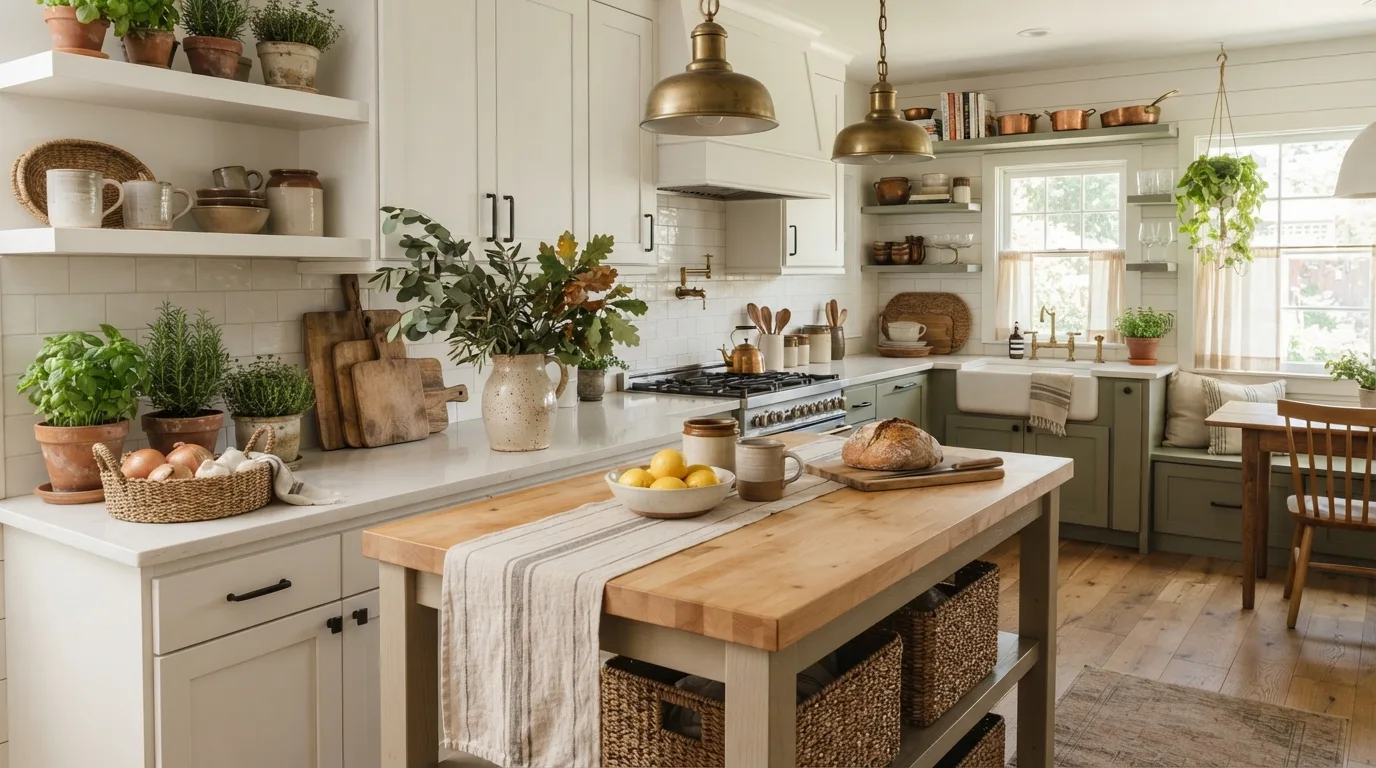
Plants and natural accessories can soften the hard surfaces of a kitchen while reinforcing its connection to farmhouse living. Place a small herb planter near a bright window, use a ceramic vase with leafy branches on the island, or display seasonal greenery in a simple pitcher. Wooden cutting boards, woven baskets, stoneware, linen towels, and terracotta pots can add additional layers of texture without creating visual clutter. Choose accessories that are useful as well as attractive whenever possible. For example, a wooden board can serve as both a serving piece and countertop decoration. Keep the number of objects limited, particularly around food-preparation areas. A few natural elements are enough to make a modern kitchen feel warm and lived-in while maintaining the clean lines that define the contemporary farmhouse style.
20. Keep the Kitchen Organized and Uncluttered
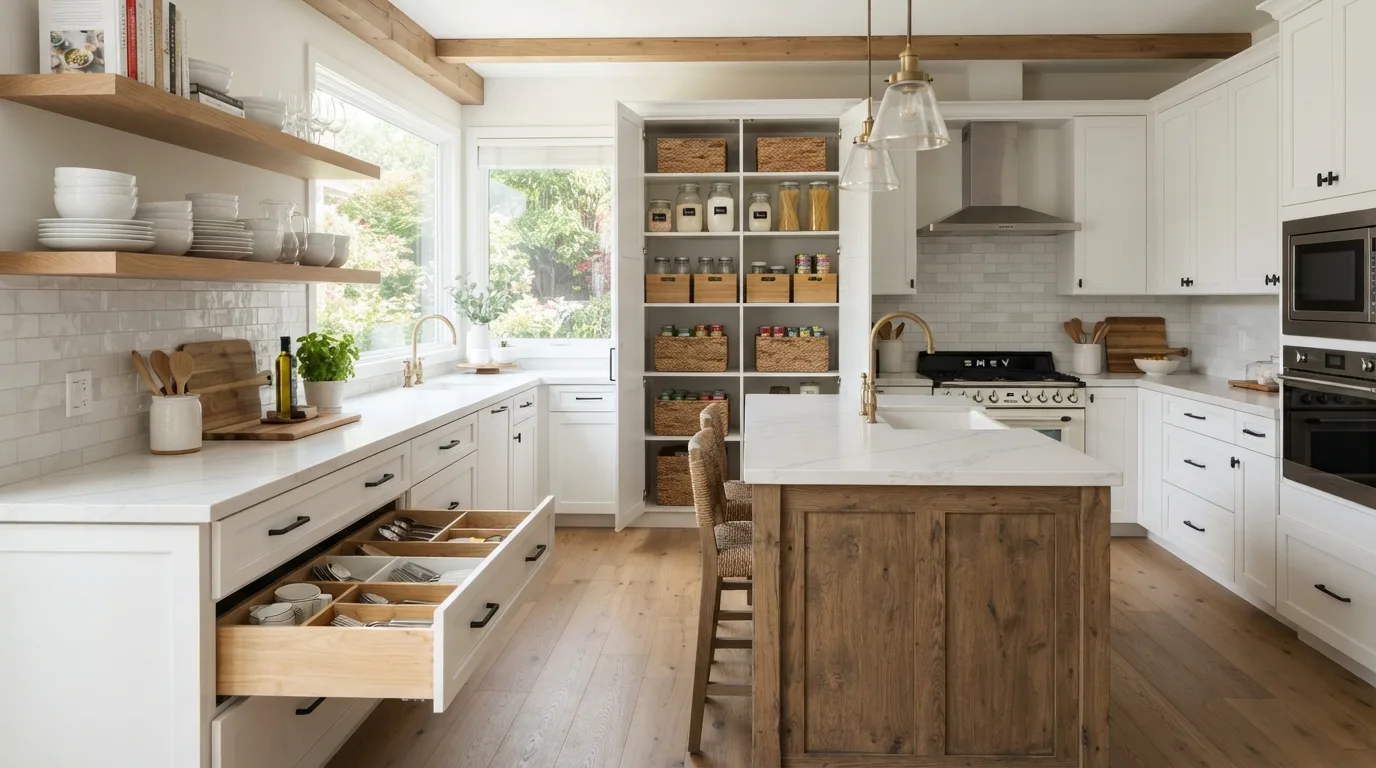
Organization is essential to achieving the polished side of modern farmhouse design. Even beautiful cabinets and materials can look chaotic when countertops are covered with appliances, packaging, and unused accessories. Prioritize deep drawers for pots and pans, pull-out storage for pantry goods, tray dividers, and dedicated spaces for frequently used appliances. Keep the countertop essentials limited to items you use every day, such as a coffee maker, cutting board, or utensil crock. Decorative objects should have enough breathing room around them to remain noticeable. If you have open shelving, rotate seasonal pieces rather than continuously adding new items. The farmhouse aesthetic is at its best when the kitchen feels welcoming and practical. A tidy layout allows the warmth of wood, texture, lighting, and architectural details to stand out naturally.
Conclusion
A modern farmhouse kitchen does not depend on one signature feature. Its appeal comes from combining practical planning with warm materials, simple architectural details, comfortable furniture, and a restrained color palette. Start with the elements that matter most to your kitchen’s function, then add farmhouse character through wood, lighting, hardware, textiles, greenery, and carefully chosen accessories. Whether you are renovating a large open kitchen or updating a smaller space, these ideas can help you create a room that feels timeless without becoming overly rustic. The best result is a kitchen that looks inviting in photographs but works even better in everyday life.