The entryway sets the tone for your entire home, but it also has to handle one of the busiest jobs: keeping shoes, coats, bags, keys, and everyday clutter under control. Whether you have a spacious foyer, a narrow hallway, or only a few feet beside the front door, thoughtful entryway decor and storage can make the space feel organized without sacrificing style. The key is to choose solutions that match the available floor area and your household’s daily routines. From slim cabinets and floating shelves to hardworking benches and decorative baskets, these ideas combine practical storage with welcoming design. Use the suggestions below to create an entryway that feels intentional, easy to maintain, and suited to the size and character of your home.
1. Add a Slim Console Table
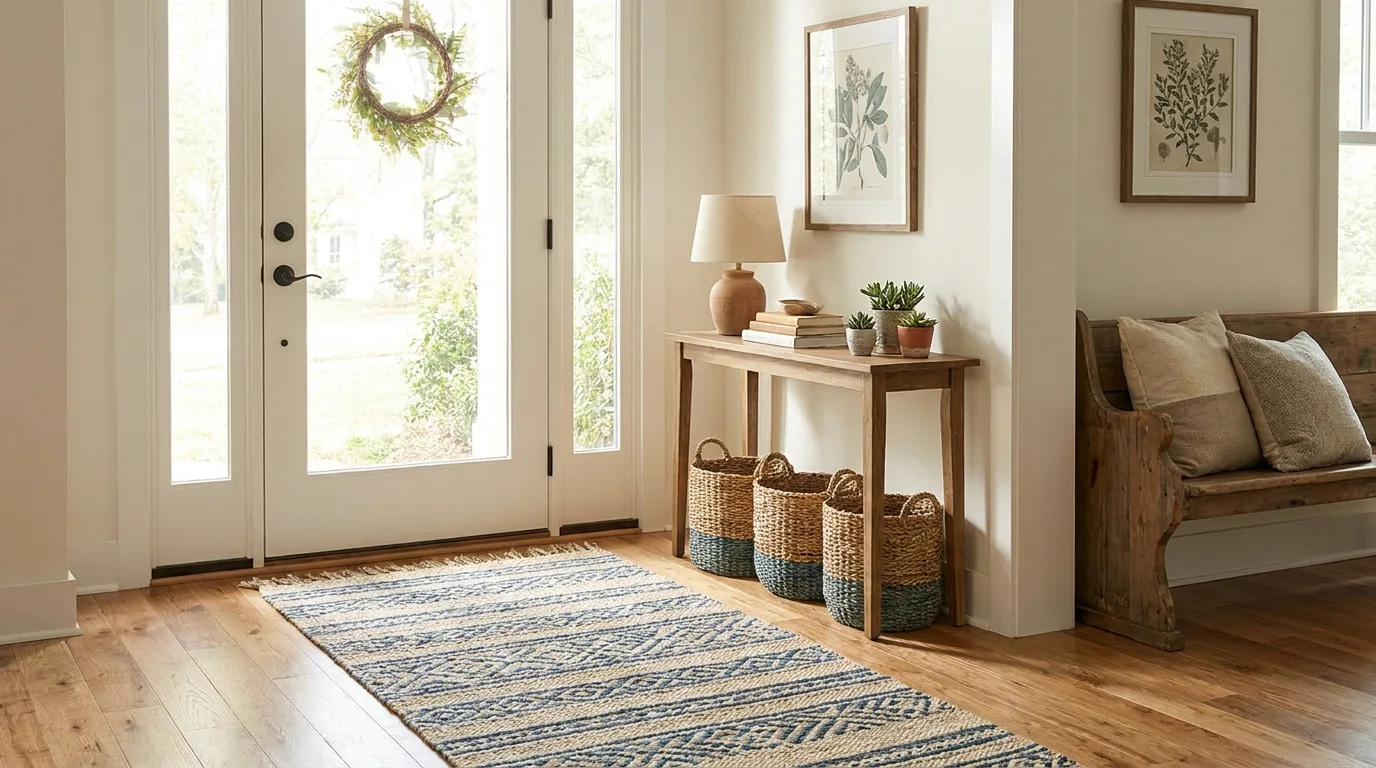
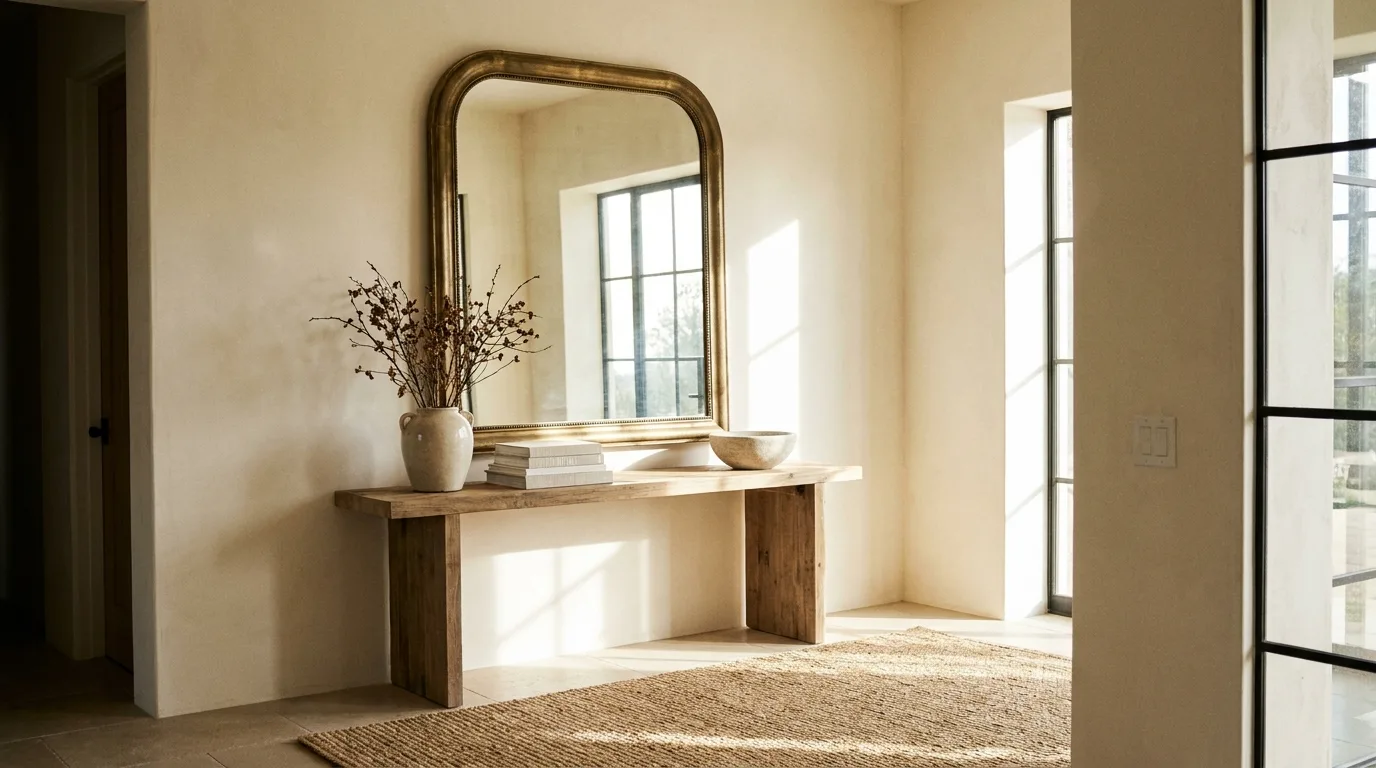
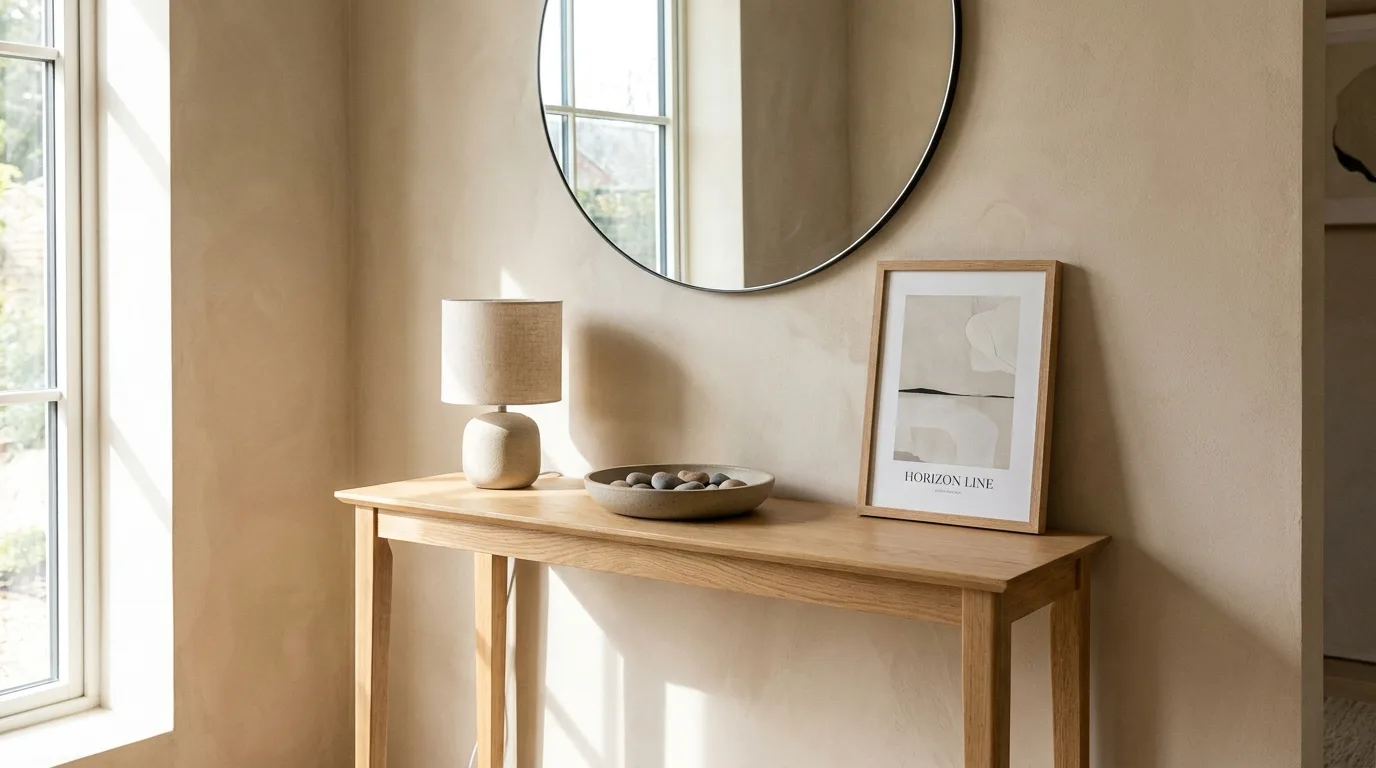
A slim console table is one of the easiest ways to give an entryway a finished look while creating useful landing space. Choose a narrow design if your hallway is tight, preferably one with drawers or a lower shelf for additional storage. The tabletop can hold a small lamp, decorative bowl, framed artwork, or a simple vase, while the drawer keeps keys and other small essentials out of sight. In a larger foyer, a wider console can become the visual anchor of the room. Keep the styling relatively restrained so the surface remains functional. A console with clean lines works especially well in modern homes, while wood finishes can add warmth to minimalist, farmhouse, or transitional interiors.
2. Create a Functional Entryway Bench
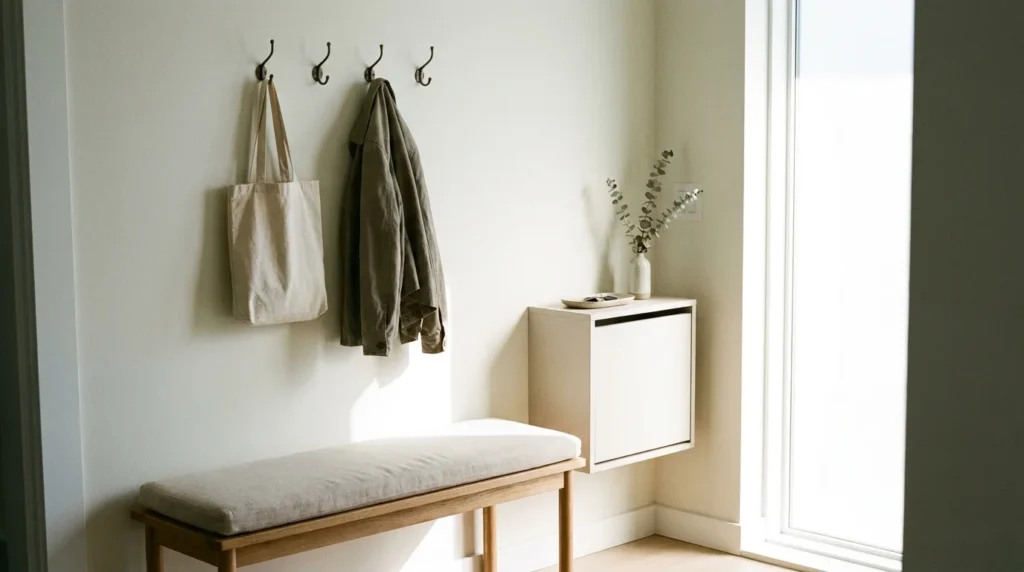
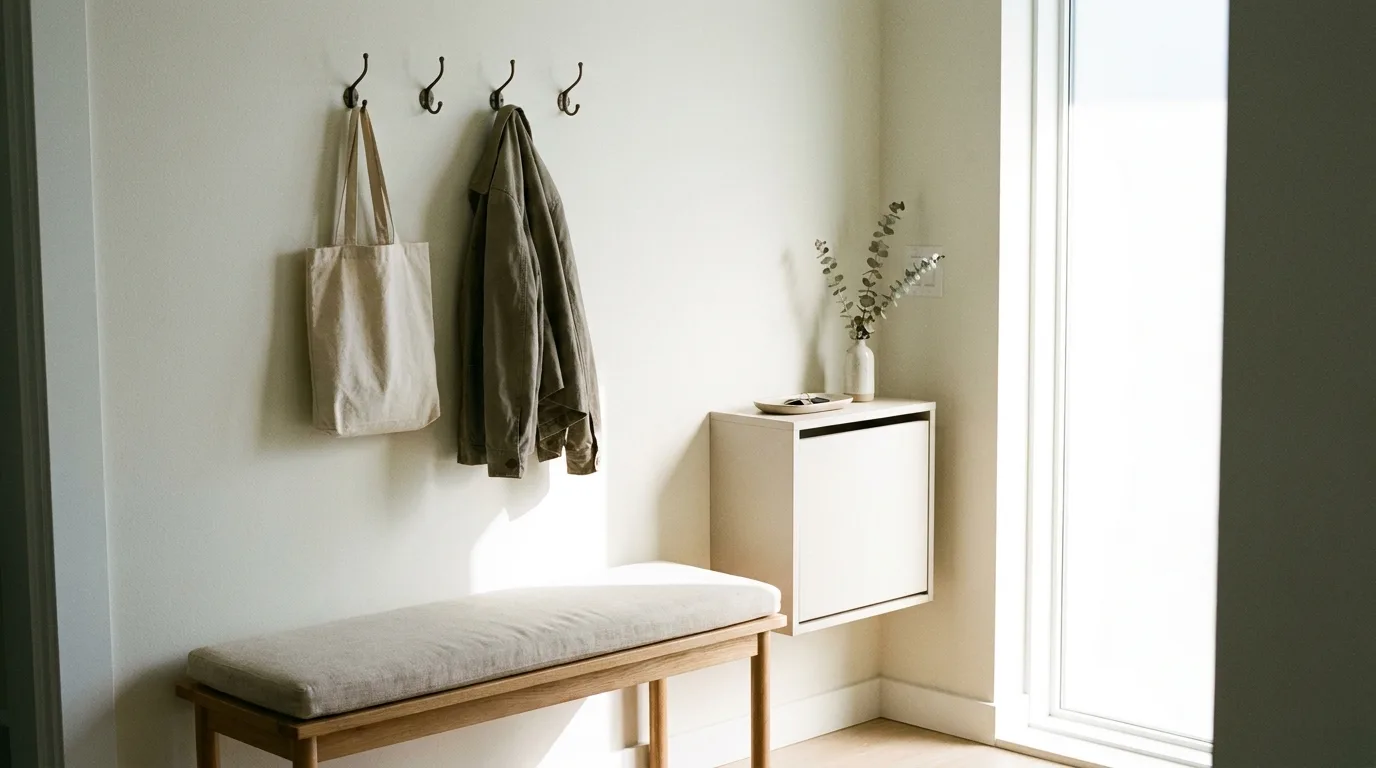
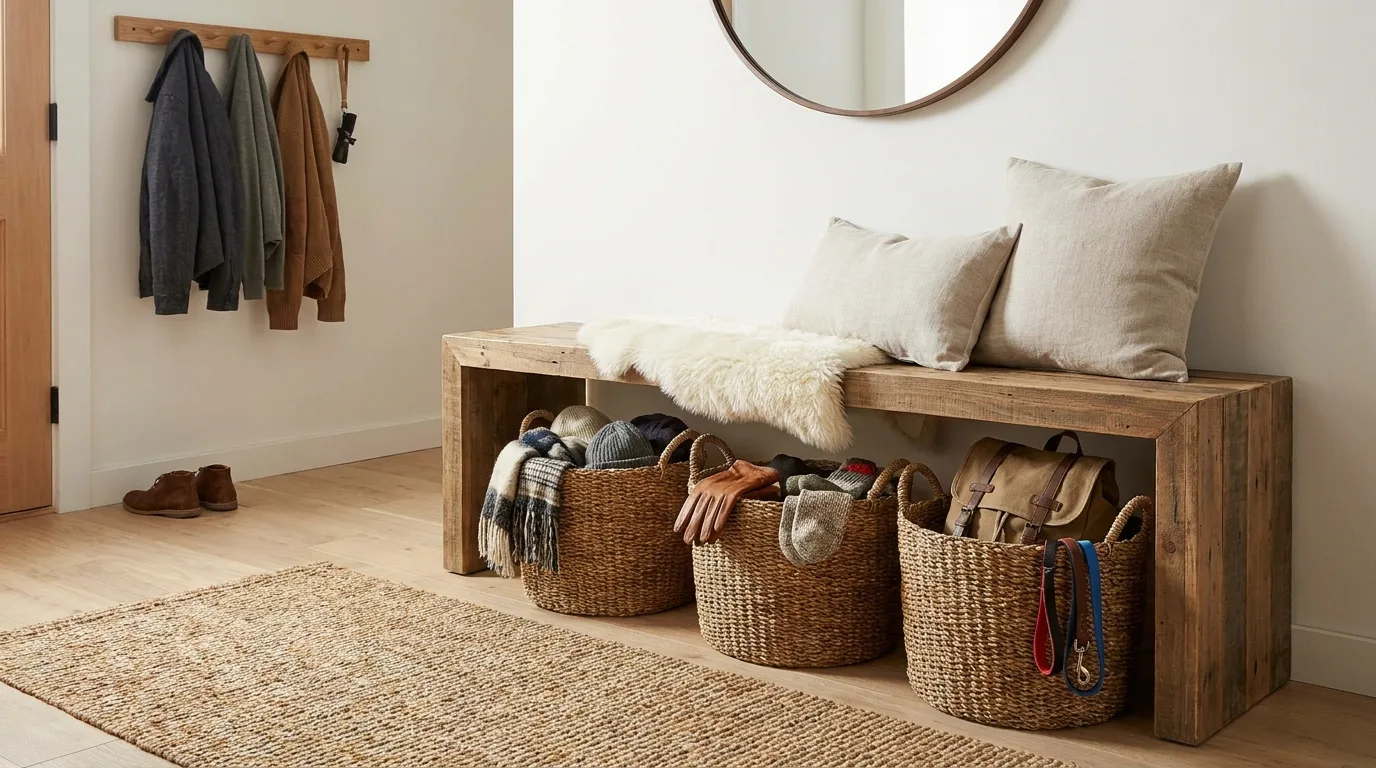
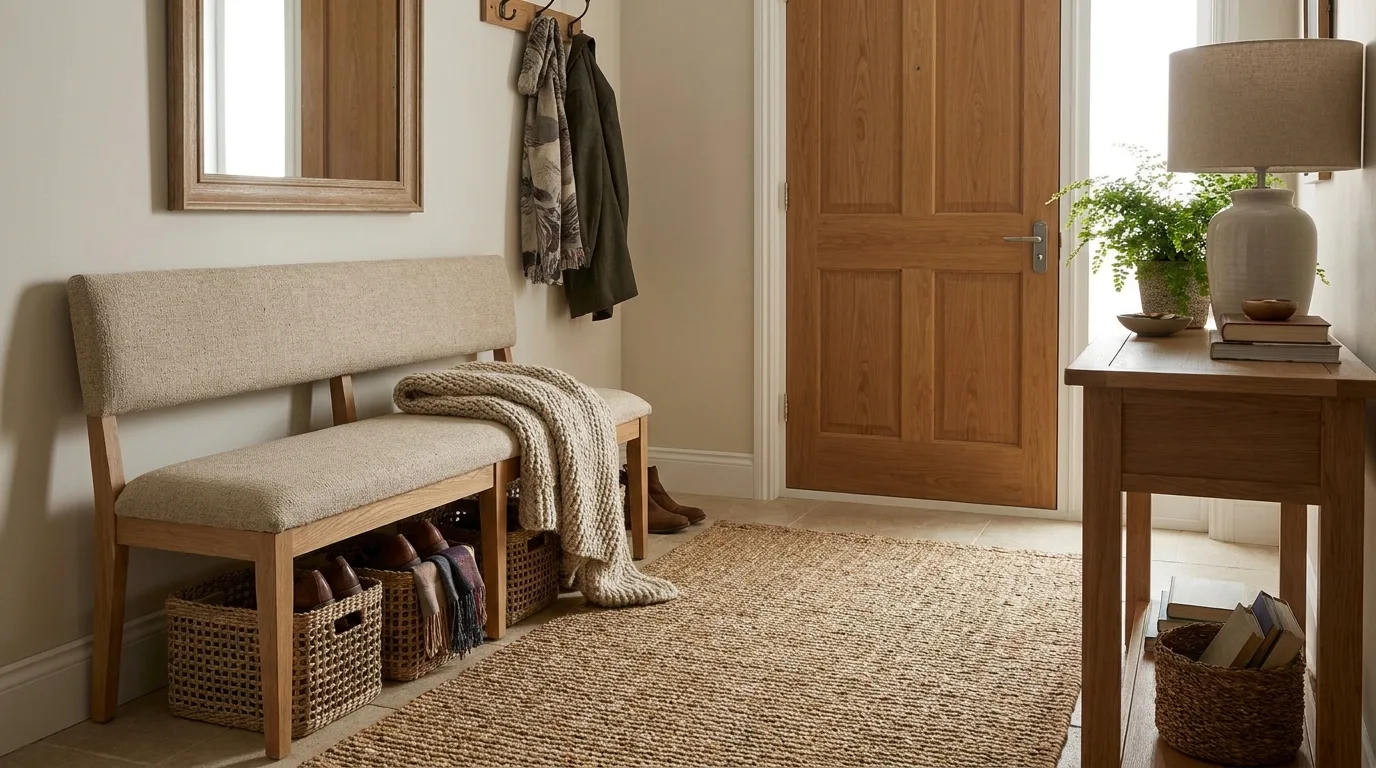
An entryway bench provides a convenient place to sit while putting on or removing shoes, making it especially useful for families and busy households. Select a compact bench for a small entrance or a longer upholstered version for a spacious foyer. To maximize its usefulness, choose a design with an open lower shelf, drawers, or a lift-up seat for concealed storage. Baskets underneath can organize shoes, scarves, or seasonal accessories without making the space look cluttered. A simple cushion can make a hard wooden bench more comfortable while adding color and texture. Position the bench where there is enough clearance to sit comfortably, and avoid making the area so crowded that opening the front door becomes difficult.
3. Install Wall-Mounted Hooks
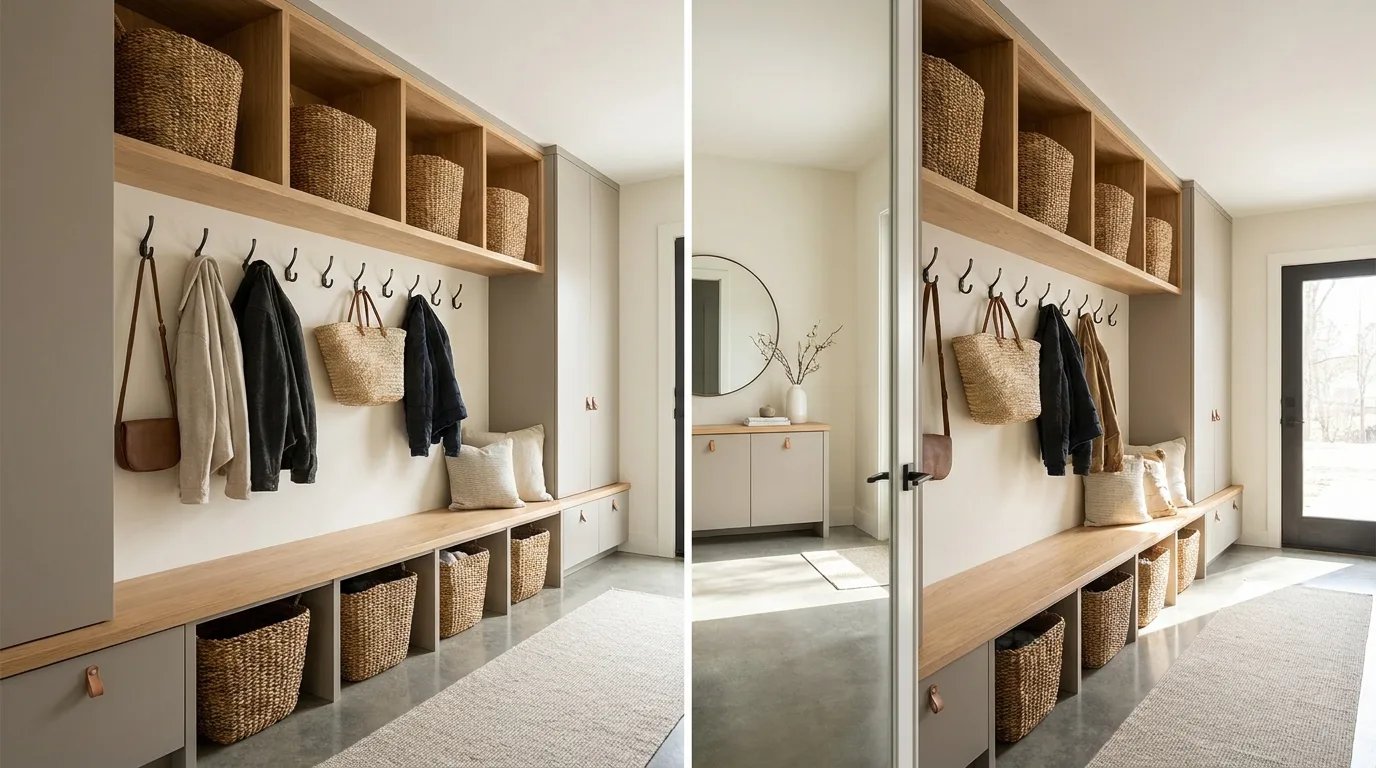
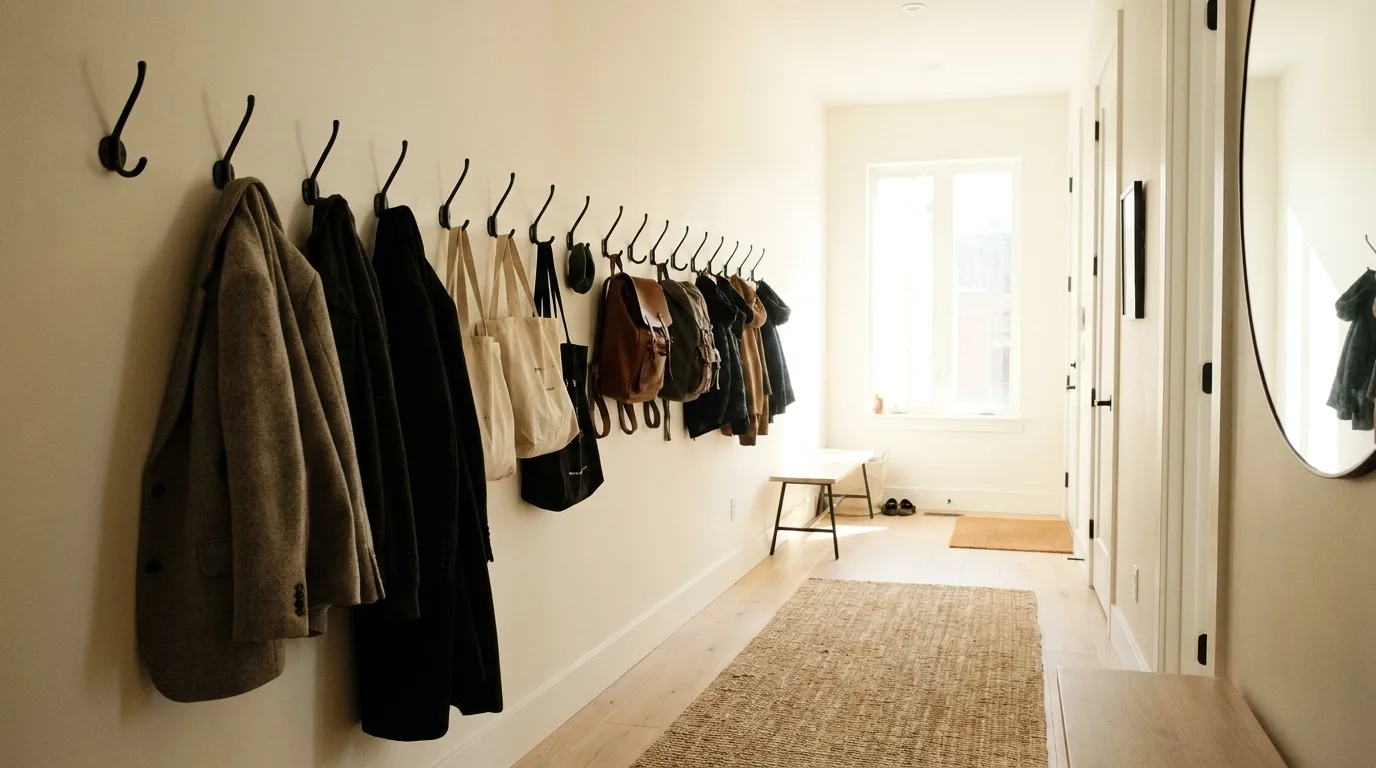
Wall-mounted hooks are a practical solution when floor space is limited. Instead of allowing coats, handbags, and hats to collect on chairs or counters, give each frequently used item a designated place near the door. A row of individual hooks works well for a narrow hallway, while a decorative peg rail can bring more visual character to the wall. Mount hooks at a comfortable height for adults, with some lower options if children need easy access. For a polished appearance, coordinate the hardware with other finishes in the room, such as brass, black, chrome, or brushed nickel. Leave enough space between hooks to prevent bulky coats and bags from overlapping and creating a messy appearance.
4. Use a Wall-Mounted Shoe Cabinet
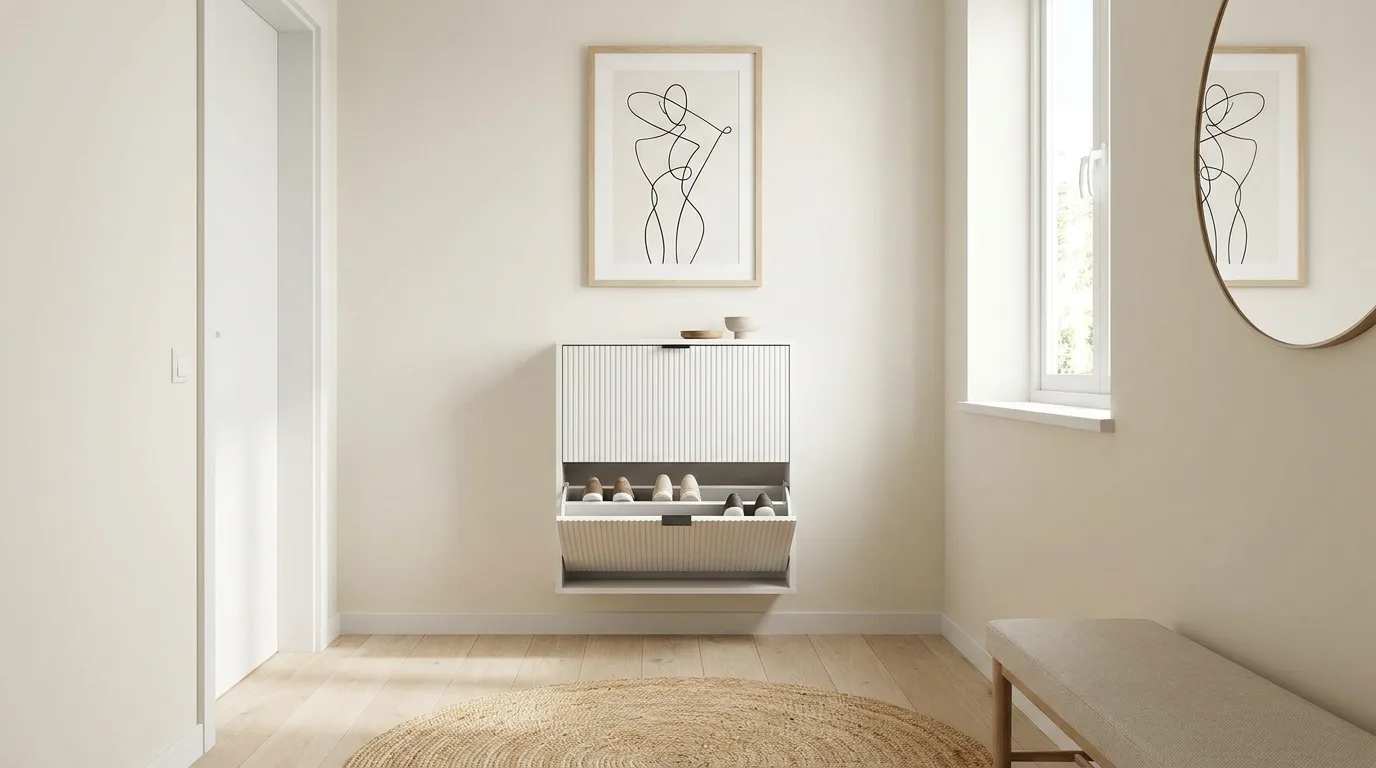
Shoes can quickly make an entryway look untidy, particularly when several people use the same door. A wall-mounted or shallow shoe cabinet keeps footwear contained while preserving valuable walking space. Look for a vertical model with flip-down compartments when the hallway is narrow, or choose a wider cabinet if the foyer has more room. Closed storage creates a cleaner visual effect than open shoe racks and can also reduce the feeling of everyday clutter. Place the cabinet close enough to the entrance that shoes are easy to put away immediately. A decorative tray or small piece of artwork above it can turn a purely functional storage unit into an attractive entryway feature.
5. Turn an Awkward Corner Into Storage
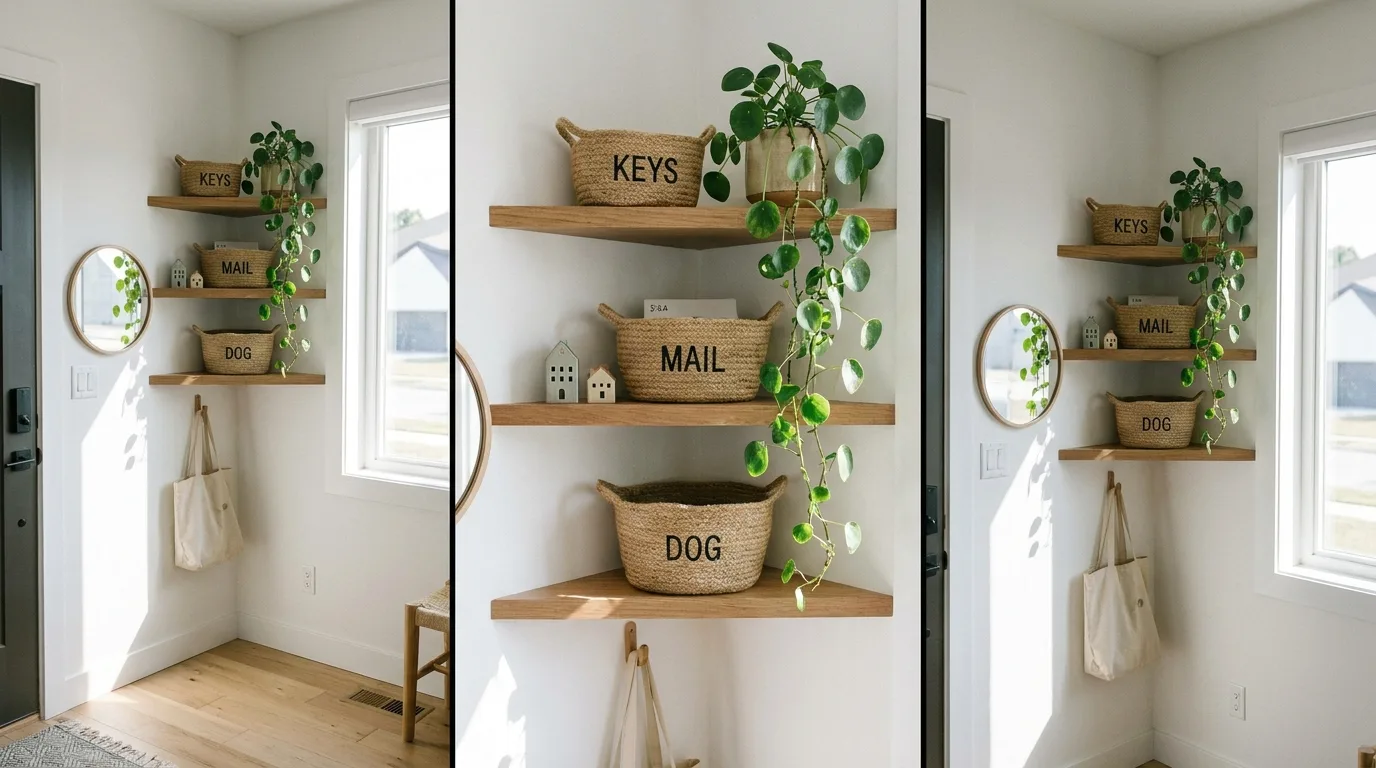
An awkward corner near the front door does not have to become wasted space. A small corner shelf, triangular cabinet, or narrow freestanding unit can transform an overlooked area into useful storage. Use the lower portion for shoes or baskets and reserve higher shelves for decorative objects, books, or plants. If the corner is especially tight, floating shelves can provide storage without adding bulky furniture to the floor. Choose pieces that visually relate to the rest of your entryway so the solution looks intentional rather than improvised. Before buying anything, measure both walls and account for door swings and walking paths. Even a small corner can become valuable when the storage is designed around its exact dimensions.
6. Add a Large Mirror
A mirror is both decorative and practical in an entryway. A large wall mirror gives you a convenient final check before leaving home while reflecting light and making a compact entrance feel more open. In a small foyer, choose a vertically oriented mirror that uses wall height without consuming floor space. In a wider entryway, a large horizontal or arched mirror can create a strong focal point above a console. Consider a frame that complements your home’s style, such as natural wood for warmth or a slim metal frame for a contemporary appearance. Keep the surrounding decor simple enough that the mirror remains visually effective. Its reflective surface can also help brighten darker entrances by bouncing available light around the space.
7. Choose Baskets for Flexible Organization
Baskets are an easy way to introduce concealed organization without making an entryway feel overly formal. Place them beneath a bench, inside open shelving, or beside a console to collect items that otherwise tend to accumulate near the door. Use separate baskets for categories such as shoes, hats, pet accessories, umbrellas, or reusable shopping bags. Matching baskets create a coordinated appearance, while varied natural textures can add a more relaxed, collected feel. Choose sturdy materials for high-traffic areas and avoid oversized baskets that obstruct the walking path. Labeling can be helpful for families, but it is not essential if each basket has a clear purpose. The best basket system is one that makes putting things away nearly effortless.
8. Build a Compact Mudroom Wall
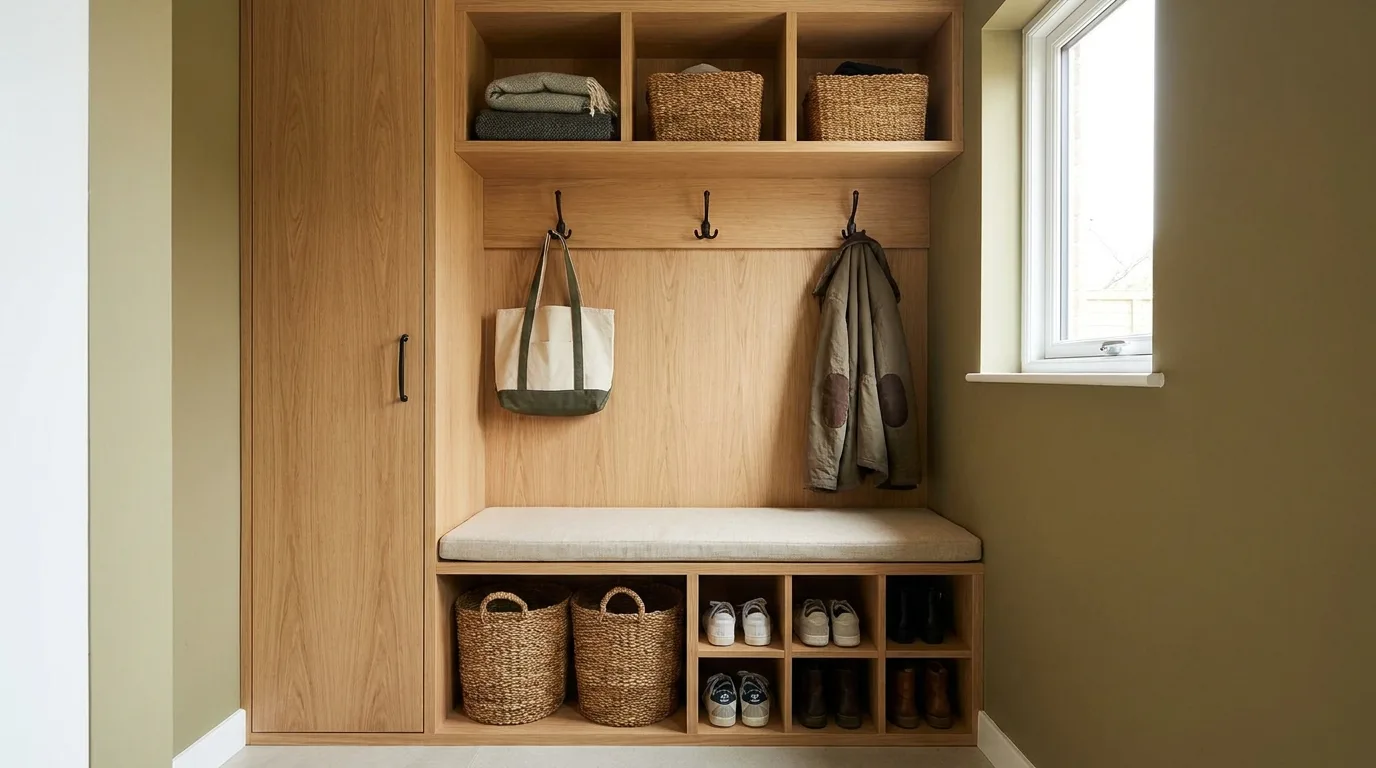
You do not need a separate mudroom to create mudroom-style organization. A single wall can combine hooks, shelves, a bench, and closed compartments into one efficient drop zone. This approach is particularly useful in homes where the entryway opens directly into the kitchen or living area. Install hooks for coats and bags above a bench, then use cubbies or drawers below for shoes and smaller items. A shelf near the top can hold baskets for seasonal accessories. Keep the materials consistent so the whole arrangement feels like one built-in feature. For a rental or temporary solution, combine freestanding furniture with removable hooks and wall shelves to achieve a similar effect without major construction.
9. Use Floating Shelves in a Narrow Hallway
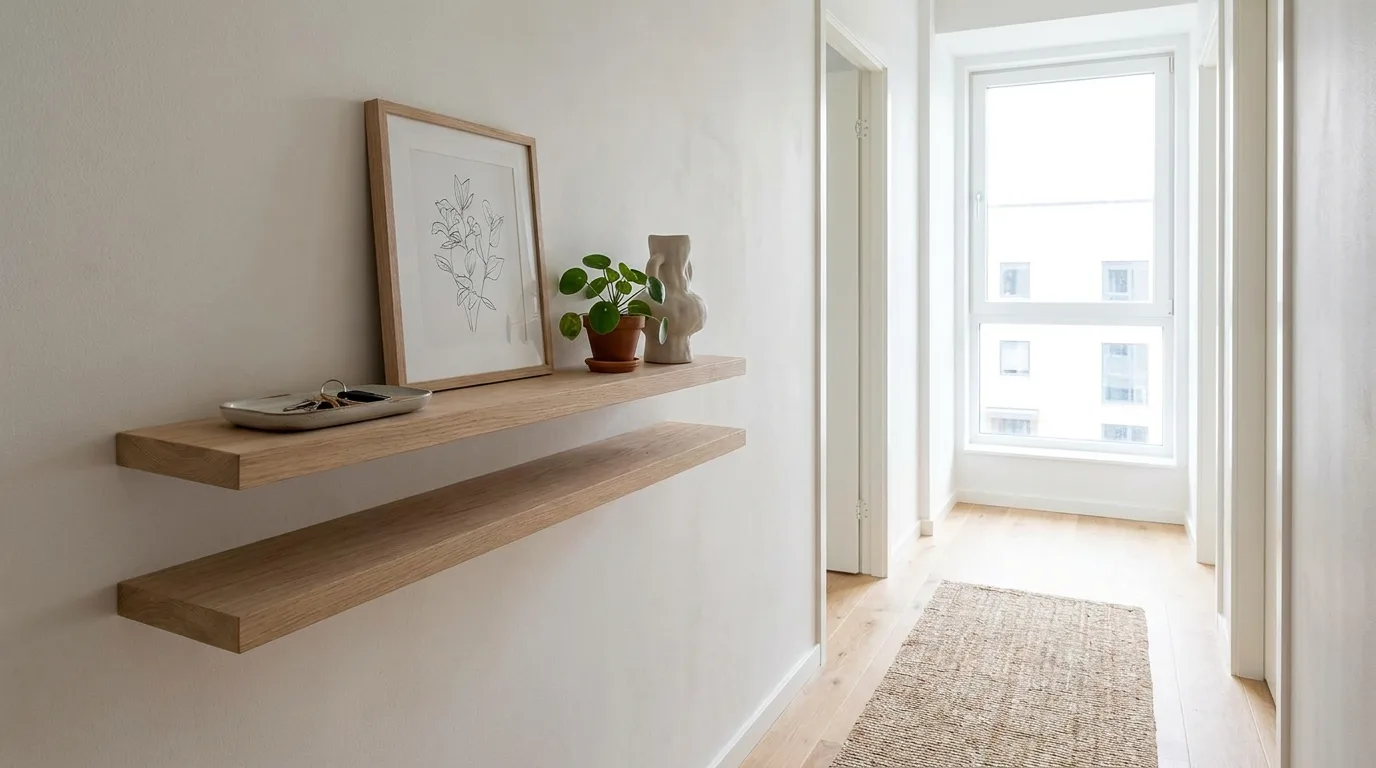
Floating shelves are ideal when a hallway has plenty of wall space but very little floor area. Install one or two shelves near the entrance to create room for keys, mail, small baskets, and decorative accents. Because floating shelves have no visible supports underneath, they maintain a light, uncluttered appearance. Keep the depth modest so people can pass comfortably without bumping into the shelf. A shallow tray can contain small items, while a small framed print or plant adds personality. Avoid covering every inch of the shelves with objects; leaving some open space makes the hallway feel larger. This solution is especially effective for apartments, townhouses, and other homes where a traditional console would make the entrance feel cramped.
10. Create a Dedicated Key Station
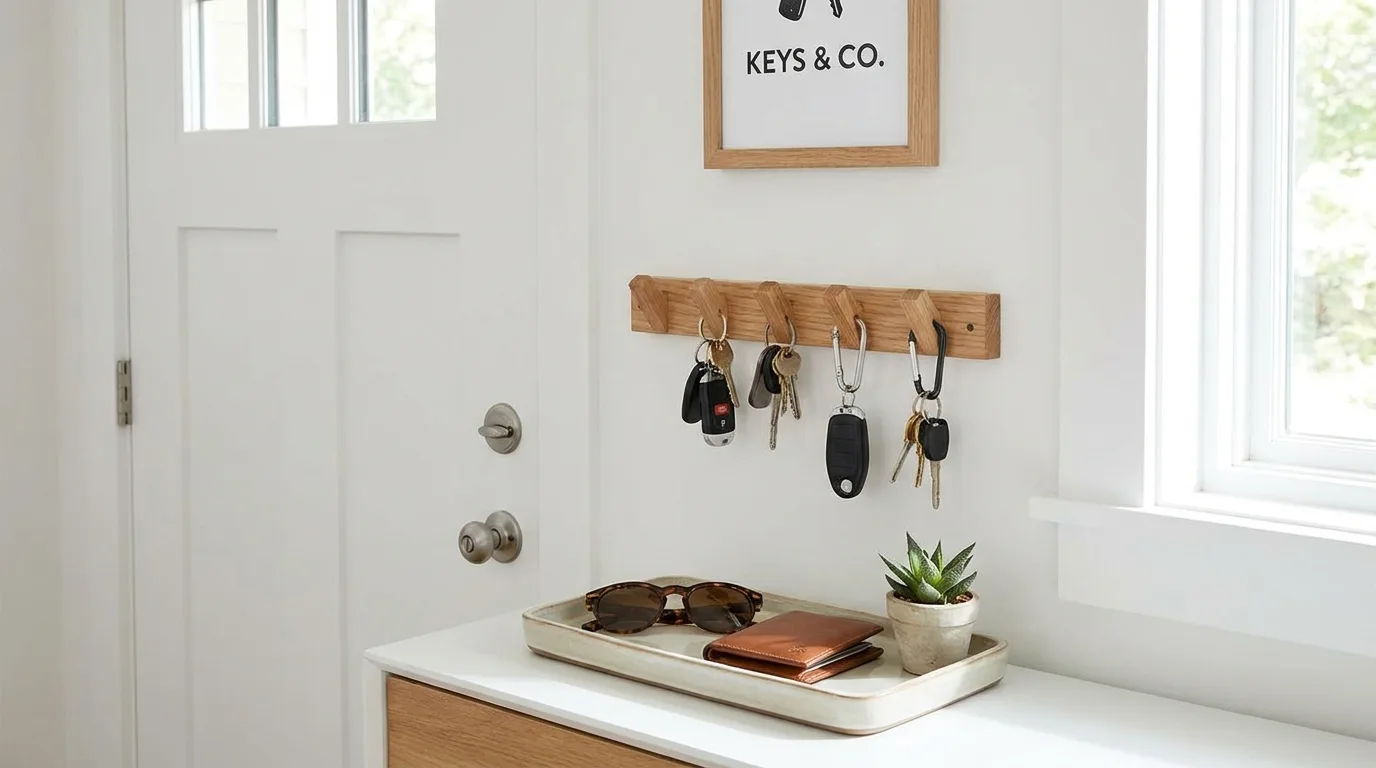
A dedicated key station prevents one of the smallest household items from becoming one of the easiest things to lose. Set up a compact tray, wall-mounted organizer, or small hook rack immediately inside the entrance. If several people share the home, assign individual hooks or sections so everyone has a predictable place for keys. A small shelf can also hold sunglasses, wallets, and other pocket essentials. For a cleaner look, choose an organizer with a drawer or concealed compartment. The goal is convenience, so the station should be positioned along the natural path you take when entering the house. Keep decorative items minimal around it, because an overly crowded key station can defeat its organizational purpose.
11. Make Use of the Space Behind the Door
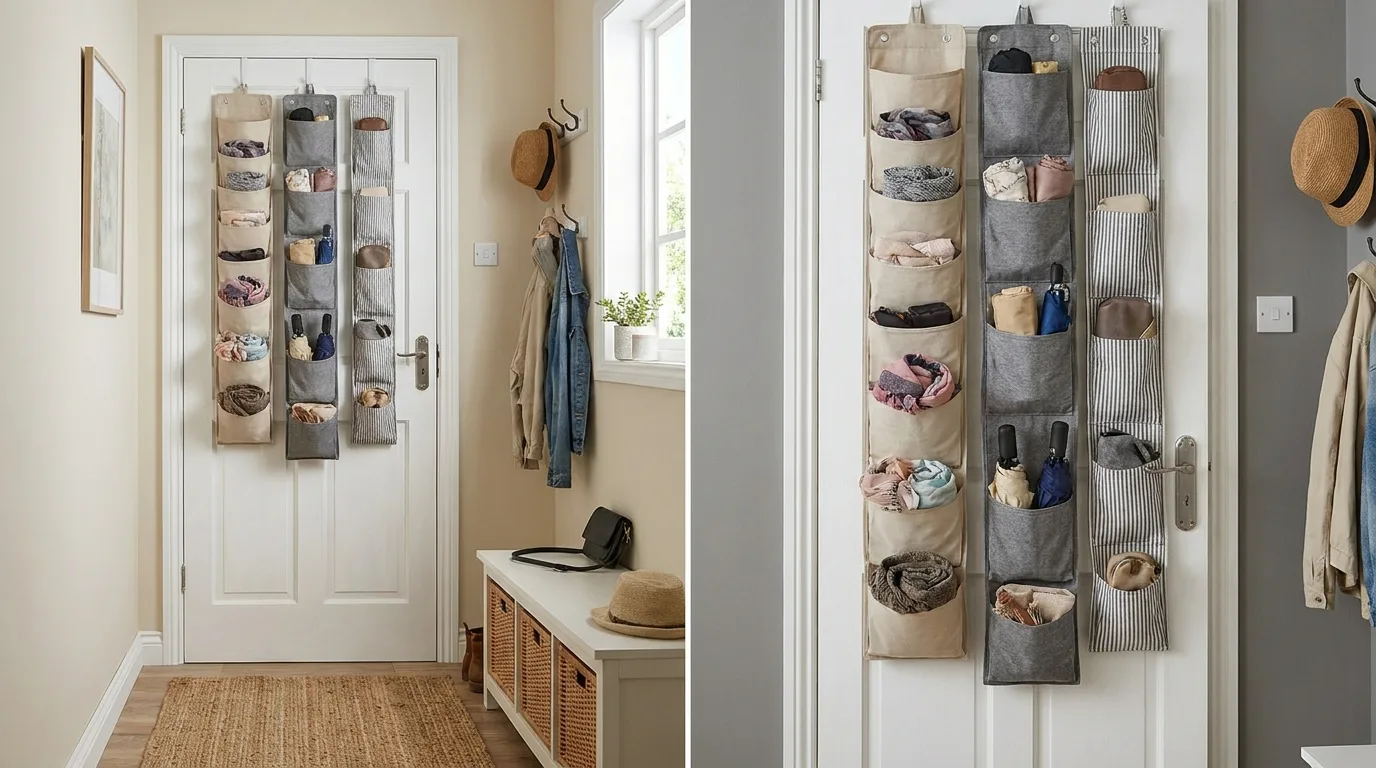
The area behind an entry door is often overlooked, yet it can provide valuable storage in a small home. A slim over-the-door organizer can hold scarves, gloves, umbrellas, cleaning cloths, or other lightweight accessories. If the door construction allows it, individual hooks can create a simpler and more attractive solution. Choose storage that does not interfere with the door’s movement or make the doorway difficult to use. This is particularly useful in apartments and narrow entrances where adding furniture is not practical. Keep heavier objects on properly secured hardware rather than relying on lightweight organizers. By treating the back of the door as usable vertical space, you can add organization without reducing the room available for walking or furniture.
12. Add a Small Entryway Cabinet
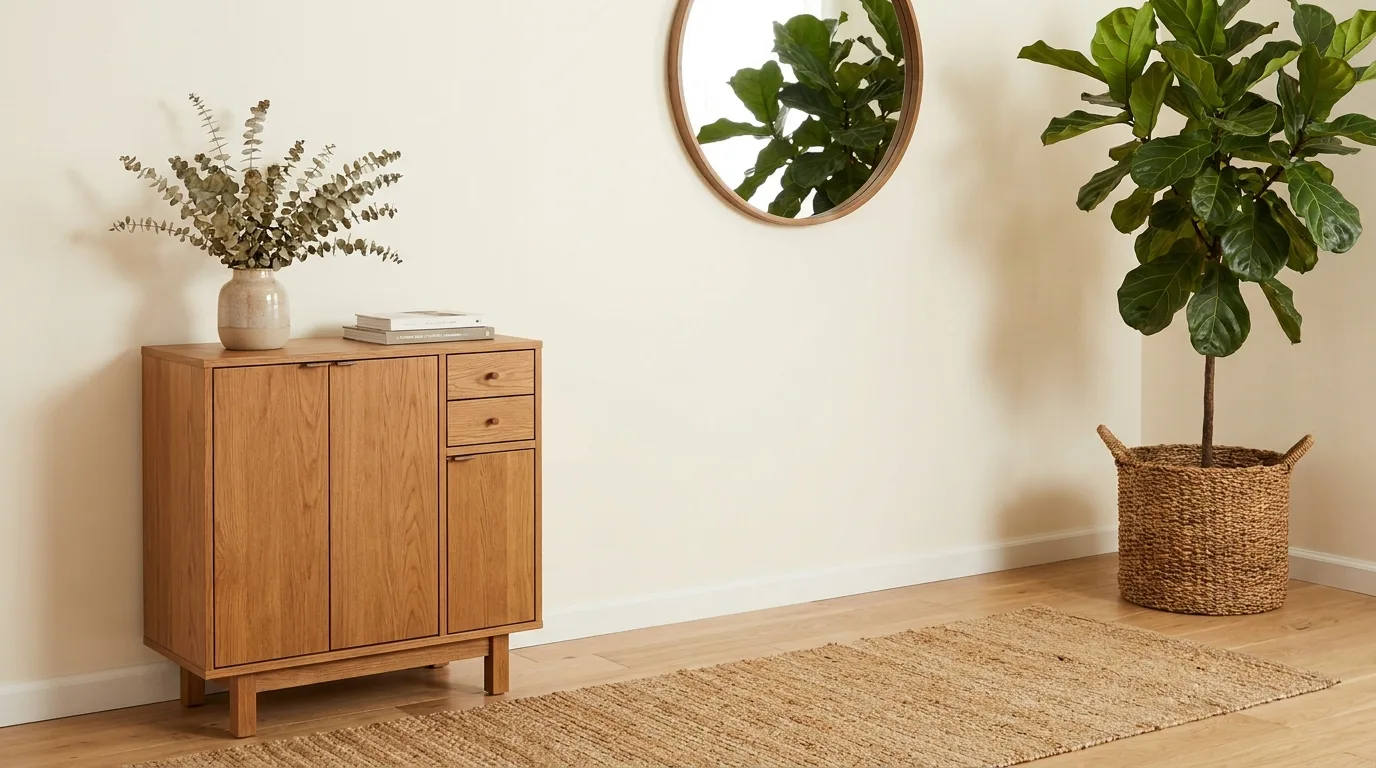
A compact cabinet can hide a surprising amount of everyday clutter while giving the entryway a polished appearance. Look for a narrow unit with adjustable shelves, drawers, or a combination of both. Interior shelves can hold shoes and bags, while drawers are useful for keys, gloves, chargers, and other small objects. In a larger foyer, a taller cabinet can provide more capacity without requiring several separate pieces of furniture. Choose doors with simple fronts if you want the storage to blend quietly into the room. If the cabinet has a noticeable visual presence, balance it with a mirror, artwork, or plant nearby. Closed cabinetry is particularly useful when you want the entryway to look tidy even during busy mornings.
13. Design an Entryway Gallery Wall
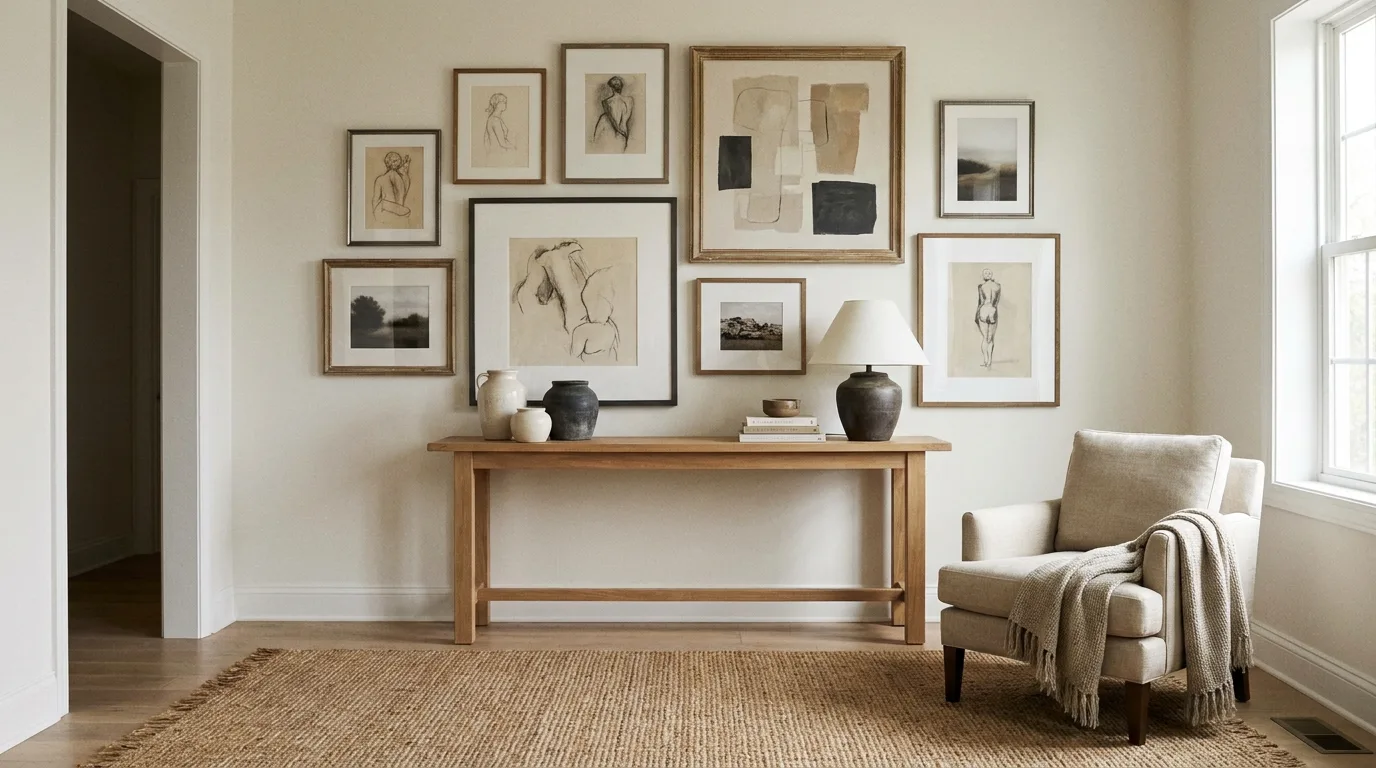
An entryway does not have to be purely practical. A gallery wall can introduce personality and make the entrance feel connected to the rest of your home. Combine framed photographs, artwork, typography, or small decorative objects in a composition that fits the available wall. In a narrow hallway, keep the arrangement vertically oriented or use a small number of pieces to prevent visual overload. A larger foyer can accommodate a broader gallery arrangement above a console or bench. For a cohesive result, repeat one or two frame finishes or colors. Keep the lower portion of the wall relatively clear where people pass frequently. The artwork should complement the storage rather than compete with it for attention.
14. Use a Runner to Define the Entry
A runner can visually define an entryway, especially when the front door opens directly into a larger living space. It adds softness, pattern, and warmth while making the entrance feel like a deliberate zone. Choose a washable or durable material if the area receives heavy foot traffic. For a narrow hallway, a runner with a subtle pattern can add interest without making the space appear busier. In an open-plan home, position it so the rug establishes a clear transition between the doorway and the main living area. Leave enough exposed floor around the edges to keep the arrangement balanced. Pair the runner with practical storage nearby so the entryway looks welcoming while still handling daily mess.
15. Combine Open and Closed Storage
The most versatile entryways often use a combination of open and closed storage. Open hooks and shelves make frequently used items easy to grab, while drawers, cabinets, and baskets conceal anything that would otherwise create visual clutter. This balance is useful for households with changing routines because not everything needs to be displayed or hidden. For example, keep everyday shoes and coats accessible while storing seasonal footwear and accessories behind doors. Matching finishes can make several storage types feel like one coordinated system. In a small entrance, prioritize closed storage for bulky items and use a few open elements for convenience. In a larger foyer, you can give decorative objects more room to breathe while still maintaining practical organization.
16. Keep a Small Entryway Clutter-Free
The smartest entryway storage system is ultimately the one that is easy to maintain. Instead of trying to store every possession near the front door, identify the items that genuinely belong there and give each category a dedicated location. A small tray can handle keys, a basket can collect accessories, hooks can hold daily coats, and a compact shoe cabinet can contain footwear. Limit decorative pieces to a few items that add character without occupying valuable working space. Make a quick weekly reset part of your routine by returning misplaced items to their proper rooms and removing seasonal objects that are no longer needed. Even a tiny entryway can feel spacious when storage reflects real habits rather than trying to accommodate unnecessary clutter.
Conclusion
A well-designed entryway does not depend on having a large foyer. The right combination of vertical storage, concealed organization, practical furniture, and thoughtful decor can make almost any entrance more functional and inviting. Focus first on how your household uses the space, then choose storage that keeps everyday essentials within easy reach while containing visual clutter. Whether you add a slim console, a bench with baskets, wall hooks, or a complete mudroom-style wall, even a few smart changes can make coming and going much easier. The best entryway is one that looks welcoming, works efficiently, and remains simple enough to keep organized every day.