Sage green is one of the most versatile colors for a kitchen because it brings a soft, natural feel without overwhelming the room. Whether you love modern minimalism, cozy farmhouse style, or timeless traditional spaces, this muted green works beautifully with wood, stone, brass, black, and warm neutrals. These sage green kitchen ideas show practical ways to use the color on cabinets, walls, islands, backsplashes, and accents while keeping the space inviting and functional.
1. Classic Sage Green Shaker Cabinets
Shaker cabinets are a natural match for sage green because their simple recessed panels let the color become the main design feature without looking busy. Choose a muted, slightly gray sage for a timeless appearance, then pair it with warm white walls and countertops to keep the kitchen bright. Brushed brass hardware adds warmth, while oak or walnut flooring prevents the green from feeling too cool. For a cohesive look, repeat the cabinet color on a small pantry door or open shelving. This approach works particularly well in kitchens where you want personality without committing to an ultra-trendy color.
For a softer finish, choose satin or eggshell cabinetry rather than a very glossy surface. The subtle sheen reflects natural light while still emphasizing the calming character of sage green.
2. Sage Green Kitchen Island
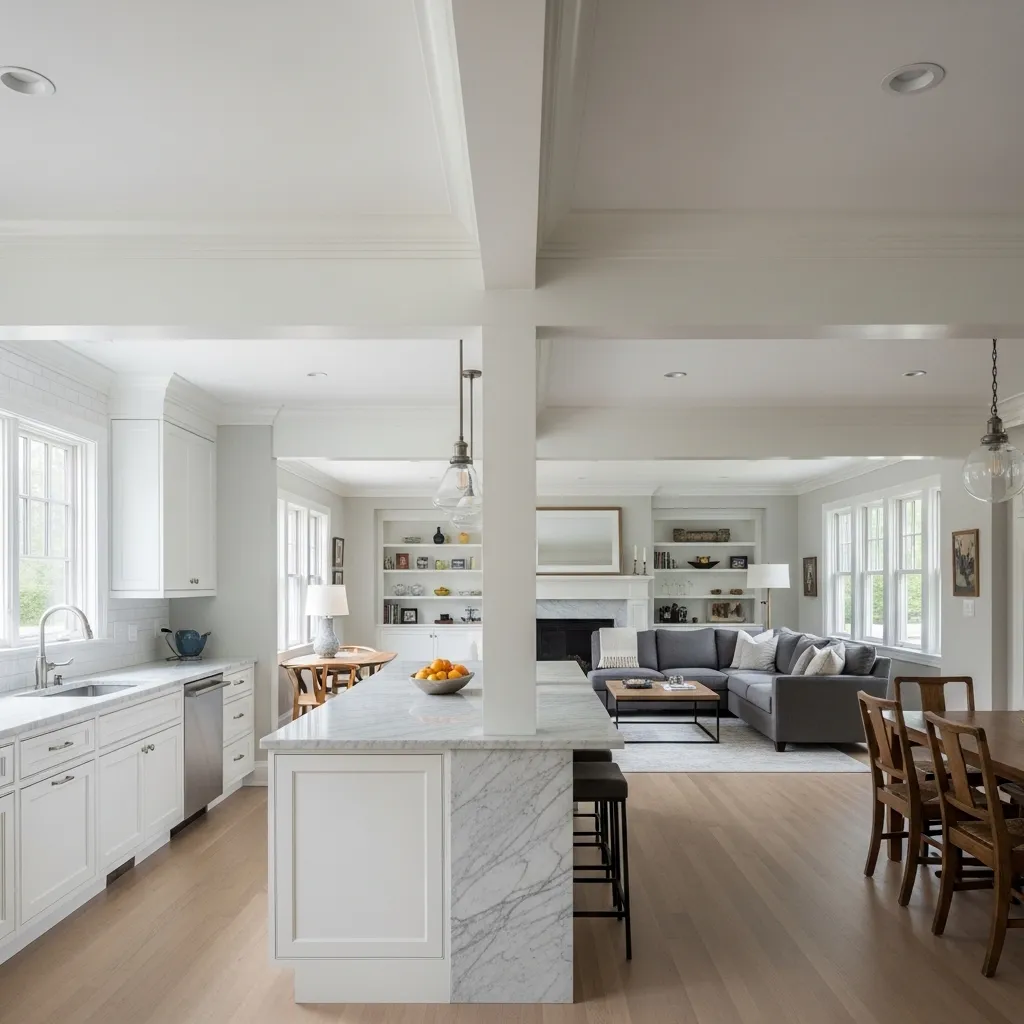
If you like sage green but do not want to cover every cabinet, use it on the island. A painted sage island creates a focal point while allowing the perimeter cabinets to remain white, cream, natural wood, or another neutral shade. This is especially effective in open-plan kitchens because the island visually anchors the cooking area without making the entire room feel darker. Pair the green base with a light quartz, marble-look, or butcher-block countertop for contrast.
Consider extending the island color into the dining or living area with small accessories, such as cushions, ceramics, or artwork. Keeping the accent color intentional makes the kitchen feel connected to the rest of the home rather than visually isolated.
3. Sage Green and Warm White
Sage green and warm white create an airy combination that feels both fresh and comfortable. Instead of stark white, choose creamy or softly toned white for walls, ceilings, backsplash tile, and trim. The warmer undertone complements the earthy quality of sage and prevents the room from feeling clinical. Sage cabinetry can then provide enough color to make the kitchen memorable without dominating it.
This palette is particularly useful in smaller kitchens because light walls and reflective surfaces help maintain an open appearance. Add natural wood cutting boards, woven stools, or rattan lighting to reinforce the organic character of the green. If the kitchen receives limited daylight, test paint samples at different times before committing, since sage can appear significantly different under cool artificial lighting.
4. Sage Green Cabinets with Brass Hardware
Brass hardware brings a warm, elegant contrast to sage green cabinetry. Cup pulls, knobs, and slim bar handles can all work, depending on the style of the kitchen. Aged or brushed brass generally creates a softer look than highly polished finishes, making it especially suitable for traditional, transitional, and cottage-inspired spaces.
To avoid making the room feel overly decorated, repeat the brass in just a few carefully chosen places, such as the faucet, pendant lights, and cabinet hardware. Let the sage remain the dominant color. A white or creamy countertop and simple backsplash will give the metallic accents enough breathing room. If you prefer a contemporary kitchen, use streamlined brass handles and minimal accessories for a cleaner interpretation of the same color combination.
5. Two-Tone Sage Green Kitchen Cabinets
Two-tone cabinetry adds depth and makes it possible to use sage green without committing the entire kitchen to one shade. One effective arrangement is sage green lower cabinets with white or light upper cabinets. This keeps the visual weight closer to the floor while making the walls feel taller and brighter. Another option is sage cabinetry around the perimeter with a contrasting natural-wood island.
When choosing the second color, pay attention to undertones. Warm whites, natural oak, and light beige tend to complement sage particularly well. Avoid introducing too many additional colors, especially in a small kitchen. Two cabinet finishes, one countertop material, and one hardware finish are often enough to create a layered but organized design.
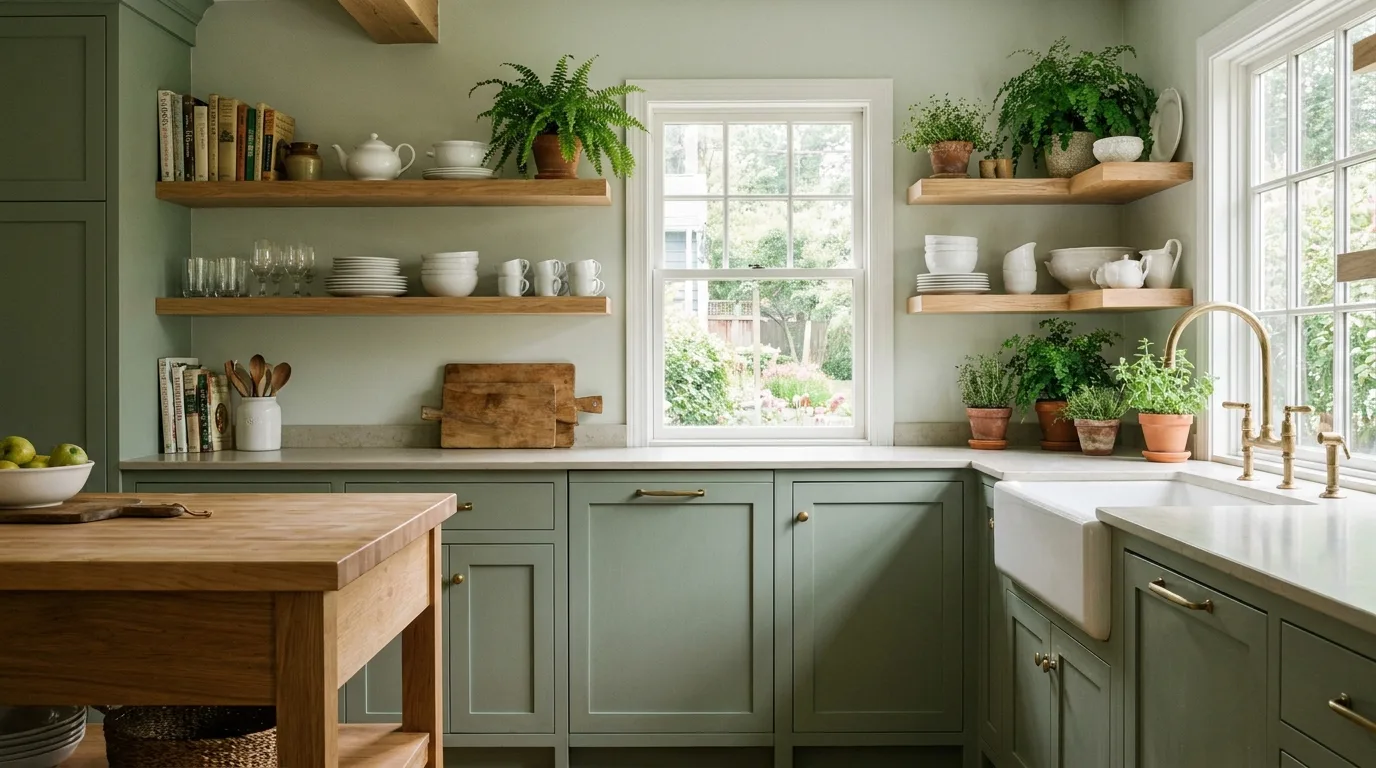
6. Sage Green Cabinets with Natural Wood
Pairing sage green with natural wood creates an earthy kitchen that feels relaxed and welcoming. Oak shelves, a wood island, exposed beams, or timber stools can all introduce organic texture without competing with the cabinets. The key is to choose wood with an undertone that works with the sage. Light and medium warm woods are particularly effective when the green has yellow or olive undertones.
Keep the rest of the palette restrained with stone, cream, or soft beige surfaces. Open wood shelving can also provide a practical display area for everyday dishes and plants. If you already have wood flooring or furniture nearby, use that existing finish as your guide when selecting additional wood elements so the kitchen feels connected rather than assembled from unrelated materials.
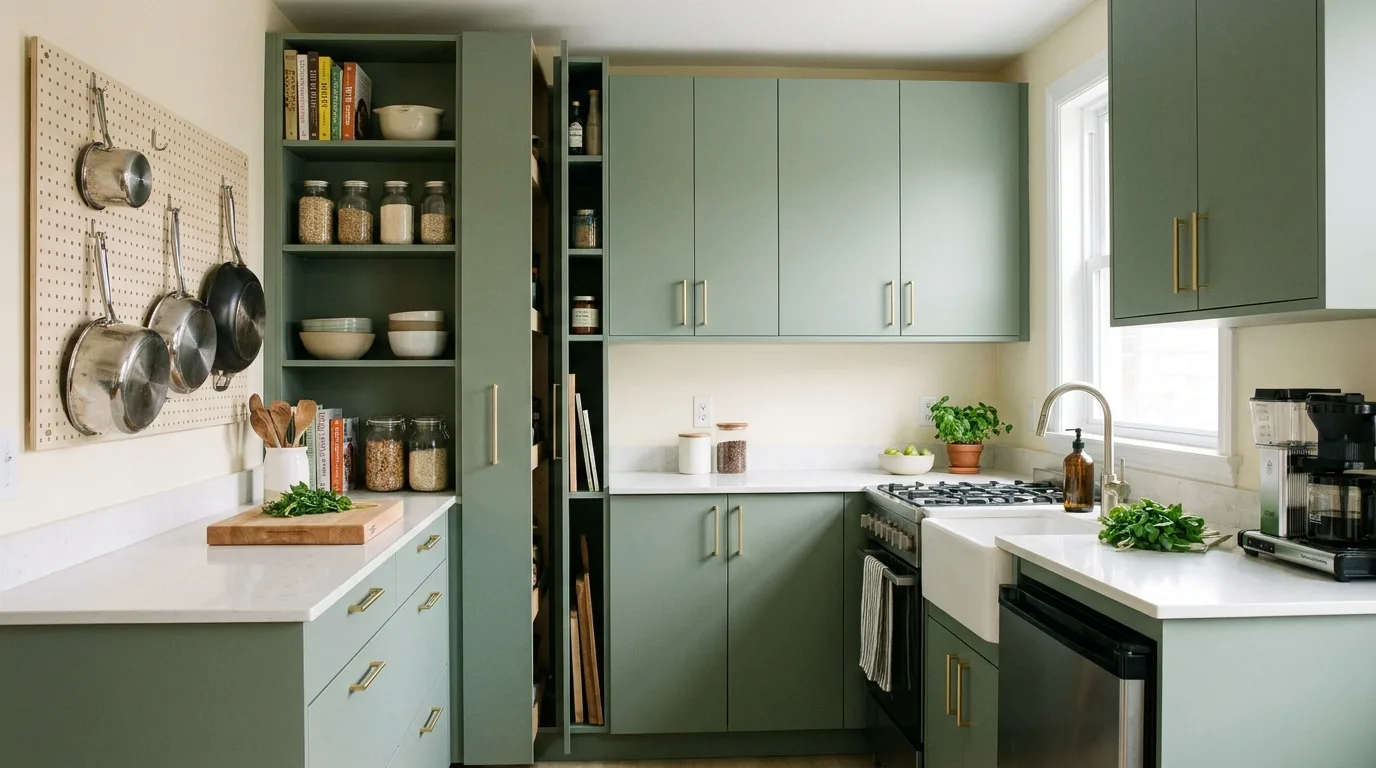
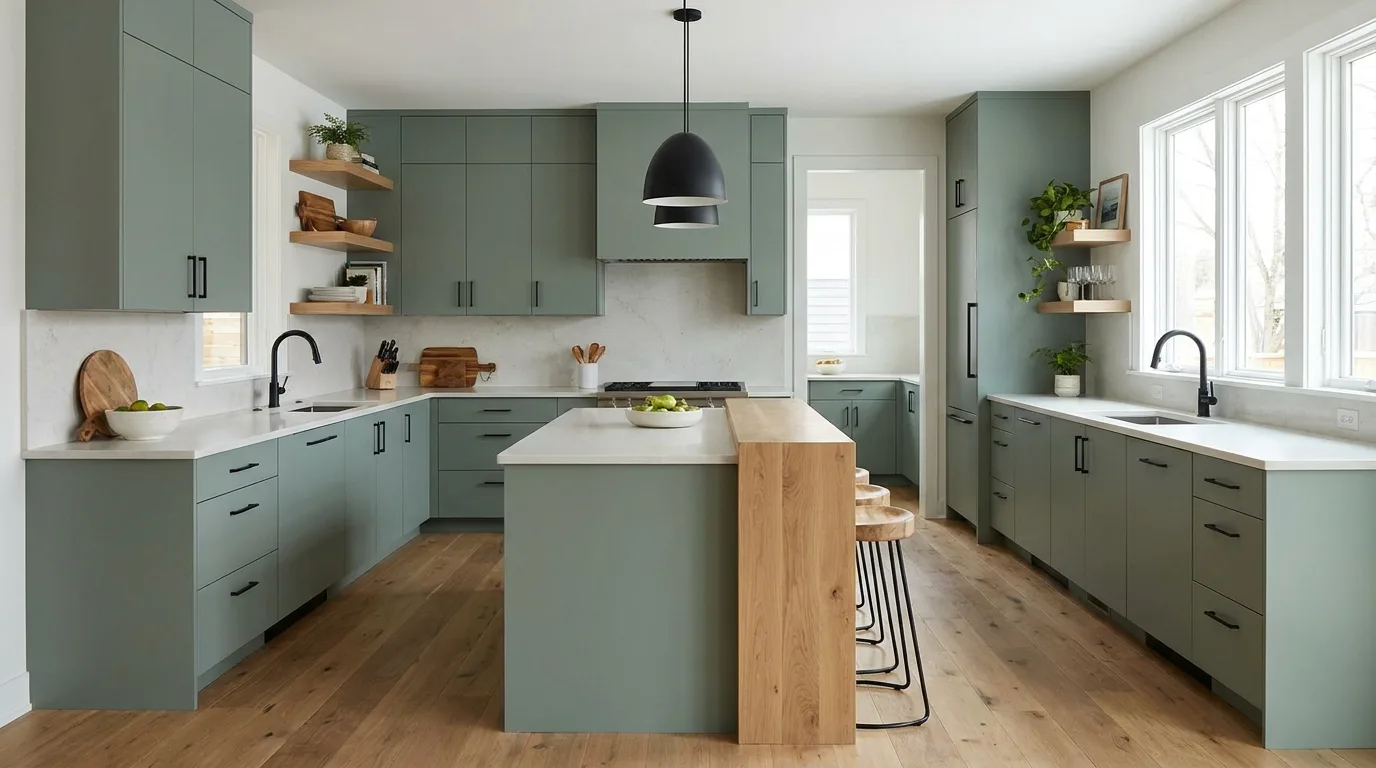
7. Modern Sage Green Kitchen with Black Accents
For a more contemporary look, combine sage green with matte black details. Black pendant lights, window frames, faucets, stools, or cabinet handles provide crisp definition against the softer green. This pairing works especially well when the kitchen has flat-panel cabinetry, clean lines, and minimal decoration.
Because black has strong visual weight, use it strategically rather than throughout every element. A pale countertop and light backsplash can balance the darker accents, while natural wood can soften the contrast. In a modern kitchen, consider using the same black finish on lighting and hardware to create repetition. The result is a sophisticated color scheme that feels grounded without losing the calming qualities that make sage green so appealing.
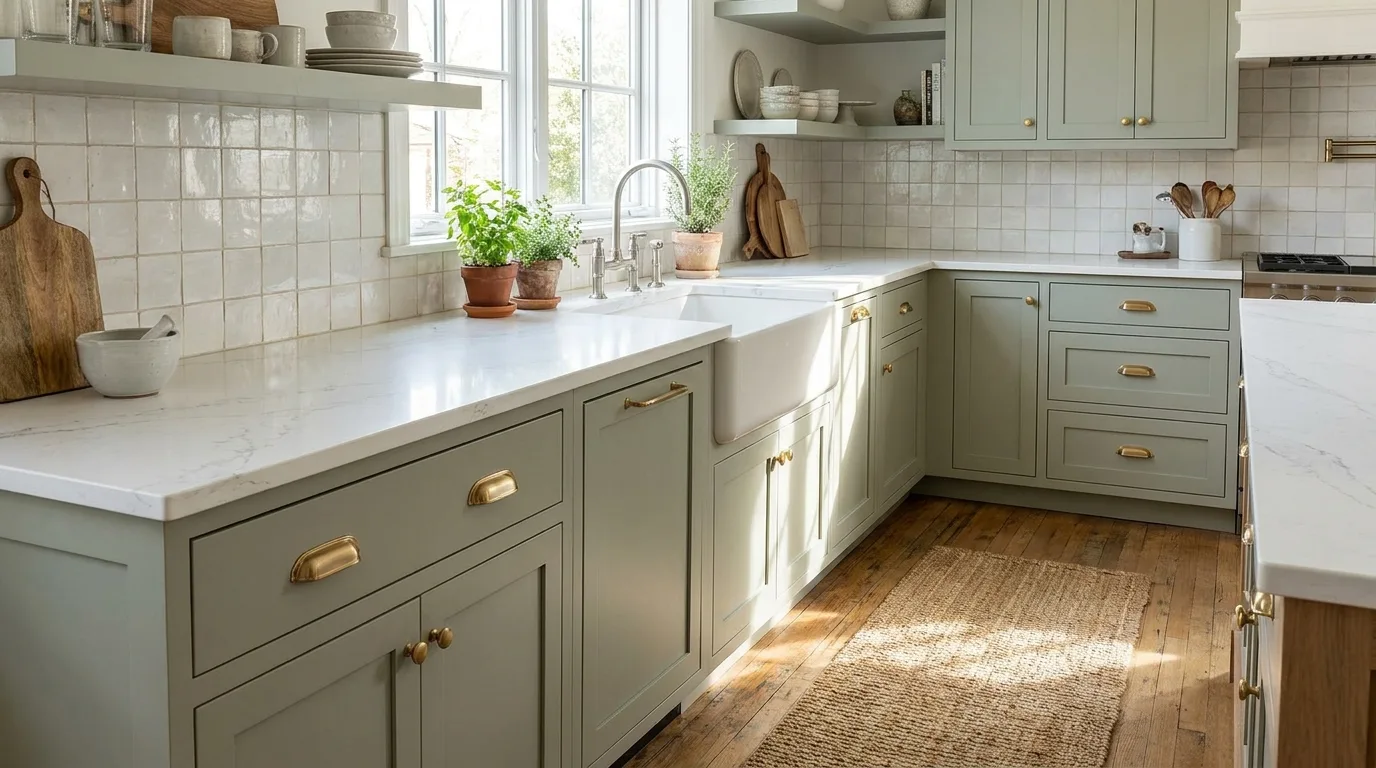
8. Sage Green Cottage Kitchen
Sage green is ideal for a cottage-style kitchen because it naturally complements traditional materials and cozy details. Pair painted cabinets with farmhouse sinks, beadboard, ceramic tile, butcher-block surfaces, or vintage-inspired lighting. Choose a slightly dusty sage rather than a highly saturated green for an authentic, lived-in appearance.
Open shelving is another useful feature because it lets you display ceramics, glassware, cookbooks, and woven baskets. Keep decorative pieces functional where possible so the kitchen remains practical. Aged brass or antique-style hardware can reinforce the cottage character, while simple linen curtains and fresh greenery add texture. The goal is not to make every detail look old-fashioned; combining classic elements with modern appliances creates a comfortable kitchen that still works for contemporary daily life.
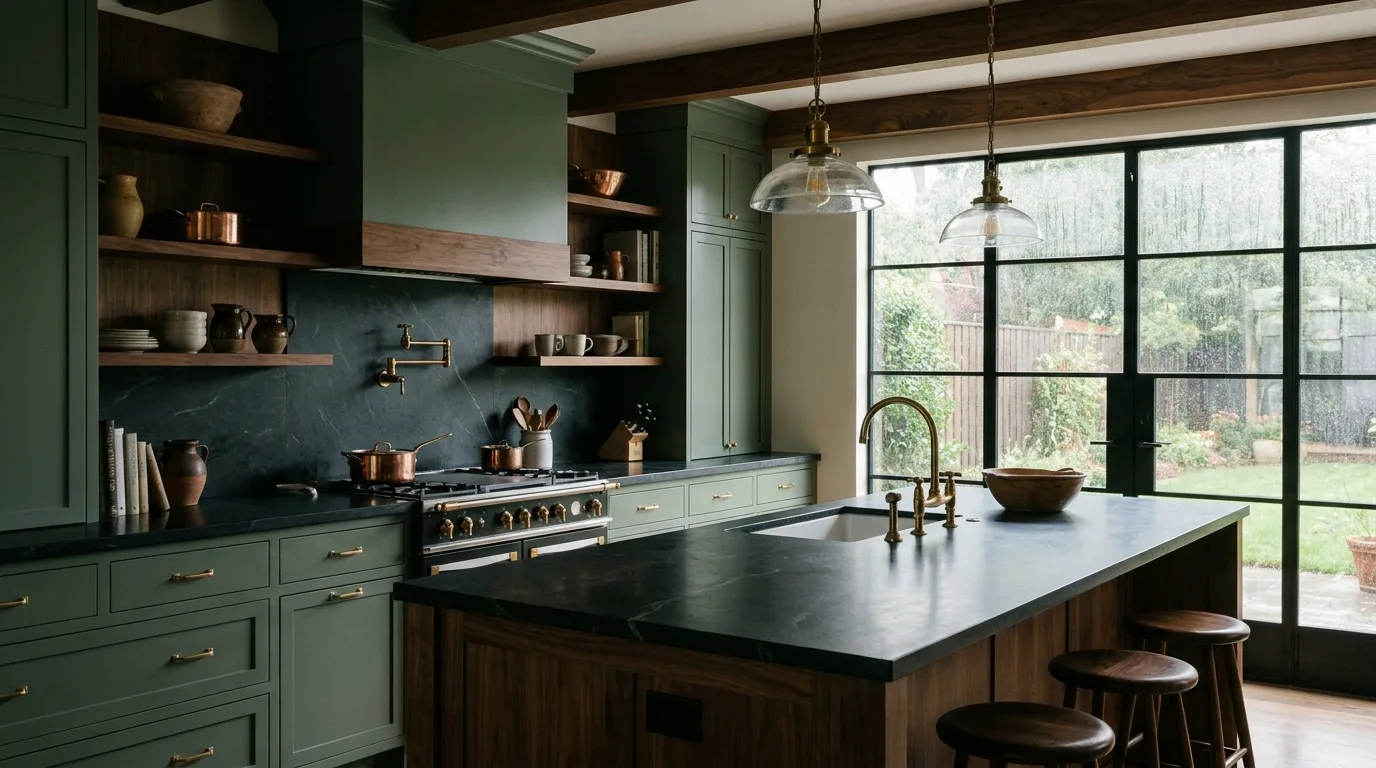
9. Sage Green Kitchen with a Statement Backsplash
A distinctive backsplash can give a sage green kitchen another layer of personality. Handmade-look ceramic tiles, zellige-inspired surfaces, subtle geometric patterns, or softly veined stone can all work beautifully. If the cabinets are a strong sage shade, choose a backsplash with gentle variation rather than a competing bold color.
For a refined look, continue the backsplash from the countertop to the underside of the upper cabinets or range hood. This creates visual continuity and can make a compact kitchen appear more spacious. If you prefer a decorative tile, keep cabinet hardware and lighting relatively simple. The backsplash should complement the sage rather than forcing the room to accommodate too many competing focal points.
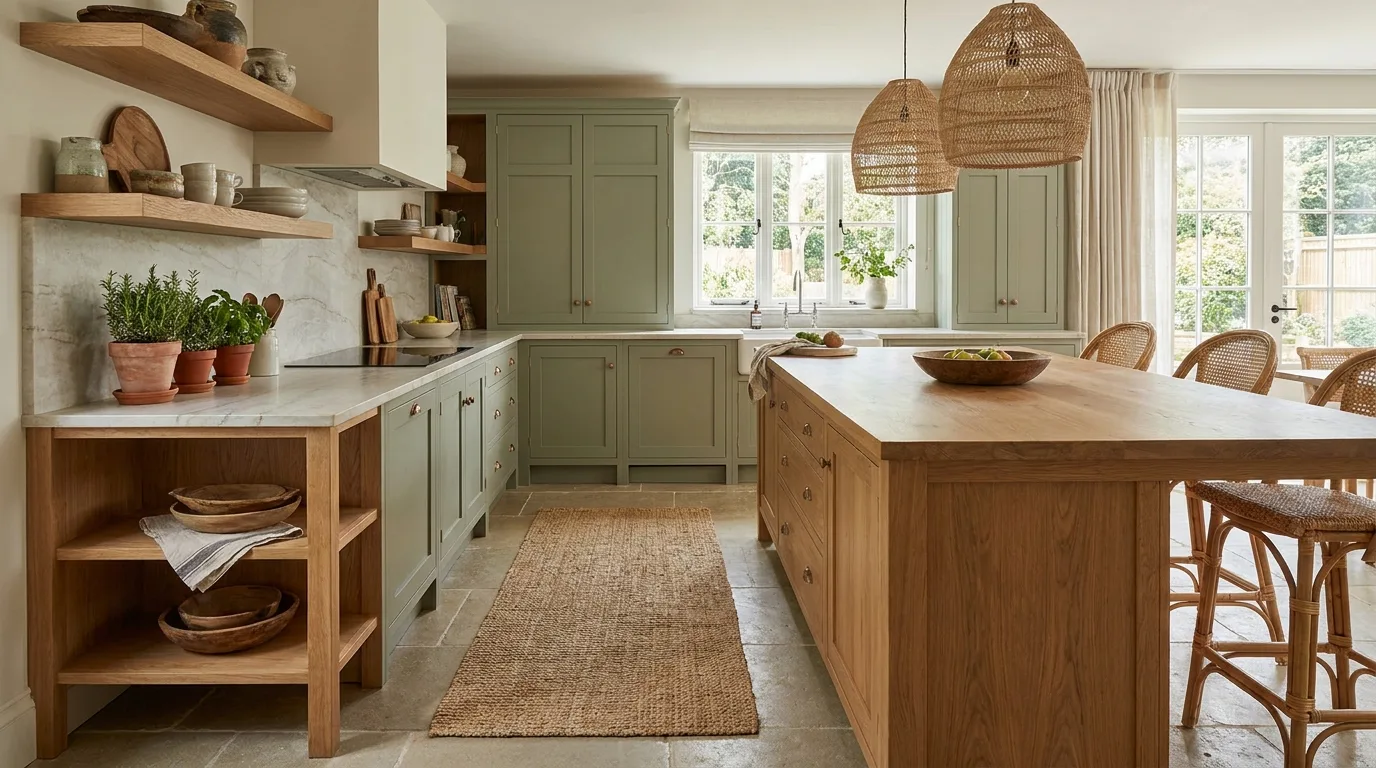
10. Moody Sage Green Kitchen
Sage green does not have to create a bright, pastel kitchen. Deeper sage and olive-leaning greens can produce a moody, sophisticated atmosphere, especially when paired with dark stone, walnut, or charcoal accents. This approach works particularly well in kitchens with abundant natural light, where darker cabinetry can feel rich rather than heavy.
Balance the deeper green with warm lighting and reflective details. Glass-front cabinets, metallic hardware, pale countertops, or a large window can keep the room from becoming visually dense. If your kitchen receives little daylight, consider using the darker sage only on the island or lower cabinets instead of applying it everywhere. This lets you enjoy the dramatic effect while preserving a sense of openness.
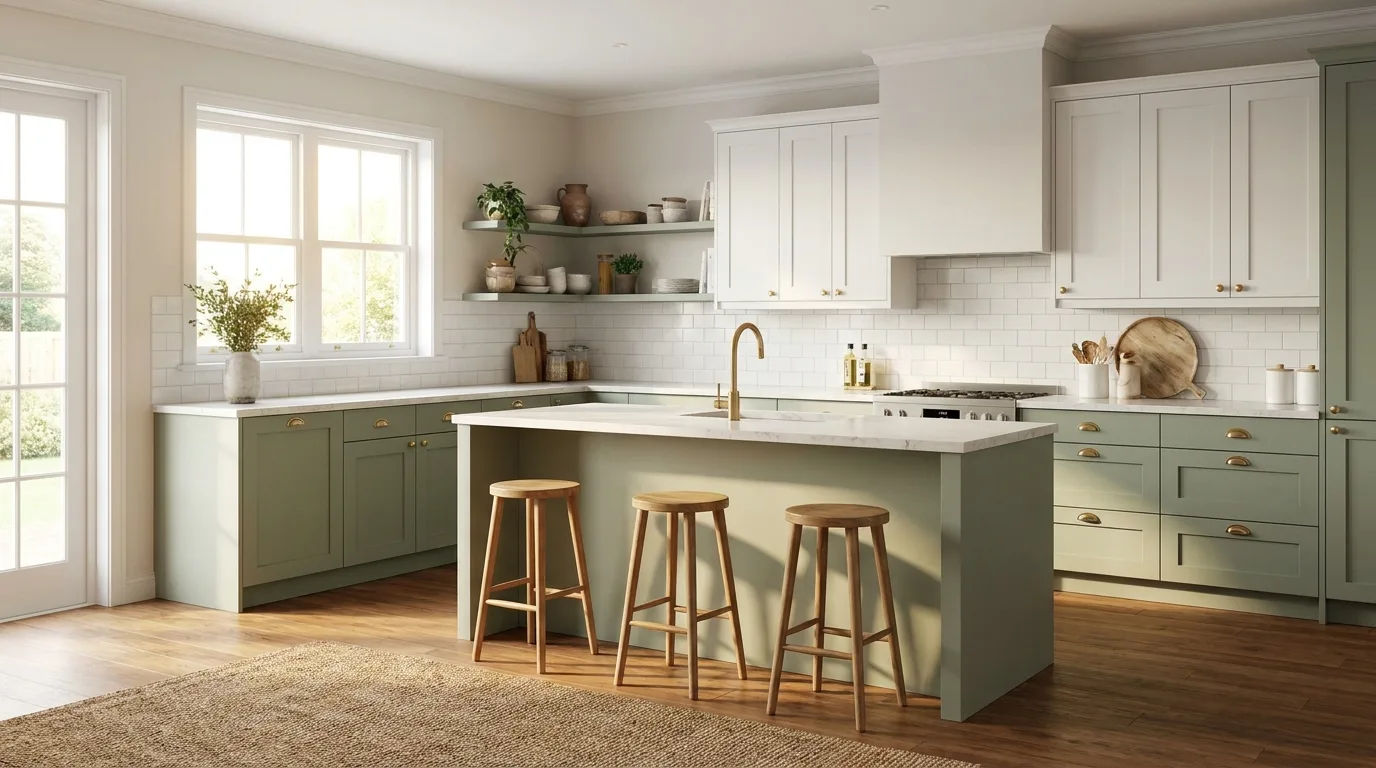
11. Sage Green and Marble-Look Countertops
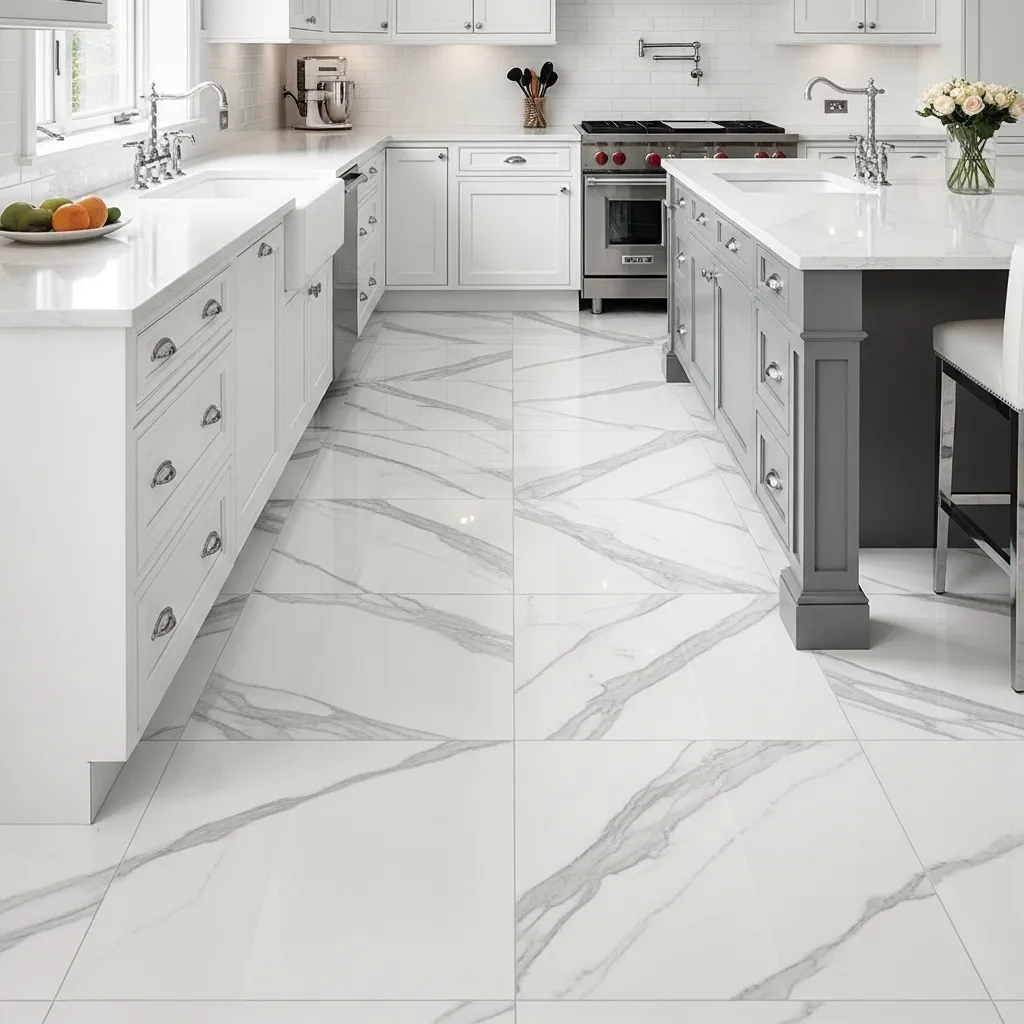
White marble-look quartz or other pale stone surfaces provide a crisp contrast against sage green cabinetry. The combination has a classic appearance, particularly when the countertop includes subtle gray or warm veining that echoes the undertones of the green. A waterfall edge on an island can make the pairing feel more contemporary, while a traditional countertop profile suits classic kitchens.
Keep the backsplash coordinated with the countertop if you want a calm, seamless appearance. Alternatively, use a simple ceramic tile for additional texture. Since both sage and marble-inspired surfaces can be visually distinctive, avoid introducing several competing patterns. Wood accents, understated hardware, and simple lighting can finish the room without taking attention away from the cabinetry and stone.
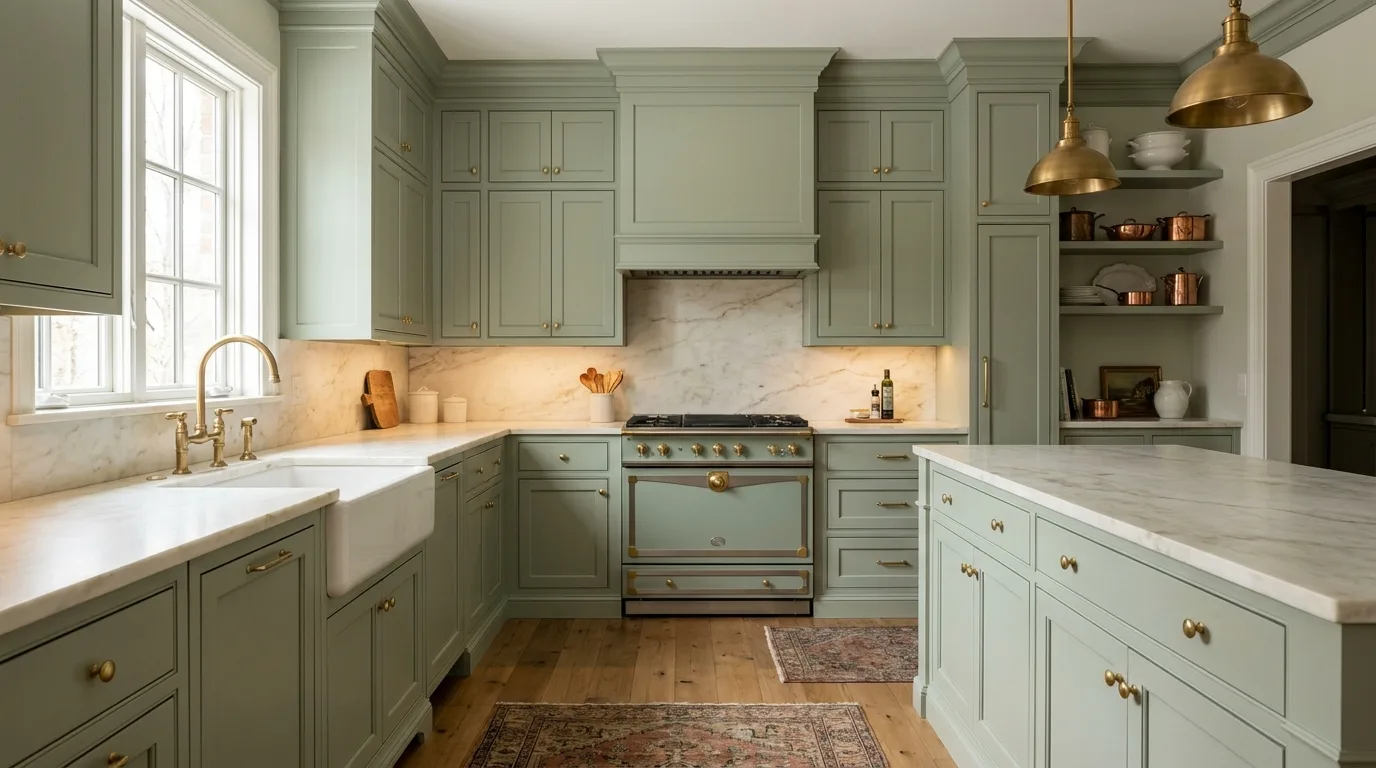
12. Small Sage Green Kitchen
Sage green can work beautifully in a small kitchen when the color is balanced with light surfaces and thoughtful storage. Use sage on the main cabinets while keeping walls and countertops pale to maintain brightness. If the room is especially compact, consider using open shelves or glass-front doors on one section of cabinetry to break up a solid wall of color.
Vertical storage is another practical improvement. Tall cabinets can use the available wall height for pantry items, while hooks and rails keep frequently used tools accessible. Choose simple hardware and avoid excessive decorative accessories, which can make a small kitchen feel crowded. A few natural textures, such as wood and woven baskets, can provide warmth without consuming valuable visual space.
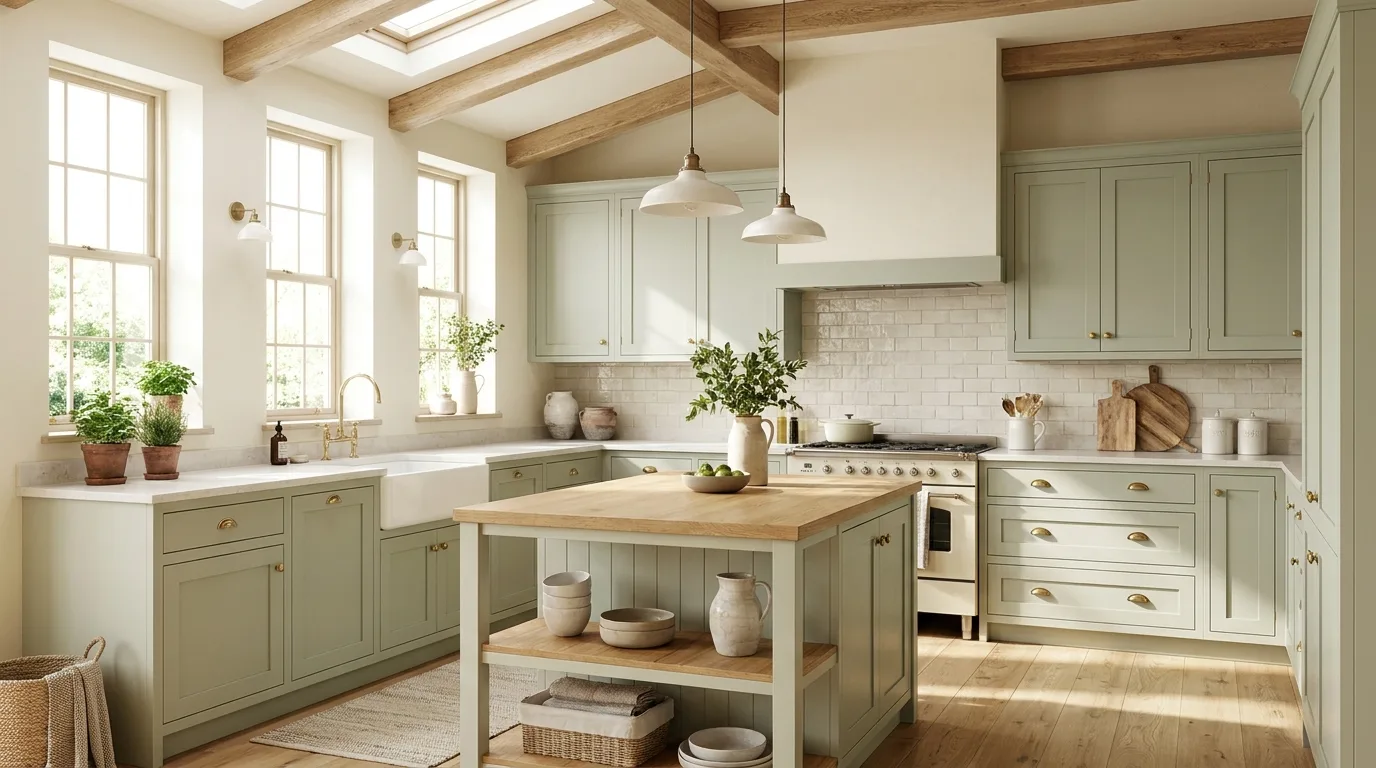
13. Sage Green Kitchen with Open Shelving
Open shelving is an easy way to complement sage cabinetry while adding useful display and storage space. Natural wood shelves are particularly effective because they introduce warmth and texture against the muted green. Use them for everyday dishes, glasses, jars, cookbooks, and a few decorative pieces rather than filling every inch.
For the best visual balance, group similar items together and leave some empty space. You can also repeat the sage color through ceramics or small accessories, but avoid making every displayed object green. If dust or maintenance is a concern, use open shelves selectively around a coffee station or serving area rather than replacing all upper cabinets. This gives you the relaxed appearance of open storage while retaining plenty of concealed space.
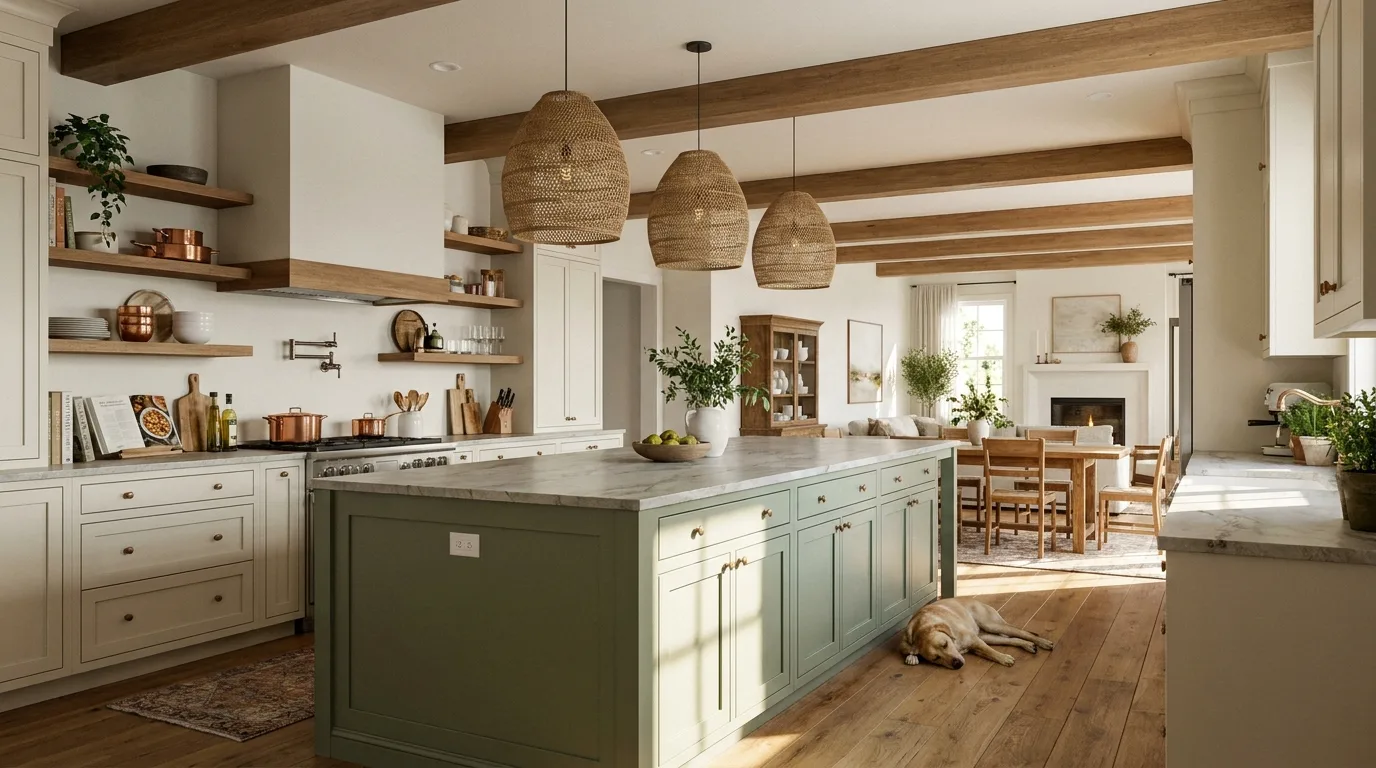
14. Sage Green Kitchen with a Farmhouse Sink
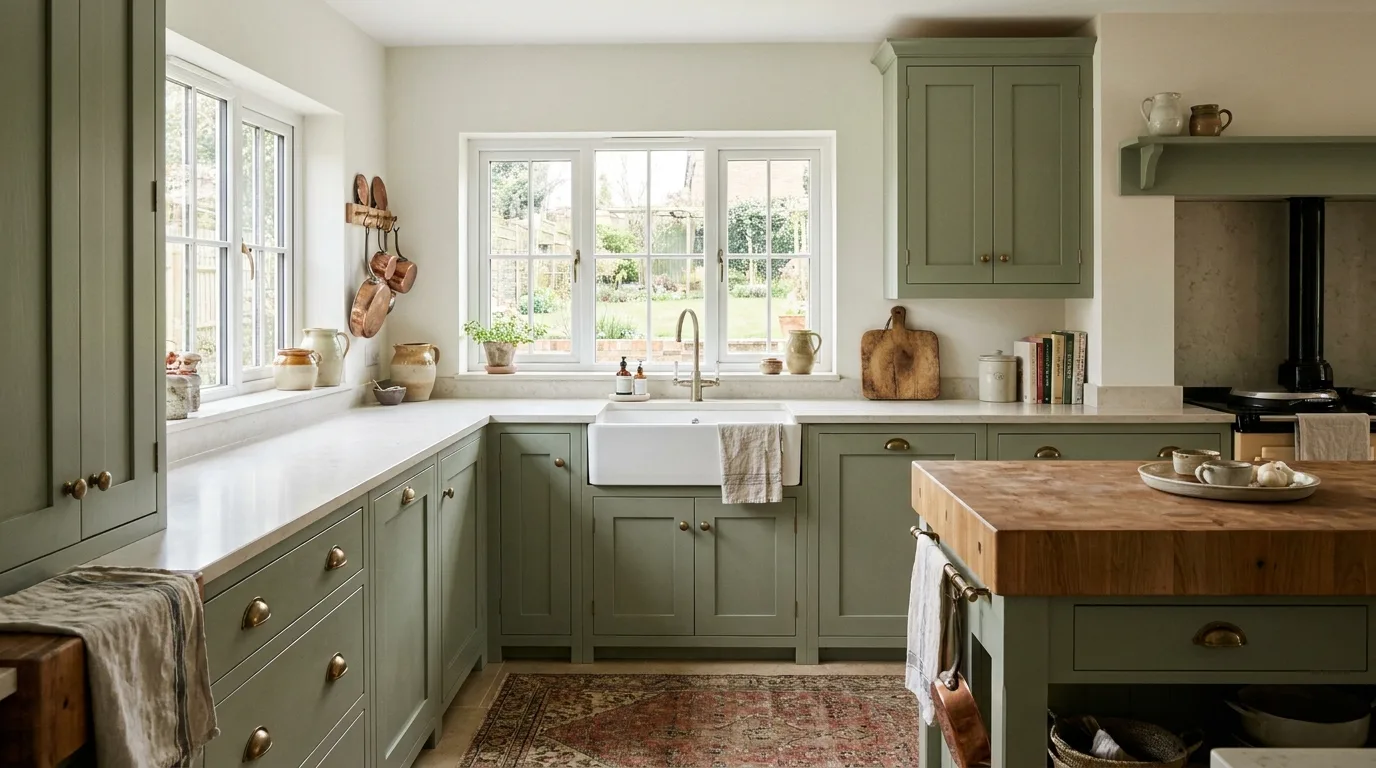
A farmhouse or apron-front sink can emphasize the traditional side of a sage green kitchen. White fireclay creates a clean contrast with painted cabinets, while a stainless-steel version offers a more contemporary interpretation. Position the sink beneath a window when possible so the work area benefits from natural light and an outdoor view.
Complete the look with simple cabinet hardware, a practical pull-down faucet, and durable countertop materials. If you are renovating, check sink cabinet dimensions and plumbing requirements before selecting the basin because apron-front models can require different cabinet preparation. Decorative touches such as linen towels, a ceramic soap dispenser, or a small potted herb can reinforce the farmhouse atmosphere without compromising the kitchen’s functionality.
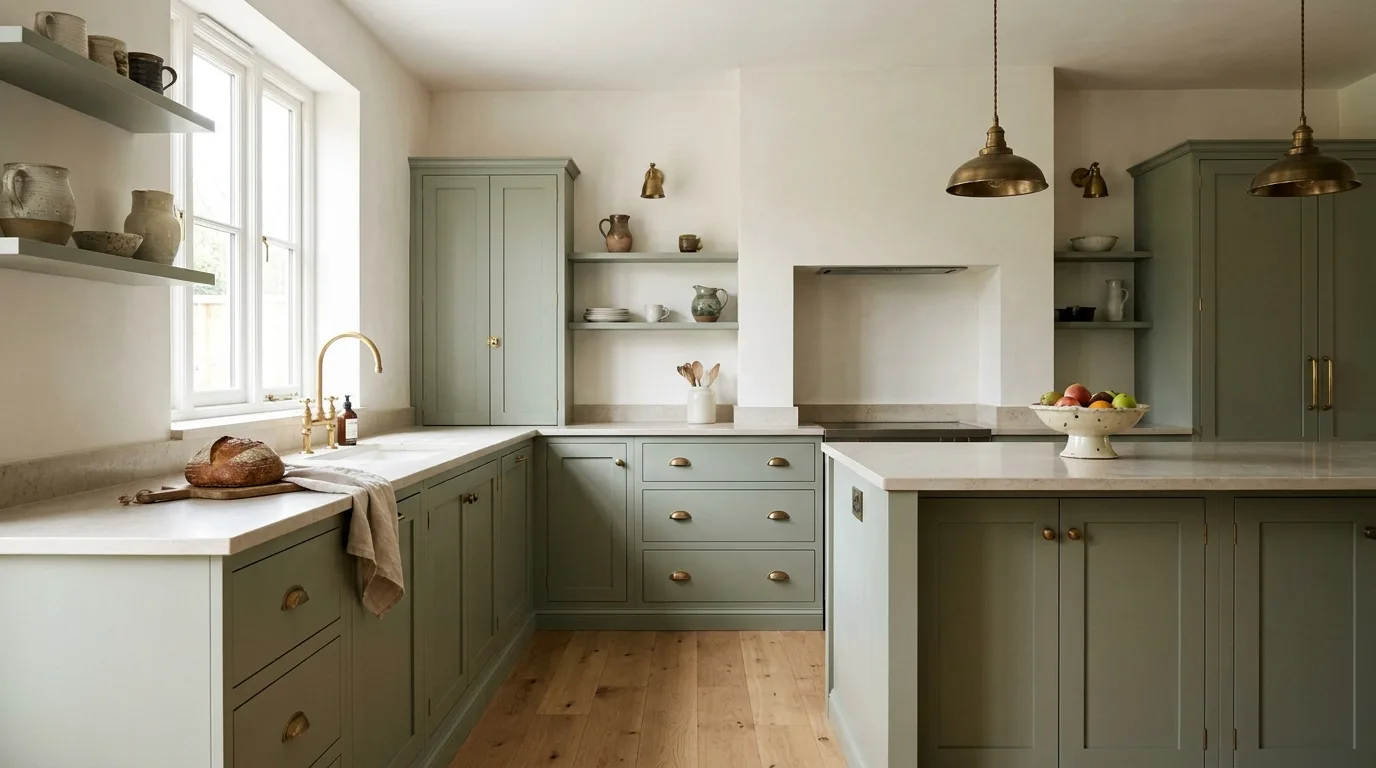
15. Sage Green Kitchen with Terracotta Accents
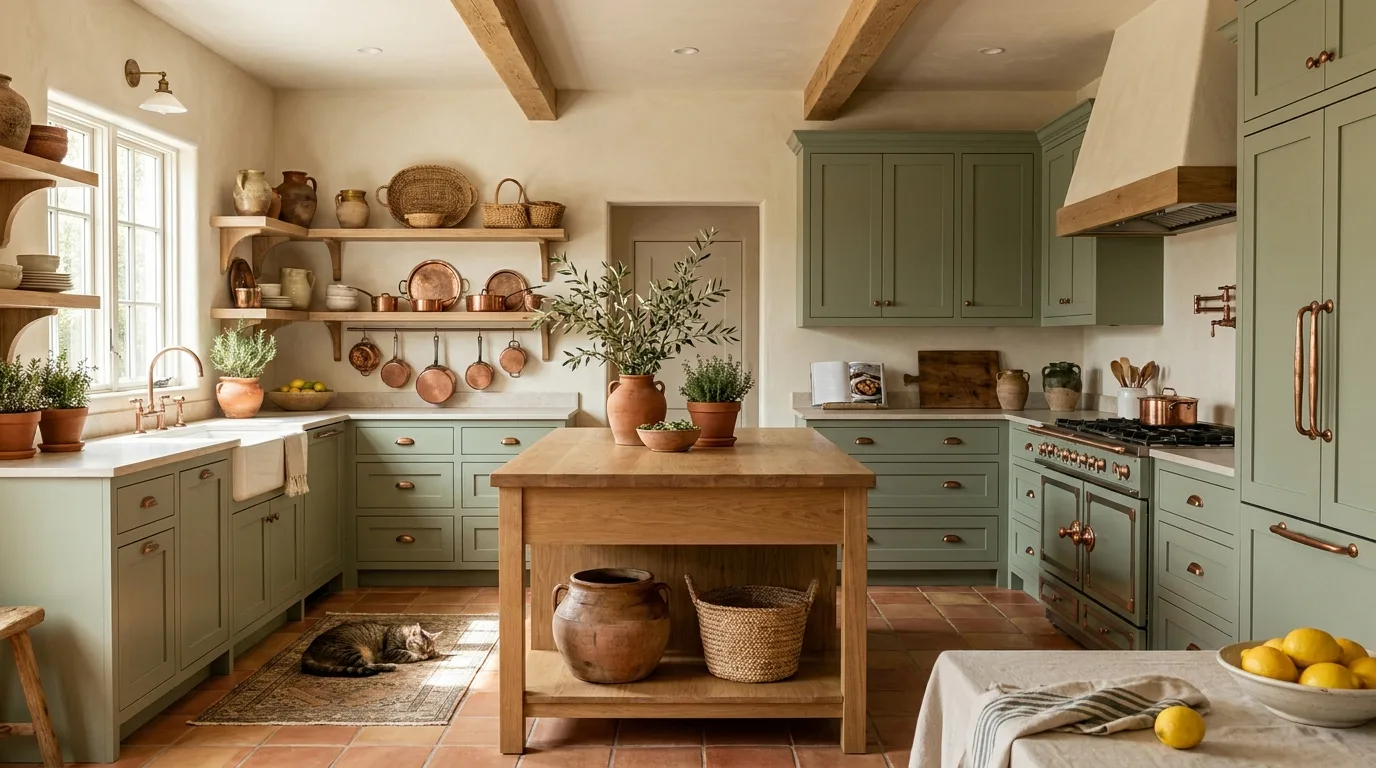
Terracotta introduces a warm, earthy counterpoint to sage green and can make the kitchen feel especially inviting. Use terracotta through floor tiles, pendant shades, planters, backsplash details, or carefully chosen accessories. Because both colors have natural, muted qualities, they can create a relaxed Mediterranean or rustic-inspired palette.
If you use terracotta flooring, balance its strong warm tone with creamy walls and restrained cabinetry details. Smaller kitchens may benefit from using terracotta only in accessories or a few decorative tiles. Natural wood and aged metal finishes fit naturally into the palette. The combination is most successful when the terracotta feels like a supporting accent rather than a second dominant color.
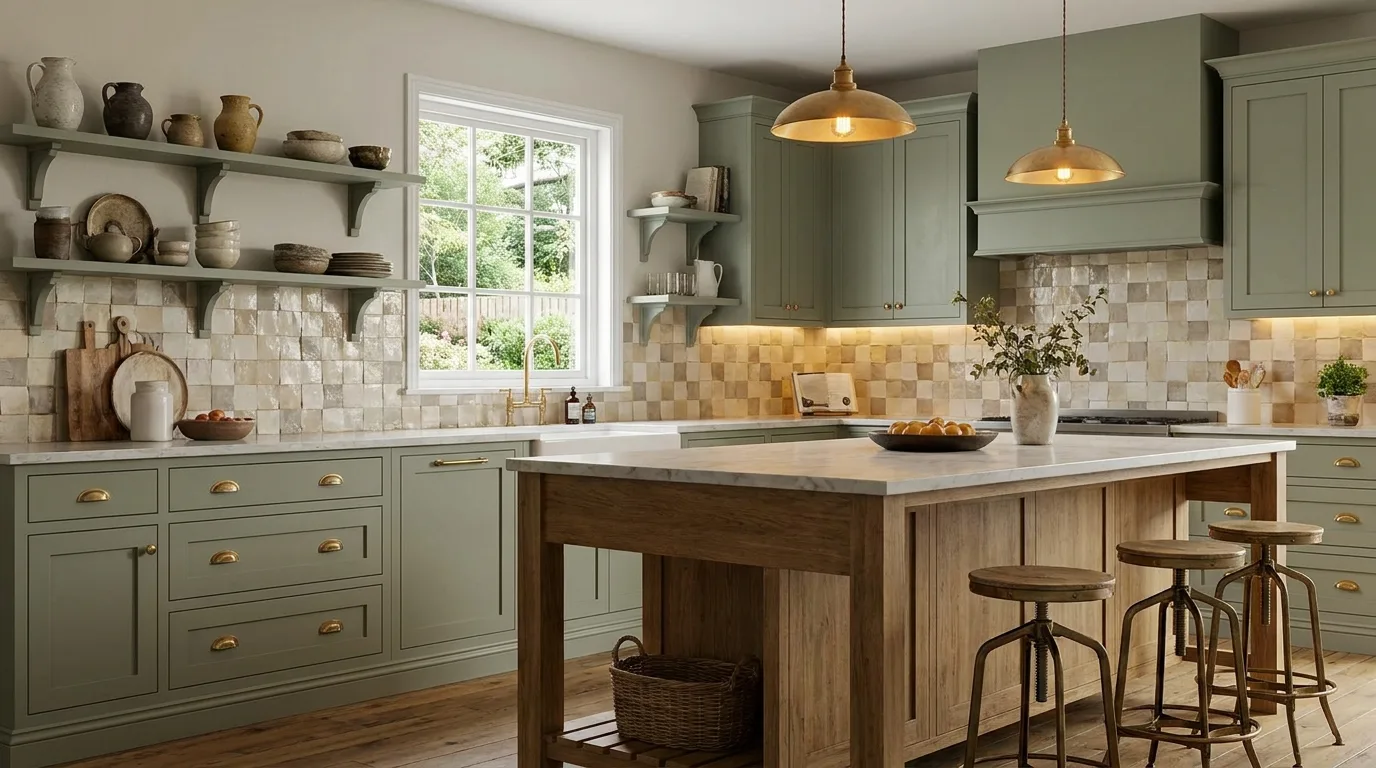
16. Elegant Sage Green Kitchen with Gold Details
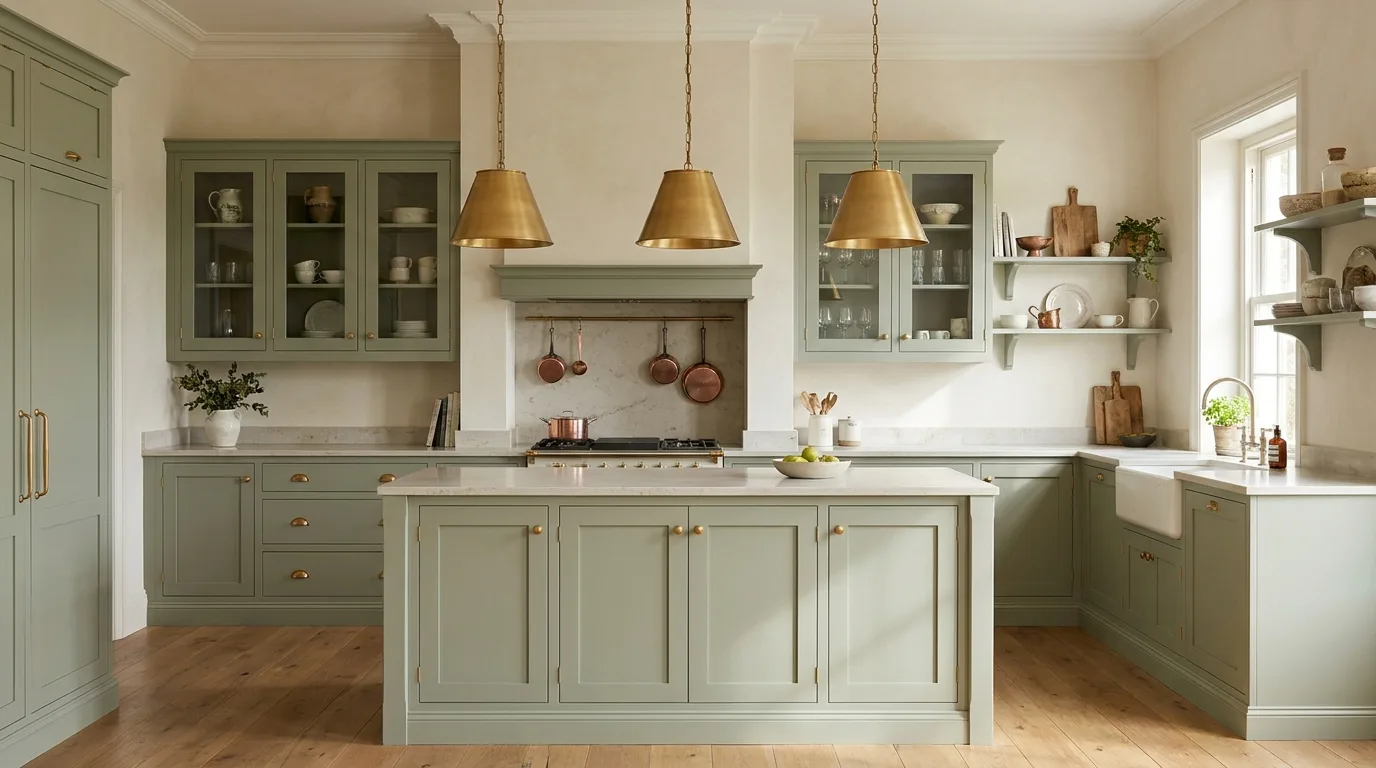
Gold accents can give sage green cabinetry a polished, elegant character. Choose slim gold or warm metallic handles, a matching faucet, or statement pendant lights. To keep the look sophisticated rather than flashy, use the metallic finish consistently and limit it to a handful of architectural or functional details.
A pale stone countertop, warm white walls, and classic tile can provide a quiet backdrop. For a more luxurious result, incorporate glass cabinet doors or a detailed range hood while keeping the cabinet profile relatively simple. Soft sage is particularly effective here because its subdued quality prevents the metallic accents from becoming overwhelming. Test the metal finish alongside your chosen cabinet paint because gold tones can appear noticeably different under warm and cool lighting.
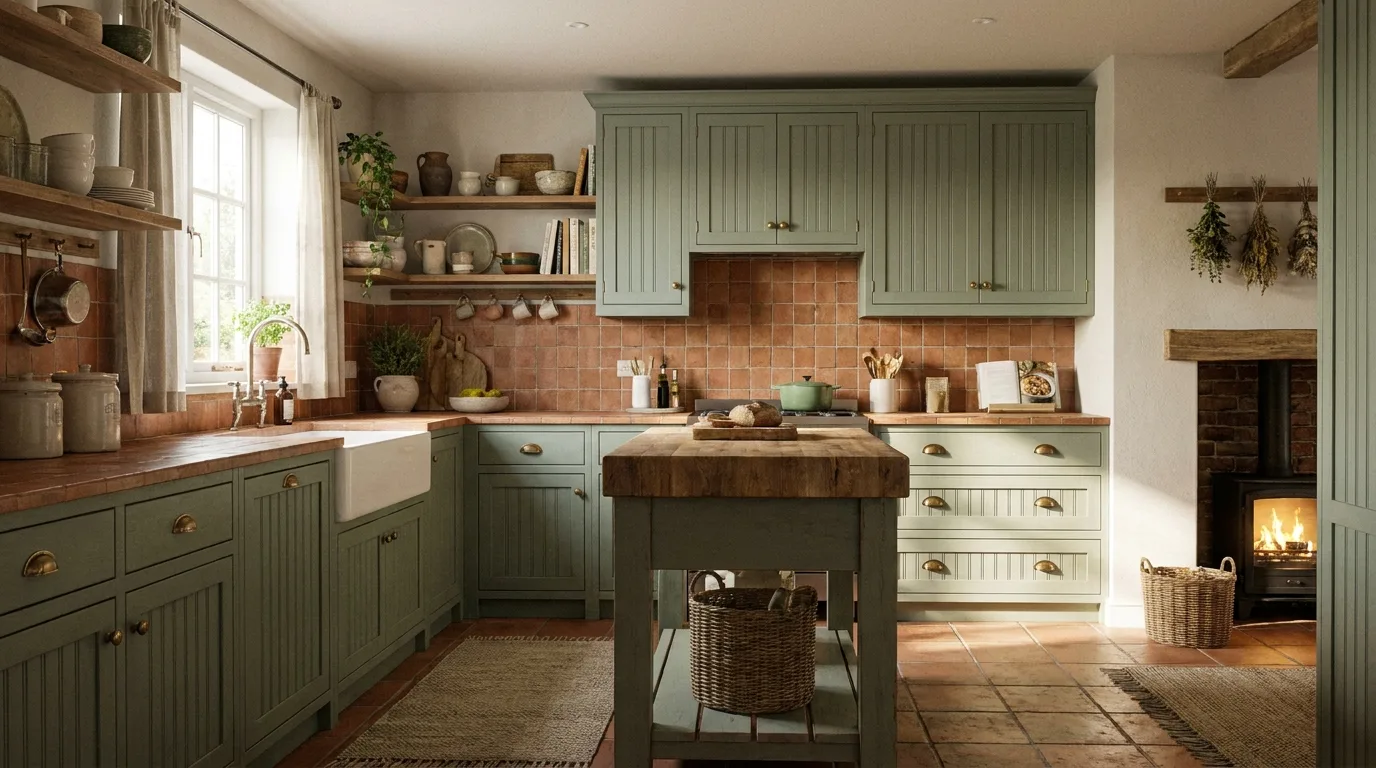
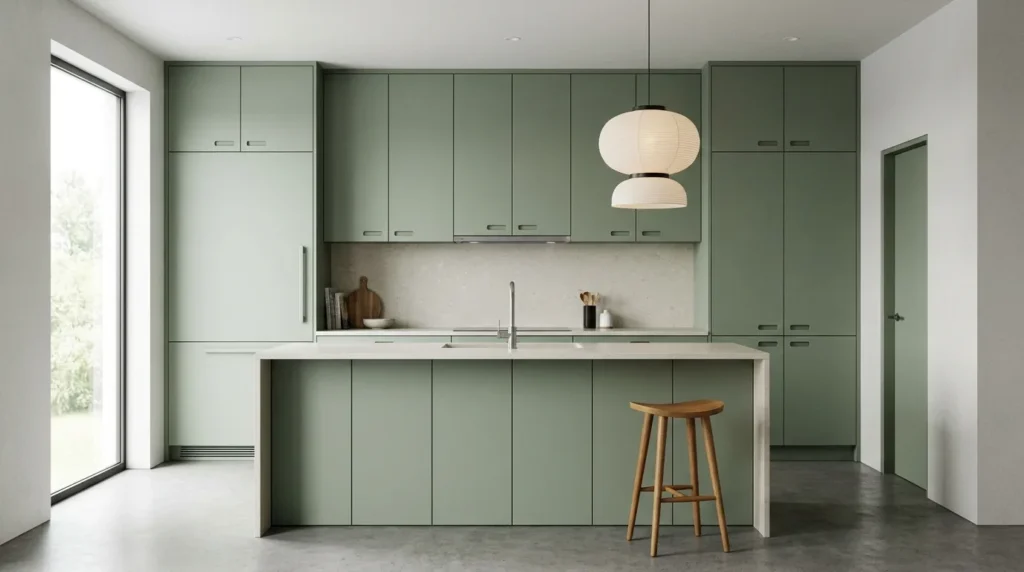
17. Minimalist Sage Green Kitchen
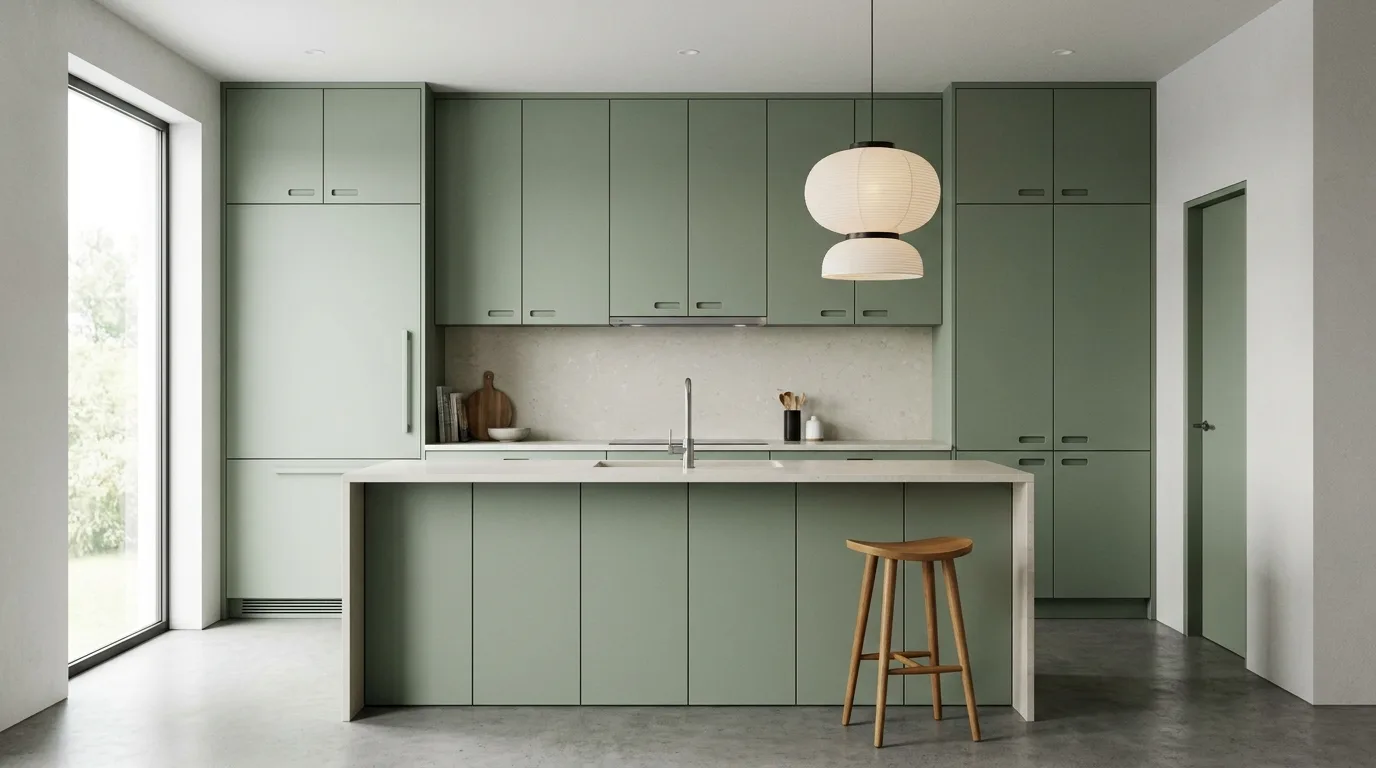
A minimalist sage green kitchen proves that the color can feel modern as well as traditional. Choose flat-panel or very simple cabinetry, integrated appliances, clean countertops, and minimal hardware. A single sage tone across the cabinetry can become the room’s defining feature while the rest of the palette stays quiet.
Focus on quality materials and useful details rather than decoration. A pale stone counter, seamless backsplash, warm wood stool, or sculptural pendant can add interest without clutter. Handleless cabinets or discreet pulls can create an especially streamlined appearance. For the most cohesive result, repeat the sage subtly in an adjacent dining area or through one or two carefully selected accessories. This restrained approach allows the color, natural light, and architecture of the kitchen to remain the focus.