Charcuterie bouquets turn a classic grazing board into an edible arrangement that looks like a thoughtful floral gift. With folded meats, cheese, fruit, herbs, and crackers, you can create everything from a romantic single-serving bouquet to an impressive centerpiece for a party. The secret is simple: choose foods with different shapes and colors, build height in the center, and arrange each ingredient so it resembles petals, leaves, or blooms. These 18 charcuterie bouquet ideas offer practical inspiration for birthdays, anniversaries, bridal showers, date nights, holidays, and any celebration that deserves something extra special.
1. Classic Salami Rose Bouquet
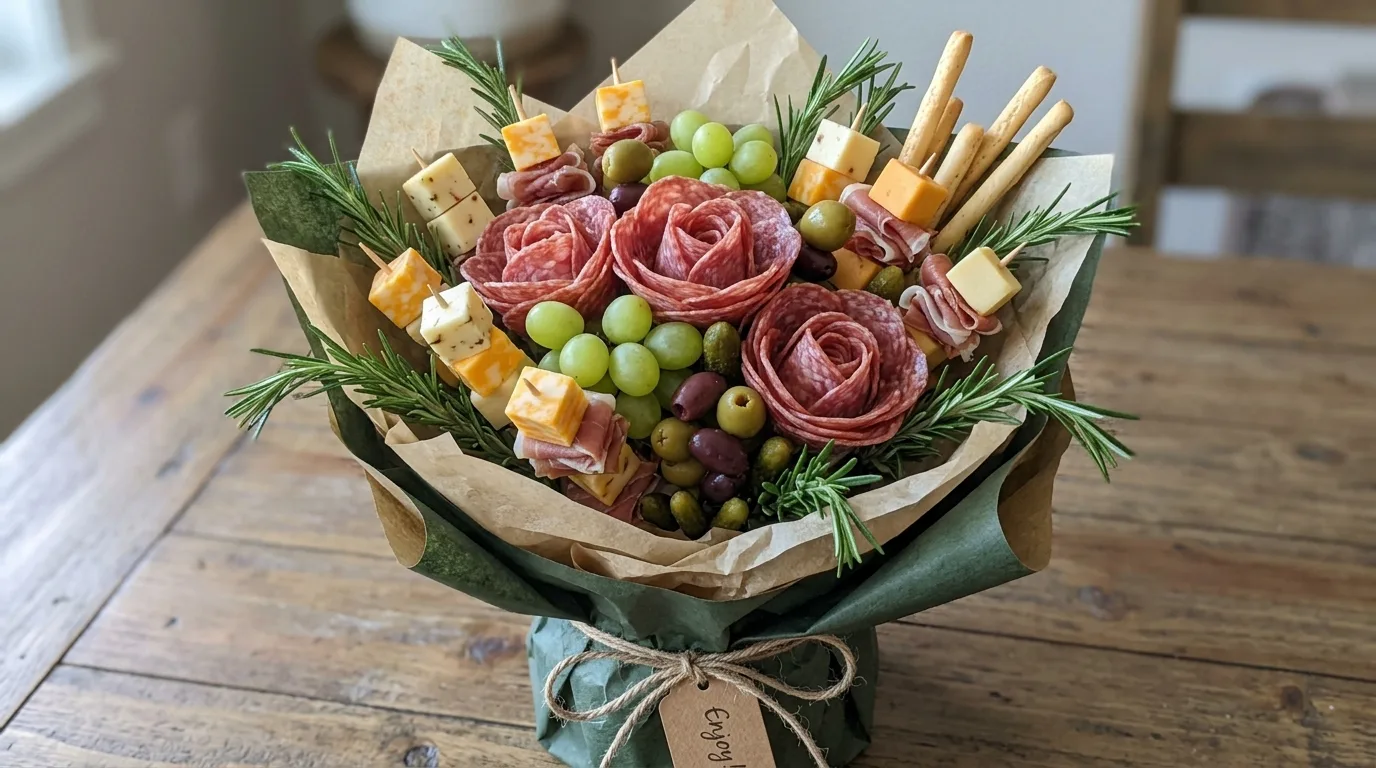
The salami rose is one of the easiest ways to make a charcuterie bouquet look instantly elegant. Fold thin salami slices in half and overlap them around the rim of a small glass or shot glass, gradually building a flower shape. Once the slices are arranged, carefully invert the glass onto the bouquet base and remove it. Add small cubes of cheese, green grapes, and sprigs of rosemary around the rose to create the appearance of foliage.
Use three to five salami roses for a fuller arrangement, or make one large rose the centerpiece of a smaller bouquet. Choose a firm salami that is thin enough to fold without cracking. For a giftable version, wrap the finished arrangement in food-safe cellophane and secure it with ribbon. Keep the bouquet chilled until serving, especially if it contains soft cheese or other perishable ingredients.
2. Romantic Red and Pink Charcuterie Bouquet
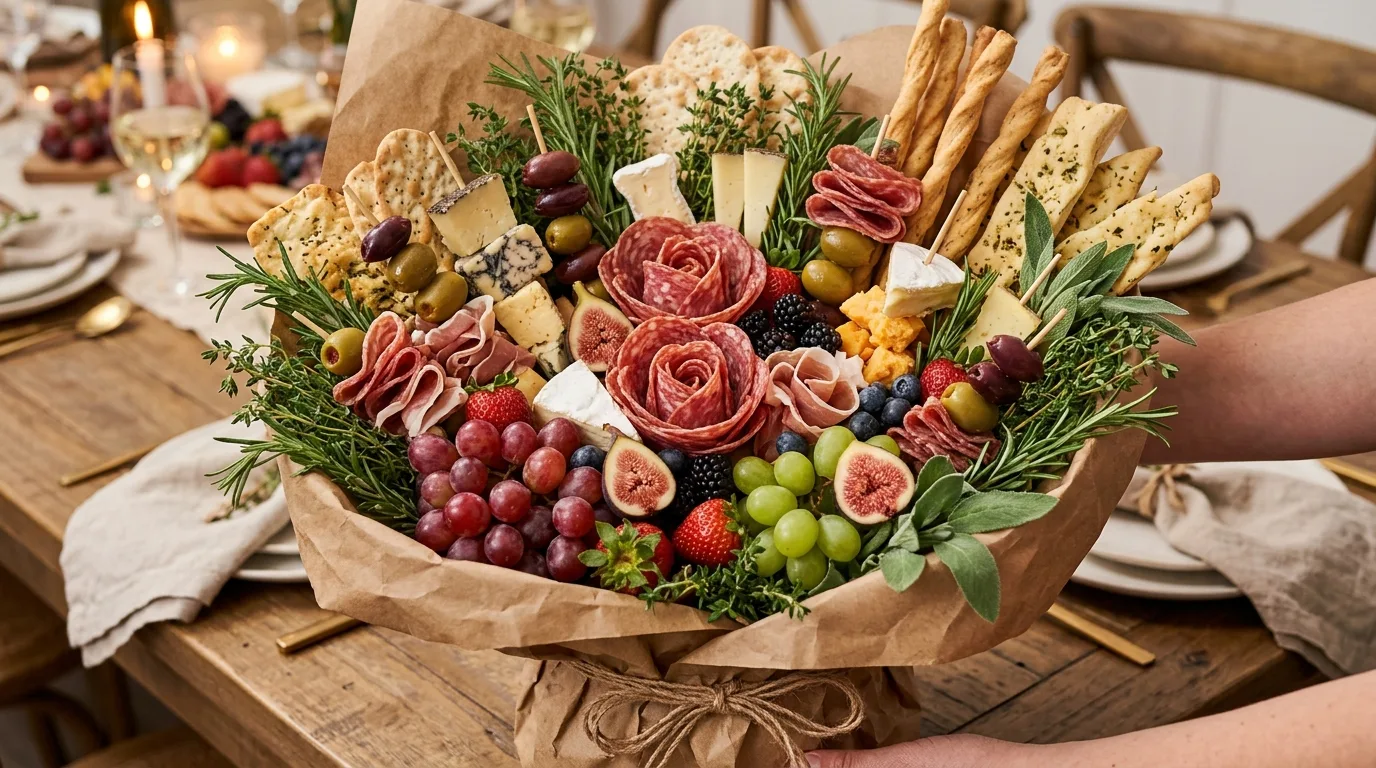
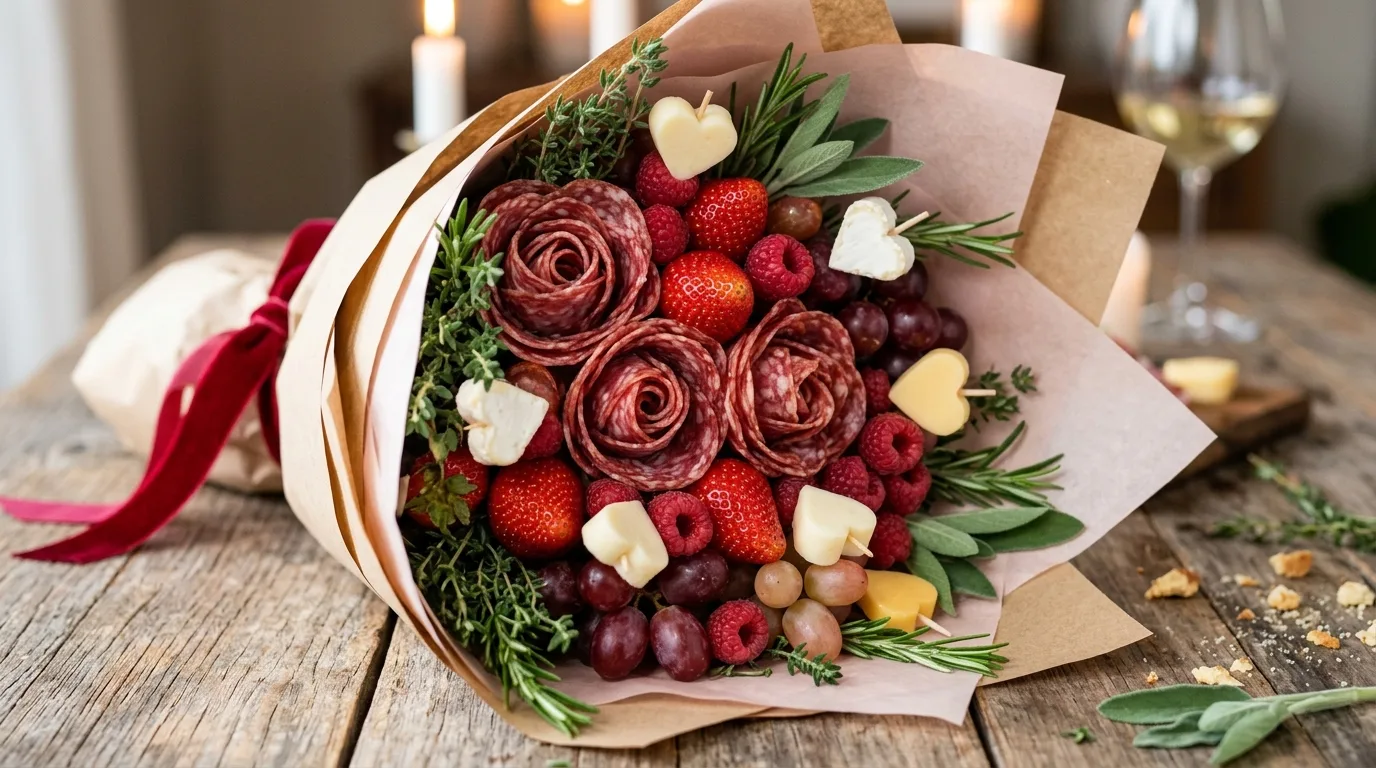
For Valentine’s Day, anniversaries, or a romantic dinner, build your bouquet around shades of red, blush, and cream. Soppressata or salami provides deep red tones, while strawberries, raspberries, red grapes, and pink-hued cured meats create visual variation. Add small heart-shaped pieces of cheese for an unmistakably romantic detail.
Arrange the ingredients in clusters rather than spreading every item evenly. This gives the bouquet a more natural floral appearance and makes each color stand out. Fresh rosemary or basil can fill gaps while adding a leafy green contrast. A few breadsticks or crackers can extend beyond the main arrangement like decorative stems. For a polished gift, place the bouquet in a small wooden cup or food-safe vase lined with parchment, making sure every ingredient remains easy to remove and eat.
3. Mini Charcuterie Bouquets for Individual Servings
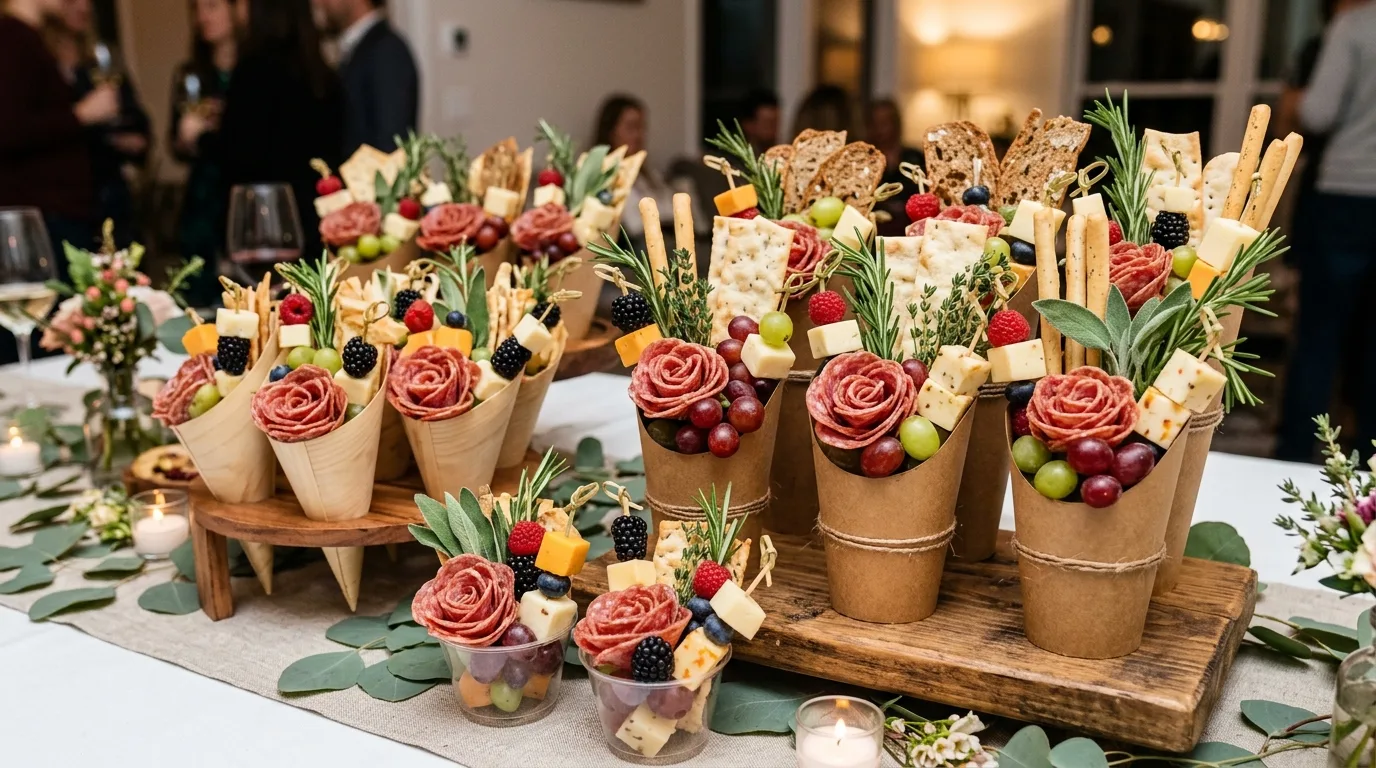
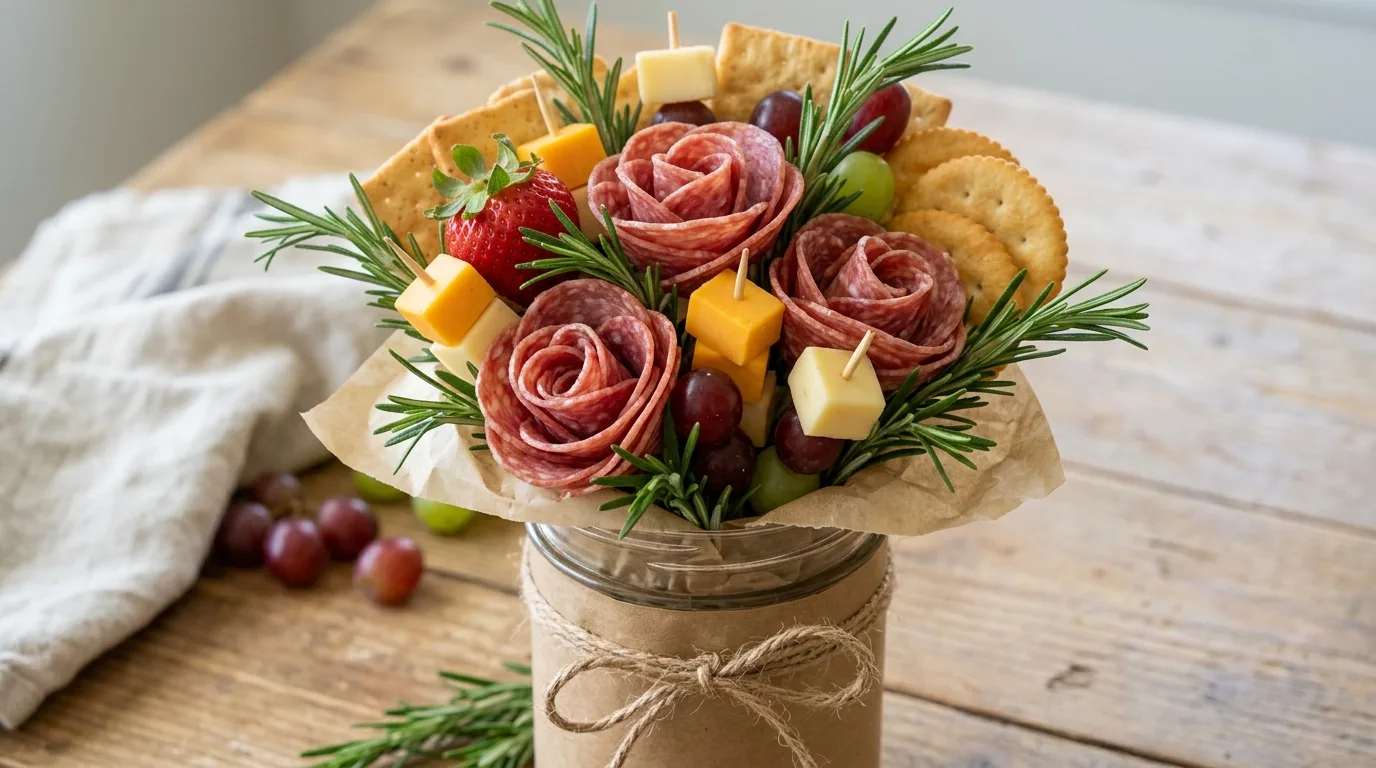
Mini charcuterie bouquets are perfect when you want everyone at a gathering to receive their own edible arrangement. Use small paper cups, mini jars, or food-safe cones as the base, then add one salami rose, a few cheese cubes, grapes, berries, and crackers. Because the containers are small, focus on three or four complementary ingredients rather than trying to recreate a full-size grazing board.
Individual bouquets are especially convenient for showers, brunches, cocktail parties, and outdoor celebrations because guests can simply pick up their serving. Use sturdy ingredients that travel well, and keep delicate fruit and cheese refrigerated until close to serving time. You can also customize each bouquet with a different cheese or cured meat according to your guests’ preferences. Arrange the smallest ingredients toward the front and taller crackers or breadsticks toward the back to create an attractive layered shape.
4. Cheese-Lover’s Charcuterie Bouquet
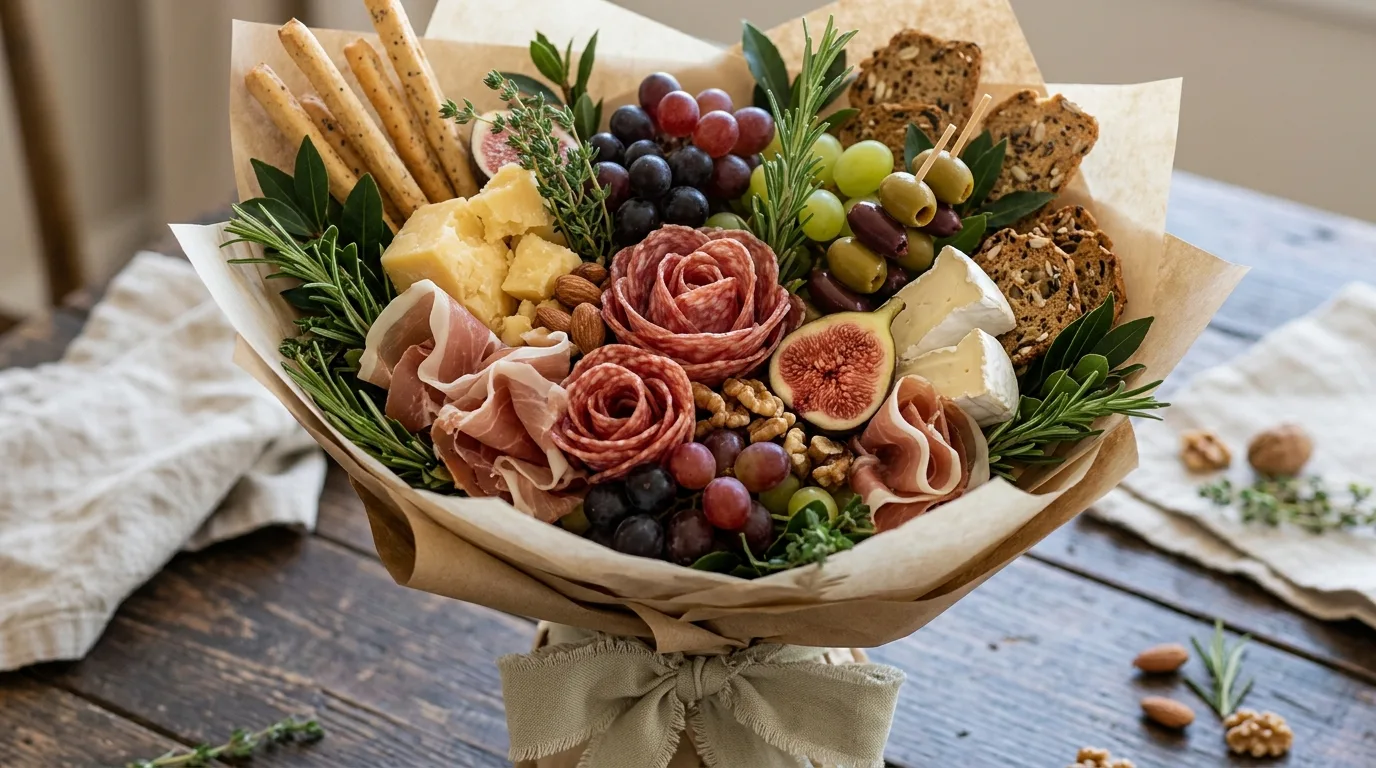
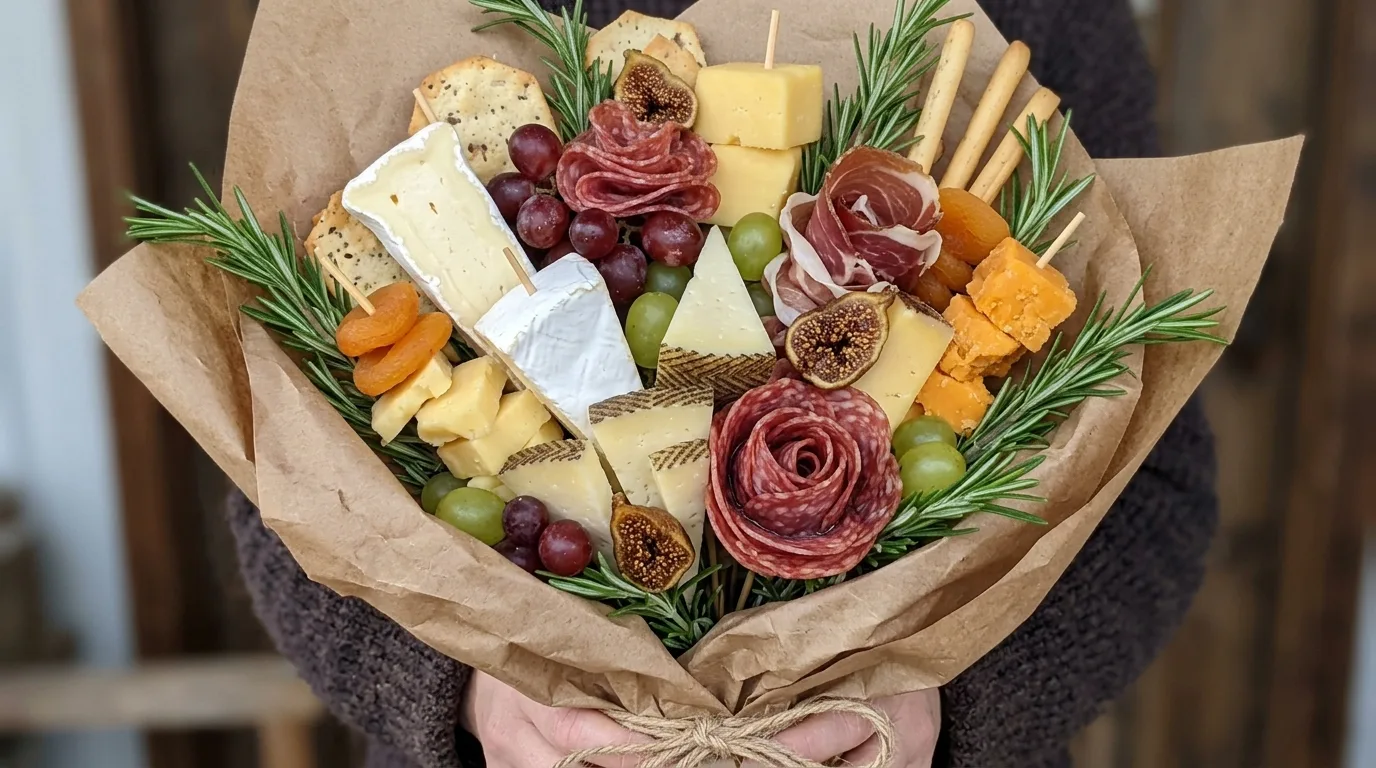
Make cheese the star by using several varieties with contrasting shapes, colors, and textures. A combination of cheddar, brie, gouda, and manchego gives you plenty of visual variety. Cut firmer cheeses into cubes, triangles, or small hearts, while leaving a soft cheese such as brie in a small wedge. Add a few slices of cured meat for contrast rather than letting meat dominate the arrangement.
Fresh grapes, dried apricots, figs, and apple slices work particularly well with a cheese-focused bouquet. Small sprigs of thyme or rosemary can fill empty spaces without adding too much bulk. When arranging the bouquet, place the largest cheese pieces first and then fill around them with fruit and smaller accents. A few thin breadsticks can create height. This style is ideal for hosts who want something that feels substantial enough to serve as an appetizer while still looking like a decorative edible gift.
5. Fruit-Filled Charcuterie Bouquet
A fruit-forward bouquet is colorful, fresh-looking, and especially attractive for spring and summer celebrations. Start with strawberries, grapes, blueberries, blackberries, melon, or pineapple depending on the season. Pair the fruit with mild cheeses and a few slices of prosciutto or salami so the arrangement still has the savory character associated with charcuterie.
Use whole grapes and berries as filler, while larger pieces such as strawberries or melon become focal points. If you use apple or pear, toss the cut pieces lightly with lemon juice to slow browning. Keep juicy fruits separated from crackers so they do not become soggy. Fresh mint makes a beautiful leafy accent and pairs naturally with berries and melon. For an especially festive presentation, use a small wooden skewer for each fruit cluster, arranging the skewers at different heights to create a bouquet-like silhouette.
6. Prosciutto and Melon Bouquet
Prosciutto and melon create a classic sweet-and-savory combination that translates beautifully into bouquet form. Choose cantaloupe, honeydew, or a mixture of both, cutting the melon into balls, cubes, or small floral shapes. Fold thin prosciutto into loose ribbons or roses and place it between the melon pieces. The pale green, orange, and blush-pink colors naturally create an elegant palette.
Fresh basil or mint can provide the green accents needed to make the arrangement look more botanical. For additional texture, add mozzarella pearls, grapes, or a few crisp breadsticks. Because melon releases moisture, prepare this bouquet relatively close to serving time and keep it refrigerated beforehand. Use sturdy skewers or decorative picks to keep the melon and prosciutto securely positioned. This idea works particularly well for brunches, summer parties, bridal showers, and light appetizers where a fresh presentation is more appealing than a heavy grazing board.
7. Elegant Brie and Grape Bouquet
For a sophisticated bouquet with minimal effort, combine creamy brie with grapes, prosciutto, crackers, and a few fresh herbs. Keep the brie in small wedges or bite-size pieces so guests can easily serve themselves. Green and red grapes provide color contrast, while thinly folded prosciutto creates soft, flower-like shapes.
Use rosemary or thyme as the main greenery and tuck it between food clusters rather than laying it randomly across the arrangement. Add a few dried apricots or figs for warm color and chewy texture. This bouquet looks especially polished in a neutral-toned container because the ingredients provide enough visual interest on their own. If serving it as part of a larger appetizer spread, make the bouquet slightly smaller and place it beside additional crackers, nuts, or a small dish of honey so guests have easy access to complementary flavors.
8. Italian-Inspired Charcuterie Bouquet
Bring Italian-inspired flavors to the arrangement with prosciutto, salami, mozzarella, olives, cherry tomatoes, and basil. Roll the meats into roses or loose ribbons, then arrange mozzarella pearls and tomatoes around them to create colorful clusters. Green olives can act as small visual accents while also adding a salty bite.
For additional height, include grissini or slim breadsticks as edible stems. Fresh basil leaves tucked between the ingredients give the bouquet a lively finish and complement the Mediterranean flavor profile. Avoid overcrowding the arrangement with too many ingredients; five or six well-chosen components can create a more cohesive presentation. This style is particularly suitable for dinner parties and antipasto-themed gatherings. Serve it alongside a small dish of olive oil or a simple dipping sauce if you want to turn the bouquet into a more substantial appetizer.
9. Breakfast Charcuterie Bouquet
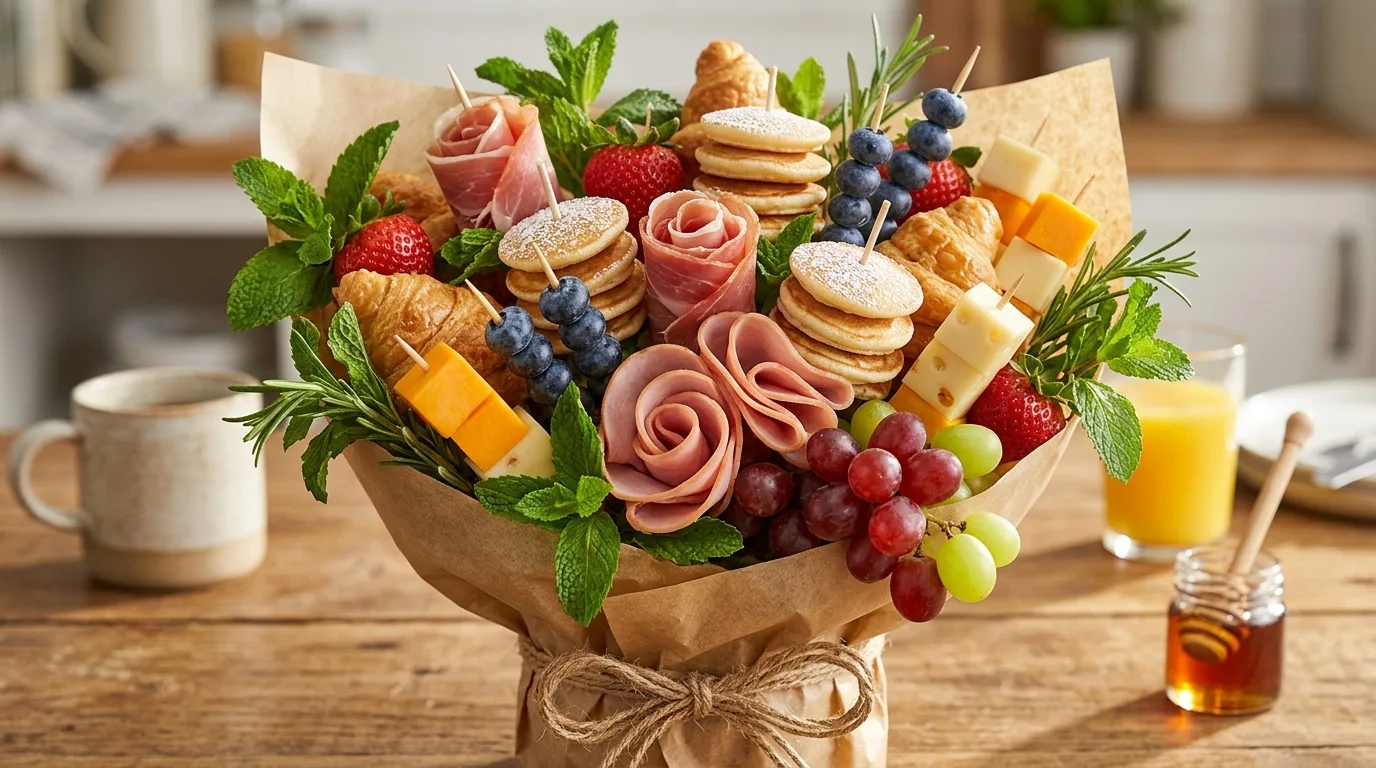
A breakfast-inspired bouquet swaps traditional grazing-board ingredients for foods that feel at home on a brunch table. Fold thin slices of ham or prosciutto into roses, then add strawberries, blueberries, grapes, mini croissants, cheese cubes, and perhaps small pancakes or waffles on skewers. The combination can feel playful while still looking polished enough for a special occasion.
Choose foods that can be eaten easily without utensils, especially if the bouquet will be served at a brunch buffet. Keep syrup, honey, or jam in a small separate container so the arrangement stays neat. Fresh mint can add a bright green accent, while powdered sugar on pancakes can create a pretty finishing touch. This idea is particularly fun for Mother’s Day, bridal showers, baby showers, and birthday brunches. Assemble delicate baked goods close to serving time so they remain fresh and avoid placing moist fruit directly against pastries.
10. Holiday Charcuterie Bouquet
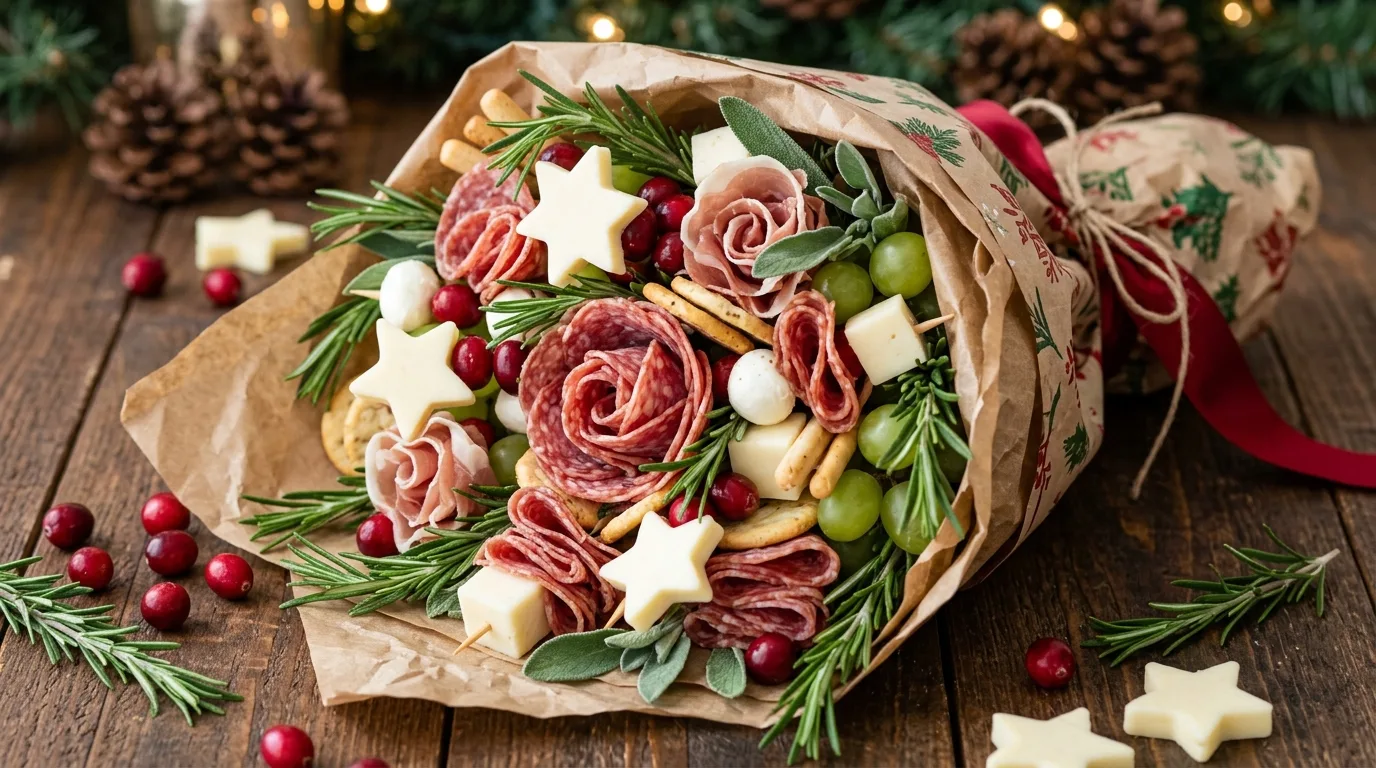
Adapt your bouquet to the holiday by choosing ingredients in seasonal colors. For Christmas, use red grapes, cranberries, green herbs, white cheese, and cured meats. For a fall gathering, combine figs, pears, apples, cheddar, prosciutto, and rosemary. The key is to let the season influence the palette without relying on excessive decorations.
Shape cheese into stars, leaves, or other simple seasonal forms when appropriate. Small cookie cutters work well with firm cheeses, although the shapes should remain thick enough to handle without breaking. Arrange the strongest colors in clusters so the bouquet has a clear visual rhythm. Food-safe picks with simple decorative tops can add a festive touch, but avoid non-food-safe materials touching the ingredients. A seasonal bouquet makes an attractive centerpiece while still functioning as an appetizer that guests can enjoy throughout the event.
11. Rustic Farmhouse Charcuterie Bouquet
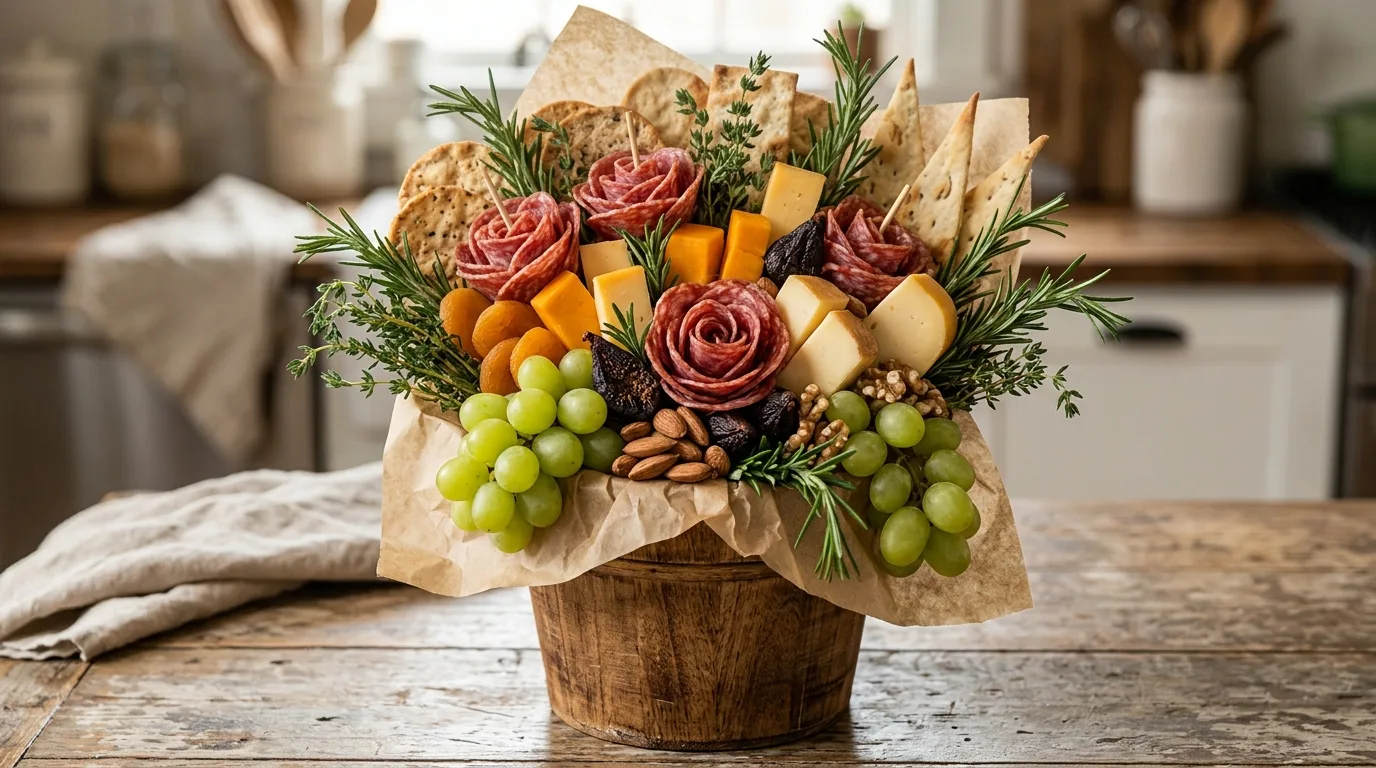
For a relaxed farmhouse look, choose hearty ingredients and a natural presentation. Fold salami into loose roses, add cheddar or gouda cubes, green grapes, dried fruit, nuts, and sturdy crackers, then finish with rosemary or thyme. The arrangement does not need to look perfectly symmetrical; slightly varied heights and organic clusters create the charm.
Use a small wooden vessel, ceramic crock, or food-safe rustic container as the base. If you want to wrap the bouquet, choose simple kraft-style paper outside a food-safe inner layer. Warm wood tones complement the colors of cured meats, cheese, and dried fruit. This idea works especially well for casual dinner parties, housewarmings, picnics, and autumn gatherings. Keep the ingredient list practical so the bouquet feels abundant without becoming difficult to eat. A few larger crackers and cheese pieces can also provide a sturdy structure around the more delicate salami roses.
12. Sweet and Savory Dessert Charcuterie Bouquet
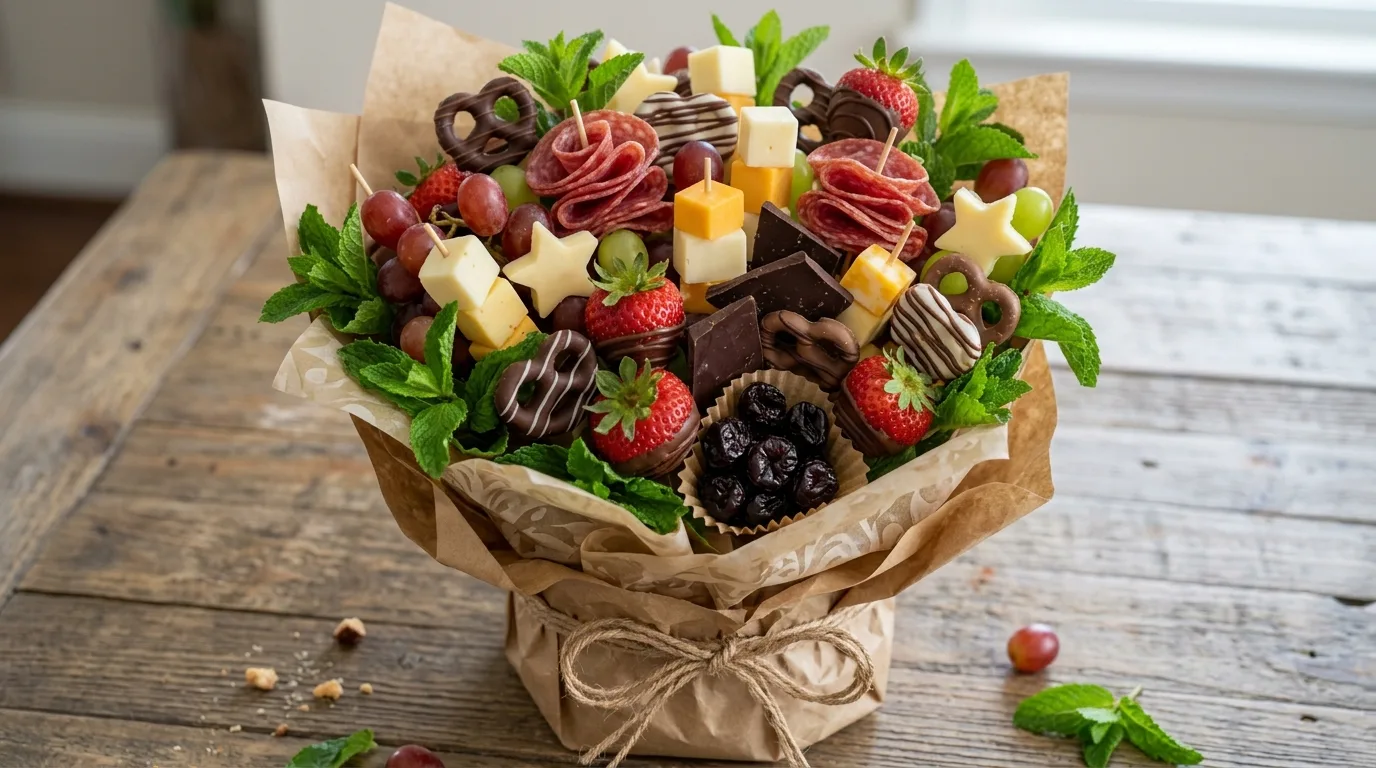
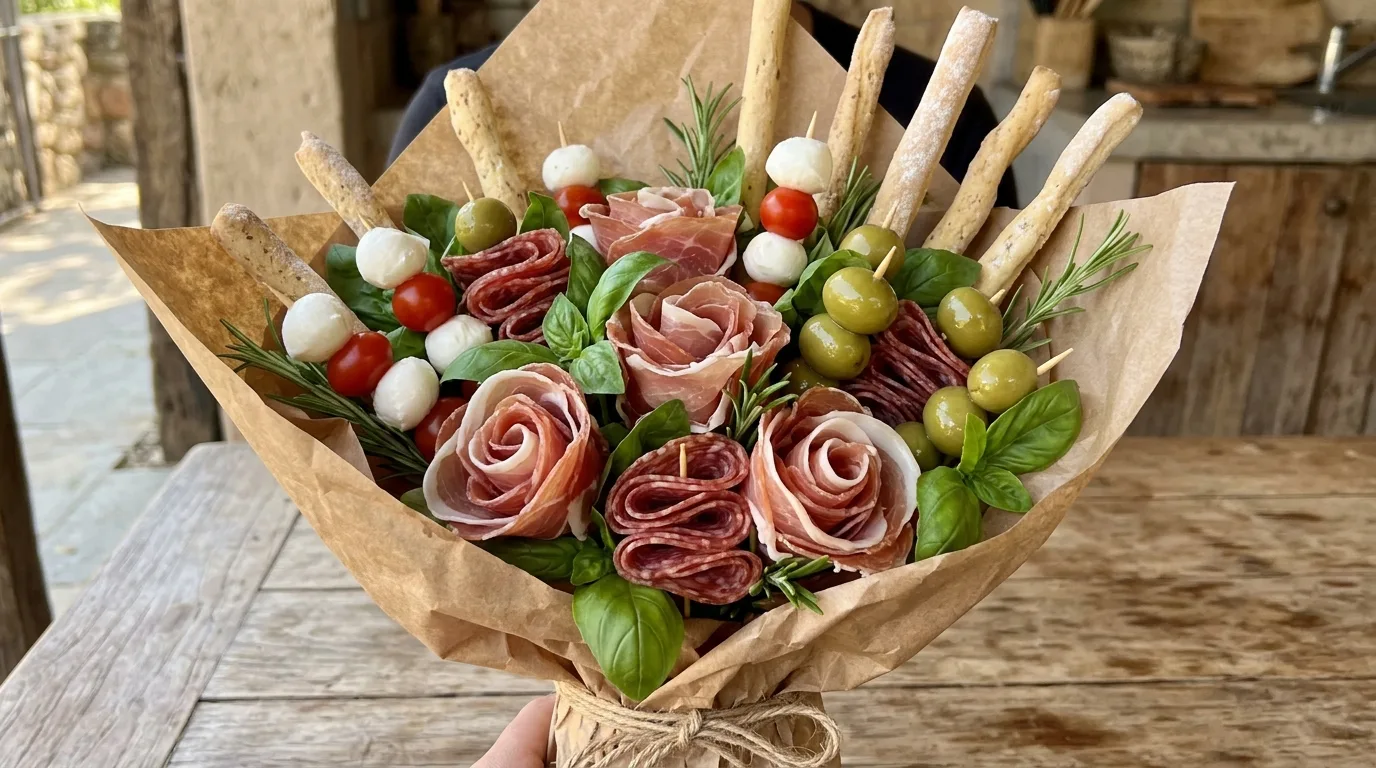
Combine savory favorites with sweet treats for a bouquet that works as both appetizer and dessert-inspired snack. Pair salami and mild cheese with strawberries, grapes, chocolate-covered pretzels, dried cherries, and small pieces of dark chocolate. The contrast between salty, creamy, fruity, and sweet ingredients makes each bite more interesting.
Keep the flavors organized in small clusters so guests can easily choose what they want together. For example, place brie near grapes and dried fruit, while chocolate and pretzels occupy another section. Use fresh mint as greenery if it complements the sweets. Avoid ingredients that melt easily if the bouquet will sit out for a while, or add those components immediately before serving. This playful style is ideal for birthdays, date nights, movie nights, and celebrations where you want a more unexpected take on the traditional charcuterie presentation.
13. Veggie and Charcuterie Bouquet
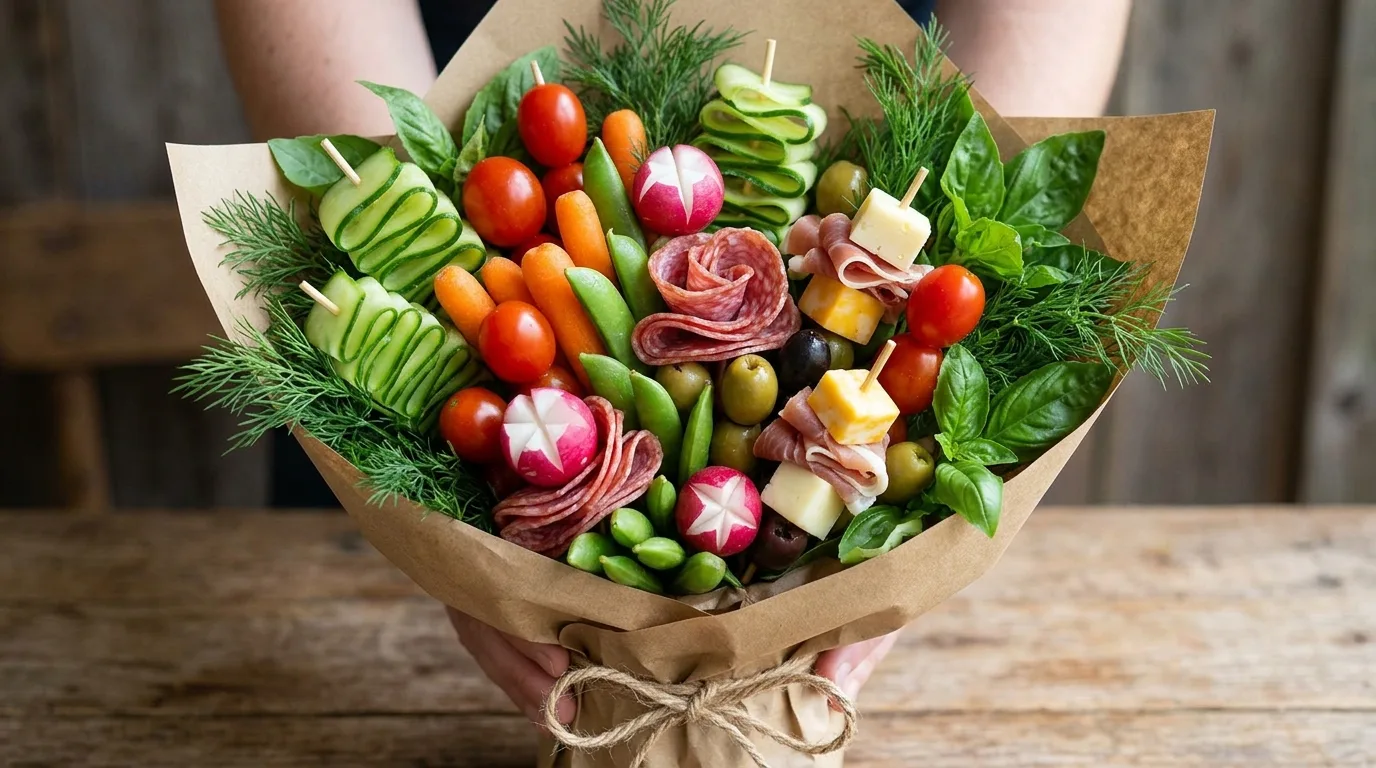
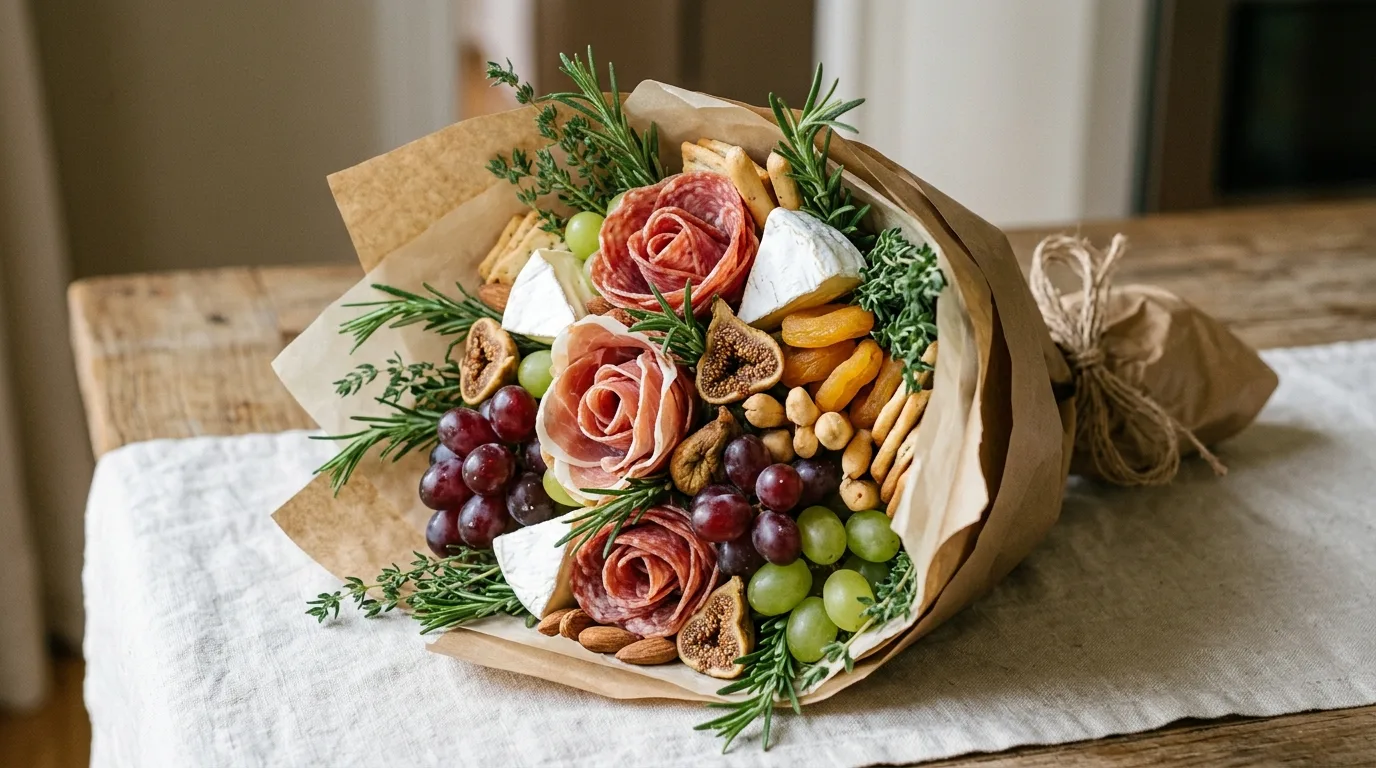
Add crisp vegetables for a lighter, colorful variation. Cucumber ribbons, cherry tomatoes, baby carrots, radishes, snap peas, olives, cheese, and cured meat can create a bouquet with plenty of texture. Thin cucumber slices can be curled into rose-like shapes, while cherry tomatoes and radishes provide rounded accents that resemble berries or small blooms.
Pair the vegetables with a few savory dips in small sealed cups rather than pouring sauces directly into the bouquet. Fresh dill, parsley, or basil can provide edible greenery. Since vegetables can release moisture, dry washed produce thoroughly before arranging it and keep crackers away from wet ingredients. This version is useful for brunches, office gatherings, picnics, and parties where guests appreciate a balance of fresh and savory choices. Choose vegetables in contrasting shapes and colors to make the arrangement visually full without requiring a large quantity of food.
14. Charcuterie Bouquet in a Paper Cone
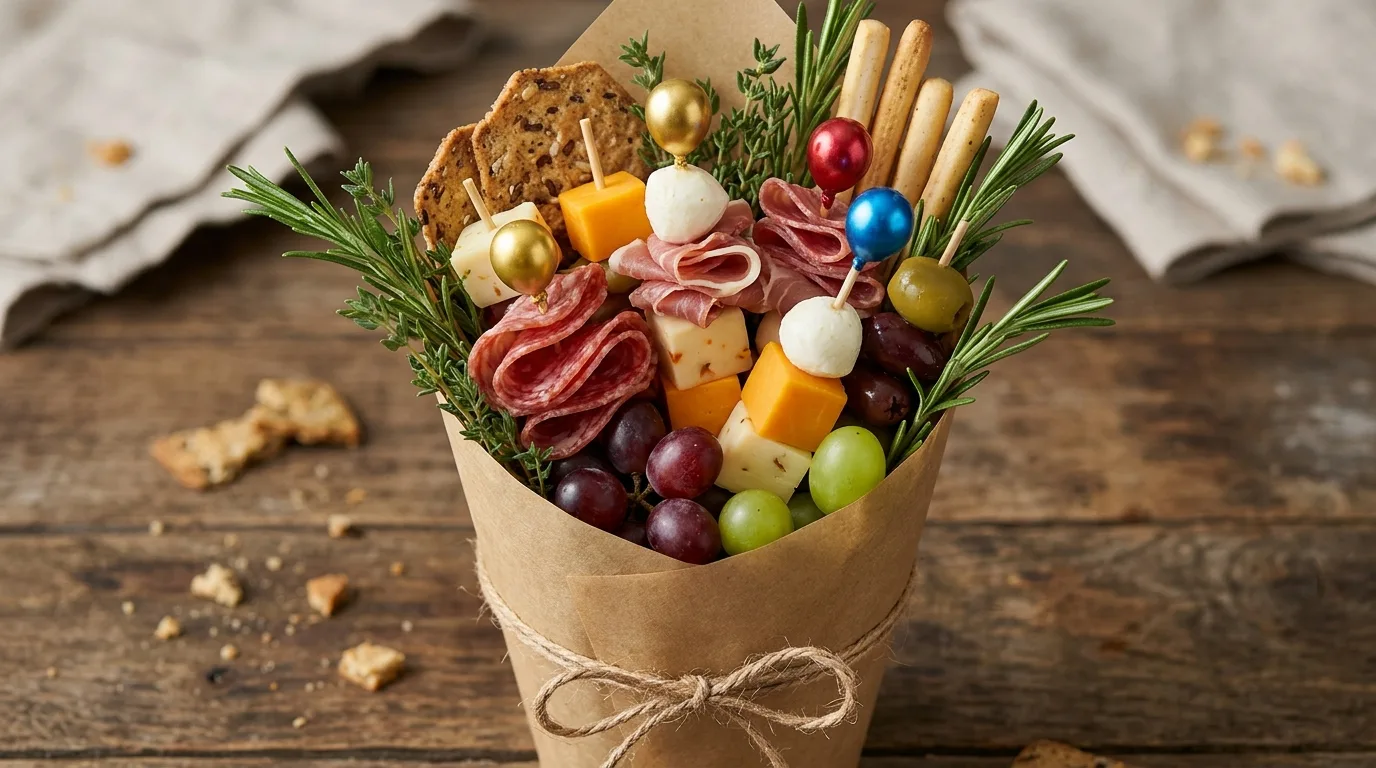
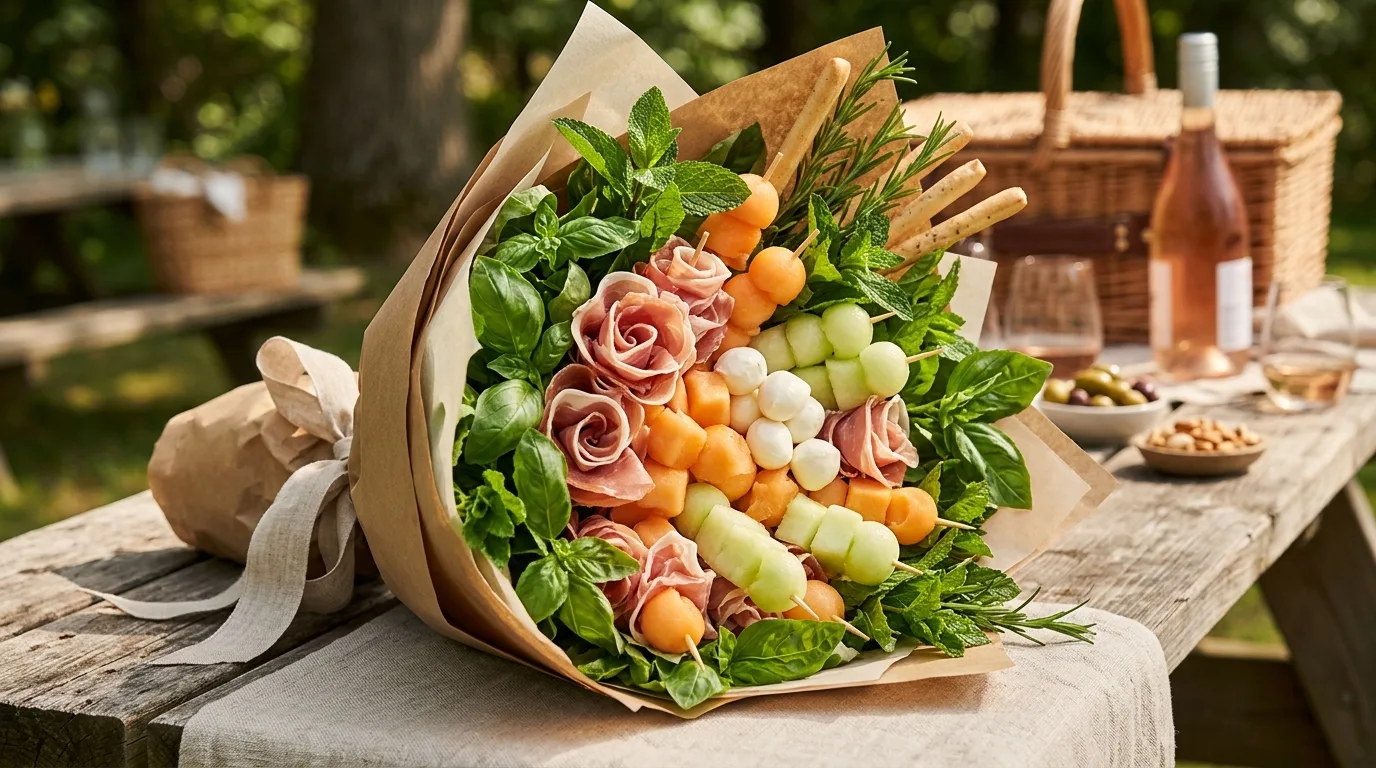
A paper cone is one of the simplest ways to turn charcuterie into an individual edible bouquet. Use food-safe parchment or a commercially made food cone, then fill it with folded salami, cheese cubes, grapes, berries, olives, and crackers. Arrange the tallest ingredients toward the back and let a few pieces extend above the rim to create the classic bouquet silhouette.
Cones are especially practical for parties because guests can grab one without needing a plate. They are also easy to customize and portion. For a more polished presentation, add a small ribbon around the outside of the cone or place each cone upright in a serving tray. Make sure any decorative paper or ribbon stays outside the food-contact area. If you are transporting the bouquets, chill the ingredients first and keep the cones upright in a stable container so the arrangement does not collapse before serving.
15. Mediterranean Charcuterie Bouquet
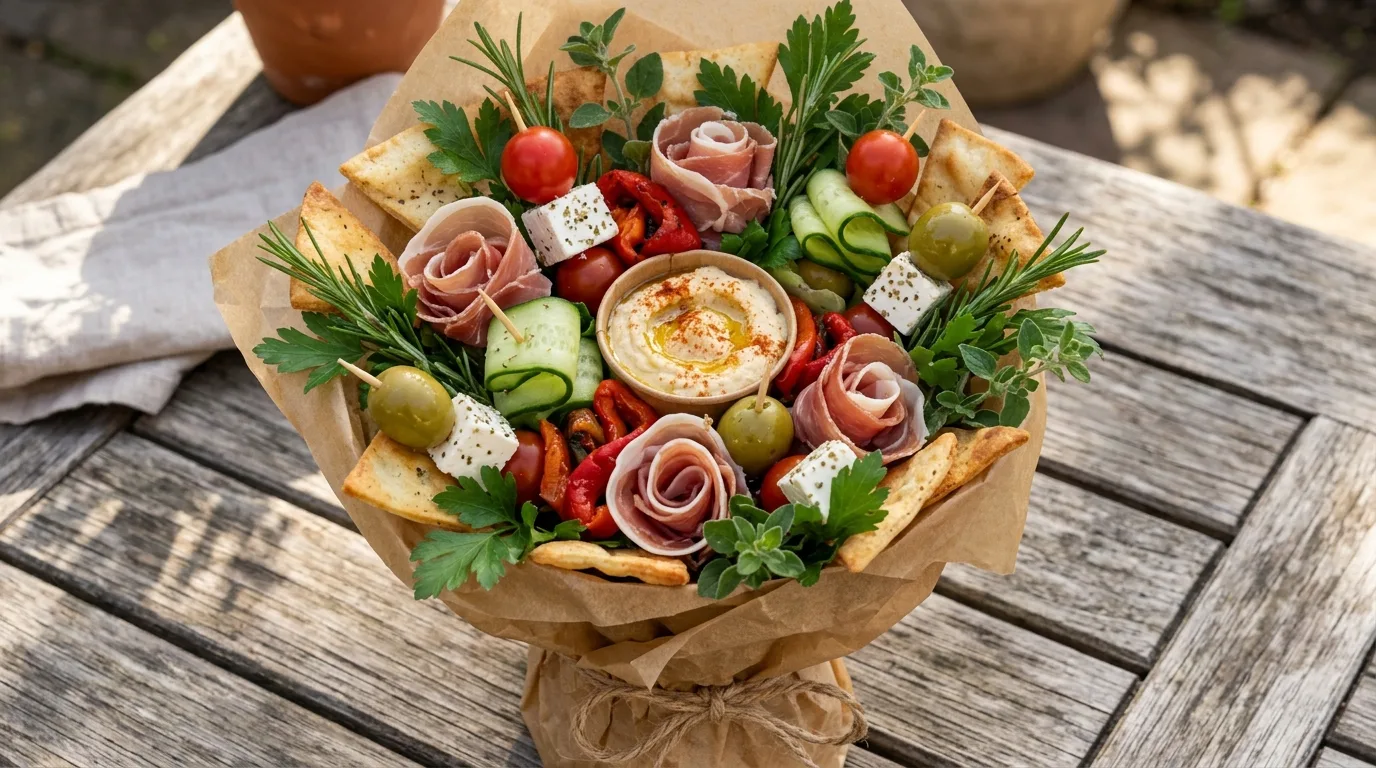
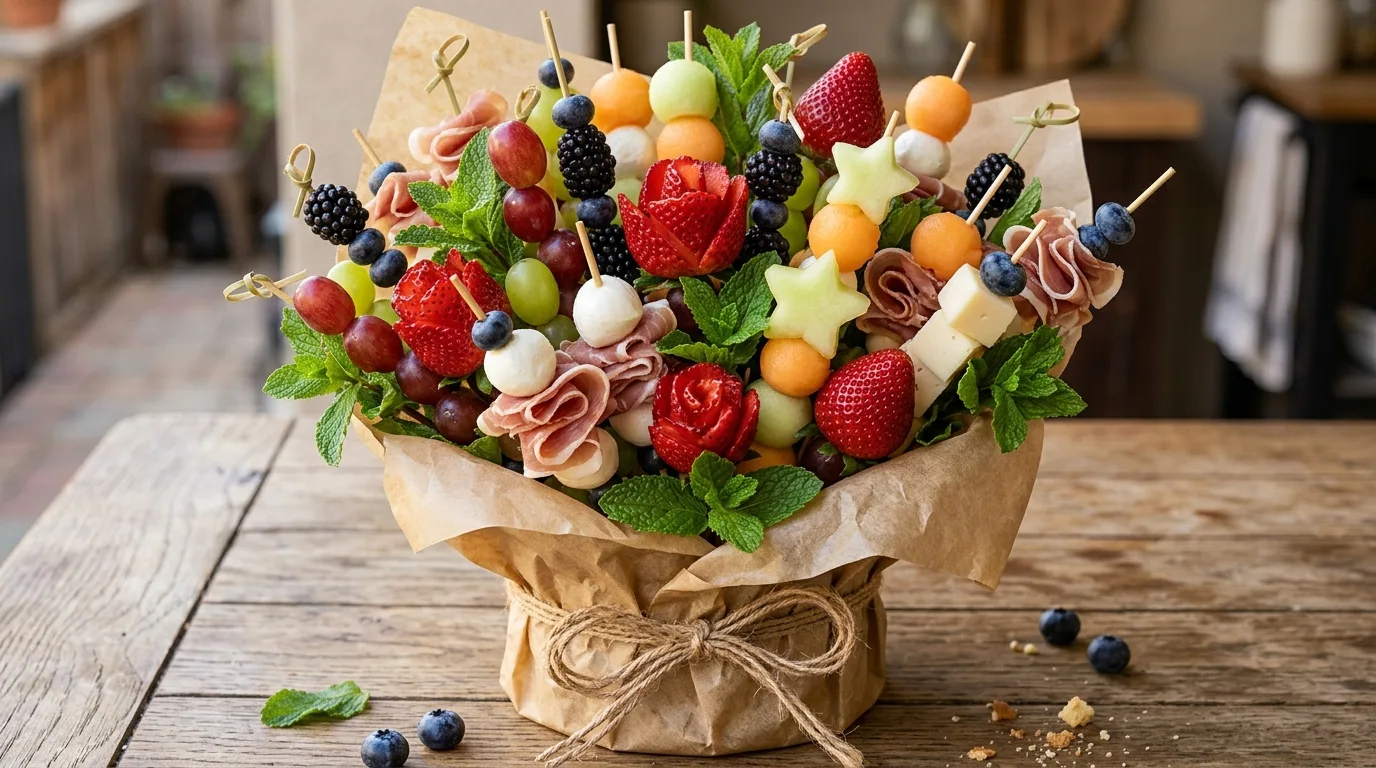
Create a Mediterranean-inspired arrangement with olives, feta, cucumber, cherry tomatoes, roasted peppers, prosciutto, and pita chips. The ingredients offer a lively mix of green, red, white, and golden tones that naturally creates a colorful bouquet. Feta can be cut into compact cubes, while prosciutto can be folded into delicate ribbons around the larger ingredients.
Fresh parsley, basil, or mint makes attractive edible greenery and reinforces the Mediterranean theme. Add hummus or another dip in a small separate cup if you want the bouquet to function as a complete appetizer. Choose firm pita chips or breadsticks for height and structure. Because several ingredients are moisture-rich, keep them separate from crisp components until close to serving. This style is particularly effective for outdoor entertaining because the bright colors and fresh flavors suit warm-weather gatherings.
16. Luxury Charcuterie Bouquet
For a more luxurious presentation, focus on premium ingredients and fewer, carefully selected components. Thin prosciutto, salami, aged cheese, brie, figs, grapes, olives, and high-quality crackers can create a sophisticated arrangement without requiring dozens of ingredients. The presentation should feel intentional rather than crowded.
Use a neutral container that lets the food remain the focus, and build the bouquet around two or three prominent salami or prosciutto roses. Add fruit in small clusters and use herbs sparingly as greenery. A few dried figs or apricots can introduce height and warm color. If desired, serve honey or preserves in a separate small dish rather than placing a messy condiment inside the bouquet. This design is well suited to anniversaries, milestone celebrations, elegant dinner parties, and hostess gifts where the visual presentation matters as much as the food itself.
17. Budget-Friendly Charcuterie Bouquet
You do not need expensive ingredients to create a beautiful charcuterie bouquet. Choose one affordable cured meat, one or two cheeses, seasonal fruit, crackers, and a few fresh herbs. Fold inexpensive deli salami into roses and use grapes, strawberries, or apple slices to add color and volume. Cheddar and gouda are practical choices because they are easy to cut and generally hold their shape well.
Use ingredients you already have rather than shopping for specialty products solely for decoration. A small jar, cup, or food-safe container can serve as the base, while parchment paper can provide a simple wrapped presentation. Seasonal produce is often the easiest way to add plenty of visual impact without dramatically increasing the cost. The most important technique is arranging ingredients at different heights. A few tall breadsticks, leafy herbs, and upright meat folds can make a modest amount of food look surprisingly abundant.
18. Grand Celebration Charcuterie Bouquet
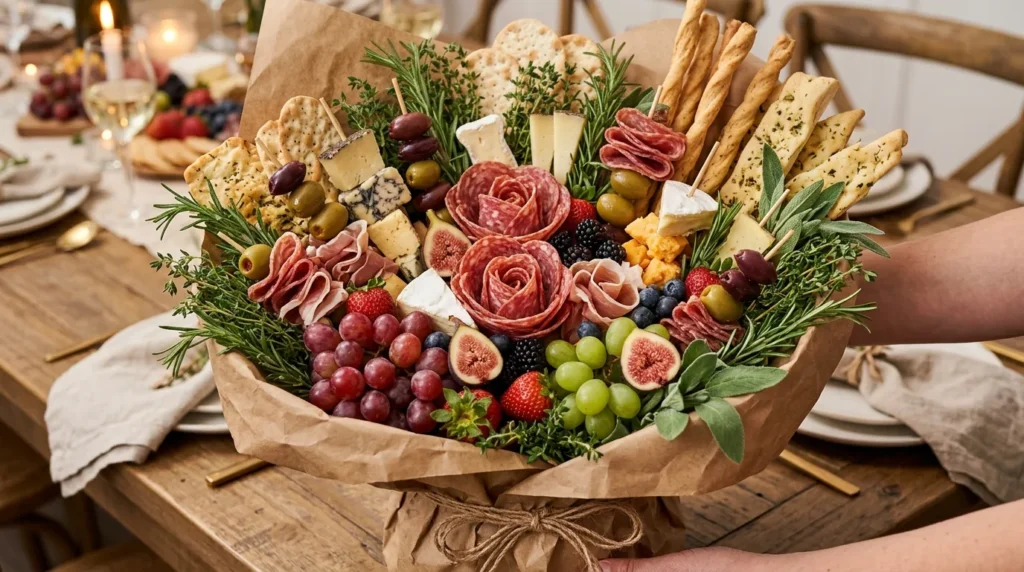
For birthdays, engagement parties, weddings, or large celebrations, create a fuller bouquet with several layers of color, texture, and height. Start with multiple salami roses as the central flowers, then surround them with cheese wedges, grapes, berries, figs, olives, crackers, and folded prosciutto. Use fresh herbs between clusters to create the appearance of leaves and stems.
Build the arrangement gradually rather than trying to place everything at once. Put the largest and tallest components in position first, then add medium-sized foods and finish with small berries, olives, and herbs. Keep the bouquet balanced from different viewing angles if it will be displayed in the center of a table. For larger gatherings, consider making several smaller bouquets instead of one oversized arrangement so guests can access the food easily. Whatever size you choose, keep perishable ingredients refrigerated until close to serving and use clean, food-safe containers, picks, and wrapping materials.