Growing plants in water indoors is an easy way to bring fresh greenery into your home without dealing with traditional potting soil. Many popular houseplants can root and grow successfully in jars, bottles, vases, and decorative glass containers, making them especially useful for small spaces, kitchens, bathrooms, and bright windowsills. Water-grown plants can also add a clean, modern look because you can see the roots developing beneath the surface.
The best choices are plants that naturally root easily from cuttings or tolerate having their roots constantly surrounded by water. While some plants can live in water for long periods, others are better suited to water propagation before being moved into soil. The 18 plants below offer a variety of leaf shapes, colors, and growth habits, so you can create a beautiful indoor water garden that fits your decorating style.
1. Lucky Bamboo
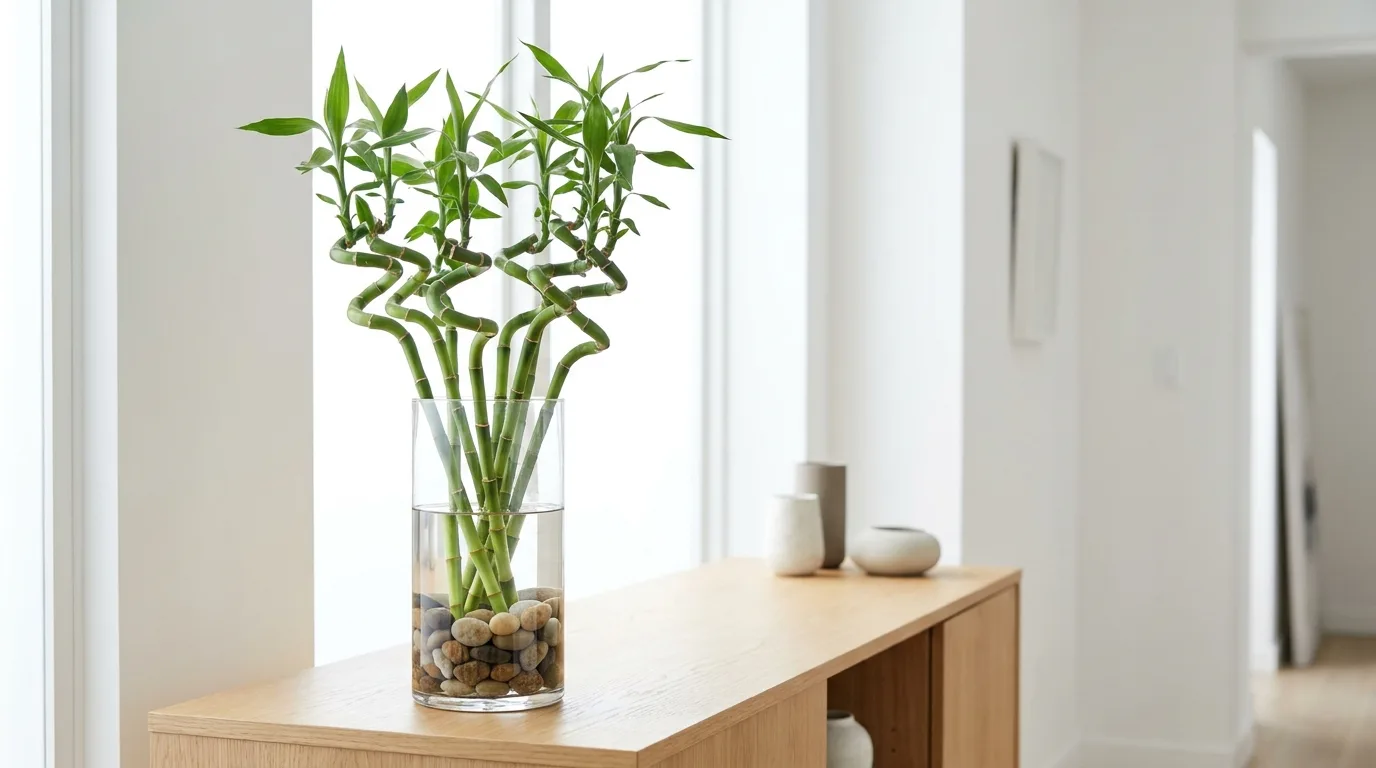
Lucky bamboo is one of the easiest plants to grow in water indoors, making it a favorite for beginners. Its upright green stems look elegant in clear glass containers, and the plant can remain in water for years when properly cared for. Use filtered, distilled, or otherwise low-mineral water when possible, as sensitive roots may react poorly to heavily treated tap water. Keep the roots submerged while leaving the stems and leaves above the waterline. Bright, indirect light encourages healthy growth, while strong direct sunlight can scorch the foliage. Refresh the water regularly and rinse the container if algae begins forming. A narrow vase filled with decorative pebbles can provide extra stability and a polished appearance.
2. Pothos
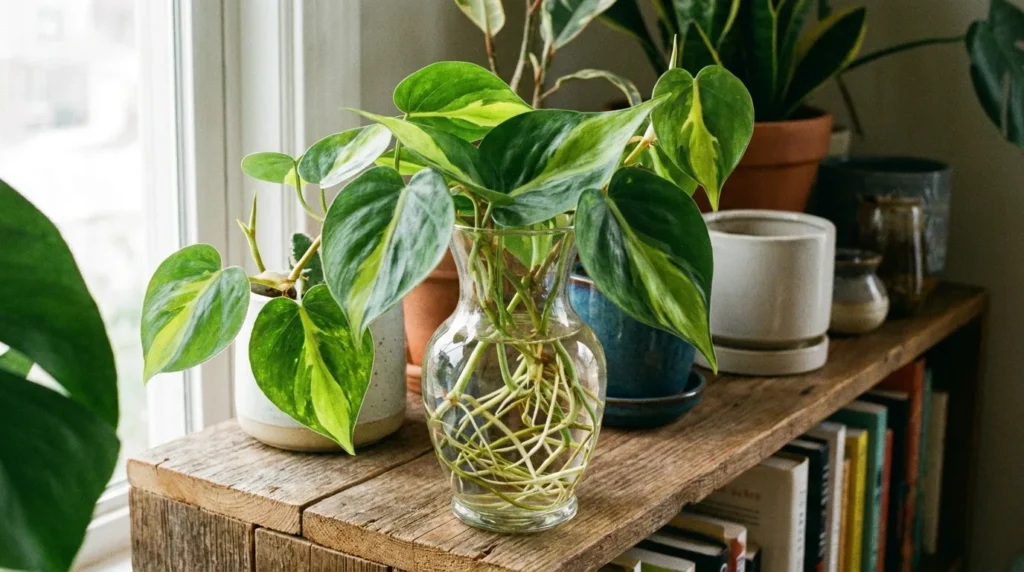
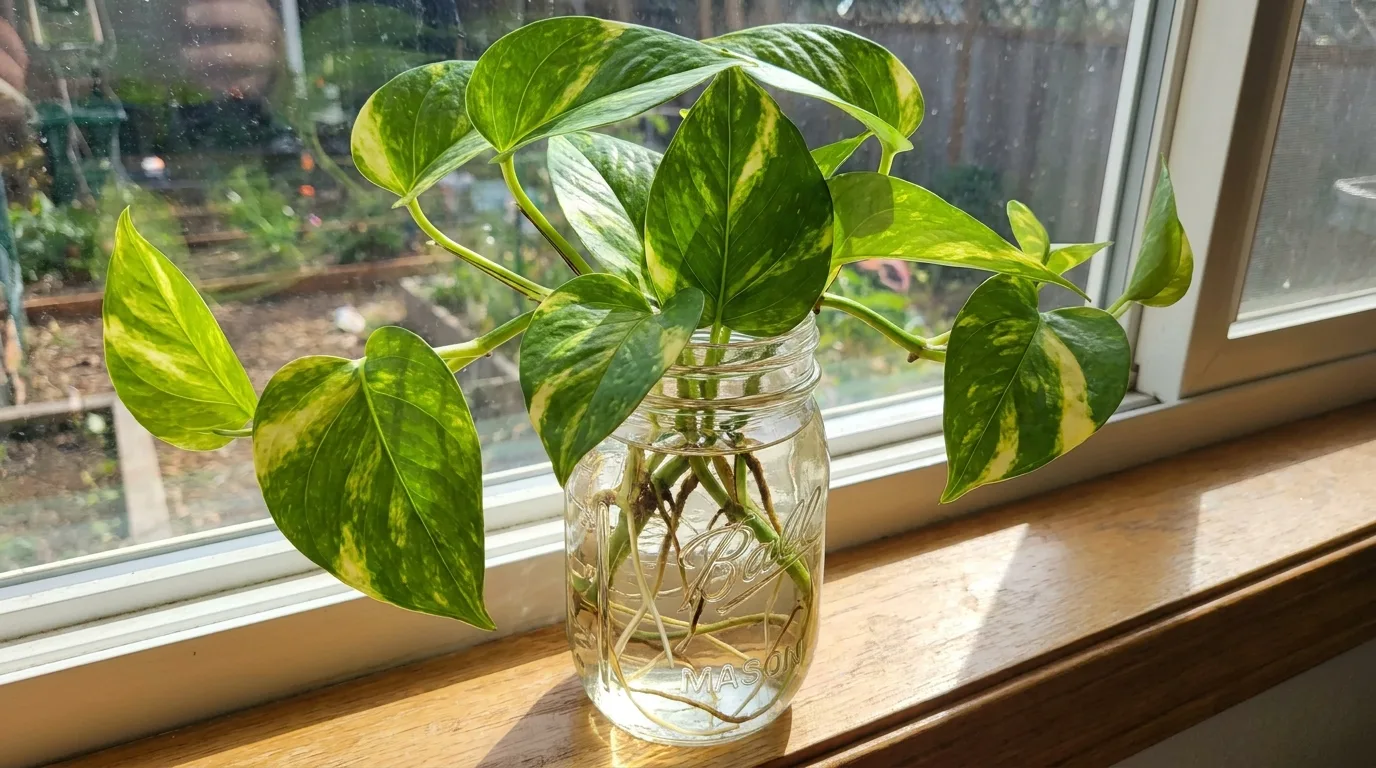
Pothos is an excellent choice for indoor water growing because its trailing stems develop roots readily. Simply place a healthy cutting with at least one node beneath the water and keep the leaves above the surface. Within a few weeks, roots can begin appearing along the submerged node. Pothos looks particularly attractive in a clear vase where its white or cream-colored roots become part of the display. Provide bright, indirect light for stronger growth, although pothos can tolerate lower-light conditions. Change the water regularly to keep it fresh and oxygenated. You can keep the plant growing in water or eventually transfer the rooted cutting to soil. Different varieties, including golden and marble queen pothos, offer plenty of visual variety.
3. Heartleaf Philodendron
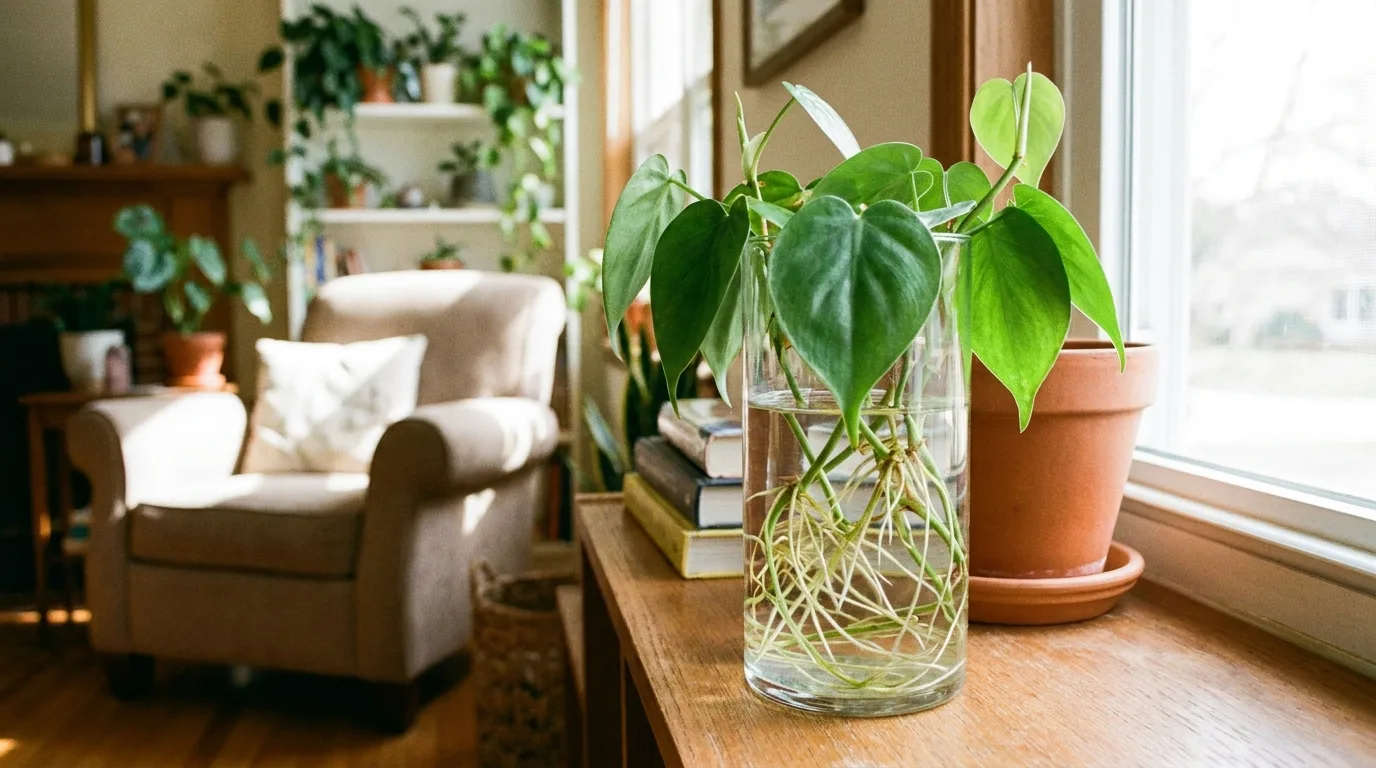
Heartleaf philodendron is another reliable plant for growing from cuttings in water. Its heart-shaped leaves and graceful trailing stems make it ideal for shelves, desks, and hanging displays. Choose a healthy vine and cut just below a node, then place the node underwater while keeping the leaves dry. Roots usually develop from the submerged node, allowing the cutting to establish itself without soil. Bright, indirect light supports healthy foliage and faster growth, but avoid intense direct sunlight. Refresh the water regularly and clean the container when needed. Once the root system becomes well developed, you can continue growing the plant hydroponically or move it into potting mix. Its easy propagation also makes it useful for creating several water-grown displays from one parent plant.
4. Spider Plant
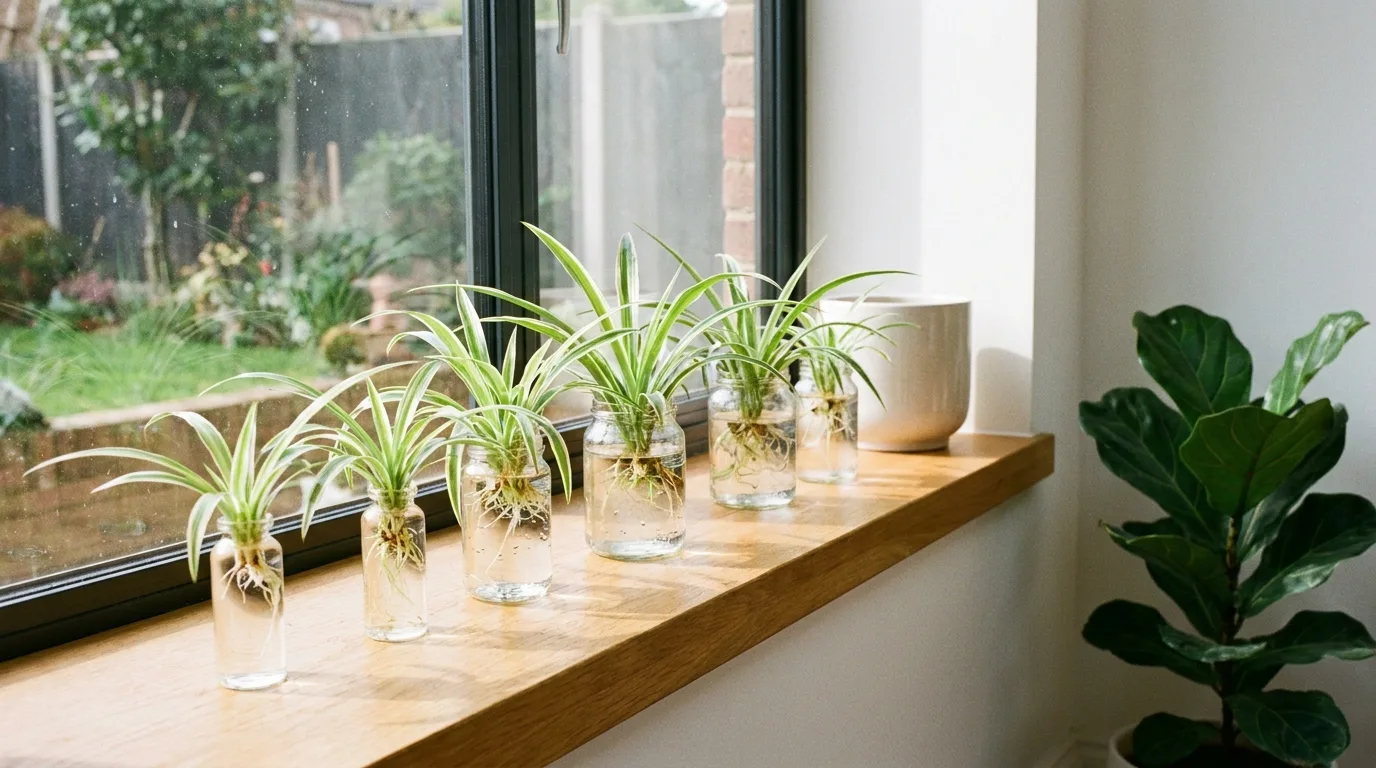
Spider plants are particularly easy to propagate in water because they produce small plantlets, often called spiderettes, on long stems. Cut or separate a healthy plantlet and place its base into a small glass of water. Keep the foliage above the surface and position the container somewhere with bright, indirect light. Roots can develop quickly, allowing the young plant to establish itself before being transferred to soil. You can also maintain a rooted spider plant in water for a period as a decorative display. A collection of small glass jars with several spiderettes can create an attractive windowsill arrangement. Change the water regularly and avoid submerging the leaves, which can encourage decay.
5. English Ivy
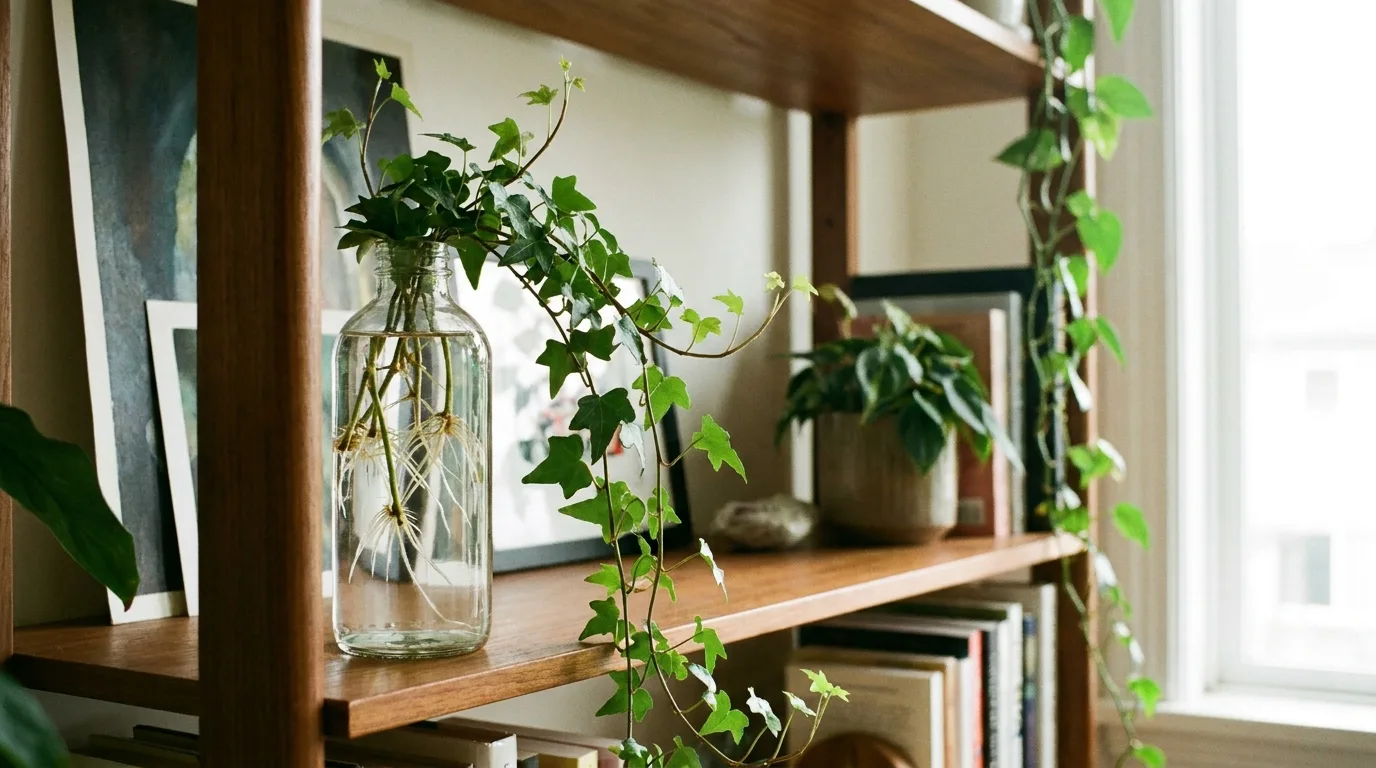
English ivy can be propagated from stem cuttings in water, creating an attractive trailing display indoors. Select a healthy vine with several leaves and cut beneath a node. Remove the lower leaves so the node can sit underwater without foliage becoming submerged. Place the cutting in bright, indirect light and refresh the water regularly. As roots develop, the vine can begin producing new growth when conditions are favorable. Ivy works especially well in tall glass bottles or narrow vases because the stems can trail naturally around the container. Keep in mind that ivy is generally better suited to water propagation than permanent water culture. Once the roots are established, moving it into suitable soil will usually provide better long-term nutrition.
6. Chinese Evergreen
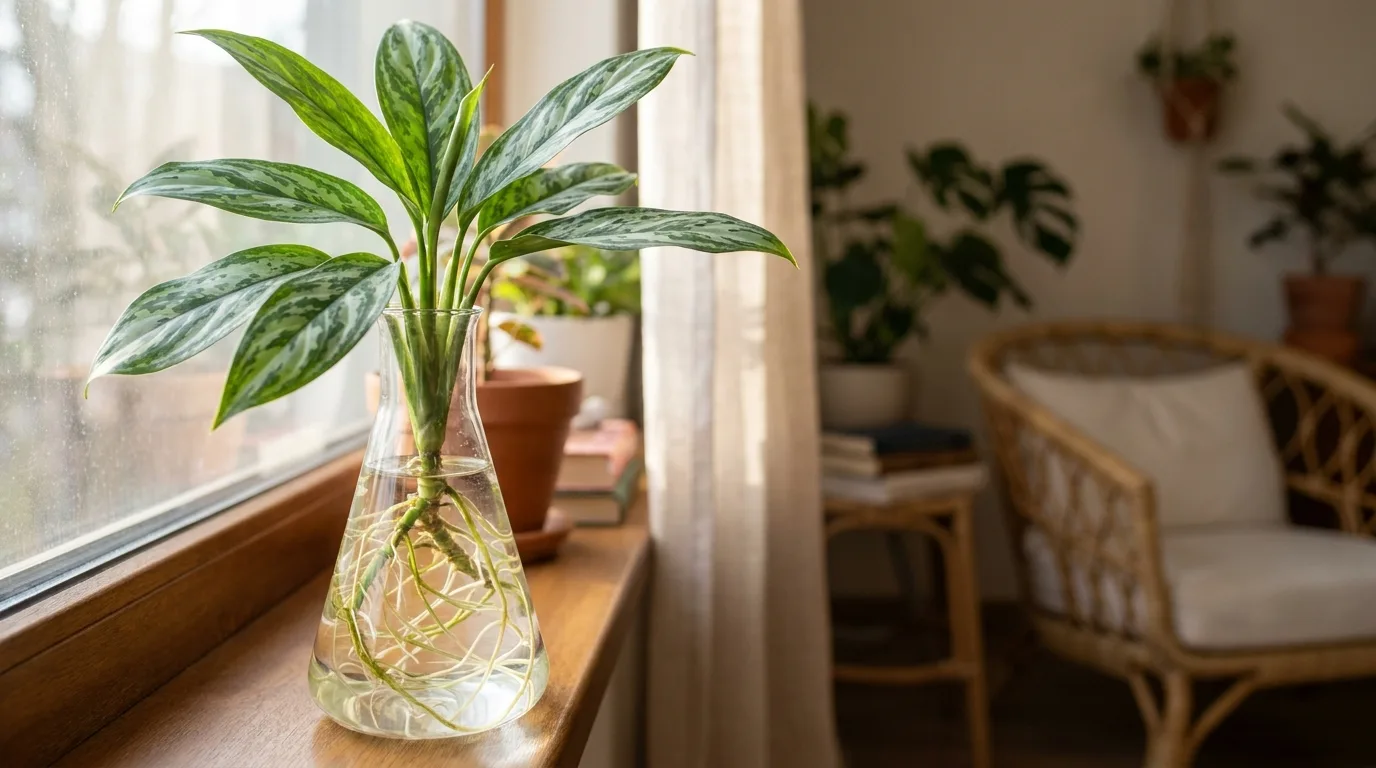
Chinese evergreen can be propagated in water from healthy stem cuttings and is valued for its attractive, patterned foliage. Choose a strong cutting with a visible node and place the lower portion in a clean container of water. Keep the leaves above the waterline and provide bright, indirect light. Some varieties feature silver, cream, or green markings that stand out beautifully against a clear glass vase. The plant generally prefers warm indoor conditions and should be protected from cold drafts. Refreshing the water regularly helps keep the roots healthy. For long-term growth, transferring a well-rooted cutting into a suitable growing medium is usually more practical because mature plants need a broader supply of nutrients than plain water can provide.
7. Wandering Dude
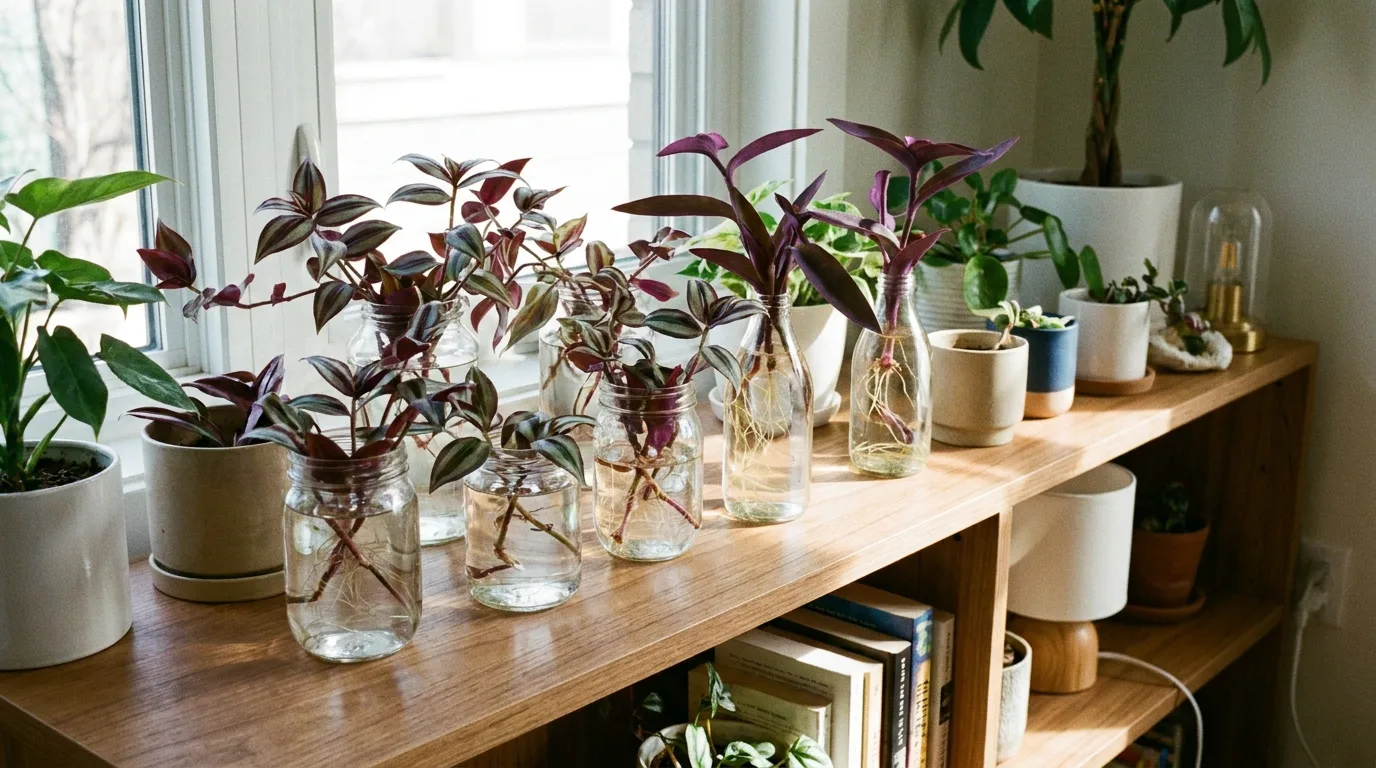
Wandering dude, commonly associated with Tradescantia plants, roots exceptionally easily in water. Its colorful striped or purple-tinted foliage makes it one of the most decorative choices for a water propagation station. Cut a healthy stem just below a node and place the lower section in water. Within a short time, small roots can emerge, especially when the cutting receives bright, indirect light. Use a clear container so you can monitor root development and water quality. Because the stems trail naturally, a wider vase or elevated shelf can showcase the plant beautifully. You can continue growing cuttings in water for a while or transplant them once the roots become established. Regular pruning also encourages a fuller appearance.
8. Coleus
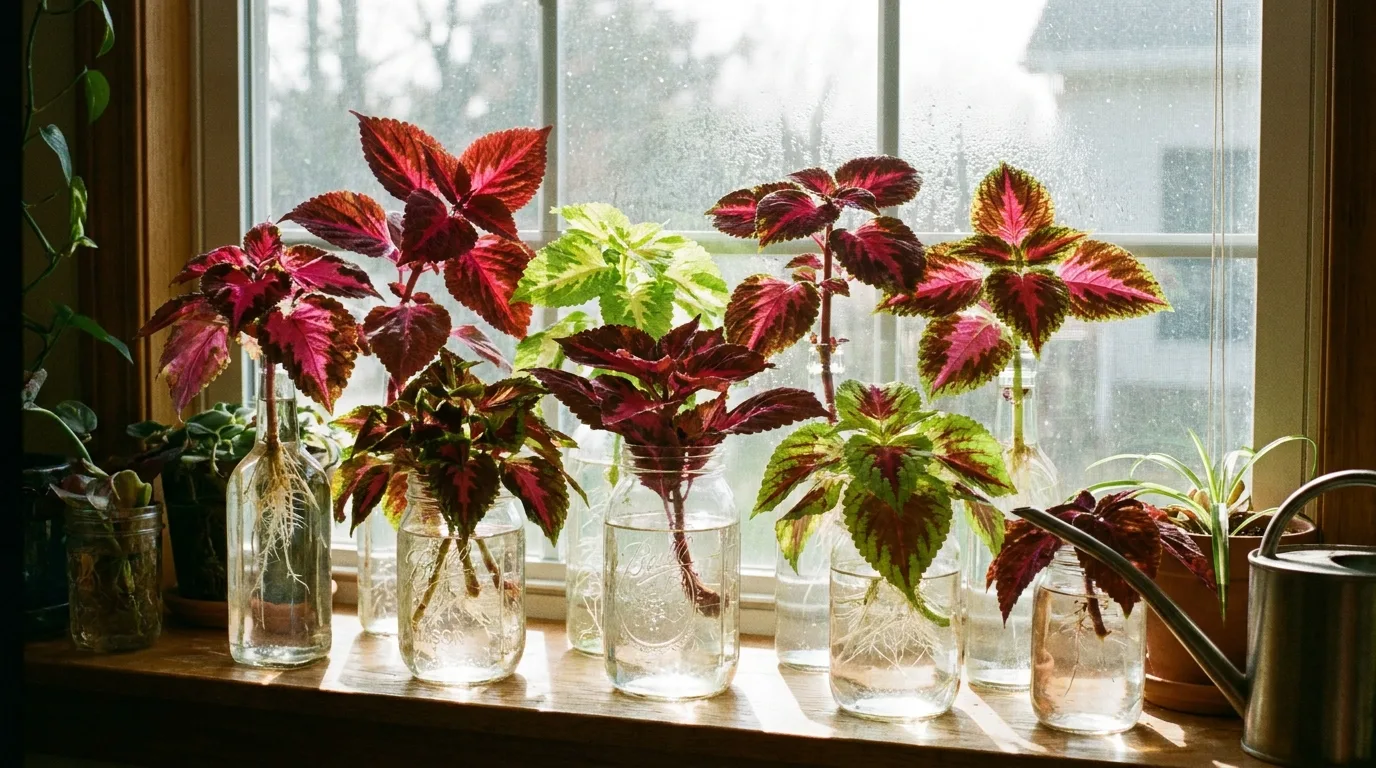
Coleus is an excellent water-propagation plant because its soft stems root readily from cuttings. It is especially appealing if you want colorful foliage, with varieties available in shades of green, pink, red, burgundy, yellow, and purple. Cut a healthy stem below a leaf node and remove the lower leaves before placing it in water. Bright, indirect light helps maintain strong color and compact growth. Keep the water clean and replace it regularly as the cutting develops roots. Coleus can remain in water temporarily, but for long-term growth it generally benefits from being transferred into nutrient-rich soil or another suitable growing medium. Growing several varieties in individual glass bottles can create a vibrant indoor plant display.
9. Begonia
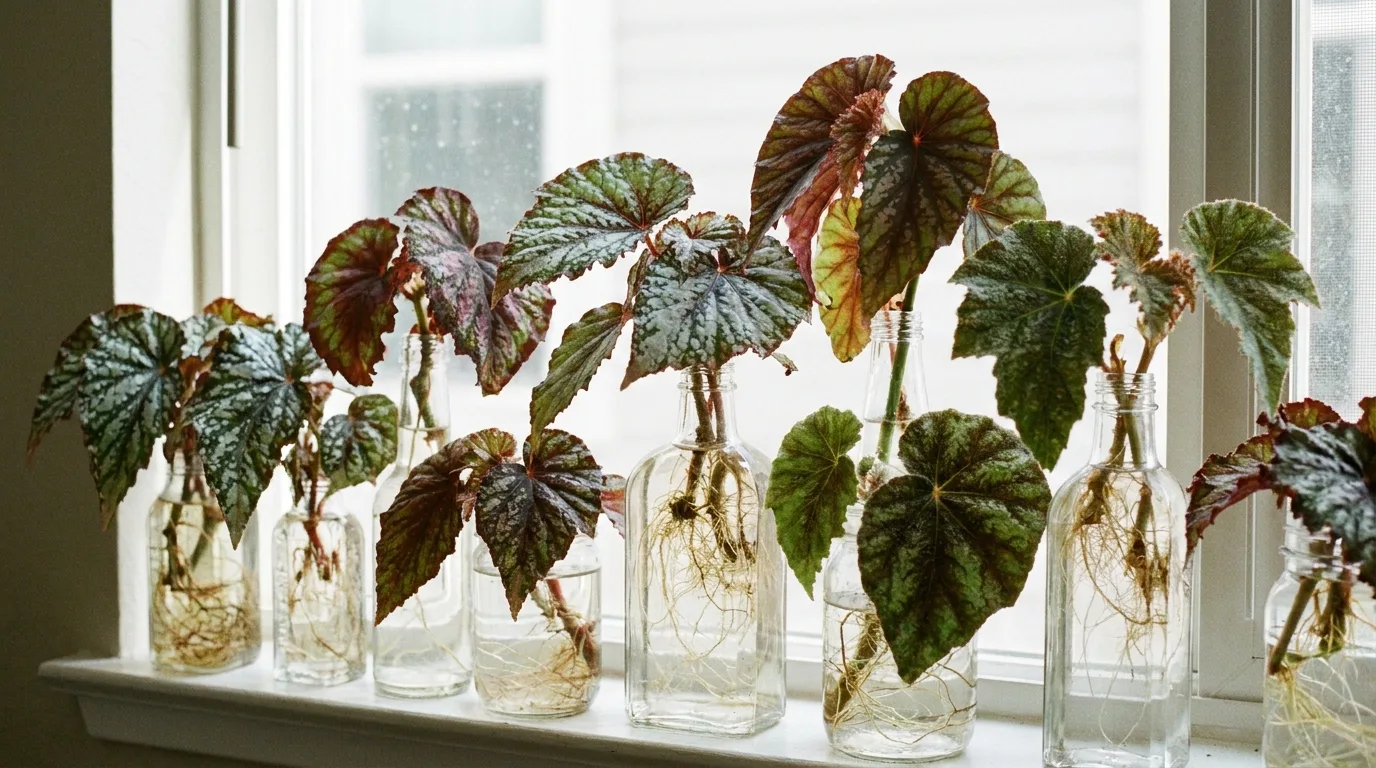
Many begonias can be propagated successfully in water, making them an interesting option for indoor plant displays. Stem cuttings with healthy nodes can develop roots when placed in clean water under suitable conditions. Bright, indirect light is usually preferable, while harsh direct sunlight can damage delicate foliage. Begonia leaves can be especially attractive, with some varieties featuring dramatic patterns, textures, or contrasting colors. Use a stable container that keeps the cutting upright and prevents leaves from touching the water. Water propagation is generally most useful as a rooting method rather than a permanent growing system. Once a healthy root network has formed, moving the cutting into an appropriate potting medium can provide the nutrients needed for continued development.
10. Mint
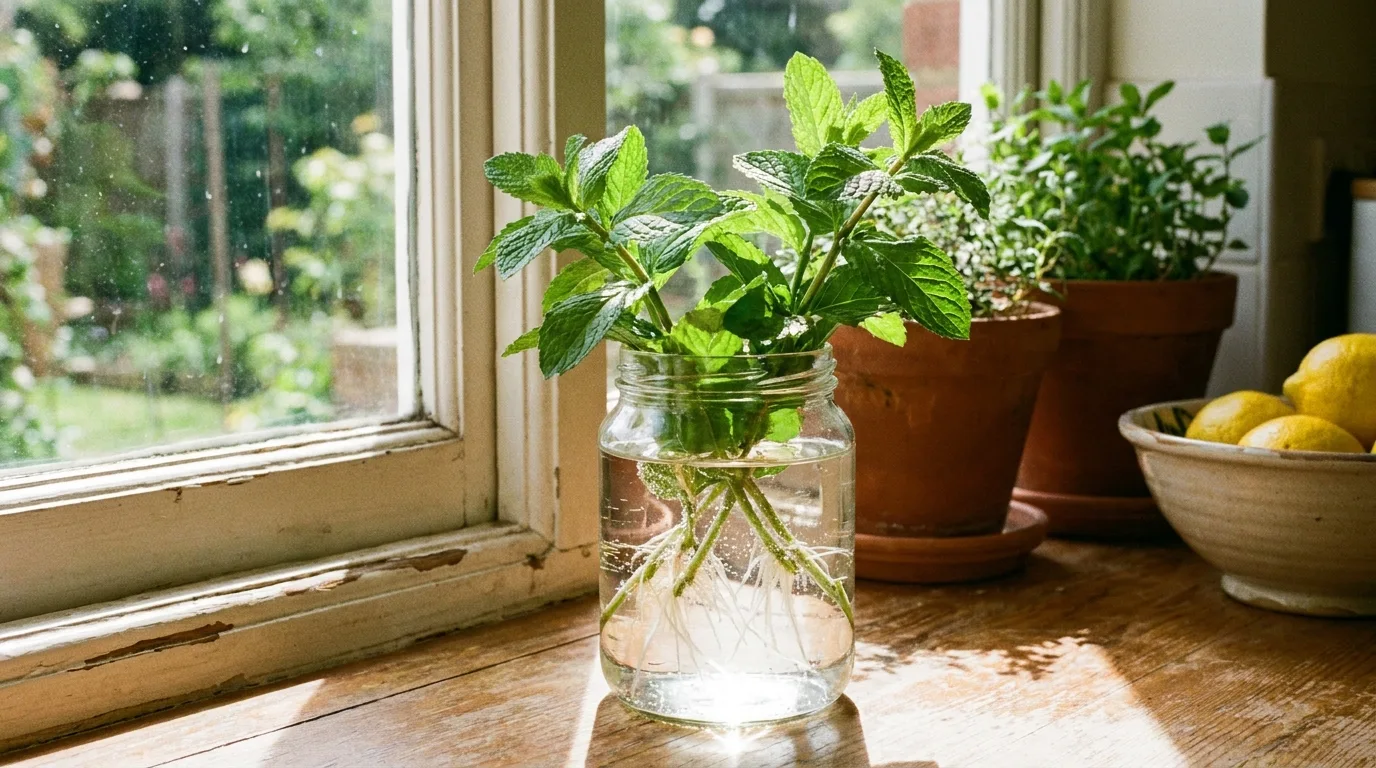
Mint is a fast-growing herb that can root readily from fresh stems in water. It is a practical choice for a sunny kitchen windowsill because the fragrant leaves can be harvested once the plant is well established. Take a healthy stem cutting, remove the lower leaves, and place the bare section in a glass of water. Bright light helps encourage vigorous growth, although extremely hot direct sunlight may stress the plant. Replace the water frequently and rinse the container to keep the roots clean. Mint can continue growing hydroponically when provided with suitable nutrients, but simple water propagation is also an easy way to keep fresh cuttings alive before planting them in soil. Harvesting regularly helps encourage new shoots.
11. Basil
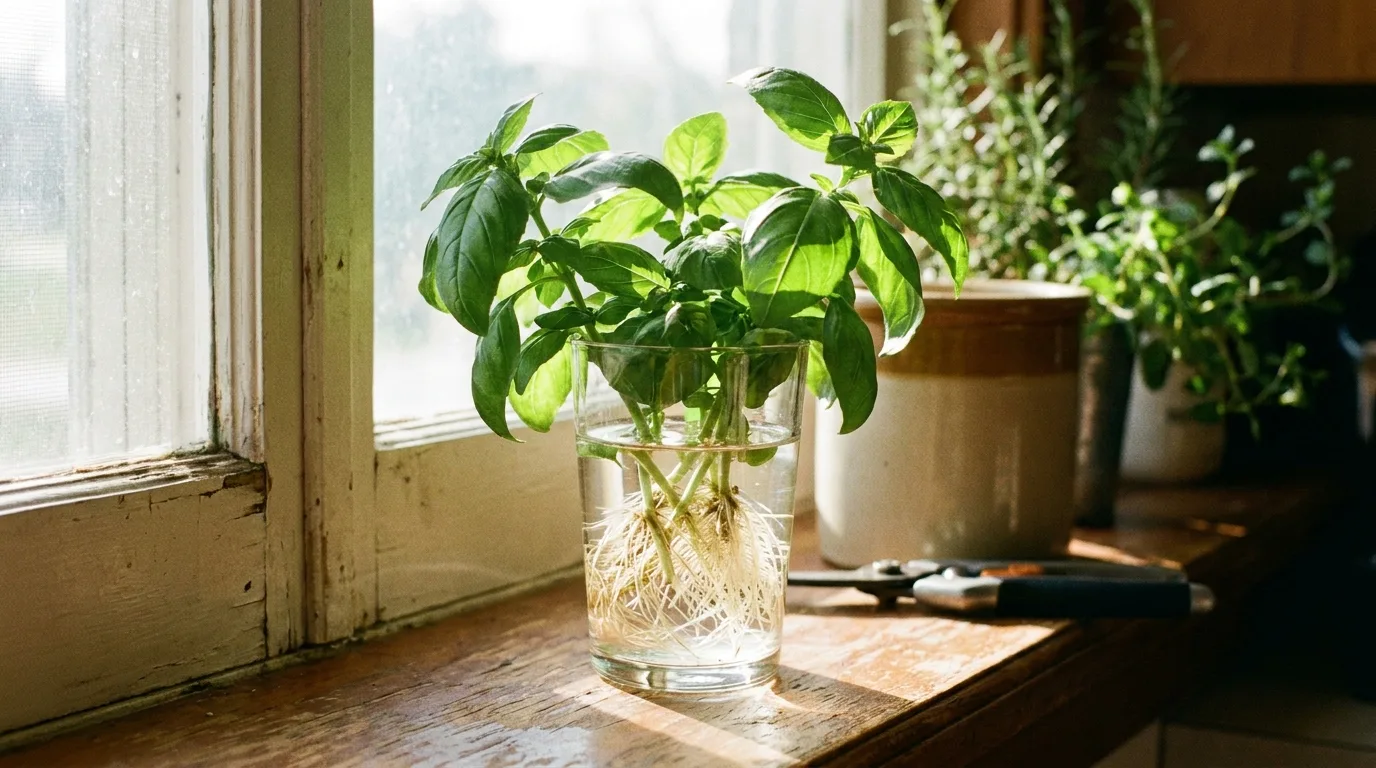
Basil is another useful herb that can grow roots from cuttings placed in water. Select a healthy stem and remove the leaves from its lower section before putting the stem into a glass of fresh water. Keep the foliage above the water and place the container near a bright, sunny window. Roots can develop relatively quickly in warm conditions. Water-grown basil can be especially convenient in the kitchen because fresh leaves are close at hand for cooking. Replace the water regularly and remove any damaged leaves. For continued vigorous growth, rooted basil generally performs better when transferred to nutrient-rich soil or maintained in a properly fertilized hydroponic system. Pinching growing tips can encourage a bushier plant instead of a tall, sparse shape.
12. Rosemary
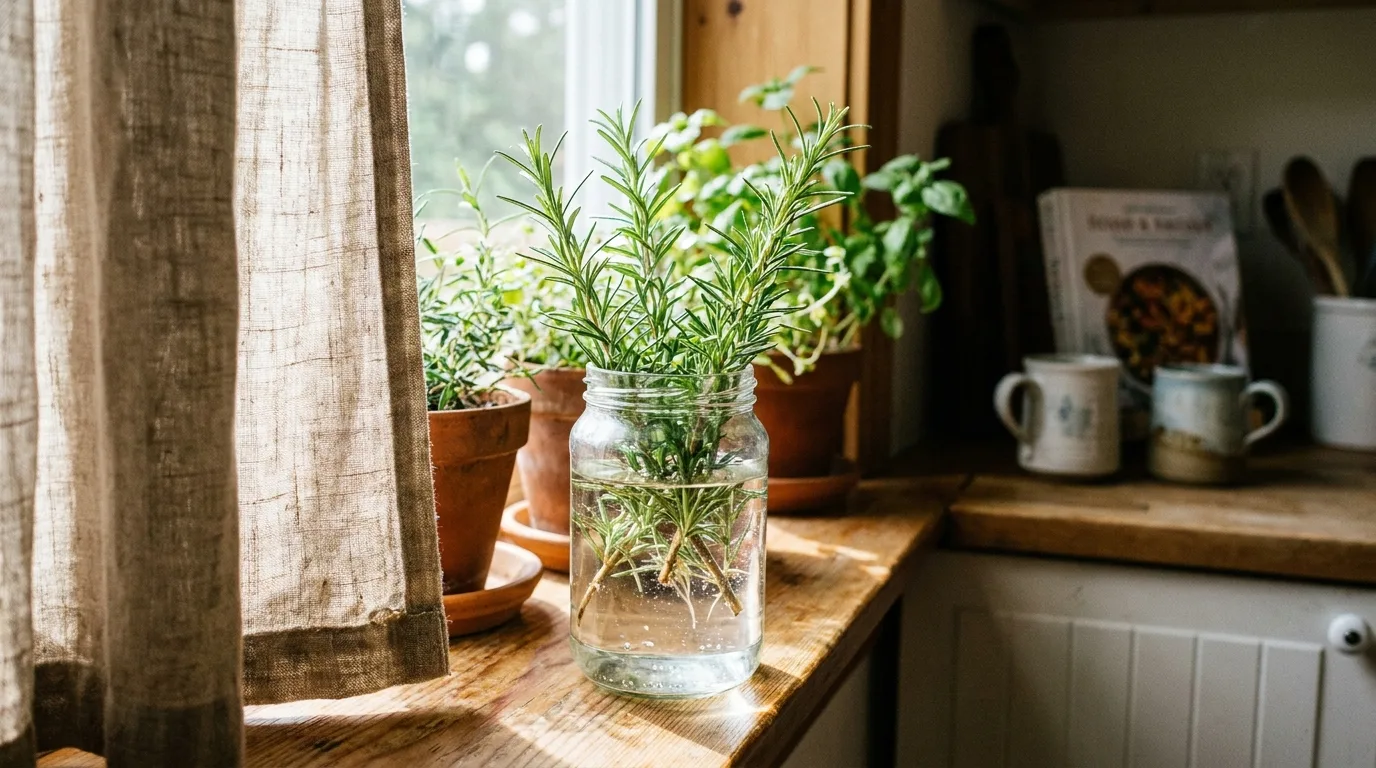
Rosemary can be propagated from cuttings in water, although it may root more slowly than softer-stemmed herbs such as mint or basil. Choose a healthy non-flowering stem and remove the lower foliage before placing the cutting in water. Give it plenty of bright light and keep the container somewhere warm with good air circulation. Refresh the water regularly while watching for root development. Once the cutting has formed a healthy root system, transplanting it into well-draining soil is usually the better option for long-term growth. Rosemary appreciates conditions that are not excessively wet, so permanent water culture requires more careful management. A small glass propagation jar can still be a useful and attractive way to start new rosemary plants indoors.
13. Sweet Potato Vine
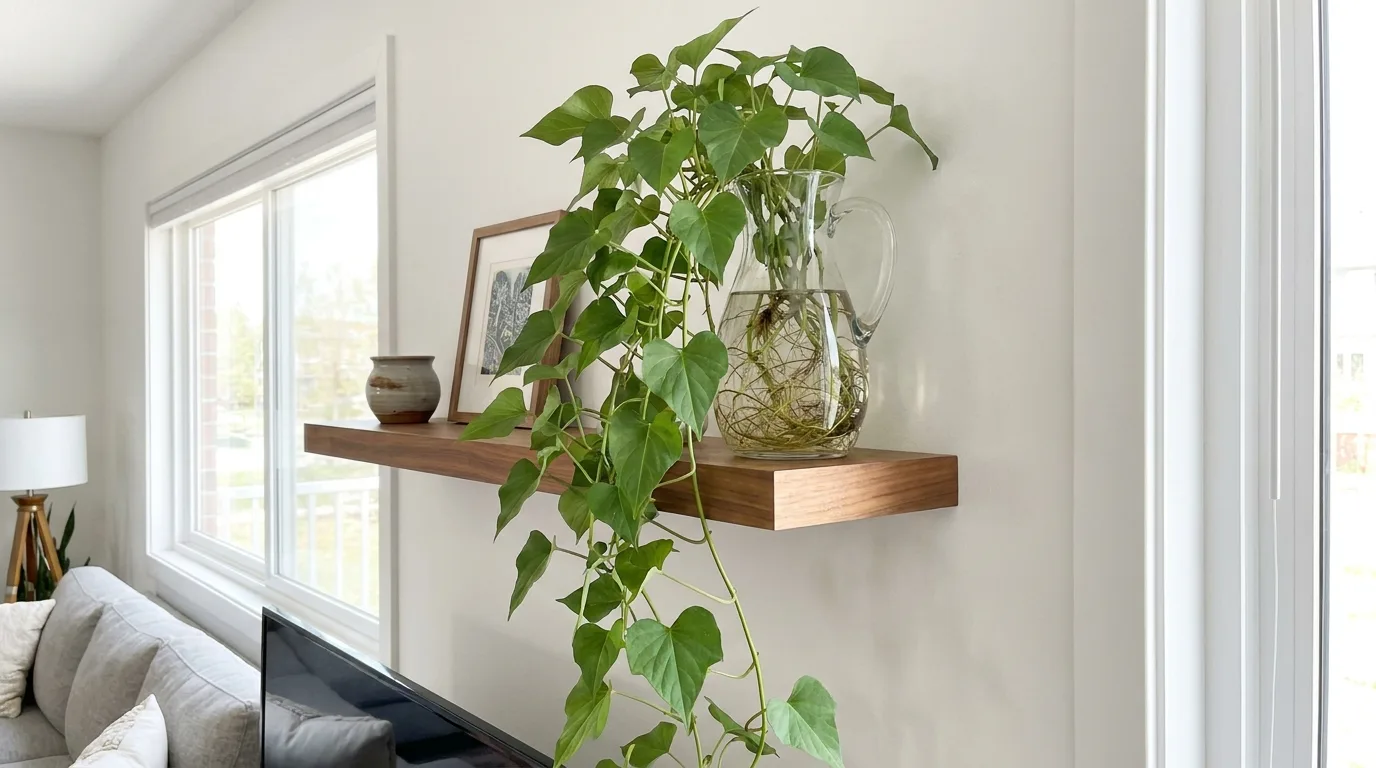
Sweet potato vine can produce an impressive display when grown in water because its stems develop roots readily and its foliage cascades dramatically over the container. Place a sweet potato in a suitable vessel with part of it supported above the water, or use healthy vine cuttings with nodes submerged. As roots and shoots develop, the plant can create a lush arrangement around the container. Bright, indirect light encourages stronger growth, while adequate space allows the trailing vines to spread. Keep the water fresh and support the growing stems if they become heavy. Although water can support the plant for a period, long-term growth is easier when nutrients are supplied through a suitable growing medium or hydroponic setup.
14. Arrowhead Plant
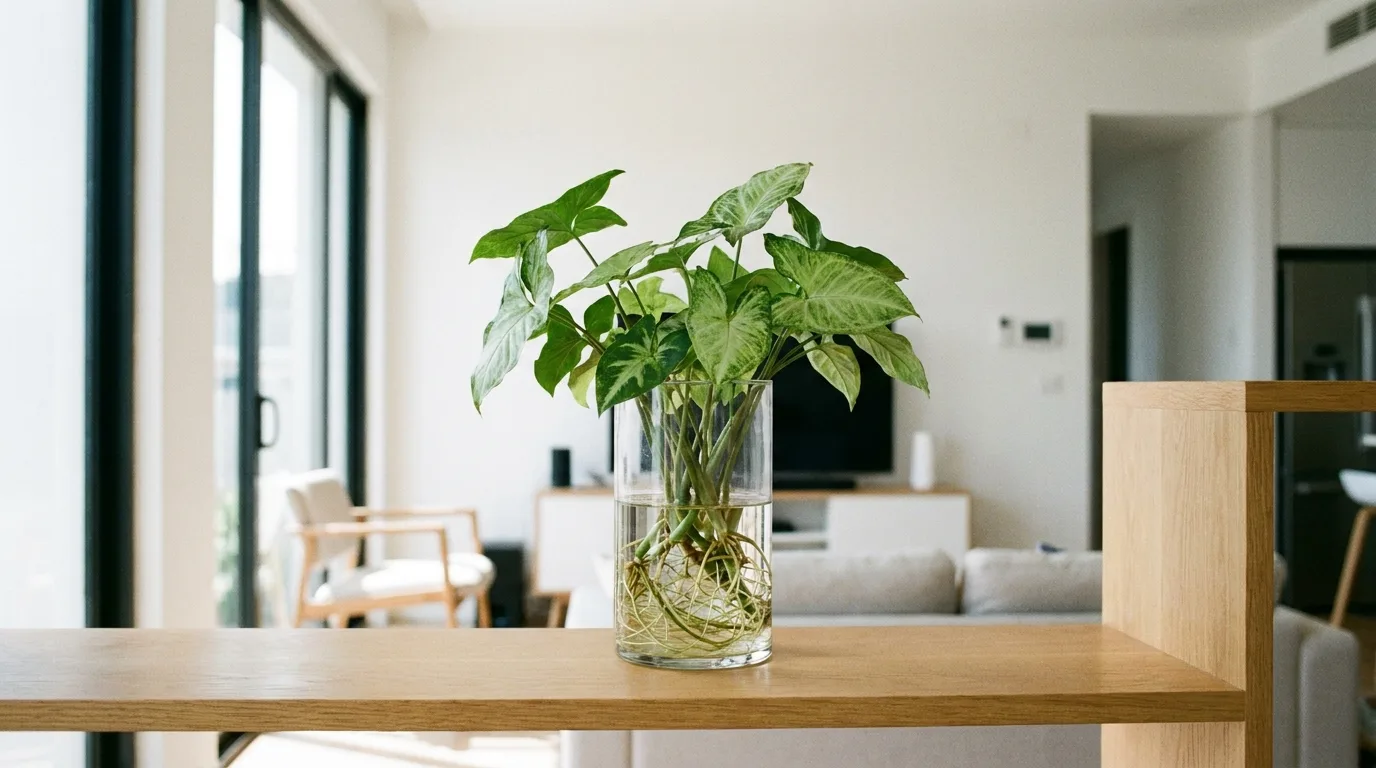
Arrowhead plant, or Syngonium, is a popular houseplant that roots easily from stem cuttings. Its arrow-shaped leaves give water displays a distinctive look, especially when several cuttings are arranged in a clear vase. Take a cutting with at least one healthy node and place the node underwater. Keep the leaves above the surface and provide bright, indirect light. As the roots grow, you can monitor their development through a transparent container. Regular water changes help prevent stagnation and keep the display fresh. Arrowhead plants can be maintained in water for some time, but long-term growth usually benefits from nutrients supplied through soil or an appropriate hydroponic system. Pinching the stems can also encourage a fuller, bushier appearance.
15. Peace Lily
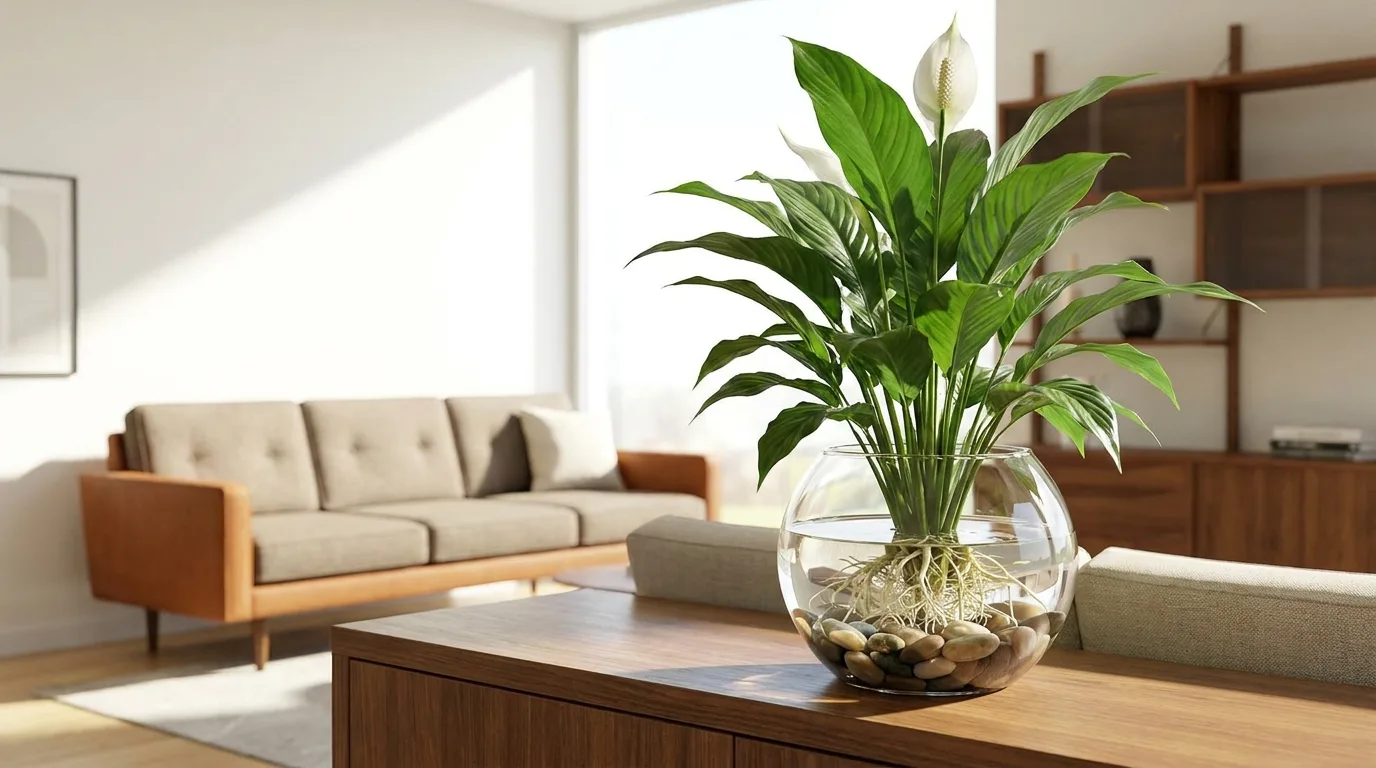
Peace lilies are sometimes grown with their roots in water as part of indoor hydroponic arrangements, provided the plant receives appropriate nutrients and oxygen. A mature plant can be carefully cleaned of soil and transferred to a suitable water-based setup, or smaller divisions can be established separately. The roots should remain submerged while the crown and foliage stay above the water. Bright, indirect light is ideal, and regular water changes can help maintain a healthy environment. Because plain water does not contain all the nutrients a peace lily needs for long-term growth, a suitable hydroponic fertilizer may be necessary. Its broad green leaves and occasional white blooms make it an attractive choice for a modern glass-container display.
16. Chinese Money Plant
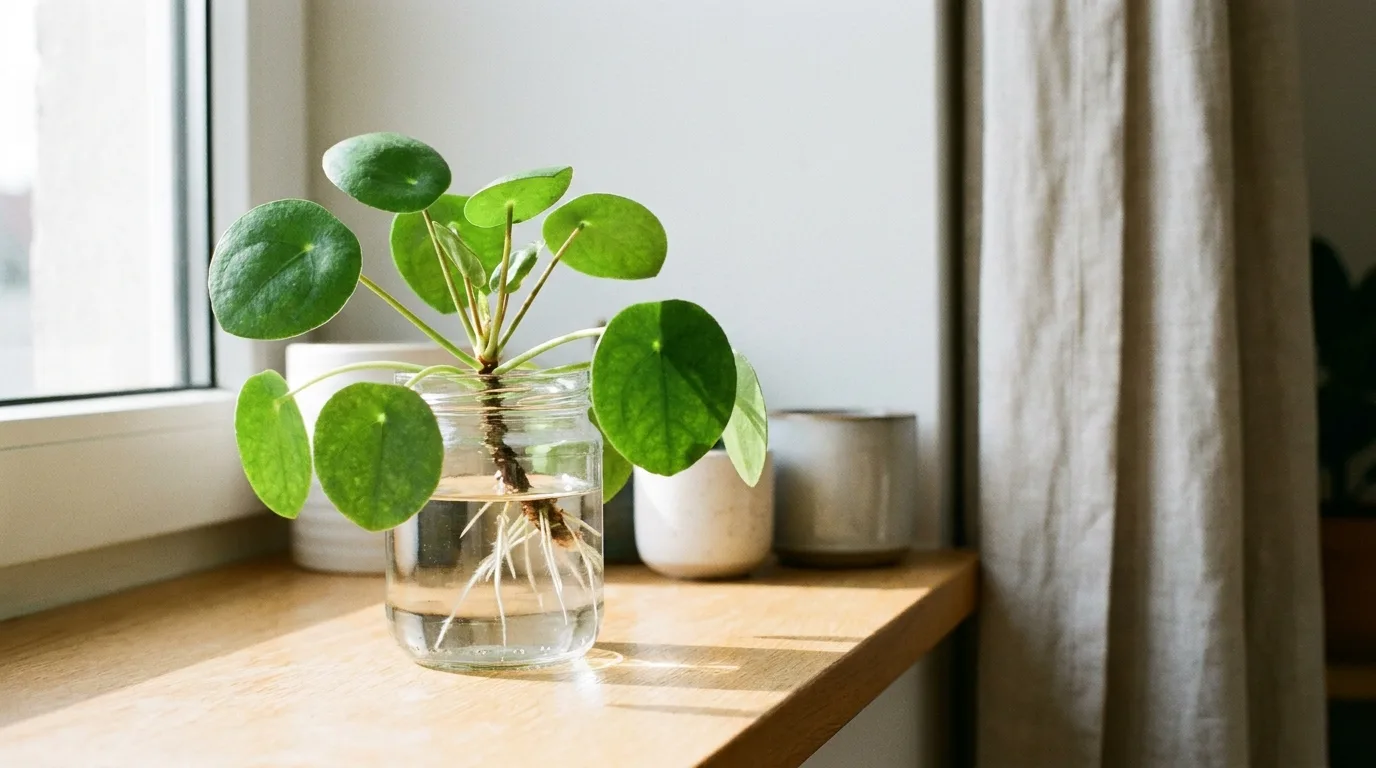
Chinese money plant can be propagated in water from offsets or suitable stem cuttings, making it a fun choice for a simple indoor propagation display. Its round, coin-shaped leaves create a distinctive modern look that works well with clear glass containers. Place the cutting or offset so the developing roots are submerged while the leaves remain dry. Bright, indirect light helps support healthy growth. Keep the container clean and refresh the water regularly. Once the roots are established, moving the young plant into a well-draining potting mix is generally better for long-term development. A small propagation station on a bright shelf can let you watch the roots grow while creating an attractive decorative feature.
17. Monstera
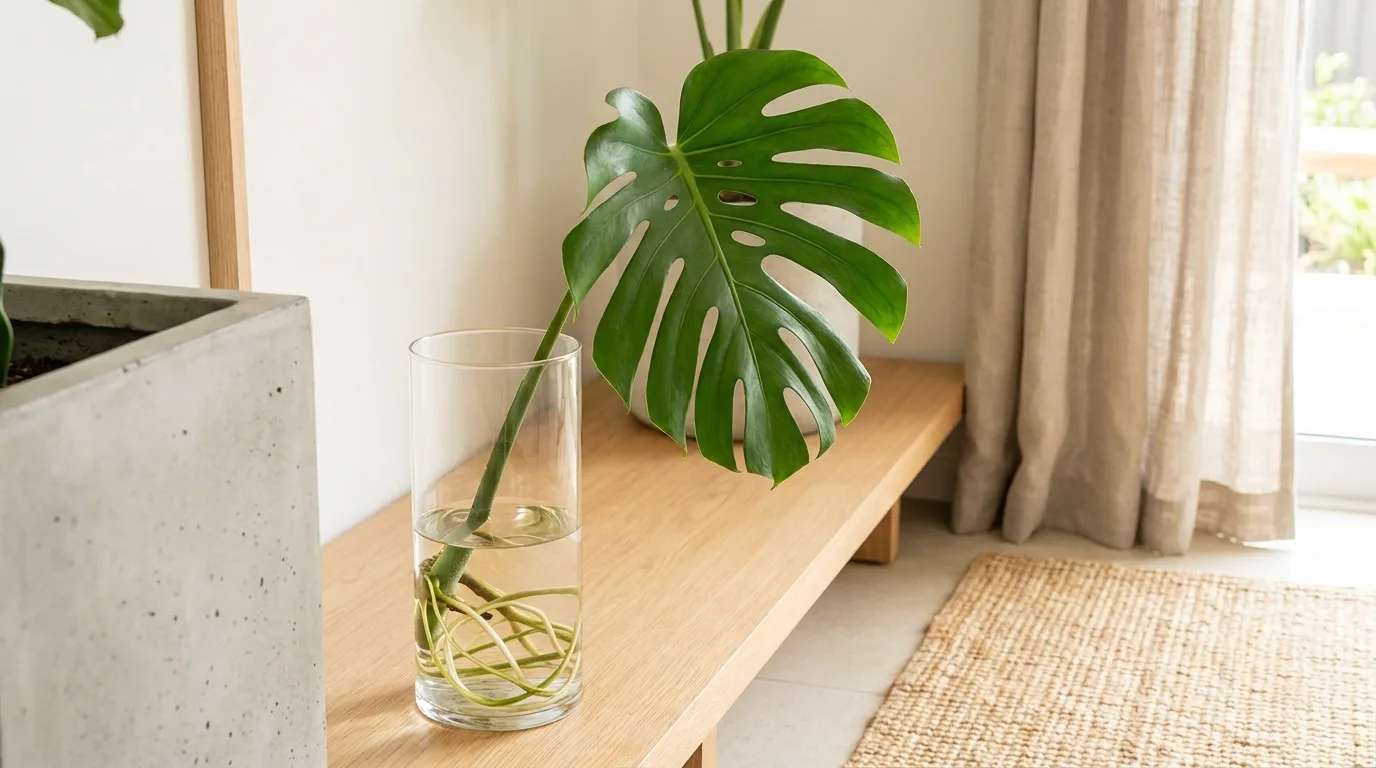
Monstera is an excellent candidate for water propagation when you have a healthy stem cutting containing at least one node. Place the node underwater while keeping the leaves above the surface. The cutting can develop substantial roots that are easy to observe through a clear vase. Bright, indirect light supports healthy development, while direct hot sunlight should be avoided. Choose a container large enough to keep the cutting stable as its leaves grow. Water should be changed regularly, especially if it becomes cloudy or develops an odor. Water propagation is typically a way to establish roots before transferring the cutting to soil, but it can also create a striking temporary display. A single large Monstera leaf can make a beautiful minimalist centerpiece.
18. Philodendron Brasil
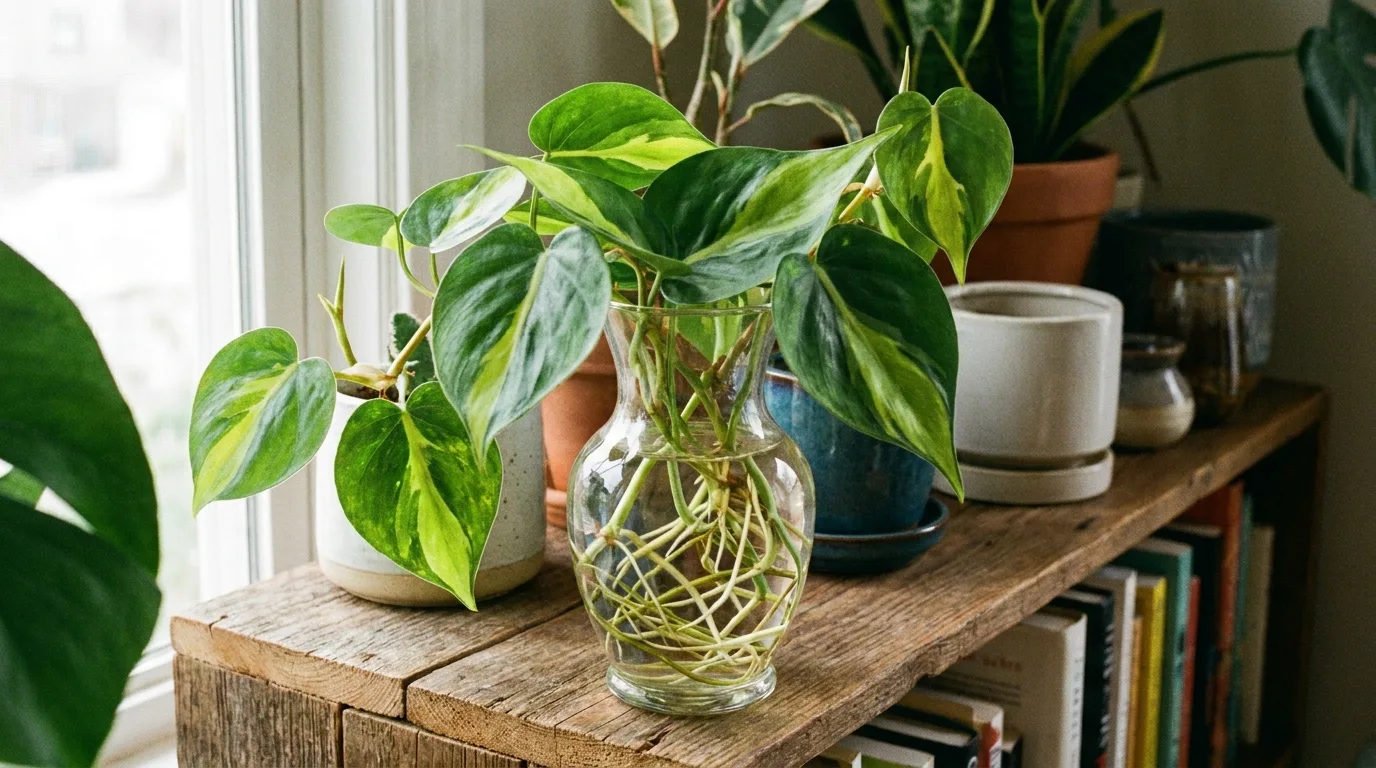
Philodendron Brasil is a colorful trailing plant with green and yellow variegated leaves that looks particularly attractive in a water-filled glass vase. Choose a healthy stem cutting with at least one node, remove any leaves that would sit underwater, and place the node into fresh water. Position it in bright, indirect light to support strong root development and help maintain its attractive variegation. The clear container lets you watch the roots develop while the trailing stems create a relaxed decorative effect. Refresh the water regularly and clean the vessel if algae accumulates. Once the roots are established, you can either continue the cutting in water for a while or transfer it into an appropriate potting mix for longer-term growth.
How to Keep Indoor Plants Healthy in Water
Growing plants in water is simple, but healthy roots require more than just filling a jar and leaving it untouched. Use a clean container and fresh water, and change the water regularly to reduce stagnation and keep oxygen available around the roots. Keep foliage above the waterline whenever possible because submerged leaves can deteriorate quickly. Most water-grown plants prefer bright, indirect light rather than intense direct sun, which can overheat the container and encourage algae.
For long-term water culture, plants usually need nutrients that plain water cannot provide. A properly diluted hydroponic fertilizer can supply essential minerals, while occasional cleaning helps prevent algae and residue. If you are propagating a cutting, wait until it has developed a healthy root system before moving it to soil. With the right care, a simple glass jar can become both a propagation station and an attractive indoor plant display.
Final Thoughts
The best plants that grow in water indoors range from easy trailing favorites such as pothos and philodendron to useful herbs like mint and basil. Some are excellent for long-term water culture, while others are better treated as temporary propagation projects before being planted in soil. Start with healthy cuttings, clean containers, suitable light, and regular water changes. Clear glass vessels make the process especially enjoyable because you can watch roots develop while adding a fresh decorative touch to your home. Whether you want a single minimalist plant on a windowsill or a collection of colorful propagation jars, water growing offers a simple and creative way to enjoy more greenery indoors.