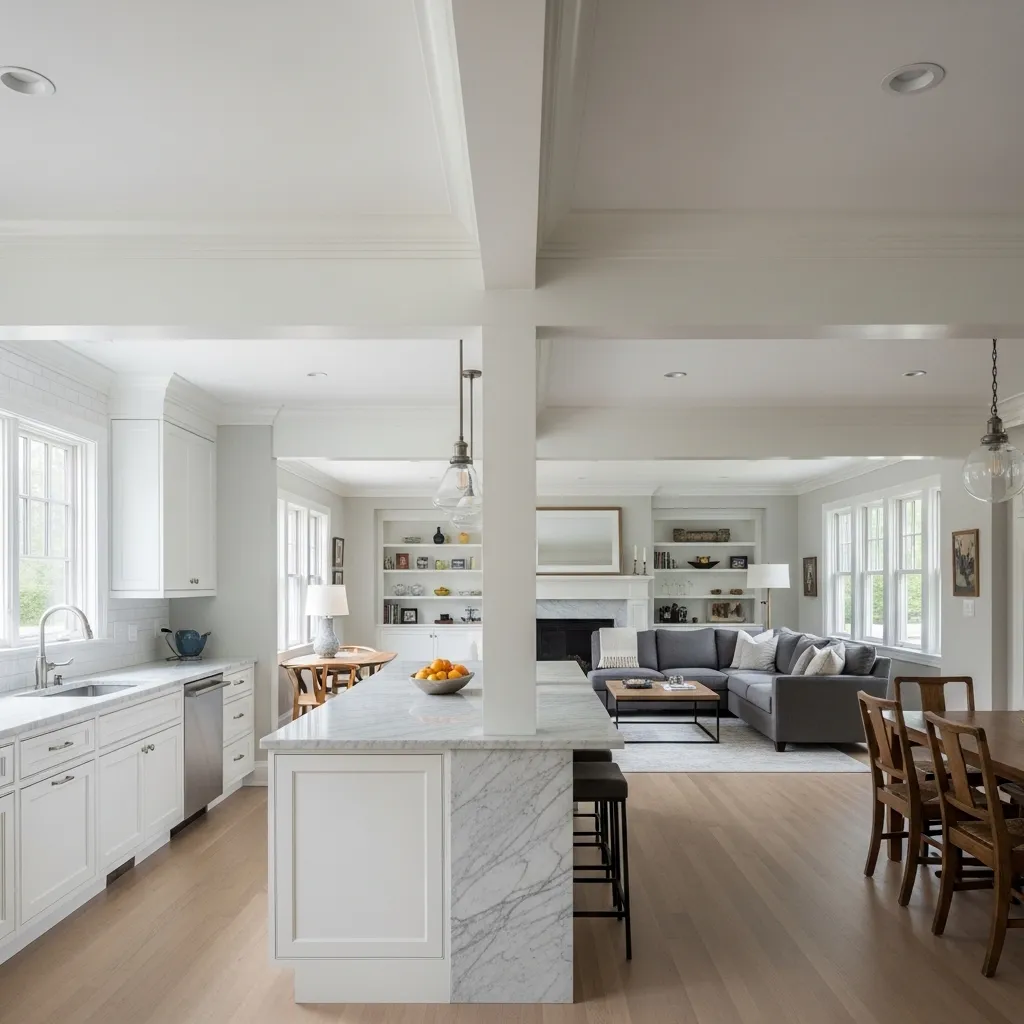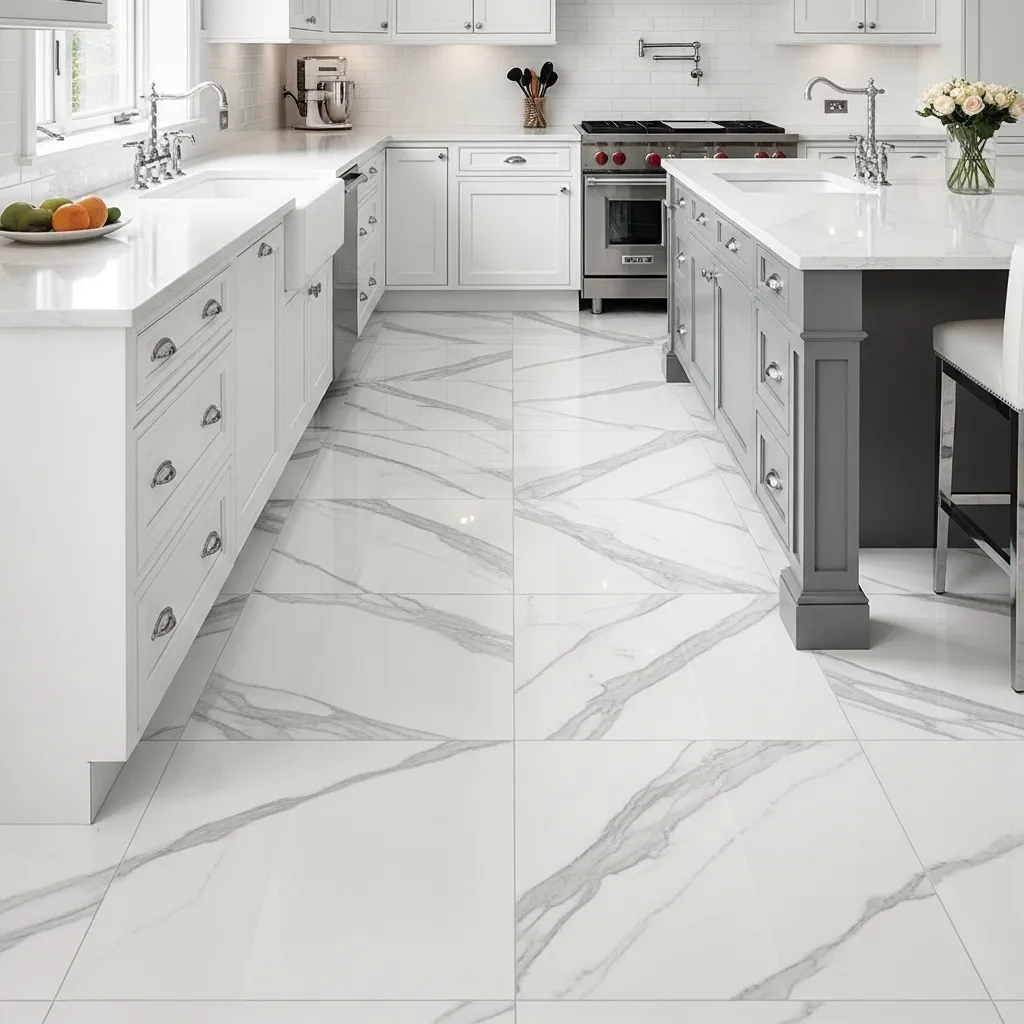
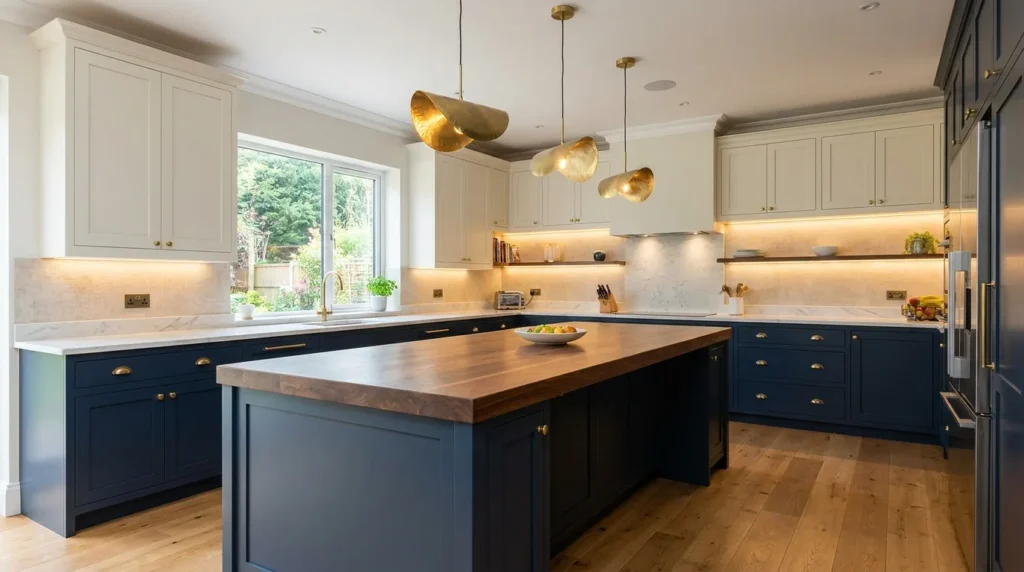
The kitchen slab is one of the most visible and hardworking surfaces in any kitchen, so choosing the right design can transform the entire space. Beyond providing a practical area for chopping, preparing, and serving food, a well-designed slab can establish the room’s color palette, texture, and overall personality. From timeless granite and elegant marble to sleek quartz, warm wood accents, and contemporary waterfall edges, there are plenty of ways to make your countertop stand out. The best kitchen slab design should balance appearance with durability, maintenance, and the way you actually use your kitchen. Whether you are planning a complete renovation or simply looking for inspiration for an upcoming upgrade, these kitchen slab ideas cover a range of styles, materials, and layouts to help you create a surface that feels both beautiful and functional.
1. Classic White Quartz Kitchen Slab
White quartz is a versatile choice for kitchens that need a bright, clean, and contemporary appearance. Its smooth surface creates an uncluttered backdrop that works beautifully with both modern cabinets and traditional detailing. Choose a white slab with subtle gray veining if you want the sophisticated appearance of natural stone without an overly dramatic pattern. Quartz is also popular because it is nonporous and generally easy to clean, making it practical for busy kitchens. Pair the slab with white cabinetry for a seamless look, or introduce contrast through walnut, charcoal, navy, or sage-green cabinets. Simple hardware and a restrained backsplash can keep the overall design polished rather than visually crowded.
2. Elegant Marble-Effect Slab
A marble-effect kitchen slab can bring a luxurious architectural feel to an ordinary cooking space. Look for a surface featuring soft veining in gray, beige, or warm taupe rather than an excessively busy pattern. The flowing veins can visually connect the countertop with a matching backsplash, creating a cohesive focal point. Marble-effect porcelain and engineered surfaces can also offer practical alternatives depending on your budget and maintenance preferences. This style works especially well with flat-panel cabinetry, brass fixtures, and warm wood accents. To keep the design sophisticated, allow the slab to remain the star and avoid combining it with too many competing patterns. A carefully selected marble-look surface can make even a compact kitchen feel more refined and intentional.
3. Dark Granite Kitchen Countertop
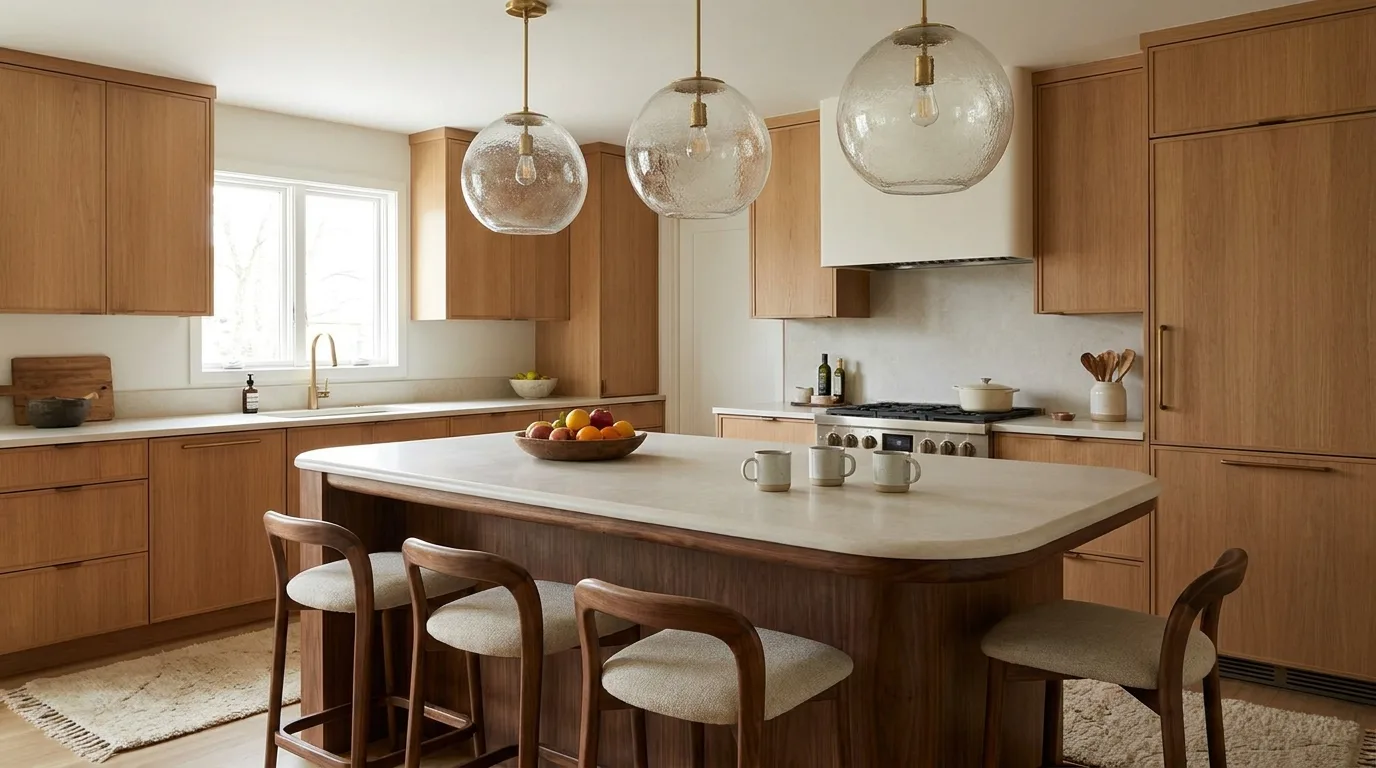
Dark granite can give a kitchen a grounded, substantial appearance while adding natural variation through mineral flecks and subtle movement. Black, charcoal, and deep gray granite pair particularly well with light-colored cabinets because the contrast creates a strong visual anchor. If your kitchen already contains dark cabinetry, choose a granite with lighter veining or speckles to prevent the room from feeling too heavy. Matte or honed finishes can create a softer contemporary appearance, while polished granite delivers more shine and traditional elegance. Because granite patterns vary naturally, it is worth viewing a full-size sample before making a final decision. Keep surrounding finishes relatively simple so the stone’s natural character remains visible.
4. Warm Wooden Kitchen Slab
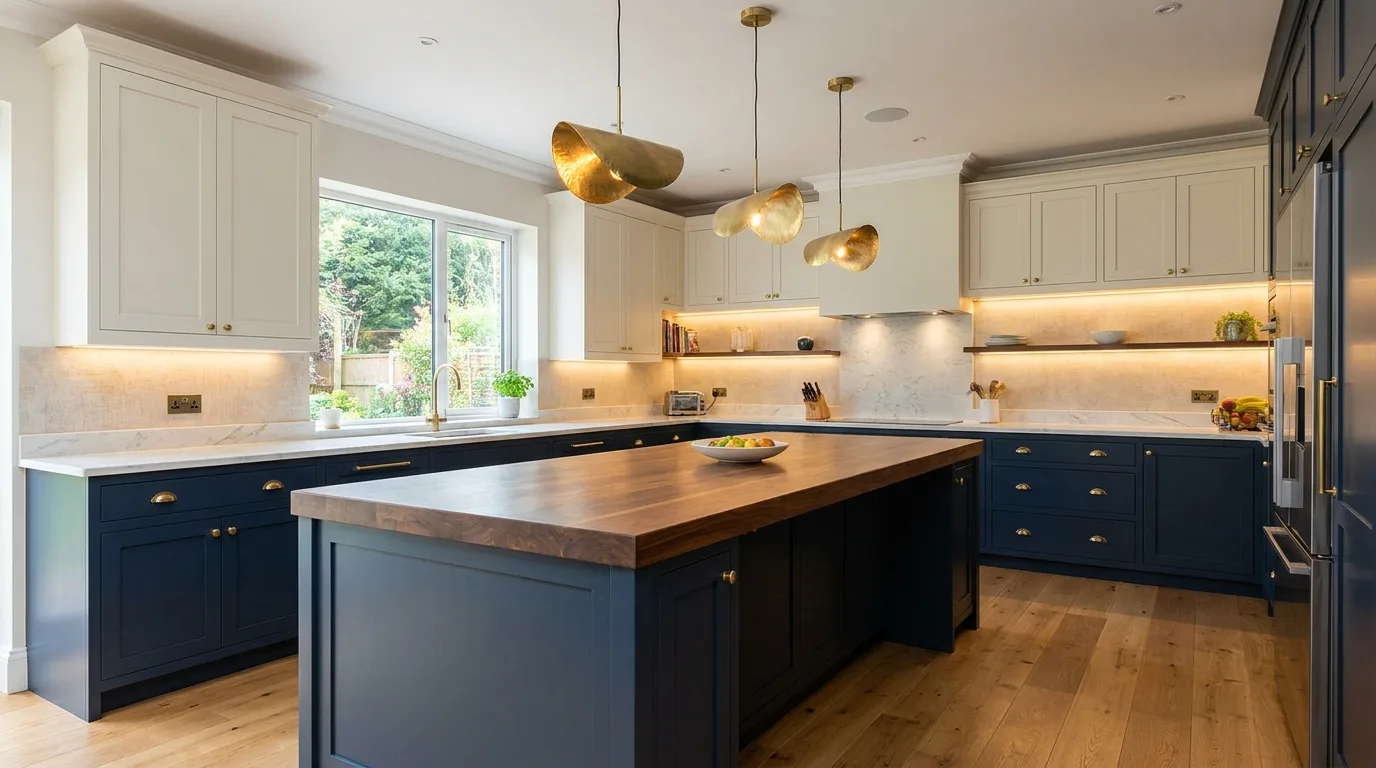
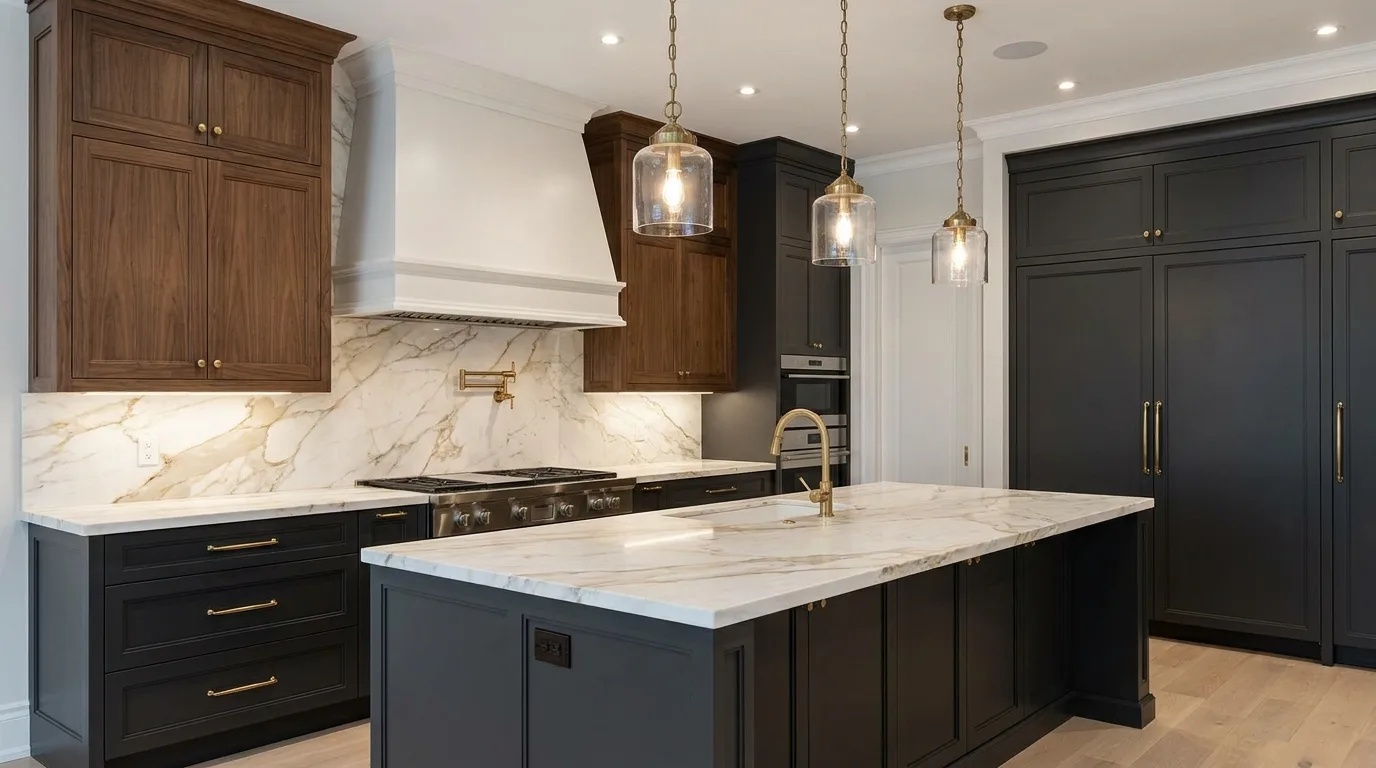
A wooden kitchen slab introduces warmth and texture that can soften kitchens dominated by hard surfaces such as tile, stone, and metal. A timber countertop or a carefully placed wood section works especially well around breakfast bars, islands, or open preparation areas. Light oak can complement Scandinavian and contemporary kitchens, while walnut creates a richer, more traditional effect. Wood requires more attention to moisture and heat than many stone surfaces, so it is important to choose an appropriate finish and protect vulnerable areas. Rather than using wood throughout the entire kitchen, consider combining it with quartz or stone on the main work zones. This creates a layered look while giving the kitchen a welcoming, furniture-like quality.
5. Waterfall Edge Kitchen Slab
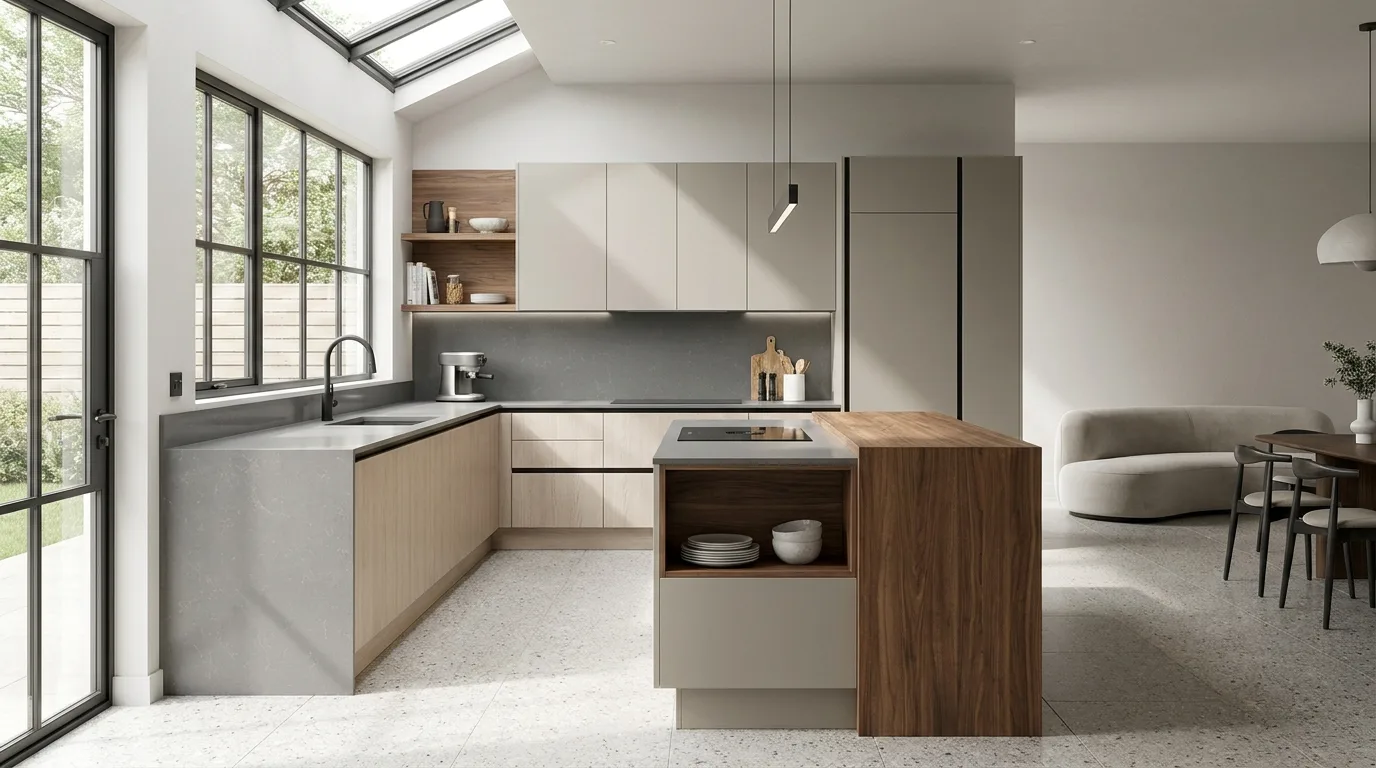
A waterfall countertop continues the slab material vertically down the side of an island, creating a seamless architectural effect. This design is especially striking when the slab has expressive veining, because the pattern can visually flow from the horizontal surface onto the side panel. Waterfall edges suit contemporary kitchens with clean cabinetry and minimal hardware, but they can also add a dramatic update to more transitional spaces. The design generally works best when the island has enough visual space to showcase the continuous material. If the budget is limited, consider using the waterfall treatment only on the two visible ends rather than extending the material around the entire island. The result can still feel highly customized and luxurious.
6. Black-and-White Contrast Slab
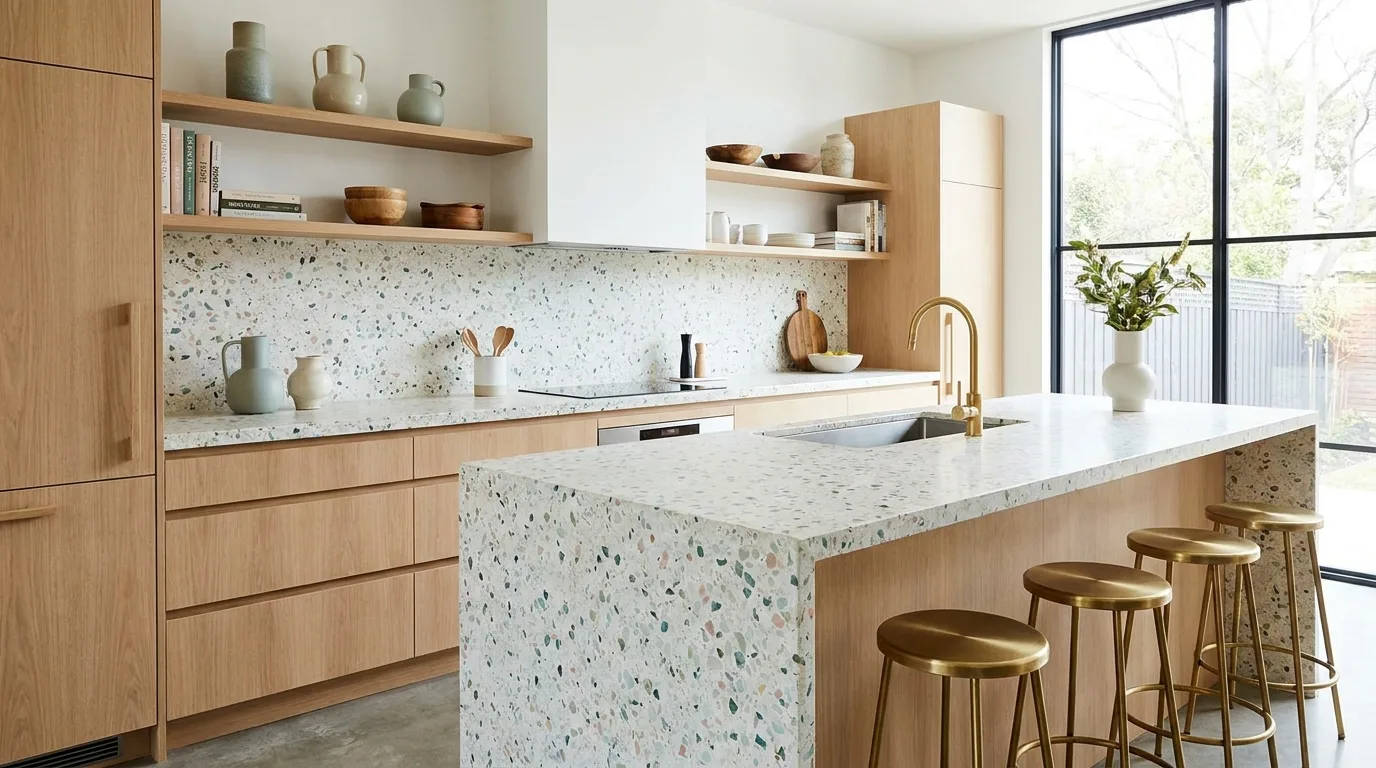
A black-and-white kitchen slab combination creates a timeless contrast that can make cabinetry and architectural details more noticeable. One approach is to use a dark countertop against white cabinets, while another is to use a white main slab with a black island for stronger definition. This idea is particularly effective in kitchens with simple cabinet profiles because the contrasting surfaces provide visual interest without relying on elaborate decoration. Add warmth through natural wood stools, woven accessories, or brass lighting to prevent the palette from becoming overly stark. When using two slab colors, repeat each shade elsewhere in the kitchen so the contrast feels intentional. A restrained backsplash will help maintain a crisp and coordinated appearance.
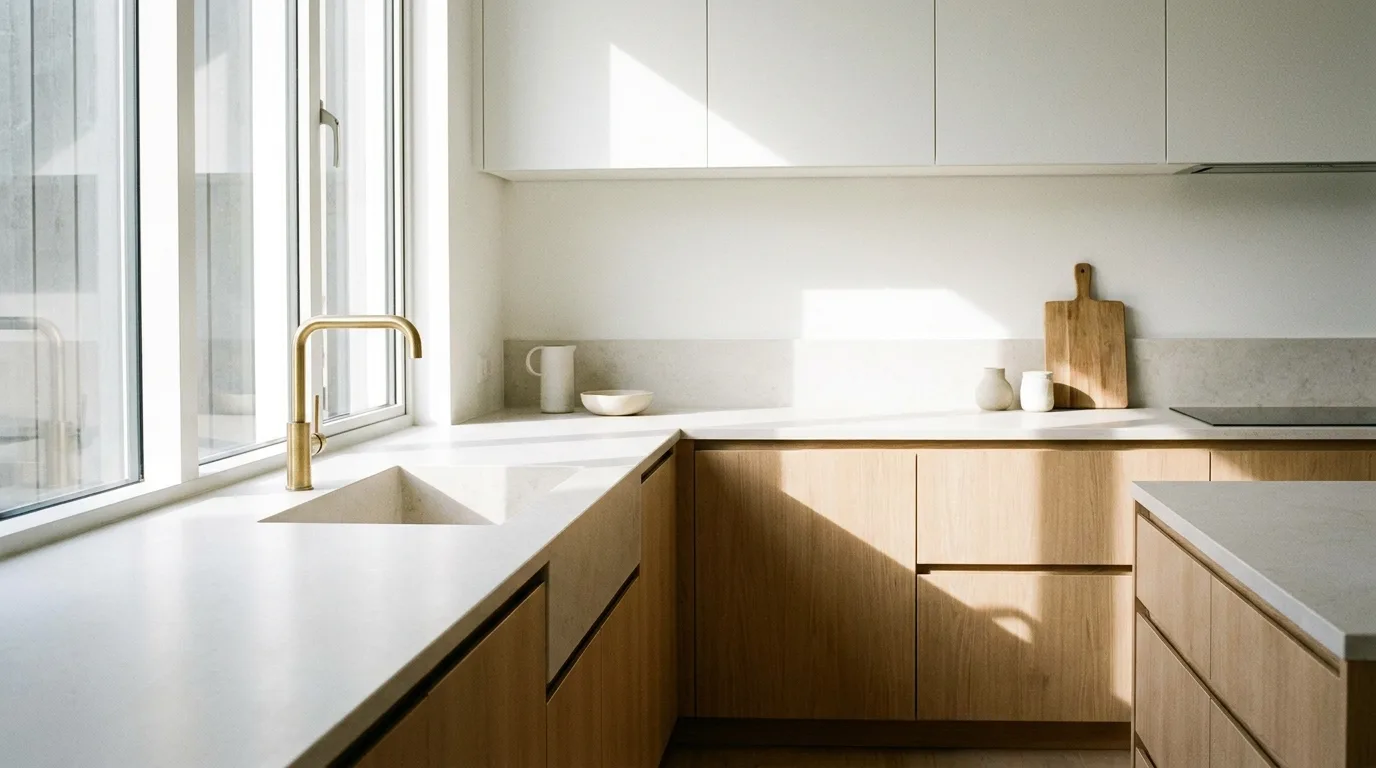
7. Minimalist Concrete-Style Slab
Concrete-style countertops are ideal for homeowners who like modern industrial interiors with a slightly raw character. A soft gray slab can complement black fixtures, flat-front cabinets, open shelving, and understated lighting. You do not need an actual poured concrete countertop to achieve the look; several engineered and porcelain surfaces imitate concrete with more predictable color and easier installation. Choose a finish with subtle tonal variation for authenticity without making the surface visually chaotic. Concrete-inspired slabs also work beautifully with warm oak cabinetry because the wood balances the cool gray tones. Keep decorative elements simple and emphasize functional details such as integrated storage, streamlined appliances, and clean cabinet lines for a cohesive modern kitchen.
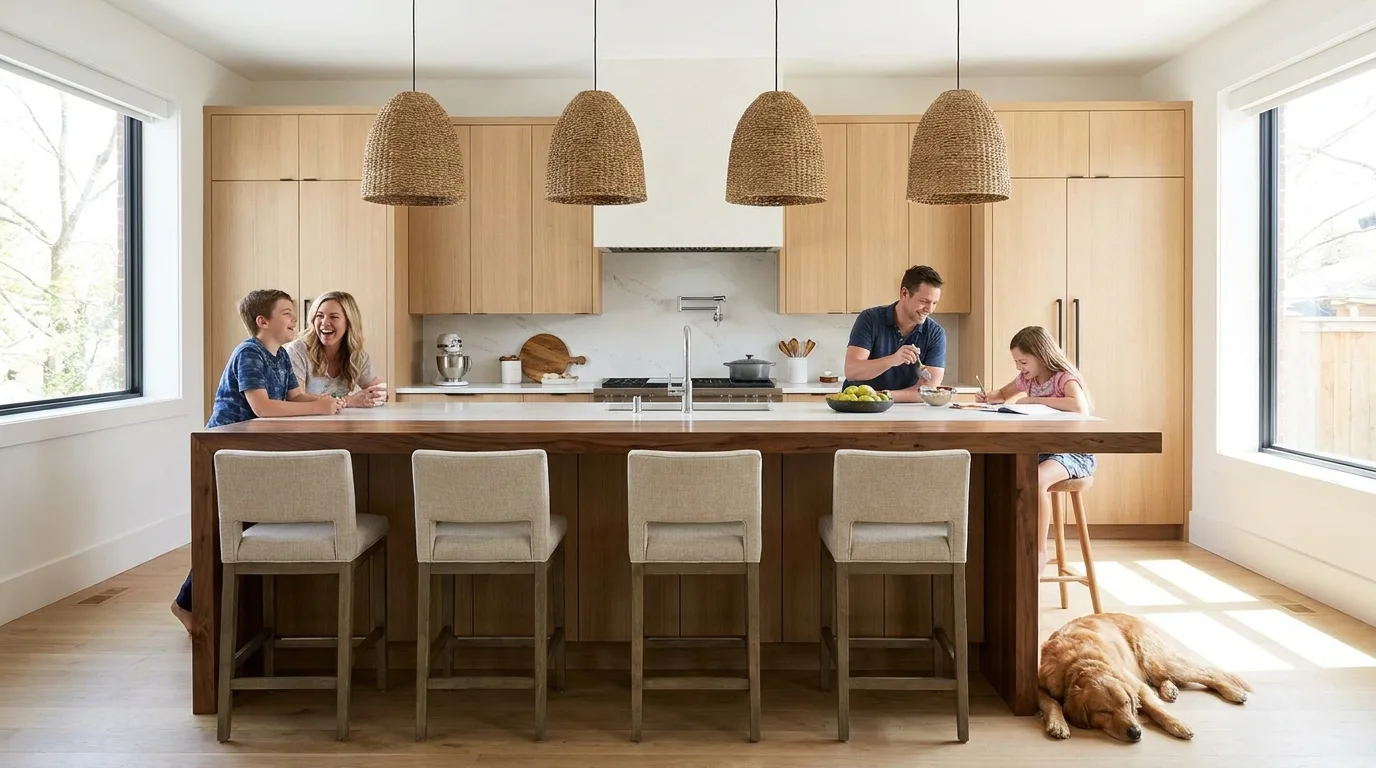
8. Beige and Cream Kitchen Slab
Beige and cream slabs are excellent for creating a kitchen that feels warm, relaxed, and timeless rather than stark. Creamy quartz, limestone-inspired surfaces, and softly patterned porcelain can complement warm-white cabinets, natural wood, and brushed metal fixtures. This palette is particularly useful when you want a neutral kitchen with more warmth than a purely white scheme provides. To add depth, combine several related shades rather than matching every element exactly. For example, a cream slab can sit alongside slightly darker beige cabinetry and a light stone backsplash. Natural textures such as rattan, oak, linen, or ceramic accessories can reinforce the inviting atmosphere. A warm neutral countertop also transitions easily when you change decorative accents over time.
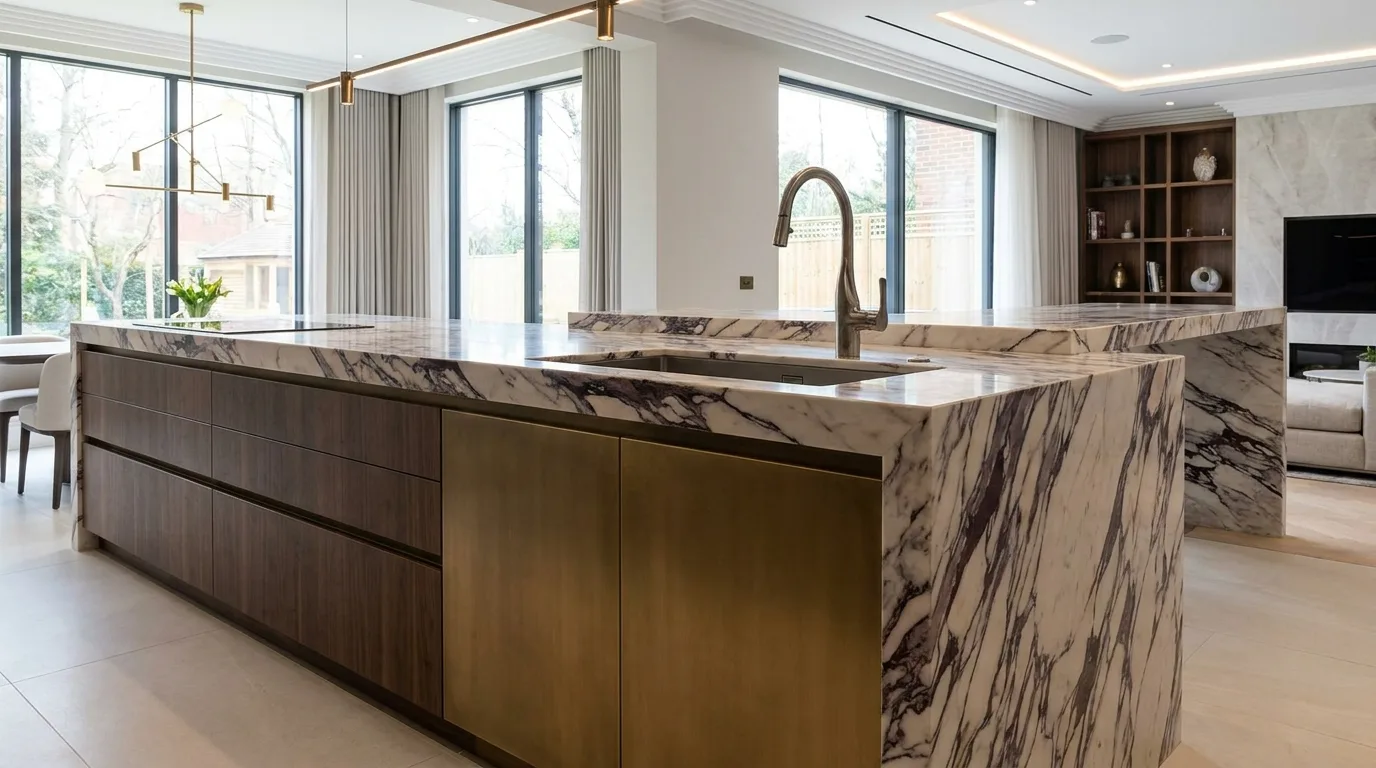
9. Bold Veined Statement Slab
If you want the countertop to become the centerpiece of the kitchen, choose a slab with bold, flowing veins. Dramatic marble, quartzite-inspired, or engineered surfaces can create an artistic effect across a large island. Strong veining looks particularly impressive when the material is carried onto the backsplash or waterfall sides, allowing the pattern to become a continuous visual feature. Because a statement slab already supplies plenty of personality, pair it with relatively quiet cabinetry and hardware. Before installation, examine the slab layout carefully so important veins appear where they will be visible rather than being hidden by sinks or appliances. This approach works best when the surrounding palette is restrained enough to let the stone command attention.
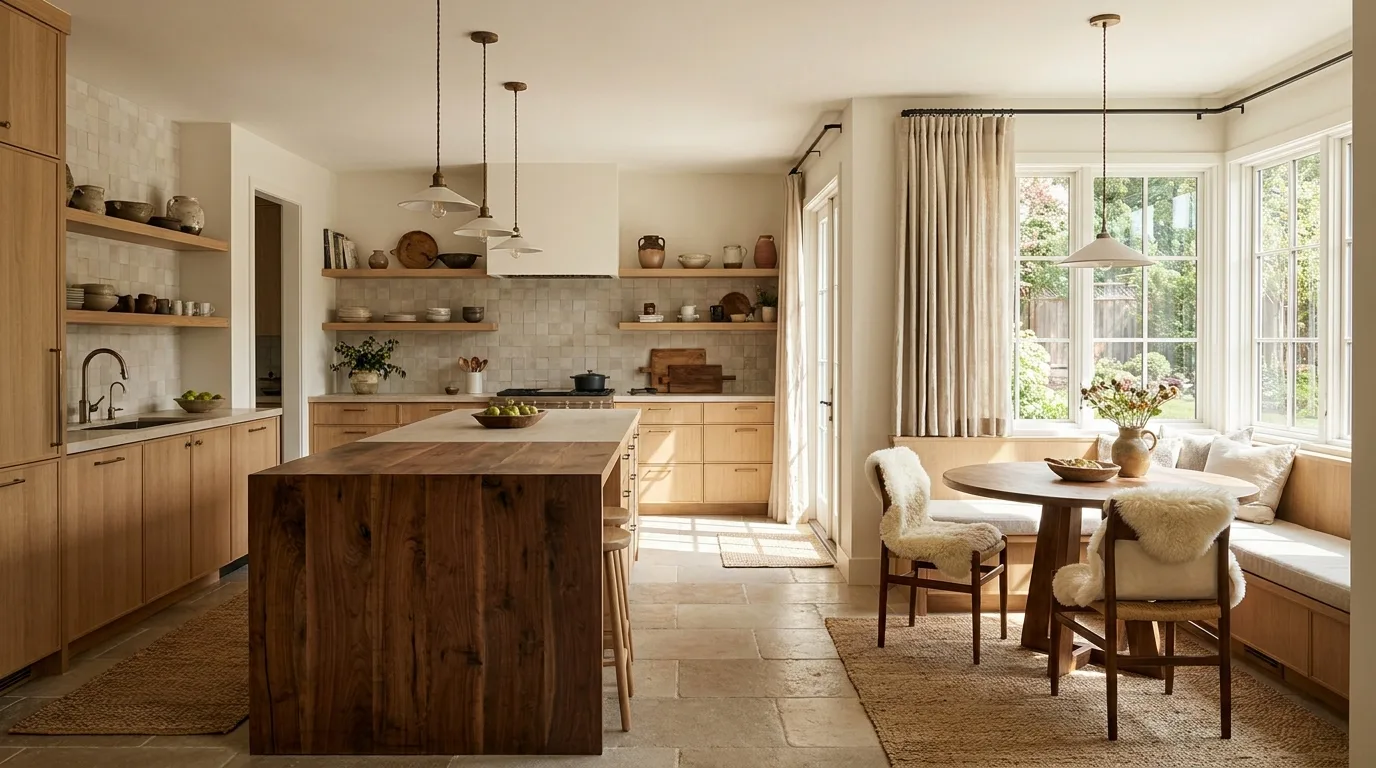
10. Compact Kitchen Peninsula Slab
A peninsula countertop can make a compact kitchen more functional without requiring a full island. Extending the slab from one run of cabinetry creates extra preparation space and can also provide seating for casual meals. For smaller rooms, choose a visually light material such as pale quartz or a softly patterned stone to help preserve an open feeling. Rounded or softened edges can improve circulation where people regularly walk past the peninsula. If stools are included, make sure the overhang provides comfortable knee space while still allowing cabinet doors and drawers to operate freely. A peninsula is especially useful in apartments and narrow kitchens because it combines workspace, storage, and a social area within a relatively compact footprint.
11. Integrated Sink With Matching Slab
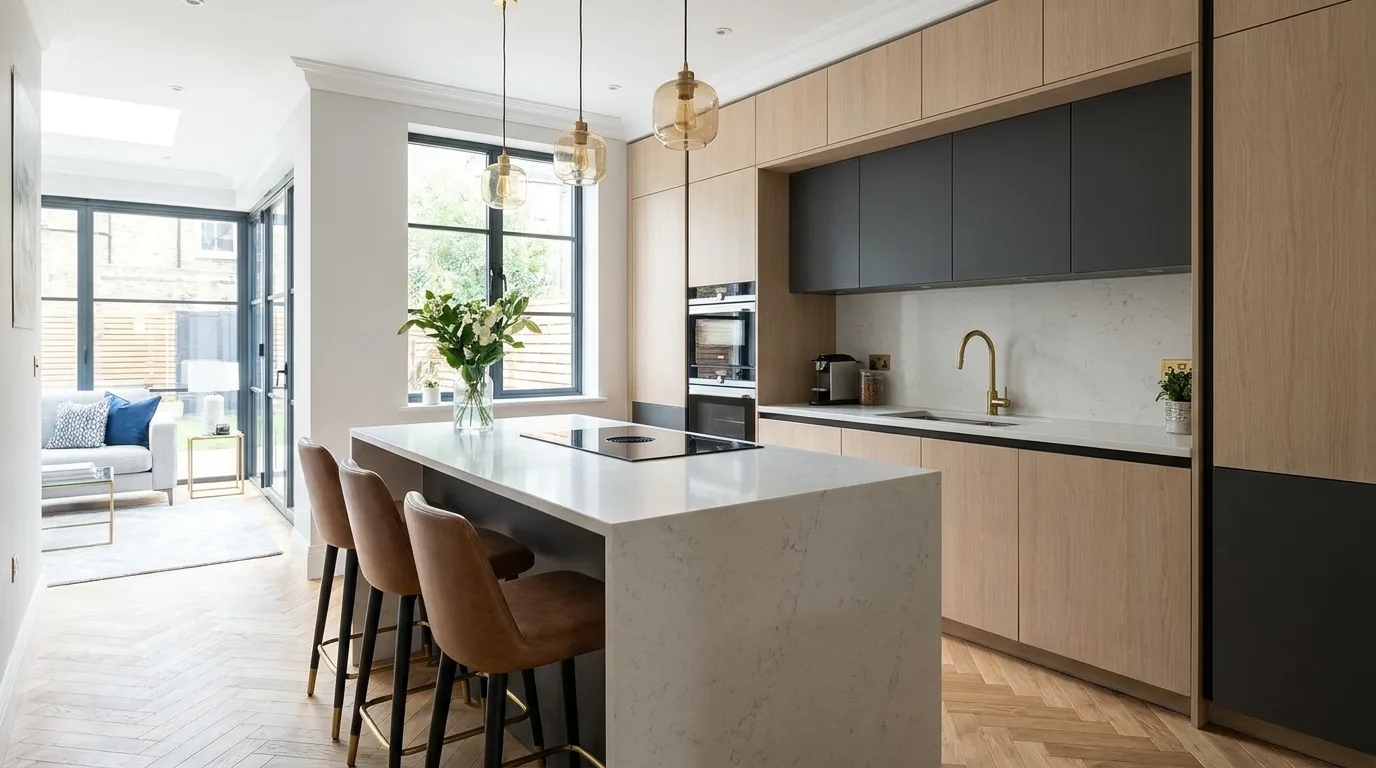
An integrated sink creates a sleek transition between the countertop and basin, eliminating the visual break created by a conventional sink rim. This approach is particularly attractive in minimalist kitchens where clean lines are a priority. Depending on the material and fabrication method, the sink can be made from or visually matched to the countertop for a continuous appearance. The lack of an exposed rim can also make everyday wiping easier because crumbs and spills have fewer edges around which to collect. Pair the integrated design with simple cabinetry and a streamlined faucet for maximum effect. Before choosing this option, confirm that the selected countertop material and local fabricator are suitable for the sink construction and installation method you want.
12. Extended Breakfast Bar Slab
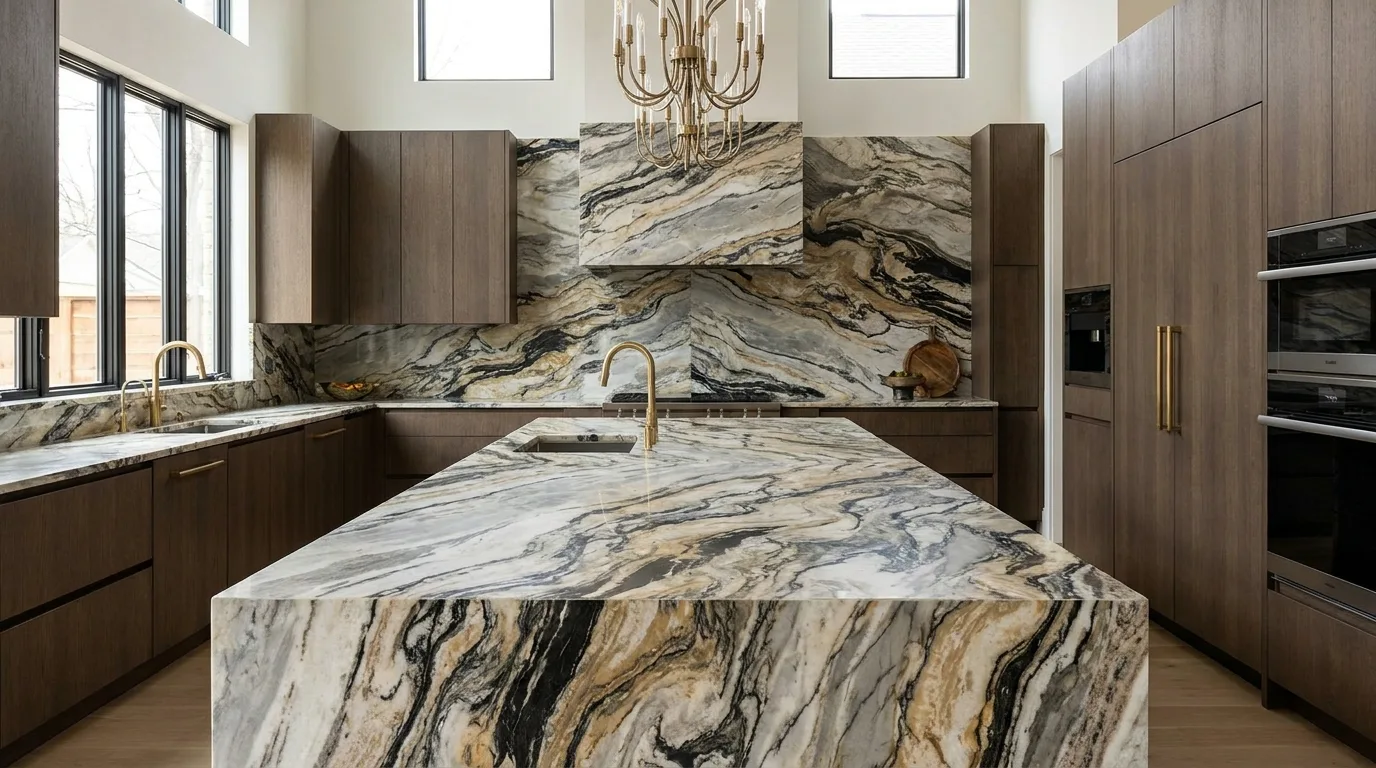
Extending the kitchen slab beyond the cabinetry can create a practical breakfast bar while giving the kitchen a more social layout. This design works particularly well on islands or peninsulas where family members can sit nearby while someone prepares food. A contrasting material can distinguish the seating zone, such as a wood extension paired with a stone worktop. Alternatively, continue the same slab for a streamlined built-in appearance. Pay attention to the depth and support required for the overhang, especially if several people will regularly use the bar. Comfortable stools, pendant lighting, and an uncluttered surface can turn the extension into a natural gathering point without compromising the kitchen’s main preparation areas.
13. Terrazzo-Inspired Kitchen Slab
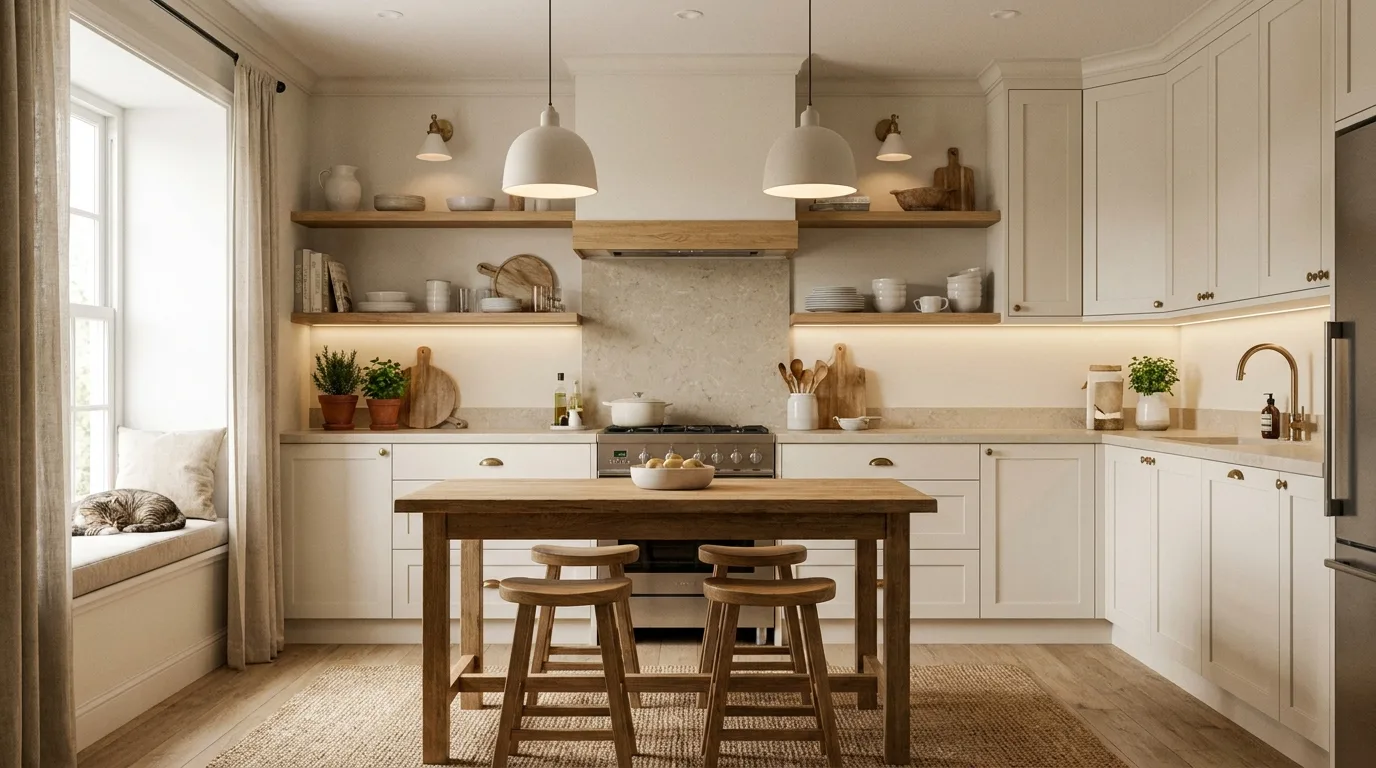
Terrazzo-inspired countertops bring playful texture to a kitchen through a base color scattered with chips in complementary shades. Depending on the design, the fragments can be subtle enough for a sophisticated neutral kitchen or colorful enough to become a major decorative feature. This style works particularly well with simple cabinetry because the slab provides pattern without requiring elaborate wall decor. Choose chip colors that already appear elsewhere in the room for a coordinated finish. Terrazzo-style surfaces can suit contemporary, retro, and eclectic kitchens, making them more flexible than they might initially appear. If your cabinetry is already patterned or strongly colored, select a quieter terrazzo design to keep the overall composition balanced.
14. Sleek Gray Quartz Slab
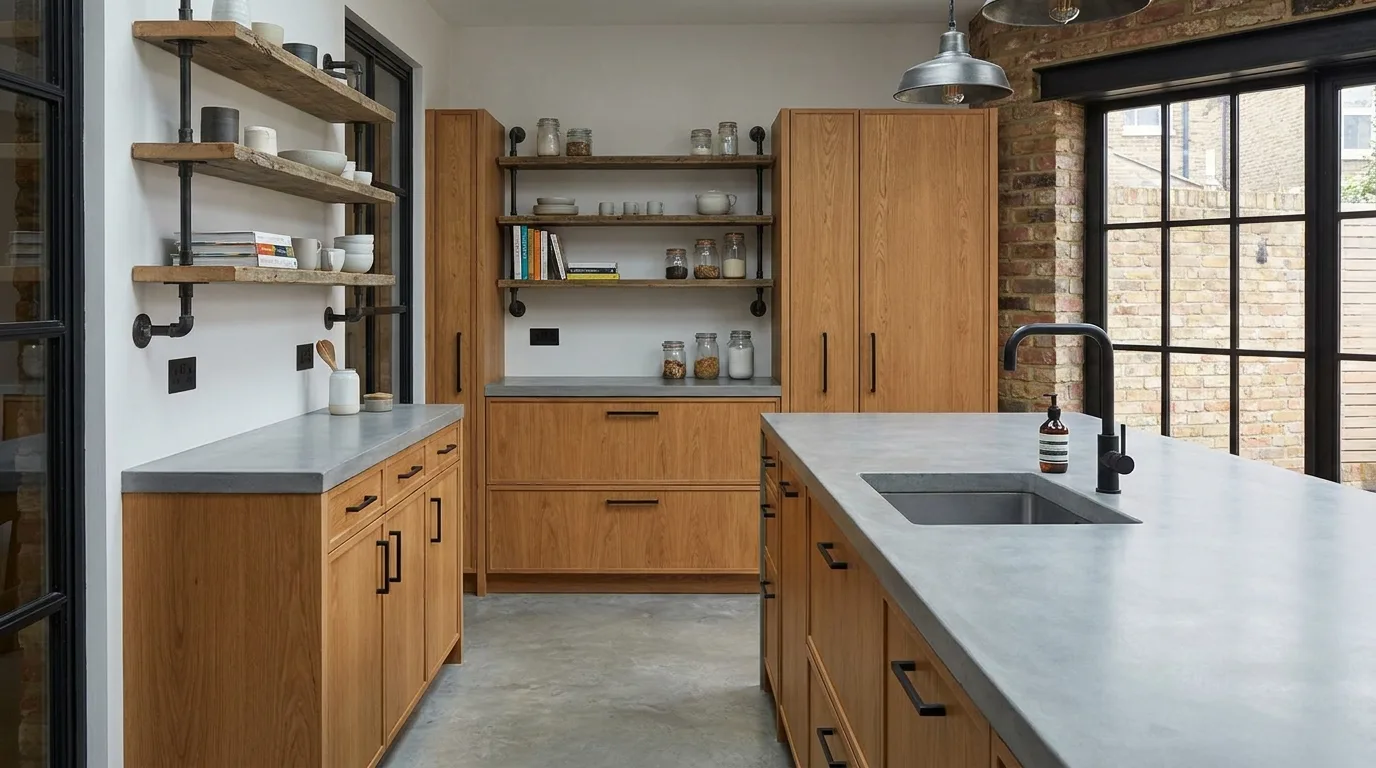
Gray quartz offers a balanced middle ground between bright white and dramatic dark countertops. Light gray works well in compact kitchens because it maintains brightness while providing more visual definition than pure white. Medium and charcoal gray slabs can create a sophisticated foundation for pale wood, white cabinetry, or muted green finishes. If you prefer a modern look, choose a slab with minimal pattern and pair it with handleless or slim-profile cabinetry. For a softer transitional kitchen, subtle veining can add movement without overwhelming the room. Gray is also a useful long-term choice because it coordinates easily with changing accent colors, allowing you to refresh stools, lighting, textiles, and accessories without replacing the countertop.
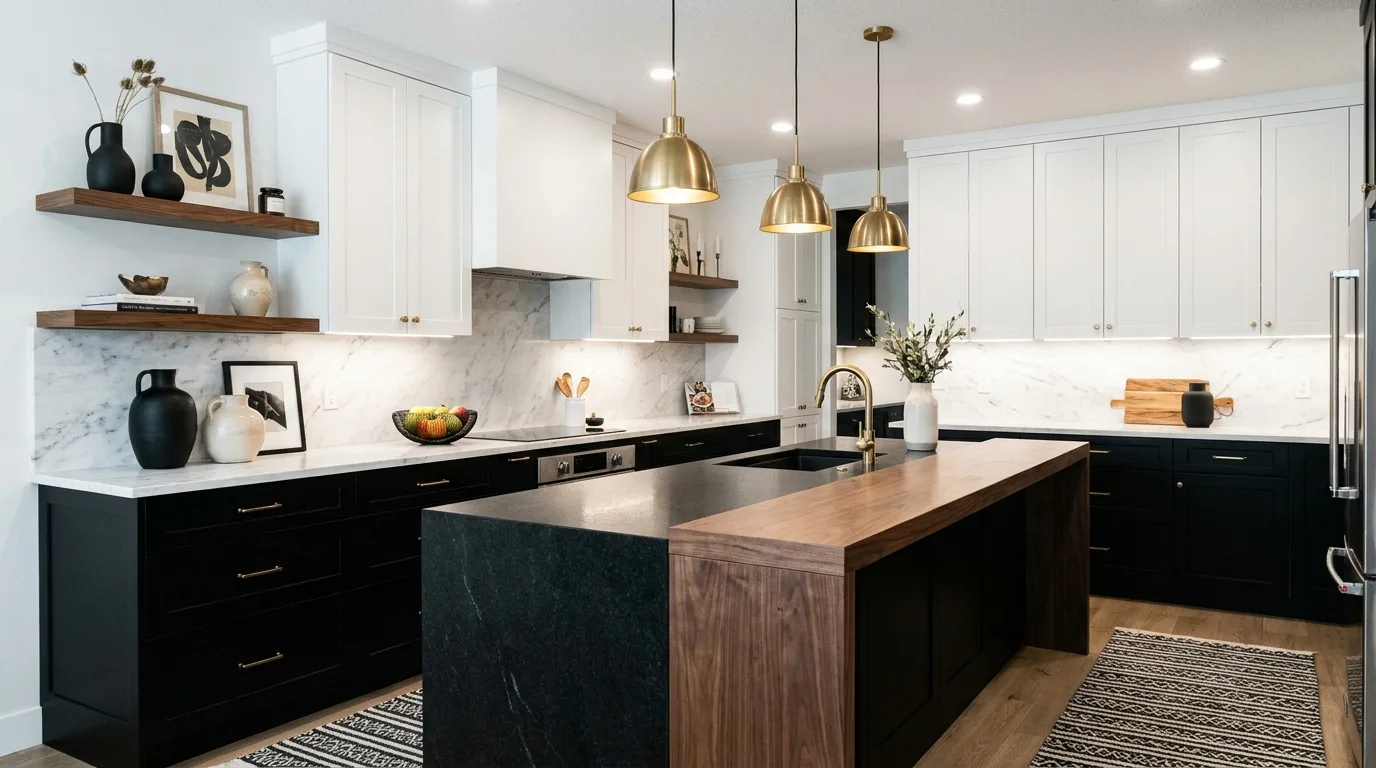
15. Matching Countertop and Backsplash
Using the same material for the kitchen slab and backsplash creates a continuous surface that can make the room appear more spacious and deliberately designed. This technique is especially effective with marble-look or softly veined slabs because the pattern can travel upward rather than stopping abruptly at the counter edge. A full-height backsplash also reduces the number of competing lines in the kitchen, which can make cabinetry appear cleaner. To avoid an overly uniform result, introduce contrast through cabinet color, flooring, lighting, or hardware. This design is particularly attractive behind a range or sink where the uninterrupted material becomes a strong focal point. Before installation, plan seam placement carefully so the overall pattern remains visually coherent.
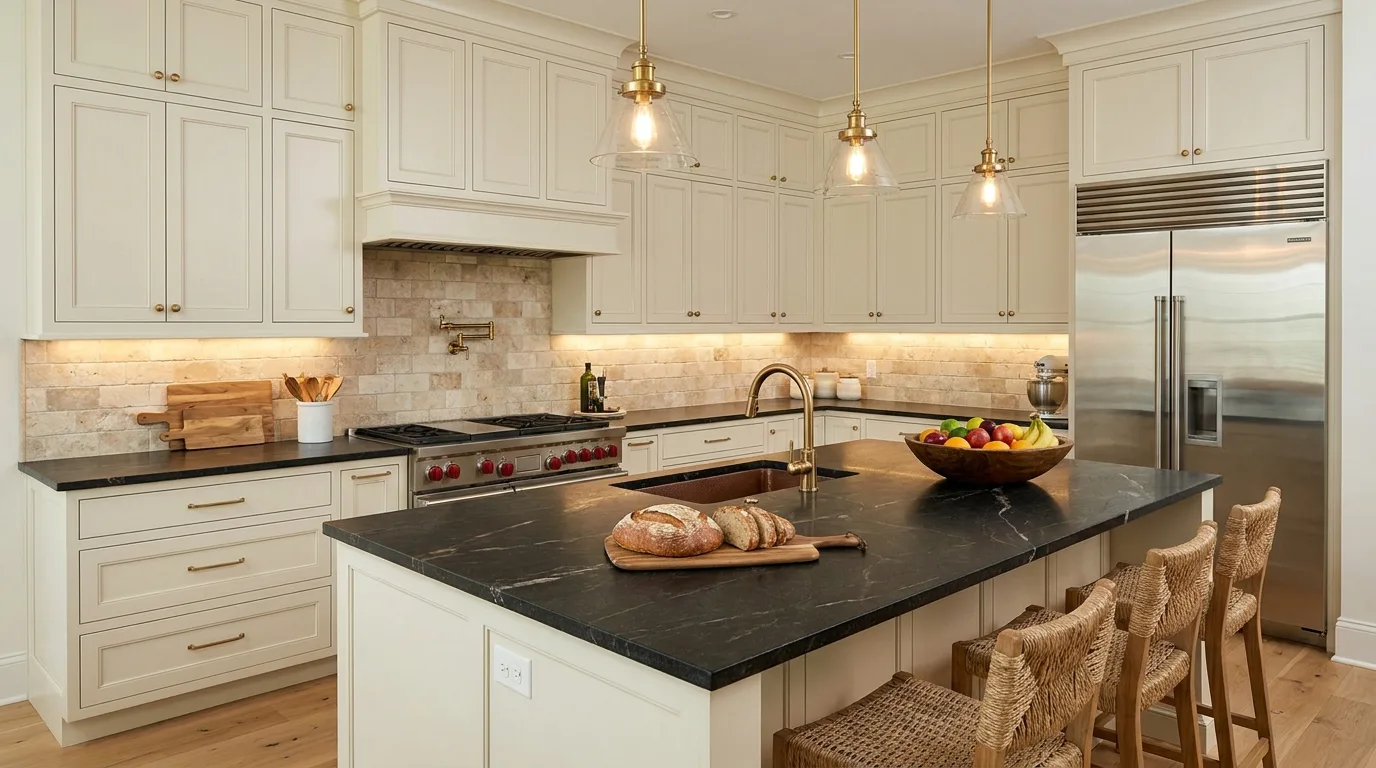
16. Rounded Edge Kitchen Slab
Rounded or softly eased countertop edges can give a kitchen a friendlier appearance while improving the feel of areas with frequent foot traffic. This detail is particularly useful on islands and peninsulas where people move around corners regularly. A rounded edge works across many materials, from quartz and granite to solid-surface countertops, and it can shift the character of a kitchen from sharply modern to comfortably transitional. The curve does not need to be dramatic; a modestly softened profile can be enough to create a noticeable difference. Combine the edge with curved pendant lights, rounded stools, or arched architectural details if you want to repeat the shape elsewhere. This creates subtle visual rhythm without making the kitchen feel overly themed.
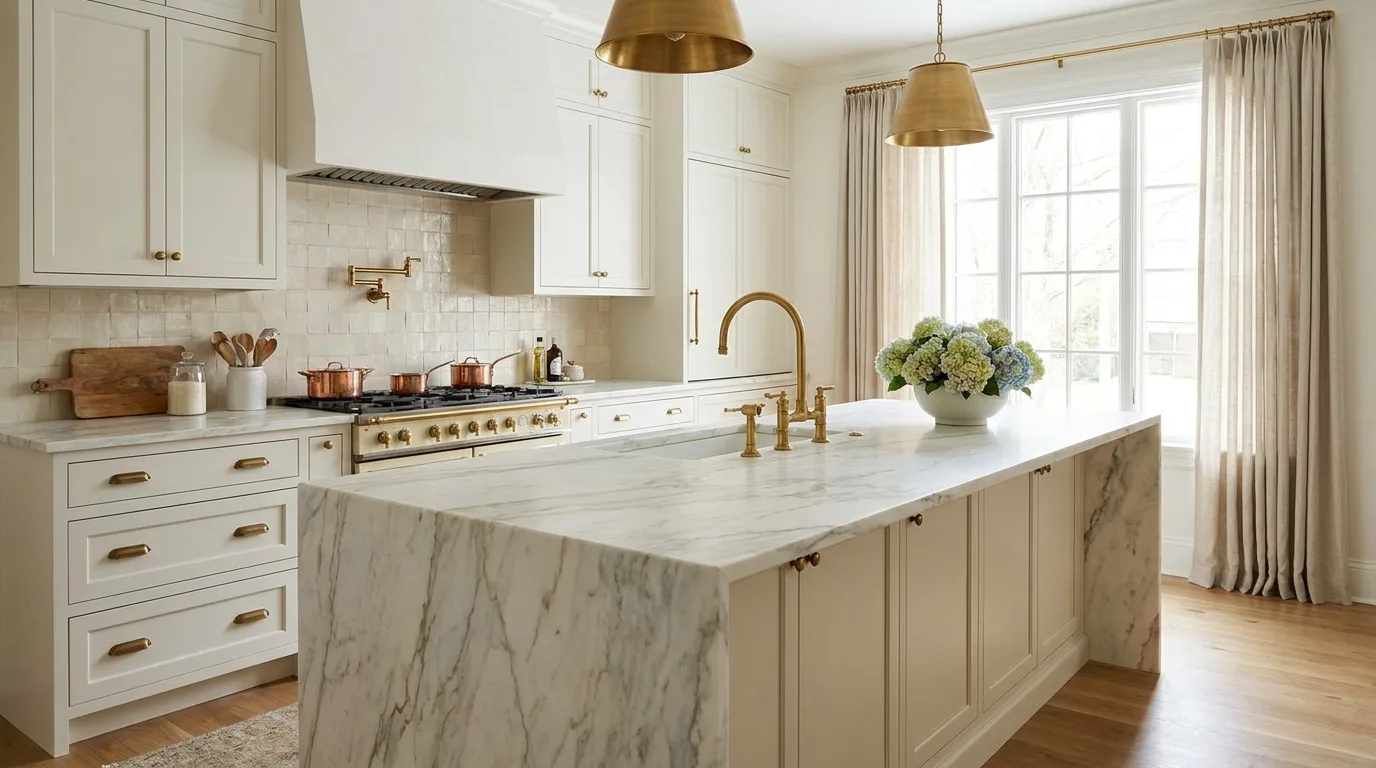
17. Two-Tone Kitchen Slab Design
A two-tone slab design lets you divide different kitchen functions while adding visual depth to the overall layout. For example, a durable neutral stone can cover the primary preparation zones while a wood or contrasting stone surface defines a breakfast counter or island. Another option is to use one slab color throughout the perimeter cabinets and a second shade on the island. The key is to establish a clear relationship between the two materials through cabinet colors, flooring, or hardware. Avoid introducing too many unrelated finishes, particularly in smaller kitchens. When planned carefully, a two-tone countertop arrangement can make separate work and social zones feel intentional while giving the kitchen a customized, designer-inspired appearance.
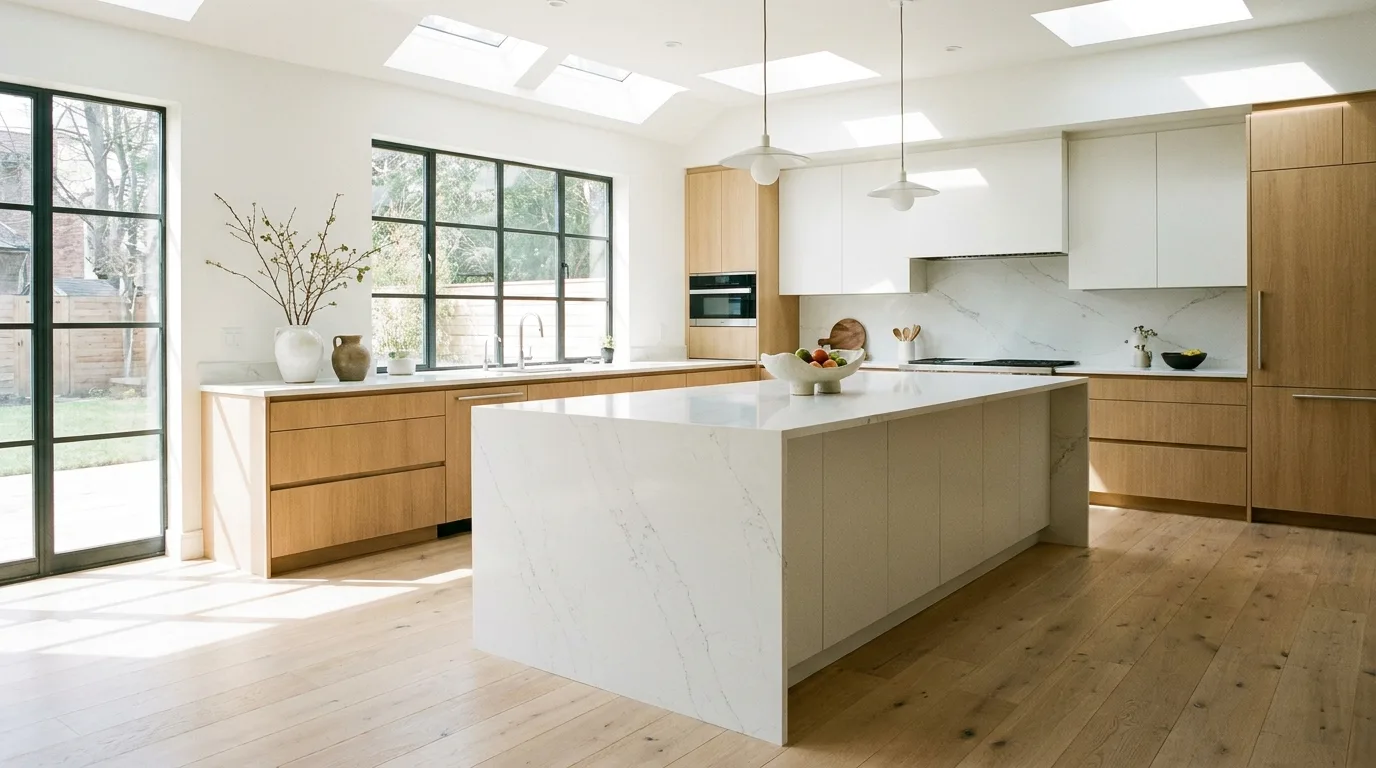
How to Choose the Right Kitchen Slab
The most attractive slab is not necessarily the right one for every kitchen. Start by considering how much cooking, cleaning, and entertaining the surface will handle. Compare durability, stain resistance, heat tolerance, maintenance requirements, edge profiles, and installation needs before choosing a material. Next, view large samples alongside your cabinets, flooring, backsplash, and lighting because colors can look very different under different conditions. If your kitchen is small, lighter surfaces can help maintain an open feeling, while darker slabs can add depth when balanced with sufficient light. Finally, consider your budget and fabrication requirements rather than focusing only on the price of the raw material. A successful kitchen slab design should look beautiful while fitting naturally into your daily routine.
Conclusion
A thoughtfully chosen kitchen slab can change the character of the entire room, whether you prefer classic white quartz, dramatic veining, warm wood, natural granite, or a contemporary concrete-inspired finish. The strongest designs balance aesthetics with practical requirements such as maintenance, durability, layout, and available workspace. Use these ideas as a starting point, then compare materials and samples in your actual kitchen before making a final decision. With the right combination of slab material, edge detail, color, and surrounding finishes, your countertop can become one of the most functional and visually appealing features in your kitchen.