Window flower boxes are one of the easiest ways to add color, charm, and personality to a home’s exterior. Whether you live in a cottage, townhouse, modern home, or apartment, the right combination of flowers and foliage can transform an otherwise plain window into a welcoming focal point. The best window boxes are not simply packed with blooms; they balance height, texture, trailing plants, color, and seasonal interest. Before planting, consider how much sunlight the window receives, how often you can water, and whether the box will be viewed from indoors as well as outside. From classic cottage combinations to sleek modern arrangements, these 18 window flower box ideas offer practical inspiration for creating displays that look polished without becoming difficult to maintain.
1. Classic Cottage Flower Box
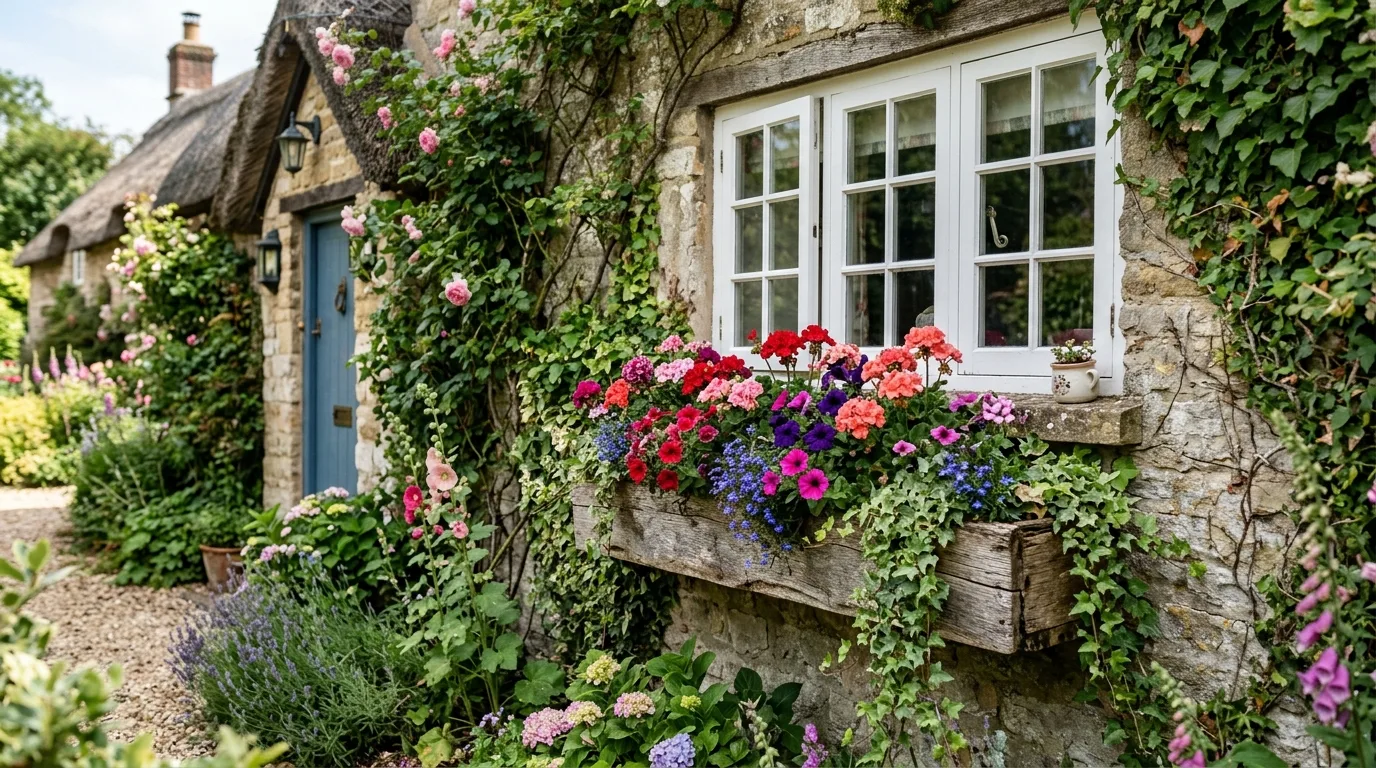
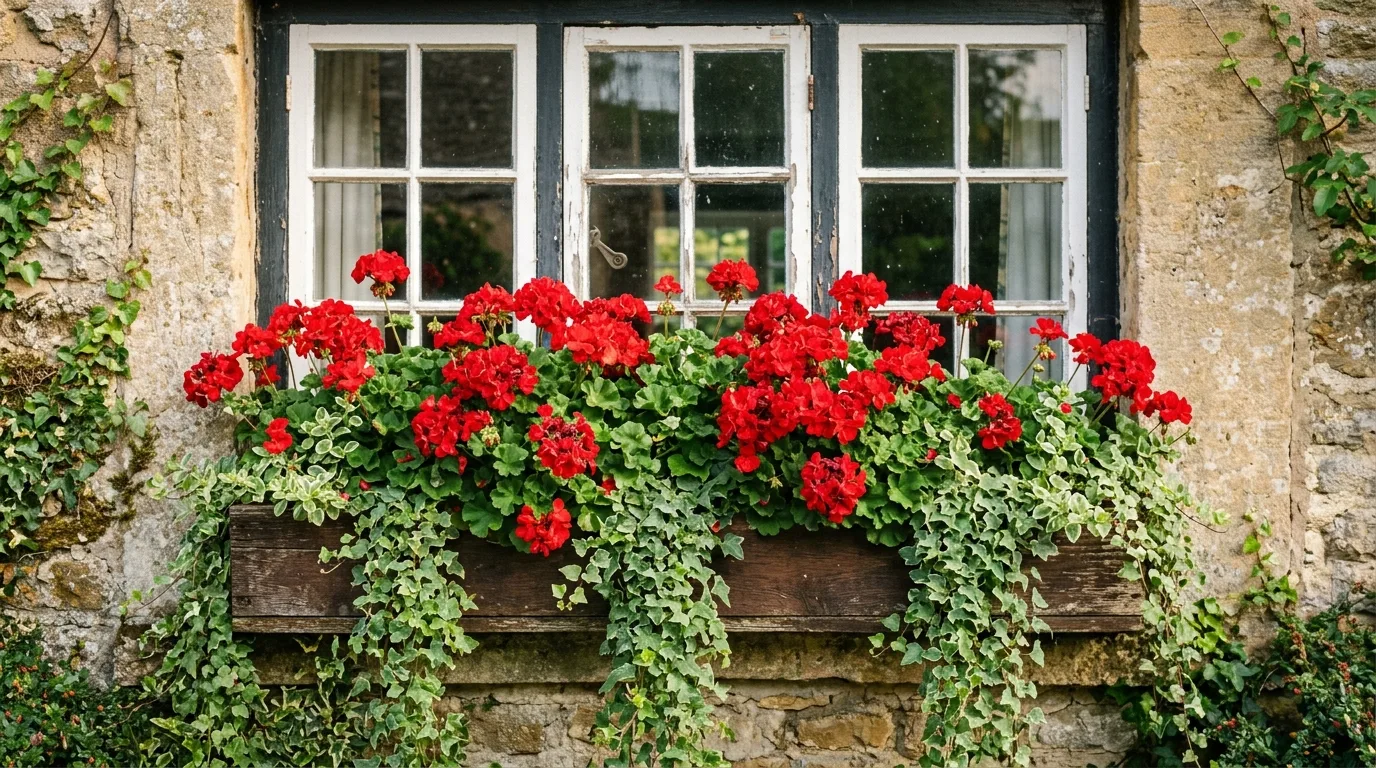
A classic cottage-style window box works beautifully with a relaxed mix of colorful annuals and trailing greenery. Combine geraniums, petunias, lobelia, and ivy for a display that feels abundant without looking overly formal. Choose flowers in two or three complementary colors rather than using every shade available. Place taller or fuller plants toward the back, medium-height flowers in the center, and trailing varieties near the front edge so the arrangement has natural depth. A weathered wooden or painted box reinforces the cottage character, while galvanized metal creates a more rustic farmhouse effect. This style is especially attractive beneath white-framed windows because the foliage and flowers provide strong contrast. Regular deadheading and trimming will help keep the display full throughout the flowering season.
2. Bright Geranium Window Box
Geraniums are a dependable choice when you want a window box with bold flowers and a traditional appearance. Their rounded clusters of blooms create strong visual impact, while their relatively upright growth keeps the arrangement looking structured. Red geraniums are especially classic, but pink, coral, white, and burgundy varieties can create softer or more contemporary combinations. Add a trailing plant such as ivy or bacopa around the edges to soften the box and create movement. Geraniums generally appreciate plenty of light, so they are particularly useful for sunny windows. Use a container with drainage holes and avoid keeping the soil constantly saturated. Because the flowers can continue blooming for a long season with proper care, a geranium-focused box is a practical option for homeowners who want plenty of color without an overly complicated planting scheme.
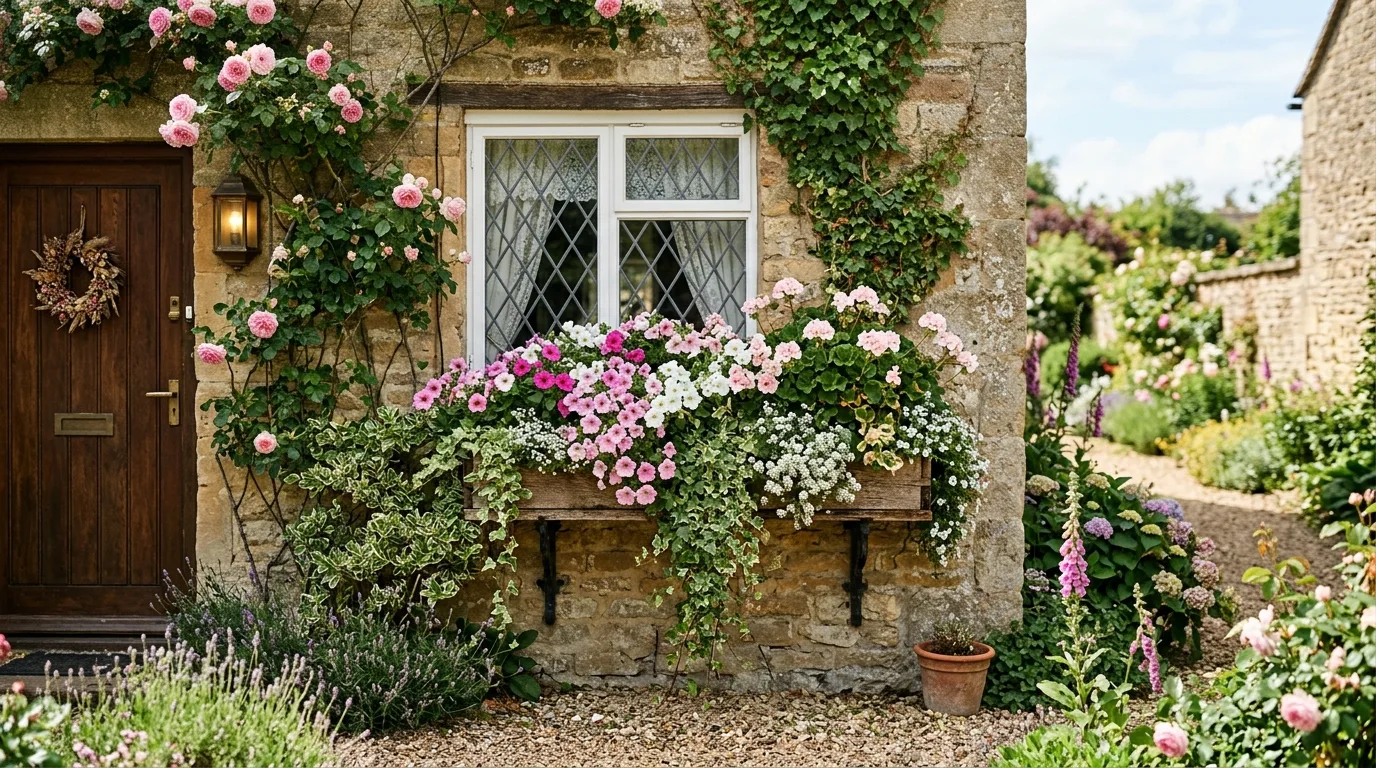
3. Romantic Pink and White Blooms
A pink-and-white flower box creates a soft, romantic look that works particularly well with traditional architecture. Combine pink petunias, white alyssum, pale geraniums, and delicate trailing plants for a layered arrangement with plenty of movement. The limited color palette makes the display feel intentional even when several different plant varieties are used. Place taller blooms toward the center or back, then let lower flowers fill the front and spill over the edges. White flowers are especially useful because they remain visible in lower evening light and can brighten a shaded facade. This combination looks lovely beneath black, gray, or white window frames. For an even more romantic effect, choose a wooden box in a muted neutral finish rather than a highly polished container.
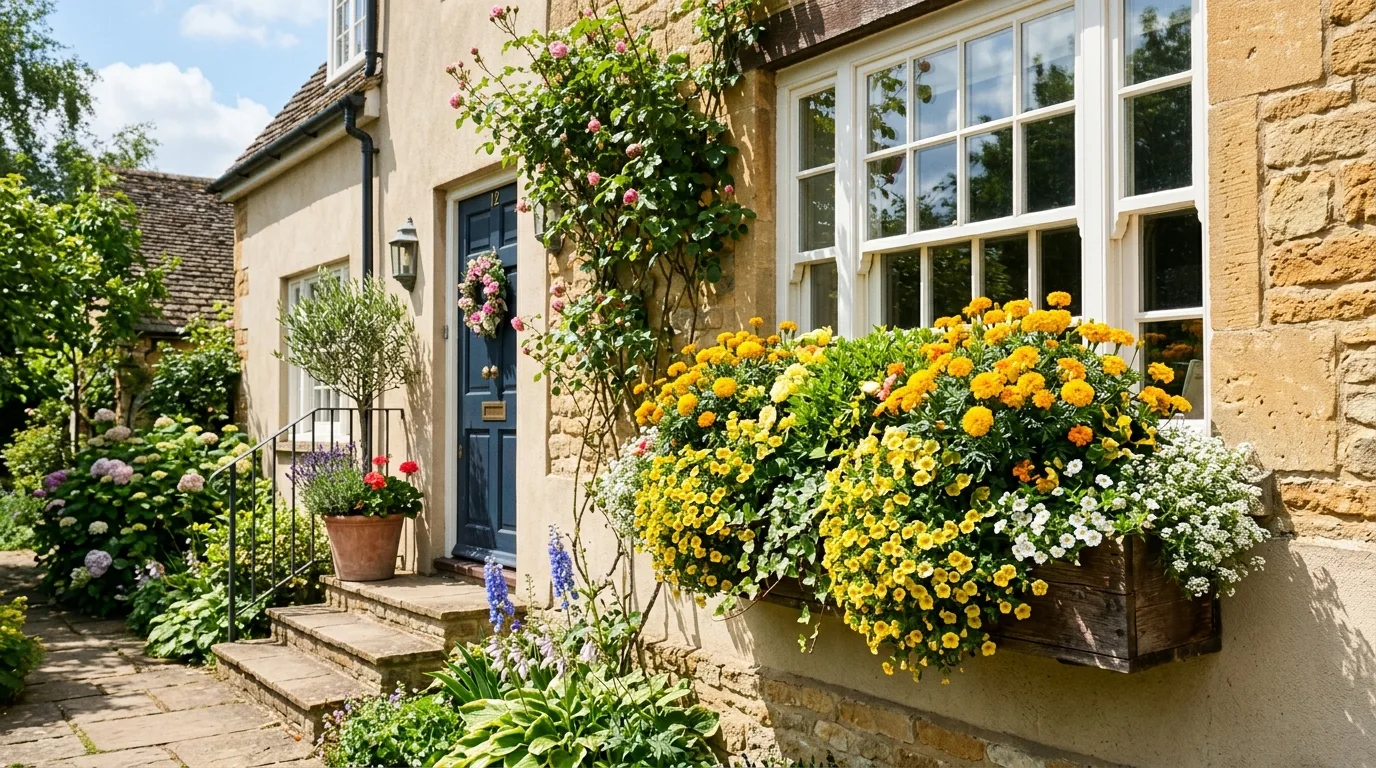
4. Sunny Yellow Flower Box
Yellow flowers can instantly make a home’s exterior feel brighter and more welcoming. A sunny window box can feature marigolds, calibrachoa, bidens, or yellow petunias, supported by green foliage for contrast. If an entirely yellow arrangement feels too intense, add white flowers or a small amount of purple foliage to create visual balance. Yellow works particularly well against dark exterior siding, brick, or natural wood. Since many yellow-flowering annuals enjoy bright conditions, this idea is a natural fit for windows receiving several hours of sunlight. Keep the arrangement proportional to the window: smaller boxes look better with a restrained selection of plants, while wider boxes can support several varieties. Consistent watering is important during hot weather because shallow window boxes can dry out faster than garden beds.
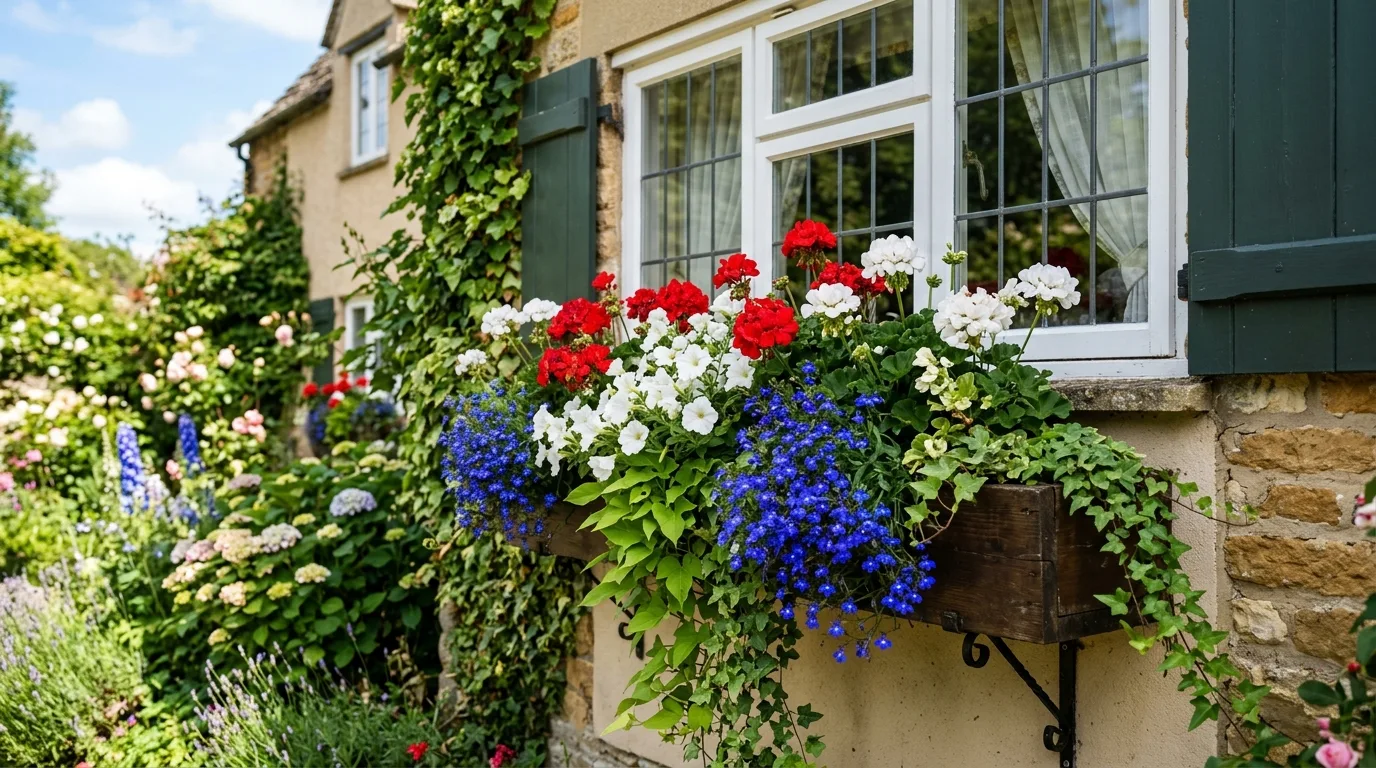
5. Red, White, and Blue Display
A red, white, and blue window box can bring a cheerful seasonal character to a porch, balcony, or front-facing window. Petunias, geraniums, lobelia, and sweet alyssum can be combined to create the palette without making the arrangement look overly uniform. Use blue flowers toward the front or sides, white blooms to bridge the colors, and red flowers as strong focal points. Green foliage keeps the three-color combination from becoming visually heavy. This type of display is particularly effective for summer gatherings and patriotic celebrations, but the individual plants can also be rearranged later for a less seasonal look. Choose a sturdy, well-draining container and make sure the mounting hardware is appropriate for the box’s weight when fully watered.
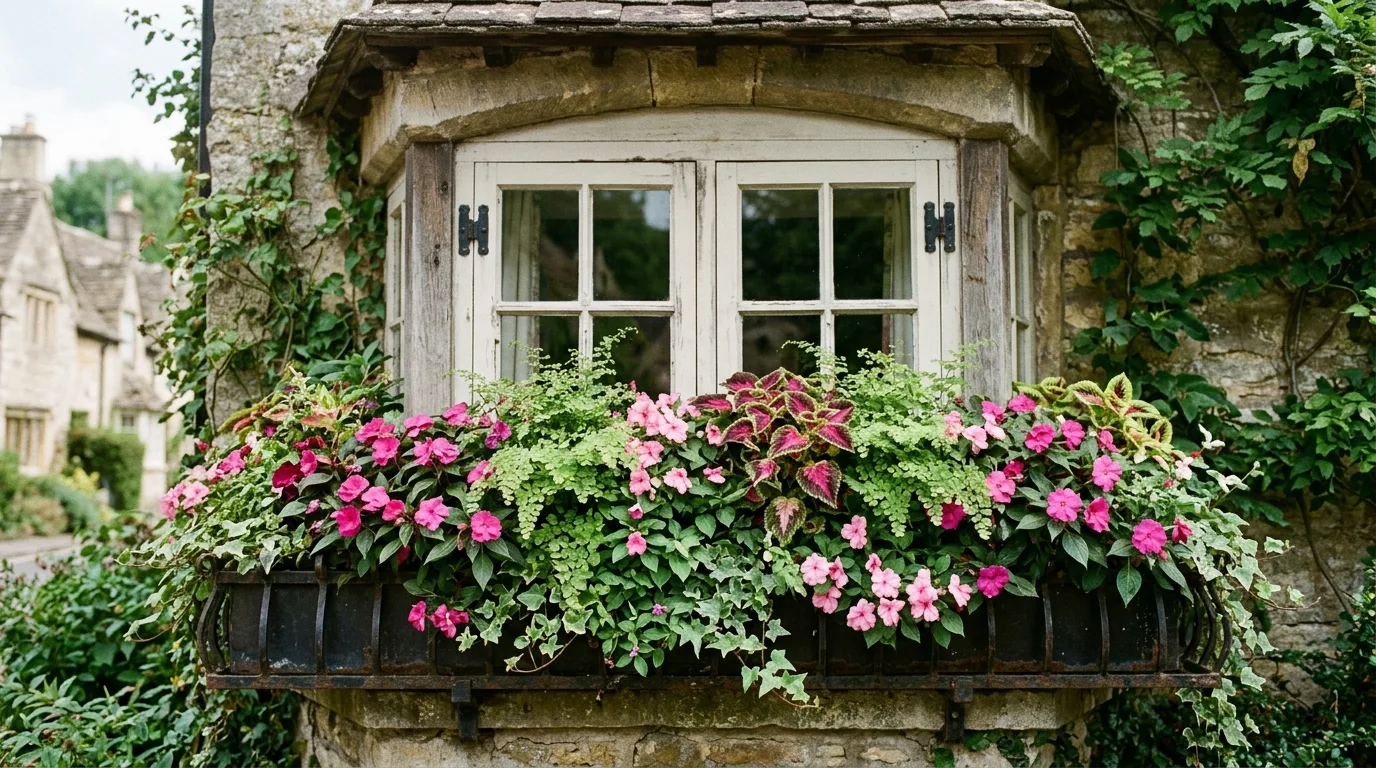
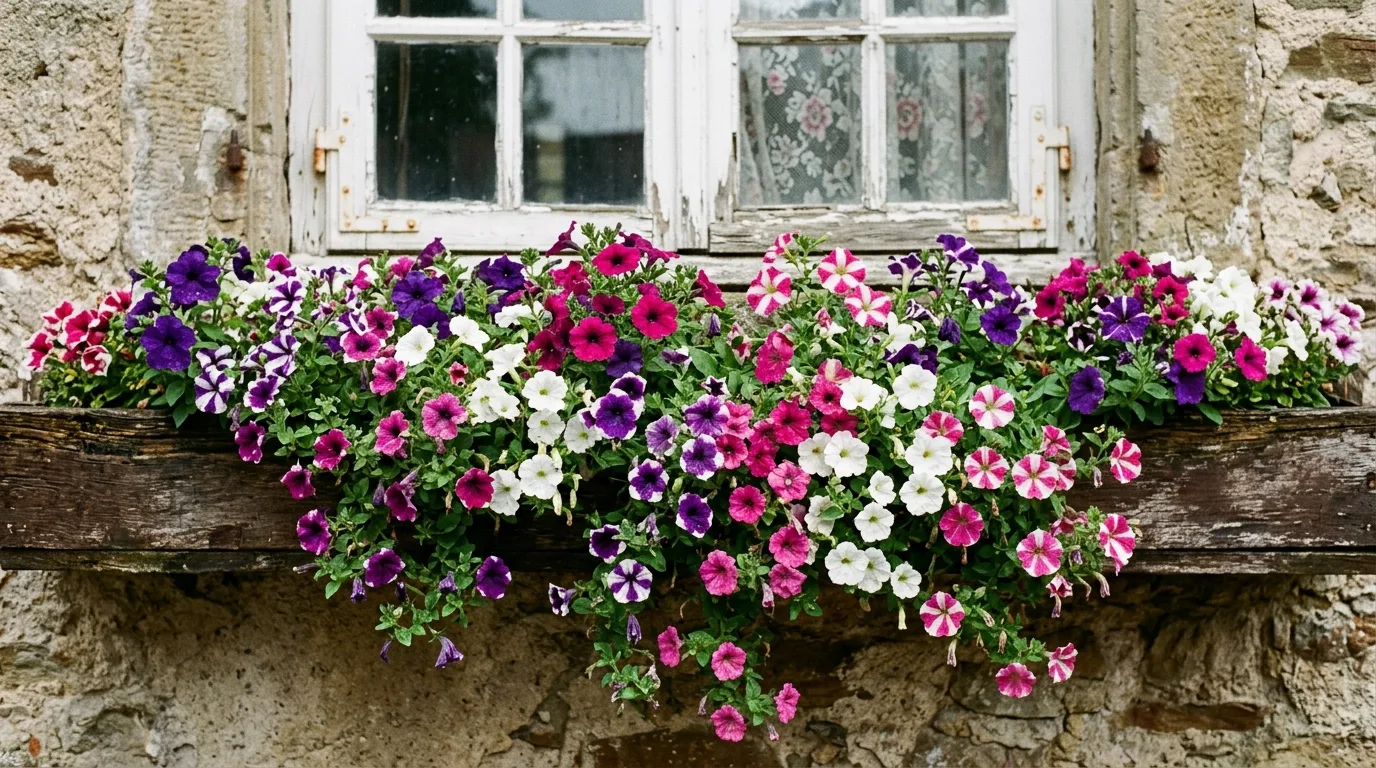
6. Overflowing Petunia Window Box
Petunias are ideal when you want a lush window box that appears to spill naturally over the sides. Their trumpet-shaped flowers come in an enormous range of colors, allowing you to create anything from a soft pastel arrangement to a dramatic jewel-toned display. Use several plants rather than overcrowding the box with too many varieties. Trailing petunias are especially effective because their stems can cascade over the front edge and visually connect the flowers with the architecture below. Regular watering is essential during warm weather, while deadheading or light trimming can encourage a tidier appearance. For a polished result, repeat the same flower color in several places throughout the box rather than grouping each color into separate sections. This creates a more natural, cohesive planting pattern.
7. Farmhouse Window Box With White Flowers
White flowers paired with green foliage create a clean farmhouse look that complements wood siding, painted brick, and neutral exteriors. Try white geraniums, bacopa, alyssum, or petunias mixed with trailing ivy or ornamental foliage. A simple wooden box with a slightly weathered finish enhances the relaxed farmhouse character without competing with the plants. Because white blooms reflect light, this palette can make a window appear brighter and more prominent. Add a small amount of soft green or silvery foliage for texture rather than introducing many additional flower colors. This style is also versatile because it can transition between seasons with relatively minor changes. When choosing the container, prioritize drainage and sturdy construction, especially if the box will be mounted beneath a frequently opened window.
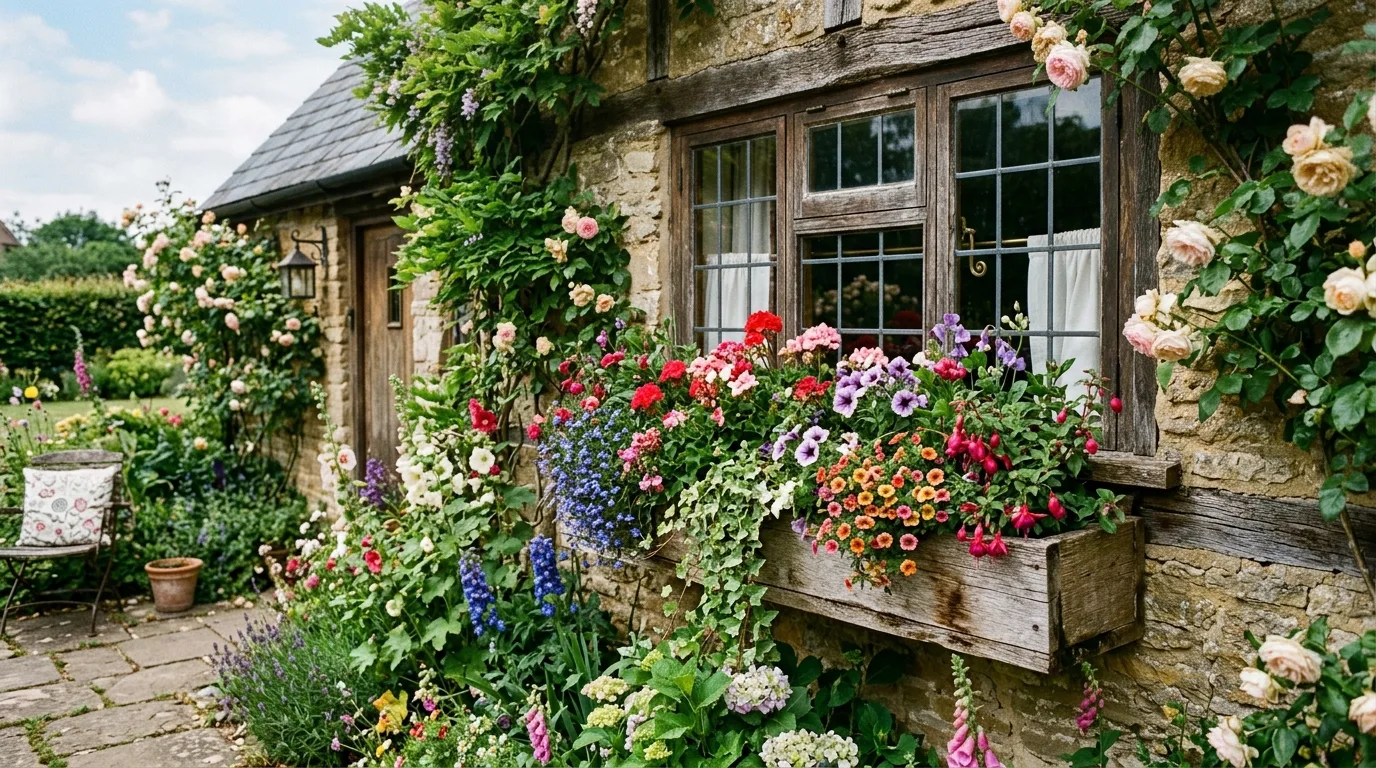
8. Colorful Cottage Mix
For a playful garden look, combine several flower colors and forms in one generous window box. Think pink petunias, purple verbena, yellow calibrachoa, white alyssum, and trailing green foliage arranged in a loose, natural pattern. The key is to repeat colors rather than placing each variety in isolated blocks. This makes the display feel like a miniature cottage garden instead of a row of separate plants. Varying flower sizes also adds interest: small blooms can fill gaps while larger flowers become focal points. A colorful arrangement is especially effective on plain exterior walls because it provides a lively contrast. To prevent the box from looking chaotic, keep the foliage palette relatively consistent and use plants with similar light and watering requirements.
9. Elegant Lavender and Purple Box
Purple and lavender flowers create an elegant window display that works with both traditional and contemporary homes. Combine lavender-toned petunias, verbena, lobelia, or calibrachoa with silvery foliage for a sophisticated palette. The cool tones are particularly attractive against pale siding, stone, or warm brick. To add dimension, use upright flowers toward the back and trailing purple varieties along the front edge. A charcoal, black, or natural wood container can make the colors appear even richer. If your window receives strong afternoon sun, choose varieties suited to those conditions rather than selecting plants based on color alone. Prune overly long stems periodically so the box retains a balanced shape and does not become visually heavier on one side.
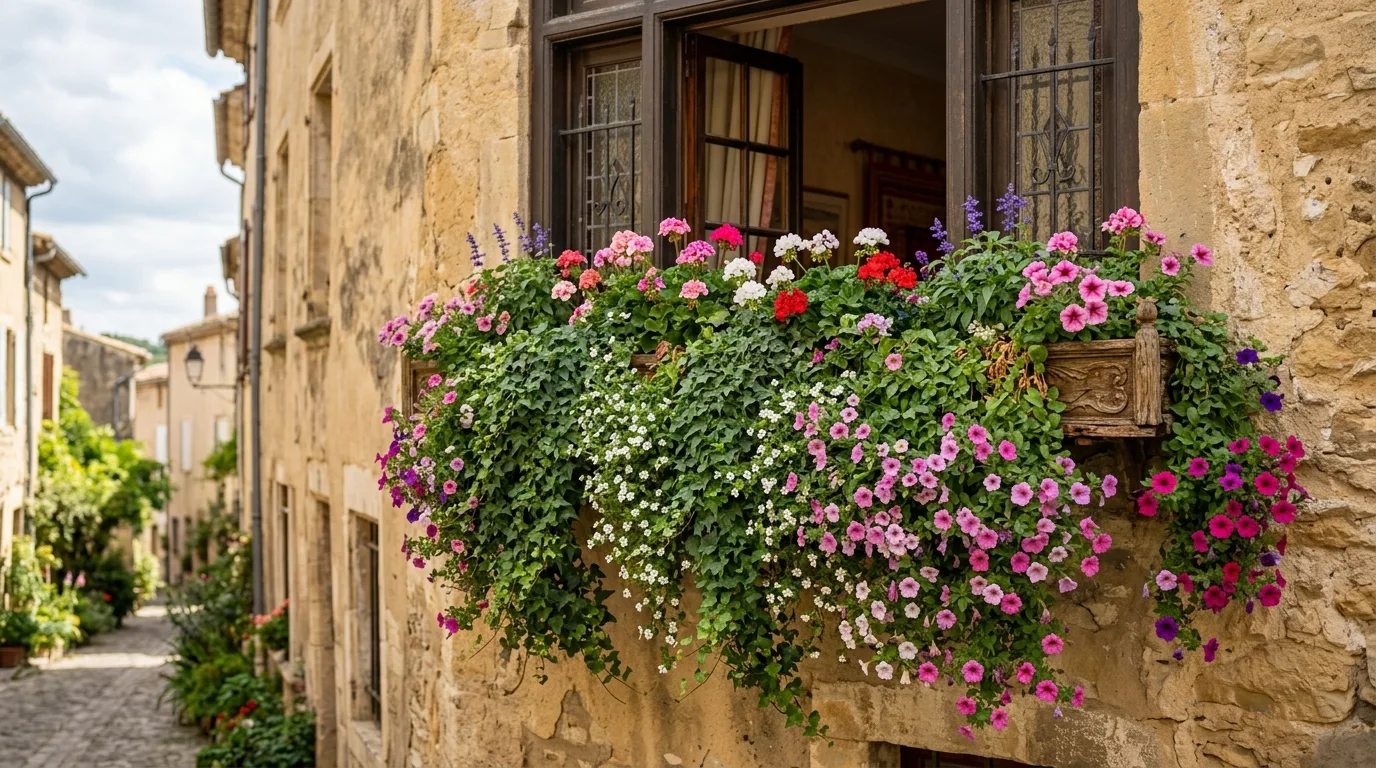
10. Window Box With Trailing Vines
Trailing plants can turn an ordinary flower box into a dramatic cascade of greenery and blooms. Ivy, bacopa, sweet potato vine, trailing petunias, and creeping Jenny can spill over the front edge and soften the hard lines of the container. Pair one trailing plant with upright flowers for contrast rather than filling the entire box with cascading stems. This approach works particularly well on upper-story windows because the foliage creates a vertical connection between the window and the area below. Keep in mind that vigorous vines may need occasional trimming so they do not obstruct windows, gutters, or exterior fixtures. Choose plants according to the available light and be careful not to combine a vigorous species with slower-growing flowers that could be overwhelmed.
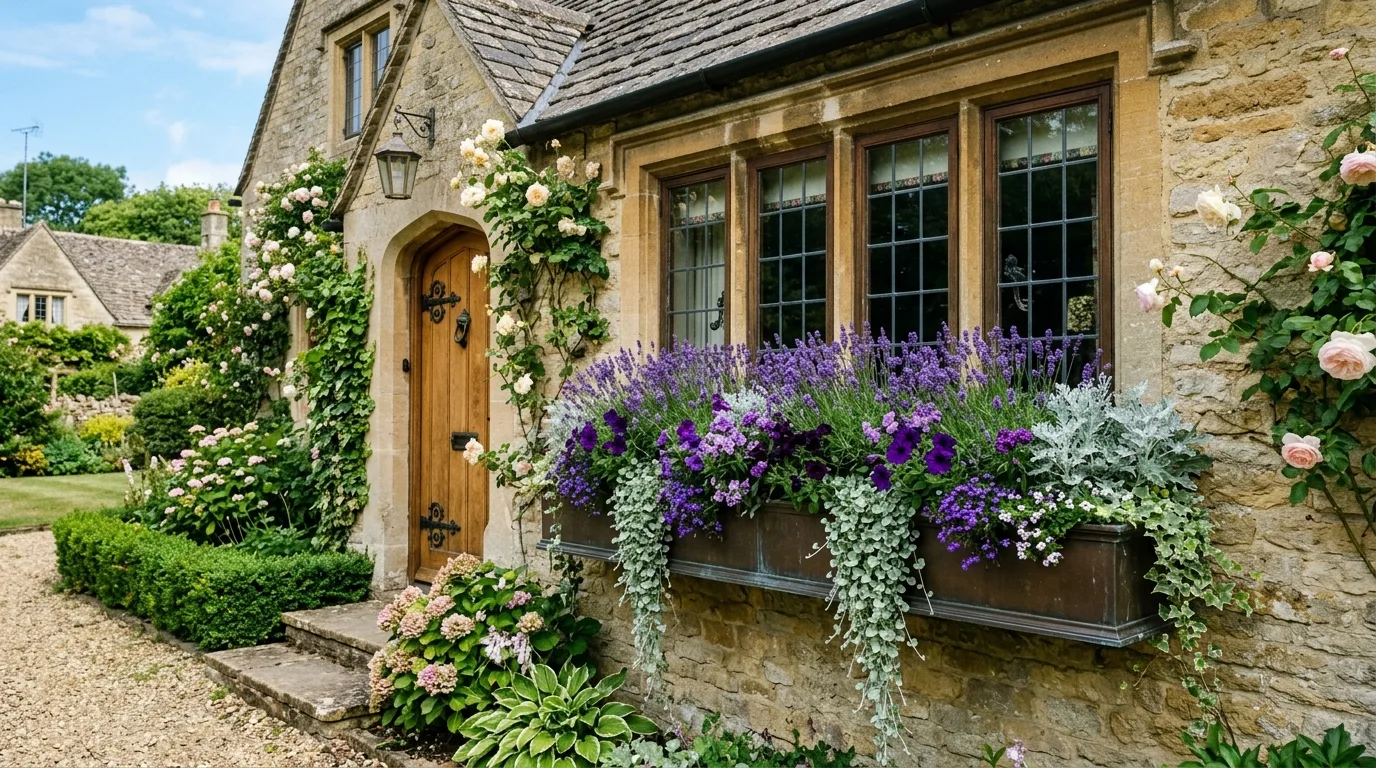
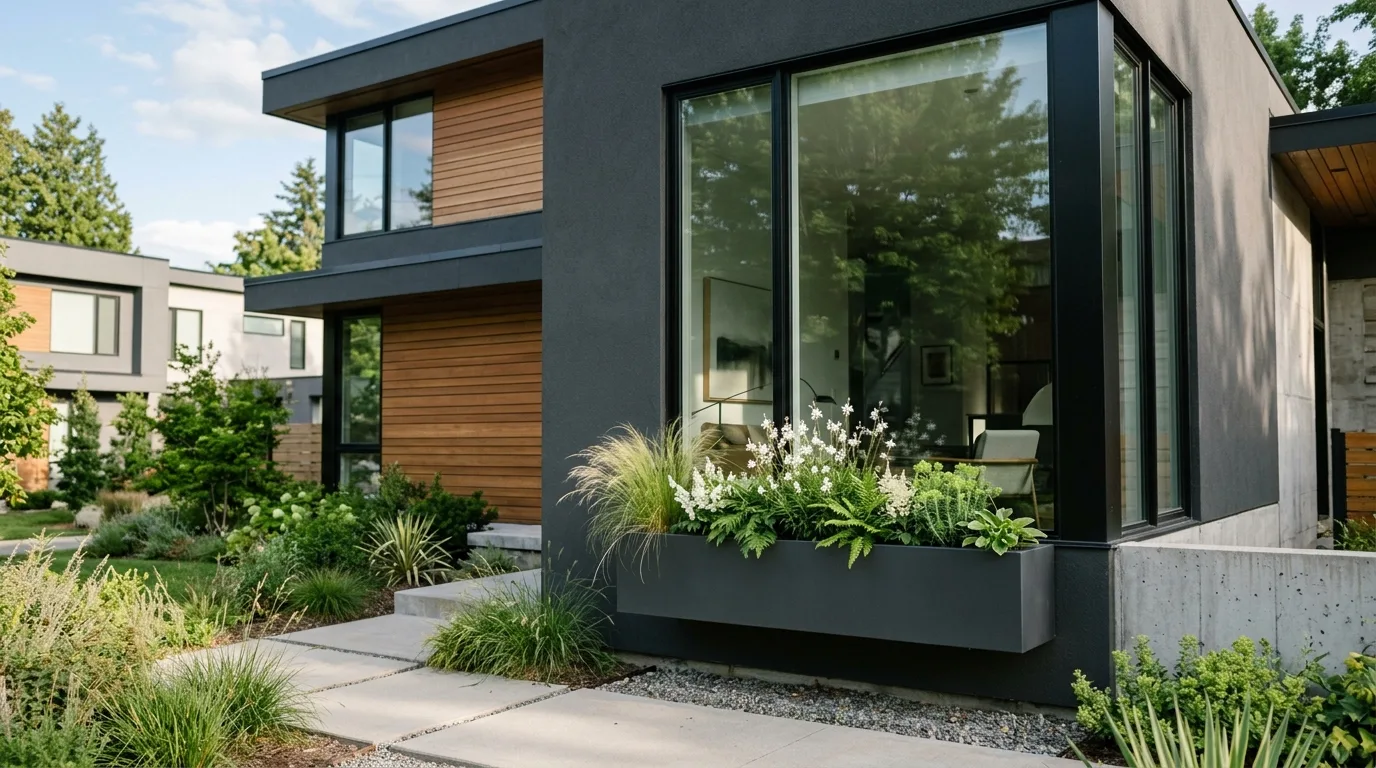
11. Modern Minimalist Flower Box
A modern flower box does not need dozens of blooms to make an impact. Instead, focus on a limited color palette, clean lines, and a carefully selected mix of plants. A long rectangular planter in black, charcoal, white, or concrete gray can provide a sleek foundation. Try white petunias with ornamental grasses, green foliage, or one repeating flower variety for a restrained appearance. The simplicity of the arrangement allows the architecture of the home to remain part of the design. Keep plant spacing relatively consistent and trim anything that becomes excessively uneven. Modern displays are particularly effective when several windows share the same planter style or color scheme. Choose lightweight containers when mounting boxes on structures where excessive weight could become a concern.
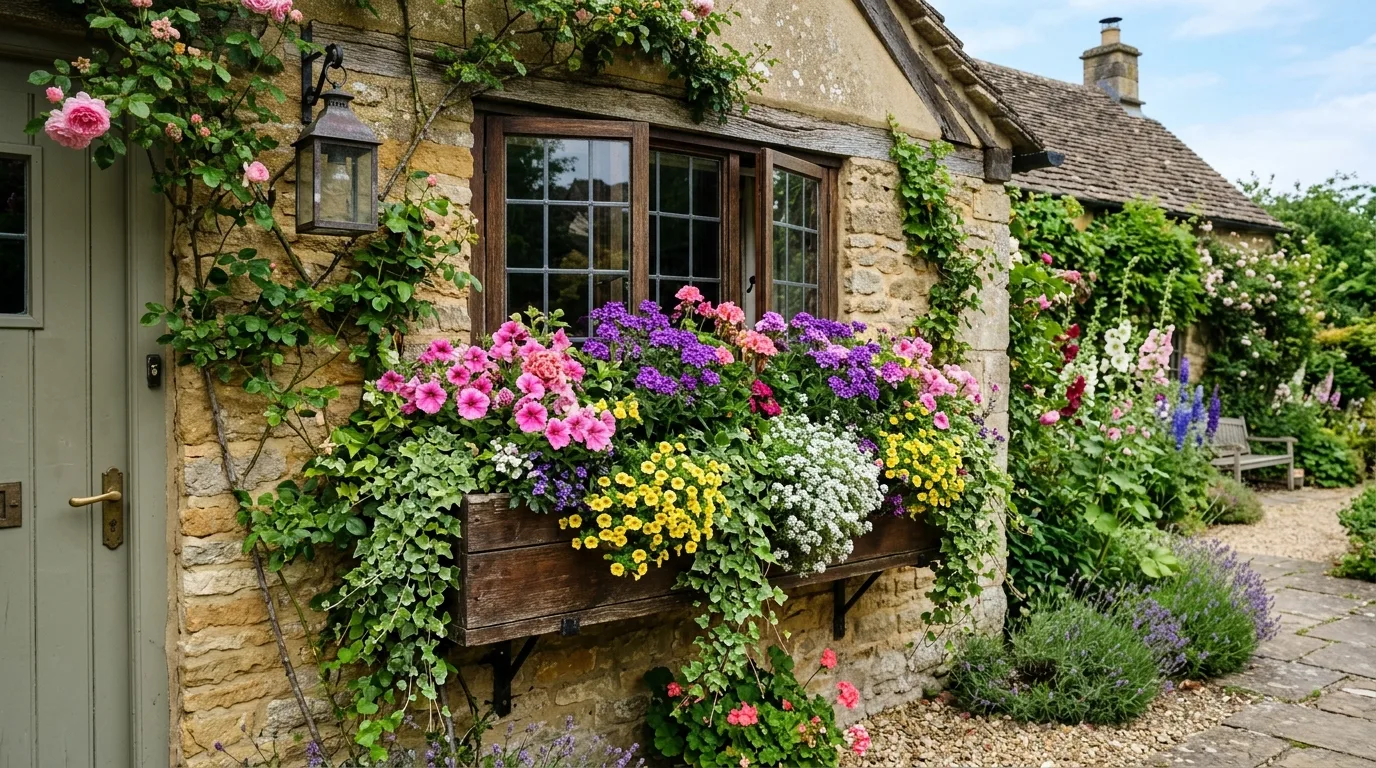
12. Rustic Wooden Window Box
A rustic wooden window box adds warmth and texture even before the flowers are planted. Natural timber works especially well with colorful annuals because the organic material balances bright blooms. Fill the box with a mixture of geraniums, petunias, alyssum, and trailing greenery for a relaxed country-garden appearance. You can leave the wood natural, stain it, or paint it in a muted shade that complements the exterior. Make sure the container is designed to handle outdoor moisture, and protect untreated wood when necessary to extend its life. Because wooden boxes can become heavy once filled with damp soil, secure them carefully to appropriate structural supports. This style is particularly attractive beneath kitchen windows, where herbs and edible flowers can also be incorporated into the planting scheme.
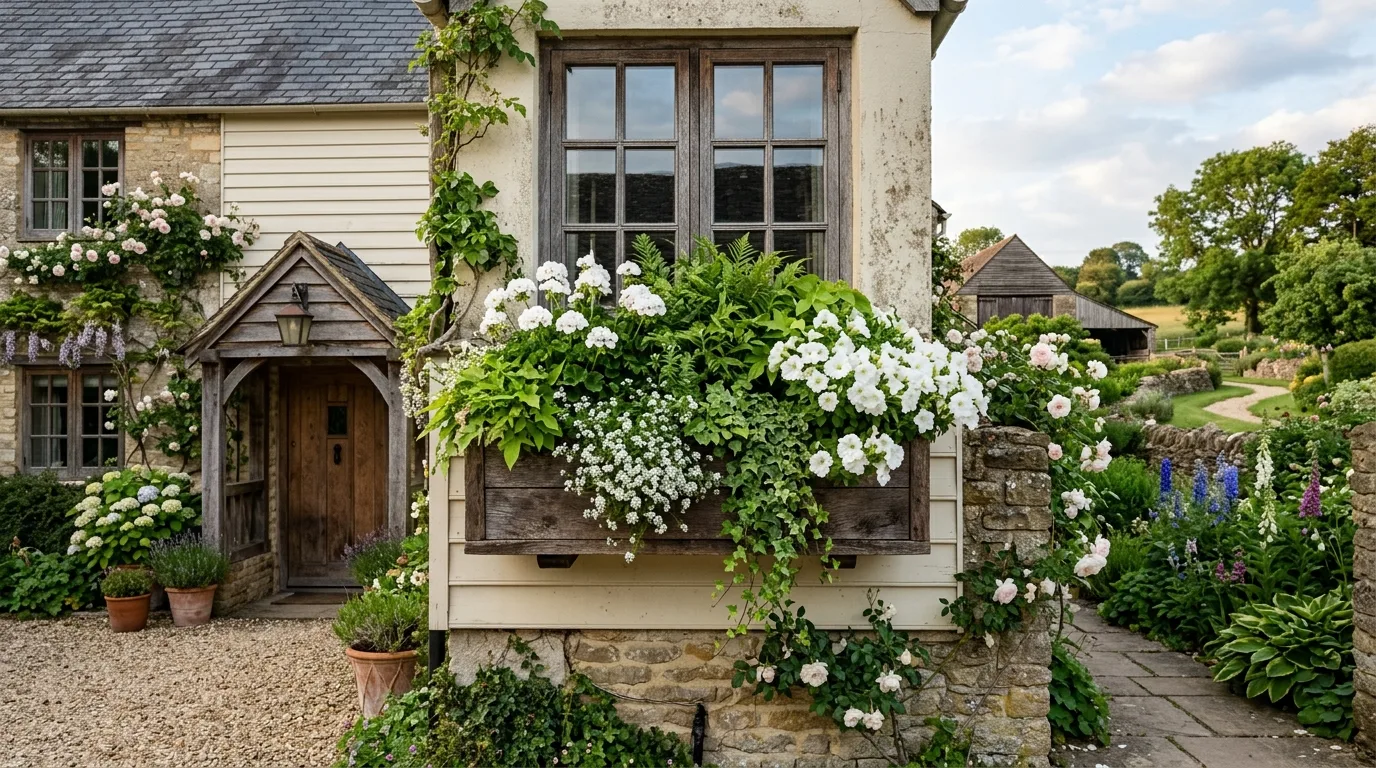
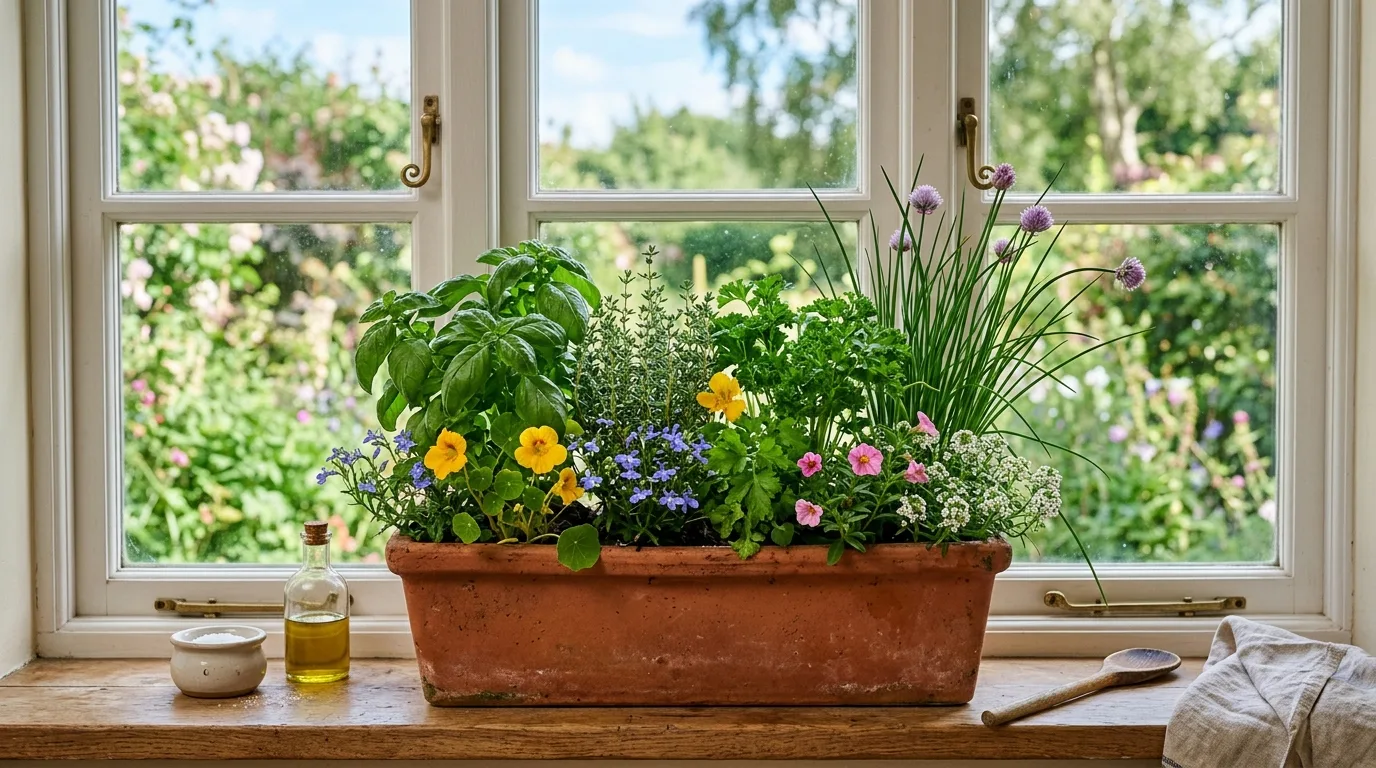
13. Herb and Flower Combination
A window box does not have to be purely ornamental. Combining herbs with flowers creates a useful and attractive display, especially outside a kitchen. Basil, thyme, parsley, chives, oregano, and sage can share space with compact flowers such as alyssum, calendula, or nasturtiums, provided their light and watering needs are compatible. Keep taller herbs toward the back and allow low-growing flowers to occupy the front edge. Harvest herbs regularly to encourage fresh growth and prevent the arrangement from becoming overly dense. Choose a container with excellent drainage because many Mediterranean herbs prefer soil that does not remain waterlogged. This approach is particularly useful for apartments or small homes where a traditional garden may not be practical. Position the box somewhere convenient for harvesting while still ensuring the plants receive enough sunlight.
14. Shade-Loving Window Box
Not every window receives bright sunshine, but shaded locations can still support beautiful flower boxes. For lower-light conditions, consider impatiens, begonias, ferns, coleus, and other shade-tolerant plants that provide color through flowers or foliage. A combination of pink impatiens, colorful coleus, and lush green ferns can create a layered display even when direct sunlight is limited. Focus on foliage texture as much as flowers because many shade plants are valued for their leaves. Avoid placing sun-loving annuals in deep shade simply because you like their colors; they may become weak and produce fewer blooms. Check the specific light requirements of each plant before combining them. A box with varied foliage can remain attractive even between flowering periods, making it a practical choice for north-facing or heavily sheltered windows.
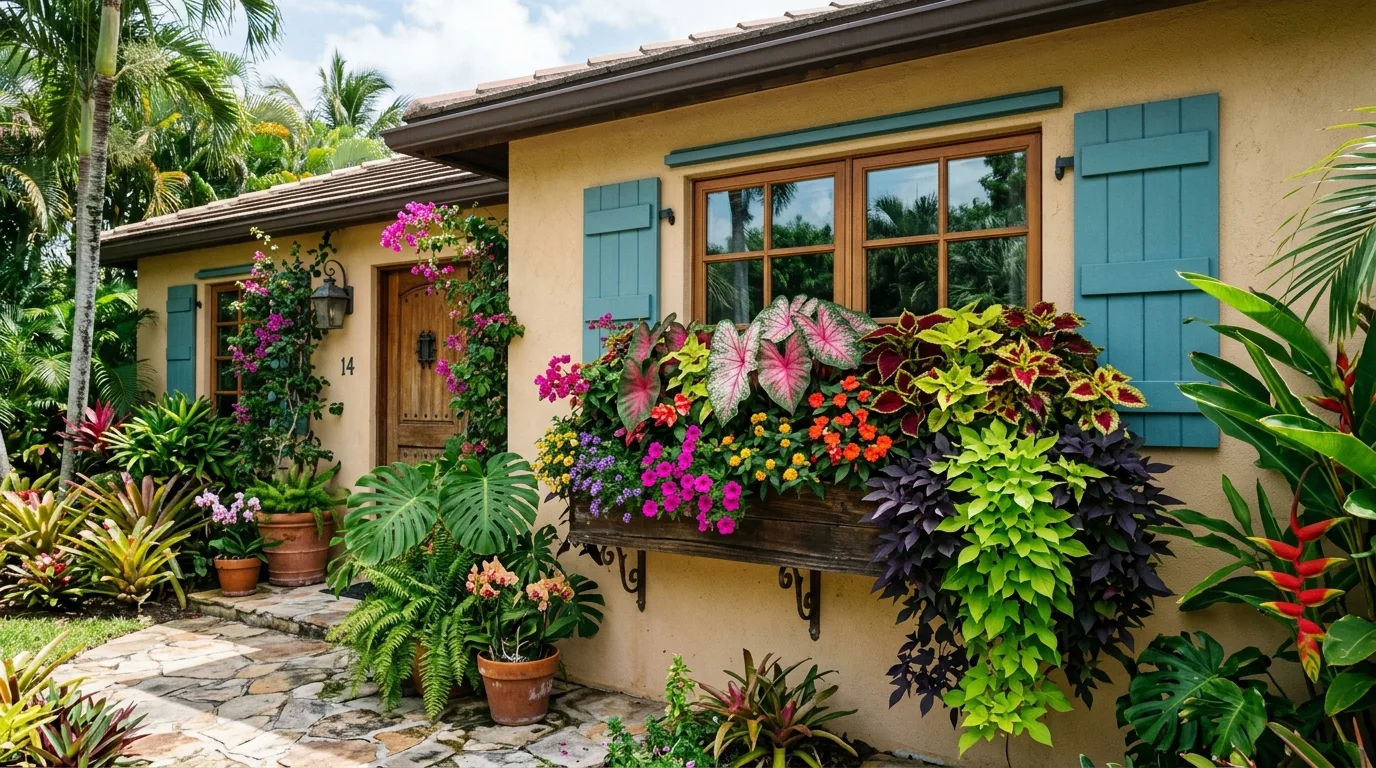
15. Tropical-Inspired Flower Box
A tropical-inspired window box can make a home feel more lush and vacation-like during warm weather. Use bold foliage plants alongside brightly colored flowers to create the effect. Caladiums, coleus, begonias, sweet potato vine, and compact tropical-looking annuals can provide dramatic leaf shapes and vibrant colors. Instead of using many unrelated flower colors, select one dominant foliage color and add two complementary bloom shades. Large leaves can serve as a backdrop while trailing plants soften the front edge. This style is particularly effective on patios, balconies, and sunny windows where a fuller arrangement suits the architecture. Remember that tropical-looking plants often require consistent moisture during hot conditions, so check the soil frequently and choose containers with enough volume to reduce rapid drying.
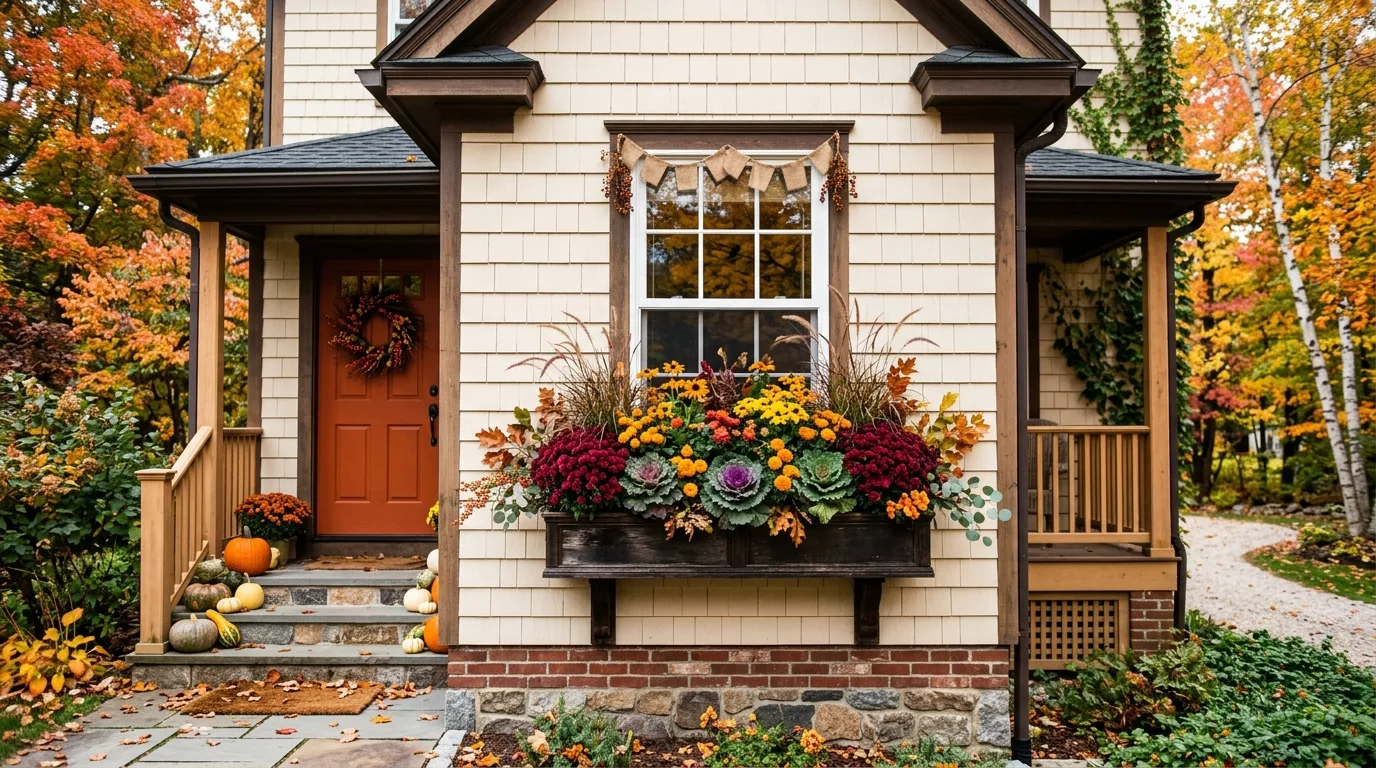
16. Autumn Window Flower Box
Window boxes can transition beautifully into fall when summer flowers begin to fade. Replace tired annuals with chrysanthemums, ornamental cabbage or kale, pansies, violas, and seasonal foliage for a richer display. Warm shades such as burgundy, bronze, orange, yellow, and deep purple naturally complement autumn surroundings. Add small ornamental grasses or trailing foliage for texture and movement. The arrangement does not need to be completely symmetrical; a slightly relaxed grouping can make it feel more seasonal and natural. Since temperatures may fluctuate during autumn, choose plants suited to your local conditions and protect containers from extreme cold when necessary. A fall box is also an opportunity to reuse an existing planter instead of starting from scratch, making seasonal refreshes easier and more economical.
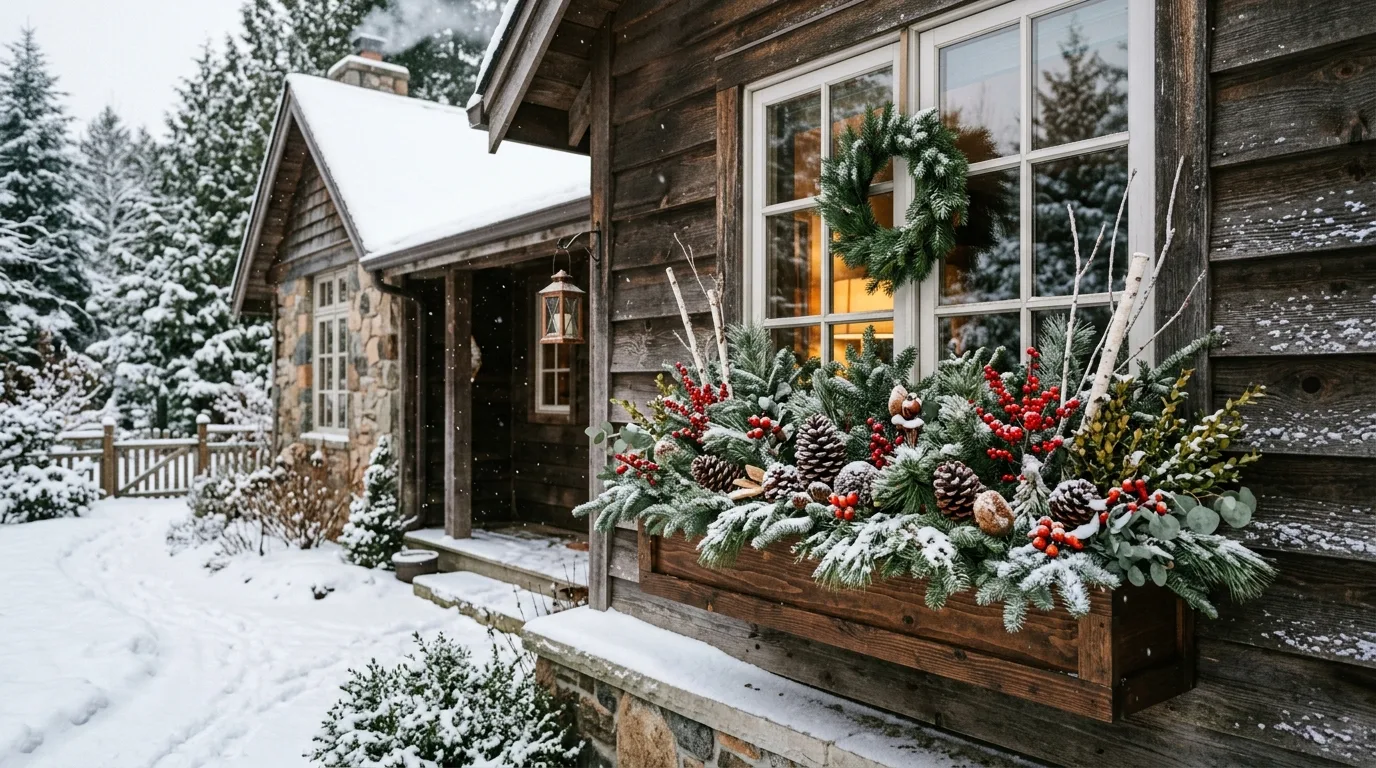
17. Winter-Evergreen Window Box
For year-round structure, an evergreen-inspired window box can provide interest after flowering plants have finished for the season. Use compact evergreen branches, dwarf conifers, hardy foliage, and seasonal accents to create a layered winter display. You can add pinecones, berries, or other natural decorative elements for texture, but avoid overcrowding the arrangement. Evergreen foliage should provide the main structure while smaller accents add seasonal color. A deep green palette works especially well with traditional architecture, while silver foliage can complement modern exteriors. Make sure the container and plant materials can tolerate your winter conditions. For areas with freezing temperatures, select hardy plants and avoid treating a decorative winter arrangement as though it were a summer annual display.
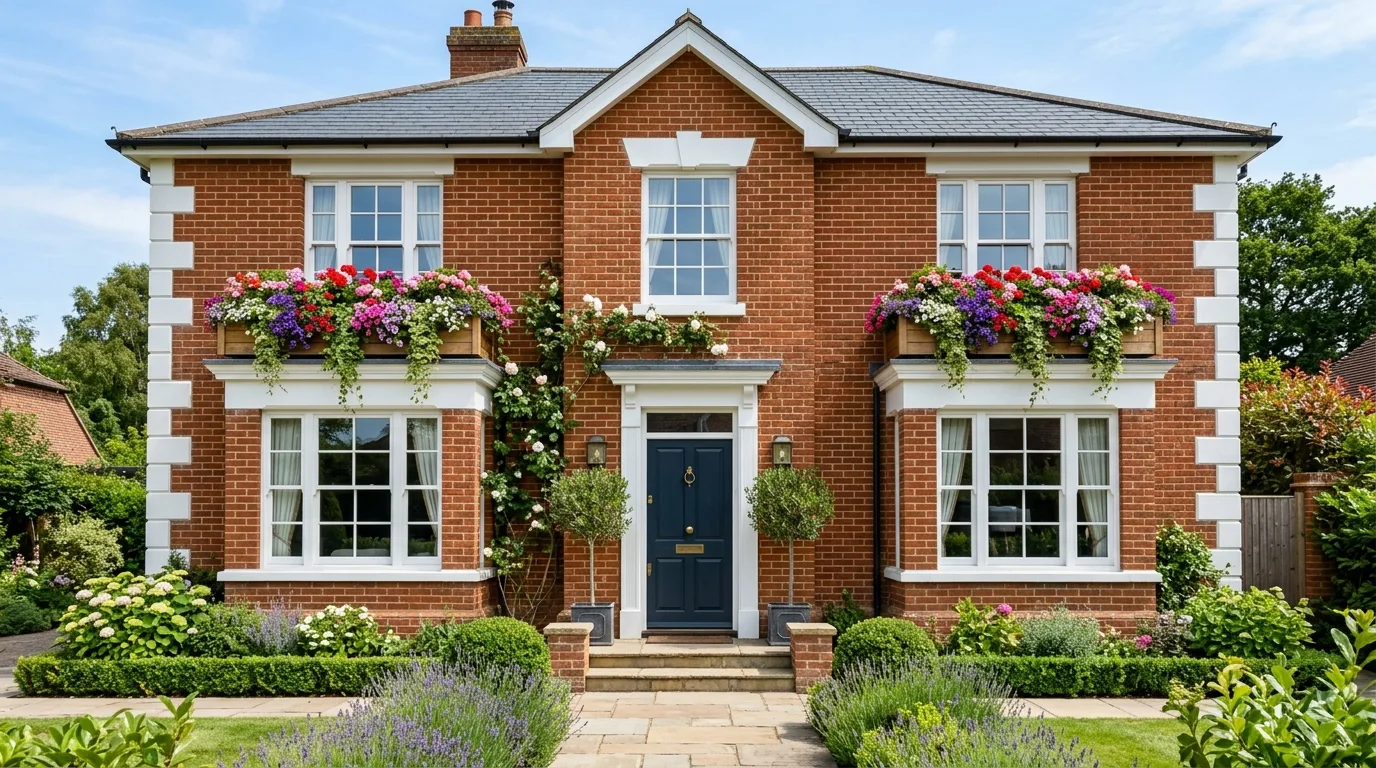
18. Symmetrical Window Box Pair
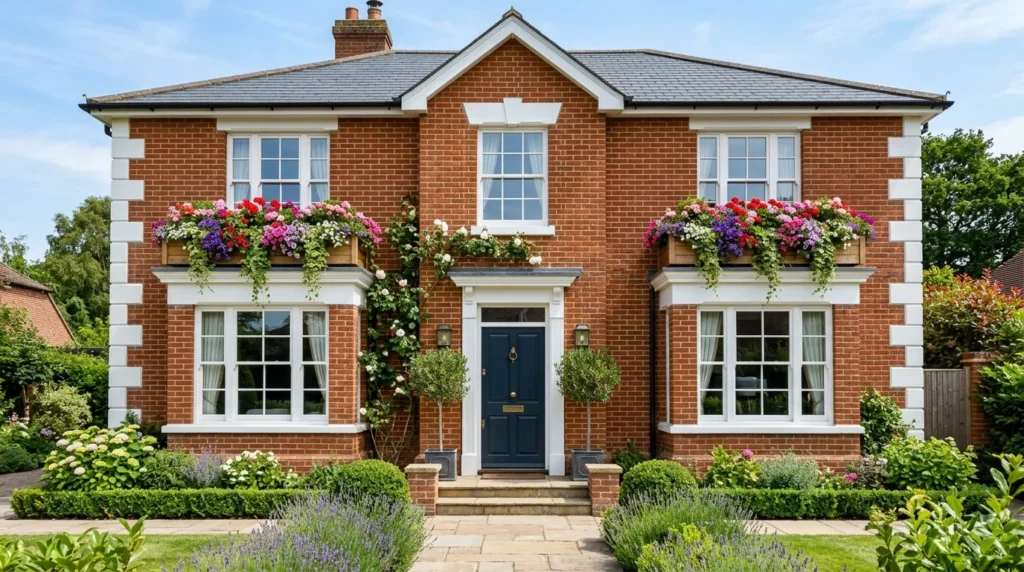
For a polished exterior, matching window boxes can create symmetry and make a facade feel more intentional. Use identical containers and repeat the same basic plant palette on both sides of the window or across neighboring windows. This does not mean every individual plant must be identical, but the height, color distribution, and trailing effect should be reasonably consistent. A simple combination of geraniums, petunias, and trailing greenery works well because it is easy to repeat. Measure the available window width before buying containers so the boxes look proportional rather than undersized. Matching boxes are especially effective on formal homes, porches, and symmetrical facades. Keep watering and maintenance consistent between the boxes so one display does not become noticeably fuller or more crowded than the other.