Wooden false ceilings bring warmth, texture, and architectural character to a room while also helping conceal wiring, lighting fixtures, and uneven surfaces. From sleek contemporary slats to richly finished traditional panels, wood can make a ceiling feel like an intentional design feature rather than an overlooked fifth wall. The right wooden false ceiling design can also visually define zones, improve the sense of proportion, and create a more inviting atmosphere in bedrooms, living rooms, dining areas, and entryways. Whether you prefer natural timber, engineered wood, veneer, or wood-look finishes, there are plenty of ways to adapt the style to your space and budget. These 18 ideas cover a range of aesthetics, room sizes, and installation approaches so you can find an option that complements your existing interior rather than competing with it.
1. Warm Natural Wood Slat Ceiling
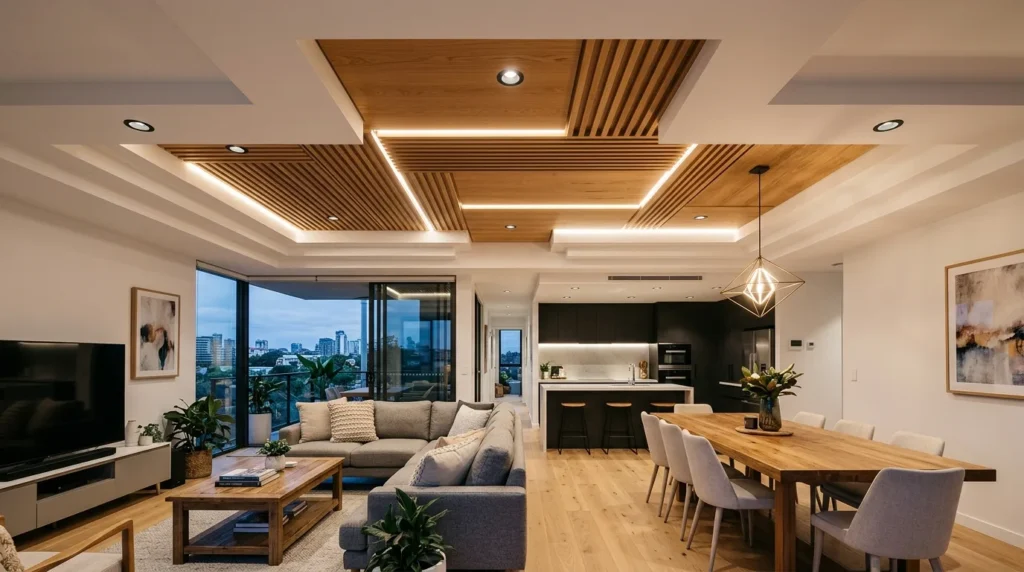
A natural wood slat ceiling is one of the most versatile ways to introduce warmth without making a room feel visually heavy. Narrow timber slats can be installed in parallel rows, leaving small, consistent gaps between them for a modern architectural effect. Choose lighter woods or pale finishes for compact rooms because they reflect more light and maintain an airy appearance. Medium or darker stains work beautifully in larger living rooms where you want a cozier atmosphere. Slats can run along the longest dimension of the room to visually emphasize its length, or across a narrower space to make it feel more balanced. Recessed lights placed between or alongside the slats can provide practical illumination while preserving the clean lines of the ceiling. Consider acoustic backing if the room tends to echo.
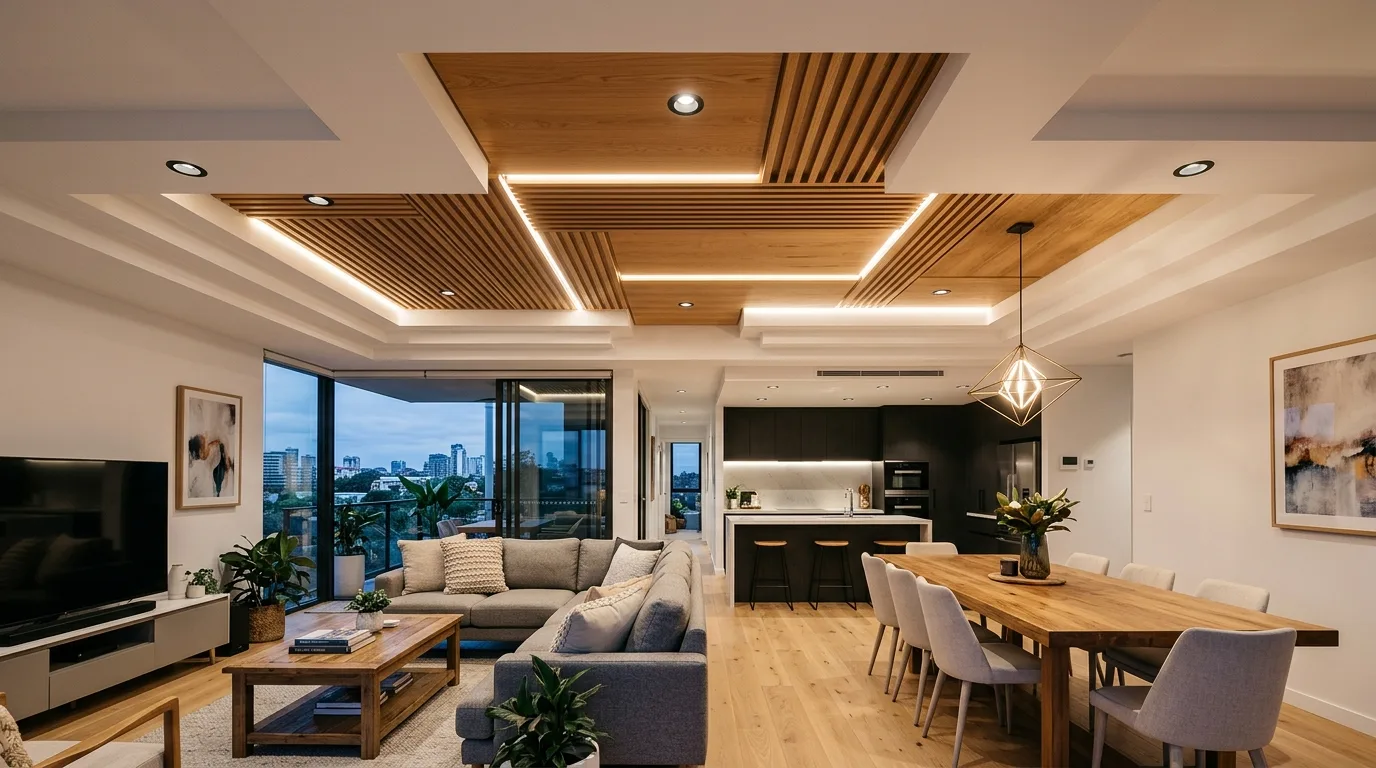
2. Modern Wooden Grid Ceiling
A wooden grid ceiling creates a structured, designer-inspired look by arranging timber strips into repeated squares or rectangles. This approach works particularly well in open-plan living areas because the grid can visually organize a large ceiling without requiring walls or partitions. Use slim battens for a subtle contemporary effect, or wider beams for a more substantial architectural statement. A consistent wood tone keeps the pattern refined, while contrasting the wood with a dark recess can make each section stand out. Lighting is especially important with this design: recessed fixtures, linear LEDs, or small pendant lights can be positioned within selected grid openings. Before installation, carefully plan the grid around ceiling fans, air-conditioning vents, and electrical points so the finished pattern looks intentional.
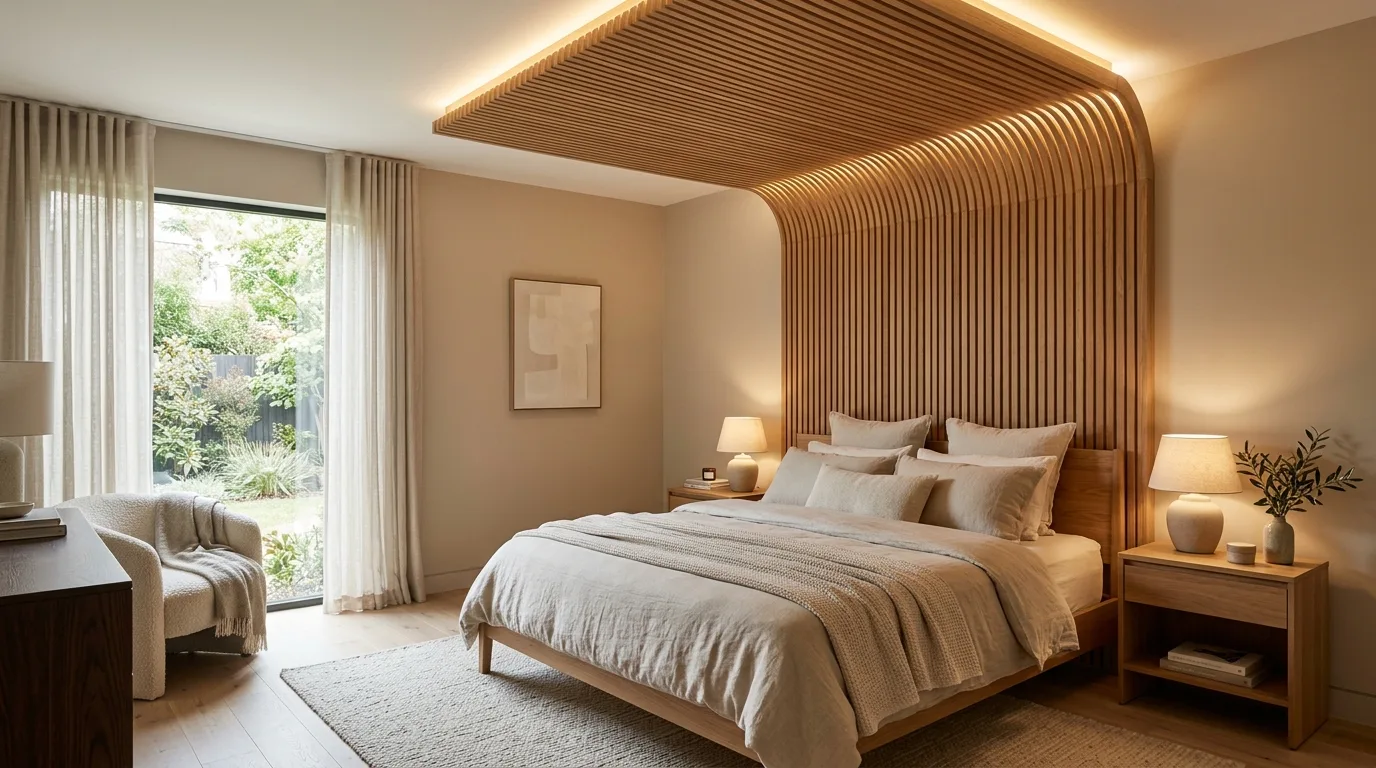
3. Wood Panel False Ceiling for a Luxury Look
Large-format wood panels can give a ceiling a polished, upscale appearance without relying on an overly complicated pattern. Veneered plywood, engineered wood panels, or high-quality wood-look boards can be arranged in broad sections to create a calm visual surface. This design is especially effective in formal living rooms, dining spaces, and master bedrooms where a sophisticated atmosphere is desirable. A satin or matte finish usually looks more contemporary than an extremely glossy coating, and visible grain adds natural character. To prevent a paneled ceiling from feeling too dark, combine it with recessed lighting around the perimeter or concealed LED strips at selected edges. If using real timber or veneer, account for expansion and contraction when planning the installation. Proper substrate preparation is essential for keeping large panels aligned and visually seamless.
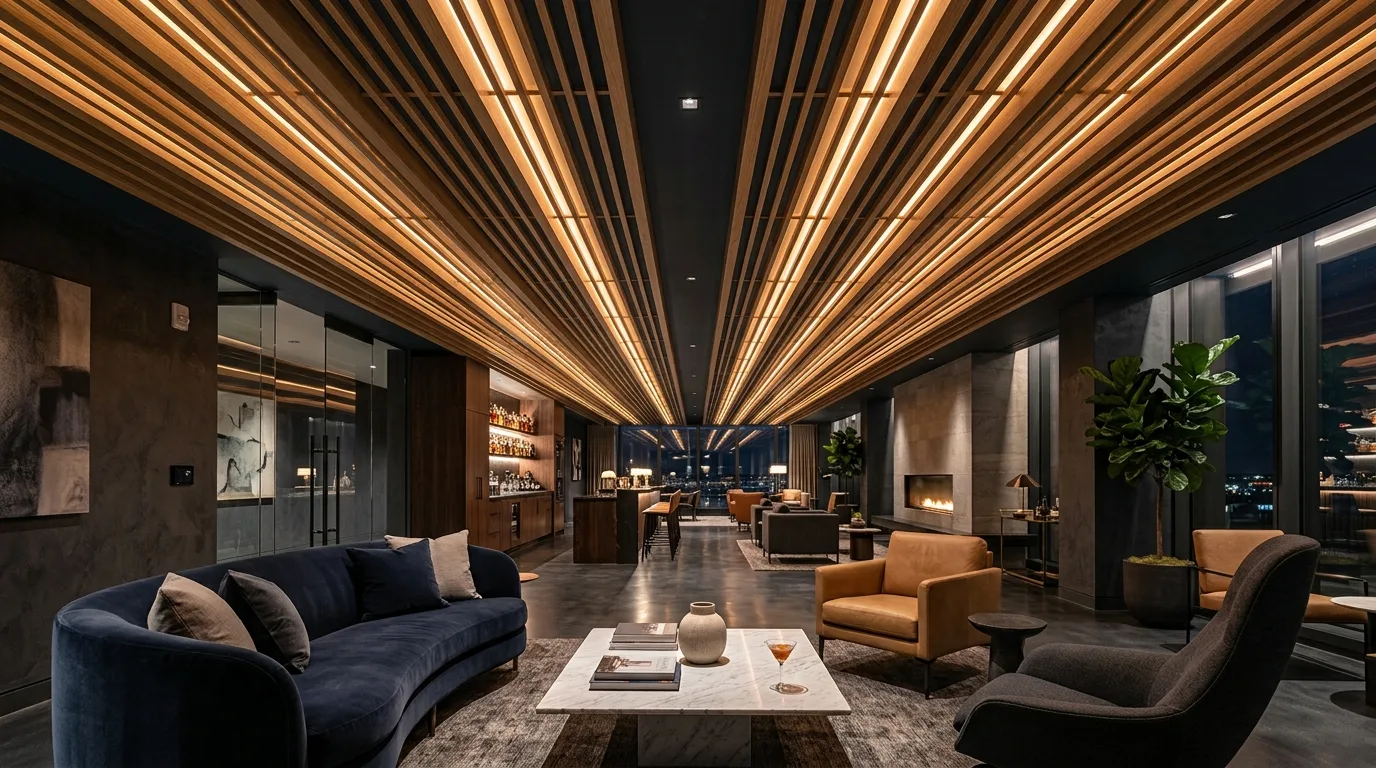
4. Wooden Coffered False Ceiling
A wooden coffered ceiling combines traditional architectural detailing with the warmth of timber. The recessed sections can be square, rectangular, or subtly elongated depending on the proportions of the room. For a contemporary interpretation, keep the coffers relatively simple and use a restrained wood finish rather than ornate molding. In a classic interior, deeper coffers with decorative trim can create a more formal character. This design also gives you natural places to incorporate lighting, such as small recessed fixtures inside individual sections or indirect illumination around the borders. Coffered ceilings generally work best where the room has sufficient ceiling height because the framework can reduce the perceived vertical space. Before choosing this style, check the available ceiling depth and coordinate the design with fans, vents, sprinklers, and other services.
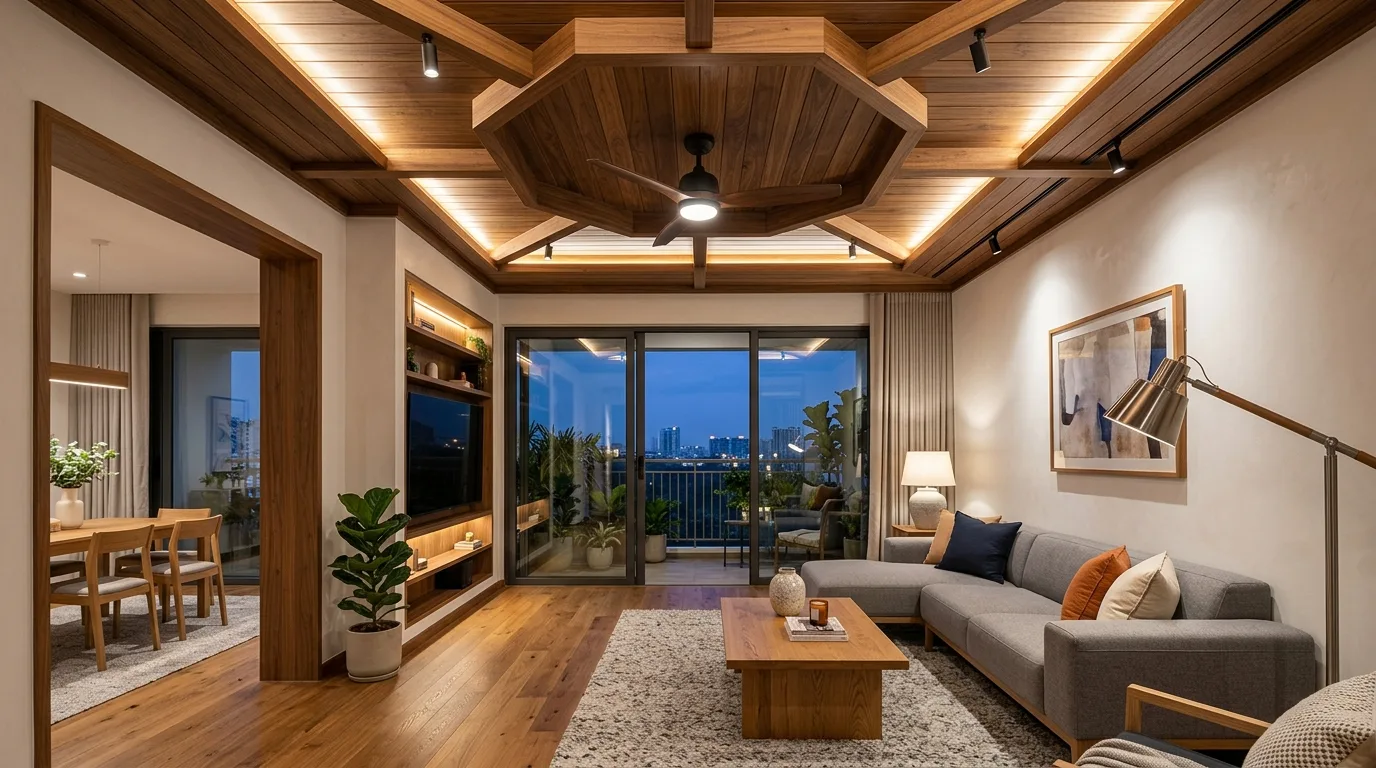
5. Wooden Ceiling With Recessed LED Lighting
Pairing wood with recessed LED lighting creates a clean ceiling that feels warm rather than stark. The key is to use lighting as part of the architectural design instead of adding fixtures after the ceiling has been planned. Small downlights can be spaced evenly across wooden panels or slats, while concealed LED strips can highlight a perimeter, recess, or transition between ceiling levels. Warm-white light generally complements wood tones particularly well and helps preserve the material’s inviting appearance. For a minimalist room, keep the fixtures small and let the grain remain the visual focus. In larger spaces, combine several lighting layers so the ceiling does not become the only source of illumination. Always leave appropriate access for electrical maintenance and make sure heat-producing fixtures are compatible with the selected ceiling materials.
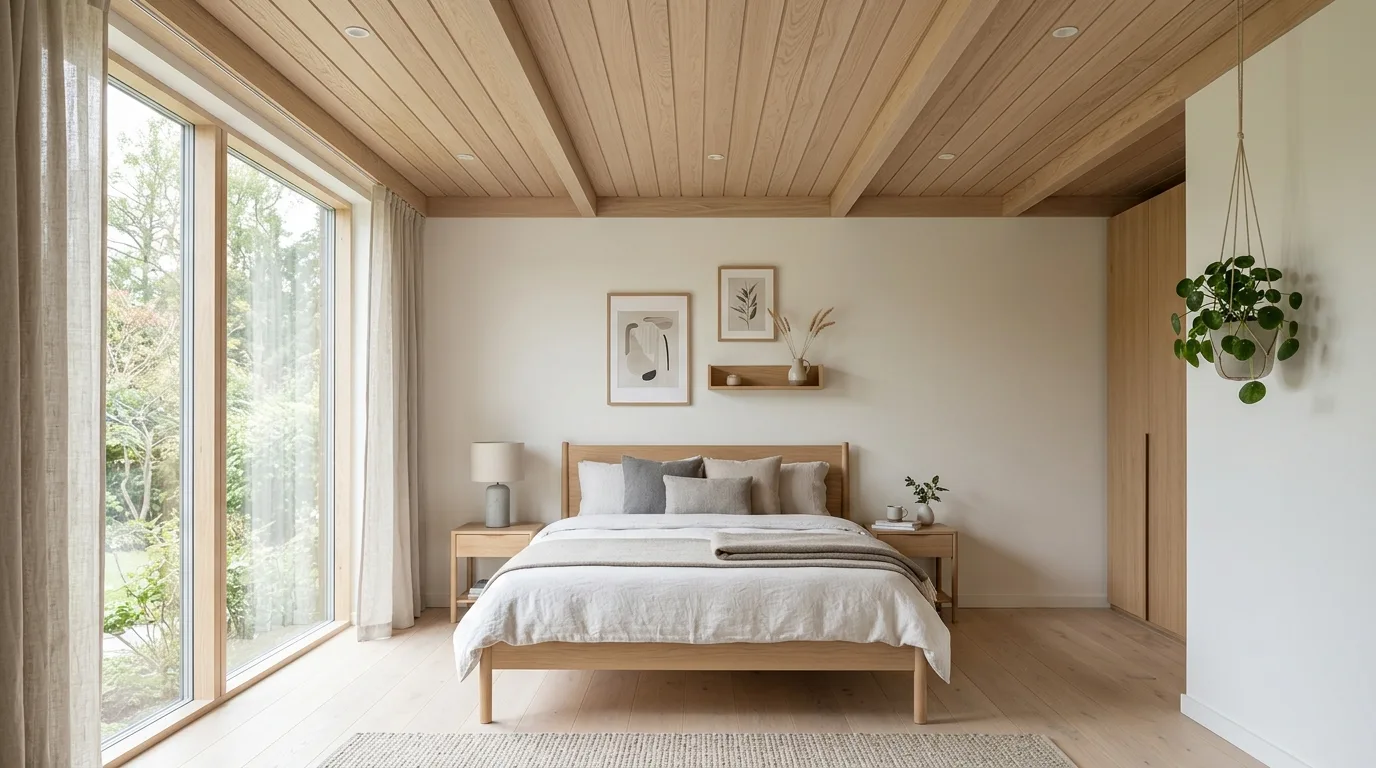
6. Wood-and-White False Ceiling Combination
Combining wooden sections with crisp white surfaces is an excellent solution when you want warmth without covering the entire ceiling in timber. Wood can define a central panel, frame a seating area, or form a decorative strip through the room, while white gypsum board or another light-colored ceiling material keeps the overall design visually open. This combination is particularly useful in apartments and rooms with limited natural light. Try matching the wood finish with furniture, flooring, shelving, or window details so the ceiling feels connected to the rest of the interior. A narrow wooden border can create a sophisticated transition between materials, while a larger central wood panel can become a focal point above a dining table or seating arrangement. Keep the number of finishes limited to avoid a fragmented appearance.
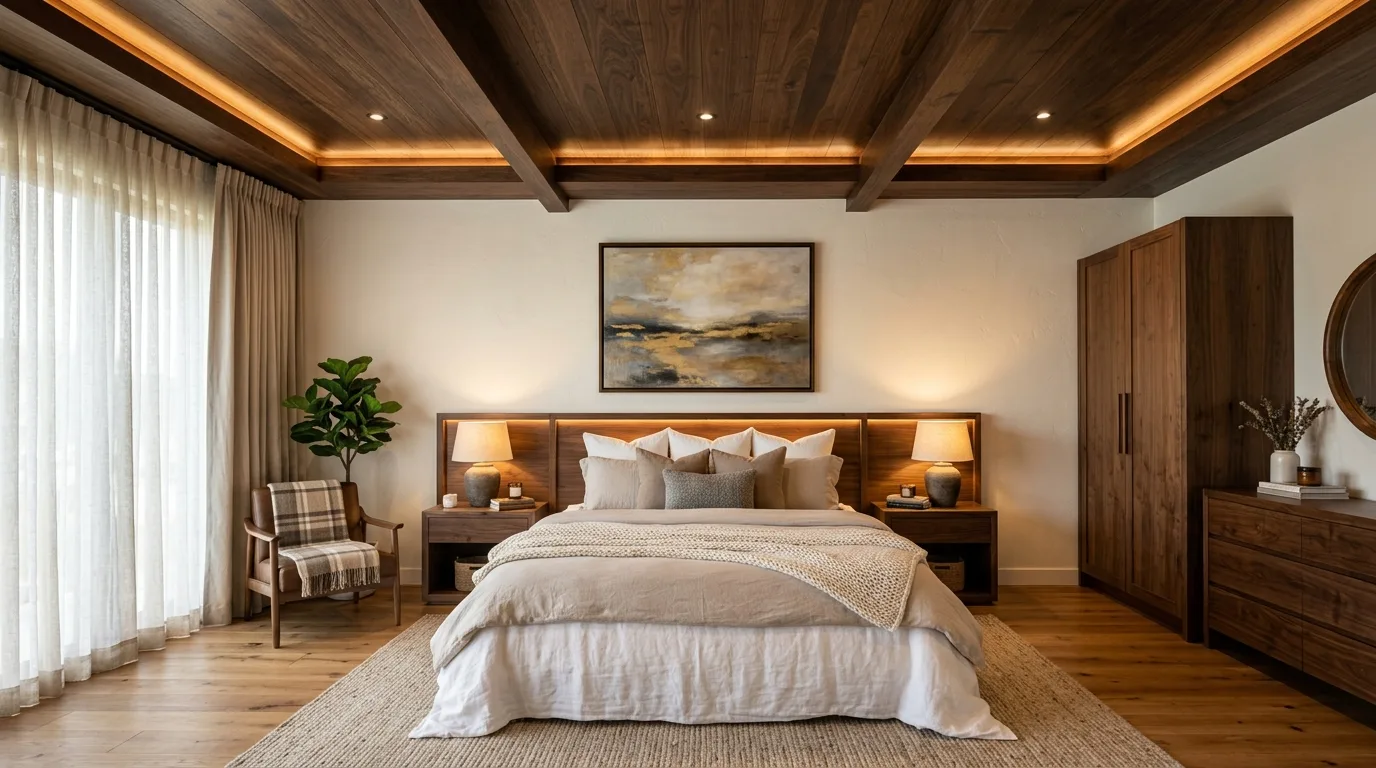
7. Rustic Reclaimed Wood Ceiling
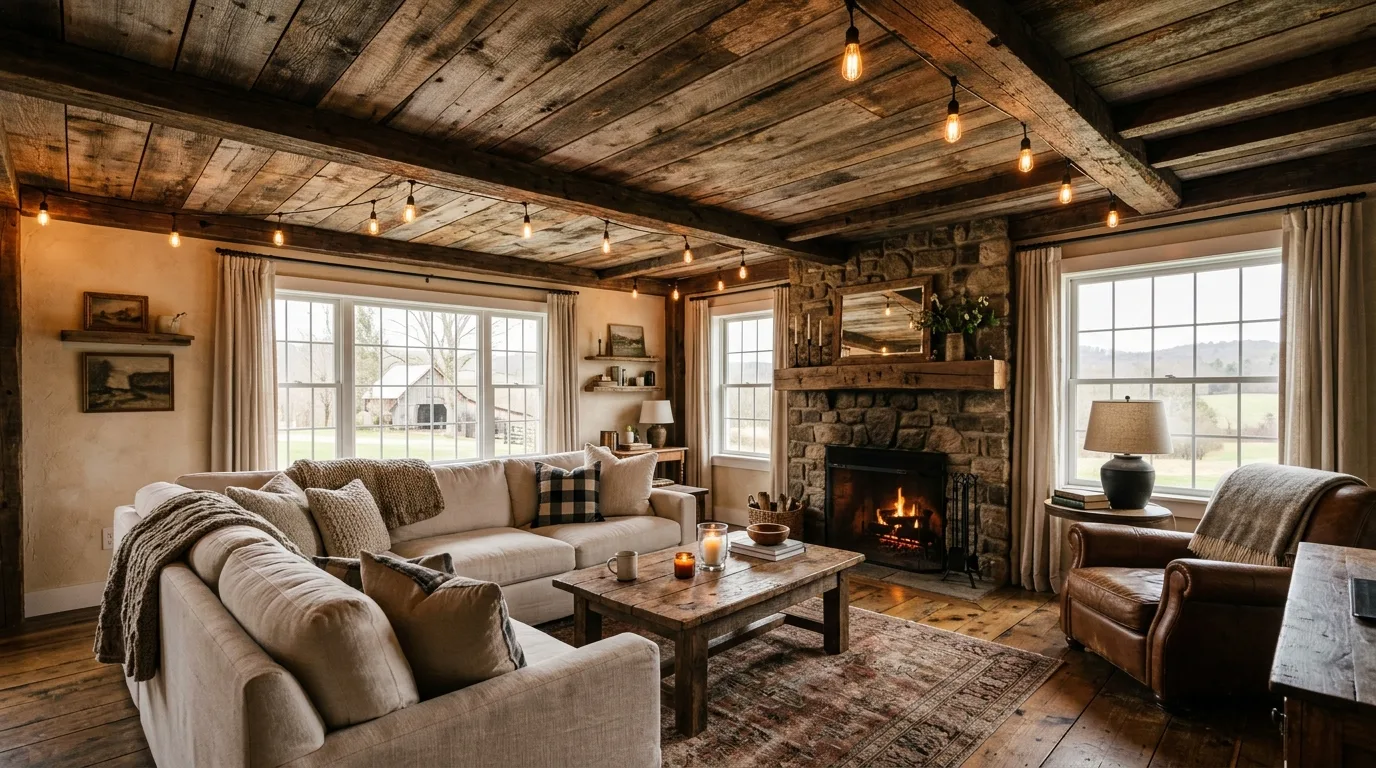
Reclaimed wood can give a false ceiling a distinctive rustic character because its knots, grain variations, weathering, and subtle imperfections create visual depth. It works especially well in farmhouse, industrial, cottage, and eclectic interiors. Instead of covering the whole ceiling with heavily distressed boards, consider using reclaimed timber as a feature area surrounded by a simpler surface. This helps the material feel intentional rather than overwhelming. Before installation, reclaimed wood should be inspected and appropriately prepared so that loose material, pests, moisture problems, or structural concerns are addressed. Mixing several board widths can enhance the handcrafted effect, while keeping the installation direction consistent gives the ceiling a more finished appearance. Warm ambient lighting can emphasize the texture without making the space feel overly dark.
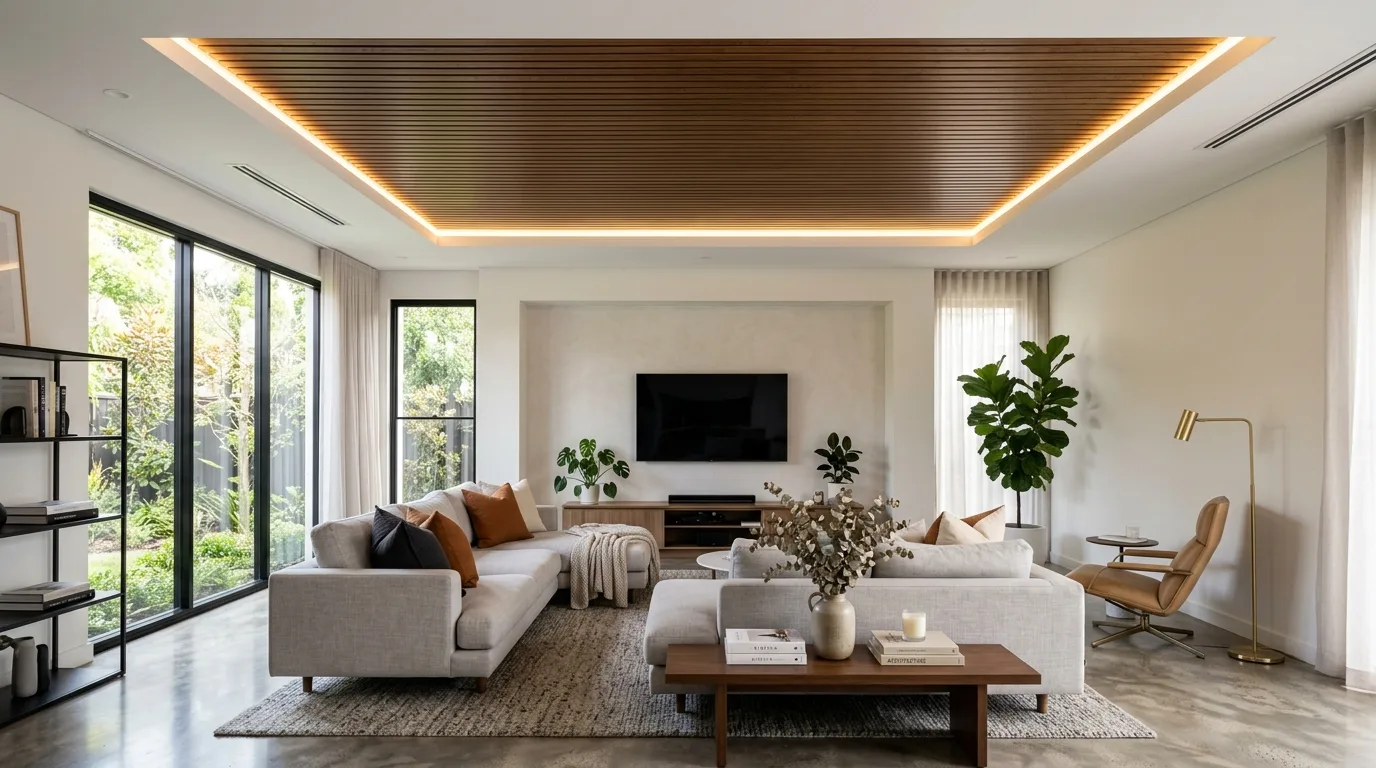
8. Linear Wooden Ceiling for Contemporary Interiors
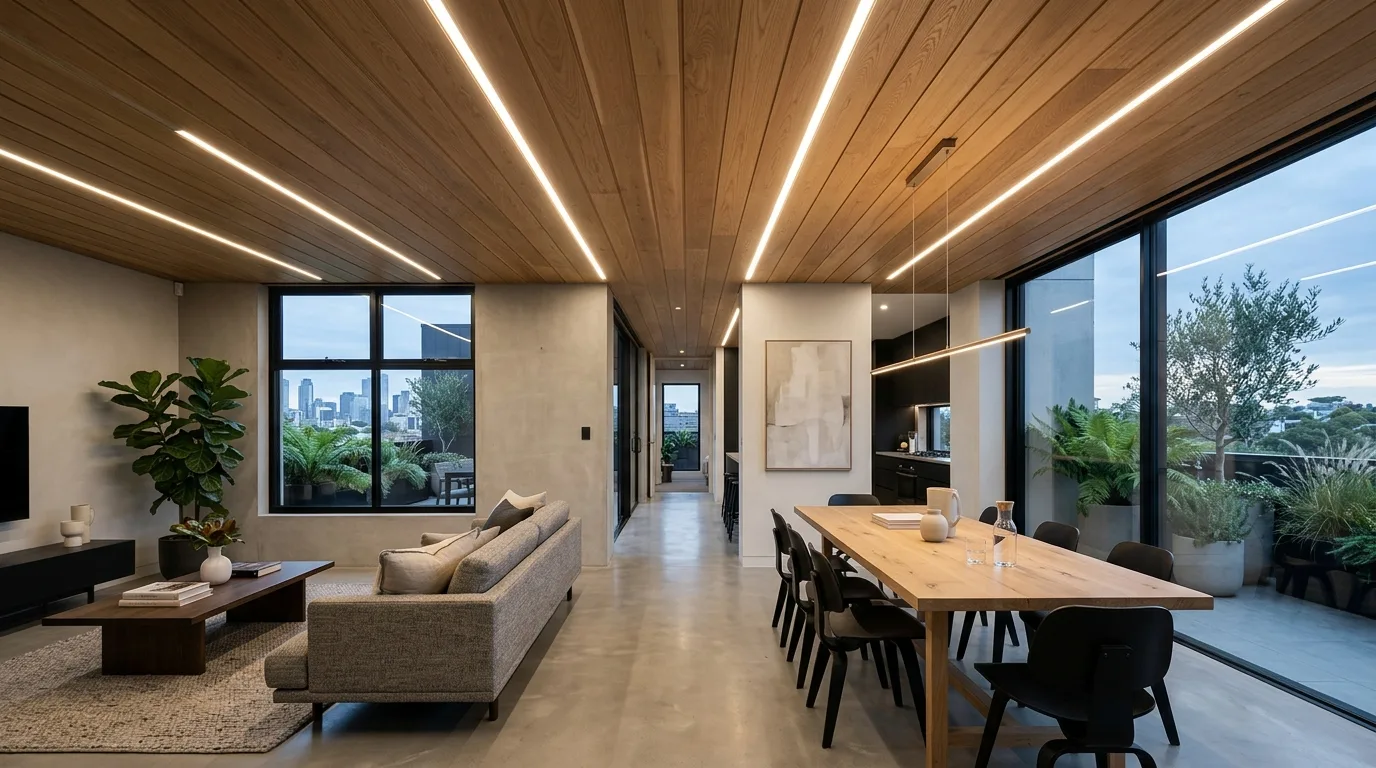
A linear wooden ceiling uses long, uninterrupted boards or battens to create a streamlined architectural effect. It is particularly effective in modern homes where simplicity and strong horizontal lines are important design features. Running the boards in the same direction as the room’s main sightline can visually elongate the space, while perpendicular installation can create a broader impression. Choose a consistent stain for a calm appearance, or combine two closely related tones for subtle variation. Linear ceilings are also practical for integrating long LED fixtures because the lighting can follow the geometry of the boards. Keep service access in mind, particularly if the ceiling conceals wiring, air-conditioning components, or plumbing. A carefully measured layout is important because small alignment errors become noticeable when long lines extend across an entire room.
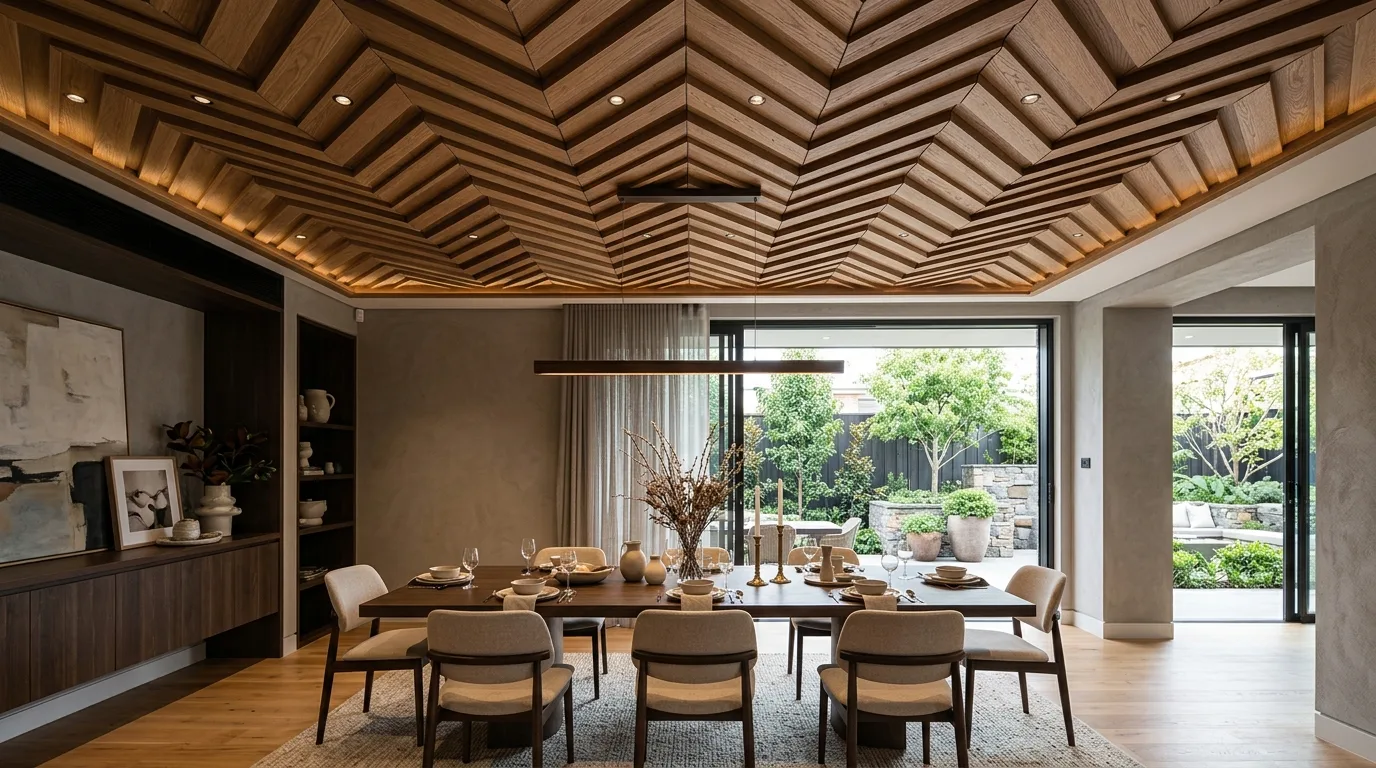
9. Wooden Ceiling With Exposed Beams
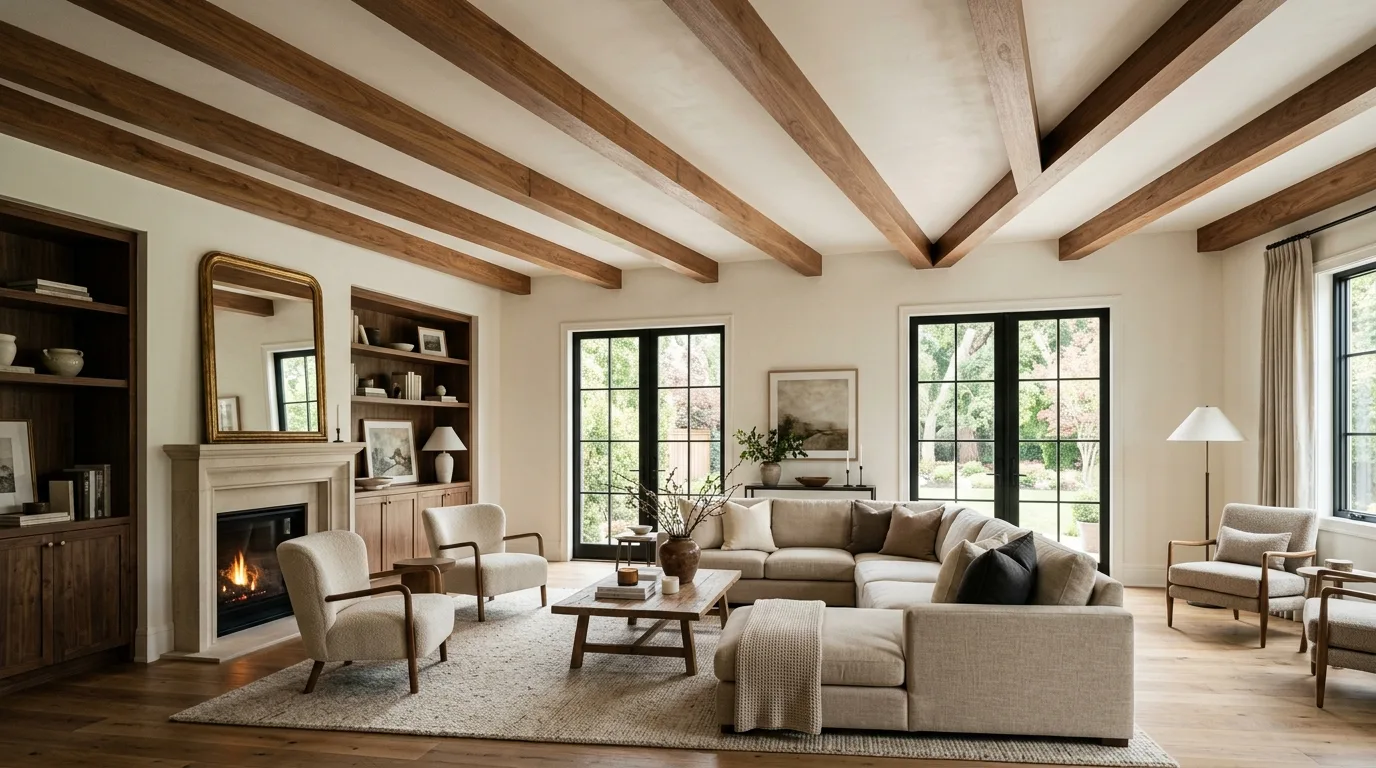
Exposed wooden beams can transform an ordinary ceiling into a strong architectural feature. The beams may be structural, decorative, or installed as lightweight elements over a conventional false ceiling, depending on the building and design requirements. For a modern interpretation, use clean rectangular beams with minimal detailing. A more traditional room can benefit from chunkier timber with a natural or aged finish. Beam spacing should relate to the dimensions of the room rather than simply repeating a random pattern. In a low-ceilinged space, thinner beams are generally less visually imposing. Lighting can be positioned between the beams or mounted discreetly along their edges. If decorative beams are being added, ensure they are properly supported and do not interfere with existing electrical, ventilation, or safety systems.
10. Chevron Wood Ceiling Design
A chevron ceiling introduces movement through angled wooden boards arranged into a repeating V-shaped pattern. Because the pattern itself is decorative, the surrounding room can remain relatively simple. This makes the ceiling a natural focal point in a dining room, bedroom, or contemporary living area. Use similar-width boards and carefully planned joints so the V shapes remain consistent from one side of the ceiling to the other. Lighter wood tones can keep the pattern sophisticated and bright, while darker finishes create a more dramatic effect. Recessed lights should be positioned thoughtfully so they do not interrupt the strongest lines of the pattern. Chevron layouts require more cutting and installation precision than straight boards, so professional measurement and installation can be worthwhile, particularly for large rooms.
11. Wooden Ceiling With a Central Feature Panel
If a full wooden ceiling feels too much for your interior, create a central feature panel instead. A rectangular or square wood section can sit above a bed, dining table, coffee table, or seating arrangement and immediately establish a visual center. The surrounding ceiling can remain white, neutral, or subtly textured to keep the room balanced. This approach is also useful when you want to control material costs while still achieving a custom architectural appearance. The central panel can use slats, veneer, wide boards, or a geometric pattern depending on your decorating style. Concealed LED lighting around the panel can make it appear to float, while a pendant centered below it reinforces the composition. Measure the furniture arrangement first so the ceiling feature aligns with the room’s functional focal point.
12. Dark Wood False Ceiling for a Cozy Room
Dark wood can create an intimate, sophisticated atmosphere, especially in bedrooms, media rooms, studies, and larger living spaces. Walnut-inspired tones, deep brown stains, and smoked wood finishes can add richness while emphasizing the natural grain. Because darker ceilings absorb more visual light, balance them with lighter walls, upholstery, flooring, or curtains where possible. Layered lighting is essential: combine ambient illumination with focused reading or task lighting so the room remains comfortable at night. A dark wood ceiling does not necessarily need to cover every surface; using it as a framed panel or slatted section can provide the same dramatic effect with less visual weight. Test a finish under the room’s actual lighting conditions before committing, since artificial light can significantly change how the wood color appears.
13. Light Oak Wooden Ceiling
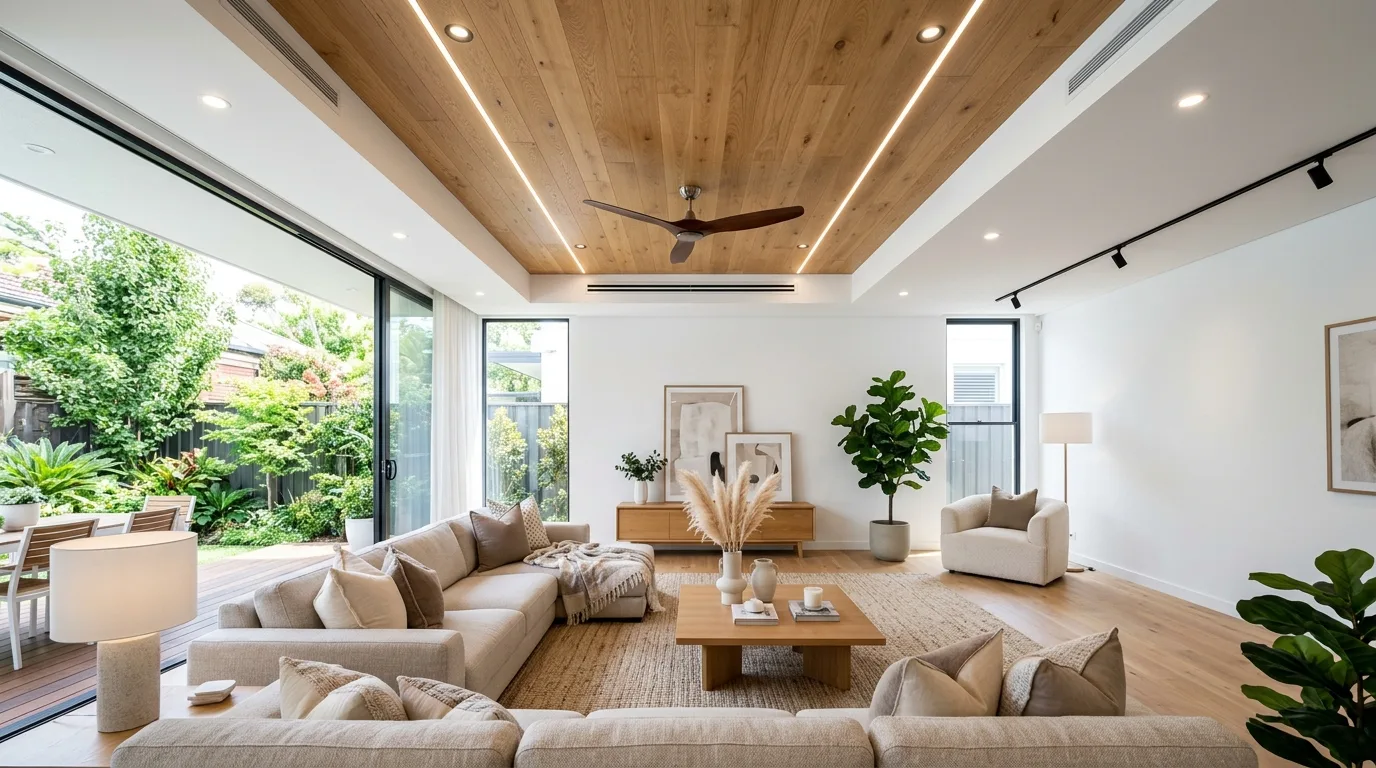
Light oak-style wood is an excellent choice for creating a bright, contemporary ceiling with natural texture. Its pale grain works particularly well with Scandinavian, minimalist, Japandi, and modern interiors. Use wide boards for a calmer appearance or slim slats for a more architectural treatment. Light wood can visually soften an all-white room while still maintaining a spacious feeling, making it suitable for apartments and rooms with modest ceiling heights. Pair the ceiling with simple furniture and restrained decorative accessories so the grain remains visible without competing with too many patterns. If natural timber is being used, choose a protective finish that preserves the desired color while providing resistance to everyday humidity and dust. A matte finish generally keeps the result understated and contemporary.
14. Wooden False Ceiling With a Fan Feature
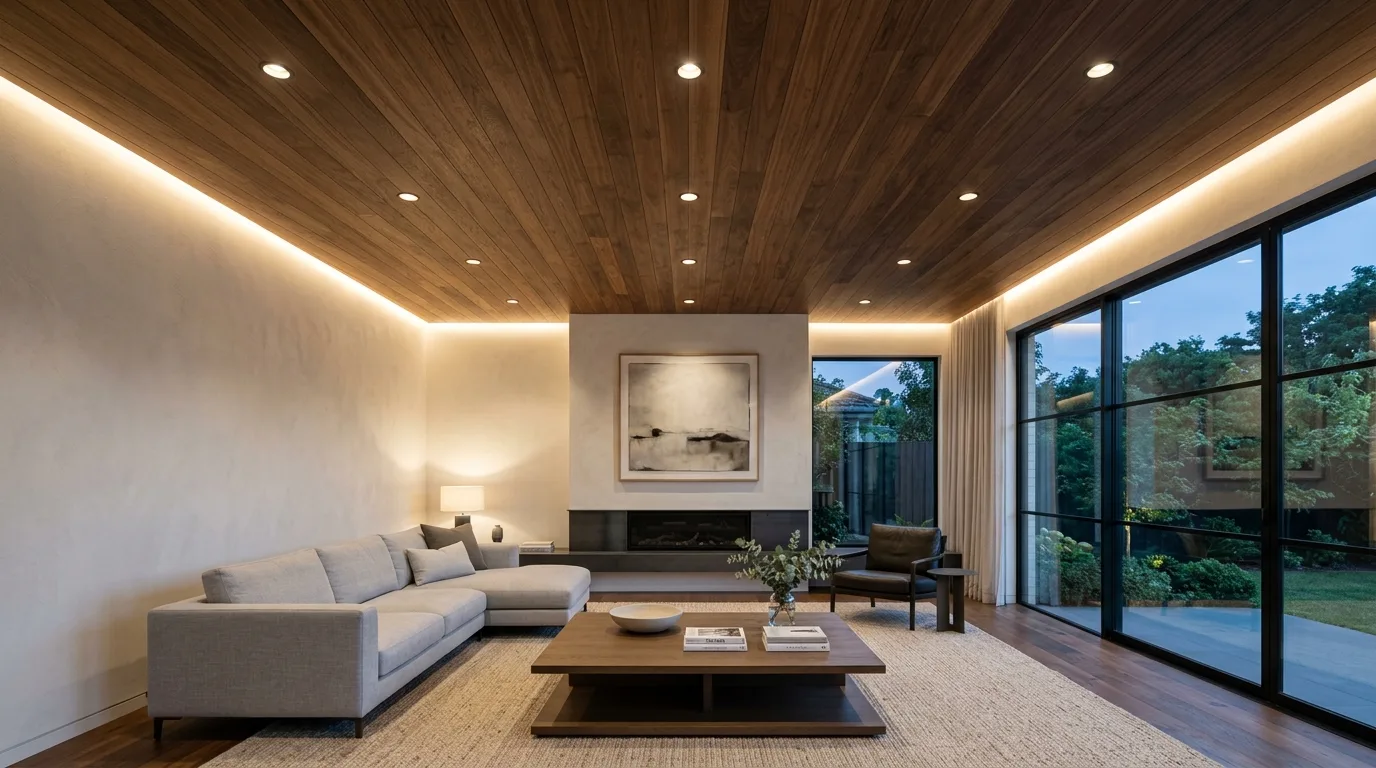
A ceiling fan does not have to interrupt a carefully designed wooden ceiling. Instead, the fan can become part of the composition by centering it within a wood panel, framed section, or circular visual feature. Start by determining the fan’s required clearance and mounting position before designing the surrounding ceiling. Slatted ceilings can be interrupted around the fan with a clean border, while paneled ceilings can use a centered opening or contrasting frame. The wood finish should complement the fan rather than compete with it; simple blades and understated hardware often work well with natural timber. Electrical and structural support for the fan must be handled independently of decorative ceiling materials. Maintaining adequate clearance around the blades is also essential for safe operation and effective airflow.
15. Wood Slats With a Black Recessed Background
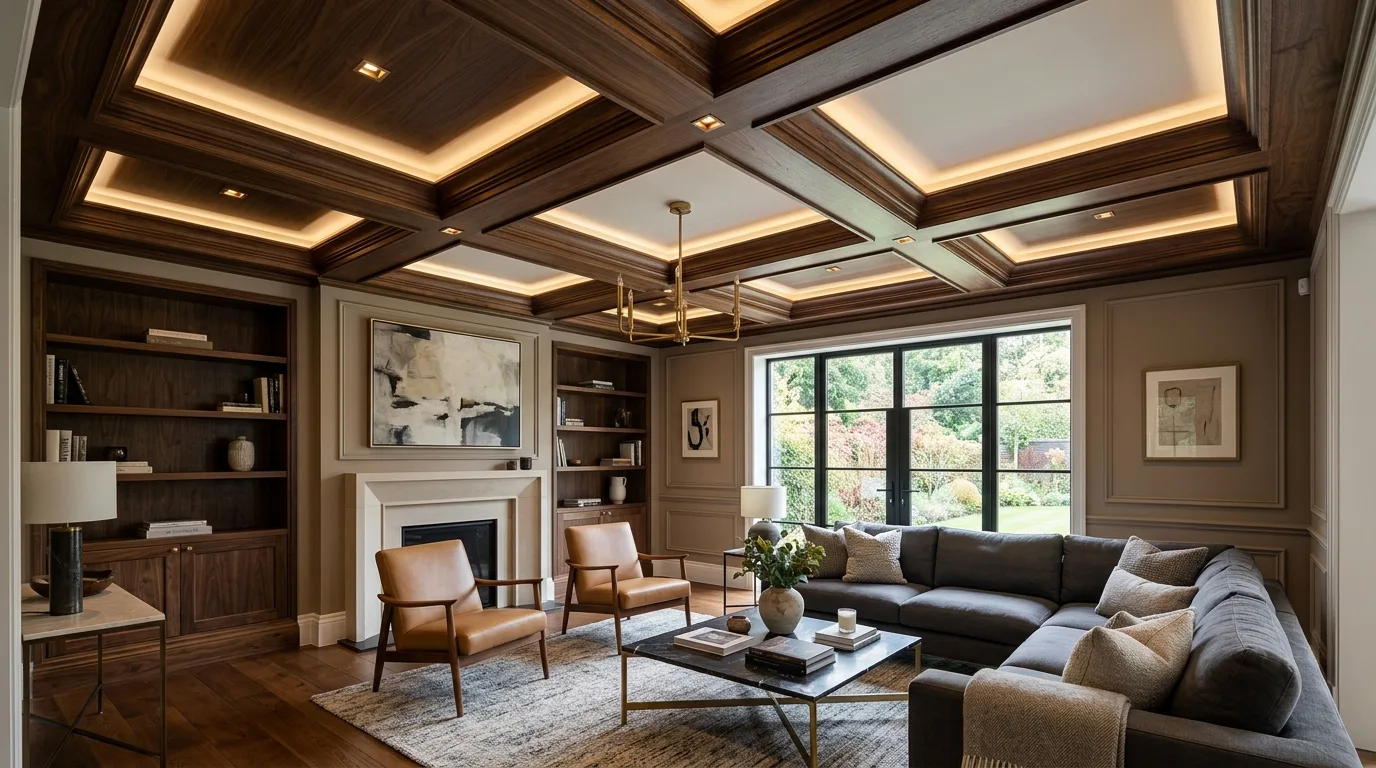
Wood slats installed over a dark recessed background create a striking contemporary ceiling with strong depth and contrast. The dark surface behind the timber visually recedes, allowing the wood strips to appear more prominent without requiring a complicated pattern. This design is especially effective in modern living rooms, restaurants, home offices, and entertainment spaces. Black or charcoal backgrounds can also help conceal ceiling services between the slats, although ventilation and maintenance access still need to be planned carefully. Choose evenly spaced slats for a precise architectural appearance, and consider concealed linear lighting to emphasize the rhythm of the installation. Medium or light wood tones usually provide enough contrast against the dark background while preserving a warm atmosphere.
16. Wooden False Ceiling for the Bedroom
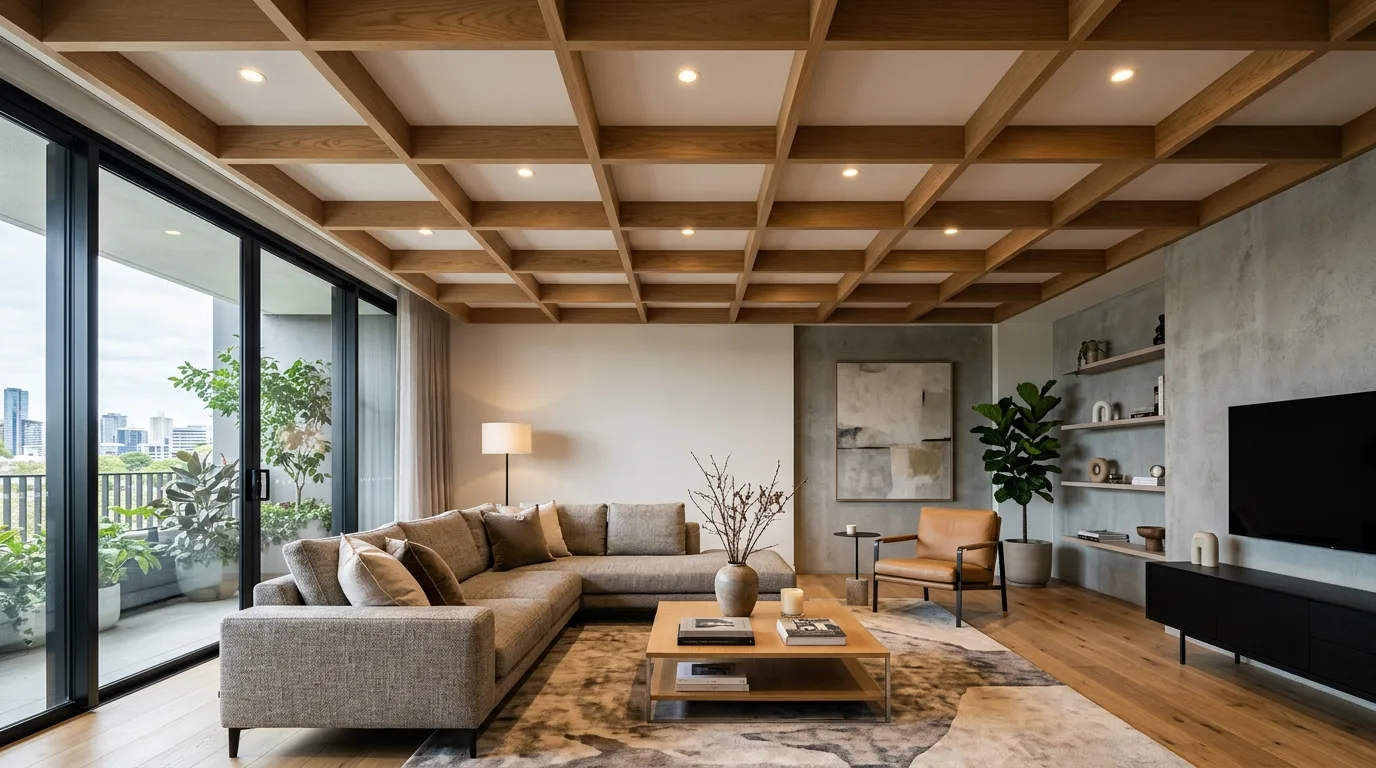
A bedroom wooden false ceiling should feel restful rather than overly elaborate. One effective approach is to use wood above the bed as a visual extension of the headboard, creating a cohesive feature that makes the sleeping area feel intentionally framed. Vertical or horizontal slats can continue from a wall onto the ceiling, while concealed warm lighting can emphasize the transition. Another option is a simple wood panel bordered by a neutral ceiling, which provides warmth without dominating the room. Soft, medium-toned finishes are often easier to pair with bedding and curtains than very saturated wood colors. Avoid excessive ceiling patterns in smaller bedrooms because they can make the room feel visually busy. Plan fan, pendant, and bedside lighting locations together so every fixture has a clear relationship to the ceiling design.
17. Minimalist Floating Wooden Ceiling
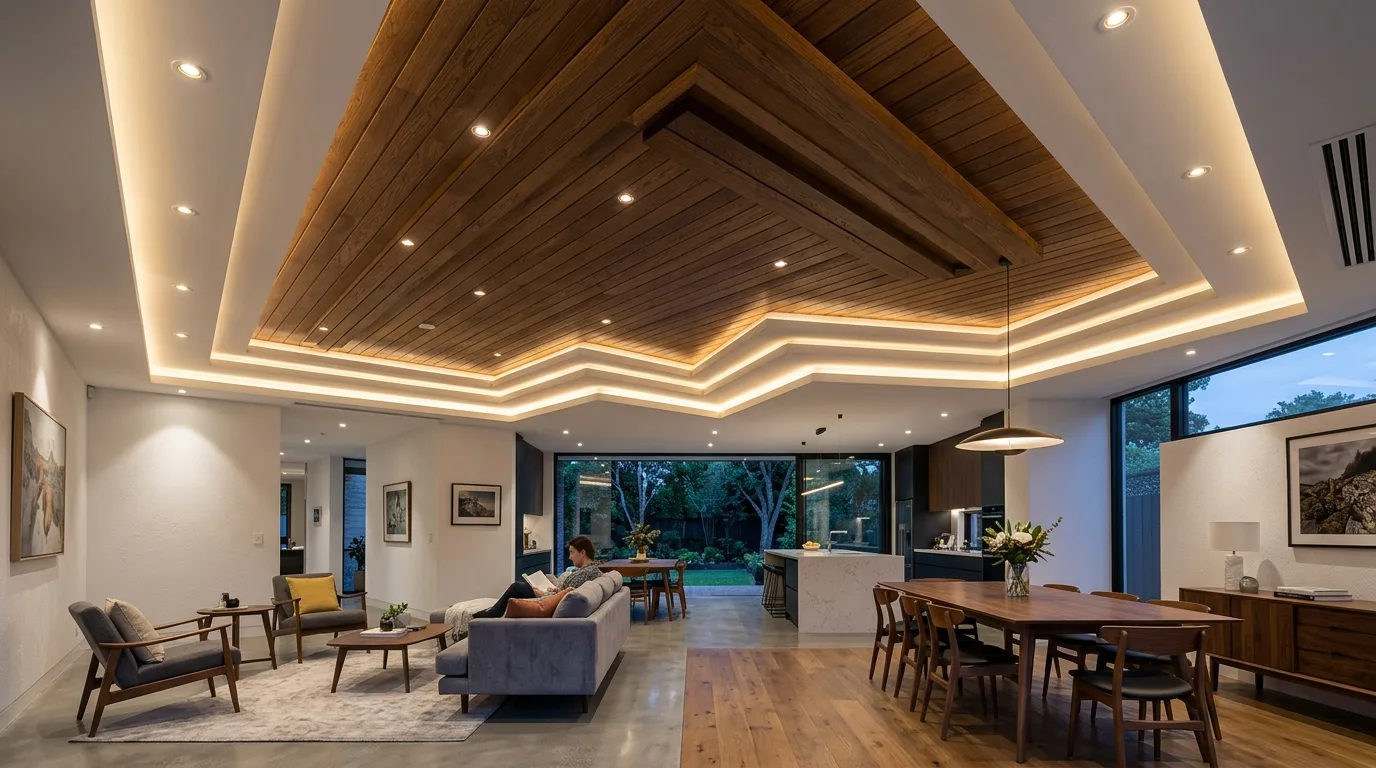
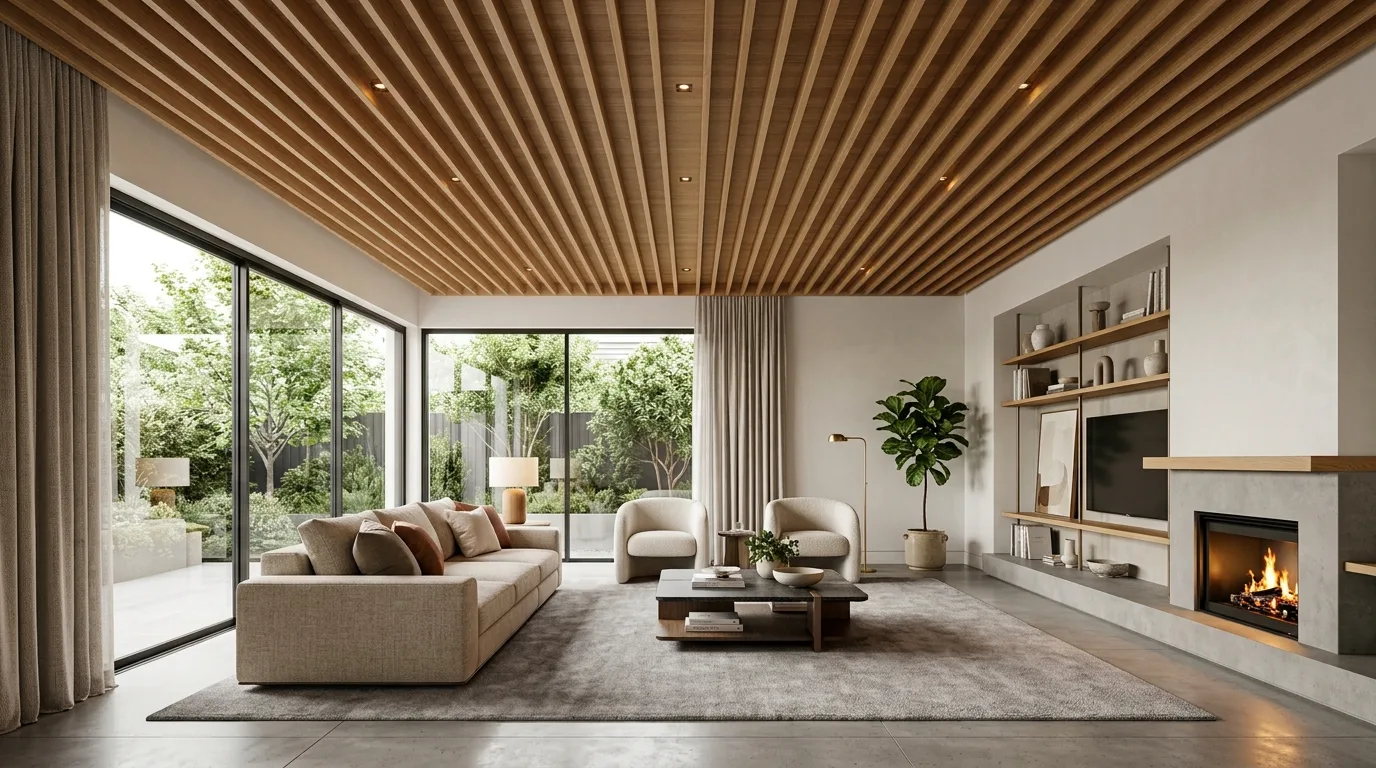
A floating wooden ceiling uses a recessed perimeter or concealed lighting gap to create the impression that the wood feature is suspended beneath the main ceiling. The result is understated but visually sophisticated, particularly in contemporary interiors. A simple rectangular wood panel can be enough to achieve the effect, especially when its dimensions align with furniture below. Concealed LED strips placed around the perimeter provide a soft glow and emphasize the separation between the wood and surrounding ceiling. Keep the detailing clean and avoid adding too many decorative elements because the floating effect depends on visual simplicity. This approach can also help define a specific zone within an open-plan room, such as a dining or lounge area, without building a physical partition. Accurate framing is important to maintain an even reveal around the entire panel.
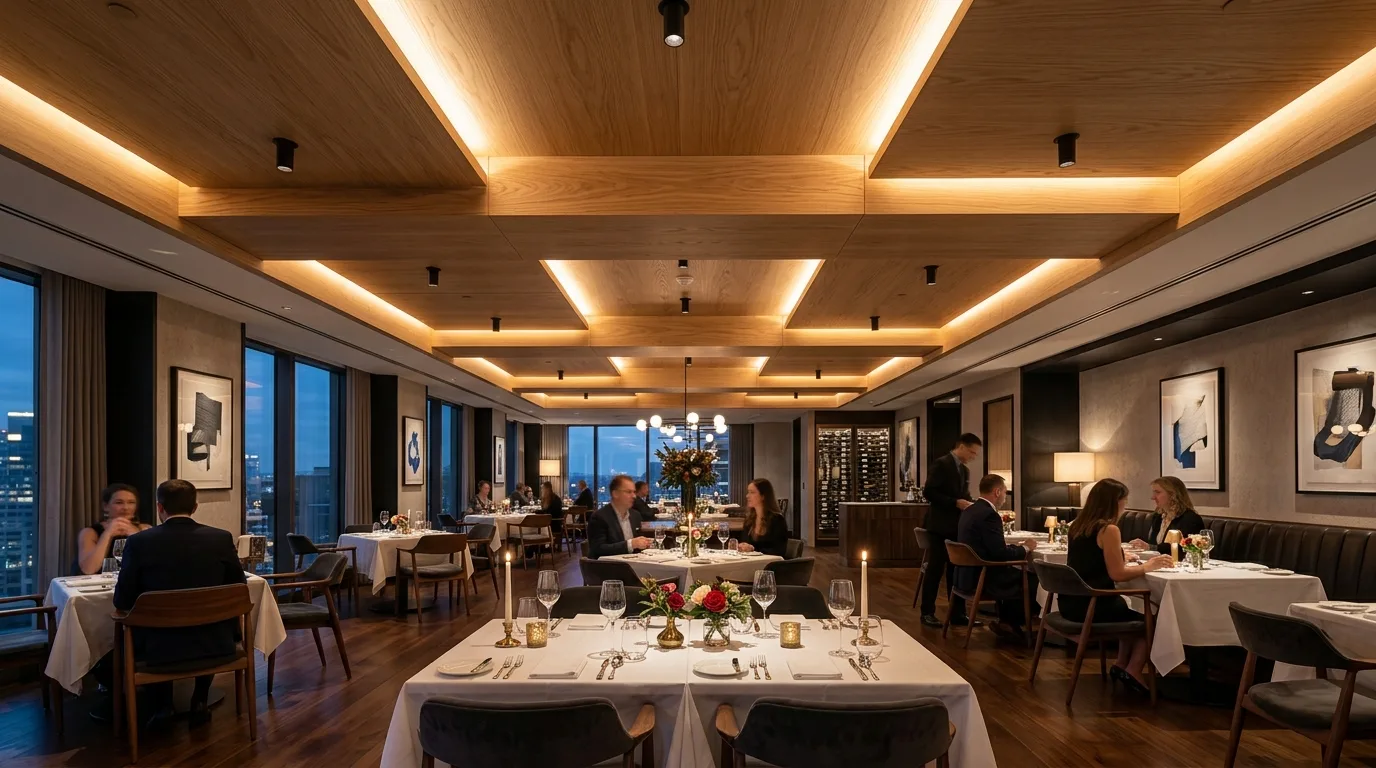
18. Wood-and-Gypsum Layered False Ceiling
A layered ceiling combining wood with gypsum board offers flexibility for both decorative design and practical lighting. Gypsum can create stepped borders, recessed areas, or smooth transitions around a central wood feature, while timber adds warmth and texture to the composition. This is a useful choice when you want a more customized ceiling but still prefer much of the surface to remain light and visually unobtrusive. For a balanced result, select one material as the dominant surface and use the other as an accent. Recessed spotlights can be integrated into the gypsum sections, while concealed LED strips can highlight the wood edge. Coordinate the ceiling levels with air-conditioning ducts, electrical wiring, and other services before construction begins. A carefully scaled design will look more refined than one with too many levels or decorative breaks.