Grey is one of the easiest living room colors to decorate with because it works beautifully with both warm and cool shades. The right two-colour combination can make a grey living room feel cozy, elegant, modern, bright, or dramatic without requiring a complete makeover. From soft grey and white to richer pairings with navy, green, beige, blush, or charcoal, each combination creates a different atmosphere.
Whether you are choosing wall colors, planning an accent wall, updating your sofa, or coordinating curtains and accessories, these grey two-colour combinations for living rooms offer practical inspiration. Use the ideas below to find a palette that suits your room size, natural light, furniture style, and overall decorating personality.
1. Grey and White for a Bright, Timeless Room
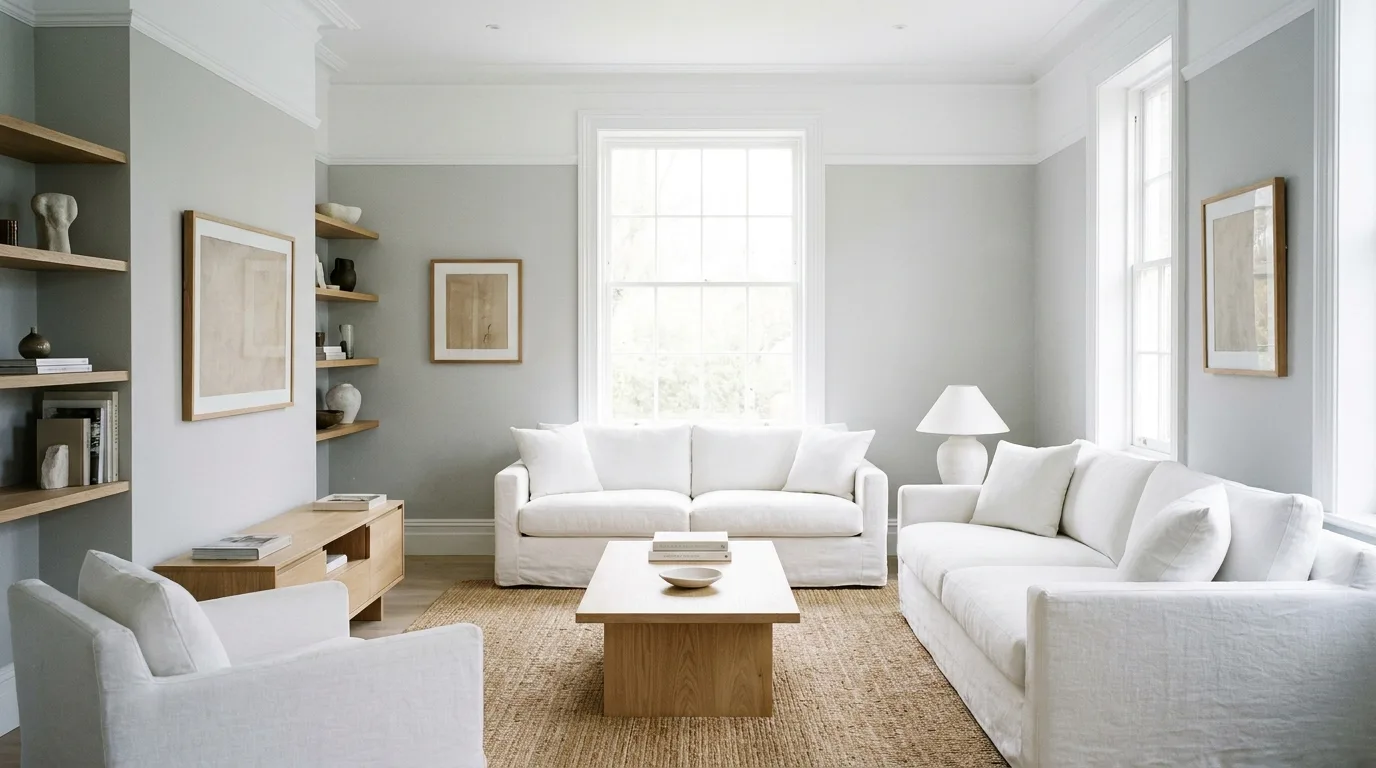
Grey and white is a dependable two-colour combination for a living room when you want the space to look fresh, spacious, and timeless. Use a pale or medium grey on the main walls and keep the ceiling, trim, or one feature wall white to create crisp contrast. In a smaller living room, light grey walls paired with white furniture can help reflect natural light and prevent the room from feeling enclosed. For a more contemporary look, introduce clean-lined furniture, glass tables, and simple artwork. If the palette feels too cool, add natural wood through flooring, shelving, or a coffee table. Soft fabrics such as wool, cotton, and linen also add warmth without disrupting the simple color scheme.
Best for: Small spaces, modern interiors, Scandinavian-inspired rooms, and homes with limited natural light.
2. Grey and Navy Blue for Sophisticated Contrast
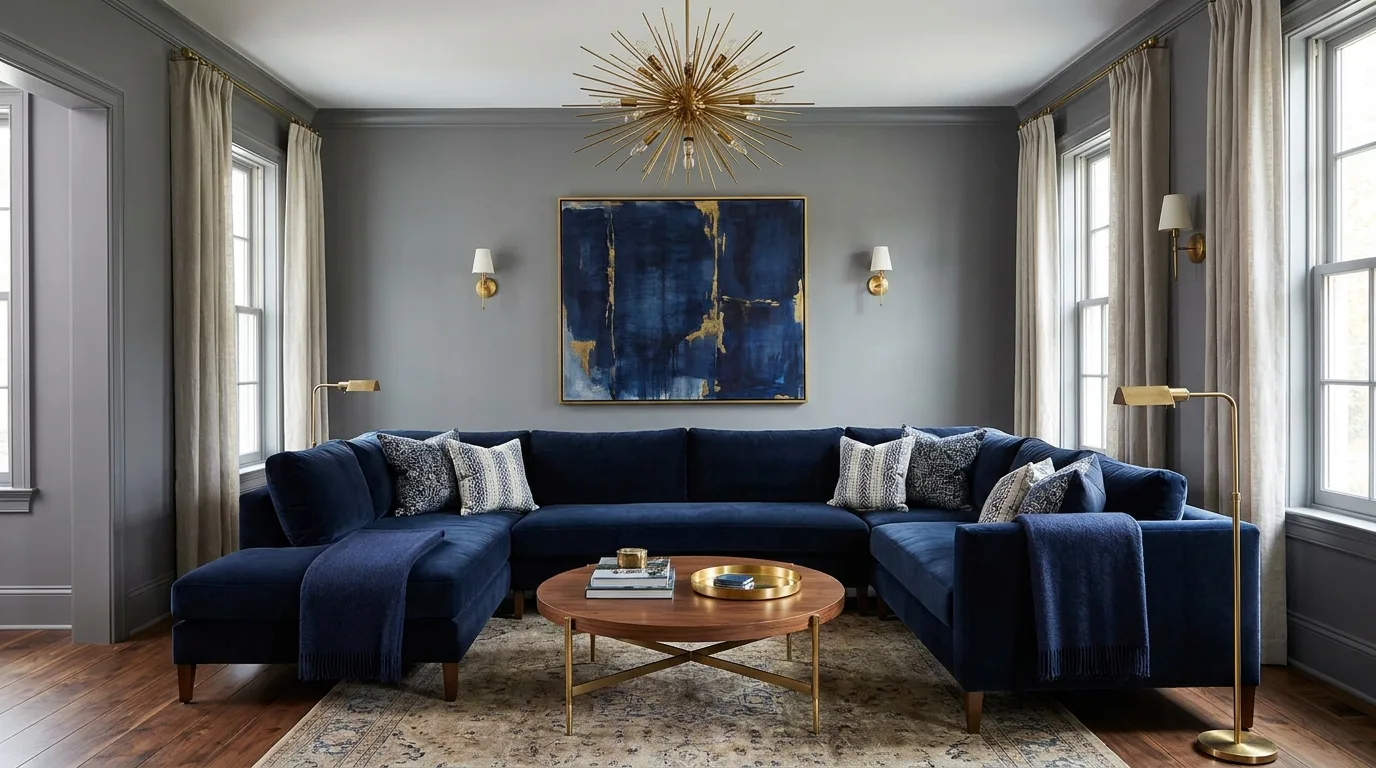
Pairing grey with navy blue creates a polished living room with strong but controlled contrast. Medium grey walls work especially well with a navy sofa, accent chair, curtains, or feature wall. If you are using dark navy extensively, balance it with lighter grey and plenty of warm lighting so the room does not become visually heavy. Brass or brushed-gold details can add a refined accent, while pale wood keeps the scheme approachable. For a modern living room, choose solid navy upholstery and geometric accessories. In a more traditional space, navy curtains and patterned cushions can provide the same color relationship with softer detail. This combination is particularly effective when you want a room that feels elegant without relying on many colors.
Best for: Formal living rooms, contemporary homes, and spaces where you want noticeable color contrast.
3. Grey and Beige for a Warm Neutral Palette
Grey and beige create a balanced neutral combination that feels considerably warmer than a grey-and-white scheme. Choose a warm grey for the walls and introduce beige through a sofa, area rug, curtains, or upholstered chairs. The key is to repeat both shades throughout the room so they feel intentionally connected. Natural materials make this pairing especially inviting: think oak furniture, woven baskets, jute rugs, linen curtains, and ceramic accessories. Avoid using too many nearly identical beige and grey shades, as the room can lose definition. Instead, create contrast with one darker grey element, such as a coffee table or accent chair. This palette is ideal for homeowners who want a calm living room that feels cozy and sophisticated rather than stark or overly colorful.
4. Grey and Sage Green for a Relaxing Natural Look
Grey and sage green bring a subtle connection to nature into the living room. Soft sage works particularly well with light grey because neither color overwhelms the other. Paint the walls light grey and use sage on an accent wall, sofa, curtains, or decorative cushions. Plants can reinforce the natural feeling, but the palette does not depend on greenery alone. Light oak, rattan, stone, and cream textiles complement both colors beautifully. If your room receives strong sunlight, muted sage can help soften the brightness without making the space feel dark. For a modern result, keep the green slightly dusty rather than highly saturated. This combination is also flexible enough to work with both minimalist furniture and comfortable, layered interiors.
5. Grey and Blush Pink for a Soft Modern Interior
For a gentle living room with a contemporary feel, combine grey with muted blush pink. A cool or neutral grey provides an understated foundation while blush adds warmth and softness. You do not need to paint an entire wall pink; cushions, a statement chair, curtains, artwork, or a small accent wall can introduce enough color. Keep the pink dusty and subdued if you want the room to remain sophisticated rather than overly sweet. White, cream, and light wood can be used as supporting neutrals without turning the palette into a third dominant color. Metallic details such as brushed brass can also complement this pairing. This grey two-colour combination works especially well in rooms with curved furniture, soft textiles, and modern decorative accessories.
6. Charcoal Grey and Light Grey for a Layered Monochrome Room
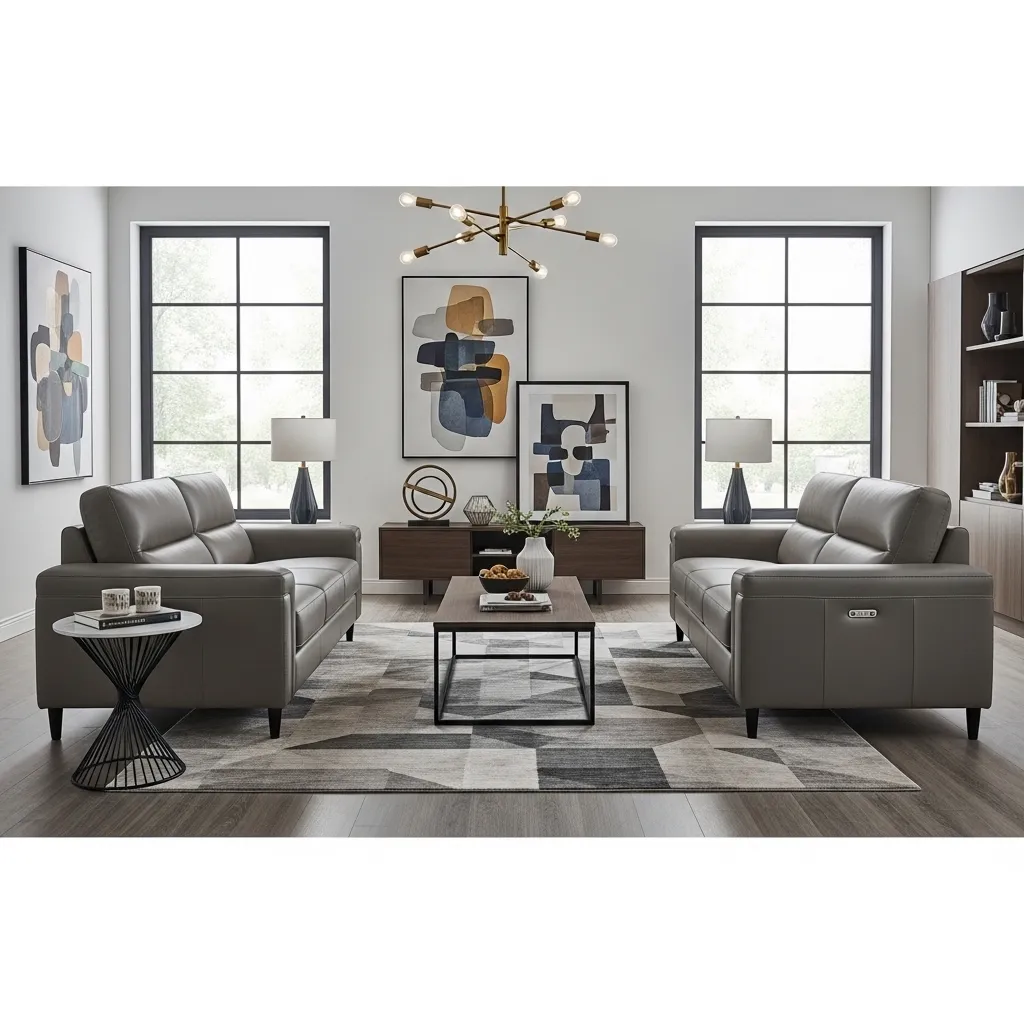
Using two different grey shades creates a monochrome living room with depth and visual interest. Combine light grey walls with a charcoal sofa, or reverse the arrangement if the room has abundant natural light. The important part is creating a clear difference between the two tones rather than choosing shades that look almost identical. Charcoal works well on larger furniture pieces, feature walls, built-ins, or curtains, while pale grey can keep the surrounding surfaces visually lighter. Add texture through a plush rug, knitted throws, wood furniture, and matte ceramics. Because the color palette is intentionally restrained, texture becomes an important decorating tool. This approach suits modern and industrial interiors particularly well, especially when paired with black-framed windows or simple metal accents.
7. Grey and Mustard Yellow for a Cheerful Accent
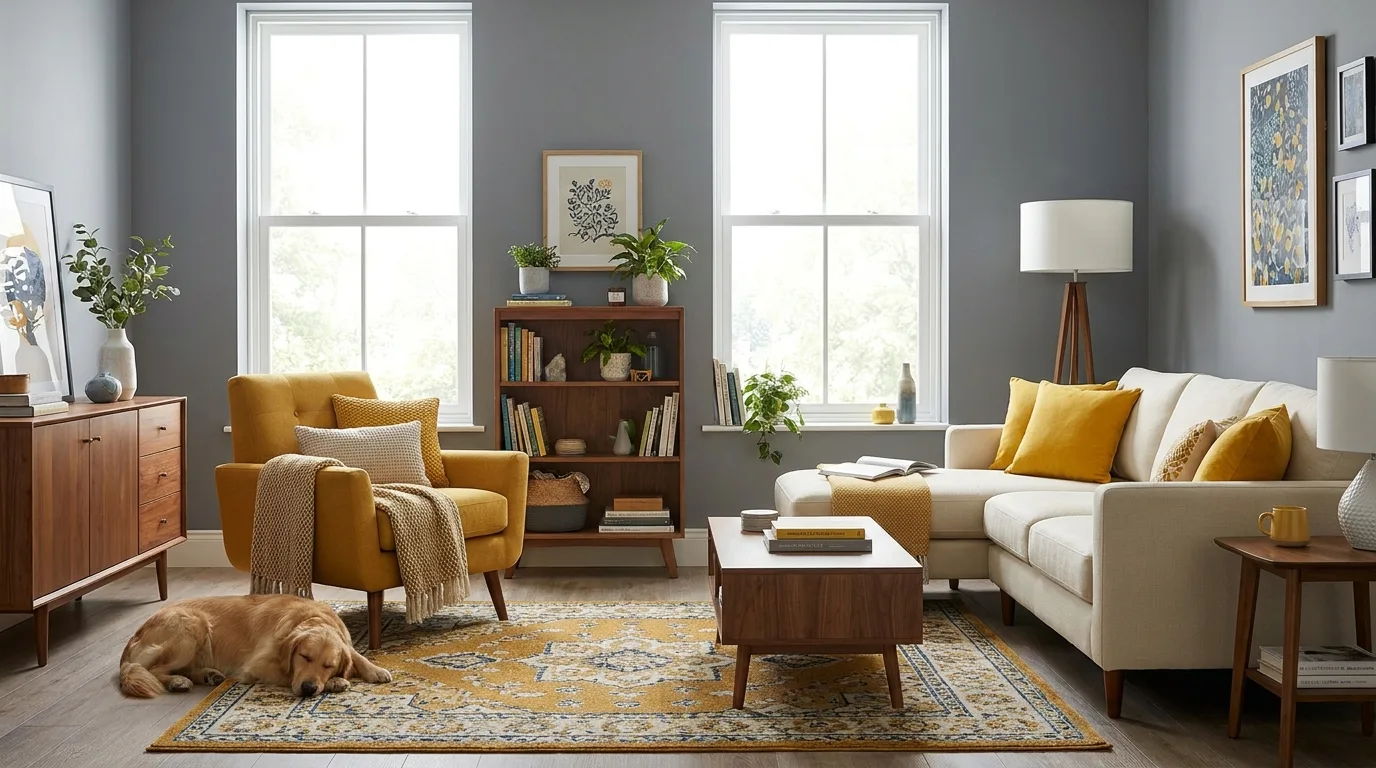
Grey provides an excellent neutral background for mustard yellow, allowing the warmer color to stand out without dominating the living room. Medium or charcoal grey walls can be paired with a mustard sofa, armchair, rug, or collection of cushions. If you prefer a quieter look, keep most large furniture grey and use mustard in smaller accessories. Warm wood tones help connect the two colors and make the room feel less formal. Because mustard has a strong visual presence, repeating it in two or three places is usually enough to create cohesion. Choose soft, muted mustard rather than an extremely bright yellow if you want a sophisticated result. This pairing can work in contemporary, mid-century, eclectic, and casual living rooms.
8. Grey and Teal for a Rich Contemporary Feel
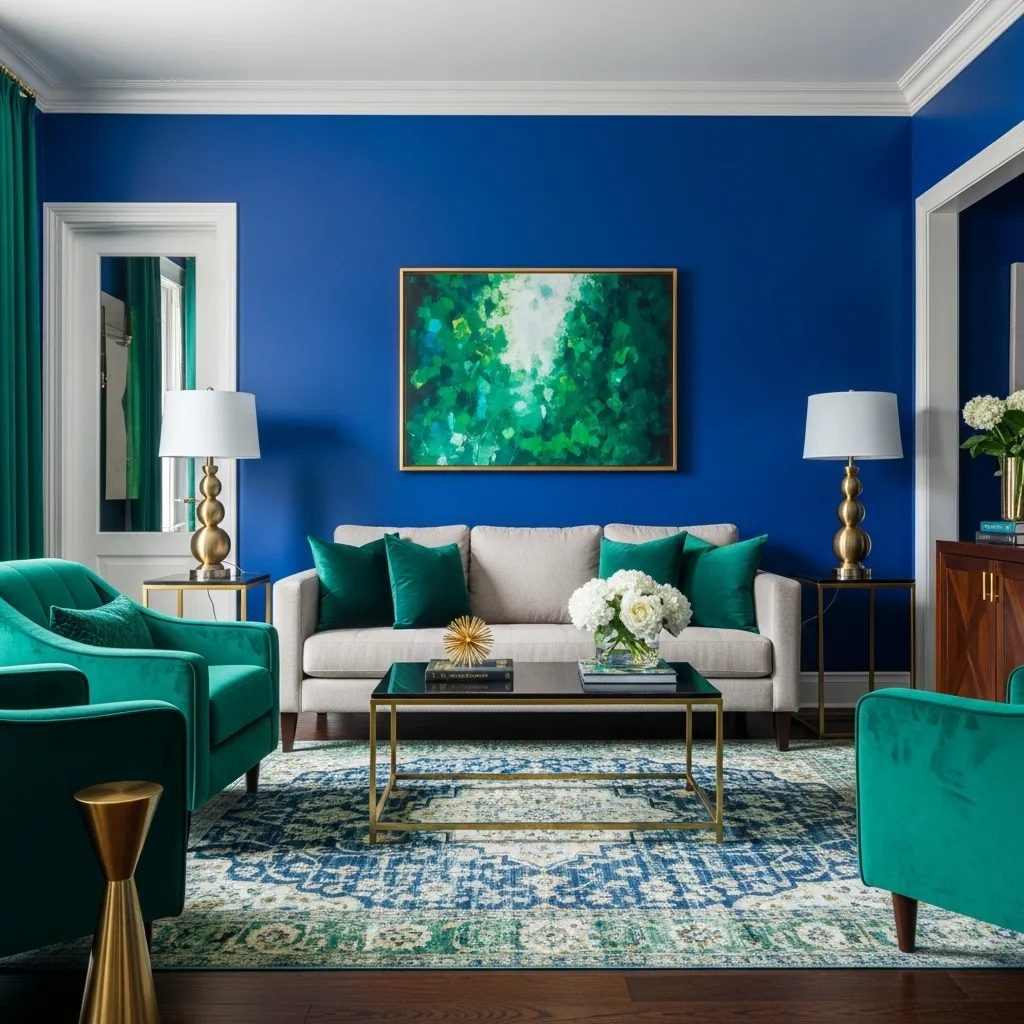
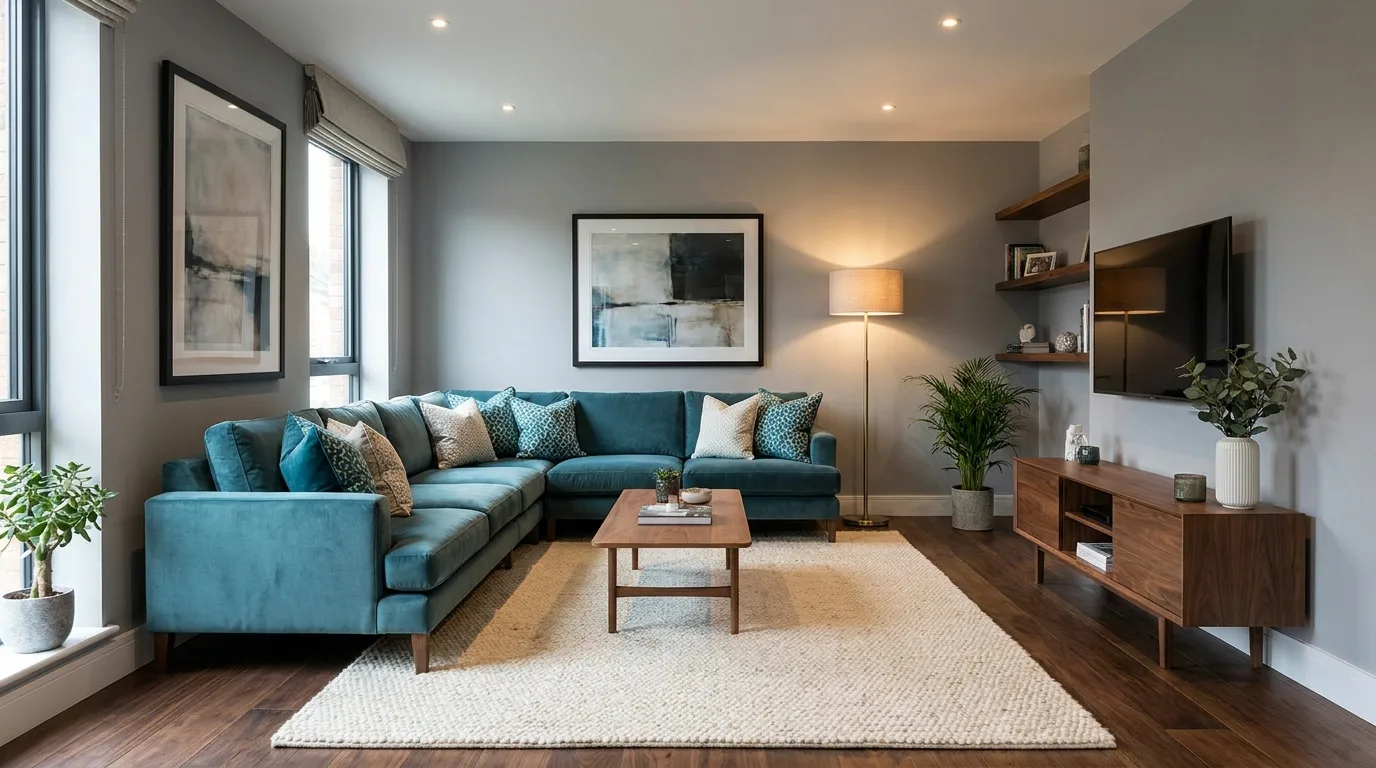
Grey and teal make a striking combination for homeowners who want more color while keeping the room polished. A soft grey backdrop allows teal furniture or accents to become the focal point. Try a teal sofa against light grey walls, or use teal curtains and cushions with a charcoal seating arrangement. Since teal combines blue and green undertones, it pairs naturally with wood, cream, and brushed metal finishes. Keep the rest of the room relatively restrained so the two main colors remain visually clear. In a larger room, a deep teal accent wall can create a dramatic feature, while smaller spaces benefit from using teal mainly through textiles and accessories. This palette is particularly attractive in contemporary rooms where you want a strong focal point without using multiple bright colors.
9. Grey and Cream for a Cozy Elegant Space
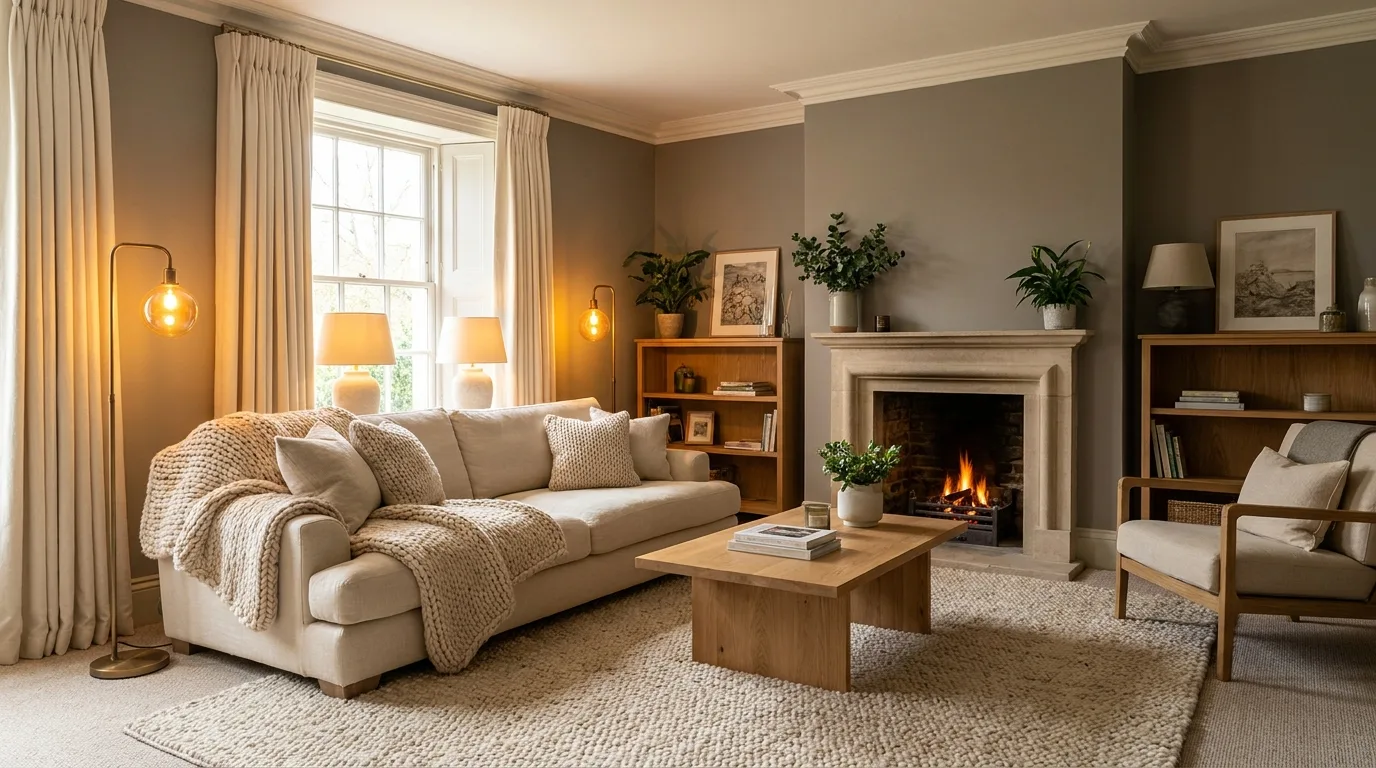
Grey and cream offer a softer alternative to the classic grey-and-white combination. Cream has warmer undertones, so it can make grey furniture and walls feel more inviting. Try warm grey walls with a cream sofa, or use cream curtains and a rug against a deeper grey backdrop. This combination benefits from layered fabrics, such as boucle, linen, velvet, and woven cotton. Natural wood is another useful addition because it strengthens the warm character of the palette. Keep the cream consistent across several elements instead of introducing many unrelated off-white shades. If your living room lacks natural light, choose a lighter grey and warm cream to keep the room open. The result can feel elegant without appearing overly formal.
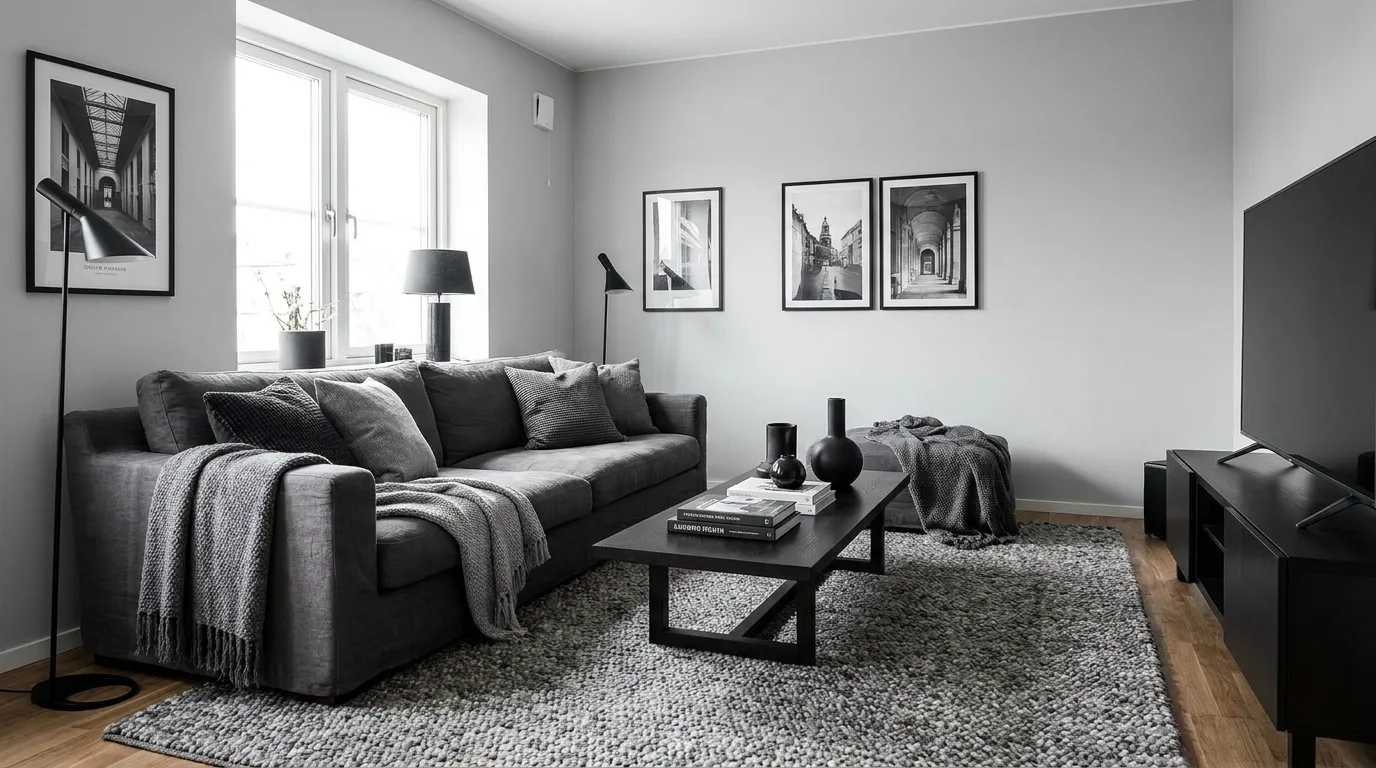
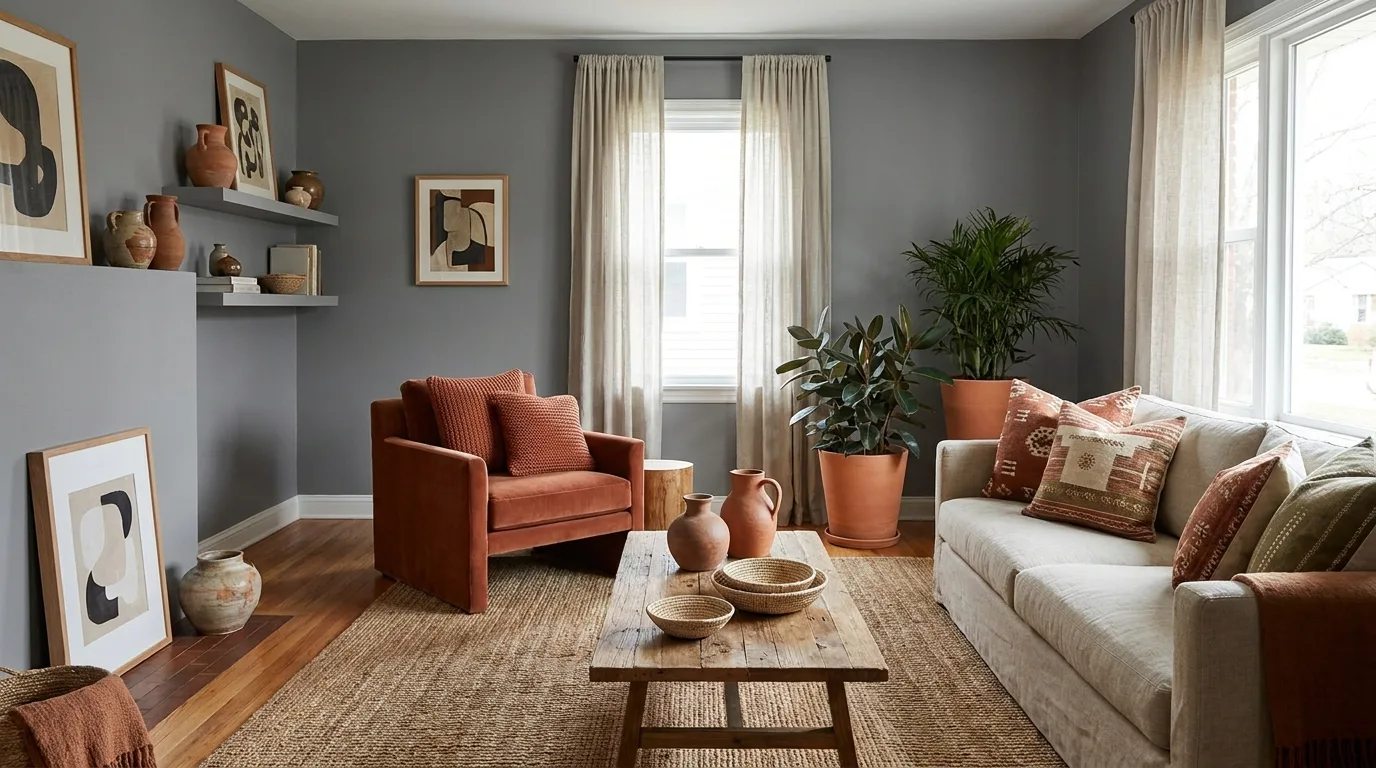
10. Grey and Terracotta for Earthy Character
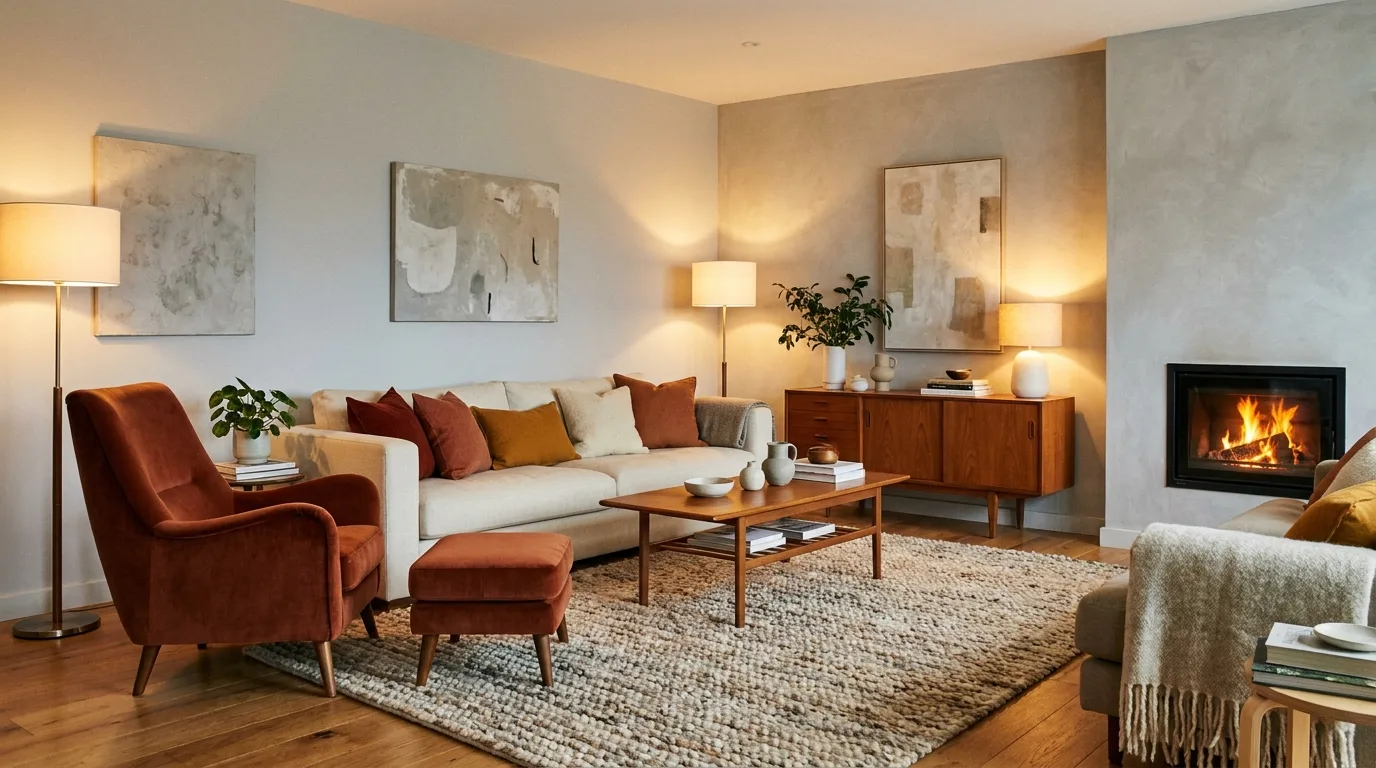
Terracotta adds an earthy warmth to grey, making it a useful choice when a neutral living room feels too cool. Start with light or medium grey walls and bring terracotta into the room through an accent chair, rug, cushions, pottery, or curtains. The orange-red undertone creates contrast while still feeling grounded and natural. Materials such as wood, leather, clay, and woven fibers fit naturally into this palette. Use terracotta selectively because too much can overpower a soft grey foundation. A few repeated accents around the room are usually enough. This combination works particularly well in homes influenced by Mediterranean, rustic, modern organic, or contemporary styles. It is also an easy palette to refresh seasonally by changing smaller accessories rather than repainting the room.
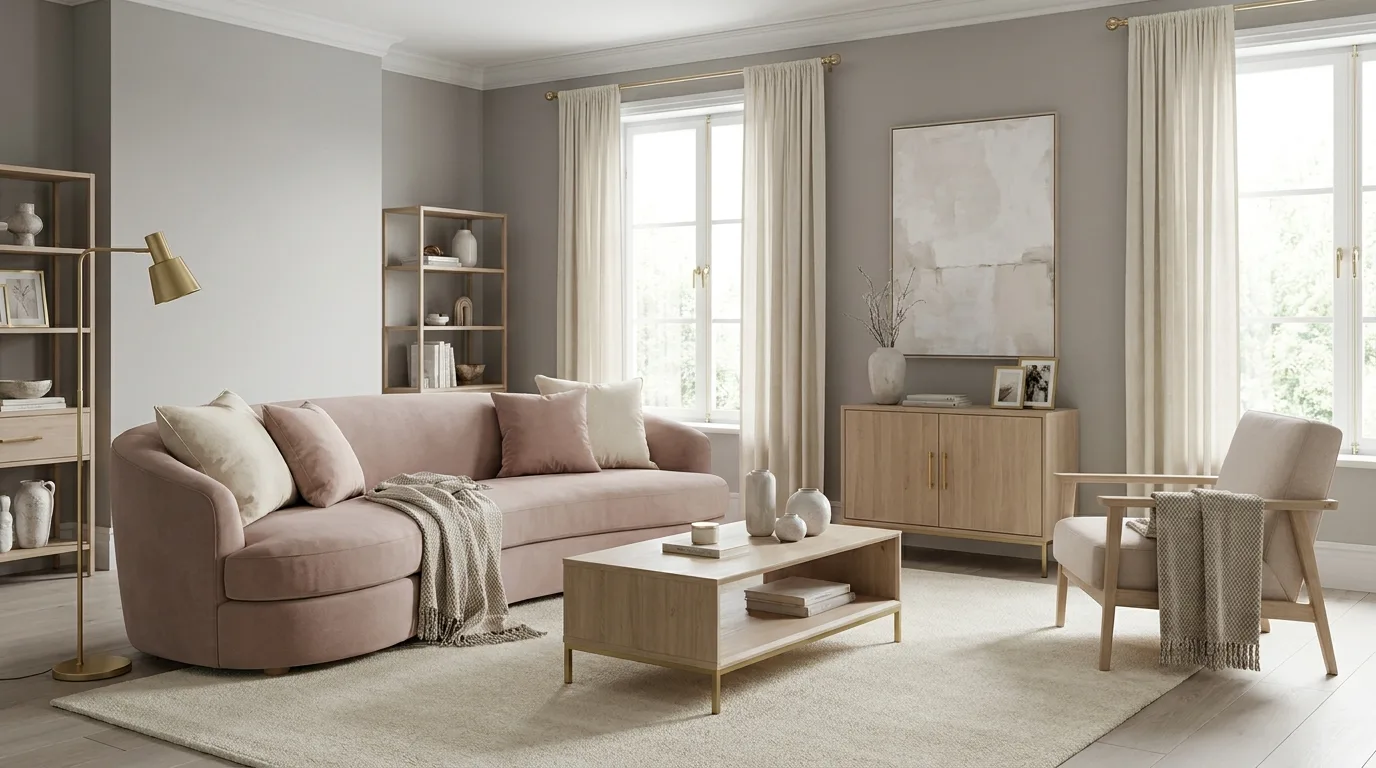
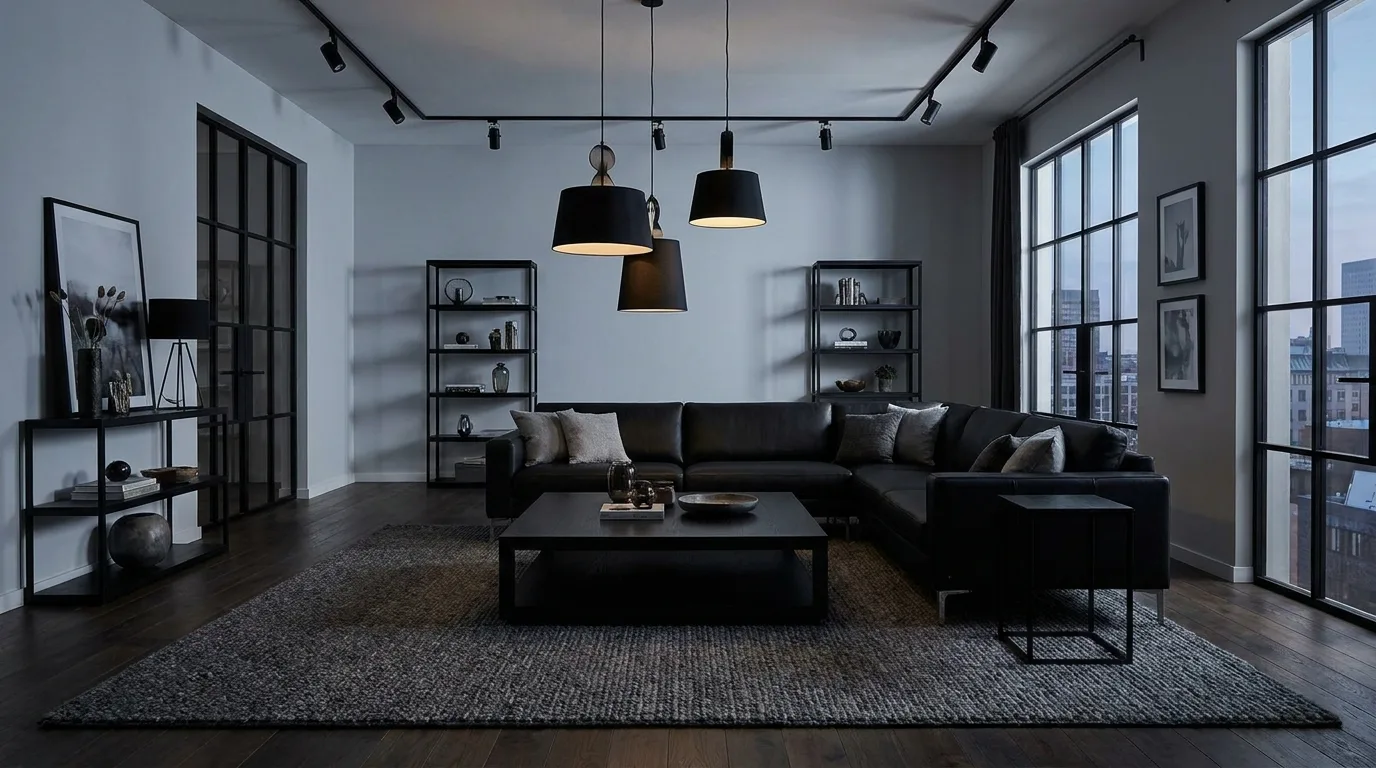
11. Grey and Black for a Dramatic Modern Look
Grey and black create a strong two-colour combination for a living room with a modern, architectural feel. Use light grey as the dominant shade if the room is small or receives limited daylight, then introduce black through window frames, furniture, lighting, shelving, or decorative objects. In a large, bright room, charcoal grey walls can be paired with black furniture for a much more dramatic effect. To avoid a flat appearance, use different textures and finishes, such as matte black metal, soft upholstery, natural wood, and textured rugs. Black should act as a deliberate contrast rather than appearing randomly throughout the room. This palette is especially effective in contemporary and industrial interiors where clean shapes and strong lines are already part of the design language.
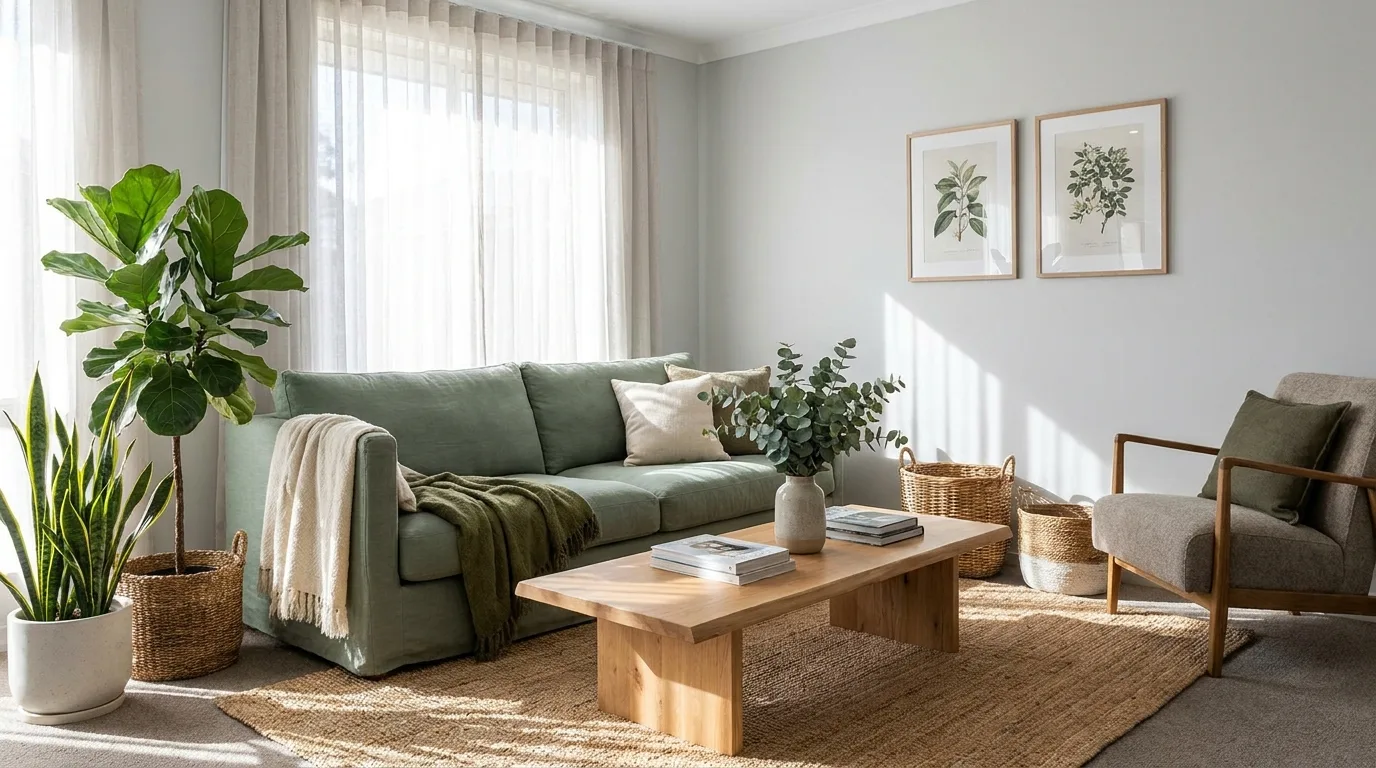
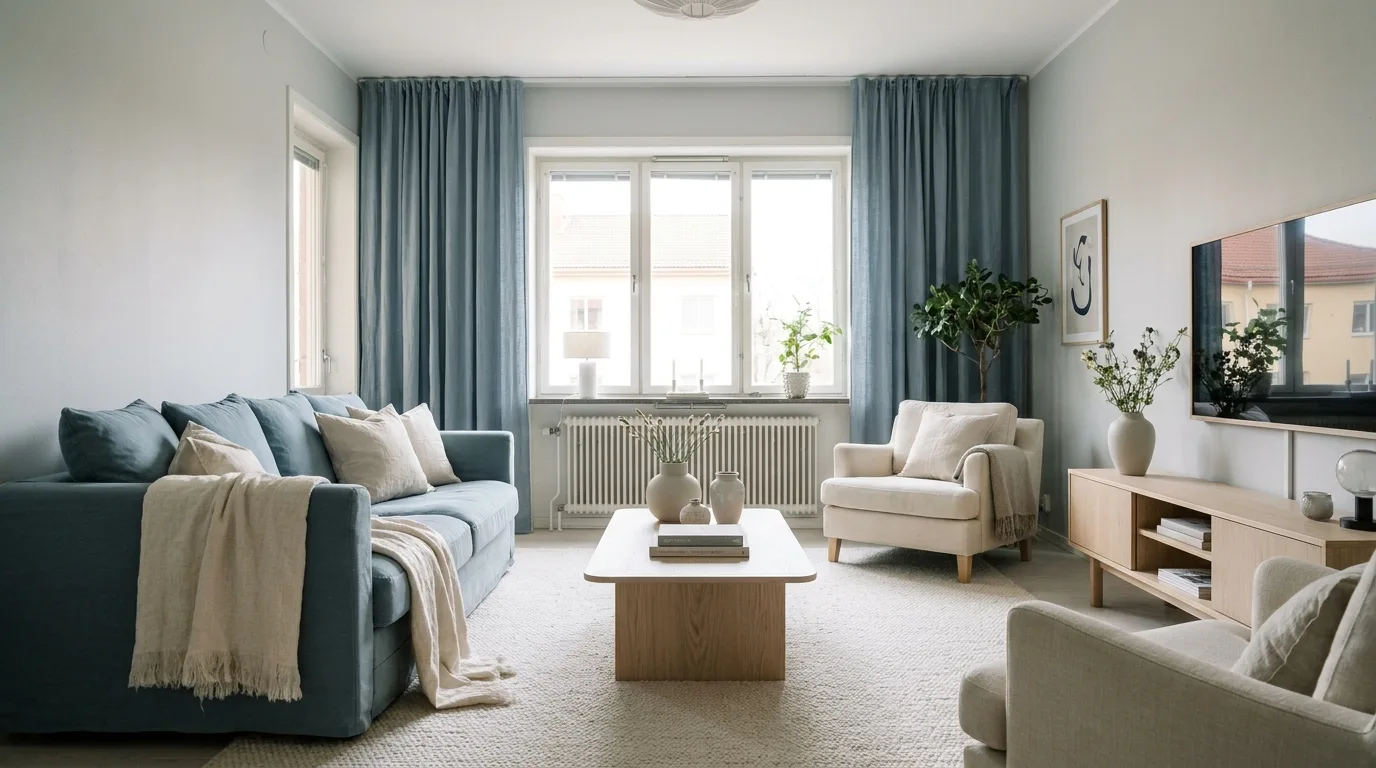
12. Grey and Dusty Blue for a Calm Living Room
Grey and dusty blue create a quiet color palette that works well for relaxed living spaces. Choose a pale grey wall color and introduce dusty blue through a sofa, curtains, cushions, or a subtle accent wall. Because both shades are relatively muted, the room can feel peaceful without looking empty. White or cream trim can provide additional brightness, while pale oak and woven materials add warmth. This combination is especially useful when you want a living room that feels airy but not stark. Keep patterns simple, such as small stripes or understated geometric prints, so the two main colors remain dominant. The palette can suit coastal-inspired interiors without relying on obvious nautical decorations, making it a versatile choice for modern homes.
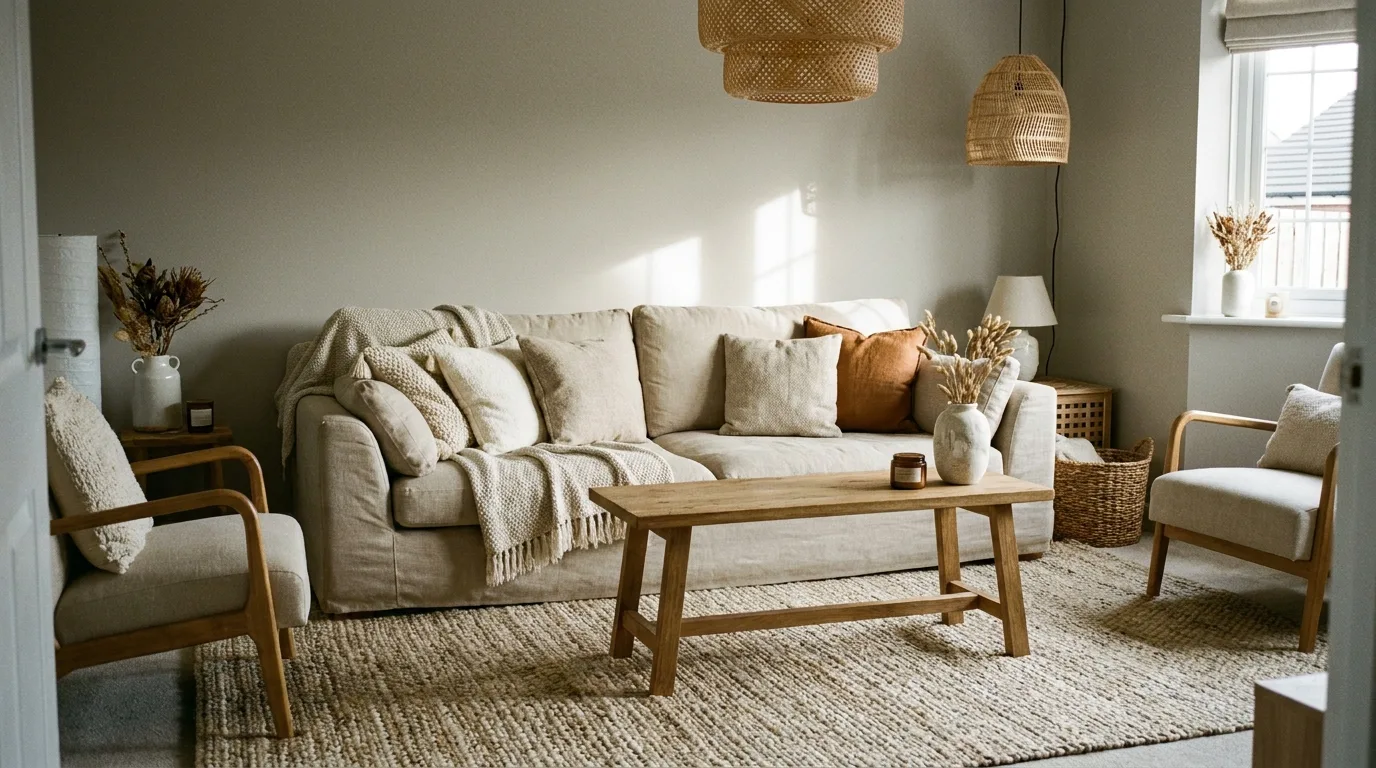
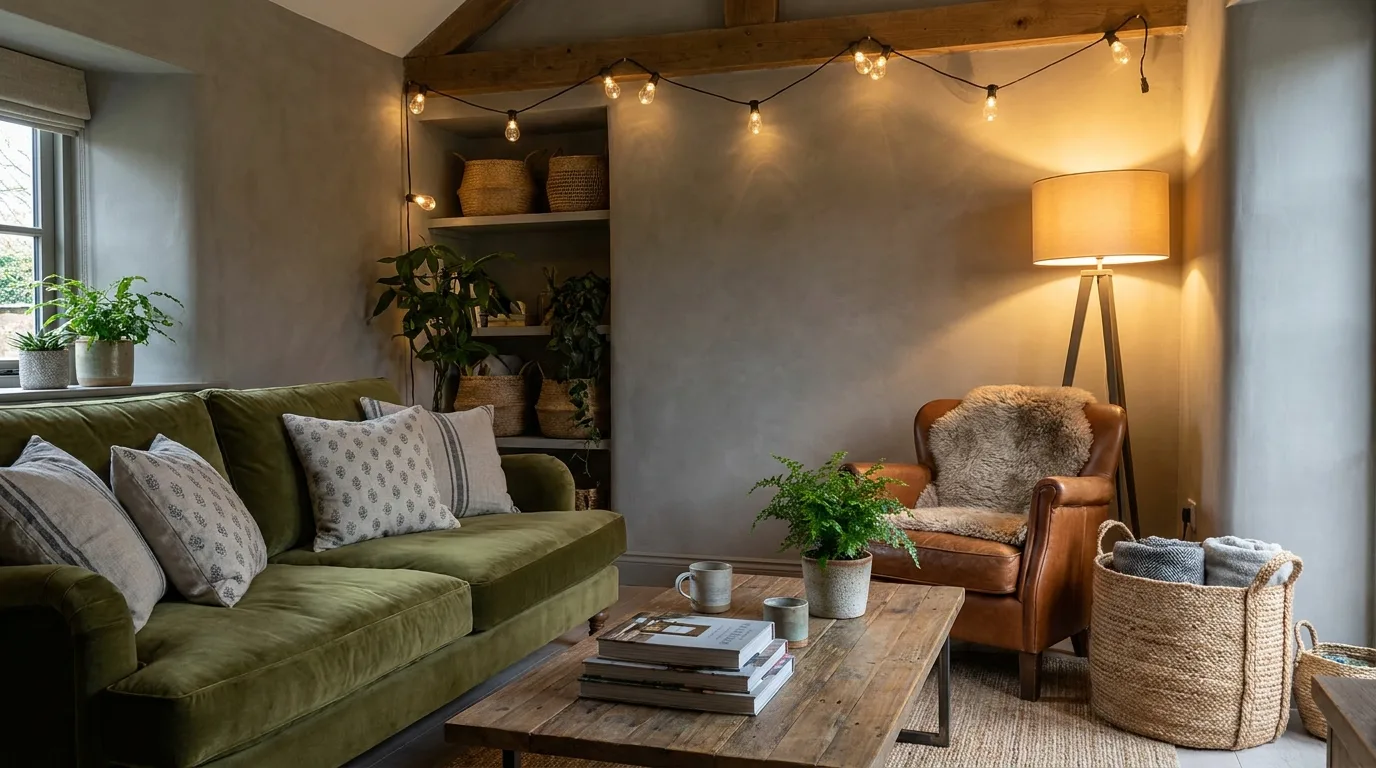
13. Grey and Olive Green for an Organic Atmosphere
Olive green gives grey a deeper, more grounded character. Pair warm grey walls with olive upholstery, curtains, or decorative accents to create a living room that feels connected to natural tones. Olive works especially well with aged wood, leather, woven baskets, and antique-style accessories. If your living room is small, use olive as the secondary color rather than covering several large surfaces. In larger rooms, an olive accent wall can create a strong focal point against lighter grey furniture. Choose a muted olive instead of a very bright green for a more sophisticated finish. This pairing works across rustic, modern organic, transitional, and contemporary styles and can be easily adjusted with lighting and accessories.
14. Grey and Burgundy for a Luxurious Accent
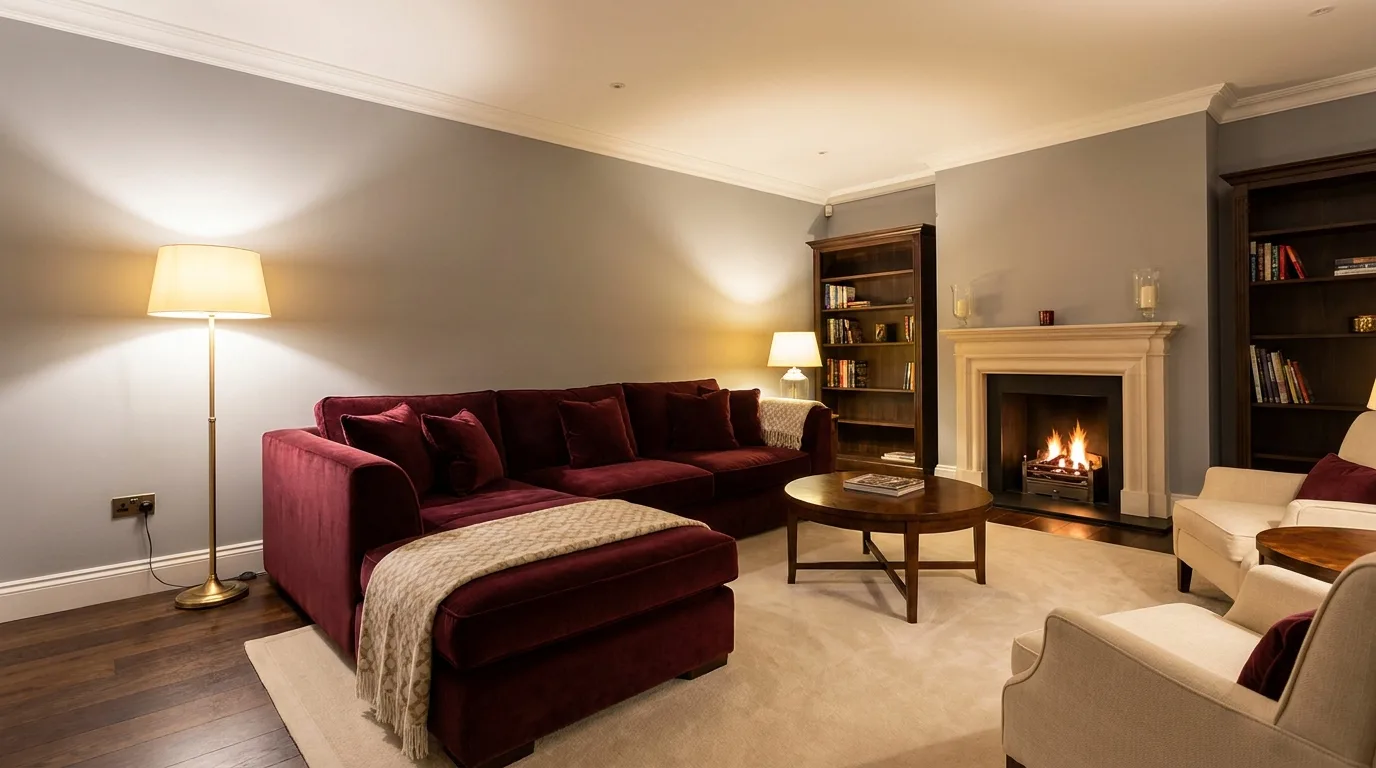
Grey and burgundy can create a rich living room palette with a sophisticated mood. A medium or light grey backdrop gives burgundy enough space to stand out, while burgundy cushions, velvet seating, curtains, or artwork add depth. Because burgundy is visually strong, it is usually better as the secondary color rather than the dominant one. Warm lighting can bring out its red undertones and make the room feel inviting in the evening. Add cream or natural wood sparingly to soften the contrast while keeping grey and burgundy as the main visual relationship. Velvet and other tactile fabrics can enhance the luxurious quality, but simple cotton and linen also work if you prefer a casual atmosphere. This palette suits both traditional and modern living rooms.
15. Grey and Lavender for a Refined Soft Palette
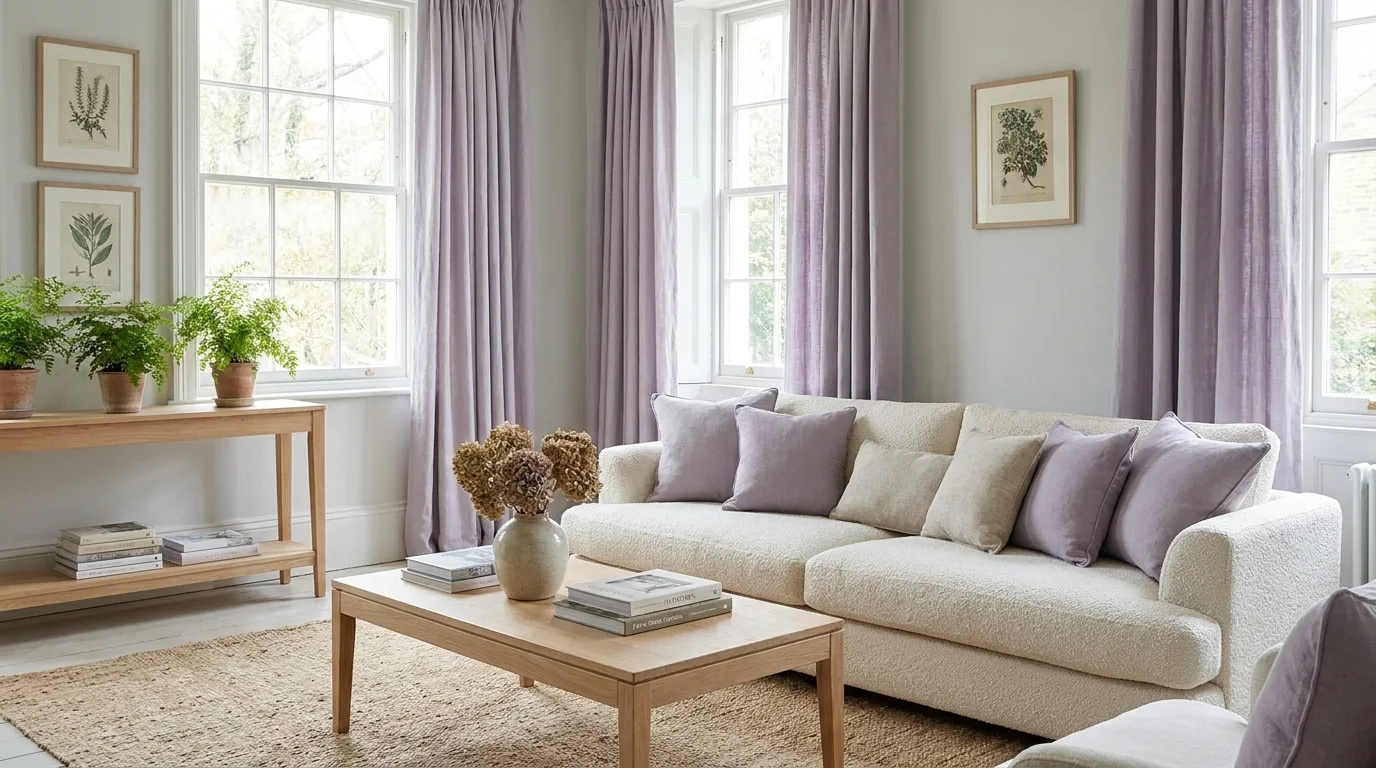
Lavender brings a subtle cool color into a grey living room without creating an overly bright effect. Pair pale grey walls with muted lavender curtains, cushions, an accent chair, or artwork. For a more contemporary look, choose a grey with slightly warm undertones so the lavender does not make the room feel too cold. Cream and light wood can help balance the cooler shades. Keep the lavender dusty or slightly greyed if you want a mature, sophisticated appearance. This combination is especially suitable for rooms where you want a calm atmosphere with a gentle touch of personality. Rather than using lavender everywhere, repeat it in several small elements around the room to make the palette feel coordinated.
16. Grey and Rust for Warm Contemporary Style
Rust is a warm, earthy color that gives grey an inviting autumn-inspired character. Use light grey walls as the neutral foundation and add rust through an upholstered chair, patterned rug, cushions, or artwork. The combination becomes especially attractive when paired with medium-toned wood and warm lighting. Rust can be stronger than terracotta, so smaller doses often create a more balanced result. If your furniture is already grey, replacing a few accessories with rust-colored pieces can transform the room without major renovation. Textured materials such as wool, leather, linen, and woven fabric work beautifully with this palette. It is a practical option for homeowners who like neutral interiors but want a warmer, more distinctive accent color.
17. Grey and Natural Wood for a Modern Organic Finish
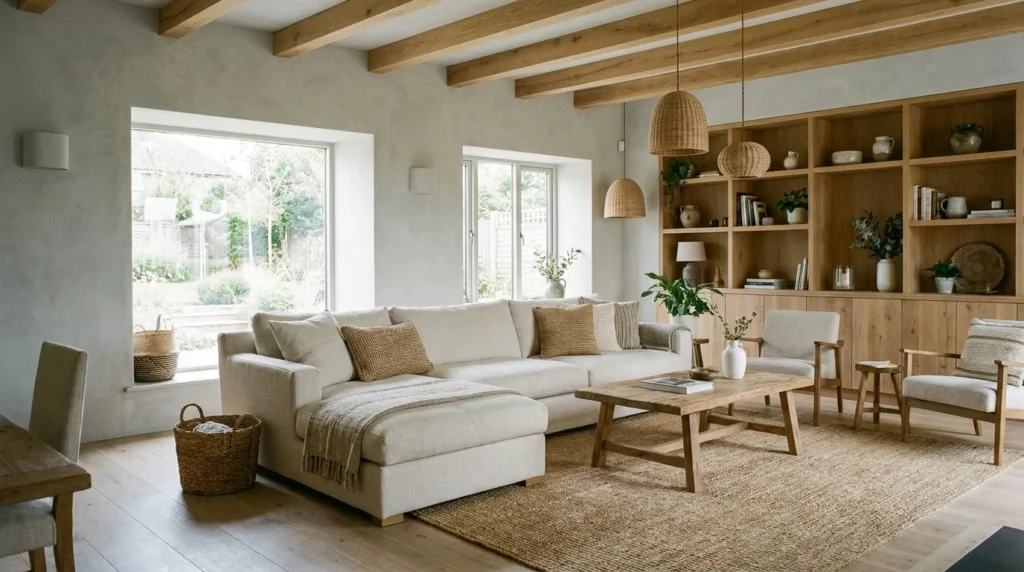
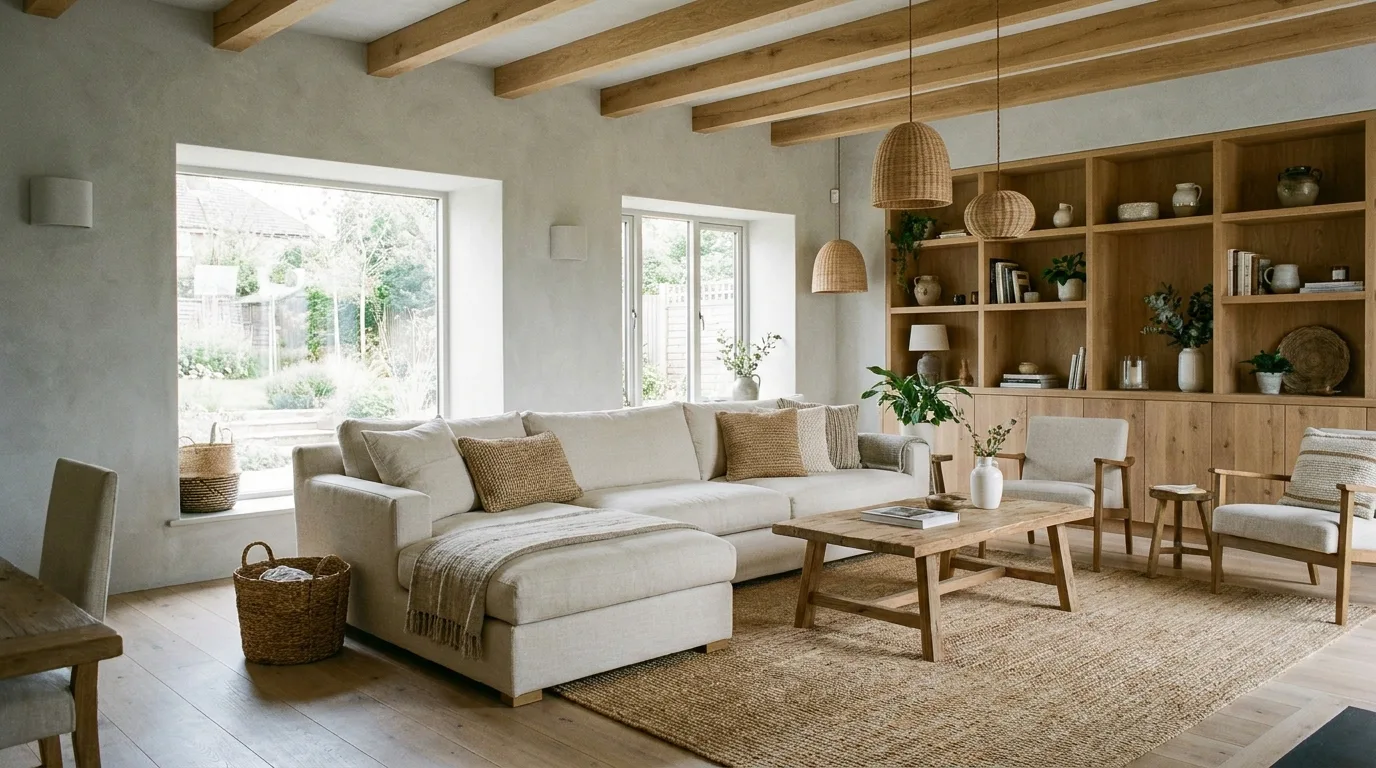
Grey and natural wood form a versatile combination for a living room that feels modern but welcoming. Although wood is technically a material rather than a paint color, its warm natural tones create a clear second color family against grey walls, furniture, or flooring. Pair light grey walls with oak shelving, a wooden coffee table, or exposed timber details. For darker grey interiors, medium or warm wood can prevent the space from feeling too cool or industrial. Keep the wood finish consistent enough to create visual harmony, while woven baskets and linen textiles add softness. This combination works particularly well in minimalist, Scandinavian, Japandi, and modern organic interiors. It is also easy to maintain because small changes in plants, textiles, and accessories can refresh the room without disturbing the core palette.