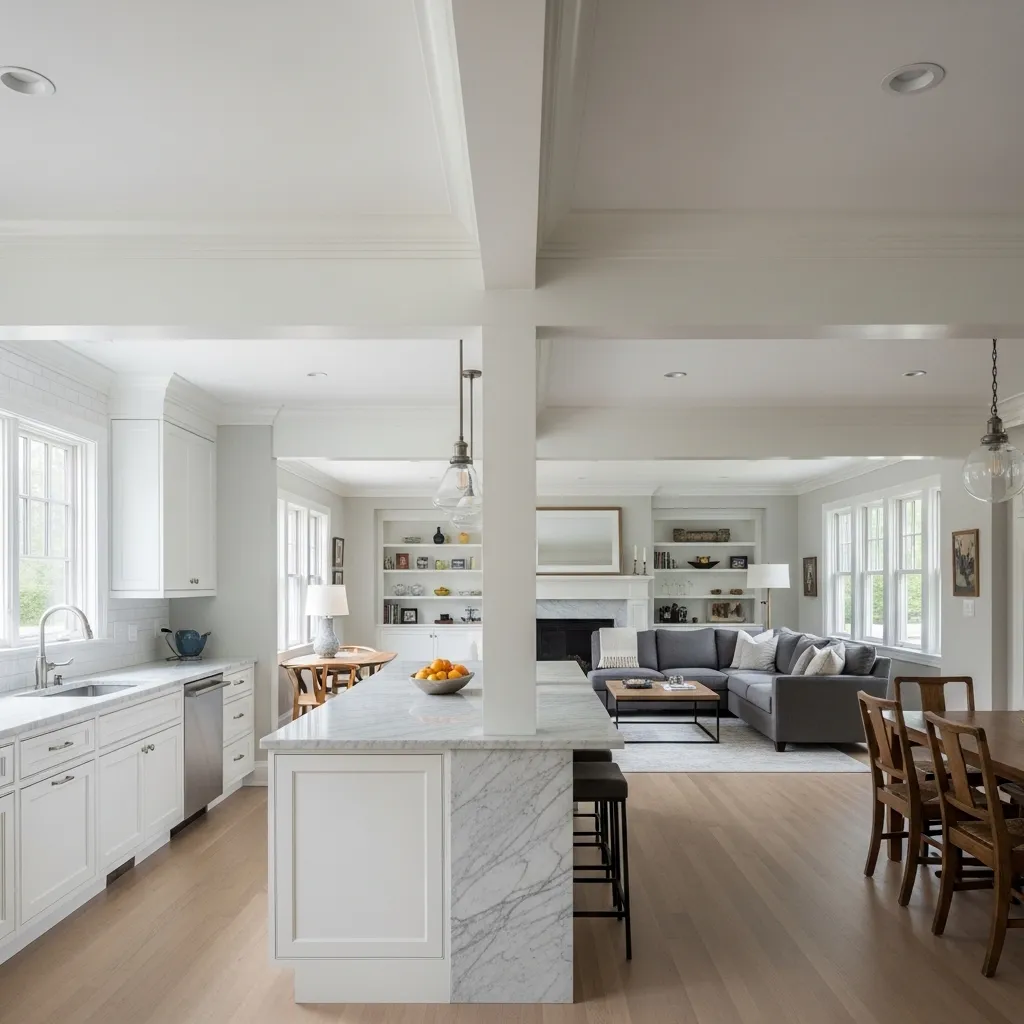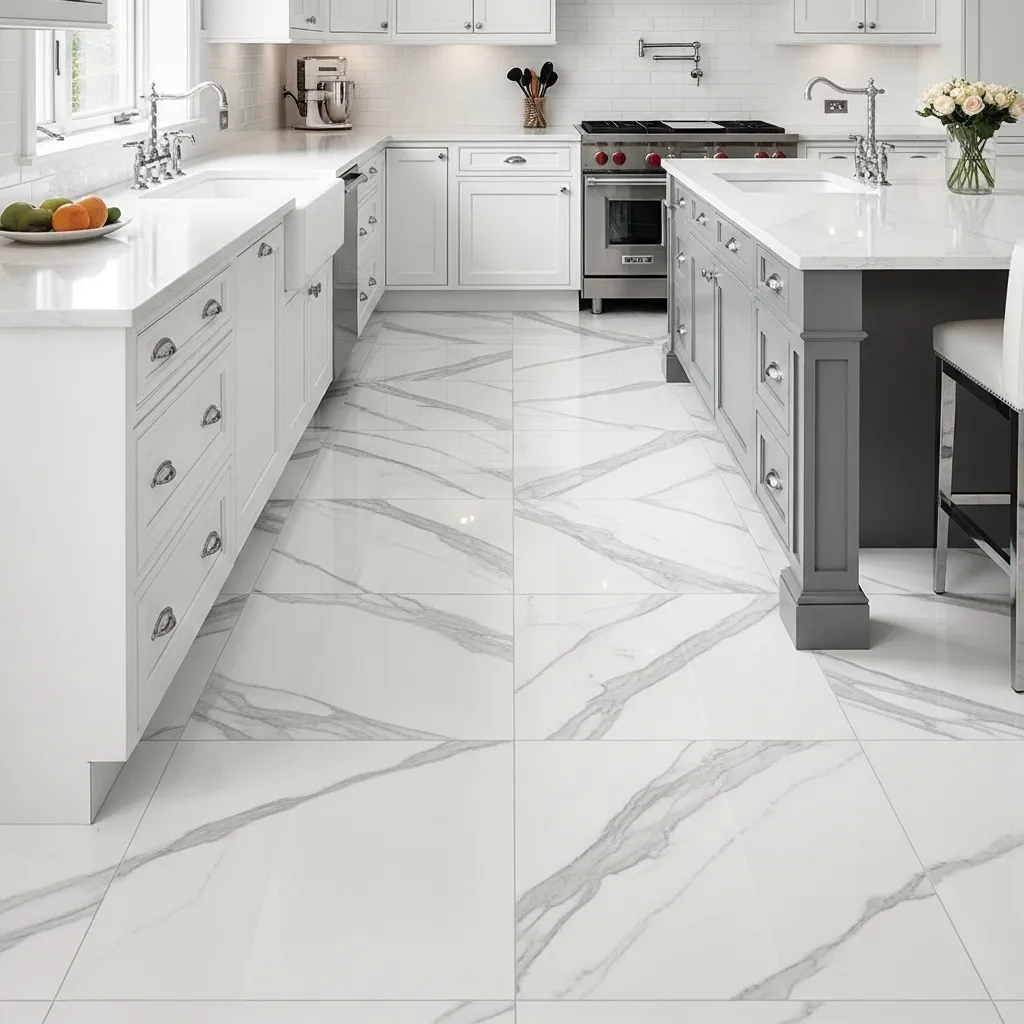
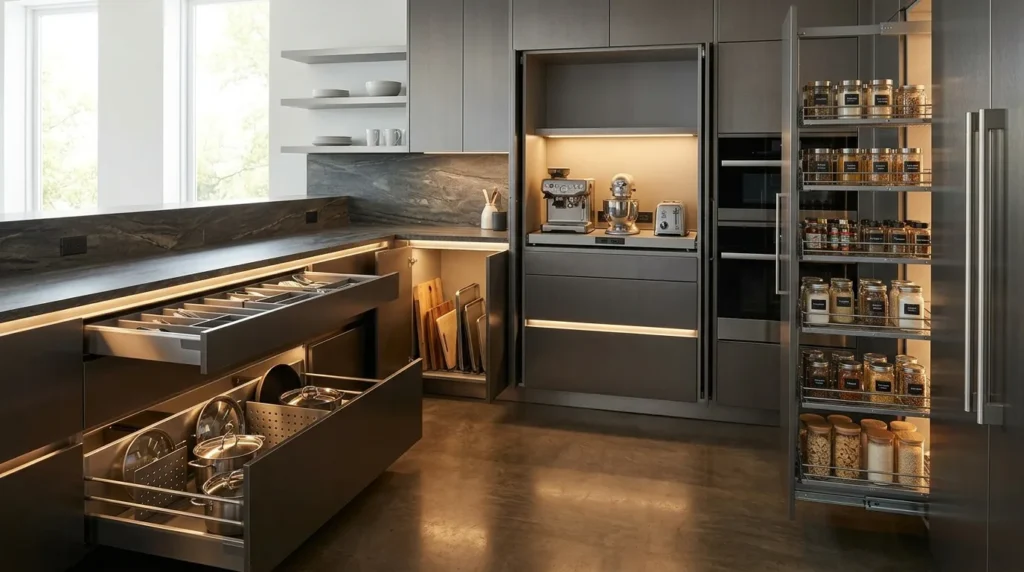
Aluminium kitchen cabinets are becoming a popular choice for homeowners who want a kitchen that looks modern while standing up to everyday use. Unlike traditional wood-based cabinetry, aluminium is resistant to moisture, rust, termites, and many common kitchen problems. It is also lightweight, easy to clean, and available in a wide range of colors and finishes. From sleek minimalist kitchens to warm contemporary spaces, aluminium cabinets can be adapted to many design styles.
Whether you are renovating a compact apartment kitchen or planning a spacious cooking area, the right cabinet design can make a major difference in storage, appearance, and practicality. The ideas below explore different ways to use aluminium cabinets, including finishes, layouts, colors, hardware, and combinations with other materials. Use them as inspiration while considering your kitchen size, cooking habits, maintenance needs, and overall home style.
1. Sleek Matte Black Aluminium Cabinets
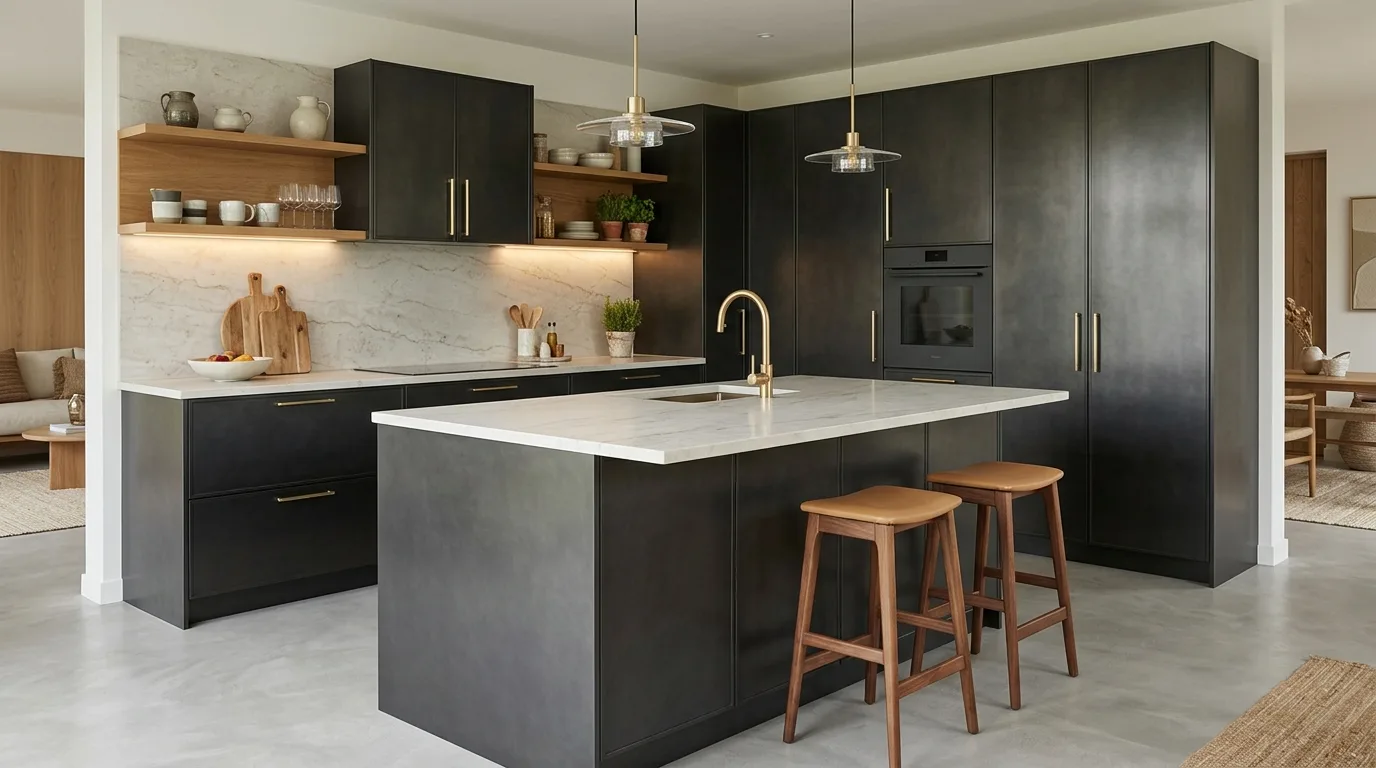
Matte black aluminium cabinets can give a kitchen a dramatic, sophisticated appearance without relying on heavy materials. The smooth finish works particularly well in modern and industrial kitchens, where clean lines and simple surfaces are important. Pair black cabinet doors with a light countertop, such as white quartz or pale stone, to create useful contrast and prevent the room from feeling too dark. Warm wood accents, brass hardware, or under-cabinet lighting can also soften the look. Matte finishes are especially attractive because they reduce the appearance of fingerprints compared with highly reflective surfaces. For smaller kitchens, consider using black aluminium on the lower cabinets while keeping the upper cabinets lighter.
2. Bright White Aluminium Kitchen Cabinets
White aluminium cabinets are an excellent option when you want a kitchen to feel bright, spacious, and clean. Their reflective quality can help distribute available light, which is particularly useful in compact kitchens or rooms with limited natural illumination. White works with almost any countertop, backsplash, or flooring style, making it an easy foundation for future decorating changes. You can choose a completely white scheme for a minimalist appearance or introduce contrast through dark handles, natural wood shelves, or patterned tiles. Aluminium also makes white cabinetry practical because the surfaces can generally be wiped clean after cooking. Choose a durable finish designed for kitchen use and use simple hardware for a streamlined contemporary effect.
3. Wood-Look Aluminium Cabinet Design
If you love the warmth of wood but want the practical qualities of aluminium, consider wood-look aluminium cabinet doors. Modern finishes can reproduce the appearance of oak, walnut, ash, or other wood tones while keeping the cabinet structure resistant to common kitchen moisture problems. This style is useful for creating a warmer contemporary kitchen without committing to traditional wooden cabinetry. Combine medium or light wood-look doors with a neutral countertop and simple hardware for a balanced appearance. Vertical wood grain can also visually emphasize ceiling height, while horizontal grain can make a cabinet run appear wider. The key is to choose a realistic finish and limit competing patterns elsewhere in the kitchen so the cabinets remain the main feature.
4. Two-Tone Aluminium Cabinet Layout
A two-tone aluminium kitchen allows you to combine contrasting cabinet colors without making the design complicated. A popular approach is darker lower cabinetry with lighter upper cabinets, creating visual weight at the bottom while keeping the upper part of the room airy. Another option is to use one color around the main cooking area and a complementary shade on a kitchen island. Two-tone combinations can also help define different zones in an open-plan kitchen. Try pairing charcoal with white, soft gray with wood-look aluminium, or navy with a warm neutral. Keep countertops and backsplashes relatively calm when the cabinets already provide strong color contrast. This makes the overall design feel intentional rather than visually crowded.
5. Aluminium Cabinets With Glass Doors
Adding glass-front doors to aluminium cabinets can break up a long run of solid cabinetry and provide a place to display attractive dishes, glassware, or decorative kitchen pieces. Aluminium frames create a crisp outline around the glass, making this combination particularly suitable for contemporary interiors. Clear glass creates an open appearance, while frosted or textured glass can conceal some cabinet contents while still allowing light through. Use glass doors selectively rather than throughout the entire kitchen. A few illuminated display cabinets can become a focal point without turning everyday storage into a visual distraction. Keep frequently used shelves organized because glass doors naturally make their contents more visible. Integrated lighting inside these cabinets can add an elegant evening effect.
6. Minimalist Handleless Aluminium Cabinets
Handleless aluminium cabinets create a clean, uninterrupted appearance that works beautifully in minimalist kitchens. Instead of traditional knobs or pulls, doors can use integrated channels, recessed grips, or push-to-open mechanisms depending on the cabinet system. The result is a smooth visual surface with fewer details competing for attention. This approach is especially useful in open-plan homes where the kitchen needs to blend naturally with the living area. Choose a consistent cabinet finish and simple countertop to emphasize the streamlined effect. Before selecting a handleless system, consider how comfortable it will be for daily use and how easily doors can be opened with wet or busy hands. Practical ergonomics should remain as important as appearance.
7. Aluminium Cabinets for Small Kitchens
Aluminium cabinetry can be particularly useful in a small kitchen because it offers opportunities for efficient, compact storage. Use tall cabinets to take advantage of vertical space, and consider drawers for frequently used cookware because they make the contents easier to access. Light-colored aluminium doors can visually enlarge the room, while reflective finishes can increase the sense of brightness. Avoid filling every available wall with bulky-looking cabinets; instead, combine closed storage with one or two open shelves where appropriate. Slim-profile hardware and integrated appliances can further reduce visual clutter. A carefully planned layout should prioritize the work triangle or practical movement between the refrigerator, sink, and cooking area. Good organization often makes a small kitchen feel larger than simply adding more cabinets.
8. Industrial-Style Aluminium Kitchen Cabinets
For an industrial kitchen, aluminium cabinets can reinforce the raw, functional character associated with metal, concrete, brick, and exposed details. Dark gray, charcoal, brushed metal, and black finishes work particularly well with this aesthetic. Pair the cabinetry with a concrete-look countertop, subway tile backsplash, or open metal shelving for a cohesive result. You can also soften the industrial appearance with warm timber accessories or natural wood flooring. Keep decorative elements purposeful because the strength of this style comes from its practical simplicity. Aluminium cabinets are naturally suited to the theme because their material is visible rather than disguised as traditional cabinetry. Good task lighting, simple pendant fixtures, and durable flooring can complete the look without making the kitchen feel overly themed.
9. Brushed Aluminium Cabinet Finish
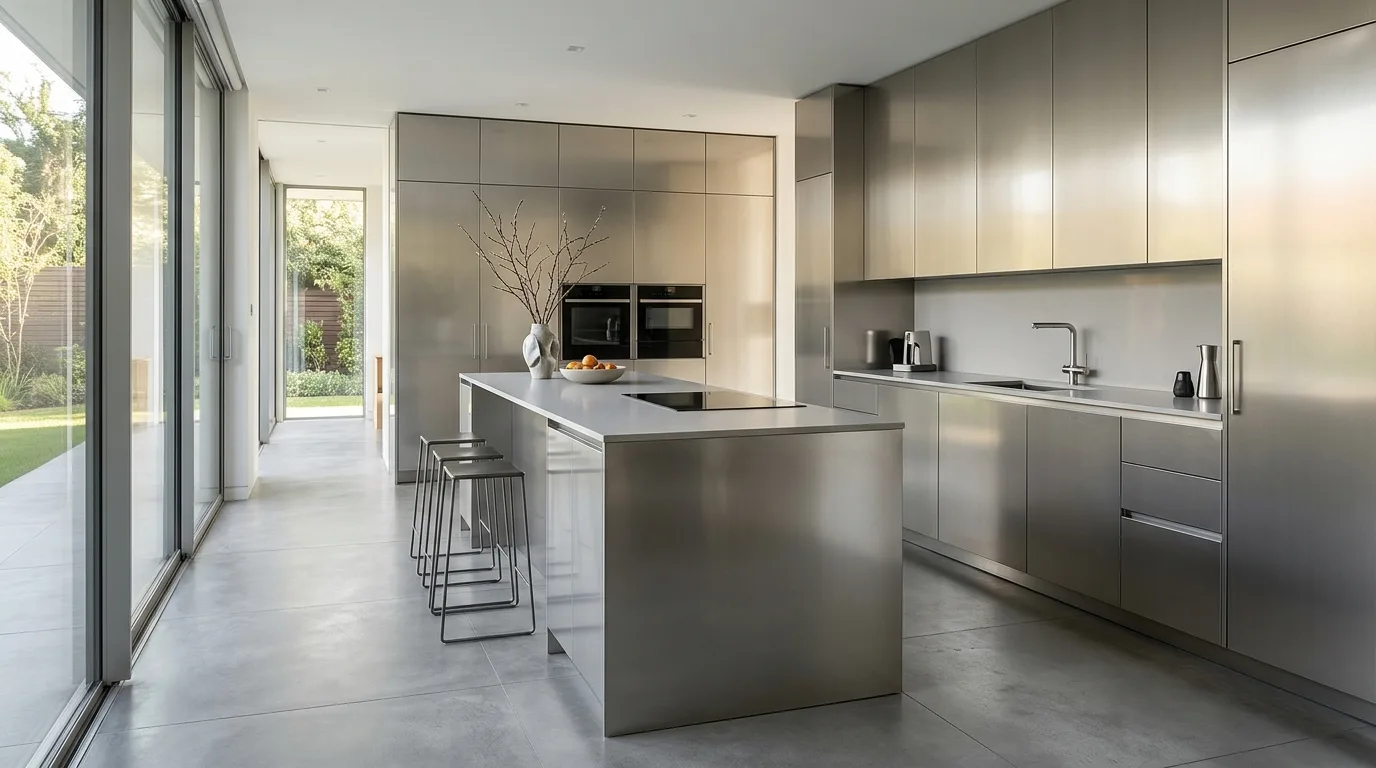
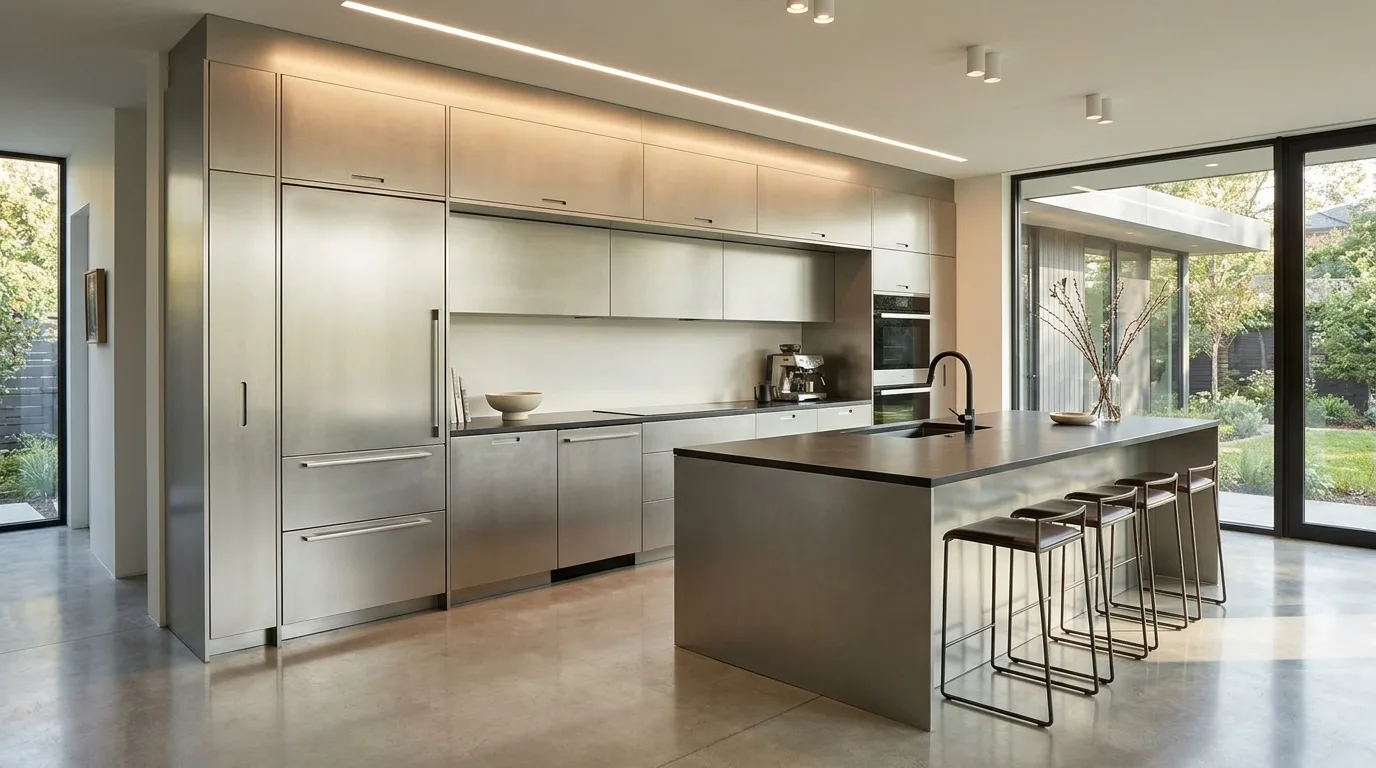
Brushed aluminium offers a subtle metallic appearance that can give a kitchen a refined contemporary character. Instead of a highly reflective surface, the brushed texture creates fine directional lines that add visual interest while maintaining a relatively understated look. This finish pairs naturally with stainless steel appliances, gray countertops, white walls, and other cool-toned materials. It can also work as a feature finish on an island while the surrounding cabinets use a simpler color. When choosing brushed aluminium, pay attention to the direction of the grain and keep panels visually consistent across adjacent doors. Regular cleaning with appropriate non-abrasive products helps maintain the finish. Avoid harsh scouring materials that could alter the surface appearance.
10. Aluminium Cabinets With a Kitchen Island
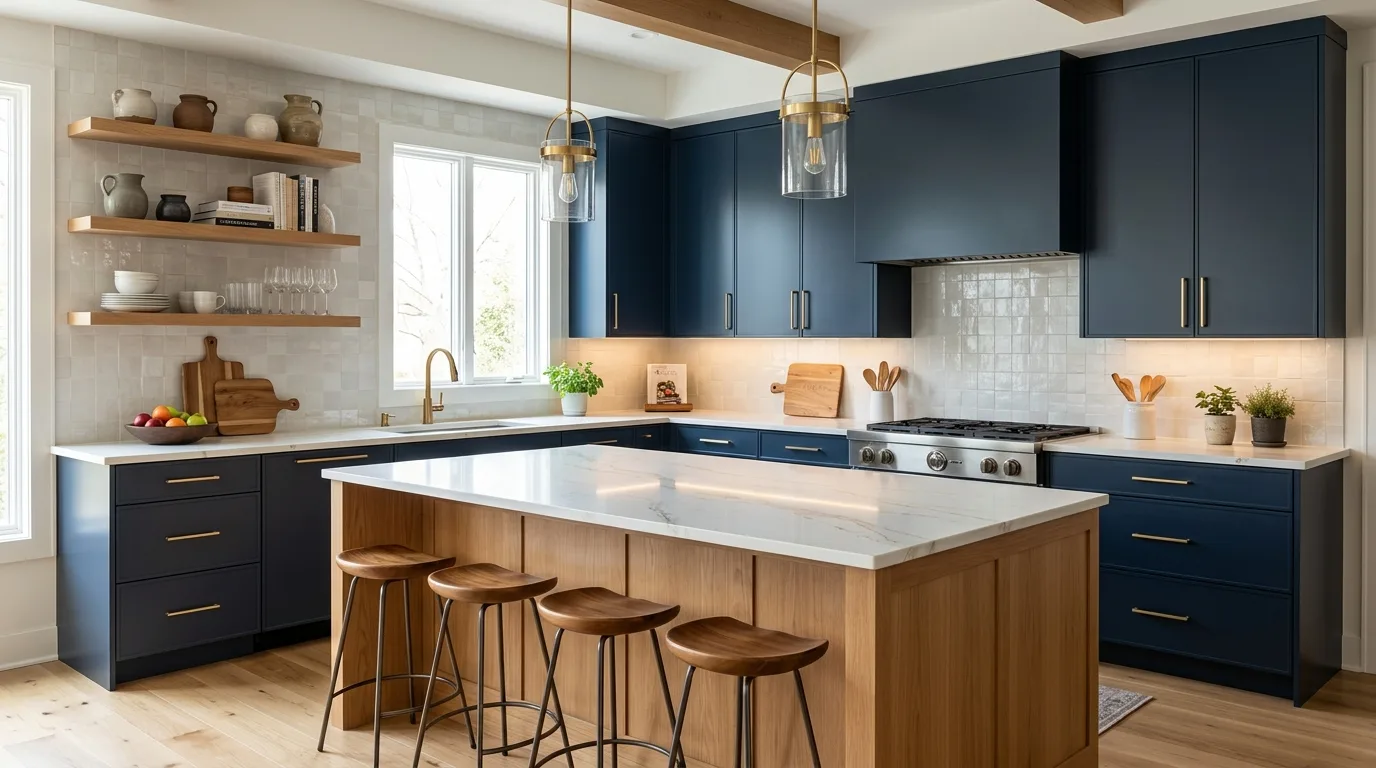
An aluminium-clad kitchen island can become the centerpiece of a modern cooking space while providing valuable storage and work surface. Use aluminium cabinet doors on the island and coordinate them with surrounding cabinetry, or deliberately choose a contrasting color to create a focal point. A large island can include drawers for cookware, closed cabinets for appliances, and open sections for decorative storage. Consider the circulation space around the island before finalizing its size. There should be enough room for cabinet doors and drawers to open comfortably without blocking major pathways. A contrasting countertop can further define the island. For example, dark aluminium paired with a pale stone surface creates a strong contemporary statement while remaining practical for everyday preparation.
11. Navy Blue Aluminium Kitchen Cabinets
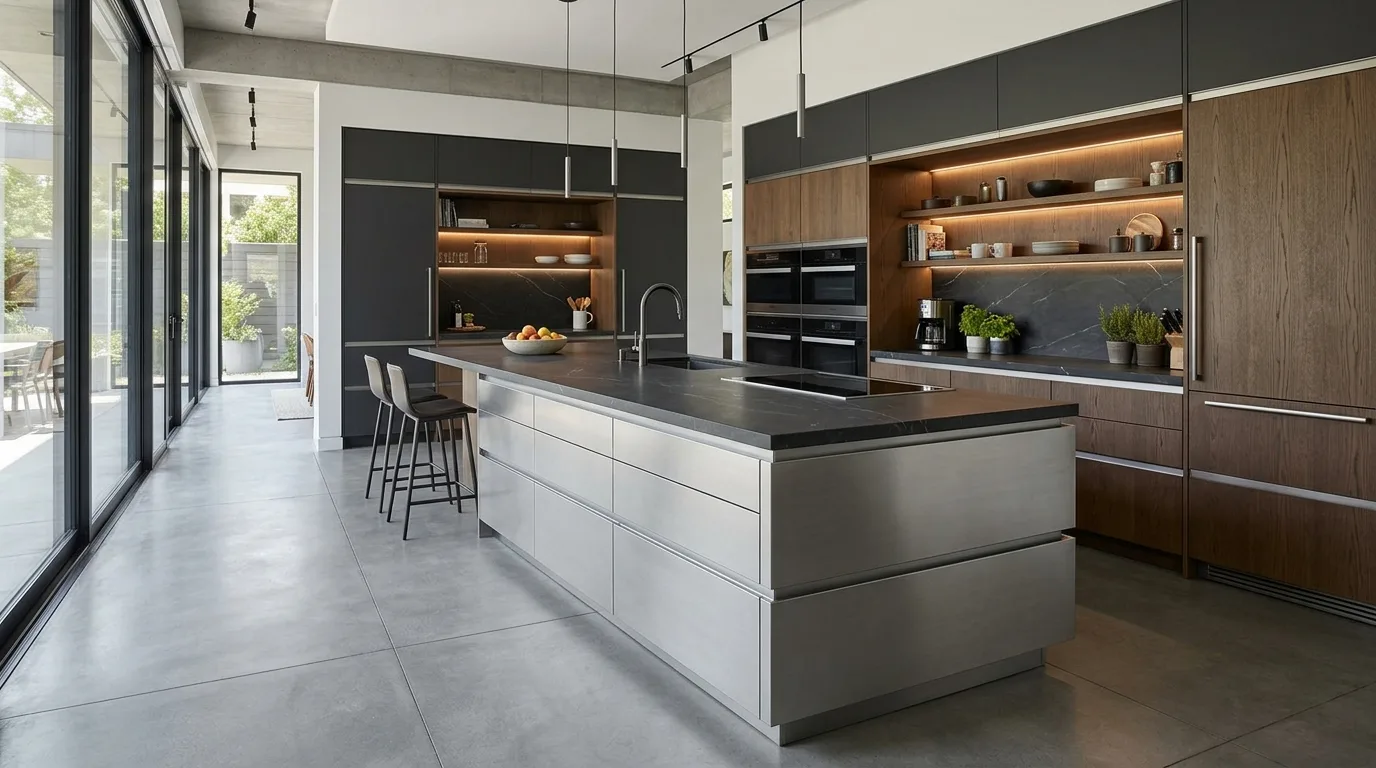
Navy blue aluminium cabinets offer a richer alternative to standard white, gray, or black cabinetry. The deep color adds personality while remaining versatile enough for modern, transitional, and coastal-inspired kitchens. Navy works especially well with white countertops, light backsplashes, brushed metal hardware, and natural wood accents. In a smaller room, consider using navy on the lower cabinets and a lighter color above to maintain an open feeling. In a larger kitchen, full navy cabinetry can create a dramatic but sophisticated effect when balanced with good lighting. Matte or satin finishes generally complement the color well. Keep the surrounding palette relatively restrained so the blue remains a defining feature rather than competing with too many decorative colors.
12. Aluminium Cabinets With Open Shelving
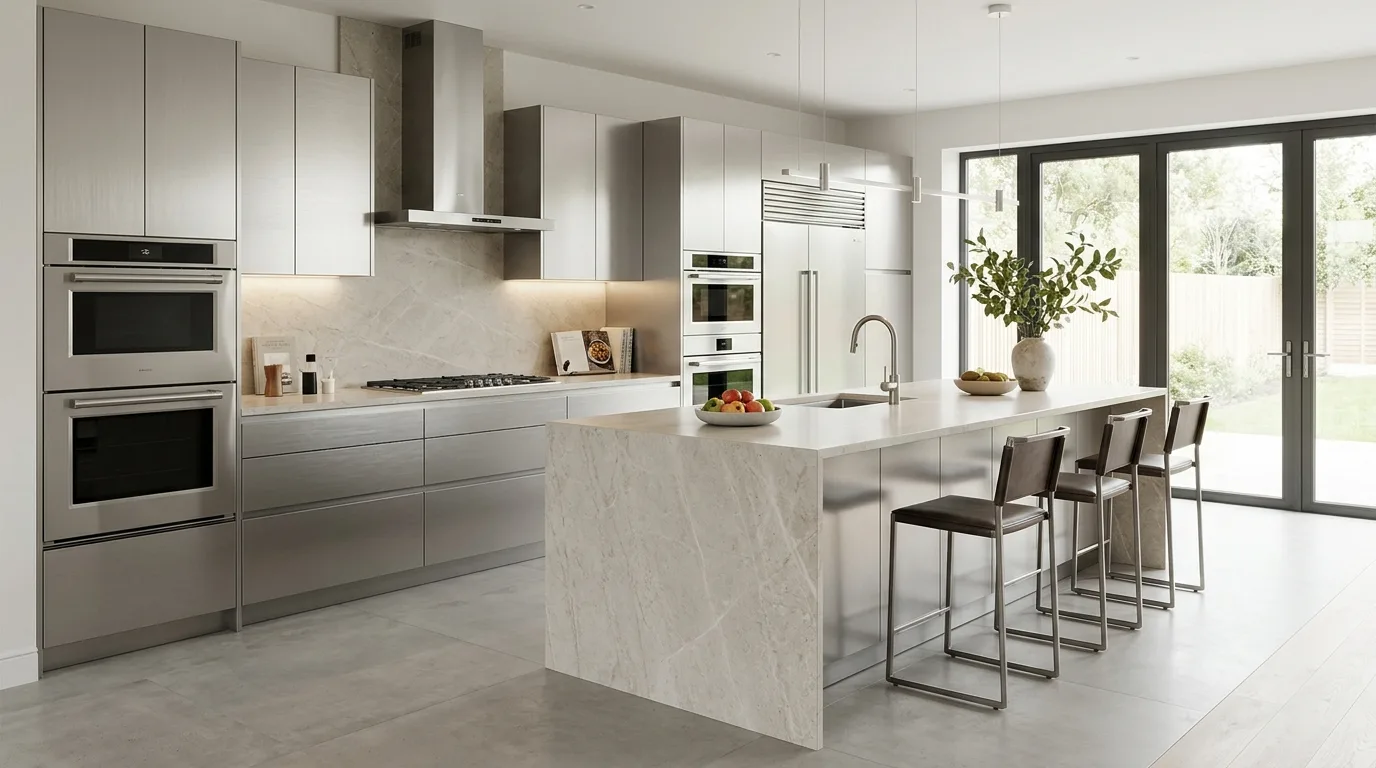
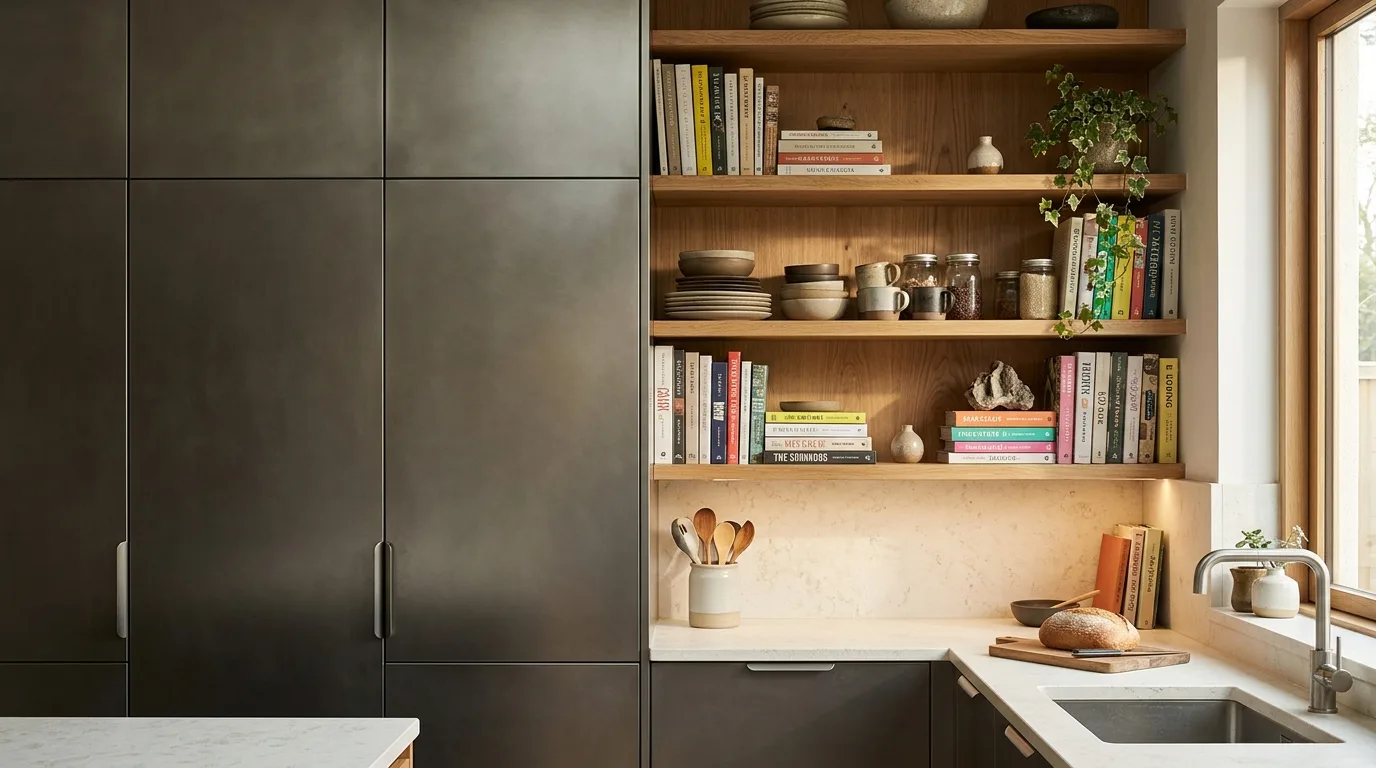
Combining closed aluminium cabinets with open shelving can make a kitchen feel less visually heavy while preserving practical storage. Use the enclosed cabinets for cookware, food supplies, cleaning products, and less attractive essentials. Reserve open shelves for everyday dishes, cookbooks, plants, or carefully selected decorative objects. Wood shelves can add warmth to cool-toned aluminium, while metal shelves can reinforce a modern industrial appearance. The balance between open and closed storage is important: too many shelves can create visual clutter and require frequent tidying. Place open shelving where it will be easy to reach and clean, but avoid positioning it directly above areas where heavy grease or steam is produced. Thoughtful placement makes the combination both attractive and useful.
13. Warm Gray Aluminium Kitchen Cabinets
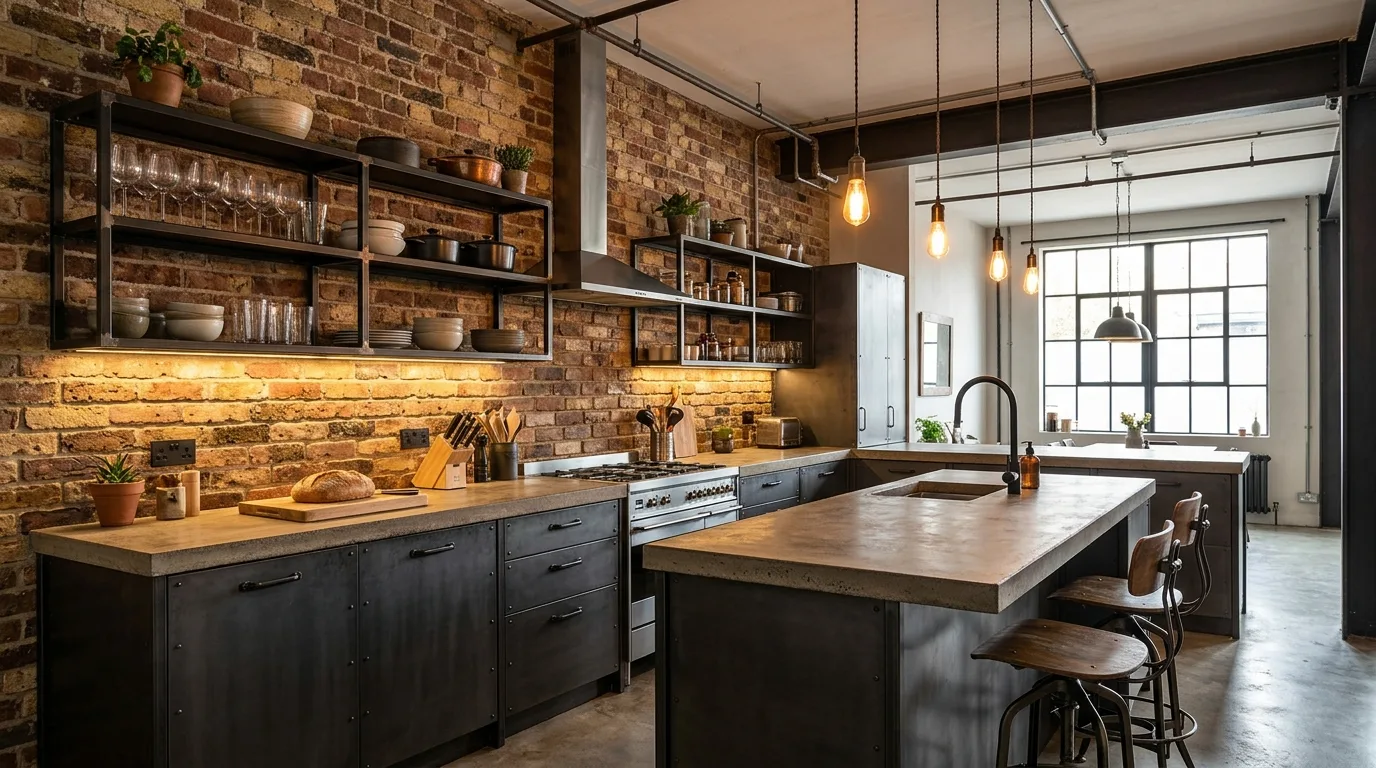
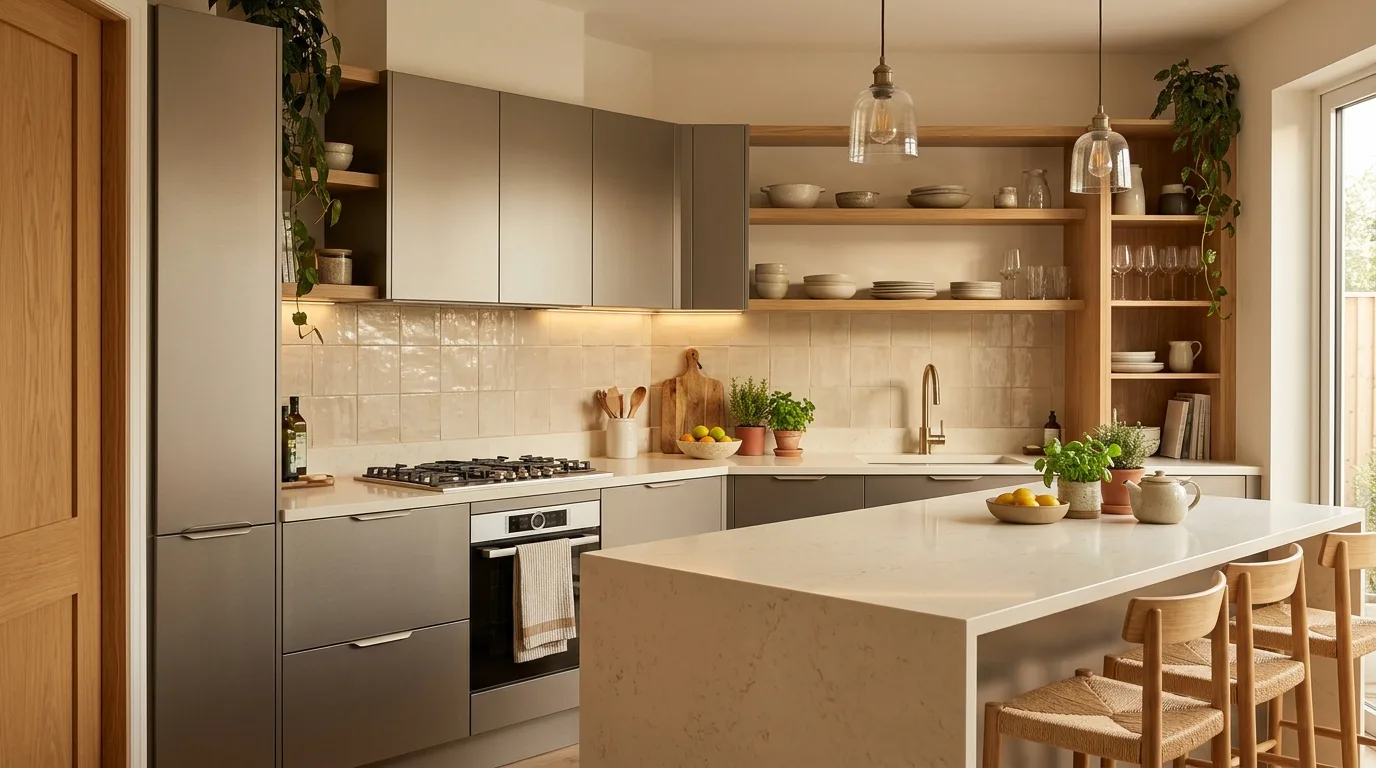
Warm gray aluminium cabinets provide a versatile middle ground between bright white and dramatic dark finishes. Unlike cooler gray tones, warmer shades can make a kitchen feel comfortable and inviting while still looking contemporary. They work well with cream-colored countertops, beige backsplashes, natural wood, and warm metallic hardware. This makes warm gray a useful choice if you want a modern kitchen that does not feel overly stark. Use one shade throughout the cabinetry for a calm appearance, or combine warm gray lowers with lighter upper cabinets for subtle contrast. Because gray can appear different under daylight and artificial lighting, request or view a sample in your actual kitchen environment before making a final selection.
14. Aluminium Cabinets With Integrated Appliances
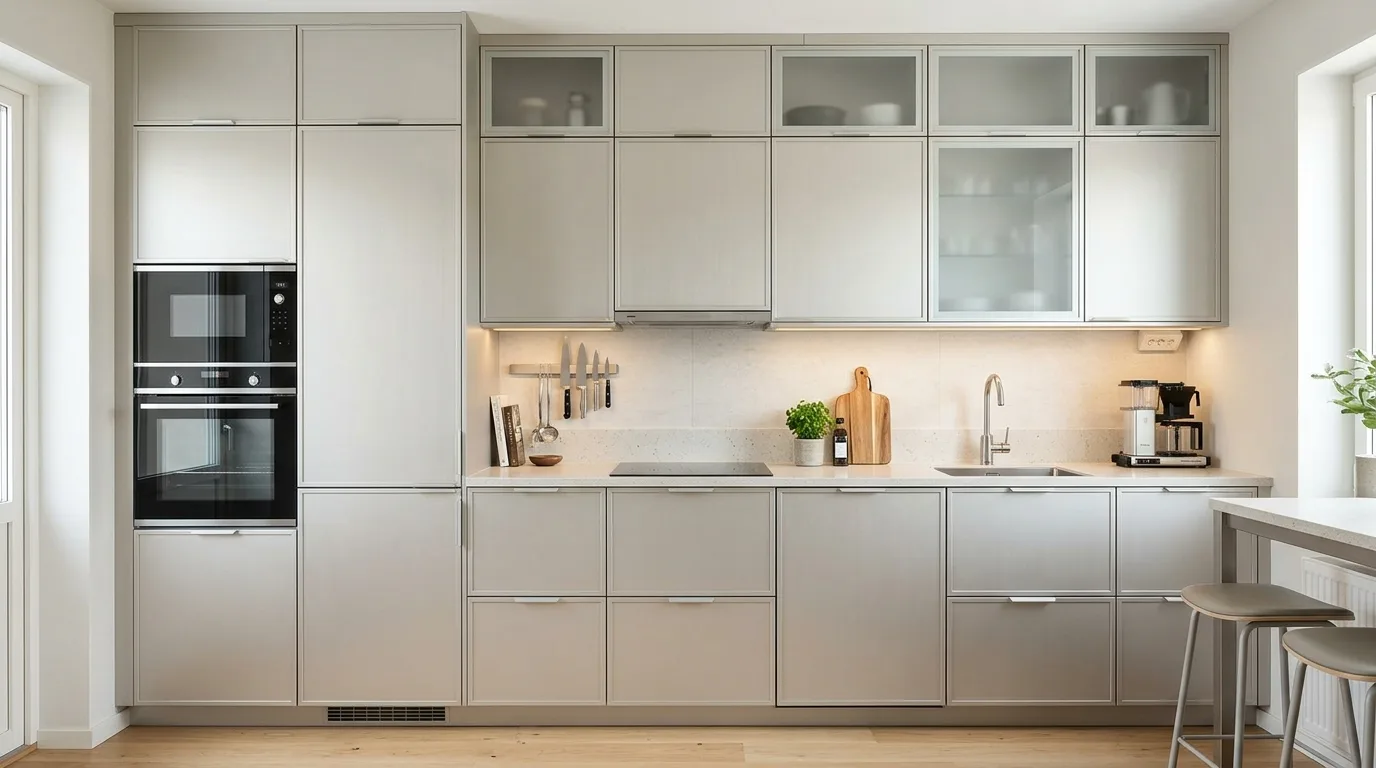
Integrated appliances can make aluminium cabinetry look more unified by reducing visual interruptions across the kitchen. Refrigerators, dishwashers, ovens, and other appliances can be planned around the cabinet layout so the overall design feels intentional. Aluminium is particularly compatible with contemporary appliance finishes, including stainless steel and dark glass. When planning integrated appliances, focus first on ventilation, electrical requirements, plumbing, and manufacturer clearances rather than appearance alone. Cabinet dimensions must match the selected appliances precisely. It is also useful to plan access for future servicing so a repair does not require unnecessary cabinet removal. A well-coordinated appliance layout can make the kitchen look more spacious and organized while improving workflow between preparation, cooking, cleaning, and storage zones.
15. Glossy Aluminium Kitchen Cabinets
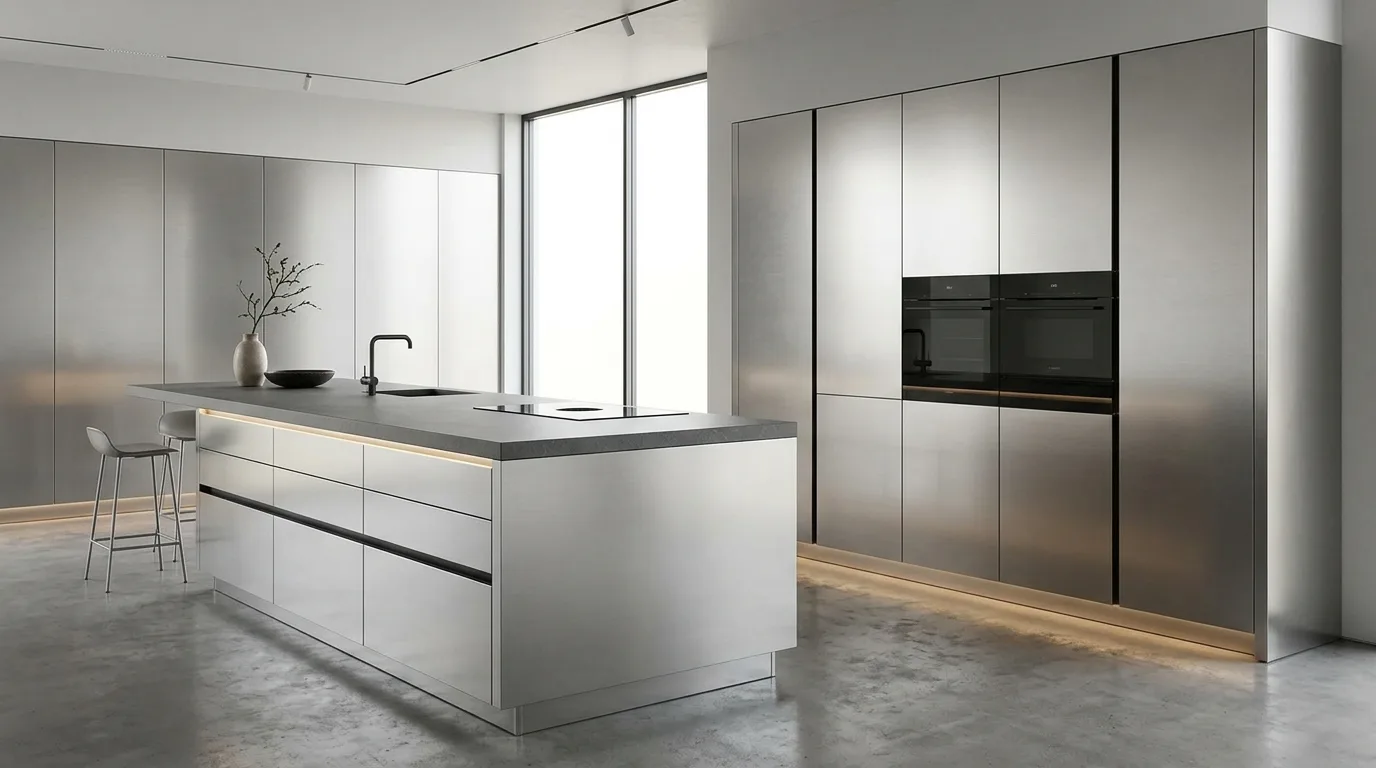
Glossy aluminium cabinet doors can create a bright, polished kitchen with a distinctly contemporary feel. Their reflective surfaces bounce light around the room, which can be useful in kitchens that do not receive much natural sunlight. Gloss finishes look especially striking with simple geometric cabinetry and minimal hardware. However, they can show fingerprints, smudges, and surface marks more readily than some matte finishes, so cleaning requirements should be considered. Use glossy cabinets selectively if you want a sophisticated appearance without making every surface reflective. A combination of glossy upper cabinets and matte lower cabinets can add depth while keeping the design practical. Choose a durable finish intended for kitchen cabinetry and follow the manufacturer’s cleaning recommendations.
16. L-Shaped Aluminium Kitchen Cabinets
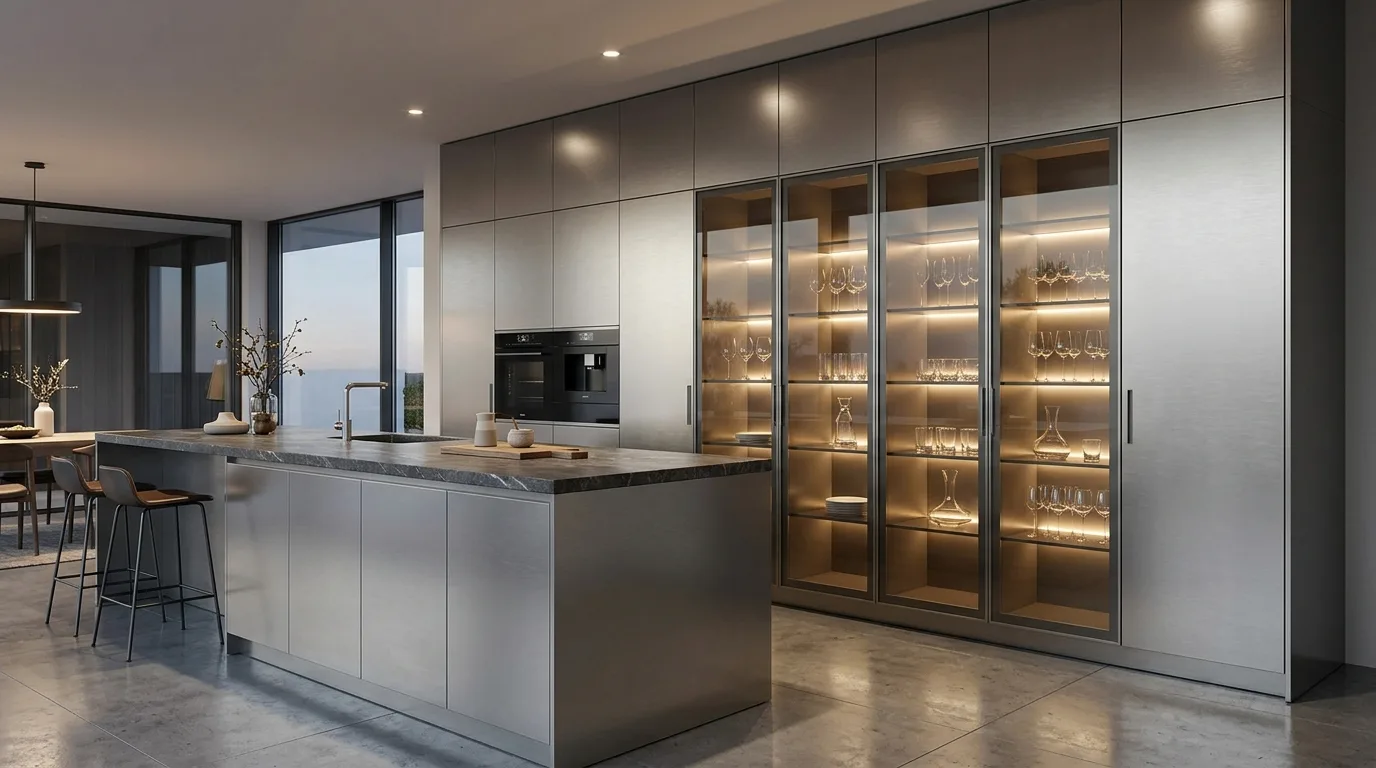
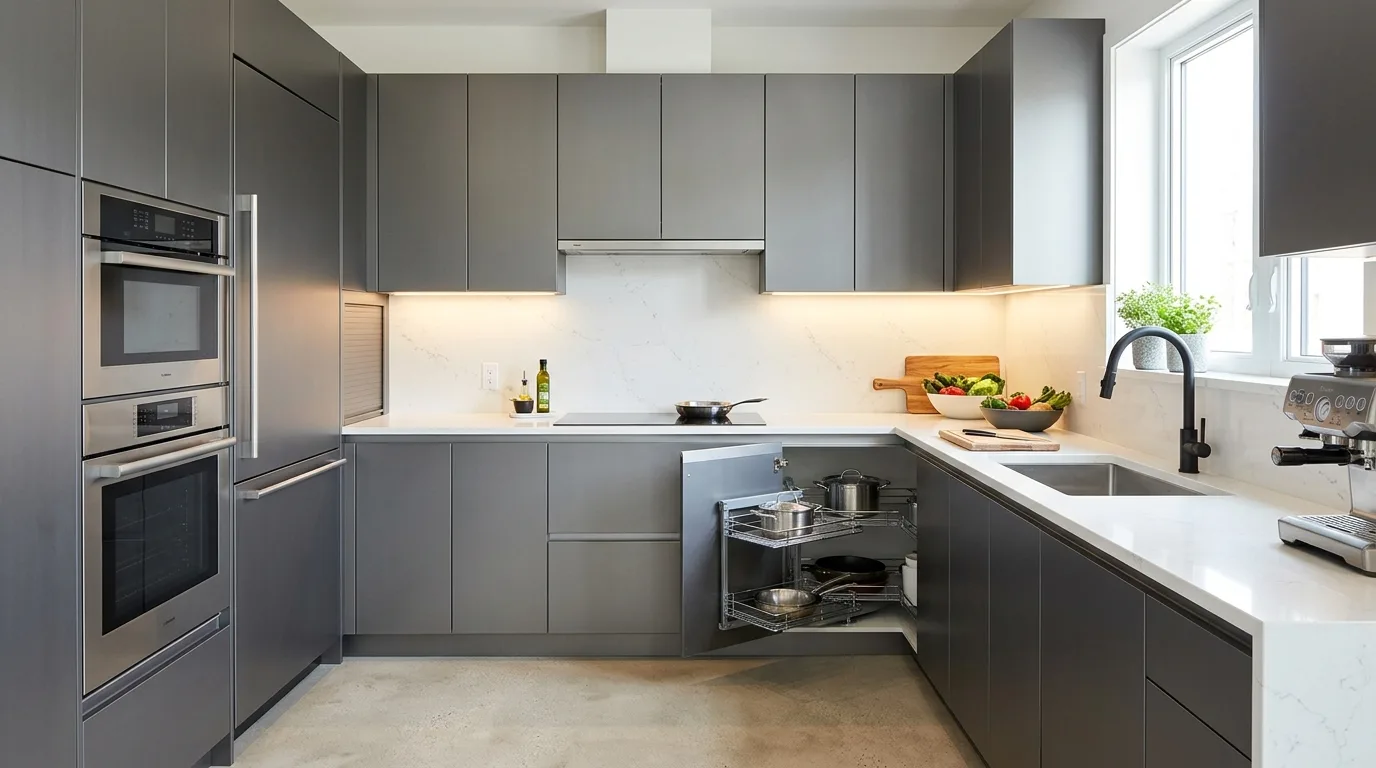
An L-shaped kitchen layout is a practical match for aluminium cabinets because it can provide substantial storage while leaving the center of the room open. This configuration works well in both compact and medium-sized kitchens and can accommodate a clear separation between preparation and cooking areas. Use corner cabinets thoughtfully because poorly planned corners can become difficult-to-access storage zones. Pull-out organizers, corner drawers, or rotating storage systems can make these spaces more useful. Light-colored aluminium can help maintain an airy appearance, while darker cabinetry creates a stronger architectural effect. If space allows, a small dining table or movable island can provide additional workspace without permanently restricting circulation. The cabinet layout should always be planned around actual appliance and plumbing locations.
17. U-Shaped Aluminium Kitchen Design
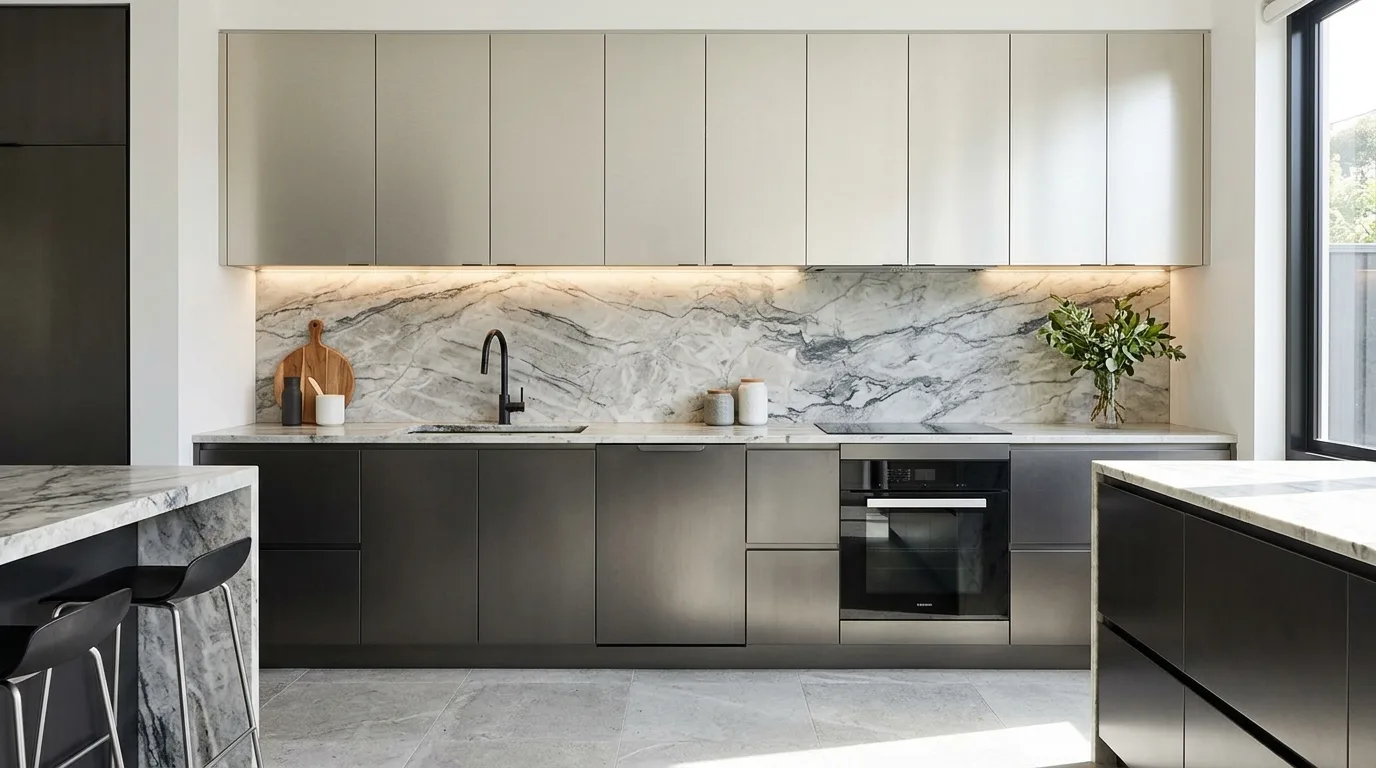
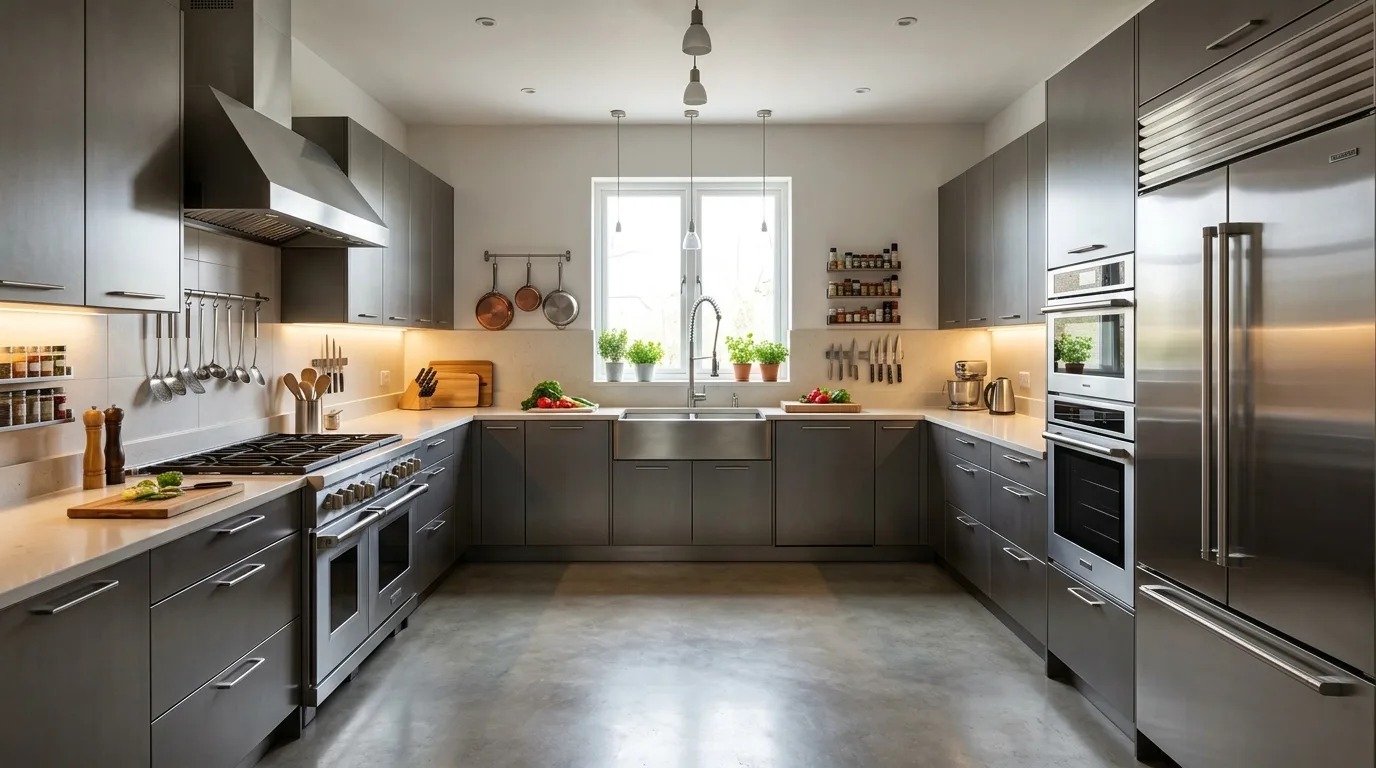
A U-shaped aluminium kitchen can maximize storage and countertop space by placing cabinetry along three sides of the room. This layout is particularly useful for enthusiastic cooks who want several dedicated work zones. Aluminium cabinet doors keep the extensive cabinetry visually cohesive and are available in finishes ranging from minimalist white to bold charcoal. Because U-shaped kitchens can feel enclosed, lighting and color selection are important. Consider lighter upper cabinets, reflective backsplash materials, or under-cabinet lighting to maintain brightness. Make sure the distance between opposing cabinet runs allows people to move comfortably and open drawers without creating conflicts. A well-designed U-shaped kitchen can provide excellent workflow while keeping ingredients, cookware, and appliances within easy reach.
18. Aluminium Cabinets With Brass Hardware
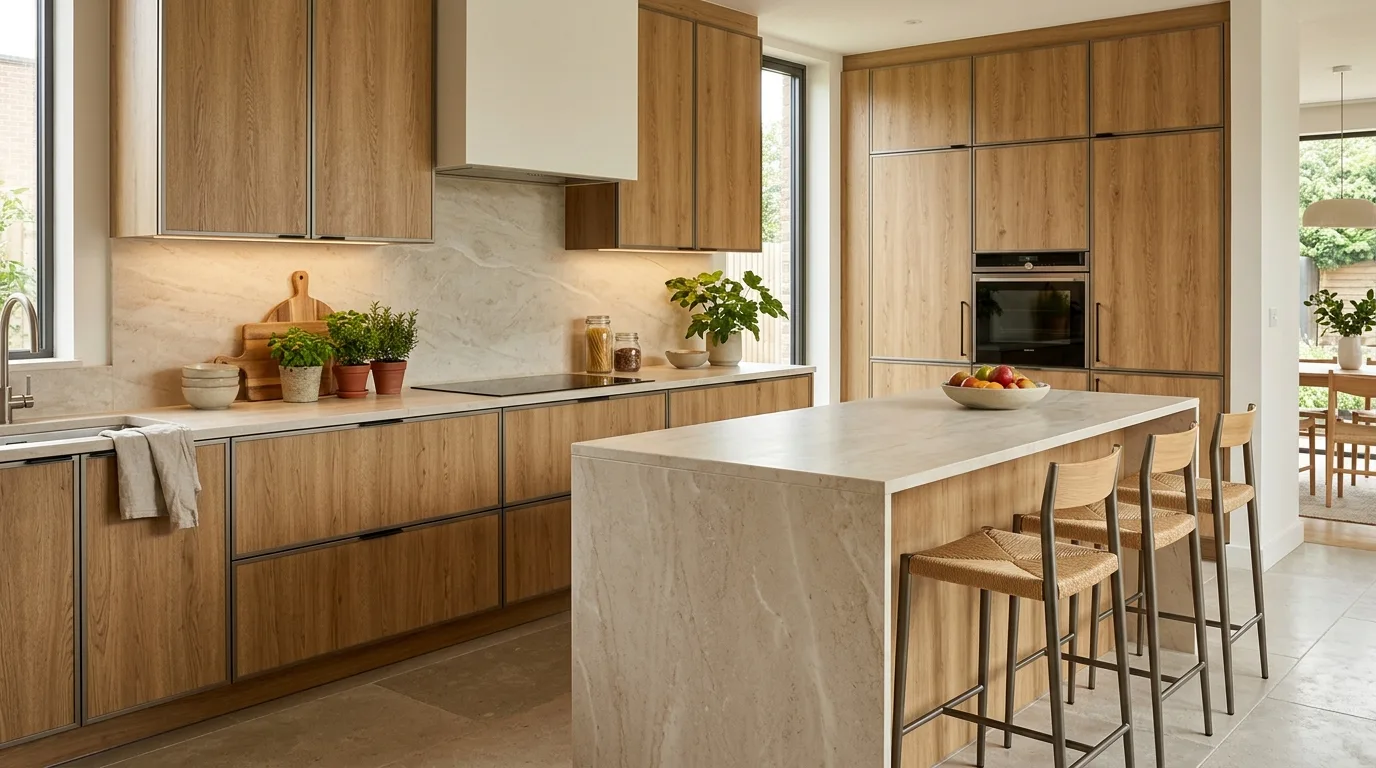
Brass hardware can add warmth and character to aluminium cabinets, particularly when the cabinetry itself has a cool gray, black, white, or metallic finish. Knobs, cup pulls, slim handles, and faucets can all introduce small touches of warm metal without changing the cabinetry itself. This approach works well when you want a modern kitchen with a slightly more decorative personality. Matte black aluminium with brushed brass hardware creates a bold contrast, while white aluminium with brass can feel lighter and more elegant. Try to coordinate the brass finish across several elements rather than using it in only one isolated location. At the same time, avoid adding too many metallic finishes because competing tones can make a carefully designed kitchen feel inconsistent.
19. Aluminium Cabinets for Outdoor Kitchens
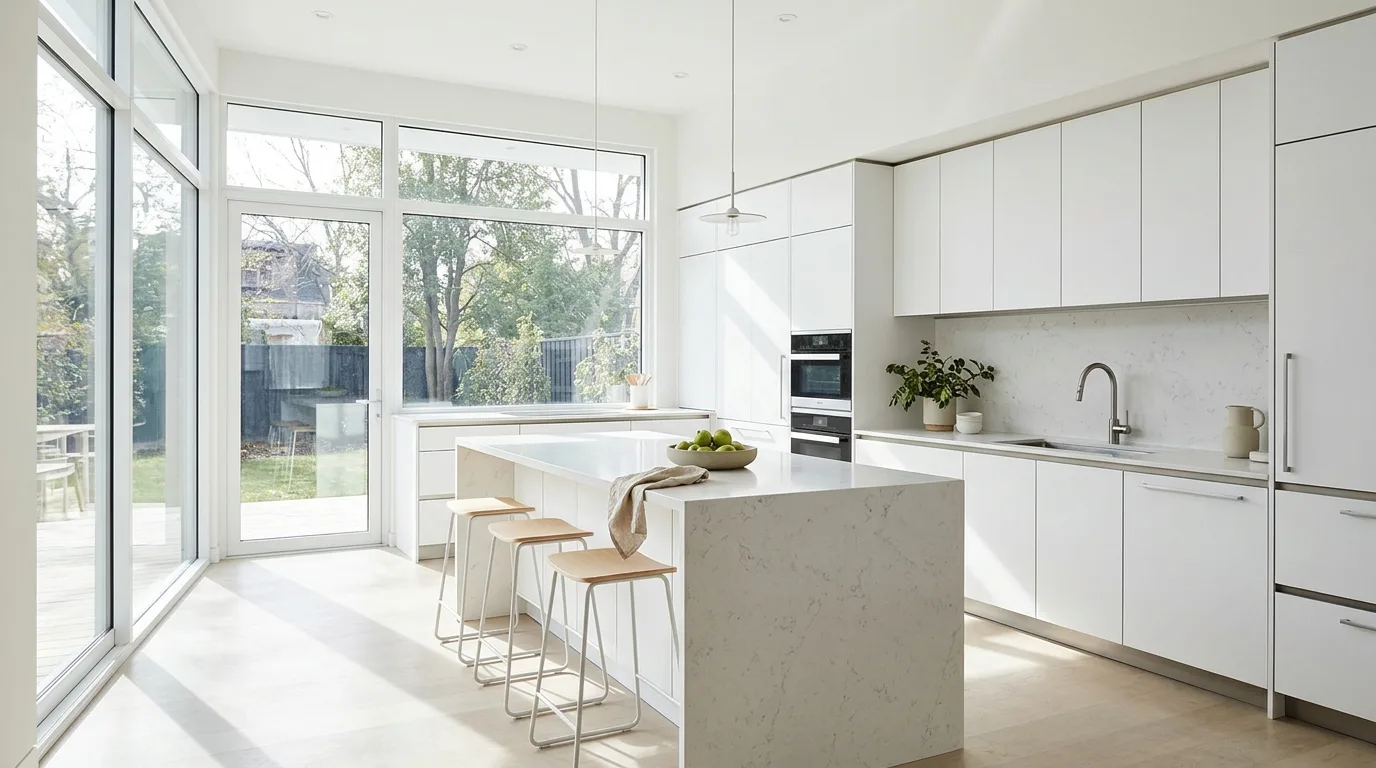
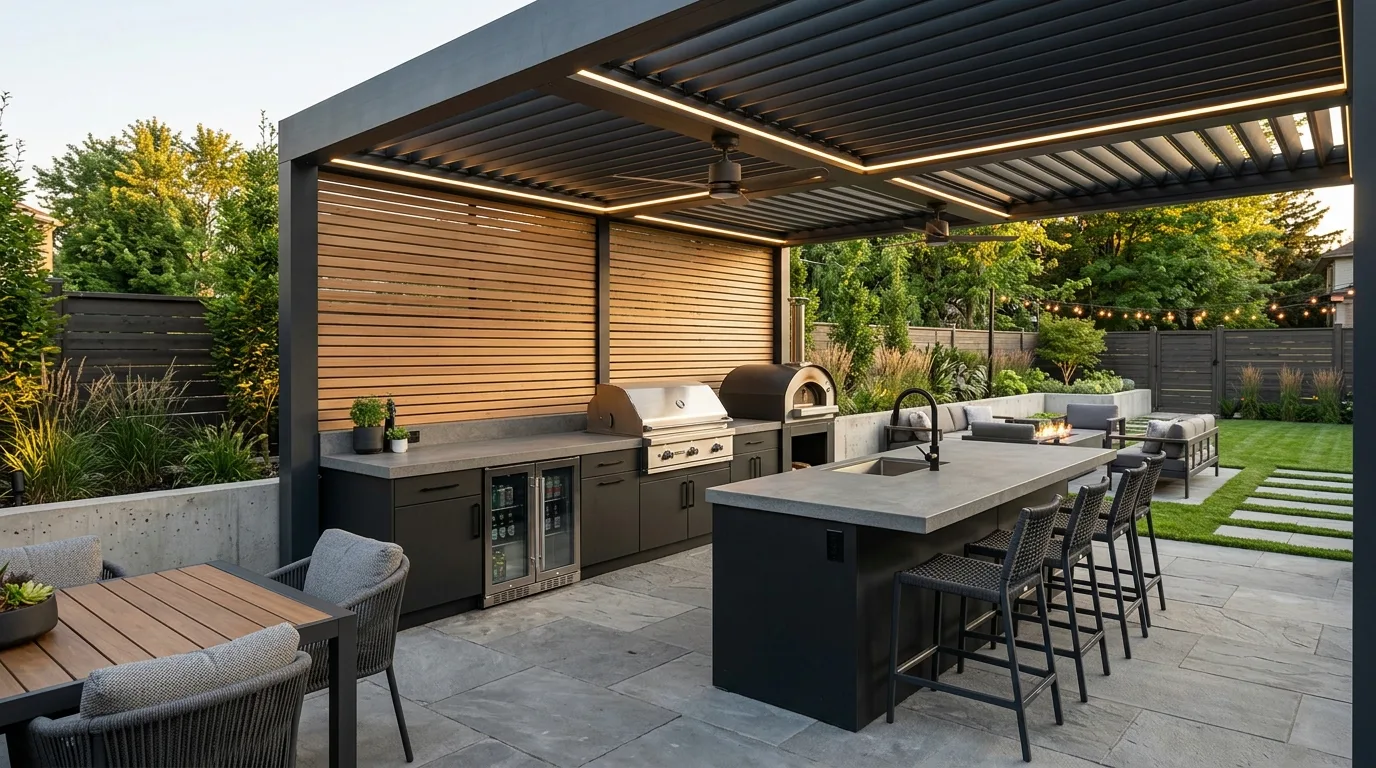
Aluminium is also a practical material for outdoor kitchen cabinetry because it does not have the same moisture and termite concerns associated with many wood-based cabinet materials. Outdoor cabinetry still needs to be selected specifically for exterior conditions, with appropriate construction, hardware, coatings, and protection from prolonged exposure. Use weather-resistant countertops and appliances designed for outdoor installation alongside the cabinets. Neutral finishes such as gray, black, or metallic tones can complement patios, decks, and garden areas. Good drainage and thoughtful placement are also important because even weather-resistant materials benefit from protection against standing water. If your outdoor kitchen is exposed to intense sun, confirm that the chosen cabinet finish is suitable for the local climate and expected UV exposure.
20. Custom Aluminium Cabinets With Smart Storage
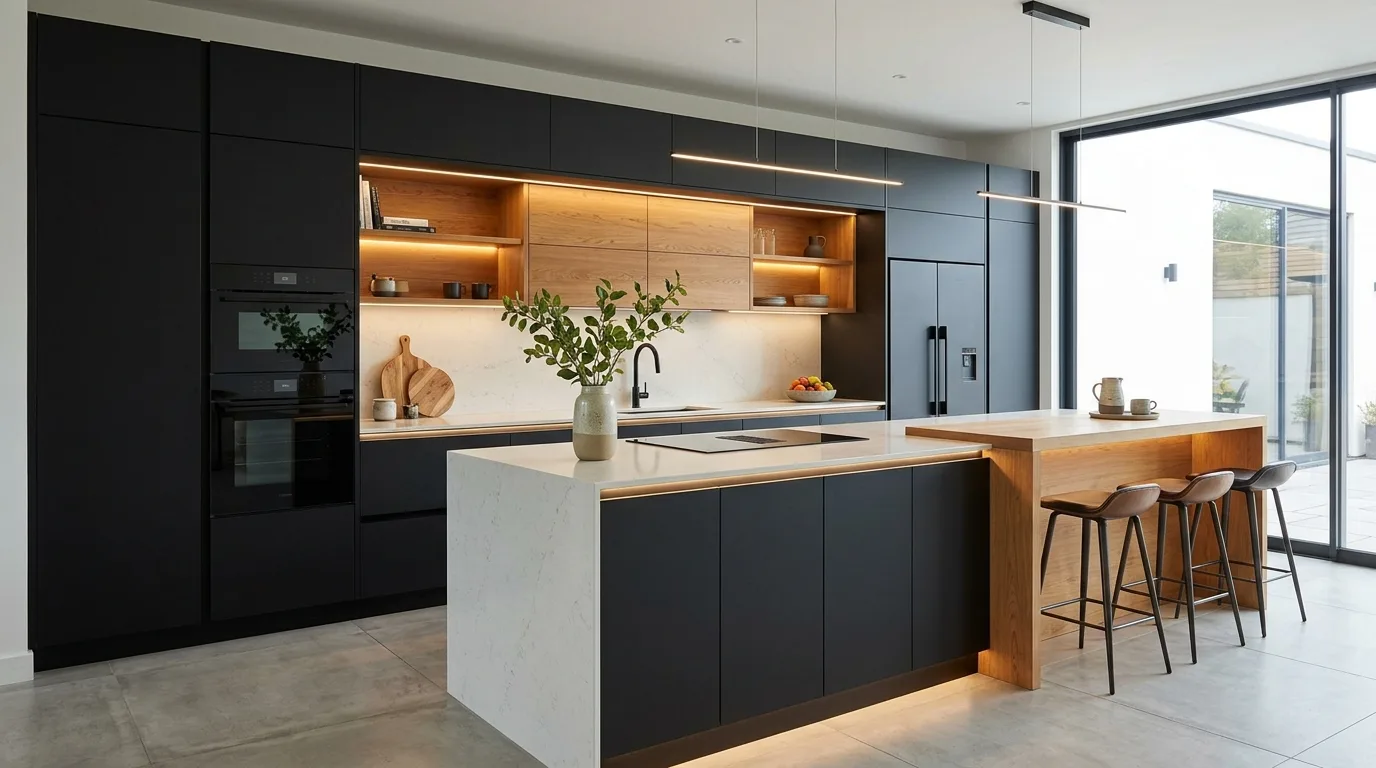
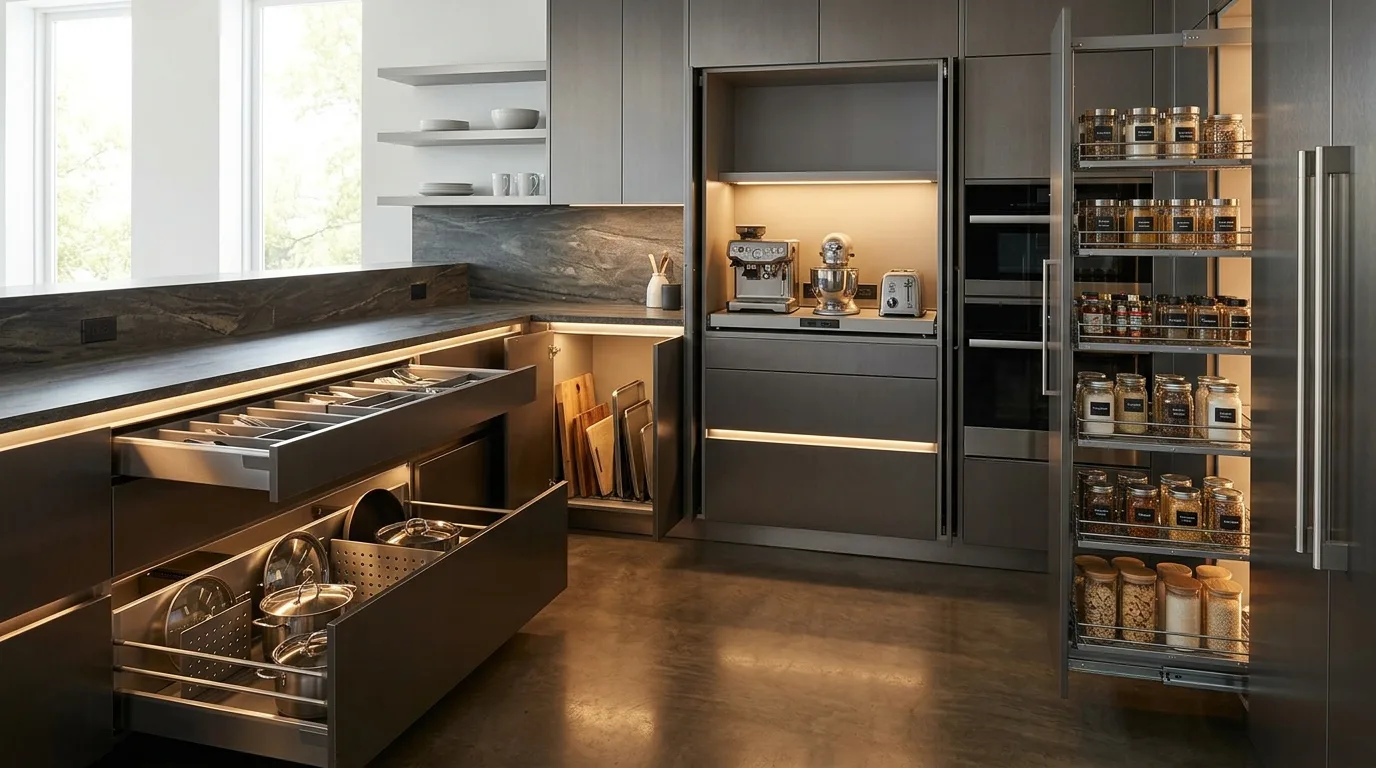
Custom aluminium cabinetry gives you the opportunity to design storage around the way you actually use your kitchen. Instead of relying entirely on standard cabinet sizes, you can plan dedicated drawers for utensils, pull-outs for pantry items, tall compartments for trays, and specialized storage for small appliances. Deep drawers can hold pots and pans more conveniently than traditional lower cupboards, while vertical dividers can organize cutting boards and baking sheets. Internal organizers can make corner and narrow spaces more useful as well. Customization is especially valuable when the kitchen has unusual dimensions or when several family members share the cooking space. Before finalizing the design, make a detailed inventory of your cookware, appliances, food storage needs, and cleaning supplies so every cabinet has a clear purpose.
How to Choose the Right Aluminium Kitchen Cabinets
Start by considering your kitchen’s layout, moisture exposure, storage requirements, and preferred visual style. Compare finishes in the actual lighting conditions of the room rather than relying only on small photographs or digital color samples. Pay attention to cabinet construction, hinges, drawer runners, handles, edge details, and the quality of the surface finish. Good design is not only about the door color; the internal hardware and installation quality also affect long-term usability.
It is also worth planning the entire kitchen together. Countertops, backsplash, flooring, appliances, lighting, and cabinet colors should work as one composition. If durability is a major reason for choosing aluminium, ask the supplier about the alloy, coating, corrosion resistance, hardware quality, and warranty. A reputable installer should also explain how the cabinets should be cleaned and maintained.
Conclusion
Aluminium kitchen cabinets combine modern design flexibility with practical qualities that make them suitable for many homes. Whether you prefer sleek black doors, warm wood-look finishes, bright white cabinetry, or a custom storage system, aluminium can be adapted to different layouts and decorating styles. The best choice depends on more than appearance: consider construction quality, hardware, kitchen workflow, maintenance, ventilation, and the environment where the cabinets will be installed. With thoughtful planning, aluminium cabinetry can create a clean, durable, and highly functional kitchen that remains attractive for years.