
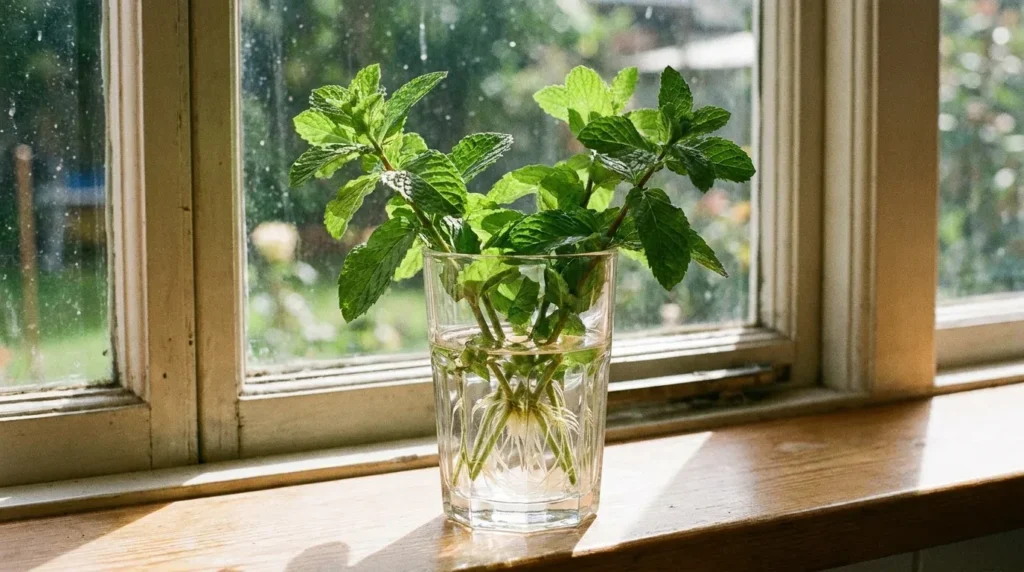
Growing plants in water is an easy way to bring fresh greenery into your home without dealing with traditional potting soil. Many popular houseplants can live in water for surprisingly long periods when they receive suitable light, clean water, and occasional nutrients. This method is especially useful for small spaces, kitchens, bathrooms, desks, and decorative glass containers where you want to enjoy visible roots as part of the display.
Some plants are naturally better suited to water propagation or long-term hydroponic-style growing than others. The key is choosing healthy cuttings or water-tolerant plants and understanding their basic needs. The following 20 plants are attractive, relatively approachable choices, with practical tips for keeping each one healthy indoors.
1. Lucky Bamboo
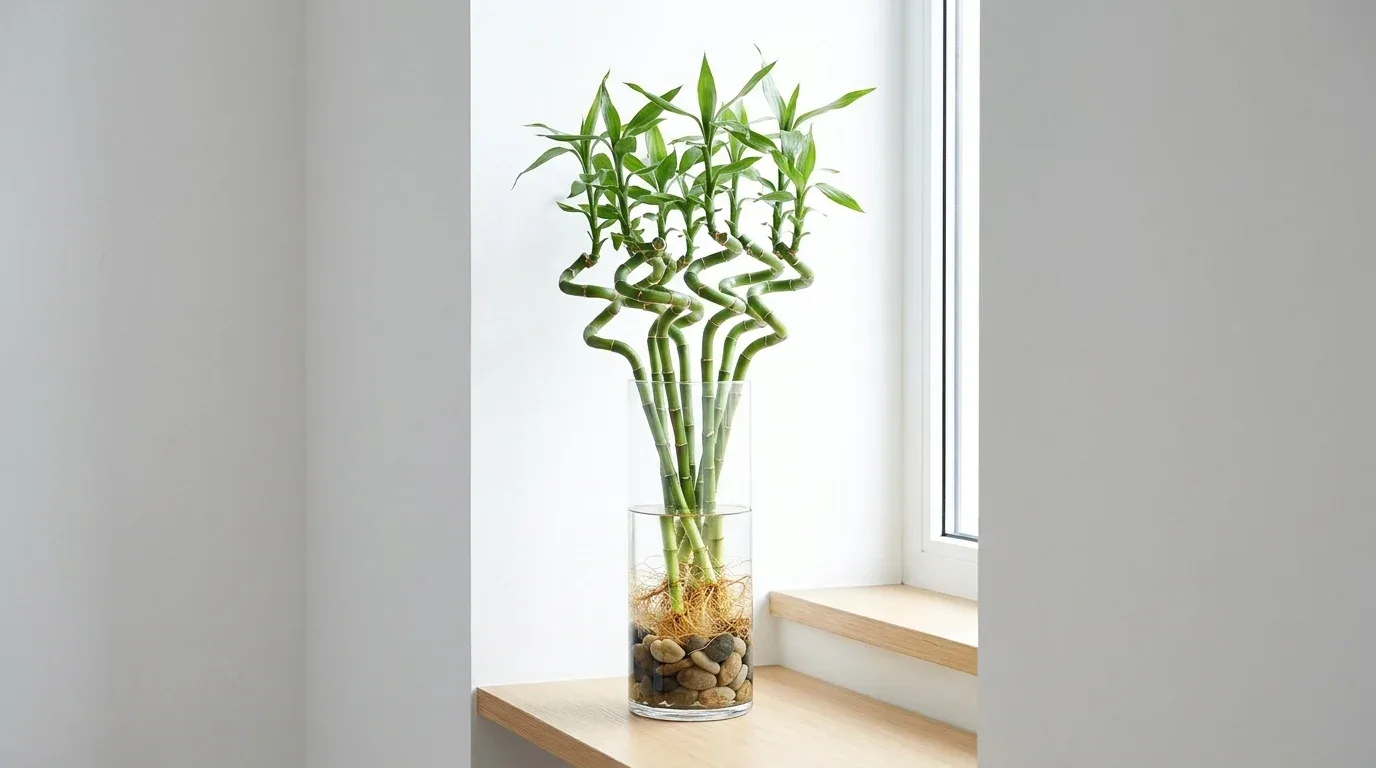
Lucky bamboo is one of the best-known plants for growing in water and can remain attractive for years with proper care. Place healthy stalks in a narrow glass container filled with enough water to cover the roots while keeping most foliage above the surface. Bright, indirect light is preferable because strong direct sunlight can scorch the leaves or encourage algae growth. Use clean water and change it regularly rather than allowing it to become stagnant. If your tap water is heavily treated, filtered or distilled water may help prevent leaf-tip browning. A small amount of diluted houseplant fertilizer can occasionally support long-term growth, but overfertilizing can damage the roots. Its upright form makes lucky bamboo particularly effective as a simple centerpiece or minimalist desk plant.
2. Pothos
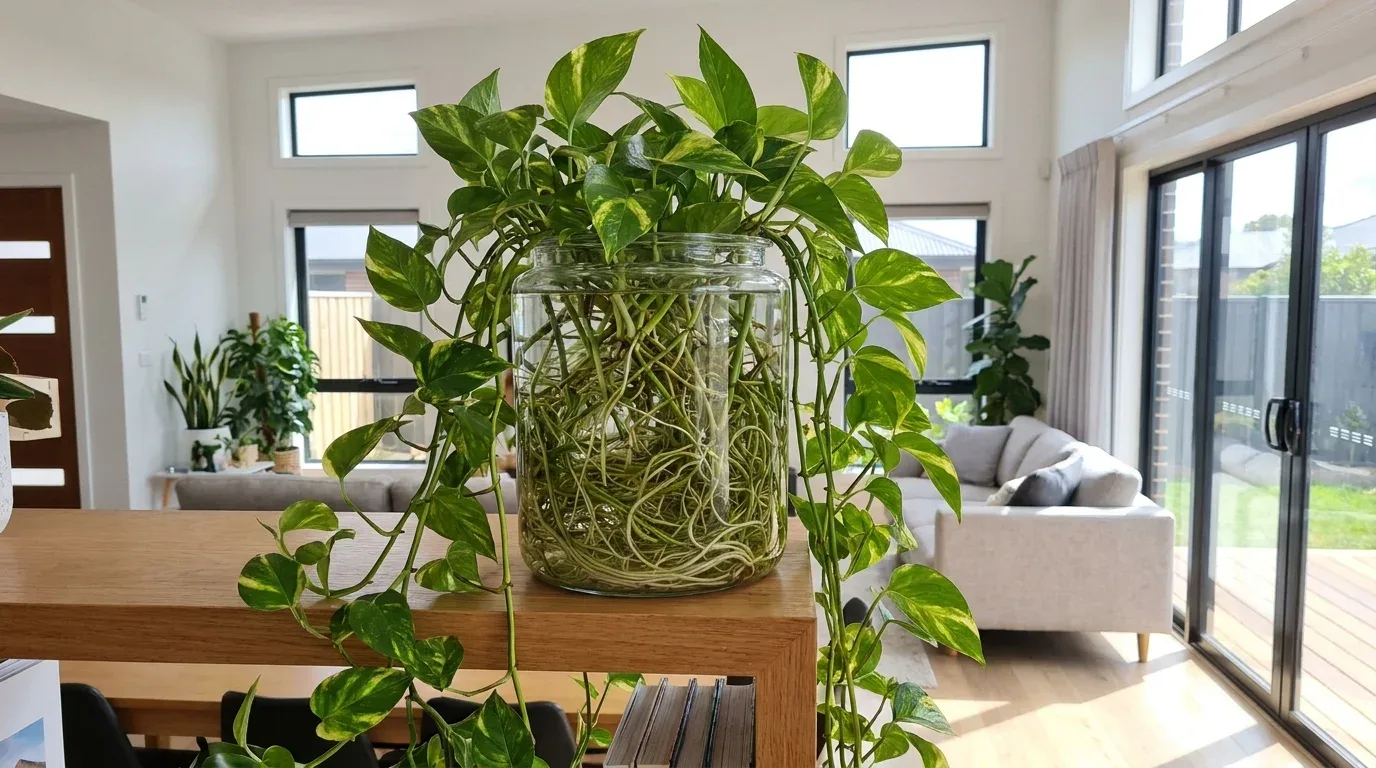
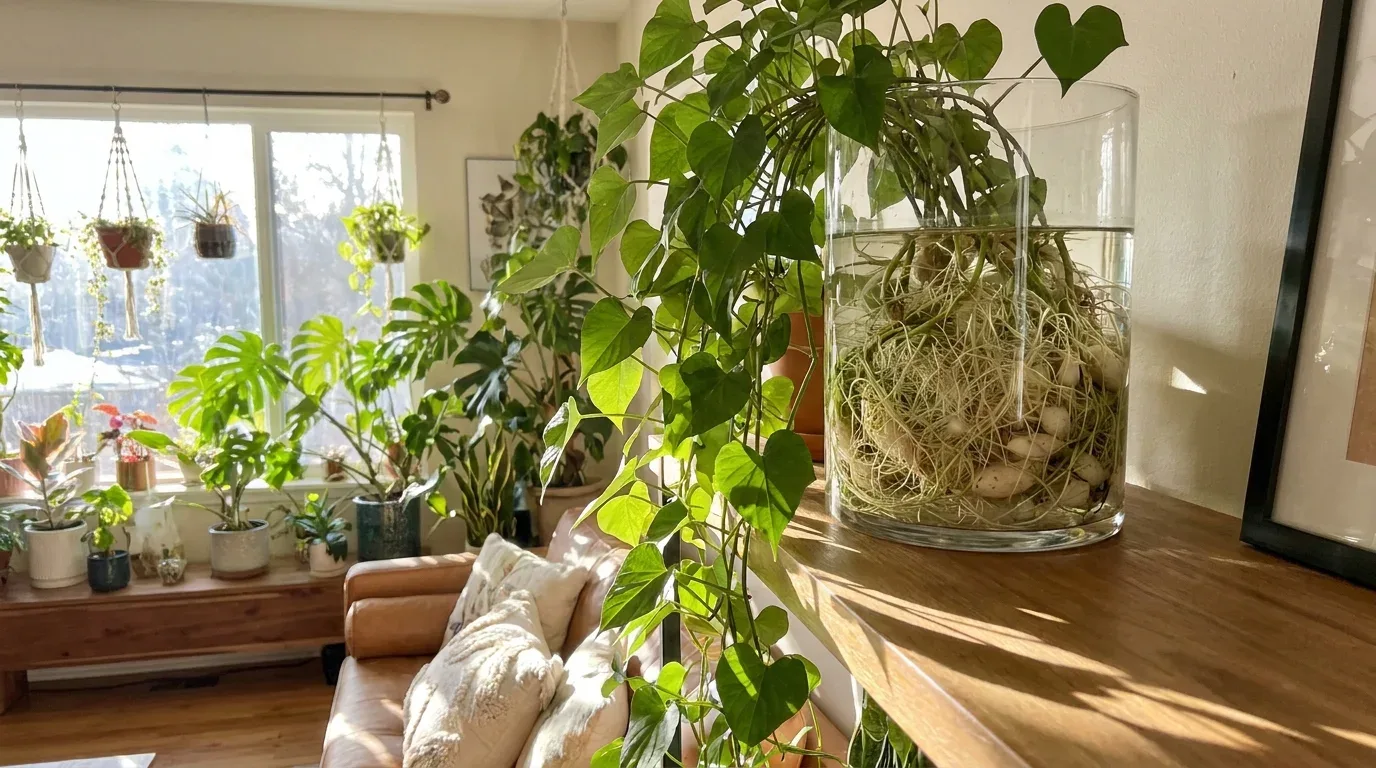
Pothos is an excellent choice for anyone trying water-grown plants for the first time. Its trailing stems root readily from nodes, making it easy to start with a cutting from an established plant. Remove the lower leaves so they do not sit underwater, then place one or more nodes beneath the waterline. Bright, indirect light encourages fuller growth, although pothos can tolerate lower-light conditions. Refresh the water every week or two and rinse the container if you notice algae or residue. Once roots become established, the plant can continue growing in water, although growth may be slower than it would be in nutrient-rich soil. Golden, marble queen, neon, and jade pothos all create different visual effects, making this plant especially useful for decorative propagation stations and hanging glass displays.
3. Heartleaf Philodendron
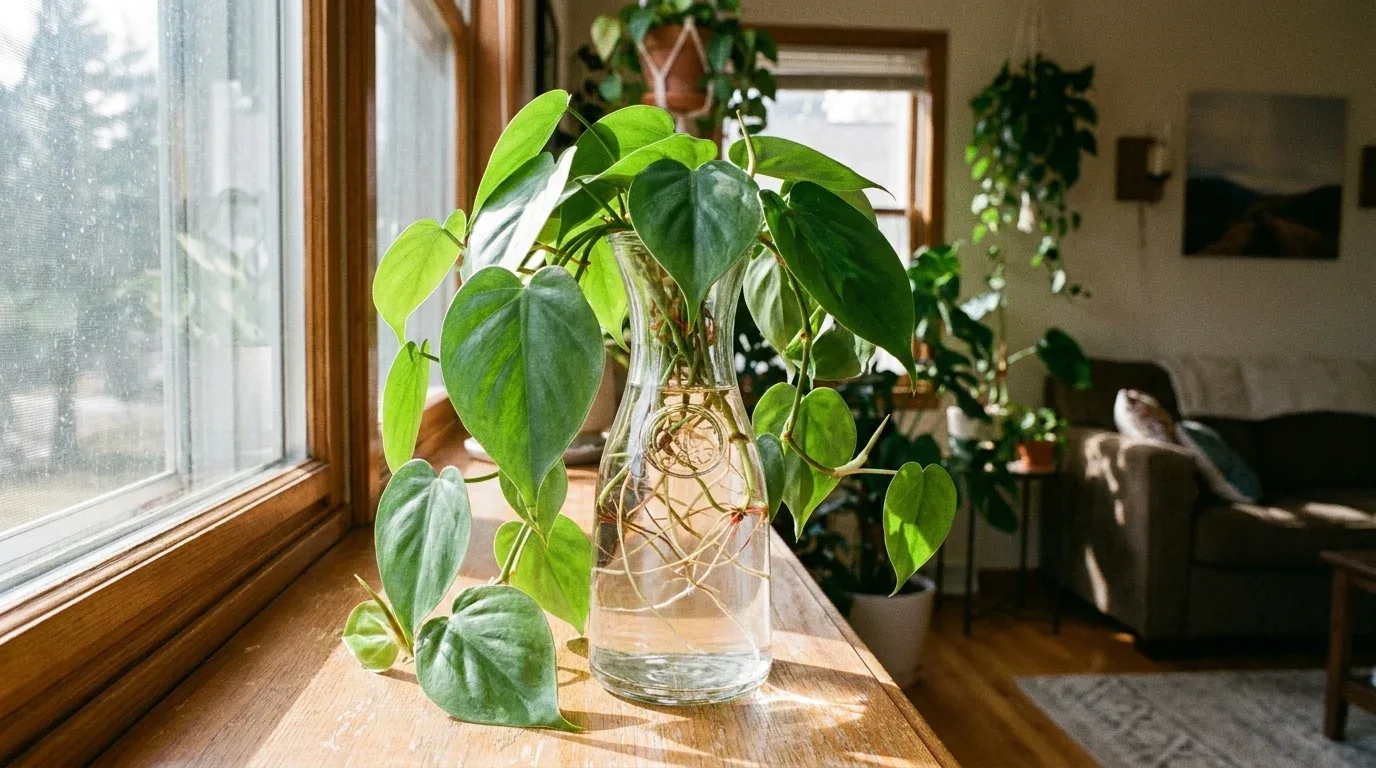
Heartleaf philodendron is another reliable trailing plant that roots easily in water. Choose a healthy stem cutting with at least one visible node and remove any leaves that would be submerged. Place the node in clean water and position the container where the cutting receives bright, indirect light. Roots commonly develop from the node, after which new leaves can gradually emerge. Keep the water fresh and avoid completely covering the stem because prolonged submersion of unnecessary plant tissue can encourage rot. Heartleaf philodendron looks especially appealing in clear bottles because its developing roots become part of the display. For continued water growth, provide occasional diluted hydroponic or balanced liquid fertilizer. Its forgiving nature makes it a practical option for beginners, while its heart-shaped foliage gives even a simple glass container a lush appearance.
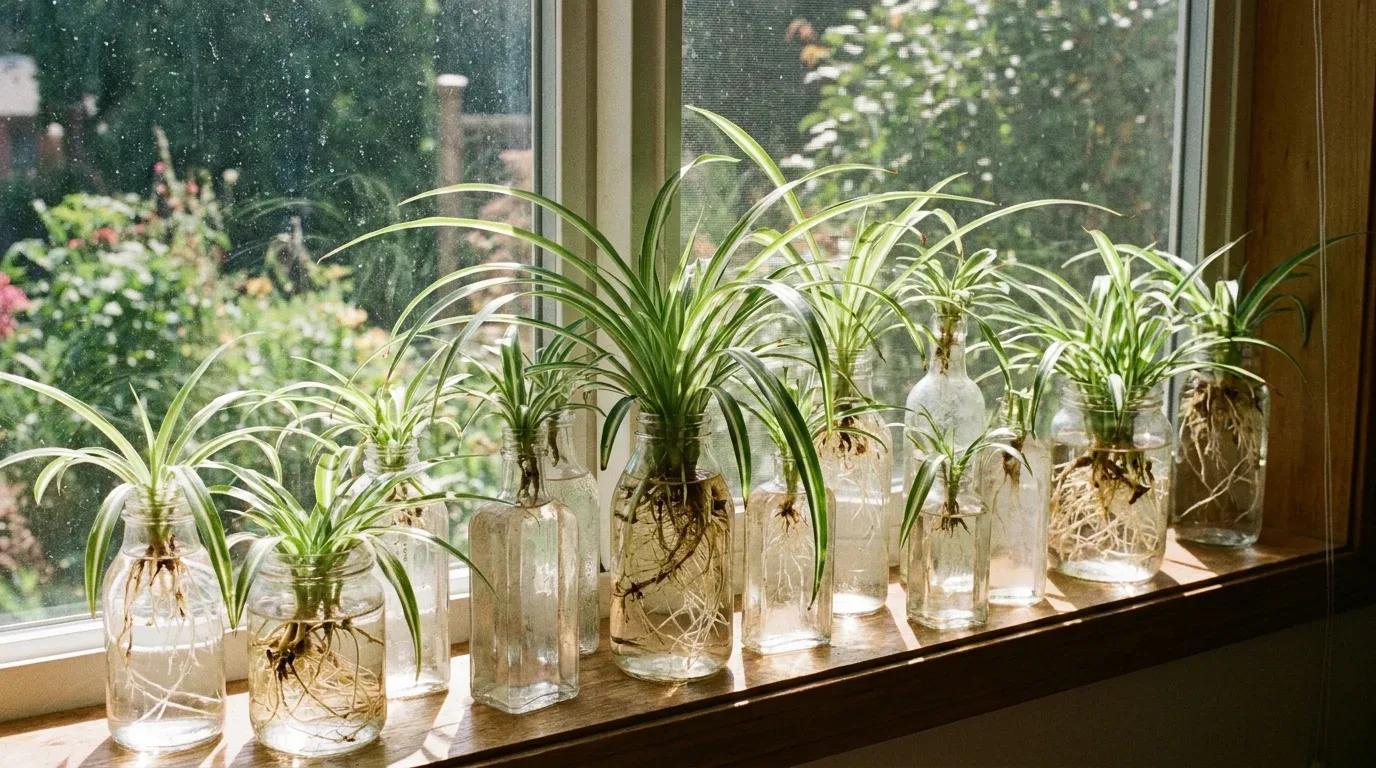
4. Spider Plant
Spider plants can be grown in water from their small plantlets, often called spiderettes. This makes them particularly convenient because the baby plants already have the beginnings of a root system. Snip a healthy plantlet from the mother plant and place its base in a container of water without submerging the leaves. Keep it in bright, indirect light and replace the water regularly. Once the roots become established, the plantlet can continue growing in water with suitable nutrients. Spider plants produce long, narrow leaves that arch naturally, so they look attractive in tall jars or wall-mounted propagation vessels. Avoid keeping the roots in dirty or stagnant water, since poor water quality can quickly affect young roots. Their easy propagation habit also means you can create several matching water-grown displays from a single mature plant.
5. English Ivy
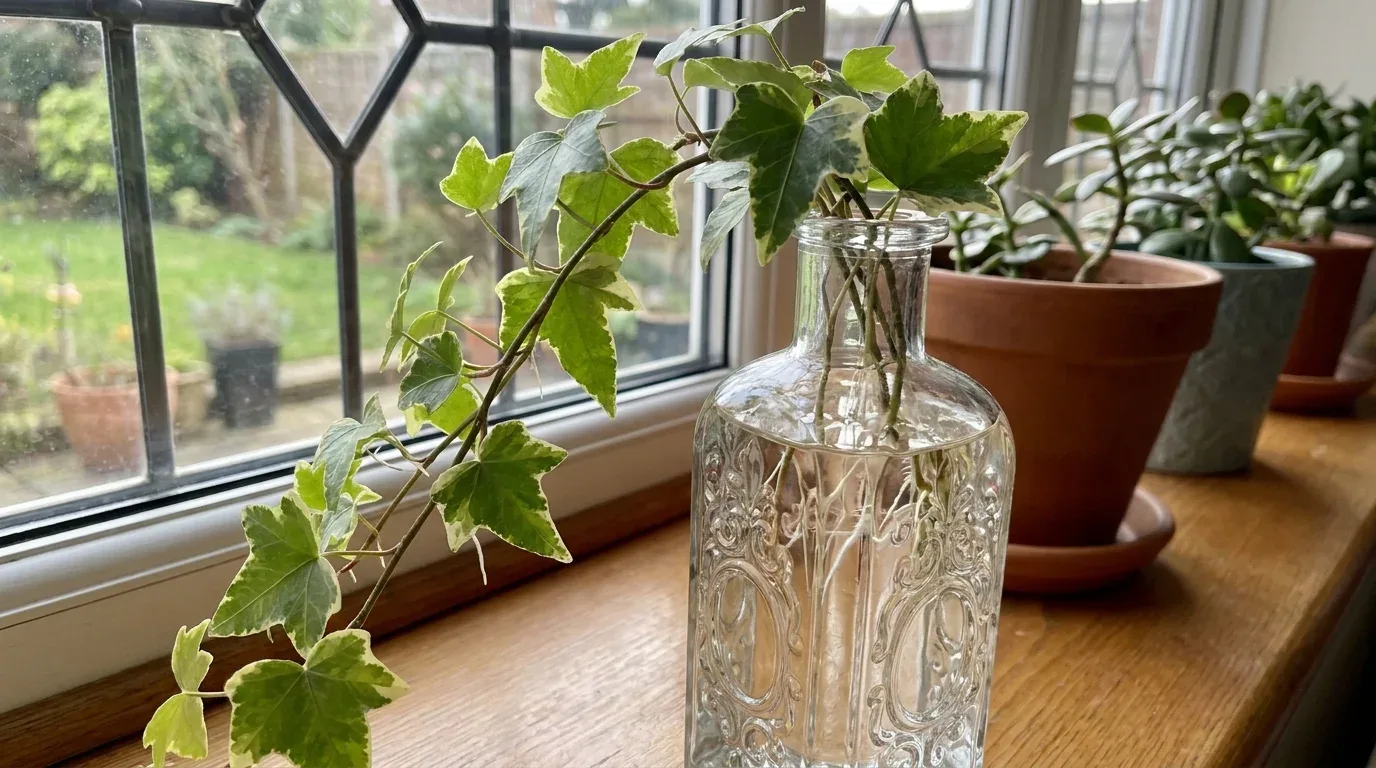
English ivy can root successfully from stem cuttings placed in water. Select a healthy section with several leaves and at least one node, then remove lower foliage before placing the node underwater. Give the cutting bright, indirect light and change the water regularly to keep the roots oxygenated and clean. Ivy’s naturally trailing habit makes it attractive in narrow-necked bottles, small vases, and elevated containers where the stems can spill downward. Although water propagation is straightforward, long-term growth requires attention to nutrition because plain water does not provide all the minerals a plant normally receives from soil. Use a very diluted nutrient solution occasionally if you intend to keep the ivy in water. Avoid placing the container in intense afternoon sunlight, which can overheat the water and stress the roots.
6. Chinese Evergreen
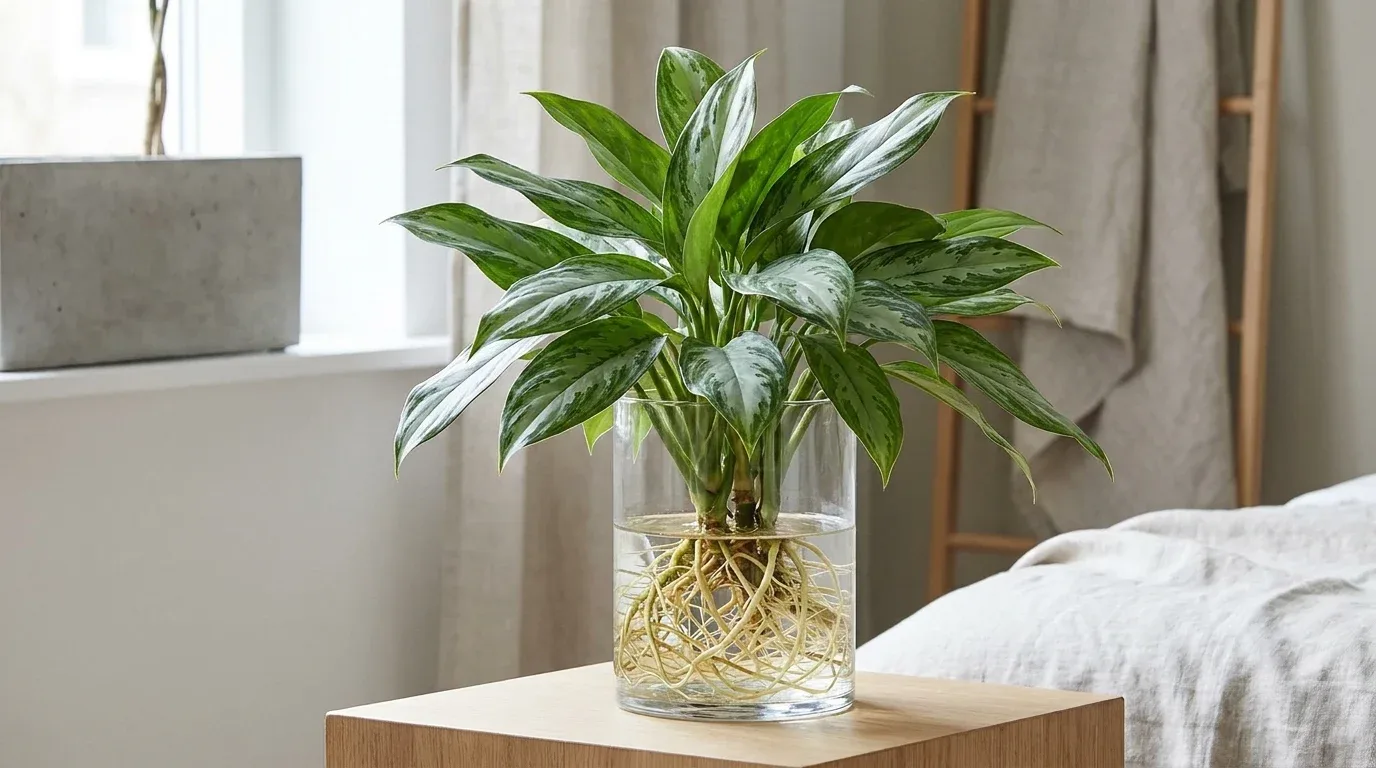
Chinese evergreen can be propagated in water from healthy stem sections and, with appropriate nutrients, can remain attractive in a water-growing setup. Choose a firm stem with healthy leaves and place the lower portion in a clean container while keeping foliage above the water. Bright, indirect light is ideal, although this plant generally tolerates moderate indoor light. Change the water frequently during the rooting stage and inspect the submerged stem for softness or discoloration. Once roots develop, a diluted nutrient solution can support continued growth. Varieties with silver, green, or patterned foliage provide plenty of visual interest in transparent containers. Because Chinese evergreen foliage can become quite substantial, use a stable vase that will not tip easily as the plant grows. Keep the container away from cold drafts and harsh direct sun.
7. Wandering Dude
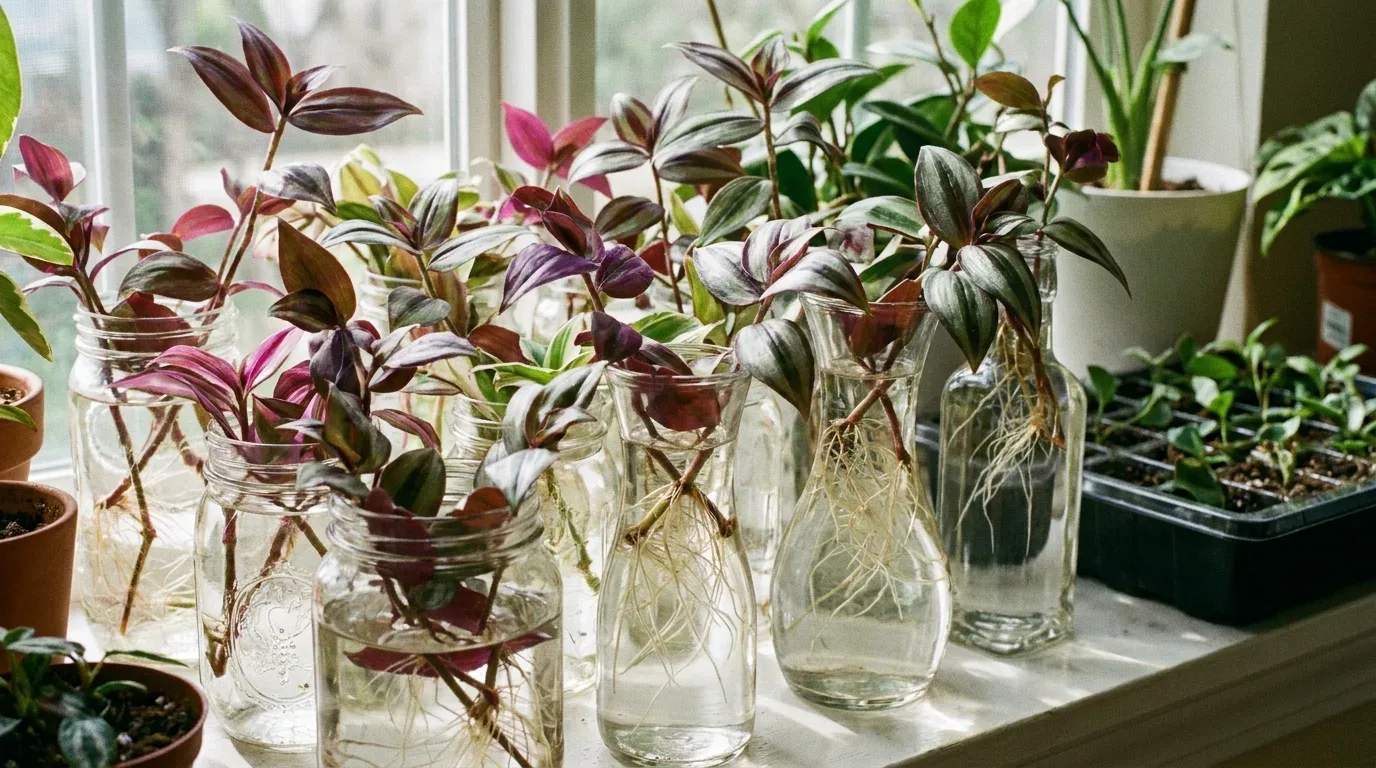
Wandering dude, commonly associated with Tradescantia varieties, is a fast-growing trailing plant that roots very readily in water. Take a cutting just below a node, remove lower leaves, and place the node in a glass filled with fresh water. Within a relatively short time, roots can begin forming, making this plant satisfying to watch. Bright, indirect light helps maintain strong growth and attractive foliage, while insufficient light may cause elongated stems and weaker coloration. Because Tradescantia grows quickly, it benefits from occasional trimming to keep a water display compact and attractive. Refresh the water when it becomes cloudy and add a small amount of diluted liquid plant food if the cutting is being maintained for an extended period. Its colorful leaves make it particularly effective in clear propagation jars where both foliage and roots are visible.
8. Begonia
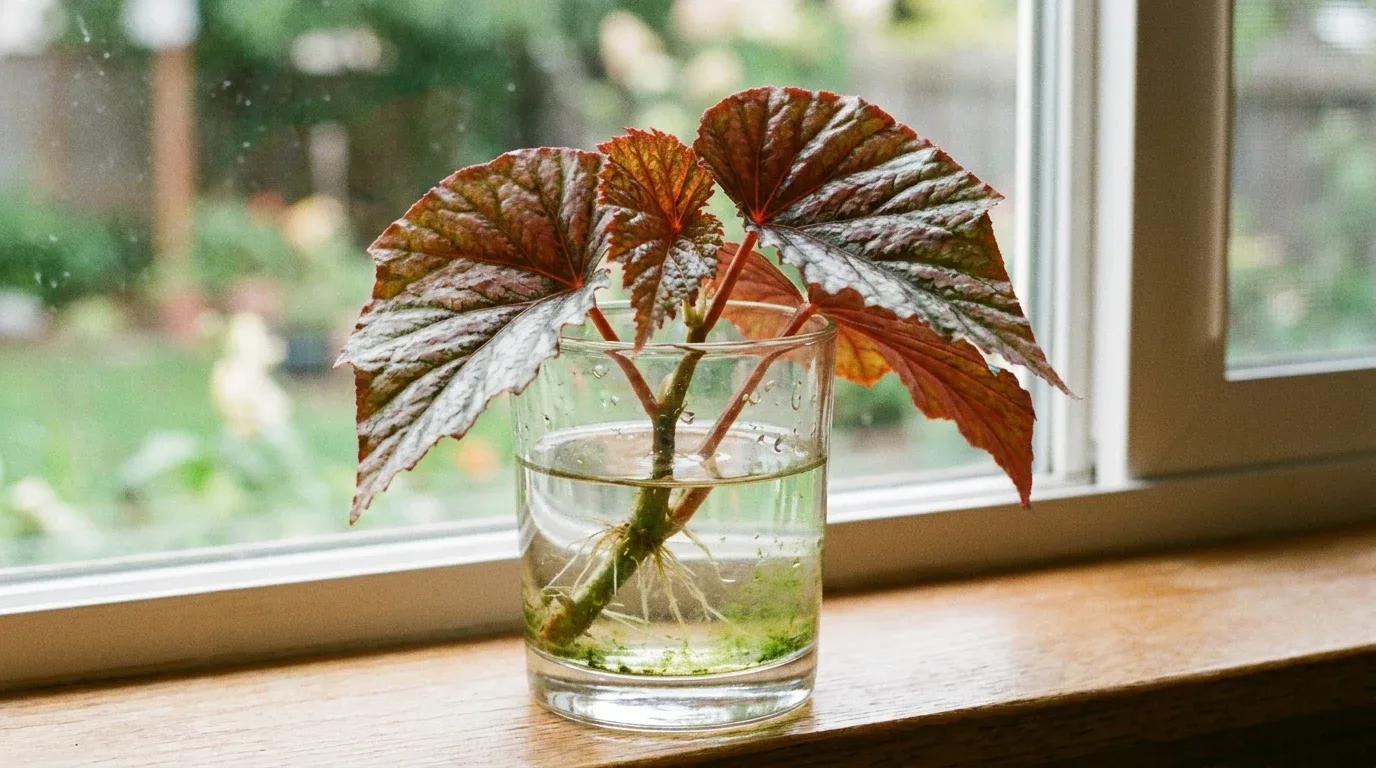
Many begonias can be propagated successfully from stem cuttings in water, giving you an easy way to observe root development before transferring them elsewhere. Choose a healthy stem with a node and remove leaves that would otherwise remain underwater. Place the cutting in bright, filtered light rather than direct sun, which can stress delicate foliage and warm the water. Begonia cuttings generally benefit from clean water and good air circulation around the container. Once a healthy root system develops, you can either transplant the cutting into soil or experiment with continued water culture using suitable nutrients. Begonias are especially appealing because their foliage can be colorful, textured, or patterned depending on the variety. Use a clean glass vessel that provides enough support for the cutting without crowding the developing roots.
9. Coleus
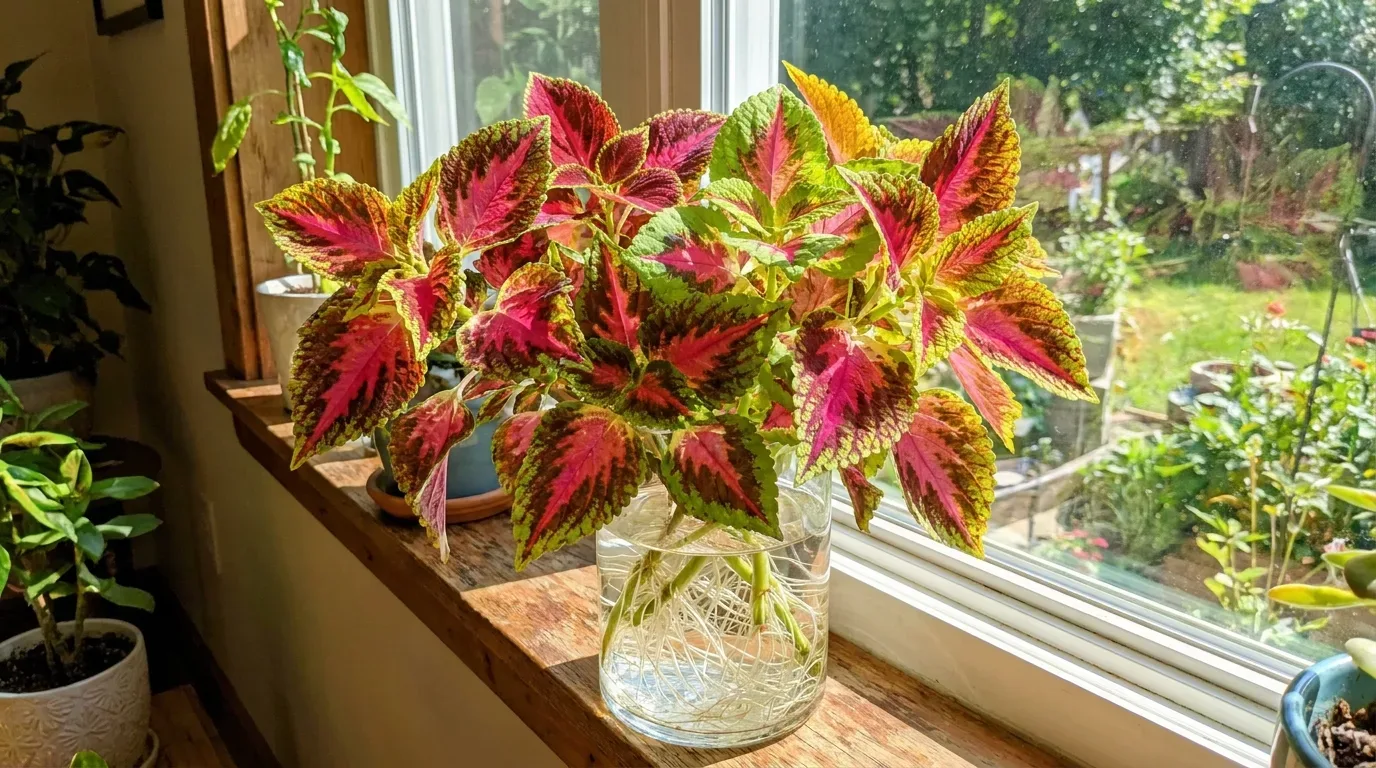
Coleus is one of the easiest colorful foliage plants to propagate in water. Cut a healthy stem just below a leaf node, remove the lower leaves, and place the exposed node in water. Bright, indirect light helps preserve the vivid reds, pinks, greens, yellows, and purples found in many coleus varieties. Roots can develop quickly, so you may see noticeable progress within a short period. Keep the water clean and replace it regularly, especially while the cutting is developing roots. For long-term water growing, occasional diluted nutrients are important because plain water contains little plant food. Coleus can become top-heavy as it grows, so choose a heavier container or several cuttings together for stability. Regular pinching also encourages a bushier shape rather than allowing the stems to become excessively long and sparse.
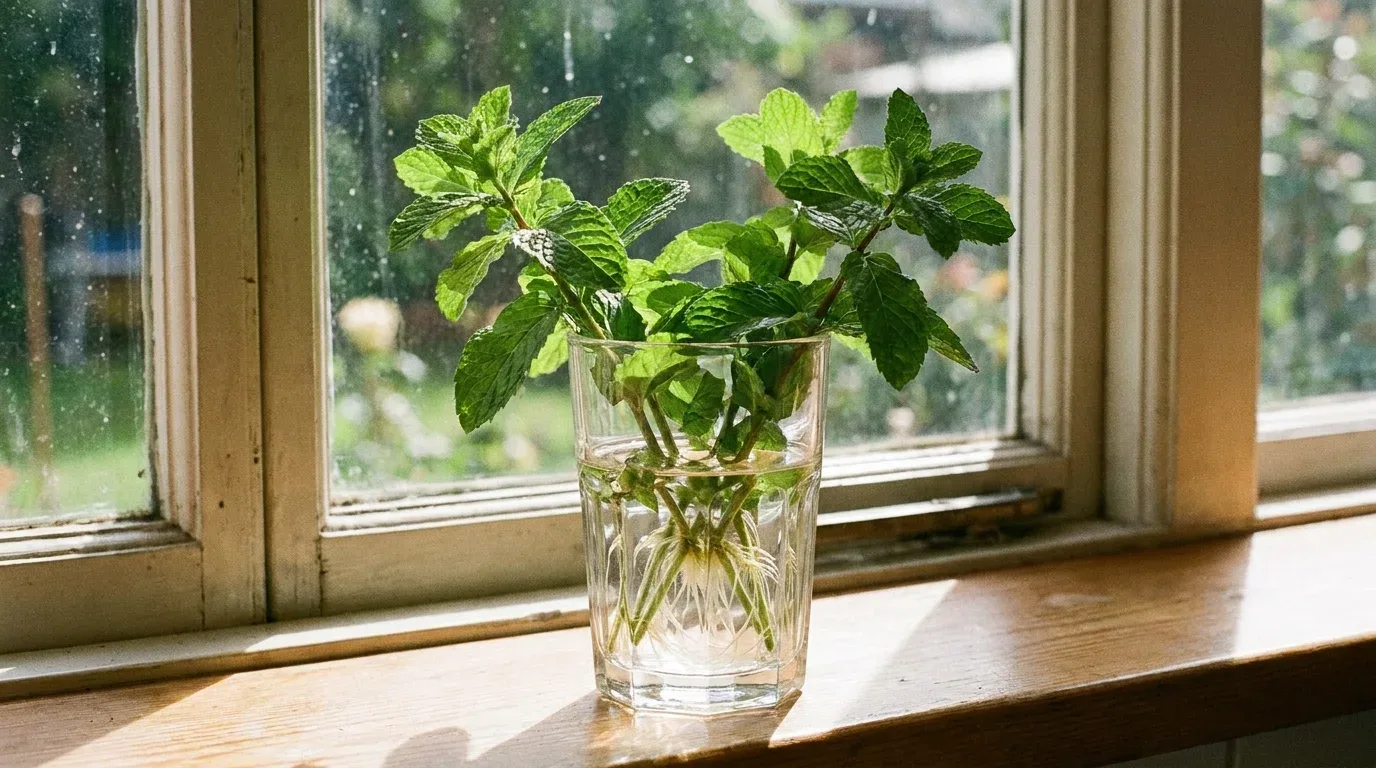
10. Mint
Mint is a vigorous herb that can readily produce roots from fresh stem cuttings placed in water. Remove the lower leaves from a healthy sprig and place the bare stem in a glass while keeping the remaining foliage above the surface. A sunny windowsill with several hours of gentle light can encourage strong growth, although very intense midday sun may heat a small container. Refresh the water regularly and trim the stems when they become too long. Mint’s fast growth makes it particularly rewarding for kitchen windows and countertop herb displays. For ongoing production, provide diluted nutrients because water alone cannot supply everything the plant needs. Harvesting the growing tips can encourage branching and give you fresh leaves for drinks and cooking. Use a container with enough room for roots to spread without becoming tightly packed.
11. Basil
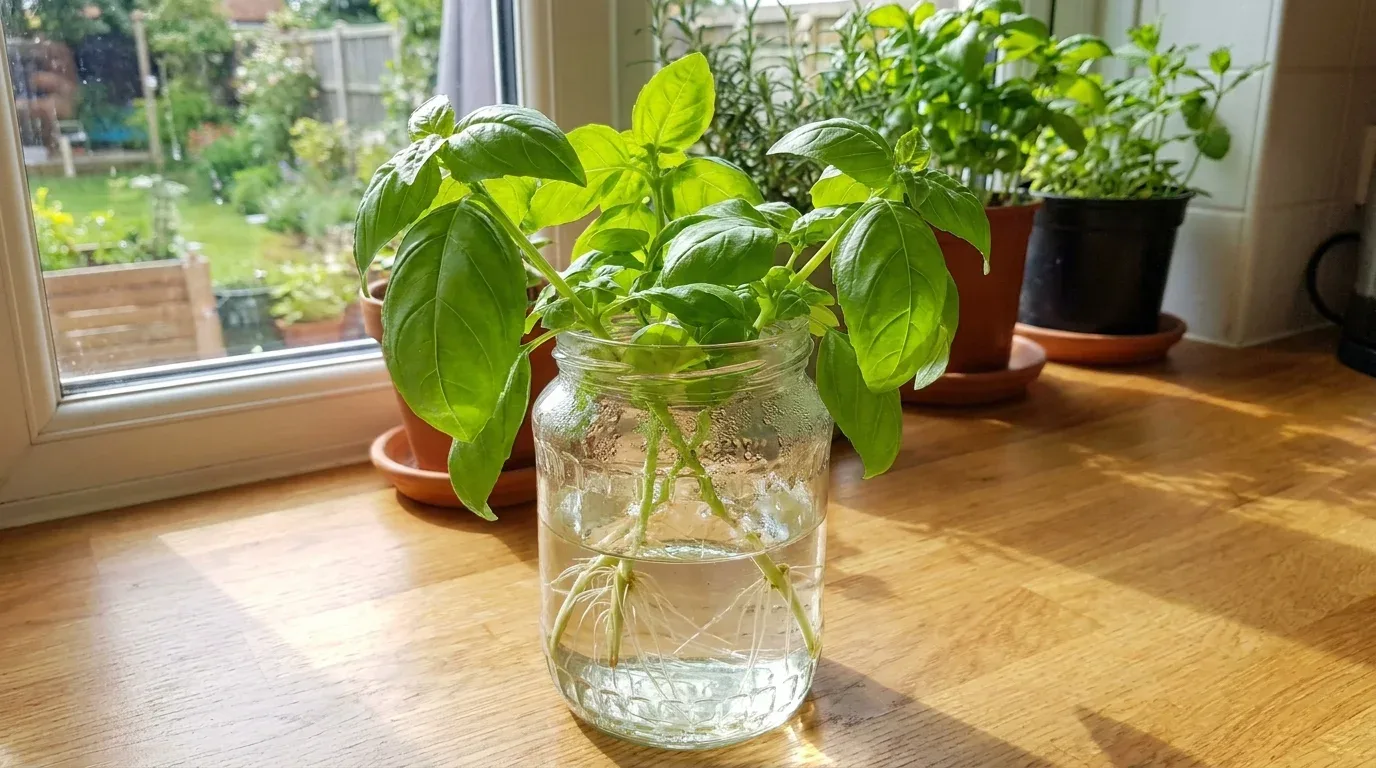
Basil can root surprisingly well from fresh cuttings, making it a convenient candidate for a small indoor water garden. Select a healthy stem and cut it below a node, then remove the lower leaves before placing the stem in water. Position the container in a warm, bright location with plenty of indirect or gentle direct light. Replace the water frequently to maintain freshness and prevent unpleasant odors. Once roots appear, the cutting can continue growing in water if it receives appropriate nutrients. Pinching the upper growth helps basil become bushier and provides a steady supply of leaves for cooking. Because basil is more demanding than some ornamental plants, adequate light and warmth are particularly important. A small group of rooted cuttings in matching glasses can also create a practical and attractive kitchen herb display.
12. Rosemary
Rosemary can be rooted in water from fresh, non-flowering stems, although it generally takes more patience than fast-rooting plants such as pothos or mint. Choose a healthy cutting, strip the lower leaves, and place the bare stem in fresh water. Keep the container in a bright location with good airflow. Rosemary prefers plenty of light, so a bright kitchen window can work well. Replace the water regularly and watch the submerged stem for signs of softening or decay. Once roots develop, the cutting can be moved into soil or maintained hydroponically with a suitable nutrient solution. Because rosemary has relatively woody stems and a slower rooting process, patience is important. Avoid overcrowding several cuttings in one small container, and trim lightly as growth develops to encourage a compact, useful herb plant.
13. Oregano
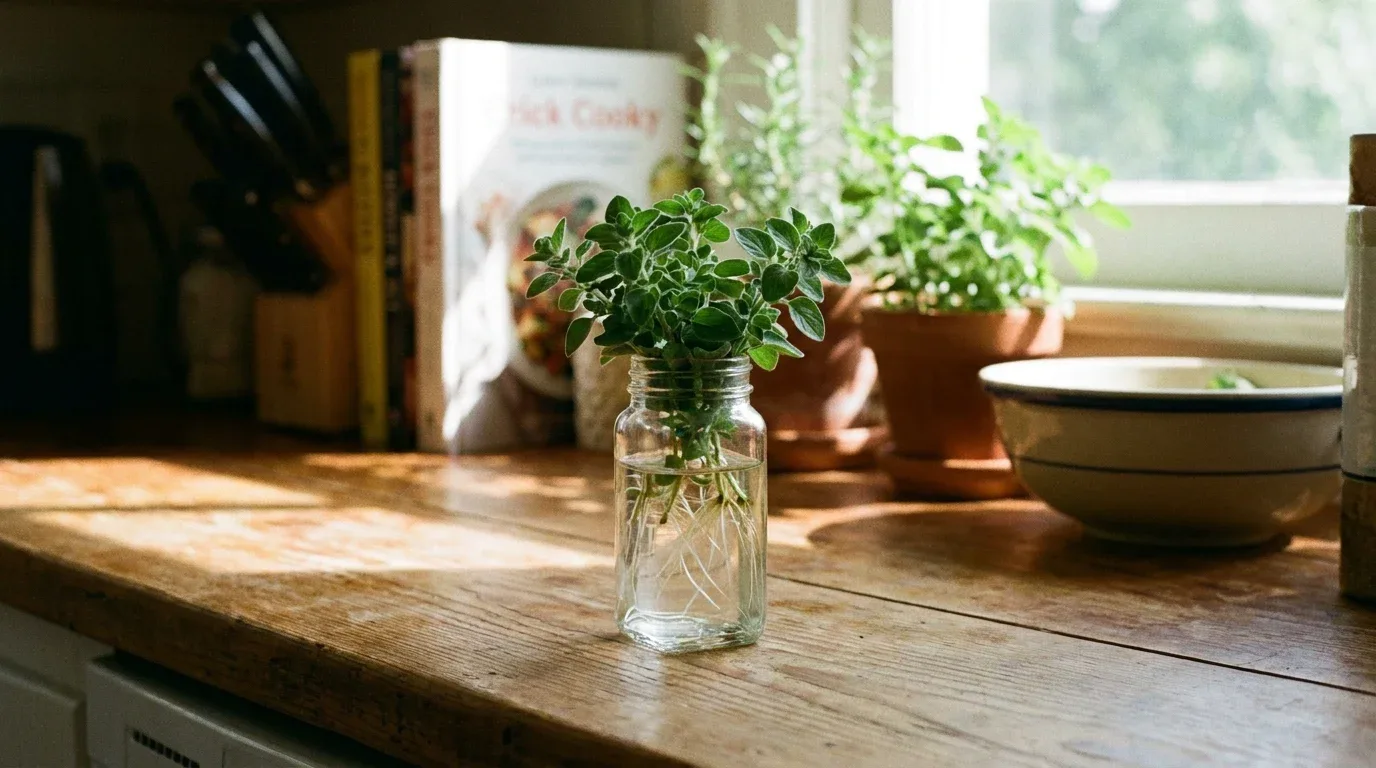
Oregano is another culinary herb that can be propagated from stem cuttings in water. Choose a fresh, healthy stem and remove the leaves from the lower portion before placing it in a clean glass. Keep the growing tip above the water and provide strong, indirect light or gentle sunlight. Oregano can develop roots relatively readily during active growth, and regular trimming encourages branching once the plant becomes established. Water should be replaced frequently, especially if the container becomes cloudy. For long-term growth, use a very diluted nutrient solution because ordinary water does not contain sufficient minerals for sustained production. Oregano’s compact foliage works well in small jars, making it a practical option for apartments and kitchen counters. Harvest only what you need and avoid removing too much foliage at once.
14. Lemon Balm
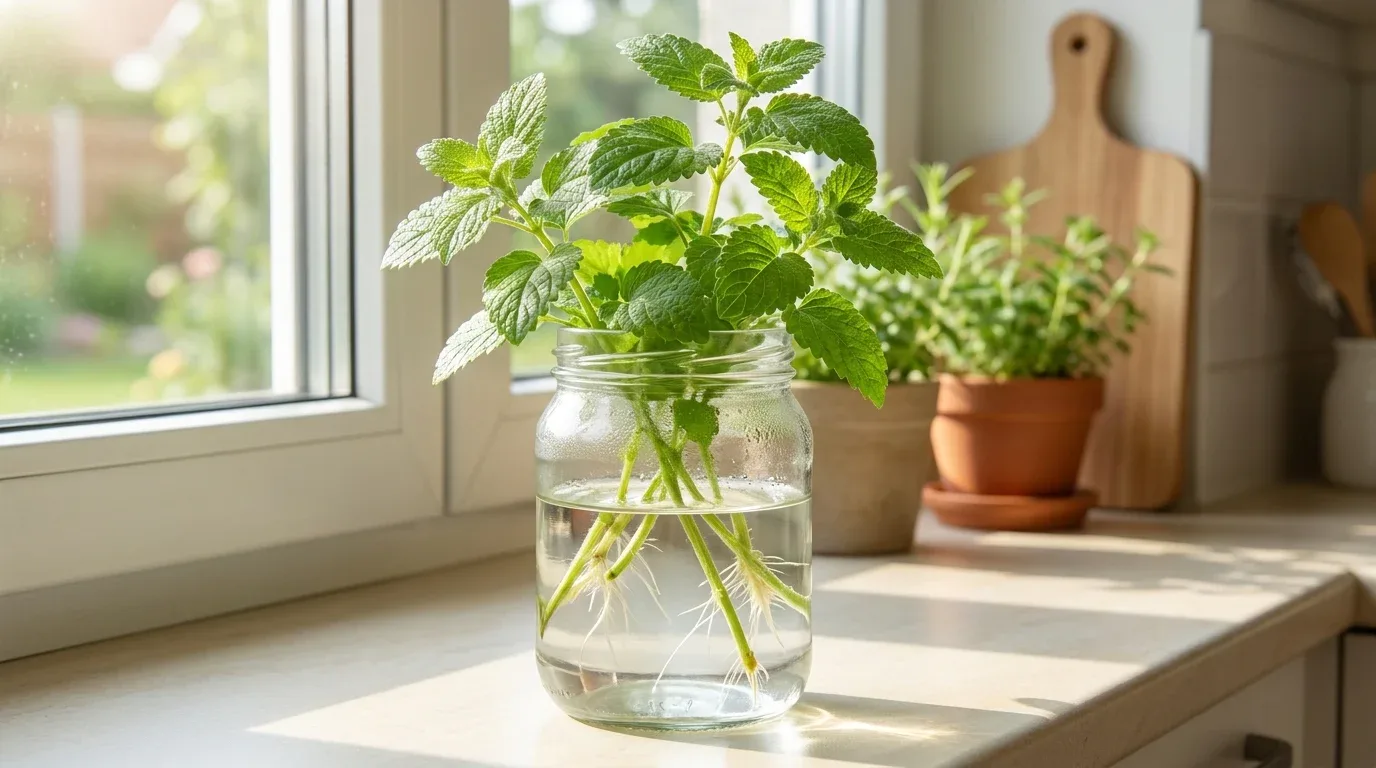
Lemon balm can be grown from cuttings in water and is particularly appealing for kitchen windows because its leaves have a fresh lemony fragrance. Select a healthy stem, remove its lower leaves, and place the exposed nodes in a clean container of water. Bright light supports compact growth, while regular trimming helps prevent the plant from becoming overly stretched. Change the water whenever it becomes cloudy or develops an odor, and rinse the container occasionally to discourage algae. Once roots are established, diluted nutrients can help support continued leaf production. Lemon balm grows vigorously, so provide enough space for the roots and expect to trim the stems periodically. Harvesting young shoots can keep the plant manageable while providing fragrant leaves for teas, desserts, and infused drinks.

15. Peace Lily
Peace lilies are naturally moisture-loving plants and can sometimes be maintained in water when the roots are thoroughly cleaned and provided with suitable nutrients. This is different from simply placing a soil-covered root ball into a vase, which can cause decomposition and cloudy water. If converting a plant, carefully remove soil from the roots and inspect them for damaged portions before placing the clean roots in water. Keep the crown and foliage above the waterline so the plant does not remain unnecessarily saturated. Bright, indirect light is ideal. A diluted hydroponic nutrient solution can provide minerals needed for long-term health. Because peace lilies have substantial foliage, choose a stable container and change or refresh the water regularly. This approach creates a dramatic display of white flowers and green leaves above visible roots.
16. Arrowhead Plant
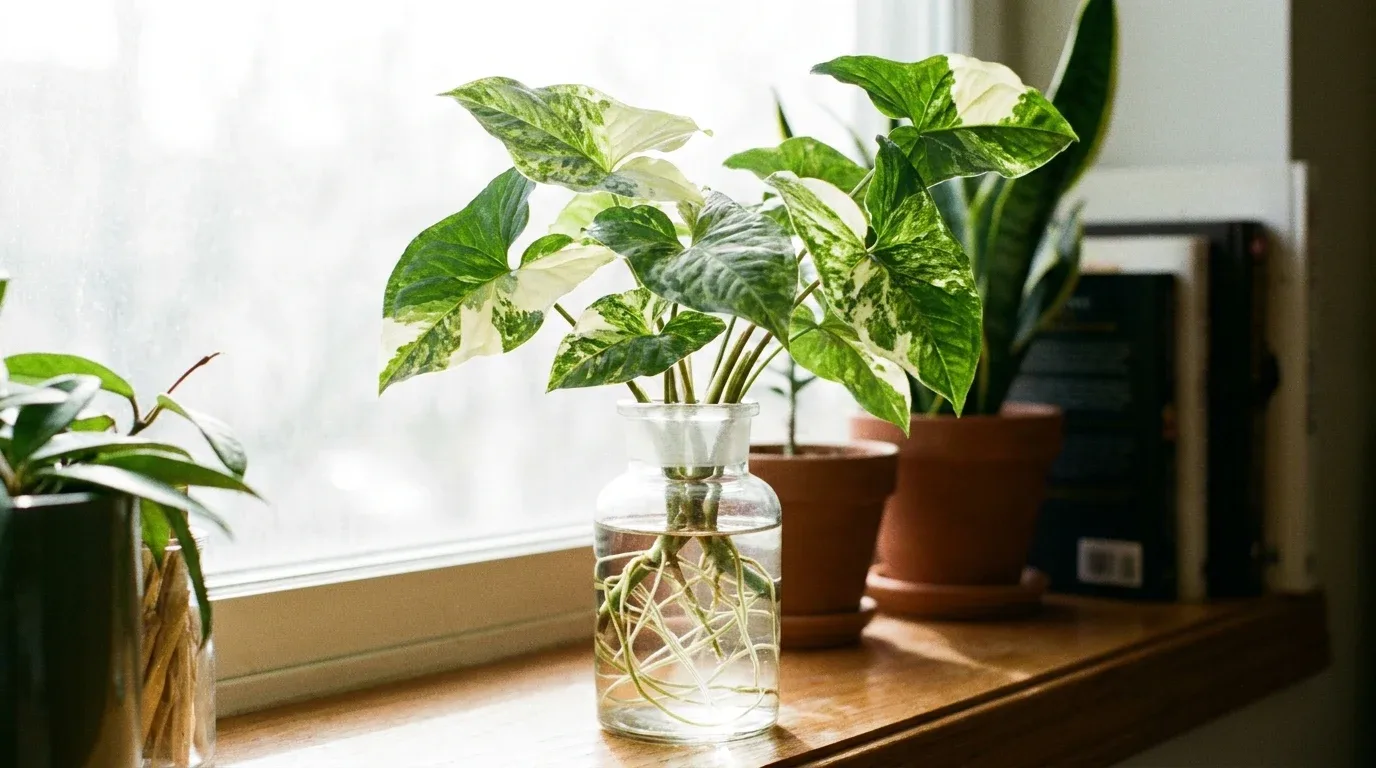
Arrowhead plant, or Syngonium, is a versatile houseplant that roots readily from stem cuttings. Select a healthy cutting containing at least one node and place that node beneath the waterline while keeping the leaves dry. Bright, indirect light encourages healthy foliage and compact growth. Refresh the water regularly and remove any damaged roots or leaves if they begin to decay. As the plant matures, its stems may begin trailing or climbing, so water-grown specimens can be trained around a support or allowed to cascade from a taller vessel. Variegated varieties are especially attractive in transparent containers because the pale foliage contrasts with the roots and water. For long-term culture, occasional diluted fertilizer is useful. Avoid placing the plant in harsh direct sunlight, particularly behind hot glass.
17. Sweet Potato Vine
Sweet potato vine is a fast-growing option that can produce an impressive display from a simple cutting. Choose a healthy vine section with several nodes and place the lower nodes in water after removing nearby leaves. Provide bright light to encourage vigorous growth and maintain attractive foliage. The plant can quickly develop a substantial root system, so a wider container may eventually be necessary. Change the water regularly and clean the vessel when algae begins appearing. For decorative indoor growing, prune long stems to encourage a fuller shape or allow them to cascade naturally over the edge of a vase. Water alone is not enough for indefinite vigorous growth, so use a diluted nutrient solution when maintaining the plant long term. Its rapid development makes it particularly satisfying for beginners who want visible results.
18. English Lavender
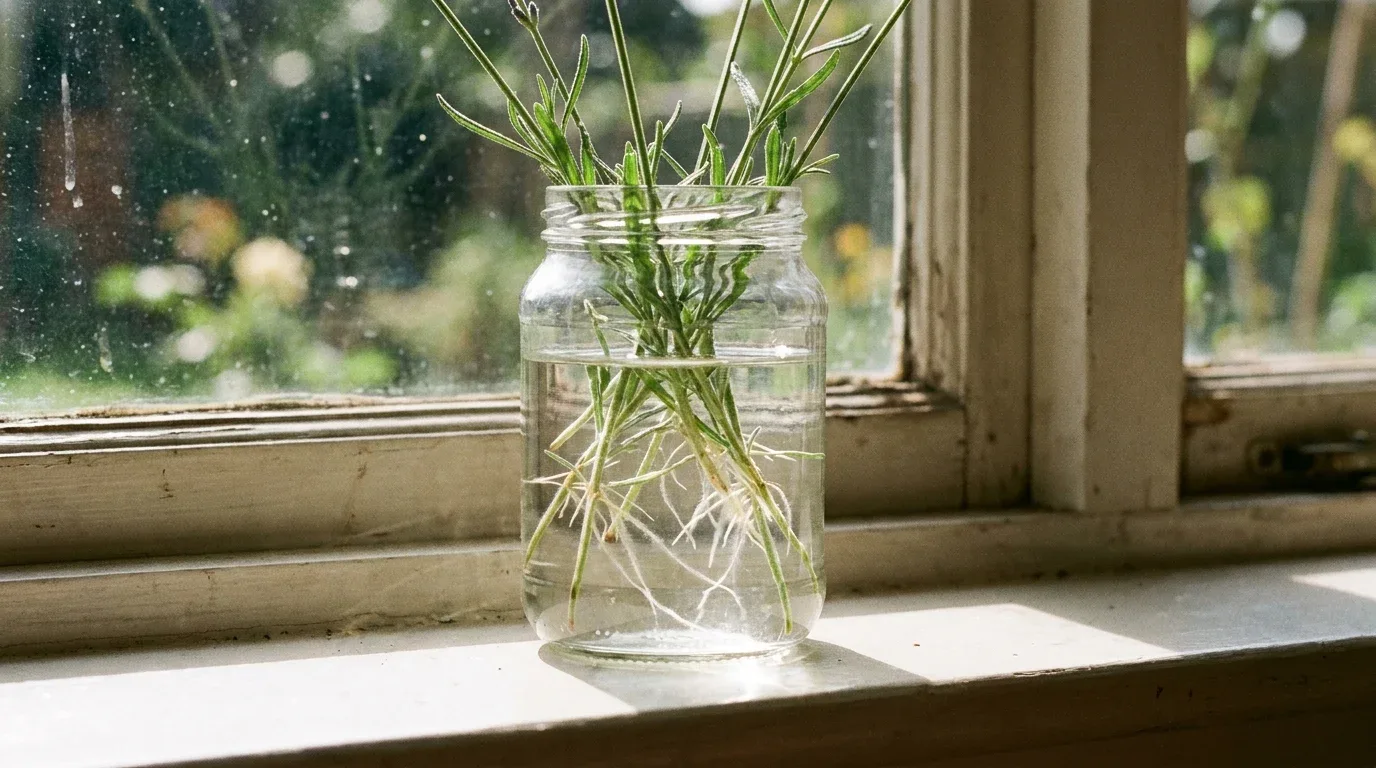
English lavender is less effortless in water than pothos or mint, but healthy softwood cuttings can sometimes root successfully when conditions are carefully controlled. Select a non-flowering stem, remove the lower foliage, and place the bare section in fresh water. Keep the cutting in bright light with good airflow and avoid allowing the water to become stagnant. Lavender generally prefers drier conditions once established, so prolonged water culture is more challenging than propagation. If roots develop, the cutting can be transferred to a well-draining growing medium for more reliable long-term cultivation. A small water propagation display is nevertheless useful for observing root formation. Avoid submerging unnecessary foliage or woody sections, and discard cuttings that become soft or develop a persistent unpleasant smell.
19. Monstera
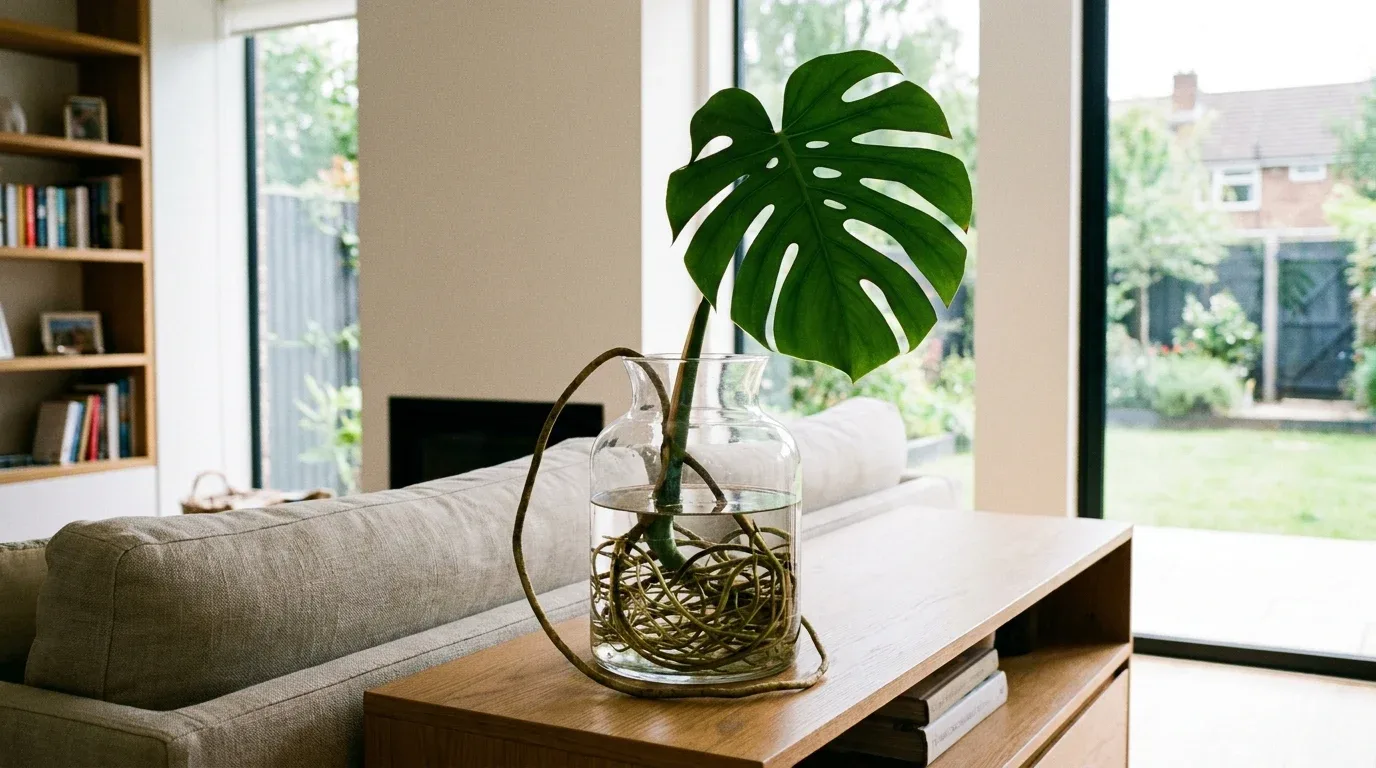
Monstera is a popular choice for water propagation because its thick stems produce roots readily when a cutting includes a healthy node. Select a section with a node and, ideally, an aerial root, then place the node in water while keeping leaves above the surface. Bright, indirect light encourages strong development, while harsh sunlight can damage the foliage and overheat the container. Refresh the water regularly and rinse the vessel as needed. Once the cutting has a substantial root system, it can be planted in soil or maintained in water with appropriate nutrients. Larger Monstera leaves can make a water-grown cutting top-heavy, so use a sturdy vase that provides support. Clear glass also lets you monitor root health and makes the developing root network an attractive part of the display.
20. Chinese Money Plant
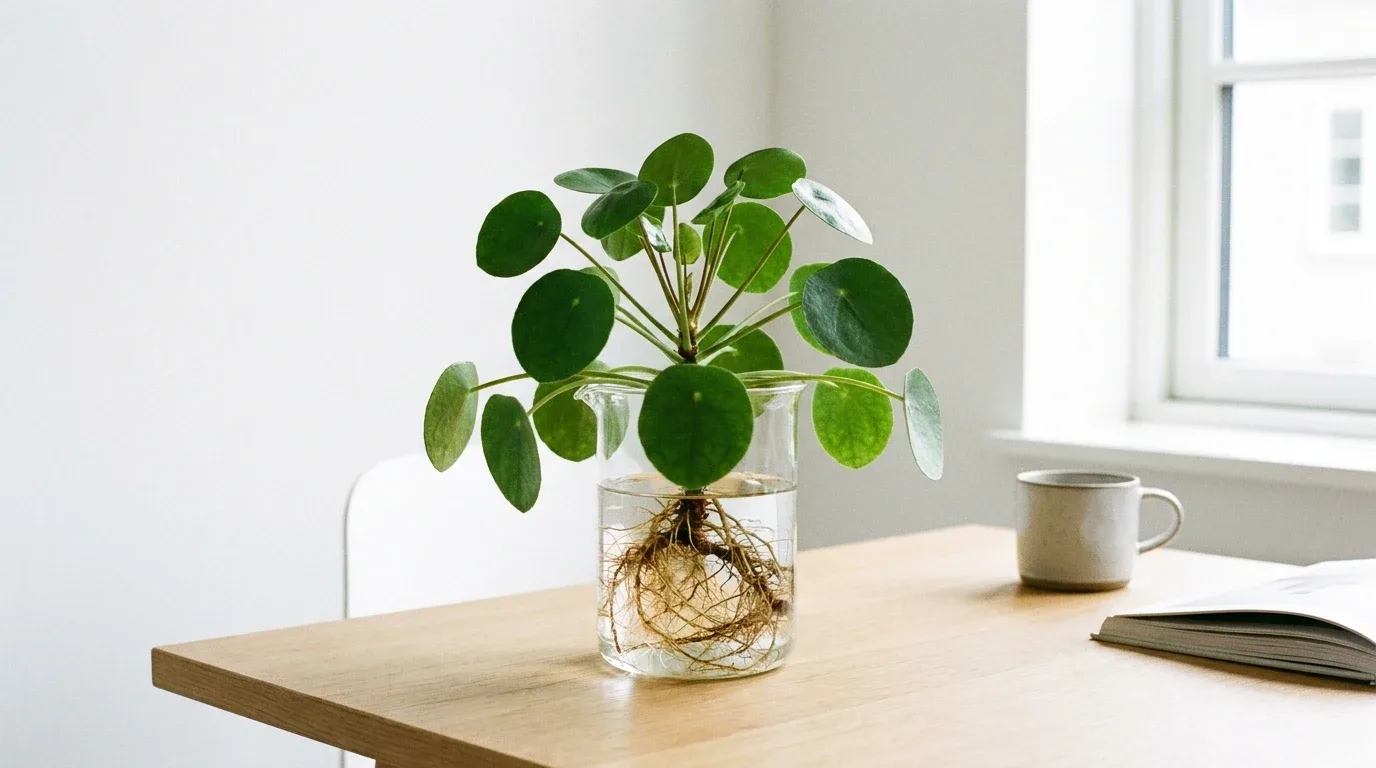
Chinese money plant, or Pilea peperomioides, can be propagated in water from offsets or suitable stem sections, although it is generally better suited to eventually growing in a well-draining medium. Place a healthy offset or cutting in clean water so its developing roots remain submerged while the foliage stays dry. Bright, indirect light helps maintain its characteristic round leaves and compact growth. Refresh the water regularly and monitor the roots for discoloration or softness. Once a healthy root system develops, transplanting into soil is often the simplest route for long-term growth, but short-term water culture can make an attractive propagation display. Its distinctive coin-shaped foliage looks especially good in simple glass vessels. Avoid overfilling the container, since keeping too much of the stem underwater can increase the risk of rot.