20 Minimal Living Room Design Ideas
Minimal living rooms have this quiet power to feel both incredibly sophisticated and genuinely restful, proving that less really can be more when every single element in the space is chosen with intention rather than just filling square footage. Whether you’re drawn to warm minimalism with natural materials and soft neutrals, stark contemporary spaces with clean architectural lines, or Japandi-inspired rooms that blend Japanese simplicity with Scandinavian coziness, minimal design is fundamentally about editing down to what actually matters and letting negative space do as much work as the furniture itself. From curated color palettes that never feel sterile to thoughtful material choices that add depth without clutter, these ideas prove that minimal living rooms can feel warm, personal, and completely livable rather than cold or unfinished.
I used to associate minimalism with those intimidating all-white showroom spaces that looked beautiful in photos but felt impossible to actually live in—no clutter allowed, nothing personal, just this pristine emptiness that seemed designed for looking at rather than using. It wasn’t until I visited a friend’s genuinely minimal living room, filled with only a handful of carefully chosen pieces but somehow feeling warm and inviting rather than sparse, that I understood what good minimalism actually meant. She’d spent months finding exactly the right sofa, the right lighting, the right handful of objects, and the result felt more intentional and personal than any maximalist space crammed with furniture and decor ever could.
What I’ve come to understand about minimal living rooms is that the restraint actually requires more design skill and decision-making than filling a space with lots of furniture and accessories ever would. Every piece has to earn its place by being functional, beautiful, or ideally both, and there’s nowhere to hide mediocre choices behind layers of stuff. The best minimal living rooms I’ve encountered use negative space as intentionally as they use furniture, understanding that breathing room itself is a design element that creates calm and sophistication. They also prove that minimal doesn’t mean cold or personality-free—the right texture, the perfect imperfect vintage find, a single meaningful piece of art can bring warmth and character to even the most pared-back space.
1. Warm Neutral Palette with Natural Textures
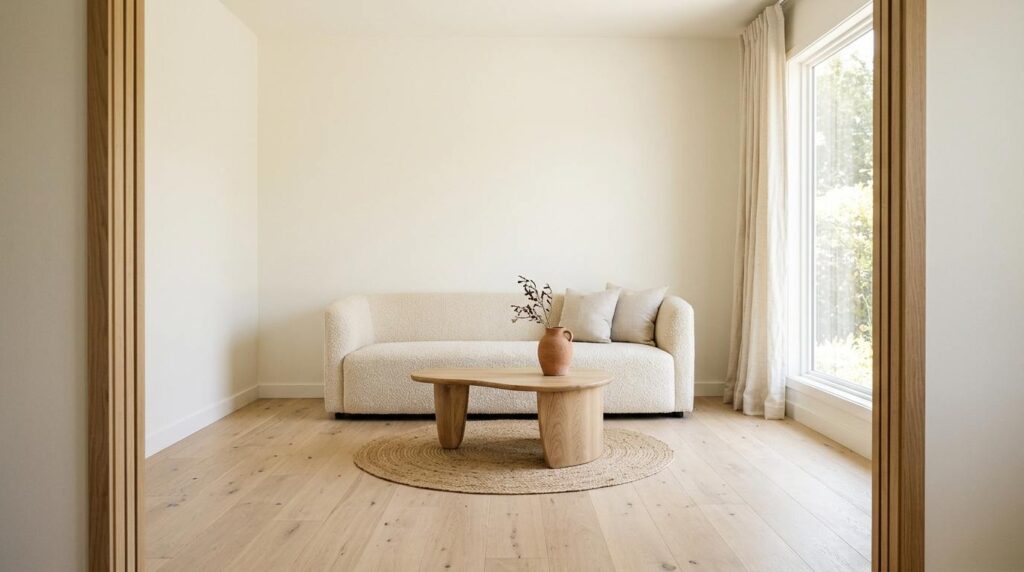
A serene minimal living room featuring walls painted in the softest warm white, creating a calm foundation. A low-profile sofa in natural boucle fabric sits centered in the room, its organic cream color blending seamlessly with the walls. A single sculptural wood coffee table in light oak provides the only furniture accent, its curved organic form adding subtle visual interest. The floor is wide-plank white oak, left bare except for a small area of natural jute rug beneath the coffee table. A single large linen curtain panel frames a window, allowing soft diffused light throughout. One ceramic vessel in unglazed terracotta sits alone on the coffee table. No artwork hangs on the walls, embracing negative space. Soft natural light fills the room, creating gentle shadows that emphasize the varied textures despite the monochromatic color palette. Shot from the doorway showing the full room’s calm simplicity, with bright, soft lighting highlighting how texture alone creates warmth and interest in this restrained space.
Committing to this warm neutral palette taught me that minimalism doesn’t require stark whites or cold greys—you can achieve that same sense of calm restraint while still feeling genuinely warm and inviting. Every material in this room, from the boucle sofa to the oak table to the jute rug, brings its own subtle texture that creates visual interest even though the color palette barely varies. I spent months sourcing exactly the right pieces because with so little in the room, each item needed to be perfect rather than just adequate.
The single ceramic vessel on the coffee table represents this ongoing practice of restraint I’ve had to learn—my instinct is always to add more, to fill the empty spaces, but leaving that negative space intentionally empty is what makes the room feel calm rather than cluttered. This living room has become the place I go when I need to think clearly or just decompress after a chaotic day, and I genuinely believe the lack of visual noise contributes to that peaceful feeling. Guests are sometimes surprised by how little furniture there actually is, but nobody ever describes the room as feeling empty or unfinished—just quiet and intentional.
2. Monochromatic Grey with Sculptural Furniture
A sophisticated minimal living room executed entirely in shades of grey, from pale dove walls to a medium grey sofa with clean architectural lines to a darker charcoal area rug. The sofa has a distinctly sculptural silhouette with no visible legs, appearing to float above the rug. A single curved floor lamp in matte black provides the room’s only decorative flourish. The coffee table is a simple grey concrete cylinder, geometric and minimal. Large windows without curtains allow maximum natural light, which the varied grey tones reflect differently throughout the day. The floor is polished concrete in a lighter grey than the walls. No artwork or accessories interrupt the clean lines. Shot from a low angle emphasizing the sculptural quality of the sofa and how the monochromatic greys create depth through tonal variation rather than color contrast, with bright, even lighting highlighting the architectural sophistication of the restrained palette.
Building this entirely grey living room around sculptural furniture silhouettes rather than color variation was my approach to creating visual interest within an extremely restricted palette. Every piece had to have genuine architectural presence since there was no color to distract from bad proportions or generic shapes—the sofa’s floating, legless silhouette and the concrete cylinder coffee table both needed to be sculptural enough to hold their own as essentially the only two furniture pieces in the room.
The varying shades of grey, from the pale walls to the medium sofa to the darker rug, create depth and dimension that a single flat grey would never achieve, proving that monochromatic doesn’t have to mean boring or one-dimensional. Natural light plays beautifully across all these different grey tones throughout the day, constantly shifting how the room reads from cool and crisp in morning light to warmer and moodier as evening approaches. This room required incredible discipline to execute properly—the temptation to add a colorful pillow or piece of art was constant, but resisting that urge is exactly what makes the space feel so intentional and sophisticated rather than just underdecorated.
3. Japandi-Inspired Low Furniture Arrangement
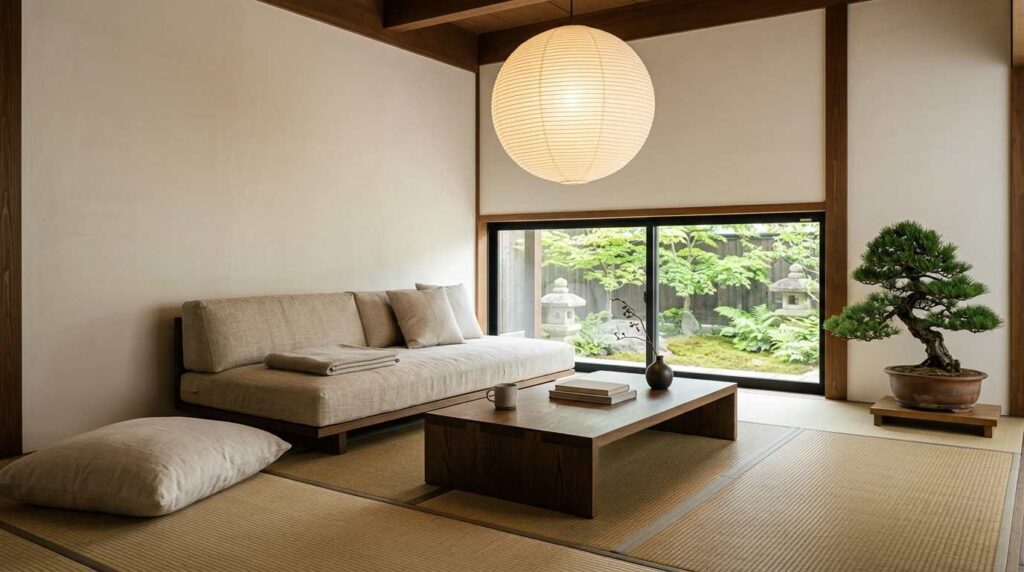
A calm, Japandi-inspired minimal living room featuring low-profile furniture throughout, creating a grounded, horizontal visual line. A low platform sofa in natural linen sits close to the floor, paired with a low wooden coffee table in dark stained oak with clean joinery. The walls are painted soft warm white. A single floor cushion in undyed linen sits beside the sofa for additional casual seating. Simple paper lantern-style pendant lighting hangs from the ceiling, diffusing soft warm light. The floor is tatami-inspired woven material in natural tones. A single bonsai-style potted tree sits in the corner, its careful pruning adding sculptural interest. No wall art interrupts the serene simplicity. Natural light from a low window illuminates the horizontal furniture arrangement. Shot from floor level to emphasize the low, grounded quality of the furniture arrangement, with soft, warm lighting creating a calm, meditative Japandi atmosphere.
Embracing this Japandi aesthetic meant fundamentally rethinking furniture height and proportion in ways that felt unfamiliar at first but that I’ve grown to love for how grounded and calm they make the room feel. Everything sits low to the ground—the platform sofa, the coffee table, even the floor cushion—which creates this horizontal visual emphasis that feels inherently peaceful compared to typical furniture heights. Sitting in this room genuinely feels different than sitting in a conventional living room; there’s something about being closer to the floor that encourages slower, more mindful movement.
The natural materials throughout, from the linen upholstery to the oak table to the woven flooring, bring warmth and organic texture that prevents this minimal approach from feeling austere or uncomfortable. I resisted the urge to add wall art, instead letting the single bonsai tree serve as the room’s only decorative focal point, its careful sculptural form providing enough visual interest without any additional accessories. This room has taught me patience in a way few other design projects have—the tree requires regular attention and care, which feels appropriate for a space built around mindfulness and intentional living rather than passive consumption of stuff.
4. Black and White High Contrast Minimalism
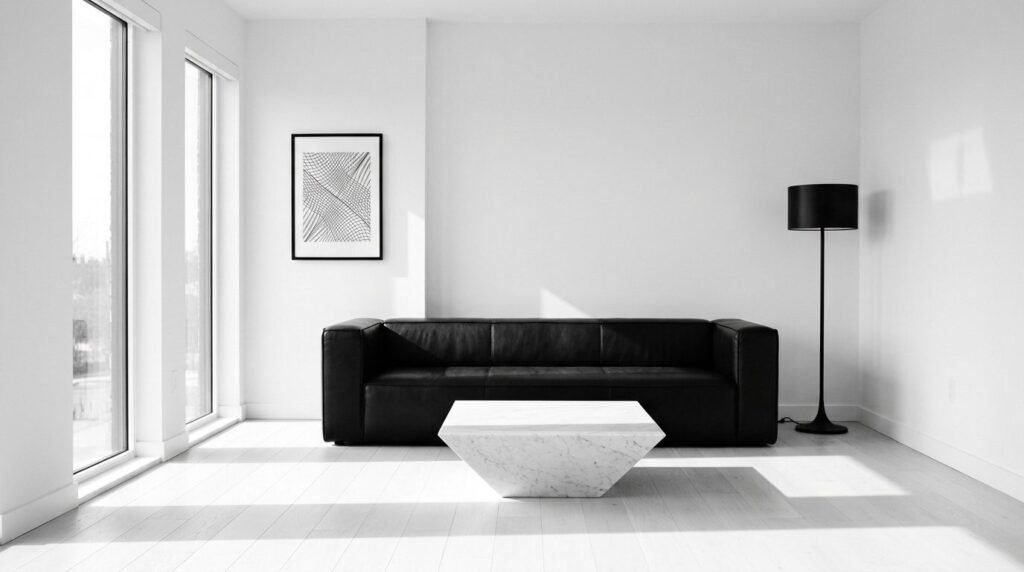
A striking minimal living room executed in stark black and white with no intermediate tones. Crisp white walls provide the backdrop for a single black leather sofa with clean architectural lines and no visible ornamentation. A white marble coffee table with geometric form sits centered. The floor is white oak, left completely bare. A single black-framed piece of abstract art hangs on one wall, its minimal linework echoing the room’s restraint. A black floor lamp with a simple cylindrical shade provides the only additional furniture piece. Large windows without window treatments allow maximum natural light, creating strong shadows from the black elements against the white surroundings. No plants, no additional accessories interrupt the stark simplicity. Shot straight-on to emphasize the graphic, high-contrast quality of the black and white palette, with bright, direct lighting creating dramatic shadows and highlighting the confident architectural restraint of the space.
Committing to pure black and white with zero intermediate tones was the most disciplined design decision I’ve made, requiring me to genuinely question every single item before allowing it into the room. This high-contrast approach creates such graphic, striking visual impact precisely because there’s nowhere for the eye to rest in some soft middle ground—everything is either crisp white or deep black, creating this bold, confident statement that feels more like a gallery installation than a typical living room.
The black leather sofa’s clean lines work as almost architectural sculpture within the stark white space, and the single piece of abstract art was chosen specifically because its minimal linework echoes rather than competes with the room’s overall restraint. Natural light becomes a crucial design element here, since it creates these strong, defined shadows from the black furniture pieces that add depth and drama the color palette alone couldn’t achieve. This room isn’t for everyone—it demands a level of discipline in daily living that many people would find impractical—but for those willing to commit, it creates this incredibly powerful, gallery-like living space that never feels boring despite its extreme restraint.
5. Curved Furniture with Soft Beige Tones
A gentle, organic minimal living room featuring furniture with soft curved silhouettes throughout, creating a womb-like, comforting quality despite the restrained aesthetic. A curved sofa in warm beige bouclé forms a soft embrace shape. A round coffee table in travertine stone echoes the curved theme. Walls are painted the softest warm beige, nearly matching the sofa fabric. The floor is natural limestone tile in a warm cream tone. A single curved floor lamp with an organic, sculptural base provides ambient lighting. Large arched windows allow soft natural light to fill the space, their curved shape echoing the furniture’s organic forms. No sharp angles interrupt the room’s soft, flowing quality. A single round mirror with a thin brass frame hangs on one wall. Shot from an angle emphasizing the curved, organic silhouettes throughout the space, with soft, warm lighting creating a gentle, embracing atmosphere despite the minimal furniture count.
Choosing exclusively curved furniture for this minimal living room was about creating warmth and softness within a restrained aesthetic, proving that minimalism doesn’t have to mean harsh angles and cold geometry. The curved sofa genuinely feels like an embrace when you sit in it, and pairing it with the round travertine coffee table and arched window shapes creates this cohesive, organic language throughout the room that feels gentle rather than severe. Every curve echoes another curve somewhere else in the space, creating subtle visual rhythm despite the minimal furniture count.
The warm beige palette, barely varying between walls and upholstery, adds to this soft, enveloping quality—there’s nothing stark or cold about this minimalism, just quiet warmth and restraint. I searched specifically for pieces with genuine curves rather than just softened corners, since the difference between truly organic and merely rounded furniture is significant in how the room ultimately feels. This approach has taught me that minimal design can absolutely embrace softness and warmth rather than defaulting to hard, architectural lines, and this room has become the place where guests instinctively want to curl up and stay for hours, disproving any assumption that minimal spaces feel unwelcoming.
6. Single Statement Art Piece as Sole Decoration

A restrained minimal living room where a single, large-scale abstract painting serves as the sole decorative element against otherwise bare white walls. The painting features bold brushstrokes in deep blue and rust tones, providing the room’s only color. A simple grey linen sofa sits opposite the artwork, positioned as the ideal viewing spot. A minimal black coffee table with thin metal legs sits between. The floor is pale ash wood, left completely bare except for a small grey wool rug beneath the coffee table. No other artwork, plants, or accessories appear anywhere in the room. Large windows allow natural light to properly illuminate the painting throughout the day. A single reading lamp beside the sofa provides task lighting. Shot straight-on to show the painting as the undisputed focal point against the empty walls, with gallery-style lighting emphasizing how the single art piece carries the entire room’s visual interest and color story.
Building this entire living room around a single significant art piece was a deliberate exercise in restraint—rather than accumulating various decorative objects, I invested everything into finding one painting substantial and beautiful enough to be the room’s sole visual statement. The empty walls surrounding it aren’t a lack of decorating but an intentional choice to let the artwork breathe and command genuine attention rather than competing with other decorative elements for the eye’s focus.
Positioning the sofa specifically to create an ideal viewing angle for the painting was almost like designing a small private gallery rather than a conventional living room. The deep blue and rust tones in the artwork become the only color story in an otherwise completely neutral space, and I chose furniture specifically in muted greys that wouldn’t compete with or distract from those colors. This approach requires genuine confidence in your single chosen piece—there’s no room for a mediocre painting when it’s the entire visual focus of the space. Living with this arrangement has taught me to actually look at and appreciate the artwork daily rather than letting it fade into background clutter the way art often does in busier rooms.
7. Floor-to-Ceiling Windows with Minimal Furniture
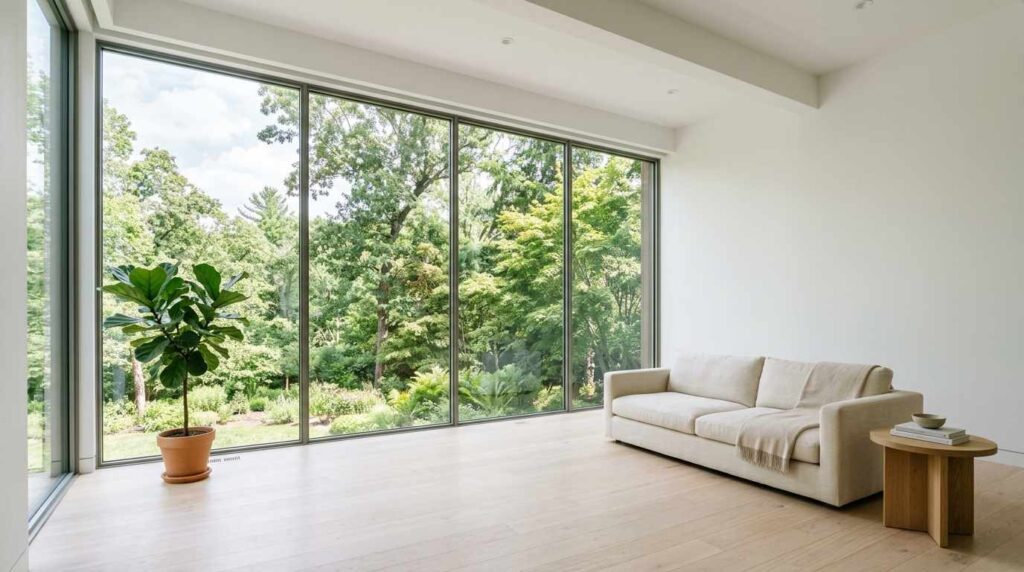
A bright, airy minimal living room where floor-to-ceiling windows dominate one entire wall, making the outdoor view the primary decorative element. Minimal furniture includes just a low-profile sofa in cream linen and a simple round side table in white oak. The walls are painted crisp white to maximize brightness. The floor is pale white oak, left mostly bare. No curtains or window treatments obstruct the view, which shows mature trees and greenery outside. A single potted plant sits near the window, echoing the outdoor greenery. No artwork hangs on the interior walls, allowing the window view to serve as the room’s living artwork. Natural light floods the entire space throughout the day, changing character with the weather and time. Shot from inside the room looking toward the windows, showing how the outdoor view becomes the room’s dominant visual feature, with abundant natural lighting creating a bright, connected indoor-outdoor feeling.
Designing this living room around floor-to-ceiling windows meant fundamentally rethinking what decoration even means—rather than filling walls with art or objects, I let the ever-changing outdoor view become the room’s primary visual interest. This required real restraint on the interior furnishing side, keeping everything minimal and neutral so nothing competes with what’s happening outside those windows, whether that’s changing seasons, weather, or simply the movement of light throughout the day.
The furniture I did choose needed to be low-profile specifically so it wouldn’t block sightlines to the windows from anywhere in the room, and keeping everything in soft neutral tones ensures the interior feels like a calm frame for the dynamic exterior view rather than competing with it. Skipping curtains entirely was a deliberate choice, though it required feeling comfortable with visibility from outside, which worked because of our private lot surrounded by mature trees. This room genuinely feels different depending on the weather, season, and time of day in ways that a room with more fixed decoration never could, proving that sometimes the most powerful design element isn’t something you add to a room but something you simply frame and let exist.
8. Warm White Walls with Single Textural Rug
A serene minimal living room featuring walls in warm white with a subtle cream undertone, creating a soft, enveloping backdrop. The room’s main visual interest comes from a single, substantial area rug in cream with subtle textural variation—a high-low pile creating pattern through texture rather than color. A simple linen sofa in matching cream sits atop the rug. A round coffee table in pale wood provides the only additional furniture. The floor is visible pale oak around the rug’s edges. No artwork or wall decoration appears anywhere. Large windows with simple linen curtains allow soft, diffused natural light. A single ceramic bowl sits on the coffee table, empty and sculptural. The overall effect is a nearly monochromatic room where texture alone creates all the visual interest. Shot from above showing the rug’s textural pattern and how it anchors the minimal furniture arrangement, with soft, even lighting emphasizing the subtle textural variation within the restrained cream palette.
Making a single textured rug the primary decorative statement in this room taught me that pattern doesn’t require color to create genuine visual interest—the high-low pile creates this subtle textural pattern that catches light differently across its surface, providing enough visual complexity that the room never feels flat despite the nearly monochromatic cream palette throughout. This rug essentially functions as the room’s artwork, requiring the same kind of careful selection and investment that a significant painting might.
Everything else in the room stays deliberately quiet and supportive, letting the rug’s texture be the star without competing elements fighting for attention. The empty ceramic bowl on the coffee table represents this practice of restraint—my instinct is always to fill it with something, but leaving it empty and simply sculptural feels more aligned with the room’s overall philosophy. This approach has shown me that minimal doesn’t mean visually boring; it means being incredibly intentional about where you allow visual interest to occur, concentrating your attention and investment into fewer, more impactful choices rather than spreading interest thin across many competing elements throughout the room.
9. Concealed Storage for Clutter-Free Minimalism
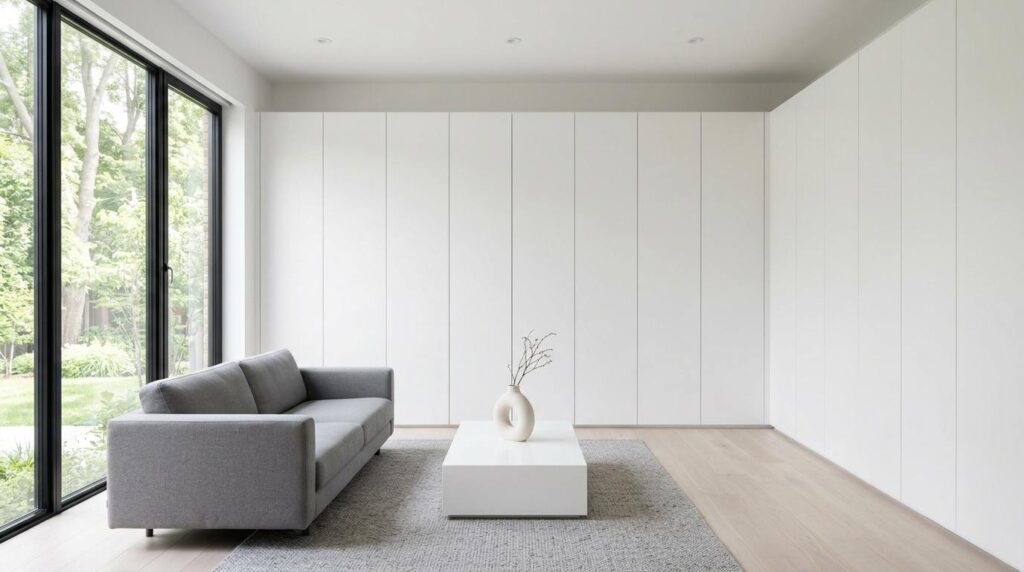
A pristine minimal living room where all clutter and daily items are concealed within seamless built-in storage, creating an uninterrupted, clean visual field. Floor-to-ceiling built-in cabinetry in matte white spans one entire wall, with no visible hardware or pulls—push-to-open mechanisms keep the surface completely smooth. A simple grey sofa sits opposite, with a low coffee table in white lacquer. The remaining walls are painted matching white. The floor is pale ash wood. No visible remote controls, books, or everyday items appear anywhere in the room, all hidden within the built-ins. A single sculptural vase sits on the coffee table as the only decorative object. Large windows allow abundant natural light to emphasize the clean, uninterrupted surfaces. Shot straight-on to the built-in wall showing its seamless, hardware-free design, with bright, even lighting highlighting the pristine, clutter-free quality achieved through concealed storage solutions.
Investing in seamless built-in storage with push-to-open mechanisms was the key to achieving genuine minimalism in daily practice rather than just for photographs—all the inevitable clutter of actual living, remote controls, books, chargers, blankets, gets concealed within this uninterrupted white cabinetry wall rather than needing to disappear entirely from our lives. This solved the fundamental challenge of minimal design, which is that real life generates stuff, and true minimalism requires somewhere for that stuff to go rather than pretending it doesn’t exist.
The push-to-open mechanism was essential for maintaining the wall’s completely smooth, hardware-free appearance, since visible pulls or handles would immediately compromise that seamless quality I was after. Working with a cabinet maker who specializes in this integrated approach required precise planning to ensure adequate storage capacity without the wall feeling bulky or overwhelming the room. This solution has taught me that sustainable minimalism isn’t about owning nothing, but about being incredibly organized and intentional about where things live when not in use. The room photographs beautifully specifically because everything has a concealed home, proving that true minimal living requires this kind of practical infrastructure rather than just restraint in furniture selection.
10. Muted Terracotta and Cream Earth Tones
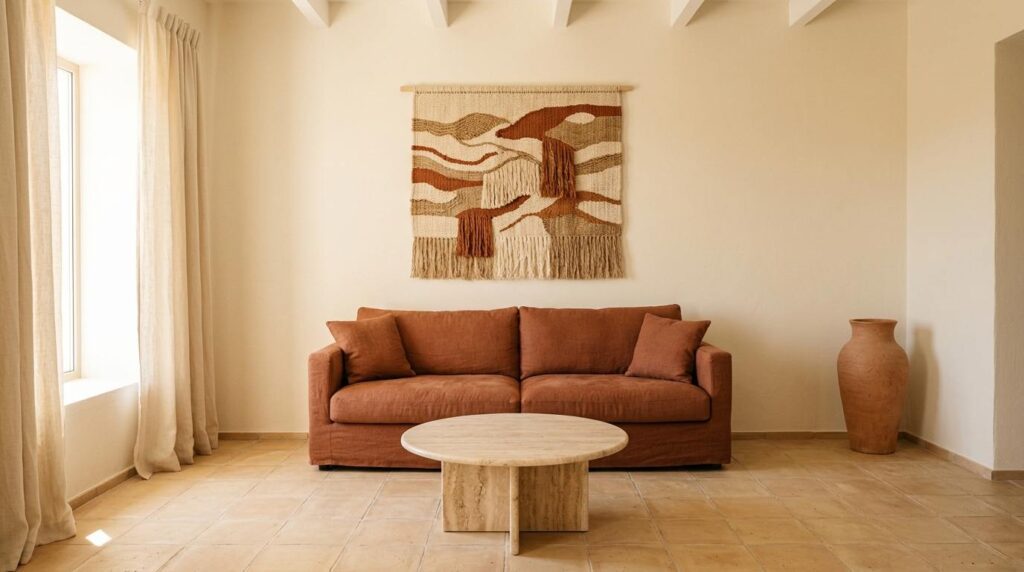
A warm, grounded minimal living room featuring walls in soft cream with a single terracotta-colored linen sofa providing gentle warmth. A round coffee table in warm travertine stone continues the earthy palette. The floor is natural clay tile in a warm sandy tone. A single large-scale woven wall hanging in undyed and rust-colored fibers provides the room’s only wall decoration, its organic texture adding dimension. Simple linen curtains in cream filter natural light. A single sculptural floor vase in unglazed terracotta sits in the corner, empty and minimal. No additional accessories interrupt the earthy, restrained palette. Natural light emphasizes the warm tones throughout the space, creating a sun-baked, Mediterranean quality despite the minimal furniture count. Shot from an angle showing the cohesive earth-tone palette and how texture creates interest within the narrow color range, with warm, natural lighting emphasizing the grounded, organic minimalism of the space.
Building this living room around muted terracotta and cream tones was my response to wanting minimalism that felt warm and sun-baked rather than cool and clinical. The narrow earth-tone palette, barely varying between the cream walls and terracotta sofa, creates this cohesive, grounded feeling that references Mediterranean and desert landscapes without being literally thematic about it. Every material choice, from the travertine table to the clay tile floors, reinforces this organic, earthy quality throughout the space.
The single woven wall hanging became crucial for adding texture and visual interest within this restricted color range, its handmade quality and dimensional texture providing enough complexity that the room never feels flat or boring despite the limited palette. I resisted filling the empty terracotta floor vase, letting its sculptural form stand alone rather than becoming a planter or catchall, which required real discipline given how naturally we want to use every container for its intended function. This room feels different from typical cool-toned minimalism—warmer, more grounded, almost sun-drenched even on overcast days—proving that minimal design can successfully explore different temperature ranges while maintaining that essential restraint and intentionality.
11. Floating Shelving with Minimal Curated Objects
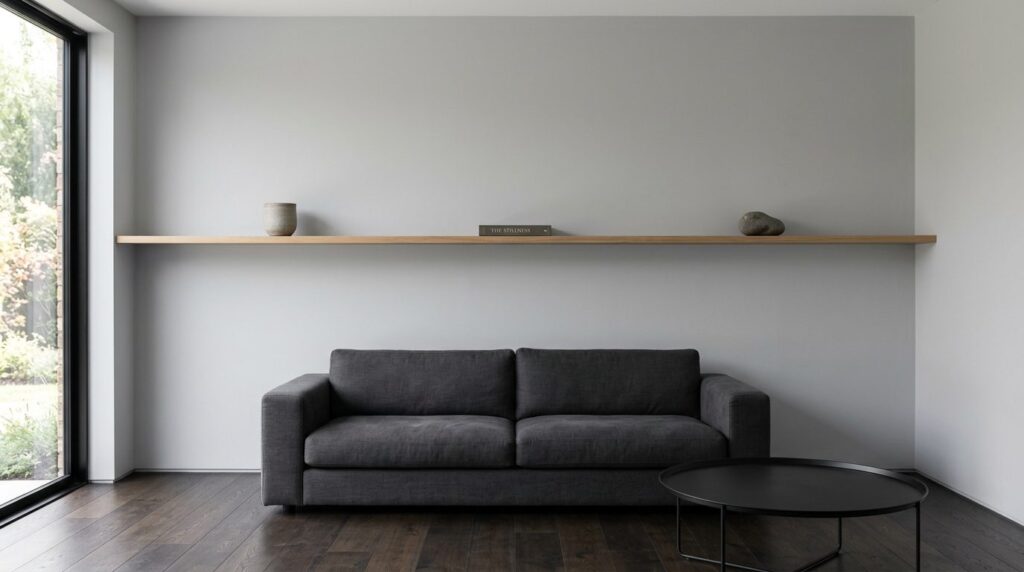
A refined minimal living room featuring a single floating shelf spanning one wall at eye level, displaying only three carefully chosen objects with significant negative space between each: a small ceramic vessel, a single hardcover book laid flat, and a small sculptural stone. The wall is painted soft grey. Below, a simple charcoal linen sofa sits with ample floor space around it. A round black coffee table provides the room’s only other furniture piece. The floor is dark stained oak. No additional artwork or decoration appears anywhere in the room. Large windows with no curtains allow natural light to properly illuminate the curated objects on the shelf. Shot straight-on to the floating shelf showing the intentional spacing and restraint in the curated display, with bright, even lighting emphasizing how negative space itself becomes part of the display’s visual composition.
Curating just three objects on this single floating shelf required more editing discipline than filling an entire wall of shelving ever would—each piece needed to justify its inclusion through beauty, meaning, or ideally both, since there was no ability to hide a mediocre choice among many other items. The generous negative space between each object became as important as the objects themselves, creating this sense of breathing room and intentionality that a crowded shelf could never achieve.
I rotate these three pieces occasionally, but I’ve learned to resist the urge to add a fourth or fifth item just because there’s technically space available on the shelf. This restraint feels counterintuitive at first, but living with it has shown me how much more each individual object gets appreciated when it’s not competing with dozens of others for attention. The rest of the room maintains this same philosophy, with minimal furniture and ample floor space that makes the room feel calm rather than sparse. This approach has taught me that true minimalism isn’t about having empty walls, but about displaying fewer things with much greater intention and care than conventional decorating typically allows.
12. Indoor Zen Garden Element
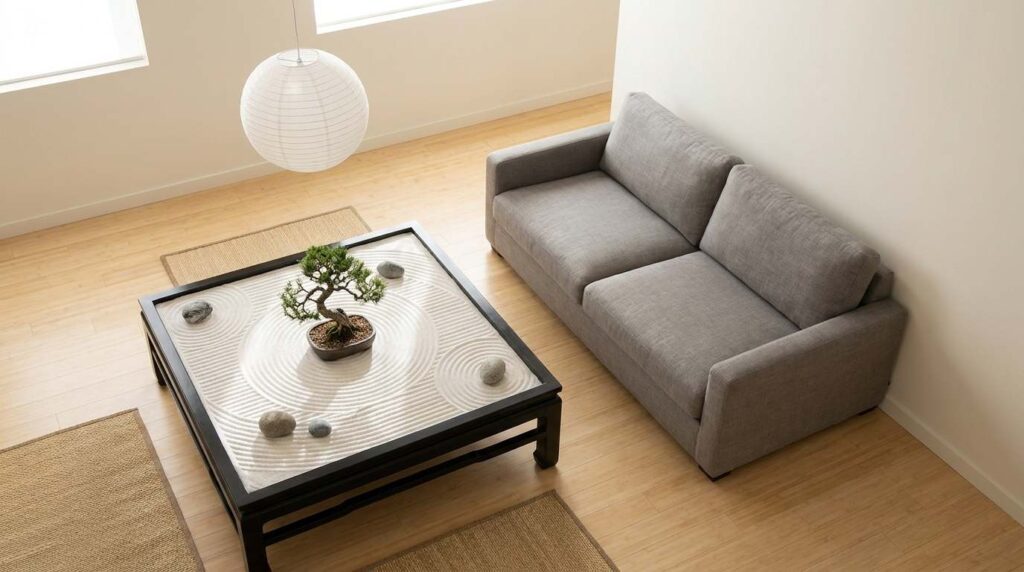
A tranquil minimal living room incorporating a small indoor zen garden as its central decorative feature—a low rectangular tray filled with raked white sand, a few carefully placed smooth stones, and a single small bonsai tree. This zen element sits on a low black lacquer table, becoming the room’s meditative focal point. A simple grey linen sofa sits nearby, allowing full view of the garden. Walls are painted the softest warm white. The floor is pale bamboo, left bare except near the zen garden. No other decoration or artwork appears in the room. Soft natural light illuminates the sand’s raked patterns, creating subtle shadows. A single paper lantern pendant light provides warm ambient lighting for evening hours. Shot from above showing the zen garden’s raked patterns and careful stone placement, with soft, natural lighting emphasizing the meditative, intentional quality of this central decorative element.
Incorporating this small indoor zen garden transformed my living room’s central table into a genuine practice of mindfulness rather than just a decorative object—raking the sand into fresh patterns has become this small daily ritual that I find surprisingly calming amid otherwise busy days. The restraint required for this element mirrors the restraint throughout the rest of the room, with just a few carefully placed stones and the small bonsai providing enough visual interest without any excess.
Choosing genuinely smooth, beautiful stones took actual searching, since not every rock has the right proportion and texture to work within this intentional composition. The bonsai requires regular care and attention, which feels appropriate for a room built around mindful living rather than passive consumption of decorative objects. This zen garden has become something I actually interact with daily rather than just looking at, unlike typical decorative objects that eventually fade into background clutter. Guests are often drawn to it immediately, running their fingers through the sand or examining the stone placement, proving that this kind of interactive, meditative element can create genuine engagement in ways that purely visual decoration sometimes can’t achieve.
13. Single Oversized Plant as Living Sculpture
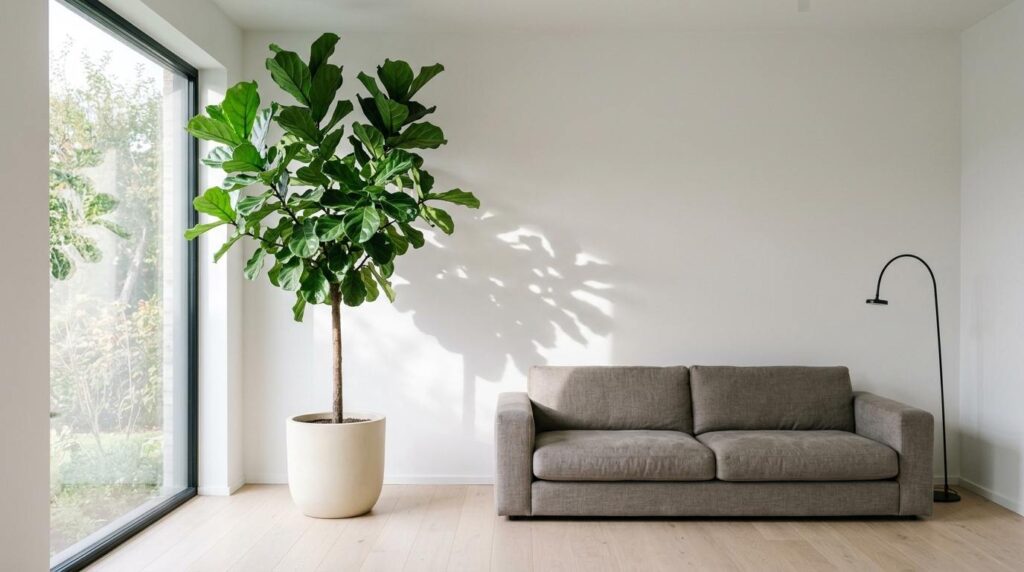
A minimal living room where a single oversized fiddle leaf fig tree serves as the primary decorative element, its substantial height and sculptural leaf pattern providing organic visual interest against otherwise bare walls. The tree sits in a simple cream ceramic planter beside a large window. A low-profile sofa in warm grey linen sits opposite. Walls are painted soft white. The floor is pale oak, mostly bare. No additional plants, artwork, or accessories interrupt the room’s restraint. A single black floor lamp provides ambient lighting near the sofa. Natural light streams through the window, illuminating the tree’s glossy leaves and casting interesting shadows on the wall behind it. Shot from an angle showing the tree’s substantial presence and sculptural quality against the minimal room, with bright, natural lighting emphasizing how a single living element provides all the room’s organic visual interest.
Letting a single substantial fiddle leaf fig serve as my living room’s primary decorative statement taught me that living elements can provide just as much visual impact as art or objects, with the added benefit of literally growing and changing over time. The tree’s height and sculptural leaf pattern create genuine drama against the otherwise bare walls, and its glossy leaves catch natural light beautifully throughout the day, casting these interesting shadows that shift as the sun moves.
Caring for a plant this significant requires real commitment and knowledge—proper light, consistent watering, occasional rotation to encourage even growth—but that living relationship feels more meaningful than static decoration ever could. I resisted adding smaller plants around it, keeping this one specimen as the room’s sole green element rather than creating a fuller jungle aesthetic that would compete with the minimal philosophy throughout the rest of the space. This tree has become something I genuinely check on and care for daily, watching new leaves unfurl or noticing when it needs attention, which creates this ongoing relationship with the room that purely decorative objects never provide. It’s proof that minimalism can incorporate life and growth rather than existing as a static, frozen aesthetic.
14. Monastic Simplicity with Stone and Linen
An austere, monastic-inspired minimal living room featuring rough-hewn stone walls in natural grey tones, paired with a single linen-upholstered daybed in undyed cream fabric. The stone’s natural texture and irregular surface provide the room’s primary visual interest. A simple wooden stool serves as the only additional furniture piece, its rough-hewn craftsmanship echoing the stone walls. The floor is the same natural stone as the walls, creating an immersive, cave-like enclosure. A single high window allows a shaft of natural light to illuminate the space dramatically. No artwork, plants, or additional decoration appears anywhere. The color palette is restricted entirely to natural stone grey and undyed cream. Shot from a low angle emphasizing the room’s austere, enclosed quality and the dramatic single shaft of light, with dramatic natural lighting creating a contemplative, monastery-inspired atmosphere.
Creating this monastic-inspired room was an exercise in extreme restraint that pushed minimalism to its most austere expression, using rough natural stone and simple linen without any of the softer, more forgiving elements typical minimal rooms often include. The stone’s irregular texture becomes the room’s entire visual language, with no need for additional decoration when the walls themselves provide such compelling natural pattern and dimension. This approach required sourcing stone specifically for its character and variation rather than uniform, polished perfection.
The single high window creates this dramatic shaft of light that moves across the room throughout the day, becoming almost like a living sundial that marks time within the otherwise unchanging stone environment. I limited the color palette entirely to natural stone grey and undyed cream, refusing any additional color or pattern that might compromise this contemplative, almost sacred quality. This room isn’t practical in any conventional sense—there’s minimal storage, minimal seating, minimal comfort by typical standards—but it serves a genuine purpose as a space for quiet contemplation and retreat from the visual noise of everyday life, proving that minimal design can venture into genuinely spiritual, meditative territory when taken to its most extreme expression.
15. Scandinavian White with Single Wood Accent
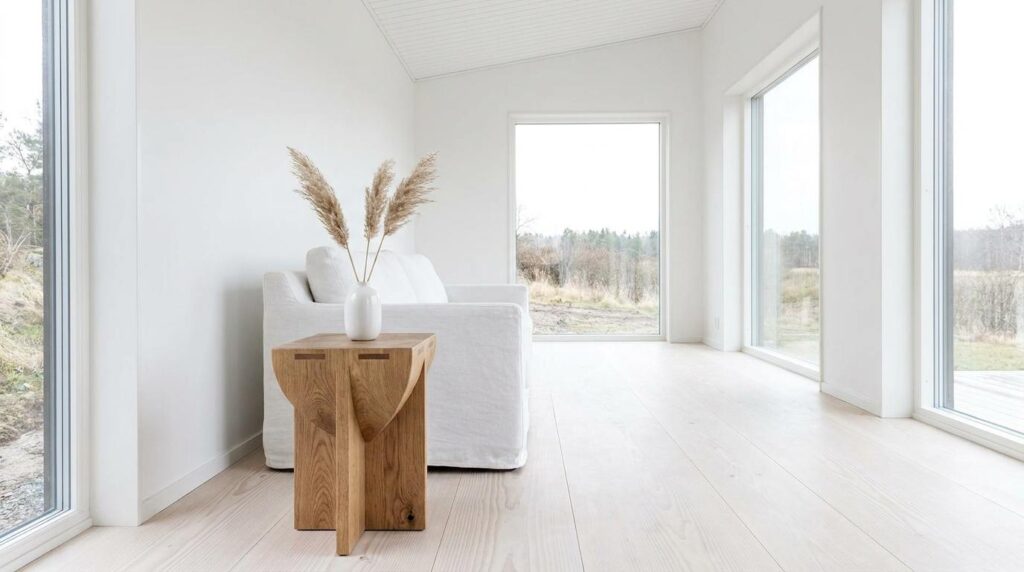
A bright, clean Scandinavian-inspired minimal living room featuring predominantly white surfaces—white walls, white ceiling, white sofa in simple linen—punctuated by a single warm wood element: a sculptural side table in natural oak with visible grain and simple joinery. The floor is pale ash wood, nearly matching the white walls in tone. A single white ceramic vase sits on the wood table, holding a few dried grass stems. No artwork or additional decoration interrupts the pristine white simplicity. Large windows without curtains allow maximum natural light to fill the space. A single white pendant light with a simple geometric form hangs from the ceiling. Shot straight-on emphasizing how the single wood element provides warmth and contrast against the otherwise all-white room, with bright, abundant natural lighting creating a fresh, clean Scandinavian atmosphere.
Restricting myself to almost entirely white surfaces with just one warm wood accent piece taught me how much impact a single contrasting element can have when everything else stays so restrained. The oak side table becomes this focal point precisely because it’s the only material breaking from the dominant white palette, its visible grain and simple joinery providing genuine warmth and organic texture that pure white alone could never achieve. This approach requires real confidence in choosing that single accent piece, since it needs to work incredibly hard visually with nothing else competing for attention.
The abundant natural light this room receives becomes essential to making all-white work without feeling sterile or clinical—without adequate daylight, this palette would likely feel cold and uninviting, but the brightness transforms it into something fresh and energizing instead. I chose dried grass stems for the vase specifically because they require no maintenance and their neutral, muted tones don’t disrupt the room’s restrained color story the way fresh flowers might. This Scandinavian approach has taught me that sometimes the most sophisticated minimal rooms aren’t about mixing many different neutral tones, but about nearly complete uniformity punctuated by just one carefully chosen contrasting element that consequently gets to shine.
16. Low Platform Seating with Floor Cushions
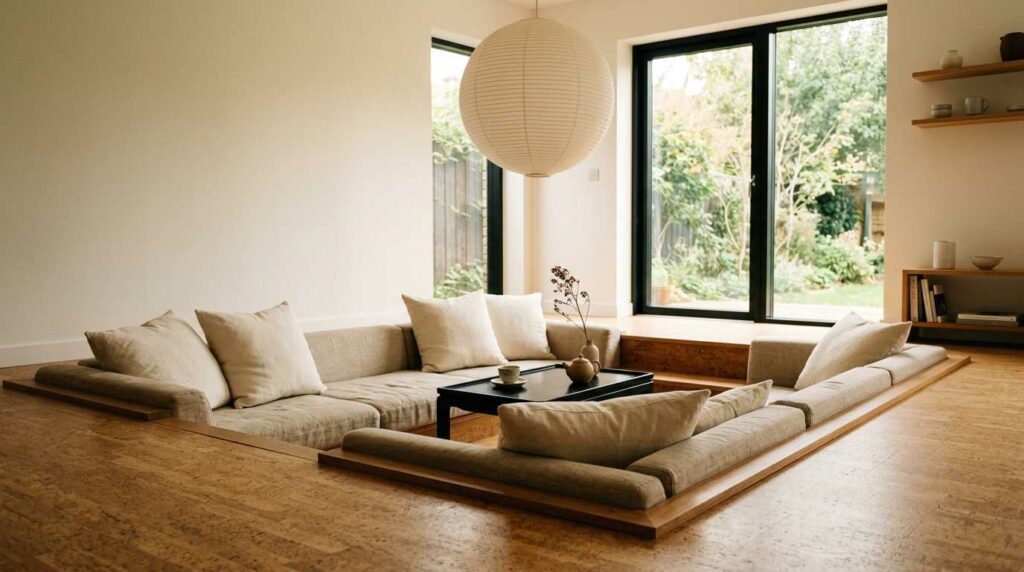
A relaxed, floor-oriented minimal living room featuring a low platform seating area built directly into the floor, upholstered in natural linen with substantial floor cushions in undyed cream fabric providing casual seating. No traditional sofa or chairs appear in the room, just this built-in platform arrangement. Walls are painted warm white. A low black lacquer table sits centered on the platform, at the perfect height for those seated on the floor. The floor surrounding the platform is natural cork in a warm honey tone. No artwork interrupts the walls. A single paper lantern pendant provides soft, diffused lighting. Large windows allow natural light to fill the low, grounded space. Shot from a low angle at floor level to emphasize the horizontal, grounded quality of this seating arrangement, with soft, warm lighting creating a relaxed, casual atmosphere that departs from conventional furniture height.
Building this low platform seating area was a genuine departure from conventional furniture arrangement, requiring construction work to create the built-in structure rather than simply purchasing furniture. Eliminating traditional sofas and chairs entirely in favor of floor-level seating creates this relaxed, casual quality that changes how people naturally interact in the space—there’s something about sitting closer to the ground that encourages longer, more languid gatherings rather than the more formal posture that raised furniture tends to create.
The substantial floor cushions needed to be genuinely comfortable for extended sitting, which required investing in quality materials and proper cushioning rather than thin decorative pillows that look nice but aren’t meant for real use. This arrangement works particularly well for gatherings, since the platform naturally accommodates more people than a fixed sofa could, with everyone sitting at the same level creating a more egalitarian, communal feeling. Getting up and down from floor level does require some adjustment for guests unfamiliar with this arrangement, but most people adapt quickly and comment on how relaxed and different the experience feels. This room has taught me that minimal design can question fundamental assumptions about furniture entirely, not just simplify within conventional expectations.
17. Glass and Steel Industrial Minimalism

A sleek, industrial-minimal living room featuring a simple steel-framed sofa with black leather cushions, its exposed metal legs and frame embracing rather than hiding structural elements. A glass coffee table with thin steel legs provides transparency and lightness despite the room’s otherwise heavy materials. Walls are painted crisp white, providing contrast against the black steel elements. The floor is polished concrete in light grey. Large steel-framed windows allow abundant natural light, their industrial framework echoing the furniture’s material language. No artwork or soft textiles interrupt the room’s hard-edged simplicity. A single steel and glass pendant light hangs from an exposed ceiling beam. Shot from an angle showing the interplay of steel, glass, and concrete throughout the space, with bright, direct lighting emphasizing the cool, architectural quality of the industrial material palette.
Choosing steel and glass as the dominant materials for this minimal living room created this cool, architectural quality that feels distinctly different from softer, more forgiving minimal approaches using linen and wood. The exposed steel framing on both the sofa and coffee table embraces rather than conceals structural elements, creating this honest, almost engineering-inspired aesthetic where you can see exactly how each piece is constructed. The glass coffee table adds crucial transparency and visual lightness that prevents the room from feeling too heavy despite all this hard, industrial material.
Polished concrete floors continue this cool, architectural language throughout the space, and the steel-framed windows echo the furniture’s material choices, creating cohesion between structural and decorative elements. This approach requires comfort with a certain coldness and hardness that softer minimal styles avoid—there’s no plush texture here to soften the experience, just clean lines and honest materials. I’ve found this room works particularly well for entertaining professional contacts or hosting more formal gatherings, where its confident, architectural quality feels appropriate in ways a cozier room might not. This industrial minimalism proves that restraint can take many different material directions, each creating genuinely different emotional experiences despite sharing that same fundamental principle of doing more with less.
18. Warm Minimalism with Vintage Single Chair

A curated minimal living room combining contemporary restraint with one significant vintage furniture piece—a mid-century modern lounge chair in original cognac leather with a walnut frame, showing beautiful patina from decades of use. This single chair sits alone against a soft white wall, positioned as clearly intentional rather than incidental. A simple contemporary sofa in oatmeal linen sits perpendicular. The floor is pale oak. A round black side table sits beside the vintage chair. No additional furniture or heavy decoration appears in the room. Large windows allow natural light to highlight the leather’s rich patina and the wood’s natural grain. A single potted plant sits near the window. Shot at an angle emphasizing how the vintage chair serves as the room’s character piece against the otherwise contemporary minimal furniture, with warm natural lighting highlighting the leather’s aged texture and the sophisticated blend of old and new.
Finding and restoring this vintage mid-century lounge chair became the project that added genuine soul and history to what was otherwise a fairly contemporary minimal living room. The chair’s decades of natural wear and patina provide this authentic character that new furniture simply cannot replicate, no matter how well-designed or expensive. Positioning it deliberately alone against the wall, rather than as part of a matched furniture grouping, allows its unique history and craftsmanship to be genuinely appreciated rather than getting lost among other pieces.
This approach to minimalism embraces the idea that restraint doesn’t require everything to be new or uniform—sometimes the most sophisticated minimal rooms include one significant vintage piece that provides depth and story within an otherwise contemporary context. I searched for months to find a chair with the right proportions and authentic patina rather than a reproduction, since the genuine wear and history feels essential to the piece’s character and the story it tells within the room. This single vintage element has become the conversation starter in an otherwise quiet room, proving that minimal design benefits enormously from this kind of thoughtful curation rather than simply defaulting to matching, mass-produced contemporary pieces throughout.
19. Soft Grey with Layered Sheer Curtains
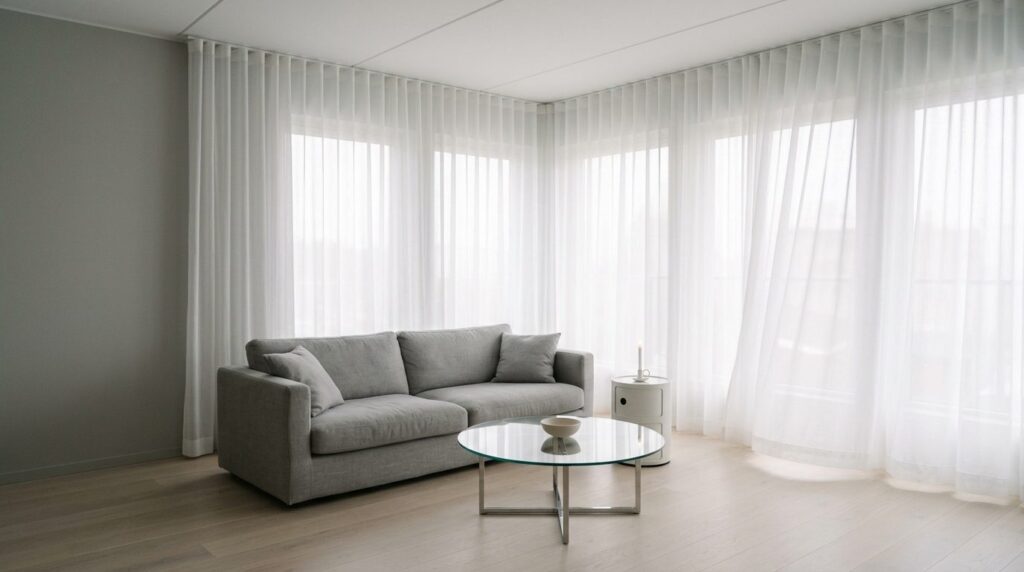
A dreamy, ethereal minimal living room featuring soft dove grey walls providing a gentle backdrop for layered sheer curtains in white voile that filter and diffuse natural light throughout the space. A simple grey linen sofa sits centered, its soft color nearly blending with the walls. A round glass coffee table adds transparency and lightness. The floor is pale ash wood. The sheer curtains hang from ceiling to floor across an entire wall of windows, creating this soft, cloud-like quality as they move gently with air circulation. No artwork or heavy decoration interrupts the ethereal simplicity. A single small side table in white lacquer holds nothing but a small candle. Soft, diffused natural light fills the entire room through the layered sheers. Shot from an angle showing how the sheer curtains create soft, diffused light throughout the space, with gentle, atmospheric lighting emphasizing the dreamy, ethereal quality of this ultra-soft minimal approach.
Layering sheer curtains across an entire wall of windows was my solution for adding softness and movement to this minimal living room without introducing any actual furniture or decorative objects. The way light filters and diffuses through the layered voile creates this constantly shifting, almost cloud-like quality throughout the day, providing visual interest and gentle movement that static decoration could never achieve. Watching the curtains move slightly with air circulation adds this living, breathing quality to what’s otherwise a very still, restrained room.
The soft dove grey walls barely differ in tone from the linen sofa, creating this nearly monochromatic softness that the sheer curtains complement perfectly rather than compete with. I resisted adding any artwork or significant decorative objects, letting the curtains and the light they create serve as the room’s primary visual interest instead. This ethereal approach to minimalism feels genuinely different from starker, more architectural minimal styles—there’s a dreamy, almost meditative quality to sitting in this room and watching how light and fabric interact throughout the day. It’s taught me that minimalism can pursue different emotional registers, from cold and architectural to this softer, more atmospheric and gentle expression that still maintains that same fundamental restraint in actual furniture and object count.
20. Muted Blue-Grey with Single Ceramic Collection
A serene minimal living room featuring walls in muted blue-grey, creating a calm, contemplative backdrop. A simple sofa in matching blue-grey linen nearly disappears into the walls. A low wooden bench serves as a coffee table, displaying a small curated collection of handmade ceramic vessels in varying heights and subtle glazed tones that complement the wall color. This ceramic collection provides the room’s only decorative interest, arranged with intentional spacing between each piece. The floor is pale grey-washed oak. No artwork appears on the walls. Large windows with simple linen curtains allow soft, diffused natural light that highlights the ceramic glazes’ subtle color variations. A single black floor lamp provides ambient evening lighting. Shot straight-on to the ceramic collection showing the careful arrangement and glaze variations, with soft, natural lighting emphasizing the calm, contemplative quality of this restrained blue-grey minimal space.
Building this room around a curated ceramic collection rather than conventional artwork or accessories taught me that decorative objects can absolutely serve as a room’s primary visual interest when chosen and arranged with real intention. Each vessel in this collection was selected specifically for how its glazed finish complemented the muted blue-grey walls, creating this cohesive, contemplative color story that feels calm rather than sparse despite the minimal furniture count throughout the rest of the room. Arranging them with generous spacing rather than crowding them together lets each piece’s individual character and craftsmanship be genuinely appreciated.
The blue-grey palette throughout creates this serene, almost aquatic quality that changes subtly depending on the light—sometimes reading more blue, sometimes more grey, depending on weather and time of day. I sourced these ceramics from various artisans over time rather than buying a matched set, which creates more visual interest through subtle variation in glaze and form while maintaining overall cohesion through the consistent color family. This room has become my favorite space for quiet contemplation, and I believe the restrained blue-grey palette combined with this thoughtfully curated collection creates a genuinely calming environment that pure white minimalism, for all its virtues, doesn’t quite achieve in the same way. It’s proof that minimal rooms can explore subtle, sophisticated color stories while maintaining that essential restraint in overall object count.