20 Modern Black Kitchen Ideas 2026
Black kitchens have fully evolved from an edgy design risk into one of the most sought-after aesthetics for 2026, proving that dark, dramatic spaces can feel just as warm and livable as their all-white counterparts once did. Whether you’re drawn to matte black cabinetry that feels moody and sophisticated, glossy black surfaces that reflect light dramatically, or black paired with warm wood and brass for balance, this color has this incredible ability to make a kitchen feel like a genuine style statement rather than just a functional cooking space. From black kitchen islands anchoring open-concept layouts to full black cabinetry paired with unexpected material combinations like fluted glass or Venetian plaster, this year’s black kitchen trends lean into texture, contrast, and confident design choices that reject the fear of “too dark” that held people back for years.
I remember when black kitchens were considered a bold, almost risky choice that designers would caution clients against, worried it would feel too dark or make resale difficult. Fast forward to now, and black kitchens have become this celebrated design statement that people actively seek out because they photograph beautifully, feel genuinely sophisticated, and create such a dramatic contrast against natural materials like wood, stone, and brass. What changed wasn’t really the color itself but our collective confidence in using it thoughtfully, understanding that black needs the right balance of texture, lighting, and material variation to avoid feeling flat or oppressive.
What I find most compelling about 2026’s approach to black kitchens is how much more nuanced and layered the execution has become compared to earlier iterations. Designers aren’t just painting everything matte black and calling it done anymore—they’re mixing finishes, incorporating unexpected materials like fluted glass and textured plaster, playing with different depths of black from soft charcoal to true onyx, and paying incredibly close attention to lighting design since black spaces genuinely require more thoughtful illumination than lighter kitchens. The result is this new generation of black kitchens that feel curated, intentional, and surprisingly warm despite the darkness of the palette, proving that black has permanently earned its place as a legitimate, timeless kitchen choice rather than a passing trend.
1. Matte Black Cabinets with Brass Hardware
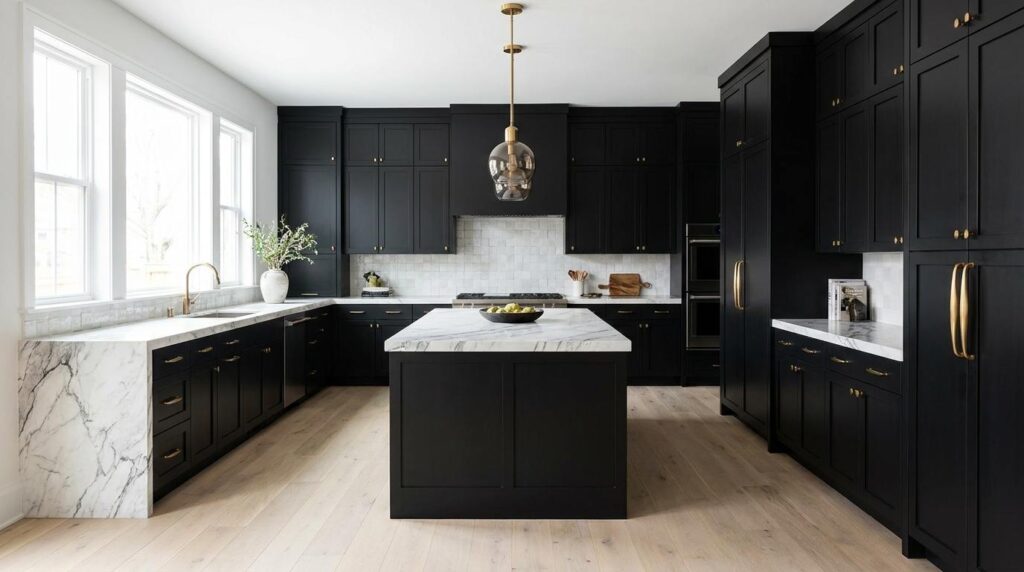
A sophisticated modern kitchen featuring floor-to-ceiling matte black cabinetry with clean, minimal Shaker-style doors. Warm brass hardware in a substantial, sculptural design provides striking contrast against the deep matte finish. White marble countertops with dramatic grey veining bring brightness and break up the darkness. A large kitchen island in matching black anchors the space, topped with matching marble. Pendant lights in brass and smoked glass hang above the island. The backsplash is handmade white zellige tile adding subtle texture. Wide-plank white oak floors warm the space underfoot. Large windows allow abundant natural light to interact with the matte surfaces. Shot from the entrance showing the full kitchen with black cabinetry as the dominant feature, with bright natural lighting emphasizing the sophisticated contrast between matte black, warm brass, and white marble.
Going full matte black on my cabinets was the boldest kitchen decision I’ve made, but the finish itself makes all the difference in how sophisticated versus harsh the color reads. Matte absorbs light rather than reflecting it, which creates this soft, velvety depth that glossy black could never achieve, and it hides fingerprints far better than I expected going in. The brass hardware became essential for adding warmth and preventing the whole kitchen from feeling too cold or monochromatic.
Pairing the black with white marble countertops was non-negotiable for me because I needed that brightness to balance the darkness and keep the space feeling open rather than closed in. The contrast between the two materials creates this striking visual rhythm throughout the kitchen that photographs beautifully and never feels boring. I’ve found that black cabinets actually make cooking feel more intentional somehow—maybe it’s psychological, but this kitchen feels like a serious, grown-up space rather than a sterile showroom. The natural light bouncing off the marble and brass keeps everything feeling bright despite the dominant dark color, proving that black cabinets don’t automatically mean a dark, gloomy kitchen.
2. Black and White Checkerboard Floor Statement
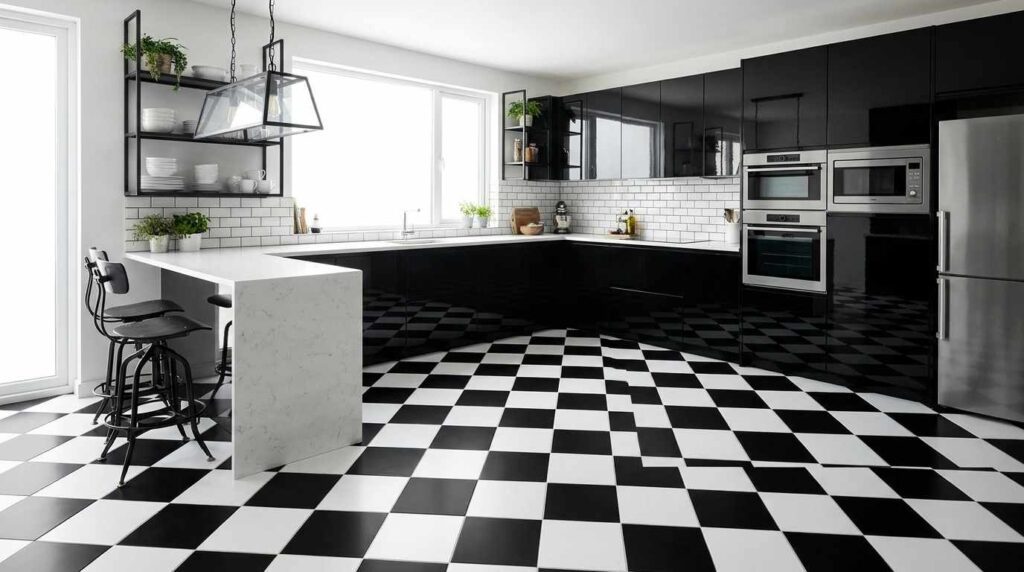
A striking modern kitchen featuring a dramatic black and white checkerboard tile floor in large-format squares. Black flat-panel cabinetry lines one wall, its glossy finish reflecting the graphic floor pattern. White quartz countertops and a white subway tile backsplash provide contrast and brightness. Stainless steel appliances integrate seamlessly into the black cabinetry. A black metal and glass pendant light hangs over a small breakfast bar. Open shelving in black metal holds white dishes and greenery. Large windows flood the space with natural light, highlighting the graphic floor pattern. A vintage-inspired black bar stool sits at the counter. Shot from a high angle emphasizing the full checkerboard floor pattern and its interaction with the black cabinetry, with bright, even lighting creating a bold, graphic, contemporary aesthetic.
Installing this checkerboard floor was a genuinely dramatic choice, but pairing it with black cabinetry rather than white created this cohesive, intentional graphic statement instead of feeling busy or chaotic. The large-format squares feel more modern and confident than smaller traditional checkerboard tiles, and the black cabinets essentially become an extension of the floor’s dark squares, creating visual continuity throughout the whole space. I was nervous about how bold this combination would feel, but it’s become the defining feature that makes this kitchen memorable.
The glossy black cabinet finish reflects glimpses of the checkerboard pattern, which adds this subtle layering effect that keeps your eye moving around the room. White countertops and backsplash were essential for giving the graphic elements room to breathe rather than overwhelming every surface with pattern or dark color. This kitchen has this confident, almost architectural quality that feels distinctly 2026—not trying to be cozy or soft, but embracing drama and geometry instead. Every guest comments on the floor immediately, and I love that this single flooring choice essentially designed the entire kitchen’s aesthetic direction around it.
3. Black Fluted Glass Cabinet Fronts

A contemporary kitchen featuring upper cabinets with black-framed fluted glass doors, the ribbed glass texture creating subtle diffusion and visual interest while concealing contents. Lower cabinets are solid matte black. Brass handles provide warm metallic contrast. White marble countertops with dramatic veining anchor the space. The backsplash is a continuation of the marble in a dramatic slab installation. A large kitchen island in black with waterfall marble edges serves as the central feature. Pendant lights with amber glass shades hang above. Wide-plank oak floors add warmth. Natural light filters through the fluted glass, creating interesting light diffusion effects. Shot at an angle emphasizing the texture and light-play of the fluted glass against the solid black lower cabinets, with soft natural lighting highlighting the sophisticated material interplay.
Choosing fluted glass for my upper cabinet fronts was inspired by seeing it in high-end restaurant design, and bringing that same sophisticated texture into a residential kitchen felt fresh and current for 2026. The ribbed glass creates this beautiful diffusion effect where you can see the general shapes and colors of what’s stored inside without the visual clutter of fully transparent glass or the complete opacity of solid doors. Light interacts with the fluted surface in fascinating ways throughout the day, creating subtle shadow patterns that solid black cabinets alone couldn’t achieve.
The black framing around each glass panel required precise craftsmanship to get the proportions right—too thick and it looks clunky, too thin and it loses definition. Pairing this textural upper cabinetry with solid matte black lowers creates this nice visual balance between transparency and solidity. The brass handles add warmth that keeps the black and glass combination from feeling too cold or commercial. This detail has become the thing people notice first when they walk into my kitchen, and it’s proven that even small material choices like cabinet fronts can completely elevate a space’s sophistication level.
4. Black Kitchen Island with Waterfall Marble

A dramatic modern kitchen centered around a substantial black kitchen island featuring a waterfall marble countertop that cascades down both ends to the floor. The marble shows striking grey and gold veining against the black cabinetry base. White perimeter cabinets and countertops provide contrast and brightness around the room’s edges. Brass bar stools with black leather seats line one side of the island. A statement light fixture in black and brass hangs centered above. The backsplash behind the range is the same dramatic marble as the island, extending to the ceiling. Wide-plank white oak floors ground the space. Large windows provide abundant natural light that highlights the marble’s veining against the black base. Shot from an angle showcasing the waterfall edge detail and how the marble drapes over the black cabinetry, with bright, dramatic lighting emphasizing the luxurious material contrast.
My black island with waterfall marble edges was the single most expensive element of my kitchen renovation, but it’s become this genuine sculptural centerpiece that makes the whole space feel like a design showroom. The waterfall detail, where the marble continues seamlessly down the sides to the floor, creates this dramatic, uninterrupted visual line that transforms the island from simple furniture into architectural art. Choosing marble with bold, dramatic veining against the solid black base creates maximum visual impact and contrast.
Keeping the perimeter cabinets white was a strategic decision to prevent the kitchen from feeling too heavy or dark overall—the island becomes this striking focal point precisely because it contrasts against lighter surroundings rather than blending into an entirely black kitchen. The installation required incredibly skilled fabricators since waterfall edges demand precise mitered corners and seamless veining continuation across the bent surfaces. This island has become the gathering spot for everything from morning coffee to dinner parties, and the dramatic material contrast photographs beautifully in every lighting condition, from bright morning sun to moody evening pendant light.
5. Two-Tone Black and Warm Wood Cabinetry
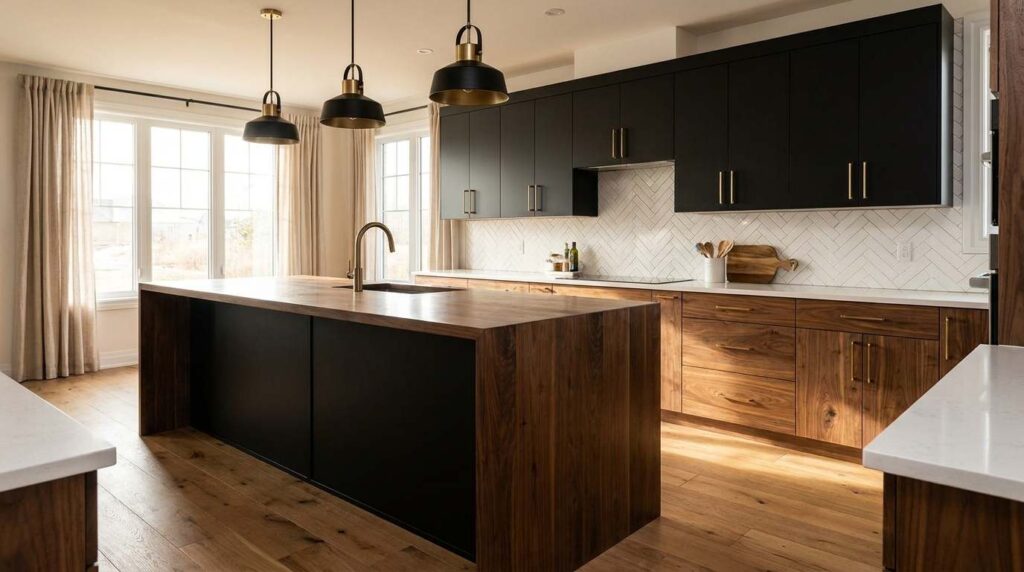
A warm, contemporary kitchen combining matte black upper cabinets with natural walnut lower cabinets, creating a sophisticated two-tone effect. The black uppers have simple flat-panel doors with brushed brass pulls. The walnut lowers show beautiful natural wood grain with matching brass hardware. White quartz countertops provide a clean, bright work surface. The backsplash is a simple white subway tile in a herringbone pattern. A black kitchen island with a walnut waterfall countertop bridges both material palettes. Pendant lights in black metal and warm brass hang above the island. Wide-plank oak floors complement the walnut cabinetry. Natural light streams through large windows, warming the wood tones while grounding the black elements. Shot from an angle showing the full two-tone effect and how black and wood interact throughout the space, with warm, natural lighting emphasizing the balanced, sophisticated material combination.
Combining black upper cabinets with warm walnut lowers solved my biggest concern about going full black—that the kitchen would feel too dark, heavy, or cold for daily living. This two-tone approach gives me all the sophistication and drama of black while the wood grounds the space with genuine warmth and organic texture. The visual weight distribution also feels intuitively correct, with the lighter, warmer wood at the bottom and the darker black floating above, creating a sense of balance that an entirely black kitchen wouldn’t achieve as naturally.
The transition point between materials required careful planning to ensure it felt intentional rather than random—I used the same door style and hardware finish throughout so the only variable is the actual cabinet material, creating cohesion despite the color difference. This combination has become incredibly popular for 2026 because it offers the trendy black aesthic without the full commitment, and it works beautifully with both modern and slightly more traditional interior styles. The walnut brings such rich, warm tones that photograph beautifully against the black, and this kitchen feels equally appropriate for quiet morning coffee and hosting a dinner party.
6. All-Black Kitchen with Textured Venetian Plaster Walls
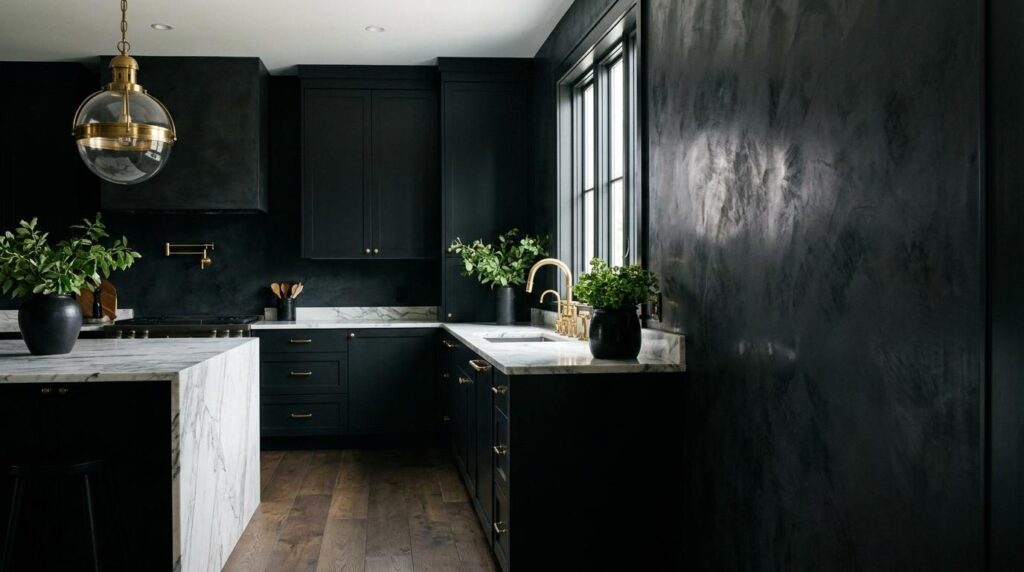
A moody, sophisticated kitchen featuring walls finished in hand-applied Venetian plaster in deep charcoal black, showing subtle texture variation and a soft sheen that catches light. Black flat-panel cabinetry blends seamlessly with the plastered walls, creating an immersive, monochromatic effect. Brass fixtures and hardware provide the only metallic contrast. White marble countertops break up the darkness with brightness and veining detail. A large window allows natural light to interact with the plaster’s subtle texture, creating soft shadow variations across the surface. Wide-plank dark oak floors continue the moody palette. A statement brass and glass pendant light hangs over the island. Fresh greenery in black ceramic pots adds organic life. Shot at an angle emphasizing the plaster’s texture and how it seamlessly blends with the cabinetry, with soft, atmospheric lighting highlighting the immersive, luxurious monochromatic effect.
Applying Venetian plaster to my kitchen walls in the same deep charcoal as my cabinetry created this incredibly immersive, cocoon-like effect that feels genuinely luxurious rather than oppressive. The hand-applied technique means every section has subtle texture and depth variation that flat paint could never achieve, and watching how light plays across the plaster’s slightly polished surface throughout the day is mesmerizing. This monochromatic approach, where walls and cabinets blend seamlessly together, was a significant departure from typical kitchen design where walls and cabinetry are usually distinctly different.
The investment in skilled plasterers who specialize in this technique was substantial, but the artisanal quality is immediately apparent and unlike anything achievable with standard paint or wallpaper. I made sure to include enough white marble and brass throughout to prevent the space from feeling like a dark cave—these lighter, reflective elements bounce available light around and provide necessary visual relief from the dominant darkness. This kitchen represents where I think 2026 design is heading: embracing enveloping, moody spaces that feel intentional and luxurious rather than defaulting to bright and airy as the only acceptable kitchen aesthetic.
7. Black Slab Backsplash Extending to Ceiling
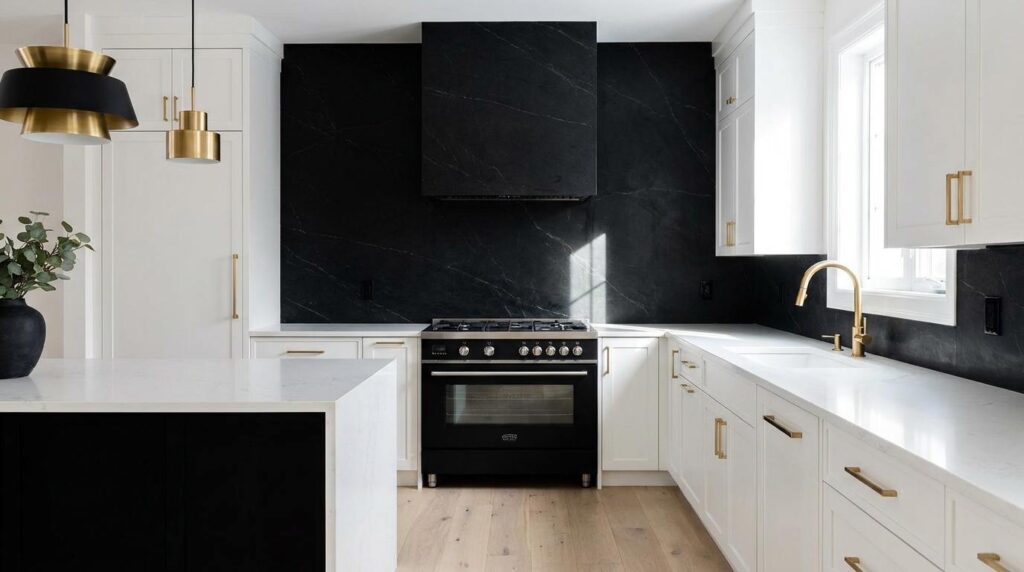
A dramatic modern kitchen featuring a full-height black stone slab backsplash extending from countertop to ceiling behind the range. The stone shows subtle natural veining in white and grey against the black base, creating quiet drama. White cabinetry flanks the dramatic black slab, providing crisp contrast. A black range hood integrates seamlessly with the slab backsplash. Brass accents appear in cabinet hardware and a statement faucet. White quartz countertops continue the bright contrast. Pendant lighting in black and brass hangs over a nearby island. Wide-plank white oak floors ground the space with warmth. Natural light illuminates the dramatic slab, highlighting its subtle veining. Shot straight-on to the range wall showing the full height and drama of the black slab, with bright, even lighting emphasizing the striking material statement against the white surrounding cabinetry.
Installing this full-height black stone slab behind my range was the priciest single material choice in my entire kitchen, but it created such a powerful focal point that I consider it worth every penny. Extending the stone all the way to the ceiling rather than stopping at a standard backsplash height creates this dramatic, uninterrupted visual statement that immediately draws the eye when you enter the kitchen. The subtle veining running through the black stone adds just enough movement and interest to prevent it from feeling flat or static.
Keeping the surrounding cabinetry white was essential for letting this slab truly shine as the room’s centerpiece—if everything around it were also black, the dramatic impact would be lost in a sea of similar tones. The black range hood integrating seamlessly into the slab creates this beautiful continuity where you almost don’t notice where the functional hood ends and the decorative backsplash begins. This design choice has become the reason people specifically photograph this corner of my kitchen, and it’s taught me that sometimes concentrating your material budget on one dramatic element creates more impact than spreading it thin across many smaller choices.
8. Matte Black Appliances Integration
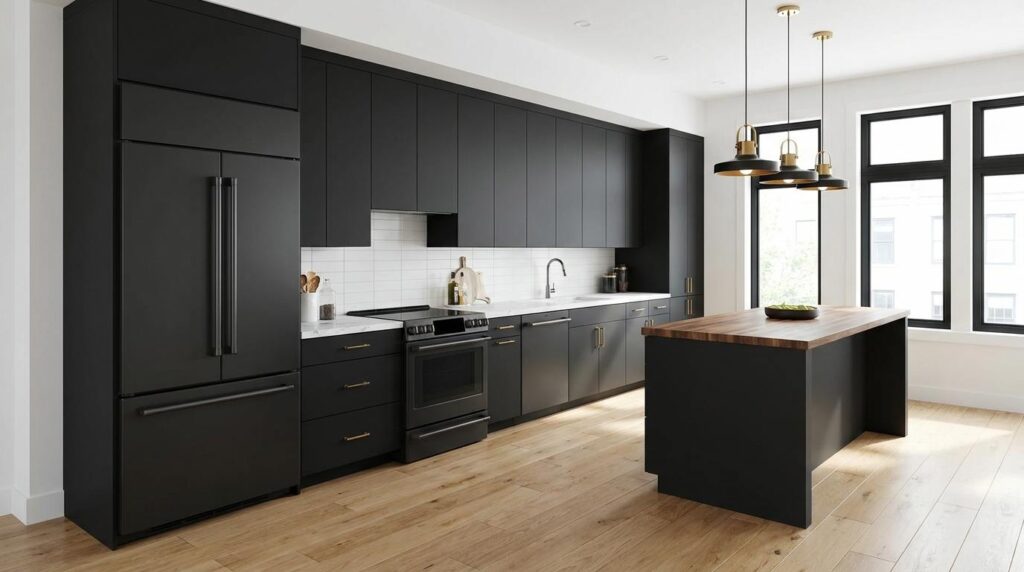
A sleek, cohesive modern kitchen featuring matte black appliances—refrigerator, range, and dishwasher—seamlessly integrated with matching matte black cabinetry, creating a unified, monolithic look. The appliances blend almost invisibly into the surrounding cabinet doors except for subtle brushed handles. White quartz countertops with minimal veining provide clean contrast. The backsplash is simple white subway tile. Brass hardware on the cabinets adds warm metallic detail. A black kitchen island with a butcher block top breaks up the coolness with organic wood warmth. Pendant lights in brass and black hang above. Wide-plank oak floors add warmth underfoot. Natural light from large windows illuminates the cohesive black surfaces without harsh glare due to the matte finish. Shot from the entrance showing the seamless integration of appliances and cabinetry, with bright, even lighting emphasizing the sleek, monolithic quality of the unified black design.
Choosing matte black appliances to match my cabinetry created this incredibly sleek, cohesive look where the refrigerator and range almost disappear into the surrounding cabinets rather than standing out as obviously separate elements. This monolithic approach feels genuinely current for 2026, moving away from stainless steel’s dominance toward this more unified, architectural aesthetic where the kitchen reads as one cohesive design statement rather than a collection of individual pieces. The matte finish was crucial here too, since it prevents harsh reflections and fingerprint visibility that glossy black appliances would show constantly.
Sourcing matte black appliances that actually matched my cabinet color required research since different manufacturers’ black finishes can vary surprisingly in undertone. I ended up choosing one appliance brand throughout specifically to ensure consistency across the refrigerator, range, and dishwasher. This cohesive black palette makes my kitchen feel considerably more sophisticated and intentional compared to previous kitchens where mismatched stainless and white appliances created visual chaos. The butcher block island introduces organic warmth that keeps this monochromatic scheme from feeling too cold or commercial, proving that even within an all-black concept, thoughtful material variation prevents monotony.
9. Black Cabinets with Terracotta Accent Tile
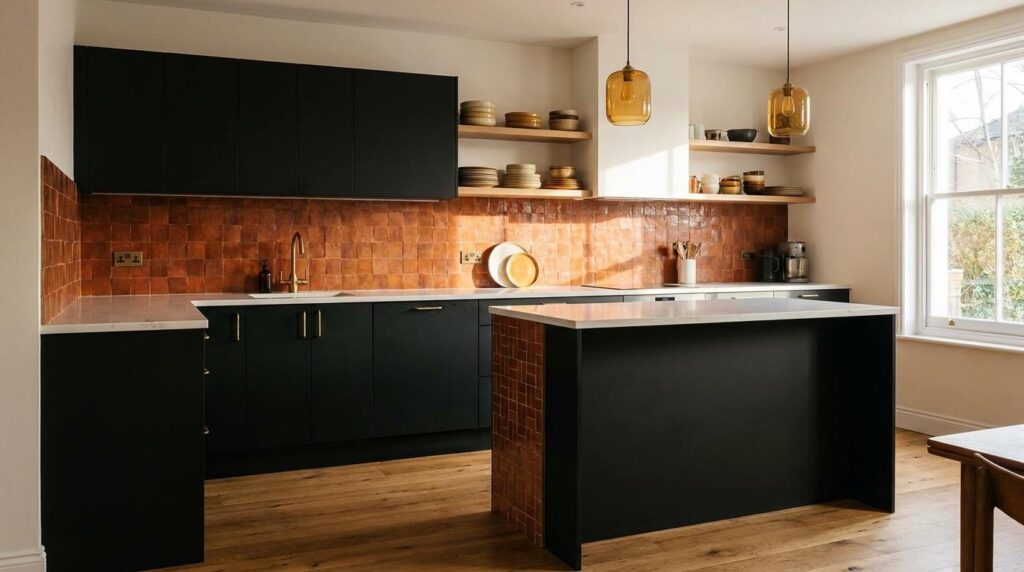
A warm, contemporary kitchen combining matte black flat-panel cabinetry with a striking terracotta zellige tile backsplash in warm rust and orange tones. The handmade tile’s irregular surface catches light differently across each piece. White quartz countertops provide clean contrast. Brass fixtures and hardware add warmth that bridges the black and terracotta palette. A black kitchen island with a small terracotta tile accent on one end ties the two materials together. Open wooden shelving holds ceramic dishes in coordinating earth tones. Pendant lights with amber glass shades complement the warm backsplash. Wide-plank oak floors ground the earthy, warm palette. Natural light illuminates the textured tile, creating subtle shadow variation. Shot at an angle showing the interplay between black cabinetry and warm terracotta tile, with warm natural lighting emphasizing the unexpected, earthy color combination against the dramatic black base.
Pairing black cabinetry with a warm terracotta tile backsplash was an unexpected combination that I wasn’t sure would work until I saw it come together, and now it’s one of my favorite design choices in the entire house. The warm rust and orange tones of the handmade zellige tile create this beautiful contrast against the cool black cabinets, preventing the kitchen from feeling monochromatic or one-note. This combination feels distinctly 2026 because it moves away from the more predictable black-and-white or black-and-marble pairings toward something warmer and more unexpected.
The irregular, handmade quality of the zellige tile adds so much texture and visual interest, with each piece catching light slightly differently depending on the angle and time of day. I sourced brass fixtures specifically to bridge these two dominant colors, since the warm metallic tone complements both the black cabinetry and the terracotta backsplash equally well. This earthy, warm-meets-dramatic color story has become the aesthetic direction I keep gravitating toward in other rooms of my house now, and it’s taught me that black doesn’t always need to be paired with cool, neutral tones—warmth and earthiness can create equally striking, sophisticated results.
10. Black Kitchen with Skylights for Natural Light

A bright yet dramatic kitchen featuring matte black cabinetry throughout, balanced by multiple large skylights overhead that flood the space with abundant natural light. The black surfaces reflect and interact with the daylight in interesting ways, never feeling dark or oppressive despite the dominant color. White marble countertops and backsplash provide contrast and brightness. A black island with brass stools anchors the center of the room. Pendant lights hang unused during daytime, supplementing only in evening hours. Wide-plank white oak floors reflect additional light. Large potted plants thrive in the abundant natural light from above. The skylights create dramatic shafts of light that move across the black surfaces throughout the day. Shot from below looking up to show the skylights and how light floods the black kitchen, with bright, dramatic natural lighting emphasizing that black kitchens can be filled with light rather than feeling dark.
Adding skylights was absolutely essential for making my all-black kitchen feel bright and livable rather than dark and cave-like, and honestly, this combination has become my strongest argument against anyone who claims black kitchens automatically feel gloomy. The abundant overhead natural light interacts with the matte black surfaces in ways that artificial light simply couldn’t replicate, creating these shifting shadows and highlights throughout the day as the sun moves across the sky. Morning light feels different than afternoon light, which feels different than the golden hour glow before sunset.
The investment in structural skylights required significant renovation work, including consulting with an architect about roof modifications, but the transformation in how the black kitchen feels was absolutely worth the complexity and expense. Without adequate natural light, I genuinely believe this much black would feel oppressive, but the skylights essentially solve that problem while adding this beautiful, ever-changing quality to the room. This kitchen has taught me that the biggest mistake people make with black kitchens isn’t the color choice itself, but failing to plan adequately for how light—both natural and artificial—will interact with all that darkness.
11. Black Kitchen with Copper Accent Details
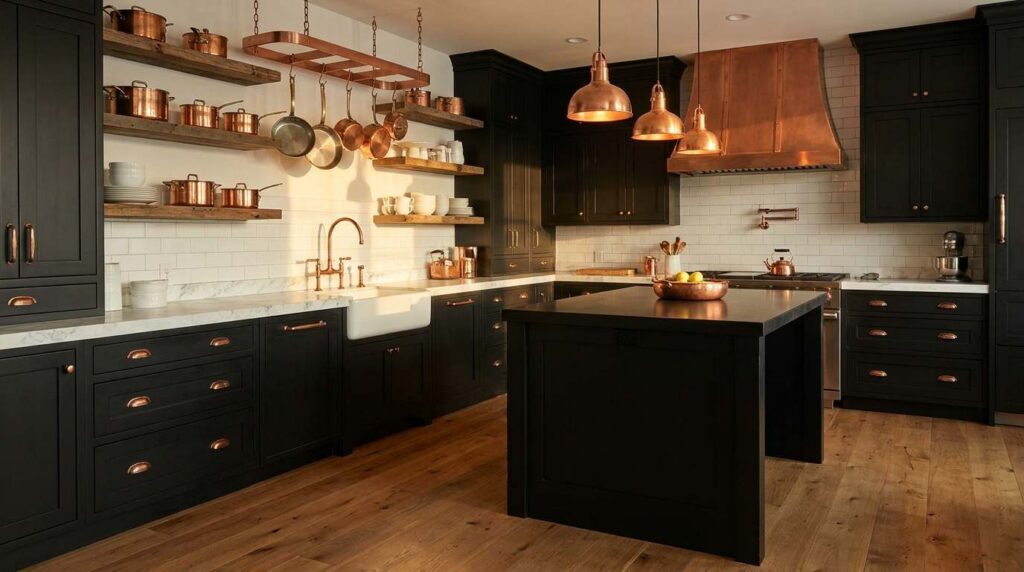
A warm, sophisticated kitchen featuring matte black cabinetry paired with copper accent details throughout—copper pot rack, copper pendant lights, and copper cabinet hardware showing a warm, living patina. White marble countertops with subtle veining provide contrast. The backsplash is simple white subway tile. A black kitchen island features a copper range hood as a dramatic focal point. Open wooden shelving holds copper cookware and white dishes. Wide-plank oak floors add warmth. Natural light illuminates the copper’s warm glow against the black surfaces, creating rich, warm reflections. A vintage-inspired copper faucet adds functional detail. Shot at an angle showing the copper details against the black backdrop, with warm, golden lighting emphasizing the rich metallic warmth against the dramatic dark cabinetry.
Choosing copper instead of the more common brass for my black kitchen’s metallic accents created this warmer, richer glow that feels distinctly different from what I was seeing in every other black kitchen online. Copper has this living quality where it develops patina and character over time, changing from bright and shiny to something more muted and sophisticated as it ages naturally with use and exposure. Against the matte black cabinetry, the copper practically glows, creating this warm focal point that draws your eye throughout the space.
The copper range hood was my biggest splurge and the piece that really sets this kitchen apart—it’s become genuine sculptural art hanging above my cooktop, catching and reflecting light beautifully whether from natural daylight or evening pendant lights. I’ve learned to embrace the copper’s natural aging process rather than trying to keep it perpetually polished, since the developing patina adds authenticity and warmth that pristine, shiny copper wouldn’t have. This combination of deep black and warm copper feels luxurious and intentional, proving that black kitchens benefit enormously from choosing your metallic accent thoughtfully rather than defaulting to whatever’s currently trendy.
12. Sculptural Black Range Hood as Focal Point
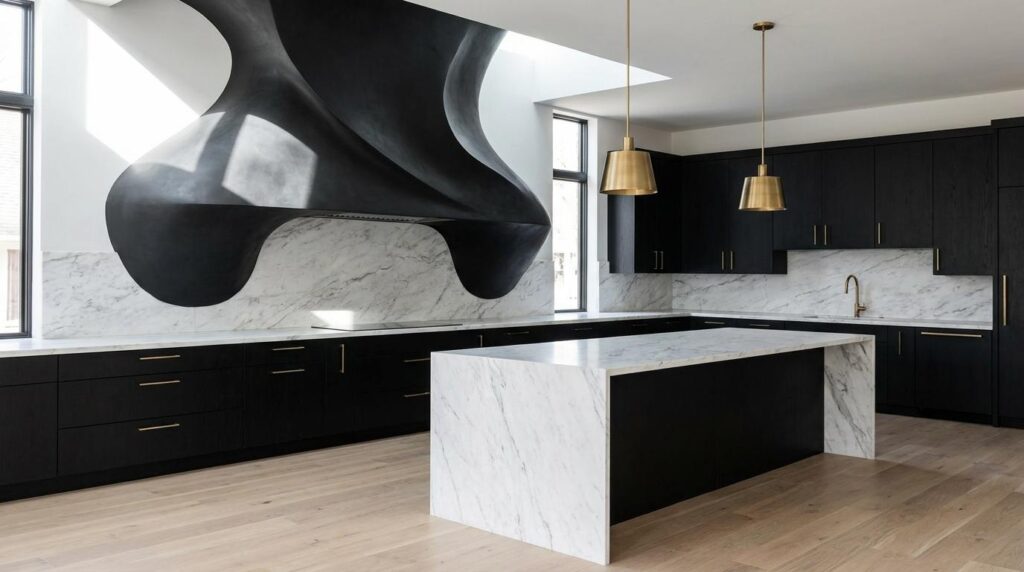
A dramatic modern kitchen featuring an oversized, sculptural black range hood with a curved, architectural silhouette serving as the room’s centerpiece. The hood is finished in matte black plaster, creating a smooth, artistic form above the cooktop. White marble countertops and backsplash surround the dramatic hood, providing contrast. Black perimeter cabinetry continues the dark palette in a more restrained way. Brass accents appear in cabinet hardware and pendant lighting. A black kitchen island with waterfall marble edges anchors the center of the room. Wide-plank white oak floors ground the dramatic space. Natural light from large windows illuminates the sculptural curves of the hood, creating soft shadows that emphasize its artistic form. Shot from an angle showing the full sculptural quality of the hood against the surrounding white surfaces, with bright, dramatic lighting emphasizing the architectural, artistic statement piece.
Commissioning this custom sculptural range hood was the single most architectural decision in my entire kitchen renovation, and it transformed what’s typically a purely functional element into genuine artistic focal point. The curved, organic silhouette required specialized fabrication to achieve those smooth, flowing lines rather than the boxy, angular hoods you typically see in kitchens. Finishing it in matte black plaster rather than metal created this soft, almost sculptural quality that catches and holds shadow beautifully throughout the day.
Working with a designer who specializes in custom range hoods was essential since achieving these organic curves while maintaining proper ventilation function required real technical expertise beyond typical kitchen design. Keeping the rest of the kitchen relatively restrained in its black elements was intentional—I wanted the hood to be the undisputed star rather than competing with heavy black cabinetry throughout. This piece has become the reason people photograph my kitchen, and it represents where I think ambitious 2026 kitchen design is heading: treating functional elements as genuine opportunities for artistic expression rather than just utilitarian necessities to be hidden or minimized.
13. Black and Sage Green Two-Tone Kitchen
A sophisticated modern kitchen combining matte black upper cabinetry with sage green lower cabinets, creating an unexpected, nature-inspired two-tone palette. Brass hardware ties both colors together. White quartz countertops provide clean contrast and brightness. The backsplash is white zellige tile with subtle texture. A black kitchen island with a butcher block top serves as a warm central anchor. Open shelving in black metal holds ceramic dishes in coordinating earth tones. Pendant lights in brass and black glass hang above the island. Wide-plank oak floors ground the earthy palette. Potted plants and herbs add organic greenery that echoes the sage cabinetry. Natural light from large windows illuminates the sophisticated color combination. Shot from an angle showing the full two-tone effect, with bright, natural lighting emphasizing the balanced, nature-inspired palette against the dramatic black upper cabinets.
Combining black uppers with sage green lowers was my way of bringing color into a black kitchen without losing any of the sophistication that drew me to the dark palette in the first place. The muted, greyish quality of this particular sage tone means it reads as almost neutral in certain lighting while revealing more obvious green undertones in others, which creates this subtle, ever-changing quality throughout the day. Against the black uppers, the sage feels grounded and organic rather than competing for attention.
The brass hardware became essential for creating cohesion between these two distinct colors, since using the same metallic finish throughout prevents the kitchen from feeling like two separate, disconnected design schemes. This combination has become increasingly popular for 2026 because it offers something more unexpected than the ubiquitous black-and-white kitchens while still maintaining that sophisticated, moody appeal that black brings. Living plants throughout the space echo the sage cabinetry beautifully, creating this cohesive, nature-inspired aesthetic that feels fresh and current. This kitchen proves that black doesn’t have to mean stark or cold—paired thoughtfully with the right secondary color, it can feel warm, organic, and genuinely inviting.
14. Black Kitchen with Statement Pendant Lighting

A dramatic modern kitchen featuring matte black cabinetry as a backdrop for oversized, sculptural pendant lights in smoked glass and brass hanging above a black kitchen island. The pendants have an artistic, bubble-like form creating visual drama overhead. White marble countertops provide contrast beneath the statement lighting. The backsplash is simple white subway tile. Brass hardware throughout coordinates with the pendant fixtures. Wide-plank white oak floors ground the space. Natural light from large windows during the day supplements the dramatic evening glow the pendants provide. A vintage-inspired black and brass faucet adds functional detail. Shot from below looking up at the sculptural pendants against the black cabinetry backdrop, with dramatic lighting showing both the pendants’ daytime presence and their warm evening glow, emphasizing the artistic, statement-making quality of the lighting choice.
Investing in these oversized sculptural pendant lights was my strategy for adding drama and visual interest above my kitchen island without needing to change any of the actual cabinetry or surfaces. The smoked glass and brass combination creates this beautiful interplay of transparency and warm metal that catches light differently depending on whether they’re illuminated or just reflecting ambient daylight. Against the matte black cabinetry backdrop, these fixtures become genuine sculptural art pieces rather than purely functional lighting.
The bubble-like, organic form was a departure from the more common geometric or industrial pendant styles I kept seeing everywhere, and this softer silhouette adds a feminine, artistic quality that balances the more masculine, dramatic black cabinetry. Getting the hanging height exactly right required several adjustments after installation—too high and they lose visual impact, too low and they interfere with sightlines across the island. These pendants have become the first thing people notice when entering my kitchen, proving that sometimes the most impactful design element isn’t the cabinetry or countertops at all, but a genuinely well-chosen lighting fixture that elevates everything around it.
15. Monochromatic Black Kitchen with Textural Variation
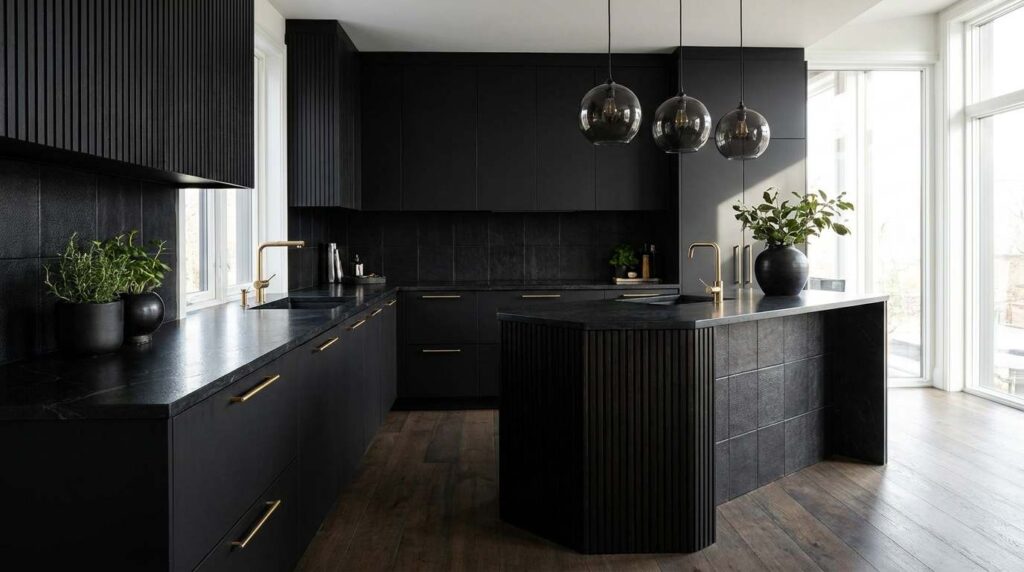
A sophisticated all-black kitchen achieving visual interest purely through textural variation rather than color contrast. Matte black flat-panel cabinets sit alongside black ribbed wood paneling, black leather-textured tile, and a black honed stone countertop, each surface reflecting light differently. Brass hardware provides the only metallic accent throughout. A black kitchen island features a mix of the various black textures. Pendant lights in smoked black glass hang above. Wide-plank dark stained floors continue the monochromatic scheme. Large windows provide essential natural light that reveals the subtle textural differences across all the black surfaces. Fresh greenery in black ceramic pots adds organic life against the dark palette. Shot at an angle emphasizing how different textures create depth and interest despite the single color, with dramatic natural lighting highlighting the sophisticated interplay of matte, ribbed, textured, and honed black surfaces.
Committing to an entirely monochromatic black kitchen was my biggest design risk, but achieving visual interest purely through textural variation rather than any color contrast has created something genuinely sophisticated and unlike typical black kitchens. I combined at least four distinct textures—smooth matte cabinetry, ribbed wood paneling, leather-textured tile, and honed stone—ensuring that even without any color variation, the eye has plenty to explore and appreciate throughout the space. Each surface reflects and absorbs light completely differently, creating this subtle depth that a single flat black surface could never achieve.
This approach required much more careful material selection than a typical kitchen renovation, since every surface needed to work within this restricted monochromatic concept while still contributing genuine textural interest. Natural light became absolutely critical for this design to succeed—without adequate daylight revealing the subtle differences between matte and honed, smooth and ribbed, the whole concept would collapse into an undifferentiated black mass. This kitchen represents an advanced, confident approach to 2026’s black kitchen trend, moving beyond simply choosing black as a color toward understanding how texture and material choice can create sophistication and depth even within an entirely restricted palette.
16. Black Kitchen with Integrated Wine Wall

A sophisticated entertainer’s kitchen featuring matte black cabinetry throughout, with a dramatic built-in glass-front wine wall integrated into one section, illuminated with warm LED lighting that showcases the wine collection. The black frames around the glass wine storage create an architectural, gallery-like display. White marble countertops provide contrast. Brass hardware and fixtures add warmth. A black kitchen island with waterfall marble edges anchors the space. Pendant lights in brass and smoked glass hang above. Wide-plank oak floors ground the sophisticated space. The wine wall’s warm interior lighting creates a beautiful glow against the surrounding black cabinetry. Shot at an angle showing the illuminated wine wall as a dramatic feature within the black kitchen, with warm, atmospheric lighting emphasizing the entertainer’s dream quality of the integrated display.
Integrating a glass-front wine wall directly into my black cabinetry was a splurge that transformed a purely functional storage need into a genuine design feature and entertaining focal point. The black framing around the wine storage creates this gallery-like presentation, making even simple bottle storage feel curated and intentional rather than utilitarian. The warm LED lighting inside showcases the collection beautifully, creating this glowing display that contrasts gorgeously against the surrounding matte black cabinetry.
This feature has become the centerpiece of every dinner party I host, with guests naturally gravitating toward it to browse selections while we’re preparing food or drinks. The temperature-controlled storage keeps everything at proper serving conditions, solving a practical problem while looking absolutely stunning in the process. Working with a specialized installer was necessary to ensure proper insulation and cooling integration within the custom black cabinetry framework. This wine wall proves that even highly functional kitchen elements can become genuine style statements when integrated thoughtfully into an overall design concept, and it’s elevated how I think about entertaining in this space entirely.
17. Black Kitchen with Reeded Wood Island Base
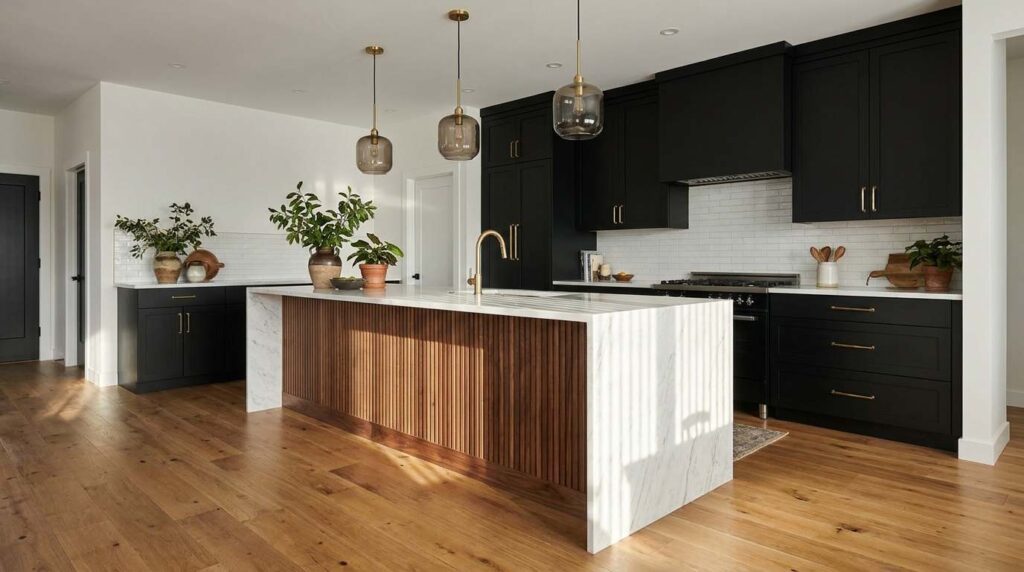
A warm, contemporary kitchen featuring matte black perimeter cabinetry contrasted by a stunning kitchen island with a reeded wood base in warm walnut, showing vertical grooved detail that catches light beautifully. White marble waterfall countertop tops the reeded island. Brass hardware throughout bridges the black and wood elements. The backsplash is simple white subway tile. Pendant lights in brass and smoked glass hang above the island. Wide-plank oak floors complement the warm wood tones. Natural light illuminates the reeded texture, creating subtle vertical shadow lines across the wood surface. A black range and hood integrate into the perimeter cabinetry. Fresh greenery adds organic life. Shot at an angle emphasizing the reeded texture of the island against the flat black perimeter cabinetry, with warm natural lighting highlighting the sophisticated material contrast and craftsmanship.
Choosing a reeded wood base for my kitchen island was my solution for adding warmth and textural interest to an otherwise predominantly black kitchen without sacrificing any of the sophistication I wanted from the darker perimeter cabinetry. The vertical grooved detail catches light in this beautiful way, creating subtle shadow lines that shift throughout the day and add genuine craftsmanship and dimension that flat-panel cabinetry simply couldn’t achieve. This textural element has become the piece that makes people stop and run their hands along the island when they visit.
The reeded detailing required specialized millwork to execute properly, with each groove needing to be perfectly consistent for the finished look to feel intentional and high-end rather than sloppy. Pairing this warm, textured wood with the flat matte black perimeter creates this compelling contrast between organic craftsmanship and modern minimalism that feels distinctly current for 2026. The white marble waterfall countertop atop the reeded base adds another layer of luxury, and the whole island has become this sculptural centerpiece that anchors the entire kitchen’s design language while still allowing the surrounding black cabinetry to provide dramatic contrast.
18. Black Kitchen with Curved Island Edges

A sculptural, softened modern kitchen featuring matte black cabinetry throughout with a rounded, curved-edge kitchen island departing from typical rectangular shapes. The organic curves create a softer, more sculptural silhouette against the otherwise angular room. White marble countertops follow the curved form seamlessly. Brass bar stools with curved backs echo the island’s rounded shape. The backsplash is simple white subway tile. Pendant lights with curved, organic forms hang above, continuing the soft silhouette theme. Wide-plank white oak floors ground the space. Natural light from large windows illuminates the curved surfaces, creating soft shadows along the rounded edges. Fresh greenery in black ceramic pots adds organic life. Shot from an angle emphasizing the curved island’s sculptural silhouette against the black cabinetry, with bright, soft lighting highlighting the organic, flowing form as a departure from typical angular kitchen design.
Choosing a curved island shape instead of the standard rectangle was my way of softening what could otherwise feel like a harsh, overly angular all-black kitchen. The organic, flowing silhouette creates this sculptural quality that feels more like furniture than typical kitchen infrastructure, and the curves genuinely change how the space feels to move through—there are no sharp corners to navigate around, which makes the kitchen feel more fluid and welcoming despite the dramatic dark cabinetry throughout.
Fabricating curved cabinetry and matching curved marble countertops required significantly more specialized skill and cost than standard rectangular construction, but the resulting silhouette makes this island feel like genuine art rather than just functional storage and workspace. I chose brass stools with curved backs specifically to continue this rounded theme rather than introducing jarring angular seating that would fight against the island’s soft form. This curved approach represents where I see thoughtful 2026 kitchen design heading—moving beyond purely rectangular, grid-based layouts toward more organic, sculptural forms that add softness and visual interest to spaces that might otherwise feel severe, especially when working with a dominant color as dramatic as black.
19. Black Kitchen with Hidden Butler’s Pantry
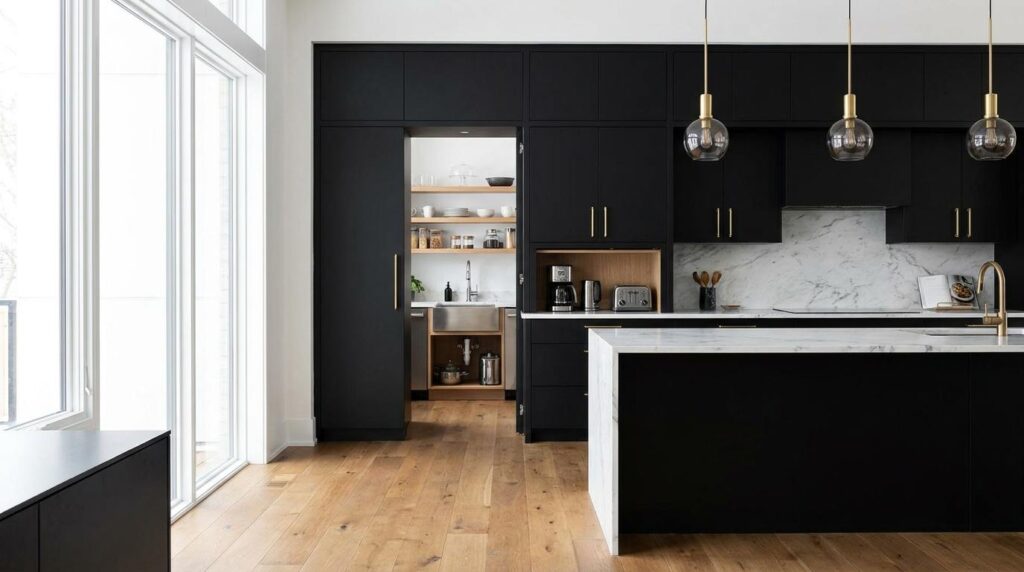
A sleek, minimal black kitchen featuring matte black cabinetry with a discreet black pocket door leading to a hidden butler’s pantry, nearly invisible within the cabinetry wall when closed. White marble countertops provide contrast. Brass hardware adds warmth. A black kitchen island with waterfall marble edges serves as the main workspace. Through the open pocket door, a glimpse of the organized pantry beyond shows additional storage, a prep sink, and small appliances. Pendant lights in brass and smoked glass hang above the island. Wide-plank oak floors ground the sophisticated space. Natural light from large windows illuminates the seamless cabinetry design. The hidden pantry allows the main kitchen to stay visually clean and minimal. Shot showing the pocket door slightly open, revealing the hidden pantry while demonstrating how seamlessly it integrates into the black cabinetry wall, with bright, even lighting emphasizing the clever, minimal design solution.
Hiding my butler’s pantry behind a seamless black pocket door was the design solution that let me achieve genuine minimalism in my main kitchen while still having ample storage and prep space tucked away out of sight. When closed, the door is nearly invisible within the black cabinetry wall, maintaining this clean, uninterrupted visual line that makes the main kitchen feel more spacious and serene than it would with all that additional storage visible. This concept has become increasingly popular for 2026 as people crave both minimal aesthetics and genuine functionality without compromise.
Behind the door, I can keep small appliances, backup pantry items, and prep mess completely hidden during entertaining, which means my main kitchen always photographs and feels pristine regardless of what’s actually happening during meal preparation. The pocket door mechanism required precise installation to ensure smooth, quiet operation within the cabinetry framework. This hidden pantry concept proves that black kitchens benefit enormously from this kind of thoughtful, almost architectural problem-solving—creating spaces that look effortlessly minimal specifically because so much functional complexity has been intentionally concealed just out of view.
20. Black Kitchen with Bold Colorful Art Display
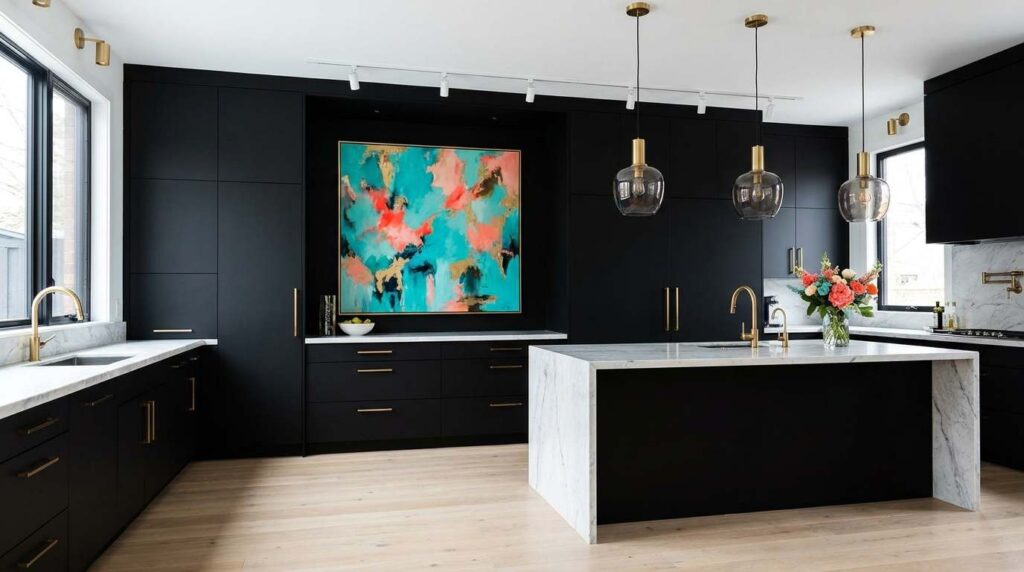
A dramatic modern kitchen featuring matte black cabinetry throughout as a gallery-like backdrop for a large, vibrant abstract painting in bold colors—turquoise, coral, and gold—hung prominently on an open wall section. White marble countertops provide contrast. Brass hardware throughout adds warmth. A black kitchen island with waterfall marble edges anchors the space. Pendant lights in brass and smoked glass hang above. Wide-plank white oak floors ground the space. The vibrant artwork creates a striking pop of color against the otherwise monochromatic black and white palette. Natural light from large windows illuminates both the sophisticated cabinetry and the vivid artwork. Fresh flowers in a vase echo the art’s color palette. Shot from an angle showing the artwork as a dramatic focal point against the black cabinetry backdrop, with bright, gallery-like lighting emphasizing how the black kitchen serves as the perfect neutral canvas for bold artistic expression.
Treating my black kitchen walls like gallery space for a genuinely vibrant, colorful abstract painting was a design choice that surprised even me with how well it worked—the deep black cabinetry creates this incredible neutral backdrop that makes bold color absolutely sing in a way it never would against white walls. I searched for months to find the right piece, wanting something with enough color saturation and scale to hold its own against the dramatic black surroundings without feeling like an afterthought or too small for the space.
This approach has taught me that black kitchens don’t need to stay confined to black, white, and metallic palettes—they can actually be the perfect foundation for introducing genuine, unapologetic color through art and accessories. The painting’s turquoise, coral, and gold tones create this unexpected but harmonious pop that keeps the kitchen from feeling too serious or monochromatic. I rotate fresh flowers to echo whatever colors are dominant in the artwork, creating small connections throughout the space. This kitchen represents such a confident, gallery-inspired approach to 2026 design, proving that black cabinetry can serve as sophisticated neutral ground for genuine artistic expression rather than demanding an entirely coordinated, restrained color story throughout.