
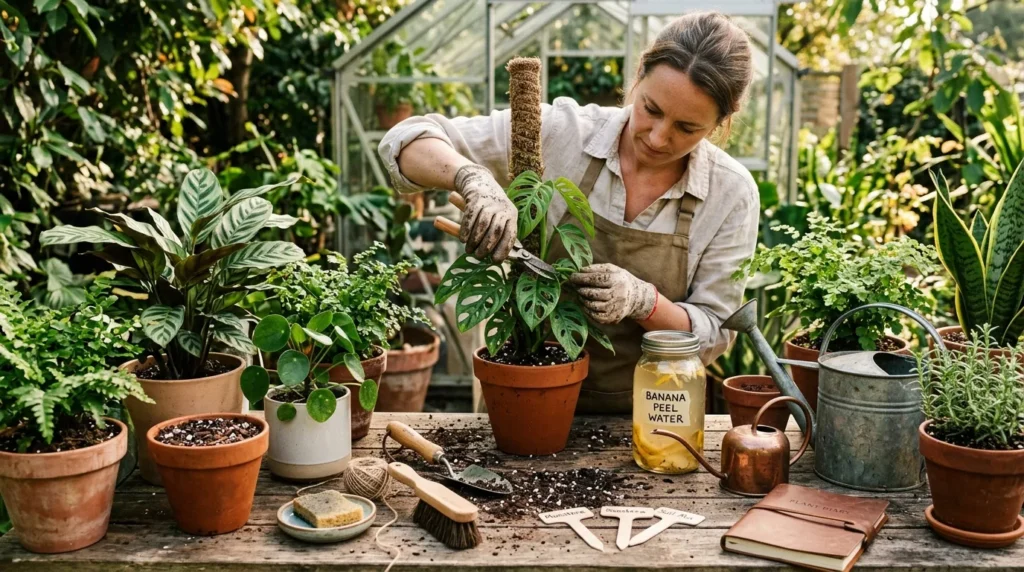
Banana water is a simple homemade plant tonic made by soaking banana peels in water and using the strained liquid to water plants. Gardeners often use it as a low-cost way to recycle kitchen scraps while adding small amounts of nutrients and organic compounds to their plant-care routine. Although banana water is not a complete fertilizer and should not replace balanced plant nutrition, it can be a useful supplement when used thoughtfully. From supporting flowering plants to making better use of food waste, there are several reasons this DIY gardening method has become popular. The key is keeping expectations realistic, preparing it hygienically, and using it alongside good soil, appropriate light, and regular watering.
1. Banana Water Can Add Potassium to the Soil
One of the main reasons gardeners make banana water is potassium. Banana peels contain potassium, and some of this mineral can move into water during soaking. Potassium plays an important role in several plant processes, including water regulation, enzyme activity, and overall plant development. However, the exact amount transferred into homemade banana water varies considerably depending on the peel, water volume, soaking time, and preparation method.
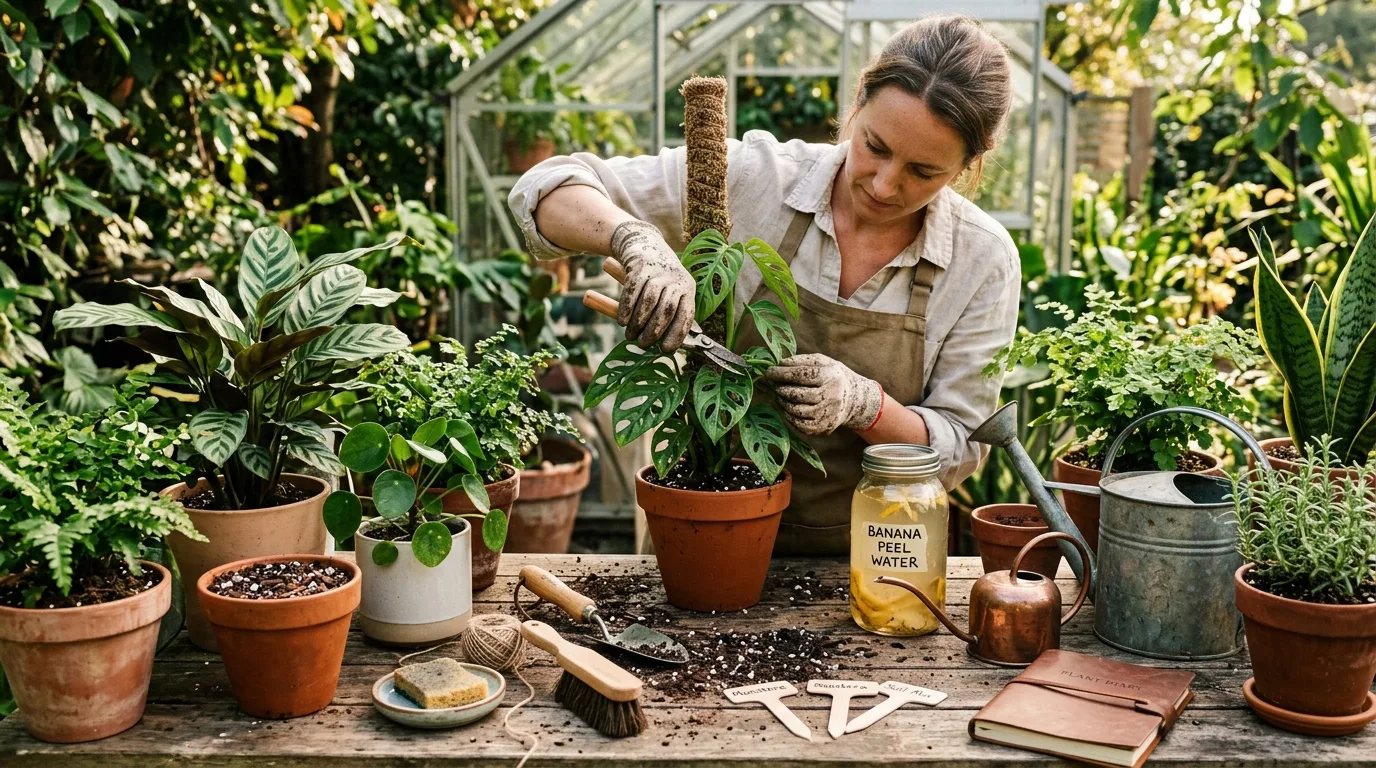
For that reason, banana water is best considered a mild supplement rather than a reliable potassium fertilizer. If your plants need a specific nutrient correction, a tested fertilizer is more predictable. Still, using banana water occasionally can complement an otherwise sensible feeding routine, particularly for gardeners who enjoy simple, recycled approaches to plant care.
2. It Recycles Kitchen Waste
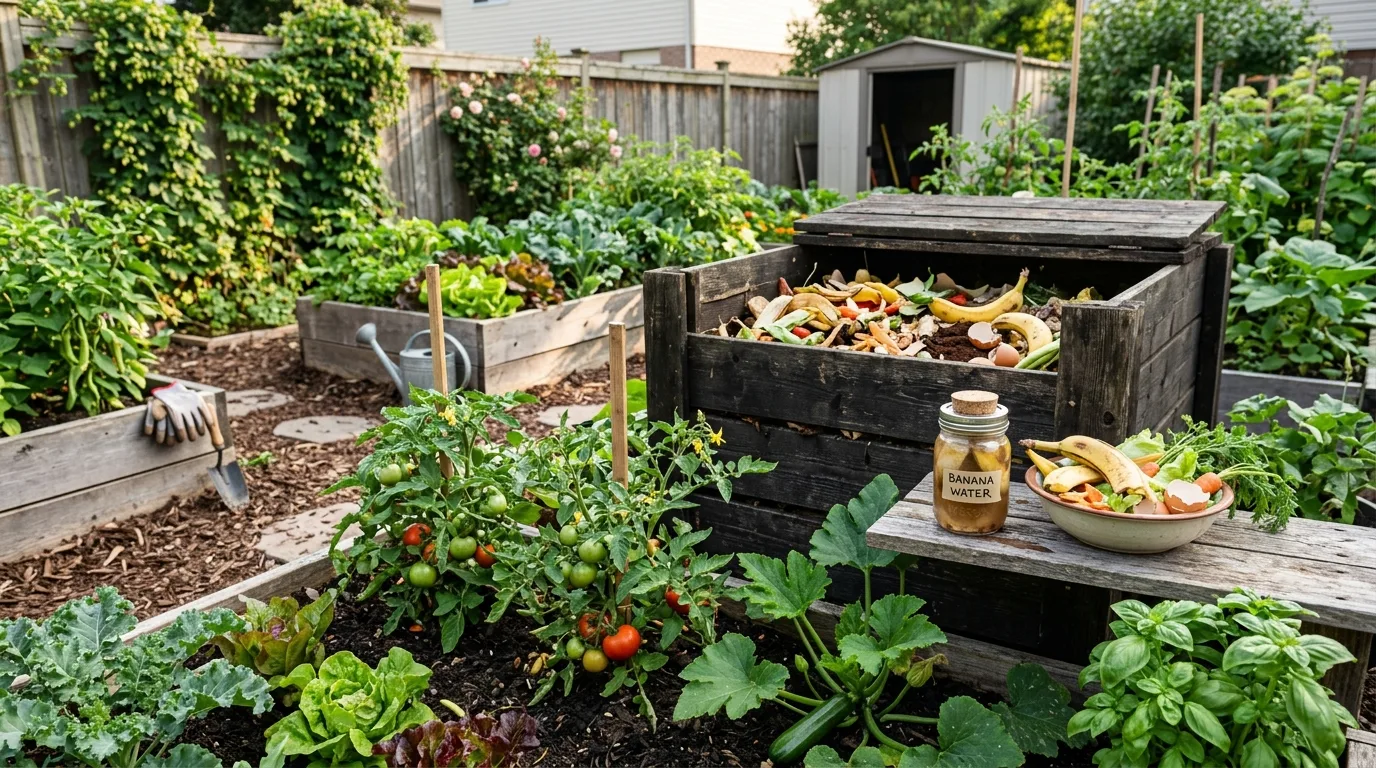
Banana water gives banana peels another purpose before they reach the compost bin or trash. Instead of throwing away the peel immediately, you can use it to create a homemade plant supplement and then compost the softened peel afterward. This makes the practice appealing to gardeners interested in reducing household food waste.
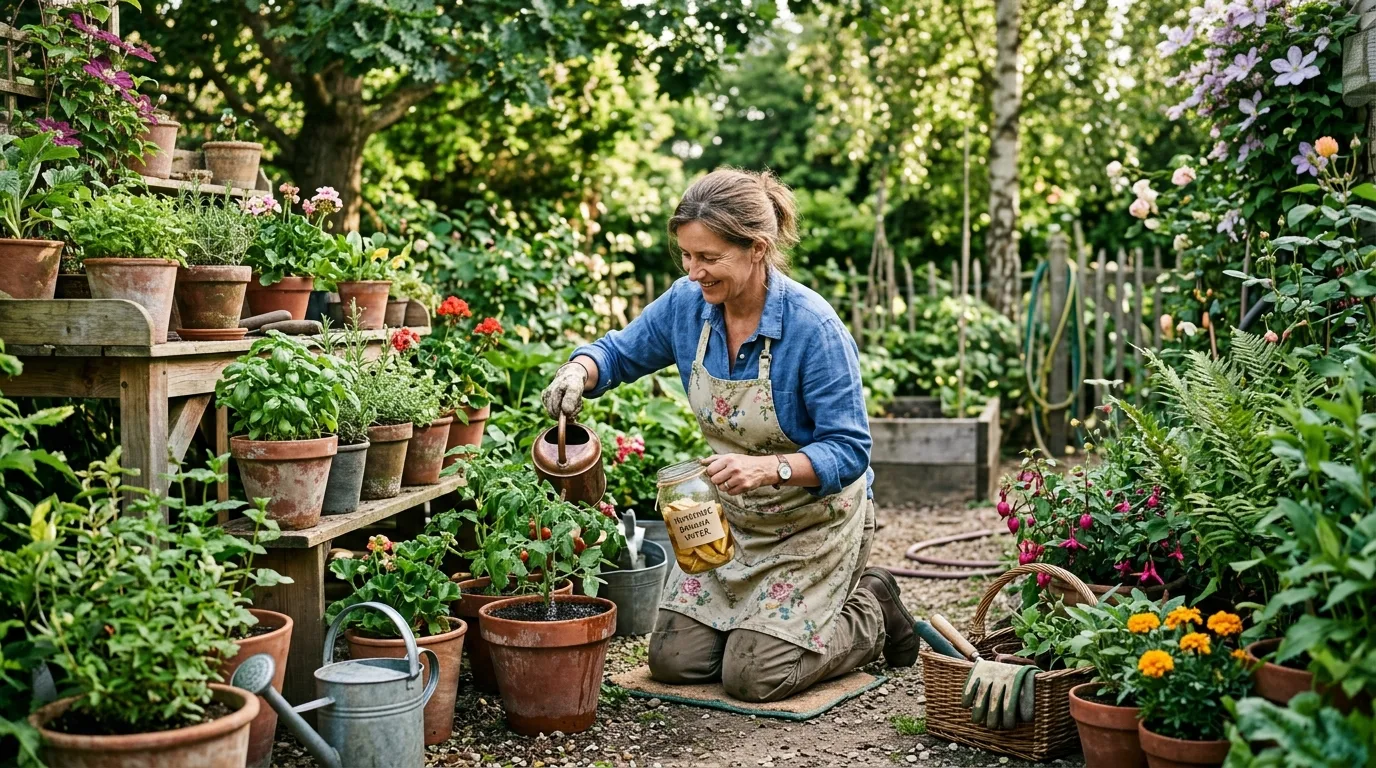
The environmental benefit should be kept in perspective: banana peels are already compostable, and composting generally provides a more complete way to return organic matter to the soil. Still, making banana water can be a convenient addition to a low-waste gardening routine. It turns an everyday kitchen scrap into something useful while encouraging a habit of thinking about household waste as a potential gardening resource.
3. It Can Support Flowering Plants as Part of a Balanced Routine
Potassium is associated with plant functions that influence flowering and reproduction, which is why banana water is frequently recommended for flowering plants. Plants such as flowering annuals, ornamentals, and some houseplants need a range of nutrients throughout their growth cycle, and potassium is one part of that nutritional picture.
Banana water should not be treated as a guaranteed bloom booster, however. Flower production also depends on genetics, light, temperature, watering, phosphorus availability, overall nutrition, and plant maturity. If you use banana water, think of it as a gentle supplement rather than the main reason a plant will flower. Good growing conditions remain much more important than any single homemade treatment.
4. It Offers a Simple Alternative to Some Store-Bought Plant Tonics
For gardeners who enjoy making simple plant-care products at home, banana water can be an inexpensive alternative to certain mild liquid tonics. The basic process requires little equipment: banana peels, clean water, a container, and a strainer.
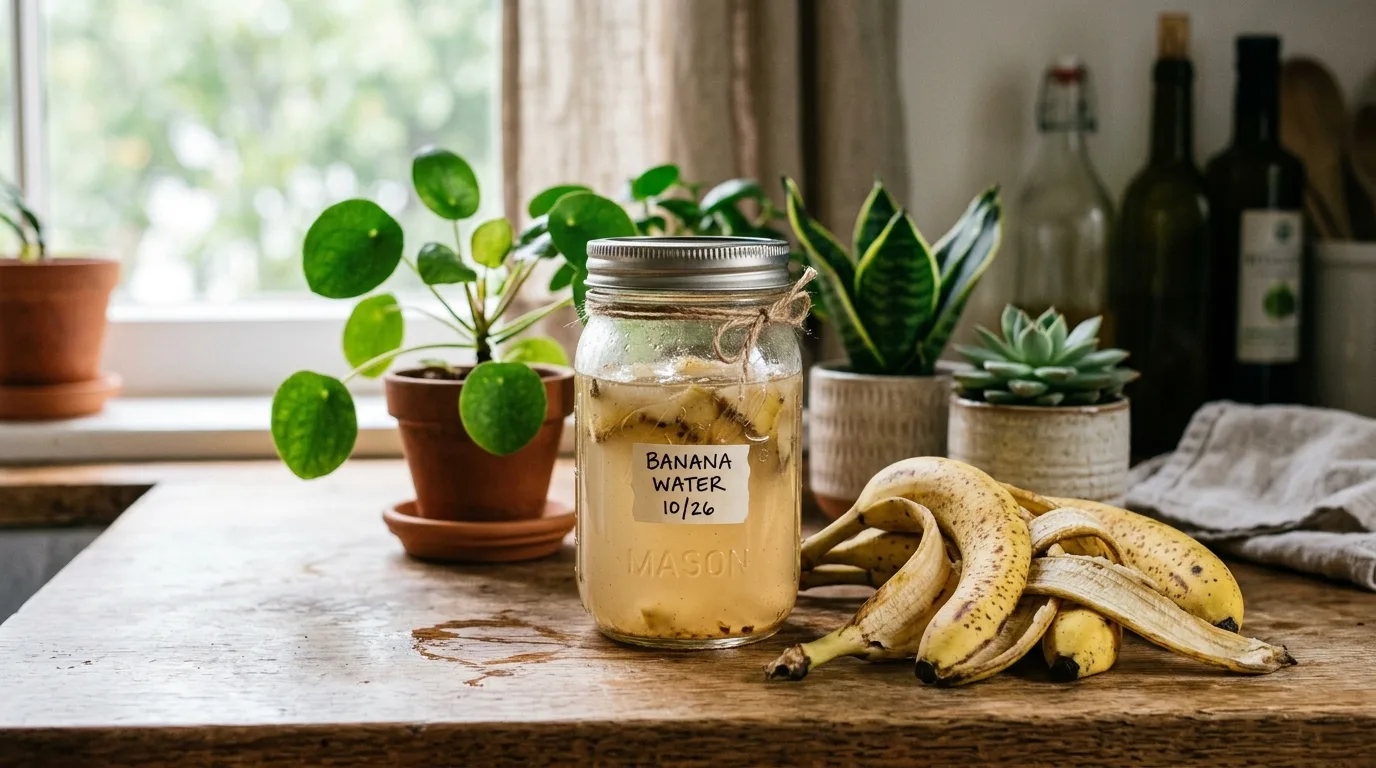
This makes it particularly attractive for beginners who want to experiment with homemade gardening methods without purchasing another specialized product. Even so, homemade mixtures are not standardized. A commercial fertilizer lists its nutrient analysis, while banana water does not. That distinction matters when plants have identifiable deficiencies or demanding nutritional requirements. Use homemade banana water for experimentation and supplemental care, while relying on appropriate fertilizers when consistent nutrient delivery is important.
5. It Can Encourage More Mindful Plant Care
One overlooked benefit of banana water is that making it can encourage gardeners to pay closer attention to their plants. Preparing a homemade tonic gives you another reason to inspect leaves, soil moisture, growth, and flowering patterns rather than watering automatically.

This observation is valuable because successful gardening depends more on understanding plant needs than on using a particular homemade recipe. While applying banana water, you can check whether the soil is actually dry, look for pests, inspect new growth, and notice changes in leaf color. If a plant improves, declines, or shows no difference, you can adjust your routine based on observation instead of assuming every plant responds the same way.
6. It Can Be Convenient for Indoor Plant Enthusiasts
Banana water is easy to prepare in a small quantity, which can make it convenient for people caring for a modest collection of houseplants. Rather than preparing a large batch, you can use a single peel and a small container of water, then strain the mixture before applying it.
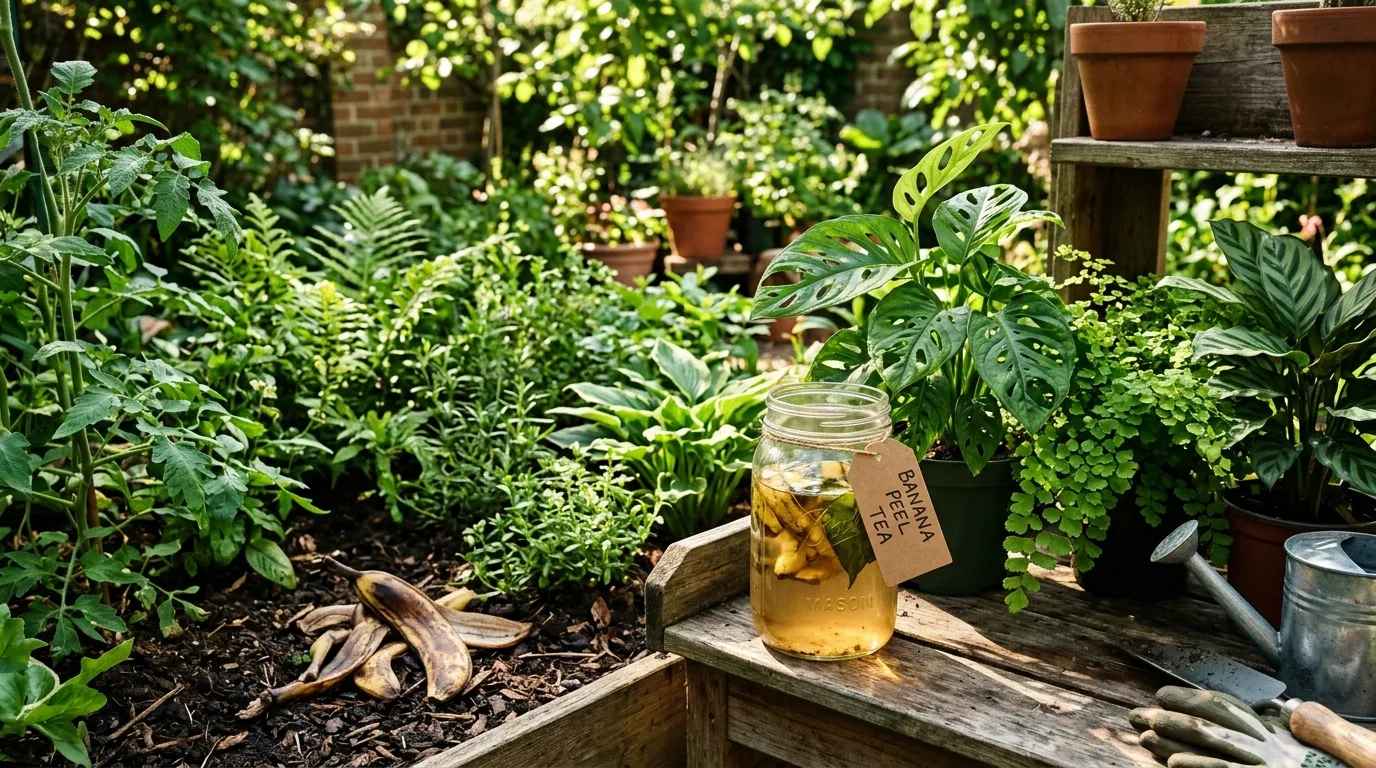
Indoor plants still need careful watering, though. Homemade liquids should never be used as an excuse to water plants more frequently than necessary. Excess moisture can contribute to root problems, fungus gnats, and poor root health. If you try banana water indoors, use it sparingly and only when the plant’s normal watering schedule calls for moisture. Clean containers and fresh preparation are also important to reduce unpleasant odors and microbial growth.
7. It Can Complement Compost-Based Gardening
Gardeners who already use compost may enjoy banana water as a small addition to a broader organic gardening routine. Compost improves soil structure and supplies a broad range of nutrients and organic matter, while banana water can provide a liquid supplement that is easy to apply.
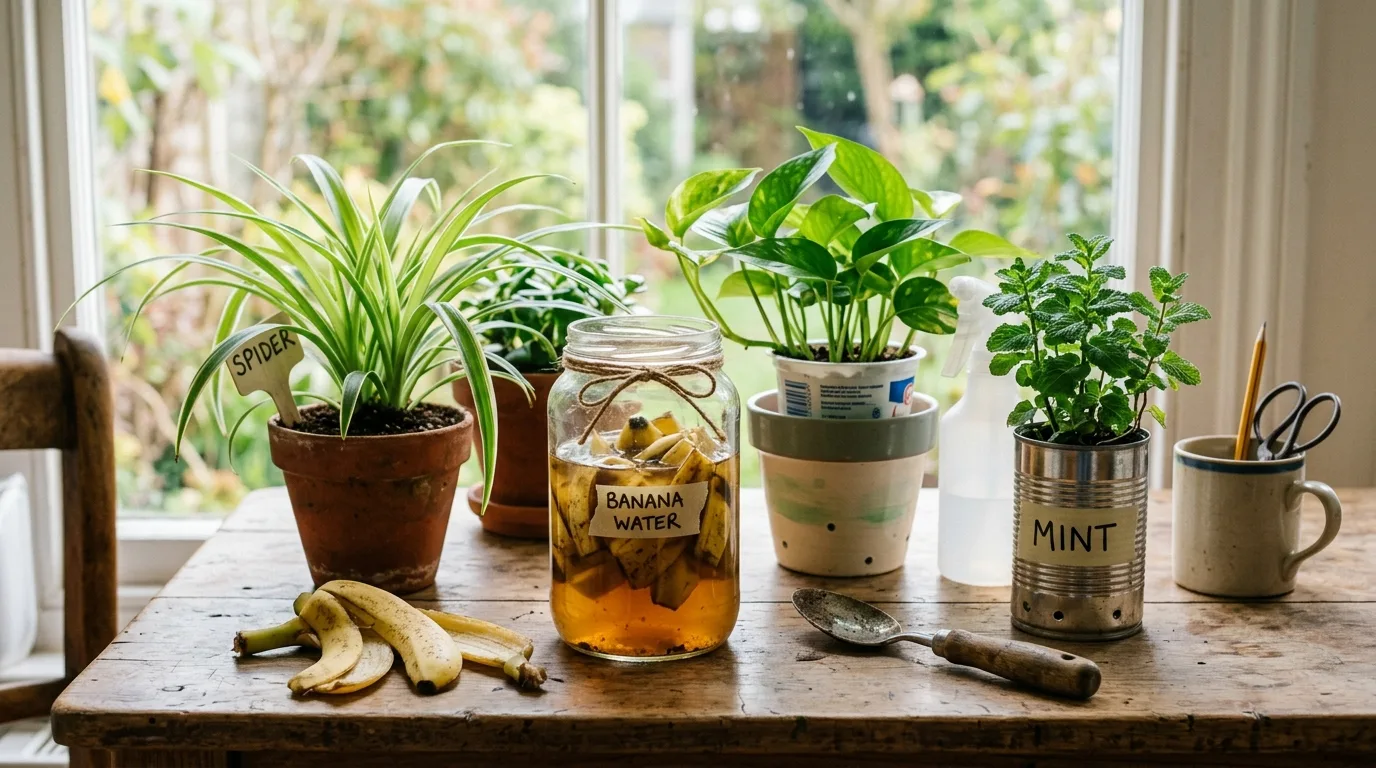
The two practices serve different purposes, so banana water should not replace compost. Healthy soil benefits from organic matter, good drainage, appropriate pH, and a balanced nutrient supply. If you are growing vegetables, herbs, or ornamentals, combining quality compost with suitable fertilizers and responsible watering is generally more dependable than relying on banana peels alone. Banana water works best as one small part of that larger soil-care strategy.
8. It Can Be Used in a Low-Cost Gardening Routine
Banana water can appeal to gardeners working with a limited budget because the primary ingredient is a kitchen byproduct. There is no need for special gardening equipment, and small batches can be made with items already available at home.
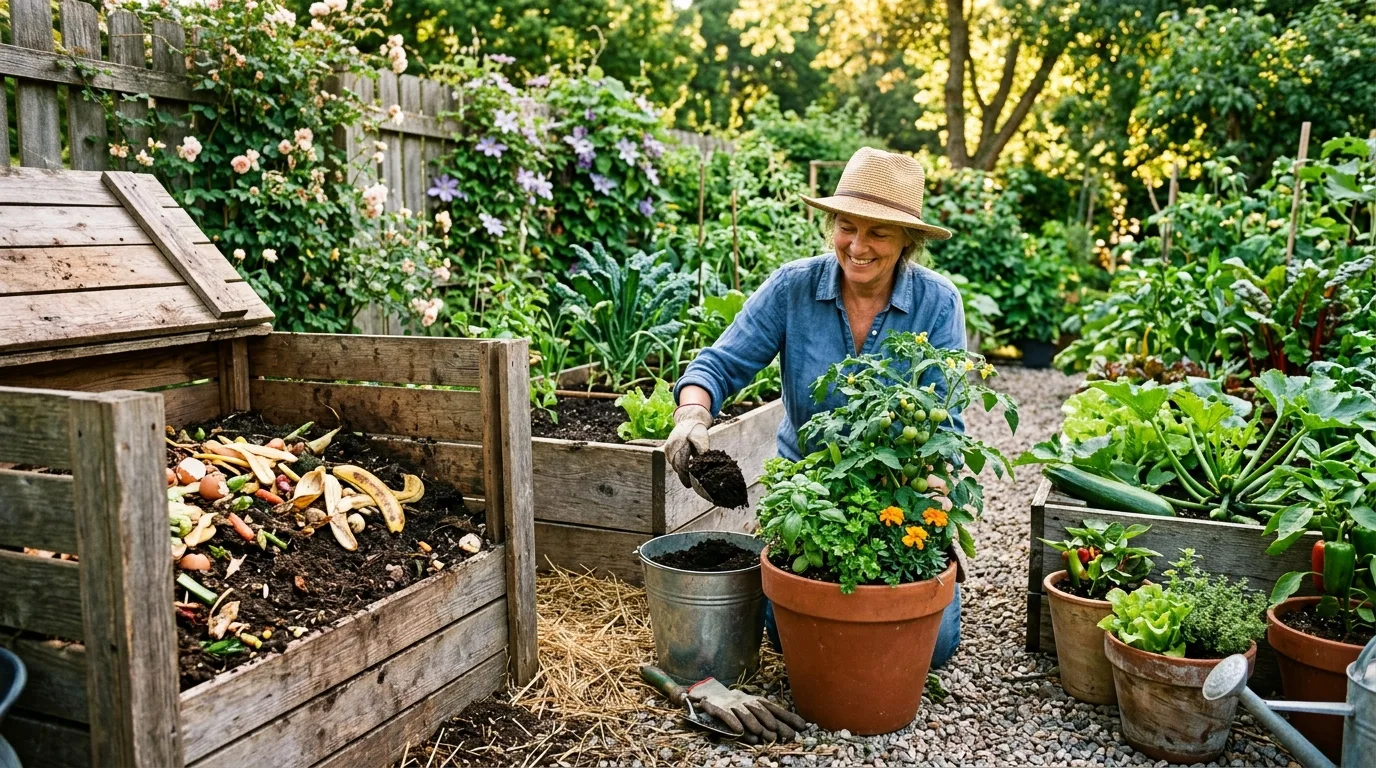
That does not mean it is a complete substitute for fertilizer. Plants require multiple nutrients, and their needs change depending on species, growth stage, growing medium, and environmental conditions. If your garden contains nutrient-hungry plants, spending money on an appropriate fertilizer may ultimately produce better results than relying on homemade liquids. Still, banana water can reduce the need to purchase a product for every minor gardening task and can be an enjoyable way to experiment with resourceful plant care.
9. It Can Add Small Amounts of Other Minerals
Banana peels contain more than potassium. They also contain smaller quantities of minerals such as magnesium and calcium, although the amount that ends up in homemade banana water is variable and generally difficult to measure without laboratory testing.
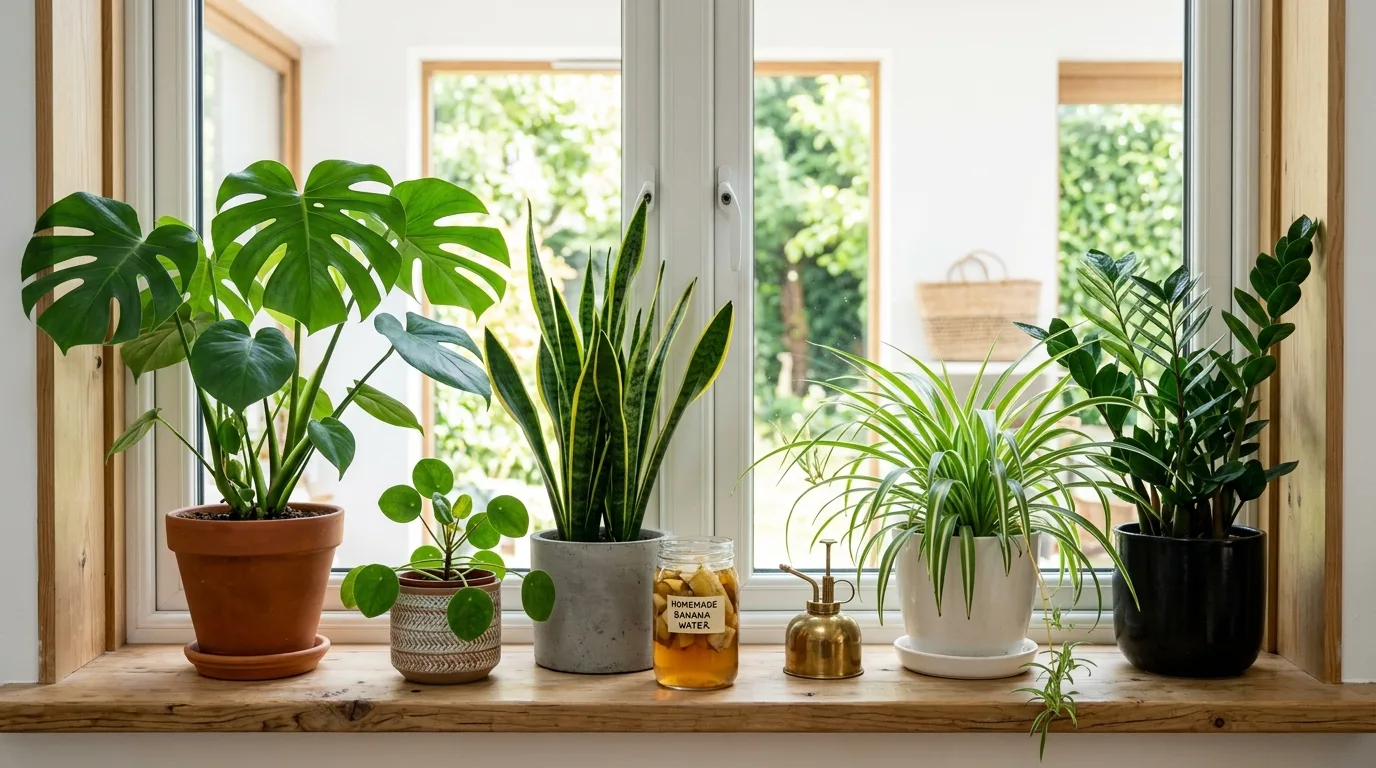
This is an important distinction when evaluating claims about banana water. It is reasonable to say that soaking plant material can transfer some soluble compounds into water, but it is not accurate to assume that every batch contains enough nutrients to correct a deficiency. If plants show symptoms such as unusual yellowing, distorted growth, or poor development, first consider light, watering, pests, pH, and nutrient availability. A properly formulated fertilizer or soil test can provide much clearer information than relying on a homemade infusion.
10. It Can Make Gardening More Engaging for Beginners
Making banana water is a straightforward project that can help new gardeners become more interested in plant nutrition and soil care. Because the ingredients are familiar and the process is simple, it offers an accessible way to start thinking about what plants need to grow.

The real educational benefit comes from observing results. Try the same method on similar plants while keeping other conditions consistent, and watch changes in growth, leaf appearance, and flowering over time. This encourages a more scientific approach to gardening. Rather than assuming a viral gardening tip always works, beginners can learn to test ideas carefully, compare results, and understand that different species may respond differently to the same treatment.
11. It Can Be Made in Small Batches
Another practical advantage is that banana water does not require a large production setup. A small jar or container is enough for a household with only a few plants. Preparing a modest amount also reduces the temptation to store homemade liquid for long periods.
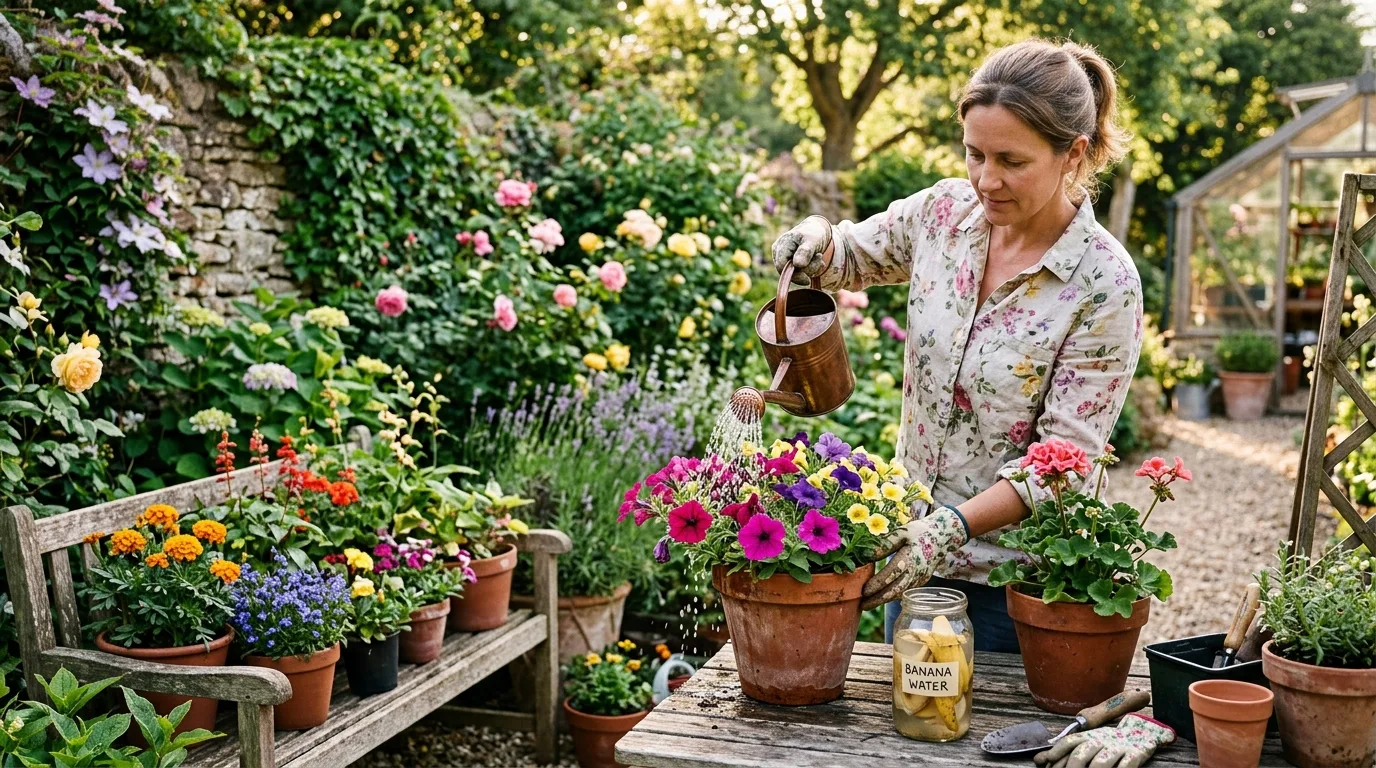
Fresh preparation is preferable because nutrient content is unpredictable and organic material can encourage microbial growth as it sits. If you make banana water, strain it thoroughly and use it relatively soon rather than keeping a container at room temperature for an extended period. Discard any mixture that develops a strong rotten smell, visible mold, unusual slime, or other signs of spoilage. Clean preparation is especially important when using homemade mixtures around edible crops.
12. It Can Fit Into a Sustainable Gardening Mindset
Banana water fits naturally into a broader philosophy of reusing resources wherever practical. Gardeners may already save leaves for mulch, kitchen scraps for compost, rainwater for irrigation, and plant material for homemade soil amendments. Banana peels can become another small part of that cycle.
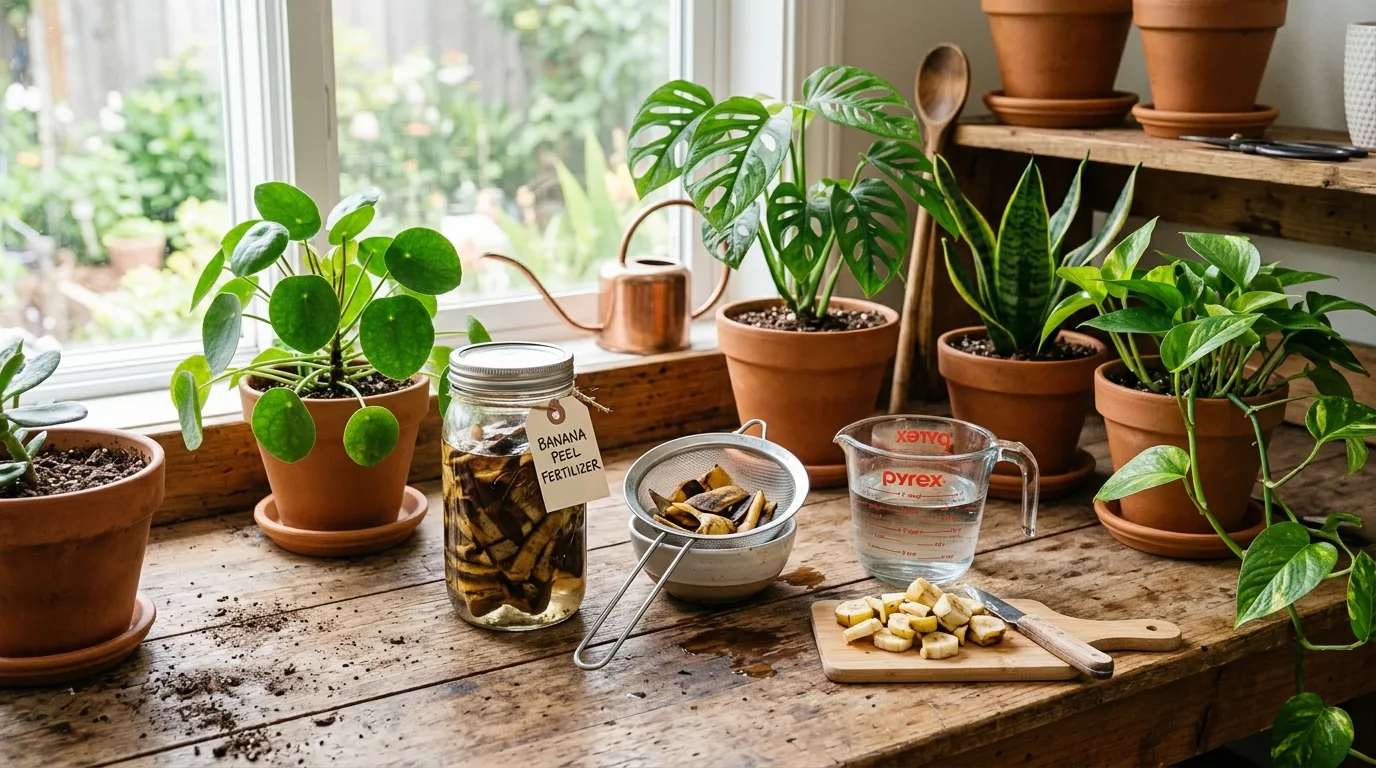
The most sustainable approach is still the one that matches the material to its best use. Composting banana peels usually returns more organic material to the soil than simply soaking them and discarding them afterward. If you enjoy banana water, you can combine both approaches by soaking the peels briefly, using the strained liquid, and then adding the softened peels to your compost. This maximizes reuse without treating banana water as a miracle product.
13. It Can Encourage Careful, Occasional Feeding
Because banana water is generally mild and nutritionally inconsistent, it naturally encourages a less aggressive approach to feeding. That can be useful for gardeners who have a habit of adding fertilizer too frequently.
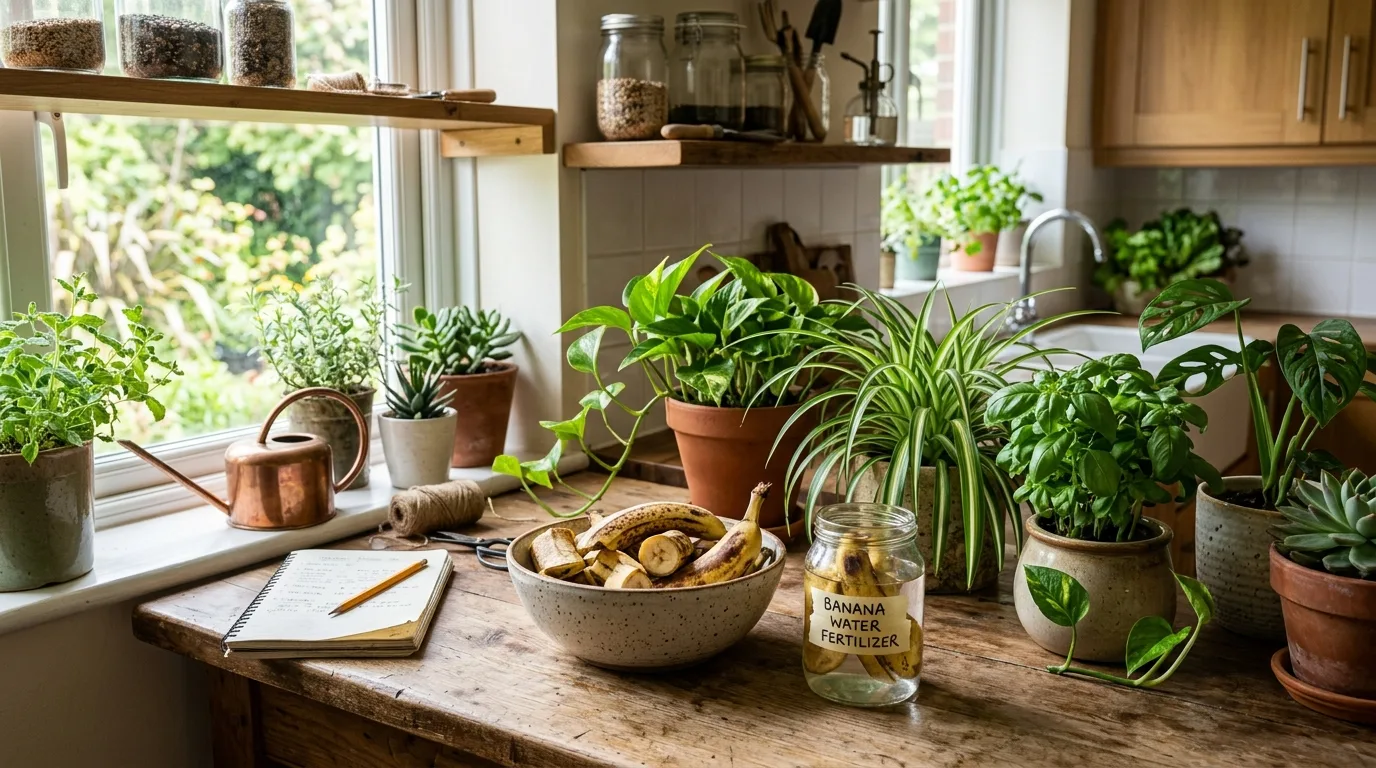
Plants do not automatically grow better when they receive more nutrients. Excess fertilizer can contribute to salt buildup, root stress, nutrient imbalances, and environmental runoff. Using a homemade supplement occasionally, while monitoring plant response, can reinforce the idea that feeding should be purposeful rather than constant. For best results, follow the needs of the specific plant and growing medium. When using commercial fertilizer, follow the label rather than assuming a stronger concentration will produce faster growth.
14. It Encourages a More Holistic Approach to Plant Health
Perhaps the biggest practical benefit of banana water is that it can become part of a broader conversation about plant health. Healthy plants need more than one nutrient: they require suitable light, moisture, temperature, airflow, healthy roots, appropriate soil, and balanced nutrition.
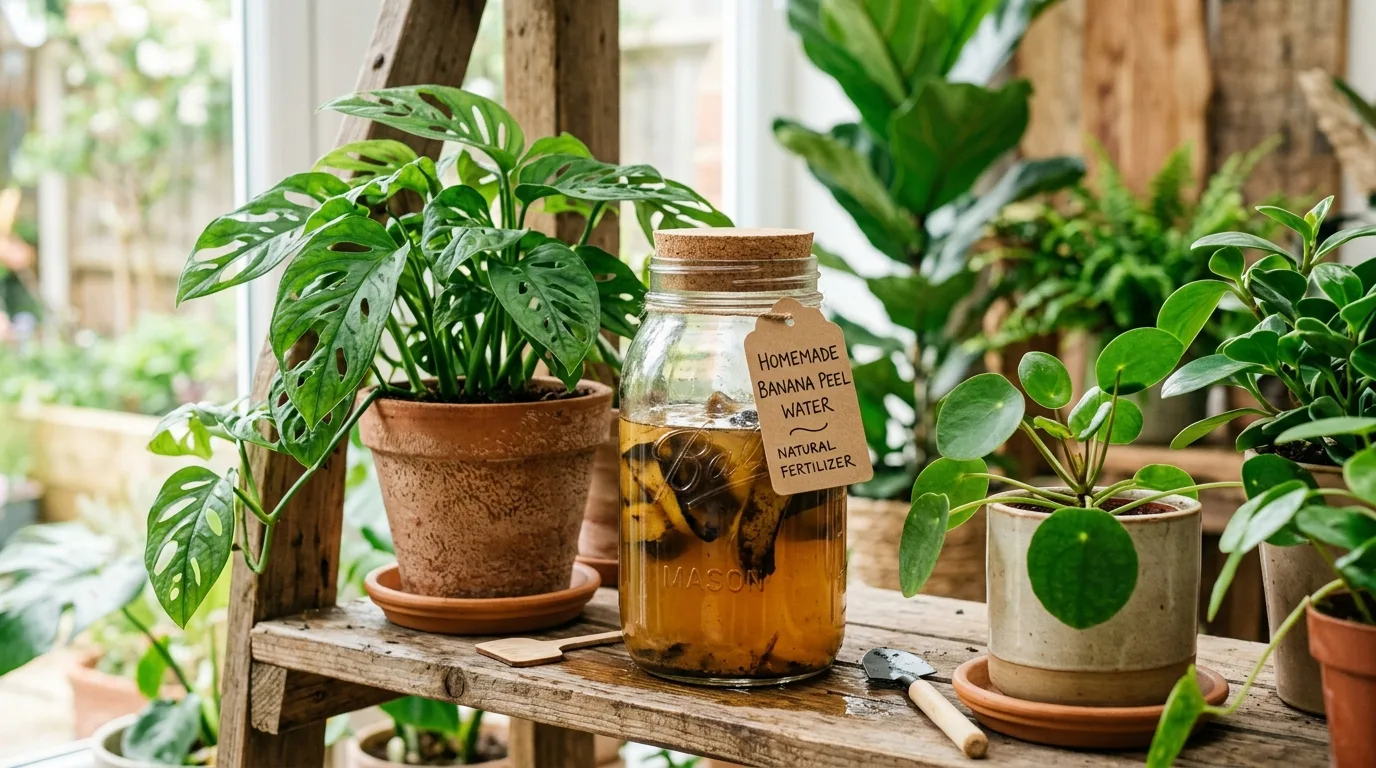
Banana water can be useful as a small supplemental practice, but it should never distract from those fundamentals. Before reaching for any homemade plant tonic, check whether the plant is receiving the right amount of light and whether its soil drains properly. Look for pests and signs of root stress, and avoid watering simply because it is feeding day. When those basics are right, occasional banana water can be an enjoyable, low-cost addition to a thoughtful gardening routine.