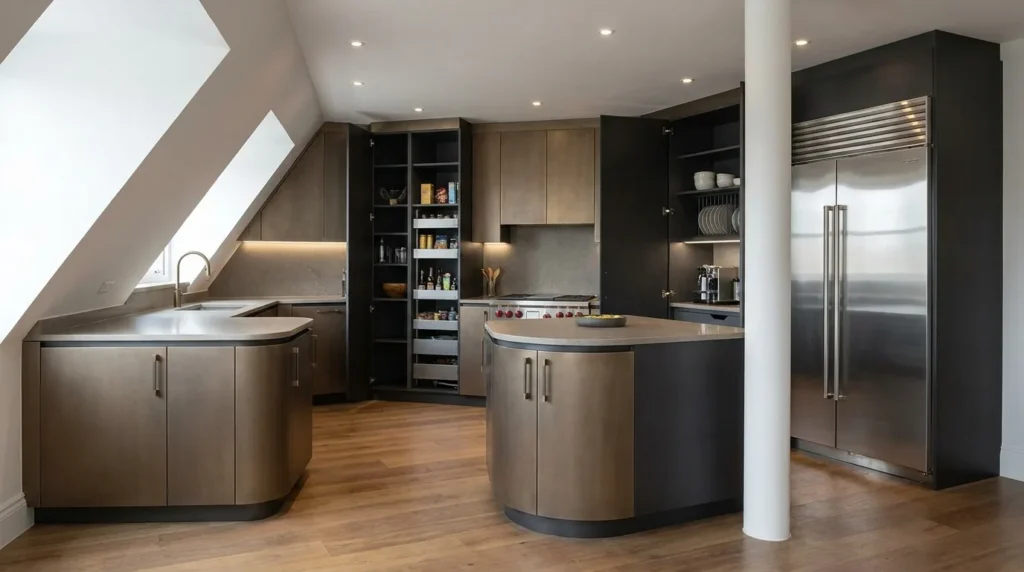
Aluminium kitchen cabinets are becoming a practical alternative to traditional wood, MDF, and plywood cabinetry, especially for homeowners who want a clean, modern kitchen that can handle moisture and everyday wear. Lightweight, durable, and resistant to rust when properly finished, aluminium can work particularly well in humid environments and busy kitchens. It is also available in a wide range of colors, textures, and door styles, making it easier to create anything from a minimalist space to a bold contemporary kitchen.
Before choosing aluminium cabinets, however, it helps to understand their construction, finishes, maintenance needs, advantages, limitations, and design possibilities. These 15 aluminium kitchen cabinet ideas cover the most useful options and considerations, helping you decide whether this material is right for your kitchen.
1. Matte Grey Aluminium Kitchen Cabinets
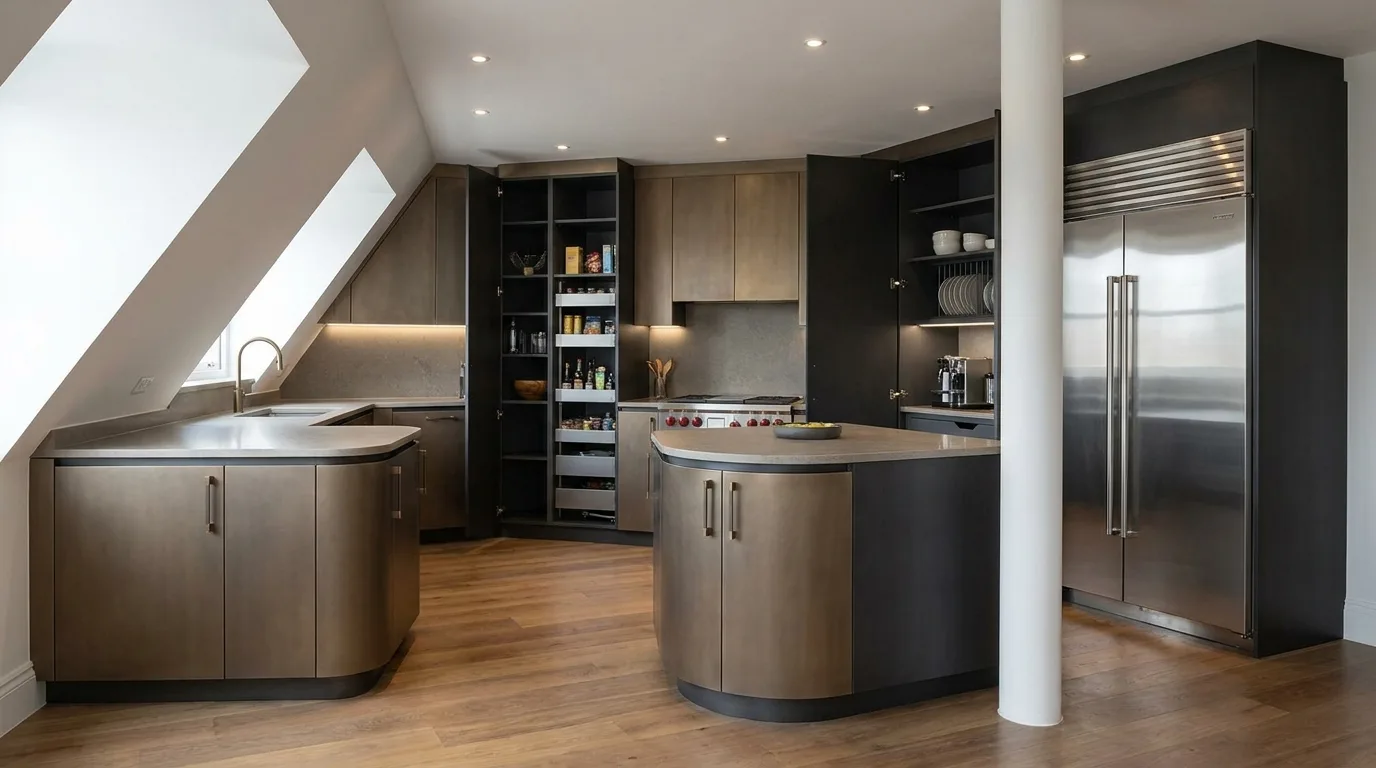
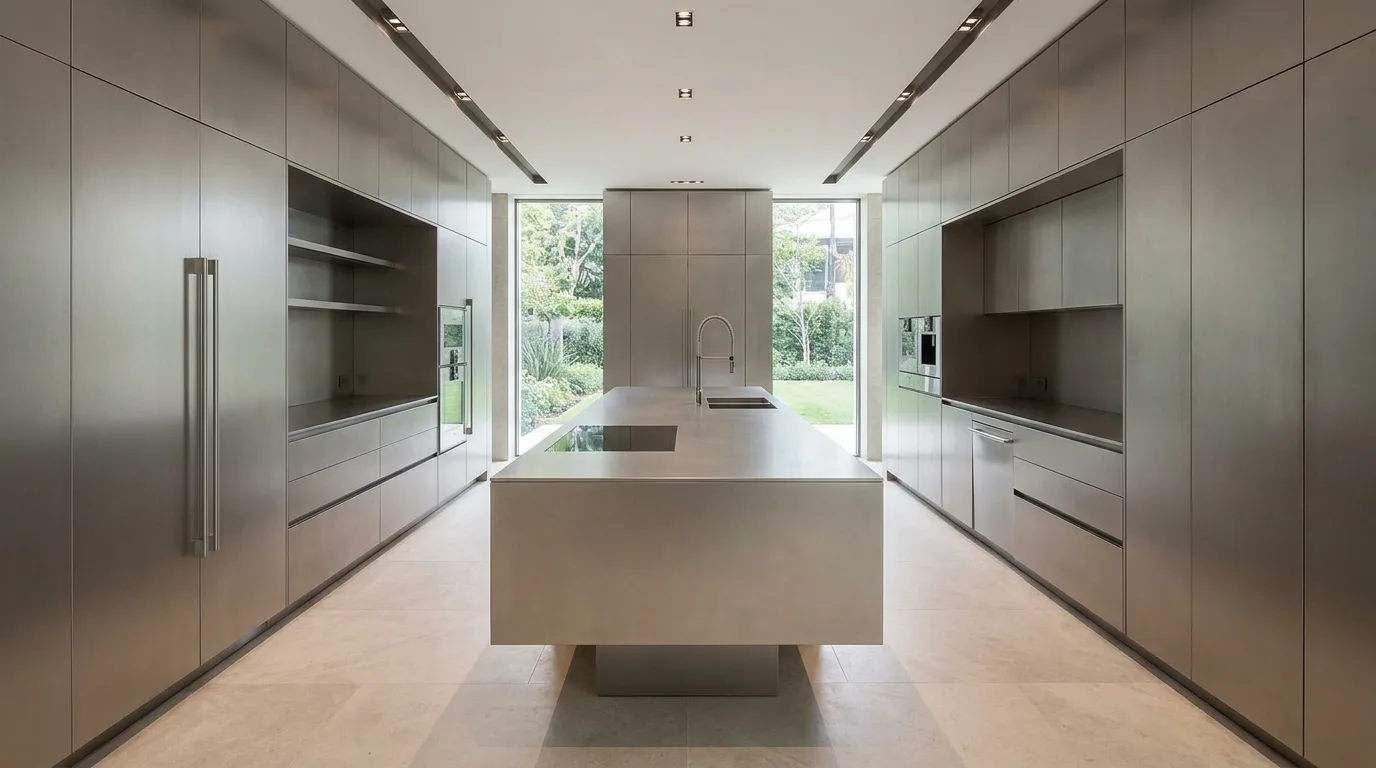
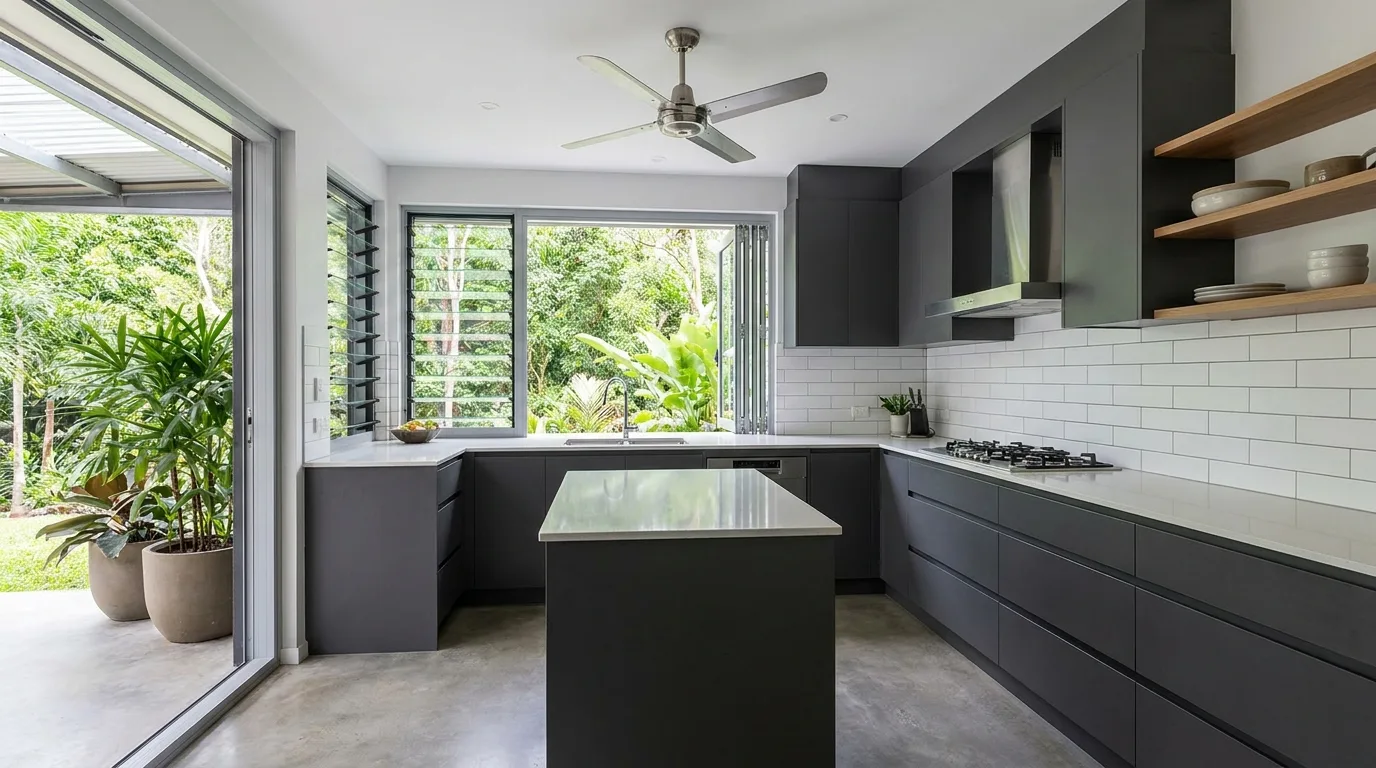
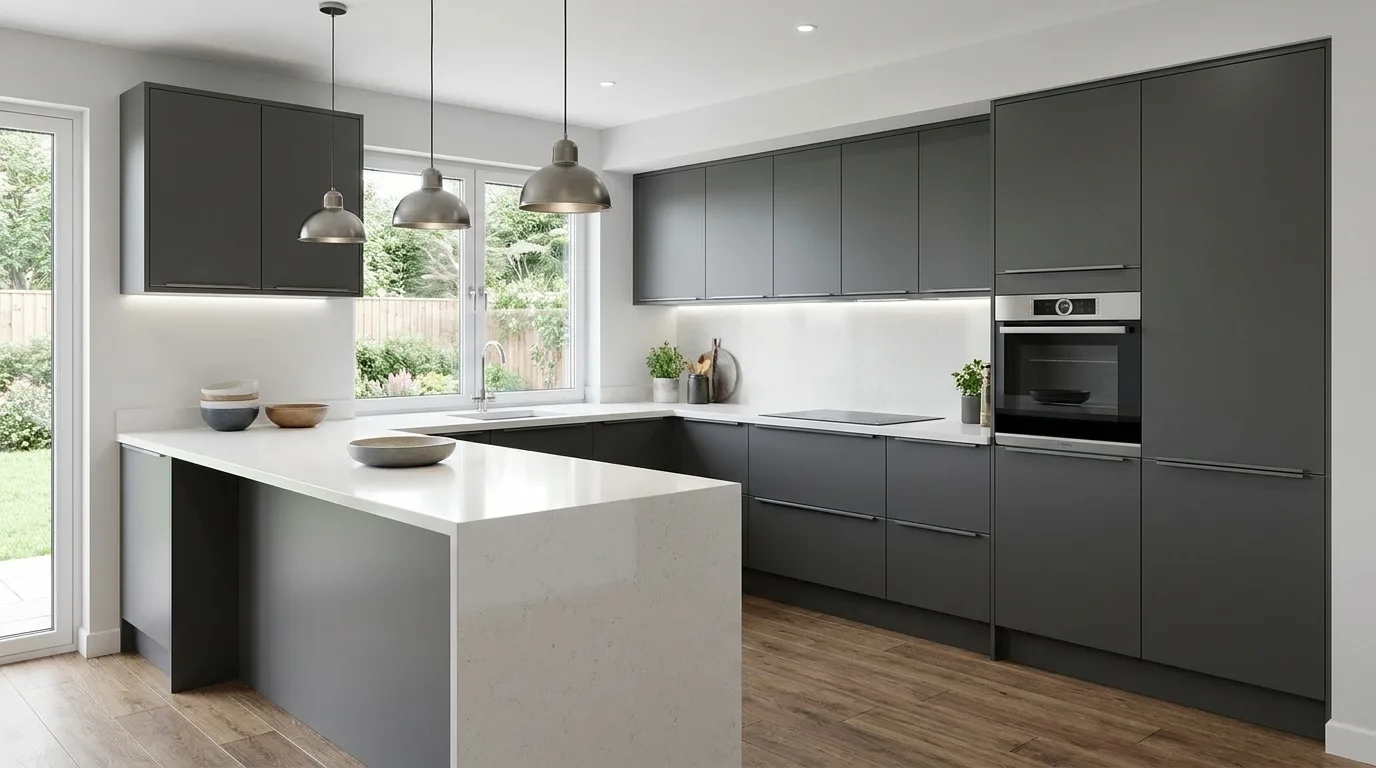
Matte grey is one of the easiest aluminium cabinet finishes to incorporate into a modern kitchen. Its understated appearance gives the room a sophisticated look without making the cabinetry feel overly dramatic. A powder-coated matte finish can also help disguise small fingerprints and everyday marks better than very glossy surfaces. Pair grey aluminium doors with a white countertop for a bright, balanced kitchen, or use warm wood-look flooring and open shelving to soften the industrial character. Grey works especially well with stainless steel appliances, black hardware, and neutral backsplashes. When planning the layout, consider using lighter grey for upper cabinets and a deeper shade for the base units to create subtle contrast without overwhelming a compact kitchen.
2. White Aluminium Cabinets for a Bright Kitchen
White aluminium cabinets are a strong choice when your goal is a clean, spacious-looking kitchen. Their reflective quality can help distribute available light, which is particularly useful in smaller kitchens with limited windows. White doors also provide a neutral foundation for colorful backsplashes, patterned flooring, or statement countertops. Choose a durable powder-coated finish rather than relying only on a painted surface, and ask about the quality of the coating before installation. To avoid a space that feels too sterile, introduce warmth through wood accents, woven accessories, plants, or beige and cream surfaces. Handleless white aluminium doors can create a streamlined contemporary appearance, while slim black handles provide attractive contrast in a more traditional-modern design.
3. Wood-Look Aluminium Kitchen Cabinets
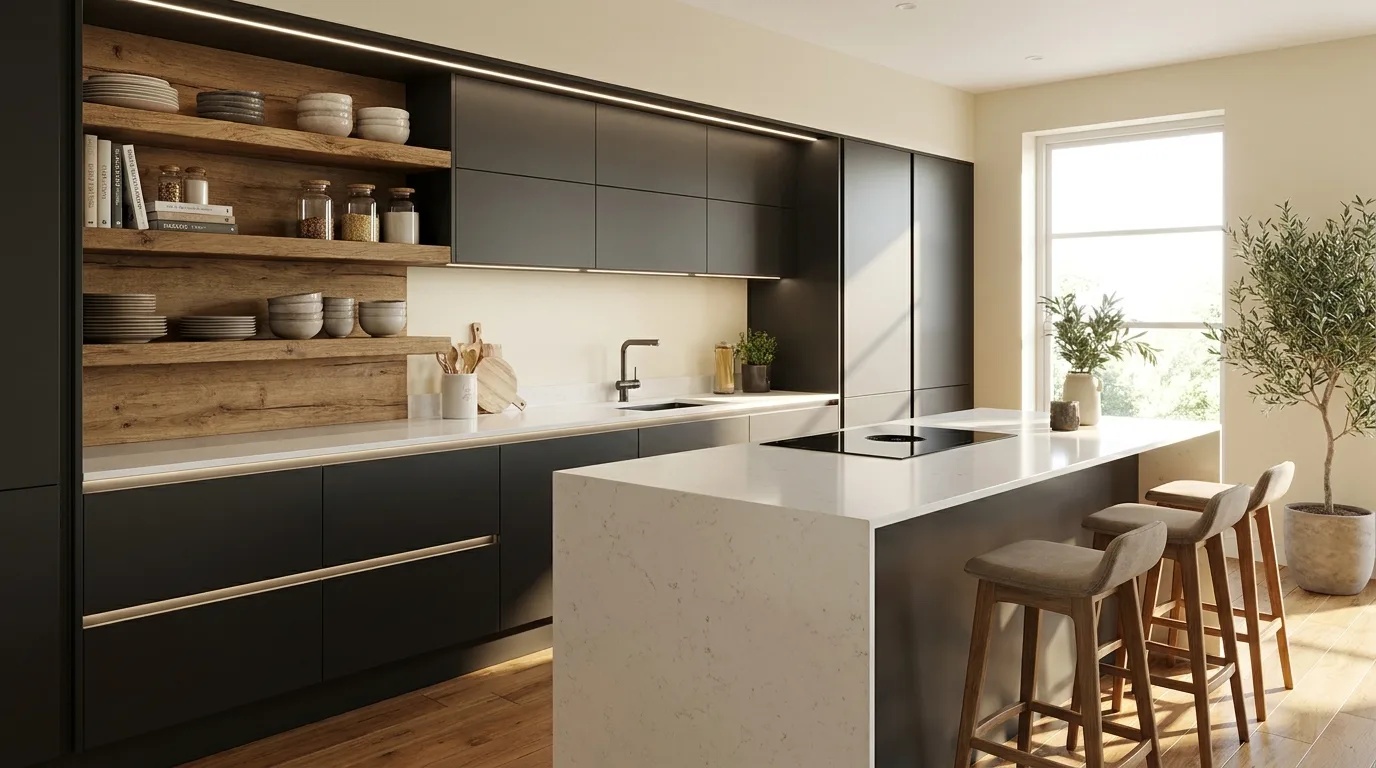
If you like the warmth of wooden cabinetry but want the practical qualities of aluminium, wood-look aluminium cabinets offer an appealing compromise. These doors can feature finishes inspired by oak, walnut, teak, or other wood grains while retaining an aluminium core or frame. They are particularly useful in modern kitchens where you want a natural appearance without using extensive amounts of timber. For a convincing result, keep the wood tone consistent across the main cabinetry and use a simple countertop so the grain remains the visual focus. Light oak effects work well in Scandinavian-inspired kitchens, while darker walnut-style finishes can create a richer, more luxurious atmosphere. Always request a physical sample because printed or online color representations can differ from the actual finish.
4. Two-Tone Aluminium Cabinet Design
A two-tone cabinet scheme can make aluminium cabinetry feel more personalized and visually interesting. One popular approach is to combine a neutral color on the upper cabinets with a darker shade on the base units. For example, white and charcoal, cream and olive, or light grey and navy can create clear separation between different areas of the kitchen. Another option is to combine solid-color aluminium with a wood-effect finish for a warmer appearance. Two-tone designs are especially helpful in open-plan kitchens because the cabinetry becomes part of the overall interior rather than looking like one large block. Keep the countertop and backsplash relatively restrained when using strong cabinet colors. Repeating one of the cabinet shades in lighting, stools, handles, or accessories can also make the design feel cohesive.
5. Aluminium Cabinets with Glass Doors
Adding glass-fronted doors to selected aluminium cabinets can break up a solid wall of cabinetry and create a display area for attractive dishes, glasses, or decorative objects. Aluminium frames are naturally suited to slim, contemporary glass doors, giving the kitchen a lighter visual appearance. Use clear glass when you want contents to remain visible, frosted or fluted glass when you prefer some concealment, or tinted glass for a more dramatic modern effect. Because glass doors turn storage into a visual feature, keep displayed items organized and limit the number of colors inside. A useful approach is to place glass doors on one or two upper cabinets while keeping everyday storage behind solid aluminium doors. Integrated lighting can make these cabinets particularly attractive in the evening.
6. Handleless Aluminium Kitchen Cabinets
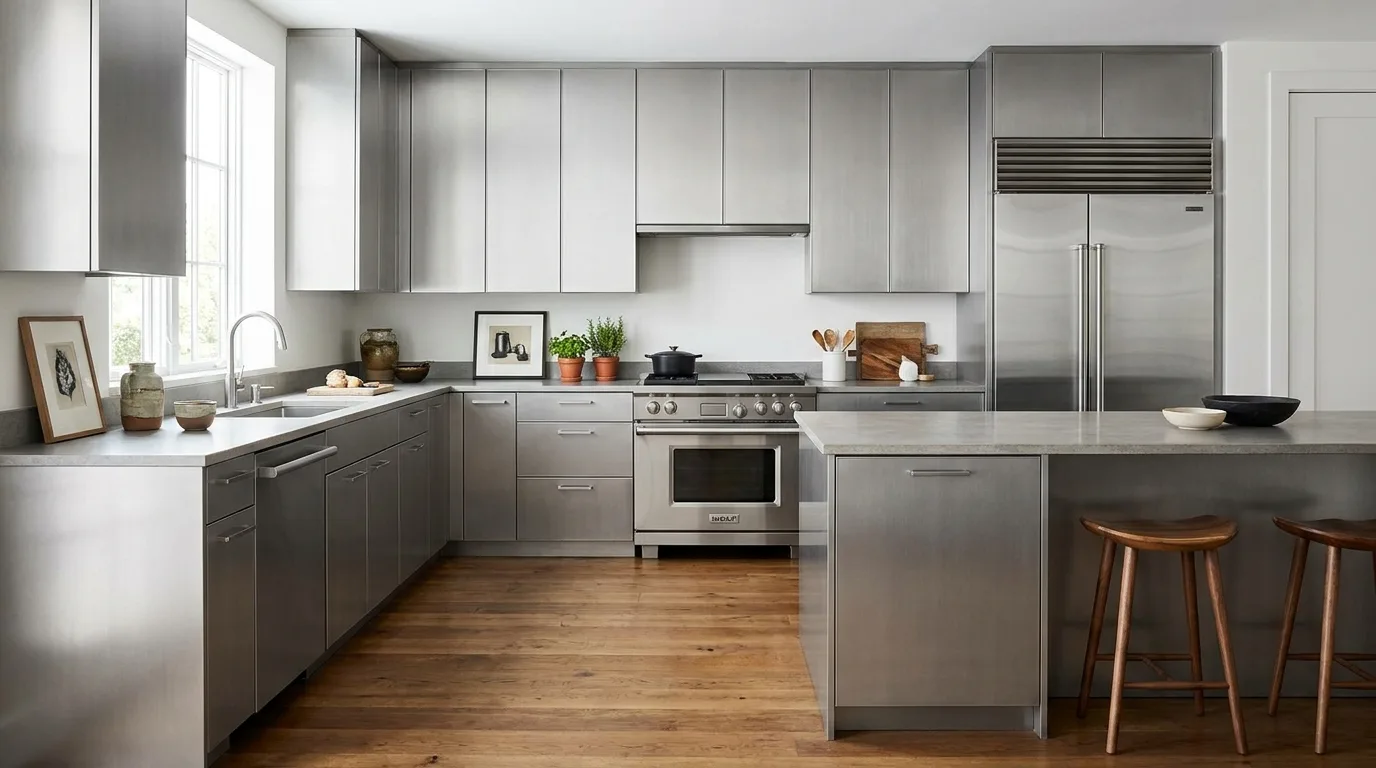
Handleless aluminium cabinetry is ideal for homeowners who prefer a sleek, uninterrupted kitchen design. Instead of conventional handles, doors can use integrated profiles, recessed channels, push-to-open mechanisms, or carefully designed edge pulls. The result is a visually clean surface that works particularly well in contemporary and minimalist interiors. Handleless designs can also make narrow walkways feel less cluttered because there are fewer projecting elements. However, the opening mechanism matters: frequently used drawers and pantry doors should be easy to operate and durable enough for repeated use. Before choosing push-to-open hardware throughout the kitchen, test the mechanism in a showroom if possible. A practical combination is handleless upper cabinetry with discreet pulls or integrated channels on heavier base drawers.
7. Black Aluminium Kitchen Cabinets
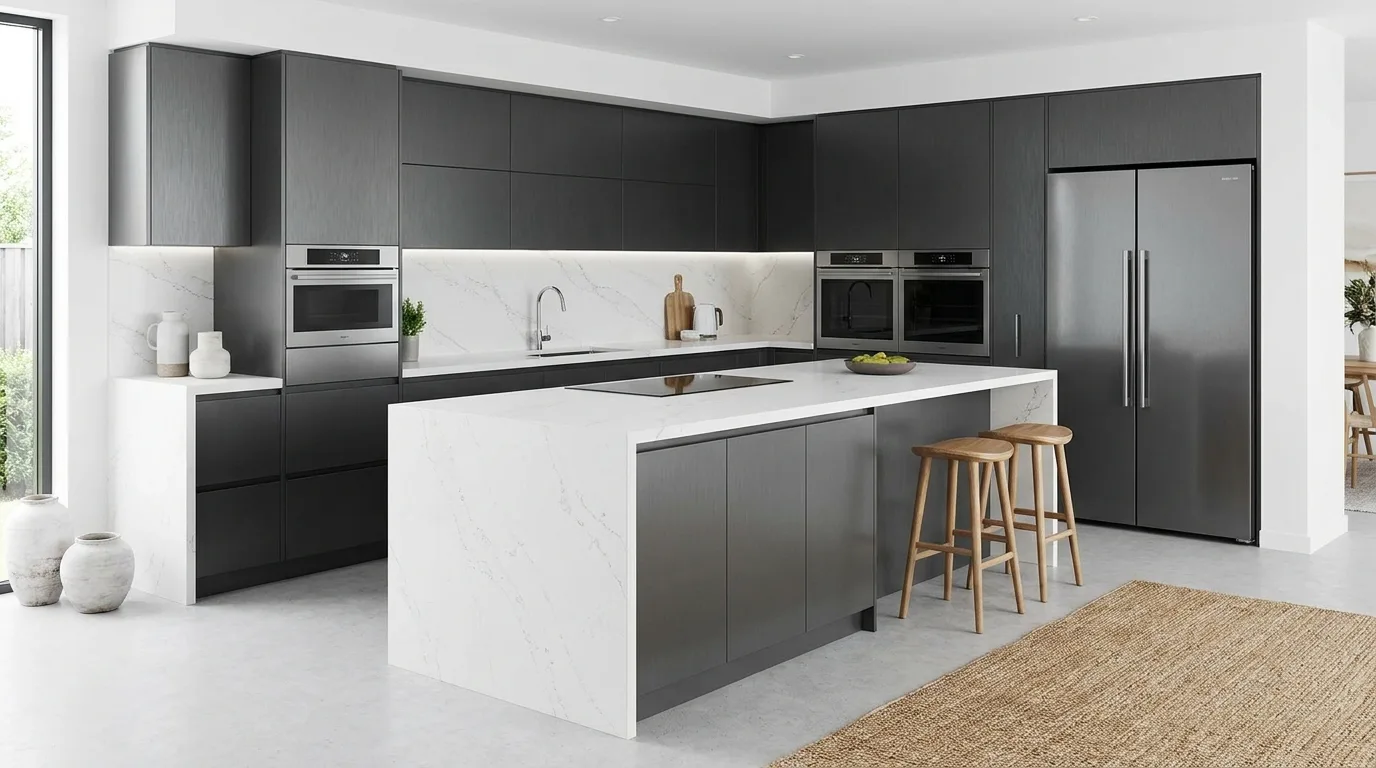
Black aluminium cabinets can give a kitchen a bold, architectural appearance. They are especially effective in contemporary spaces with large windows, light countertops, and plenty of natural or artificial illumination. A matte or textured black finish usually feels more refined than a highly reflective surface and can pair beautifully with white quartz, concrete-look counters, stainless steel, or warm timber accents. Because dark cabinetry can visually reduce a room, balance it with lighter walls, flooring, or backsplash materials in smaller kitchens. Black cabinets also make hardware choices important. Minimal black hardware creates a seamless monochromatic appearance, while brushed metal or brass handles provide contrast. Use black strategically rather than automatically covering every surface if you want the kitchen to feel open and welcoming.
8. Aluminium Cabinets for Small Kitchens
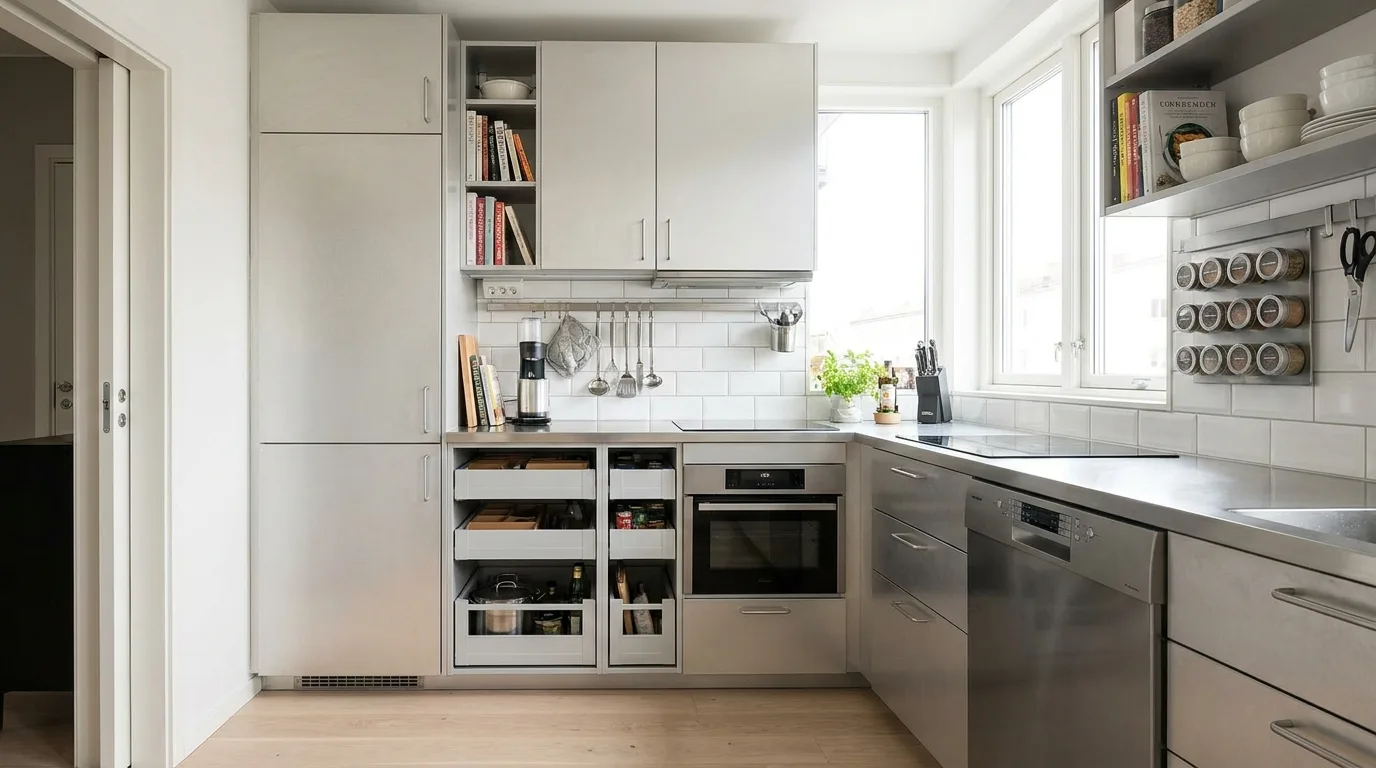
Aluminium can be particularly useful in compact kitchens where durable, easy-to-clean cabinetry is important. To maximize a small layout, use tall cabinets for pantry storage, drawers for frequently accessed items, and upper cabinets that reach as high as practical. Light-colored aluminium fronts can help the room appear larger, while reflective or satin finishes can bounce light around the space. Avoid filling every available wall with visually heavy dark cabinetry. Instead, consider combining closed storage with one open shelf or a glass-front cabinet. Carefully planned internal organizers can make more difference than simply adding more cabinets. Pull-out pantry units, deep drawers, corner solutions, and vertical storage for trays can help a small aluminium kitchen remain functional without becoming crowded.
9. Aluminium Cabinets with Quartz Countertops
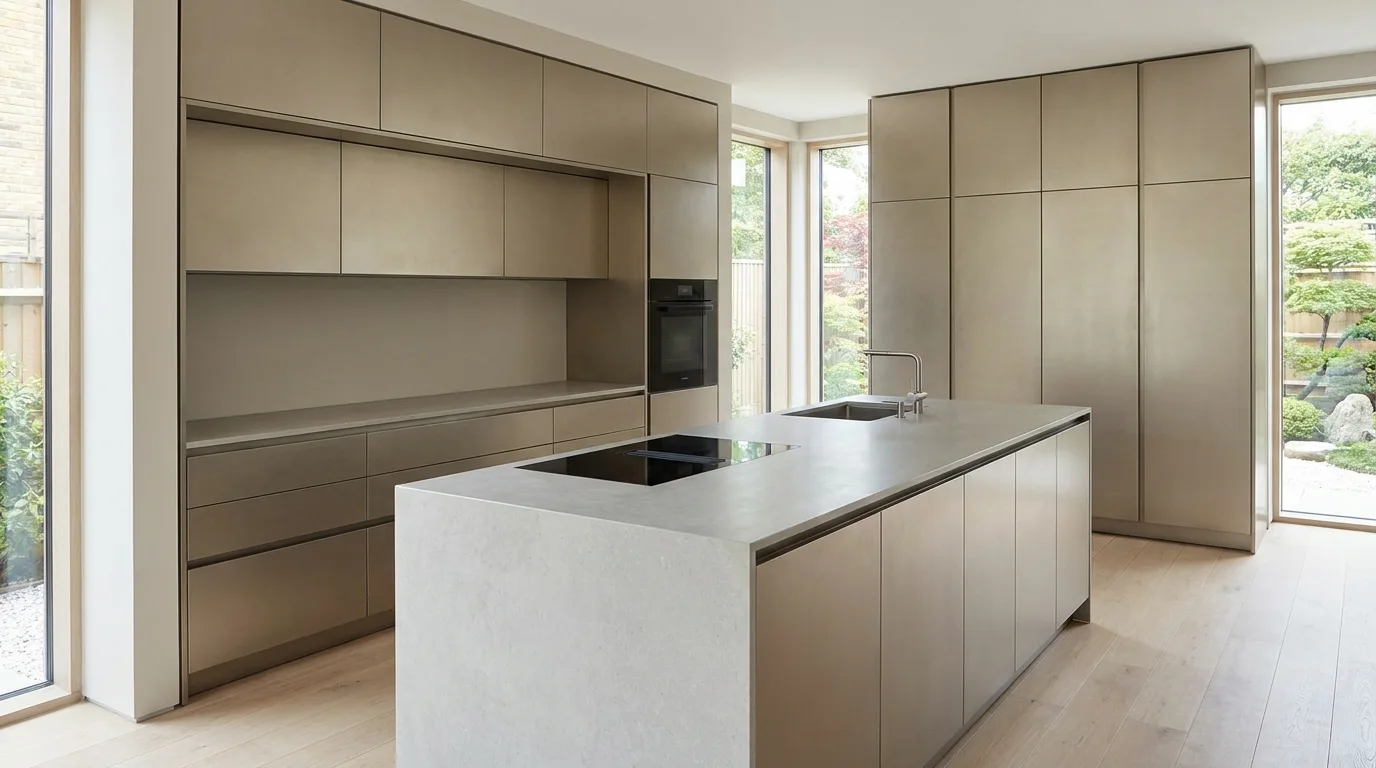
Pairing aluminium cabinetry with quartz countertops creates a polished kitchen that combines a modern cabinet material with a durable work surface. White or lightly veined quartz can brighten darker aluminium cabinets, while charcoal or concrete-inspired quartz can create a dramatic monochromatic scheme. When selecting the combination, compare cabinet samples with the actual countertop sample under both daylight and artificial lighting. Undertones matter: a cool grey cabinet may look mismatched beside a warm beige stone effect. The countertop edge profile should also suit the cabinet style. Slim edges generally complement minimalist aluminium doors, while a slightly more substantial edge can work in a transitional kitchen. Remember that the countertop, backsplash, and cabinet finish should support each other rather than competing for attention.
10. Aluminium Cabinets with Stainless Steel Appliances
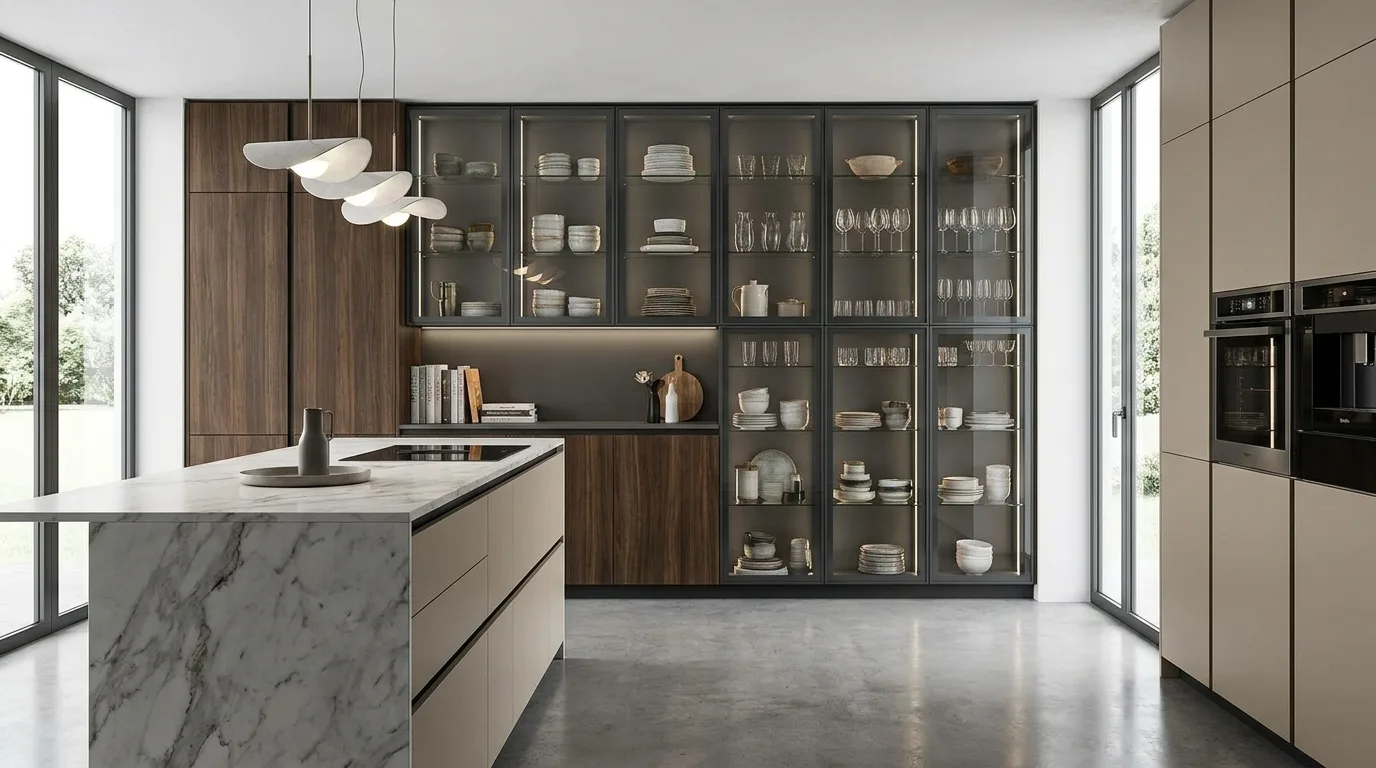
Stainless steel appliances naturally complement aluminium cabinetry because both materials share a contemporary, functional character. This combination can create a professional-looking kitchen without requiring an elaborate decorative scheme. To prevent the room from feeling overly metallic, introduce contrast through the countertop, backsplash, flooring, or cabinet color. For example, warm wood-look aluminium doors can soften stainless appliances, while white cabinets can make them feel crisp and intentional. If you are mixing several metal finishes, repeat each finish at least once so the choices appear deliberate. Also pay attention to surface textures. Brushed stainless steel tends to coordinate more comfortably with satin or matte aluminium than highly reflective cabinet fronts. The goal is a balanced kitchen where the appliances integrate into the cabinetry rather than becoming isolated visual elements.
11. Colorful Powder-Coated Aluminium Cabinets
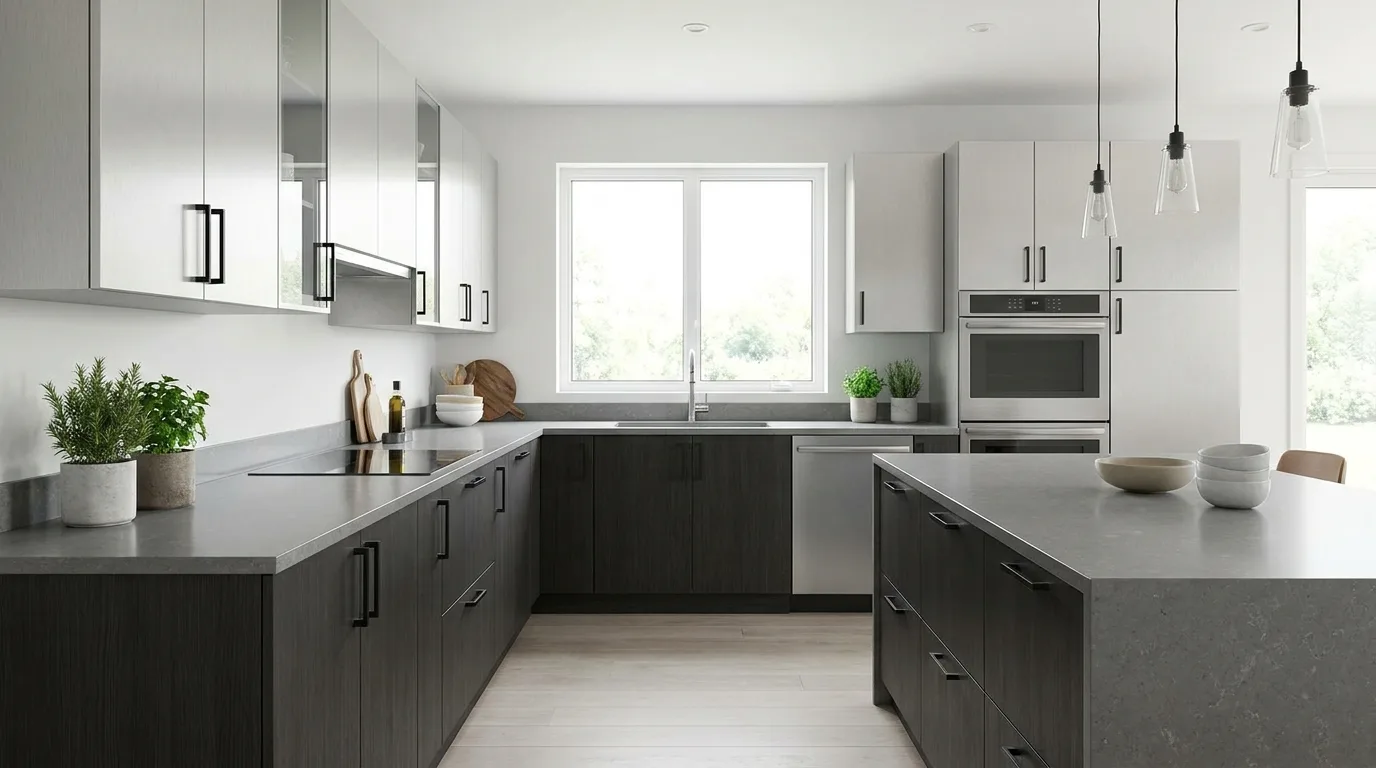
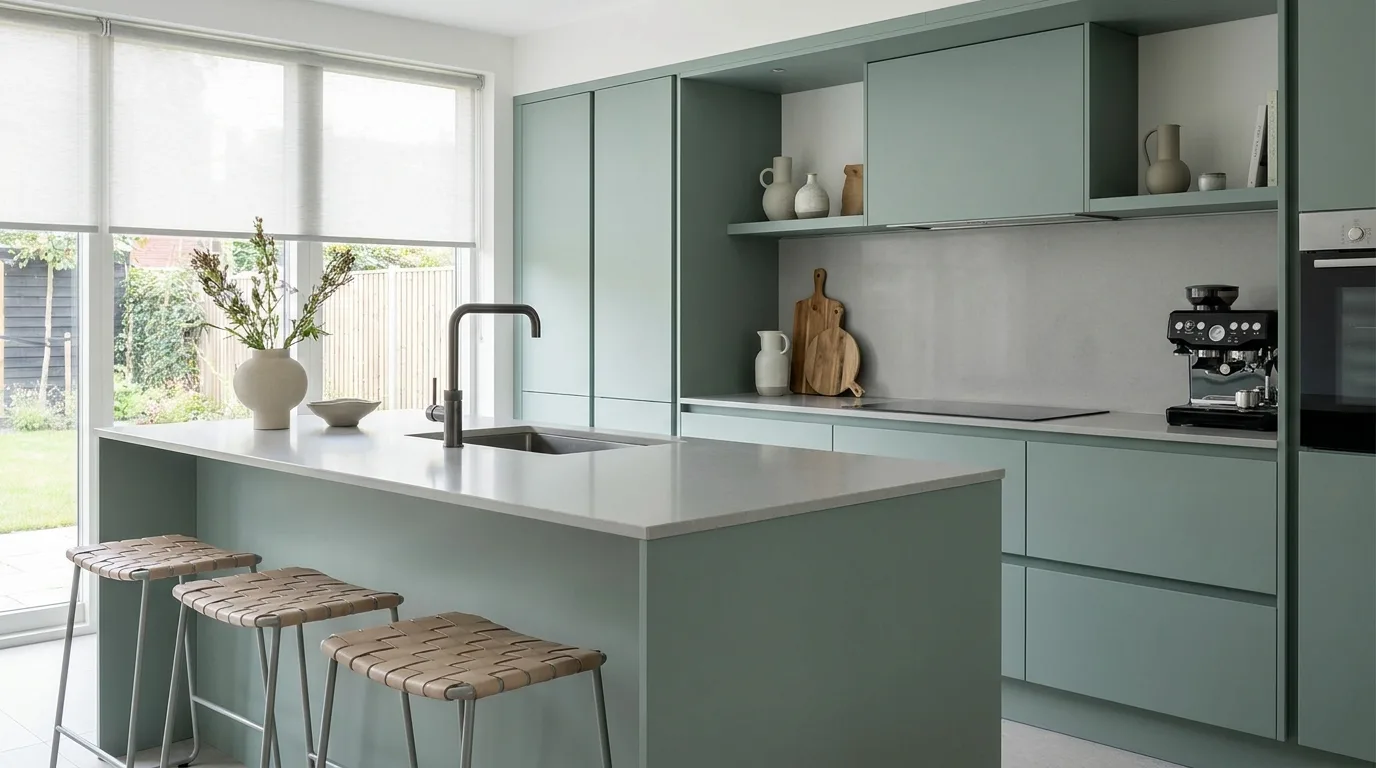
Powder coating gives aluminium cabinetry an opportunity to move beyond basic silver, grey, black, and white. Depending on the manufacturer, you may be able to choose from numerous colors and levels of sheen. Deep green, muted blue, terracotta, cream, and soft sage can all create distinctive kitchens while maintaining the practical qualities of aluminium. Bold colors are easiest to manage when used on base cabinets or a single cabinet wall, with neutral materials elsewhere. If you choose a strong color, request a physical finish sample and inspect it in your kitchen’s lighting conditions. Powder-coated surfaces can be durable, but the quality of preparation and application still matters. Ask the cabinet supplier about coating specifications, cleaning recommendations, and how scratches or chips are handled before committing to a custom color.
12. Aluminium Cabinets with Open Shelving
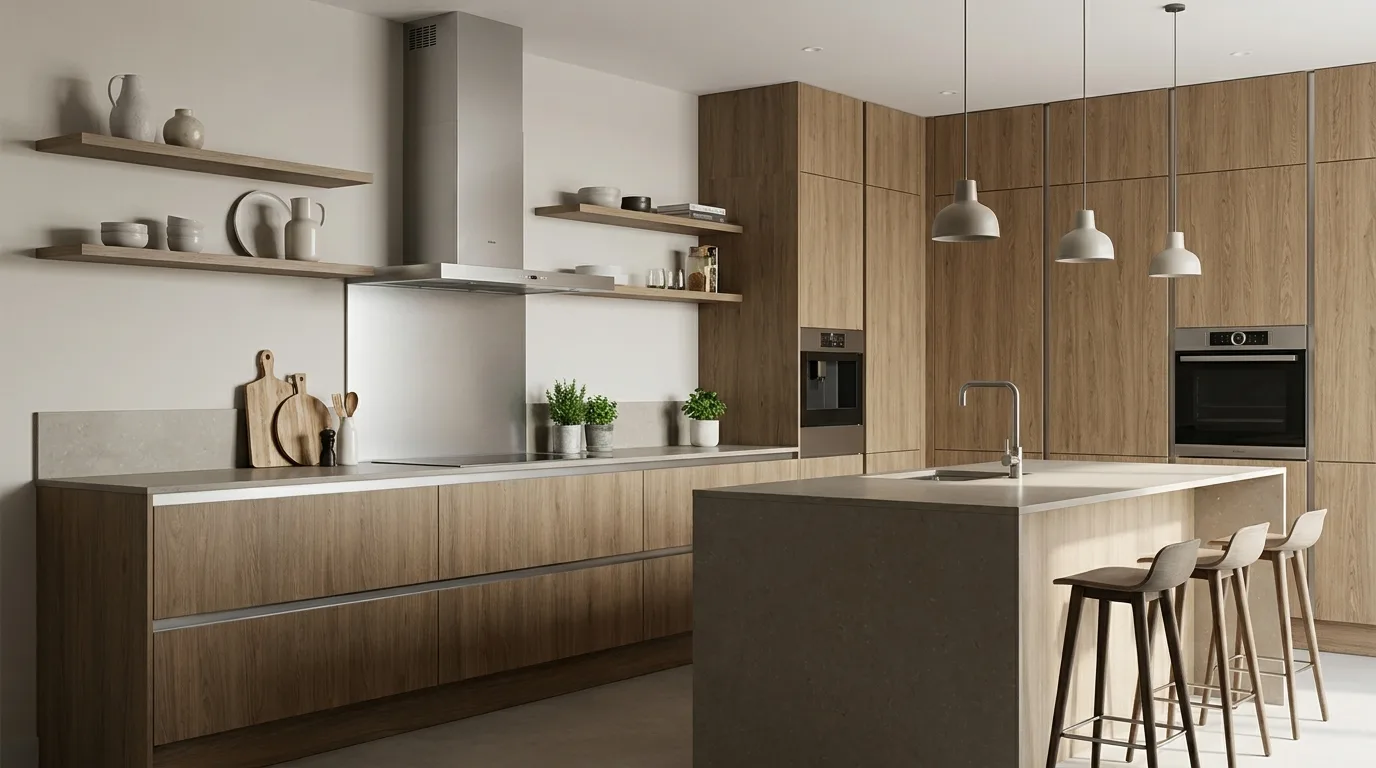
Open shelving can prevent a wall of aluminium cabinetry from looking too enclosed while providing convenient access to everyday items. A practical layout might use closed aluminium cabinets for cookware, food storage, and less attractive equipment, with one or two open shelves for frequently used dishes, mugs, cookbooks, or decorative pieces. Shelves can be made from wood, glass, stone, or metal depending on the desired style. Wood shelving is particularly effective because it introduces warmth against cool aluminium. Avoid placing too many objects on open shelves, especially near the cooking area where grease and dust can accumulate. If maintenance is a concern, keep the shelves away from the cooktop and use them primarily for items that are regularly washed or handled.
13. Aluminium Cabinets for Humid Environments
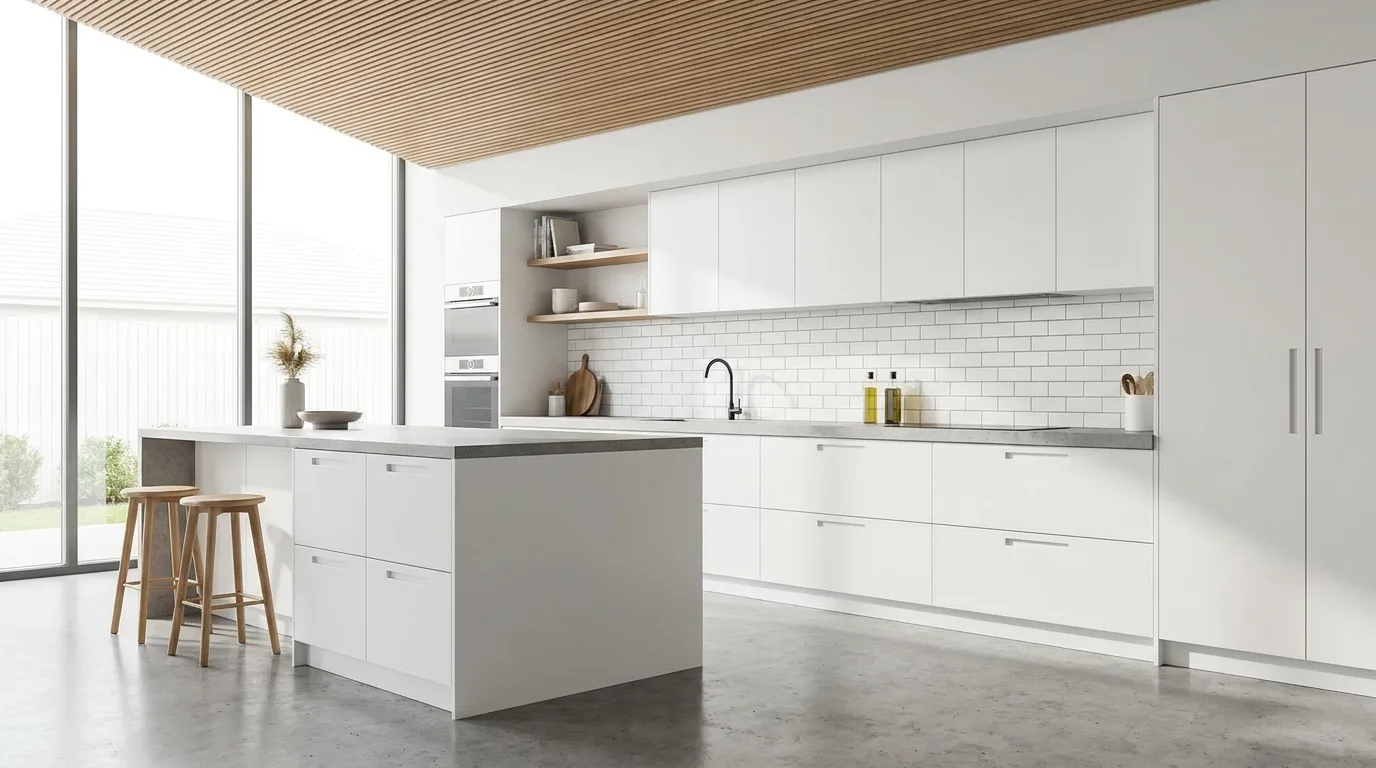
One of the major reasons homeowners consider aluminium cabinetry is its suitability for environments where moisture is a concern. Unlike untreated wood-based materials, aluminium itself does not absorb water and swell in the same way. This can make it attractive for humid climates, utility areas, and kitchens where spills are common. However, the complete cabinet system matters. Hinges, screws, drawer runners, fasteners, edges, and protective coatings should all be suitable for the environment. Poor installation or incompatible hardware can create problems even when the cabinet panels themselves are moisture resistant. Ask the supplier how joints are protected and what hardware is used. Good ventilation is still important because humidity affects appliances, walls, food storage, and other kitchen components regardless of cabinet material.
14. Minimalist Aluminium Kitchen with Integrated Storage
For a minimalist kitchen, aluminium cabinets can provide a clean foundation for integrated storage and concealed appliances. Flat-front doors, consistent cabinet lines, and a limited color palette create a calm appearance while allowing the storage system to do most of the practical work. Consider deep drawers for pots and pans, vertical compartments for baking trays, internal bins for recycling, and pull-out storage for oils and spices. Appliance garages or tall cabinet towers can conceal small appliances when they are not being used. The key is to plan the interior before finalizing the exterior. A beautiful minimalist kitchen quickly becomes frustrating if frequently used items are difficult to reach. Use the cabinet layout to establish dedicated storage zones for cooking, preparation, cleaning, and pantry items.
15. Custom Aluminium Kitchen Cabinets
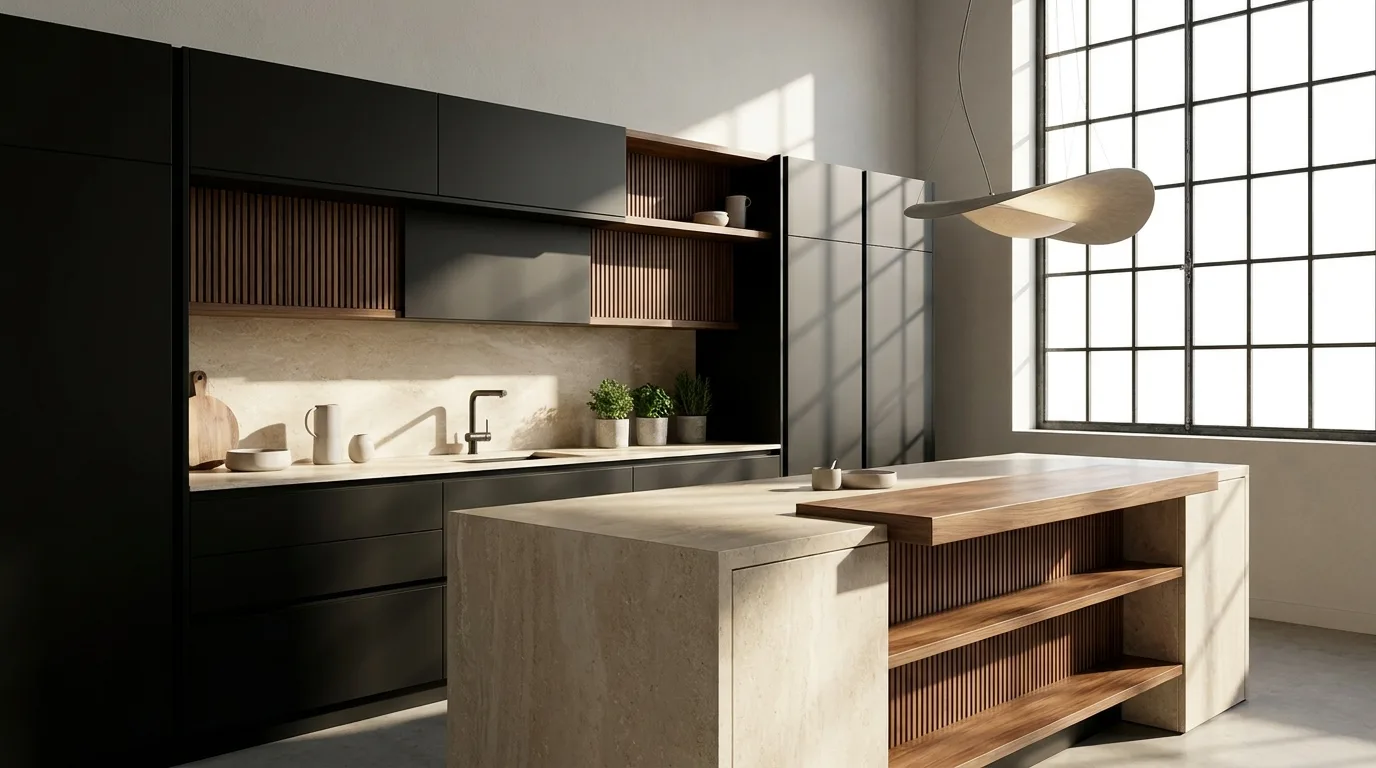
Custom aluminium cabinetry is worth considering when your kitchen has unusual dimensions, awkward corners, or specific storage requirements. A custom design allows cabinet widths, drawer configurations, finishes, and internal accessories to be adjusted to the room instead of forcing the room to fit standard modules. Before ordering, create a detailed list of everything that needs to be stored, from large cookware to small appliances and cleaning supplies. Discuss ventilation, appliance clearances, plumbing access, electrical points, and countertop thickness with the cabinet designer. It is also important to clarify the warranty, hardware specifications, coating durability, installation process, and repair options. Although custom cabinets may cost more initially, thoughtful planning can reduce wasted space and produce a kitchen that remains convenient for years.
What Are the Main Advantages of Aluminium Kitchen Cabinets?
Aluminium cabinets appeal to homeowners because they combine a contemporary appearance with several practical characteristics. They are lightweight compared with many traditional cabinet constructions, resistant to moisture, and relatively easy to clean. Their ability to accept different finishes also makes them suitable for a wide range of interior styles. In humid locations, aluminium can be particularly attractive because the material itself does not behave like moisture-sensitive wood products. However, performance depends heavily on the quality of the cabinet construction, finish, hardware, and installation.
- Moisture-resistant cabinet material when properly constructed.
- Easy-to-clean surfaces suitable for busy kitchens.
- Modern appearance with many color and finish options.
- Lightweight construction that can simplify handling and installation.
- Good potential for long-term durability when quality hardware and finishes are used.
Are Aluminium Kitchen Cabinets Worth It?
Aluminium kitchen cabinets can be an excellent investment when durability, moisture resistance, easy maintenance, and contemporary styling are priorities. They are especially worth considering for kitchens exposed to humidity or frequent spills. The material is not automatically better than every wood-based cabinet, though; construction quality, hardware, finish, and installation all influence the final result. Before choosing a supplier, compare samples, inspect hinges and drawer mechanisms, ask about warranties, and confirm how the cabinets should be cleaned. With the right specifications, aluminium cabinetry can deliver a practical kitchen that looks modern without demanding excessive maintenance.