A black accent wall can instantly change the character of a room, adding depth, contrast, and a sophisticated focal point without requiring a complete makeover. Although dark walls may seem dramatic, black can work beautifully in both small and large spaces when balanced with thoughtful lighting, furniture, and lighter surrounding finishes.
The key is choosing the right wall and pairing the black finish with materials that complement your home’s existing style. From cozy bedrooms and dramatic living rooms to modern kitchens and elegant home offices, these black accent wall ideas show how to use this bold color in practical, approachable ways.
1. Classic Matte Black Living Room Wall
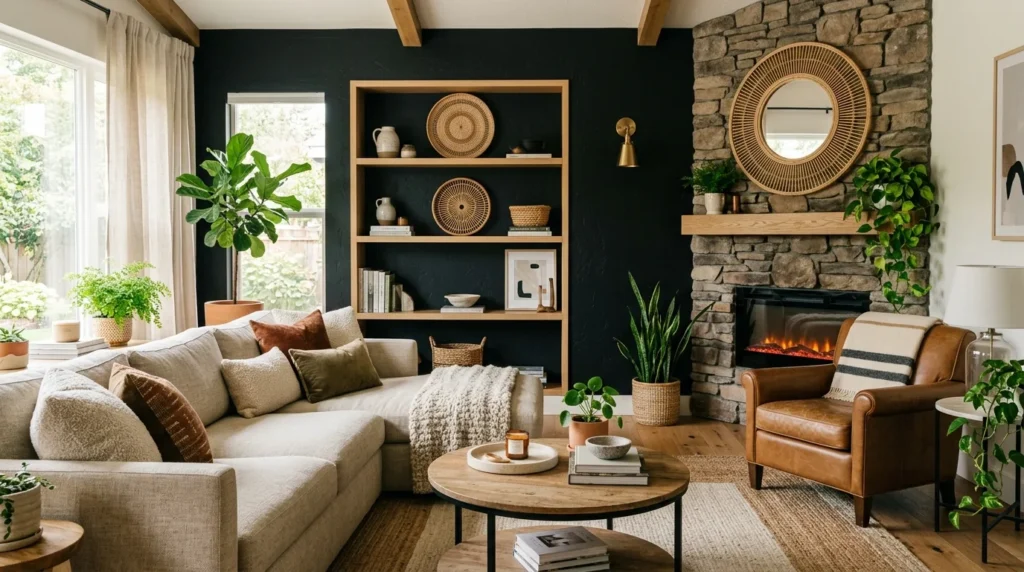
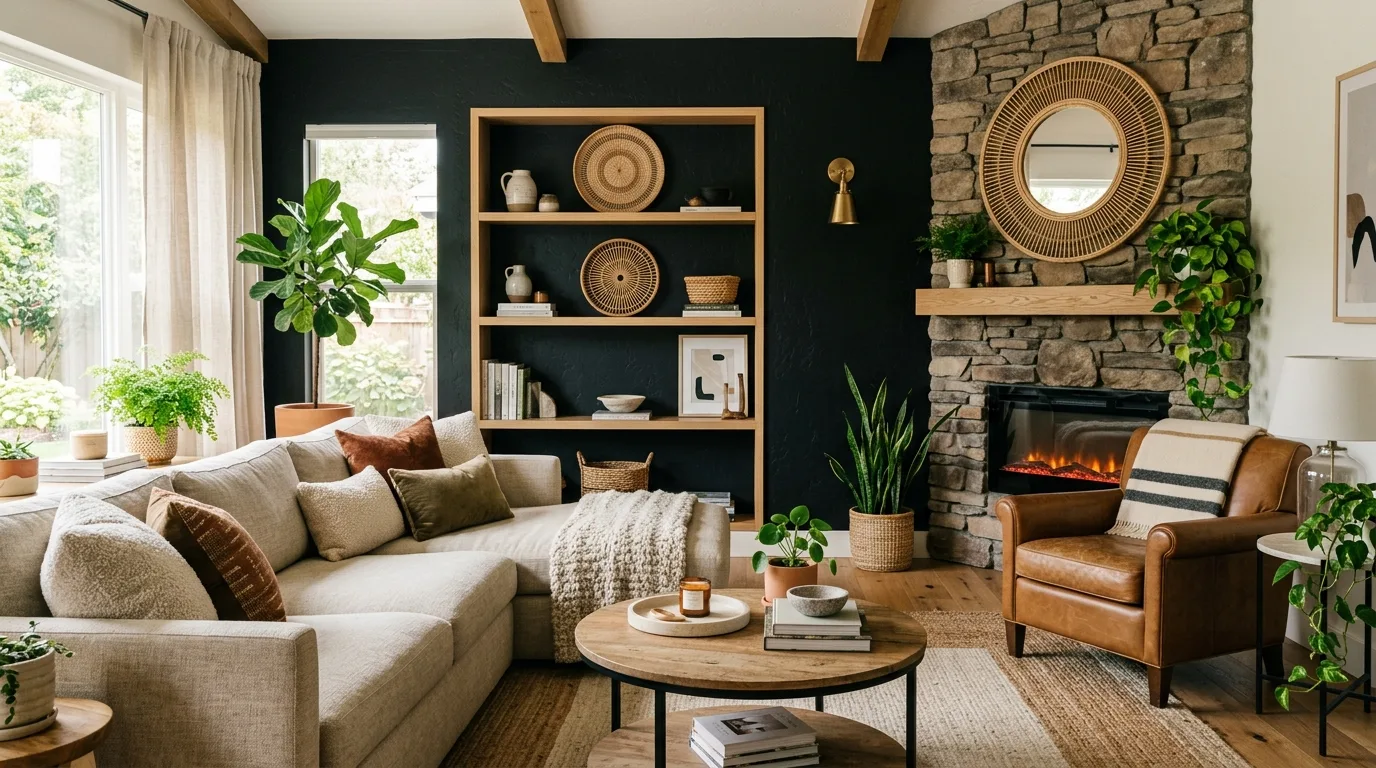
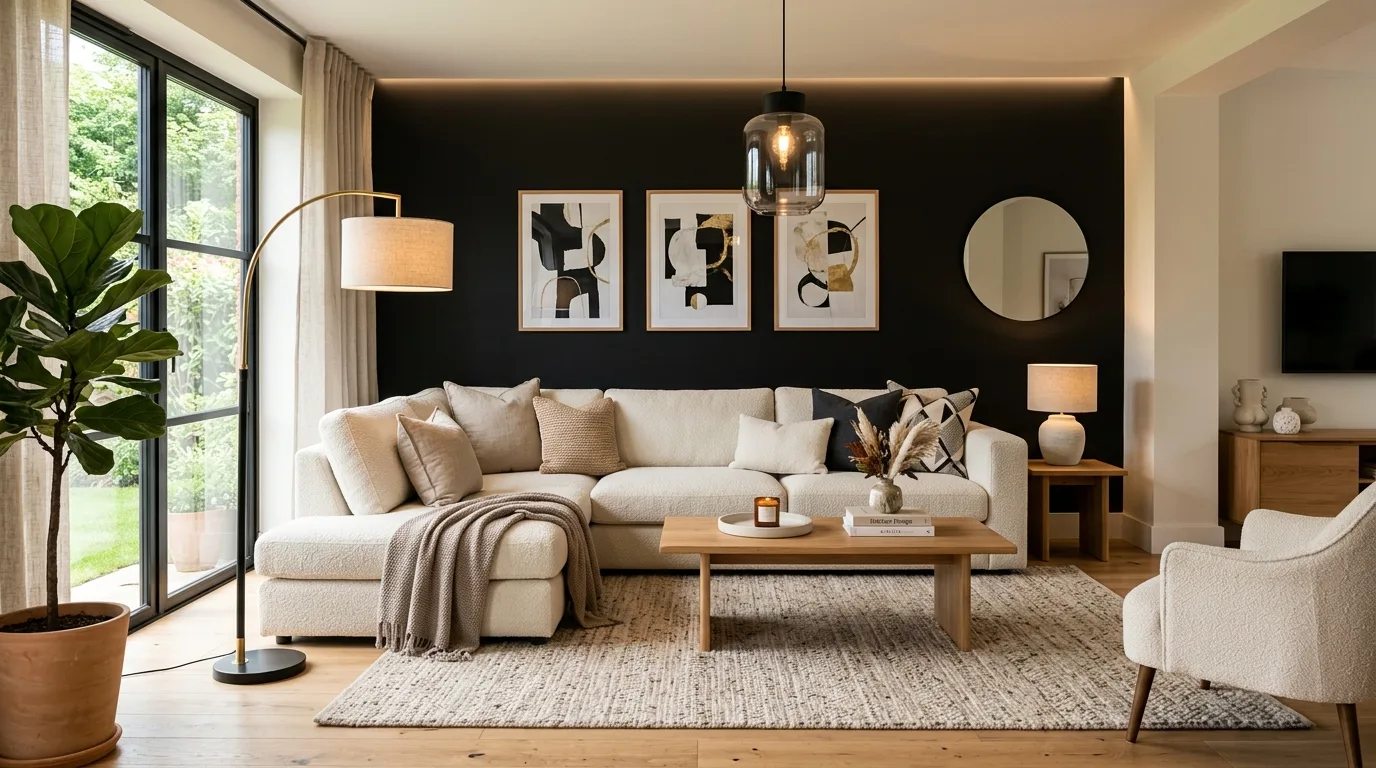
A matte black accent wall is one of the easiest ways to create a sophisticated focal point in a living room. The flat finish absorbs light rather than reflecting it, giving the wall a soft, refined appearance that works particularly well with contemporary, modern farmhouse, industrial, and minimalist interiors. Choose the wall behind the sofa, television, or fireplace so the dark surface naturally anchors the room.
Balance the black with lighter furniture, warm wood, cream textiles, or neutral artwork. A large area rug can soften the contrast and prevent the room from feeling visually heavy. If the room receives limited natural light, use floor lamps, table lamps, or wall sconces to add layers of illumination. Matte black also hides minor surface imperfections better than high-gloss finishes, making it a practical choice for a dramatic feature wall.
2. Black Bedroom Accent Wall
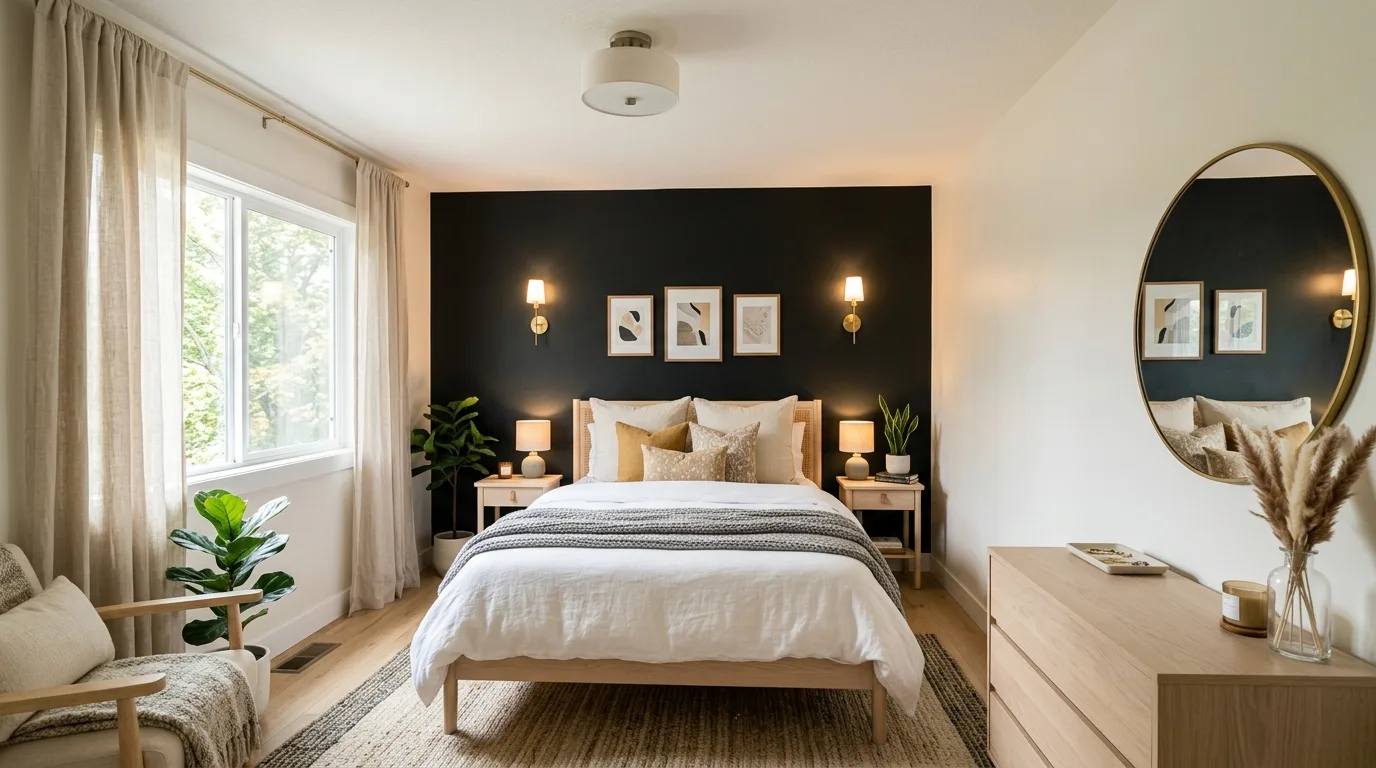
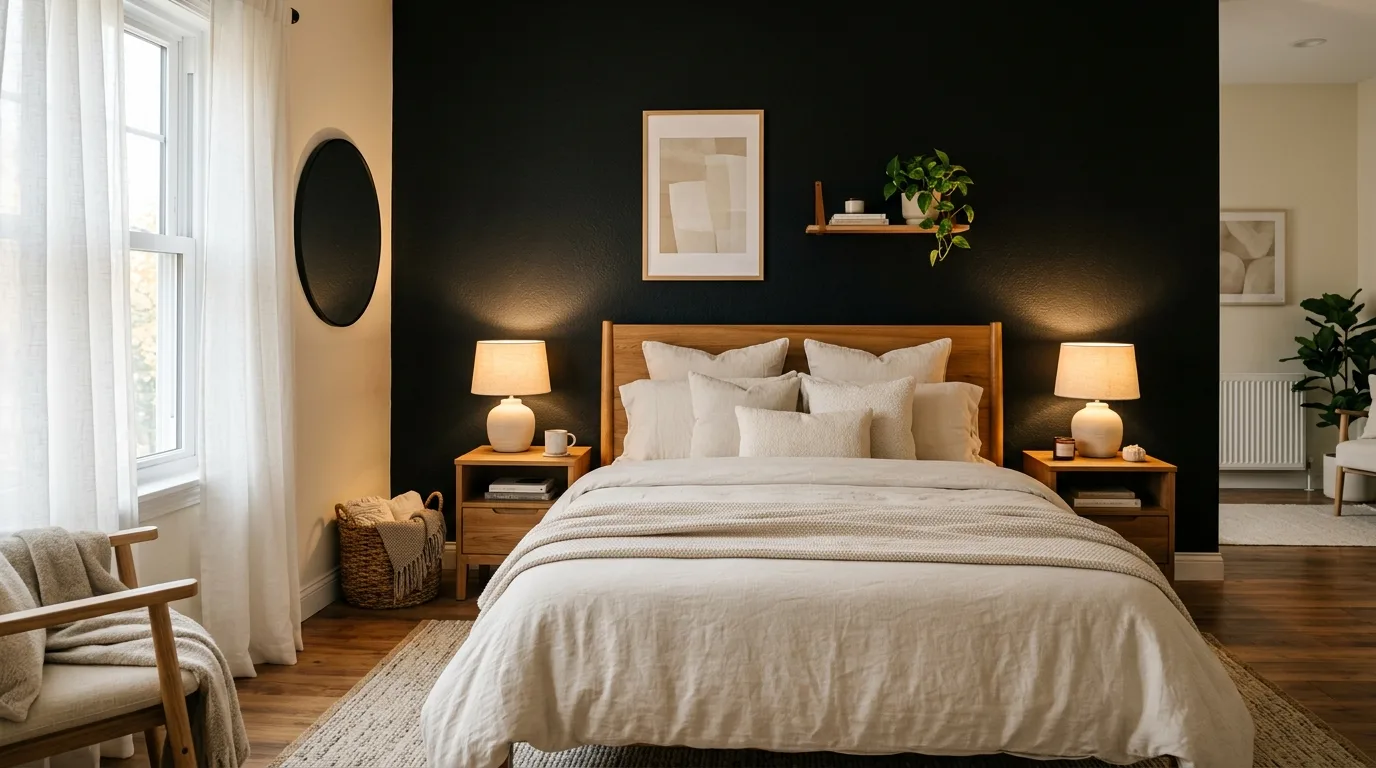
Black can create a surprisingly cozy bedroom when used behind the bed. Rather than making the space feel harsh, a dark backdrop can give the sleeping area an intimate, cocoon-like quality. A matte or softly textured black wall works especially well with upholstered headboards, white bedding, warm timber, and muted neutral accessories.
Keep the rest of the room relatively calm so the accent wall remains the focal point. Soft cream, beige, taupe, and warm gray can balance the depth of black without creating an overly stark contrast. Layered bedside lighting is particularly important because a dark wall can absorb illumination. Consider matching black hardware or lighting elsewhere in the room to create visual continuity. For a smaller bedroom, using black on only the wall behind the bed can deliver the dramatic effect without making every surface feel dark.
3. Black Wall With Vertical Wood Slats
Combining black with natural wood is an effective way to create an accent wall that feels dramatic without becoming cold. Vertical wood slats over a black background add texture, rhythm, and architectural interest while allowing glimpses of the dark color to remain visible between the slats. This approach works particularly well behind a television, sofa, bed, or dining area.
Choose a wood tone according to the mood you want. Light oak creates a bright Scandinavian-inspired contrast, while walnut or darker timber produces a richer, more sophisticated appearance. Vertical lines can also visually emphasize ceiling height, which makes this treatment useful in rooms with relatively low ceilings. Keep the surrounding walls simple so the slatted feature does not compete with patterned furniture or busy artwork. The combination of natural wood and black is especially effective when repeated through smaller details such as shelving, frames, or furniture legs.
4. Black Fireplace Feature Wall
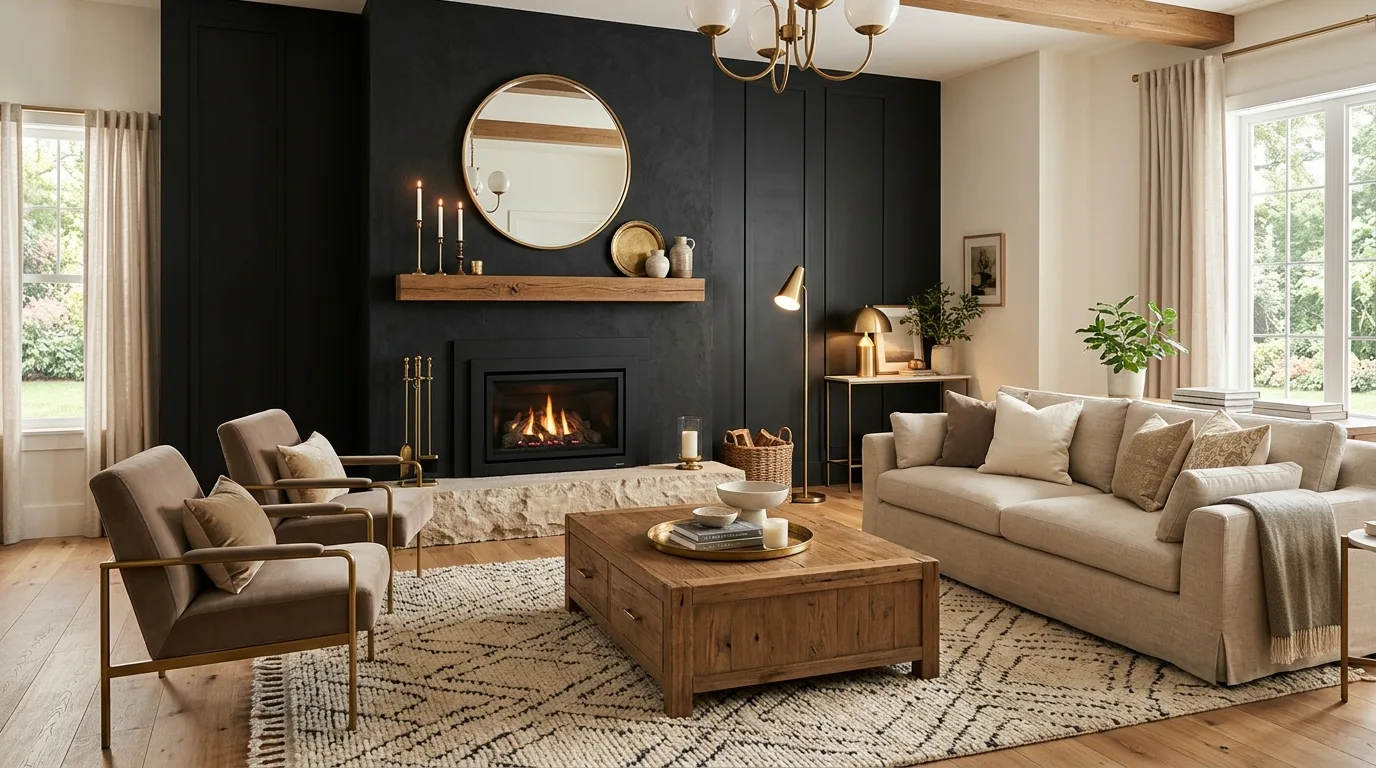
A fireplace already acts as a natural focal point, and painting its surrounding wall black can make it even more visually striking. The dark backdrop emphasizes the fireplace itself while giving the entire area a grounded, architectural appearance. This idea works with traditional mantels, modern linear fireplaces, stone surrounds, and simple built-in designs.
If your fireplace has light stone, white tile, or a pale mantel, black creates strong contrast and allows those materials to stand out. For a more cohesive look, repeat black in the fireplace trim, lighting fixtures, picture frames, or nearby furniture. Warm materials such as oak flooring, brass accents, and textured fabrics can keep the composition inviting. Before painting, make sure the chosen product is appropriate for the wall surface and the fireplace’s surrounding heat conditions. A black fireplace wall can become the centerpiece of the room without requiring extensive structural changes.
5. Black Accent Wall in a Home Office
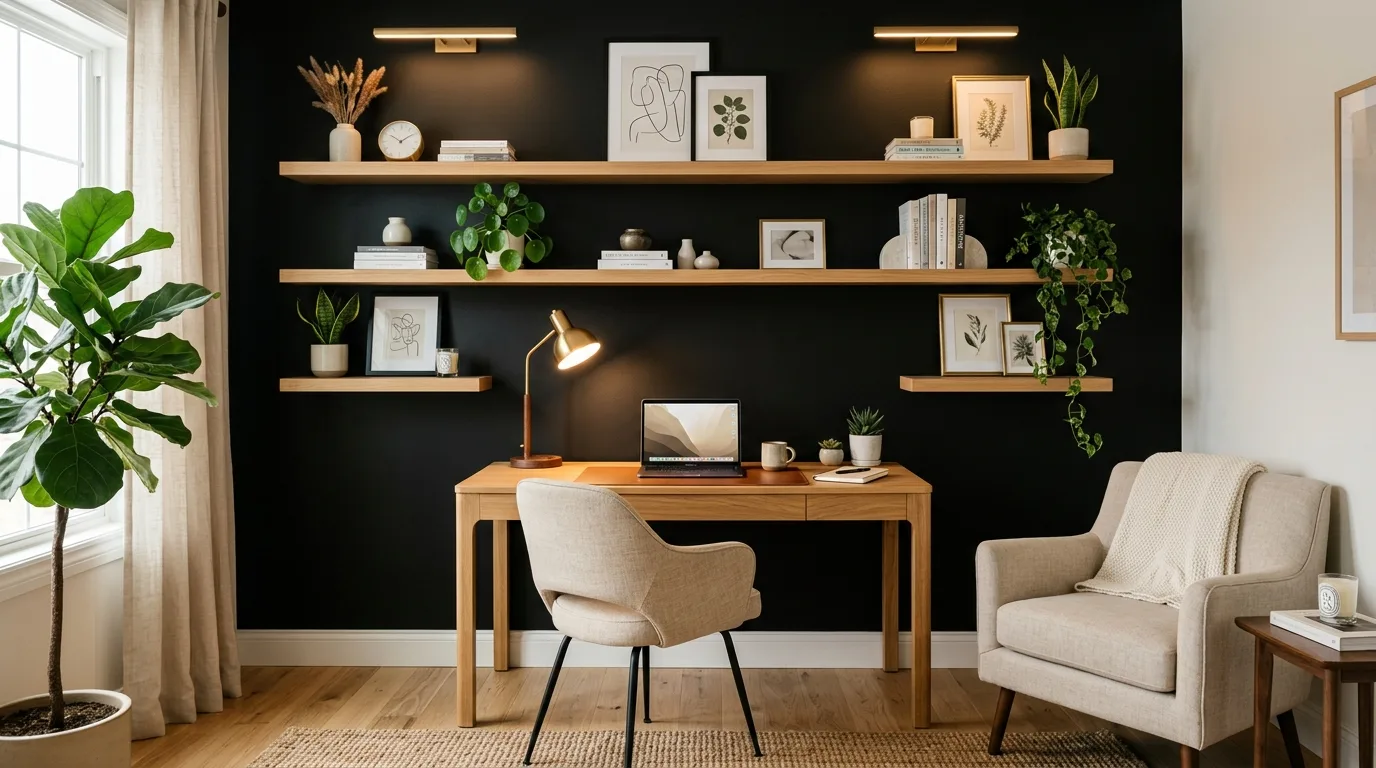
A black accent wall can give a home office a polished, intentional appearance while providing a strong backdrop for shelves, artwork, and a desk. Consider placing the dark wall behind your workspace so it frames the desk and creates a defined working zone, particularly in an open-plan room where the office does not have its own walls.
To keep the office functional rather than gloomy, combine black with natural wood, warm white lighting, and lighter storage pieces. Brass or brushed-metal accents can add a subtle sophisticated touch, while greenery introduces contrast and softness. If you regularly participate in video calls, test the wall behind your desk under camera lighting before committing to the finish. A black background can look professional on camera, but excessive darkness or strong reflections may affect image quality. Matte finishes are generally easier to manage than glossy ones in rooms with multiple light sources.
6. Black Wall With Gallery Art
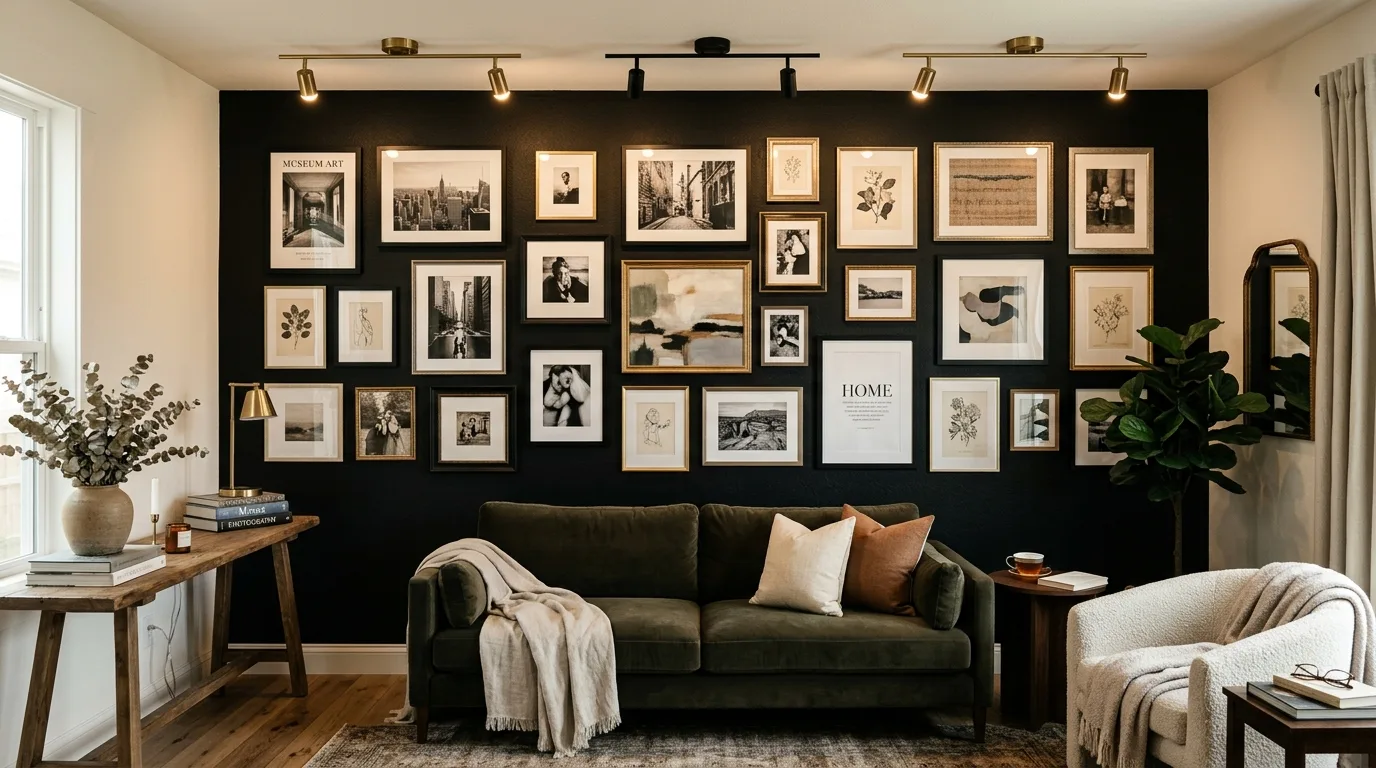
Black makes an excellent gallery-style backdrop because artwork, photographs, and decorative objects can stand out strongly against a dark surface. A black accent wall is particularly effective when you have a collection of framed pieces that might otherwise look disconnected across several lighter walls.
Use frames strategically to create the look you want. White or light wood frames produce a crisp contrast, while black frames create a more seamless, layered gallery effect. Metallic finishes such as brass or antique gold can introduce warmth and elegance. Arrange artwork around a central visual line rather than simply filling every available space. If you are working with colorful prints, the black background can make saturated colors appear more prominent. Good lighting matters here too, so use directional picture lights, adjustable spotlights, or nearby lamps to illuminate important pieces without creating harsh glare.
7. Black Kitchen Accent Wall
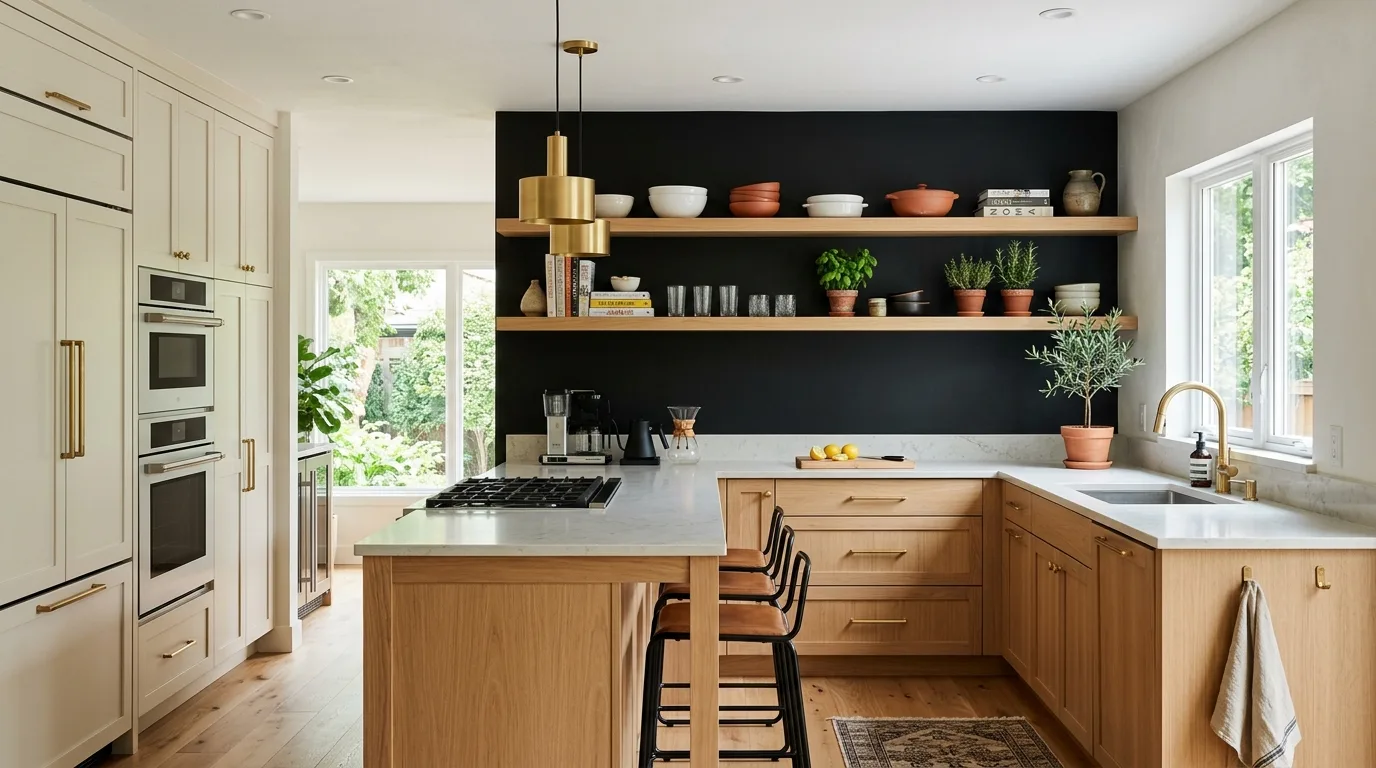
A black accent wall can give a kitchen a modern, sophisticated edge without requiring all the cabinets to be dark. Consider using black on a dining nook wall, the wall behind open shelving, or a section that visually connects the kitchen with an adjacent living space. This creates contrast while allowing lighter cabinets and countertops to remain the dominant practical surfaces.
Black pairs particularly well with white marble-look surfaces, natural wood cabinets, warm metallic hardware, and light flooring. If the kitchen already contains several strong finishes, choose a simple matte black wall rather than adding additional patterns. Washable, durable paint is a practical choice in areas exposed to cooking activity. You can also use black tile or a dark textured wall treatment when greater durability or visual dimension is desired. The goal is to make the dark wall feel integrated with the kitchen rather than like an unrelated patch of color.
8. Black Accent Wall With Built-In Shelving
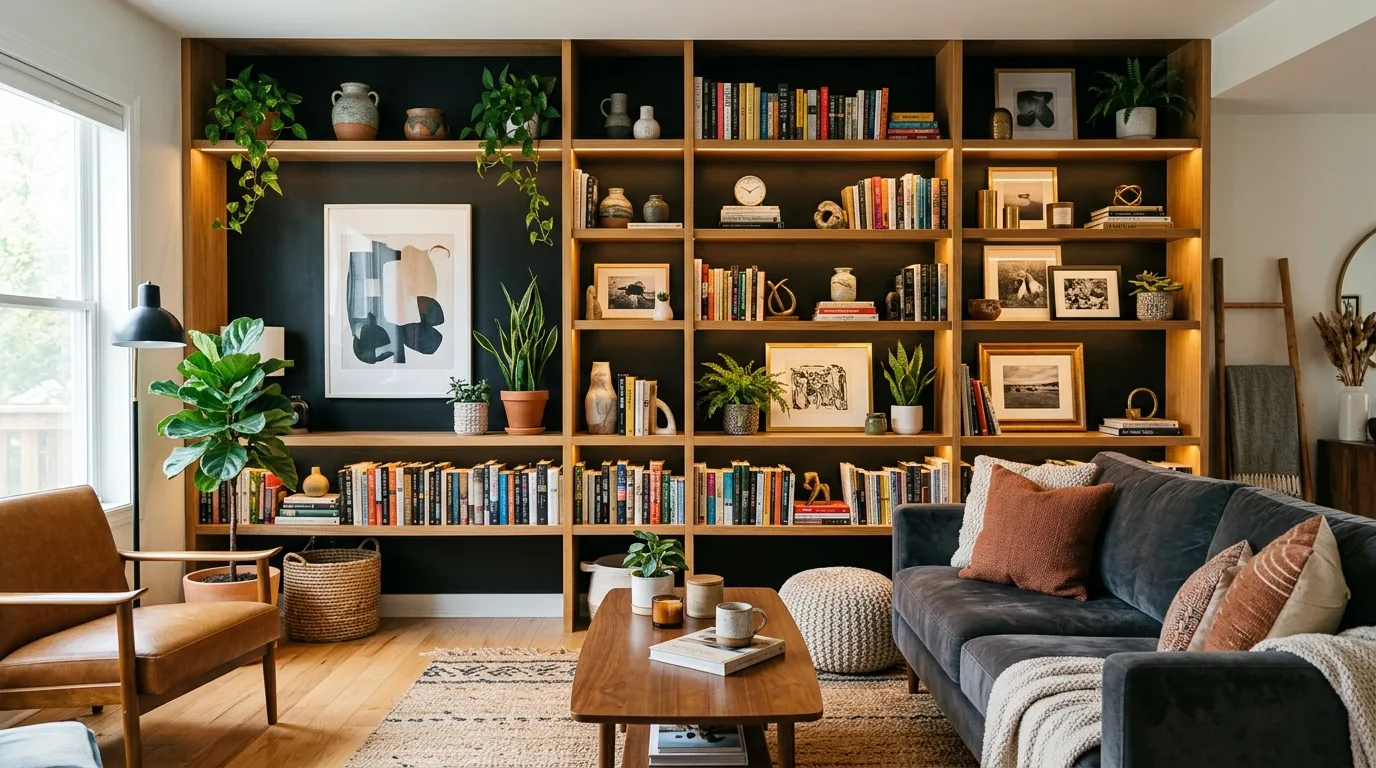
Painting the wall behind built-in shelves black can make the shelving architecture look more intentional while giving displayed objects a dramatic backdrop. Books, ceramics, framed art, plants, and collectibles become more visually defined against the dark surface. This approach works particularly well in living rooms, studies, dining rooms, and hallways with recessed storage.
For a balanced composition, avoid filling every shelf with similarly sized objects. Mix books with decorative pieces and leave some open space so the black background remains visible. Light-colored ceramics and warm wood accessories create attractive contrast, while metallic details can add small points of brightness. If the shelving itself is also black, vary textures through wood, woven baskets, paper, and ceramics to keep the wall from looking flat. Integrated lighting is another useful addition because small LED fixtures can highlight the shelves and prevent the dark wall from disappearing after sunset.
9. Black Board-and-Batten Accent Wall
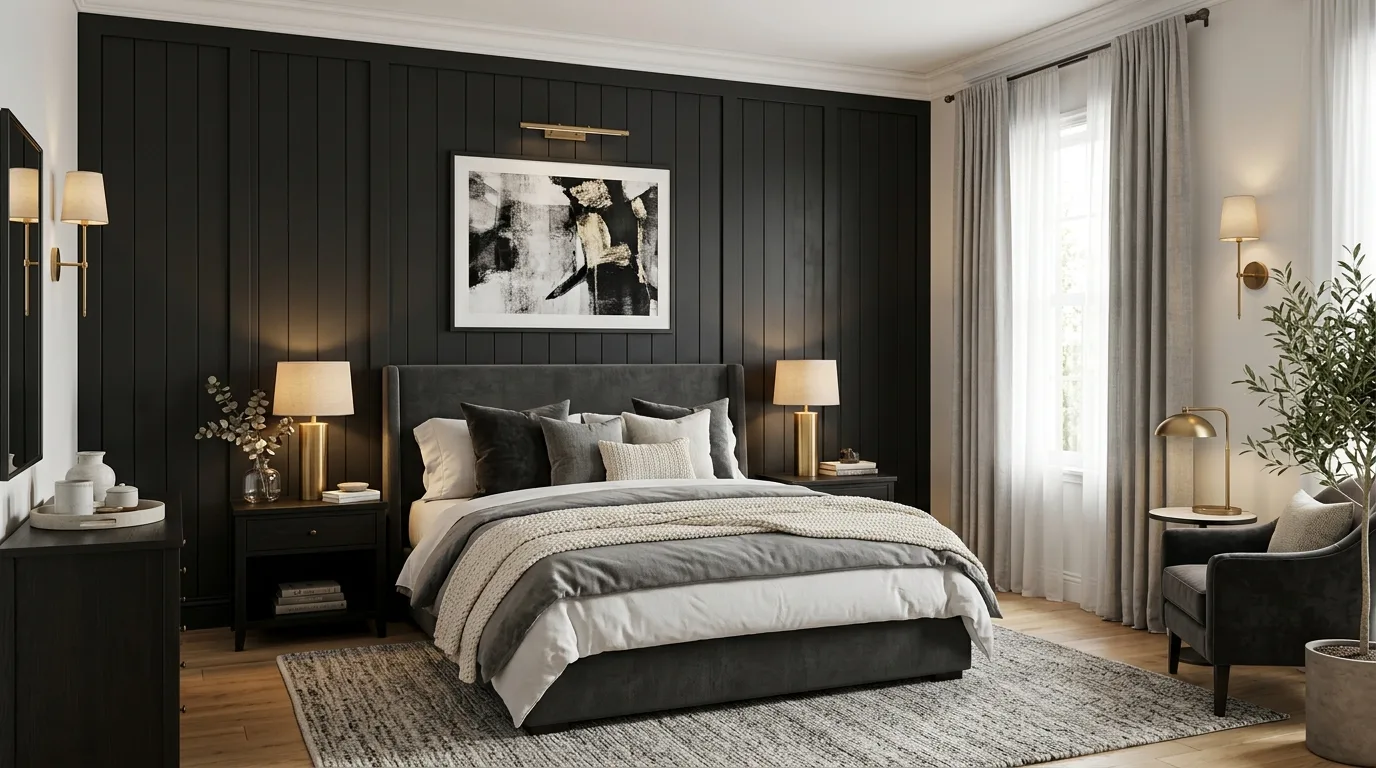
For a black accent wall with architectural character, consider board-and-batten detailing. The raised strips create geometric structure across the wall, giving a simple paint color considerably more depth. This treatment is especially attractive in bedrooms, entryways, dining rooms, and transitional interiors where you want something more decorative than a plain painted surface.
Paint both the wall and the trim the same black shade for a sophisticated monochromatic effect. The changing shadows across the battens will provide subtle dimension without introducing another color. Keep the surrounding walls lighter so the feature remains clearly defined. In a bedroom, a black board-and-batten wall behind the headboard can create an elegant backdrop, while in an entryway it can establish a dramatic first impression. Accurate spacing is important, so measure the wall carefully before installing the trim. Even proportions tend to look more polished than randomly placed battens.
10. Black Accent Wall in the Dining Room
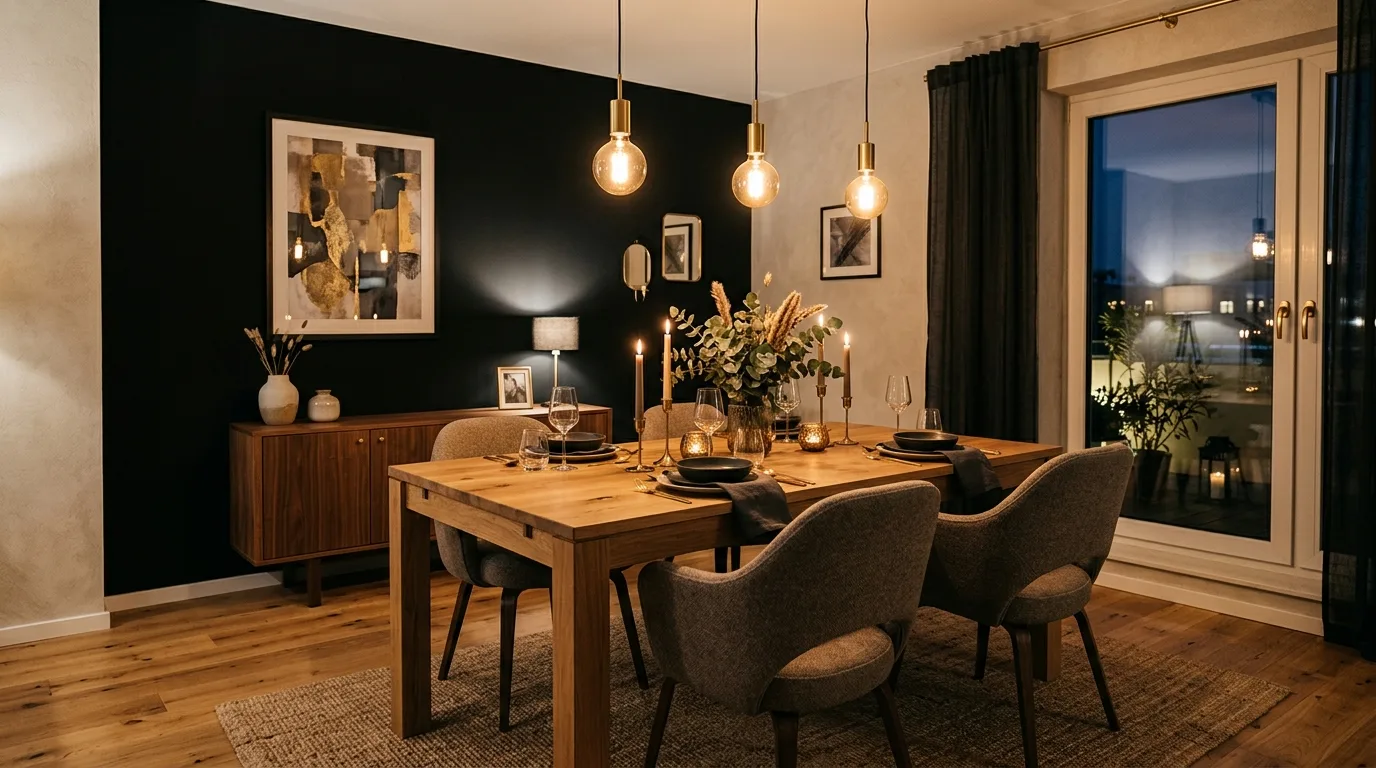
A dining room is an excellent place to experiment with a black accent wall because the darker color naturally creates an intimate, restaurant-inspired atmosphere. Use black behind the dining table, buffet, or artwork to define the eating area and give the room a strong visual center.
Warm lighting is particularly important in a dark dining space. A pendant or chandelier with a warm color temperature can soften the black wall and make evening meals feel inviting. Natural wood tables, upholstered chairs, woven textures, and brass or bronze accents also help create warmth. If your dining room is small, avoid automatically painting every wall dark. A single feature wall can provide the desired drama while preserving visual openness elsewhere. Black also provides a flexible background for seasonal decorating, allowing greenery, flowers, artwork, and table settings to stand out throughout the year.
11. Black Bathroom Accent Wall
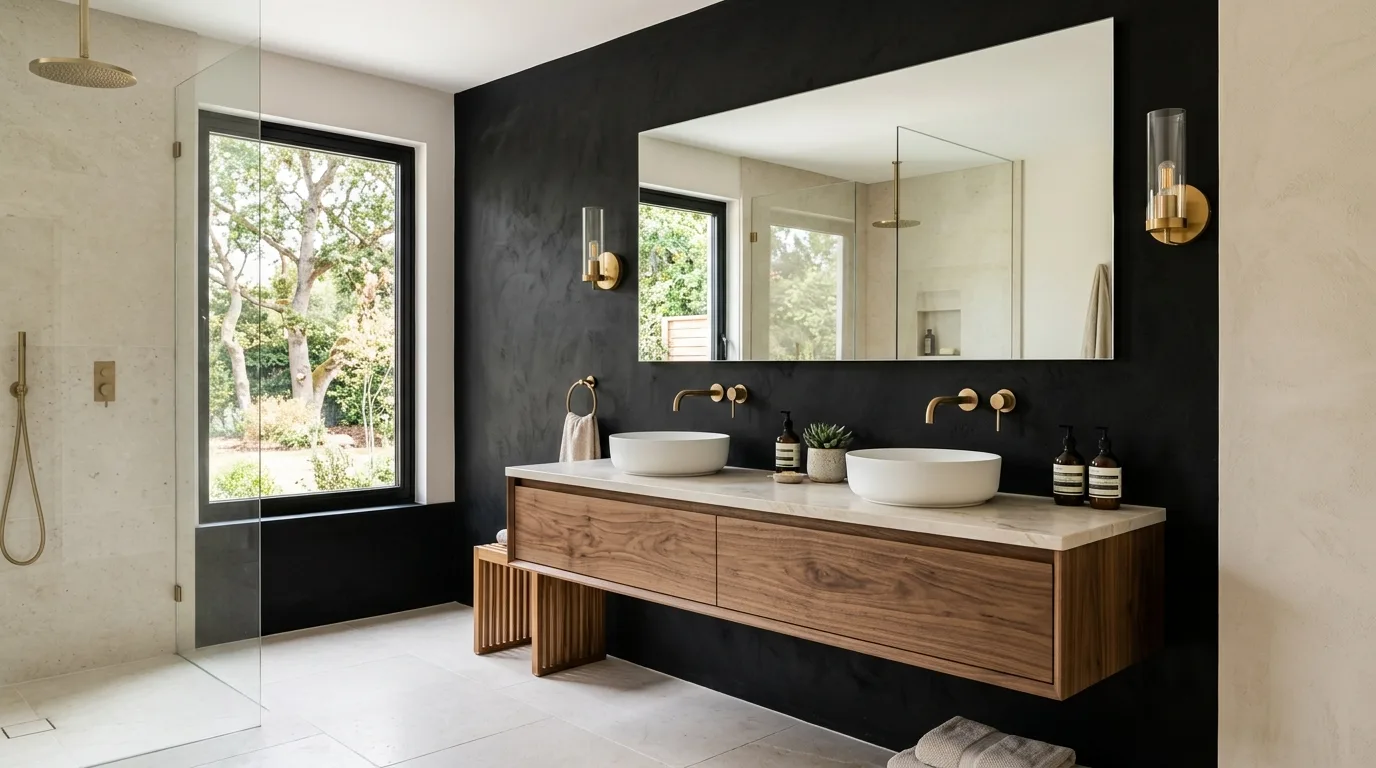
Black can give a bathroom a luxurious, contemporary appearance when used thoughtfully. Instead of covering every wall, use it behind a vanity, bathtub, or freestanding sink to establish a focal point. Matte black paint can create a soft architectural backdrop, while black tile offers a more durable option for areas exposed to moisture.
Pair the dark wall with light stone, pale tile, natural wood, or warm metallic fixtures to prevent the room from becoming visually heavy. Large mirrors are especially useful because they reflect light and visually expand the space. In a small bathroom, good illumination becomes even more important. Combine ceiling lighting with vanity lighting so the black wall does not absorb too much of the available brightness. For wet areas, select materials specifically rated for bathroom conditions rather than treating standard interior paint as a substitute for appropriate waterproof finishes.
12. Black Accent Wall With a Projector or TV
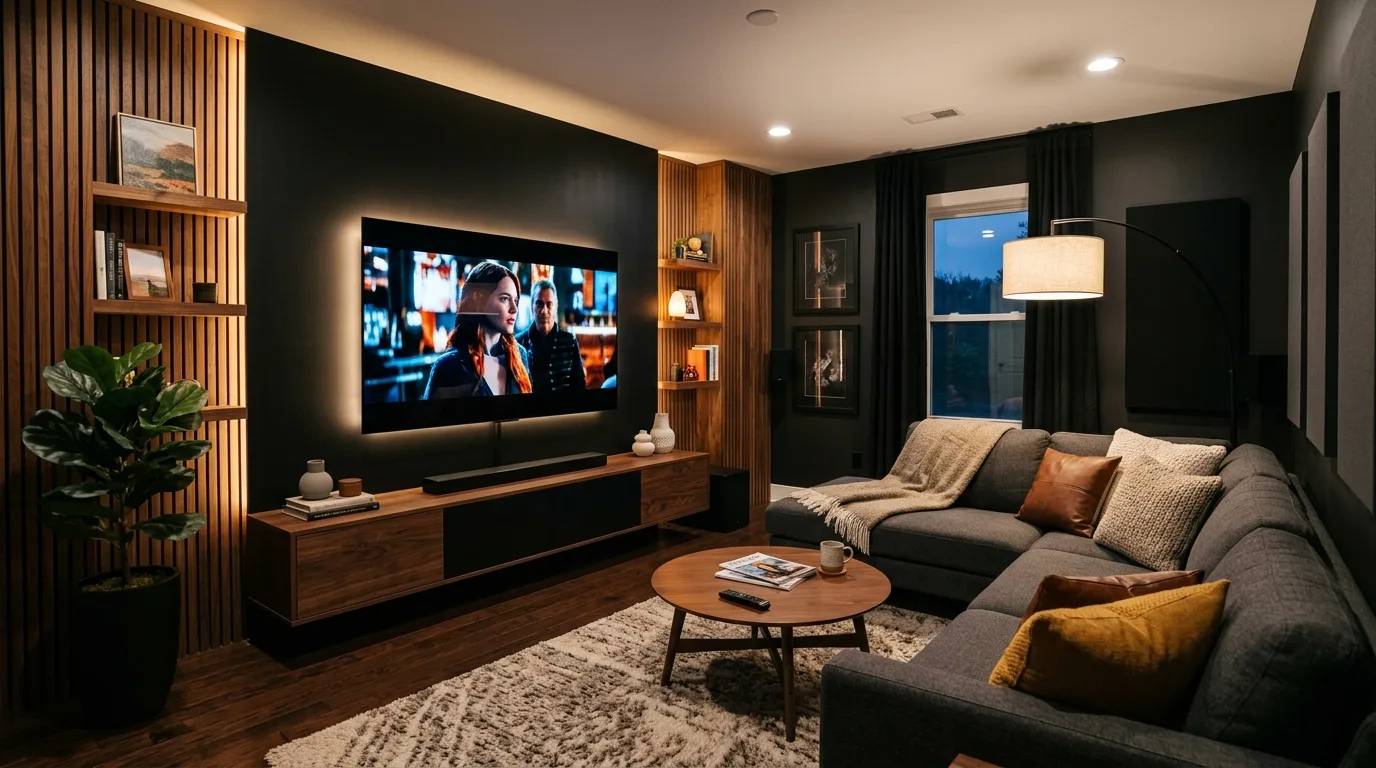
A black wall can work beautifully in a media room or living room where a television or projector is the main feature. The dark background helps reduce visual competition around the screen and can create a theater-inspired atmosphere. This is especially useful in rooms where you want the technology to blend into the architecture rather than dominate the decor.
For a television wall, consider combining black paint with low-profile cabinetry, floating shelves, or wood paneling. Hide cables wherever practical to preserve the clean appearance. If you use a projector, check the manufacturer’s recommendations because a dedicated projection screen may still provide better image performance than projecting directly onto a painted wall. Add comfortable seating, soft textiles, and adjustable lighting so the room remains inviting when the screen is off. Black does not need to dominate the entire media room; one carefully selected wall can establish the mood while lighter surrounding surfaces keep the space versatile.
13. Black Accent Wall in a Small Room
Black walls are sometimes avoided in small rooms because of the assumption that dark colors always make spaces feel smaller. In reality, a carefully positioned black accent wall can add depth and make the room feel more intentional. The trick is controlling how much black you use and keeping the rest of the space visually light.
Choose the wall that you want to emphasize rather than automatically selecting the largest wall. Keep ceilings, adjacent walls, and major furniture pieces lighter when you want a stronger sense of openness. Mirrors can reflect light and prevent the dark surface from feeling closed in, while pale curtains and strategically placed lamps add brightness. A matte finish usually produces a softer effect than a highly reflective dark paint. If you are uncertain about the result, paint a sample section first and observe it during morning, afternoon, and evening light. Natural illumination can change the appearance of black dramatically.
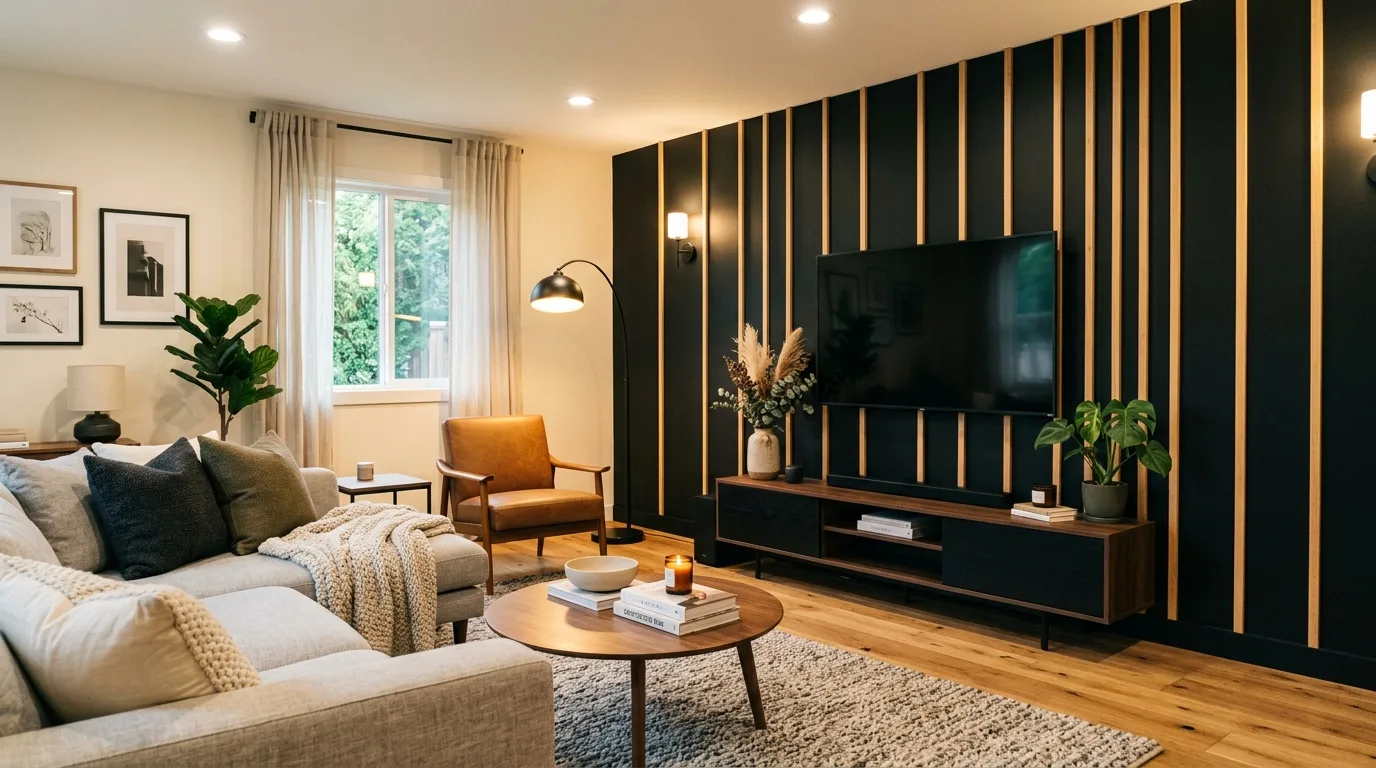
14. Black Accent Wall With Natural Textures
One of the most versatile approaches is to combine a black wall with natural textures such as rattan, linen, timber, stone, leather, and woven materials. These organic finishes prevent black from feeling overly stark and create a layered look that works across modern, bohemian, rustic, and contemporary interiors.
Start with the black wall as the visual anchor, then introduce two or three natural materials rather than trying to use everything at once. A woven pendant, oak console, linen curtains, and a few leafy plants can soften a dark background without competing with it. Stone and ceramics can add tactile variation, while warm wood introduces visual balance. This approach is especially useful if you love dramatic interiors but still want the room to feel comfortable and lived-in. By combining a bold wall with natural textures, you can achieve contrast without relying on bright colors or excessive decoration.