

Copper, brass, and bronze are three familiar metals that often look similar at first glance, but they differ significantly in composition, properties, appearance, durability, and common uses. Copper is a naturally occurring elemental metal, while brass and bronze are alloys made by combining copper with other elements. Those differences affect everything from color and corrosion resistance to strength, machinability, and suitability for plumbing, hardware, decorative objects, and industrial components. Understanding copper vs brass vs bronze can help you choose the right material for a project instead of relying only on appearance. The sections below explain the key differences in practical terms, including how to identify each metal, where each performs best, and what to consider before buying or specifying one.
1. Copper: The Pure Base Metal
Copper is a reddish-orange metal and the primary building block of both brass and bronze. Unlike those materials, commercially pure copper is an elemental metal rather than an alloy. It is valued for its excellent electrical and thermal conductivity, which explains its widespread use in electrical wiring, heat exchangers, plumbing components, and cookware. Copper is also relatively soft and ductile, allowing it to be bent, drawn, and formed more easily than many harder metals. When exposed to air and moisture, its surface gradually develops an oxide layer and can eventually form a greenish patina. That natural aging process can be desirable in architectural and decorative applications. Copper is therefore particularly useful when conductivity, workability, and distinctive appearance matter more than maximum mechanical strength.

2. Brass: Copper Mixed With Zinc
Brass is primarily an alloy of copper and zinc, with the proportions varying according to the grade and intended application. Its color can range from reddish gold to bright yellow, depending on its composition. Compared with pure copper, brass is generally harder and often easier to machine, which makes it popular for valves, fittings, fasteners, musical instruments, locks, handles, and decorative hardware. Many brass alloys also have good corrosion resistance and an attractive finish that works well in interior design. Because different zinc contents produce different properties, there is no single type of brass with identical performance. Some grades are optimized for machining, while others are designed for forming or corrosion resistance. When choosing brass, the specific alloy designation is therefore more meaningful than simply knowing that the material is brass.

3. Bronze: Copper Alloyed With Other Elements
Bronze traditionally refers to copper alloys containing tin, although the term is also used for several copper-based alloy families that contain elements such as aluminum, silicon, or phosphorus. This broad category means bronze does not have one universal composition or one exact set of properties. Many bronze alloys are valued for their strength, wear resistance, corrosion resistance, and ability to perform in demanding mechanical applications. Bronze has been used historically for sculptures, bells, tools, and weapons, while modern applications include bearings, bushings, marine hardware, pumps, and industrial components. Its appearance commonly ranges from warm reddish-brown to golden brown, although the color varies with the alloy. The particular bronze grade should always be checked when mechanical or environmental performance is important.
4. Copper vs Brass vs Bronze: Composition
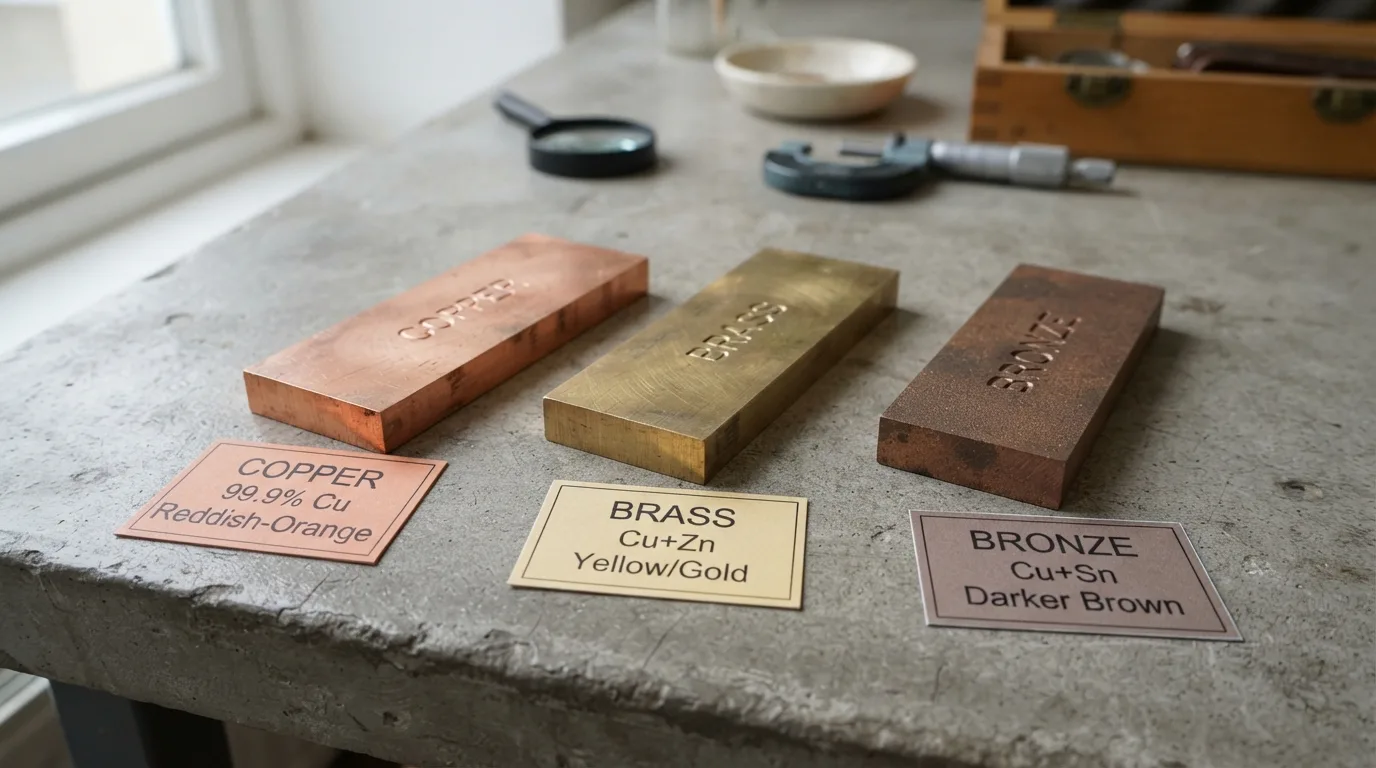
The most fundamental difference between these metals is what they contain. Copper is the base elemental metal itself. Brass is primarily copper combined with zinc, while traditional bronze is primarily copper combined with tin. Modern bronze families can include additional alloying elements, so the word bronze alone does not reveal an exact chemical composition. This distinction matters because relatively small changes in alloy chemistry can affect hardness, strength, corrosion behavior, color, machinability, and casting performance. Two products that both appear bronze-colored may have very different compositions and therefore behave differently in service. For engineering or fabrication work, material specifications and alloy numbers are more reliable than visual identification. If you need a metal for a particular environment or mechanical load, confirm its exact grade rather than choosing solely based on the broad category.
5. Color and Appearance Differences
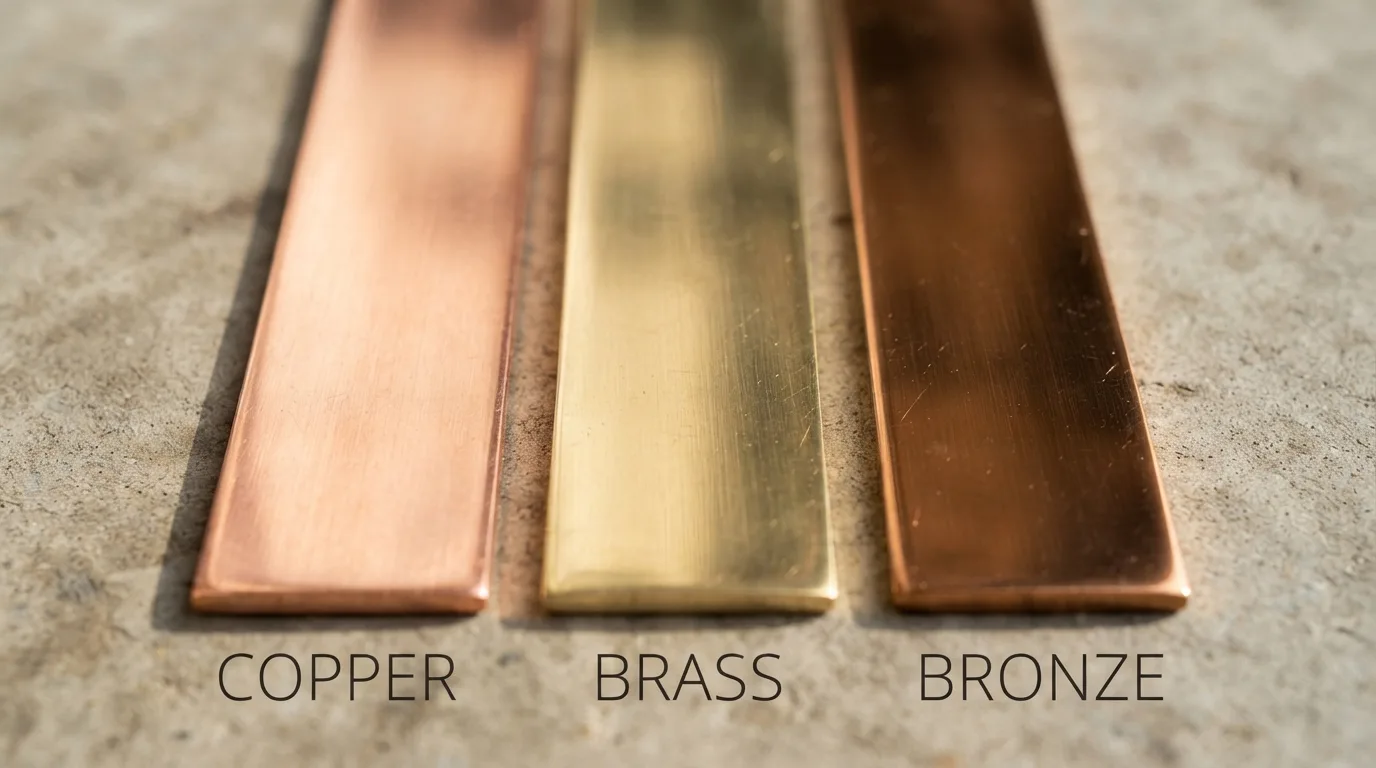
Color can provide a useful first clue, but it should not be treated as a definitive identification method. Copper typically has a distinctly reddish or pinkish-orange appearance when freshly polished. Brass is usually more yellow or golden, with some grades appearing quite bright and others having a deeper, warmer tone. Bronze commonly has a darker reddish-brown, brown, or muted golden appearance. Surface treatments, polishing, oxidation, age, and lighting can dramatically change how all three metals look. Uncoated copper may develop a green patina over time, while brass and bronze can also darken and develop protective surface films. Decorative finishes can further blur the differences. If appearance is important, request a sample or manufacturer finish specification rather than assuming that a particular shade guarantees a specific alloy.

6. Which Metal Is Strongest?
There is no single strength ranking that applies to every copper, brass, and bronze alloy because their mechanical properties vary by grade and processing. Pure copper is generally softer and more ductile than many copper alloys. Brass can offer a useful combination of strength, hardness, and machinability, while several bronze alloys are engineered for high strength, wear resistance, or demanding mechanical environments. Heat treatment and manufacturing processes such as cold working can also change the final properties. For this reason, choosing a metal simply because it is labeled brass or bronze can be misleading. If strength is the main concern, compare the tensile strength, yield strength, hardness, elongation, and other published specifications of the exact grades under consideration. The right material depends on the load, temperature, environment, and expected service life.

7. Electrical and Thermal Conductivity
Copper is the clear standout when electrical and thermal conductivity are major priorities. Its excellent ability to carry electrical current is why it is extensively used in wires, cables, busbars, motors, and electrical components. Copper also transfers heat efficiently, making it useful in heat exchangers and thermal systems. Brass and bronze contain additional alloying elements that generally reduce conductivity compared with pure copper. They are therefore selected more often for mechanical, decorative, or specialized electrical components rather than applications where maximum conductivity is required. Brass can still conduct electricity and heat effectively enough for certain components, but it does not normally replace copper when high conductivity is the central design requirement. Bronze is typically chosen for its mechanical or corrosion-related characteristics rather than for electrical conductivity.
8. Corrosion Resistance
All three materials can provide useful corrosion resistance, but their behavior depends heavily on the alloy and environment. Copper develops an oxide and patina that can help protect the underlying metal from further atmospheric corrosion. Brass generally performs well in many indoor and architectural applications, although some brasses can experience dezincification in particular water conditions. Bronze alloys are often valued for strong resistance to corrosion, including in marine environments, which helps explain their use in marine hardware, bearings, valves, and other components exposed to moisture. No copper alloy is automatically corrosion-proof. Water chemistry, salt exposure, acidity, temperature, stress, and contact with dissimilar metals can all influence performance. For outdoor, plumbing, or marine applications, select a grade specifically rated for the environment rather than relying only on the general label.

9. Machining and Fabrication
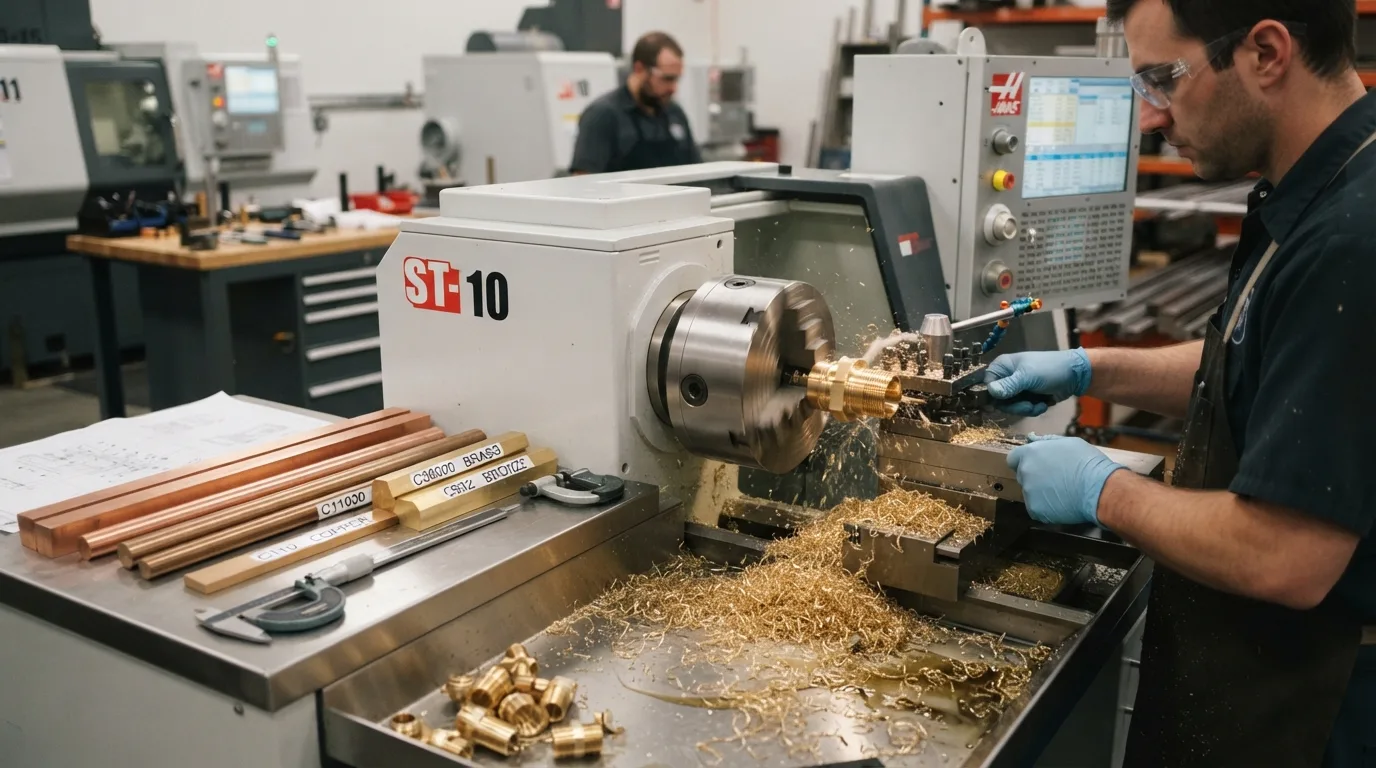
Brass is widely appreciated for its machinability, especially in grades designed for efficient cutting and turning. This makes it useful for precision fittings, threaded components, valves, and hardware. Copper is highly ductile and workable, but its softness can make certain machining operations less straightforward than working with free-machining brass. Bronze varies considerably: some grades machine reasonably well, while others are selected primarily for casting, wear resistance, or strength rather than ease of cutting. Welding, brazing, forming, and casting characteristics also differ among specific alloys. For a fabrication project, the manufacturing method should influence material selection from the beginning. A metal that performs well after installation may still be inconvenient or expensive to manufacture if its chosen grade is poorly suited to the intended process.

10. Common Uses of Copper
Copper’s combination of conductivity, ductility, and corrosion resistance gives it an unusually broad range of uses. Electrical wiring is one of its most recognizable applications, but copper also appears in plumbing tubes, roofing, heat exchangers, cookware, architectural details, and decorative surfaces. Its distinctive color makes it desirable when a natural warm-metal finish is part of the design. Copper’s ability to conduct heat also makes it useful in thermal equipment. Because it is comparatively soft, however, it may not be the best choice for components that need high wear resistance or substantial mechanical strength. In those situations, an appropriate copper alloy can provide a better balance of properties. Copper is often the logical choice when conductivity and formability are more important than extreme hardness.
11. Common Uses of Brass
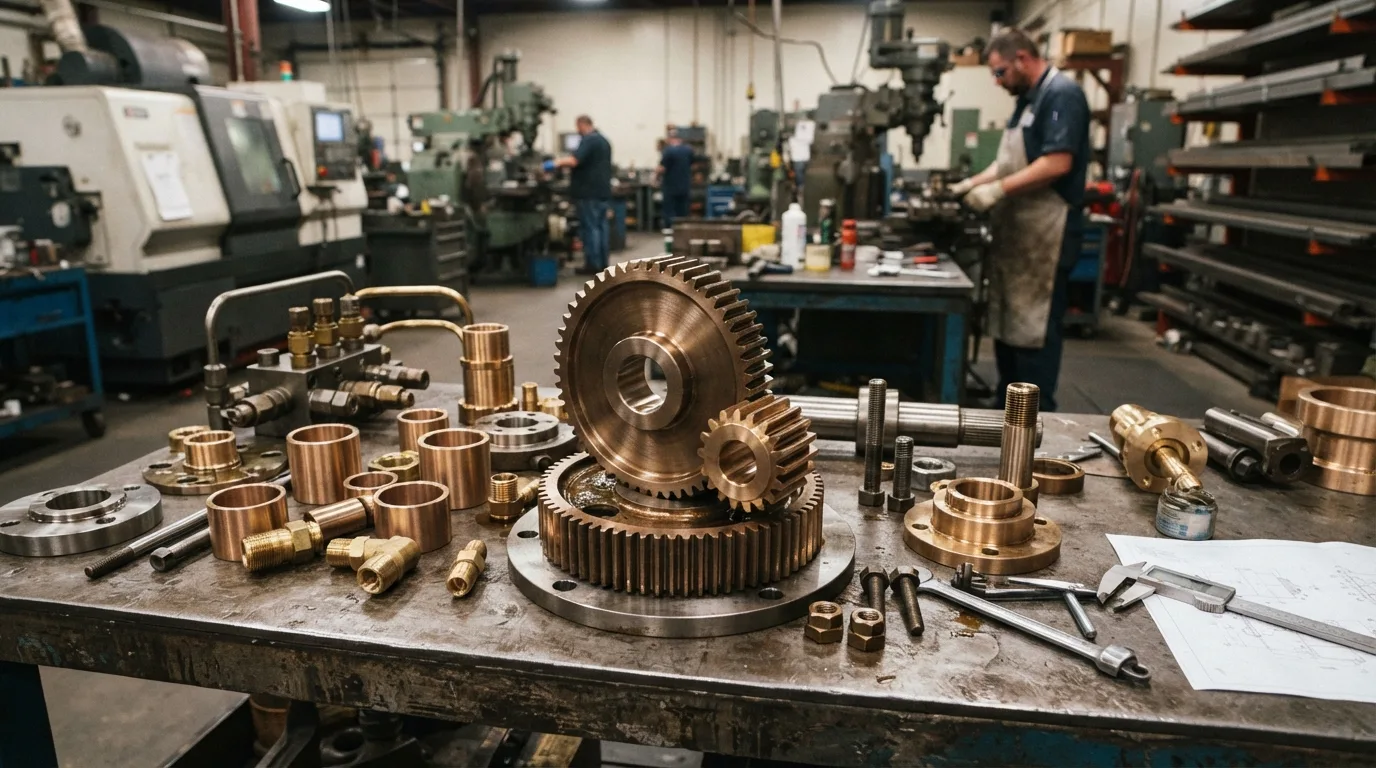
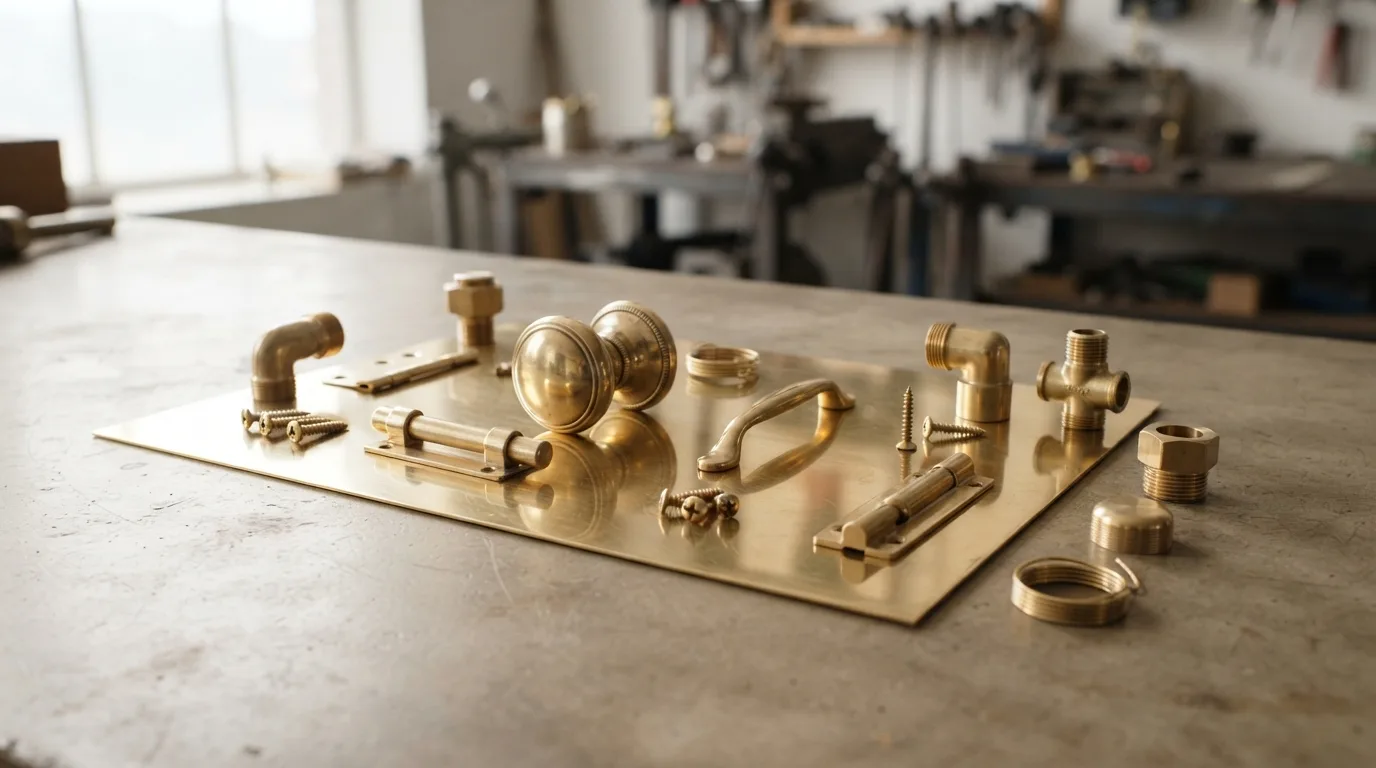
Brass is particularly common in products where appearance, machinability, corrosion resistance, and moderate mechanical performance are all useful. Plumbing fittings, valves, faucets, door hardware, locks, screws, lamp components, and decorative objects frequently use brass. Its warm golden appearance also makes it popular in furniture accents, lighting, architectural hardware, and musical instruments. Certain brass grades are specifically designed for easy machining, while others are better suited to forming or applications where corrosion behavior is important. Because brass can be polished, brushed, plated, or allowed to age naturally, designers have considerable flexibility with its appearance. When selecting brass for plumbing or fluid-handling applications, however, the specific alloy and applicable standards matter considerably more than its visual appeal.
12. Common Uses of Bronze
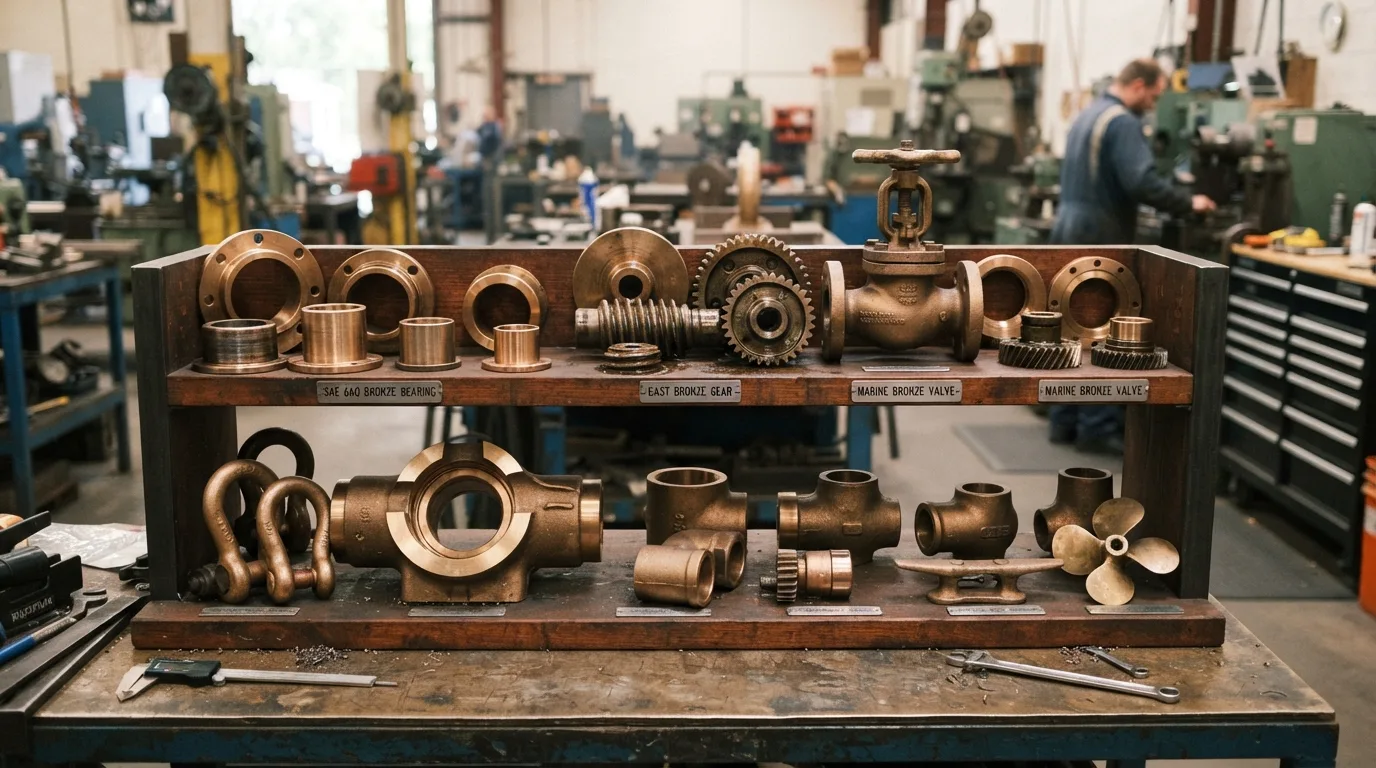
Bronze is widely used where strength, wear resistance, and corrosion resistance are valuable. Bearings and bushings are important examples because some bronze alloys can operate effectively under sliding contact and help reduce wear. Bronze is also found in marine hardware, pumps, valves, gears, sculptures, bells, and industrial components. Aluminum bronze, phosphor bronze, and other specialized families are selected for particular combinations of strength, corrosion resistance, spring properties, or wear performance. Its long history in sculpture also makes bronze strongly associated with artistic casting and architectural objects. Because bronze is a broad family rather than a single standardized composition, performance can vary significantly from one grade to another. Always identify the specific alloy when the material will carry loads, operate against another surface, or face severe environmental exposure.
13. How to Tell Copper, Brass, and Bronze Apart
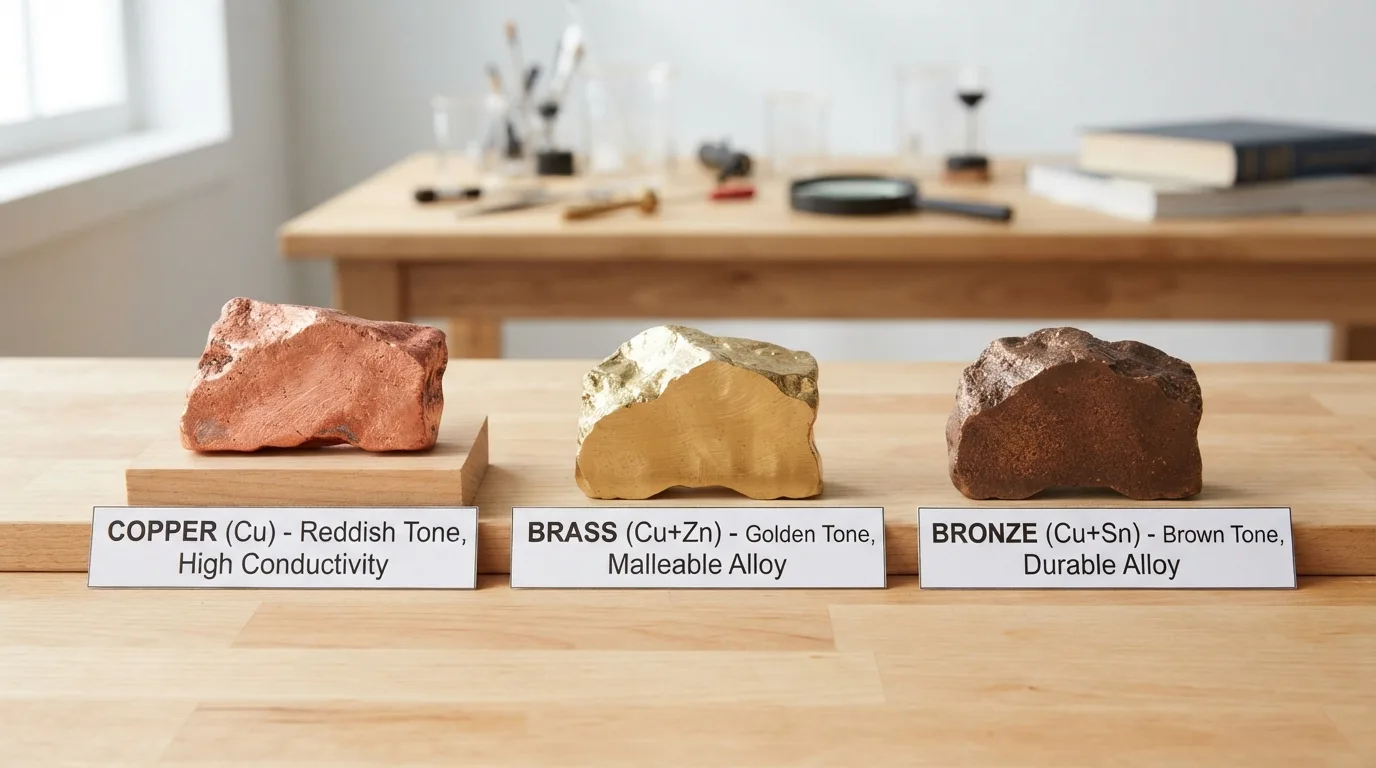
Visual inspection can narrow down the possibilities, but reliable identification may require a material test or documentation. Fresh copper usually has a noticeably reddish-orange tone. Brass often looks yellow or golden, while bronze tends to be darker and more brownish. Scratching or polishing a hidden area can reveal the underlying color when a surface coating is present, but this should only be done when appropriate. A magnet is not a dependable way to distinguish these three materials because they are generally nonmagnetic in ordinary forms. For professional identification, methods such as alloy analyzers or laboratory testing can determine composition much more accurately. Manufacturer markings, purchase records, material certificates, and alloy specifications are also valuable. Never assume that color alone proves an item’s composition, particularly when finishes or plating may be involved.

14. Copper vs Brass vs Bronze for Home Projects
For home improvement and decorative projects, the best choice often depends on the desired appearance, function, and environment. Copper works especially well for distinctive warm finishes, roofing details, plumbing applications, and projects where conductivity matters. Brass is a practical choice for cabinet hardware, faucets, lighting, handles, and other decorative or functional details where its golden color and machinability are attractive. Bronze can be useful for hardware and architectural features when a darker, more aged appearance is desired, while specialized bronze alloys are appropriate for demanding mechanical components. Consider whether the material will be exposed to moisture, touched frequently, machined, polished, or expected to develop a natural patina. Also compare the finish and maintenance requirements. For purely decorative work, appearance may dominate; for structural or plumbing uses, the exact alloy and applicable specifications should take priority.
15. Which One Should You Choose?
There is no universal winner among copper, brass, and bronze because each material solves different problems. Copper is particularly suited to applications requiring high electrical or thermal conductivity and excellent workability. Brass is often attractive when machinability, decorative appearance, and useful mechanical performance need to be balanced. Bronze is frequently chosen when wear resistance, strength, or corrosion resistance is more important, especially in specialized industrial and marine applications. Start by identifying the primary requirement: conductivity, appearance, strength, corrosion resistance, machinability, or wear resistance. Then compare the specifications of suitable grades rather than relying on the material name alone. For everyday decorative projects, personal style and finish may be the deciding factors. For engineering or plumbing work, environmental conditions, standards, and documented alloy properties should guide the final selection.

Quick Comparison of Copper, Brass, and Bronze
- Copper: Pure elemental metal known for excellent electrical and thermal conductivity, ductility, and distinctive reddish color.
- Brass: Primarily copper and zinc, commonly valued for machinability, golden appearance, and useful corrosion resistance.
- Bronze: A broad family of copper-based alloys, traditionally copper and tin, often selected for strength, wear resistance, and corrosion resistance.
The most important point when comparing copper vs brass vs bronze is that alloy composition matters. Each category contains materials with different properties, so the exact grade should be confirmed whenever performance is critical. For decorative applications, however, understanding the characteristic color, aging behavior, and finish of each metal can make it much easier to choose a material that suits the look and function of your project.