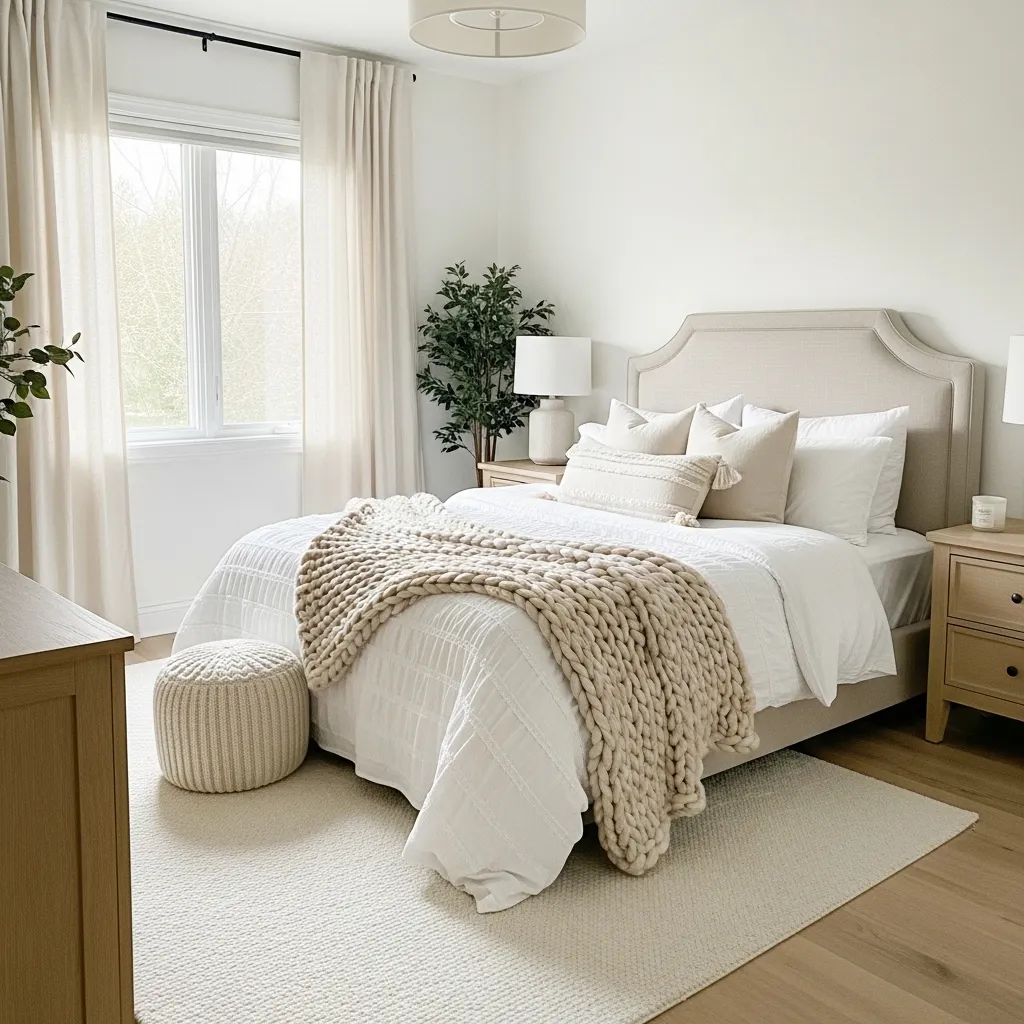
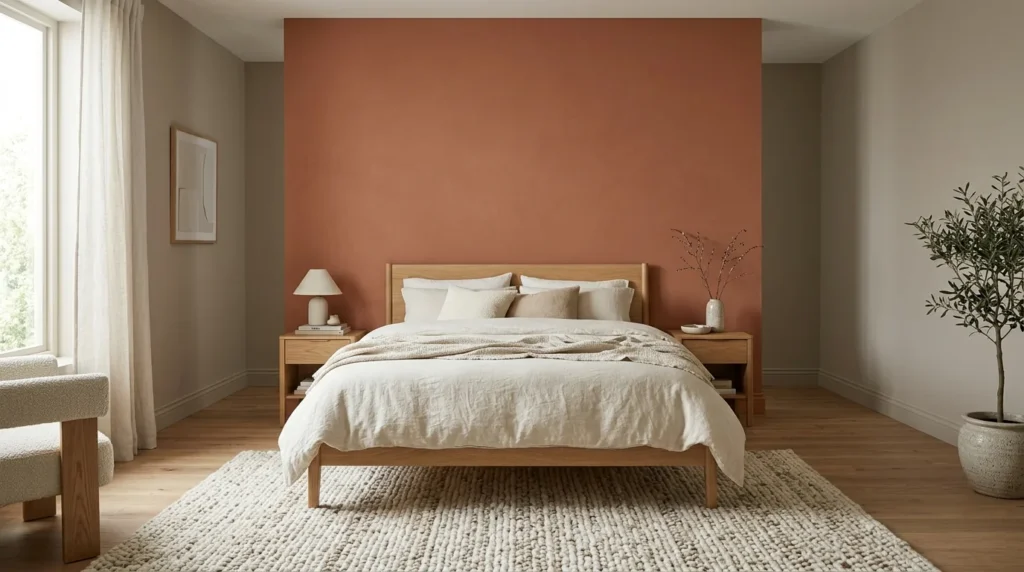
Orange can make a bedroom feel warm, cheerful, inviting, and full of personality, but using it with a second color creates a more balanced and sophisticated look. From soft peach and cream to bold orange and navy, the right pairing can change the entire mood of your space. These orange two colour combinations for bedroom walls are designed to suit different decorating styles, room sizes, and lighting conditions. Whether you want a cozy retreat, a modern bedroom, or a playful space, these combinations can help you choose wall colors that feel intentional without becoming overwhelming.
1. Orange and Cream for a Warm, Soft Bedroom
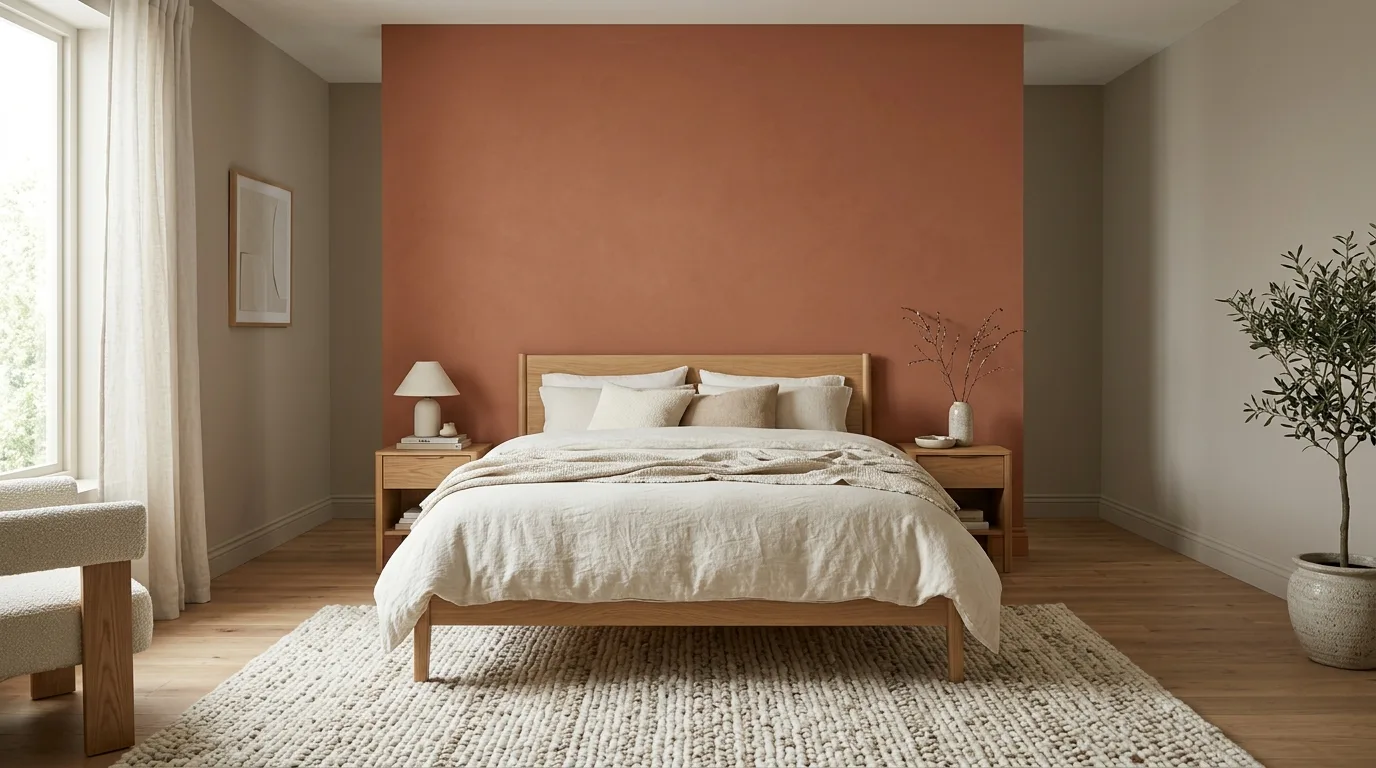
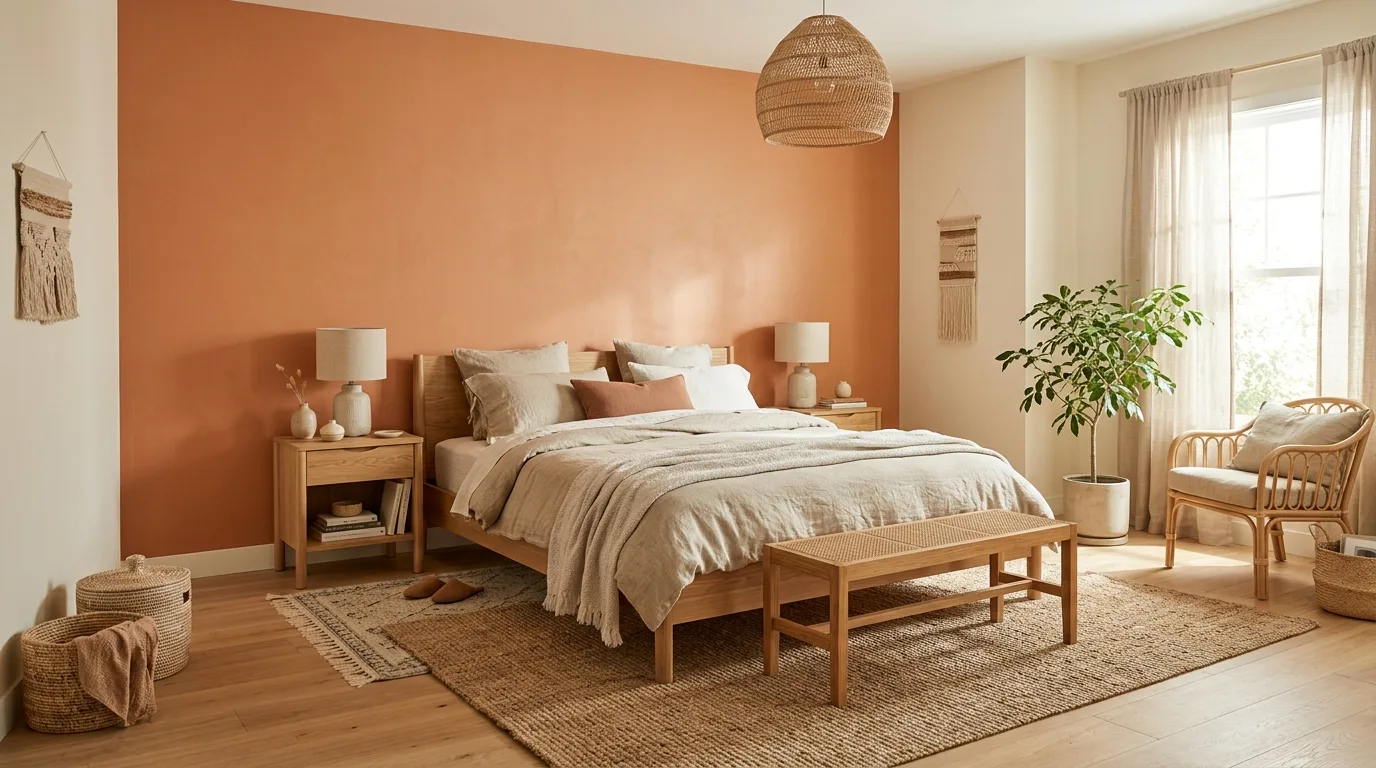
Orange and cream is one of the easiest two-colour combinations for creating a bedroom that feels warm without looking too intense. Use a muted orange, terracotta, or burnt-orange shade on a feature wall and keep the remaining walls cream. The creamy neutral softens the energy of orange while allowing its warmth to remain visible. This combination works particularly well with natural wood furniture, woven baskets, linen bedding, and warm metallic accents. If your bedroom receives limited natural light, choose a lighter orange with a creamy off-white rather than a deep orange. For a more contemporary appearance, keep the wall design simple and introduce orange through one strong accent wall. Beige curtains, ivory bedding, and natural wood accessories can complete the look without competing with the two main wall colors.
2. Orange and White for a Fresh Modern Look
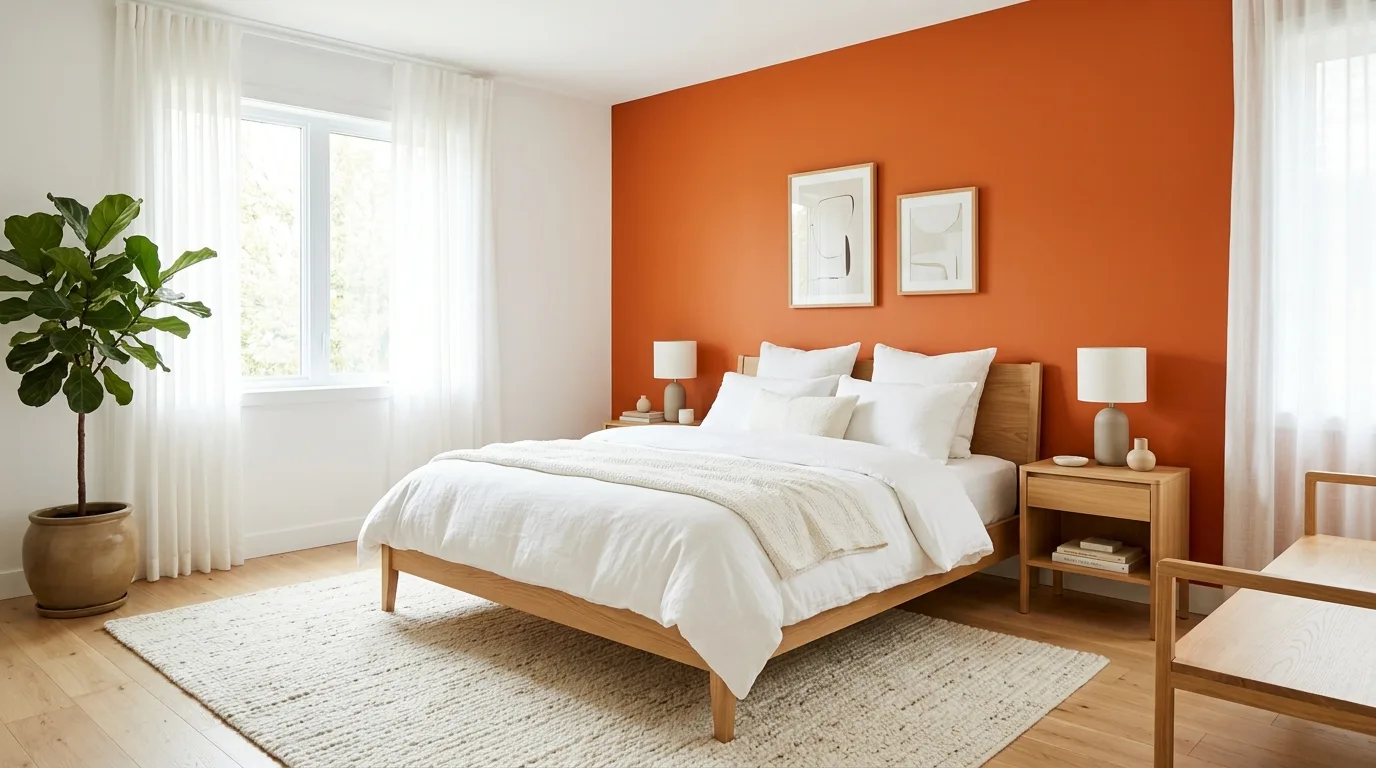
Pairing orange with crisp white creates a bedroom that feels bright, energetic, and clean. White provides visual breathing room, making this combination especially useful when the room is small or receives plenty of sunlight. A saturated orange accent wall behind the bed can become the main focal point, while white walls make the rest of the room feel spacious. If bright orange feels too strong, choose coral, apricot, or soft tangerine instead. White furniture and simple bedding can reinforce the modern character, while wooden flooring or small woven accessories add warmth. This color pairing is also easy to personalize because almost any neutral textile works with it. For a polished result, avoid introducing too many additional colors. Let orange and white dominate, then use small amounts of beige, tan, or natural wood to connect the overall bedroom scheme.
3. Orange and Grey for a Contemporary Bedroom
Orange and grey offer an appealing contrast between warmth and coolness. This makes the combination particularly suitable for contemporary bedrooms where you want color without an overly bright appearance. Try a terracotta or burnt-orange wall with light grey on the surrounding walls for a sophisticated effect. Alternatively, charcoal grey can be used with a softer orange when you want stronger visual contrast. Light grey works well in bedrooms with darker furniture because it keeps the space from feeling heavy. Add simple bedding in white, grey, or muted beige to maintain balance. Matte black lighting and minimalist furniture can emphasize the modern aesthetic, while wooden details prevent the room from appearing too cold. When choosing the orange, consider the natural light in the room: warmer muted shades generally work better with cool grey than extremely bright orange tones.
4. Orange and Beige for a Cozy Earthy Feel
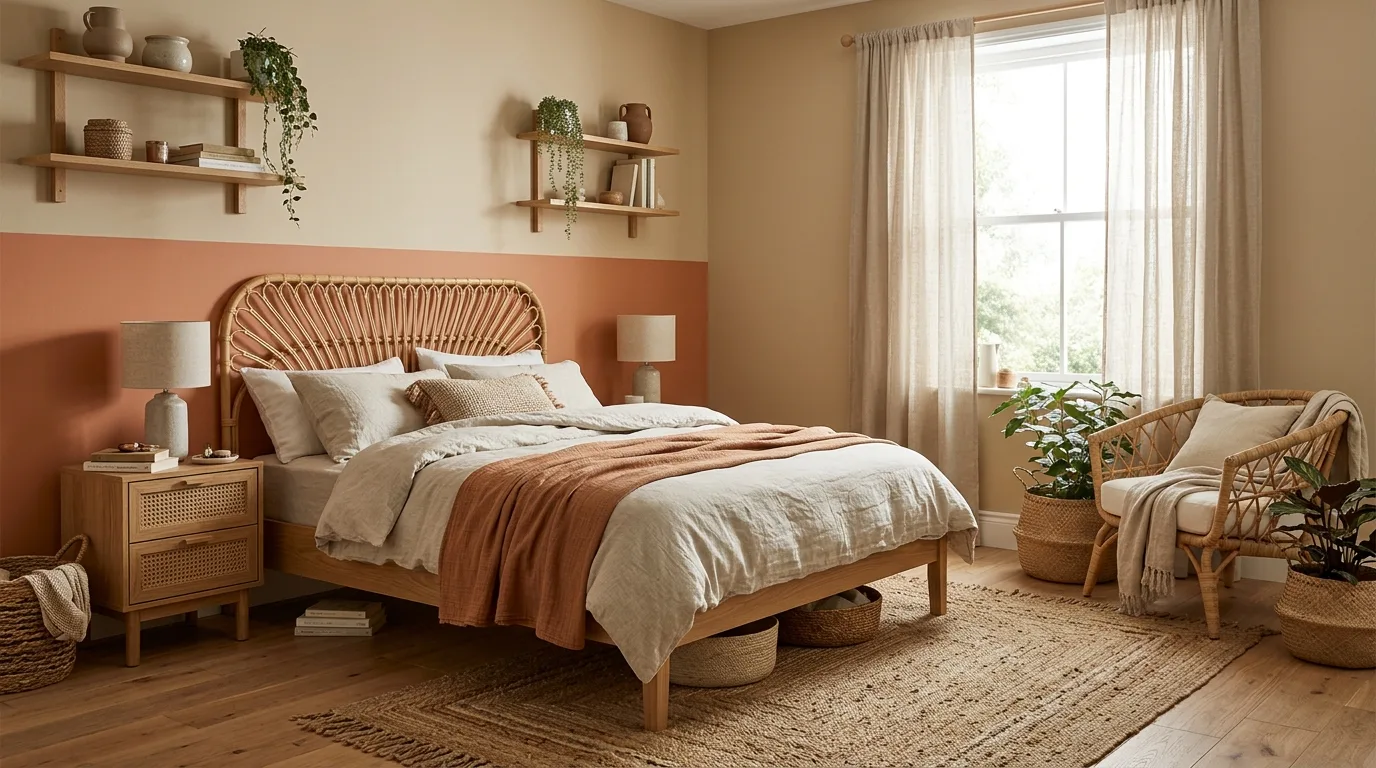
For a bedroom inspired by earthy interiors, orange and beige make a naturally harmonious pair. Choose terracotta, clay, cinnamon, or muted pumpkin orange and combine it with warm beige walls. The result feels grounded and comfortable rather than overly colorful. This combination works beautifully with rattan furniture, oak finishes, jute rugs, cotton bedding, and other natural textures. You can use orange behind the headboard and beige on the other three walls, or create a subtle two-tone effect by using beige across most of the room and orange on architectural details. Warm white lighting will enhance the earthy quality of the colors in the evening. Keep patterns relatively simple so the room remains restful. This palette is especially useful if you want your bedroom to feel connected to nature while still having enough color to give the walls character.
5. Orange and Navy Blue for Bold Contrast
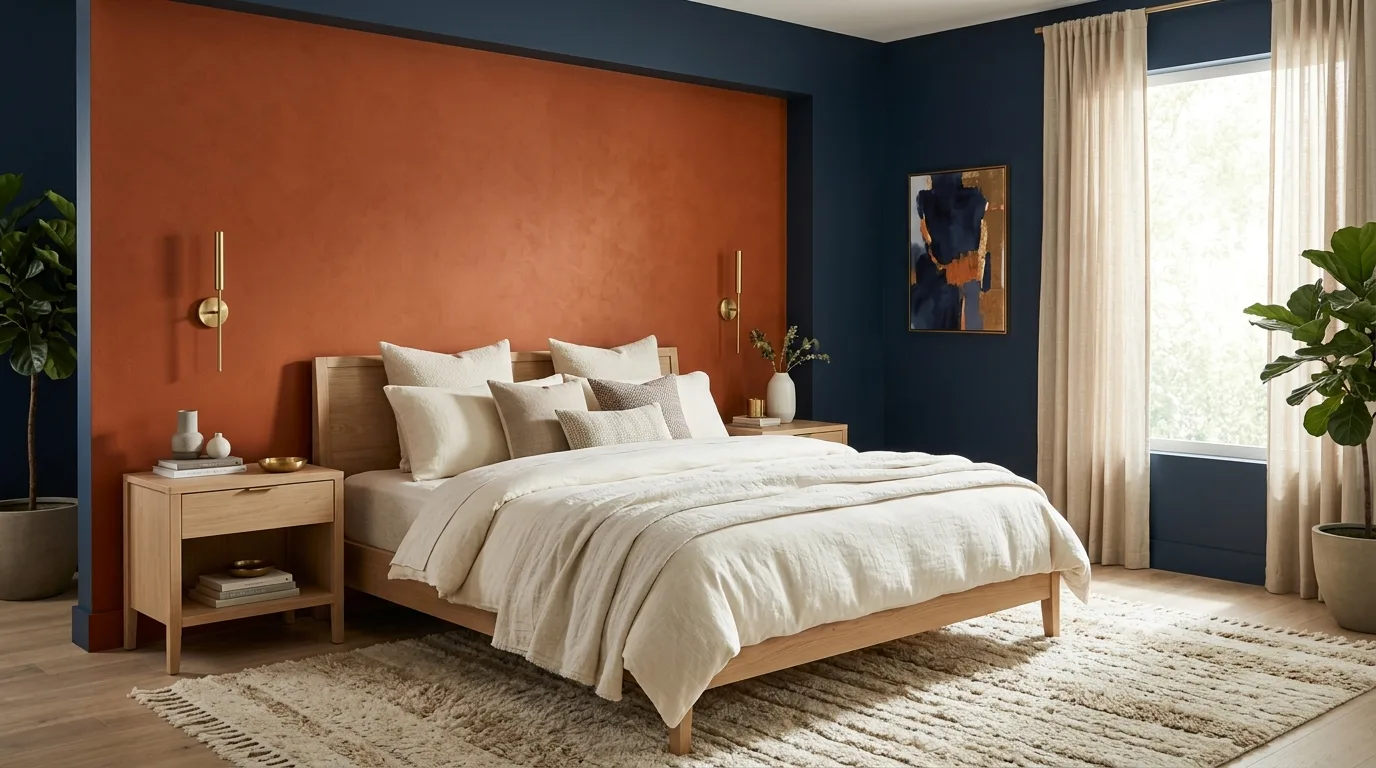
Orange and navy blue create a dramatic combination that can give a bedroom a strong designer-inspired appearance. Because both colors have a distinct presence, balance is important. Use orange as the warmer feature color and navy as a controlled secondary shade, or reverse the arrangement if you prefer a darker room. A soft burnt orange pairs especially well with deep navy because it feels richer than a highly saturated orange. White bedding, cream curtains, and light wood furniture can break up the contrast and keep the room comfortable. This combination is ideal for a statement wall behind the bed, especially when the headboard and furniture have simple silhouettes. If the bedroom is small, consider using navy on only one wall or in a lower wall section rather than covering a large area. Brass or antique-gold details can also add a refined finishing touch.
6. Orange and Olive Green for a Nature-Inspired Space
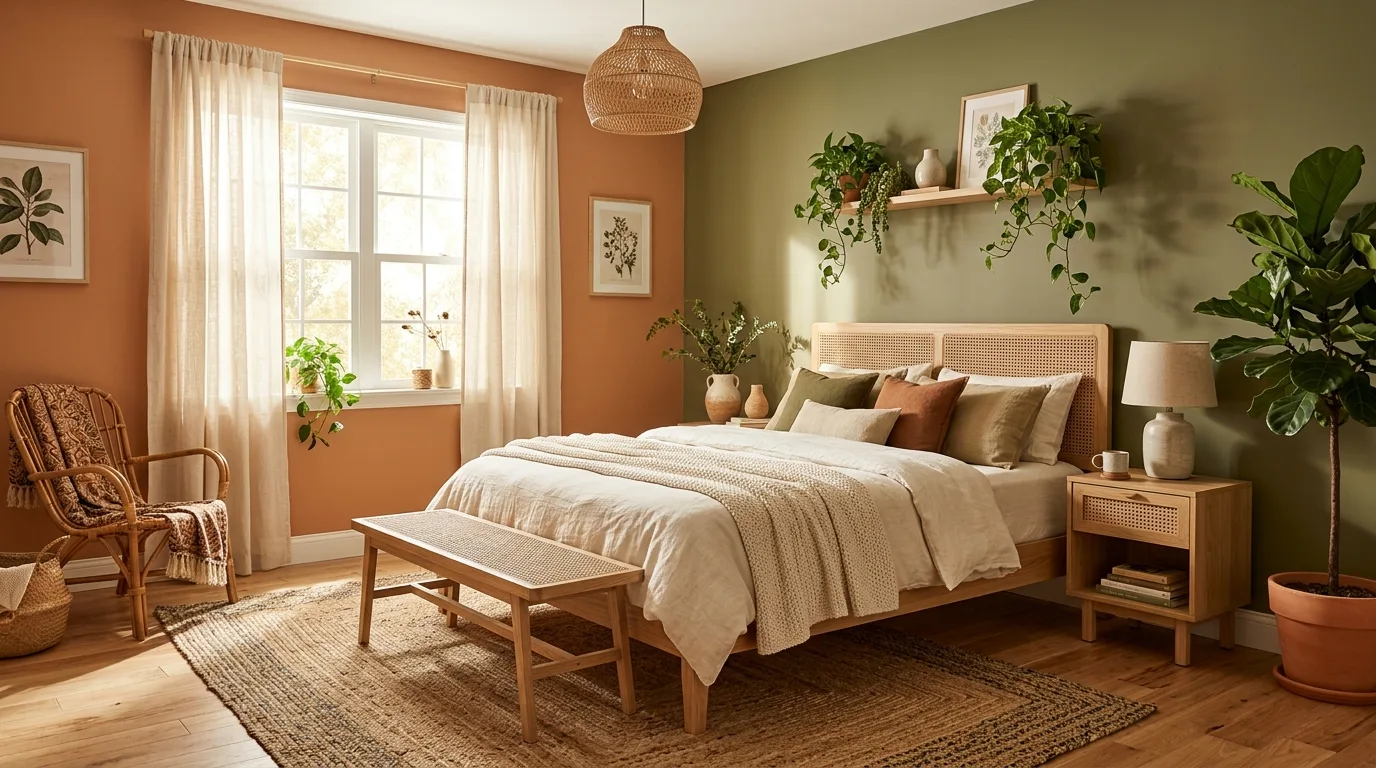
Orange and olive green create a warm, organic bedroom palette with plenty of personality. Terracotta and muted orange shades naturally complement earthy greens, making this pairing suitable for botanical or nature-inspired interiors. Use olive green on the main walls and orange as a feature wall, or choose orange behind the bed with olive green on an adjacent wall. The key is to select slightly muted versions of both colors rather than combining two extremely bright shades. Natural wood, cane, linen, and indoor plants reinforce the earthy theme. Cream-colored bedding can provide a calm visual break between the stronger wall colors. This palette works especially well in rooms with plenty of daylight, where the green and orange tones can appear rich without making the space feel closed in. For a cohesive finish, repeat one of the wall colors subtly in cushions, artwork, or a throw blanket.
7. Orange and Peach for a Soft Tonal Bedroom
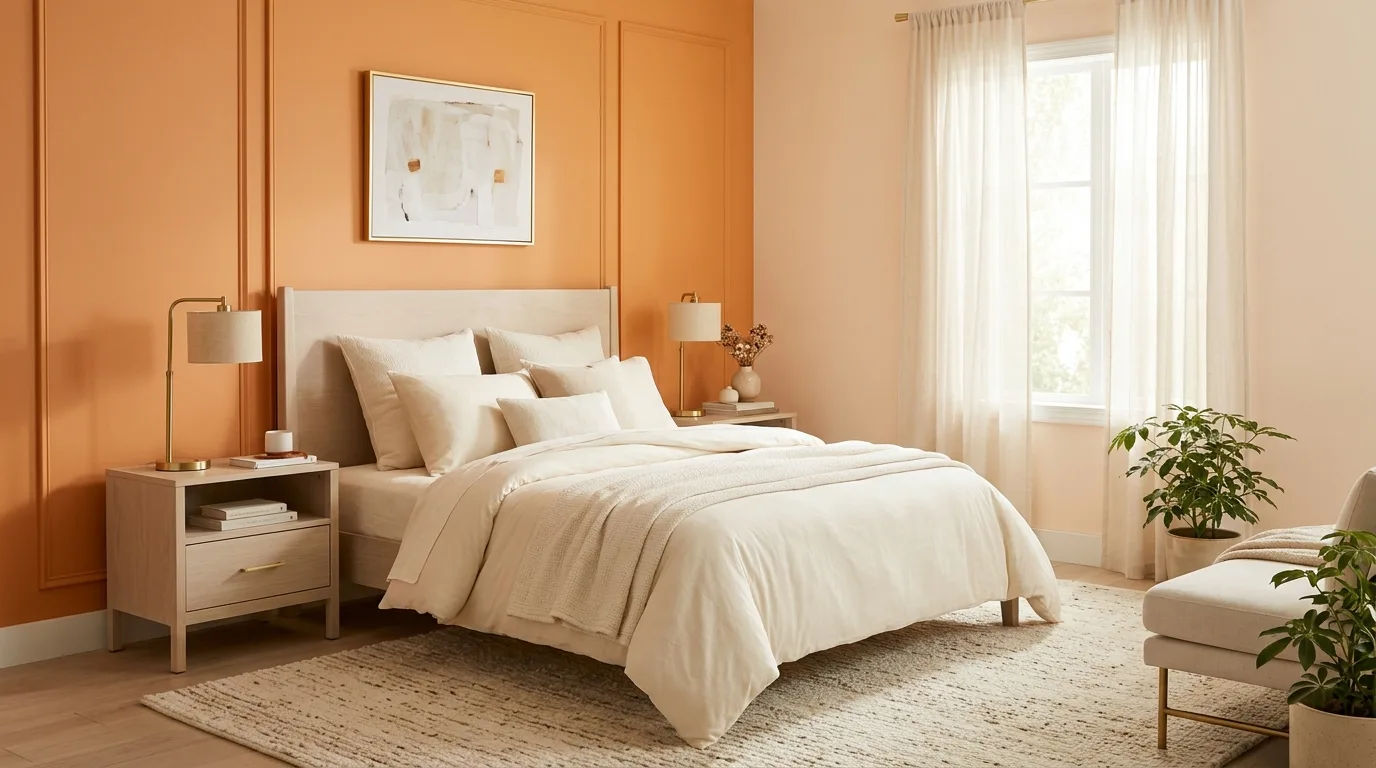
Orange and peach are a beautiful choice when you want color but prefer a gentle bedroom atmosphere. Instead of using two highly contrasting shades, this combination creates a layered tonal effect. A stronger orange can be placed behind the bed while pale peach covers the remaining walls, creating depth without making the room visually busy. You can also use peach as the dominant wall color and introduce a muted orange through a narrow accent wall or architectural feature. White or cream furniture keeps the palette light, while gold or natural wood accents can make it feel more elegant. This combination is particularly suitable for bedrooms that receive soft morning or afternoon light because the warm tones become inviting without appearing harsh. To keep the room restful, choose plain bedding and limit additional strong colors. The result is cheerful, comfortable, and easy to update with seasonal textiles.
8. Orange and Brown for a Rich, Cozy Retreat
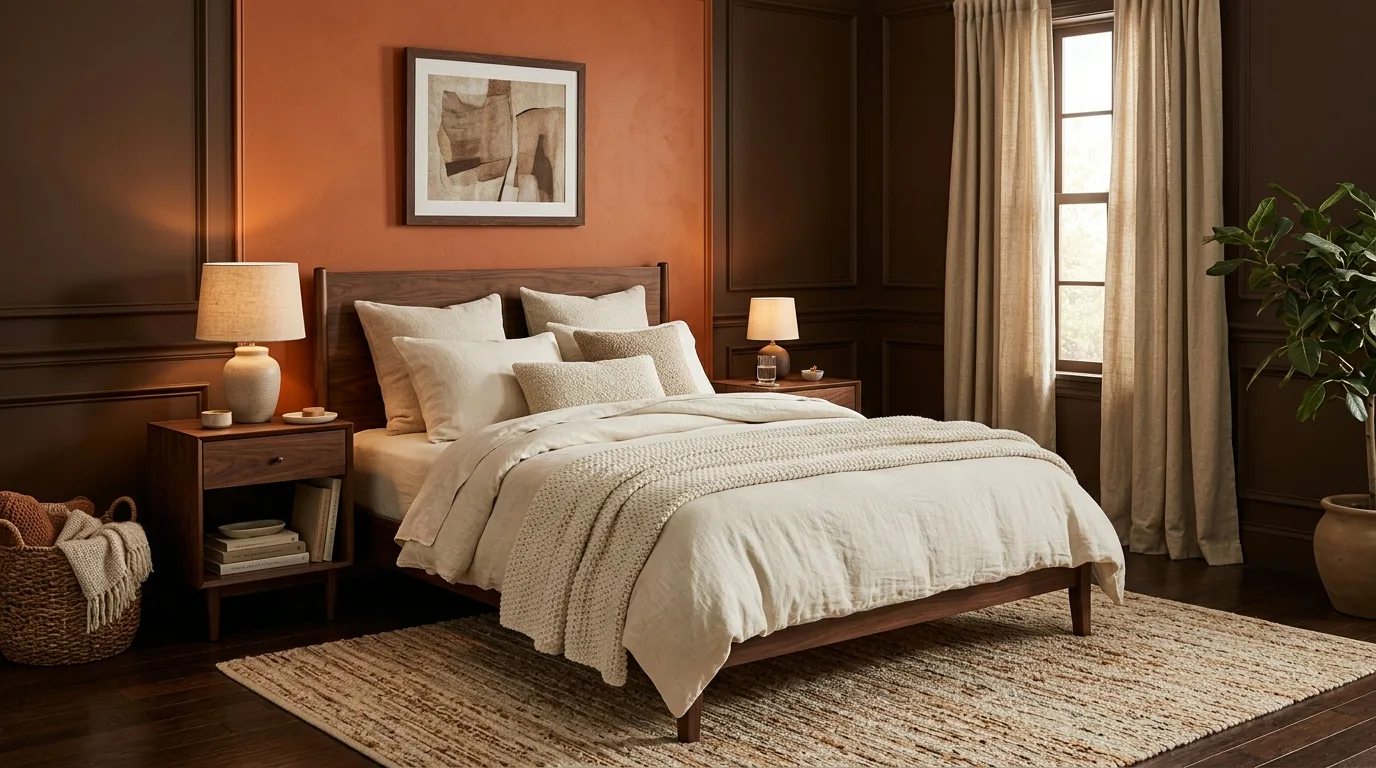
Orange and brown can turn a bedroom into a warm and intimate retreat. Burnt orange, rust, or deep terracotta works especially well with chocolate, walnut, or coffee-brown wall shades. Because both colors are warm, the combination feels enveloping and works particularly well in larger bedrooms or spaces with plenty of natural light. To prevent the room from looking too dark, use a lighter neutral such as cream or warm white for bedding and curtains. Wooden furniture can naturally connect the two wall colors, while woven textures add softness. If you have a small bedroom, avoid using very dark brown across multiple walls; instead, reserve it for a single accent wall and use a lighter orange or beige-orange shade elsewhere. Soft layered lighting is also important because warm wall colors can become much deeper under low light. The finished look can feel sophisticated, comfortable, and timeless.
9. Orange and Teal for a Playful Modern Bedroom
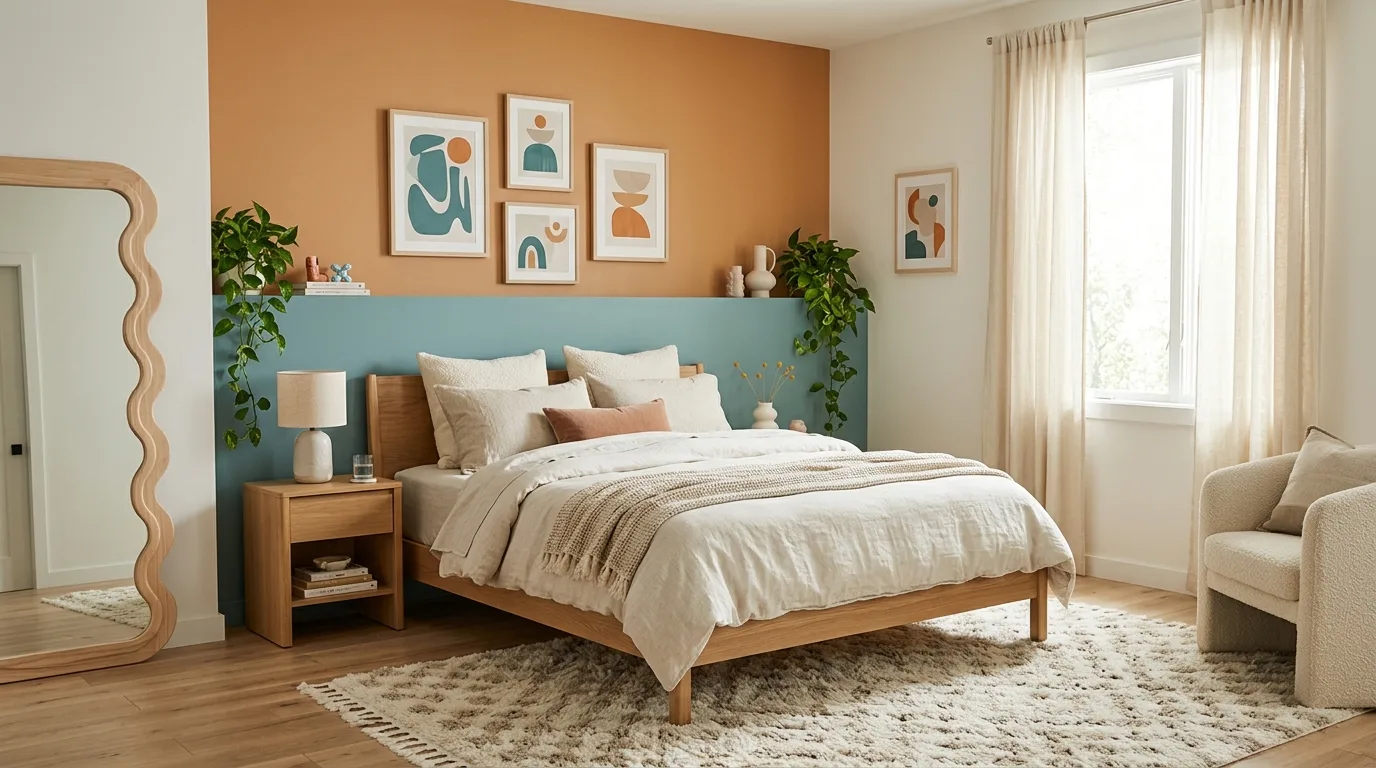
Orange and teal offer a lively contrast for anyone who wants a bedroom with more personality. Teal brings a cool blue-green quality that balances orange’s warmth, creating a colorful but intentional combination. For a sophisticated result, choose muted terracotta or burnt orange with dusty teal rather than extremely bright versions of both colors. An orange accent wall behind the bed can work well with teal on an opposite or adjacent wall. Keep furniture relatively neutral so the wall colors remain the main design feature. White, cream, and light wood are particularly useful for softening the palette. This combination can also work in a teenager’s bedroom, guest room, or creative space where a little extra color is welcome. If you are unsure about using both shades extensively, use one as the dominant wall color and the other on a single feature wall to create a controlled focal point.
10. Orange and Dusty Pink for a Romantic Warm Palette
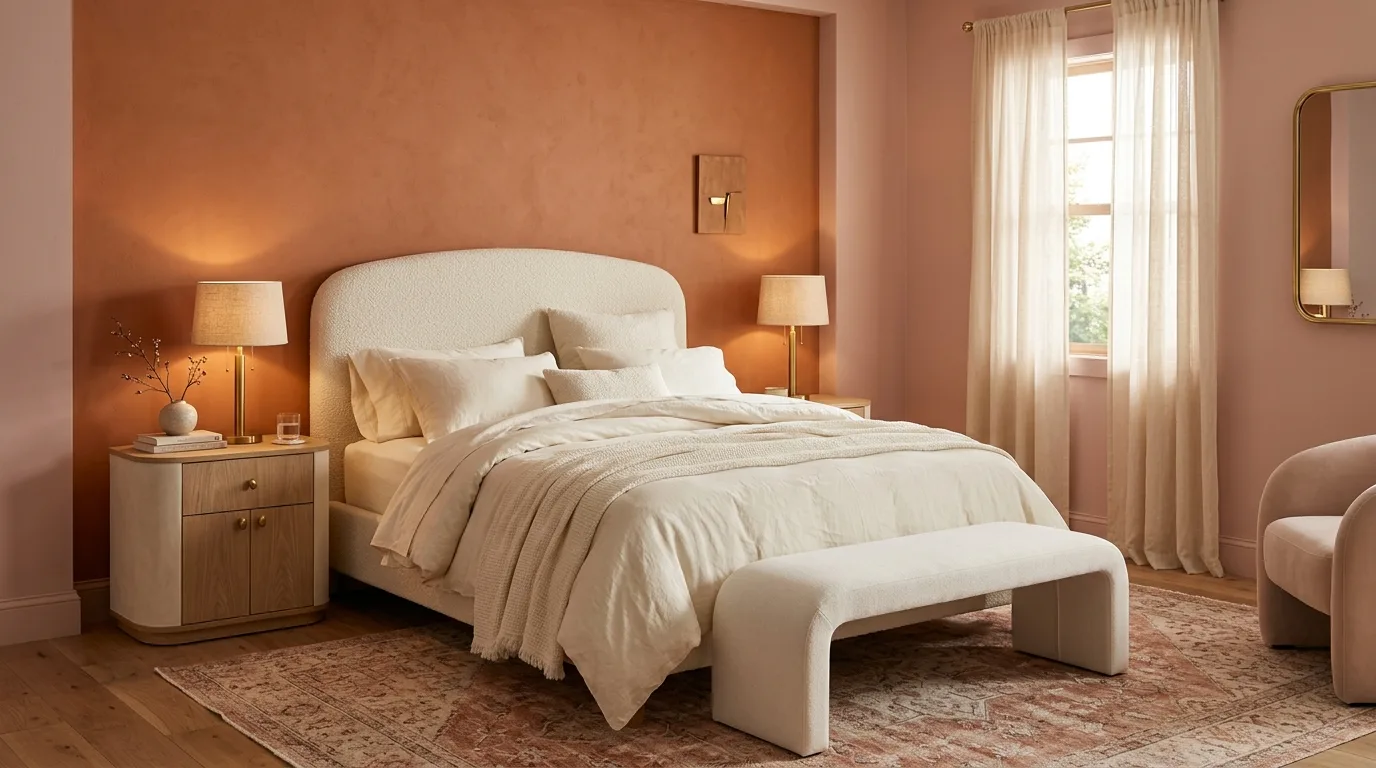
Orange and dusty pink create a warm, modern alternative to traditional romantic bedroom colors. The combination works best when the orange has earthy undertones and the pink is muted rather than bubblegum-bright. Try terracotta orange behind the bed with dusty rose on the surrounding walls for a layered appearance. Soft cream bedding, curved furniture, and warm lighting can make the palette feel elegant and relaxing. If your room is compact, use the lighter pink as the primary wall color and reserve orange for a single accent wall. This prevents the room from becoming visually crowded while still giving it plenty of character. Gold, brass, or natural wood accents can complement the warm undertones beautifully. The overall effect is inviting and expressive without relying on overly saturated colors, making it a useful option for both modern and slightly vintage-inspired bedroom designs.
11. Orange and Sage Green for a Calm Earthy Combination
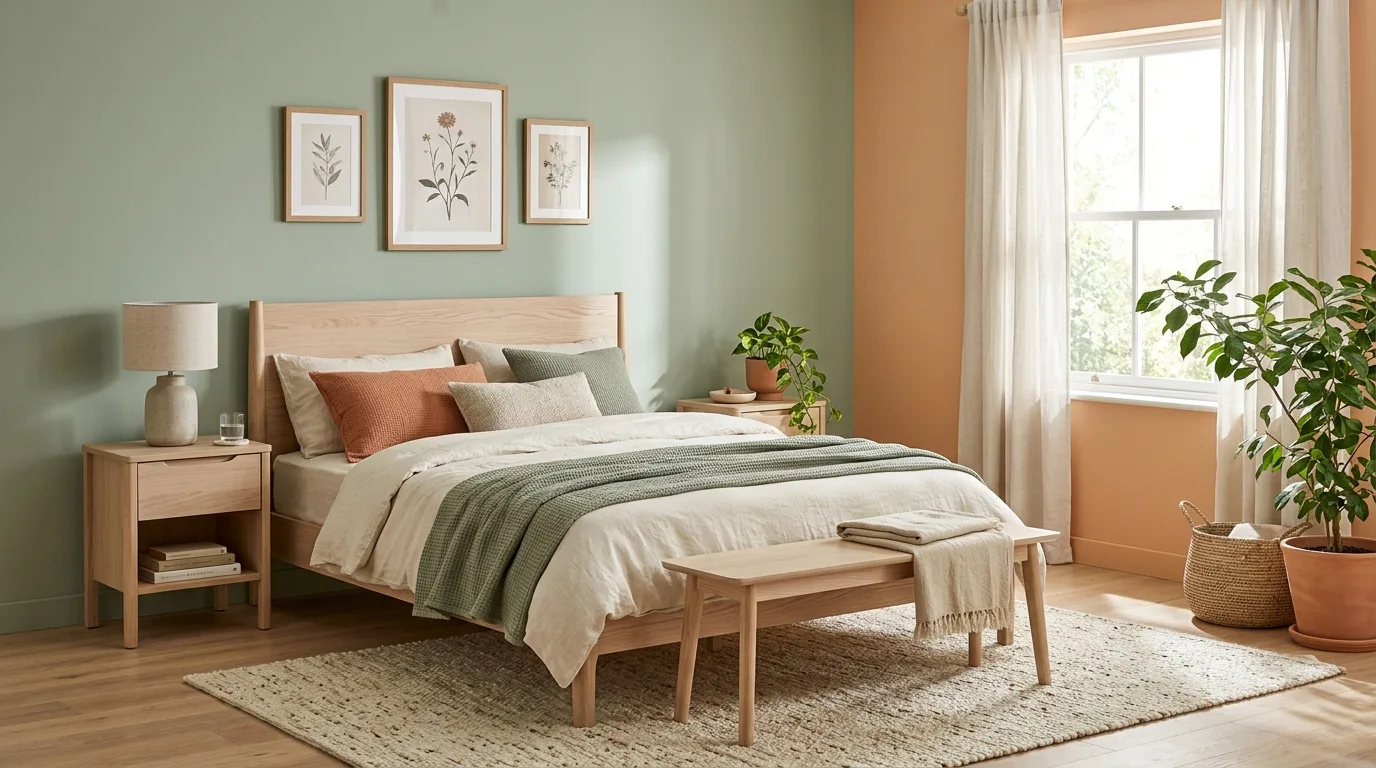
For a softer nature-inspired bedroom, combine muted orange with sage green. Sage is considerably lighter and quieter than olive green, so it creates a calmer contrast with terracotta or soft pumpkin tones. This combination is especially appealing when you want color while keeping the bedroom peaceful enough for relaxation. Use sage across the larger wall surfaces and orange behind the headboard to create a clear focal point. Pale oak furniture, cream bedding, linen curtains, and simple botanical artwork can reinforce the natural character of the palette. Avoid highly glossy finishes if you want a relaxed appearance; matte or softly textured surfaces tend to suit these colors better. In rooms with limited sunlight, select a warm sage and a light terracotta so the colors do not appear dull. A few plants and natural fibers can complete the look without introducing another dominant color.
12. Orange and Black for a Dramatic Accent Wall
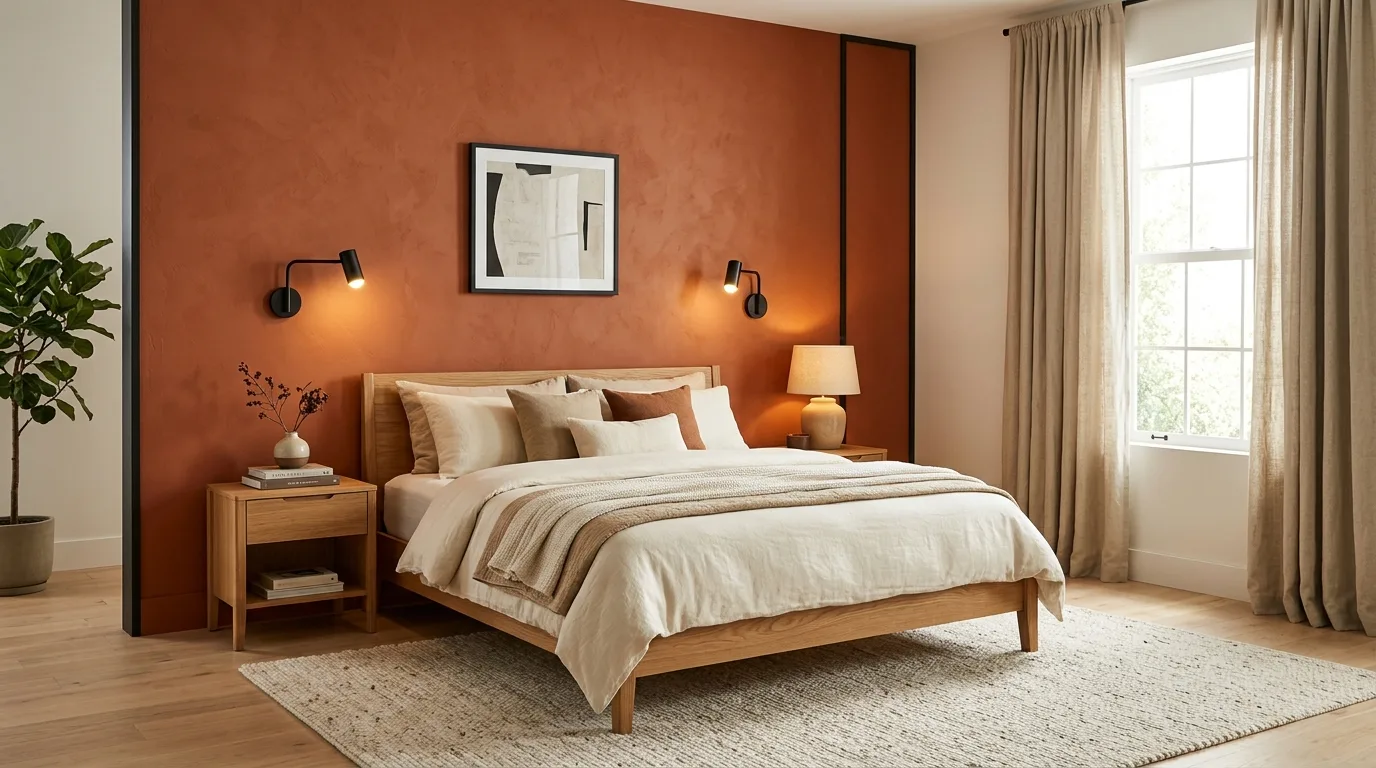
Orange and black can create a striking bedroom when used thoughtfully. Instead of covering the room with both intense colors, use orange as the primary warm shade and black in a limited wall area, such as a narrow accent section, geometric feature, or wall behind a dark headboard. Burnt orange and rust are generally easier to live with than extremely bright orange when paired with black. White, cream, or light beige bedding can provide necessary contrast and keep the room from feeling too heavy. This combination works especially well in modern, industrial, or contemporary bedrooms with simple furniture. If you want the walls to remain visually balanced, consider using black only below a picture rail or as part of a geometric design. Warm lamps and natural wood can also soften the dramatic contrast. The result is bold but controlled, giving the bedroom a strong focal point without overwhelming the entire space.
13. Orange and Lavender for an Unexpected Color Pair
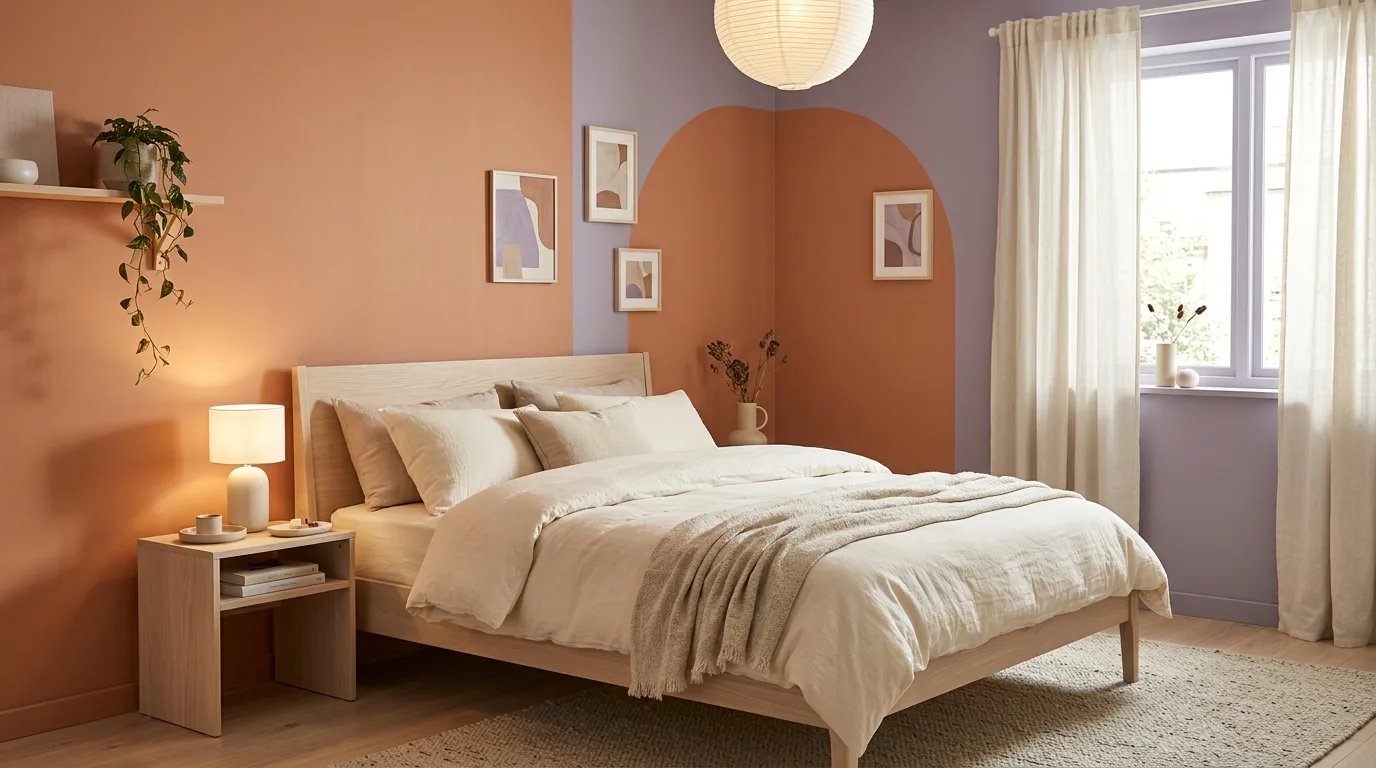
Orange and lavender provide an unexpected combination for a bedroom that feels creative and distinctive. The warm orange contrasts with lavender’s cool purple undertones, creating a playful balance. To make the pairing feel sophisticated rather than overly bright, choose a muted orange such as peach, clay, or terracotta alongside a soft dusty lavender. Lavender can cover most of the walls while orange becomes the focal color behind the bed, or the arrangement can be reversed for a stronger statement. Keep furniture and textiles in cream, white, or pale natural wood to give the eyes a place to rest. This combination can work particularly well in bedrooms where you want something different from standard neutral palettes. Lighting also matters: warm white bulbs will bring out the orange and soften the lavender in the evening. Simple artwork and understated accessories will keep the colorful walls at the center of attention.
14. Orange and Greige for a Sophisticated Neutral Balance
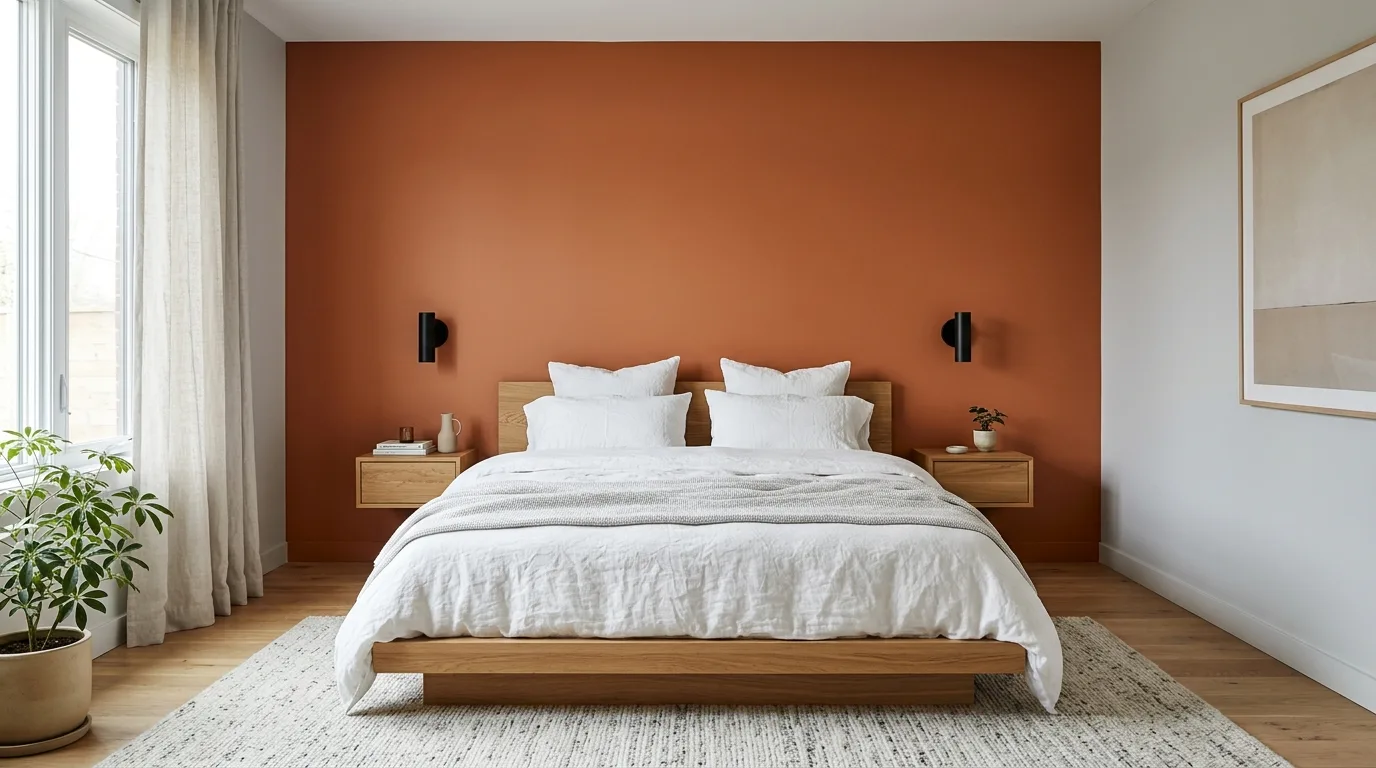
Orange and greige combine expressive color with a sophisticated neutral, making them a practical choice for modern bedrooms. Greige, a blend of grey and beige, can tone down the intensity of orange while maintaining a warm and polished atmosphere. Use muted terracotta, clay, or soft burnt orange on the feature wall and greige across the remaining walls. This arrangement gives the bed area a natural focal point while keeping the rest of the room understated. Greige furniture, cream bedding, oak accents, and textured rugs can blend easily with both colors. The palette is particularly useful if you want a bedroom that can evolve over time because neutral furnishings will work with many future accent colors. For the most balanced appearance, test paint samples under both daylight and artificial lighting before committing. Orange can shift noticeably depending on light, while greige can appear warmer or cooler depending on the surrounding finishes.