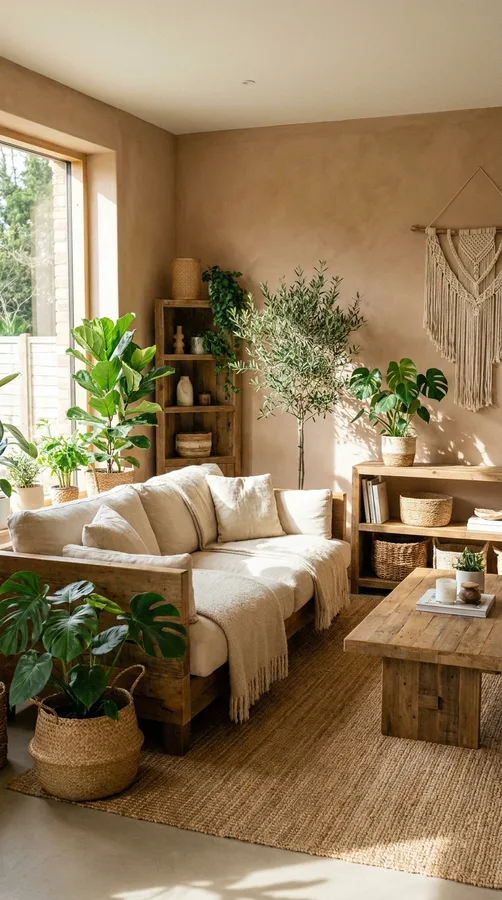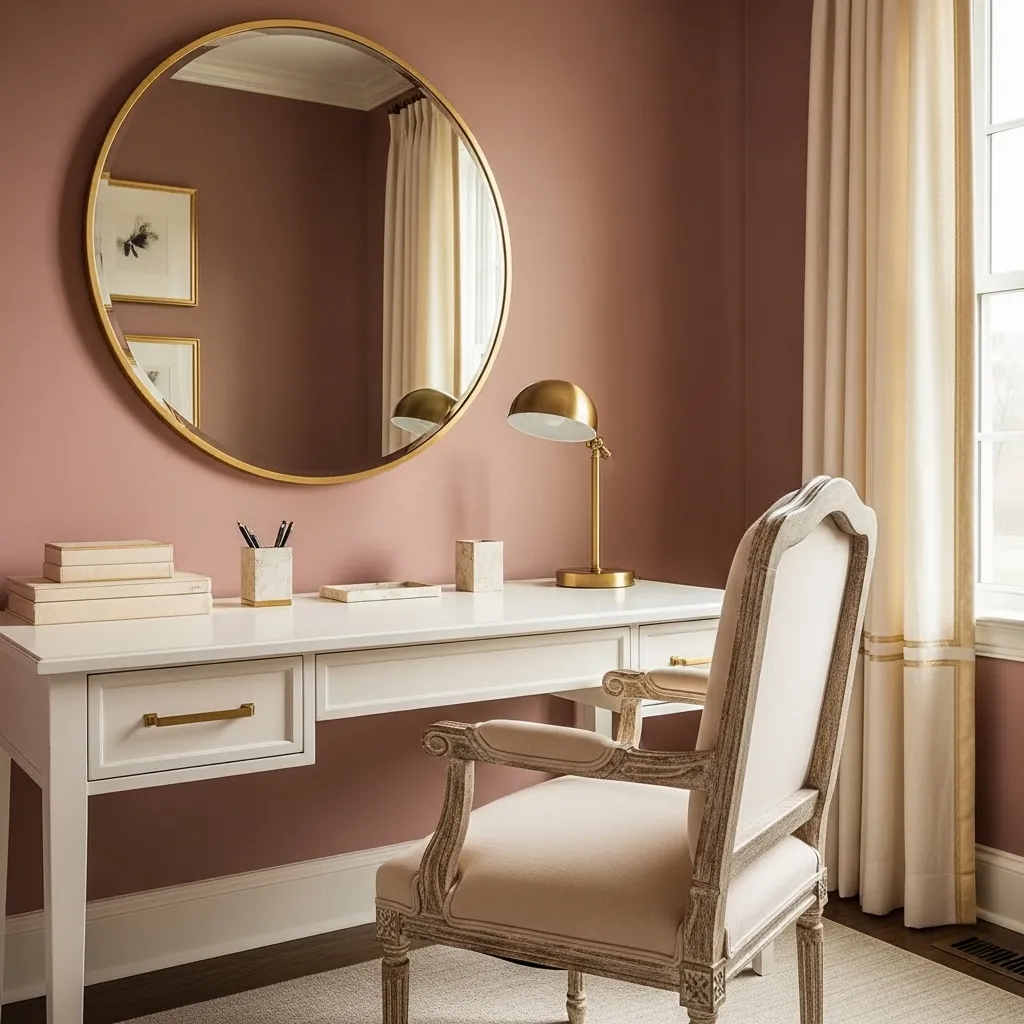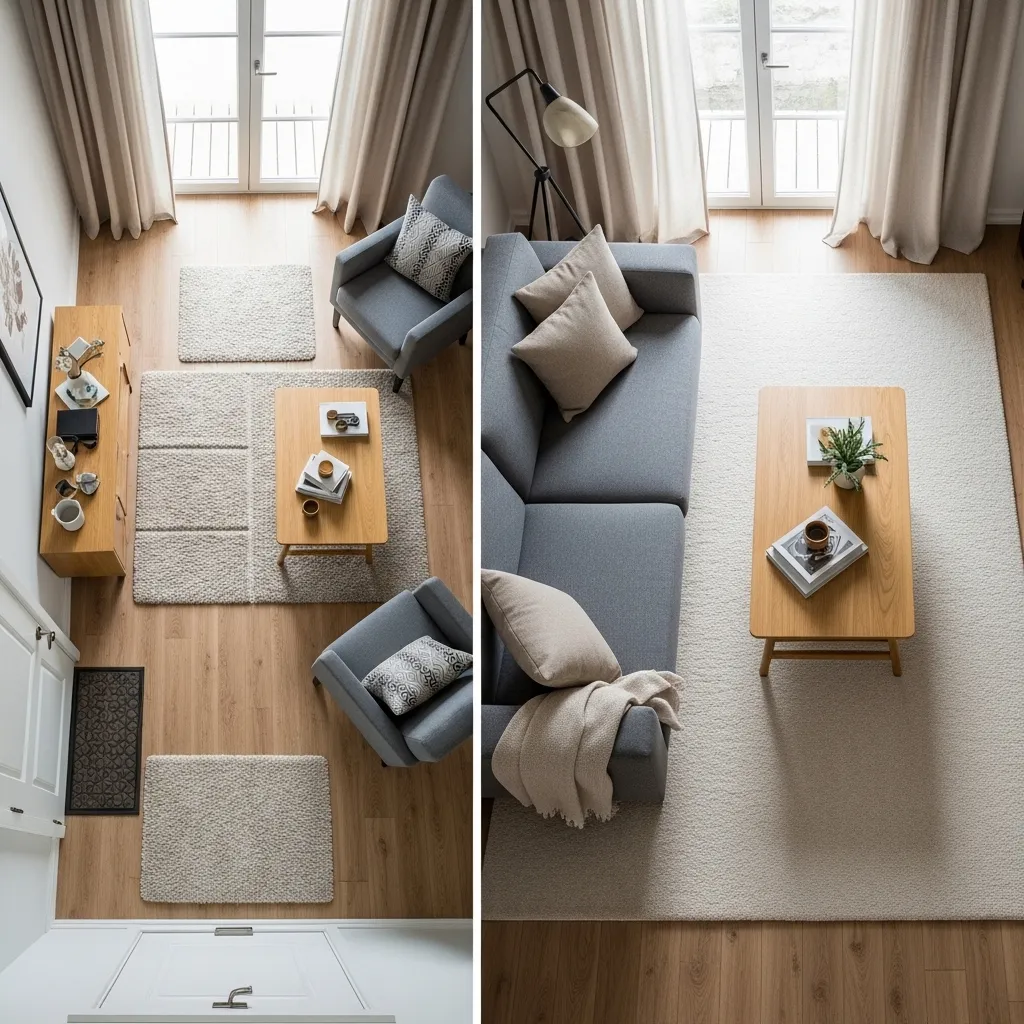
Eco-friendly furniture is more than a stylish trend—it is a practical way to create a beautiful home while making more thoughtful choices about materials, manufacturing, durability, and waste. From responsibly sourced wood and recycled materials to vintage pieces and low-toxin finishes, there are many ways to furnish your home with a lighter environmental footprint. The key is knowing what actually makes furniture sustainable rather than relying on vague labels. This guide covers 15 important things to know about eco-friendly furniture, including the materials to look for, certifications that can help, buying tips, maintenance ideas, and ways to make sustainable furniture work with almost any decorating style.
1. Understand What Eco-Friendly Furniture Really Means
Eco-friendly furniture is generally designed, manufactured, used, and eventually disposed of with environmental impact in mind. That can involve responsibly harvested materials, recycled or reclaimed components, efficient manufacturing, durable construction, and finishes that release fewer harmful chemicals. However, there is no single feature that automatically makes a piece sustainable. A beautiful table made from reclaimed wood may still have questionable environmental credentials if it was transported an extremely long distance or treated with high-emission finishes.
When shopping, consider the complete life cycle of the furniture rather than one marketing claim. Ask where the materials came from, how the piece was manufactured, whether it is built to last, and what happens when you no longer need it. This broader approach makes it easier to distinguish genuinely thoughtful furniture from products simply marketed with words such as “green” or “natural.”
2. Choose Responsibly Sourced Wood
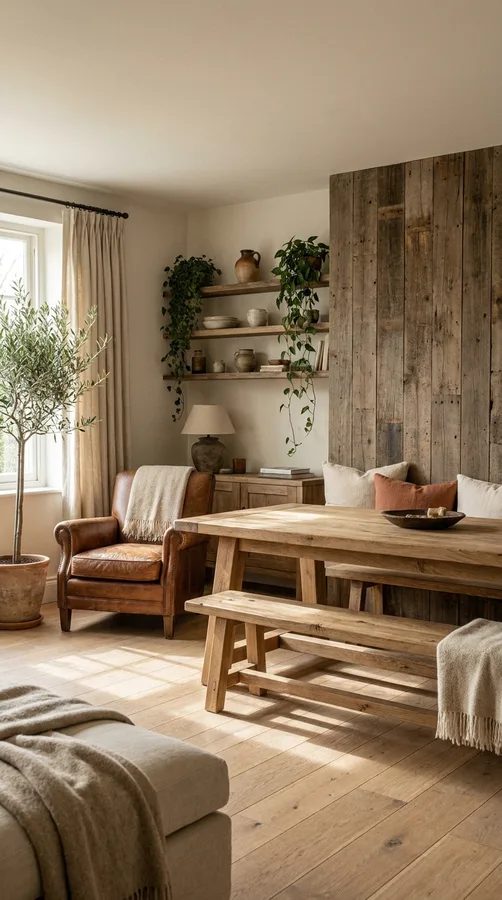
Wood can be an excellent choice for sustainable furniture when it comes from responsibly managed forests. Look for information about the wood species and its source instead of assuming every wooden product is environmentally friendly. Certified wood can provide additional reassurance because certification systems establish requirements related to responsible forestry and supply-chain tracking.
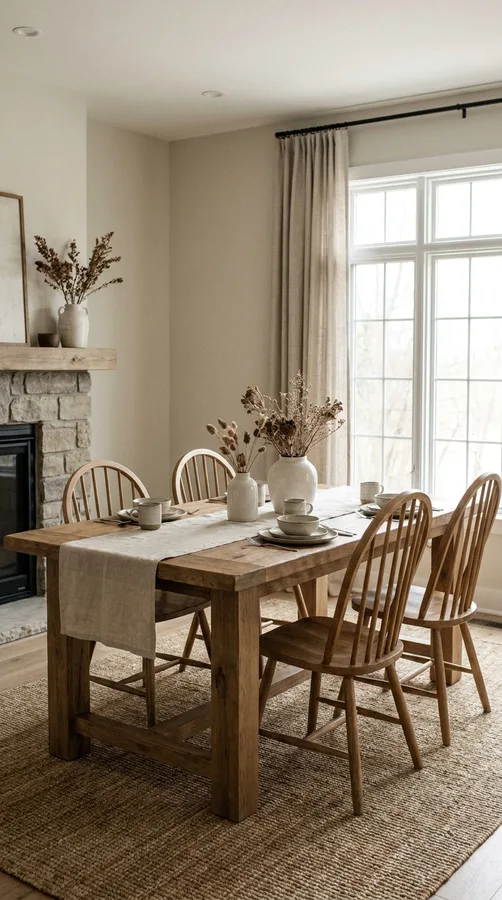
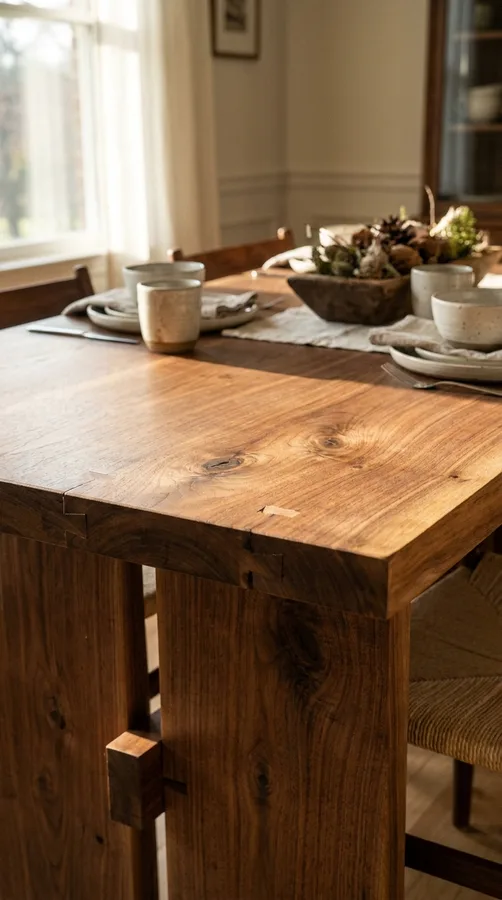
Durability also matters. A solid-wood dining table that can remain useful for decades may have a better long-term environmental profile than a cheaply constructed replacement that needs to be discarded after a few years. Reclaimed wood is another option because it gives existing material a new purpose rather than requiring newly harvested timber. When selecting wooden furniture, examine the joinery, finish, and repairability as well as the appearance. A timeless design that can be refinished, repaired, or passed to another owner is often a more sustainable investment than disposable furniture.
3. Look for Reclaimed and Recycled Materials
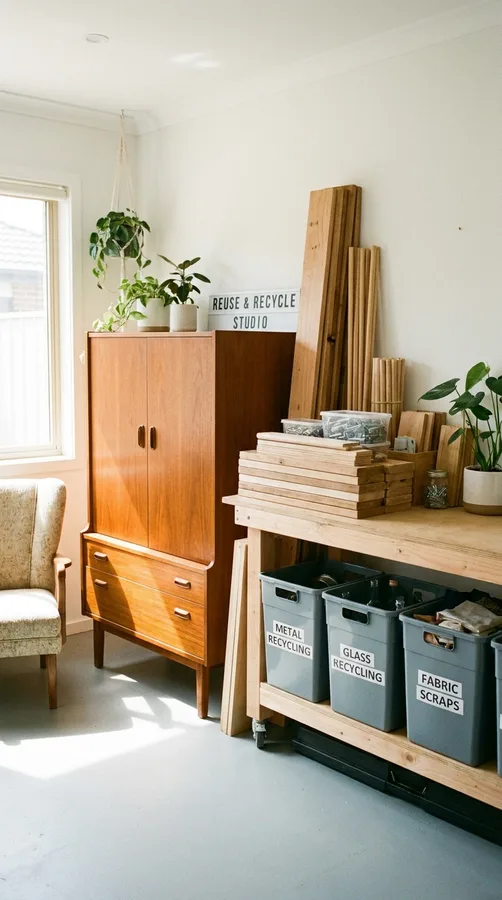
Furniture made with reclaimed or recycled materials can help reduce demand for newly extracted resources. Reclaimed timber from old buildings, barns, warehouses, or other structures can become dining tables, shelves, benches, and coffee tables. Recycled metal, plastic, and glass can also be incorporated into modern furniture designs.
The important detail is understanding exactly what has been reclaimed or recycled. Ask retailers for information about the material’s origin and percentage of recycled content when available. Reclaimed materials can vary considerably in quality, so inspect the piece carefully for structural problems, uneven surfaces, or previous damage. Recycled materials do not necessarily mean poor quality; many contemporary designs use them to create durable and distinctive pieces.
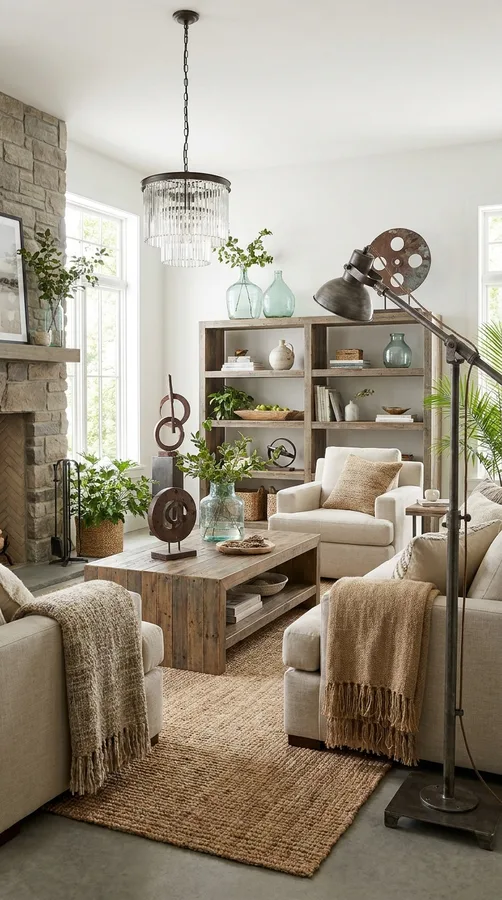
For a Pinterest-friendly interior, reclaimed furniture works especially well with warm neutrals, woven textures, linen upholstery, plants, and natural accessories. This combination creates a relaxed look while allowing the furniture’s material history to become part of the room’s character.
4. Consider Bamboo and Other Fast-Growing Materials
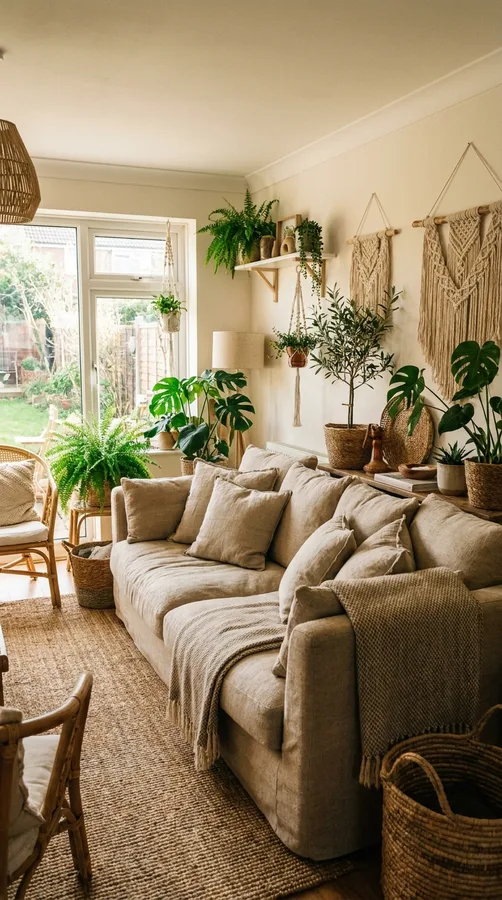
Bamboo is often associated with sustainable furniture because some bamboo species grow rapidly and can regenerate after harvesting. It can be used for chairs, shelving, tables, cabinets, flooring, and decorative furniture components. Its clean appearance also works beautifully in modern, Scandinavian, minimalist, and coastal interiors.
Still, bamboo should not automatically be treated as sustainable simply because it grows quickly. Manufacturing processes, adhesives, finishes, transportation, and farming practices can all influence the overall environmental impact. Look for manufacturers that provide clear information about sourcing and production.
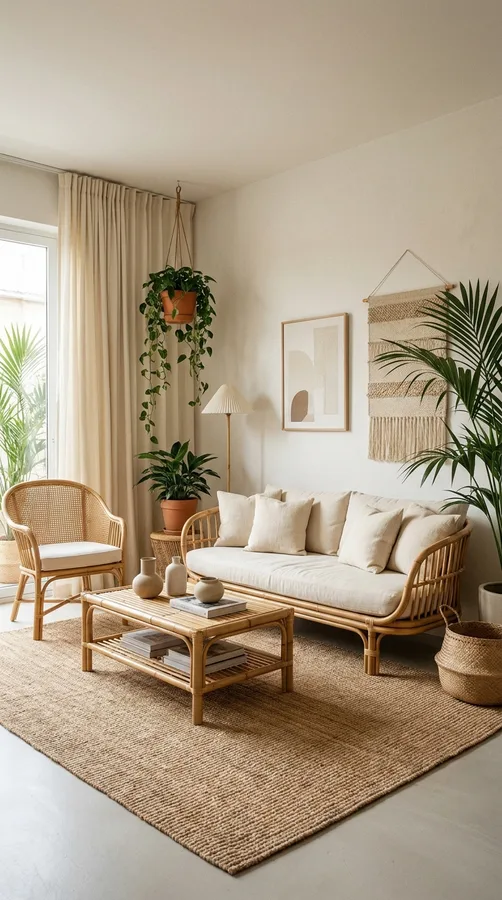
Other plant-based materials can also be worth exploring. Rattan, cork, hemp-based textiles, and certain agricultural-fiber composites can offer alternatives to conventional materials. Focus on transparency rather than choosing a material solely because it sounds natural. A well-made product with clear sourcing information and a long expected lifespan is generally more useful than a trendy product whose environmental claims cannot be verified.
5. Pay Attention to Furniture Finishes and Adhesives
The materials inside a piece of furniture are only part of the story. Paints, stains, varnishes, adhesives, and upholstery treatments can affect indoor air quality and environmental impact. Products marketed as low-VOC or water-based may be preferable in some situations because they can reduce certain emissions compared with conventional high-emission alternatives.
For upholstered furniture, ask about the foam, fabric treatments, and adhesives used in construction. For wooden furniture, consider pieces finished with durable coatings that do not require frequent replacement or refinishing. Natural finishes can be appealing, but “natural” does not automatically mean harmless or environmentally superior, so product-specific information is more useful than a broad label.
If you have sensitivities or are furnishing a nursery or bedroom, give extra attention to product specifications and manufacturer disclosures. Allow newly finished furniture to air out according to the manufacturer’s instructions before placing it in a poorly ventilated room.
6. Learn Why Durability Is a Major Sustainability Factor
One of the simplest ways to reduce furniture waste is to buy pieces that can remain useful for a long time. Strong frames, quality hardware, solid joinery, replaceable components, and repairable construction can extend a product’s useful life considerably. A slightly higher purchase price can make sense when the furniture is likely to serve your household for many years.
Before buying, inspect areas that commonly fail. Sit on chairs and sofas to test stability. Open drawers repeatedly and check whether they move smoothly. Examine table joints, cabinet hinges, and bed-frame connections. For upholstered pieces, find out whether cushions can be replaced or recovered.
Style longevity matters too. Extremely trendy furniture can become unwanted even when it remains structurally sound. Neutral silhouettes, classic proportions, and adaptable colors are often easier to keep and restyle. Instead of replacing an entire room whenever your taste changes, you can update lamps, textiles, artwork, and accessories around durable foundational furniture.
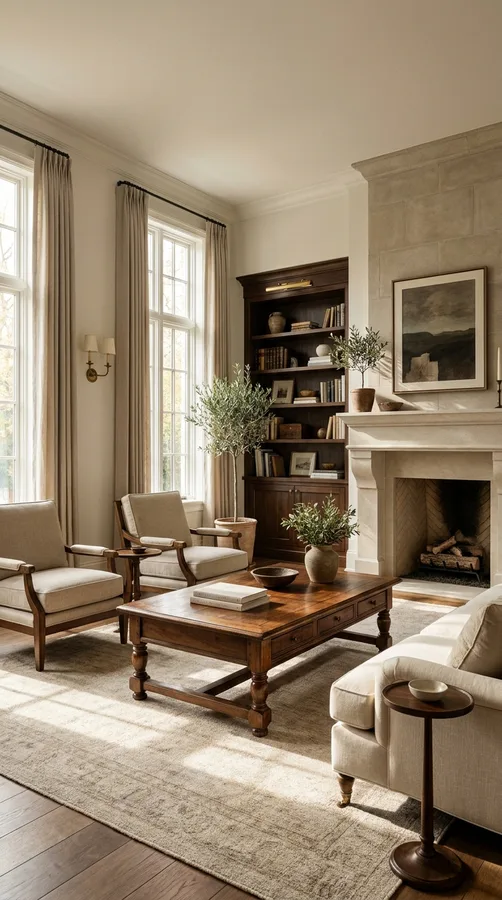
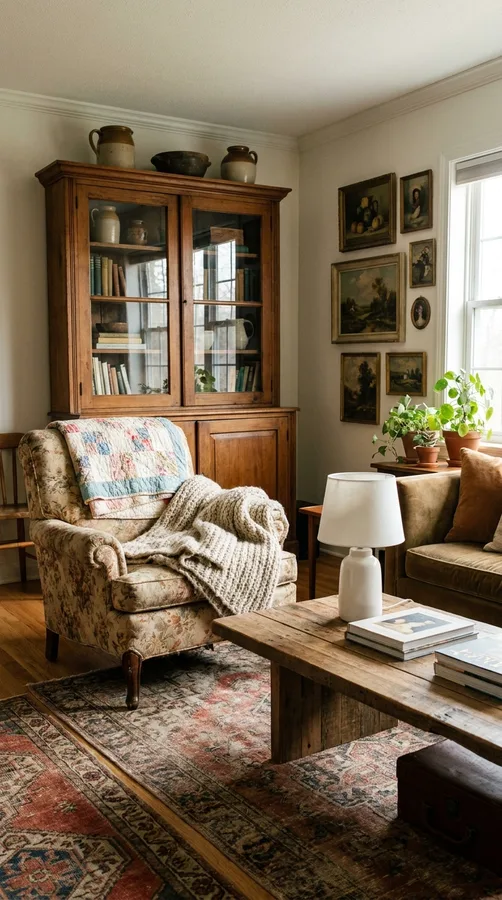
7. Explore Secondhand, Vintage, and Antique Furniture
Buying secondhand furniture is one of the most direct ways to extend the useful life of existing products. Vintage shops, antique stores, estate sales, local marketplaces, and furniture resale platforms can offer tables, dressers, cabinets, chairs, and storage pieces that already exist rather than requiring new manufacturing.
Older furniture can also bring character that is difficult to reproduce with mass-produced designs. Before purchasing, inspect the piece for structural damage, pests, moisture problems, unstable joints, and excessive wear. Upholstered items deserve additional scrutiny because fabric and internal materials can be harder to evaluate.
Do not overlook simple restoration opportunities. A scratched wooden dresser may need little more than cleaning, tightening hardware, light refinishing, or new handles. Reupholstering a sturdy chair can completely change its appearance while preserving the original frame. This approach works particularly well for eclectic and vintage-inspired interiors, where different eras and materials can be combined into a personalized room.
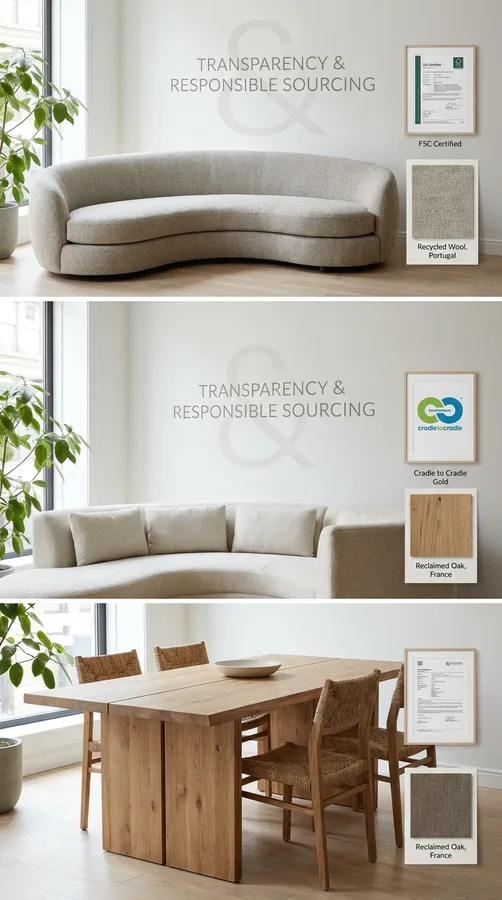
8. Check Sustainability Certifications and Documentation
Environmental certifications can make furniture shopping easier because they provide standards against which products or materials can be assessed. Depending on the product, you may encounter certifications relating to responsibly managed forests, recycled content, textile production, indoor emissions, or broader environmental performance.
Rather than focusing on the logo alone, look up what the certification actually covers. One certification may address forest management, while another may focus on emissions from building materials or furniture. A certification therefore does not necessarily mean that every aspect of a product’s life cycle is environmentally ideal.
Manufacturers that publish detailed material specifications, sourcing information, manufacturing locations, repair policies, and product longevity information can also demonstrate useful transparency. If a company makes broad environmental claims without explaining what they mean, treat those claims cautiously. The most useful sustainability information is specific enough for shoppers to understand what was measured, certified, or changed.
9. Choose Furniture With Low-Waste Packaging
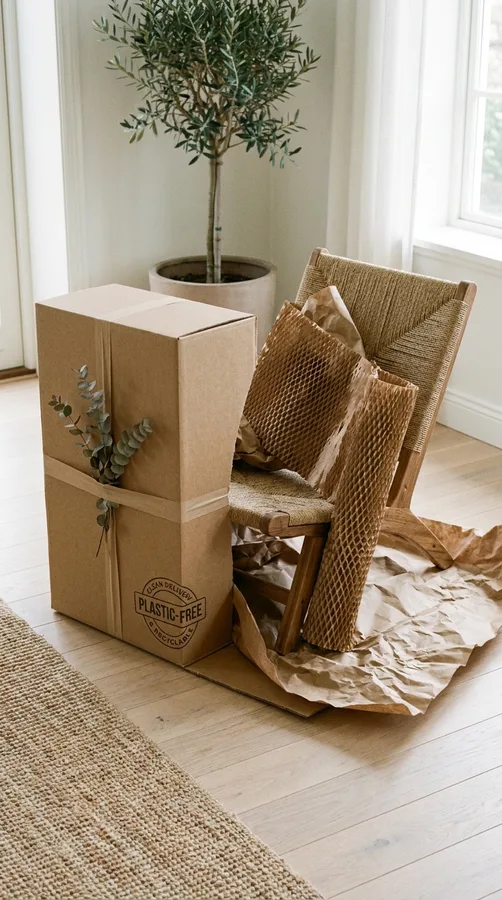
Furniture can arrive with substantial packaging, particularly when purchased online. Cardboard, plastic film, foam, protective corners, and other materials are often necessary to prevent damage during shipping, but excessive packaging creates additional waste. When comparing similar products, investigate how the manufacturer approaches packaging and whether recyclable materials are used.
Local purchases can sometimes reduce packaging and transportation requirements, although environmental impact depends on the complete supply chain. If ordering online, consolidate purchases when practical and recycle packaging according to the facilities available in your area.
Packaging is not the only transportation consideration. A durable piece manufactured closer to its final destination may have different logistics impacts from a similar item shipped through multiple distribution centers. However, transportation alone should not determine your choice. Construction quality, expected lifespan, material sourcing, and repairability are also important factors.
10. Consider Eco-Friendly Upholstery and Textiles
For sofas, dining chairs, benches, ottomans, and upholstered beds, the fabric can significantly influence the furniture’s environmental profile. Depending on the product and your priorities, you may encounter recycled polyester, organic fibers, linen, hemp, wool, and other textile options. Each has different production, durability, care, and end-of-life considerations.
Durability should remain central to the decision. A fabric that looks sustainable but wears out quickly may lead to more frequent replacement. Ask about abrasion ratings when purchasing heavily used upholstery, particularly for family rooms and dining areas.
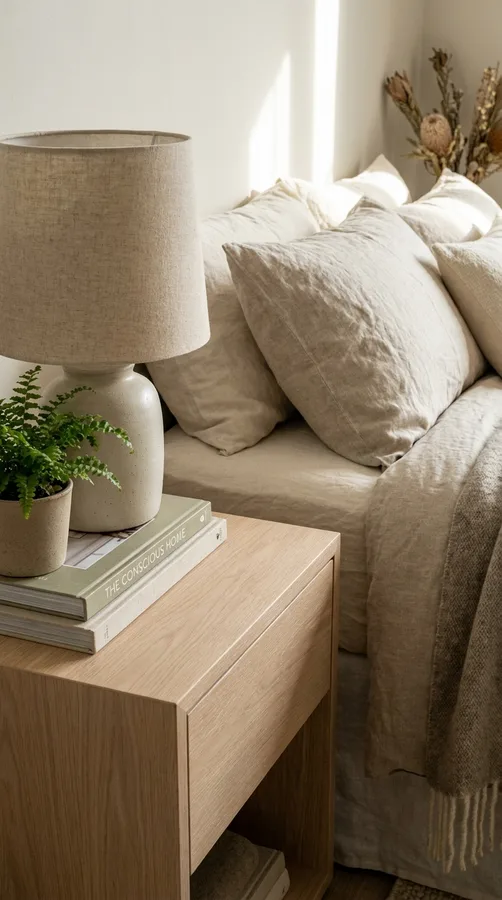
Removable and replaceable covers can also extend furniture life. If a sofa has a strong frame but its fabric eventually becomes dated or damaged, a recoverable design gives you the option to refresh it instead of replacing the whole piece. Neutral upholstery can provide a flexible foundation, while cushions, throws, and smaller textiles can introduce seasonal colors and patterns without requiring a new sofa.
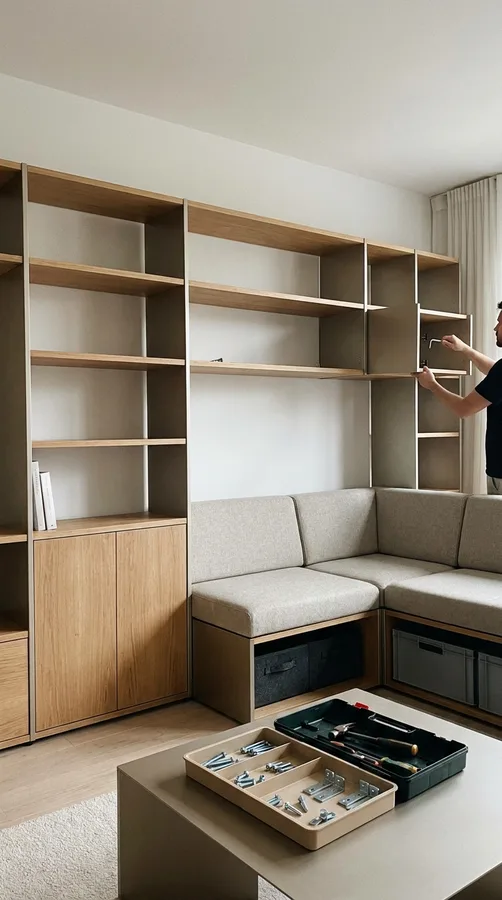
11. Think About Modular and Repairable Furniture
Furniture designed for repair, replacement, or reconfiguration can stay useful as your needs change. Modular shelving is a good example: you may be able to add sections, move components, or change the configuration instead of buying an entirely new storage system. Some sofas and desks similarly offer replaceable parts or adaptable configurations.
Before purchasing, check whether replacement hardware, covers, shelves, legs, cushions, or other components are available. A manufacturer’s repair policy can tell you a great deal about how the company expects customers to use its products over time.
Repairability is particularly valuable in households where furniture receives heavy use. A loose chair joint, damaged drawer runner, or worn cushion should not automatically mean the entire item has reached the end of its life. Learning a few basic repair skills—or choosing furniture that local professionals can easily service—can keep useful pieces in circulation much longer.
12. Choose Timeless Designs Over Disposable Trends
Sustainable decorating is not limited to a particular visual style. Eco-friendly furniture can look traditional, contemporary, rustic, industrial, minimalist, or luxurious. What matters is whether the design works for your space and remains useful over time.
Timeless furniture often has simple proportions and versatile finishes that can adapt as your decorating preferences change. For example, a well-built wood console can work in a modern room today and a more traditional home later simply by changing the surrounding artwork and accessories.
Before buying a trend-driven piece, ask whether you would still want it if the current decorating trend disappeared. If the answer is uncertain, consider a smaller decorative purchase rather than replacing a major furniture item. This approach can reduce unnecessary consumption while still allowing you to experiment with new colors and styles.
13. Maintain Your Furniture to Extend Its Life
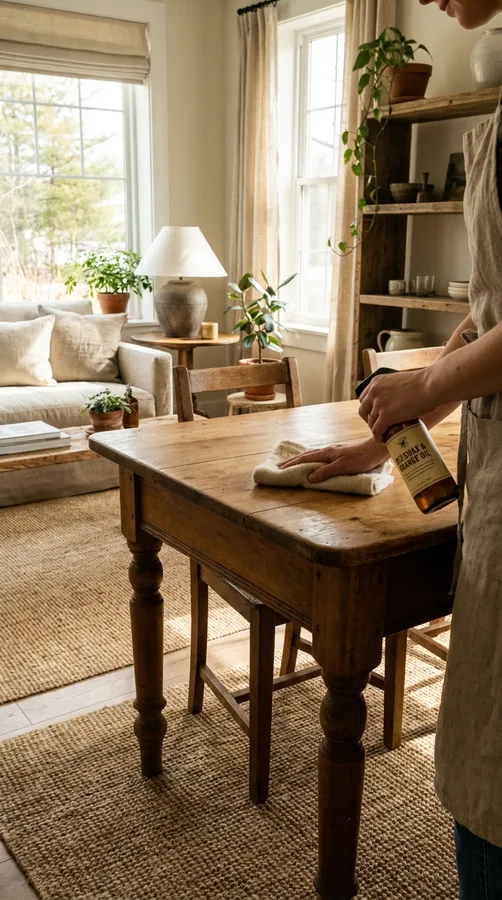
Even sustainable furniture needs proper care. Regular maintenance can prevent minor problems from becoming expensive repairs or reasons for replacement. Follow the manufacturer’s cleaning instructions, especially for wood finishes, upholstery, leather alternatives, and natural fibers.
Wooden furniture may benefit from appropriate dusting and protection from prolonged moisture or extreme temperature changes. Upholstered furniture should be vacuumed according to the manufacturer’s recommendations, while spills should be addressed promptly using approved cleaning methods. Check screws, bolts, hinges, and joints periodically and tighten them when necessary.
Protecting furniture from direct sunlight can also help reduce fading and finish deterioration. Use coasters, mats, and appropriate surface protectors where they make sense. Avoid harsh cleaning products unless the manufacturer specifically recommends them.
Good maintenance is one of the least expensive sustainability strategies because it requires no new furniture. The longer a well-made item remains functional and attractive, the more value you get from the materials and resources already used to produce it.
14. Know How to Dispose of Furniture Responsibly
Sustainable furniture decisions continue even when a piece is no longer right for your home. Before sending furniture to the landfill, consider whether someone else can use it. Selling, donating, gifting, or giving it to a community organization can extend its useful life.
If the item is damaged, consider whether it can be repaired, repurposed, or dismantled for usable materials. A damaged wooden cabinet might become shelving or storage, while individual components such as hardware may be useful for future projects.
For furniture that genuinely cannot be reused, check local disposal and recycling services to determine which materials they accept. Some municipalities and specialized services have separate options for wood, metal, mattresses, electronics-containing furniture, or other difficult materials. Avoid abandoning unwanted furniture in unauthorized locations, since improper disposal can create environmental and community problems.
Planning for the end of a product’s life when you buy it is a useful habit. Furniture that can be repaired, disassembled, reused, or recycled is generally easier to manage responsibly than a product made from inseparable mixed materials.
15. Create a Sustainable Furniture Buying Checklist
You do not need to replace every piece of furniture in your home to create a more sustainable interior. A better approach is to make thoughtful decisions when something genuinely needs replacing. Start with the questions that matter most to your household: Is the item durable? Can it be repaired? Are its materials clearly identified? Does the manufacturer provide sourcing or certification information? Is the design likely to remain useful for years?
When comparing options, consider this practical checklist:
- Materials: Look for responsibly sourced, recycled, reclaimed, or durable materials.
- Construction: Check joints, hardware, frames, and replaceable components.
- Finishes: Review information about coatings, adhesives, and emissions.
- Transparency: Prefer specific environmental information over vague green claims.
- Longevity: Choose furniture that can withstand your household’s actual level of use.
- Repairability: Check whether parts, covers, or replacement hardware are available.
- End of life: Consider whether the furniture can be resold, donated, repaired, reused, or recycled.
Eco-friendly furniture ultimately comes down to making durable, informed choices rather than chasing a perfect product. Whether you choose reclaimed wood, certified materials, secondhand finds, repairable designs, or simply fewer but better pieces, small decisions can shape a more thoughtful and comfortable home.