Blue is one of the most versatile colors for a bedroom, offering everything from airy and calming to rich and dramatic. Pairing blue with a second color can make the walls feel more layered, intentional, and visually interesting without overwhelming the room. The right two-color combination can also help define the mood you want, whether that means a peaceful retreat, a modern statement, a cozy cocoon, or a bright and cheerful space. From timeless blue and white to sophisticated navy and beige, these bedroom wall color combinations offer plenty of inspiration for different decorating styles. When choosing your pairing, consider natural light, furniture finishes, flooring, and the size of the room. The ideas below show how to use two colors thoughtfully while keeping the overall bedroom comfortable and cohesive.
1. Navy Blue and Crisp White
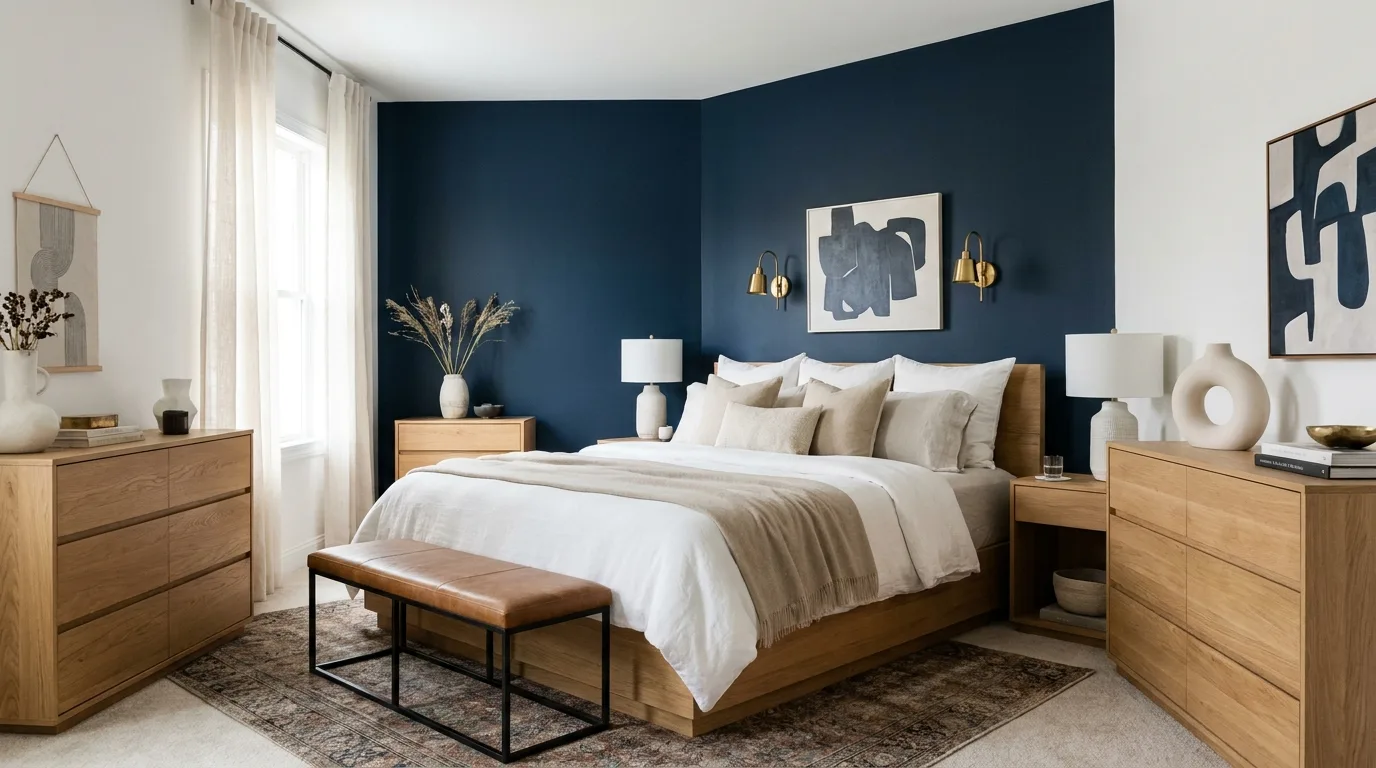
Navy blue and crisp white create a classic bedroom combination that feels both polished and relaxing. Use navy on the main wall behind the bed while keeping the remaining walls white for a strong focal point without making the room feel enclosed. Alternatively, paint the lower half of the walls navy and the upper half white for a tailored two-tone effect. White bedding, curtains, and trim can reinforce the contrast, while natural wood furniture prevents the palette from feeling too formal. This pairing works particularly well in bedrooms with generous natural light because the white balances the depth of navy. For a more contemporary look, choose clean-lined furniture and simple lighting. For a coastal-inspired bedroom, add woven textures and subtle blue accessories.
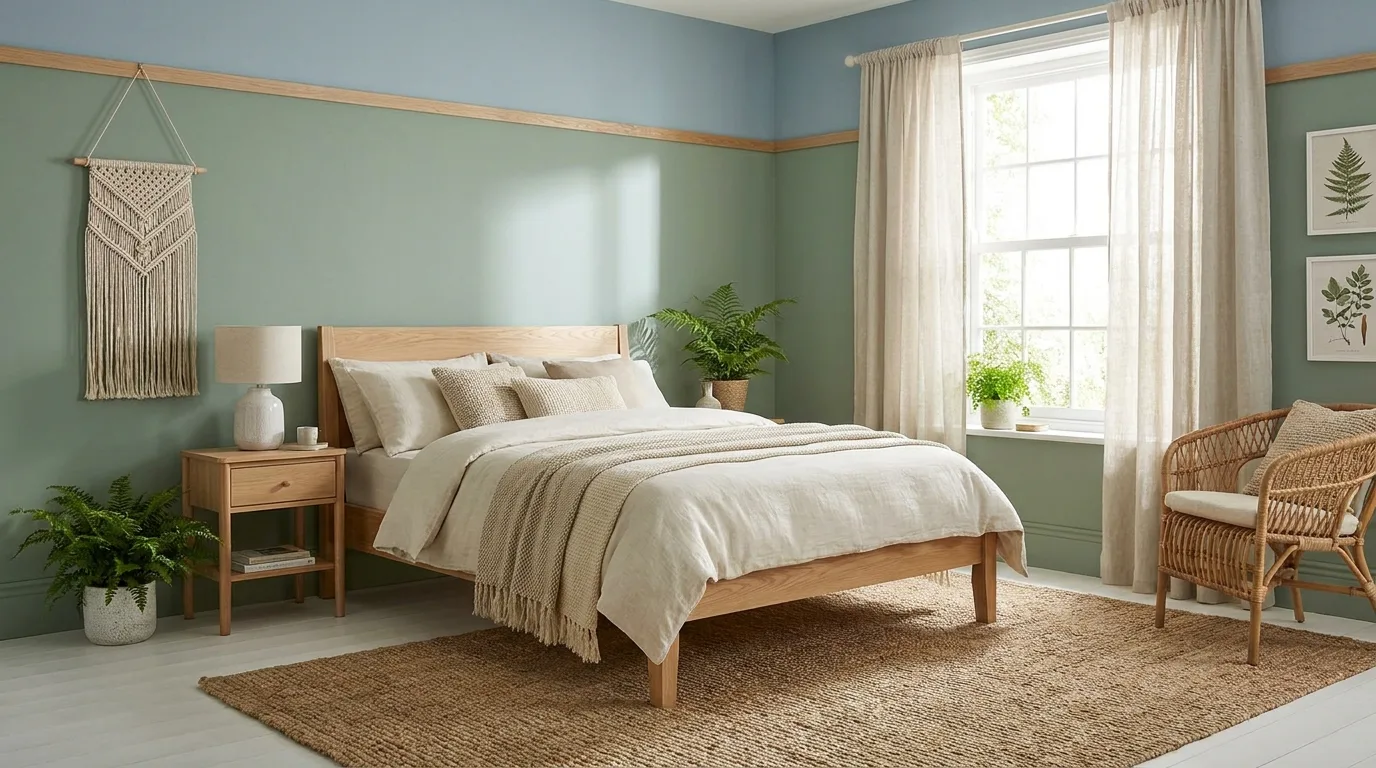
2. Sky Blue and Soft Beige
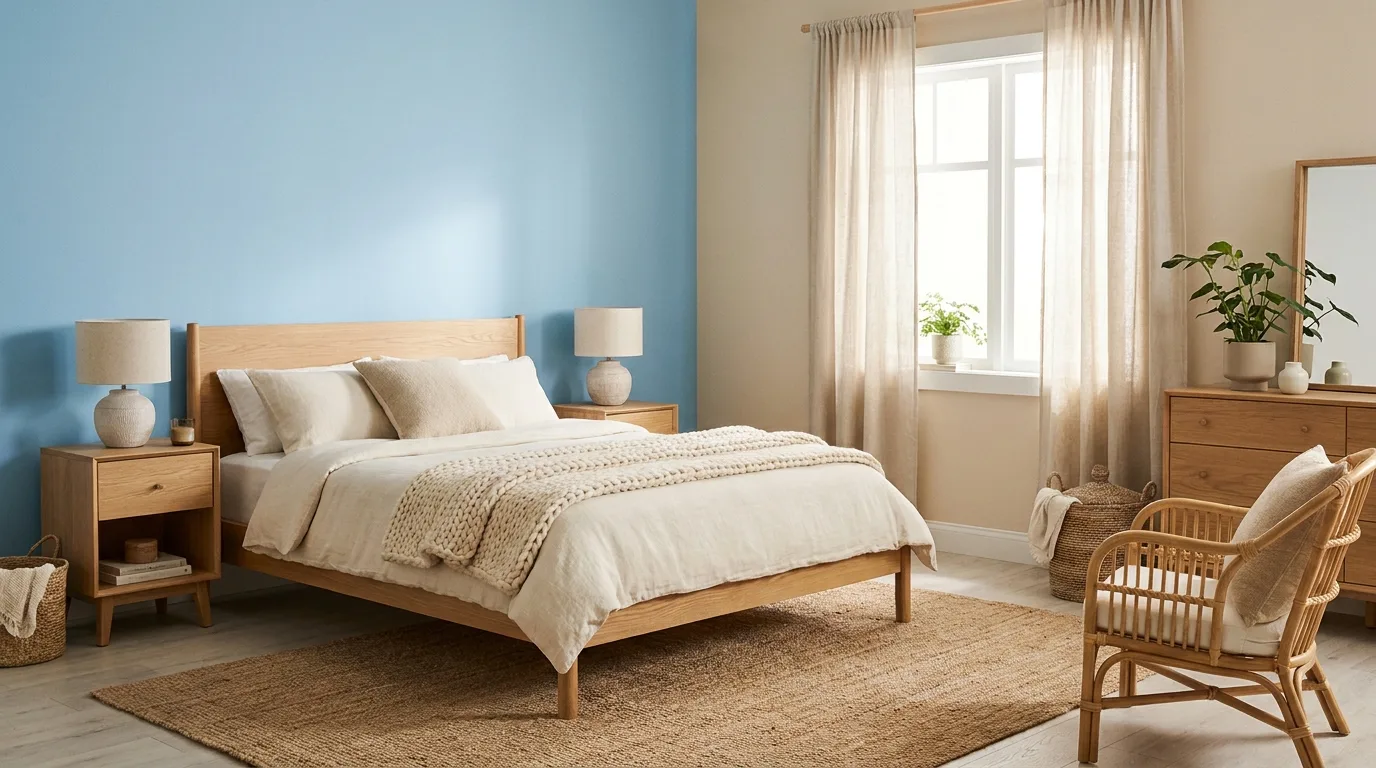
Sky blue paired with soft beige creates a gentle, welcoming bedroom that feels light without becoming stark. The blue brings a fresh quality to the walls, while beige adds warmth and keeps the palette grounded. Consider using sky blue above a beige-painted lower section, separated by a slim chair rail or crisp molding. You can also use beige on three walls and reserve sky blue for the wall behind the bed. This combination is especially effective with cream bedding, light oak furniture, and natural-fiber rugs. Avoid overly yellow beige if you want the blue to remain fresh; a warm greige or sandy neutral can provide a more balanced transition. The result is an easygoing color scheme suitable for traditional, modern, coastal, or relaxed Scandinavian-inspired bedrooms.
3. Blue and Warm Gray
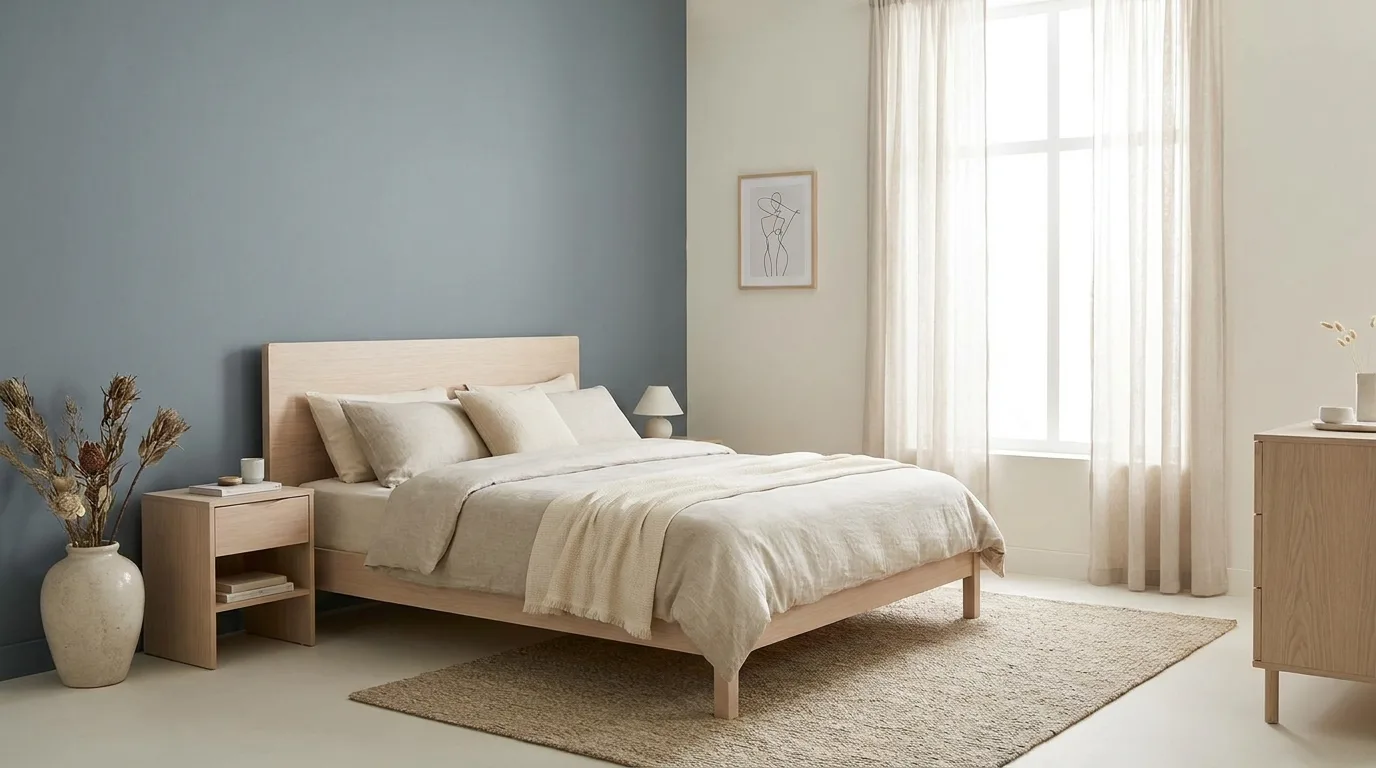
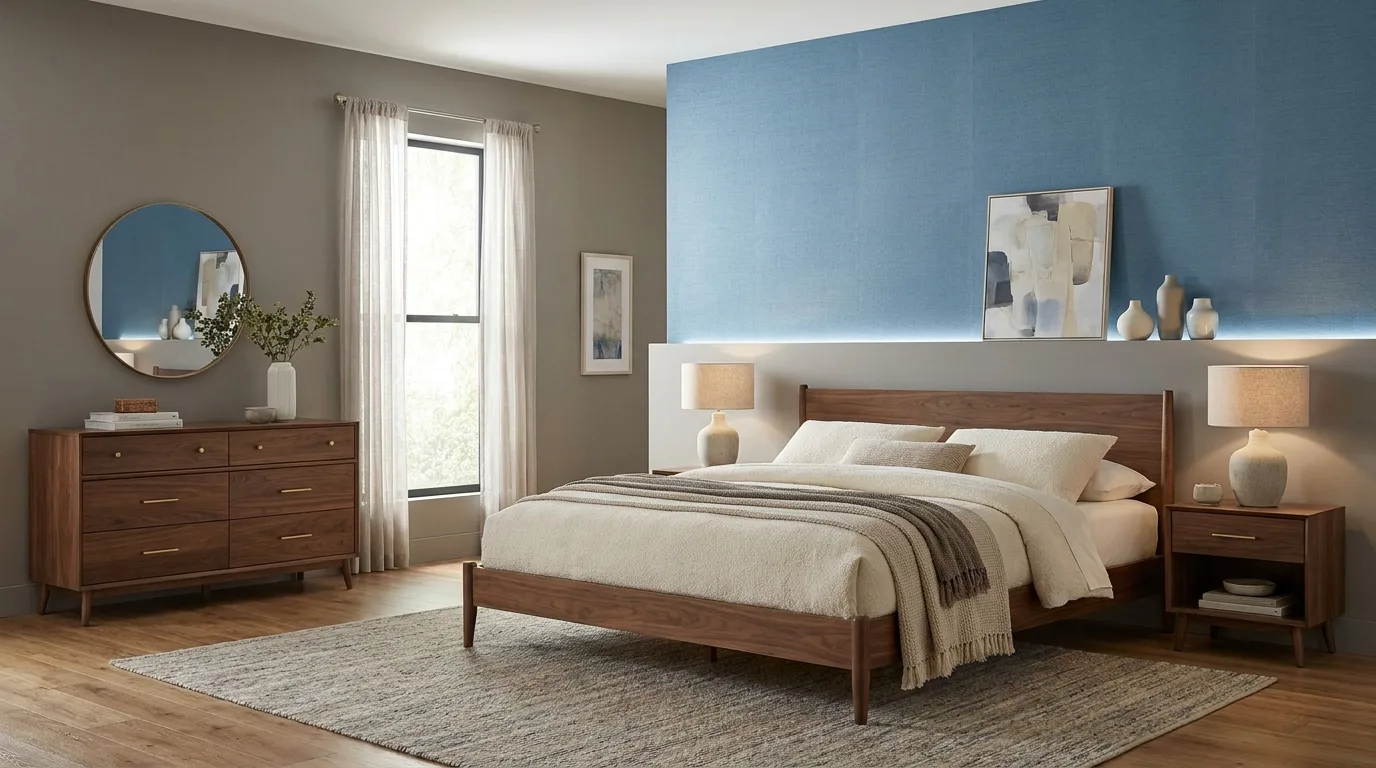
Blue and warm gray offer a sophisticated alternative to the more predictable blue-and-white palette. Choose a medium or muted blue for an accent wall and use warm gray across the surrounding walls to create a soft, cohesive backdrop. Unlike cool gray, a warmer gray introduces subtle beige or taupe undertones that keep the bedroom from feeling cold. This combination works beautifully with charcoal, cream, walnut, and brushed-metal accents. If the bedroom receives limited sunlight, select a lighter blue and a pale warm gray to preserve brightness. In a larger, well-lit room, deeper blue can create a more dramatic focal point behind the headboard. Keep patterns restrained so the two wall colors remain the primary visual feature.
4. Dusty Blue and Blush Pink
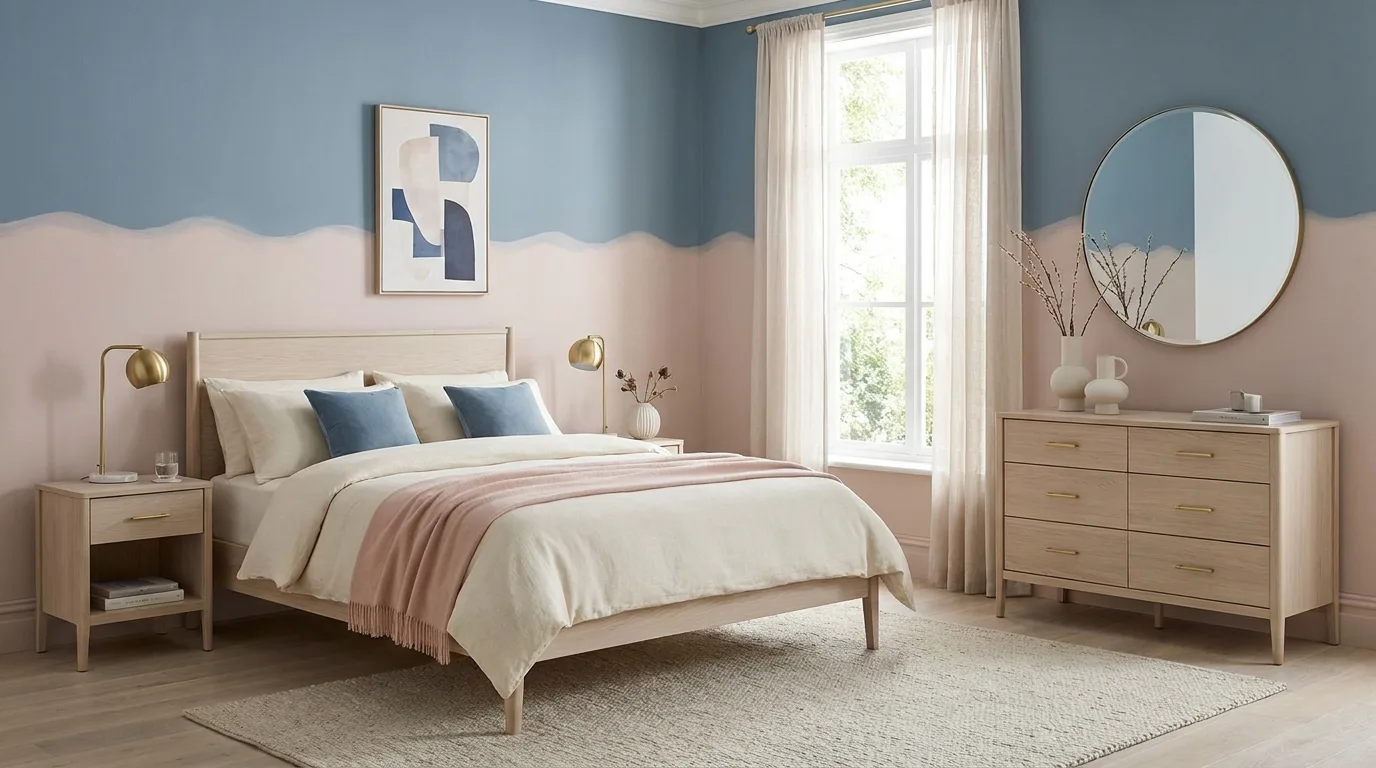
Dusty blue and blush pink create a soft, sophisticated bedroom palette with just enough contrast to feel distinctive. Because both colors can be muted rather than highly saturated, they work together without looking overly playful. Use dusty blue on the main walls and introduce blush pink on an accent wall, a recessed section, or the lower portion of the walls. Another option is to paint the wall behind the bed blush and use dusty blue elsewhere for a more subtle statement. Cream-colored textiles, pale wood, and brass details complement the combination particularly well. Choose a dusty or gray-based blue instead of a bright primary blue if you want a restful atmosphere. This pairing is especially attractive in bedrooms where you want color to feel warm, refined, and inviting.
5. Teal Blue and Warm White
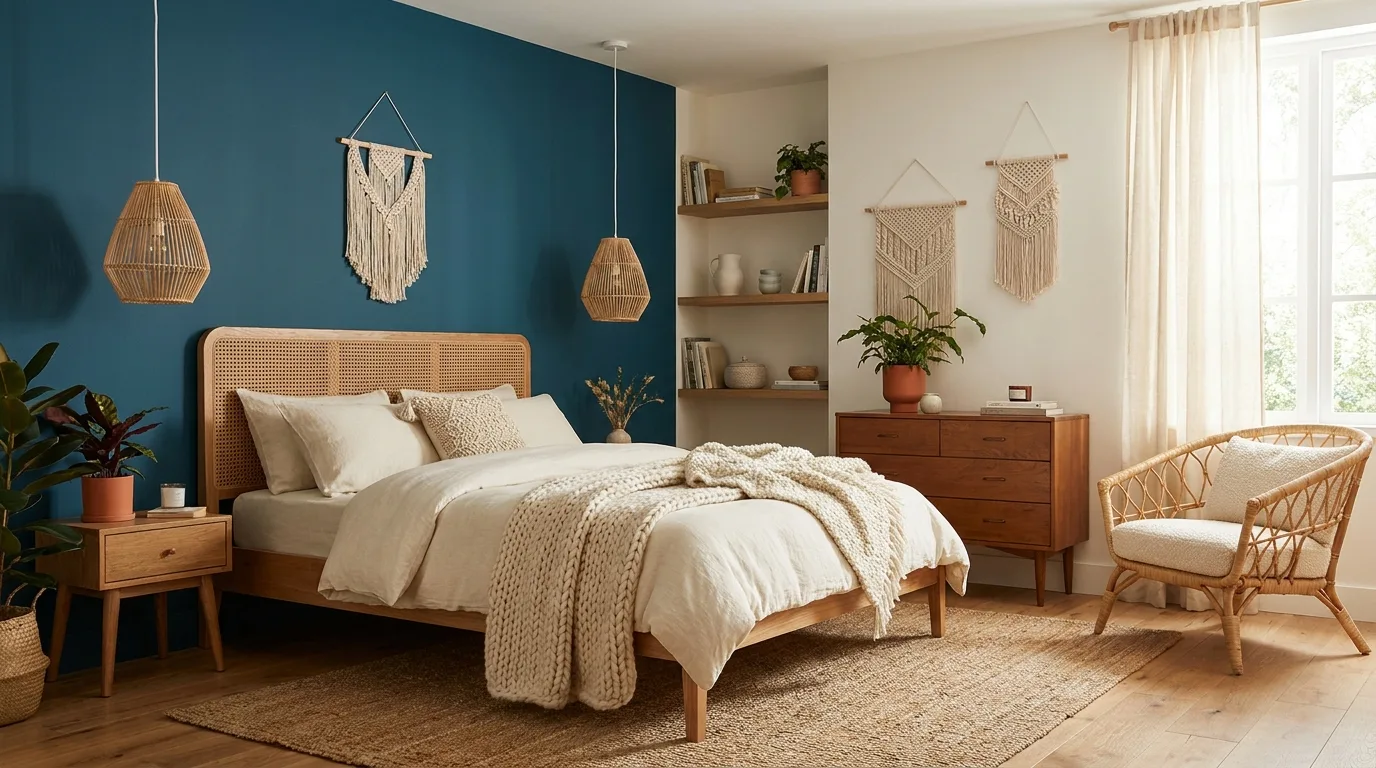
Teal blue combined with warm white can give a bedroom a lively yet comfortable character. Teal has more green in it than traditional blue, making it especially useful when you want a richer wall color that still feels connected to nature. Paint the wall behind the bed in teal and use warm white for the surrounding walls to keep the room balanced. Warm white is preferable to an icy white because it softens the contrast and works naturally with wood, rattan, and cream textiles. In a smaller bedroom, keep teal to one wall rather than using it throughout the space. Add simple artwork and neutral bedding so the saturated wall color remains the star. The result can suit modern, bohemian, tropical, or contemporary bedroom interiors.
6. Powder Blue and Cream
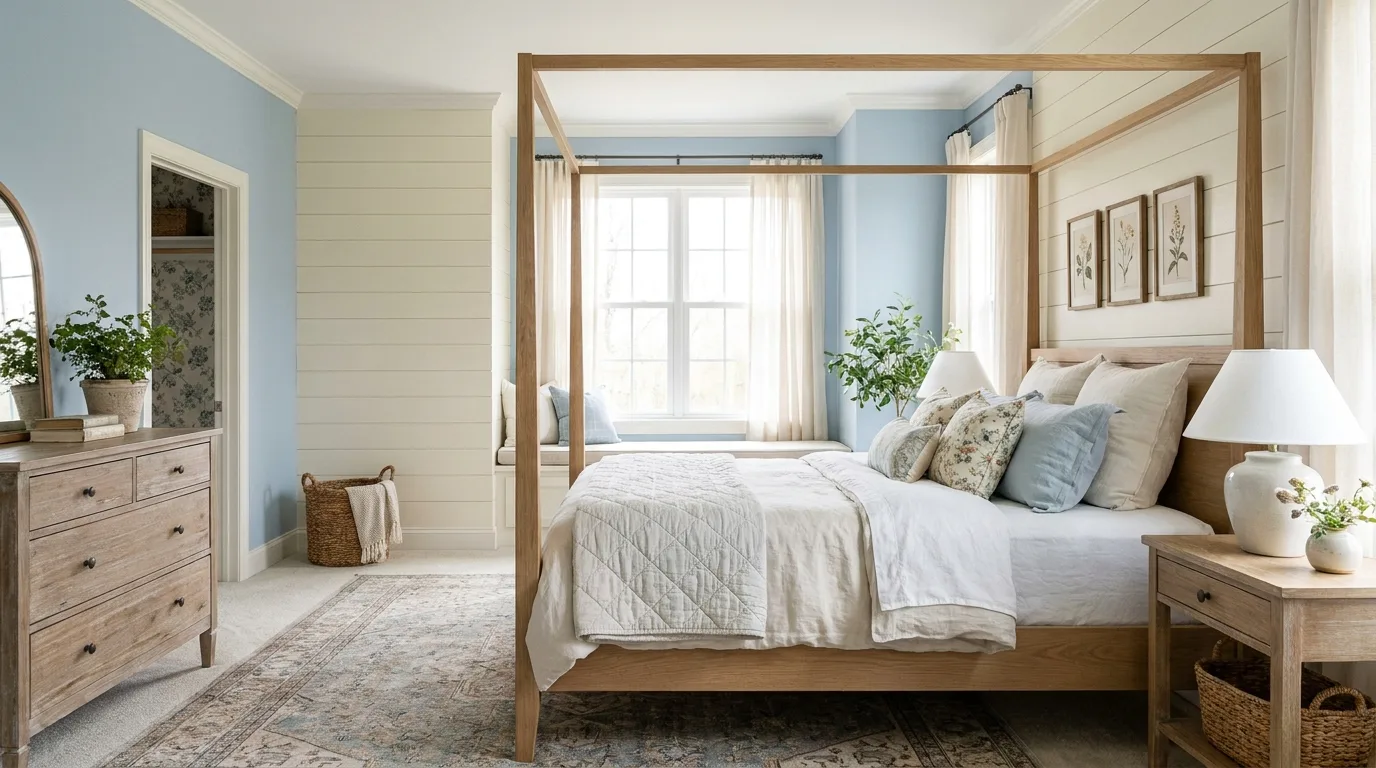
Powder blue and cream create an airy combination that makes a bedroom feel peaceful and softly illuminated. Powder blue works particularly well on walls because its pale tone introduces color without visually weighing down the room. Pair it with creamy off-white on an adjoining wall, a paneling treatment, or the lower half of the walls for subtle dimension. Cream bedding and curtains can reinforce the warmth of the palette, while light-colored wood furniture keeps the space feeling fresh. This pairing is ideal for bedrooms with classic or cottage-inspired details, but it can also look modern when paired with streamlined furniture. If the room has cool natural light, choose a cream with gentle warm undertones to prevent the blue from appearing too icy.
7. Royal Blue and Soft Gray
Royal blue makes a confident statement, and soft gray gives it a sophisticated supporting color. Rather than covering every wall in saturated blue, consider using royal blue behind the headboard and a pale gray on the other three walls. This creates a strong focal point while preserving an open feeling around the bed. Gray furniture, silver-toned lighting, and white bedding can strengthen the modern character of the combination. If royal blue feels too intense for the entire accent wall, use it within wall panels, an arched feature, or a geometric painted section. Keep the rest of the décor relatively restrained so the wall treatment does not compete with too many patterns. This combination is particularly effective for contemporary bedrooms that need a bold but controlled dose of color.
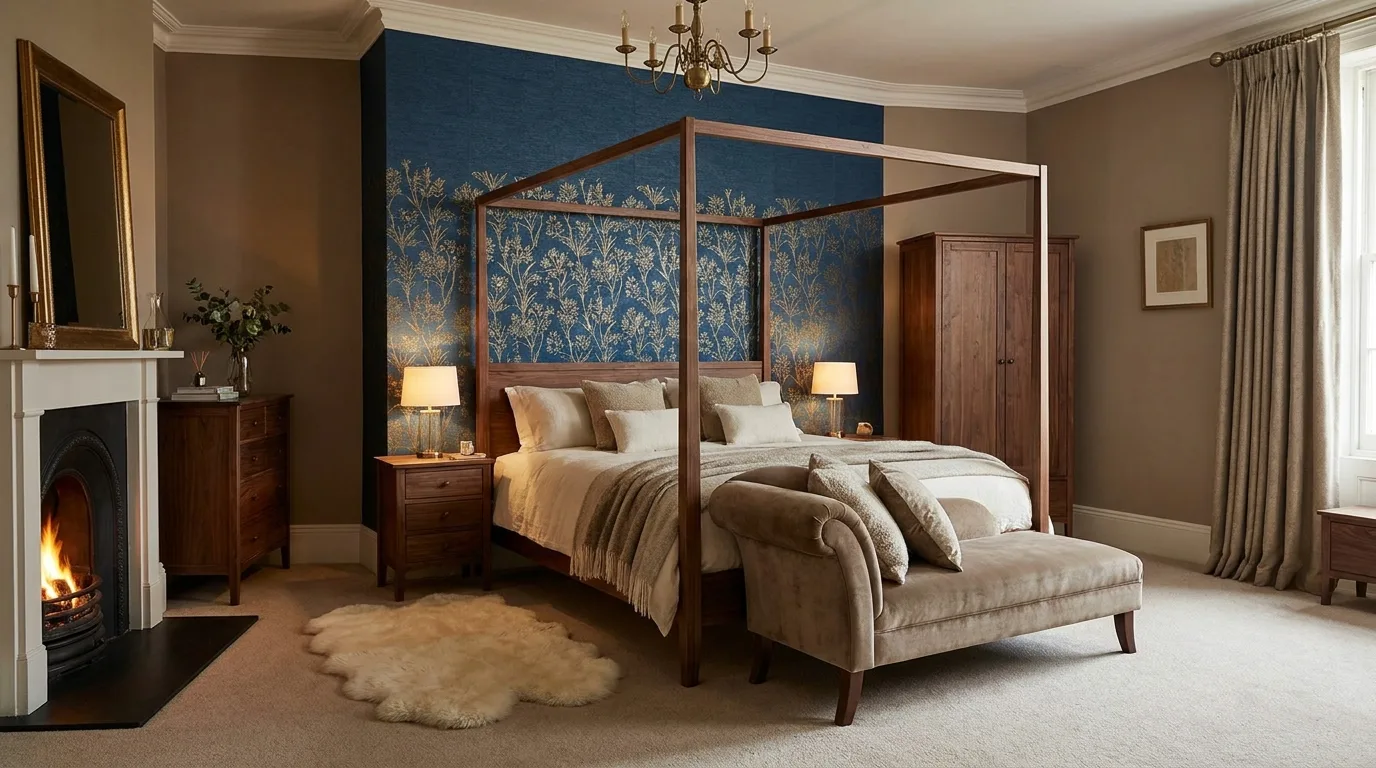
8. Deep Blue and Warm Taupe
Deep blue and warm taupe create a cozy, upscale atmosphere that works especially well in larger bedrooms. Deep blue can be used behind the bed to create a dramatic backdrop, while taupe on the remaining walls prevents the room from becoming too dark. The warmth of taupe complements the richness of blue and pairs naturally with walnut furniture, leather accents, cream bedding, and textured fabrics. For a balanced look, choose a blue with slightly muted undertones rather than an extremely bright shade. Matte paint can make the combination feel more sophisticated, while carefully placed warm lighting helps maintain a welcoming mood at night. This pairing is a strong choice for bedrooms inspired by boutique hotels, transitional interiors, or contemporary spaces with warm neutral finishes.
9. Blue and Sage Green
Blue and sage green bring two nature-inspired colors together for a calming bedroom scheme. A muted blue can serve as the dominant wall color, while sage green defines one accent wall or a lower wall section. Because both colors can be softened and slightly gray, they blend naturally rather than creating a harsh contrast. Light oak, rattan, cream, and natural linen are excellent materials to introduce alongside this palette. If the bedroom receives strong sunlight, a medium blue can provide enough depth without appearing overly dark. For a dim room, select pale blue and soft sage instead. This combination is particularly useful when you want a bedroom that feels relaxed and organic without relying entirely on beige or white neutrals.
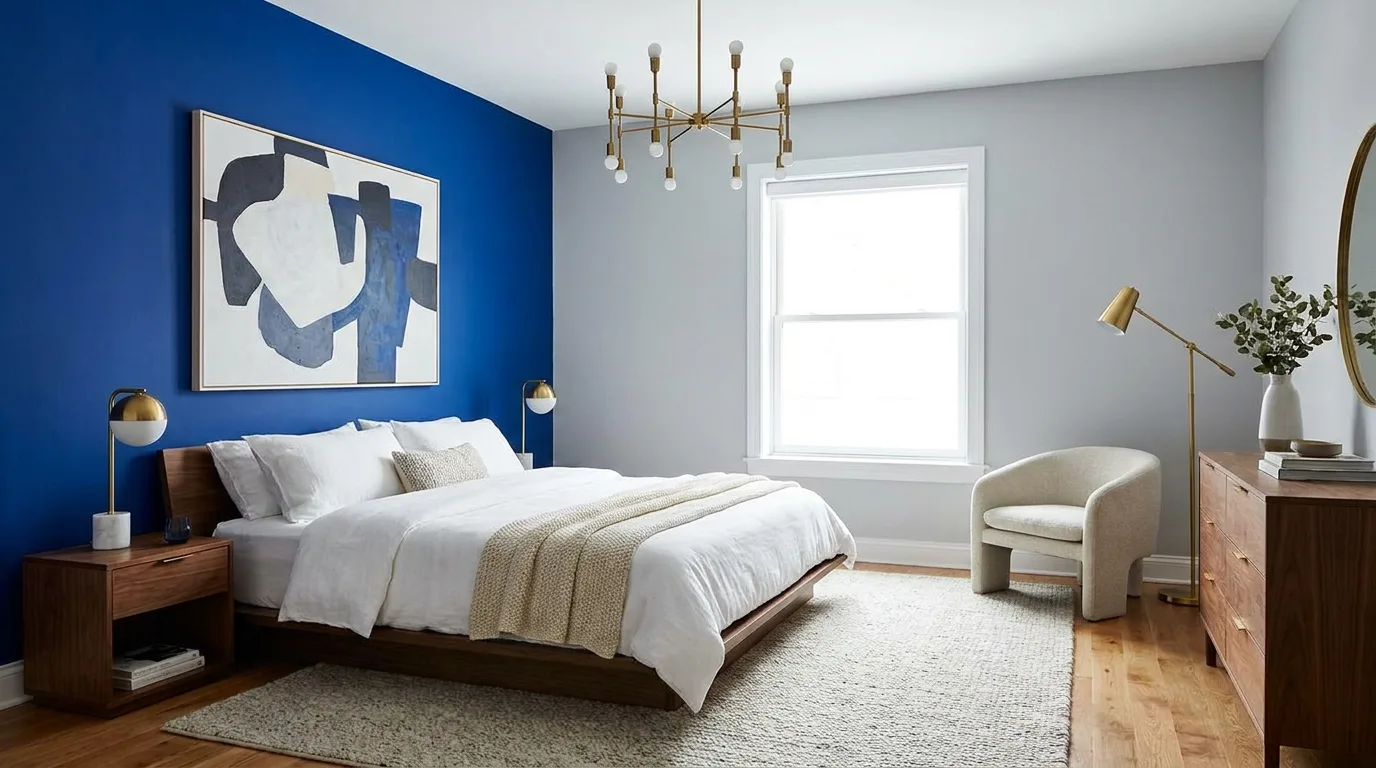
10. Cobalt Blue and Bright White
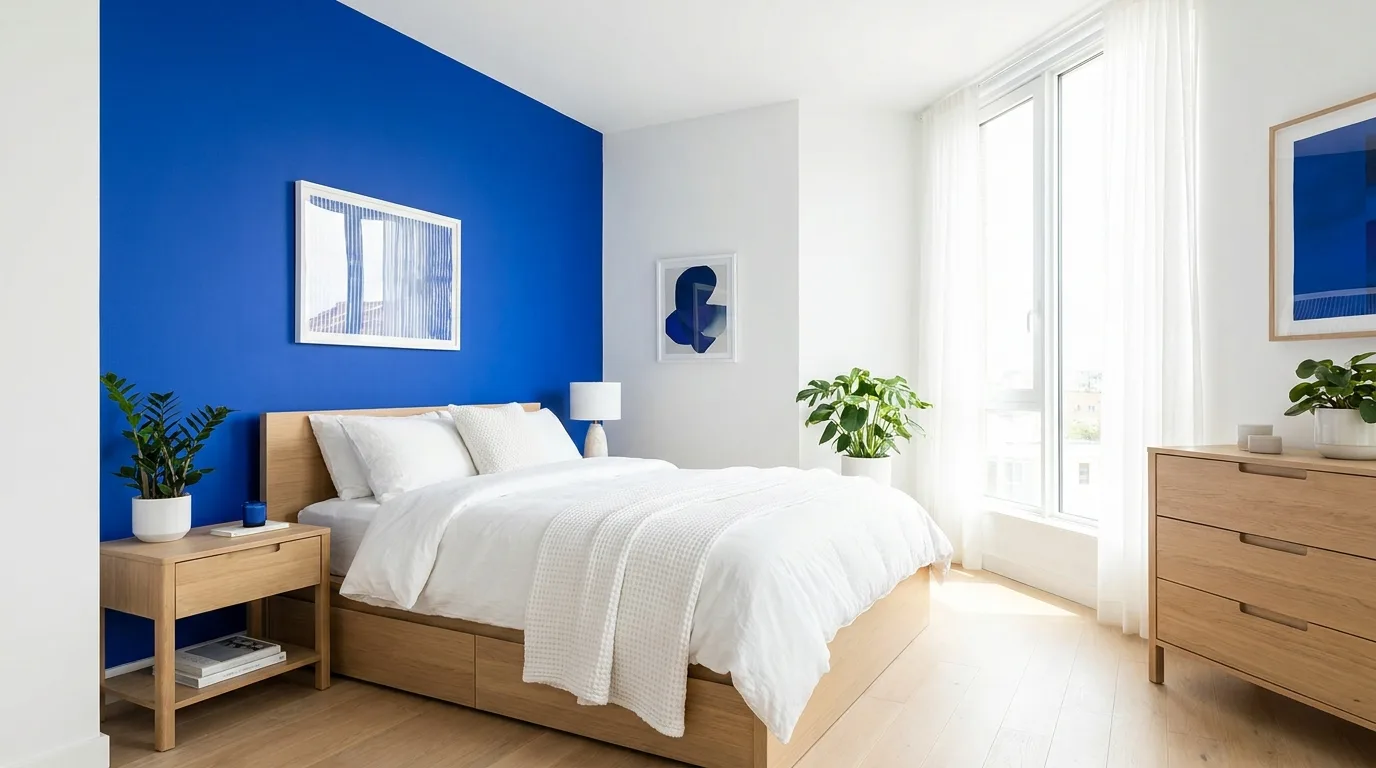
Cobalt blue and bright white create a crisp, energetic bedroom with strong visual contrast. Cobalt is a highly saturated color, so using it selectively can make the room feel intentional rather than overwhelming. Paint one feature wall cobalt and keep the surrounding walls bright white, or use cobalt inside decorative wall panels for a more controlled effect. White furniture and bedding can make the blue appear even cleaner, while natural wood accessories add warmth. This pairing is particularly attractive in rooms with plenty of daylight, where the contrast feels fresh rather than heavy. If you prefer a quieter bedroom, balance the intense blue with soft neutral textiles instead of introducing additional bold colors. Simple artwork and streamlined décor help preserve the clean two-color concept.
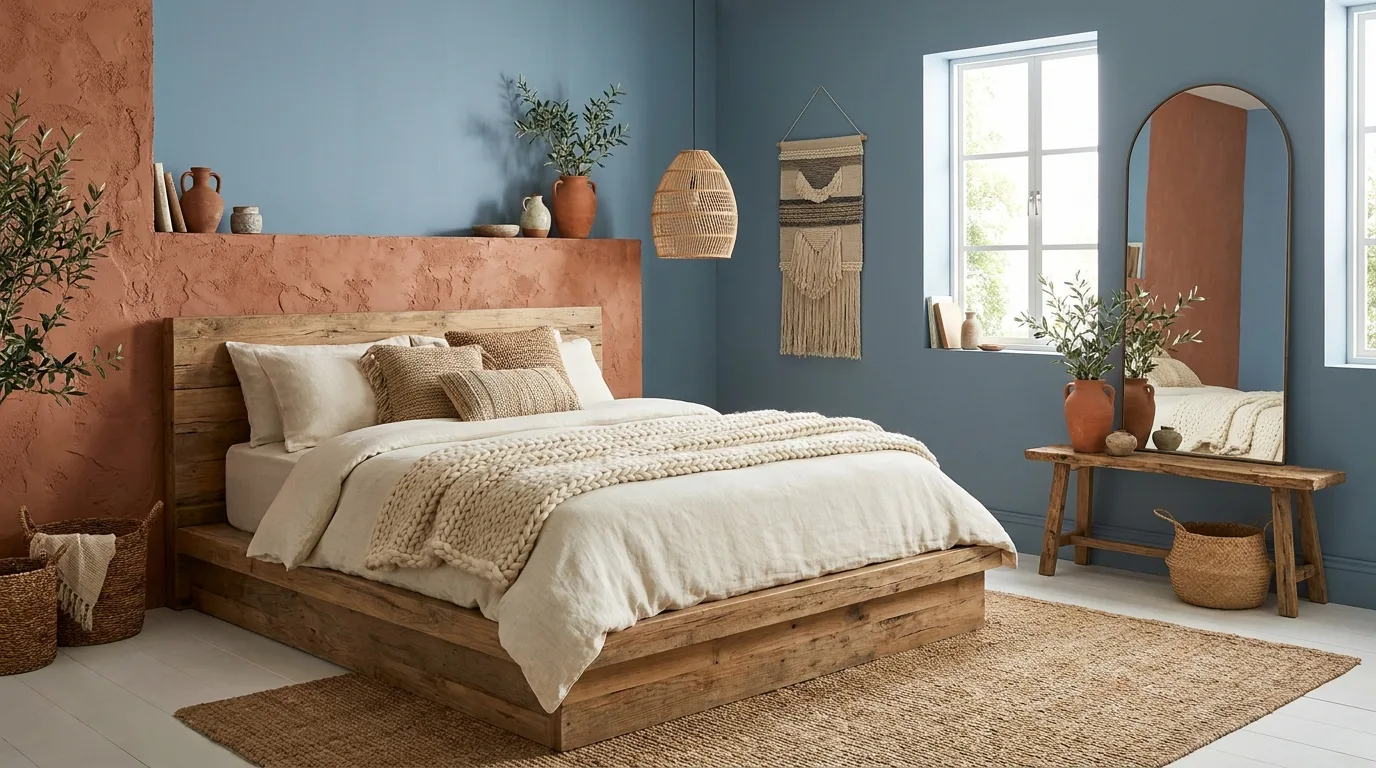
11. Muted Blue and Terracotta
Muted blue and terracotta create an earthy contrast that adds warmth and personality to a bedroom. Blue provides the cooler foundation, while terracotta introduces a sun-baked warmth that keeps the room inviting. Try muted blue on the main walls and terracotta on a smaller accent section behind the bed, around an architectural feature, or below a dado rail. Because terracotta is visually warm, choose a blue with gray or slightly dusty undertones for a more harmonious transition. Natural wood furniture, woven baskets, cream bedding, and clay accessories can connect the two wall colors throughout the room. This combination works especially well for Mediterranean, bohemian, eclectic, and contemporary interiors where a simple neutral palette feels too restrained.
12. Denim Blue and Pale Yellow
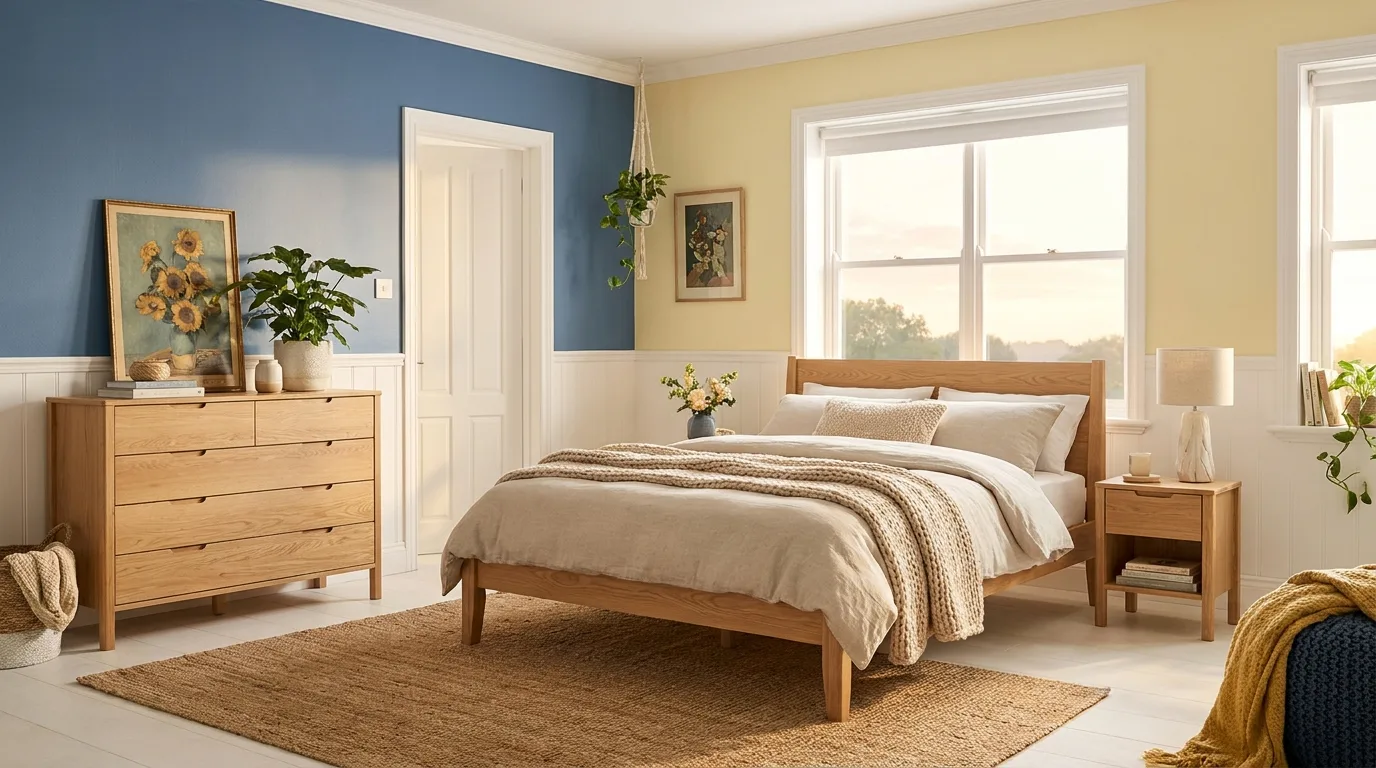
Denim blue and pale yellow offer a cheerful combination without the intensity of primary blue and bright yellow. Denim blue has a relaxed, slightly worn quality that makes it comfortable for bedroom walls, while pale yellow adds a subtle sunny accent. Use denim blue behind the bed and pale yellow on the remaining walls, or create a two-tone wall with blue below and yellow above. Keep the yellow soft and creamy rather than highly saturated if the goal is a restful bedroom. White trim, natural wood, and neutral bedding can tie the colors together without introducing unnecessary competition. This palette is especially appealing for casual bedrooms, guest rooms, cottages, and spaces where you want a fresh atmosphere that still feels warm and welcoming.
13. Midnight Blue and Soft Greige
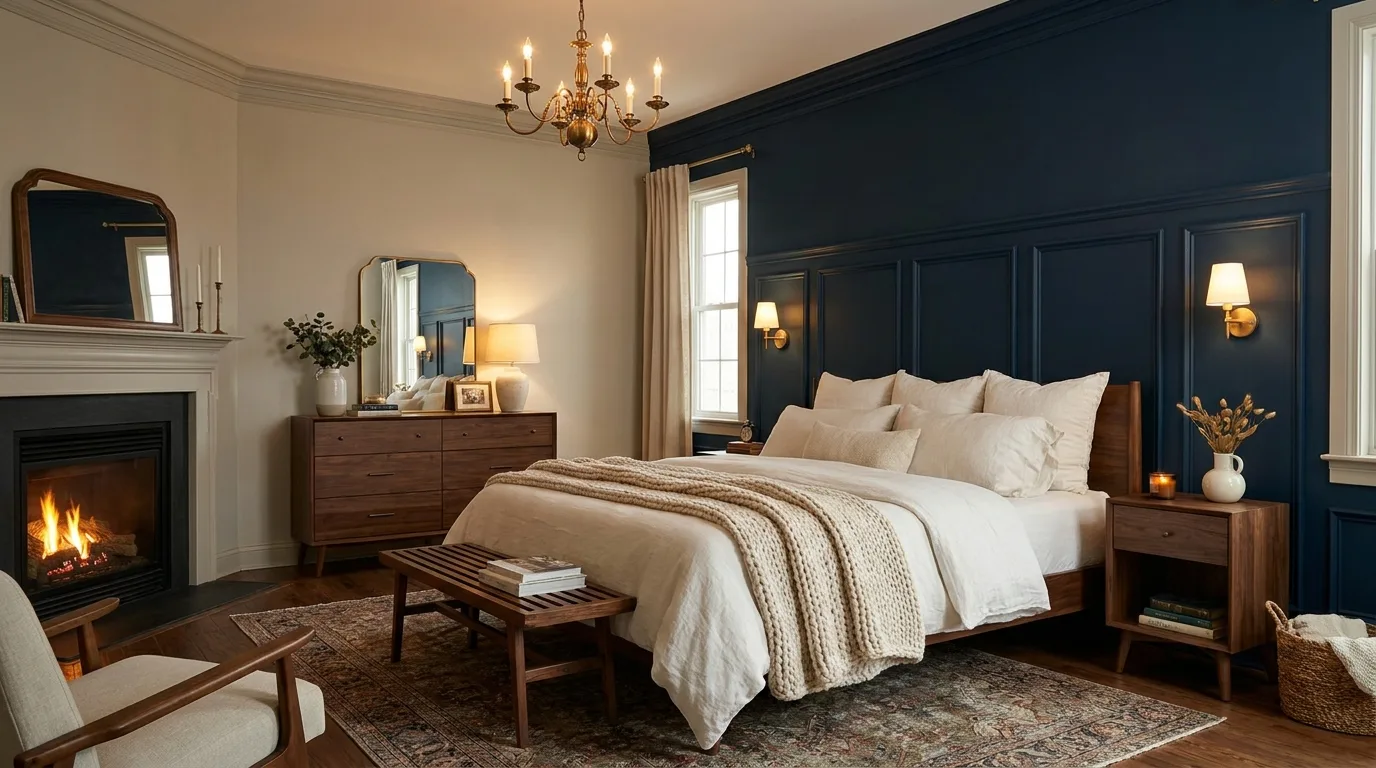
Midnight blue and soft greige create a dramatic yet balanced bedroom palette. Midnight blue can make the wall behind the bed feel intimate and cocoon-like, while greige on the surrounding walls keeps the overall room from becoming too dark. This is an excellent combination for bedrooms with architectural molding because the contrast can highlight paneling and trim beautifully. Choose warm white bedding, natural wood, and soft textiles to prevent the room from feeling overly formal. If the bedroom is small, reserve midnight blue for one wall and use a light greige elsewhere to preserve visual openness. Layered lighting is important with this darker color scheme; bedside lamps, wall sconces, and warm overhead lighting can make the space feel comfortable after sunset.
14. Blue-Gray and Off-White
Blue-gray and off-white are an easy choice for a serene, modern bedroom. Blue-gray has enough color to create interest while remaining understated, and off-white keeps the surrounding surfaces bright and versatile. Paint the blue-gray shade on the wall behind the bed or use it in a broad vertical panel while keeping the rest of the walls off-white. This pairing works particularly well with minimalist furniture, pale oak, brushed metal, and natural textiles. Unlike a stronger blue combination, it leaves plenty of room for artwork and decorative accessories. If your bedroom has cool daylight, select an off-white with gentle warmth so the palette does not become too chilly. The result is timeless enough to adapt as your furniture and décor change.
15. Blue and Chocolate Brown
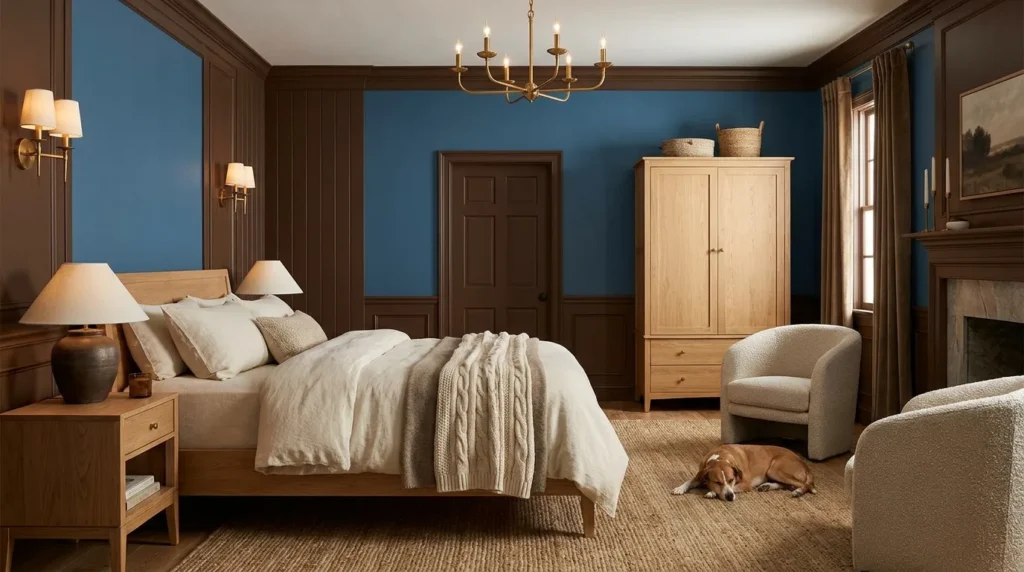
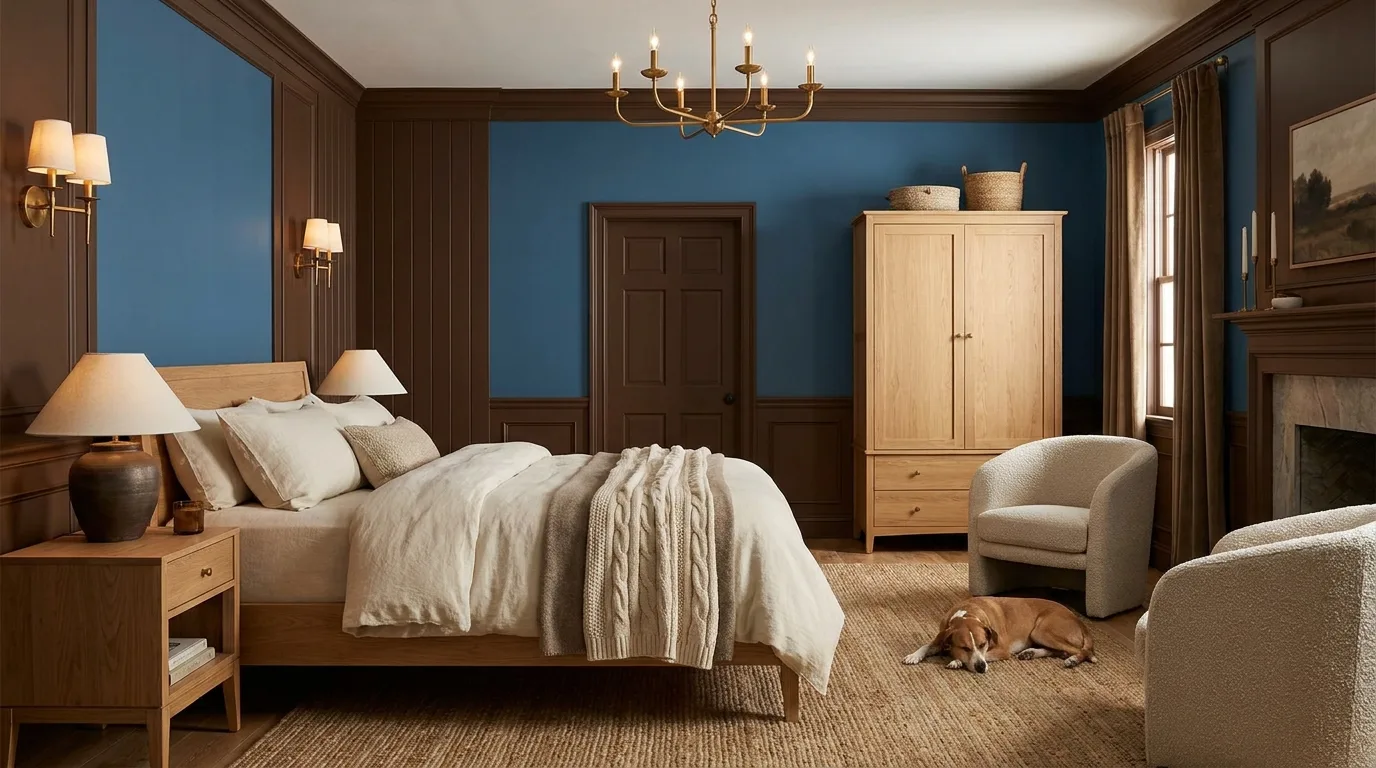
Blue and chocolate brown create a rich, grounded bedroom combination with plenty of visual depth. A medium or deep blue wall can serve as the primary color, while chocolate brown defines a second wall or lower section. Because both shades have considerable depth, this pairing works best when balanced with lighter bedding, curtains, or flooring. Cream, ivory, and natural wood can brighten the space while maintaining its warm character. Consider using chocolate brown in a subtle wall paneling treatment rather than covering an entire small room with it. Warm brass lighting and textured fabrics can further soften the contrast. This combination is particularly effective in bedrooms where you want a cozy, mature atmosphere rather than a bright or purely minimalist look.
How to Choose the Right Two-Color Blue Bedroom Combination
Before painting, look at the bedroom as a whole rather than choosing wall colors in isolation. Natural light has a major effect on how blue appears, so test samples at different times of day. Consider whether existing furniture is warm or cool, and choose the second wall color to bridge those finishes. In a small room, using the stronger blue on one focal wall can add personality without making the space feel smaller. In a larger bedroom, a two-tone treatment can define separate areas or emphasize architectural details. Paint sheen also matters: matte finishes tend to look softer, while washable eggshell or satin finishes can be practical in high-contact areas. Most importantly, repeat small touches of both colors in bedding, rugs, curtains, or artwork so the walls feel connected to the rest of the room.
Final Thoughts
Two-color blue bedroom walls can transform an ordinary room into a space with a clear mood and polished personality. Whether you prefer crisp blue and white, warm blue and taupe, or a more adventurous blue and terracotta combination, the key is to balance the intensity of each shade. Use the stronger color strategically, consider the room’s natural light, and let furniture and textiles reinforce the palette. With thoughtful proportions and complementary finishes, a blue two-color wall scheme can feel stylish today while remaining flexible enough to evolve with your décor.