Zellige tiles bring an unmistakable sense of warmth, texture, and craftsmanship to interiors. Traditionally handmade in Morocco, these glazed clay tiles are known for their slightly uneven surfaces, tonal variation, and luminous finish. That natural irregularity makes every installation feel collected rather than overly manufactured. Whether you prefer modern minimalism, classic interiors, rustic spaces, or colorful Mediterranean-inspired rooms, zellige can adapt beautifully. From a subtle kitchen backsplash to a dramatic shower wall, there are many ways to introduce this distinctive tile without overwhelming your home. The key is to balance its handmade character with thoughtful colors, materials, grout, and surrounding finishes.
1. Create a Classic Zellige Kitchen Backsplash
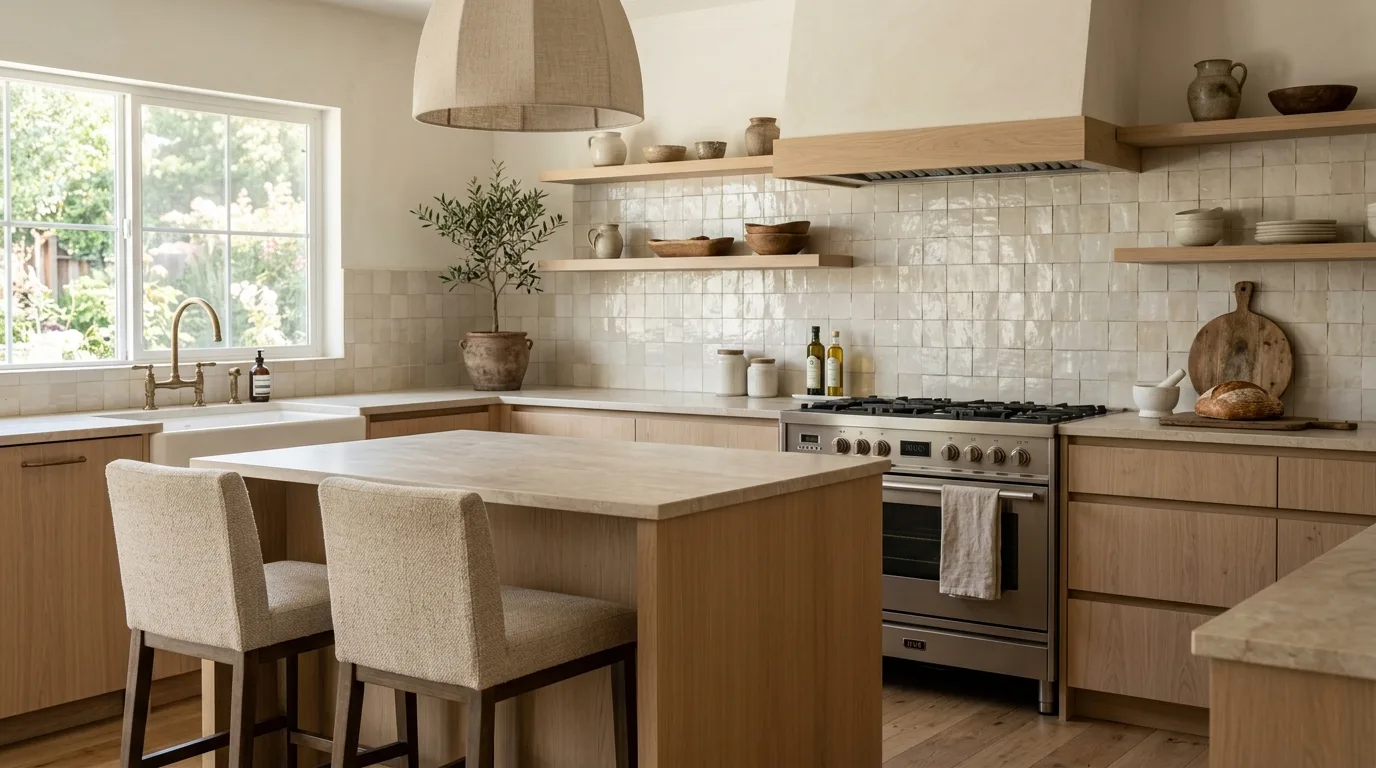
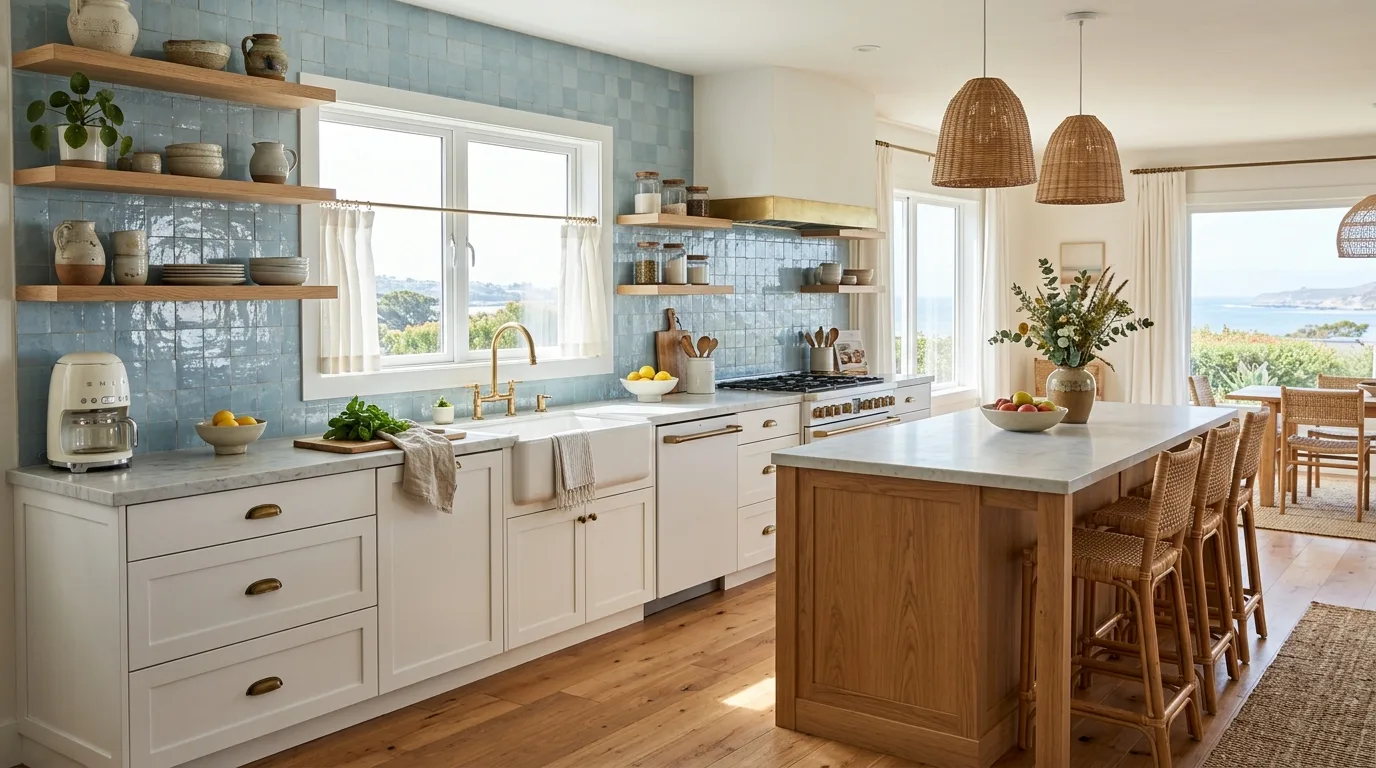
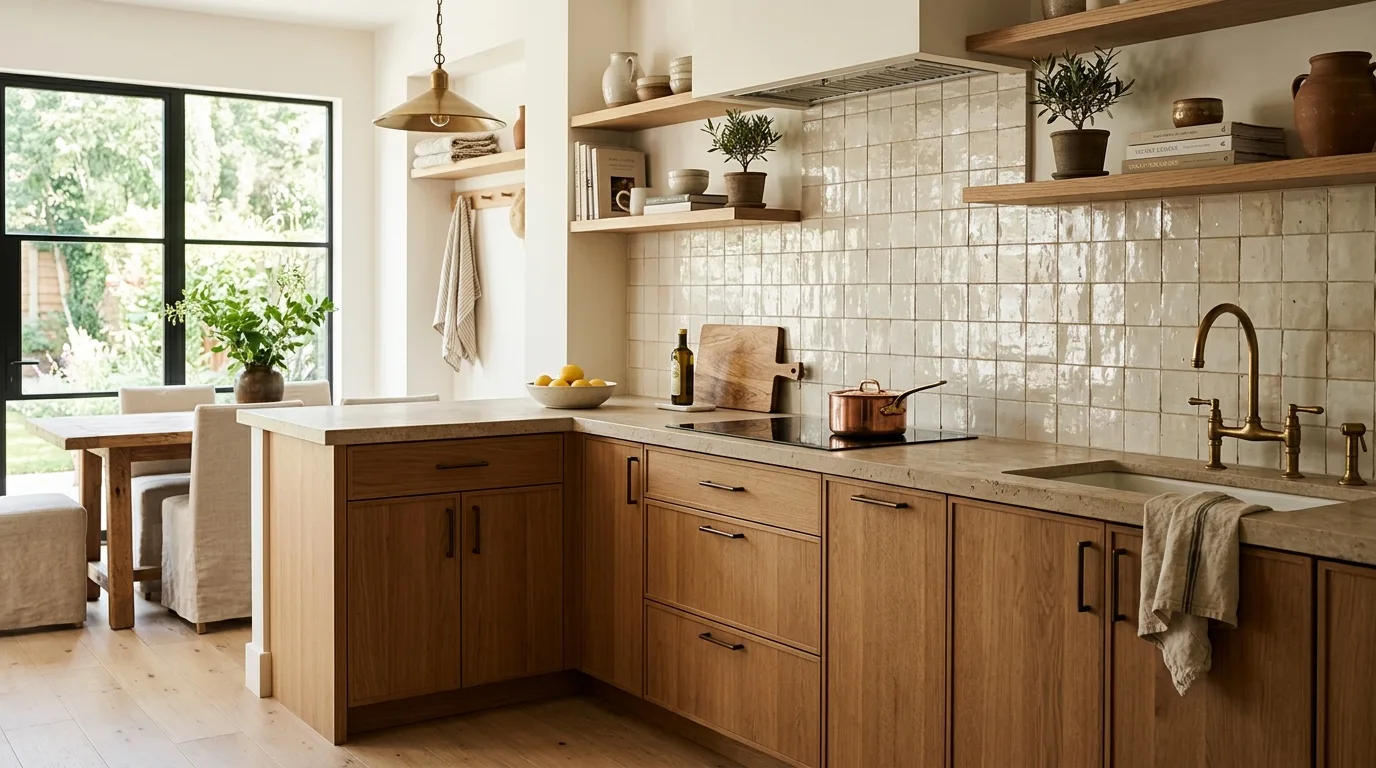
A kitchen backsplash is one of the easiest places to introduce zellige tiles because the material can become a focal point without requiring a major renovation. White, cream, or soft gray zellige works especially well behind countertops and ranges, adding movement to an otherwise simple wall. Pair it with natural wood cabinets for a warm organic kitchen, or combine it with painted cabinetry for a more traditional appearance. Keep the surrounding finishes relatively restrained so the tile’s handmade texture remains visible. A simple straight stack creates a contemporary look, while a traditional offset arrangement feels more relaxed. Because zellige tiles naturally vary in tone and surface, order enough material from the same batch to maintain a cohesive overall appearance.
2. Add Warmth to a Minimalist Bathroom
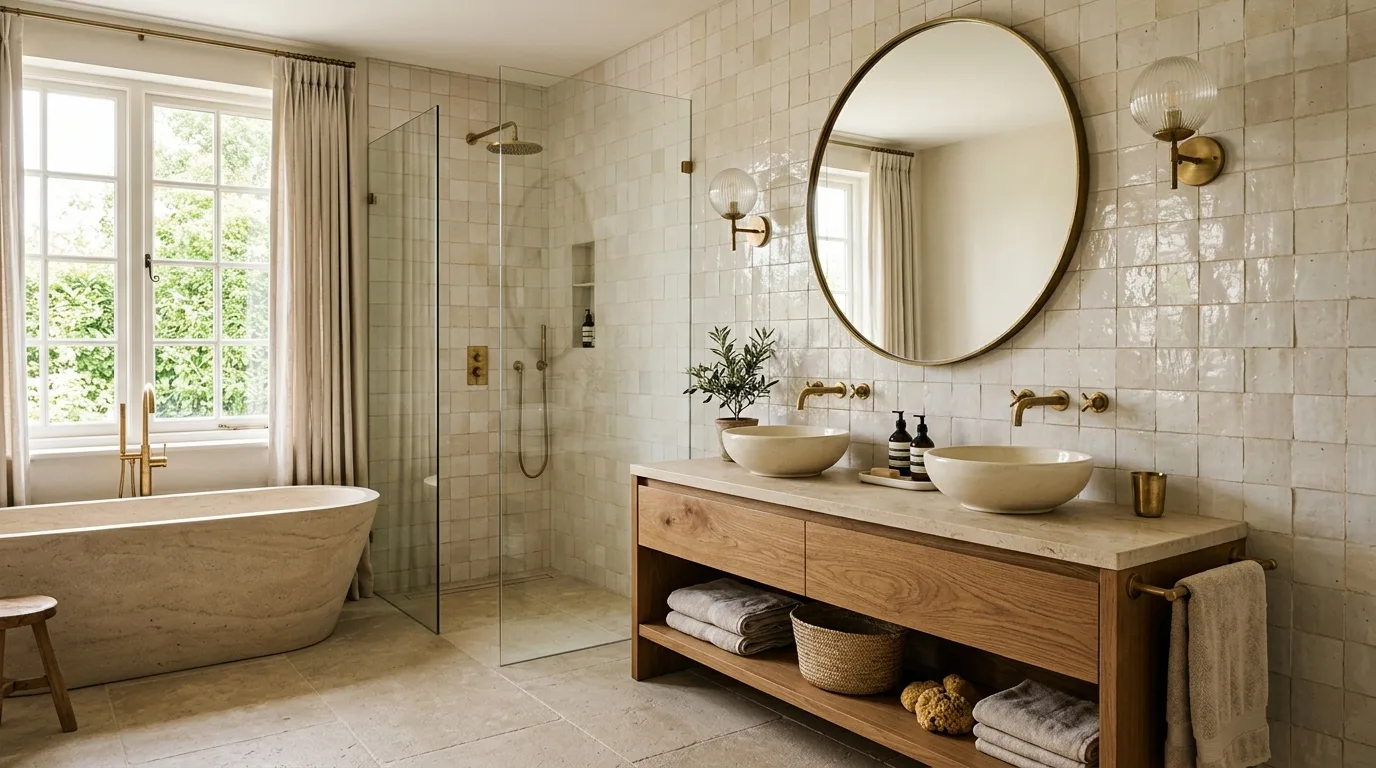
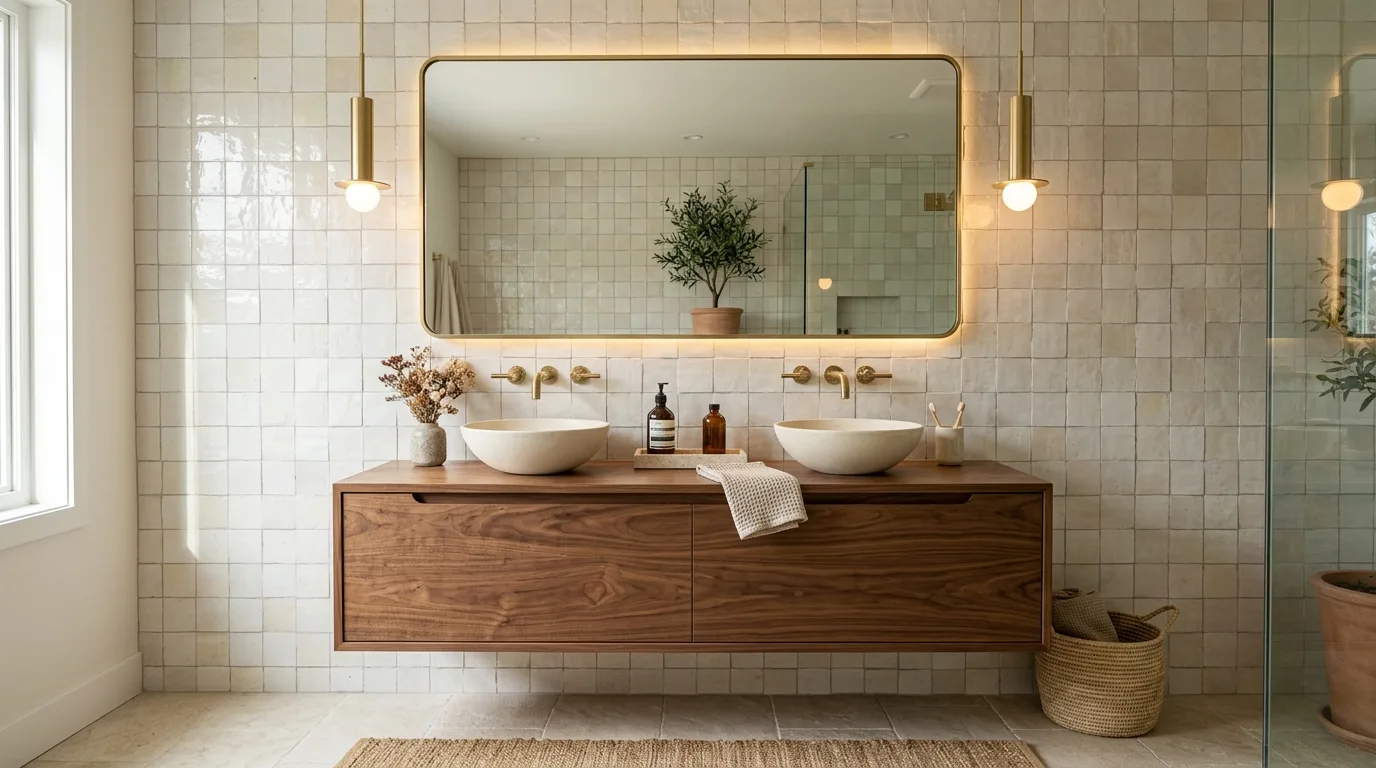
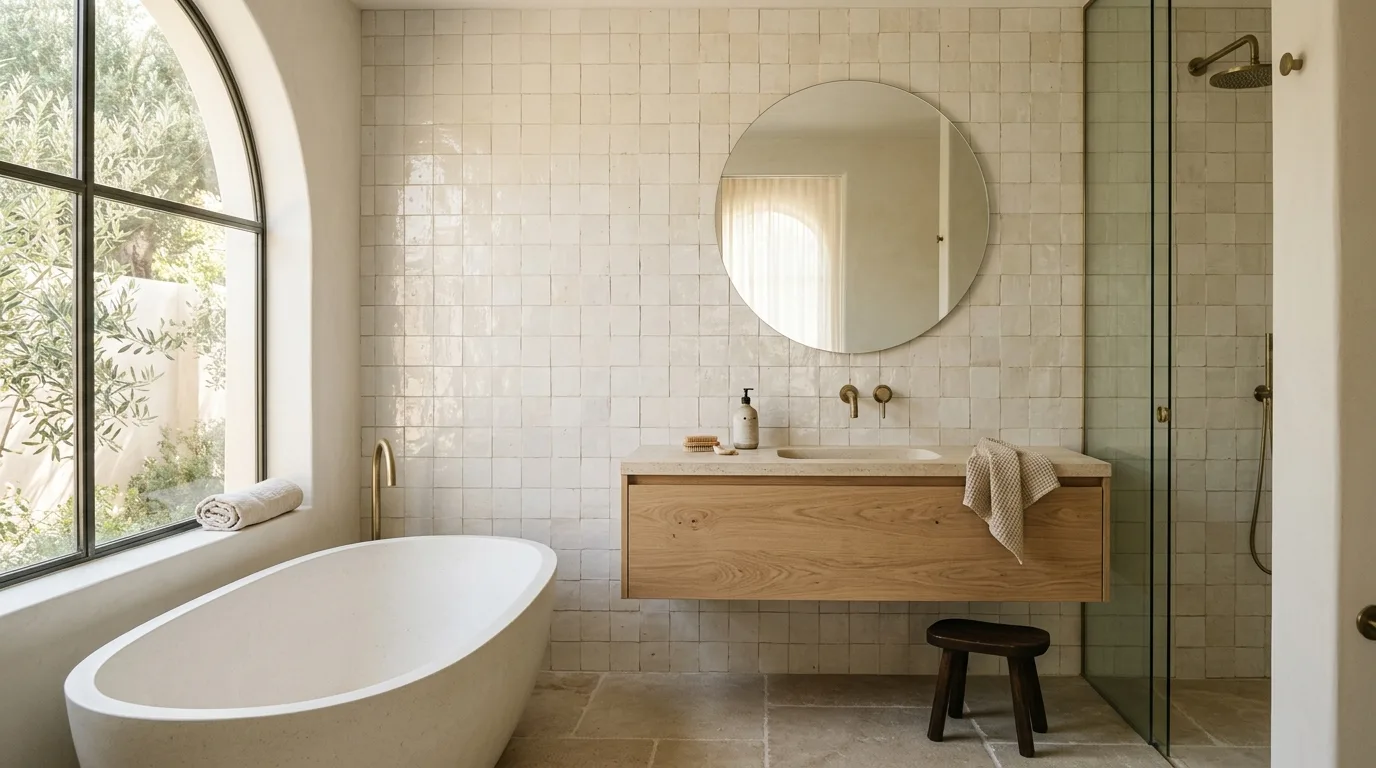
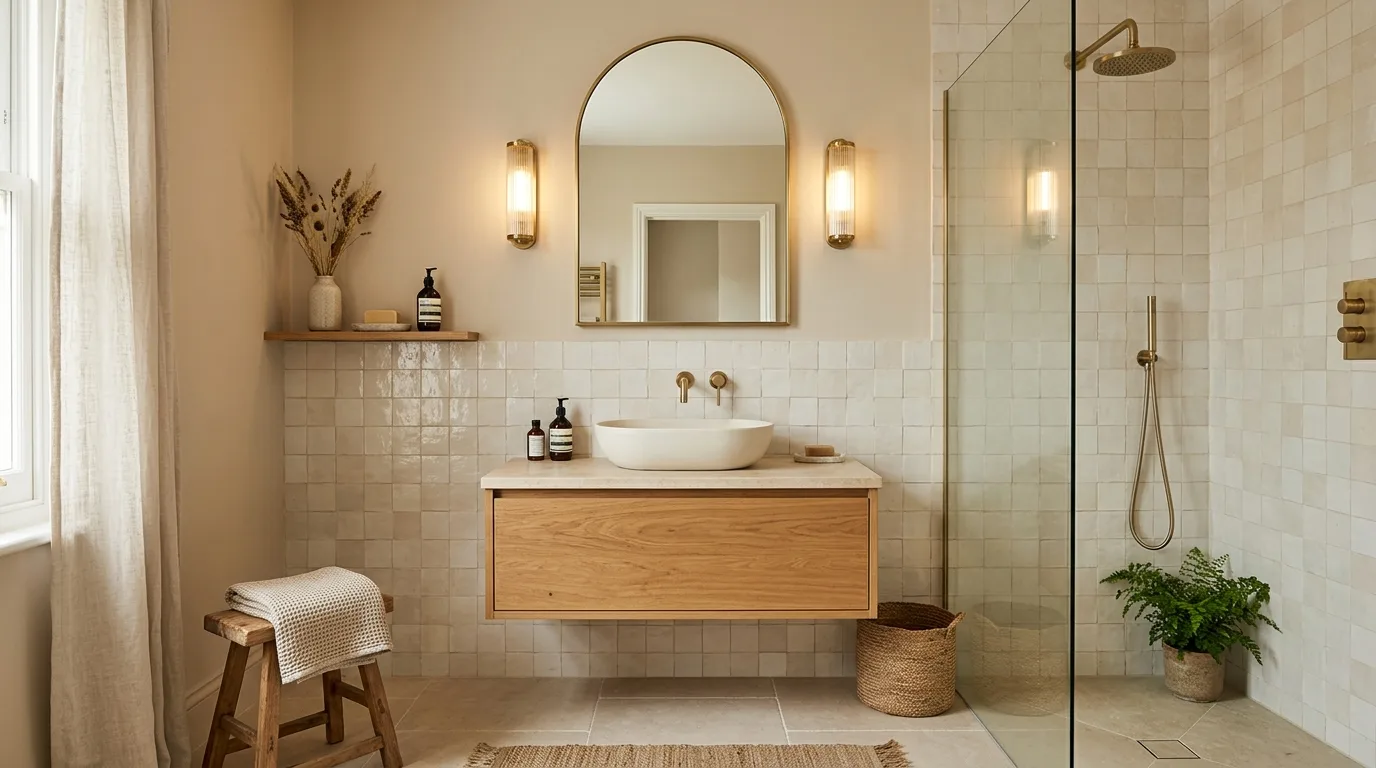
Zellige can soften a minimalist bathroom without making the space feel visually busy. Choose a restrained palette such as warm white, sand, pale taupe, or muted gray and use it across one major wall. The subtle variations in glaze provide enough visual interest to replace complicated patterns or excessive decoration. Zellige looks particularly beautiful alongside natural stone, light oak, brushed metal, and simple white fixtures. For a compact bathroom, using the same tile across a shower wall and adjacent surface can create visual continuity and make the room feel more intentional. If you want a quieter effect, select tiles with closely related tones rather than dramatic color variation. The handmade surface will still catch changing light throughout the day.
3. Frame a Statement Fireplace
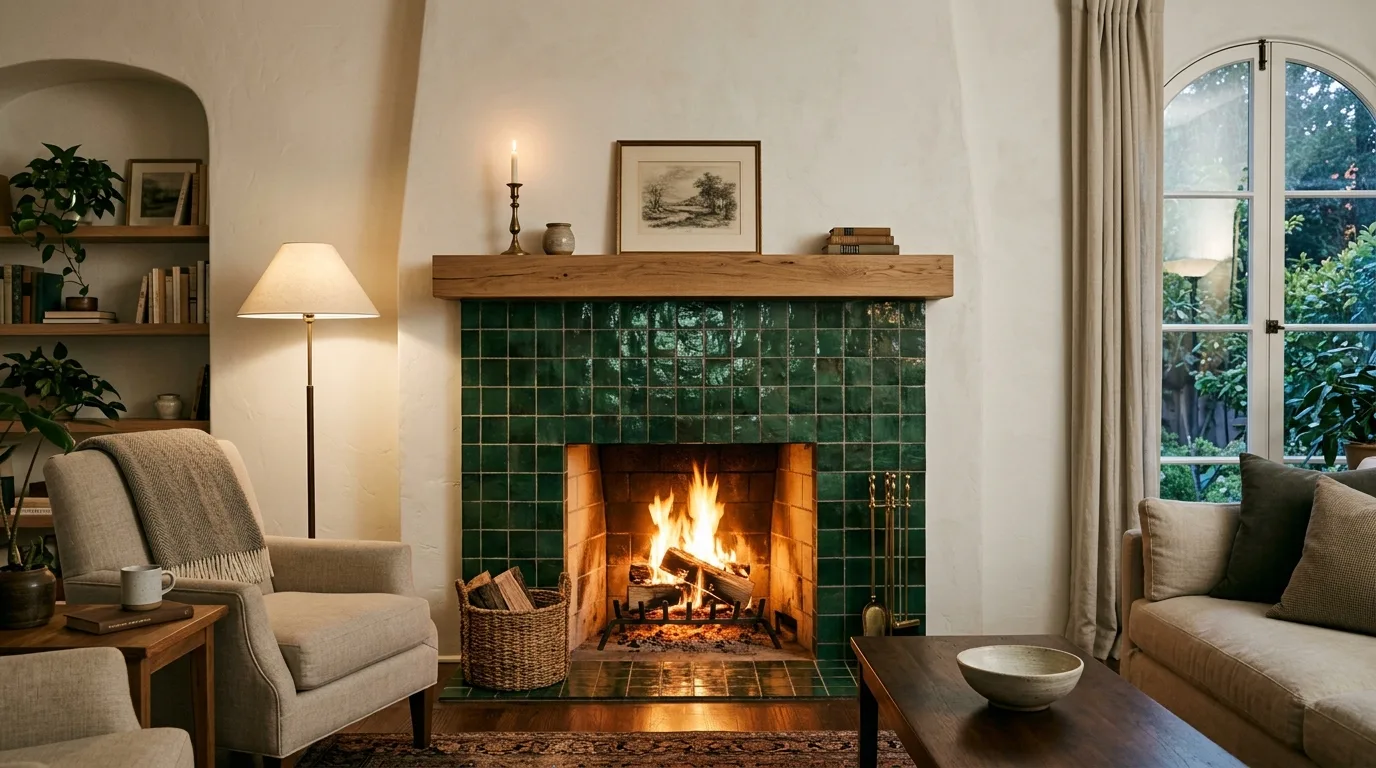
A fireplace surrounded by zellige becomes an architectural feature rather than simply a functional element. Small glossy tiles can highlight the fireplace wall while creating a beautiful contrast with plaster, stone, timber, or painted surfaces. Deep green, blue, charcoal, or earthy terracotta can make the fireplace feel especially dramatic, while ivory and cream create a softer effect. Before selecting the tile, consider the scale of the fireplace and the amount of surrounding wall. A saturated color may work beautifully on a compact feature, whereas a neutral glaze can cover a larger surface without dominating the room. Keep mantel styling simple so the tile remains the visual foundation. Always confirm that the chosen tile and installation system are appropriate for the fireplace’s heat exposure.
4. Bring Character to a Kitchen Island
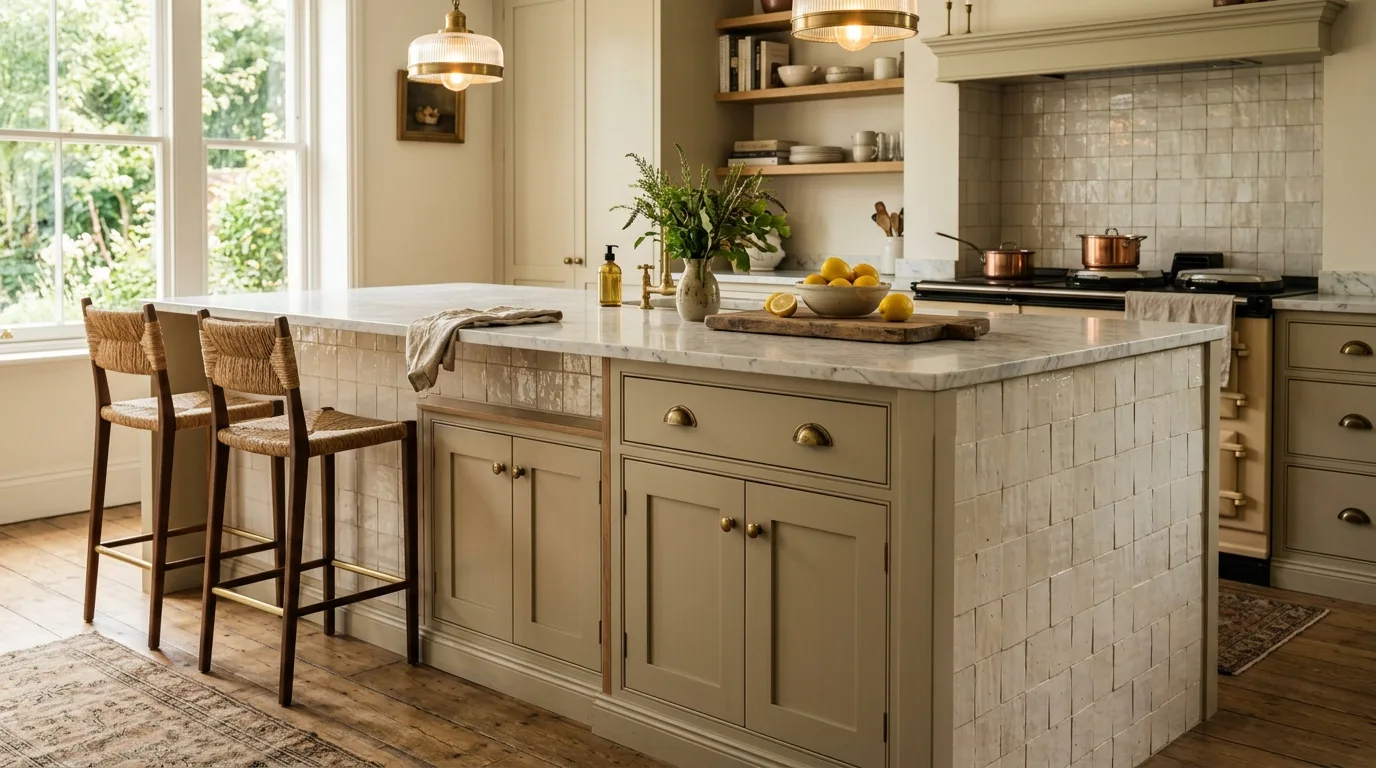
Instead of limiting zellige to a backsplash, consider using it on the vertical face of a kitchen island. This approach gives a familiar kitchen feature a handcrafted architectural quality. White or cream tiles create an elegant look when paired with marble or quartz countertops, while blue, green, or earthy shades can make the island a stronger focal point. Small-format tiles work particularly well because their irregular surfaces create detail across a large vertical area. If the island already has a distinctive countertop, choose a tile color that complements rather than competes with the stone. A narrow grout line can make the installation feel refined, while a slightly contrasting grout emphasizes the individual handmade pieces.
5. Use Zellige in an Elegant Powder Room
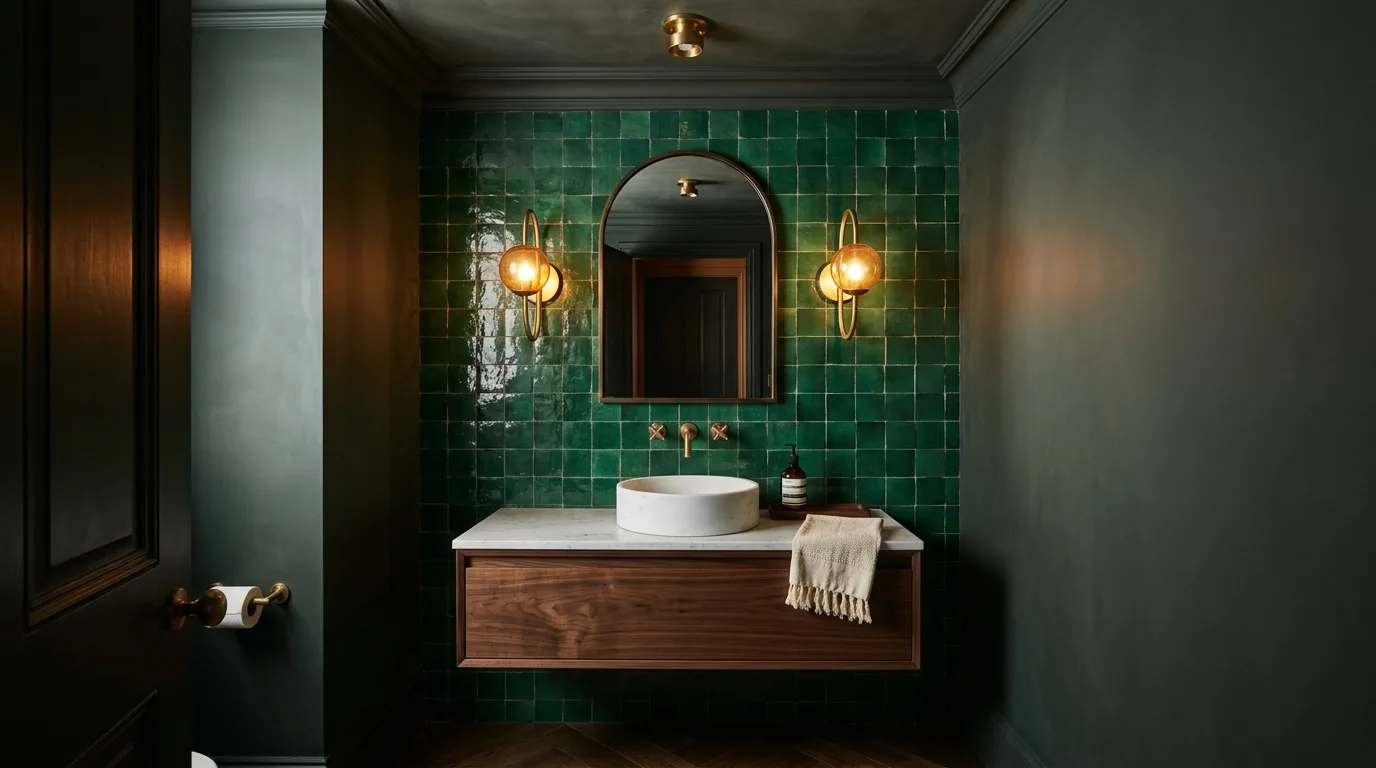
A powder room is an excellent place to experiment with zellige because its smaller footprint allows you to use stronger colors or more expressive combinations. Covering the wall behind the vanity with glossy tiles can create a jewel-box effect without requiring extensive decoration. Consider rich emerald, cobalt, burgundy, navy, or warm ochre if you want a dramatic space. For a calmer design, pale pink, cream, or dusty blue offers personality while remaining versatile. Pair the tile with a simple mirror, sculptural wall light, and understated vanity so the handmade surface remains the star. Because powder rooms generally experience less moisture and daily wear than full bathrooms, they also offer more flexibility for decorative tile applications, although installation should still follow appropriate manufacturer recommendations.
6. Make a Shower Wall More Interesting
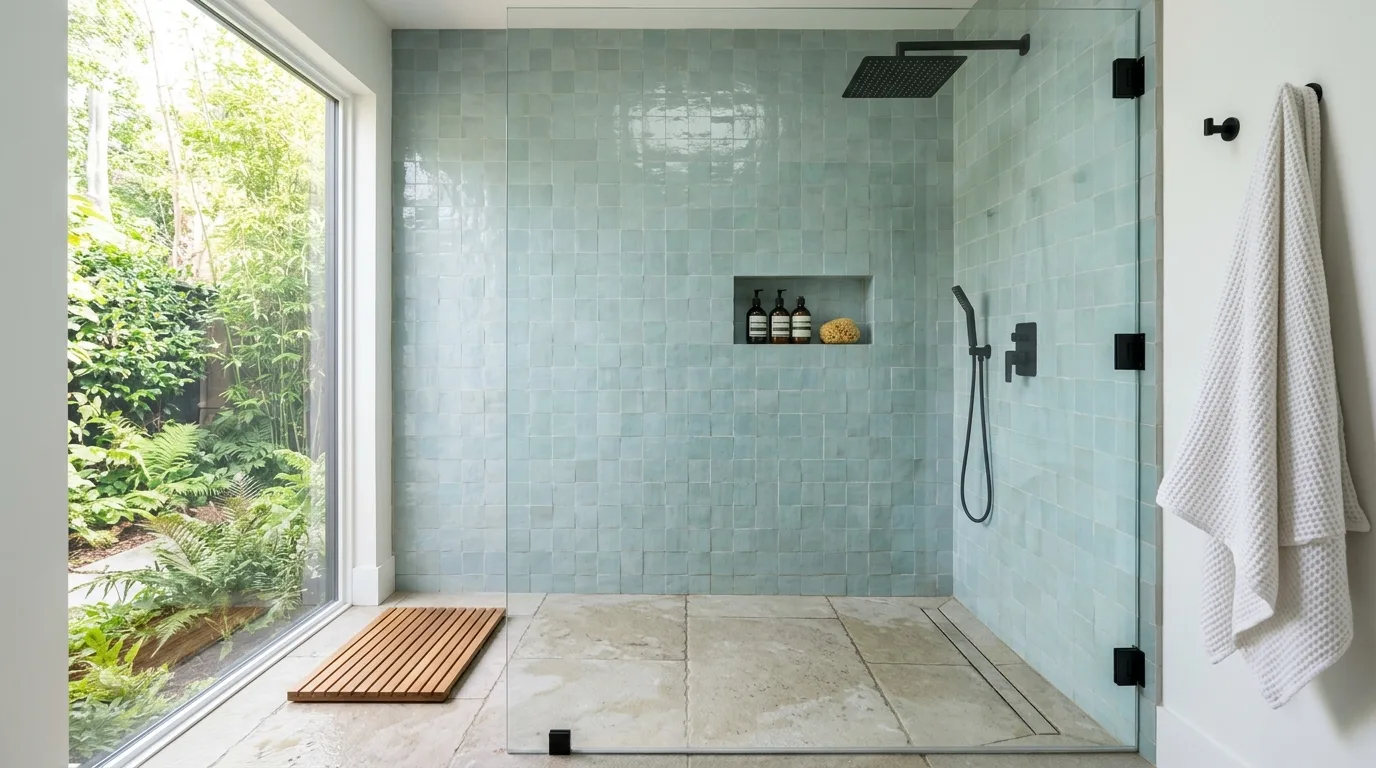
Zellige tiles can transform a shower from an ordinary wet area into a textured architectural feature. Use them on the main shower wall and keep the floor tile simple for a balanced composition. Glossy surfaces reflect light beautifully, which can help a small shower feel brighter and more dimensional. Soft blue and green tones create a naturally relaxing atmosphere, while warm neutrals pair beautifully with stone-look flooring. Since handmade tiles have uneven surfaces and glazing, professional installation is especially useful for achieving clean transitions around niches, corners, and plumbing fixtures. Choose an appropriate waterproofing system beneath the tile rather than relying on the tile itself to protect the wall. A carefully planned shower installation allows zellige’s character to become a lasting design feature.
7. Highlight a Kitchen Range Wall
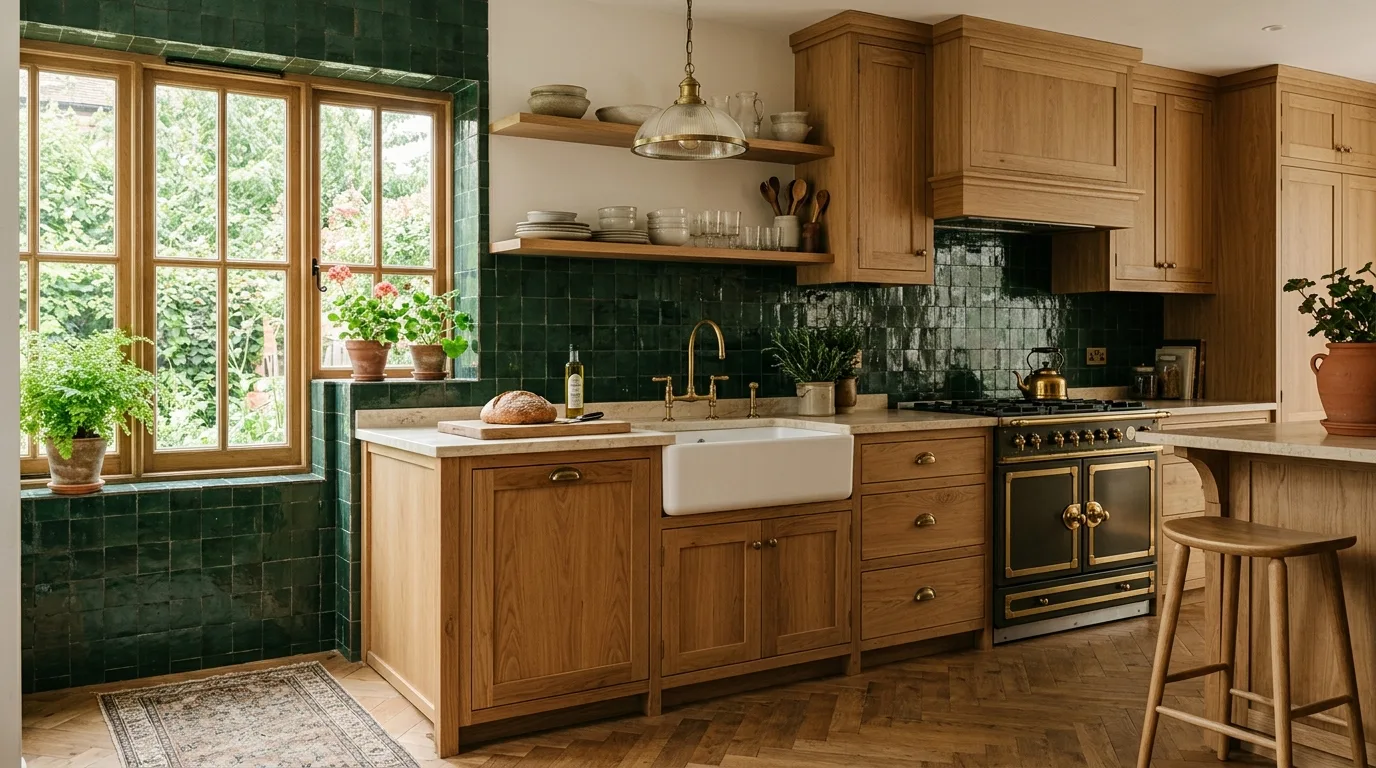
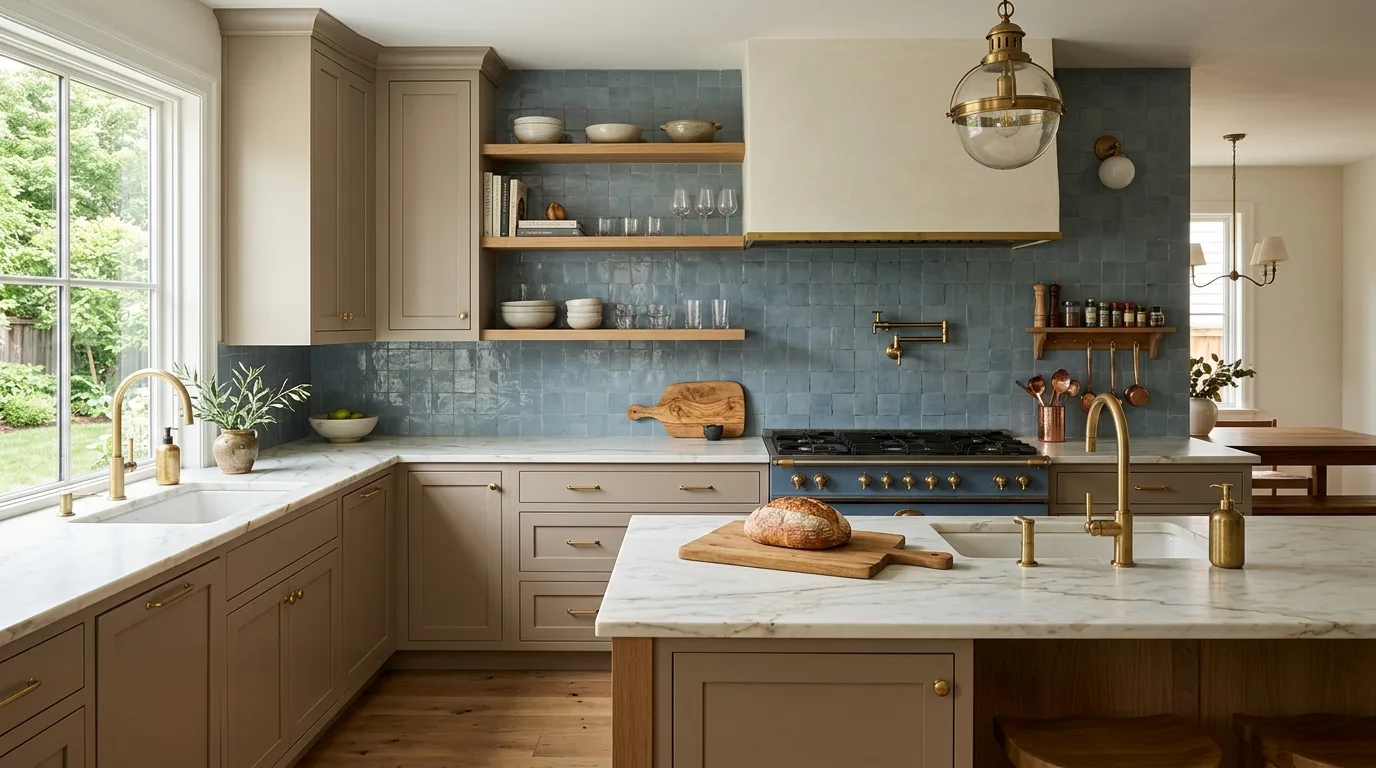
The wall behind a cooking range naturally draws attention, making it a strong location for a zellige feature. Instead of tiling every kitchen wall, concentrate the material behind the range and use a quieter backsplash elsewhere. This creates a focal point while keeping the overall design controlled. A classic cream or white zellige backdrop works beautifully with brass hardware, natural wood, and stone countertops. If your cabinetry is neutral, consider a muted blue or green to introduce color without making the kitchen feel overly themed. Pay attention to the transition between tile and surrounding surfaces, especially around cabinetry and hood installations. The result should feel integrated with the kitchen’s architecture rather than like a decorative panel added afterward.
8. Give a Vanity Wall Handmade Appeal
A zellige vanity wall can instantly add depth to a bathroom while keeping the rest of the room simple. This idea works especially well with floating vanities because the uninterrupted tile surface becomes more visible. Try warm white tiles with walnut cabinetry for an organic modern look, or pair dusty blue zellige with pale stone for a softer coastal atmosphere. A large mirror will reflect the glossy surface and amplify natural or artificial light. Keep accessories purposeful because the tile already provides substantial visual texture. If the bathroom is narrow, extending the tile behind both the vanity and mirror can make the wall feel wider and more cohesive. Select a grout tone that supports your desired effect rather than automatically choosing the strongest contrast.
9. Add a Mediterranean Touch to an Entryway
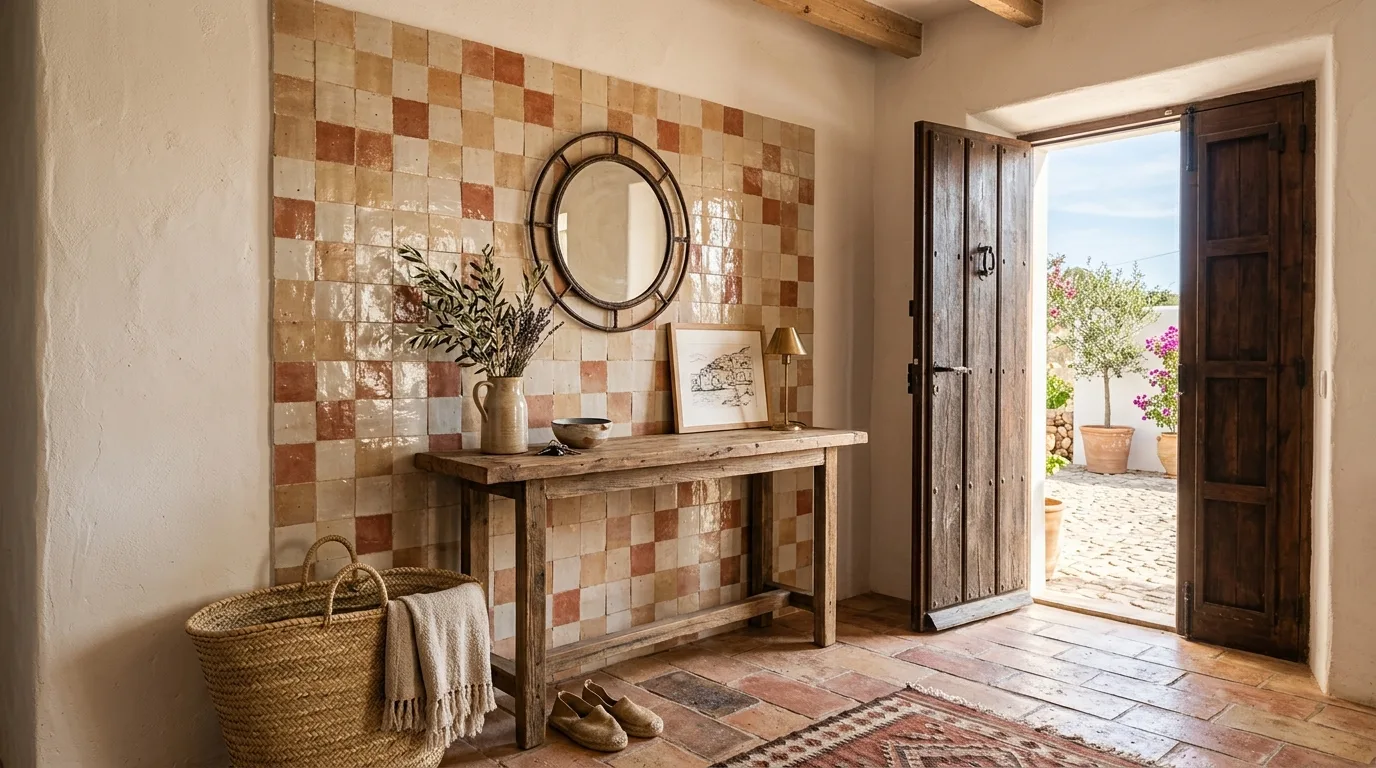
Zellige does not have to be limited to kitchens and bathrooms. In an entryway, it can create a memorable transition between the exterior and interior of the home. Use it on a small accent wall, around a console, or as a durable decorative surface beneath a coat rack. Earthy white, terracotta, sandy beige, and muted blue naturally support Mediterranean-inspired interiors, especially when paired with plaster walls, woven baskets, timber, and aged metal. If your entryway is compact, a single tiled section can provide character without making the space feel crowded. Think about lighting carefully because zellige changes appearance as light moves across its uneven glaze. The result should feel tactile and welcoming rather than perfectly uniform.
10. Combine Zellige With Natural Stone
Pairing zellige with natural stone is an effective way to create a layered, sophisticated interior. The variation in handmade tile complements the organic movement found in marble, limestone, travertine, and other natural stones. To keep the combination cohesive, look for shared undertones rather than matching colors exactly. Cream zellige can work with warm limestone, while muted green tile can complement a stone containing subtle green or gray veining. Use one material as the primary surface and the other as an accent so the room does not become visually complicated. This combination is especially attractive in bathrooms and kitchens, where stone countertops or floors can provide a grounded foundation for the reflective tile.
11. Introduce Color With Deep Green Zellige
Deep green zellige is a striking choice when you want color with an earthy, sophisticated quality. Rather than covering every available wall, use the shade on a backsplash, fireplace surround, shower wall, or vanity backdrop. Its glossy surface prevents a dark color from looking completely flat, while tonal variations create movement between individual tiles. Pair green zellige with natural oak, cream upholstery, warm white walls, or aged brass for a balanced palette. If the room receives limited natural light, test a sample before committing because glaze can appear significantly different under artificial lighting. Keeping larger surrounding surfaces neutral allows the green to become a defining accent while preserving a timeless atmosphere.
12. Try Soft Blue for a Relaxed Interior
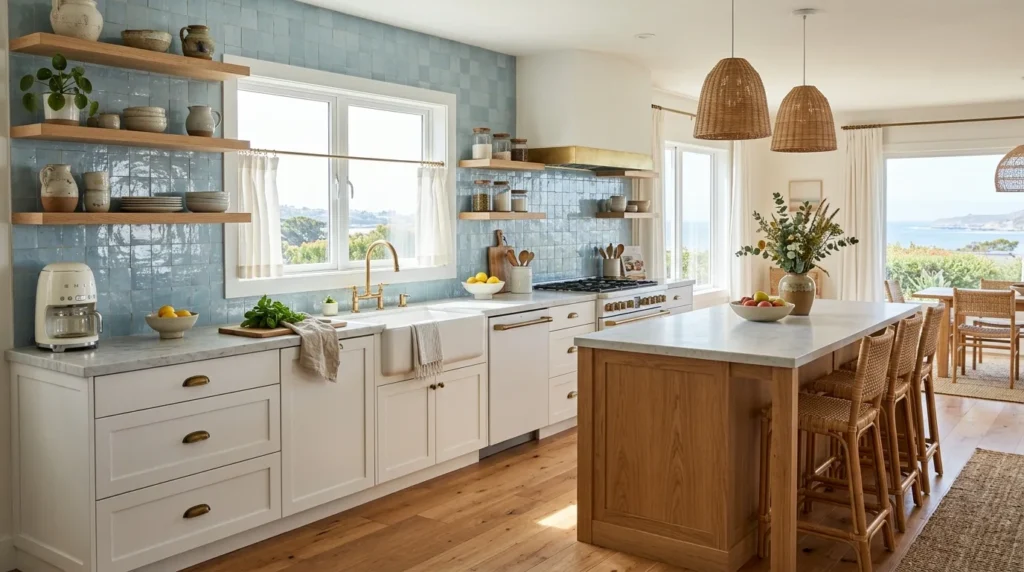
Soft blue zellige is ideal for homeowners who want color without an overly intense result. Powder blue, faded aqua, smoky blue, and blue-gray can all create a relaxed atmosphere in bathrooms, kitchens, and laundry rooms. Combine the tile with white cabinetry for a crisp look or natural wood for a warmer interpretation. Blue zellige also works beautifully with creamy grout and pale stone because the combination feels light without appearing sterile. For a more contemporary result, install the tiles in a simple stacked pattern and let their handmade variation provide the interest. Use blue selectively if your room already contains several colors, since the tile should complement the existing palette rather than compete with it.
13. Use Neutral Zellige for a Modern Organic Look
Neutral zellige is one of the most flexible choices for modern organic interiors. Shades such as ivory, oatmeal, beige, warm white, and pale taupe provide texture while maintaining a calm visual palette. These tones work particularly well with oak, linen, rattan, stone, and matte black accents. Try neutral zellige behind a kitchen countertop, across a bathroom wall, or around a fireplace for an understated handcrafted effect. The beauty comes from variation in glaze and surface rather than strong color contrast. If your home already has bold furniture or artwork, this approach lets you add architectural interest without creating another competing focal point. Choose warm or cool neutrals according to the undertones of the room’s existing finishes.
14. Mix Zellige With Painted Walls
You can enjoy the character of zellige without covering an entire room by combining a tiled section with painted walls. This is especially effective in bathrooms, kitchens, and dining areas where a partial backsplash or feature wall provides enough texture. Choose a paint color that echoes one of the tile’s undertones rather than attempting an exact match. For example, creamy zellige can work with warm beige or muted olive, while pale blue tiles can pair with soft white or blue-gray paint. This approach also makes future decorating changes easier because the room does not depend entirely on a tiled color scheme. Use a clean architectural boundary between tile and paint, and select moisture-appropriate paint for areas exposed to humidity.
15. Let Zellige Define a Small Design Moment
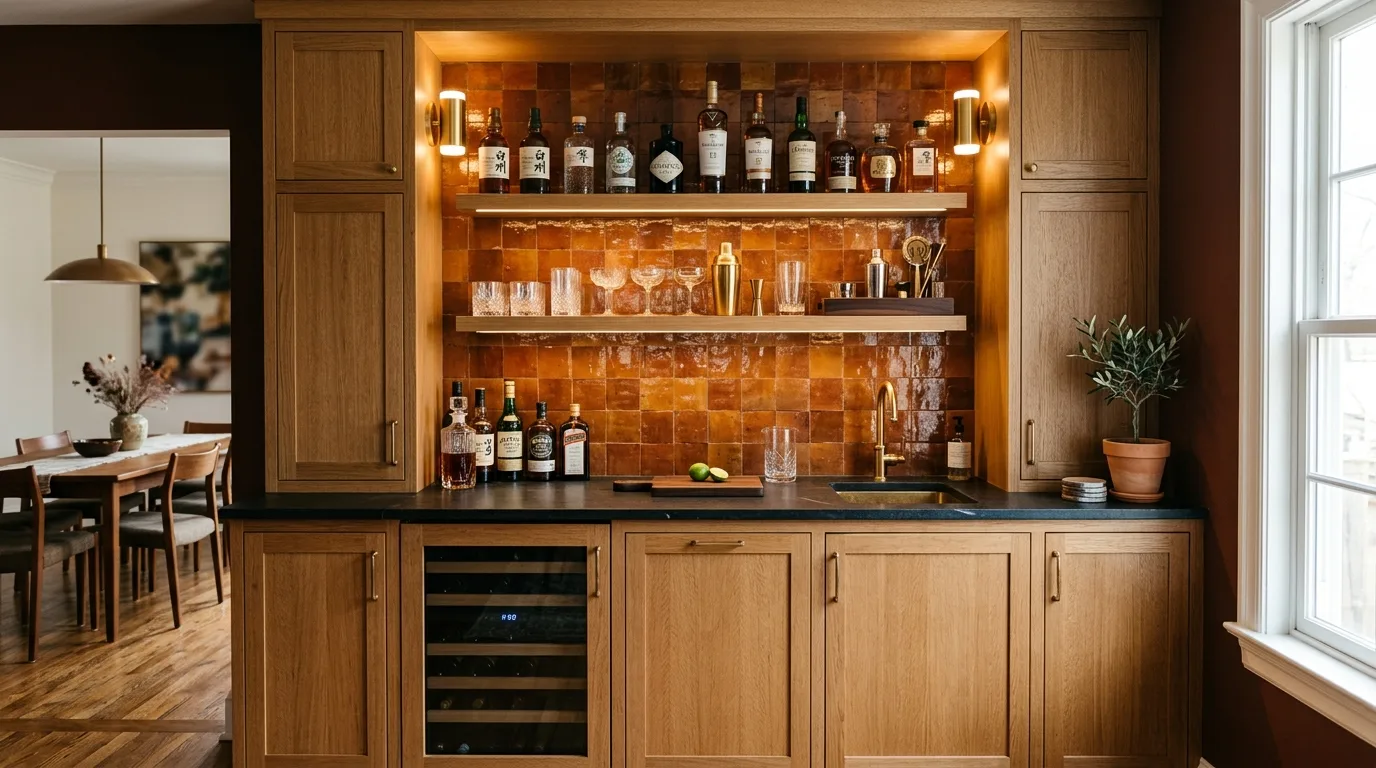
One of the smartest ways to incorporate zellige is to use a small amount where it can have maximum impact. Consider tiling the back of an open shelf, a compact bar area, a recessed niche, a built-in desk backdrop, or the wall surrounding a small sink. These focused applications let you enjoy the handmade material without committing to a large installation. A small area is also a good opportunity to experiment with a more distinctive color, such as mustard, rust, dark blue, or glossy black. Surround the tile with simple finishes and allow its texture to provide the visual interest. When planning any zellige project, order samples first, view them in different lighting, and account for natural variation as part of the finished design.