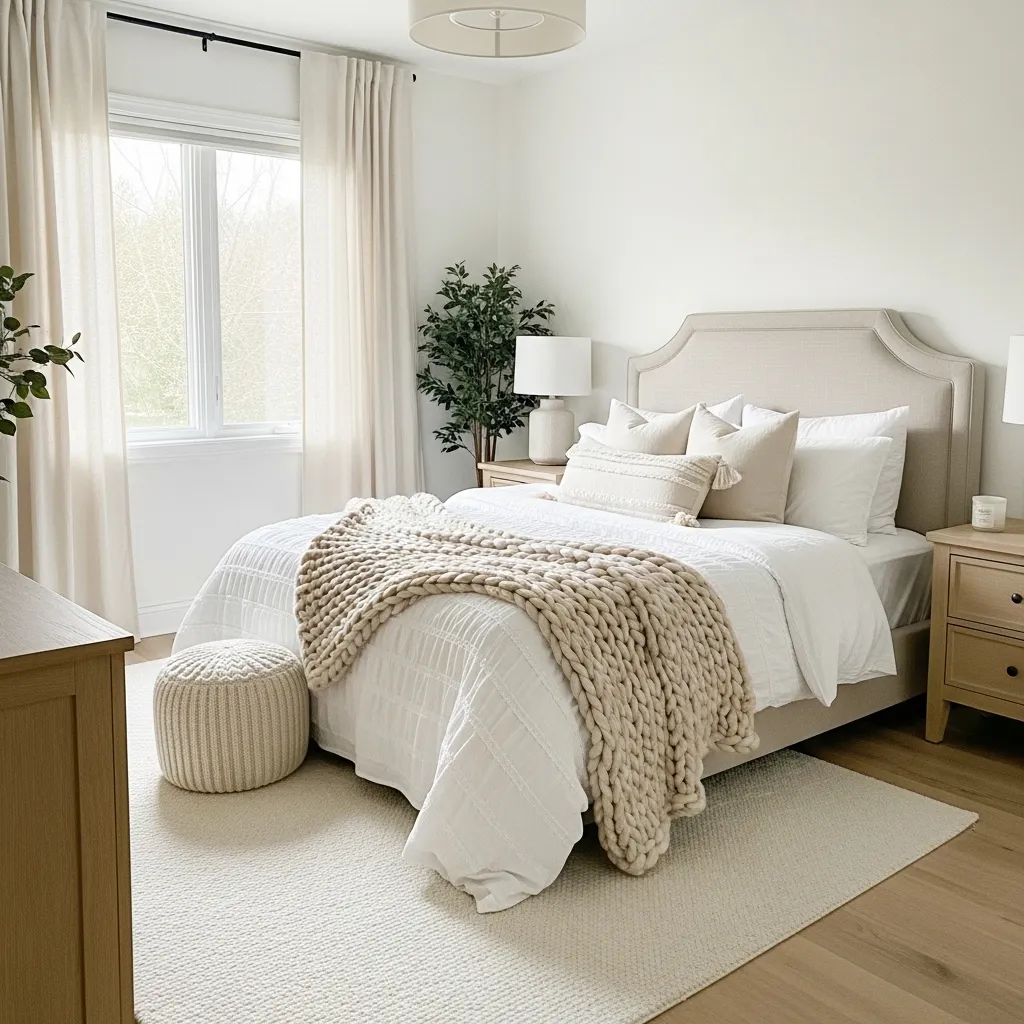
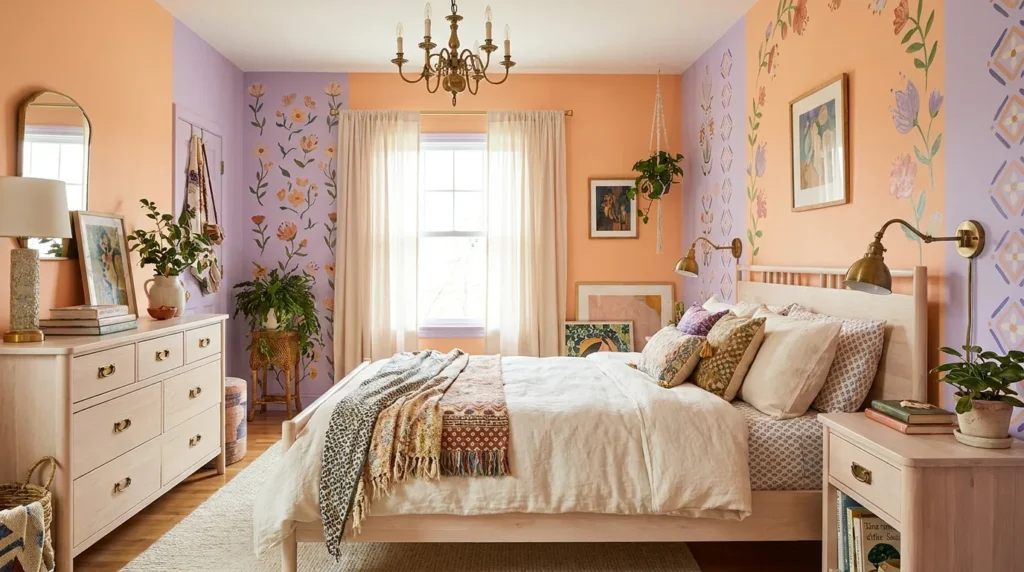
Orange can bring warmth, energy, and personality to a bedroom, but using it with a second color makes the space feel more balanced and intentional. From soft peach and cream to deep navy and charcoal, the right pairing can completely change how orange looks and feels. Whether you prefer a modern bedroom, cozy retreat, earthy interior, or elegant statement wall, there is an orange two-color combination that can work beautifully. The key is choosing shades that complement the intensity of your orange and considering how much natural light the room receives. These 16 orange wall color combinations explore different moods, from calm and sophisticated to bold and cheerful, while offering practical ideas for paint placement, furniture coordination, bedding, and accessories. Use these combinations as inspiration for creating a bedroom that feels warm, stylish, and comfortable.
1. Orange and Cream for a Warm, Soft Bedroom
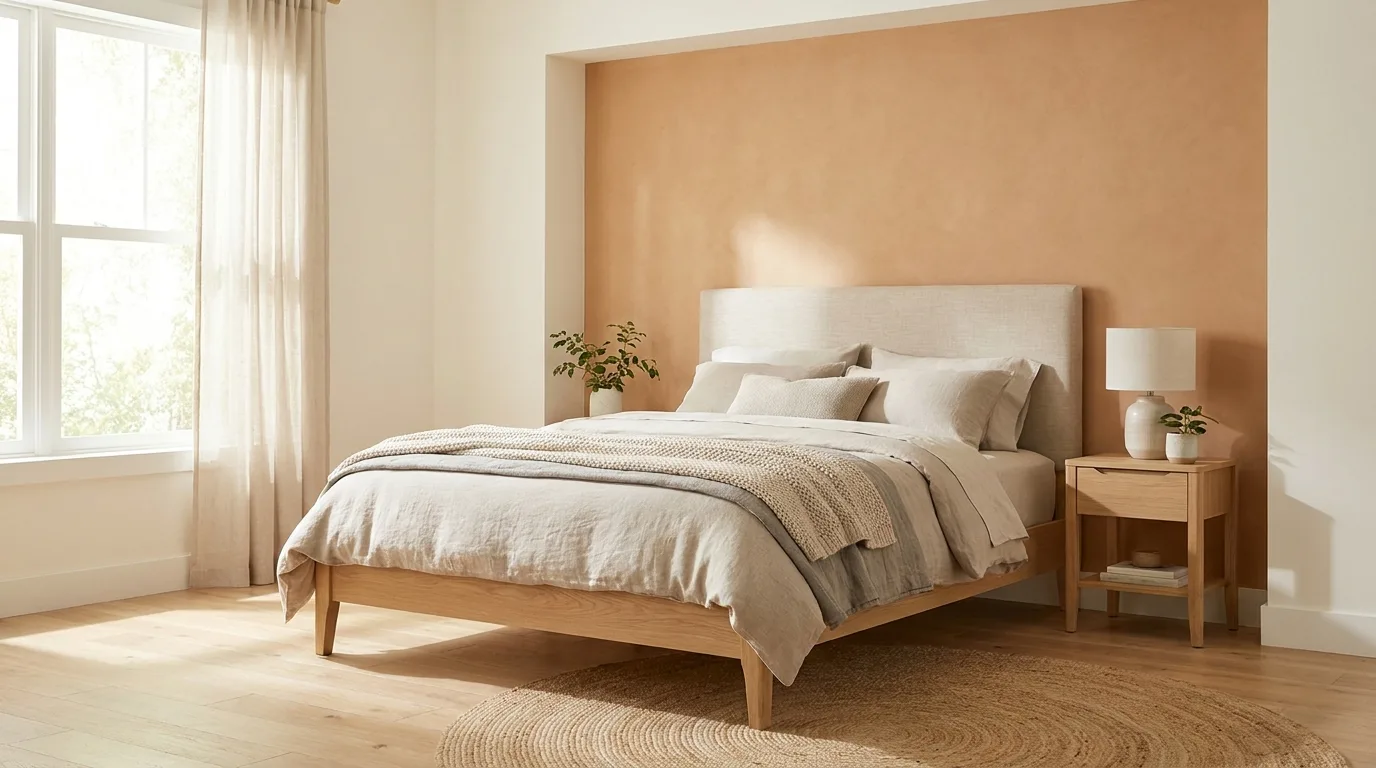
Orange and cream is one of the easiest two-color combinations for creating a bedroom that feels warm without becoming overwhelming. Use a muted or medium orange on one feature wall and cream on the remaining walls to keep the room visually balanced. Cream softens the brightness of orange while maintaining its cozy character, making this pairing especially suitable for bedrooms with wooden furniture and natural textures. Add beige bedding, woven baskets, linen curtains, or light oak furniture to reinforce the relaxed atmosphere. If the room receives limited sunlight, choose a softer terracotta orange rather than an intense orange. For a more contemporary appearance, use clean white trim and simple furniture. This combination works particularly well when you want orange to remain the main decorative feature without making the bedroom feel too energetic.
2. Orange and White for a Fresh Modern Look
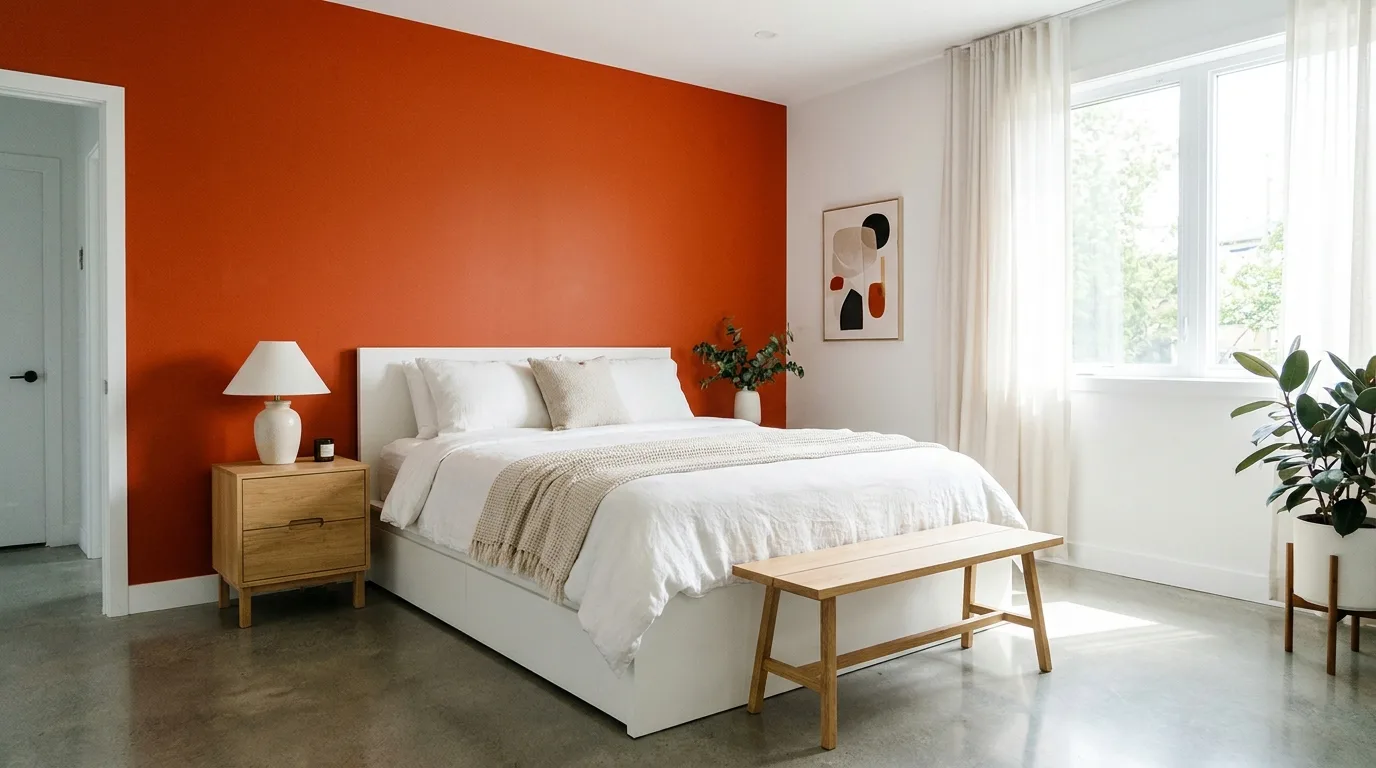
Orange and white create a crisp bedroom color scheme that feels bright, clean, and contemporary. A saturated orange accent wall can become the focal point behind the bed, while white walls keep the rest of the room open and airy. This combination is particularly effective in smaller bedrooms because white helps reflect light and prevents the orange from visually shrinking the space. Balance the strong wall color with white bedding, light-colored curtains, and minimal accessories. Black or natural wood accents can add definition without competing with the orange. For a softer look, select a warm pumpkin or burnt orange instead of a vivid orange. You can also use orange through geometric wall panels or a painted lower section while keeping the upper walls white. The result is cheerful but still organized and sophisticated.
3. Orange and Navy Blue for Dramatic Contrast
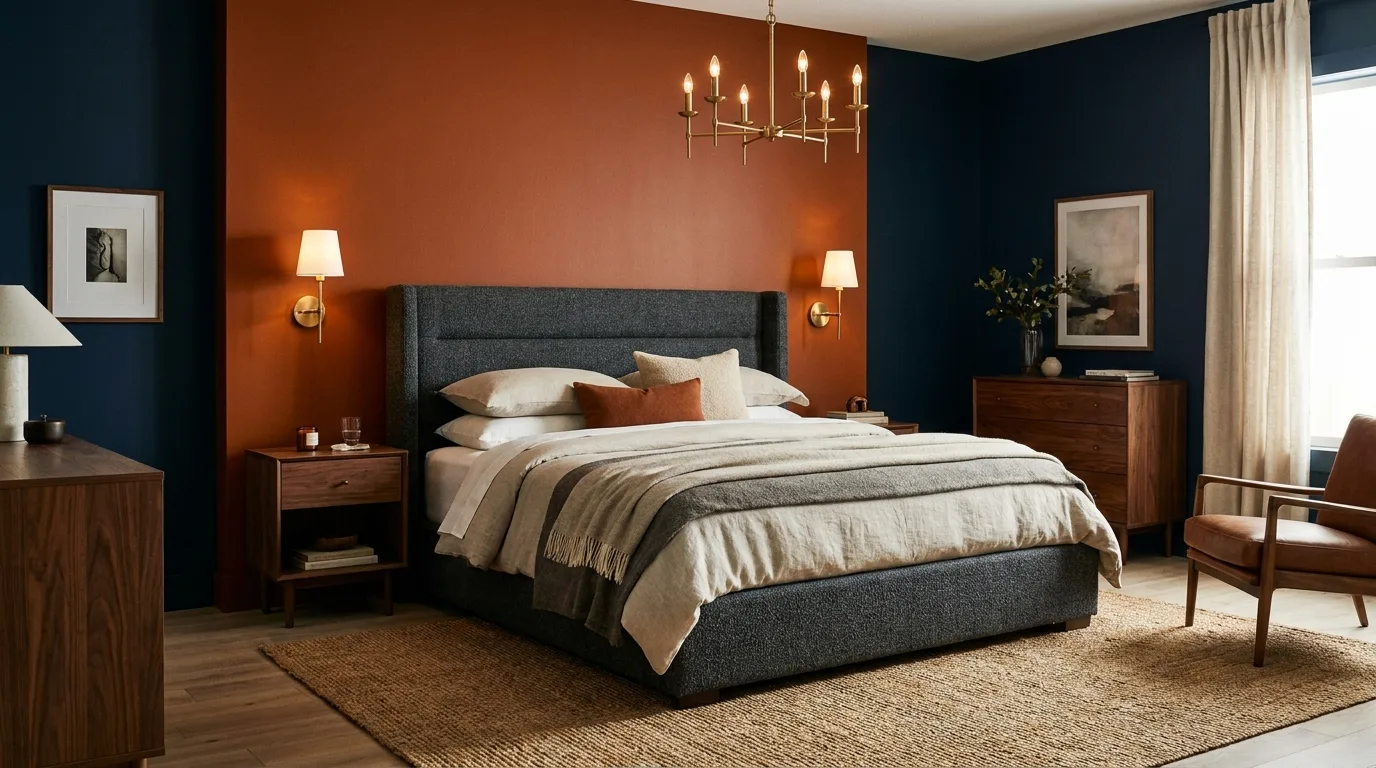
Orange and navy blue offer a striking contrast that works beautifully in modern and sophisticated bedrooms. Because navy is deep and cool while orange is warm and energetic, the two colors balance each other naturally. Consider painting the wall behind the bed orange and using navy on an adjacent wall, or reverse the arrangement if you want the bedroom to feel darker and more intimate. Navy upholstered furniture, cushions, or curtains can reinforce the color scheme without requiring too much paint. Warm wood tones and brass lighting fixtures also complement this pairing particularly well. If the orange is bright, keep navy dominant in larger furnishings to create visual stability. For a more relaxed bedroom, choose terracotta orange with a softer navy. This combination is ideal when you want a bold bedroom palette with clear definition.
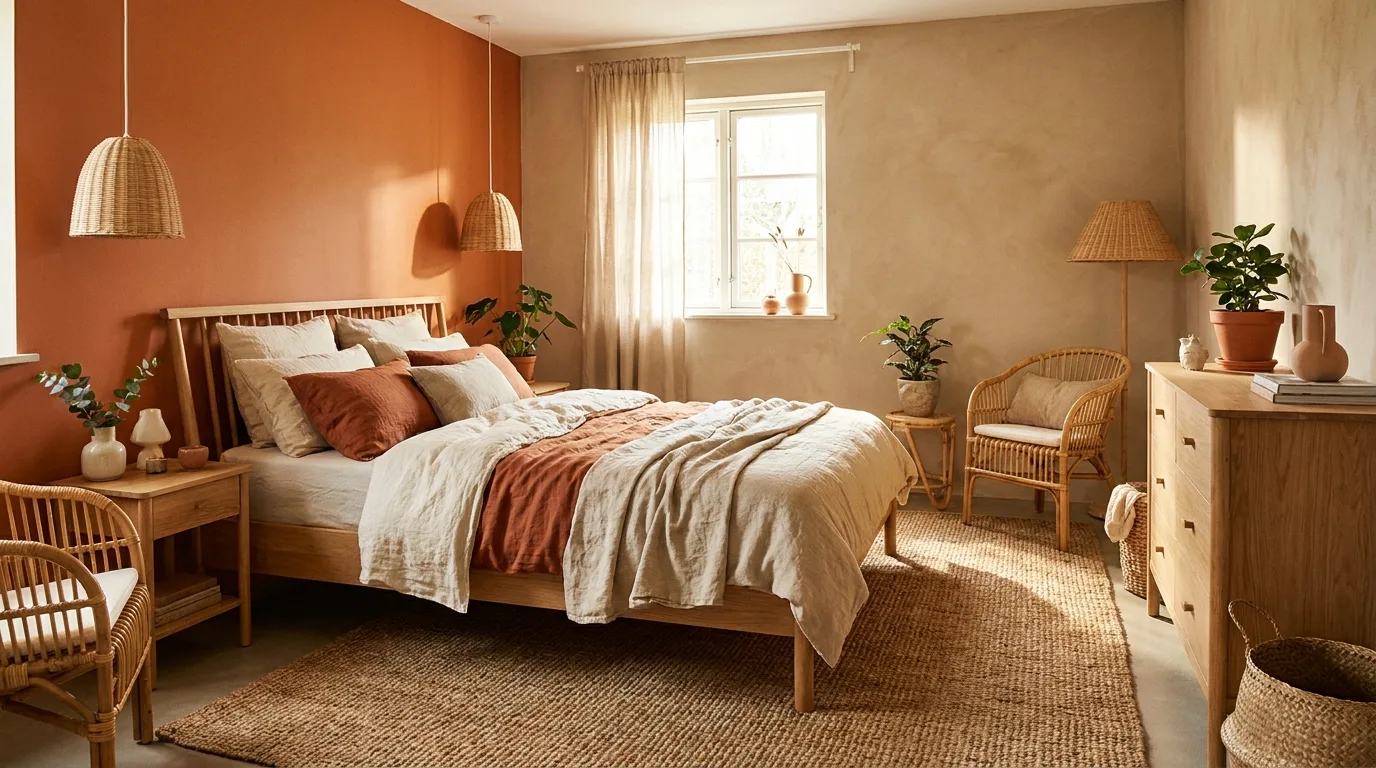
4. Orange and Beige for an Earthy Bedroom
Pairing orange with beige creates an earthy, comfortable bedroom that feels inspired by natural landscapes. Terracotta, clay, burnt orange, and muted pumpkin shades all work especially well with warm beige. Use orange behind the headboard and beige across the other walls, or create a two-tone wall with beige above and orange below. Natural wood furniture, rattan accessories, cotton bedding, and woven rugs can make the palette feel even more organic. Beige is useful because it tones down orange without eliminating its warmth. This combination suits bedrooms where relaxation is more important than dramatic contrast. To keep the room from looking too flat, introduce several beige textures rather than relying on one shade. A few dark brown or bronze accents can also provide depth while maintaining the warm, grounded character of the color scheme.
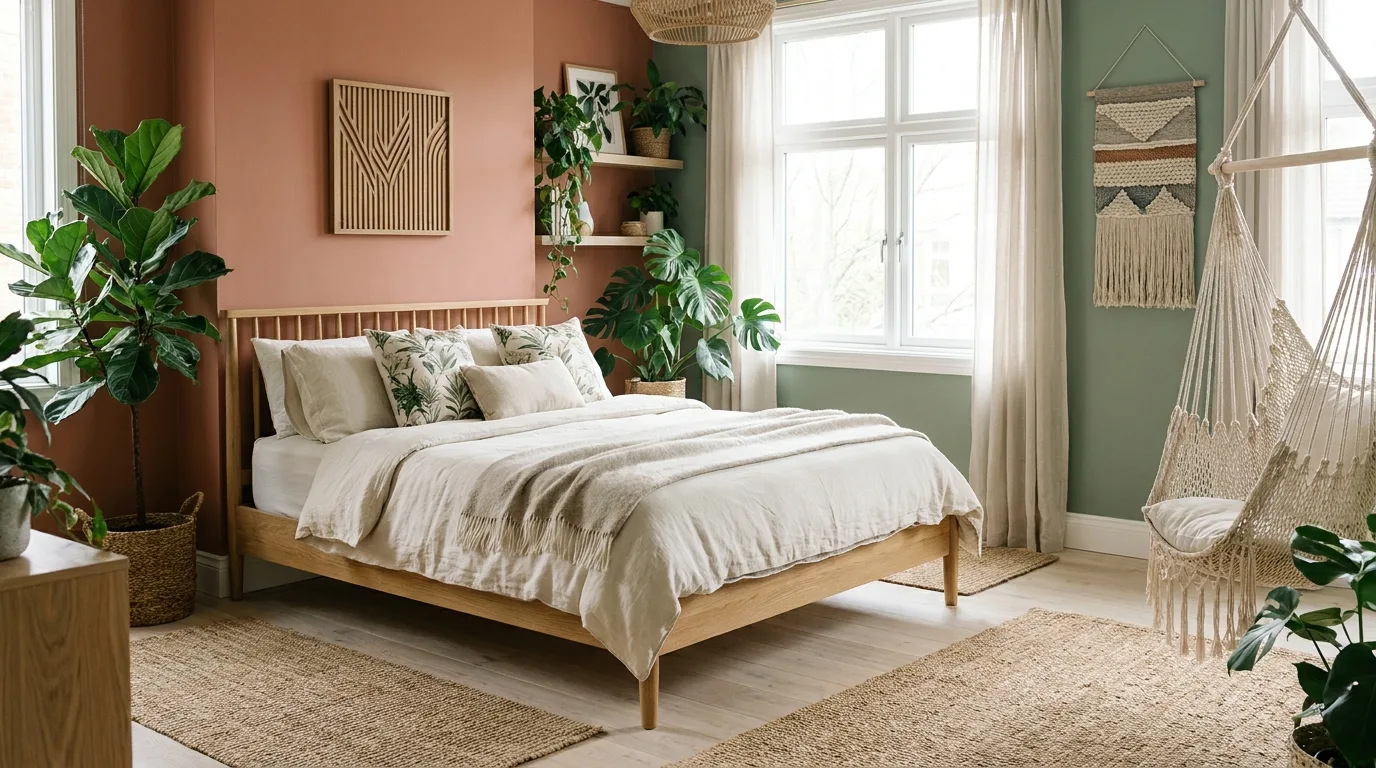
5. Orange and Sage Green for a Natural Feel
Orange and sage green create an inviting combination that connects warm and earthy colors with a gentle botanical feel. Sage is softer than many green shades, so it can balance orange without creating an overly dramatic contrast. Use a muted orange as the main feature wall and sage green on the surrounding walls, or use orange sparingly through a painted arch or panel. Light wood furniture and leafy plants complement both colors naturally. Cream or off-white bedding can provide a neutral break between the two shades. For a modern bedroom, choose dusty terracotta and gray-green sage. For a more playful interior, a brighter orange can be paired with a slightly richer sage. The result is warm and expressive while remaining comfortable enough for a bedroom where you want a calm atmosphere.
6. Orange and Gray for a Contemporary Bedroom
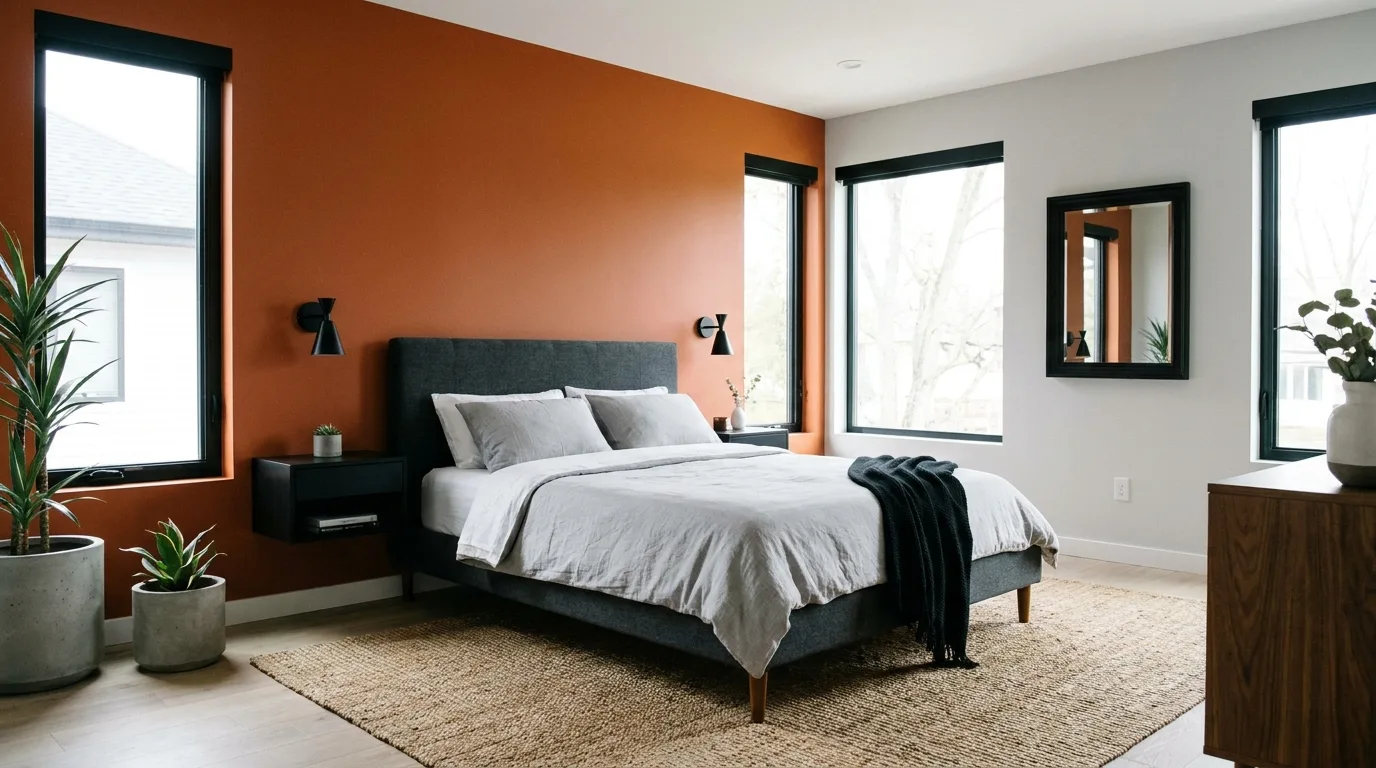
Orange and gray offer an excellent way to make a warm color feel more contemporary. Cool or neutral gray can reduce the intensity of orange and create a balanced backdrop for modern furniture. Try a burnt orange feature wall with pale gray on the remaining walls for a sophisticated appearance. Charcoal gray can also be used when you want a dramatic bedroom, although it works best in rooms with plenty of natural or layered artificial lighting. Keep bedding relatively simple with white, gray, or soft beige fabrics. Metallic details such as brushed steel or matte black can reinforce the modern style. If you prefer a softer look, select warm greige instead of cool gray. This combination is especially useful for homeowners who like orange but want to avoid a bedroom that feels overly bright, playful, or traditional.
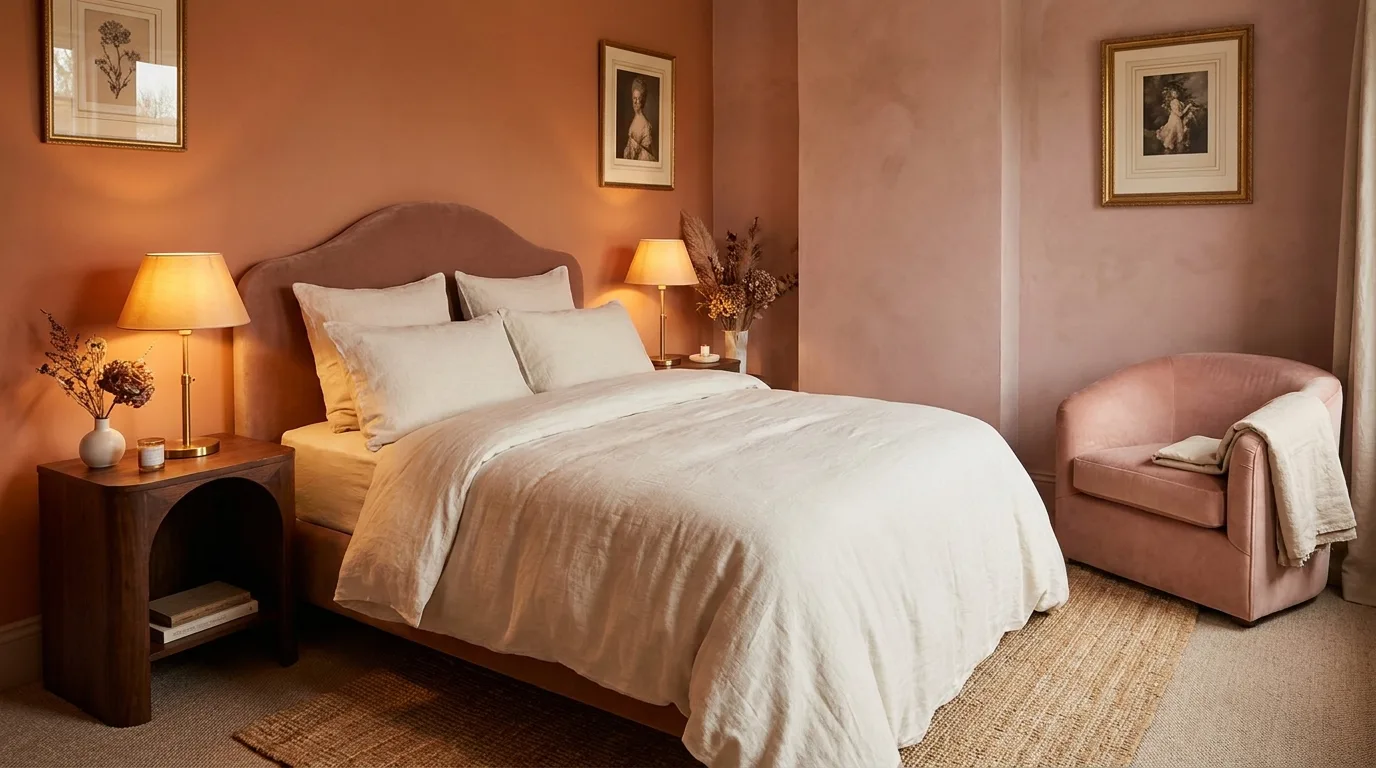
7. Orange and Dusty Pink for a Cozy Romantic Palette
Orange and dusty pink create a warm, soft color combination with a subtle romantic character. Rather than pairing orange with an intense pink, choose a muted terracotta, peachy orange, or burnt orange alongside dusty rose. This keeps the palette sophisticated and prevents the bedroom from appearing overly bright. Use the deeper orange behind the bed and dusty pink on surrounding walls, or create a two-tone treatment with one shade on the lower half of the wall. Soft cream bedding, brass lighting, and curved furniture can enhance the gentle atmosphere. Velvet, linen, and knitted textures also work beautifully with these colors. For a contemporary bedroom, keep the pink muted and the orange earthy. This pairing is particularly appealing if you want warmth and personality while maintaining a soft, comfortable mood.
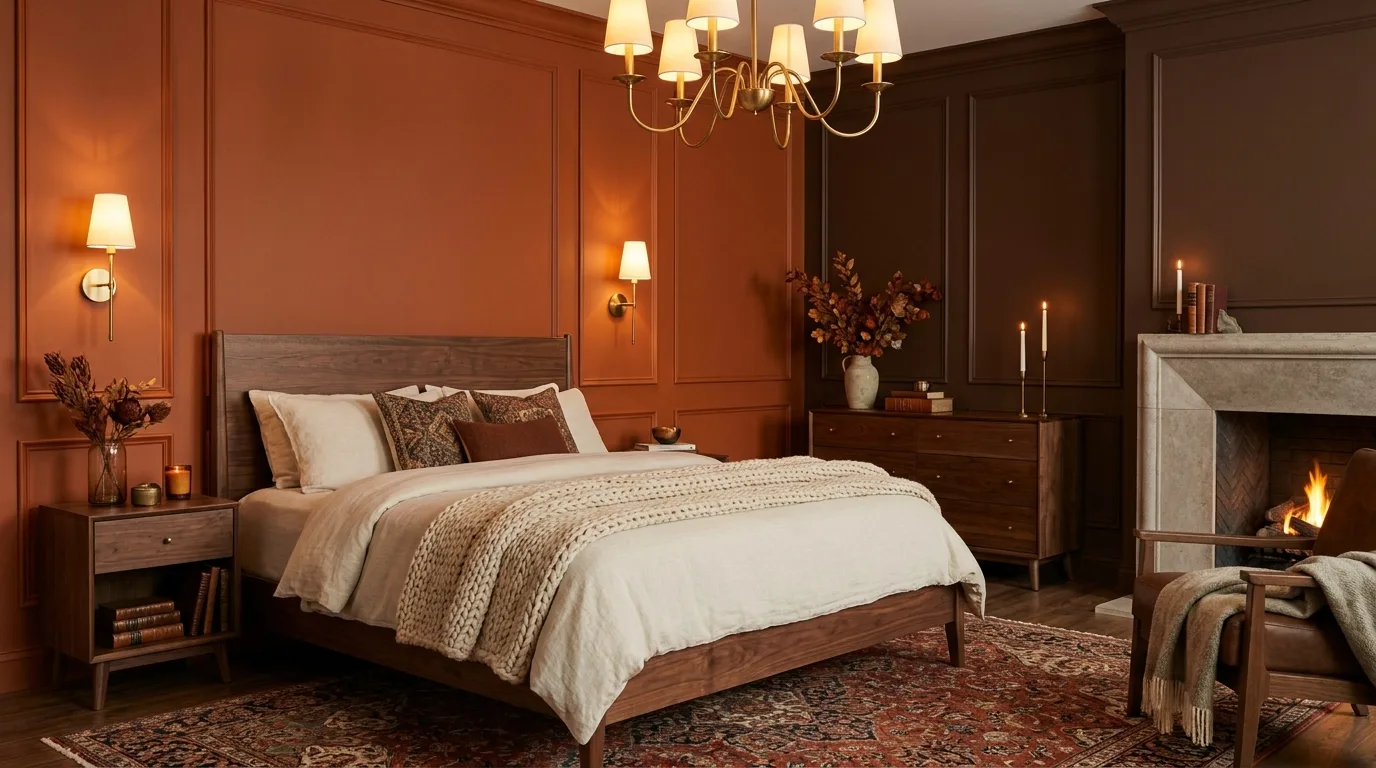
8. Orange and Chocolate Brown for a Rich, Cozy Room
Orange and chocolate brown create a deep, warm combination that can make a bedroom feel intimate and luxurious. Burnt orange or rust works particularly well with rich brown because both shades have earthy undertones. Use orange as an accent wall and brown through furniture, a secondary wall, curtains, or decorative panels. If you use brown paint on the walls, balance it with a lighter orange and plenty of cream-colored textiles so the room does not feel too dark. Wooden furniture naturally fits this palette, while brass lamps and warm lighting add a refined touch. This combination is especially attractive in bedrooms designed around autumn-inspired colors. Choose lighter terracotta if the room is small, and reserve chocolate brown for selected areas. The overall effect is cozy, grounded, and sophisticated.
9. Orange and Teal for a Colorful Statement
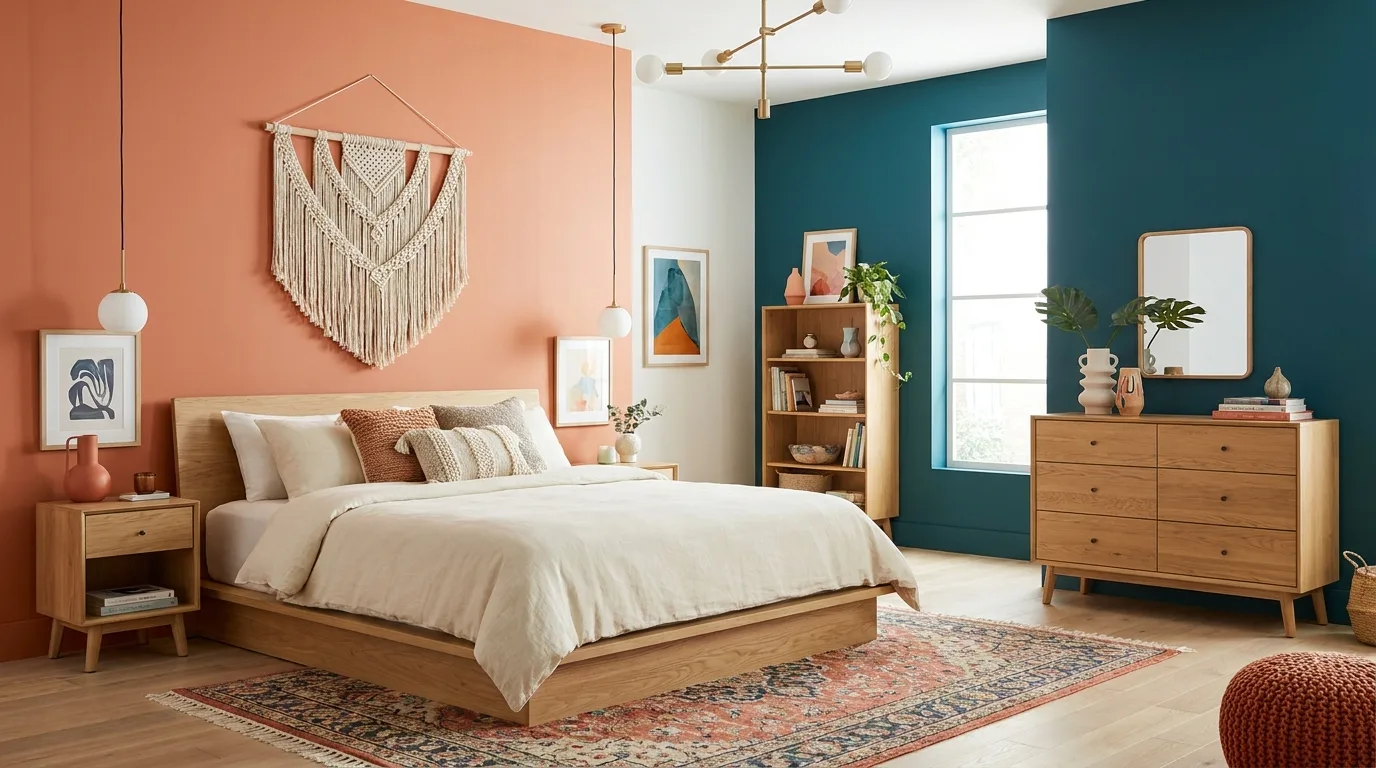
Orange and teal are a confident two-color combination for anyone who enjoys expressive interiors. Because orange is warm and teal combines blue and green, the colors create strong visual contrast while remaining compatible. To keep the bedroom from becoming too busy, use one shade as the dominant wall color and the other on a smaller wall or architectural feature. A muted terracotta with deep teal feels more sophisticated than highly saturated versions of both colors. Neutral bedding in cream, white, or beige can provide visual breathing room. Natural wood furniture also helps soften the contrast. This pairing works particularly well in eclectic, bohemian, and contemporary bedrooms. If you are uncertain about using both colors across large walls, start with an orange feature wall and introduce teal through painted furniture, textiles, or a smaller accent section.
10. Orange and Olive Green for an Earthy Modern Bedroom
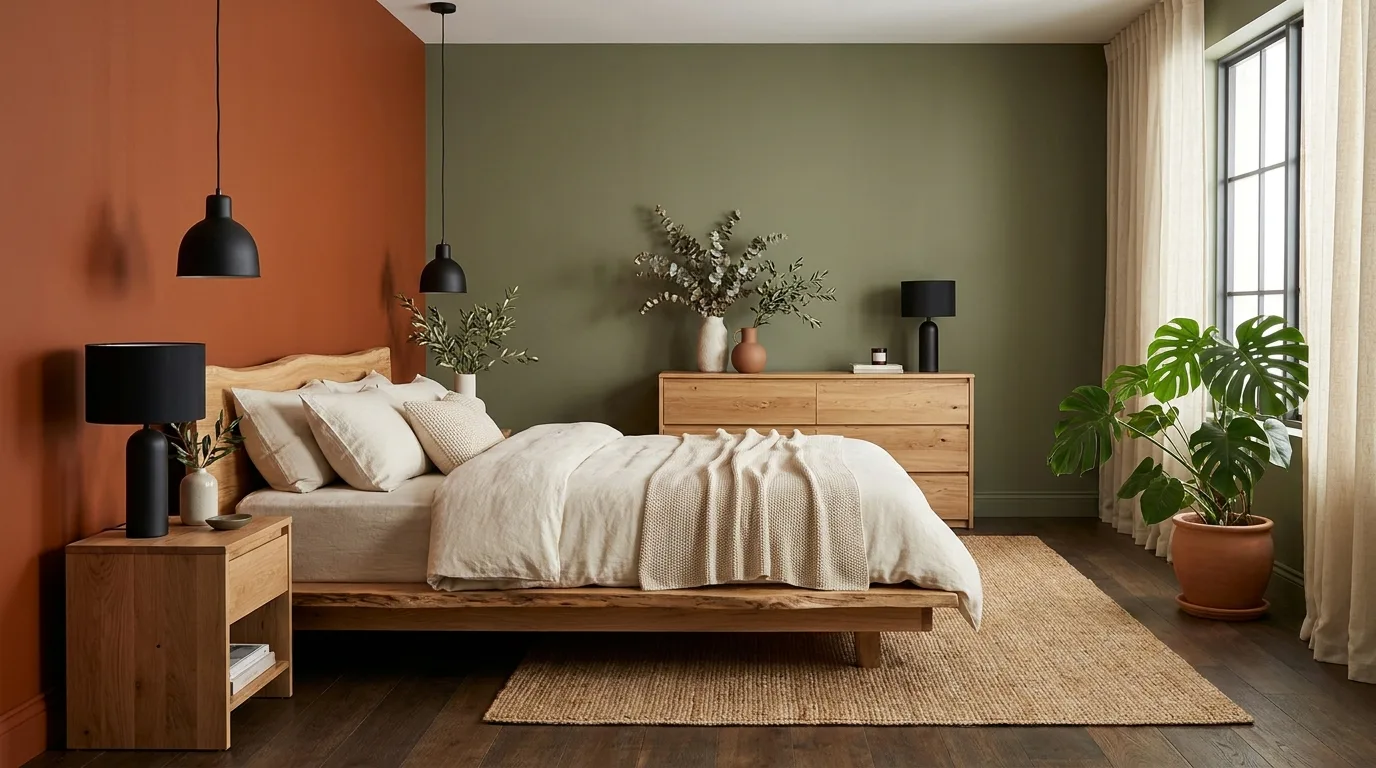
Orange and olive green form an earthy palette that feels warm, mature, and connected to nature. Rust, burnt orange, and terracotta are particularly attractive alongside olive because both color families contain muted, natural undertones. You can paint the wall behind the bed orange and use olive green on an adjacent wall, or use olive as the primary wall color with orange appearing in a smaller architectural section. Cream bedding and natural wood furniture keep the room balanced. Black metal lighting can add a modern edge, while woven accessories reinforce the organic character. Avoid using extremely bright versions of both colors together, as the combination can become visually intense. Instead, choose slightly dusty or muted shades. This palette works especially well for bedrooms that combine modern furniture with rustic, botanical, or earthy decorative elements.
11. Orange and Charcoal for a Bold Sophisticated Look
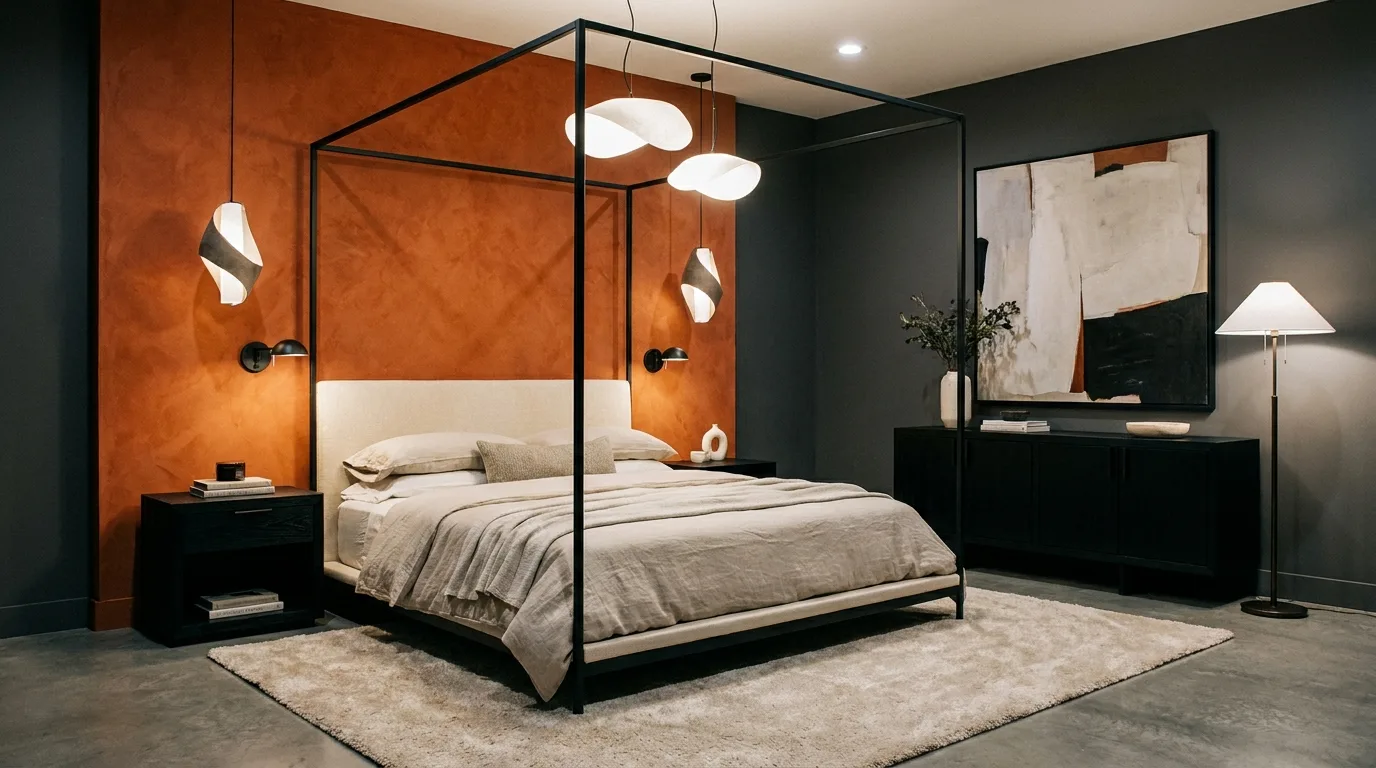
For a dramatic bedroom, orange and charcoal create a strong contrast with a contemporary edge. Charcoal absorbs visual intensity while orange adds warmth and energy, making the combination feel bold without requiring multiple accent colors. Consider placing charcoal on the wall behind the bed and using orange on an opposite or side wall. Alternatively, a burnt orange feature wall can be balanced by charcoal furniture and painted architectural details. Because charcoal is dark, make sure the bedroom has adequate lighting through ceiling fixtures, bedside lamps, and natural daylight. White or cream bedding can prevent the room from feeling too heavy. Matte black hardware and simple geometric furniture complement the palette well. This combination is particularly effective in modern bedrooms where you want a statement-making color scheme with a clean, structured appearance.
12. Orange and Pale Blue for a Relaxed Contrast
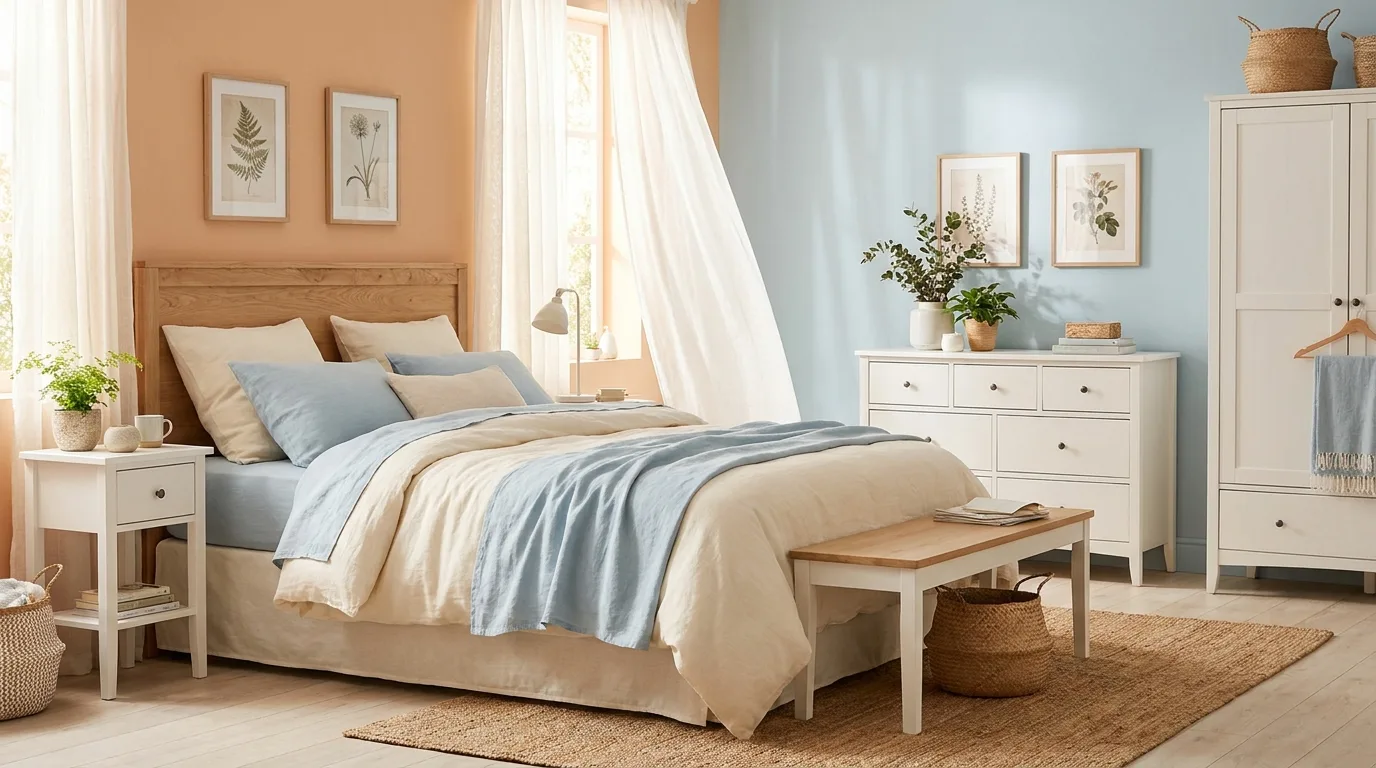
Orange and pale blue create a lighter, more relaxed contrast that can make a bedroom feel cheerful without looking overly energetic. Soft sky blue, powder blue, or muted blue-gray works well with peach, apricot, or softer orange shades. Use orange as a feature wall and pale blue around the rest of the room, especially when you want the orange to remain the visual focal point. White furniture and light bedding can make the space feel fresh and spacious. Natural wood accents add warmth and keep the cool blue from feeling sterile. This combination is useful in bedrooms with plenty of sunlight because the pale blue can visually cool the warmth of orange. For a more sophisticated result, choose dusty versions of both colors rather than highly saturated shades.
13. Orange and Creamy White for a Minimalist Bedroom
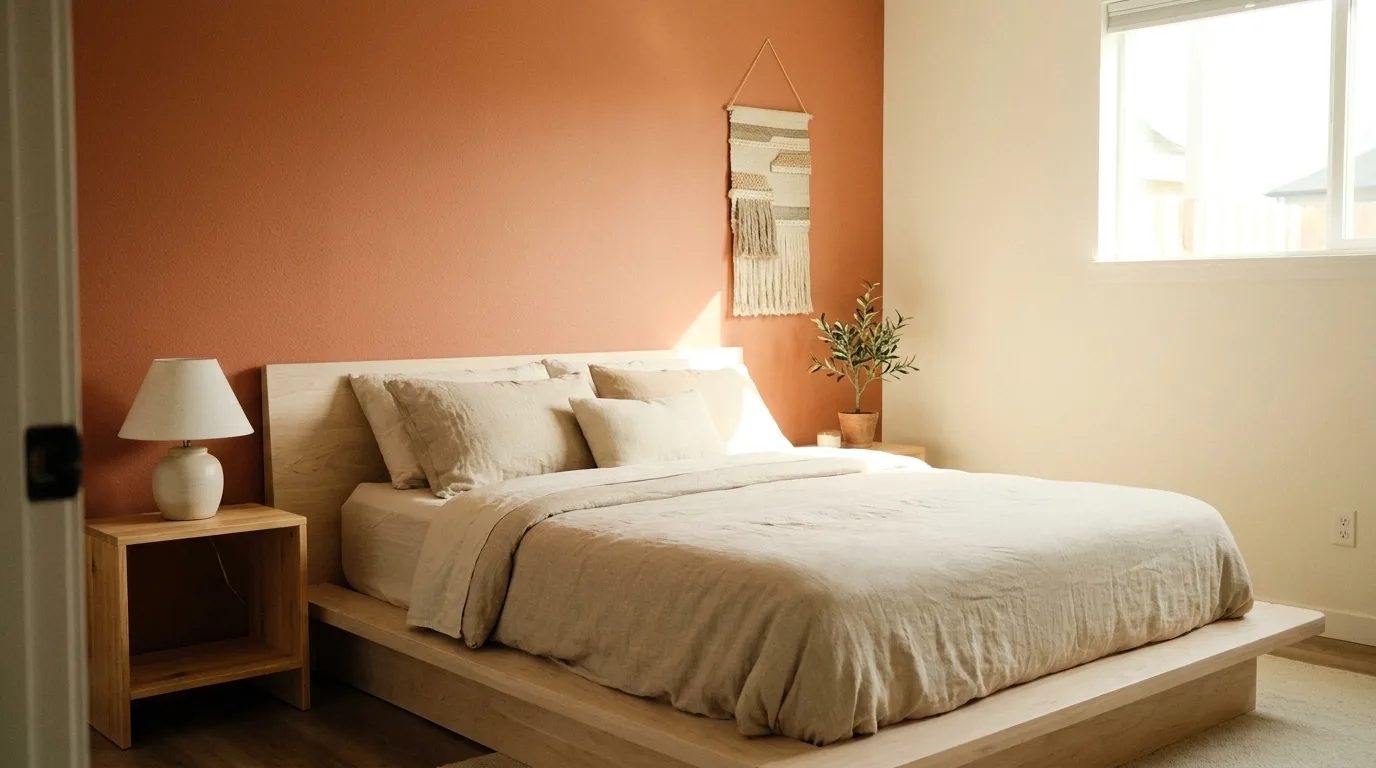
Orange and creamy white are ideal for a minimalist bedroom where warmth is important but visual clutter is not. Instead of using a very bright orange, choose terracotta, clay, muted pumpkin, or soft apricot. Paint one wall in the orange shade and keep the remaining walls creamy white to establish a clear focal point. Simple furniture, uncluttered surfaces, and natural fabrics allow the wall colors to become the main decorative feature. A cream-colored palette also works well with orange because it is softer than stark white and creates a more comfortable atmosphere. Add only a few carefully selected accessories, such as a ceramic lamp, wooden bedside table, or textured rug. This pairing is especially useful if you want a warm minimalist bedroom that feels welcoming rather than stark.
14. Orange and Black for a Modern Statement Wall
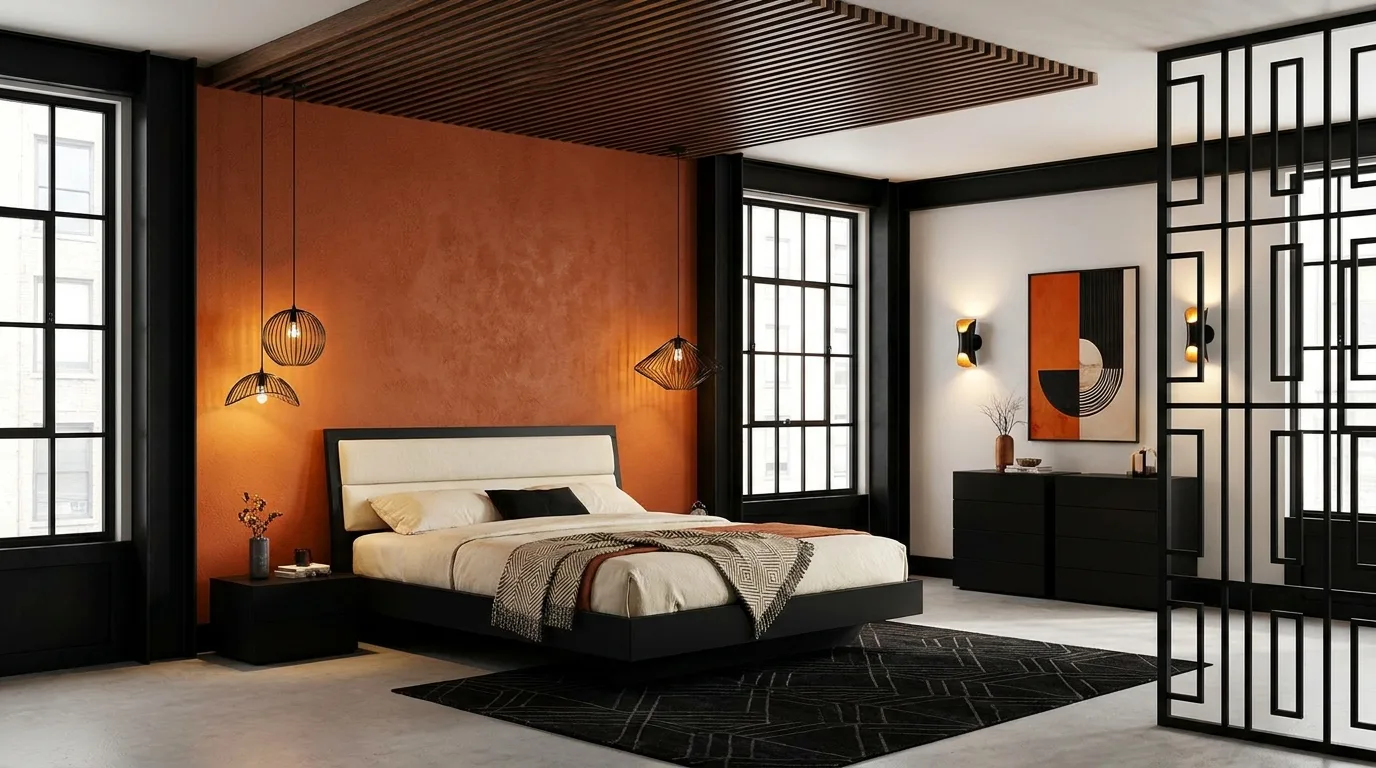
Orange and black can create a dramatic bedroom, but the proportions matter. Instead of covering every wall in strong colors, use orange as the primary statement shade and introduce black selectively through a feature wall, furniture, trim, or geometric design. Burnt orange and rust tend to look more sophisticated with black than neon orange. Keep the ceiling and major textiles light if the room is small, allowing cream or white bedding to soften the contrast. Black-framed mirrors, pendant lights, and simple metal furniture can reinforce the modern aesthetic. You can also use black to outline an orange painted arch or wall panel for a graphic effect. This combination is particularly suitable for contemporary and industrial-inspired bedrooms where strong lines and contrasting colors are part of the overall design.
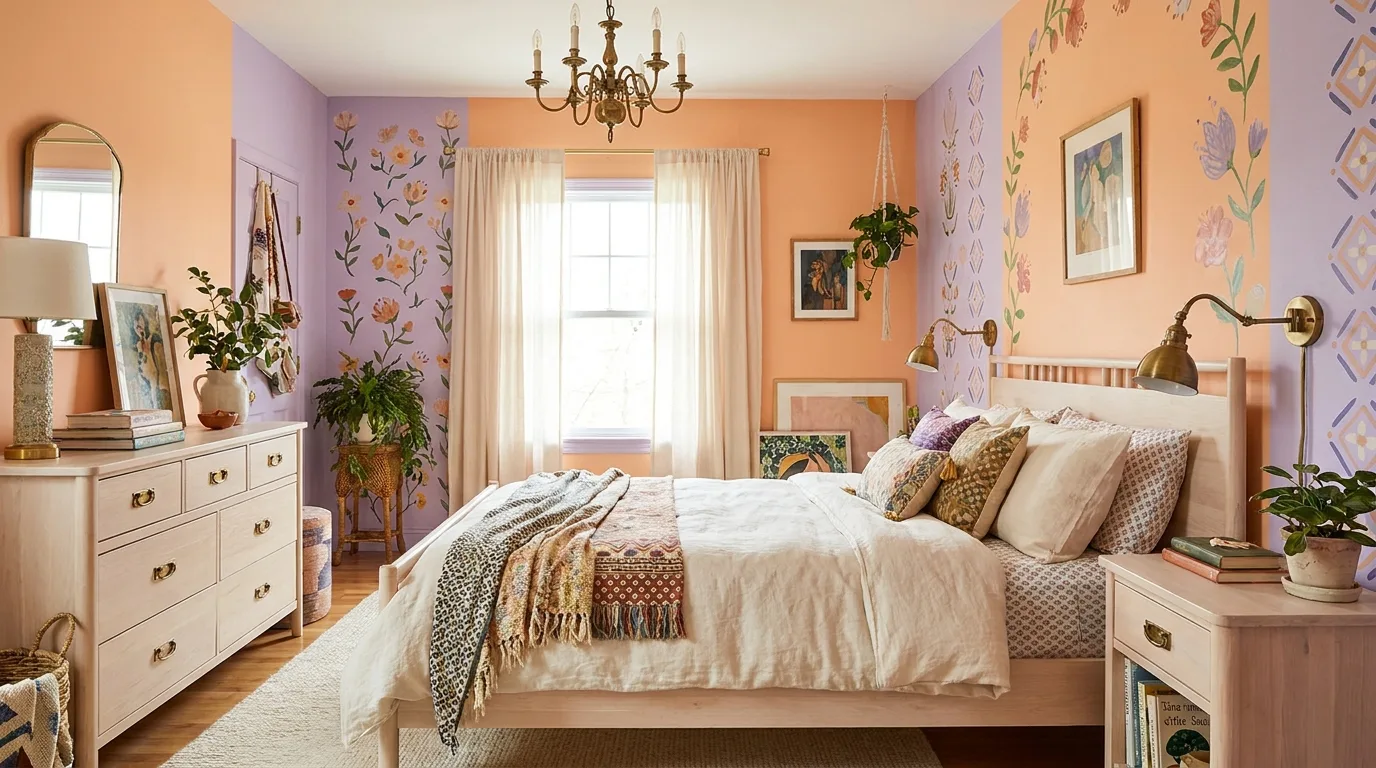
15. Orange and Lavender for a Soft Eclectic Bedroom
Orange and lavender create an unexpected combination that works especially well in creative and eclectic bedrooms. The warm character of orange contrasts with the cool, gentle quality of lavender, producing a palette that feels distinctive without relying on many additional colors. Soft peach or muted orange is generally easier to combine with lavender than an extremely saturated orange. Use one color on the main feature wall and the other on an adjacent wall, or introduce lavender through a painted panel. White, cream, and pale wood can act as neutral supporting colors. Keep patterns relatively simple so the unusual color pairing remains the focus. Brass or brushed-gold details can add warmth and elegance. This combination is a good choice when you want a bedroom that feels playful and individual while still maintaining a soft atmosphere.
16. Orange and Terracotta for a Layered Earth-Tone Bedroom
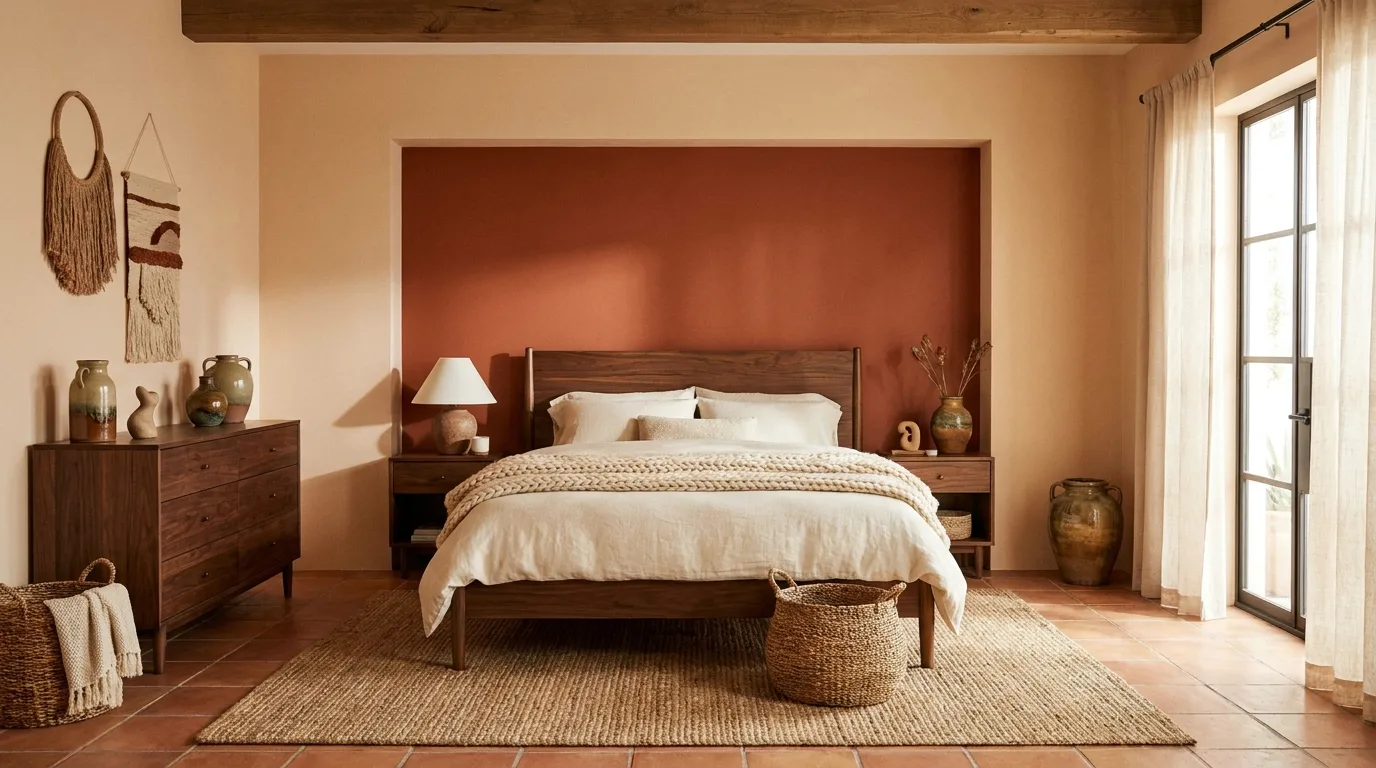
Using two closely related orange-family shades can create a layered bedroom without introducing a completely different color. Pair a brighter muted orange with deeper terracotta to build warmth and dimension. One option is to use the lighter orange on three walls and terracotta behind the bed, creating a subtle feature wall. Another approach is a two-tone treatment with terracotta on the lower section and lighter orange above. Cream bedding, walnut furniture, woven baskets, and ceramic accessories work naturally with this palette. Because both colors share warm undertones, the room feels cohesive rather than strongly contrasted. This idea is particularly effective for Mediterranean, bohemian, rustic, and contemporary earthy interiors. If the room receives strong sunlight, slightly muted shades can help prevent the walls from appearing excessively bright during the day.
How to Choose the Right Orange Wall Combination
When selecting an orange two-color bedroom palette, start by considering the amount of natural light in the room. Bright bedrooms can handle deeper or stronger orange shades, while darker rooms often benefit from peach, apricot, terracotta, or muted orange. Next, decide whether you want contrast or harmony. Navy, charcoal, teal, and olive create more noticeable contrast, while cream, beige, brown, and terracotta produce a softer relationship. It is also helpful to test paint samples on different walls because orange can change noticeably throughout the day as lighting changes. Keep furniture and bedding in mind before committing to paint. If your room already contains colorful furniture, a neutral second wall color may provide better balance. Finally, use accessories to repeat both wall colors in small amounts so the entire bedroom feels intentionally coordinated.
Conclusion
Orange bedroom walls can be warm, sophisticated, earthy, playful, or dramatic depending on the color paired with them. Cream and beige create softness, navy and charcoal add contrast, while sage, olive, and brown bring a natural character. For a more distinctive interior, combinations such as orange and teal or orange and lavender can create an expressive focal point. The best approach is to choose an orange shade that suits your room’s lighting and then use the second color to establish the mood you want. With thoughtful paint placement, coordinated bedding, natural textures, and a few carefully selected accents, orange can become a stylish and inviting foundation for a beautiful bedroom.