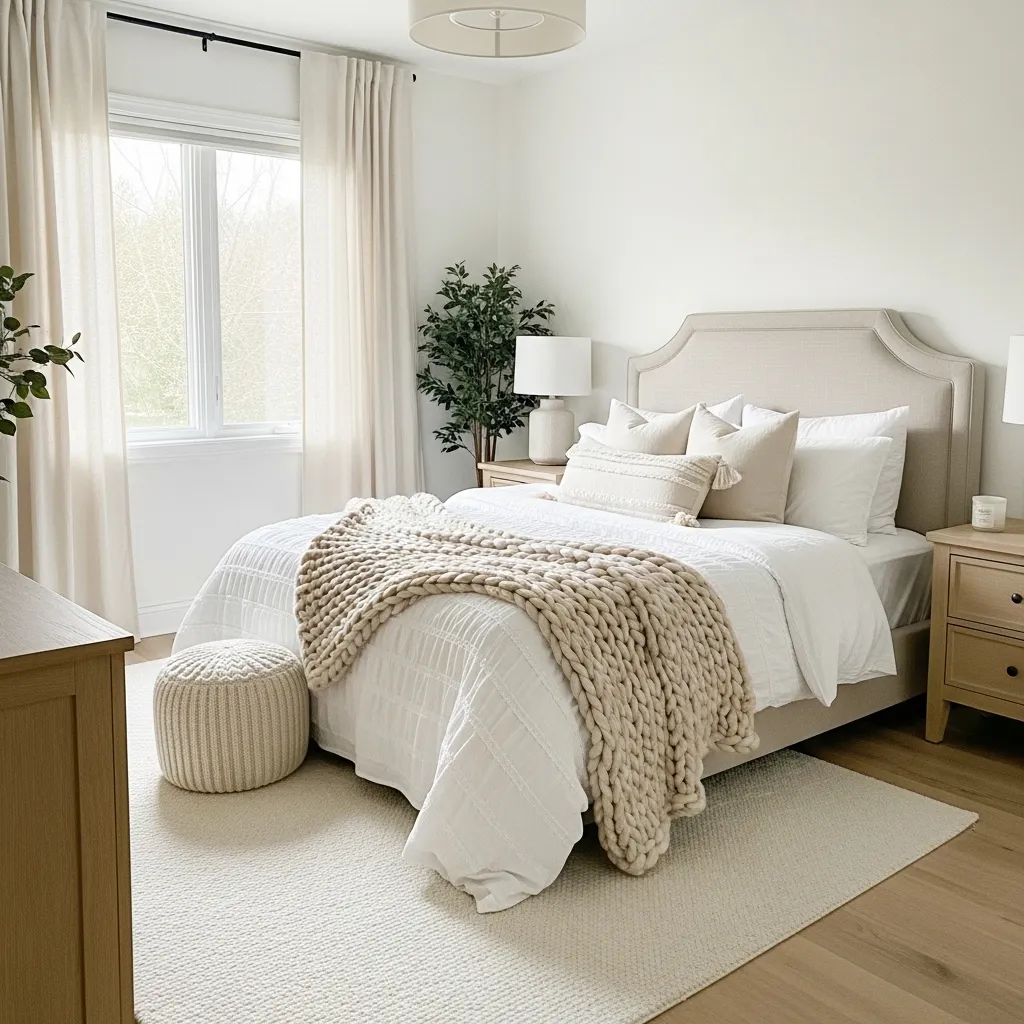
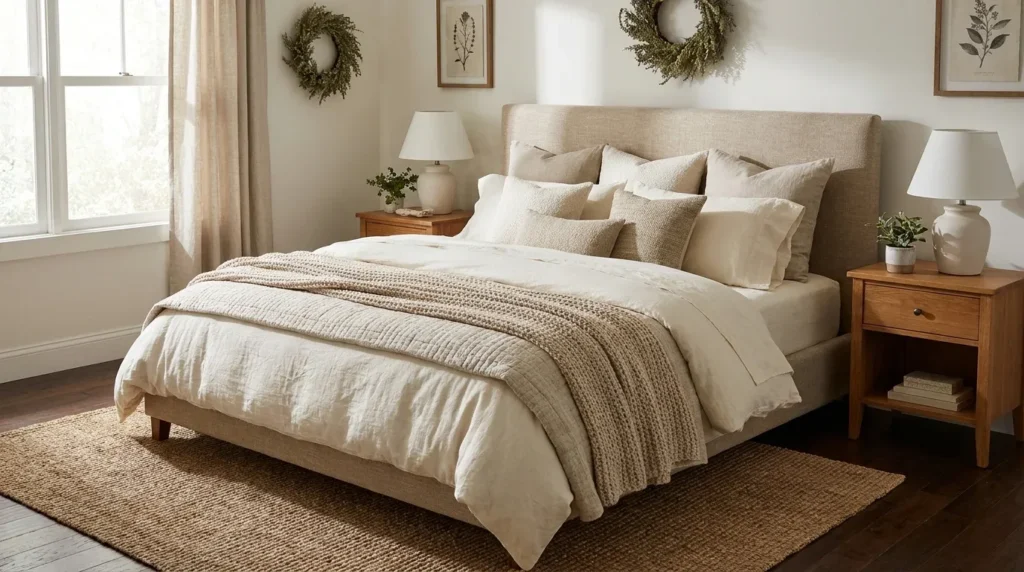
Winter is the perfect time to make your bedroom feel warmer, softer, and more inviting. Inspired by the signature aesthetic of Studio McGee, a design brand known for its timeless interiors, natural materials, neutral palettes, and thoughtful styling, these bedroom ideas combine classic elegance with everyday comfort. Think layered bedding, warm wood furniture, textured throws, soft lighting, and carefully chosen accessories that make a room feel both polished and personal.
The beauty of Studio McGee-inspired bedroom design is that it doesn’t require a complete renovation or an unlimited budget. Small changes, such as introducing linen curtains, switching to warmer bedside lighting, or adding a beautiful upholstered headboard, can transform the atmosphere of your space. Whether you prefer a modern farmhouse bedroom, a relaxed neutral retreat, or a more traditional look, these ideas will help you create a cozy winter sanctuary. Explore these 18 Studio McGee bedroom ideas for practical inspiration that balances seasonal warmth, timeless style, and a welcoming atmosphere.
1. Layer Neutral Bedding for a Cozy Winter Retreat
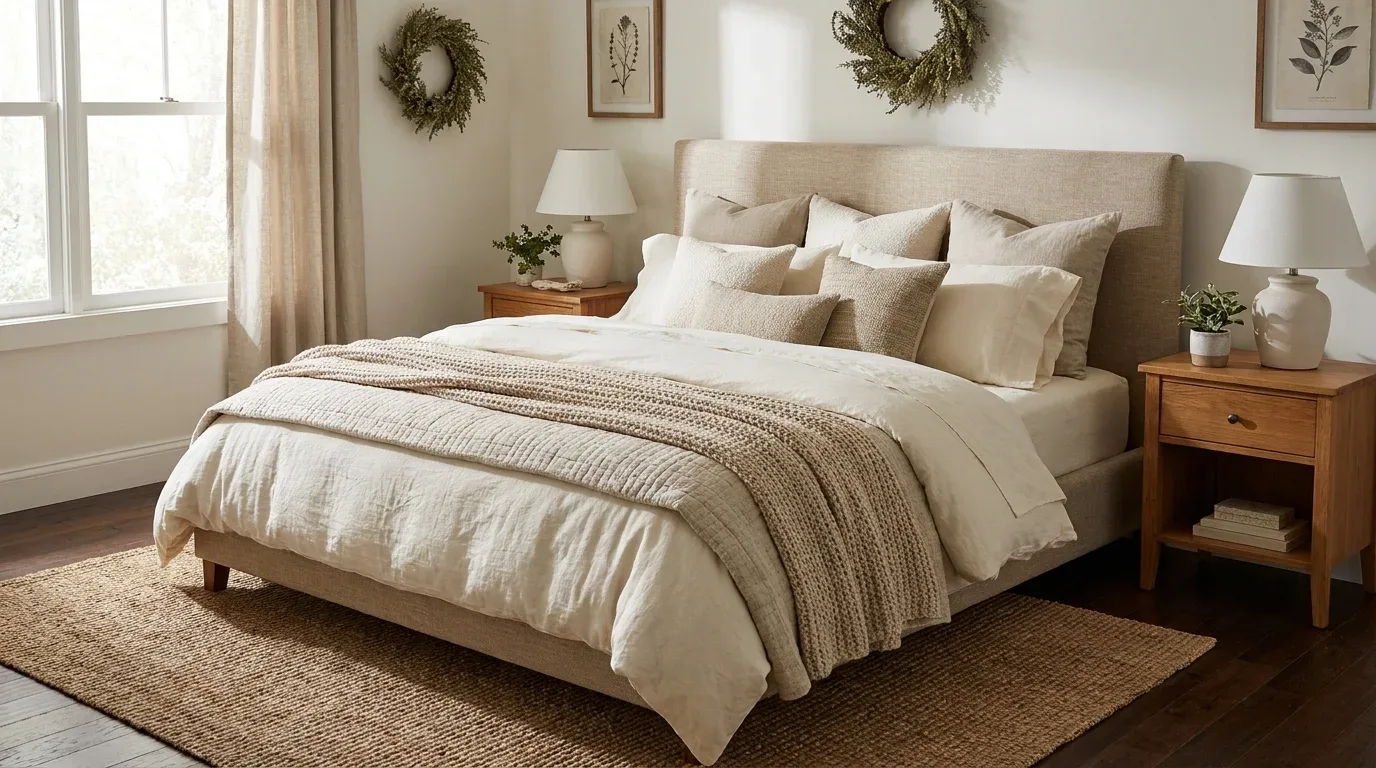
Layered bedding is one of the easiest ways to create a Studio McGee-inspired bedroom that feels luxurious without looking overly formal. Start with crisp white or ivory sheets, add a fluffy duvet, and finish with a quilt or coverlet in a complementary neutral shade. Cream, oatmeal, warm beige, and soft taupe work beautifully together because they create depth without overwhelming the room. During winter, choose heavier cotton, brushed cotton, or linen-blend fabrics that feel comfortable against the skin. Fold a textured blanket across the foot of the bed and arrange pillows in different sizes for a relaxed, finished appearance. Keep the palette simple so the fabrics provide most of the visual interest.
2. Choose a Warm Wood Bed Frame
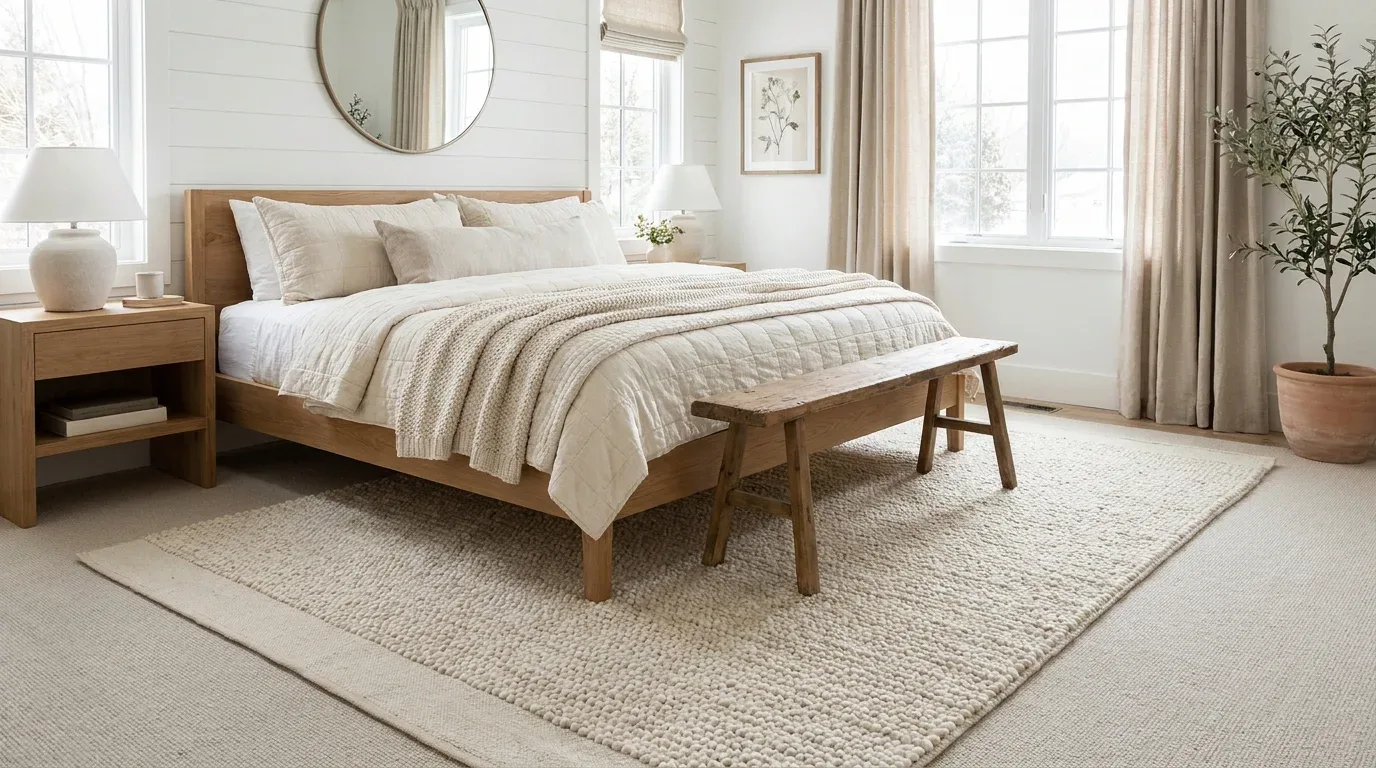
A wooden bed frame brings natural character and warmth to a winter bedroom. Light oak creates an airy, contemporary feeling, while medium walnut and weathered wood offer a richer, more traditional atmosphere. Look for a design with clean lines, subtle detailing, or a gently curved headboard to capture the timeless appeal of Studio McGee-inspired interiors. Pair the frame with ivory bedding, understated nightstands, and a soft area rug to keep the overall look balanced. Natural wood also works well with woven baskets, ceramic lamps, and linen curtains. If replacing your bed is not practical, introduce the same material through a wooden bench, bedside tables, or a substantial decorative frame above the bed.

3. Create a Soft and Sophisticated Neutral Palette
A carefully coordinated neutral palette makes a bedroom feel peaceful, especially during the darker winter months. Rather than relying on a single shade of white, combine warm ivory, sandy beige, mushroom, pale greige, and muted brown. These colors create subtle contrast while maintaining a cohesive appearance. Apply the lightest tones to larger surfaces, such as bedding and walls, then introduce deeper shades through pillows, lampshades, artwork, and furniture. Warm neutrals are particularly effective when natural daylight is limited because they can make the room feel softer and less stark. For a balanced finish, repeat two or three key colors throughout the space instead of introducing a different accent in every corner.

4. Add an Upholstered Headboard
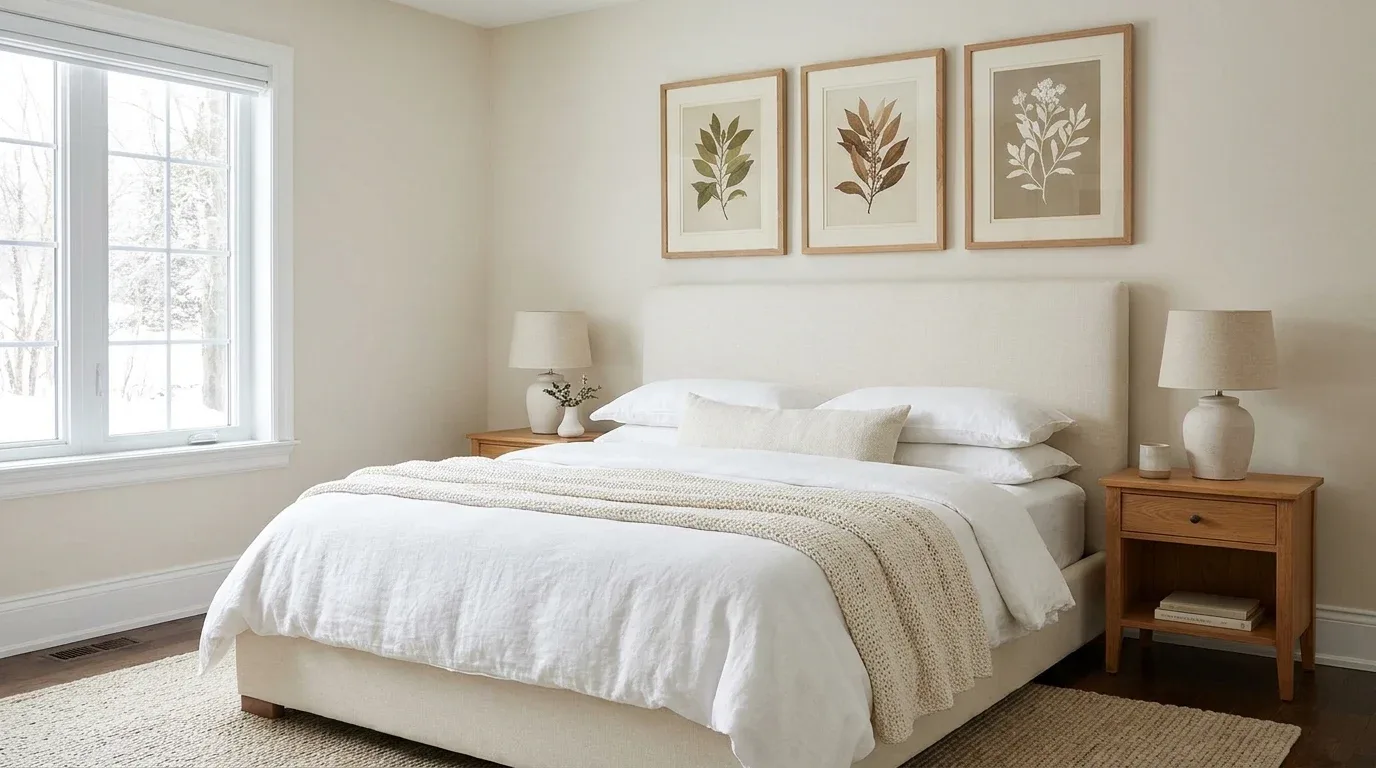
An upholstered headboard instantly makes a bedroom feel more comfortable and refined. Choose a fabric in oatmeal, ivory, warm gray, or muted beige to complement a neutral winter color scheme. Linen-look upholstery offers relaxed texture, while a softly padded headboard provides a more tailored appearance. A simple rectangular silhouette suits contemporary bedrooms, whereas a gently arched or subtly winged design introduces traditional character. Keep nearby accessories understated so the headboard remains a focal point. Pair it with layered white bedding, wooden nightstands, and warm metal lighting for a cohesive look. If you already own a wooden bed, adding an upholstered headboard can soften the room without requiring you to replace the entire frame.
5. Style the Bed With Textured Throw Blankets
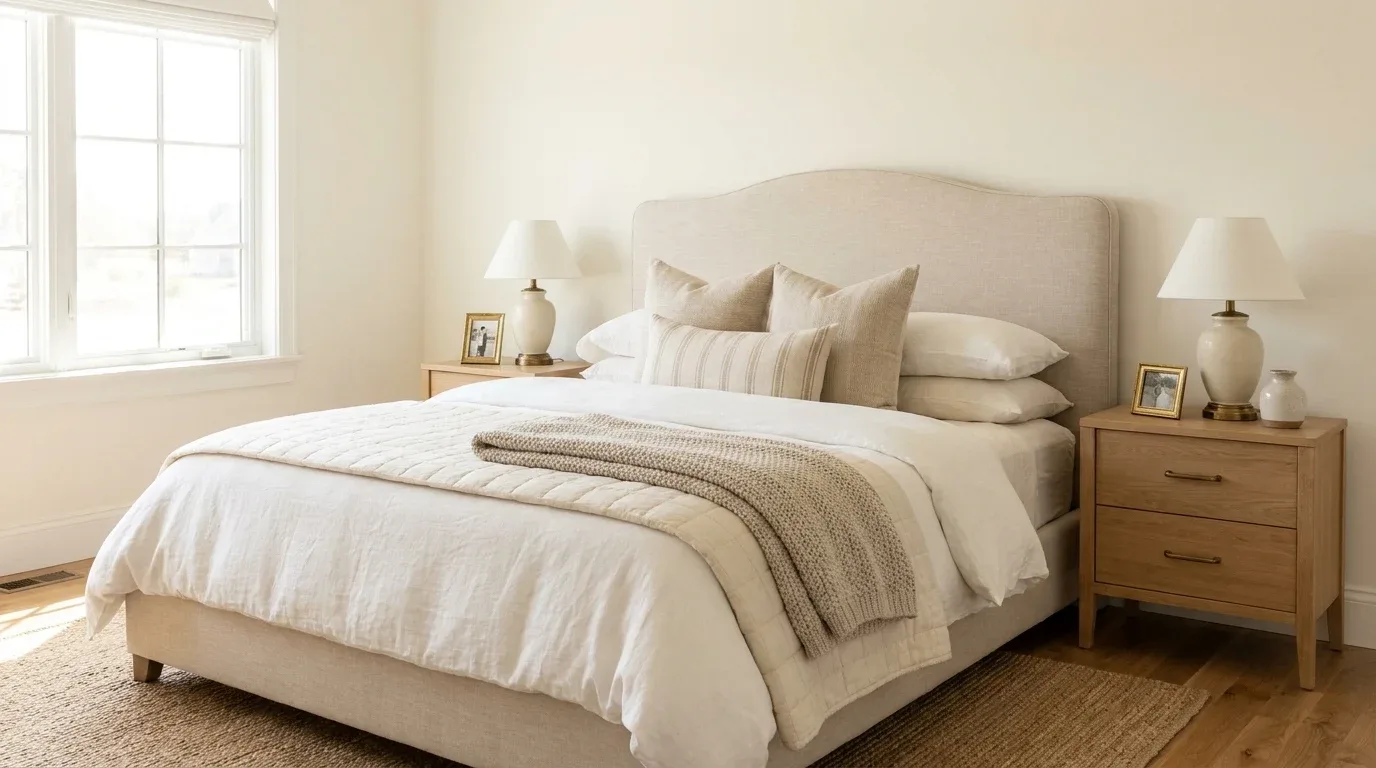
Winter bedroom styling becomes more inviting when different textures are layered thoughtfully. A chunky knit blanket, a brushed cotton coverlet, or a soft woven throw can make even simple bedding feel special. Choose a throw in a shade slightly deeper or lighter than your duvet so it stands out without disrupting the palette. Drape it casually across one corner of the bed for an effortless appearance, or fold it neatly along the bottom for a more structured arrangement. Look for quality materials that feel comfortable and hold their shape with regular use. One substantial throw is often more effective than several competing blankets, particularly when the bedroom already includes patterned pillows or textured upholstery.

6. Bring in Matching Wooden Nightstands
Bedside tables help establish the bedroom’s overall design, and warm wood versions add an inviting, grounded quality. Matching nightstands create symmetry, which is especially useful in a bedroom with a centered bed and a statement headboard. Choose pieces with simple drawer fronts, understated hardware, and enough surface area for a lamp, a book, and a small decorative object. Light oak feels fresh and relaxed, while darker wood adds contrast to pale bedding. If your room is small, consider narrow nightstands with drawers to maintain storage without crowding the walking space. Finish each table with a similar lighting style, but avoid making the accessories identical. A little variation gives the arrangement a natural, collected appearance.
7. Use Warm Bedside Lighting
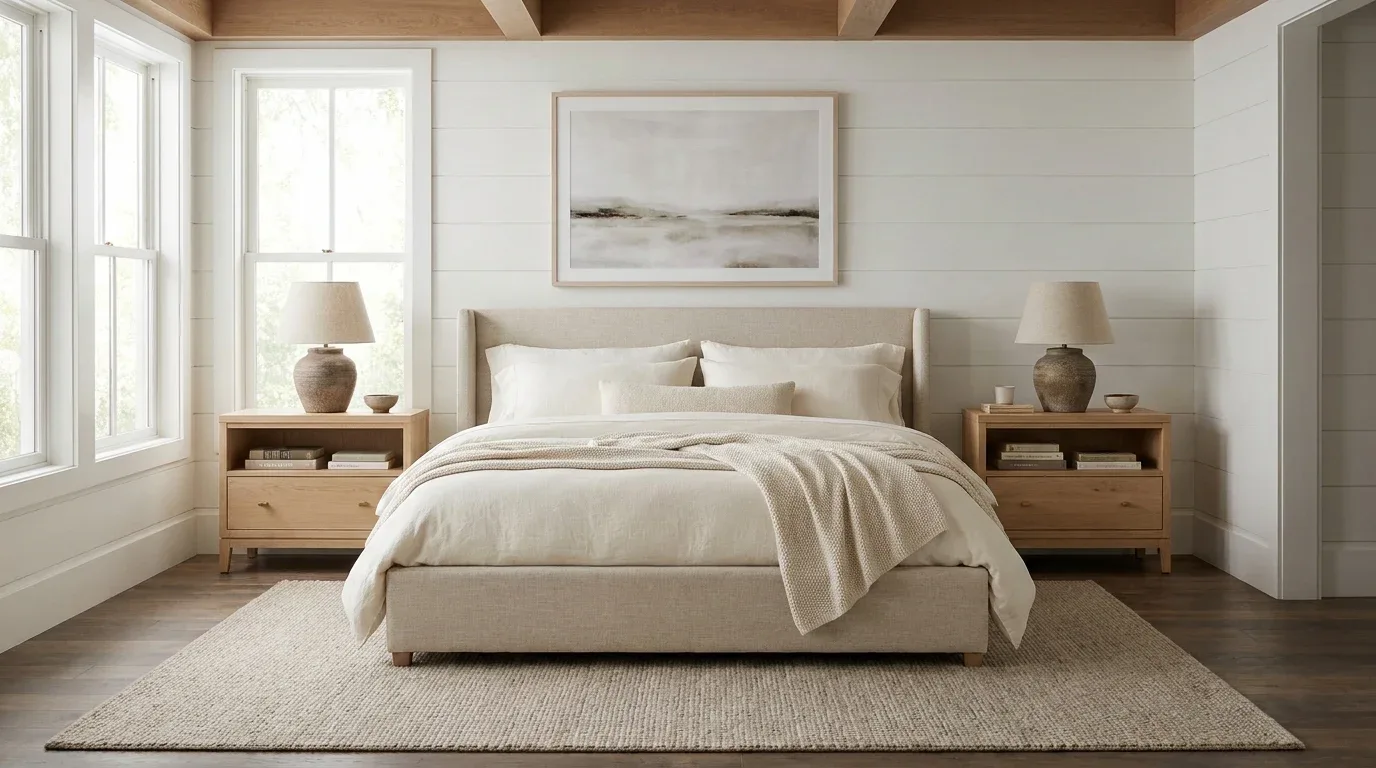
Good lighting makes a noticeable difference to the atmosphere of a winter bedroom. Replace harsh overhead illumination with bedside lamps that create a softer glow for reading, relaxing, or winding down at night. Ceramic bases, linen shades, aged brass finishes, and simple sculptural shapes complement the warm, timeless look associated with Studio McGee-inspired spaces. Choose warm-white bulbs, generally around 2700K, to create a comfortable evening ambiance. If bedside tables are limited, wall-mounted sconces can free up valuable surface space. Position lights so they are practical for reading without shining directly into your eyes. A dimmable overhead fixture, combined with two bedside lamps, allows you to adjust the room’s mood throughout the day.
8. Hang Full-Length Linen Curtains
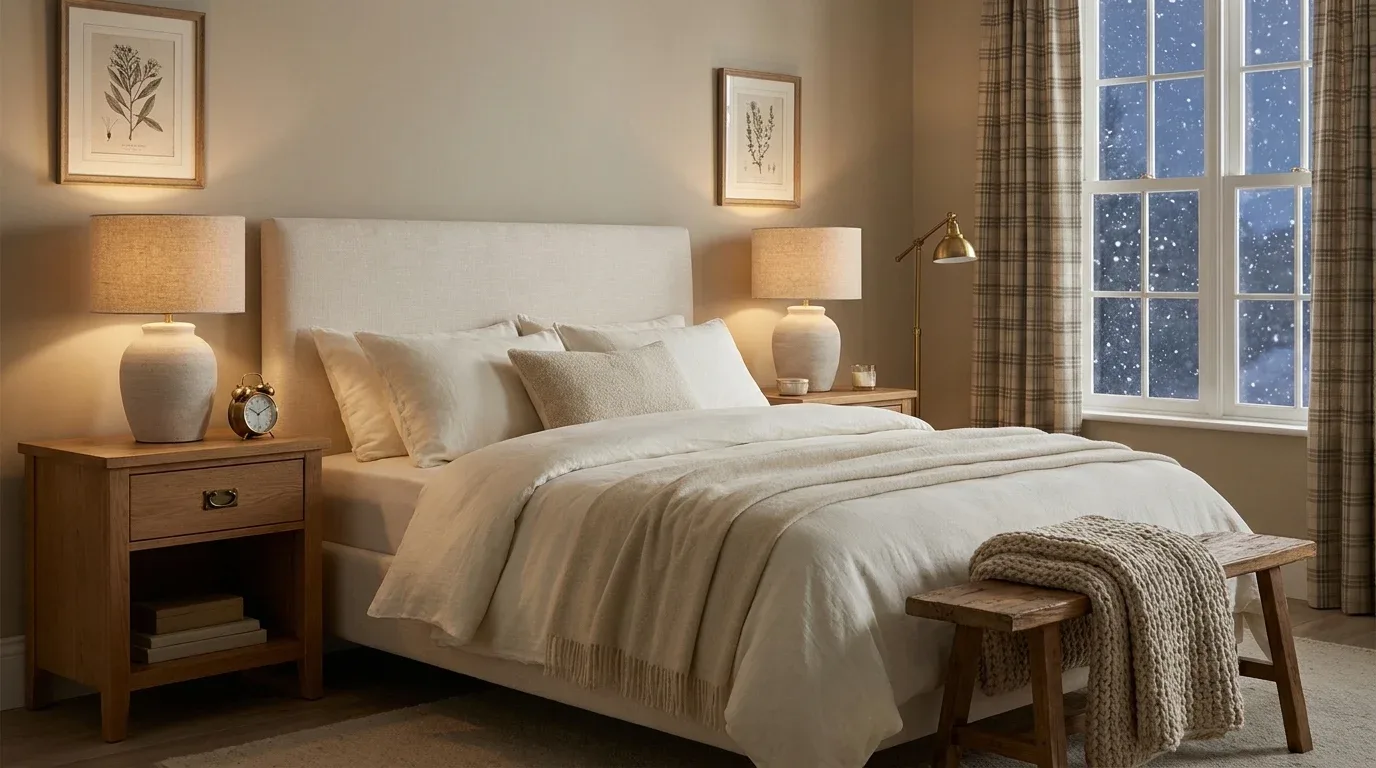
Window treatments soften the bedroom and help connect the furniture, bedding, and wall colors. Full-length curtains in ivory, flax, or warm beige create a relaxed, elegant finish that suits a Studio McGee-inspired winter interior. Hang the curtain rod several inches above the window frame and extend it beyond the sides when possible. This makes the window appear larger and allows more daylight into the room when the curtains are open. Linen and linen-look fabrics offer beautiful texture, although lined versions may provide better privacy and insulation. For colder climates, consider adding thermal lining or layering decorative curtains over practical shades. Keep the fabric color close to the wall tone for a calm, continuous appearance.
9. Layer a Large Area Rug Under the Bed
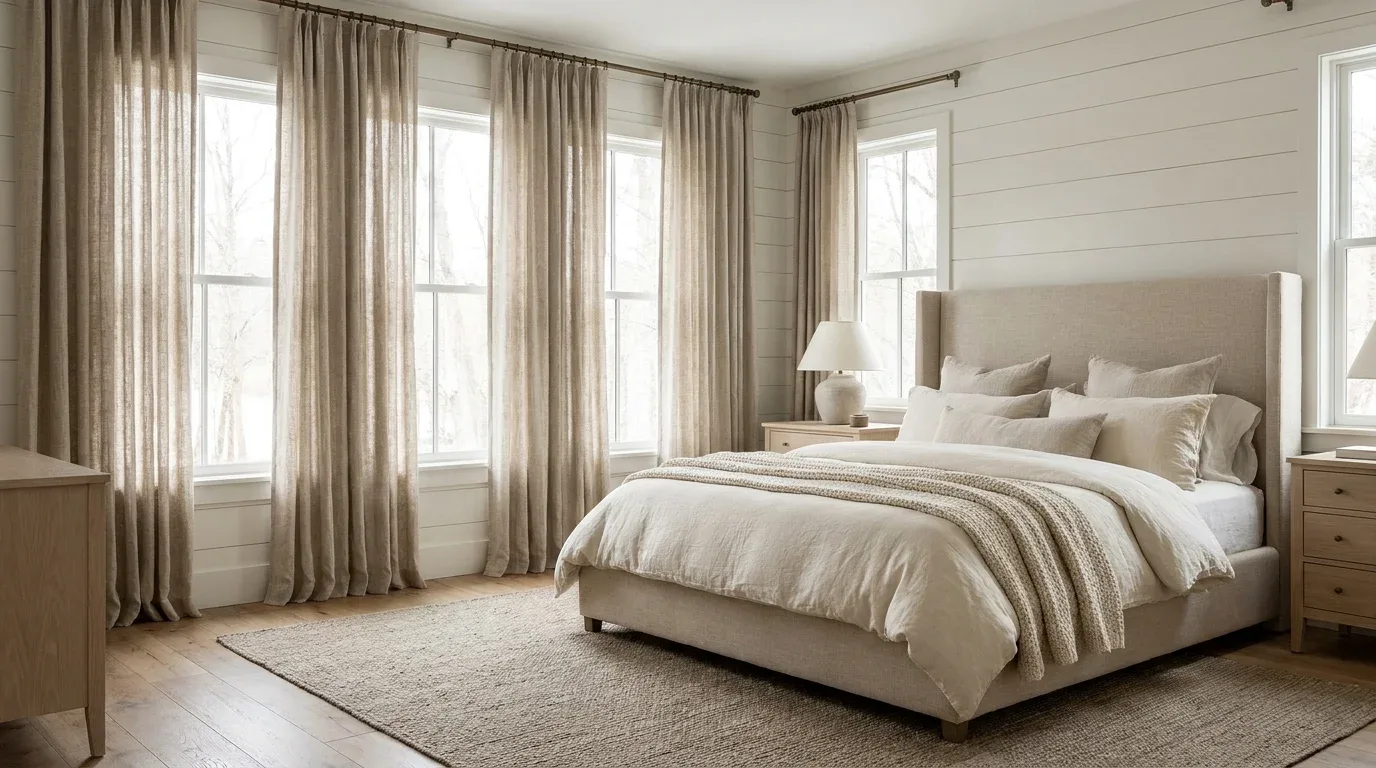
A generous area rug makes a bedroom feel more finished while providing a softer landing for your feet on cold winter mornings. Choose a low-contrast pattern, subtle stripe, or textured neutral design that complements the bedding and furniture. Wool and wool-blend rugs are especially appealing because they offer warmth and a substantial feel underfoot. Position the rug so it extends beyond both sides of the bed and toward the foot, allowing the main furniture arrangement to feel connected. In a smaller room, a carefully sized rug can still create a comfortable border around the bed without covering every inch of flooring. Select a durable material that suits your household’s cleaning needs and daily use.
10. Decorate With Simple Botanical Artwork
Botanical artwork introduces a gentle connection to nature without making the bedroom feel busy. Consider vintage-inspired plant studies, delicate branches, understated landscapes, or abstract botanical prints in muted green, brown, and cream. Place one larger piece above the headboard or arrange two coordinated prints above a dresser. Natural wood frames create a relaxed look, while thin dark frames provide definition against light walls. During winter, artwork featuring branches, grasses, or understated foliage adds organic character without relying on bright seasonal colors. Keep the imagery and framing consistent with the rest of the room so the artwork feels intentional. A single meaningful piece can be more effective than filling every available wall with smaller decorations.
11. Introduce Muted Green Accents
Muted green is a beautiful accent for a warm winter bedroom because it adds color while preserving a natural, calming atmosphere. Sage, olive, eucalyptus, and soft moss shades pair especially well with ivory bedding, oak furniture, and warm beige walls. Introduce green through a pair of pillows, a quilt, a small upholstered chair, or a framed botanical print. If you prefer a subtle look, keep the green limited to one or two elements and repeat it elsewhere through artwork or a small plant. Deeper olive tones create a more grounded, traditional mood, while pale sage feels fresh and airy. The key is to choose a muted shade rather than a highly saturated green that competes with the room’s softer textures.

12. Add a Wooden Bench at the Foot of the Bed
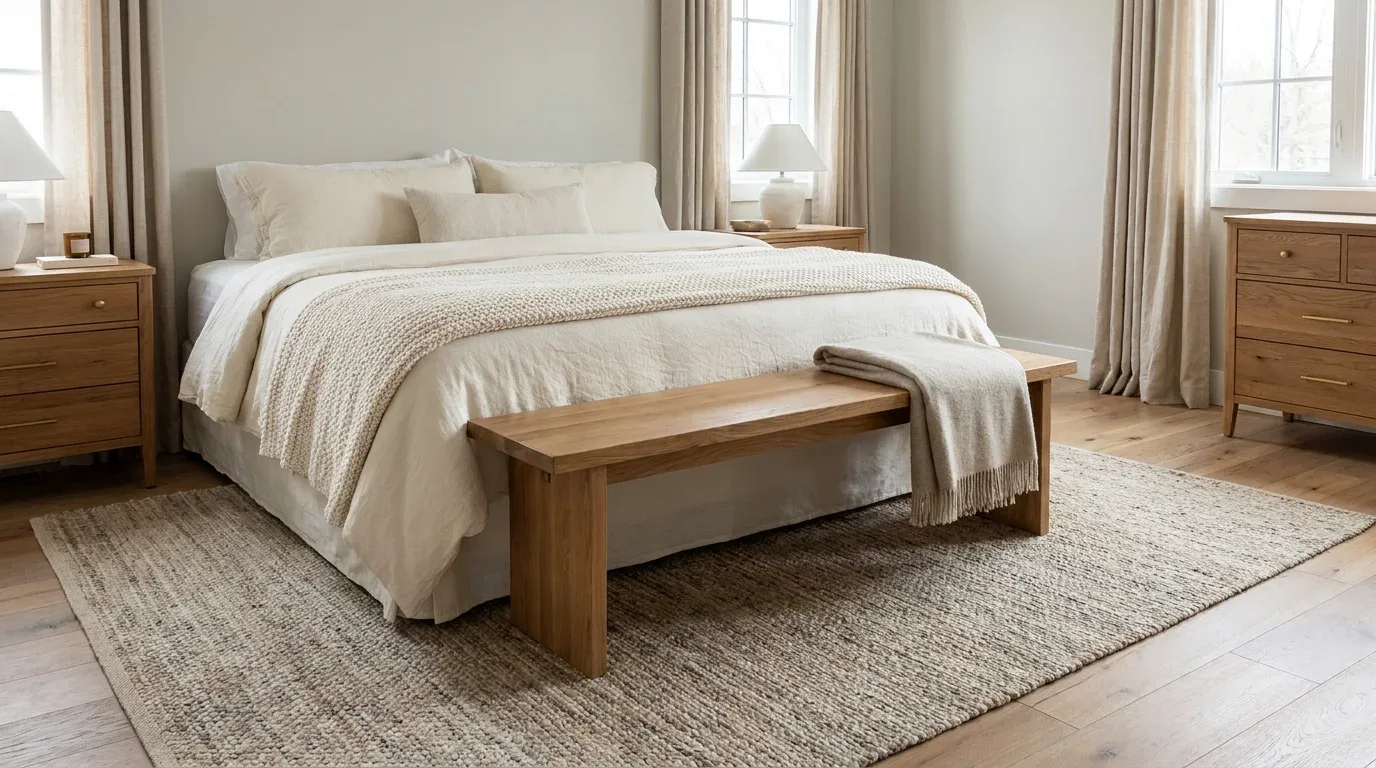
A bench at the foot of the bed adds useful function and gives the room a more thoughtfully furnished appearance. Choose a solid wood bench for a simple, natural finish, or select an upholstered version for extra softness. A woven seat can also introduce texture without making the room feel heavy. Use the bench to lay out tomorrow’s clothes, place an extra winter blanket, or provide a convenient spot for putting on shoes. In a larger bedroom, a longer bench helps balance a substantial bed. In a compact space, choose a narrow design that leaves enough room to walk comfortably. Avoid piling it with too many accessories; a folded throw or one small cushion is usually enough.
13. Style a Dresser With Thoughtful Accessories
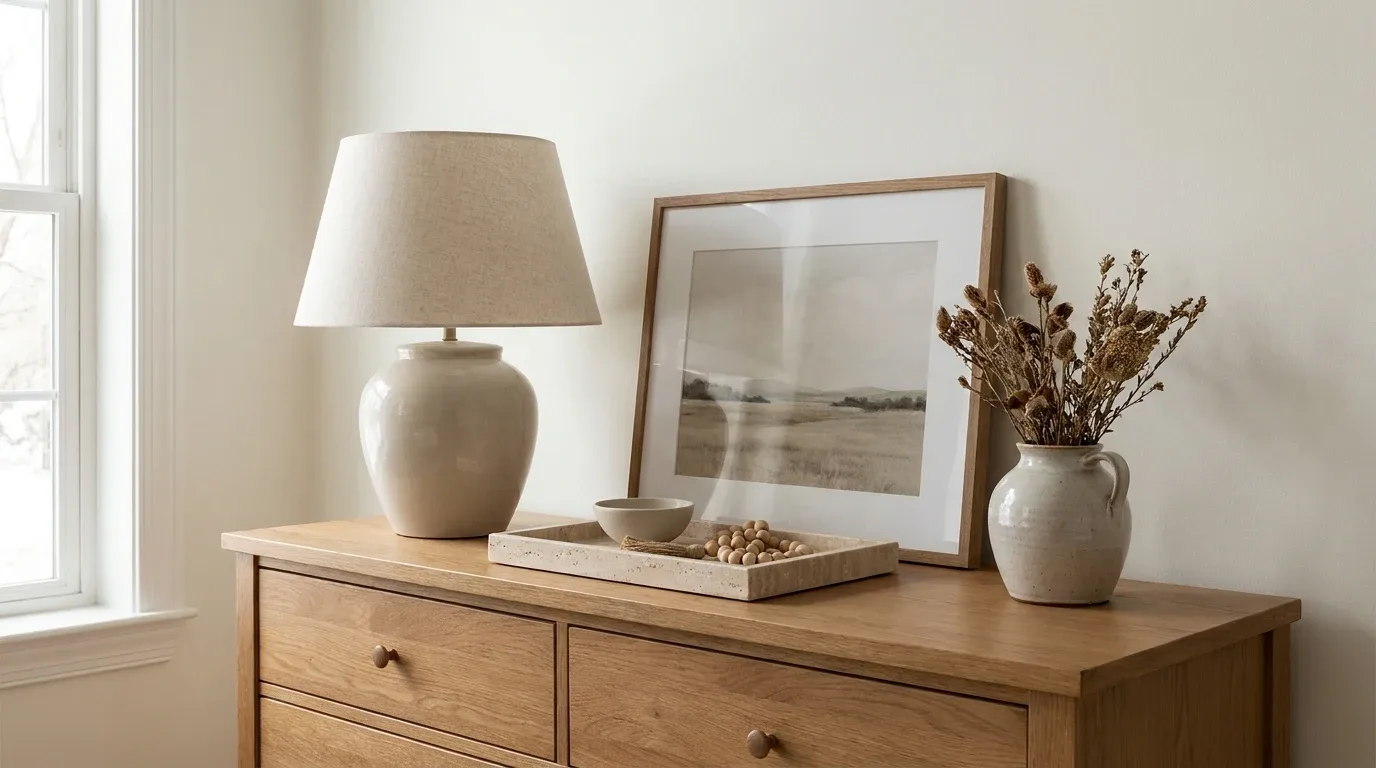
A bedroom dresser offers an opportunity to display a few meaningful decorative pieces while keeping everyday essentials organized. Start with a table lamp, a framed photograph or artwork, and a small ceramic vase. Add a shallow wooden or stone tray to hold jewelry, a watch, or other frequently used items. Vary the height of the objects to create a balanced arrangement, leaving enough empty space to prevent the surface from looking crowded. Warm wood, natural stone, aged metal, and matte ceramics work well together because their finishes complement one another without appearing too coordinated. Keep practical storage in mind, too. Decorative boxes or baskets can conceal small items while maintaining the calm, uncluttered appearance of a winter retreat.
14. Create a Cozy Reading Corner
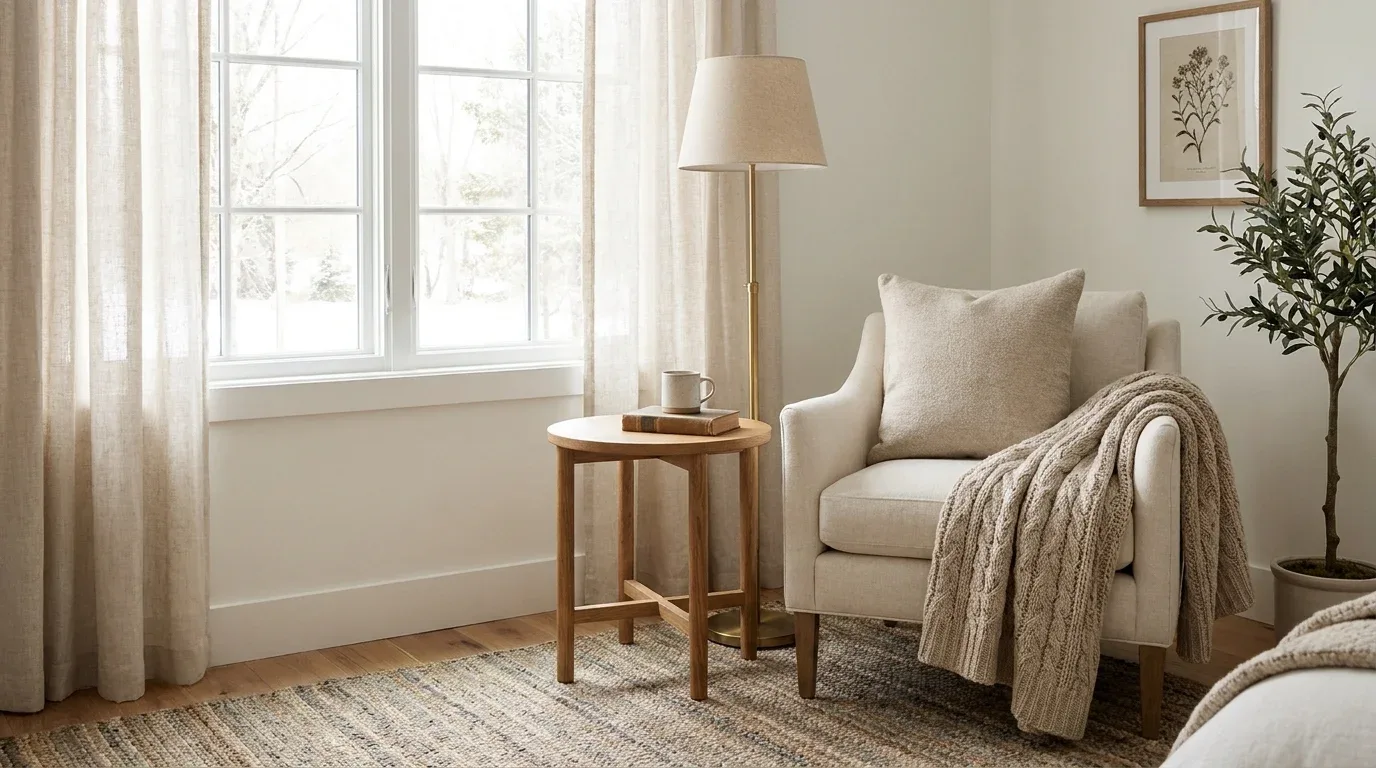
If your bedroom has an unused corner, transform it into a small reading retreat. An upholstered accent chair in cream, taupe, or soft olive can establish a comfortable place to read or enjoy a quiet morning. Add a compact side table for a cup of tea and a book, along with a floor lamp or table lamp that provides suitable reading light. A textured cushion and a soft throw make the chair feel connected to the rest of the room. In smaller bedrooms, choose a streamlined chair with visible legs to preserve a sense of openness. Keep the corner practical rather than filling it with decorative objects. The goal is to create a useful, welcoming space that supports everyday relaxation.
15. Mix Natural Materials for Added Warmth
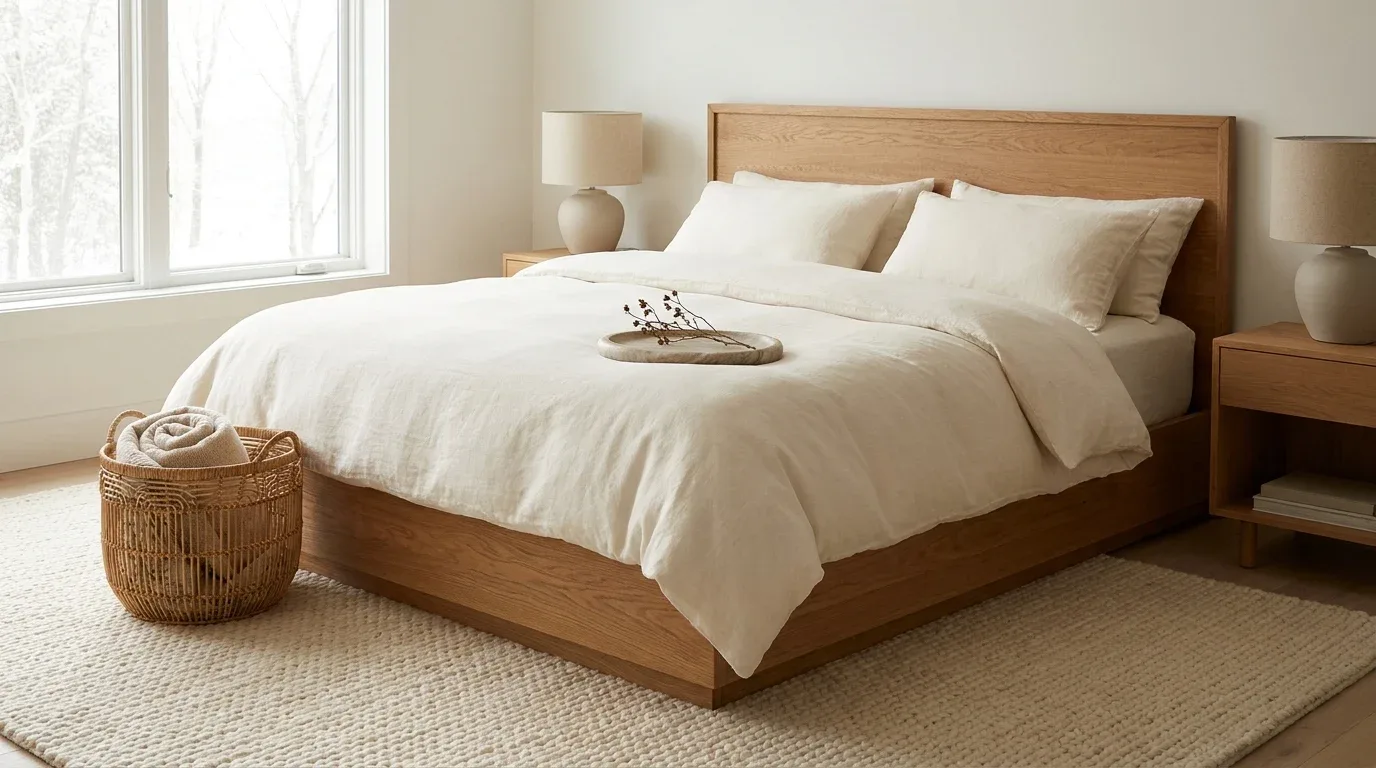
Combining natural materials gives a neutral bedroom depth and prevents the design from feeling flat. Wood, linen, wool, rattan, stone, and ceramic finishes each bring a different texture to the space. For example, pair a wooden bed frame with linen curtains, a wool rug, ceramic lamps, and a woven basket beside a dresser. The combination feels interesting because the materials vary while the colors remain connected. Avoid introducing too many competing finishes at once; three or four main materials are often enough to establish a cohesive look. Repeat selected textures in different parts of the room so the design feels intentional. This layered approach works particularly well in winter, when tactile materials contribute to a sense of comfort.
16. Add Subtle Pattern With Striped or Checked Bedding
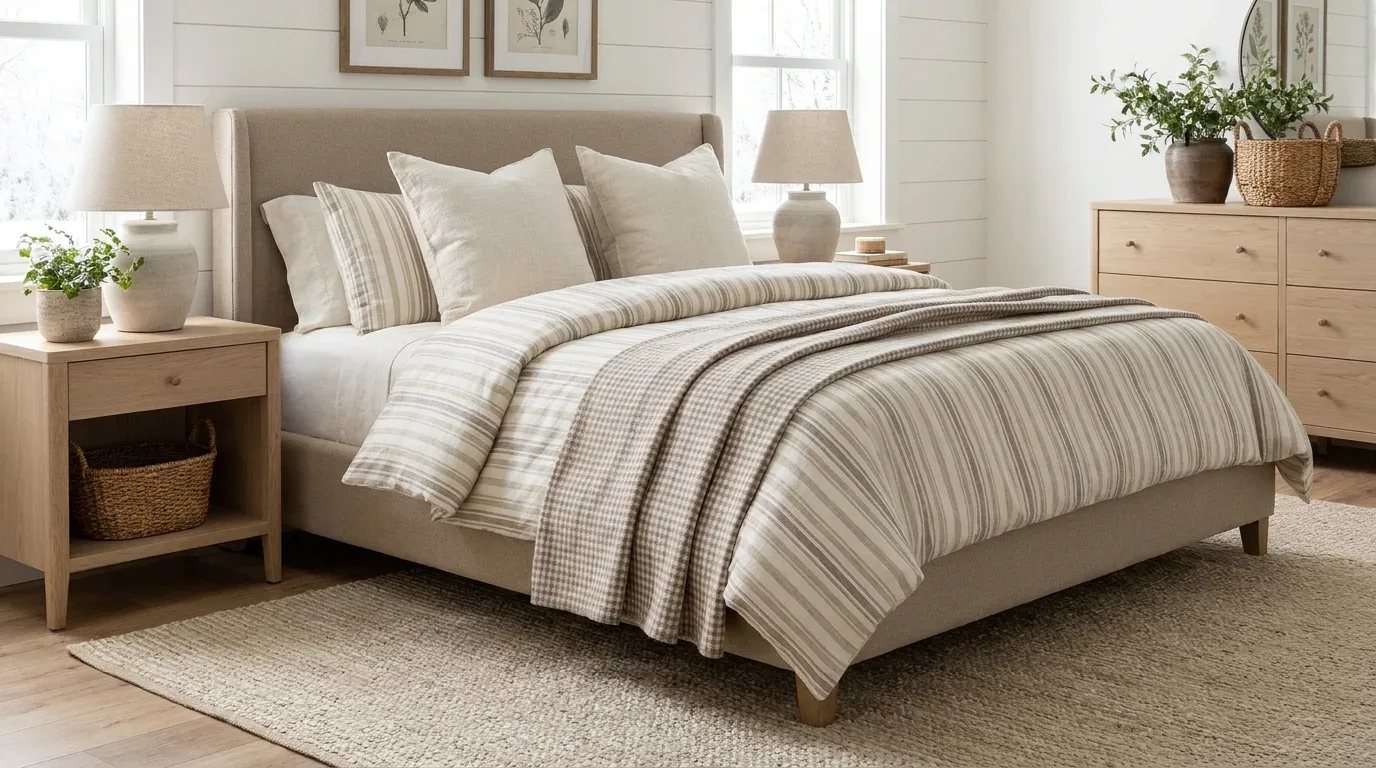
Patterns can bring personality to a Studio McGee-inspired bedroom without sacrificing its calm atmosphere. Thin stripes, understated checks, and delicate woven designs are easy to incorporate because they complement rather than overpower a neutral palette. Try a striped duvet cover with plain pillowcases, or add a checked blanket to an otherwise simple bed. Keep the pattern colors restrained, such as ivory and taupe, cream and soft brown, or white and muted sage. If you want to combine patterns, vary their scale so the result feels balanced rather than busy. For example, a small check can work with a wider stripe when both share similar colors. Finish with solid-textured pillows to give the eye a place to rest.
17. Bring Nature Indoors With Seasonal Branches
Natural branches provide a simple way to refresh a winter bedroom without purchasing elaborate seasonal decorations. Arrange a few bare branches, dried grasses, or eucalyptus stems in a ceramic vase on a dresser or bedside table, provided the arrangement does not interfere with lighting or daily activities. Their organic shapes add height and interest while complementing wooden furniture and textured bedding. For a winter look, choose understated arrangements in brown, muted green, or soft neutral tones rather than brightly colored artificial foliage. Keep the scale appropriate to the furniture so the display does not overwhelm the room. If you prefer low-maintenance decor, dried stems can remain attractive for an extended period and transition easily into early spring styling.

18. Keep the Bedroom Clutter-Free and Personal
A warm bedroom should feel lived-in and welcoming, but visual clutter can make even beautiful furnishings seem less intentional. Use bedside drawers, baskets, closet organizers, and dresser compartments to give everyday items a designated home. Keep the most visible surfaces relatively simple, displaying only pieces that are useful or meaningful. A favorite photograph, a treasured book, or a handmade ceramic bowl can add personality without disrupting the overall design. Leave some open space on nightstands and dressers to preserve a sense of calm. Before adding another decorative item, consider whether it contributes color, texture, function, or personal meaning. This thoughtful approach captures the spirit of timeless interiors: a room that feels beautiful because every element has a purpose.
How to Bring the Studio McGee Winter Bedroom Look Together
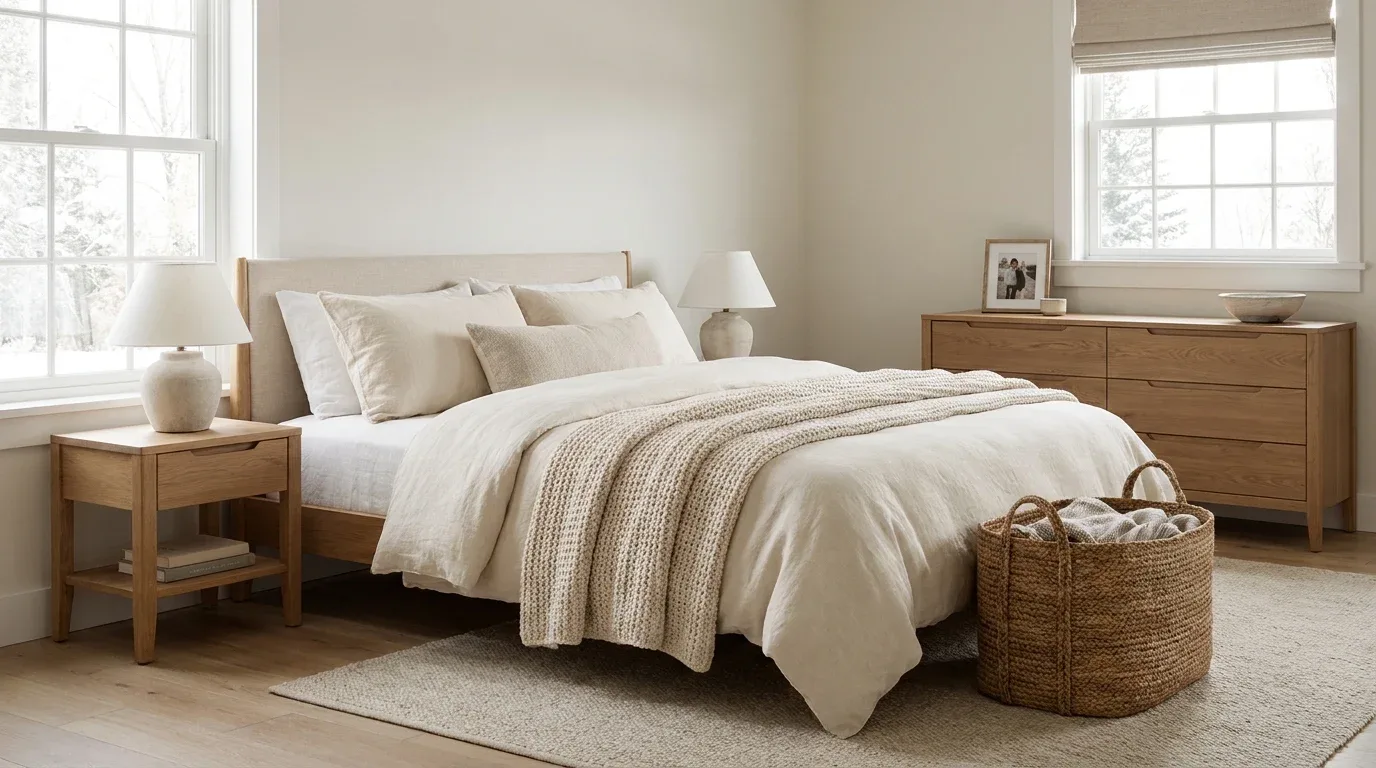
Creating a warm, Studio McGee-inspired bedroom is less about buying matching furniture and more about combining comfortable materials, natural finishes, and a balanced color palette. Begin with the bed, using layered neutral bedding and a textured throw to establish the room’s main colors. Add warm wood, soft lighting, and full-length curtains to make the space feel inviting. Then introduce a few finishing touches, such as botanical artwork, muted green accents, or seasonal branches.
You do not need to change everything at once. Start with affordable updates, such as replacing pillow covers, adjusting your lighting, or adding a rug. Choose each new piece to complement what you already own. With a thoughtful mix of texture, function, and personal details, your bedroom can become a comfortable winter retreat that remains stylish throughout the year.