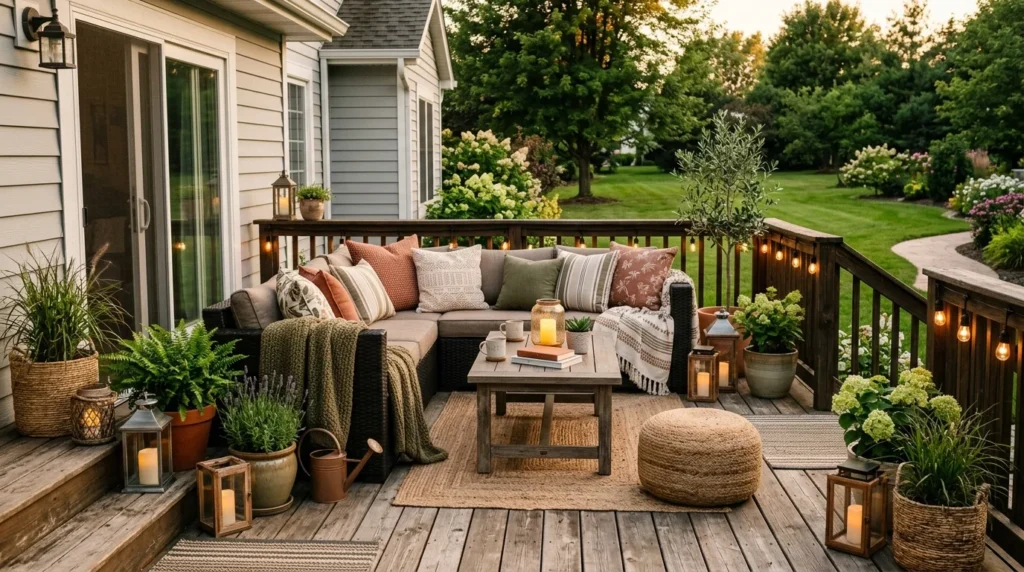
A backyard deck can make an outdoor space feel more finished, functional, and inviting without requiring a huge renovation budget. The key is to focus on smart design choices rather than expensive materials or elaborate construction. From simple ground-level platforms and painted deck boards to built-in seating and budget-friendly lighting, small upgrades can create a surprisingly polished result. Whether you are building a new deck or refreshing an existing one, there are plenty of ways to stretch your budget while still creating a space that feels intentional. These backyard deck ideas combine practical improvements with attractive details, making them useful for small yards, family spaces, entertaining areas, and relaxed outdoor retreats.
1. Build a Simple Ground-Level Deck
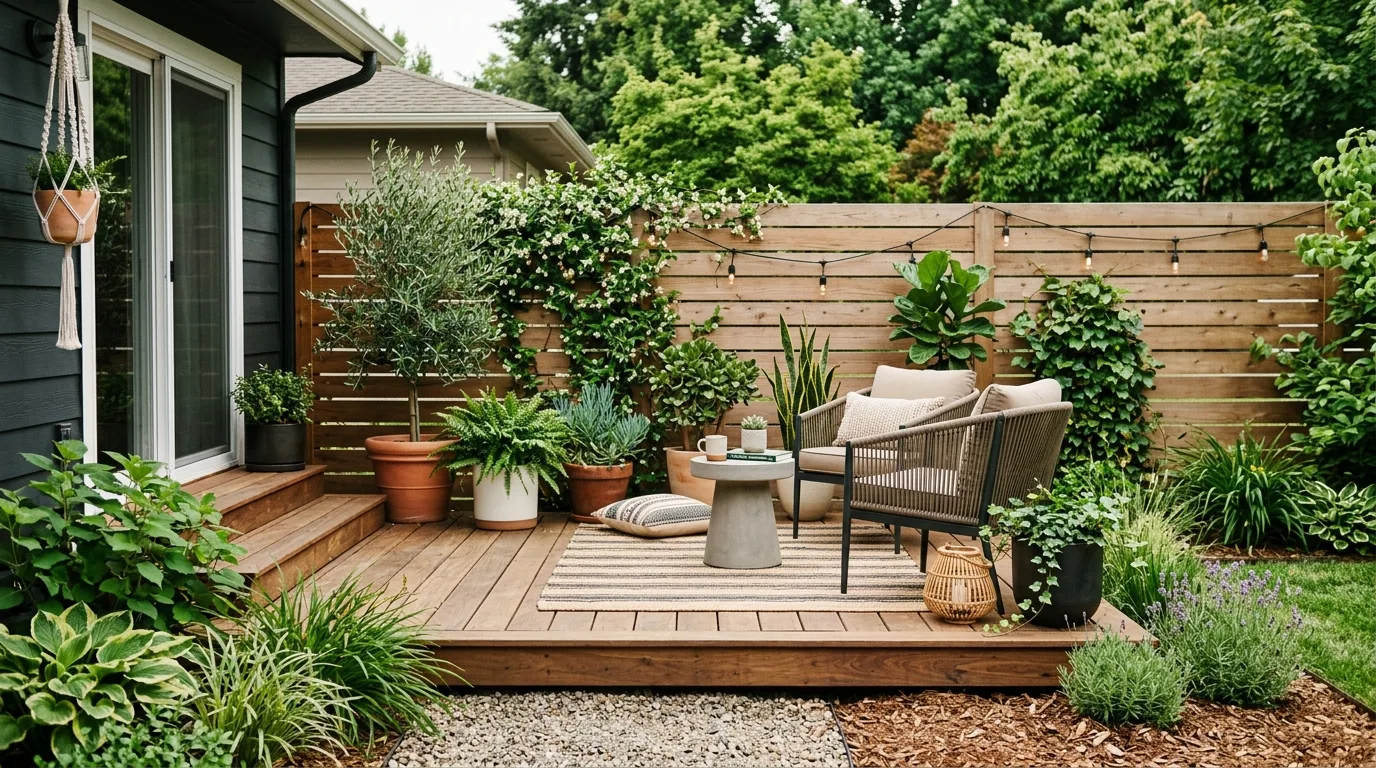
A ground-level deck is one of the most budget-friendly ways to add usable outdoor living space because it typically requires fewer materials and less complex structural work than an elevated deck. Its low profile can also blend naturally into a backyard, especially around lawns, garden beds, or patios. Keep the shape simple with a rectangle or square to reduce cutting and construction waste. Choose durable pressure-treated lumber for a practical starting point, then protect it with an exterior stain or paint. A few outdoor chairs, a compact table, and potted plants can turn the platform into a comfortable gathering area without requiring expensive built-in features.
2. Refresh an Existing Deck With Paint
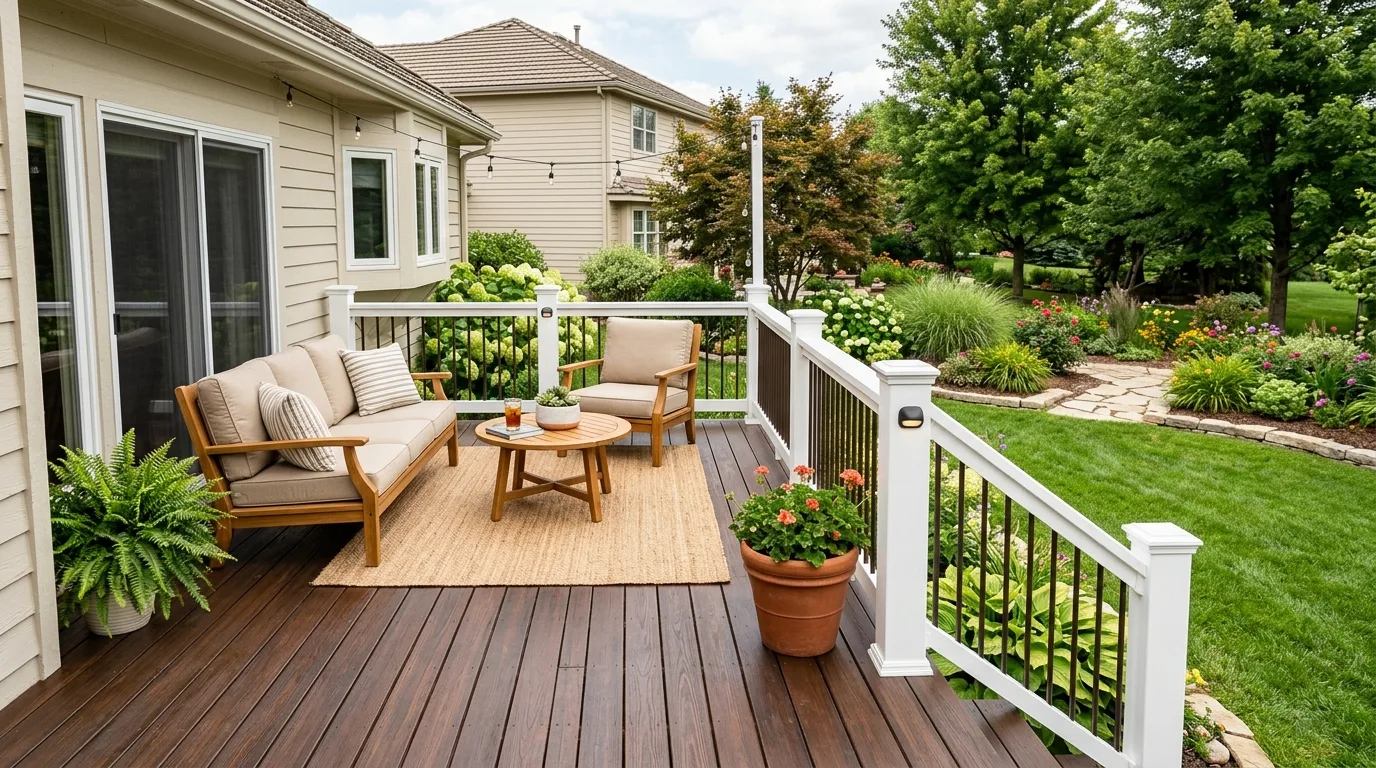
If the structure of your deck is still sound, repainting or staining it can deliver a major visual change for much less than replacing the boards. Choose an exterior product designed specifically for decks and prepare the surface carefully by cleaning, allowing it to dry, and repairing damaged areas first. A classic neutral color can create a modern foundation, while a deeper tone can make furniture and greenery stand out. For additional interest, consider painting the railings a contrasting shade while keeping the floor more subdued. This approach gives an older deck a coordinated appearance and lets you spend your budget on furniture, lighting, or accessories rather than rebuilding.
3. Add a DIY Built-In Bench
Built-in seating can make a deck feel custom without the cost of purchasing several large outdoor furniture pieces. A straightforward bench can be constructed from leftover deck lumber or affordable exterior-grade boards. Place it along one edge of the deck so it does not interfere with the main walking area. Add weather-resistant cushions for comfort and use the space beneath the bench for baskets or outdoor storage containers. A simple wood bench can also double as a visual boundary between the deck and yard. Painting or staining it to match the deck creates a cohesive look, while contrasting cushions provide an inexpensive opportunity to introduce color and personality.
4. Create a Cozy Corner With a Small Bistro Set
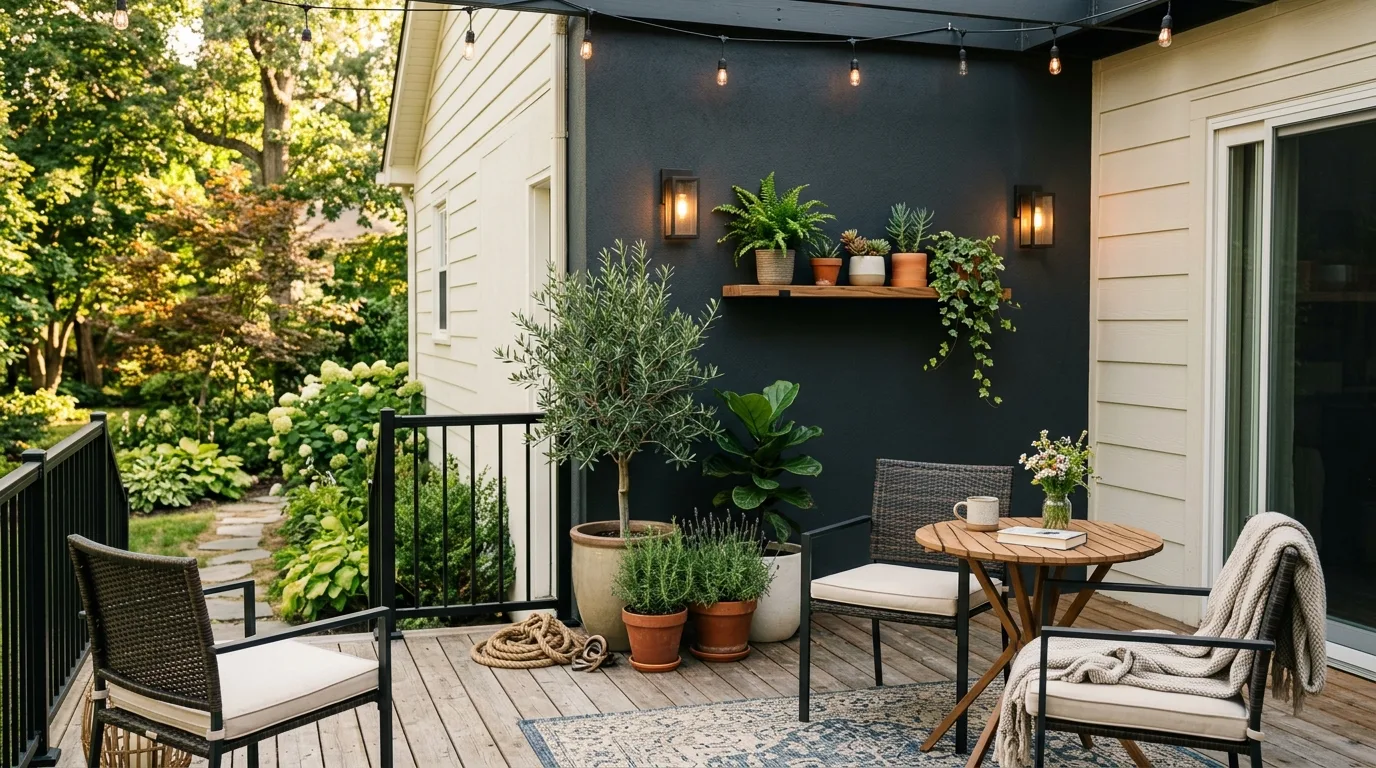
You do not need a large dining set to make a deck useful. A compact bistro table with two comfortable chairs can create a dedicated spot for morning coffee, reading, or casual conversations. This idea works particularly well on smaller decks where full-size furniture would make the space feel crowded. Look for simple metal, wood, or weather-resistant composite pieces that can withstand outdoor conditions. Position the set near a railing or corner and soften the area with a small outdoor rug and a few containers of greenery. Because the furniture occupies a limited footprint, you can reserve the rest of the deck for movement, gardening, grilling, or entertaining.
5. Use String Lights for Affordable Ambiance
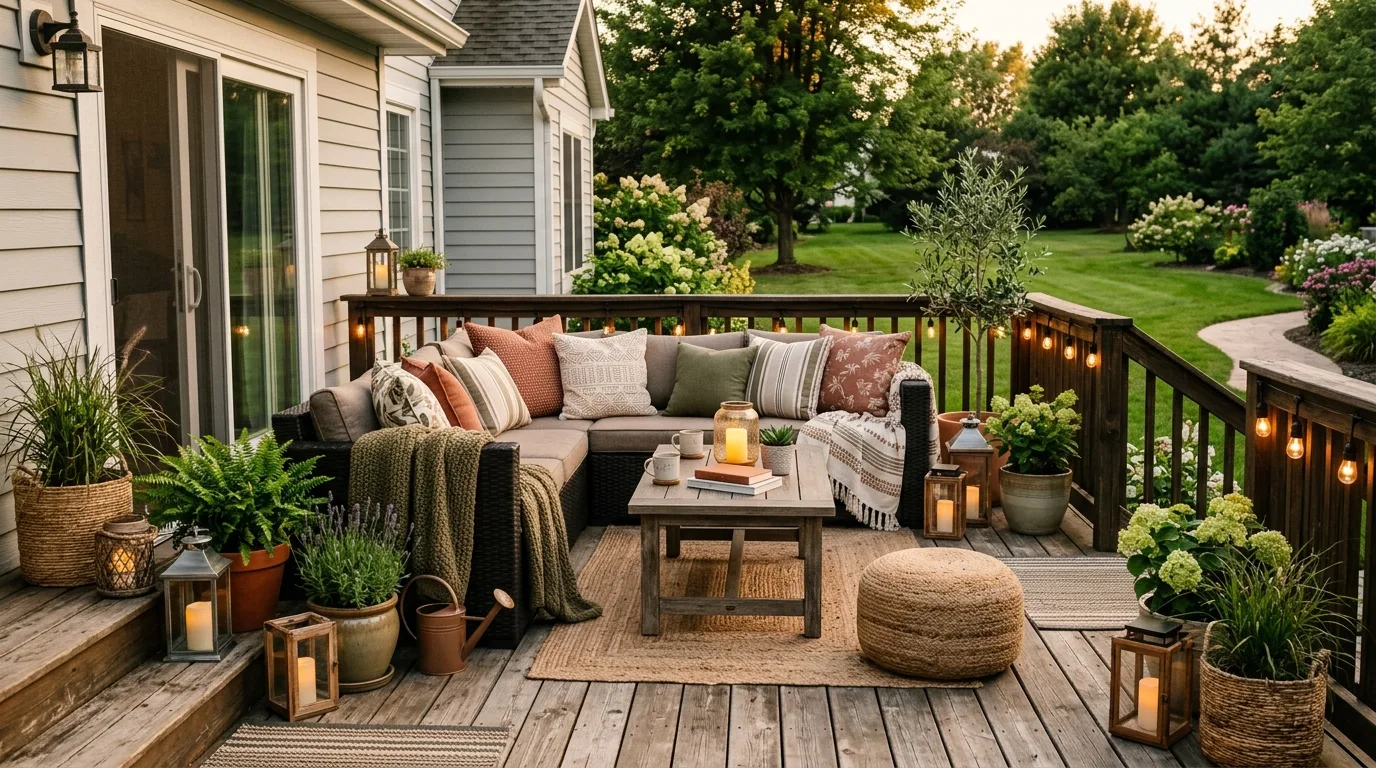
Outdoor string lights are one of the easiest ways to make a basic deck feel welcoming after sunset. Instead of installing expensive permanent lighting, attach weather-rated lights along railings, posts, or a simple overhead support system. Warm white bulbs tend to create a relaxed atmosphere without overwhelming the space. Keep the layout neat by following the deck’s edges or creating one clean line overhead. Solar-powered options can reduce the need for electrical connections, while plug-in versions are useful when a reliable power source is available. Pair the lighting with candles or lanterns on the table for layered illumination that makes an inexpensive deck feel much more finished.
6. Add a Budget-Friendly Privacy Screen
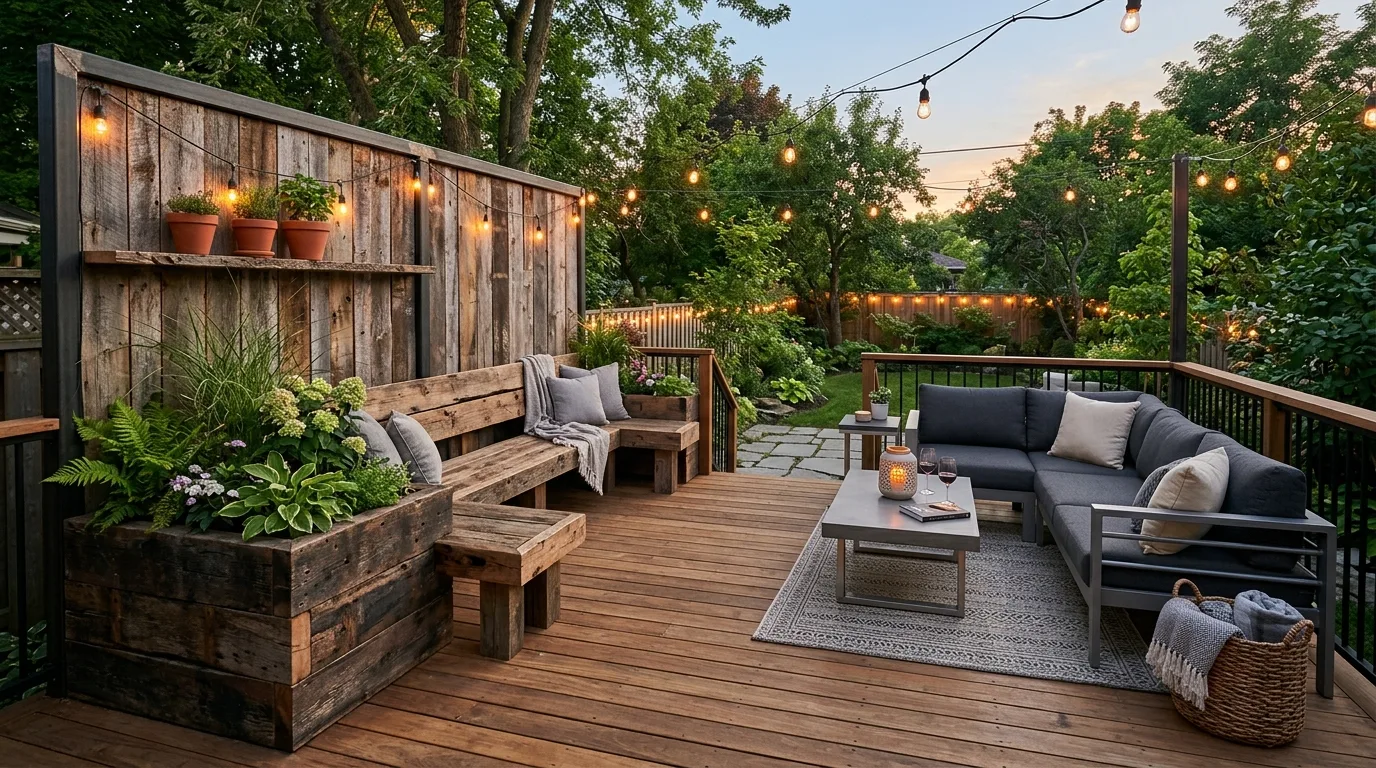
A privacy screen can make a backyard deck feel more secluded, particularly when neighboring homes are close together. You do not need to build a solid wall across the entire deck. Instead, focus on the side where privacy matters most and use inexpensive materials such as wood slats, lattice panels, bamboo screening, or outdoor fabric. Vertical boards spaced evenly apart can create a modern architectural look while still allowing airflow and some natural light through. For an especially budget-conscious solution, attach planters or climbing supports to the screen and let greenery gradually soften it. The result is both functional and decorative, creating a more intimate outdoor retreat.
7. Incorporate Container Gardens
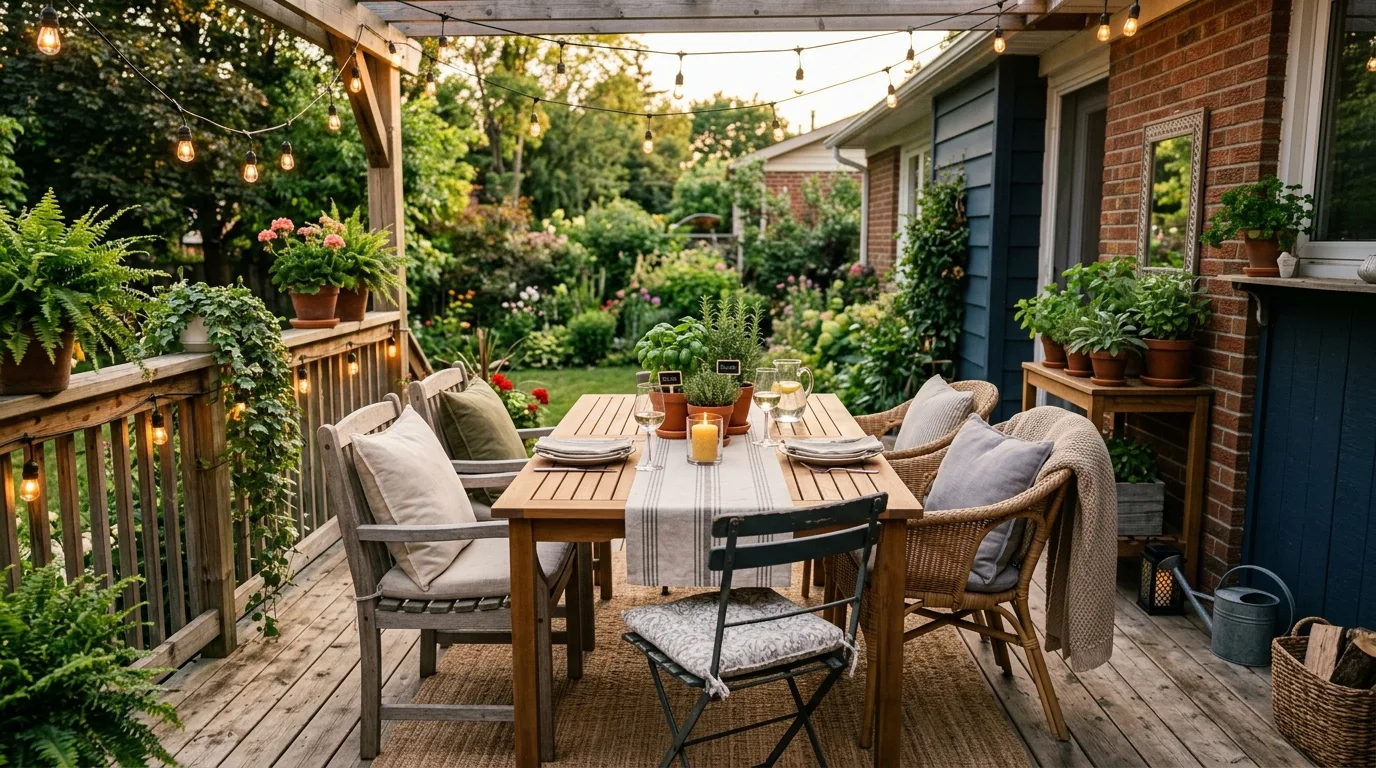
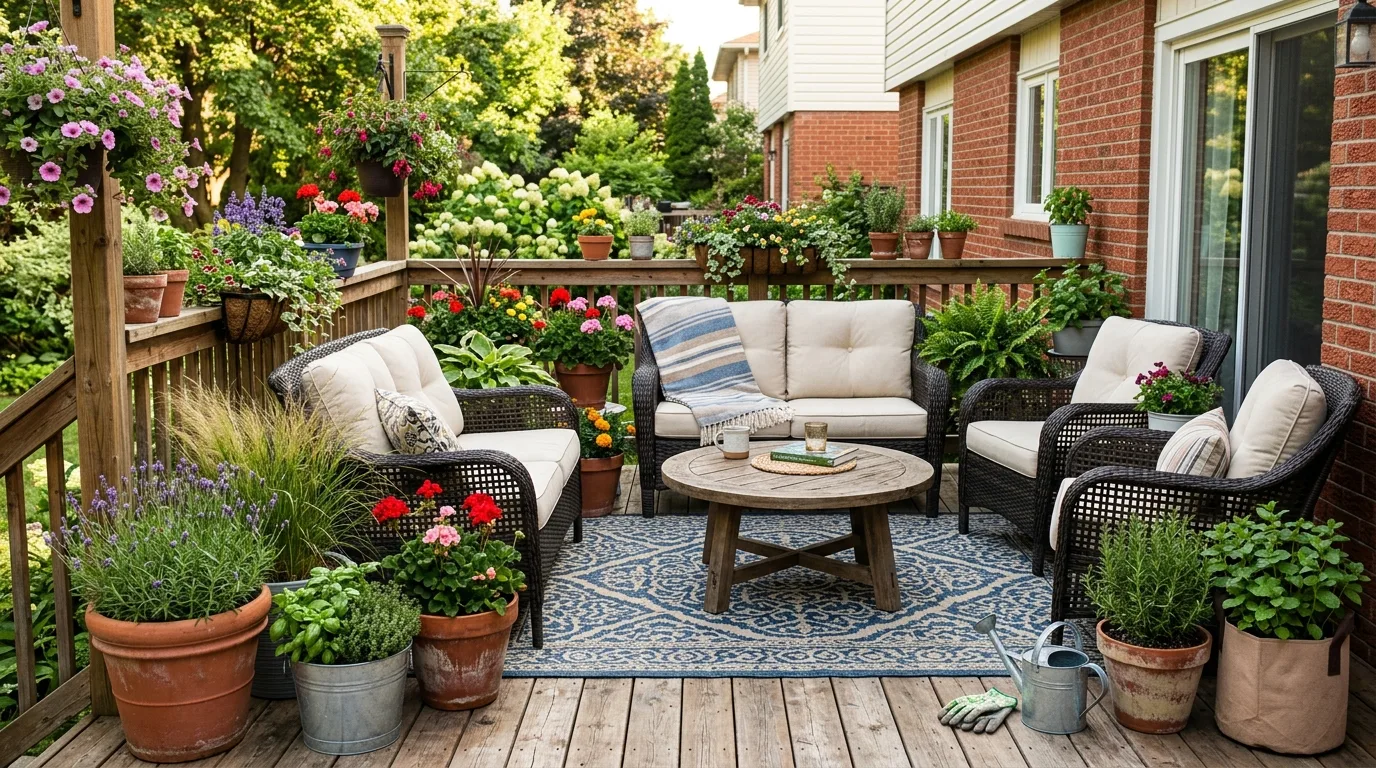
Plants can dramatically improve a deck without requiring expensive landscaping work. Use a mix of containers in different sizes to bring flowers, herbs, ornamental grasses, or compact shrubs into the space. Instead of buying matching planters, combine affordable pots and refresh them with exterior paint for a coordinated appearance. Place taller plants near corners and lower containers along the edges so the deck remains easy to navigate. Herbs such as basil, mint, rosemary, and thyme can also make the space practical for outdoor cooking. Grouping several containers together creates the impression of a carefully designed garden while keeping the installation flexible and easy to change.
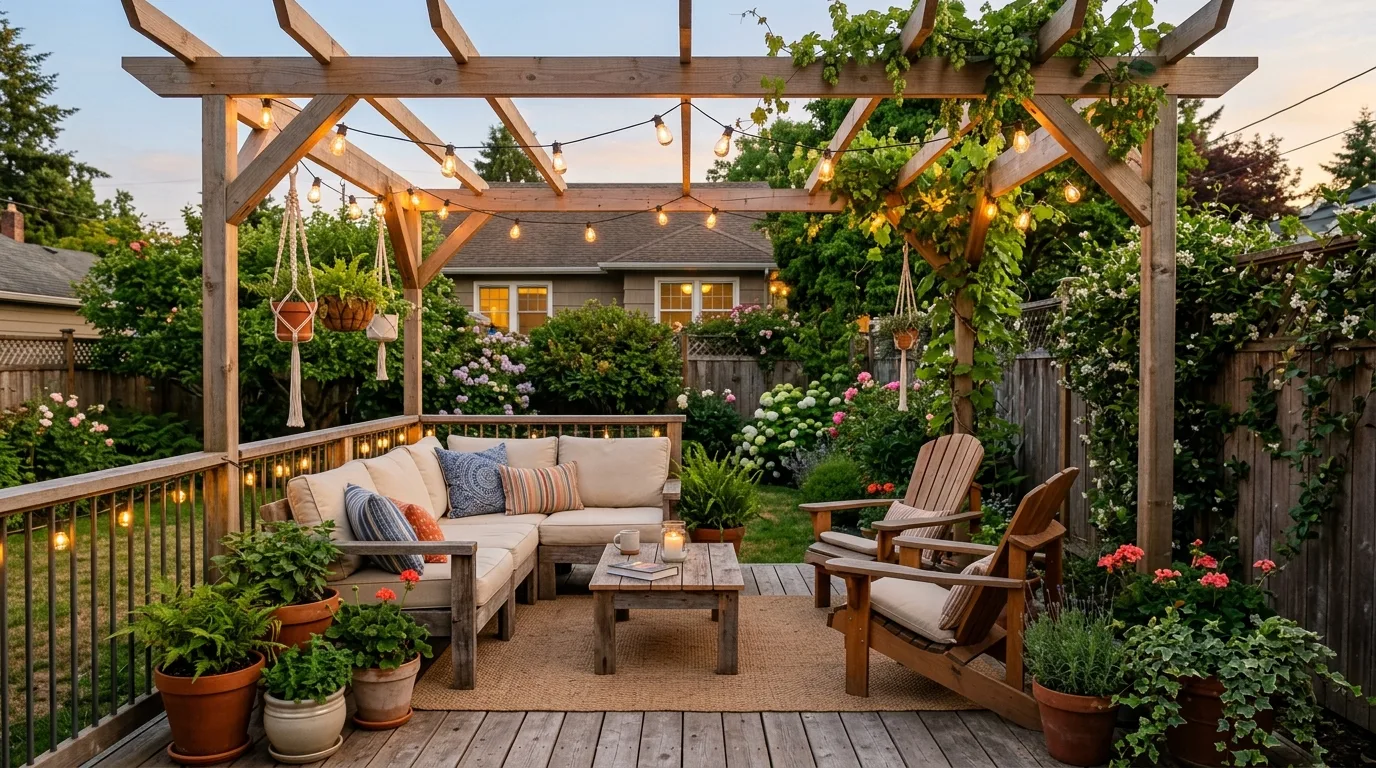
8. Install a Simple Pergola
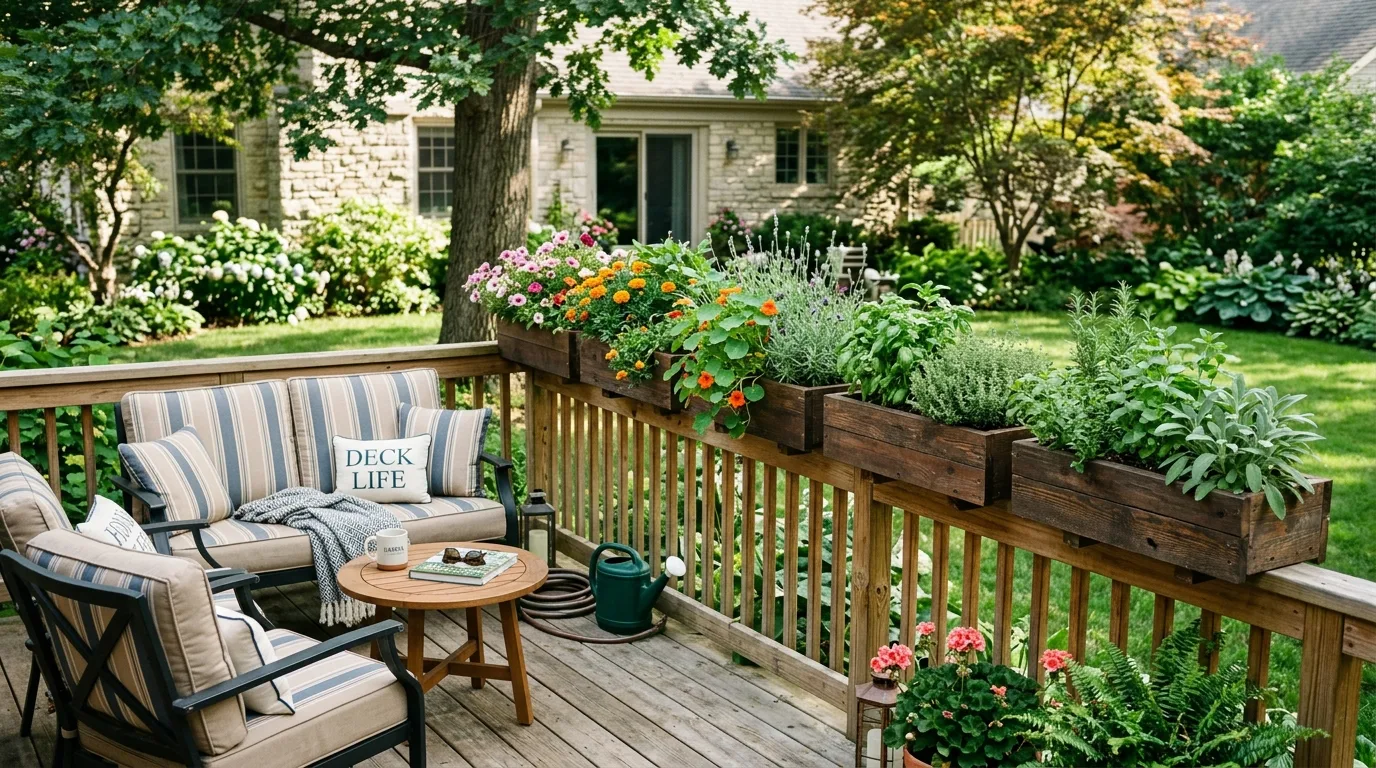
A basic pergola can add shade, structure, and architectural interest to a backyard deck without requiring a fully enclosed roof. Keep the design straightforward with four posts and evenly spaced overhead beams, using appropriately rated outdoor lumber and construction methods for your location. You can leave the top open for filtered sunlight or add inexpensive outdoor fabric for additional shade. Climbing plants can eventually provide another layer of coverage. A pergola also creates a natural framework for string lights, hanging planters, or curtains. If a permanent structure is outside your budget, a smaller pergola over only the seating area can provide much of the same visual impact with fewer materials.
9. Choose Multi-Use Outdoor Furniture
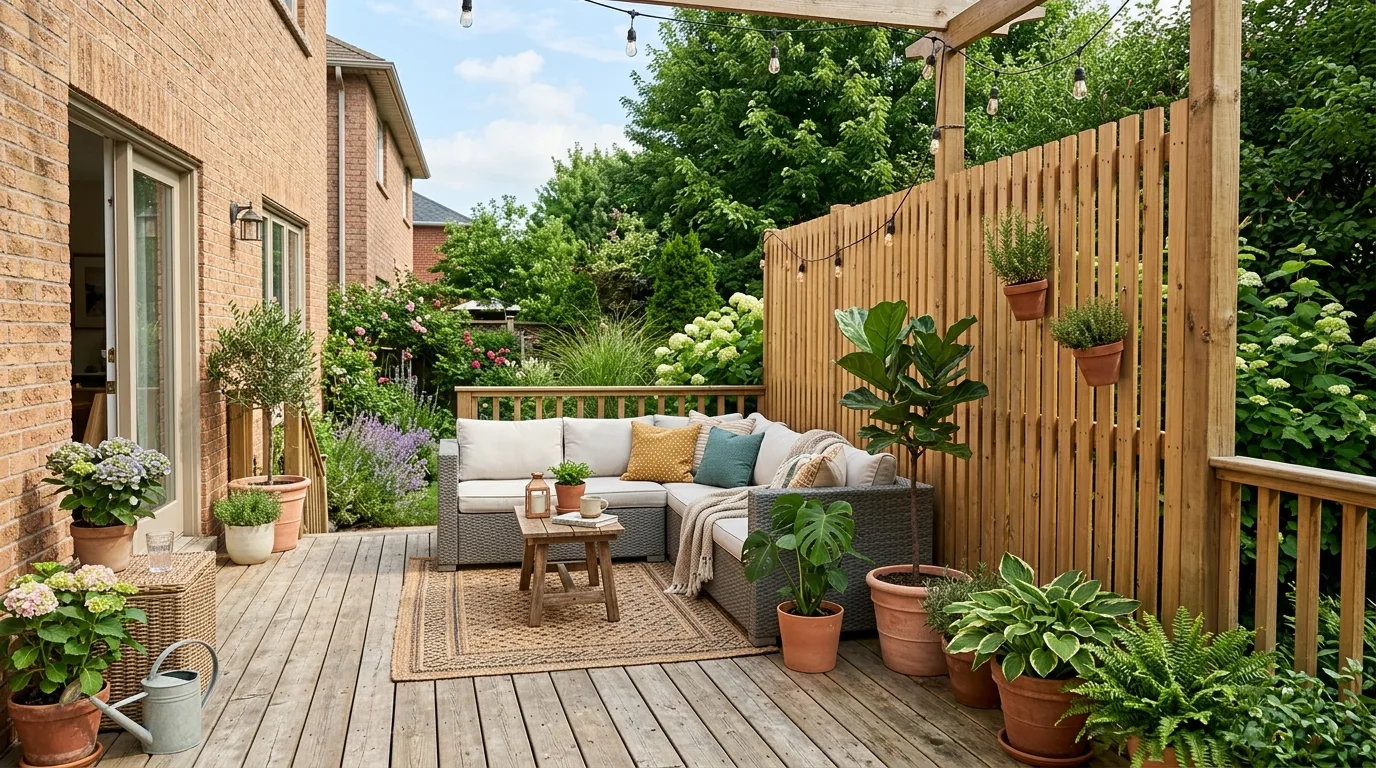
When money and deck space are limited, furniture that serves more than one purpose is especially valuable. Look for benches that include storage, stools that can work as side tables, or nesting tables that can be separated when guests arrive. A sturdy outdoor ottoman can provide extra seating while also functioning as a footrest or temporary table when a tray is added. Keep the furniture arrangement flexible rather than filling every available area. This makes the deck easier to use for different activities throughout the week. Buying fewer versatile pieces can also create a cleaner appearance while leaving more of your budget available for durable cushions and weather-resistant accessories.
10. Add an Outdoor Rug
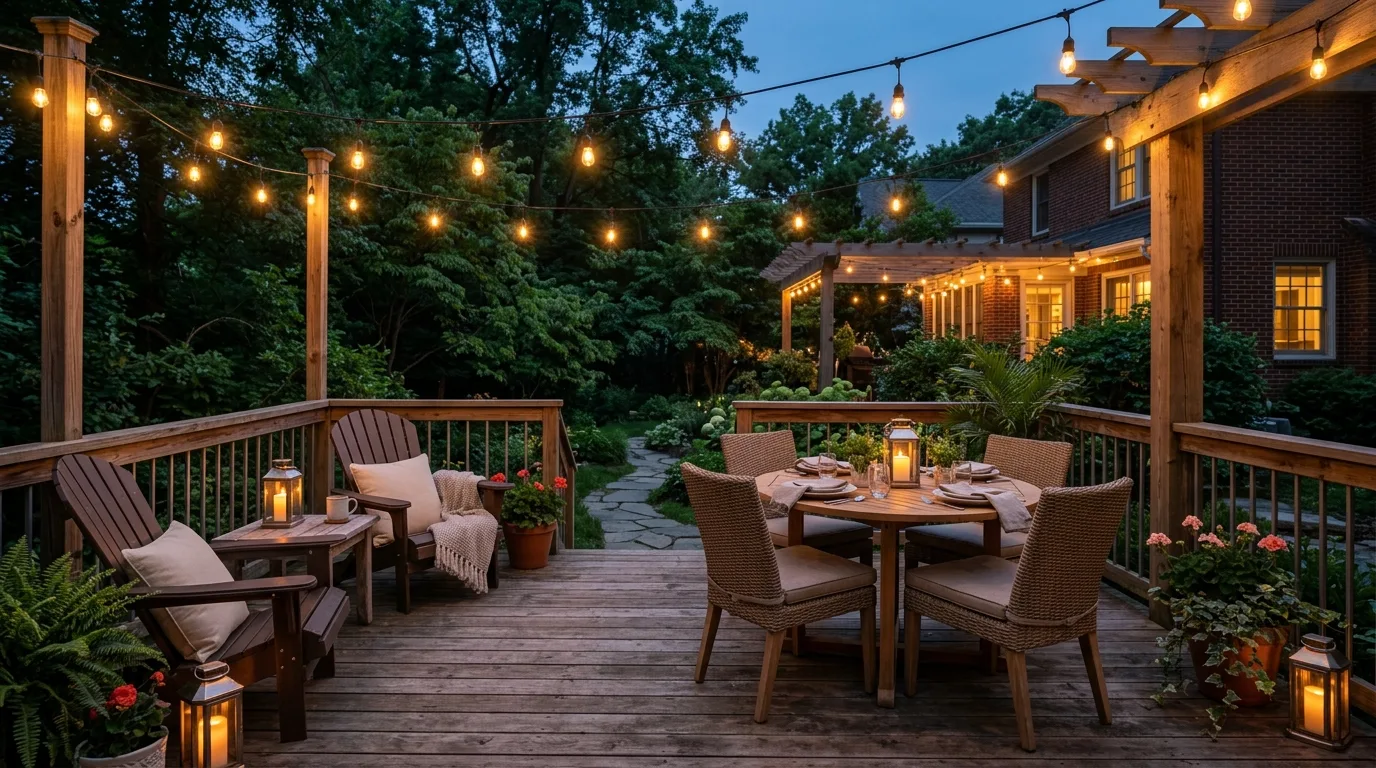
An outdoor rug is a relatively inexpensive way to define a seating or dining zone and make a deck feel more like an extension of the home. Choose a rug made for outdoor use and select a size that fits beneath the main furniture rather than covering the entire deck. Simple geometric patterns can introduce visual interest, while neutral designs provide a quieter foundation for colorful cushions and plants. Rugs can also help visually separate different functions when a deck includes both dining and lounging areas. Because they are easier to replace than flooring, an outdoor rug offers a low-commitment way to update the deck’s style as trends or personal preferences change.
11. Build a Small DIY Planter Box
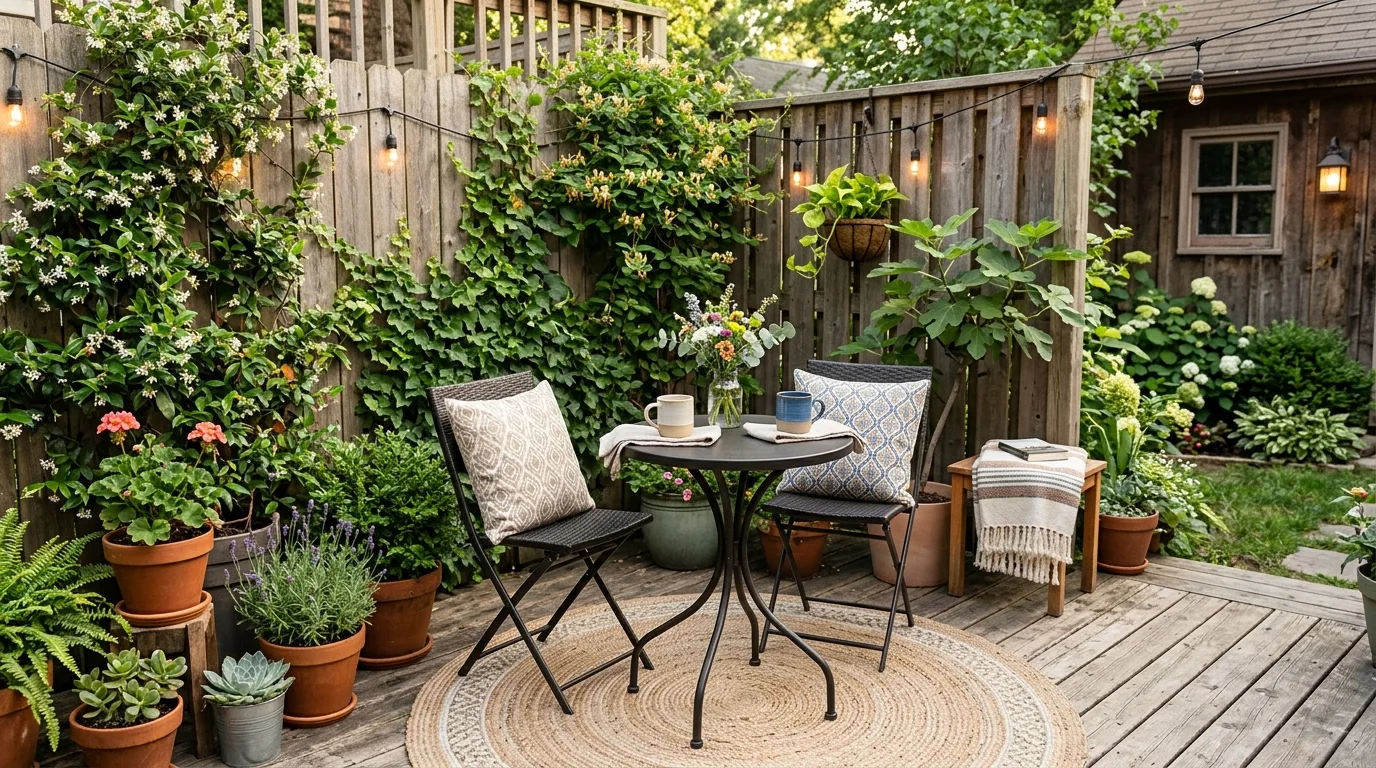
Long planter boxes can add greenery along the edge of a deck while using space that might otherwise go unused. A basic rectangular planter can be made from exterior-rated lumber, cedar, or other suitable materials, with drainage holes that prevent excess water from collecting around plant roots. Position the boxes along railings or corners instead of placing them in the center of the deck. Fill them with seasonal flowers, herbs, or compact foliage plants suited to the amount of sunlight available. A row of matching planter boxes can also create a subtle visual boundary. For a lower-cost approach, build only one or two boxes and repeat the same plant combination for a cohesive effect.
12. Create a Deck Dining Zone
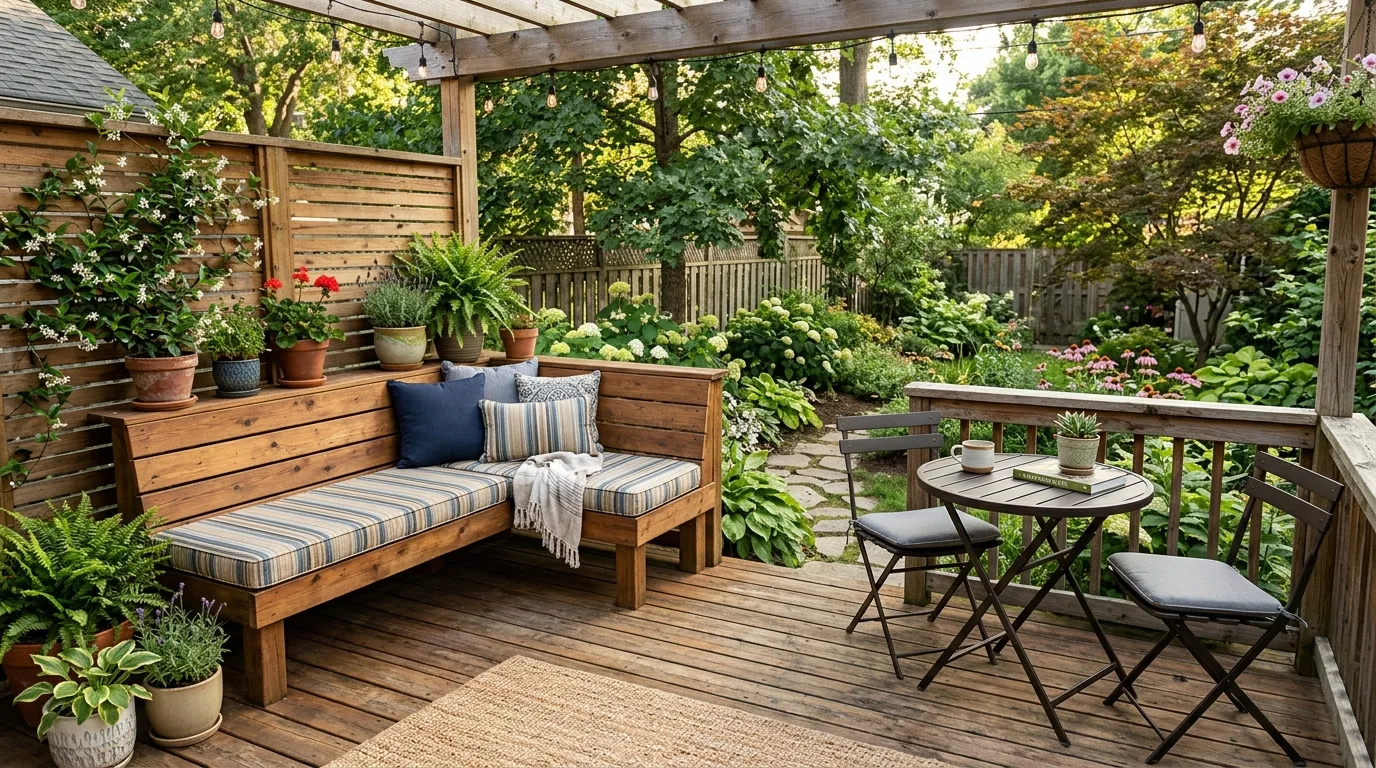
A deck can become an outdoor dining room with surprisingly few additions. Start with a reasonably sized table that fits the available footprint and leave enough clearance for people to pull out chairs comfortably. Instead of investing in a complete matching set, combine a simple table with affordable weather-resistant chairs or benches. Add a washable outdoor table runner, lantern, and a few potted herbs for a finished look. If you frequently host larger gatherings, consider a folding table that can be stored when it is not needed. Keeping the dining area visually simple helps the deck remain functional rather than turning it into a crowded collection of furniture.
13. Use Reclaimed or Leftover Wood Carefully
Reclaimed wood or usable leftover lumber can reduce the cost of decorative deck projects, especially for benches, planter boxes, privacy screens, and small tables. Before using any reclaimed material outdoors, inspect it carefully for rot, structural weakness, nails, chemicals, or treatments that may make it unsuitable for your intended use. For structural components, use materials that are appropriate for the load and local building requirements rather than relying on salvaged boards simply because they are inexpensive. Reclaimed wood works particularly well as an accent because natural variation gives the deck character. Sand rough surfaces, protect the material appropriately, and combine it with simpler new pieces for a balanced, intentional look.
14. Add a Compact Outdoor Bar
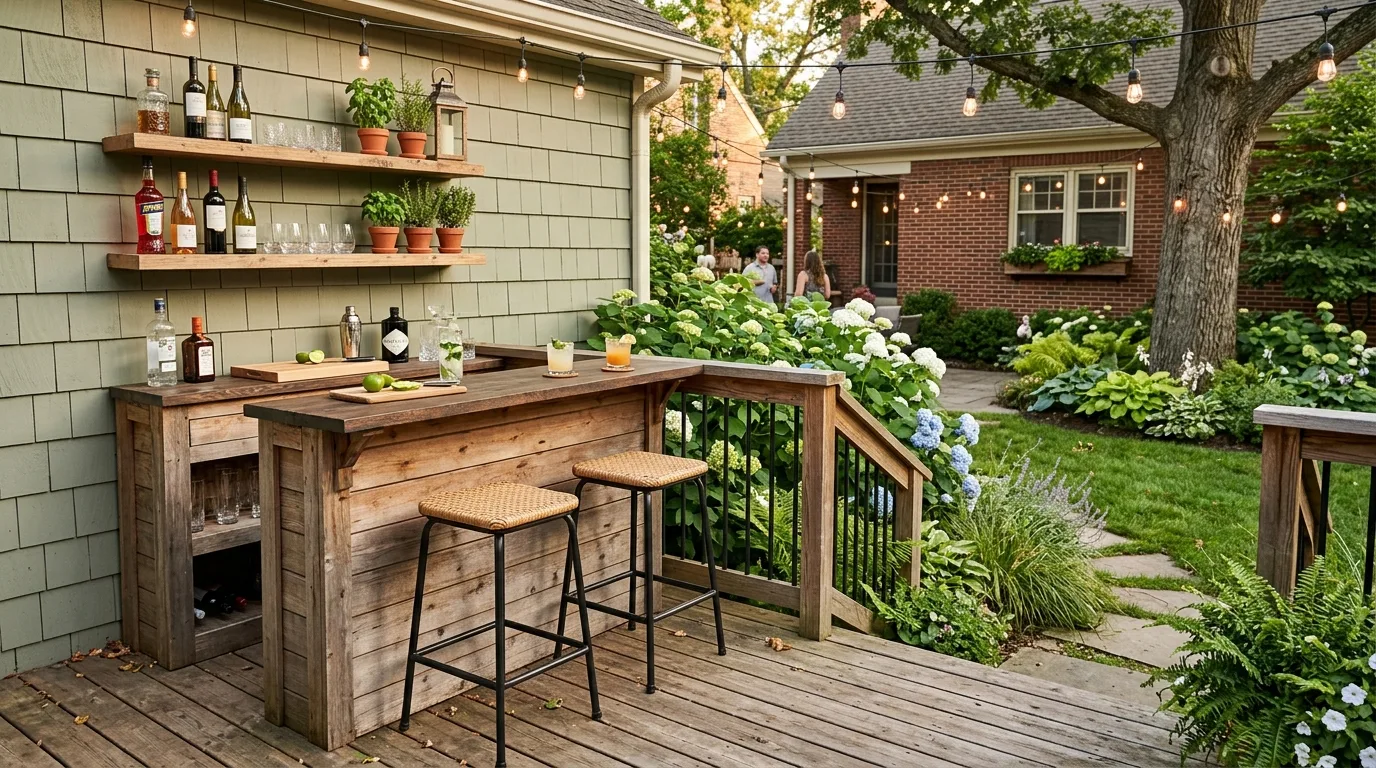
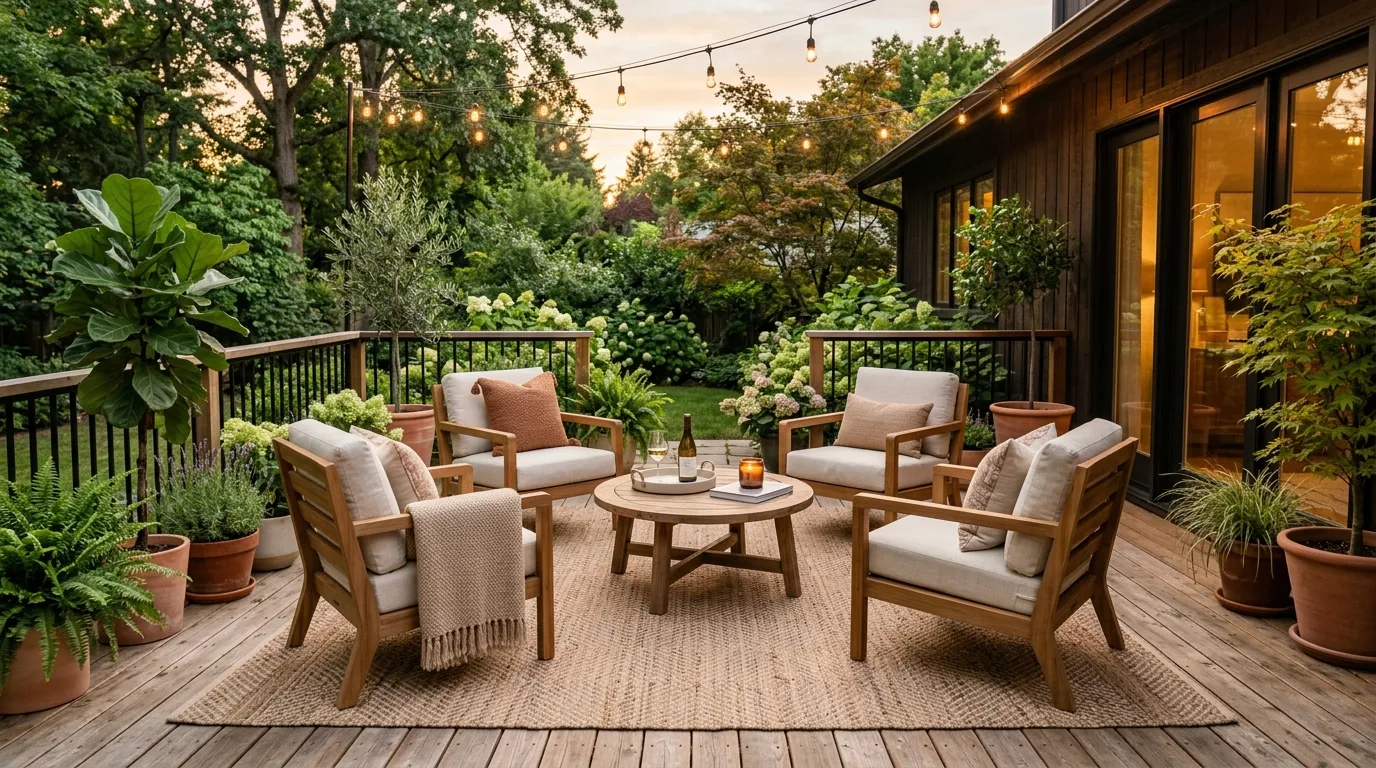
A small outdoor bar can turn a deck into an entertaining area without the expense of a full outdoor kitchen. A narrow counter attached to a wall, railing, or sturdy structure can provide enough surface for drinks, snacks, or serving dishes. Add a few weather-resistant stools underneath and use shelves or a compact cabinet for storage. For a budget-friendly version, repurpose a sturdy outdoor table or build a simple counter from suitable exterior materials. Keep the bar close to the seating area so guests can interact comfortably. The goal is not to replicate an indoor kitchen but to create one convenient surface that makes casual outdoor hosting easier.
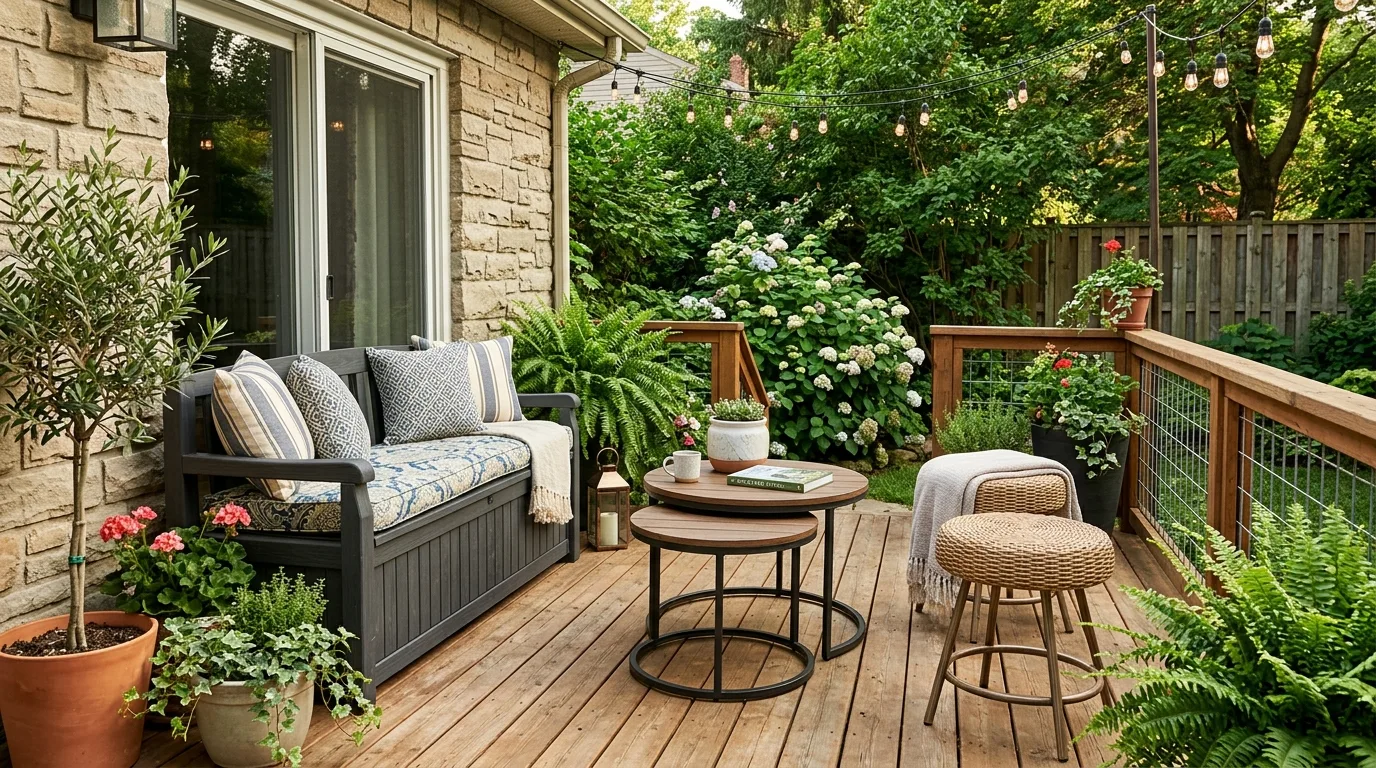
15. Use a Painted Accent Wall
If your deck sits beside an exterior wall, turn that blank surface into a decorative focal point. A properly prepared exterior wall can be painted in a color that complements the deck, furniture, and surrounding landscape. Deep green, charcoal, muted blue, or warm neutral tones can make the outdoor area feel more intentional without adding expensive architectural elements. Before painting, confirm that the surface and coating are suitable for exterior use and local weather conditions. You can also use the wall to support planters, simple artwork intended for outdoor exposure, or mounted lighting. Because the wall already exists, this approach creates visual impact while requiring relatively few additional materials.
16. Make Room for a Portable Fire Pit
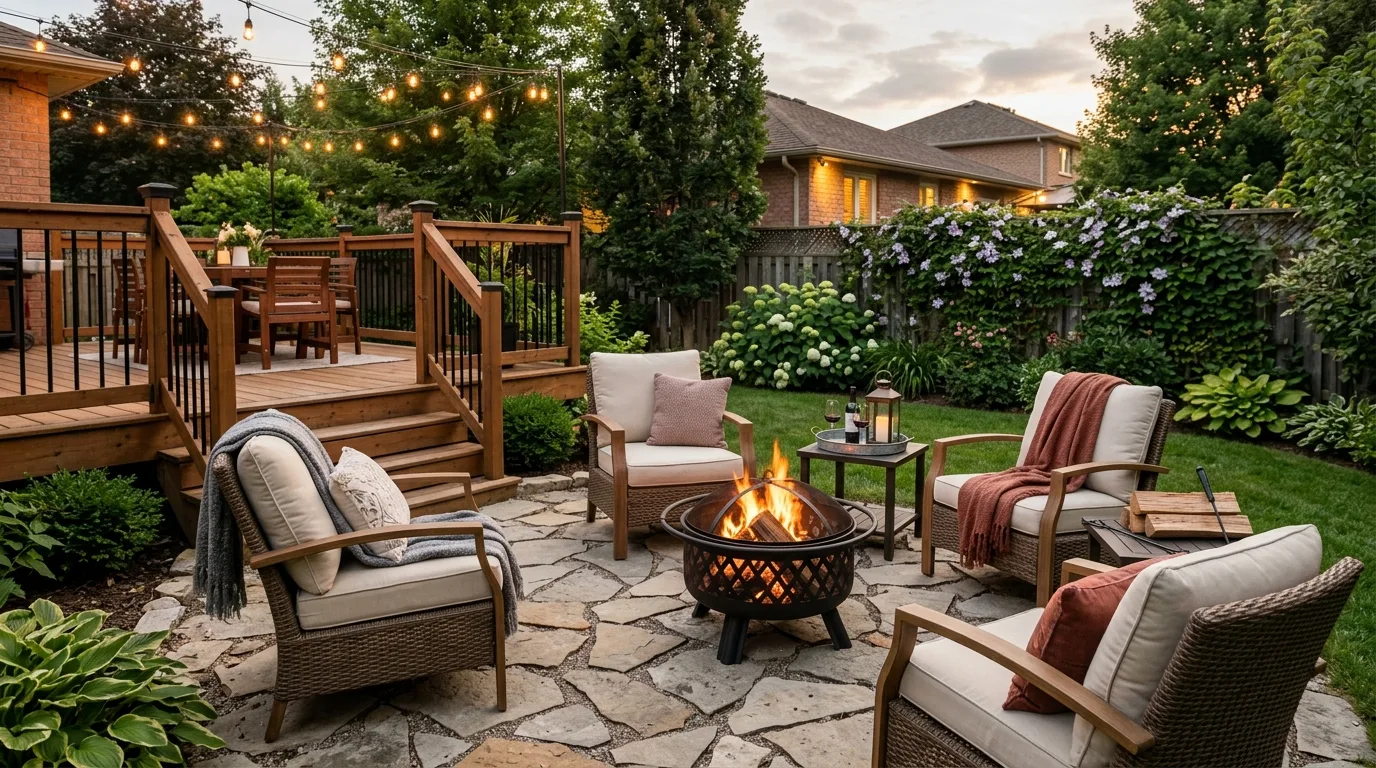
A portable fire pit can make a deck or adjacent backyard area more useful during cool evenings, but safety should determine where and how it is used. Not every deck is appropriate for a wood-burning or propane fire feature, so check manufacturer requirements, local regulations, and the deck material before choosing one. A safer budget approach may be to place an approved fire feature on a suitable noncombustible surface away from combustible structures. Arrange a few movable chairs around the designated area rather than building permanent seating. This gives you flexibility while creating a natural gathering point. Always maintain the required clearances and never leave a fire unattended.
17. Add a Simple Outdoor Kitchen Cart
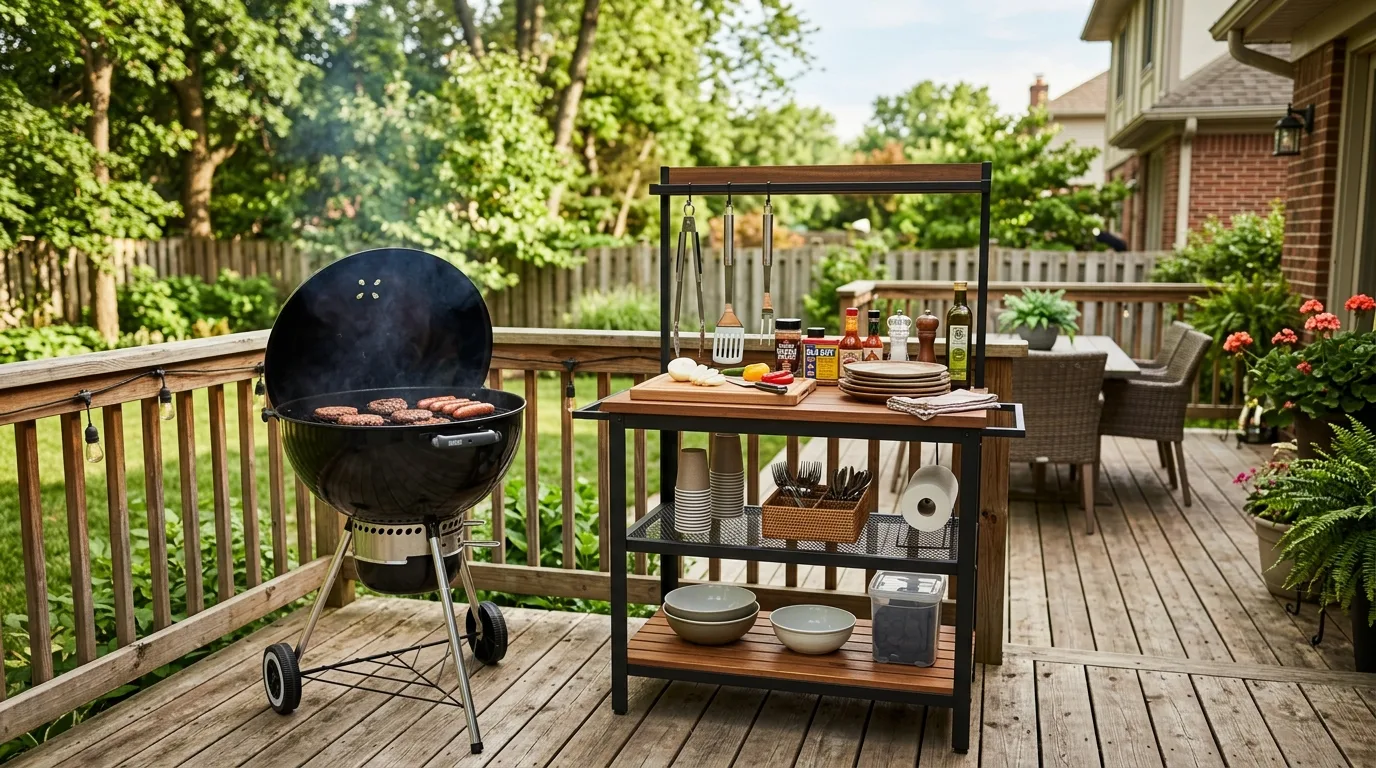
You can make outdoor cooking more convenient without building a costly permanent kitchen. A weather-resistant utility cart can hold grilling tools, plates, seasonings, and other frequently used supplies. Choose a cart with sturdy wheels so it can be moved when the deck needs to serve another purpose. A lower shelf provides useful storage, while a solid top creates additional preparation space. If you already own a suitable cart, upgrading it with outdoor-rated hooks or storage bins can be enough to improve functionality. Keep cooking equipment positioned according to manufacturer instructions and away from combustible surfaces. This approach gives you practical outdoor kitchen organization without committing to a major installation.
18. Finish With Affordable Seasonal Accessories
Once the main deck elements are in place, inexpensive accessories can make the space feel complete. Changeable items such as cushions, throws, table linens, lanterns, and planters allow you to update the deck without altering its permanent structure. Choose a small color palette so different pieces work together instead of buying unrelated decorations. In spring and summer, lightweight textiles and flowering plants can create a fresh atmosphere, while warmer textures and deeper tones can make the deck comfortable in cooler seasons. Store cushions and fabrics properly when weather requires it. By concentrating spending on durable basics and using accessories for seasonal personality, you can keep the deck attractive without repeatedly investing in major renovations.
Make Your Budget Deck Feel Custom
A beautiful backyard deck does not have to depend on expensive materials or elaborate construction. The most effective approach is to prioritize the features that will make the space more useful, then add affordable details that reinforce the overall design. A fresh finish, comfortable seating, greenery, lighting, and thoughtful storage can completely change how a basic deck looks and functions. Before spending, measure the space, set a realistic budget, and separate structural necessities from decorative upgrades. With a few well-chosen improvements, even a modest deck can become a comfortable outdoor destination for relaxing, dining, gardening, and entertaining.