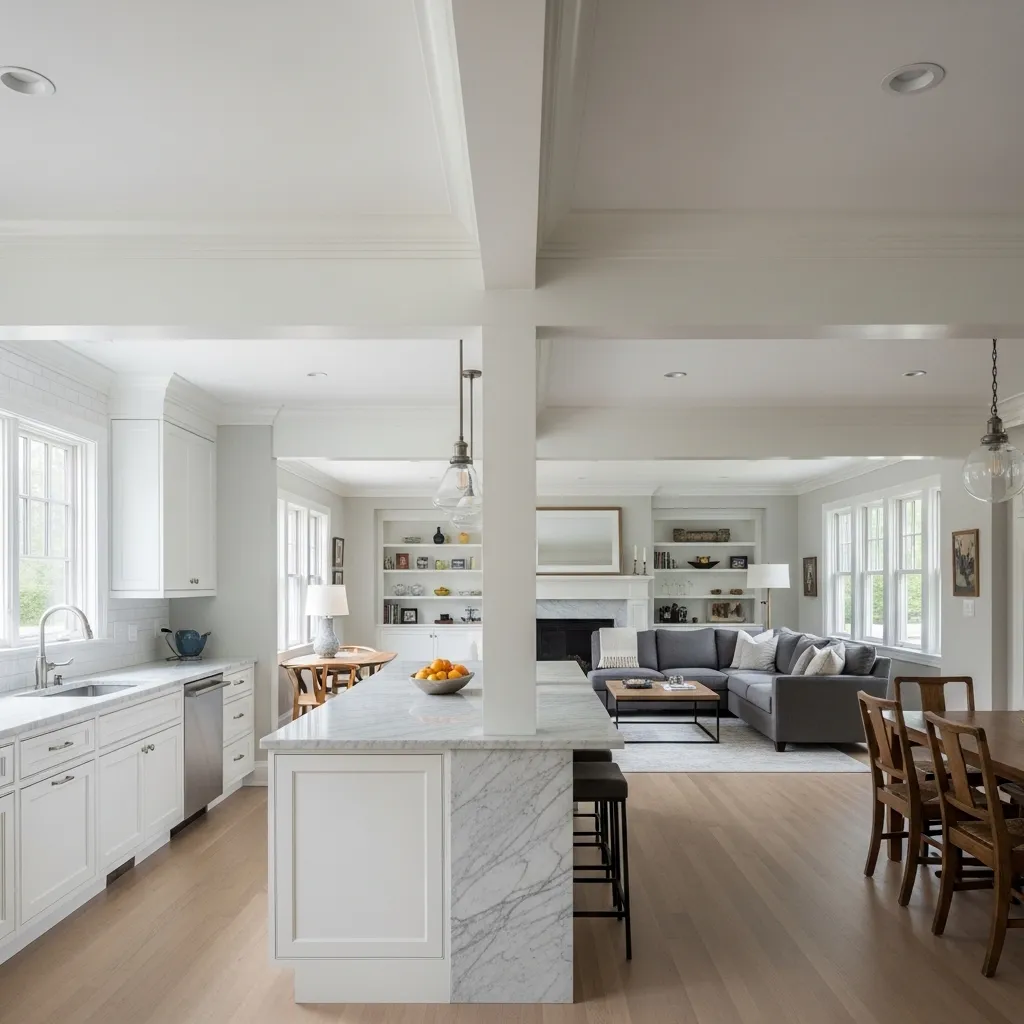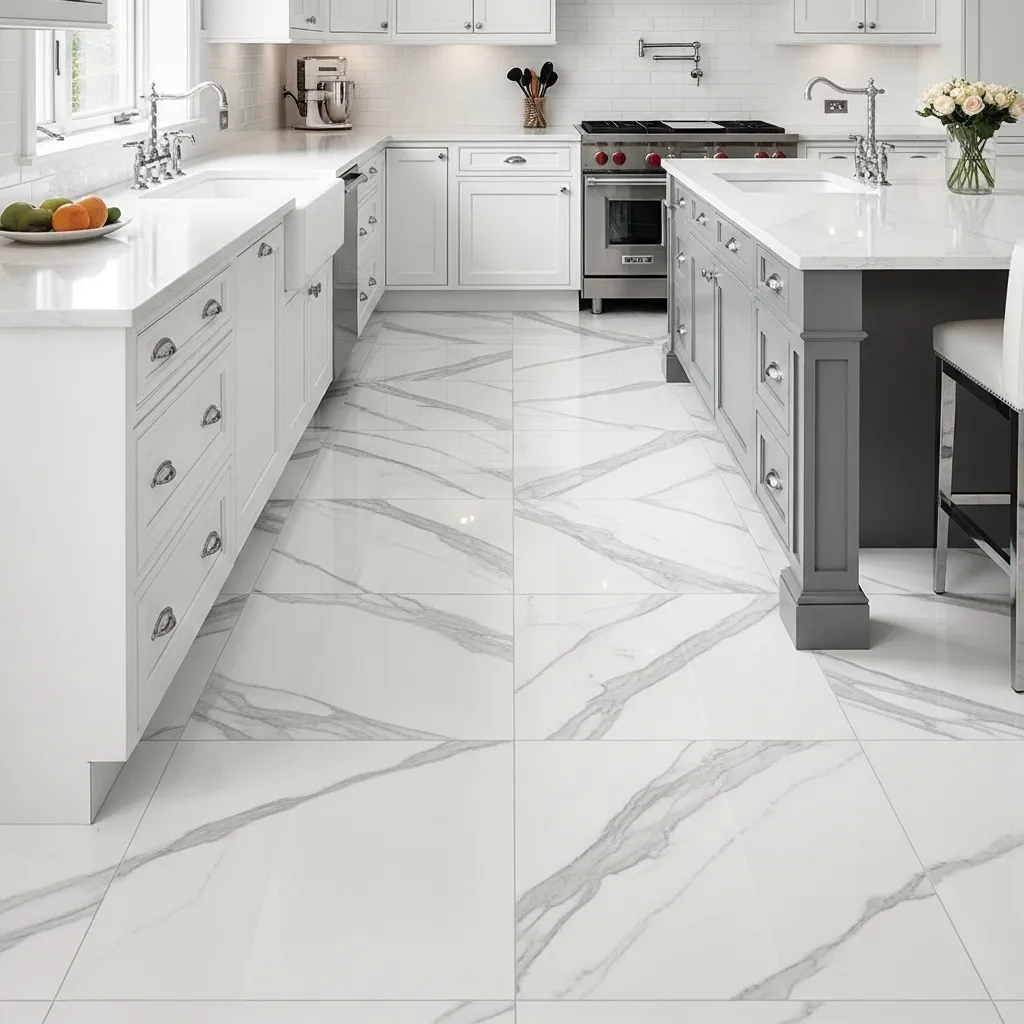
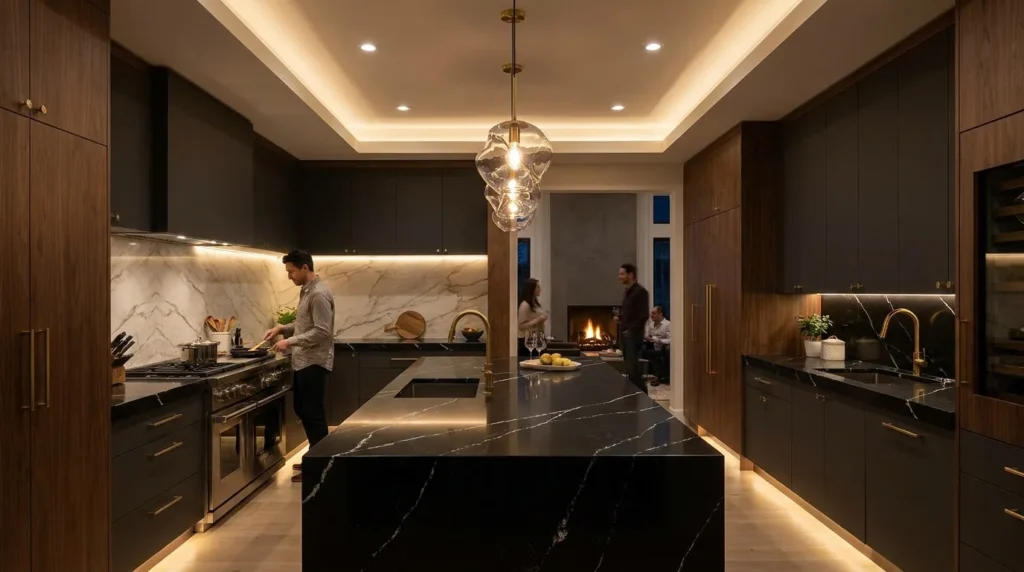
Black quartz countertops can give a modern kitchen a dramatic, polished look while remaining practical for everyday living. Their deep color creates a strong foundation for everything from crisp white cabinetry to warm wood finishes, brass hardware, and contemporary appliances. Unlike natural stone, quartz is engineered for consistent appearance, making it easier to achieve a coordinated design across a kitchen. The right finish, edge profile, backsplash, and cabinet combination can also change how the countertop feels, from sleek and minimalist to warm and sophisticated. Whether you are remodeling a compact kitchen or designing a large open-plan space, these black quartz countertop ideas can help you create a stylish room without making it feel unnecessarily dark. Use the ideas below as inspiration for choosing colors, textures, layouts, and details that complement your kitchen’s overall style.
1. Pair Black Quartz With Crisp White Cabinets
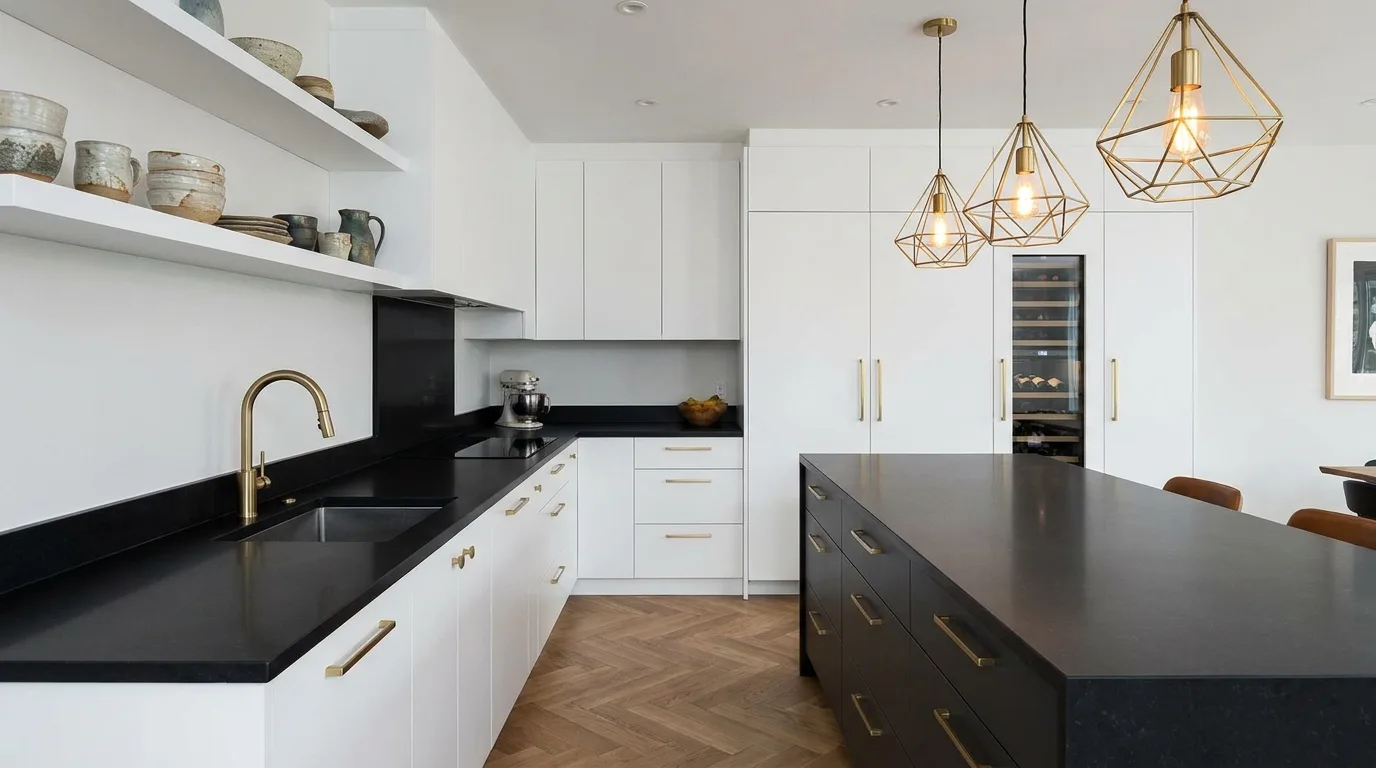
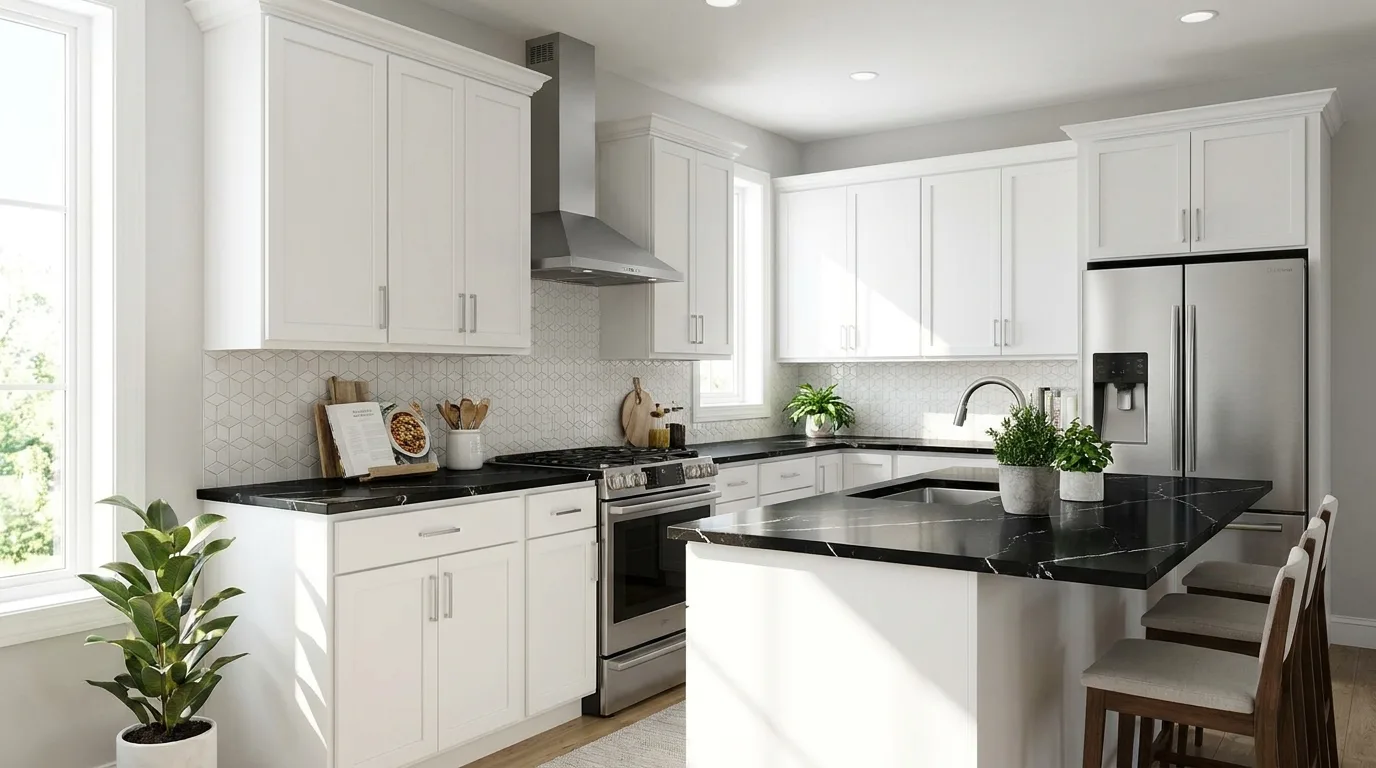
Black quartz and white cabinets are one of the easiest combinations for creating a clean, contemporary kitchen. The bright cabinetry keeps the room feeling open while the dark countertop adds contrast and visual depth. Choose simple shaker doors for a transitional look or flat-panel cabinets for a more minimalist appearance. A white subway tile backsplash can reinforce the classic contrast, while large-format white porcelain tiles create a sleeker finish. Stainless steel appliances work naturally with this palette, but black appliances can produce an even more seamless appearance. Keep decorative accessories limited so the countertop remains a strong design feature. This combination works especially well in kitchens with limited natural light because the white cabinetry helps balance the visual weight of the black surface.
2. Create a Dramatic Black-on-Black Kitchen
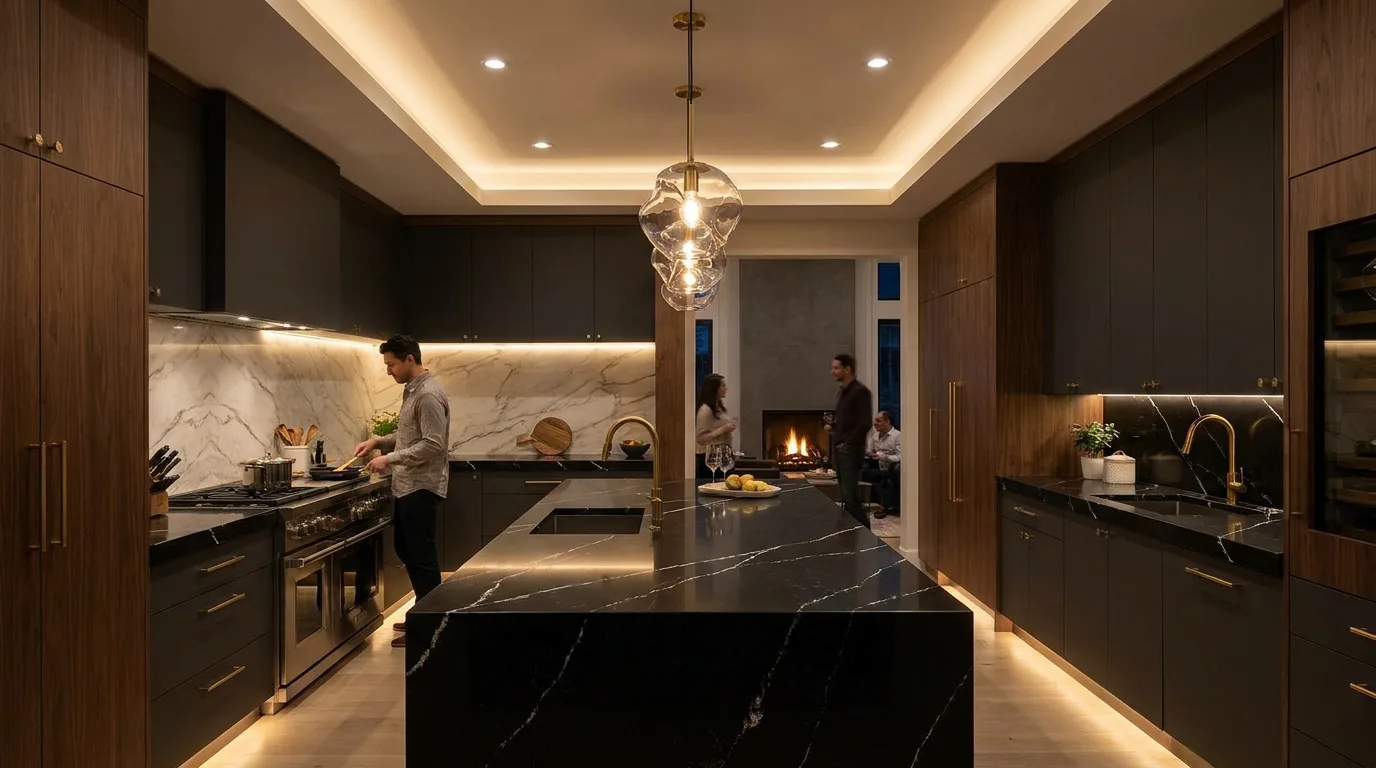
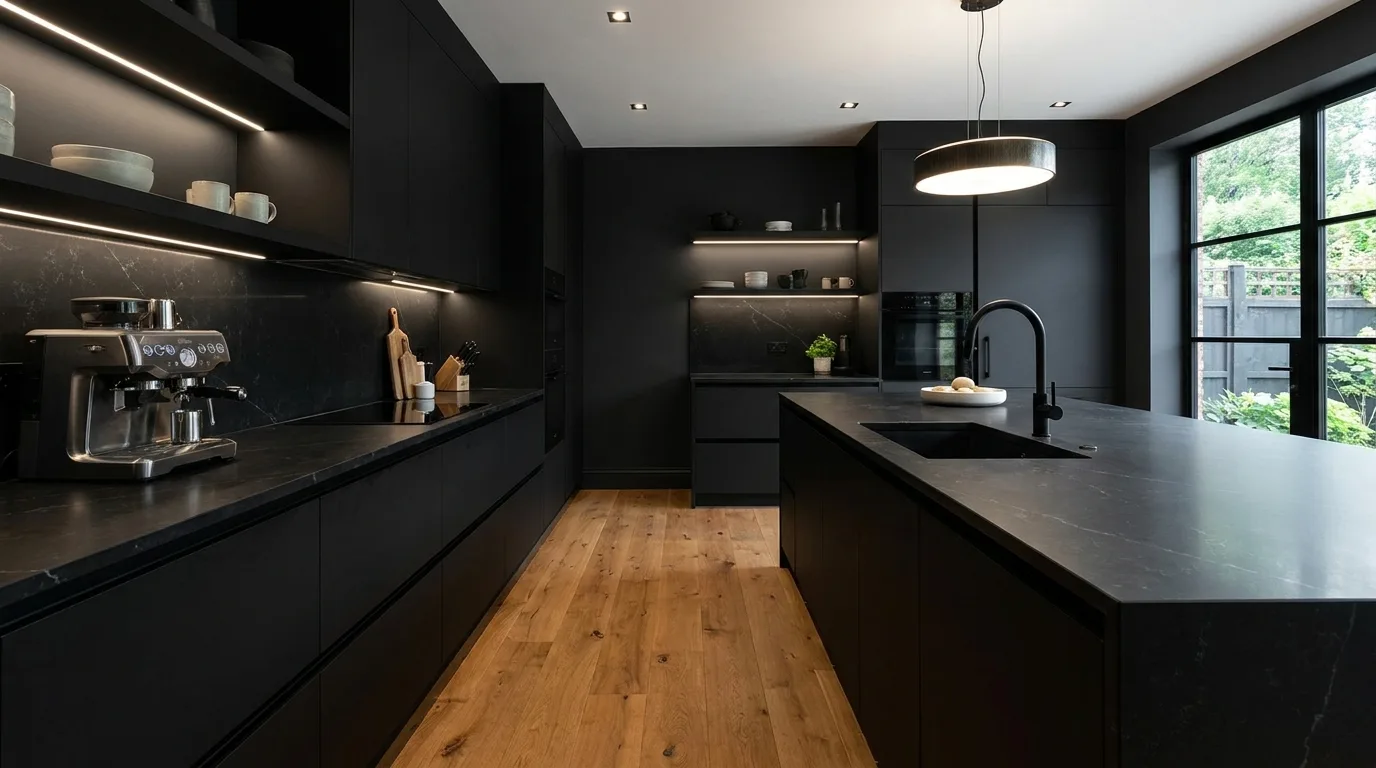
For a bold contemporary space, use black quartz countertops with dark cabinetry. This monochromatic approach can look luxurious when different textures prevent the room from becoming visually flat. Matte black cabinets paired with subtly reflective quartz create a sophisticated contrast without introducing another dominant color. Add warm wood flooring, natural woven accessories, or brushed metal hardware to soften the scheme. Good lighting is especially important in an all-black kitchen, so combine ceiling fixtures with under-cabinet lighting and pendant lights over an island. If the kitchen is small, consider using black only on the lower cabinets while keeping upper walls lighter. The result is still dramatic but feels less enclosed. A restrained palette also lets architectural details, lighting, and countertop veining become the main visual interest.
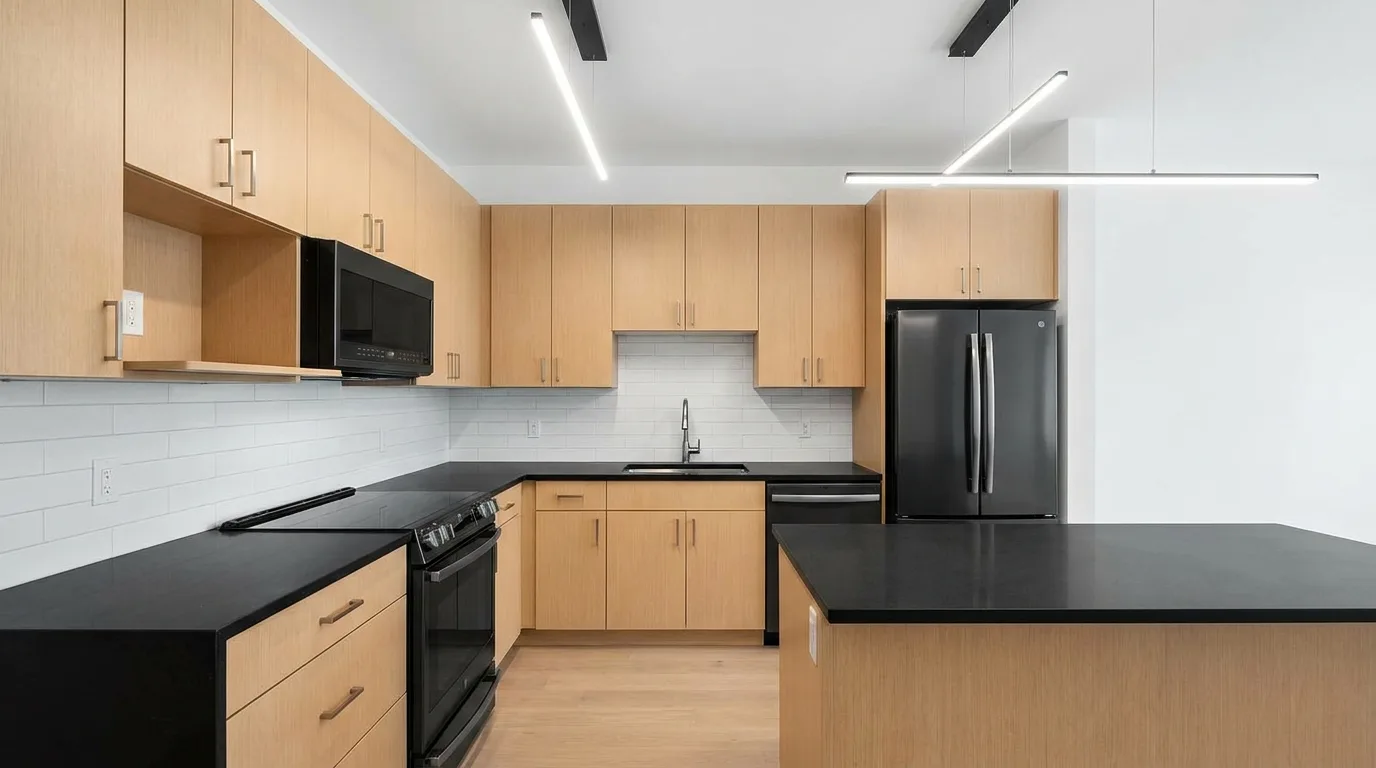
3. Add Warm Wood Cabinets for Natural Contrast
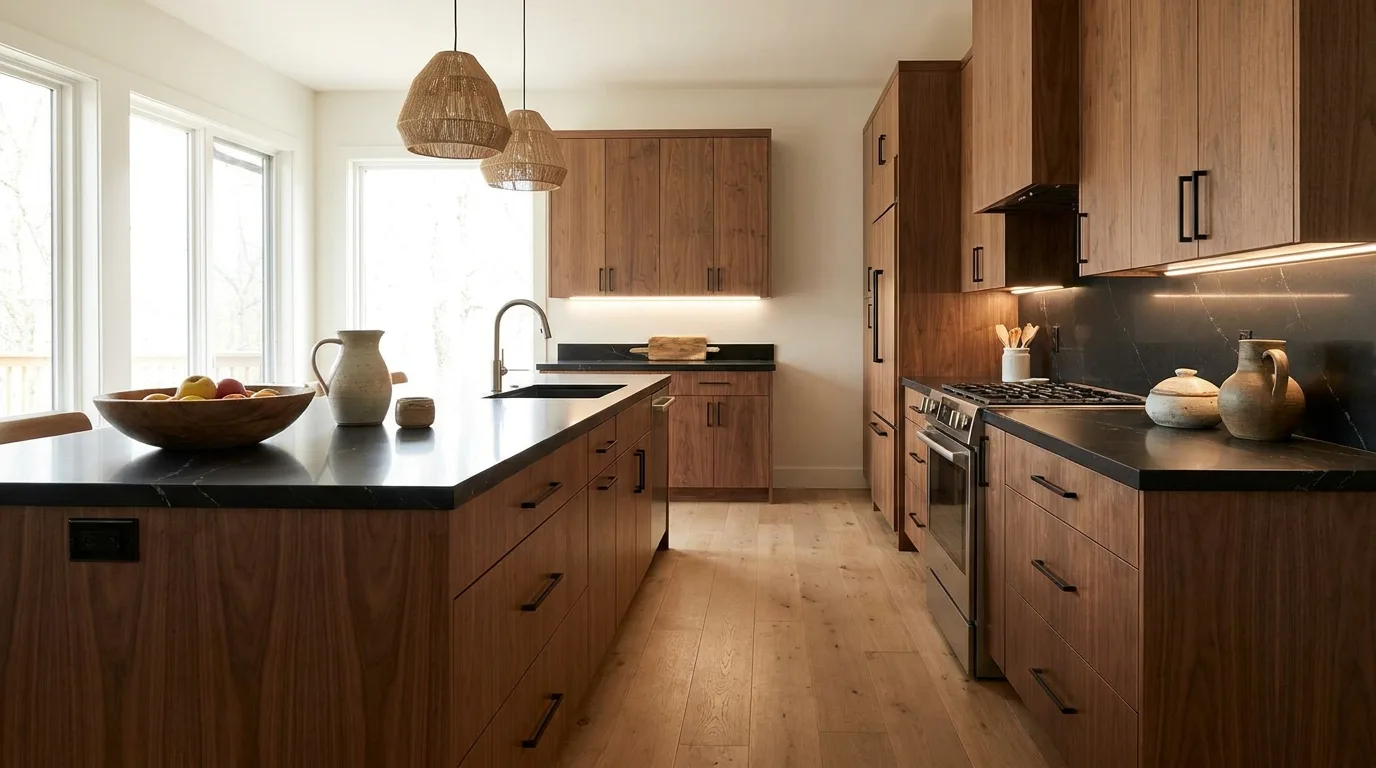
Warm wood cabinetry can make black quartz feel inviting rather than severe. Walnut, oak, and medium-toned wood finishes provide natural variation that complements the uniform appearance of engineered stone. For a modern kitchen, combine slab-front wood cabinets with a simple black quartz surface and minimal hardware. If you prefer a farmhouse-modern or Scandinavian-inspired room, lighter oak can create a softer contrast. Wood flooring can continue the warmth throughout the space, while a neutral backsplash keeps the composition balanced. Avoid introducing too many competing wood tones because the countertop already provides a strong visual anchor. Instead, repeat one or two warm finishes through stools, shelving, or lighting. This approach is particularly effective in open-plan homes where the kitchen needs to feel connected to adjacent living areas.
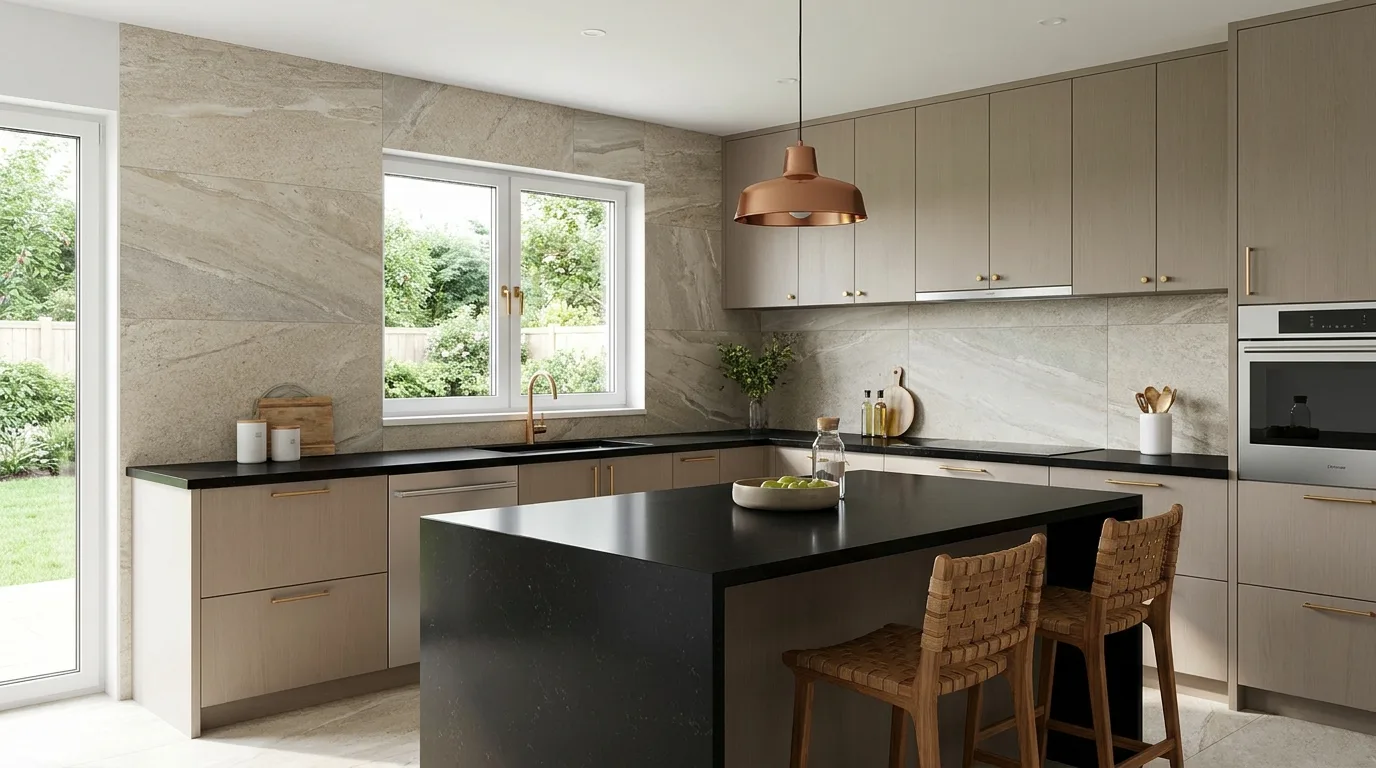
4. Use a Waterfall Edge on the Kitchen Island
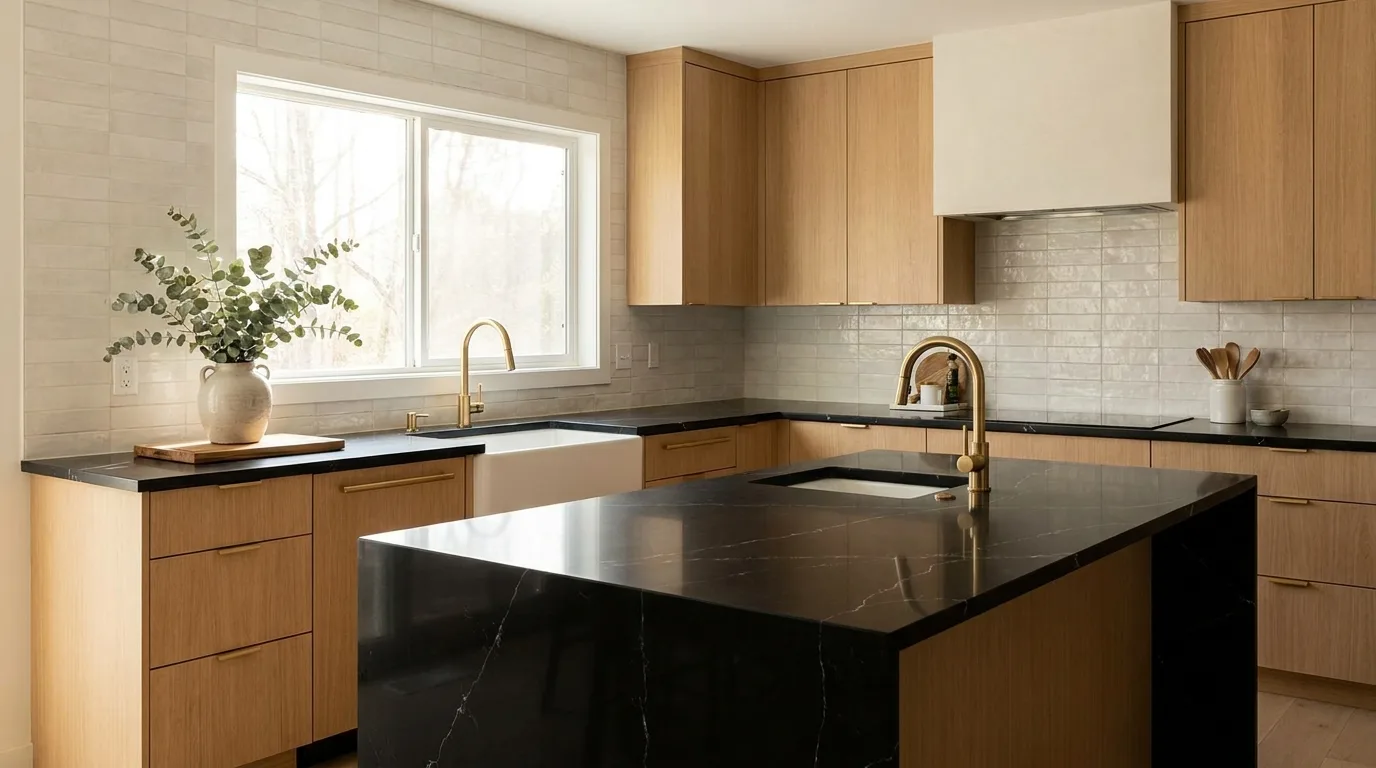
A waterfall countertop edge allows black quartz to flow vertically down the sides of a kitchen island, creating a sculptural modern focal point. The continuous surface emphasizes the island’s shape and gives even simple cabinetry a high-end appearance. This style works particularly well with large islands because the uninterrupted stone creates a strong architectural presence. Pair it with handleless cabinets for an ultra-modern design or warm wood drawers for a more balanced look. If you have a smaller island, a waterfall edge can still work, but the proportions should be carefully considered so the countertop does not overwhelm the room. Choose a quartz pattern with subtle movement if you want the edge to blend together, or a more pronounced pattern if you want the island to become the centerpiece.
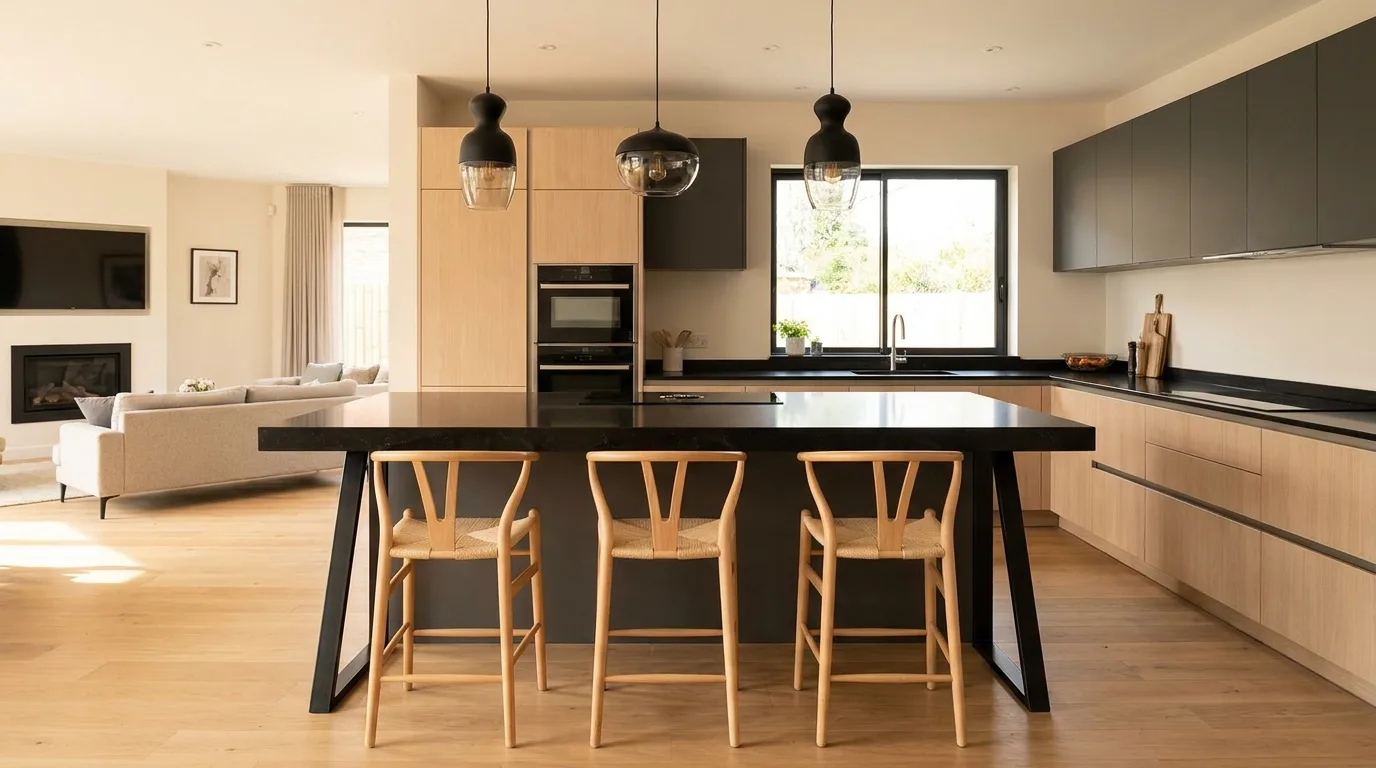
5. Choose Black Quartz With Fine White Veining
Black quartz with delicate white or gray veining offers the drama of dark stone while introducing movement across the countertop. Fine veins can make a kitchen feel refined without becoming overly decorative. This look pairs beautifully with white, cream, taupe, or charcoal cabinets. For a sophisticated result, carry the same quartz from the island onto the perimeter counters so the kitchen feels visually connected. A matching backsplash can also create a seamless effect, although a plain backsplash may be preferable when the quartz has stronger veining. Consider how the pattern will appear at seams, corners, and waterfall edges before ordering slabs. If you prefer a calm aesthetic, choose restrained veining with plenty of black background. This gives the surface character while preserving the clean appearance associated with modern kitchen design.
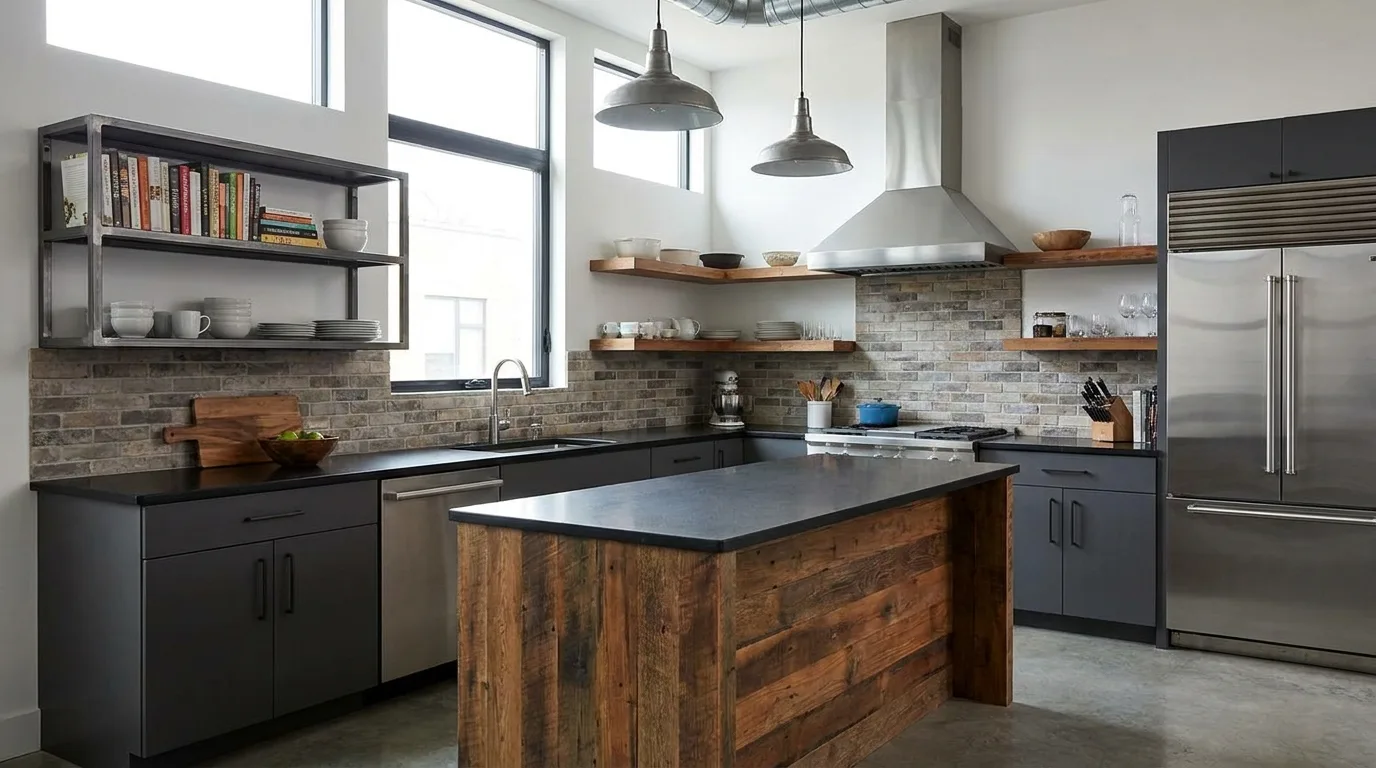
6. Combine Black Quartz With Brass Hardware
Brass hardware adds warmth and a touch of elegance to black quartz countertops. The combination works particularly well in kitchens that mix contemporary cabinetry with traditional details. Use brushed or satin brass pulls rather than highly reflective finishes if you want a softer, more current appearance. White cabinets create a striking black, white, and brass palette, while deep green or navy cabinetry produces a richer mood. Repeat the brass subtly through pendant lights, a faucet, or cabinet accents so the finish feels intentional rather than scattered. Black quartz also provides a dark background that allows warm metallic details to stand out clearly. Keep the remaining finishes relatively restrained to avoid visual clutter. A few carefully selected brass elements can transform an otherwise simple kitchen into a polished and inviting space.
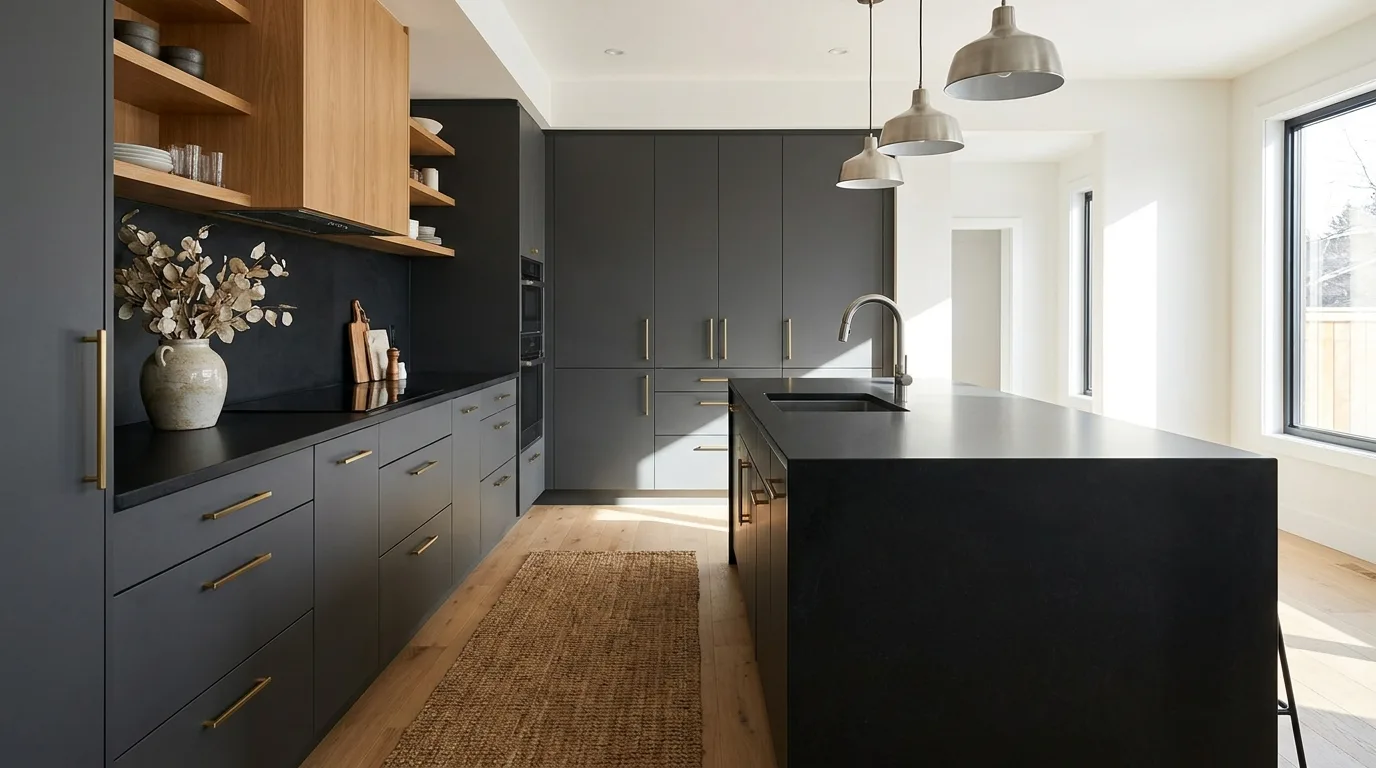
7. Design a Minimalist Kitchen With Flat-Panel Cabinets
Flat-panel cabinets and black quartz are a natural match for minimalist kitchen design. The simple cabinet fronts allow the countertop to provide subtle texture and depth without adding unnecessary visual detail. Choose integrated appliances, concealed hardware, and a streamlined backsplash for an especially clean result. If you want the room to feel warmer, introduce pale oak flooring or a small amount of natural wood shelving. A black quartz surface with little or no visible veining will reinforce the minimalist character. However, texture still matters, so combine matte cabinet finishes with the slight sheen of polished quartz or select a honed-style surface when available. The goal is not to remove every detail but to create a carefully edited environment where each material has a clear purpose.
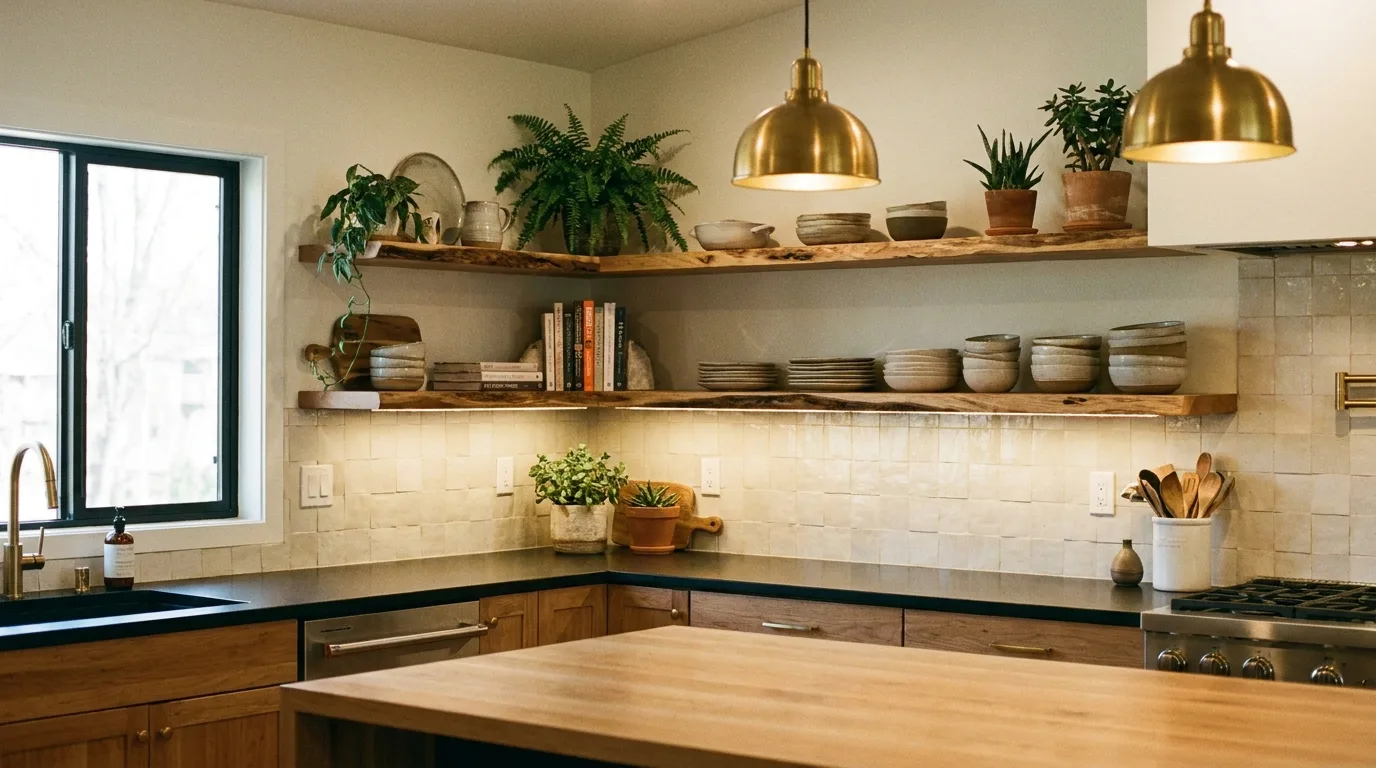
8. Make the Island the Main Focal Point
If you want to use black quartz without making the entire kitchen dark, place it primarily on the island. A large black island can act as an anchor in a kitchen filled with lighter cabinets, walls, and flooring. This approach gives you the dramatic effect of dark stone while maintaining an airy overall atmosphere. Consider adding comfortable counter stools in leather, wood, or woven materials to soften the island’s appearance. Pendant lights positioned directly above it can further emphasize its role as the room’s centerpiece. For a cohesive design, repeat small amounts of black in window frames, lighting, appliances, or cabinet hardware. This creates visual connections without requiring black countertops throughout the kitchen. It is also an effective option for open-plan layouts where the island naturally defines the kitchen zone.
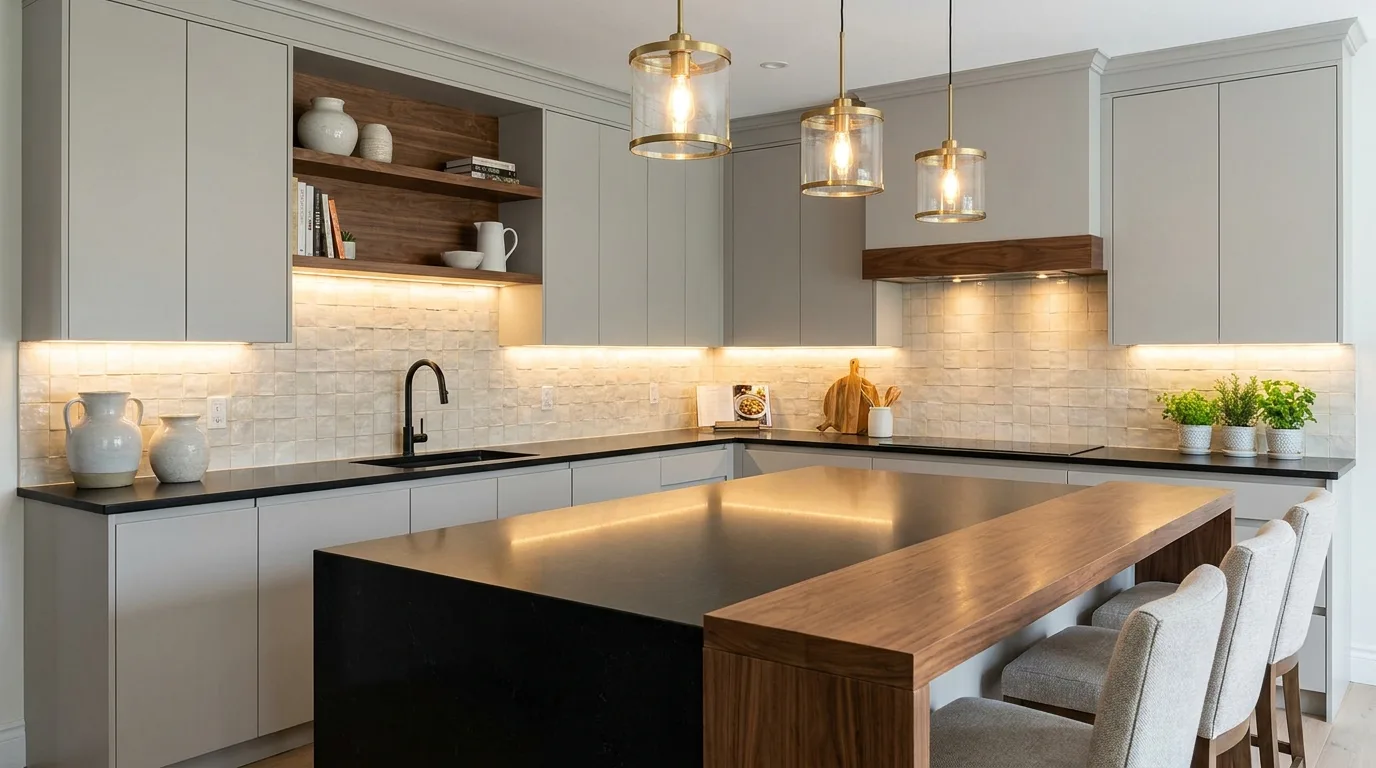
9. Try a Soft Gray and Black Color Palette
Gray cabinetry creates a quieter alternative to the sharp contrast of pure white and black. Light gray cabinets paired with black quartz produce a sophisticated palette that works across contemporary and transitional kitchens. Choose warm gray if the room has wood flooring or brass accents, or a cooler gray for a more streamlined industrial appearance. A light backsplash can keep the walls bright while allowing the countertop to remain visually prominent. You can also layer several gray tones through cabinetry, flooring, and upholstery to create depth. The key is to vary texture so the palette does not feel monotonous. Black quartz provides the darkest anchor, while lighter gray surfaces prevent the room from becoming too stark. This color combination is versatile enough to adapt as your decorating style changes.
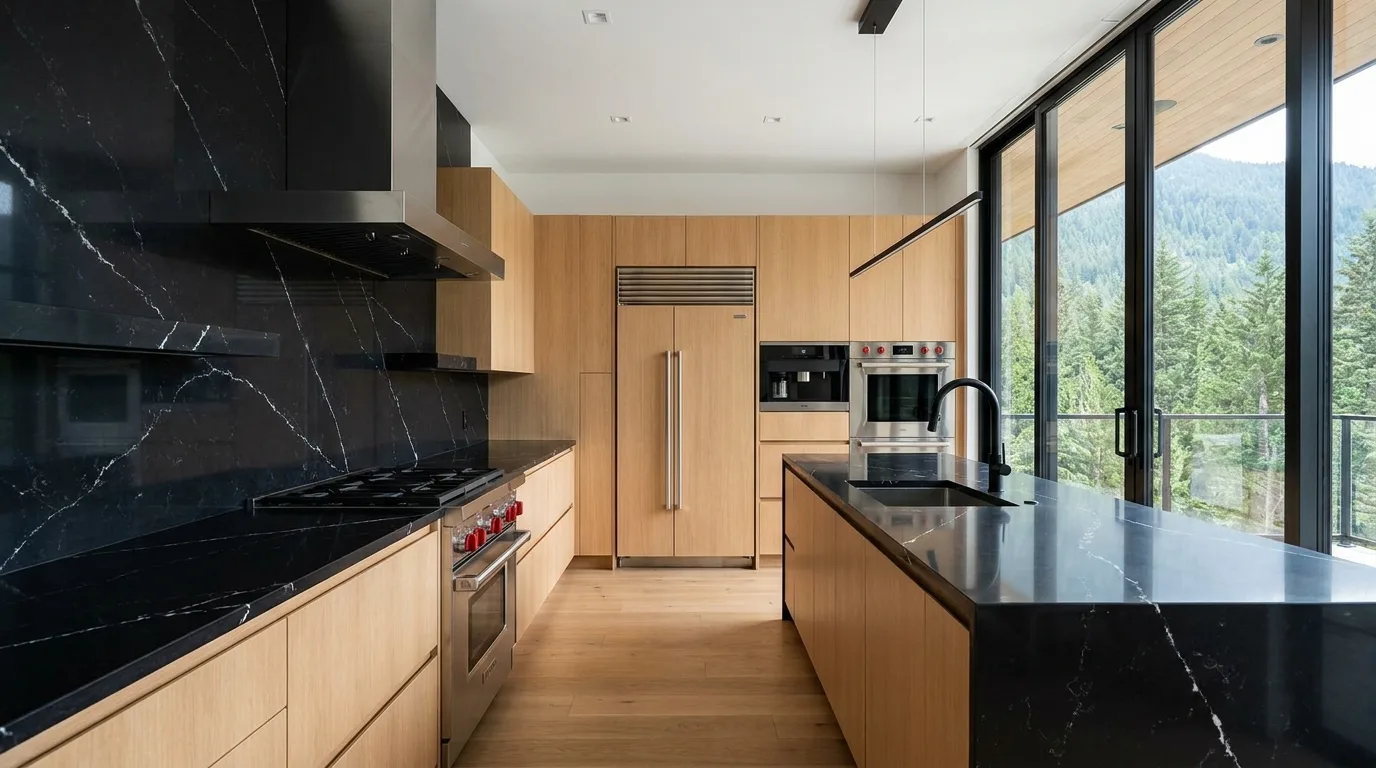
10. Use a Matching Black Quartz Backsplash
Extending black quartz from the countertop up the wall creates a continuous backsplash with a distinctly modern appearance. A full-height slab eliminates grout lines and gives the kitchen a clean, uninterrupted surface. This idea works especially well behind a cooktop or sink where a simple-to-clean wall surface is useful. With plain black quartz, the result can feel sleek and architectural; with subtle veining, it can resemble a dramatic natural-stone installation. Keep cabinets relatively simple so the slab remains the star. You can also use the same material only on one feature wall while selecting a lighter backsplash elsewhere to control the amount of dark color. Before choosing this approach, check slab dimensions and installation requirements because large-format backsplash applications require careful planning.
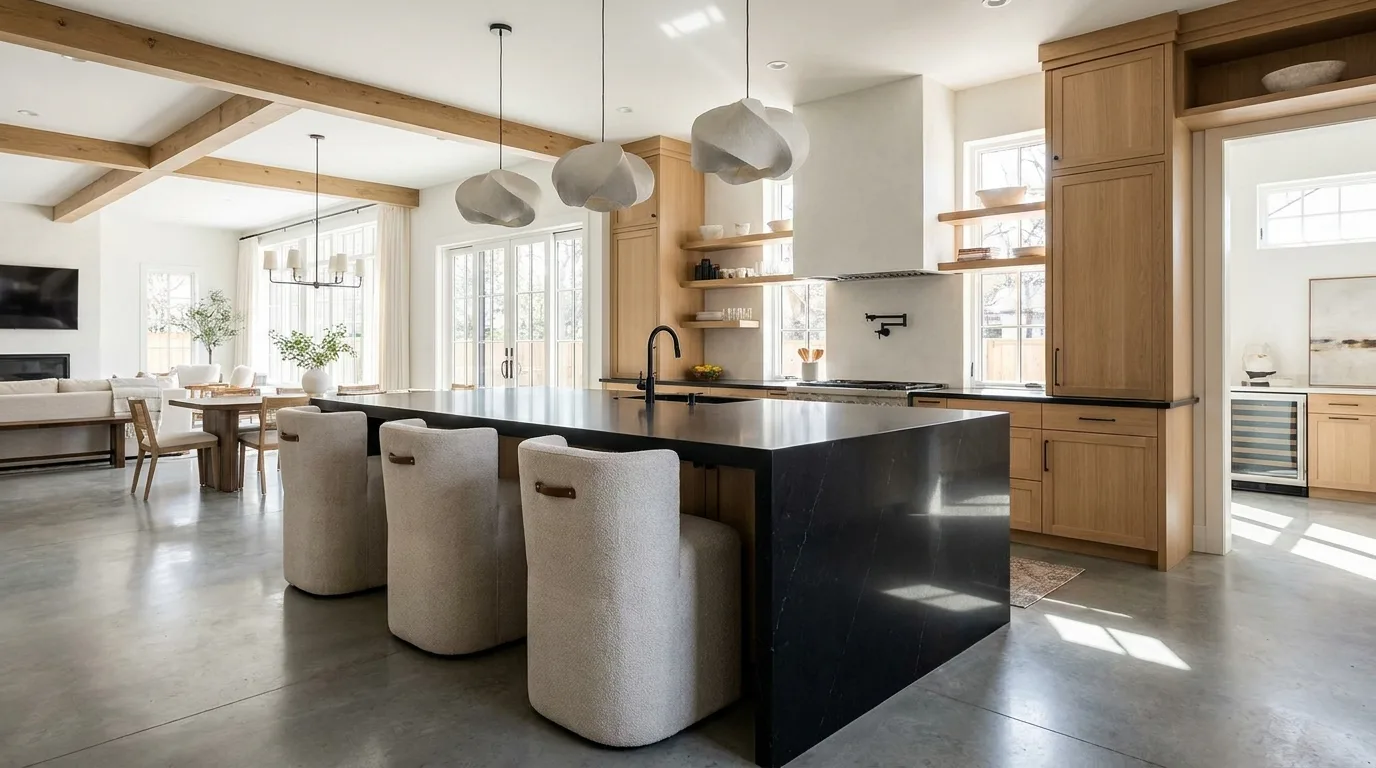
11. Pair Black Quartz With Cream Cabinets
Cream and ivory cabinetry can soften the strong contrast created by black quartz. This combination feels warmer than black and bright white while still looking fresh and sophisticated. Cream cabinets are particularly effective in kitchens that include natural wood, antique-inspired fixtures, or warm metallic finishes. Choose a quartz surface with subtle beige or gray movement if you want the colors to connect naturally. For a modern look, use simple cream slab or shaker cabinets, streamlined lighting, and minimal decoration. A light stone or ceramic backsplash can continue the warm palette without competing with the countertop. Because cream absorbs some of the visual harshness of black, this pairing can make a dark countertop feel comfortable and welcoming. It is a useful choice when you want modern style with a softer, more lived-in atmosphere.
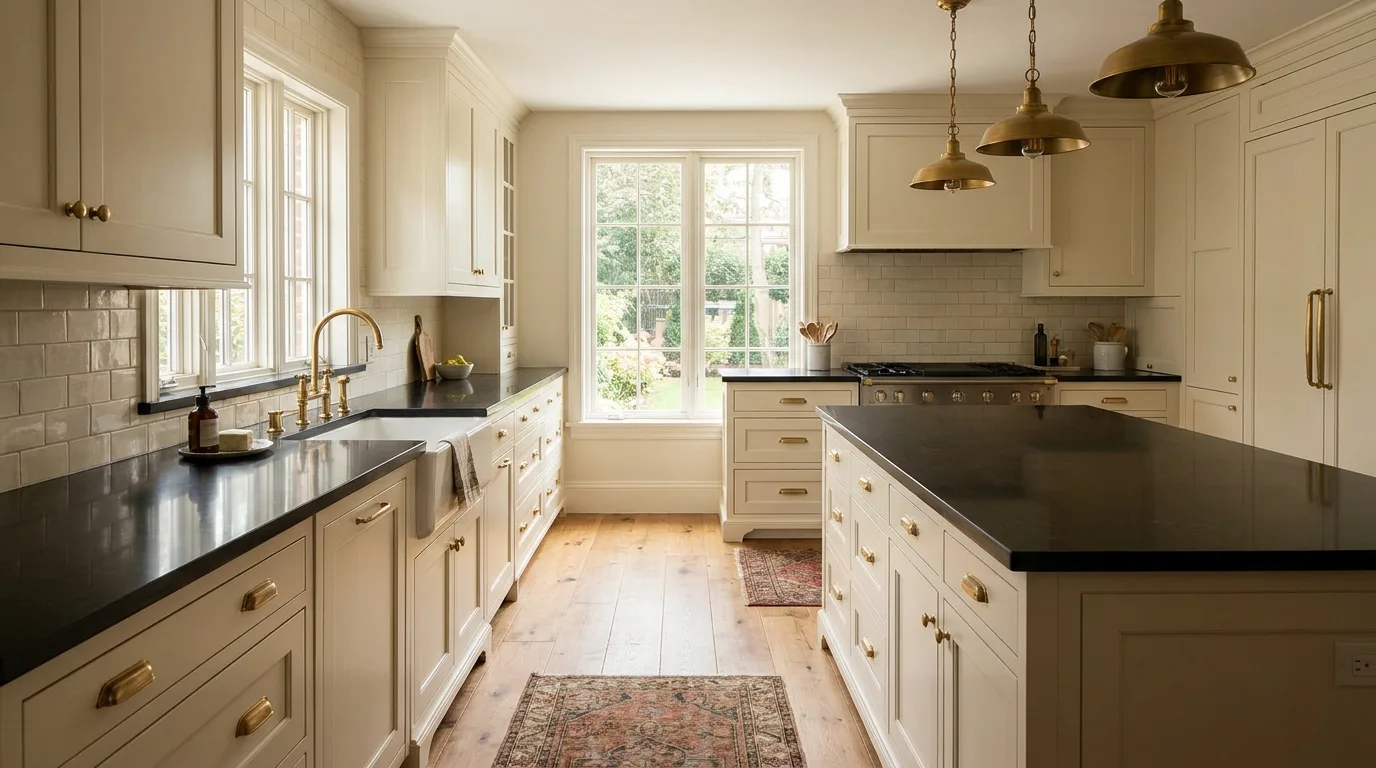
12. Build an Elegant Black and Green Kitchen
Deep green cabinetry creates a rich, sophisticated backdrop for black quartz. Forest, olive, and muted sage tones can all work, depending on how dramatic you want the kitchen to feel. Dark green cabinets and black countertops create a moody effect, while lighter sage cabinetry provides more contrast and openness. Natural wood shelving or flooring can keep the palette grounded and prevent it from feeling overly formal. Brass or aged-metal hardware can add warmth, while simple white lighting helps maintain balance. If the quartz has white or gray veining, those details can visually connect with a lighter backsplash or wall color. This combination works particularly well when you want a kitchen that feels distinctive without relying on bright colors. Use lighting strategically to bring out the depth of both the green cabinetry and dark countertop.
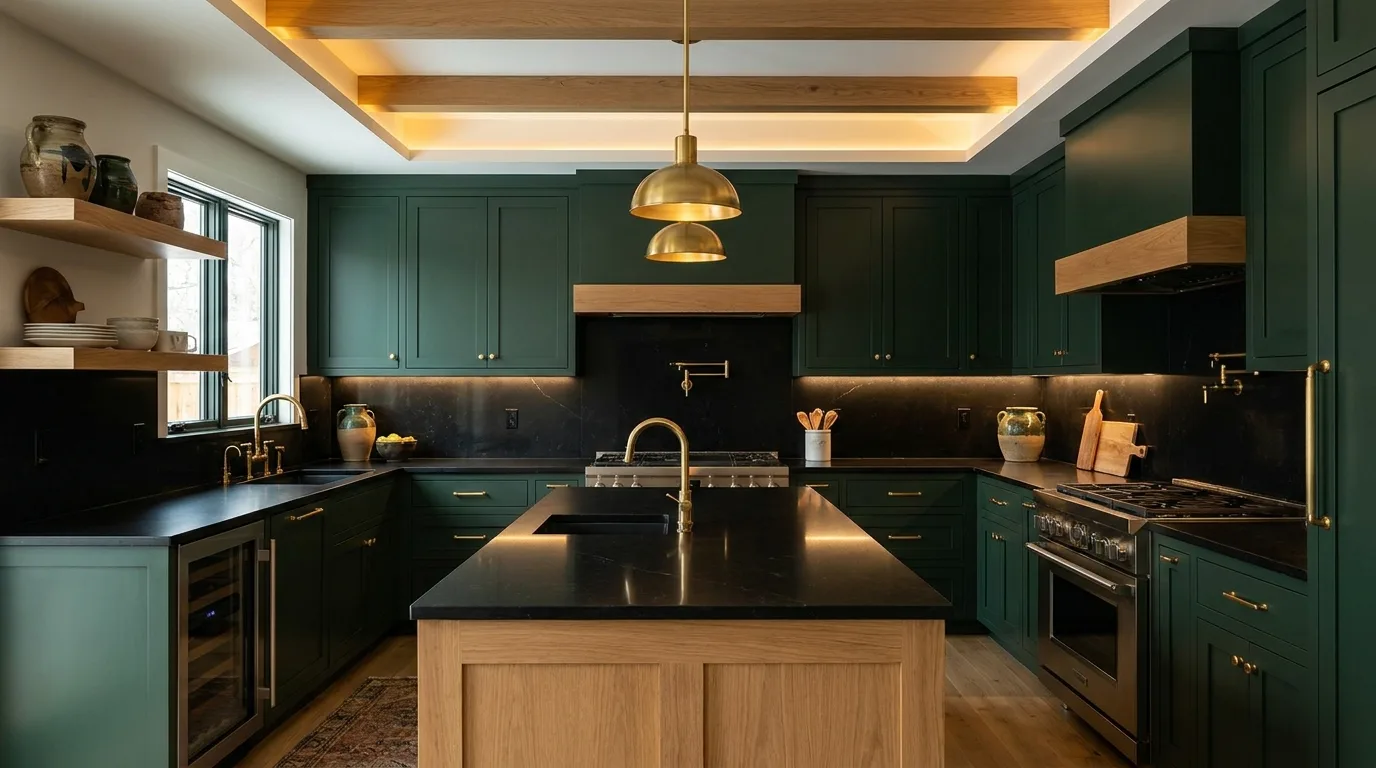
13. Add Open Shelving Above Black Countertops
Open shelving can break up a wall of cabinets and give black quartz countertops a lighter, more relaxed setting. Natural wood shelves are especially effective because their warmth contrasts with the dark stone. Use them to display everyday dishes, glassware, small plants, or a few decorative objects rather than overcrowding the space. If you prefer a more industrial look, consider slim metal brackets or dark floating shelves. Keep the backsplash behind the shelves relatively quiet so the combination does not become visually busy. Black quartz works as a grounding element beneath the open storage, while the shelves add vertical interest. This arrangement is also useful in smaller kitchens because open storage can make a compact wall appear less heavy than a full run of upper cabinets.
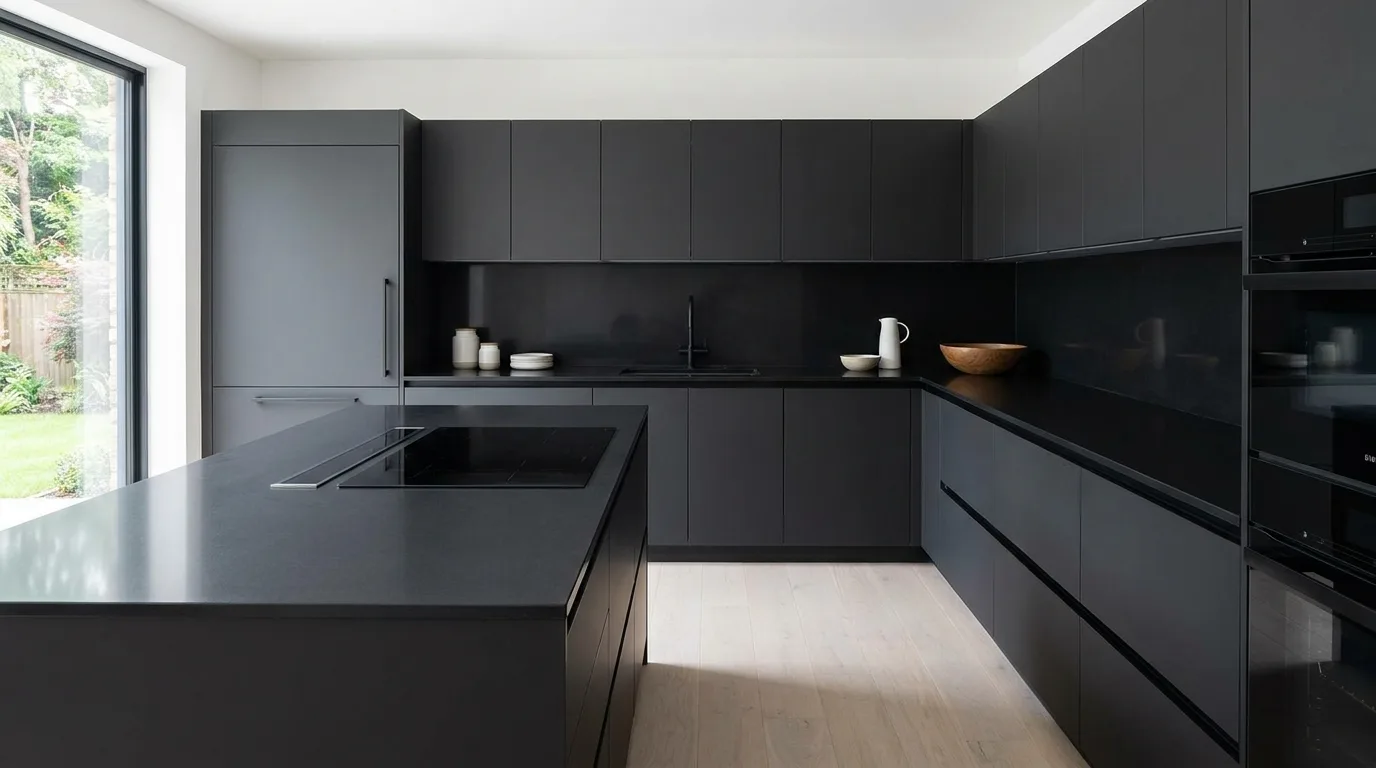
14. Use Matte Black Quartz for a Softer Finish
A matte or honed-style black quartz appearance can create a more understated kitchen than a highly polished surface. The low-reflective finish emphasizes the depth of the color and works beautifully with matte cabinetry, wood, and natural textures. It can be especially attractive in contemporary kitchens where excessive shine is not part of the design. Pair the countertop with warm oak, textured backsplash tile, or brushed metal hardware to introduce subtle variation. Because matte surfaces can show certain marks differently from polished ones, always check the manufacturer’s care guidance and sample the exact product before committing. In terms of style, the softer finish can make a black countertop feel less formal and more approachable. It is a strong option for homeowners who want dark surfaces without an overly glossy appearance.
15. Create a Modern Industrial Kitchen
Black quartz countertops fit naturally into industrial-inspired kitchens when combined with concrete, metal, brick, or dark wood. Use black or charcoal cabinetry with stainless steel appliances for a professional-kitchen influence, or combine the countertop with warm reclaimed-style wood for a more residential feel. Simple pendant lights, exposed shelving, and streamlined stools can reinforce the industrial character without making the kitchen feel unfinished. If using a brick backsplash, choose a restrained color so it complements rather than competes with the countertop. Black quartz is particularly useful here because it gives the rugged materials a polished, intentional foundation. The result can feel modern and practical rather than overly decorative. Balance hard surfaces with wood accents, textiles, or greenery to make the space more comfortable for everyday family use.
16. Extend Black Quartz Around a Breakfast Bar
Extending the countertop over a kitchen island or peninsula creates a convenient breakfast bar and gives black quartz an opportunity to become a functional design feature. A generous overhang provides comfortable knee space for stools while visually emphasizing the island’s horizontal form. Choose stools that contrast with the dark countertop, such as light wood, tan leather, or woven seats. If the kitchen already contains several dark elements, keep the seating lighter to maintain balance. Pendant lighting above the breakfast bar can make the area feel like a distinct gathering zone. This design is especially practical in open-plan homes because the island can serve as a place for casual meals, homework, conversation, and entertaining. A carefully proportioned overhang is important, so follow the fabricator’s recommendations for support and installation.
17. Mix Black Quartz With Natural Stone-Look Tile
A natural stone-look backsplash can bring texture and movement to a kitchen with black quartz counters. Marble-look porcelain, limestone-inspired tile, and softly patterned ceramic can all complement the dark surface while keeping maintenance considerations in mind. Choose a backsplash with lighter tones if the cabinetry is also dark, or use warmer beige and taupe shades to create a cozy palette. Large-format tiles can make a modern kitchen appear more seamless, while small handmade-style tiles provide a more relaxed character. Avoid choosing a backsplash pattern that is equally bold as the countertop unless you intentionally want a highly layered design. Instead, let one material take the lead and use the other as support. This approach creates contrast without sacrificing the clean appearance that makes black quartz so versatile.
18. Coordinate Black Quartz With Black Appliances
Black appliances can visually disappear into a kitchen when paired with black quartz countertops, creating a streamlined and cohesive appearance. This is particularly effective with modern refrigerators, induction cooktops, wall ovens, and range hoods. To keep the room from feeling too dark, balance the black elements with lighter cabinets or a bright backsplash. Alternatively, use wood cabinetry and warm flooring to create a richer, contemporary palette. Matching black appliances with the countertop also reduces the number of competing finishes, which can make a small kitchen look more organized. Consider repeating black in cabinet handles, faucets, or lighting for a coordinated effect. If your appliances have different shades or textures of black, sample them beside the quartz before finalizing the design so the materials work together rather than appearing mismatched.
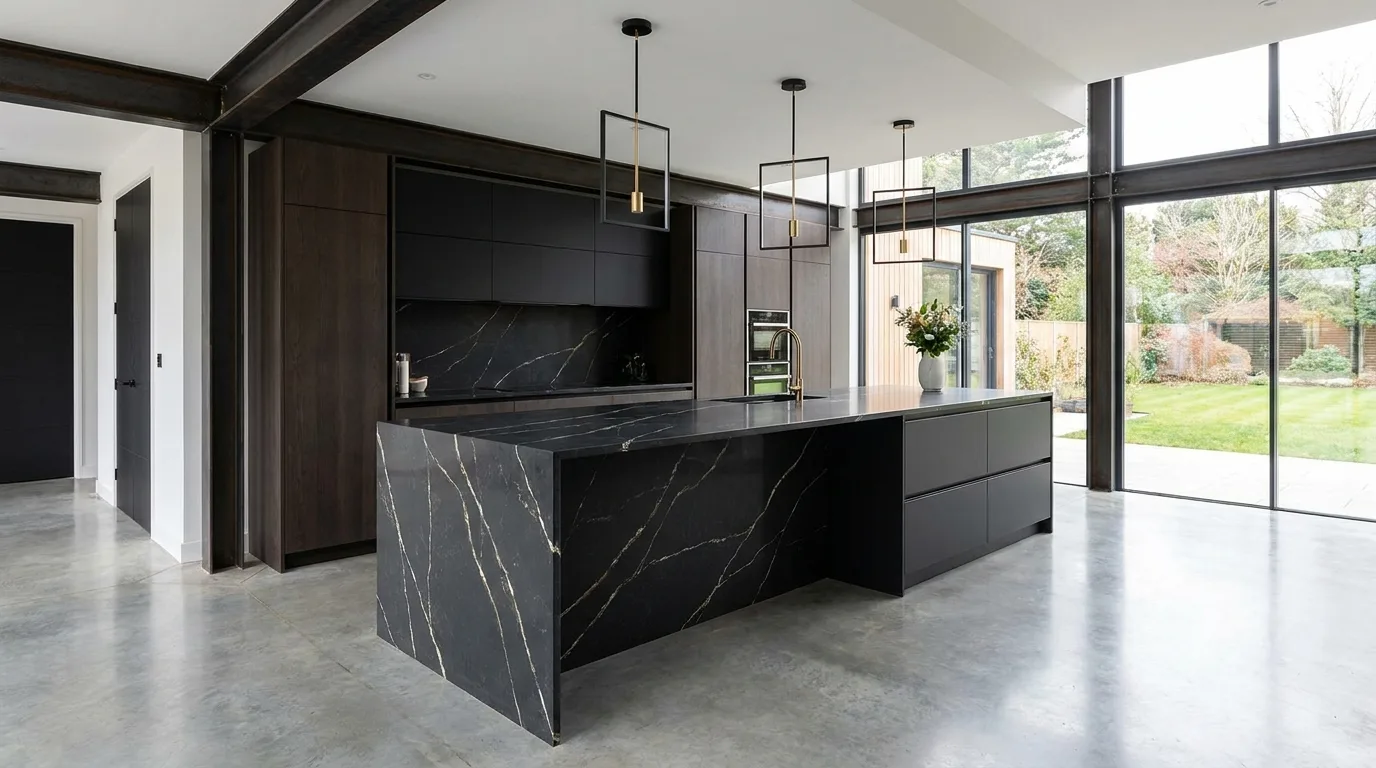
19. Finish the Look With Layered Kitchen Lighting
Thoughtful lighting can make black quartz countertops look sophisticated while keeping the kitchen functional. Combine ambient ceiling lighting with task lighting beneath cabinets and decorative pendants above the island. Under-cabinet illumination is particularly useful because it highlights the countertop surface and improves visibility for food preparation. If your quartz contains white or gray veining, directional light can emphasize its pattern and create subtle visual depth. Warm white lighting generally works well with wood, cream, and brass finishes, while neutral lighting can support a cooler contemporary palette. Avoid relying on a single central fixture because it can leave work areas in shadow. Instead, layer several sources so the kitchen can shift from bright daytime functionality to a softer evening atmosphere. Good lighting ultimately allows the black countertop to feel intentional rather than visually heavy.
Conclusion
Black quartz countertops offer a versatile foundation for modern kitchen design, whether you prefer crisp contrasts, warm wood tones, dramatic dark cabinetry, or subtle neutral palettes. The countertop can become the main focal point through a waterfall island, veined slab, or full-height backsplash, or it can quietly support the cabinetry and architectural details. When choosing your design, consider the amount of natural light, the size of the kitchen, cabinet color, backsplash pattern, lighting, and the overall level of contrast you want. Most importantly, view a physical quartz sample alongside your cabinets and flooring before making a final decision, because lighting and surrounding materials can significantly change how a dark surface appears.