
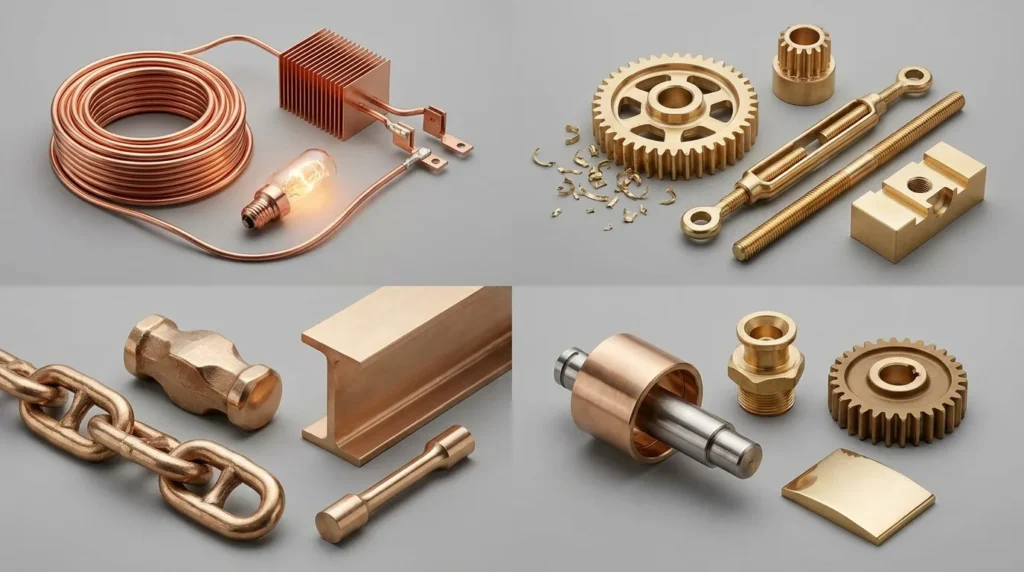
Copper, brass, and bronze are three familiar metals that often look surprisingly similar, yet their properties and practical uses can be quite different. Copper is a pure metal, while brass and bronze are alloys made by combining copper with other elements. Those differences in composition affect colour, strength, corrosion resistance, machinability, conductivity, and suitability for particular applications. Understanding the distinctions is useful whether you are choosing hardware, plumbing components, cookware, decorative pieces, engineering materials, or architectural finishes. This guide breaks down copper vs. brass vs. bronze in straightforward terms, explains how their compositions influence performance, and highlights the situations where each material can make sense. By comparing their characteristics side by side, you can make a more informed choice based on appearance, durability, cost, and intended use.
1. Copper Is the Base Metal
Copper is a naturally occurring metallic element represented by the chemical symbol Cu. Unlike brass and bronze, it is not itself an alloy, although commercial copper products can contain controlled amounts of impurities or other elements. Its distinctive reddish-orange appearance makes it easy to recognise, while its excellent electrical and thermal conductivity has made it essential in electrical systems, heat exchangers, plumbing, and manufacturing. Copper is also relatively ductile, meaning it can be shaped and drawn without easily breaking. Its combination of conductivity, workability, and corrosion resistance makes it valuable far beyond decorative applications. When comparing copper with brass and bronze, it helps to remember that the two alloys begin with copper but modify its characteristics by adding other elements.
2. Brass Is Mainly Copper and Zinc
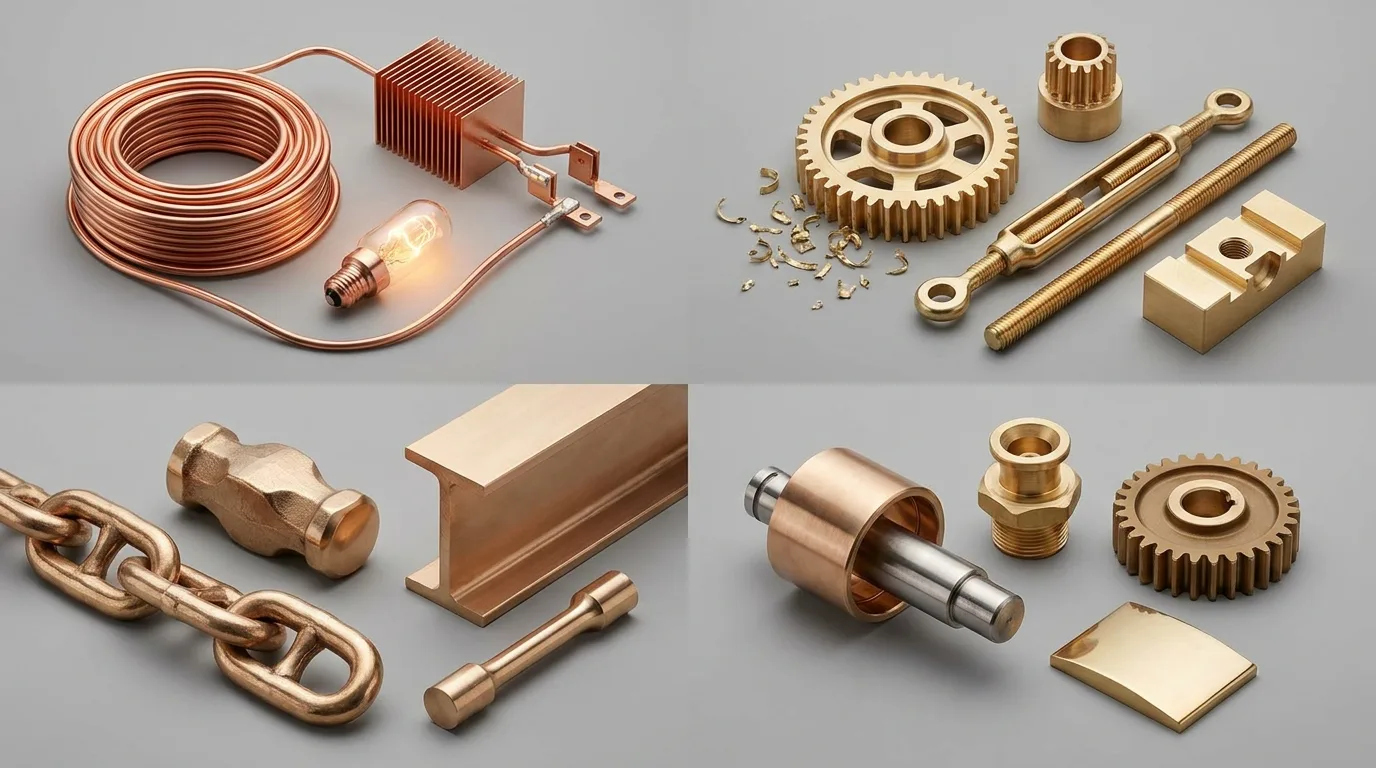
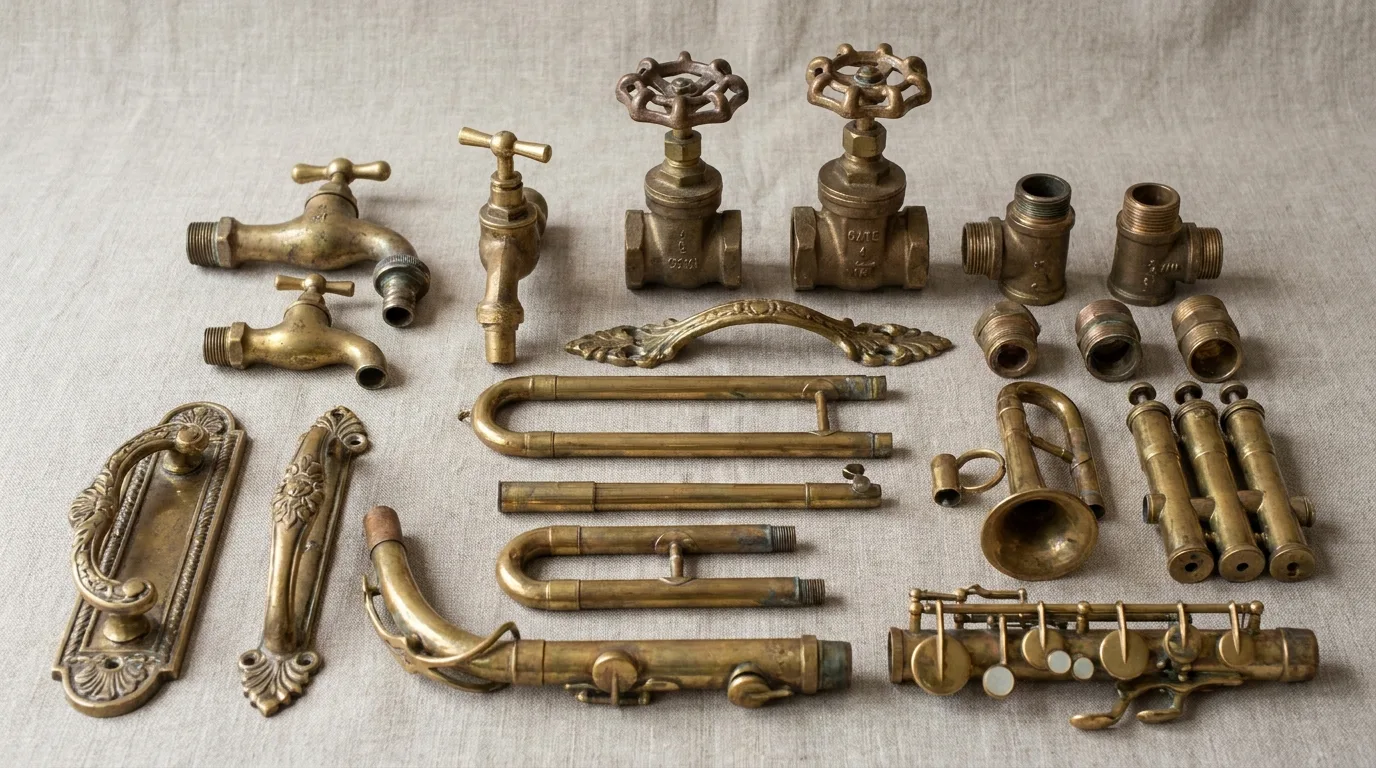
Brass is an alloy primarily made from copper and zinc. The exact proportion of these elements can vary considerably, producing different grades with different combinations of strength, colour, hardness, corrosion resistance, and machinability. Many brass alloys have a warm yellow or golden appearance, although the colour can range from reddish to pale yellow depending on composition. Brass is widely used for fittings, valves, musical instruments, fasteners, hardware, decorative objects, and precision-machined components. Its good machinability is particularly useful when manufacturers need to cut, drill, thread, or shape complex parts efficiently. Because brass covers a broad family of alloys rather than one fixed recipe, specifications should be checked when a particular mechanical or corrosion performance is important.

3. Bronze Is a Family of Copper Alloys
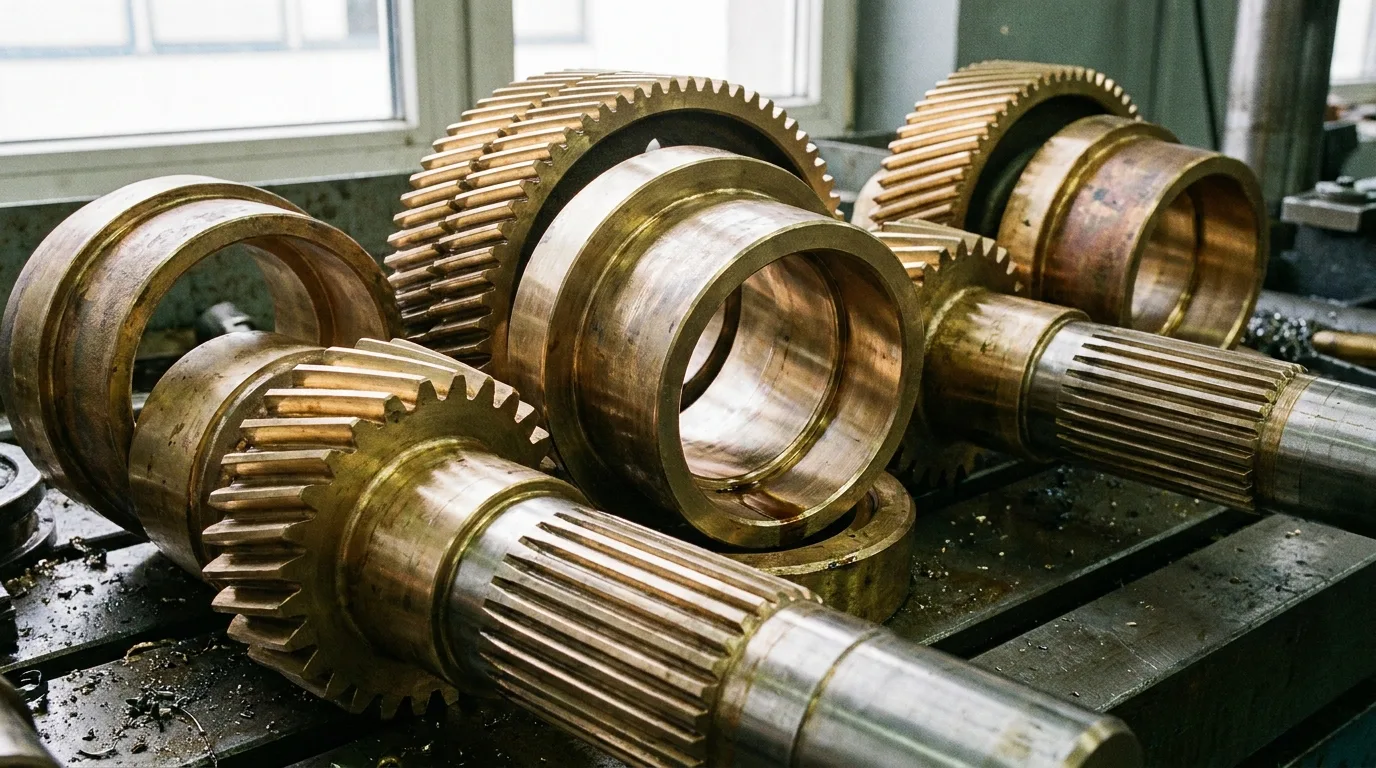
Bronze traditionally refers to copper alloys containing tin, although modern bronze materials can contain other alloying elements such as aluminium, silicon, manganese, nickel, or phosphorus. This means that “bronze” describes a broad family of materials rather than a single chemical composition. Many bronze alloys are valued for strength, wear resistance, corrosion resistance, and useful performance in demanding environments. Some are particularly suited to bearings, bushings, gears, marine components, valves, sculptures, and architectural features. Bronze can have a reddish-brown, golden-brown, or darker appearance depending on its composition and surface condition. When selecting bronze for an engineering application, identifying the specific grade is important because two bronze alloys may behave quite differently under load or in a corrosive environment.
4. Compare Their Chemical Composition
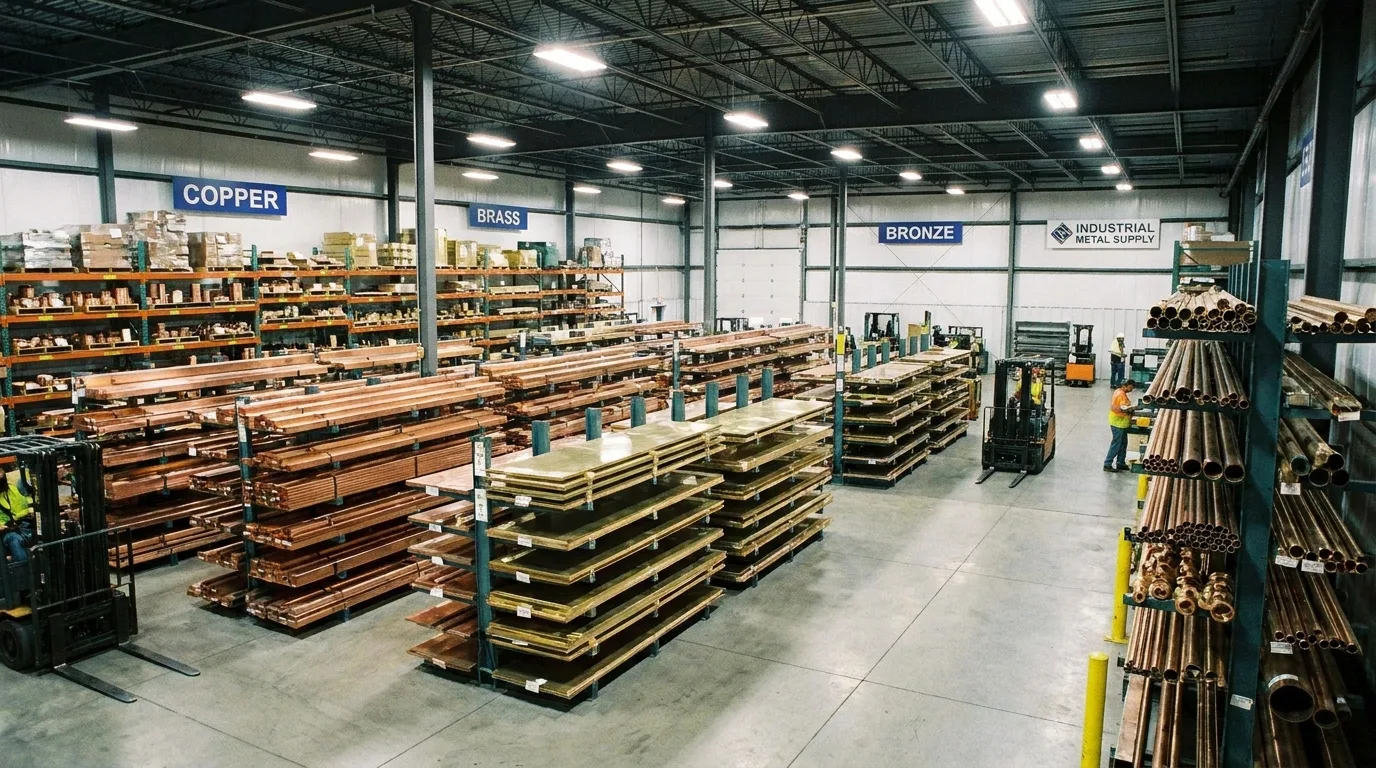
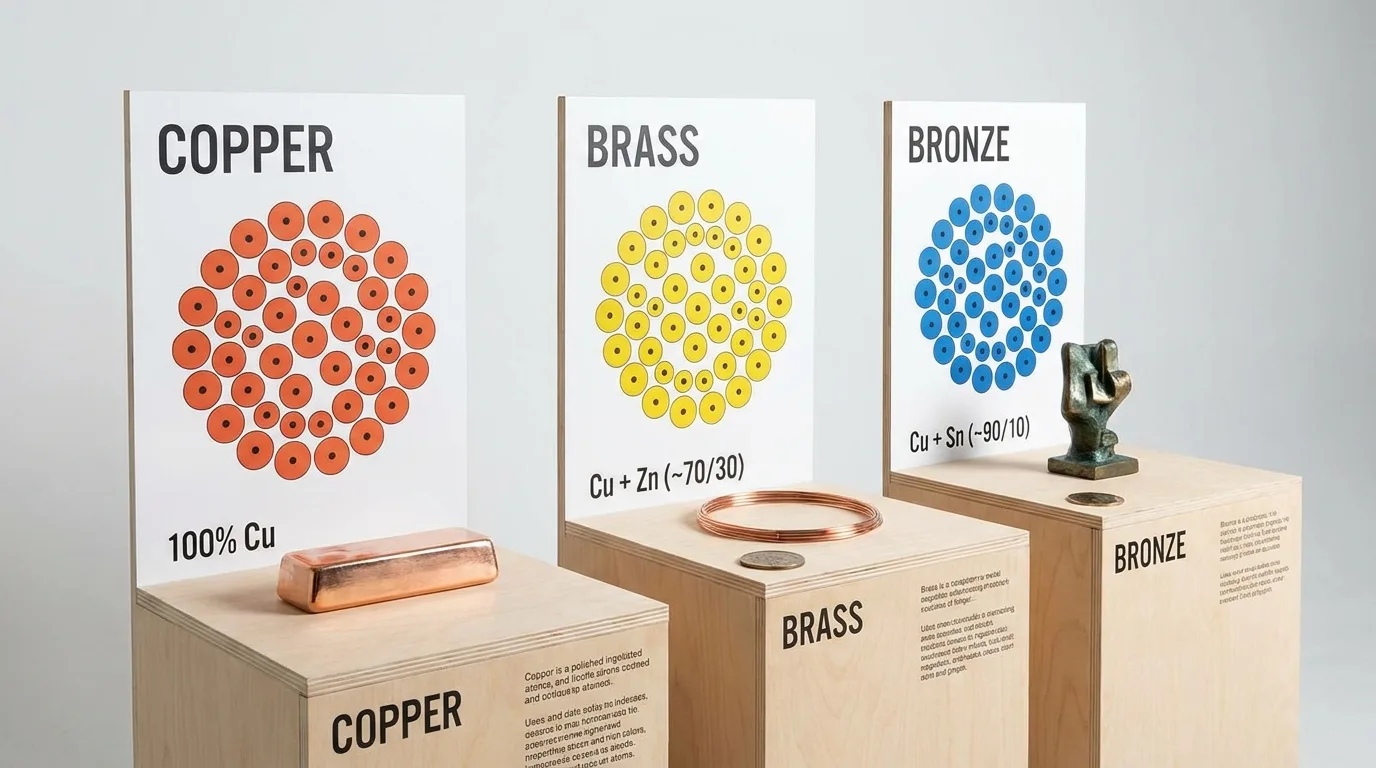
Chemical composition is the fundamental difference between copper, brass, and bronze. Copper is the elemental reference point, while brass generally combines copper with zinc and bronze traditionally combines copper with tin, although many commercial bronze families use additional alloying elements. These additions alter the metal’s internal structure and therefore its physical and mechanical properties. Zinc in brass can improve machinability and create the familiar yellow-gold appearance, while tin and other elements used in bronze can improve strength, wear resistance, or corrosion performance. The exact chemistry matters more than the generic name when a material must meet a specific engineering requirement. For accurate selection, always consult the grade, specification, or manufacturer’s material data rather than relying solely on colour or the broad label.
5. Understand the Colour Differences
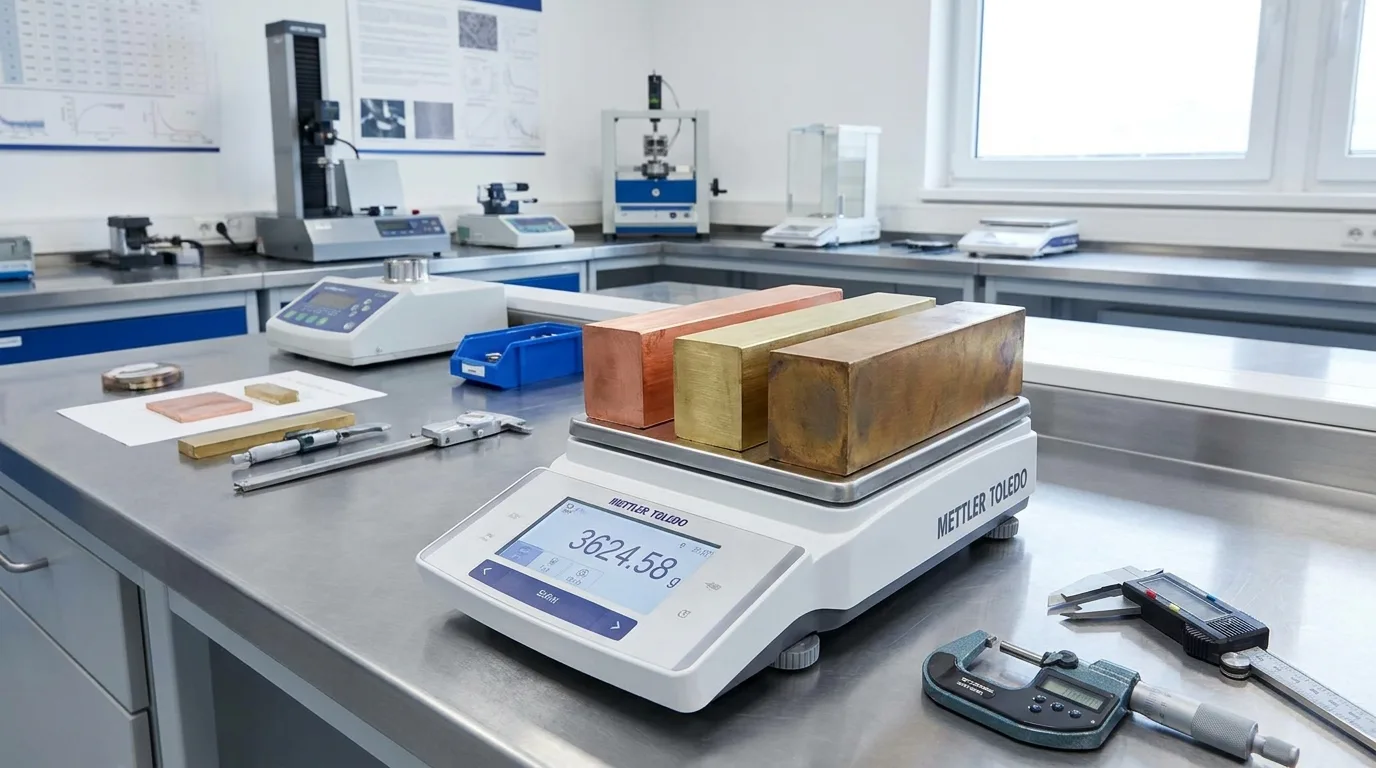
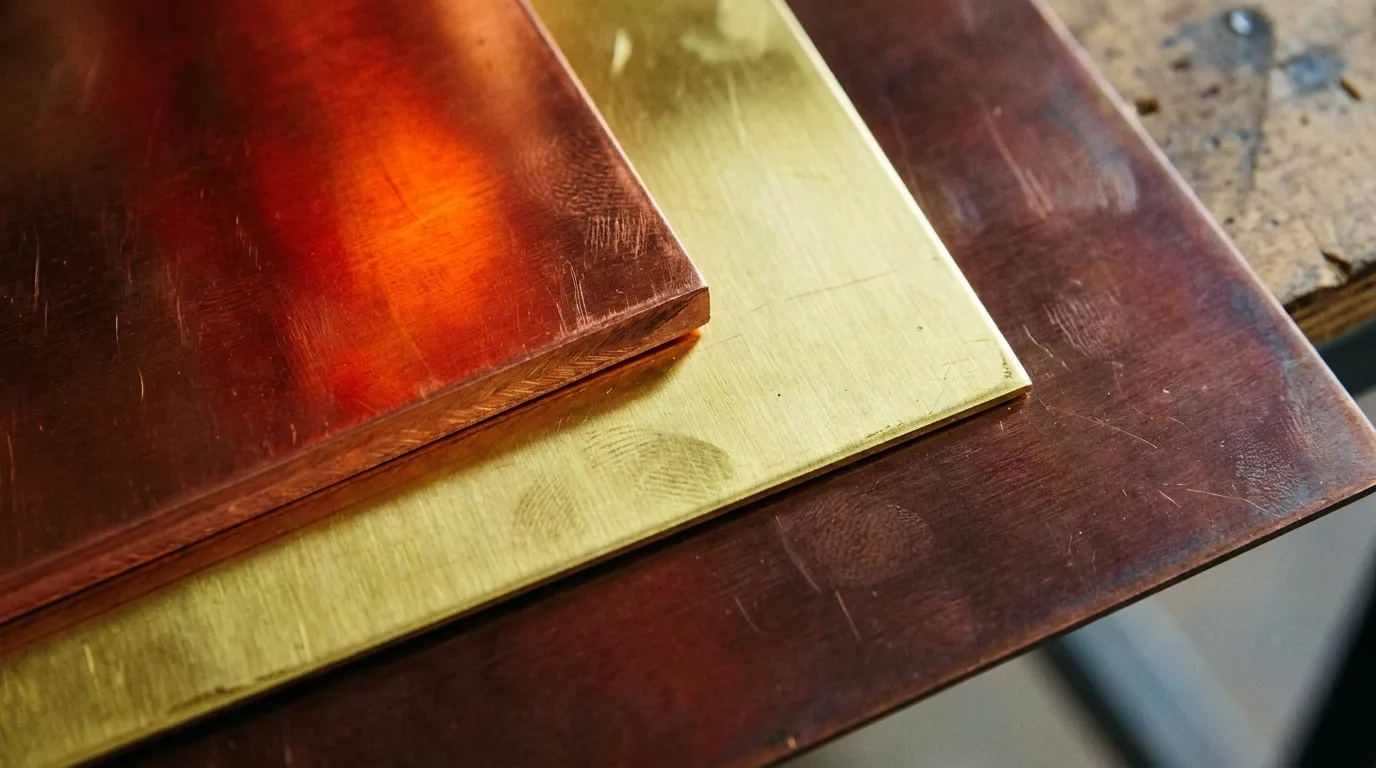
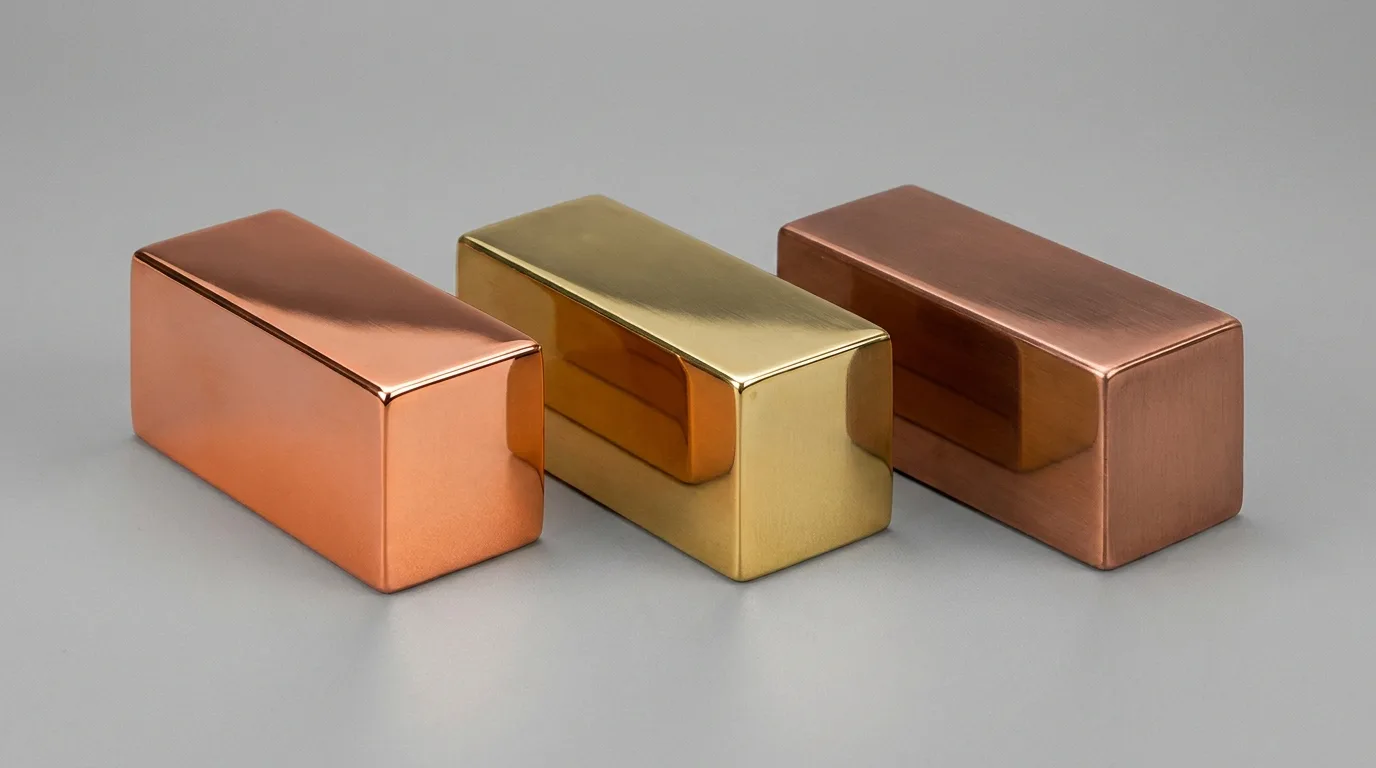
Colour can provide a useful visual clue, but it should not be treated as a definitive method of identifying these metals. Pure copper typically has a distinctive reddish-orange or pinkish metallic colour. Brass is commonly yellow, golden, or slightly brown, with the shade influenced by its zinc content and surface finish. Bronze often appears darker and more reddish-brown, although some bronze alloys can look quite similar to brass or copper. Polishing, oxidation, coatings, patination, and lighting can further change the apparent colour. If identifying an unknown component is important, visual inspection should be combined with other information such as markings, manufacturer specifications, material certificates, or appropriate testing. Decorative finishes can make visual identification especially unreliable.

6. Compare Electrical Conductivity
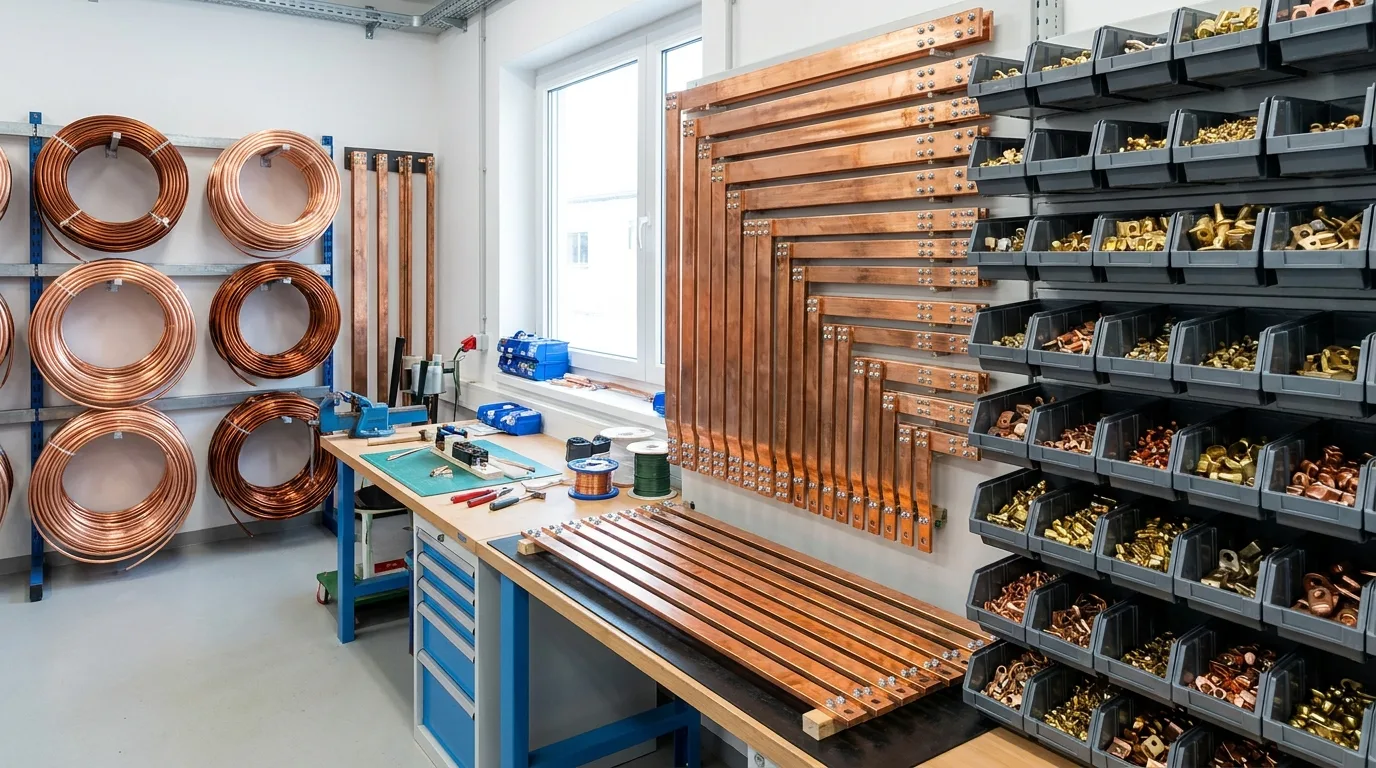
Copper is the clear choice when very high electrical conductivity is a major requirement. It is widely used for electrical conductors because it carries current efficiently while remaining ductile and relatively easy to process. Brass and bronze generally have lower electrical conductivity because alloying elements disrupt the copper crystal structure. That does not make them unsuitable for every electrical application, but it means they are usually selected for other priorities, such as mechanical performance, corrosion resistance, machinability, or specific contact properties. When electrical efficiency is central to a design, material selection should consider conductivity alongside resistance to heat, mechanical loads, joining requirements, and environmental exposure. For many ordinary electrical conductor applications, copper remains the standard reference material against which alternatives are compared.
7. Compare Thermal Conductivity
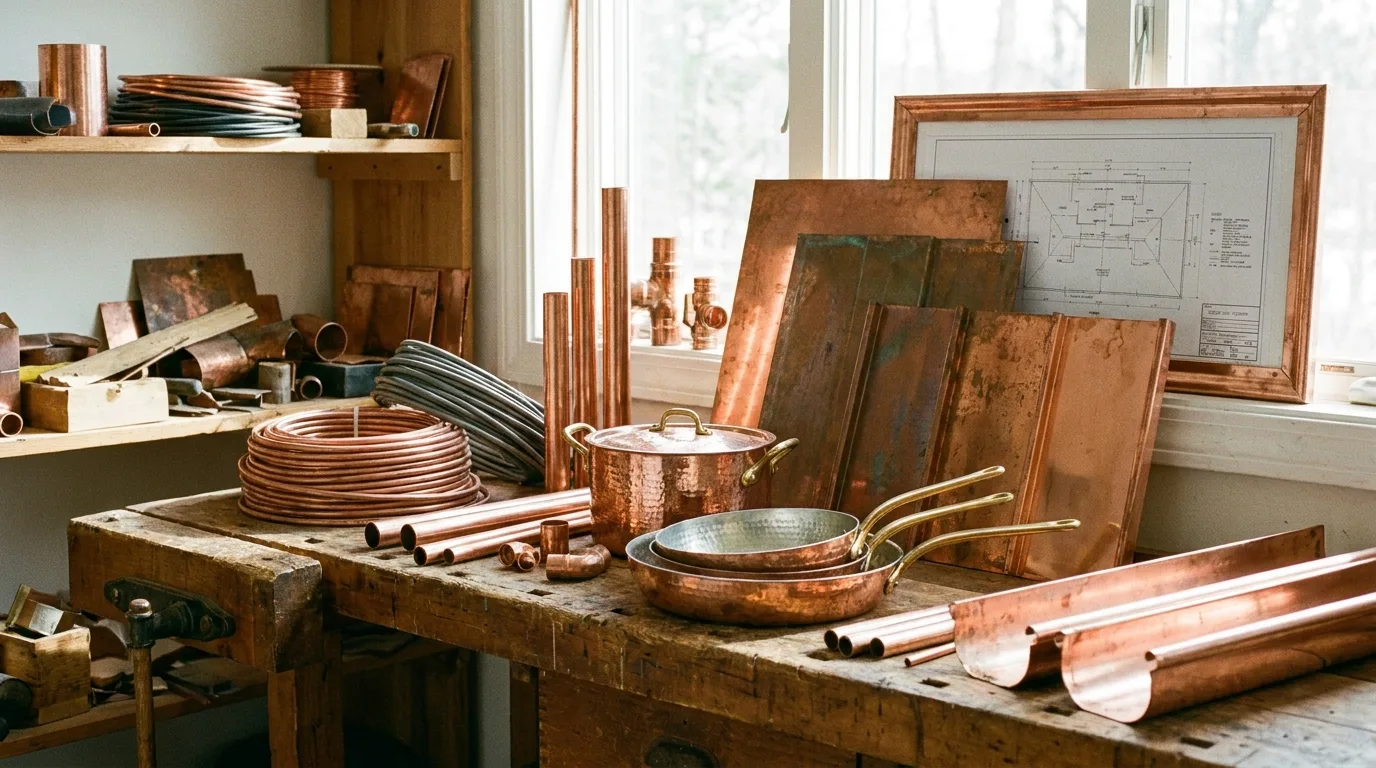
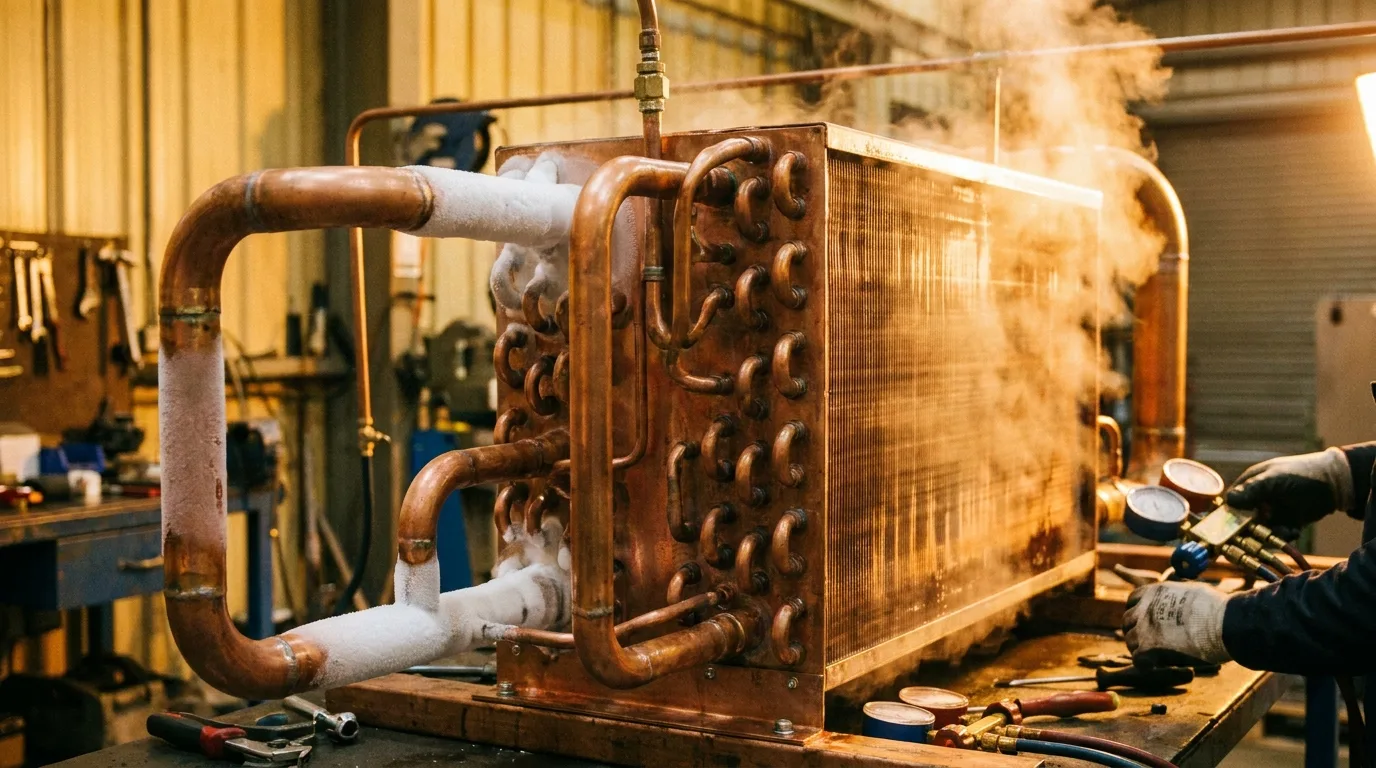
Copper also has excellent thermal conductivity, allowing heat to move through it efficiently. This characteristic contributes to its use in heat exchangers, refrigeration systems, cookware, thermal components, and other applications where rapid heat transfer matters. Brass and bronze generally conduct heat less effectively than pure copper because their alloying elements reduce conductivity. However, thermal conductivity is only one consideration in practical equipment. A component may require a combination of thermal performance, strength, corrosion resistance, wear resistance, or ease of manufacturing. In those situations, an alloy can sometimes provide a better overall balance even if its heat-transfer performance is lower. Engineers therefore select between copper, brass, and bronze according to the complete operating environment rather than treating conductivity as the only criterion.
8. Compare Strength and Hardness
Pure copper is relatively soft compared with many copper alloys, although its strength can vary depending on processing and temper. Brass and bronze can generally provide greater hardness and strength because alloying changes the structure of the material and can allow additional strengthening mechanisms. The exact difference depends heavily on the grade and manufacturing condition. Some bronzes are particularly strong and resistant to wear, while certain brasses are chosen for a useful combination of strength and machinability. This makes copper alloys valuable when a component must withstand mechanical loads that would be unsuitable for softer copper. Rather than assuming that every bronze is stronger than every brass, compare the specific alloy, temper, tensile strength, yield strength, hardness, and intended loading conditions.
9. Look at Corrosion Resistance
Copper, brass, and bronze can all develop surface changes when exposed to air and moisture, but their corrosion behaviour varies by alloy and environment. Copper often develops a protective oxide or patina over time. Many brass and bronze alloys also offer useful corrosion resistance, which helps explain their use in plumbing, marine equipment, architectural components, and outdoor objects. However, no material is universally corrosion-proof. Water chemistry, chlorides, temperature, oxygen levels, pollutants, and contact with dissimilar metals can influence performance. Certain brasses can be vulnerable to specific forms of corrosion under unsuitable conditions, while specialised bronzes are designed for demanding environments. Choosing the right grade and considering the actual exposure conditions are therefore more important than relying on the general reputation of a metal.
10. Examine Machinability
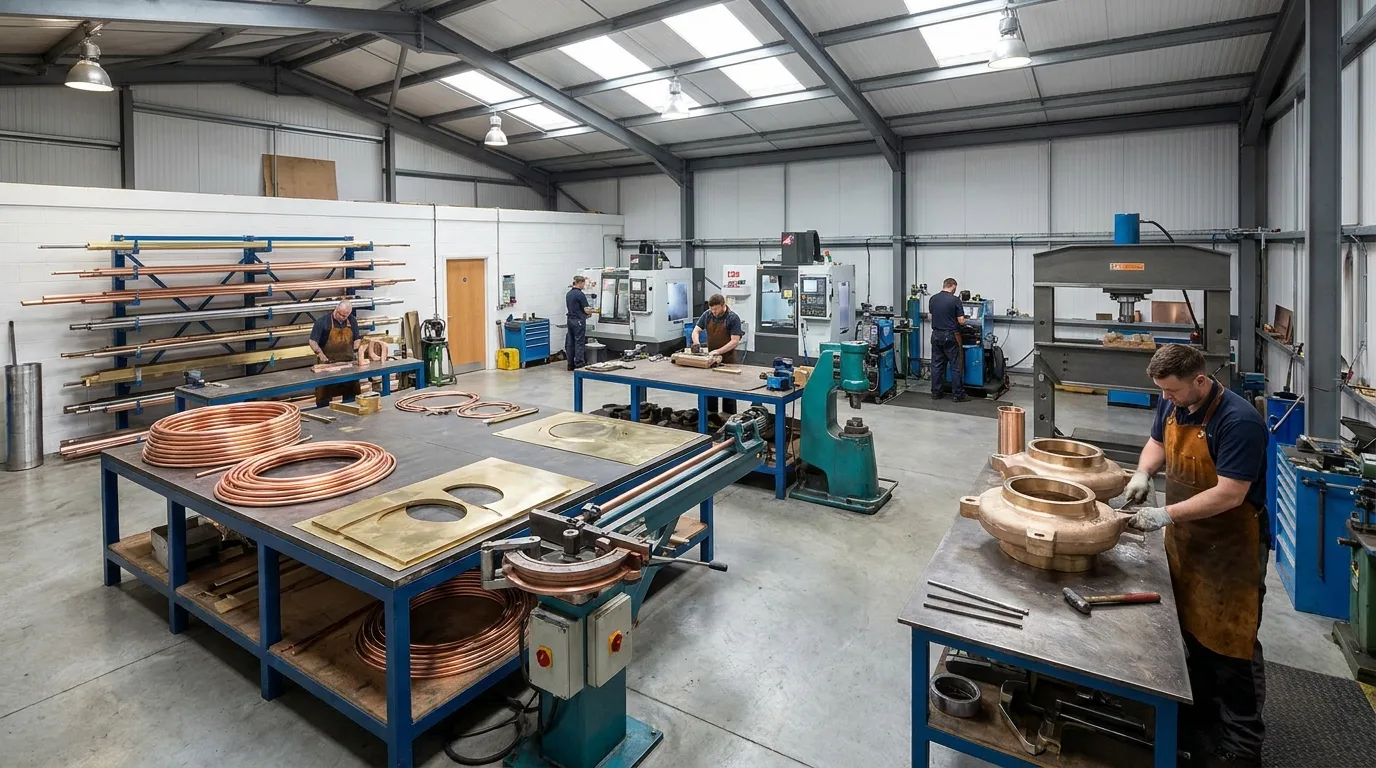
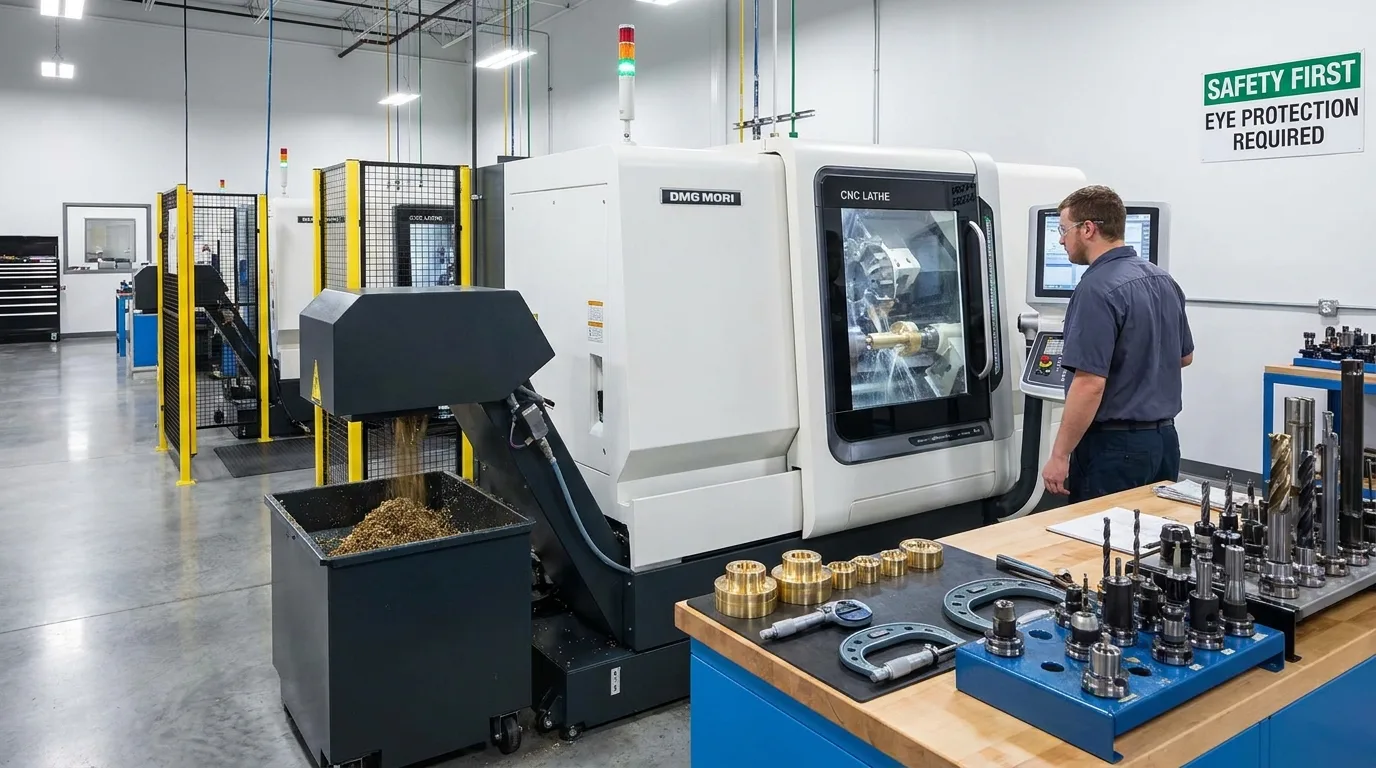
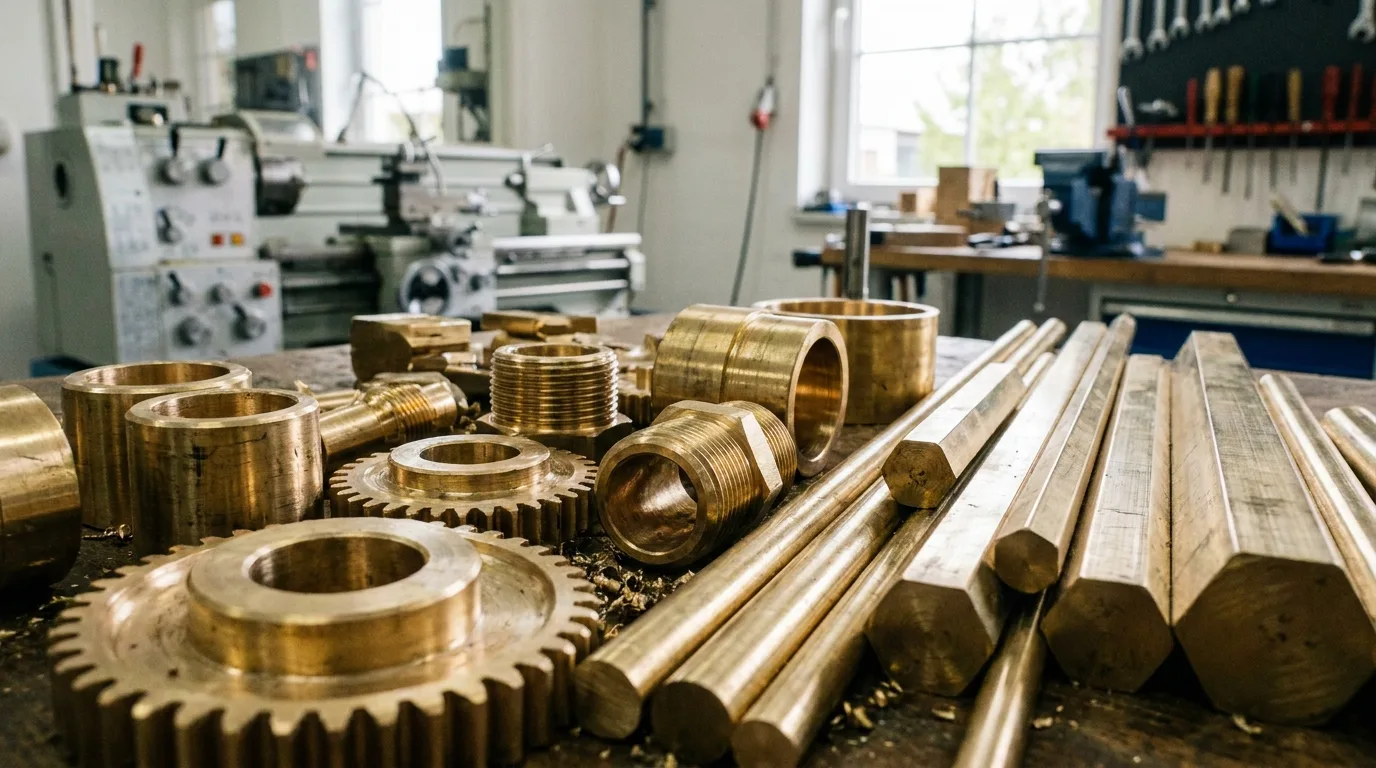
Machinability describes how readily a material can be cut, drilled, turned, milled, or otherwise shaped using machining equipment. Many brass alloys are well known for excellent machinability, making them popular for precision components, fittings, connectors, valves, and threaded parts. Copper is highly workable but can behave differently during machining because of its ductility and tendency to produce continuous chips. Bronze machinability varies substantially by alloy, with some grades designed for easy machining and others prioritising strength or wear resistance. Tool selection, cutting conditions, lubrication, and alloy grade all affect results. If a component requires numerous precise machining operations, checking the manufacturer’s machining recommendations can help avoid unnecessary tool wear, poor surface finish, or production inefficiency.
11. Compare Ease of Forming and Fabrication
Copper is highly ductile, which makes it well suited to bending, drawing, forming, and other fabrication processes. This is one reason copper tubing and sheet products can be shaped into useful configurations without excessive difficulty. Brass can also be formed effectively, but its formability depends strongly on its alloy composition and condition. Some brasses are optimised for cold working, while others are better suited to machining or casting. Bronze likewise covers a broad range, with some alloys being readily formed and others selected primarily for casting or wear resistance. When fabrication involves substantial bending, deep drawing, rolling, or other deformation, the exact grade and temper should be considered rather than assuming that all copper-based alloys behave alike.

12. Understand Their Casting Performance
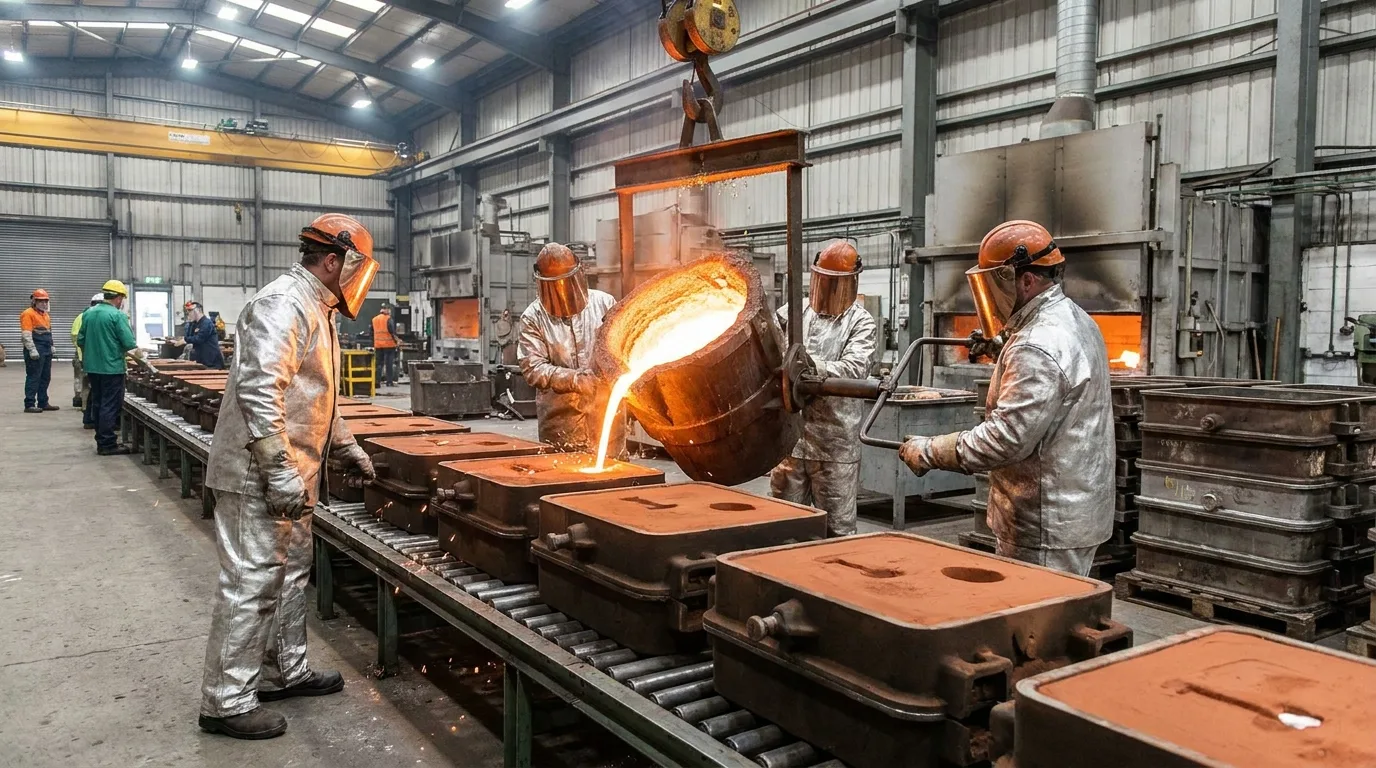
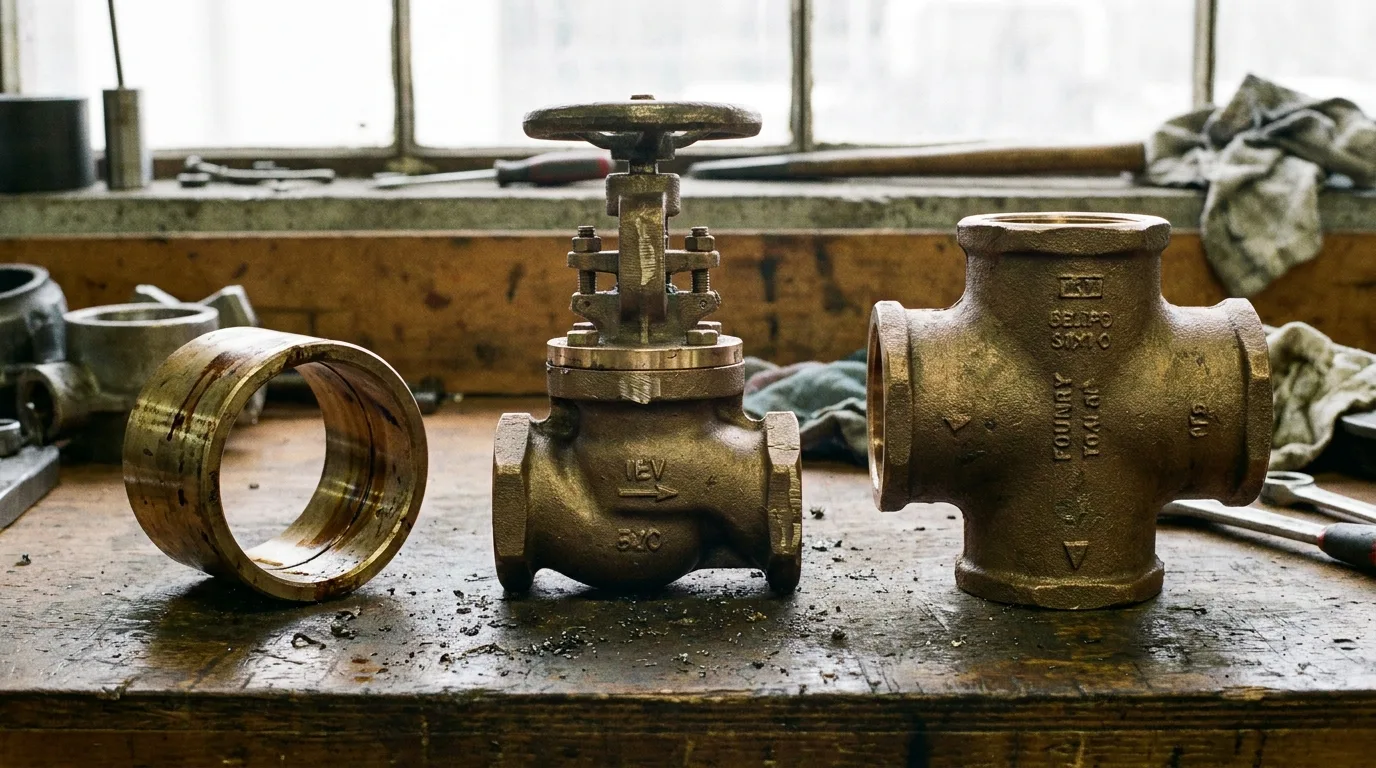
Casting allows manufacturers to produce complex shapes by pouring molten metal into a prepared mould. Brass and bronze are widely available in cast grades and can be selected for components requiring detailed shapes, strength, wear resistance, or corrosion performance. Copper can also be cast, although pure copper’s high thermal conductivity creates particular challenges during melting and solidification. Alloying can change fluidity, shrinkage behaviour, and other casting characteristics. Bronze has a long history in casting, from industrial components to sculpture, while brass is commonly cast into valves, fittings, hardware, and decorative products. For a cast component, the best material depends on the required geometry, mechanical properties, surface finish, production volume, and operating environment rather than on the metal’s appearance alone.
13. Explore Common Uses of Copper
Copper’s greatest advantage is its combination of conductivity, ductility, corrosion resistance, and relatively straightforward fabrication. Electrical wiring and busbars are major applications, while copper is also used in plumbing tubing, heat exchangers, roofing, cookware, electronics, and architectural details. Its attractive colour can make it useful for decorative surfaces as well. Over time, exposed copper can develop a patina that changes its appearance without necessarily indicating immediate material failure. In applications involving direct contact with water or other chemicals, the precise grade and environmental conditions still matter. Copper is often the logical choice when electrical or thermal conductivity is a primary requirement, but its relatively lower strength compared with many alloys can make brass or bronze preferable for mechanically demanding components.
14. Explore Common Uses of Brass
Brass is popular because it combines an attractive appearance with useful mechanical and manufacturing properties. It is commonly found in taps, valves, pipe fittings, locks, handles, hinges, fasteners, musical instruments, electrical terminals, and decorative hardware. Its machinability can make it especially economical for components requiring repeated cutting and precise threads. Different brass grades are engineered for different applications, so the appropriate alloy should be selected according to requirements such as corrosion resistance, forming, machining, and strength. Brass is also frequently used where a warm metallic finish is desired. However, appearance should not be the sole selection criterion for functional components; the alloy’s specification and suitability for the intended service conditions remain important.
15. Explore Common Uses of Bronze
Bronze is particularly useful where strength, wear resistance, and corrosion resistance are important. Bronze bearings and bushings can operate effectively in applications where sliding contact occurs, while specialised bronze alloys are used for gears, valves, pumps, marine hardware, and other components. Bronze is also famous for sculpture and architectural decoration because it can be cast into intricate forms and develops attractive surface character over time. Aluminium bronze, phosphor bronze, silicon bronze, and other specialised families provide different combinations of properties. Because the word bronze covers numerous alloys, buyers should identify the specific grade rather than assuming that all bronze products have identical performance. This distinction is especially important for load-bearing, marine, and high-wear applications.
16. Compare Weight and Density
Copper, brass, and bronze are all relatively dense metals, so none should be considered a lightweight material in the same sense as aluminium or many plastics. Their exact densities vary according to composition. Pure copper has a density of roughly 8.9 grams per cubic centimetre, while common brass and bronze alloys are in a broadly similar range, with specific values depending on their chemistry. This means weight differences between comparable components may be modest, but they can still matter in large structures, moving equipment, or transport applications. Engineers should use the actual density of the specified grade when calculating component mass. For everyday identification, weight can provide a clue, but it is not sufficiently distinctive to reliably identify an unknown copper alloy by itself.
17. Consider Cost and Availability
Material pricing changes with commodity markets, alloy composition, manufacturing method, dimensions, and supplier availability. Copper is a globally traded industrial metal, while brass and bronze prices reflect both their copper content and additional alloying elements. Fabricated products can also vary significantly in price because machining, casting, finishing, and certification may account for a substantial portion of the final cost. Rather than comparing only the price per kilogram, consider the cost of the complete component and the performance required during its service life. A more expensive alloy may reduce maintenance or replacement requirements in a demanding application, while an unnecessarily specialised material can increase costs without providing a meaningful benefit. Obtaining comparable specifications and quotations is the most useful way to assess value.
18. Know How to Choose Between Copper, Brass, and Bronze
The right material depends on what the component needs to do. Choose copper when excellent electrical or thermal conductivity and high ductility are priorities. Brass can be attractive when machinability, appearance, moderate strength, and useful corrosion resistance need to be balanced. Bronze may be preferable where wear resistance, mechanical strength, or demanding environmental performance is more important. Other factors include manufacturing method, operating temperature, exposure to water or chemicals, joining technique, required surface finish, and expected service life. It is also important to distinguish between general material families and specific grades. A useful selection process begins with the application’s requirements and then compares candidate grades against measurable properties. This approach is more reliable than selecting a material based only on colour, price, or a generic label.
19. Copper vs. Brass vs. Bronze at a Glance
Although these metals share copper as a foundation, their differences make them suitable for different jobs. Copper stands out for electrical and thermal conductivity and excellent ductility. Brass is generally recognised for its machinability, attractive golden colour, and useful balance of strength and corrosion resistance. Bronze encompasses many alloys and is often selected for wear resistance, strength, corrosion resistance, and demanding mechanical applications. None is universally superior because the appropriate choice depends on the component and its environment. For a quick comparison, think of copper as the conductivity-focused option, brass as a versatile and highly machinable copper alloy, and bronze as a broad family often chosen for strength and wear-related performance. Always verify the specific grade when technical performance matters.
Conclusion
Copper, brass, and bronze may look similar, but their compositions create meaningful differences in conductivity, strength, hardness, machinability, corrosion resistance, and typical applications. Copper is particularly valuable for electrical and thermal duties, brass offers an appealing combination of machinability and versatility, and bronze provides a wide range of alloys suited to wear, strength, and corrosion-related requirements. The most important lesson is that the broad material name is only the starting point. Specific grades can behave very differently, so technical specifications should guide decisions for important projects. By considering the operating environment, manufacturing process, mechanical demands, appearance, availability, and total cost, you can select the copper-based material that best fits the job.