Window flower boxes are one of the easiest ways to add color, charm, and personality to a home without taking up valuable yard space. Whether you live in a cottage, townhouse, apartment, or modern home, the right window box can turn an ordinary exterior into a welcoming focal point. From overflowing seasonal blooms to neat herb displays and minimalist planters, there are countless ways to tailor a window box to your home’s architecture and your gardening style. The key is choosing plants that suit the available sunlight, selecting a box with good drainage, and combining colors and textures thoughtfully. These window flower box ideas offer inspiration for creating displays that look beautiful from both indoors and outdoors while remaining practical enough to maintain throughout the growing season.
1. Classic Cottage Flower Box
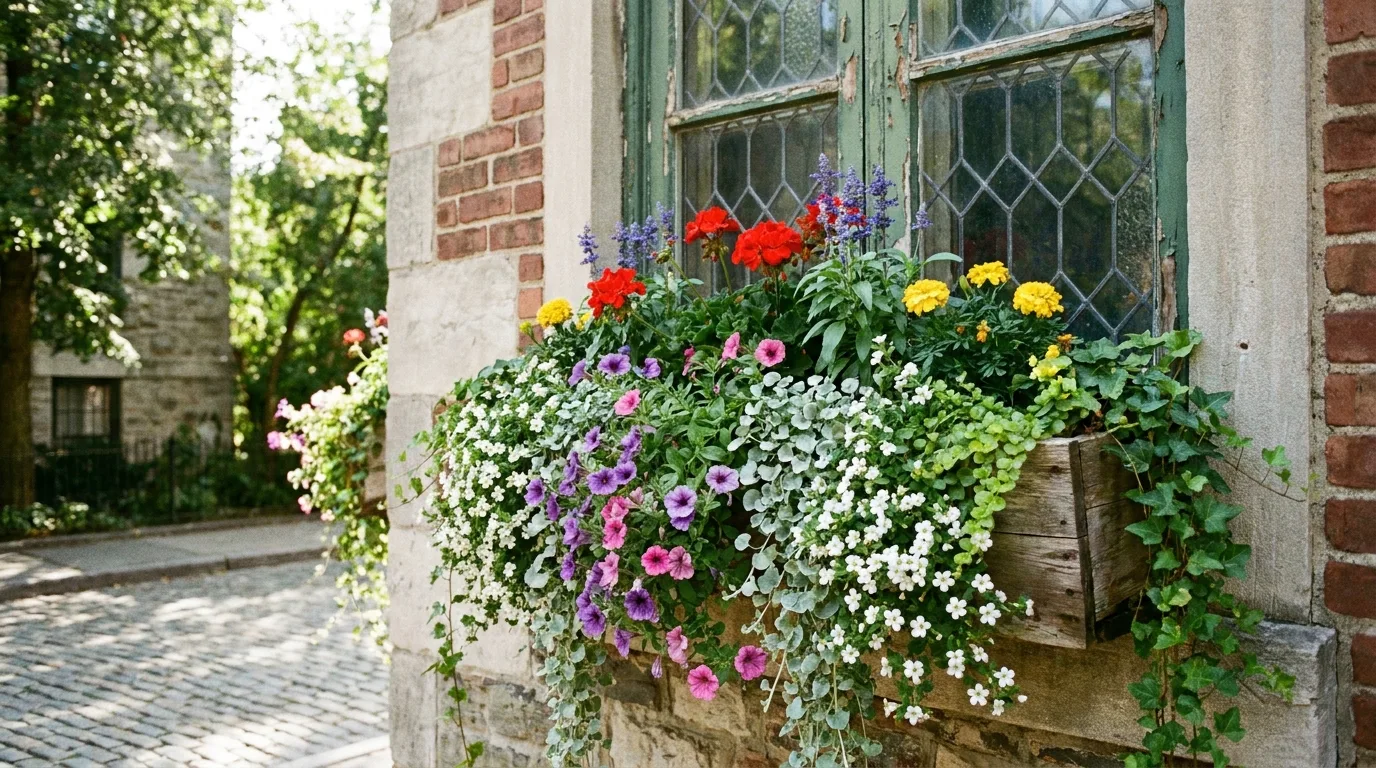
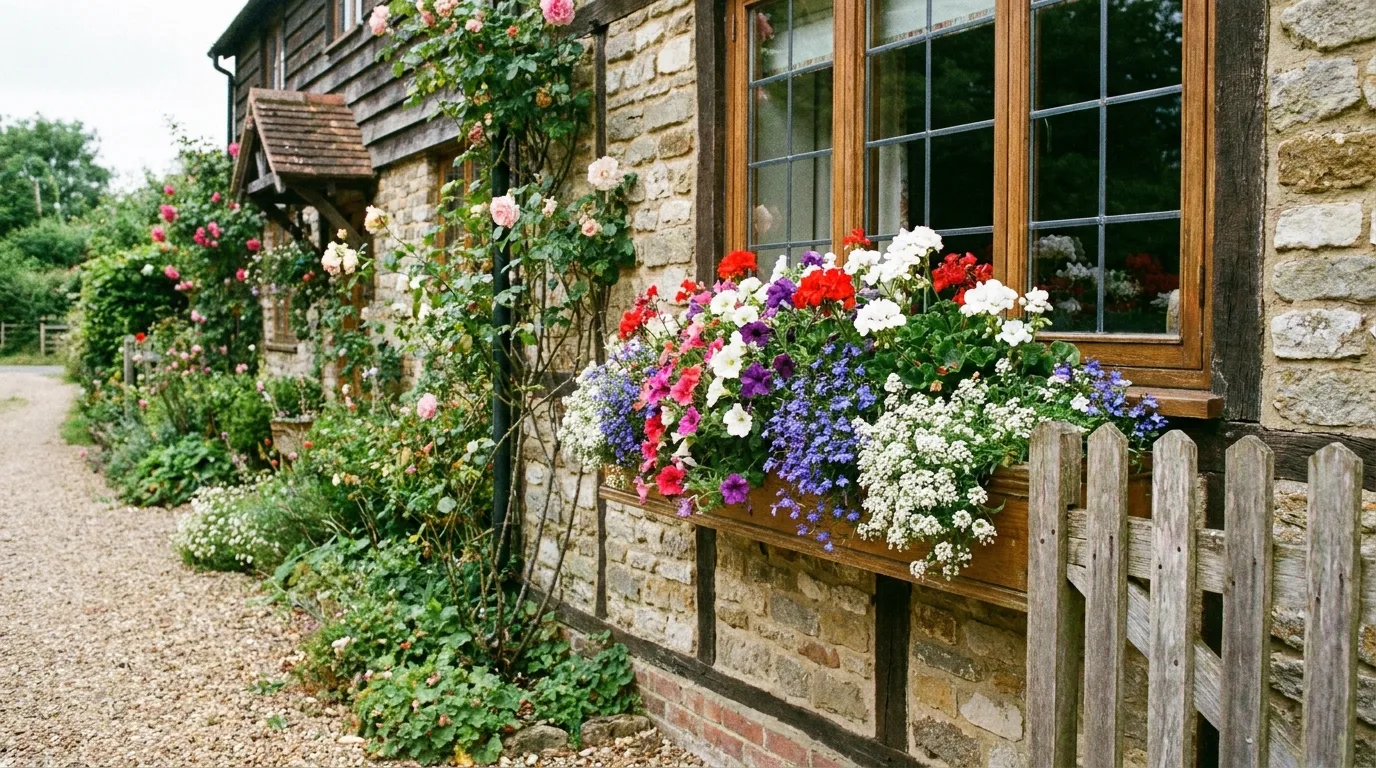
Create timeless curb appeal with a traditional window box overflowing with cheerful cottage-garden flowers. Combine plants such as geraniums, petunias, lobelia, and sweet alyssum to create a relaxed arrangement with varied heights and textures. A white, cream, or natural wood box works especially well with brick, stone, or painted siding. Let some flowers spill gently over the front edge while taller blooms provide structure near the back. This layered approach makes the box look abundant without requiring dozens of plant varieties. For a cohesive exterior, repeat one or two flower colors elsewhere around the entryway or porch. Regular deadheading and watering will help maintain the lush, informal appearance that makes this style so inviting.
2. Bright Window Box With Colorful Petunias
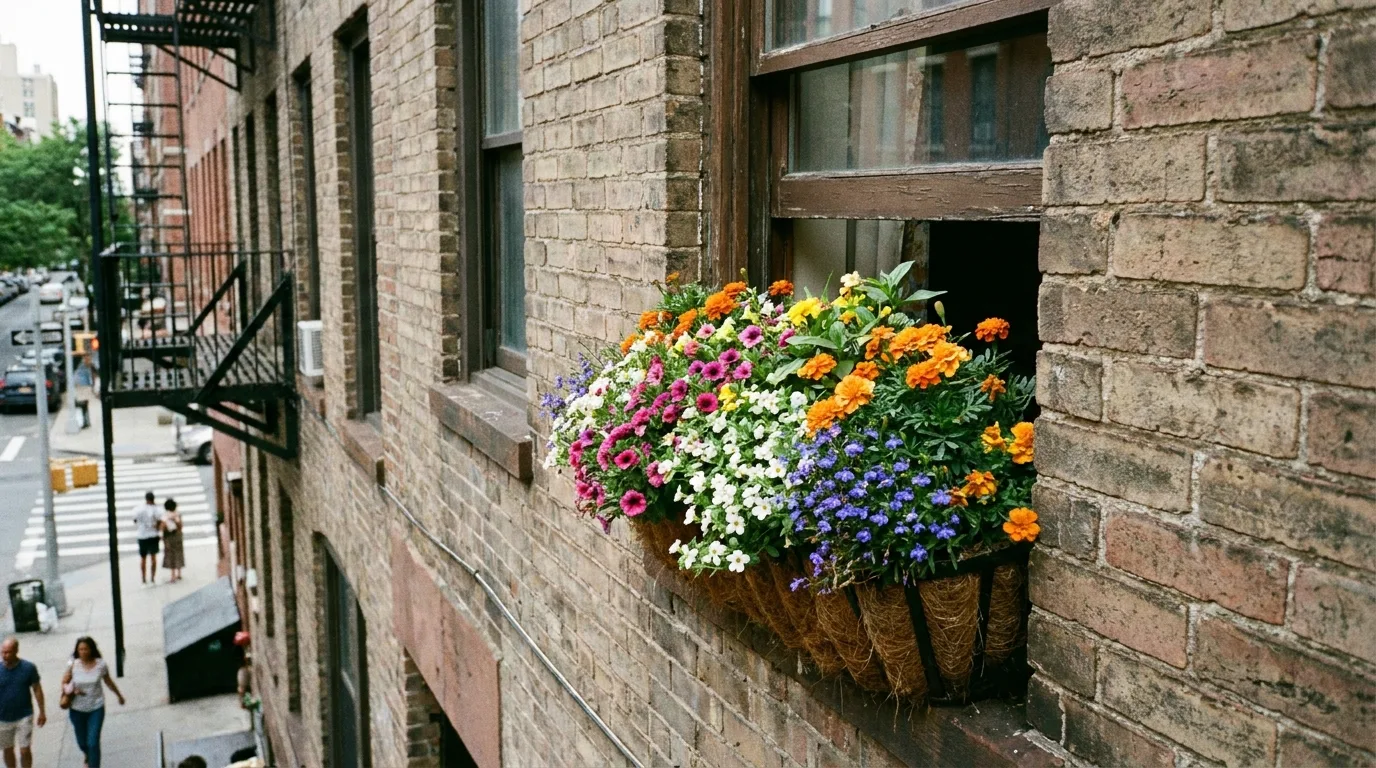
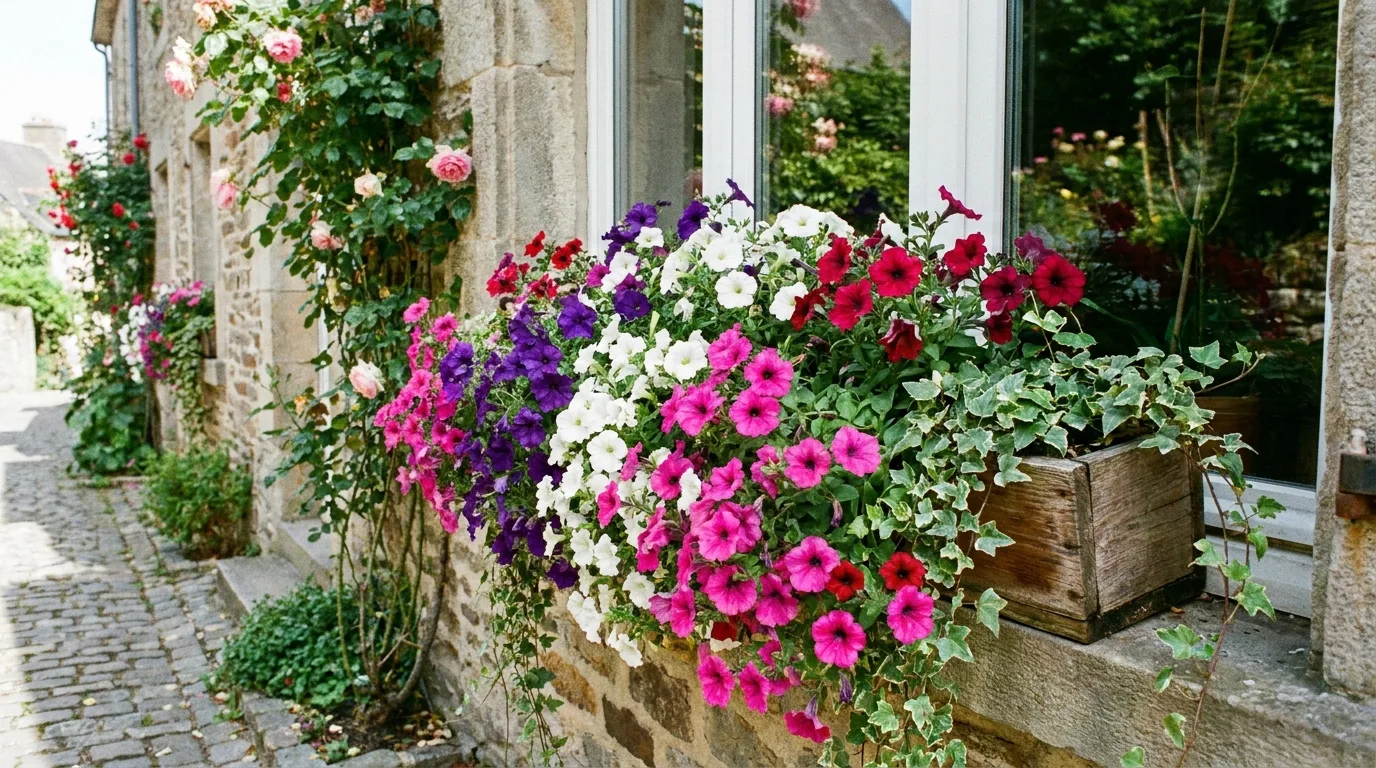
Petunias are a dependable choice when you want a window box filled with bold, long-lasting color. Their trailing growth habit makes them particularly attractive in containers, where blooms can cascade over the edges. Try combining pink, purple, white, and red varieties for a lively display, or keep the palette limited to two complementary shades for a more polished look. Wave and Supertunia types can create especially full displays when given sufficient sunlight, moisture, and feeding. Place taller companion plants toward the center or back of the box if you want additional dimension. Because petunias can become thirsty during hot weather, choose a container with drainage holes and check moisture regularly.
3. Elegant White Flower Box
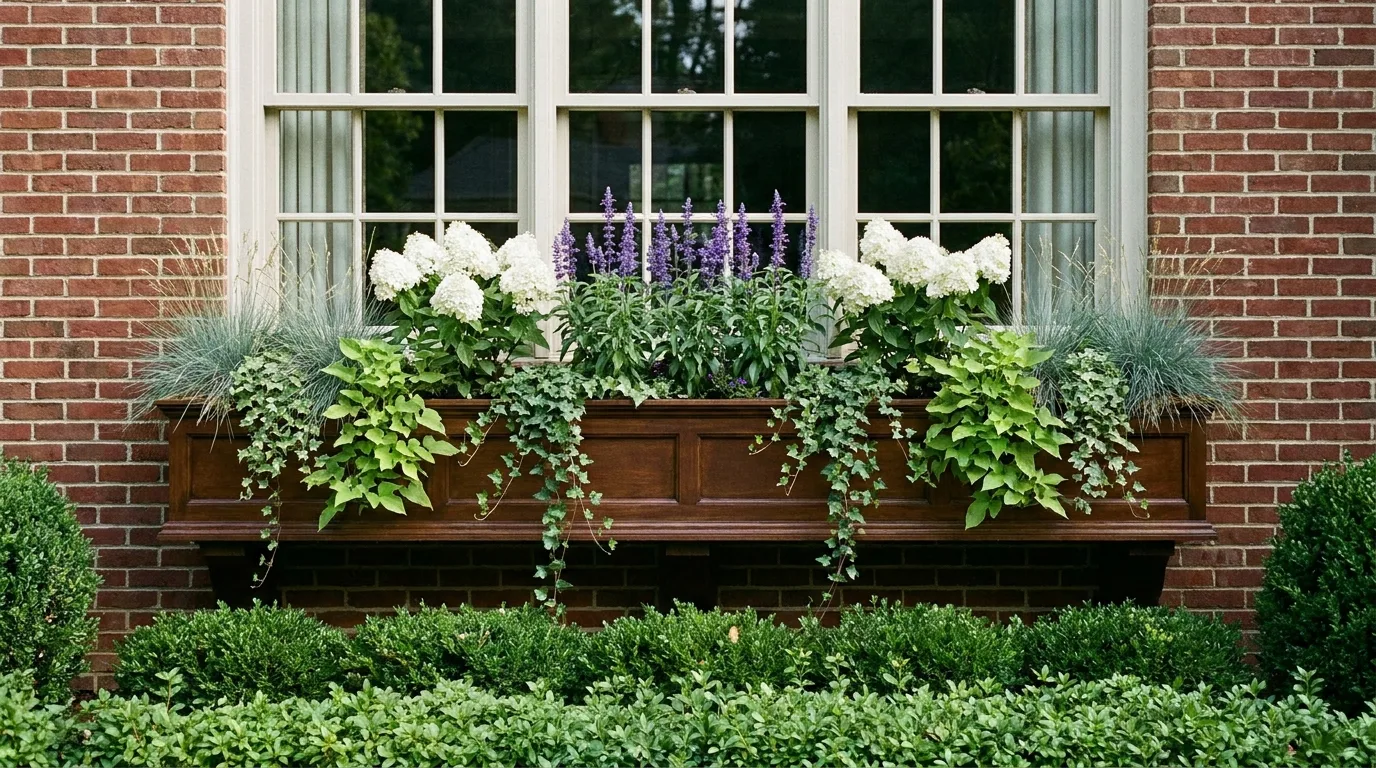
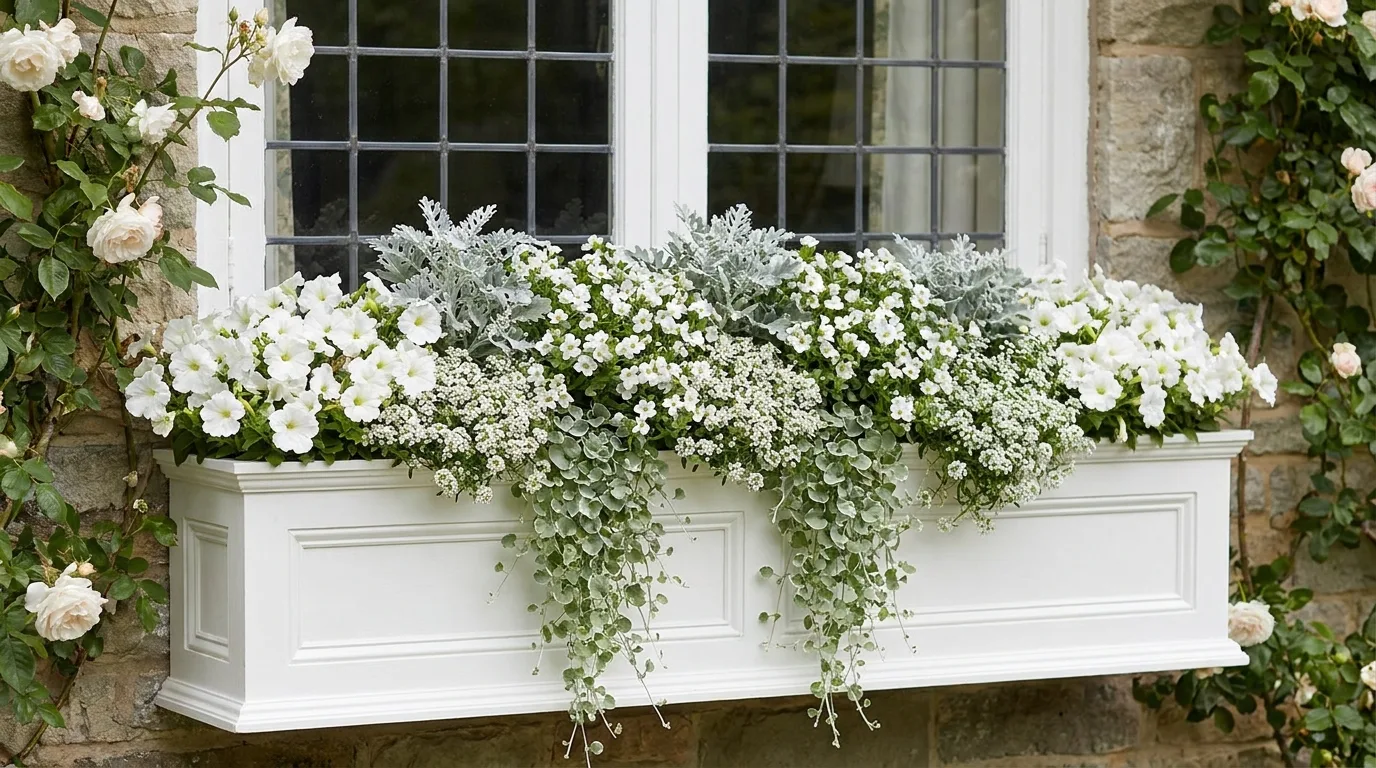
A white-on-white window flower box creates a fresh, sophisticated look that suits traditional and contemporary homes alike. Fill a crisp white planter with white petunias, bacopa, alyssum, begonias, or geraniums for a monochromatic arrangement that feels calm rather than plain. Add silvery foliage such as dusty miller or dichondra to introduce subtle contrast without breaking the palette. This idea works particularly well against dark siding, brick, or richly stained wood because the flowers become an eye-catching architectural accent. To keep the display looking intentional, vary flower shapes and plant heights rather than relying on a single species. White blooms also reflect evening light beautifully, making the window box especially appealing around porches and entrances.
4. Rustic Wooden Window Box
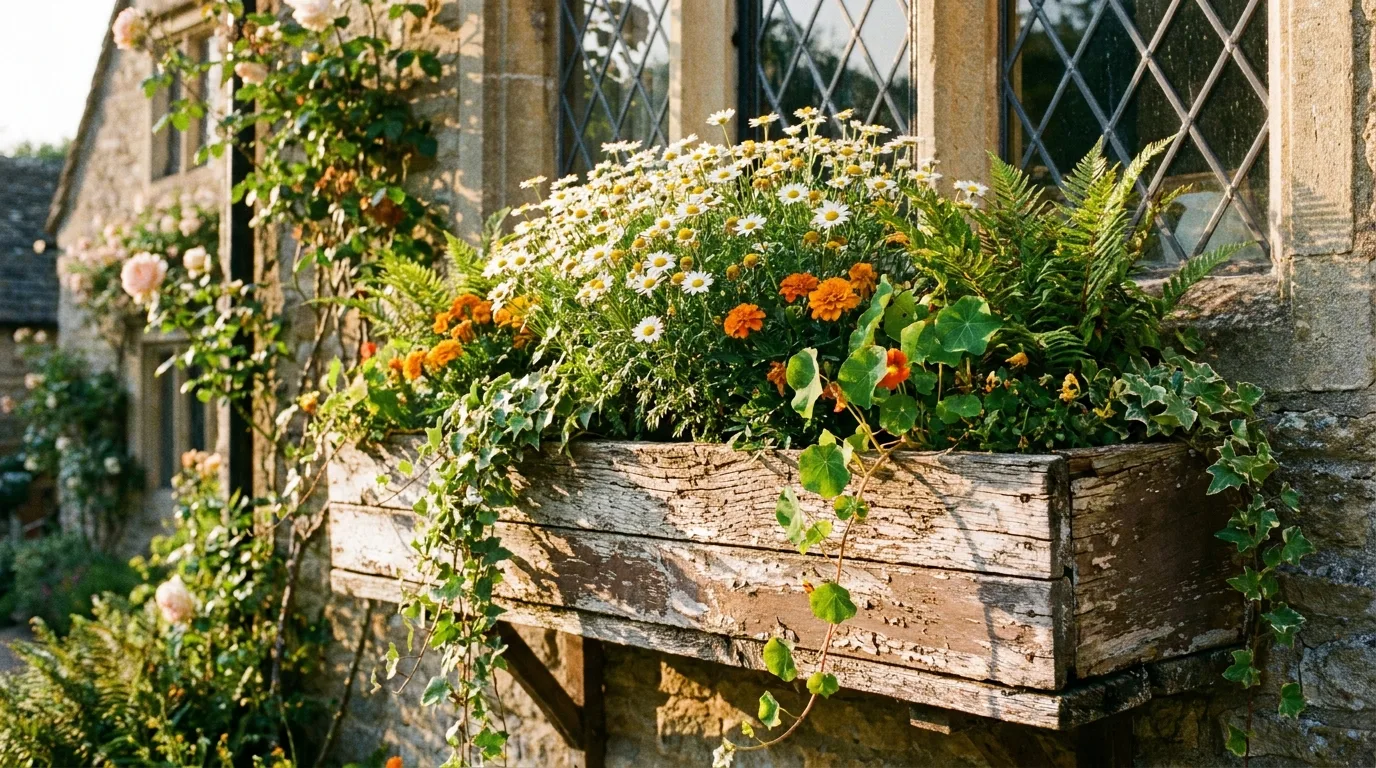
For a warm, natural appearance, choose a window box made from wood or one designed to resemble weathered timber. Cedar, redwood, and other naturally durable woods can complement rustic architecture while giving flowering plants an organic backdrop. Fill the box with relaxed combinations of daisies, marigolds, trailing vines, and seasonal greenery. A slightly weathered finish can enhance the farmhouse or cottage character, while a stained wood box offers a more refined rustic look. Make sure the container is properly sealed if needed and has adequate drainage. Mount it securely beneath the window, leaving enough clearance for watering and maintenance. The result is a welcoming display that feels connected to the surrounding landscape rather than overly formal.
5. Modern Black Window Box
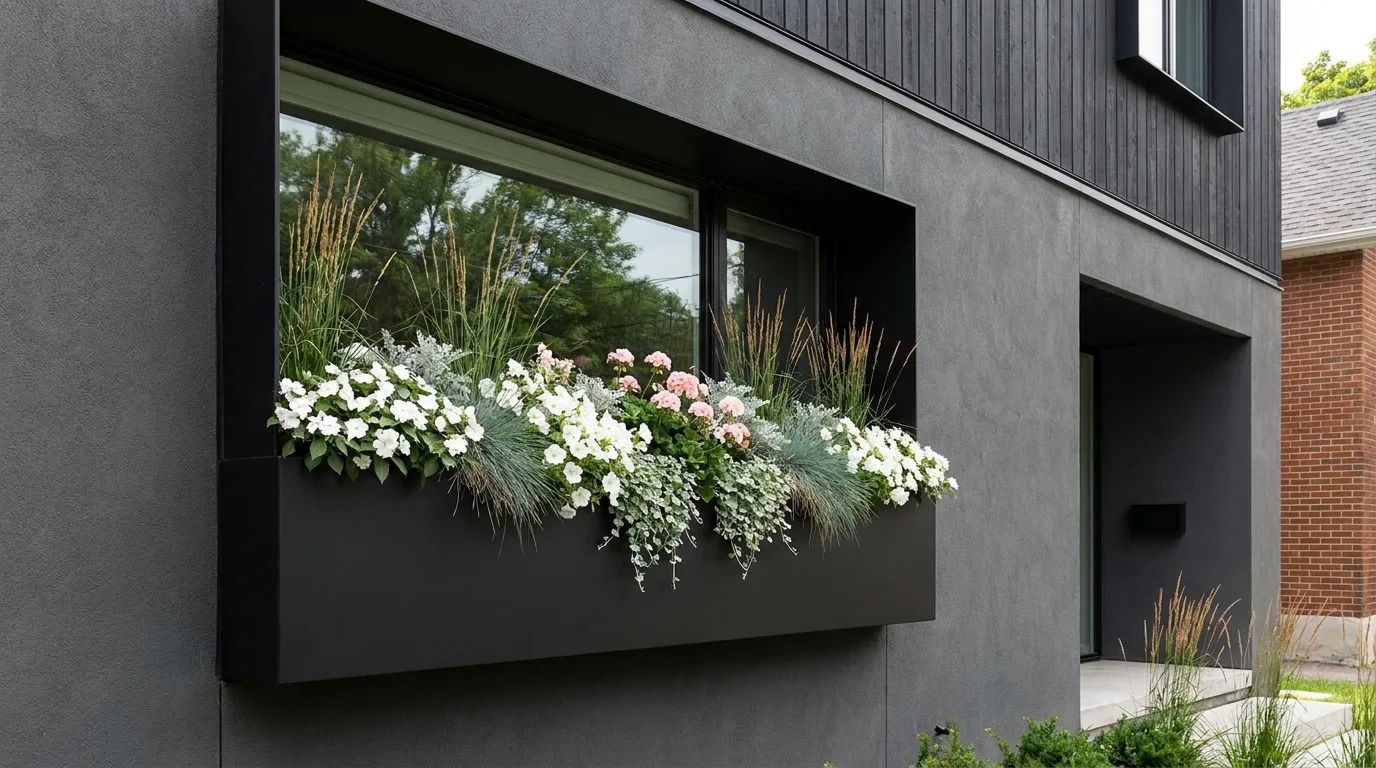
A matte black window box can give a contemporary exterior a dramatic architectural accent. The dark container creates a strong contrast with bright flowers, pale siding, concrete, or white window frames. Keep the planting scheme relatively restrained for a modern effect. White geraniums, pale pink petunias, ornamental grasses, and silver-leaved plants can create a sophisticated combination without appearing busy. You can also use one dominant plant variety repeated throughout the box for a clean, designer-inspired appearance. Black containers absorb heat, so monitor soil moisture carefully during hot weather, particularly when the box receives intense afternoon sun. This style is ideal when you want flowers to complement modern architecture instead of competing with its clean lines.
6. Window Box Filled With Herbs
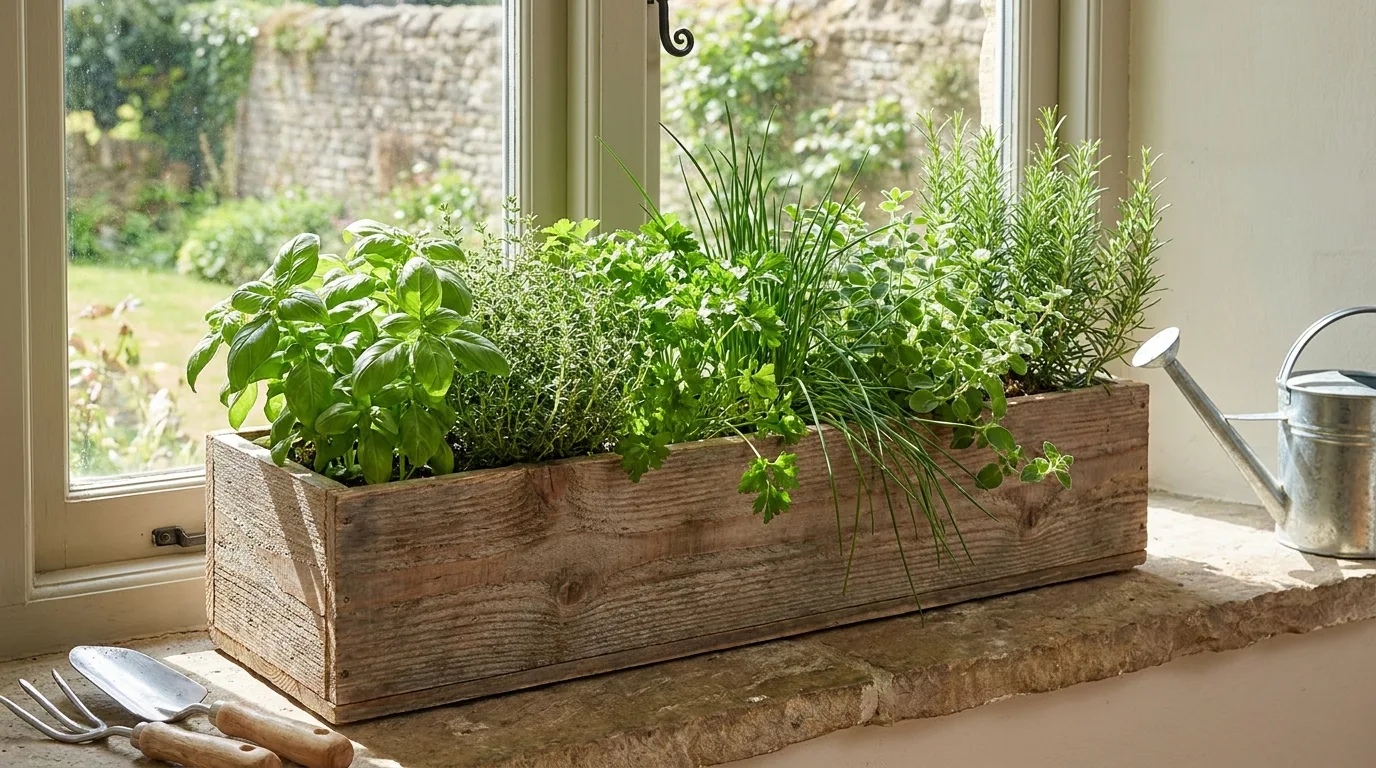
A window box does not have to be purely decorative. Turn it into a compact kitchen garden by growing useful herbs such as basil, thyme, parsley, chives, oregano, and rosemary. Position herbs according to their sunlight and watering requirements, and avoid combining plants with dramatically different moisture needs in the same container. A sunny kitchen window can make harvesting convenient, although an exterior box is also practical when mounted safely outside. Choose a box deep enough for healthy root development and use a quality container mix with good drainage. Labeling the herbs with small decorative markers can add charm while making it easier to identify each plant. This approach combines beauty, fragrance, and everyday usefulness in one small space.
7. Box Overflowing With Geraniums
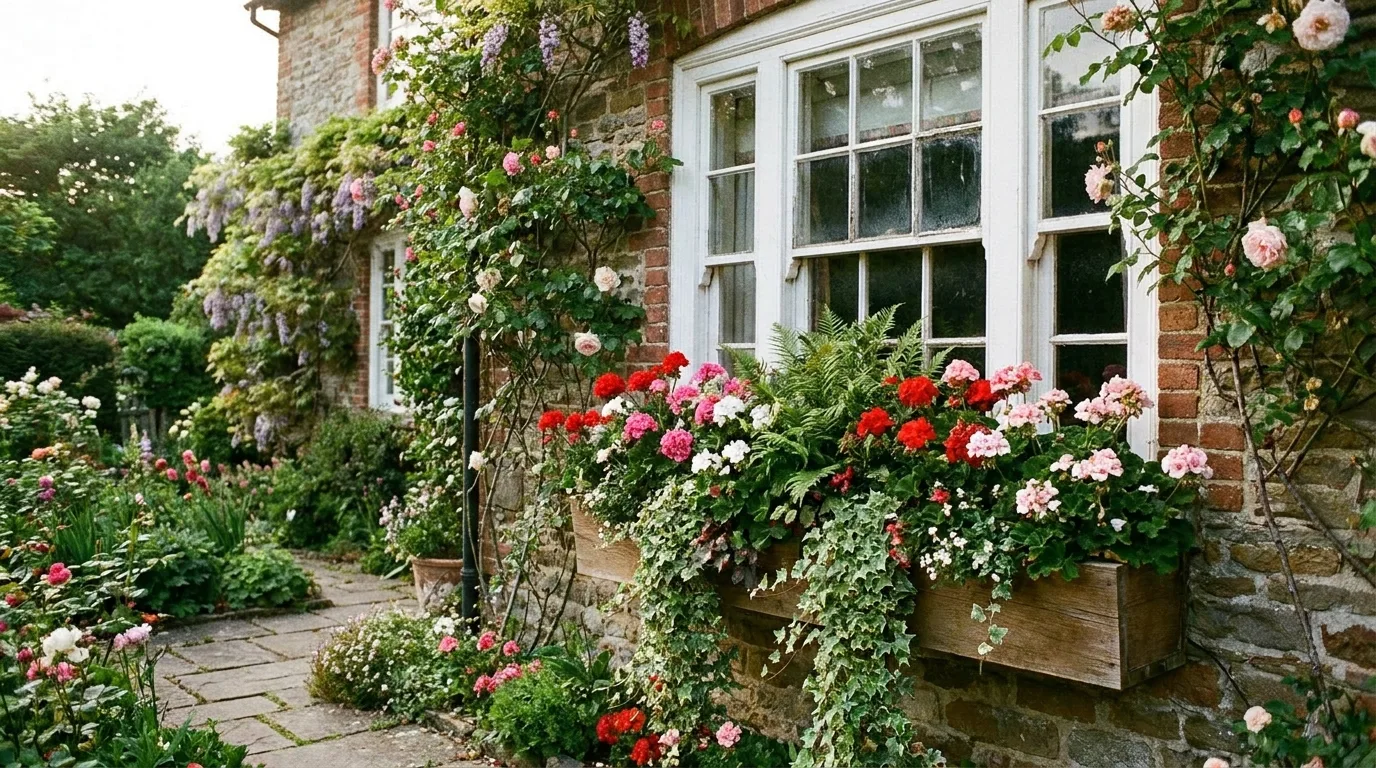
Geraniums are a classic choice for window boxes because they provide sturdy foliage and abundant flowers in a range of vibrant colors. Red geraniums create a traditional European-inspired appearance, while pink, coral, and white varieties can soften a home’s exterior. Plant them in groups rather than scattering too many colors if you want the display to look cohesive. Trailing varieties can spill over the front of the container, while upright types provide a fuller central layer. Geraniums generally appreciate plenty of light and well-drained soil, so avoid keeping the roots consistently waterlogged. Remove faded flowers regularly to encourage continued blooming and maintain a neat appearance. Their strong visual presence makes them especially effective beneath windows with simple architectural detailing.
8. Farmhouse Window Box With Greenery
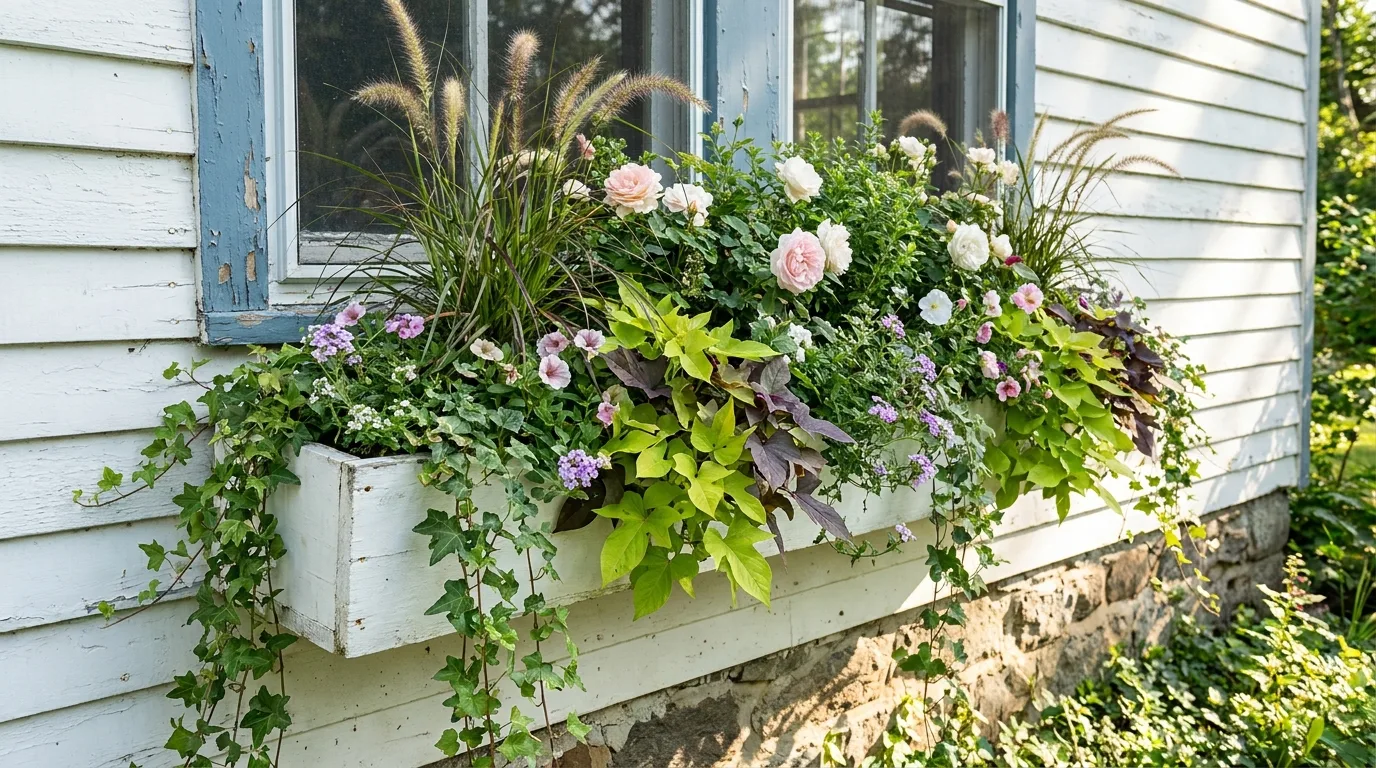
For farmhouse charm, emphasize foliage as much as flowers. Combine trailing ivy, sweet potato vine, ornamental grasses, and compact flowering plants to create a relaxed arrangement with plenty of movement. A white-painted or naturally weathered wooden box reinforces the farmhouse aesthetic, especially when paired with simple window trim. Keep the palette soft with whites, creams, greens, and muted pinks rather than using too many intense colors. The varied foliage shapes help the box remain attractive even between flowering cycles. This style also works well on porches, barns, garden sheds, and other structures where a slightly informal appearance feels natural. Trim vigorous vines when necessary so they frame the window rather than completely covering it.
9. Window Box With Trailing Vines
Trailing plants can make a window box appear larger and more dramatic by softening its edges with cascading foliage and flowers. Bacopa, dichondra, creeping jenny, ivy, and trailing petunias are useful choices, depending on your climate and light conditions. Place the trailing plants along the front and sides of the box, then add upright flowers or foliage toward the back for depth. This arrangement is especially effective on upper-story windows because the greenery creates a beautiful vertical connection between the window and the lower landscape. Avoid choosing invasive vines simply because they grow quickly. Instead, select manageable container plants and prune them regularly. With the right combination, even a narrow box can create an abundant, layered effect.
10. Seasonal Fall Window Flower Box
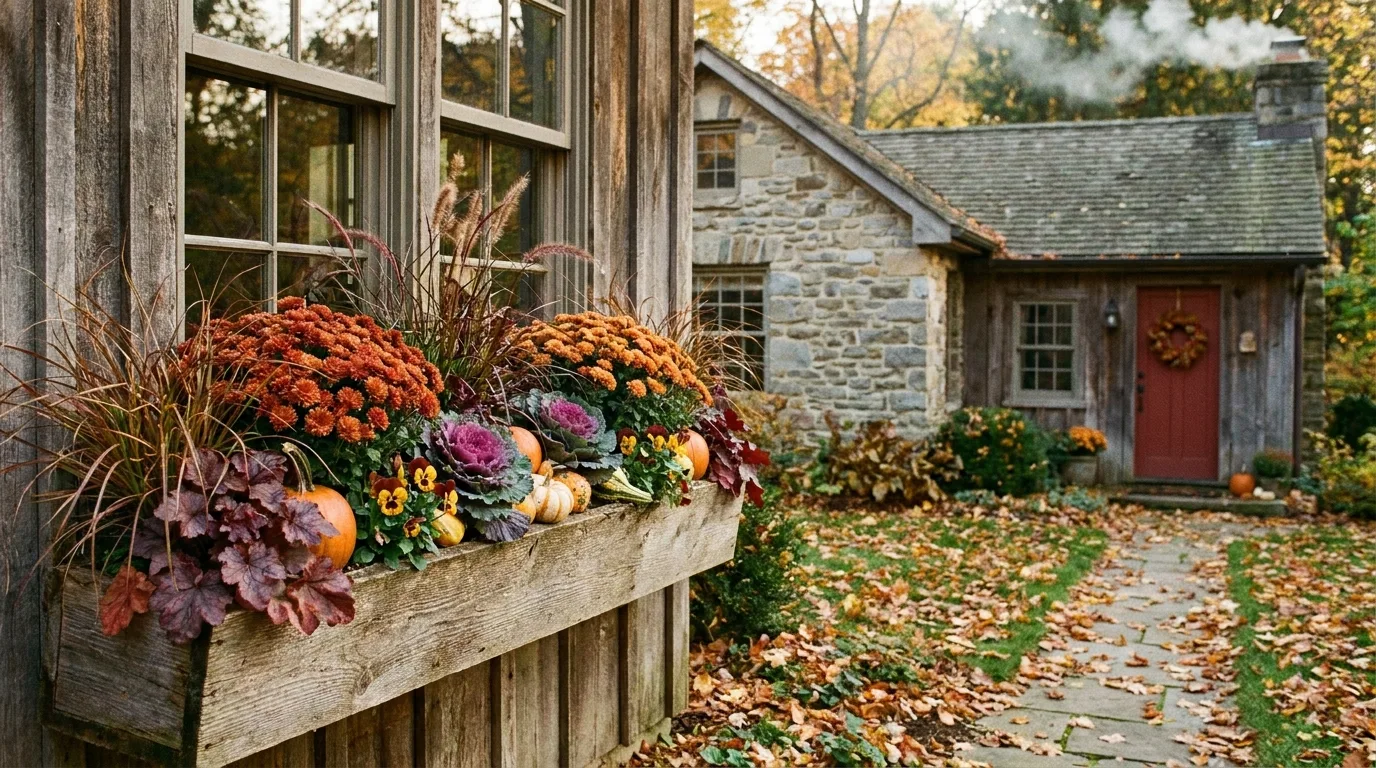
Refresh your window boxes for autumn by replacing summer flowers with plants and accents that celebrate the changing season. Chrysanthemums, ornamental kale, pansies, heuchera, grasses, and trailing foliage can provide color after many summer blooms begin to fade. Add small pumpkins, gourds, or natural branches sparingly if you want a distinctly seasonal arrangement. Warm tones such as burgundy, orange, bronze, yellow, and cream work beautifully together, but you can also create a sophisticated display using only muted foliage and white flowers. Choose plants that tolerate the cooler temperatures of your region. A fall window box can remain attractive for weeks when spent blooms and damaged foliage are removed promptly, giving the exterior a welcoming seasonal update.
11. Spring Window Box Full of Tulips
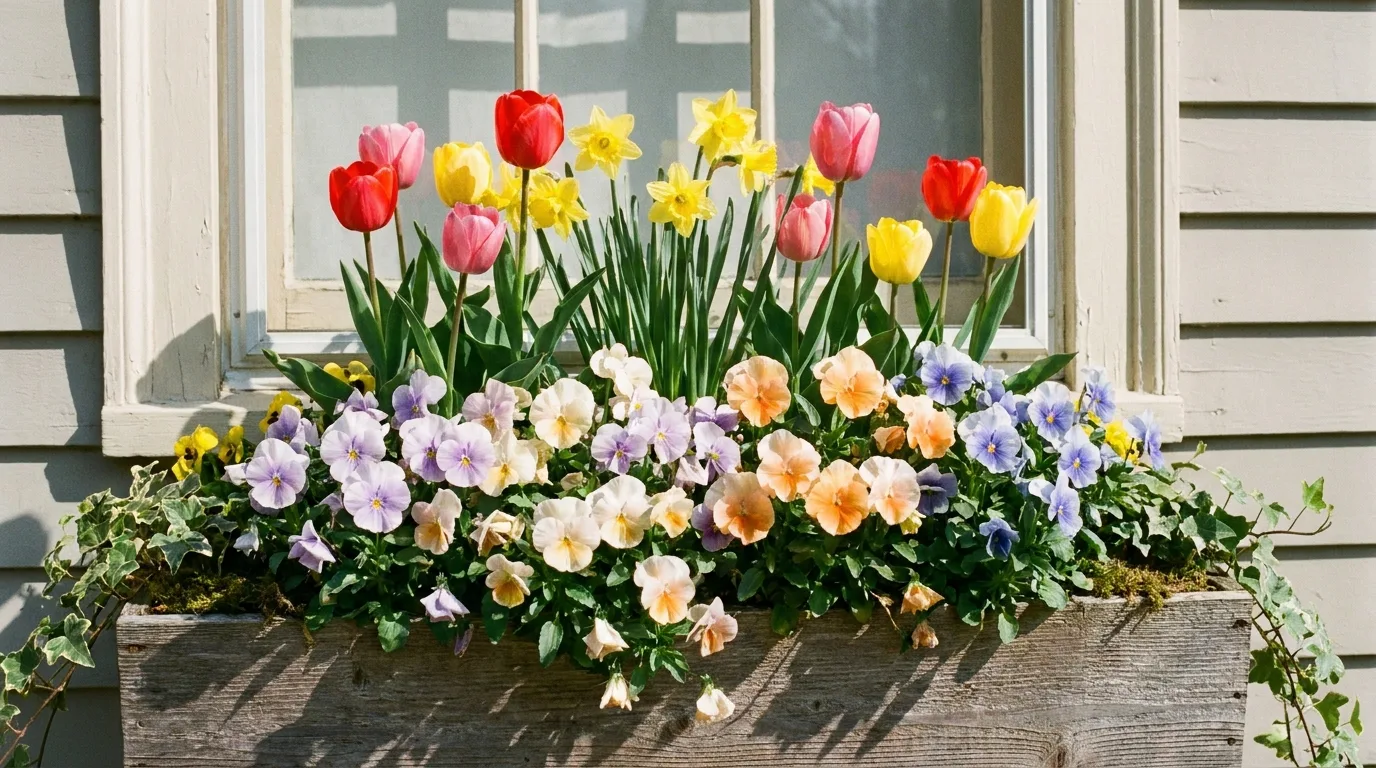
Celebrate spring with a cheerful window box featuring tulips, daffodils, pansies, violas, and other cool-season favorites. Bulbs can create an especially striking display when planted in groups, while low-growing pansies fill the gaps around their stems. Choose a coordinated color scheme such as yellow and purple, pink and white, or a mixture of soft pastel shades. If using bulbs, plan ahead because they need the appropriate planting conditions and timing for your climate. Spring boxes can be temporary displays, allowing you to replace fading bulbs and flowers with warm-season plants later. Position the container where the blooms can be enjoyed from both inside and outside, turning a simple window into a seasonal focal point.
12. Small Window Box for Compact Spaces
You do not need a large window or spacious exterior to enjoy a flower box. A narrow container can provide plenty of visual impact when planted thoughtfully. Choose compact varieties that remain proportional to the window, such as dwarf marigolds, compact petunias, bacopa, lobelia, or small begonias. Rather than overcrowding the planter, select two or three complementary plants and allow their growth habits to create the fullness over time. A slim box can work beneath apartment windows, narrow porches, balconies, and small kitchen windows. Pay particular attention to the weight of the container once it is filled with damp soil. Proper brackets and secure installation are essential, especially for boxes mounted above pedestrian areas.
13. Mediterranean-Inspired Window Box
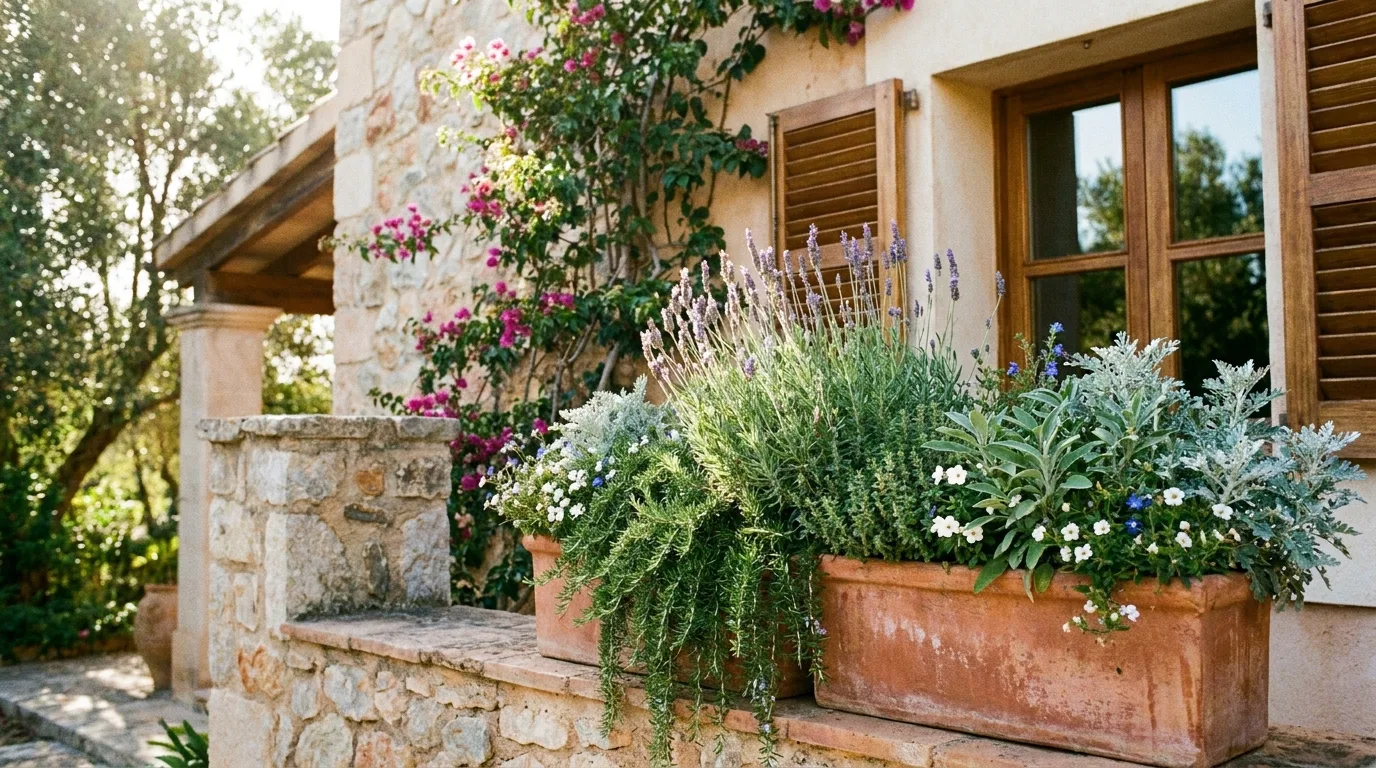
Bring a sun-soaked Mediterranean feeling to your exterior with herbs, silvery foliage, and warm-toned flowers. Lavender, thyme, rosemary, sage, and compact ornamental grasses can create an attractive textural base, while small flowers add seasonal color. Terracotta or weathered clay-colored containers reinforce the theme, although a simple wooden box can work just as well. This planting style is particularly suitable for sunny locations where many Mediterranean plants naturally thrive. Use a free-draining potting mix and avoid excessive watering, especially for herbs that prefer drier conditions between waterings. The combination of fragrant foliage and muted colors creates a relaxed display that looks especially appealing alongside stucco walls, stonework, warm wood, or other natural materials.
14. Romantic Window Box With Pink Blooms
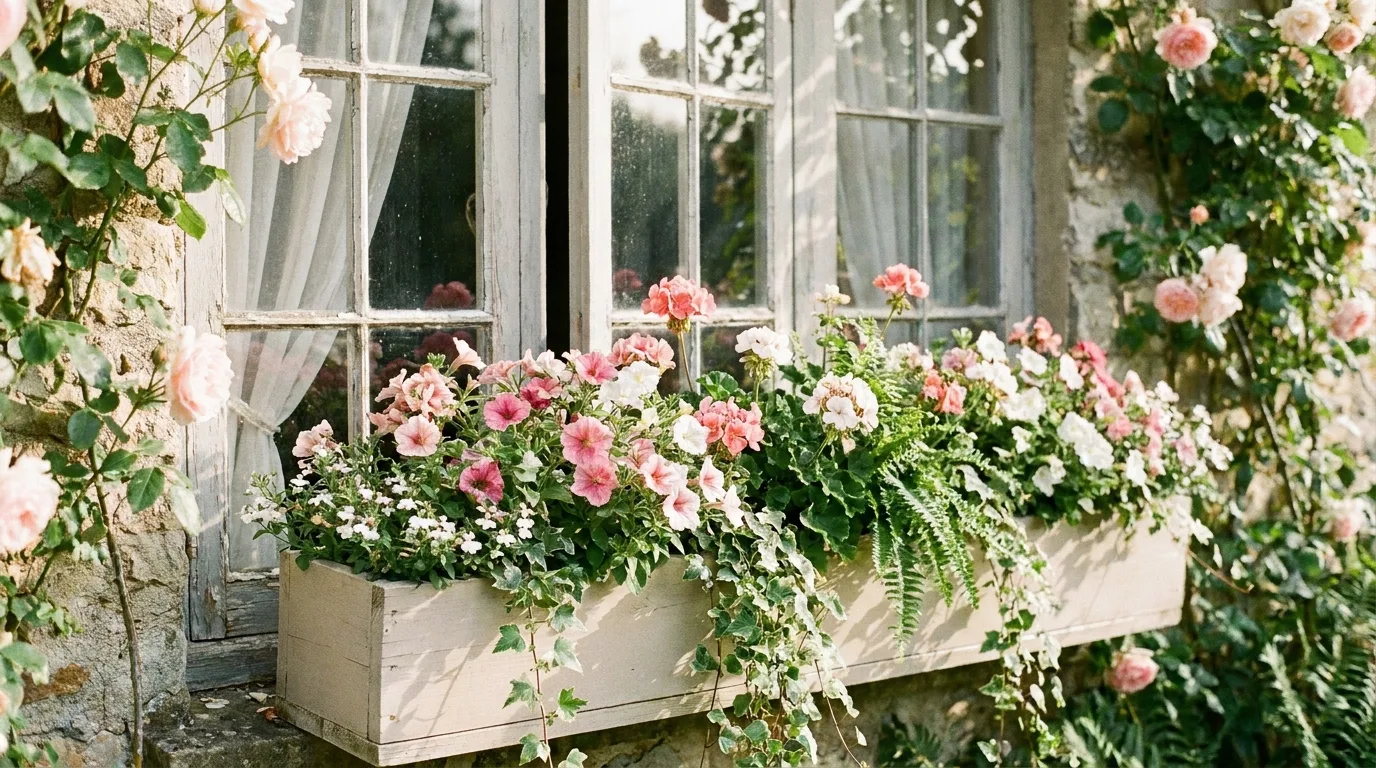
For a soft, romantic exterior, build a window box around layers of pink flowers. Mix blush, rose, and deeper pink shades with white blooms and green foliage to prevent the arrangement from becoming visually flat. Roses are beautiful where suitable, but smaller plants such as petunias, geraniums, calibrachoa, begonias, and bacopa are often easier choices for containers. Use trailing plants at the front and taller flowers toward the window to create a gentle cascading effect. A white, cream, or pale wood box complements this color palette particularly well. This idea suits cottage-style homes, bedrooms, porches, and garden-facing windows where you want the exterior to feel welcoming and distinctly feminine without becoming overly elaborate.
15. Edible Flower Box With Strawberries
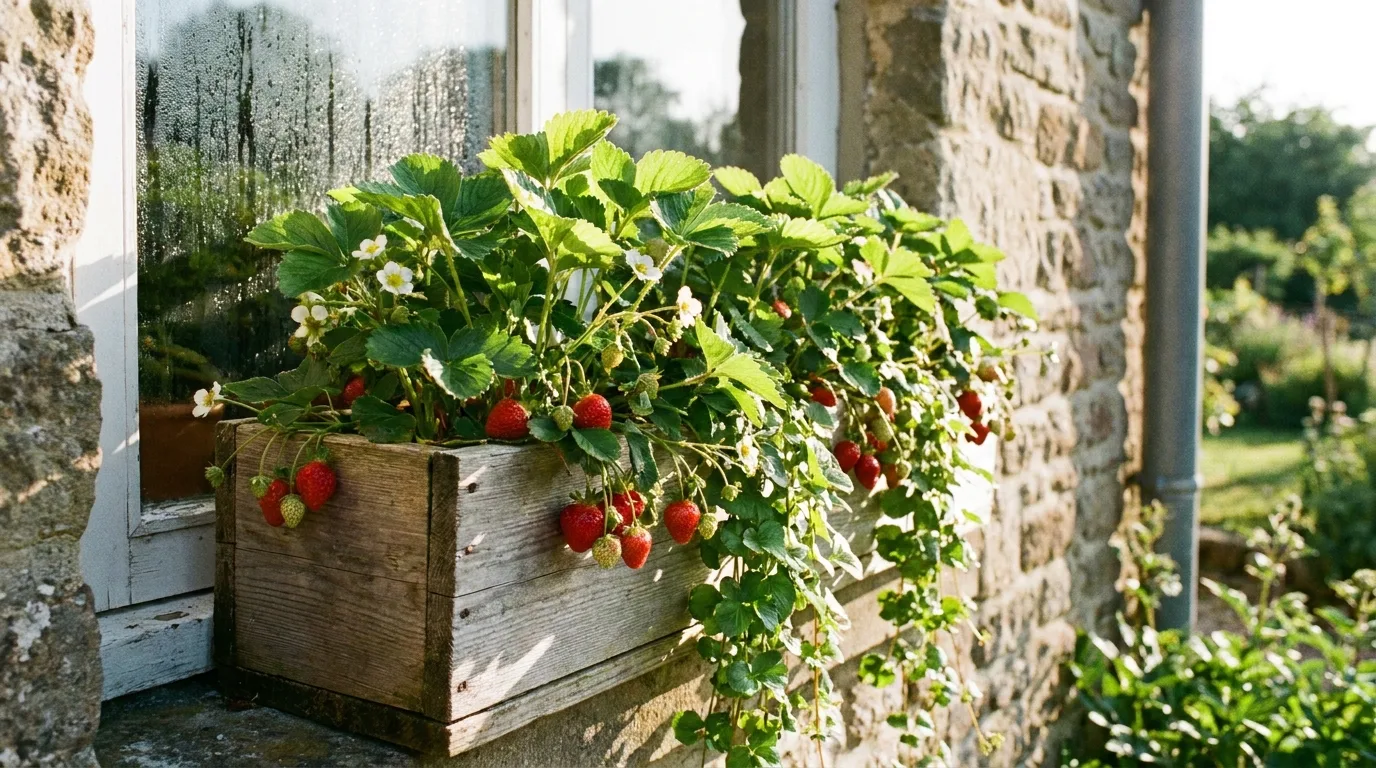
Combine decorative planting with edible gardening by growing strawberries in a sunny window box. Compact strawberry plants produce attractive white flowers followed by colorful fruit, while their runners can cascade over the container for added visual interest. Pair them with herbs such as thyme or chives if their growing requirements are compatible, or let the strawberries create a simple monochromatic display. Choose a deep, well-drained box and use fresh potting soil suitable for container growing. Position the planter where it receives enough sunlight for fruit production, and keep the soil consistently moist without allowing it to remain saturated. Harvest ripe berries promptly to encourage continued production and protect fruit from pests or damage.
16. Blue and White Coastal Window Box
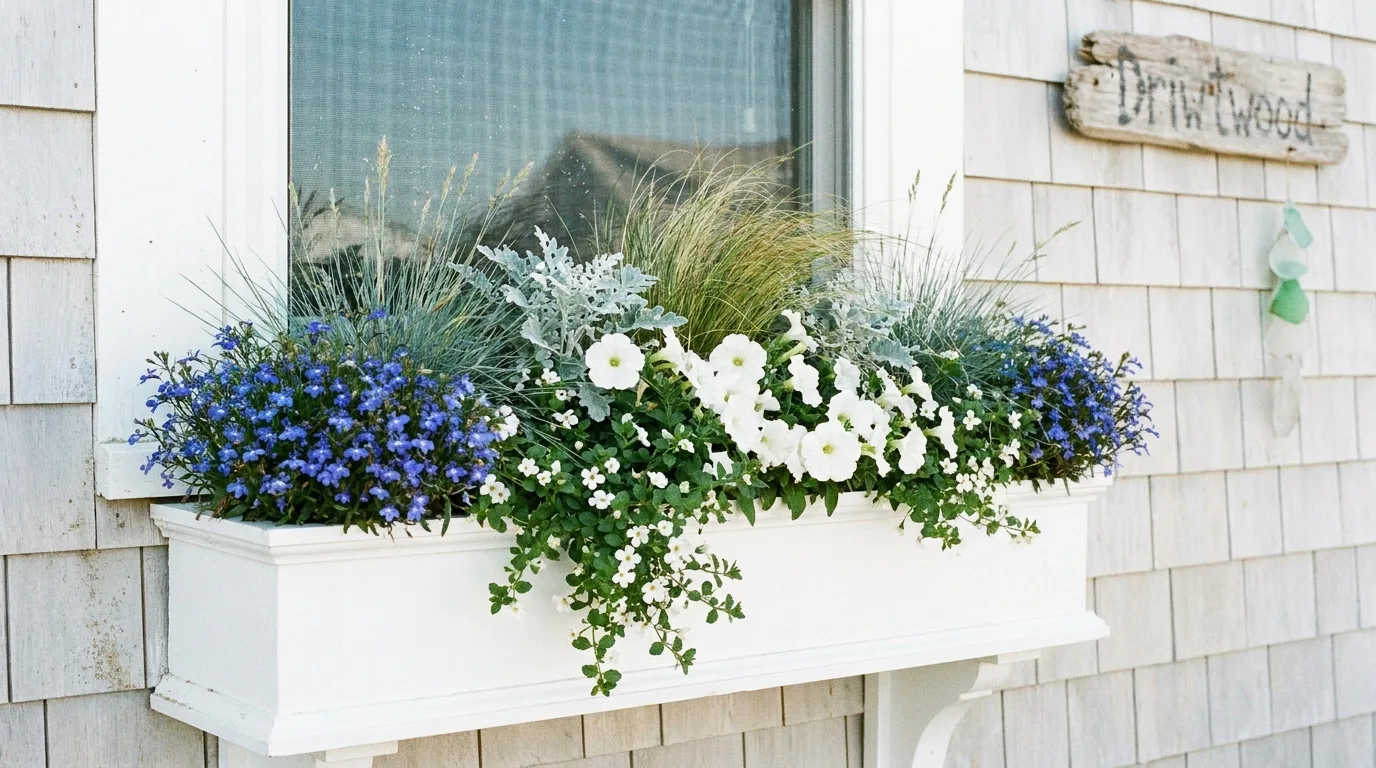
Create a relaxed coastal-inspired display by pairing blue, white, and green. White petunias, blue lobelia, dusty miller, bacopa, and soft ornamental grasses can produce a breezy combination that feels light and refreshing. A white wooden planter works beautifully, while a pale blue or naturally weathered finish can add another layer of seaside character. Keep the planting relatively loose rather than tightly symmetrical to capture the casual feel associated with coastal gardens. This palette works especially well against white siding, pale gray walls, or natural wood. If your home is not near the coast, the same design can still bring a fresh summer atmosphere to an ordinary window without relying on overt nautical decorations.
17. Symmetrical Window Box Arrangement
If you prefer a polished exterior, use symmetry to create a structured window box. Choose one dominant plant for the center and repeat matching plants on either side, or mirror the same combination across multiple windows. Upright geraniums, compact shrubs, ornamental grasses, and trailing flowers can all work in a balanced composition. Keep the number of plant types limited so the arrangement feels intentional rather than crowded. Symmetrical boxes are especially effective on formal homes, where strong architectural lines benefit from equally organized planting. They can also help unify several windows on the same facade. Prune plants periodically to maintain the desired shape and make sure every section receives adequate light and airflow.
18. Shade-Loving Window Flower Box
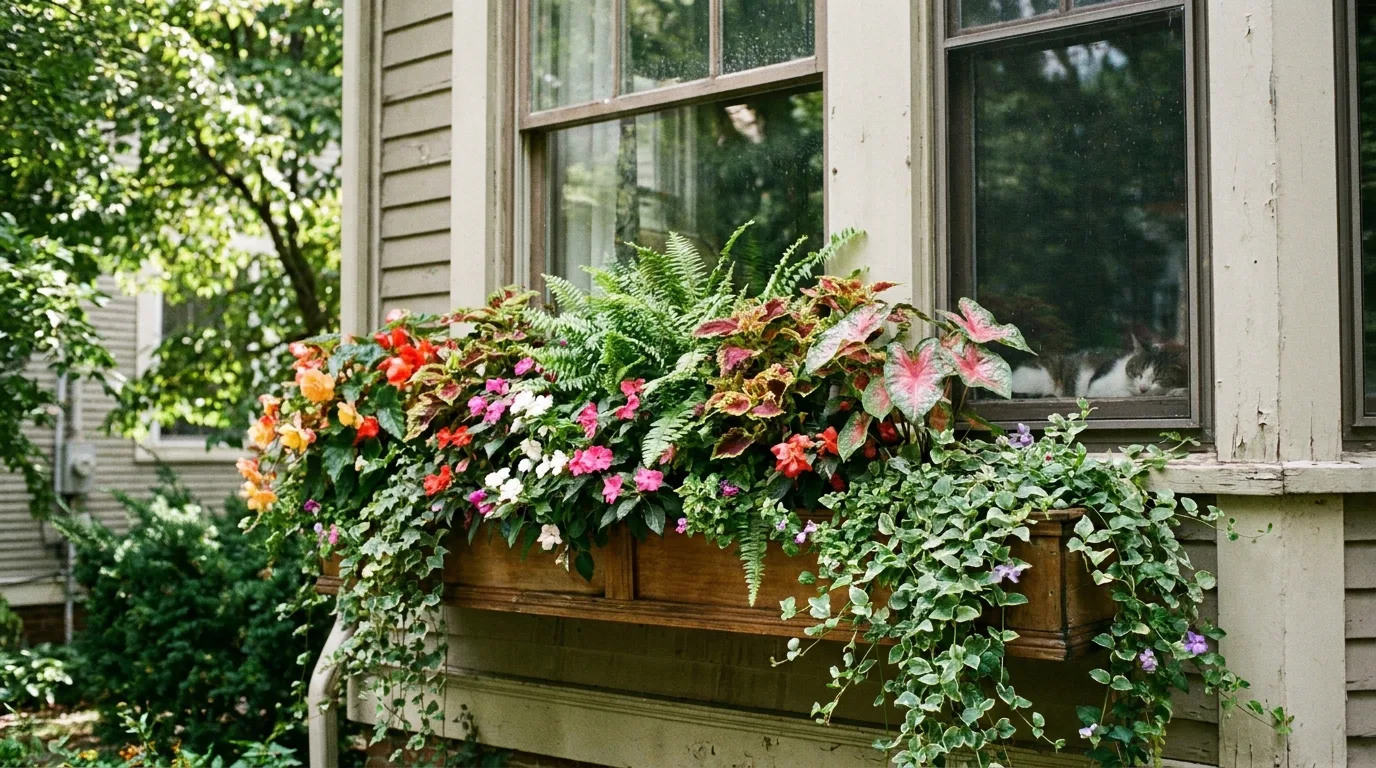
Even windows that receive limited direct sunlight can have beautiful flower boxes. Begonias, impatiens, ferns, caladiums, coleus, and some ivy varieties can provide color and texture in partially shaded locations. Before planting, observe how much direct and indirect light the window receives throughout the day, because shade tolerance varies between plants. Use foliage contrast to make the arrangement interesting when fewer flowering plants are available. Pair broad leaves with delicate textures and include one trailing plant to soften the front edge. Avoid overwatering simply because the area is shaded; containers still need good drainage and an appropriate watering schedule. A shade-friendly window box can transform a dim exterior into a lush, layered garden accent.
19. Minimalist Green Window Box
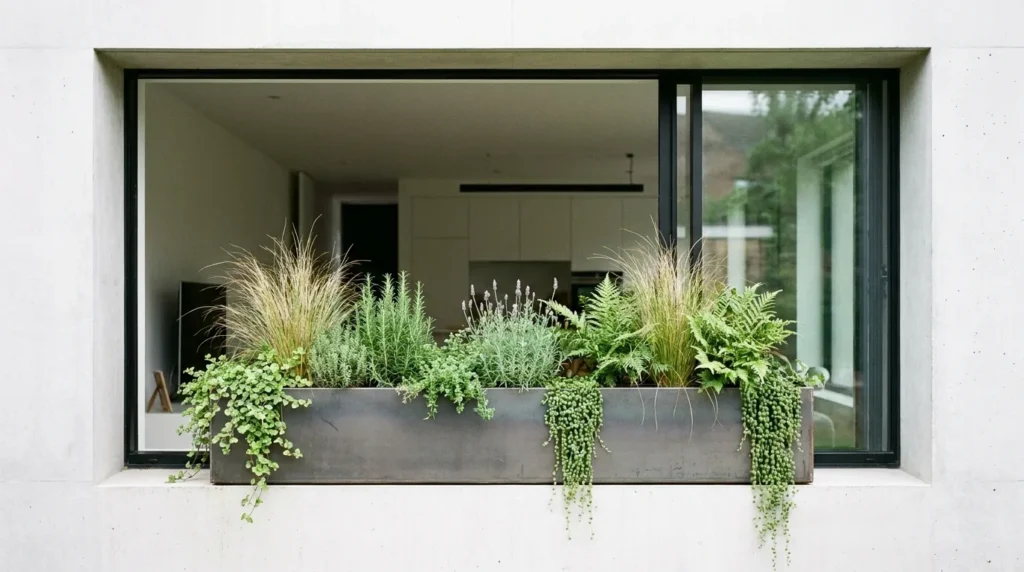
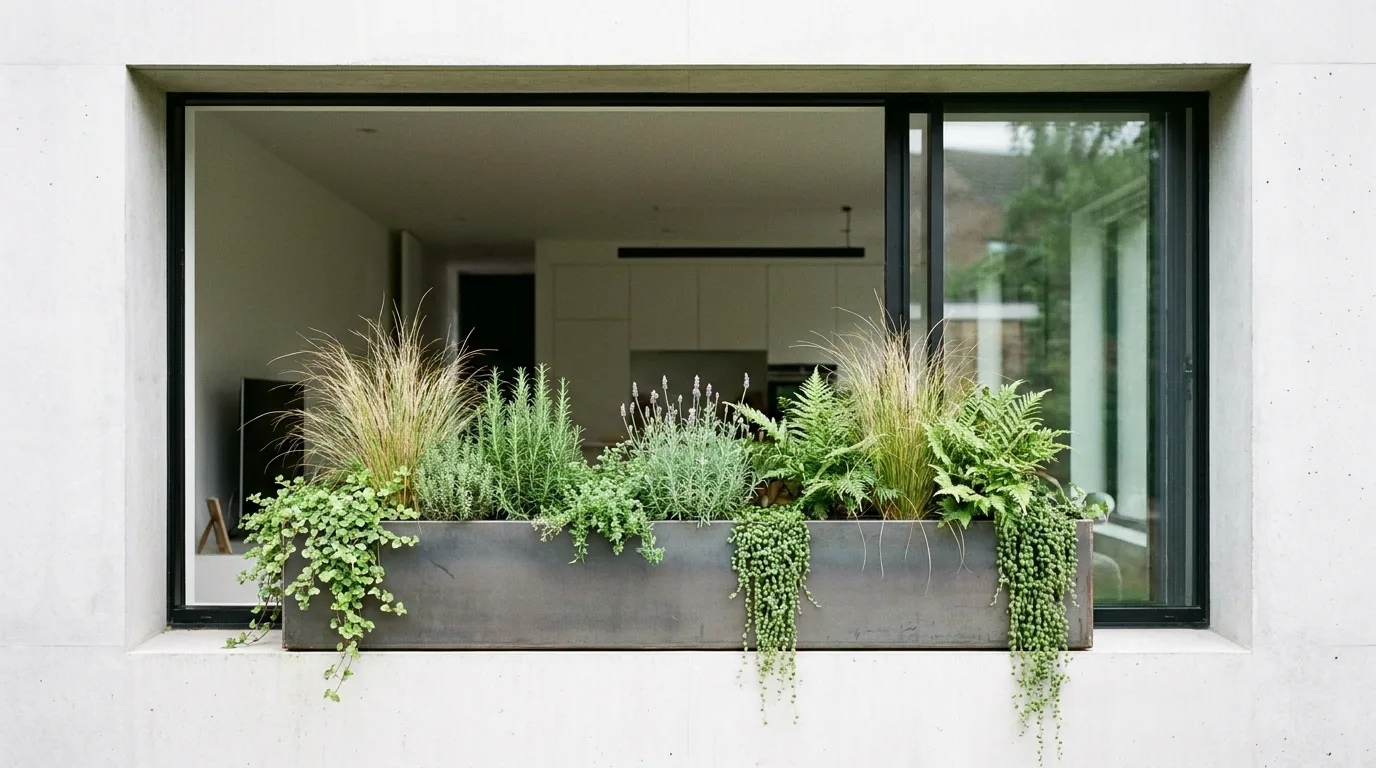
For a modern, low-key look, skip the abundance of colorful flowers and create a window box based primarily on greenery. Ornamental grasses, compact herbs, ferns, trailing foliage, and carefully selected leafy plants can produce a sophisticated display with subtle variation. Use a simple rectangular planter in black, white, gray, or natural wood to keep attention on the plants’ shapes and textures. Repeating one or two plant varieties can make the arrangement feel architectural and intentional. This idea is especially useful for contemporary homes where excessive color might distract from clean lines and neutral materials. Choose plants according to the available light and climate, then trim them periodically to preserve a neat silhouette around the window.
How to Make Your Window Flower Box Thrive
Beautiful window boxes depend as much on practical care as on plant selection. Before installation, check the window’s sunlight exposure and choose plants that naturally suit those conditions. Use a container with adequate drainage and a quality potting mix rather than heavy garden soil. Secure the box with hardware designed to support its full weight when the soil is wet. Water according to the needs of the plants and local weather, checking containers more frequently during hot or windy periods. Remove faded flowers, yellowing leaves, and damaged growth to keep the display attractive. Finally, consider the mature size of every plant before planting. Giving roots and foliage enough room helps prevent overcrowding and makes long-term maintenance much easier.
Conclusion
Window flower boxes can make a surprisingly big difference to a home’s exterior, whether you prefer overflowing cottage blooms, useful herbs, seasonal displays, or minimalist greenery. Choose a style that complements your architecture, match plants to the available light, and prioritize secure installation and good drainage. With thoughtful plant combinations and regular care, even a small window can become a colorful garden feature that adds character throughout the seasons.